• FluTrackers.com Inc. does not provide medical advice. Information on this web site is collected from various internet resources, and the FluTrackers board of directors makes no warranty to the safety, efficacy, correctness or completeness of the information posted on this site by any author or poster. The information collated here is for instructional and/or discussion purposes only and is NOT intended to diagnose or treat any disease, illness, or other medical condition. Every individual reader or poster should seek advice from their personal physician/healthcare practitioner before considering or using any interventions that are discussed on this website. By continuing to access this website you agree to consult your personal physican before using any interventions posted on this website, and you agree to hold harmless FluTrackers.com Inc., the board of directors, the members, and all authors and posters for any effects from use of any medication, supplement, vitamin or other substance, device, intervention, etc. mentioned in posts on this website, or other internet venues referenced in posts on this website.
  • We are not asking for any donations. Do not donate to any entity who says they are raising funds for us.

India Influenza 2015: 2,990 confirmed fatalities

This record setting influenza season is continuing in India with 133 deaths being reported in the past 14 days. The levels of activity in the monsoon season so far are low compared to those of Jan-March this year. Flu B is also circulating according to reports from Maharashtra although official numbers are not being released. Media reported H1N1 fatalities to date are listed below. Other types of influenza do not get reported. Worth bearing in mind that a study from 2012 estimated that, during the 2009-10 pandemic, confirmed fatalities in India represented only 2-3 % of total H1N1 fatalities. Thus these confirmed H1N1 fatalities could represent between 82,000 and 119,000 actual H1N1 related deaths this year. Think this figure is impossibly high? Go read this story where it is being discovered that official Dengue deaths in Delhi are being undercounted by a factor of 42: 1.

Click on any State for a more detailed thread.

Maharashtra: 738
Gujarat: 476
Rajasthan: 447
Madhya Pradesh: 345* (based on one report the figure could be as high as 509)
Karnataka: 93
Telangana: 87
Kerala: 67
Punjab: 56
Haryana: 55
Uttar Pradesh: 46
Tamil Nadu: 29
Chhattisgarh: 28
West Bengal and Andhra Pradesh: 27 each
Himachal Pradesh: 24
Jammu & Kashmir: 20
Delhi: 19
Goa: 16
Uttarakhand: 13
Odisha: 12
Chandigarh: 9
Assam: 5
Jharkhand: 4
Puducherry: 3
Bihar: 2
Manipur: 1

Total: 2,649

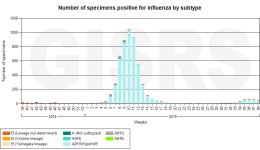
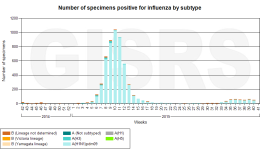
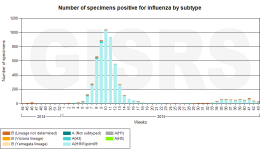
Latest GISRS surveillance data is shown below. There can be a lag of several weeks in this data.

GISRS.png

http://gamapserver.who.int/gareports/Default.aspx?ReportNo=1

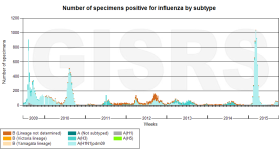
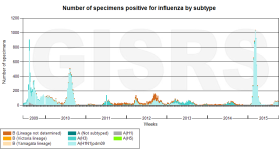
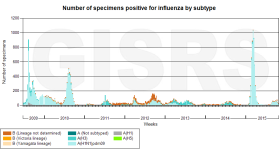
Historical Context:

GISRS 2.png

http://gamapserver.who.int/gareports...spx?ReportNo=7

Comparison to figures from previous years:
2014: 151 fatalities reported to October 13th
2013: 707 fatalities reported to Dec 31st
2012: 220 fatalities to September 29th.
2011: 75 fatalities reported to Dec 31st.
2010: 1,553 fatalities to September 26th
2009: 290 deaths June - September 26th
 
Union Health Ministry issues advisory to States on H1N1

States asked to report status of preparedness by 10th of this month
To review the preparedness of states to address and manage H1N1 influenza, Union Minister for Health & Family Welfare, Shri J P Nadda held a high level meeting of senior officers from the Health Ministry, ICMR, and representatives from states such as Goa, Kerala, Telangana, Gujarat and Madhya Pradesh recently. Following the direction of th Union Health Minister, advisories have been issued to states.

The states are advised to ensure that they have the required and adequate quantities of stock of drug Oseltamivir, Viral Diagnostic Kits, Viral Transport Media, Personal Protective Equipment and N-95 masks, at different levels in the health care system.? State governments have also been requested to ensure that sufficient isolation facilities are available and functional, well-equipped to manage critical respiratory emergencies.

The Ministry has also asked for a status report from the states on their preparedness in terms of PPE, N95 masks, testing kits, medicines, vaccines etc., by 10[SUP]th[/SUP] of this month.

The Central Ministry has asked the states to remain vigilant and take precautionary measures to prevent morbidity/mortality due to this Virus. The advisory notes that- ?While most of Influenza A H1N1 cases will be mild, persons with chronic medical conditions such as diabetes, heart diseases, cancer and other immuno-compromised conditions, adults more than 65 years of age, children under 5 years of age and pregnant women are at higher risk for acquiring severe illness. Mortality due to Influenza A H1N1 among the said high risk groups can be prevented by early diagnosis and prompt treatment.? It further requests the state governments to ensure adequate epidemiological surveillance to immediately detect clustering of influenza like illnesses along with requisite laboratory preparedness to test the clinical samples. Training and re-training workshops can be held for doctors to reiterate guidelines on patient categorization, clinical treatment and ventilatory management protocols. These guidelines/protocols are available on the website of the Ministry (http://mohfw.gov.in/index4.php?lang=1&level=0&linkid=372&lid=3066).

According to the advisory, the impact of seasonal influenza activity can be mitigated by simple public health measures such as frequent washing of hands, respiratory etiquettes, avoiding crowded places and maintaining distance of an arm length from those affected from flu like symptoms. While appropriate IEC campaigns to create awareness among public has been recommended, in addition to ensuring adoption of precautionary measures by healthcare workers deployed in influenza patient care set-up, states have been asked to give emphasis for their timely vaccination against Influenza A H1N1 so as to reduce their vulnerability against the virus.

Chief Secretaries of the States/UTS have been requested to review level the preparedness measures in the State at their level and issue necessary guidance to address shortfalls, if any.

All assistance has been assured by the Union Government to the efforts of the states in the matter.

Influenza A H1N1 cases are currently being reported from some States including Maharashtra, Gujarat, Karnataka, Rajasthan and Telangana.
****
MV


(Release ID :128518)
http://pib.nic.in/newsite/erelease.aspx?relid=128518
 
This record setting influenza season is continuing in India with 133 deaths being reported in the past 16 days. The majority of deaths are being reported from Maharashtra. Except for Maharashtra, the levels of activity in the monsoon season so far are low compared to those of Jan-March this year. Flu B is also circulating according to reports from Maharashtra although official numbers are not being released. Media reported H1N1 fatalities to date are listed below. Other types of influenza do not get reported. Worth bearing in mind that a study from 2012 estimated that, during the 2009-10 pandemic, confirmed fatalities in India represented only 2-3 % of total H1N1 fatalities. Thus these confirmed H1N1 fatalities could represent between 86,000 and 125,000 actual H1N1 related deaths this year. Think this figure is impossibly high? Go read this story where it is being discovered that official Dengue deaths in Delhi are being undercounted by a factor of 42: 1.

Click on any State for a more detailed thread.

Maharashtra: 810
Gujarat: 508
Rajasthan: 456
Madhya Pradesh: 351
Karnataka: 93
Telangana: 88
Kerala: 68
Haryana: 57
Punjab: 56
Uttar Pradesh: 46
Chhattisgarh: 31
Tamil Nadu: 29
West Bengal and Andhra Pradesh: 27 each
Jammu & Kashmir: 26
Himachal Pradesh: 24
Delhi: 20
Goa: 16
Uttarakhand: 13
Odisha: 12
Chandigarh: 9
Assam: 5
Jharkhand: 4
Puducherry: 3
Bihar: 2
Manipur: 1

Total: 2,782

Latest GISRS surveillance data is shown below. There can be a lag of several weeks in this data. GISRS.png


http://gamapserver.who.int/gareports...spx?ReportNo=1

Historical Context: GISRS 2.png


http://gamapserver.who.int/gareports...spx?ReportNo=7

Comparison to figures from previous years:
2014: 229 fatalities reported to Dec 31st
2013: 707 fatalities reported to Dec 31st
2012: 394 fatalities to December 31st
2011: 75 fatalities reported to Dec 31st.
2010: 1,639 fatalities to October 10th
2009: 389 deaths June - October 12th
 
This record setting influenza season is continuing in India with 86 deaths being reported in the past 20 days. The majority of deaths are being reported from Maharashtra. Except for Maharashtra, the levels of activity in the monsoon season so far are low compared to those of Jan-March this year. Flu B is also circulating according to reports from Maharashtra and Kerala although official numbers are not being released. Media reported H1N1 fatalities to date are listed below. Fatalities due to other types of influenza do not get reported. Worth bearing in mind that a study from 2012 estimated that, during the 2009-10 pandemic, confirmed fatalities in India represented only 2-3 % of total H1N1 fatalities. Thus these confirmed H1N1 fatalities could represent between 89,000 and 129,000 actual H1N1 related deaths this year. Think this figure is impossibly high? Go read this story where it is being discovered that official Dengue deaths in Delhi are being undercounted by a factor of 42: 1. Work from the million death study estimated 60-80,000 Influenza related deaths in 2001 & 2003.

Click on any State for a more detailed thread.

Maharashtra: 856
Gujarat: 514
Rajasthan: 456
Madhya Pradesh: 357
Karnataka: 94
Telangana: 93
Kerala: 76
Haryana: 58
Punjab: 57
Uttar Pradesh: 46
Chhattisgarh: 42
Tamil Nadu: 29
West Bengal and Andhra Pradesh: 27 each
Jammu & Kashmir: 26
Himachal Pradesh: 24
Delhi: 21
Goa: 16
Uttarakhand: 13
Odisha: 12
Chandigarh: 9
Assam: 5
Jharkhand: 4
Puducherry: 3
Bihar: 2
Manipur: 1

Total: 2,868

Latest GISRS surveillance data is shown below. There can be a lag of several weeks in this data.
GISRS.png
http://gamapserver.who.int/gareports/Default.aspx?ReportNo=1

Historical Context:

GISRS 2.png
http://gamapserver.who.int/gareports/Default.aspx?ReportNo=7

Comparison to figures from previous years:
2014: 229 fatalities reported to Dec 31st
2013: 707 fatalities reported to Dec 31st
2012: 394 fatalities to December 31st
2011: 75 fatalities reported to Dec 31st.
2010: 1,659 fatalities to November 2nd
2009: 475 deaths June - November 1st
 
Taken from Quarterly Newsletter from the National Centre for Disease Control (NCDC) Volume 4, Issue 3, July-Sept, 2015
http://nicd.nic.in/writereaddata/lin...5277865388.pdf

Recent Surge of Influenza A H1N1 cases and deaths in India and report of death audit in Maharashtra

The influenza virus is notable for its unique ability to cause recurrent
epidemics and global pandemics. Genetic re-assortments in the influenza virus
cause fast and unpredictable antigenic changes in important immune targets
leading to recurrent epidemics of febrile respiratory disease every 1 to 3 years. In
2009, pandemic Influenza A (H1N1) was the most commonly circulating strain of
influenza virus globally with more than 214 countries reporting laboratory
confirmed cases and over 18,449 deaths reported to WHO as on 1st August 2010.
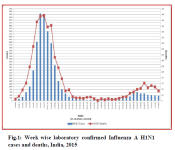
image_19825.png

During current year, India experienced increase in Influenza cases especially Influenza A
H1N1. A total 40,770 cases and 2702 deaths of laboratory confirmed Influenza A H1N1 was
reported (data till 4th Oct 2015).

The rising trend of the cases was observed from the 2nd week of 2015, which continued to
peak till 8th week of 2015 and started to decline during week 18. A total of 35,767 cases &
2218 deaths were reported during the spurt from 2nd week to 18th week. Maximum cases
were reported during the month of February (Fig. 1). The States most affected during the
initial spurt (week 2- week 18) were Rajasthan, Gujarat, Maharashtra, Delhi, Karnataka,
Telangana & Madhya Pradesh.

The cases started increasing again since July 2015 following a decline after the spurt in the
months of Feb – May 2015. The States of Maharashtra and Kerala were affected initially
with increasing trend of cases & deaths from July. Other states like Gujarat, Karnataka,
Telangana, Madhya Pradesh & Goa have shown a rising trend during the second spurt
(29th week to 39 week) i.e. since August and September 2015 (Fig. 1).

Concerned about the situation the Directorate General of Health Services, Govt. of India
deployed a central teams with the objective to carry out epidemiological investigation to
suggest recommendations for containment in coming season. This report is based on the
key findings of the central team visiting Maharashtra in August to conduct a record based
study of patients admitted in various healthcare institutions to identify risk factors.
In Maharashtra, data was collected from the records available at State Surveillance Unit,
IDSP, Pune, National Institute of Virology, Pune, along with three tertiary care hospitals in
Mumbai and Pune and one diagnostic laboratory centre (Private Laboratory) in Mumbai.
Data was collected from both government and private sector establishments Data was
collected for the recent 50 deaths which includes deaths between periods of 30.7.2015 to
23.9.2015. The team also held discussions with the microbiologist as well as physicians and
programme officers during the visits.

Figure 2 shows the number of cases increasing again since
July 2015 following a decline after the spurt in the months of
Feb – May 2015 seen across India. Majority of the districts
have reported deaths. It was also observed that Nasik,
Kolhapur, Satara, Sangli were the newer districts reporting
deaths as compared to the last spurt of H1N1 in Maharashtra.
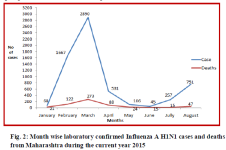
image_19826.png

The case fatality rate for the current increase in cases is lower than that witnessed during
preceding months of April, May & June. This shows increasing testing due to awareness
during spurt increased the denominator of positive cases during seasonal spurt.

Maximum deaths were reported from private hospitals (57%) as compared to government
hospitals (43%).

Table 2 shows positivity rates from the various laboratories records. The positivity from the SRL
diagnostic laboratories is nearly 48 % which is higher than the other laboratories.
The team reviewed the death records of recent 50 deaths to identify possible epidemiological
risk factors for mortality.
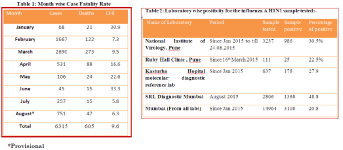
image_19827.png

Age wise distribution of the cases shows maximum proportion of deaths in the age group
of 15-50 yrs age group followed by 30% and 18% among the 50-65yrs & >65yrs age groups
respectively. More young adults were affected compared to older age individuals.


Fifty six percent of deaths were in males as compared to 44% in females. Sixty four percent
of deaths were from urban areas. Symptomatically, fever & cough (60%) was most common
presentation followed by the fever, cough & breathlessness together i.e. (54%) cases.
Maximum deaths were from Mumbai, 15 (30 %), followed by Pune, 7(14%) and Thane, 14
(14%).Fifty nine percent deaths were associated with co- morbidities (n=49). Diabetes (36%)
was the most common co-morbidity observed followed by coronary heart disease (18%),
respiratory diseases (16%), neurological diseases (8%) and obesity (8%)
(Figure 3).Out of 50
deaths, 2 (4%) were pregnant women
of which one was 36 weeks pregnant while for other
period of gestation was not mentioned. Four (8%) deaths were associated with co infection
which includes dengue, malaria, tuberculosis and leptospirosis each.

Association of co-morbidity and age wise distribution
shows that as age increases the association with the co
morbidity increases (Table 3). Nearly 80 % of death
among the age group more than 50 yrs had an
associated co-morbidity. It was also observed that
nearly 65 % of deaths among the age group 15-50
years had no association with co-morbidity.
Comorbidity
appears to increase the risk of mortality among the influenza A H1N1 cases.
Death amongst young adults (without co morbidity) could be due to delayed presentation to
the hospital, transportation delayed or inadequate facility at the treating hospital.
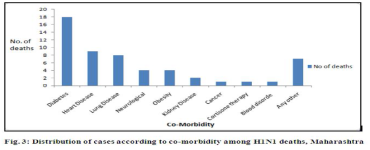
image_19828.png

Fifty seven percent of fatal cases had reported to the health facility between 3-7 days of
onset of symptoms while 10 (21.3%) had reported to the health facility after 7 days of onset
of symptoms. Only 5 (10.8%) had started treatment within 48 hrs of onset of symptoms.
21 (42%) & 9 (18%) of deaths occurred within 48 hrs & after 7 days of hospitalization
respectively (Figure 3).

Based on the above findings the team recommended that all patient with diabetes/ co
morbid conditions to be referred to tertiary care centre or specialist as early as possible.
Strict categorization for sample testing specially at private labs needs to be followed as well
as revisiting the private accredited labs for quality testing. Early reporting to health facility
could be improved by increasing awareness among the community as well as health care
worker.

H1N1 hospitals treating such a patient be well equipped
(ventilator management) and train physician in critical care
to initiate early and appropriate treatment.
Initiation of Oseltamivir as earliest after onset of
symptoms so as to decrease the severity of the cases
especially high risk groups as well as halting the
transmission in the community.
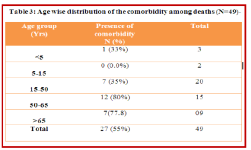
image_19829.png

Our study reinforces the need to identify and target highrisk
groups for interventions, such as information on
immunization, early medical advice and use of antiviral
medications, as cost of testing is much higher than cost of
vaccination if calculated for each individual as the
positivity reported by Private labs is very high. Further
analytical studies need to be carried out for understanding
the profile of all respiratory viruses causing influenza like illness and severe acute respiratory
infections as well as risk factors between survival and deaths due to influenza A H1N1.

(Contributed by: Drs Prabha Arora, Amol Patil -NCDC, Neeraj Gupta- Safdarjung
Hospital as part of field investigation team; Drs Ranjeet Prasad, Pradeep
Khasnobis as part of H1N1 data analysis team at CSU, IDSP)

 
h/t tetano
Infect Dis Obstet Gynecol. 2016; 2016: 1248470.
Published online 2016 Jan 19. doi: 10.1155/2016/1248470

PMCID: PMC4745581


Influenza Illness in Pregnant Indian Women: A Cross-Sectional Study

Parvaiz A. Koul, 1 , * Nargis K. Bali, 2 Hyder Mir, 1 Farhat Jabeen, 3 and Abida Ahmad 4

Author information ► Article notes ► Copyright and License information ►


Abstract

Data about burden of influenza in pregnancy in India are scant. In order to assess the contribution of influenza to acute respiratory illness (ARI) in pregnancy, 266 north Indian pregnant females with febrile ARI were studied from December 2014 to May 2015. Twin nasopharyngeal/oropharyngeal swabs were obtained and tested for influenza viruses by RT-PCR. Fifty (18.8%) patients tested positive for influenza (A/H1N1pdm09 in 41, A/H3N2 in 8, and influenza B Yamagata in 1). Rigors, headache, and a family history of ARI were significantly more frequent in influenza positive patients. Oseltamivir and supportive therapy were administered to all confirmed cases. Nine influenza positive cases needed hospitalization for their respiratory illness, and 5 developed respiratory failure. Of these, 4 (3 in third trimester) succumbed to their illness. We conclude that influenza viruses are a cause of significant morbidity and mortality among pregnant females with ARI in north India. As such, appropriate preventive strategies of influenza vaccination and early initiation of antiviral therapy during illness are stressed.Abstract
Data about burden of influenza in pregnancy in India are scant. In order to assess the contribution of influenza to acute respiratory illness (ARI) in pregnancy, 266 north Indian pregnant females with febrile ARI were studied from December 2014 to May 2015. Twin nasopharyngeal/oropharyngeal swabs were obtained and tested for influenza viruses by RT-PCR. Fifty (18.8%) patients tested positive for influenza (A/H1N1pdm09 in 41, A/H3N2 in 8, and influenza B Yamagata in 1). Rigors, headache, and a family history of ARI were significantly more frequent in influenza positive patients. Oseltamivir and supportive therapy were administered to all confirmed cases. Nine influenza positive cases needed hospitalization for their respiratory illness, and 5 developed respiratory failure. Of these, 4 (3 in third trimester) succumbed to their illness. We conclude that influenza viruses are a cause of significant morbidity and mortality among pregnant females with ARI in north India. As such, appropriate preventive strategies of influenza vaccination and early initiation of antiviral therapy during illness are stressed.


full paper available from; http://www.ncbi.nlm.nih.gov/pmc/articles/PMC4745581/
 
h/t tetano [h=2]Influenza A(H1N1)pdm09 cases in sub-Himalayan region, 2014-2015 India[/h] [COLOR=#6A6A6A !important]Today, 02:04 AM[/COLOR]


Indian J Pathol Microbiol. 2016 Jan-Mar;59(1):63-5. doi: 10.4103/0377-4929.178222.
Influenza A(H1N1)pdm09 cases in sub-Himalayan region, 2014-2015 India.

Sharma P[SUP]1[/SUP], Gupta S, Singh D, Verma S, Kanga A.
Author information

Abstract

Current influenza A(H1N1)pdm09 strain severely involved many parts of the country. The study was conducted to analyze the clinicoepidemiological trend of influenza A(H1N1)pdm09 cases from October 2014 to March 2015. Samples processing was done as per the Center for Disease Control guidelines. A total of 333 specimens were processed out of which influenza A(H1N1)pdm09 constituted 24% (81) of total, 5% (18) cases were seasonal influenza A virus strains. Mean age group involved was 49 years with case fatality rate of 20%. Patients died were 63% males and 44% had comorbidities, and among them, 38% patients died within 24 h of hospitalization. The mean age of comorbid patients who died was 59 years; whereas the mean age of patients died having no co-morbidities was 41 years (P < 0.005). Mortality was seen among 81% (13) of patients who were on ventilator support. Added mortality in specific human group demands continuous surveillance monitoring followed by the detection of mutation, even in susceptible animal population.


PMID: 26960638 [PubMed - in process]
 
http://pib.nic.in/newsite/erelease.aspx?relid=154039 [TABLE="align: left, border: 1, cellpadding: 0, cellspacing: 0, width: 595"]
[TR]
[TD="colspan: 6"]Annexure I
Influenza A H1N1 (Swine Flu) ? Year-wise for affected States/UTs (2015-2016)
[/TD]
[/TR]
[TR]
[TD]S. No.[/TD]
[TD] State[/TD]
[TD="colspan: 2"]Jan, 2015- 31[SUP]st[/SUP] Dec, 2015[/TD]
[TD="colspan: 2"]1[SUP]st[/SUP] Jan,2016- 30[SUP]th[/SUP] Oct,2016[/TD]
[/TR]
[TR]
[TD]Cases[/TD]
[TD]Deaths[/TD]
[TD]Cases[/TD]
[TD]Deaths[/TD]
[/TR]
[TR]
[TD]1.[/TD]
[TD]Andaman & Nicobar[/TD]
[TD]4[/TD]
[TD]0[/TD]
[TD]0[/TD]
[TD]0[/TD]
[/TR]
[TR]
[TD]2.[/TD]
[TD]Andhra Pradesh[/TD]
[TD]258[/TD]
[TD]36[/TD]
[TD]5[/TD]
[TD]4[/TD]
[/TR]
[TR]
[TD]3.[/TD]
[TD]Assam[/TD]
[TD]31[/TD]
[TD]4[/TD]
[TD]0[/TD]
[TD]0[/TD]
[/TR]
[TR]
[TD]4.[/TD]
[TD]Bihar[/TD]
[TD]352[/TD]
[TD]6[/TD]
[TD]0[/TD]
[TD]0[/TD]
[/TR]
[TR]
[TD]5.[/TD]
[TD]Chandigarh(UT)[/TD]
[TD]23[/TD]
[TD]7[/TD]
[TD]6[/TD]
[TD]0[/TD]
[/TR]
[TR]
[TD]6.[/TD]
[TD]Chhattisgarh[/TD]
[TD]239[/TD]
[TD]53[/TD]
[TD]6[/TD]
[TD]4[/TD]
[/TR]
[TR]
[TD]7.[/TD]
[TD]Dadra & Nagar Haveli[/TD]
[TD]26[/TD]
[TD]6[/TD]
[TD]1[/TD]
[TD]0[/TD]
[/TR]
[TR]
[TD]8.[/TD]
[TD]Daman & Diu[/TD]
[TD]5[/TD]
[TD]1[/TD]
[TD]0[/TD]
[TD]0[/TD]
[/TR]
[TR]
[TD]9.[/TD]
[TD]Delhi[/TD]
[TD]4307[/TD]
[TD]12[/TD]
[TD]192[/TD]
[TD]7[/TD]
[/TR]
[TR]
[TD]10.[/TD]
[TD]Goa[/TD]
[TD]193[/TD]
[TD]19[/TD]
[TD]3[/TD]
[TD]0[/TD]
[/TR]
[TR]
[TD]11.[/TD]
[TD]Gujarat[/TD]
[TD]7180[/TD]
[TD]517[/TD]
[TD]411[/TD]
[TD]55[/TD]
[/TR]
[TR]
[TD]12.[/TD]
[TD]Haryana[/TD]
[TD]433[/TD]
[TD]58[/TD]
[TD]68[/TD]
[TD]5[/TD]
[/TR]
[TR]
[TD]13.[/TD]
[TD]Himachal Pradesh[/TD]
[TD]123[/TD]
[TD]27[/TD]
[TD]14[/TD]
[TD]5[/TD]
[/TR]
[TR]
[TD]14.[/TD]
[TD]Jammu & Kashmir[/TD]
[TD]495[/TD]
[TD]20[/TD]
[TD]2[/TD]
[TD]0[/TD]
[/TR]
[TR]
[TD]15.[/TD]
[TD]Jharkhand[/TD]
[TD]16[/TD]
[TD]6[/TD]
[TD]1[/TD]
[TD]1[/TD]
[/TR]
[TR]
[TD]16.[/TD]
[TD]Karnataka[/TD]
[TD]3565[/TD]
[TD]94[/TD]
[TD]86[/TD]
[TD]0[/TD]
[/TR]
[TR]
[TD]17.[/TD]
[TD]Kerala[/TD]
[TD]928[/TD]
[TD]76[/TD]
[TD]21[/TD]
[TD]0[/TD]
[/TR]
[TR]
[TD]18.[/TD]
[TD]Madhya Pradesh[/TD]
[TD]2445[/TD]
[TD]367[/TD]
[TD]38[/TD]
[TD]12[/TD]
[/TR]
[TR]
[TD]19.[/TD]
[TD]Maharashtra[/TD]
[TD]8583[/TD]
[TD]905[/TD]
[TD]80[/TD]
[TD]25[/TD]
[/TR]
[TR]
[TD]20.[/TD]
[TD]Manipur[/TD]
[TD]5[/TD]
[TD]2[/TD]
[TD]0[/TD]
[TD]0[/TD]
[/TR]
[TR]
[TD]21.[/TD]
[TD]Meghalaya[/TD]
[TD]1[/TD]
[TD]0[/TD]
[TD]0[/TD]
[TD]0[/TD]
[/TR]
[TR]
[TD]22.[/TD]
[TD]Mizoram[/TD]
[TD]4[/TD]
[TD]0[/TD]
[TD]0[/TD]
[TD]0[/TD]
[/TR]
[TR]
[TD]23.[/TD]
[TD]Nagaland[/TD]
[TD]4[/TD]
[TD]0[/TD]
[TD]0[/TD]
[TD]0[/TD]
[/TR]
[TR]
[TD]24.[/TD]
[TD]Odisha[/TD]
[TD]76[/TD]
[TD]13[/TD]
[TD]1[/TD]
[TD]0[/TD]
[/TR]
[TR]
[TD]25.[/TD]
[TD]Pondicherry[/TD]
[TD]57[/TD]
[TD]4[/TD]
[TD]0[/TD]
[TD]0[/TD]
[/TR]
[TR]
[TD]26.[/TD]
[TD]Punjab[/TD]
[TD]300[/TD]
[TD]61[/TD]
[TD]177[/TD]
[TD]64[/TD]
[/TR]
[TR]
[TD]27.[/TD]
[TD]Rajasthan[/TD]
[TD]6858[/TD]
[TD]472[/TD]
[TD]196[/TD]
[TD]43[/TD]
[/TR]
[TR]
[TD]28.[/TD]
[TD]Tamil Nadu[/TD]
[TD]898[/TD]
[TD]29[/TD]
[TD]64[/TD]
[TD]1[/TD]
[/TR]
[TR]
[TD]29[/TD]
[TD]Telangana*[/TD]
[TD]2956[/TD]
[TD]100[/TD]
[TD]126[/TD]
[TD]8[/TD]
[/TR]
[TR]
[TD]30.[/TD]
[TD]Uttarakhand[/TD]
[TD]105[/TD]
[TD]15[/TD]
[TD]20[/TD]
[TD]5[/TD]
[/TR]
[TR]
[TD]31.[/TD]
[TD]Uttar Pradesh[/TD]
[TD]1578[/TD]
[TD]50[/TD]
[TD]122[/TD]
[TD]16[/TD]
[/TR]
[TR]
[TD]32.[/TD]
[TD]West Bengal[/TD]
[TD]544[/TD]
[TD]30[/TD]
[TD]7[/TD]
[TD]2[/TD]
[/TR]
[TR]
[TD="colspan: 2"]Cumulative Total[/TD]
[TD]42592[/TD]
[TD]2990[/TD]
[TD]1647[/TD]
[TD]257[/TD]
[/TR]
[/TABLE]
 
Back
Top Bottom