• FluTrackers.com Inc. does not provide medical advice. Information on this web site is collected from various internet resources, and the FluTrackers board of directors makes no warranty to the safety, efficacy, correctness or completeness of the information posted on this site by any author or poster. The information collated here is for instructional and/or discussion purposes only and is NOT intended to diagnose or treat any disease, illness, or other medical condition. Every individual reader or poster should seek advice from their personal physician/healthcare practitioner before considering or using any interventions that are discussed on this website. By continuing to access this website you agree to consult your personal physican before using any interventions posted on this website, and you agree to hold harmless FluTrackers.com Inc., the board of directors, the members, and all authors and posters for any effects from use of any medication, supplement, vitamin or other substance, device, intervention, etc. mentioned in posts on this website, or other internet venues referenced in posts on this website.
  • We are not asking for any donations. Do not donate to any entity who says they are raising funds for us.

Emergence of seasonal influenza viruses type A/H1N1 with oseltamivir resistance in some European Countries at the start of the 2007-8 influenza

Re: :::Emergence of seasonal influenza viruses type A/H1N1 with:::

Re: :::Emergence of seasonal influenza viruses type A/H1N1 with:::

The article link you provide does not even mention peramivir or oseltamivir.

Your conclusion that peramivir and zanamivir won't work fo r H274Y is based on what?????

zanamivir does work for H274Y, but not peramivir and oseltamivir
I found it here:
http://www.ncbi.nlm.nih.gov/pubmed/17137644?dopt=Abstract

the other link was provided by miso here:
http://scienceblogs.com/effectmeasure/2008/01/tamiflu_resistance_in_seasonal.php#comments
 
Re: :::Emergence of seasonal influenza viruses type A/H1N1 with:::

Re: :::Emergence of seasonal influenza viruses type A/H1N1 with:::

does H274Y even "exist" in N2 ?
it looks quite different.

However, they said Adamantane _and_ Oseltamivir resistant.
 
Re: :::Emergence of seasonal influenza viruses type A/H1N1 with:::

Re: :::Emergence of seasonal influenza viruses type A/H1N1 with:::

does H274Y even "exist" in N2 ?
it looks quite different.

However, they said Adamantane _and_ Oseltamivir resistant.
Please. There are two entires. The more recent entry only says Amantadine.

This thread is on H274Y, which is not in the recent H3N2 sequences.

I didn't bother looking at the older sequence which does not appear on current LANL searches.
 
Re: :::Emergence of seasonal influenza viruses type A/H1N1 with:::

Re: :::Emergence of seasonal influenza viruses type A/H1N1 with:::

zanamivir does work for H274Y, but not peramivir and oseltamivir
I found it here:
http://www.ncbi.nlm.nih.gov/pubmed/17137644?dopt=Abstract

the other link was provided by miso here:
http://scienceblogs.com/effectmeasure/2008/01/tamiflu_resistance_in_seasonal.php#comments

I think there is too little data to make a conclusion that peramivir will not work with a H274Y change.

Here are more neuraminidase resistance studies---but no consensus.

ALSO---many resistance studies have conflicts of interest with funding from drug manufacturers---and the studies conincidentally? come out in the drug manufacturers' favor.

http://www.sciencedirect.com/scienc...serid=10&md5=b8504ca104f170c15f842552379e8037
 
Re: :::Emergence of seasonal influenza viruses type A/H1N1 with:::

Re: :::Emergence of seasonal influenza viruses type A/H1N1 with:::

gsgs: The links you provide above indicate there is NO EFFECT on peramivir resistance from a H274Y position change. Please review your literature.

Thank you for the link:

Quoted: Viruses with the H274Y mutation were rescued without the use of exogenous NA and the genotype was stably inherited in both recombinant viruses. This is a mutation which confers oseltamivir-specific resistance in N1 but not N2 viruses.

Interestingly the N9 H274Y mutant NA displayed a high level of resistance to oseltamivir, thus demonstrating N1-like sensitivity.19,21,32 Hence, as mutations conferring specific resistance in either N2 (R292K) or N1 (H274Y) NAs also both confer resistance in the N9 NA, the N9 NA therefore must share some structural characteristics of the N1 NA in the region of the H274, but in contrast, share N2-like characteristics in the R292 region.

http://jac.oxfordjournals.org/cgi/content/full/58/4/723

Peramivir is discussed as being affected by other changes.

Peramivir, if found to be useful against the pandemic strain, will likely need to be in injectable form, however. As far as I know---the injectable form of peramivir is not ready for human use.
 
Re: :::Emergence of seasonal influenza viruses type A/H1N1 with:::

Re: :::Emergence of seasonal influenza viruses type A/H1N1 with:::

http://cvi.asm.org/cgi/reprint/11/1/21.pdf
page 4:
"the mutant influenza virus A/Texas/36/91, (HA,T225G;NA,H274Y), selected against oseltamivir,
was very resistant to peramivir and oseltamivir but less resistant to zanamivir in all three assays."
(H1N1)
 
Re: :::Emergence of seasonal influenza viruses type A/H1N1 with:::

Re: :::Emergence of seasonal influenza viruses type A/H1N1 with:::

NO CONSENSUS
 
Re: :::Emergence of seasonal influenza viruses type A/H1N1 with:::

Re: :::Emergence of seasonal influenza viruses type A/H1N1 with:::

Experts anxious to see whether Tamiflu resistant viruses continue to spread

Helen Branswell, Medical Reporter, THE CANADIAN PRESS


TORONTO - With influenza season just now kicking into gear in North America and parts of Western Europe, experts are watching to see if higher-than-expected numbers of Tamiflu-resistant H1N1 flu viruses will continue to spread.

They are anxious to see whether the mutated viruses found early in the winter can still compete when swarms of regular flu viruses are racing from one vulnerable respiratory tract to the next, or whether the resistant viruses will be muscled out of contention.

"One of the great conundrums of influenza is the fact that viruses appear and disappear and nobody knows really where they go from or to," said Dr. Maria Zambon, head of the respiratory virus unit of Britain's Health Protection Agency.

"Many countries are actually going into . . . the peak of their flu season. And we expect many more viruses to be looked at over the course of the next weeks and months."
To date, 14 per cent of tested H1N1 viruses from nine European countries were found to carry a mutation, labelled H274Y, that enables the viruses to ward off the attack of oseltamivir or Tamiflu. People infected with viruses with the mutation would get little if any benefit from Tamiflu, though these viruses are susceptible to the three other existing anti-influenza drugs.

The latest tally from the National Microbiology Laboratory in Winnipeg shows that 6.3 per cent of H1N1 viruses tested in this country were resistant to the drug, close to the 6.7 per cent reported last week by the U.S. Centers for Disease Control.

It was Zambon's unit, doing work through a European Union-funded program checking for antiviral resistance in Europe, that first spotted the unusually high rate of Tamiflu resistance in H1N1 viruses from Norway.

She admitted the lab initially worried there might have been an error when five of the first seven viruses tested showed high-level resistance to Tamiflu.
Repeat testing confirmed the startling finding. And further testing of viruses from Norway has continued to surprise; 26 of 37 H1N1 viruses - or 70 per cent - tested as of last week were resistant to the drug.

It appears that most if not all of the resistant viruses in Europe and North America were recovered from people who had not been using Tamiflu, which adds to the concern felt by influenza experts.

It is known that a portion of people using Tamiflu to combat influenza will shed viruses that are resistant to it, though that development is thought to be rare.

It is rarer still to see these viruses in people who are not using the drug. It has been estimated that less than one per cent of H1N1 viruses would carry this mutation.

The only other time this mutation was found to any real degree among people who haven't been using the drug was in Japan during the 2005-06 flu season, when 2.2 per cent of tested H1N1 viruses carried it. But Japan is considered a special case; it uses far more Tamiflu than anywhere else in the world.

It has been thought viruses resistant to Tamiflu would be unlikely to spread to other people. That's because it was believed the mutation renders them less "fit" - less able to circulate and thrive when competing for victims with regular flu viruses.

Zambon and other European influenza experts have suggested the timing of the appearance of these resistant viruses may be important in understanding their emergence. She cautions, though, that this is still just a theory.

The European viruses were isolated from specimens taken from people who caught the flu in November and December, when flu activity was sporadic. The same is true for the samples tested at the Winnipeg lab.

If the viruses are indeed less fit, they might have been able to spread when there were fewer regular flu viruses around. Watching what happens when flu season is in full swing should shed light on the ability of these viruses to compete, she said.

Meanwhile, a number of laboratories are looking at the genetic codes of the viruses to see if they contain some other mutation or mutations that compensates for the H274Y change.
Though "intensive efforts are underway," no clues have yet been found, Zambon said. "The early data that have been looked at and discussed suggest that there is nothing very obvious at this point in time."


© The Canadian Press , 2008


http://www.thecanadianpress.com/eng...ame=x020302A&newsitemid=37713022&languageid=1
 
Re: :::Emergence of seasonal influenza viruses type A/H1N1 with:::

Re: :::Emergence of seasonal influenza viruses type A/H1N1 with:::

.:.HONG KONG: OSELTAMIVIR-RESISTANT H1N1 VIRUS DETECTED:.:
(From ProMed)
-
Date: Sun, 3 Feb 2008 18:35:29 -0500 (EST)
From: ProMED-mail Subject: PRO/EDR> Influenza A (H1N1) virus, oseltamivir resistance (05): China (HK)

INFLUENZA A (H1N1) VIRUS, OSELTAMIVIR RESISTANCE (05): CHINA (HONG KONG)

A ProMED-mail post - <http://www.promedmail.org>
ProMED-mail is a program of the International Society for Infectious Diseases
<http://www.isid.org>

Date: Fri 31 Jan 2008
Source: The Centre for Health Protection (CHP) of the Department of
Health, Hong Kong S.A.R. [edited]
<http://www.chp.gov.hk>


A Centre for Health Protection (CHP) spokesman said that CHP's
sentinel surveillance networks detected a mild increase of influenza-like illness (ILI) in the community. During the week ending 26 Jan 2008, consultation rates for ILI in private doctors and GOPC [General Out=Patient Clinics] were 50.7 and 3.8 per 1000 consultations respectively, as compared with 44.5 and 3.7 in the previous week. He added that laboratory surveillance found an increasing number of influenza virus detections recently; 42 influenza viruses were isolated in the week ending 26 Jan 2008 as compared with fewer than 20 detections in mid December 2007.

With reference to a report that a proportion of A/H1N1 flu viruses in circulation this winter [2007-2008] in Europe were resistant to the antiviral drug oseltamivir (Tamiflu), the spokesman said the Public Health Laboratory Centre has been monitoring the local situation closely and recently detected 4 such viruses out of 45 isolates
tested in January 2008
.
He said there had been no indication from overseas authorities so far that these oseltamivir-resistant viruses were associated with more severe illness. These viruses are sensitive to other antiviral drugs against influenza [the other anti-neuraminidase drug zanamivir (Relenza), and the adamantadines -
Mod.CP]. CHP will continue to monitor H1N1 viruses for oseltamivir resistance.

He called on members of the public to be vigilant against influenza.
"Members of the public who were at higher risk of complications from influenza should be vaccinated against influenza if they have not already done so. The vaccine for seasonal influenza being used in Hong Kong also provides protection against the oseltamivir-resistant A(H1N1) viruses. Those who are eligible for free influenza vaccination under the Government Influenza Vaccination Program (GIVP) can visit appropriate venues promulgated by the Government," he noted.

DH has ordered a total of 300 000 doses of influenza vaccines for the
2007-08 GIVP, of which, about 268 000 had been administered to the eligible target groups since the programme started on 5 Nov 2007. To prevent influenza and other respiratory tract infections, the public is advised to adopt a healthy lifestyle and adhere to the following health advice:

* To build up good body immunity by having a proper diet, regular exercise and adequate rest, reducing stress and avoiding smoking;

* To maintain good personal hygiene, and wash hands after sneezing [or] coughing, and wear a mask when developing symptoms of respiratory infections;

* To maintain good ventilation [in enclosed places]; and
* To avoid visiting crowded places with poor ventilation, especially during peak flu season.

Members of the public, particularly children, elderly people and those with chronic diseases, should wear face masks and consult their doctors for medical advice promptly if they develop symptoms of respiratory tract infection. More information on the preventive measures can be found in CHP's website at <http://www.chp.gov.hk>.

- --
Communicated by:
Joanne Leung, Hong Kong Economic Times

[Oseltamivir-resistant A/H1N1 influenza viruses have been reported
from several European countries, Canada, the USA, and now China (Hong
Kong S.A.R.), in fact, everywhere surveillance has been carried out,
except in the case of Japan. The presence of oseltamivir-resistant viruses circulating in several European countries (Denmark, Finland, France, Germany, Netherlands, Norway, Portugal, Sweden, and United Kingdom) is in marked contrast to the previous winter seasons of 2004/2005, 2005/2006, and 2006/2007, when oseltamivir resistance was detected in less than 1 per cent of circulating strains from 24 countries.

To date, oseltamivir-resistant viruses have been detected in 9 European countries; in particular, 26 of 37 (70 per cent) in Norway, 15 of 87 (17 per cent) in France, 3 of 43 (7.0 per cent) in Germany and 8 of 162 (5 per cent) in the United Kingdom. These resistant viruses carry the same mutation, causing the substitution of histidine by tyrosine at residue 274 (H274Y) of the neuraminidase protein. In North America the frequency of isolation so far has been 6.25 per cent in Canada and 5 per cent in the USA, similar to that currently being detected in the Hong Kong S.A.R.

The frequency of oseltamivir resistance in H1N1 viruses in the current influenza season is unexpected, and the reason why a higher percentage of these viruses are resistant is currently unknown. - Mod.CP]

-
http://apex.oracle.com/pls/otn/f?p=..._BACK_PAGE,F2400_P1001_PUB_MAIL_ID:1000,71165
------
 
Re: :::Emergence of seasonal influenza viruses type A/H1N1 with:::

Re: :::Emergence of seasonal influenza viruses type A/H1N1 with:::

here is an overview about Amantadine resistant sequences from
genbank.

percent of Amantadine resistant human sequences in Genbank
1993-2007:
Code:
H3N2:00,03,00,00,00,02,05,00,00,01,02,02,32,94,90
H1N1:--,--,04,03,--,--,--,04,03,--,04,--,08,14,00
H5N1:--,--,--,--,13,--,--,00,30,19,46,69,37,33,36

in a study from Niigata
http://www.pubmedcentral.nih.gov/articlerender.fcgi?artid=154689
they found resistance in 1999/2000 and 2000/2001 seasons
H1N1:23,17
H3N2:33,43

(actually all sequences other than LVVAAS (M2,26-31)
are considered resistant here for simplicity)

so, while Amantadine resistance has dramatically increased in H3N2
the last years (4/221 in 2004 to 73/81 in 2007),Amantadine-resistance
in H1N1 has decreased from 2/24 in 2005 to 1/288 in 2007
for the sequences in genbank.
Amantadine has been replaced by oseltamivir recently and
Amantadine resistance decreased in both H3N2 and H1N1 while oseltamivir
resistance in H1N1 increased.


China had used Amantadine for poultry but banned it in 2004:
http://www.washingtonpost.com/wp-dyn/content/article/2005/10/28/AR2005102801961_pf.html
 
Re: :::Emergence of seasonal influenza viruses type A/H1N1 with:::

Re: :::Emergence of seasonal influenza viruses type A/H1N1 with:::

From "Journal - Scott McPherson's Web Presence":

http://www.scottmcpherson.net/display/ShowJournal?moduleId=1366394&categoryId=116462
...

Adding to the conundrum on Tamiflu resistance in Influenza A

Posted on Friday, February 1, 2008 at 09:15AM by Scott McPherson in influenza and infectious diseases | 1 Comment
I do much of my strategic thinking in decidedly NON-strategic places (loo, shower, etc.), So it was that this morning, whilst showering, I remembered my blog of October 4, 2007, regarding the Swedish discovery that Tamiflu does not break down in municipal water supplies.
A specific news article stated:
Oct. 3 (Bloomberg) -- Roche Holding AG's Tamiflu persists in waste water, which may make the drug a less effective weapon in an influenza pandemic, Swedish researchers said.
The medicine's active ingredient, oseltamivir carboxylate, is excreted in the urine and feces of those taking it. Scientists at Sweden's Umea University found the drug isn't removed or degraded in normal sewage treatment, and its presence in waterways may allow flu-carrying birds to ingest it and incubate resistant viruses.
My post is at: http://www.scottmcpherson.net/journal/2007/10/4/killing-two-birds-with-one-stone.html and I hope you all periodically go back and search my blogs, in case my short-term memory ever malfunctions!
The reason why I bring it up is that Japan takes enough Tamiflu to make Roche very, very happy. Yet, despite the theoretical presence of lots of peed-out Tamiflu in its wastewater systems, there is no evidence of Japanese H1N1 with the Tamiflu-resistant gene H274Y. This would further supprt the theories of Dr. Henry Niman and others that this H1N1 mutation is not the result of a mutation derived from people taking mass quantities of Tamiflu.
It does, by proxy, support the theory that the H274Y gene was picked up via some recombination event elsewhere(s), and then came to Europe and North America via human contact. It may also point us toward reservoirs of excreted Tamiflu in wastewater and, in some remote corners of the world, drinking water commingled with drinking water, in the vicinity of Tamiflu blankets. Wherever a Tamiflu blanket is applied, are we checking the waste/groundwater to see how much residual antiviral is still active? Could a combination of excreted Tamiflu in Indonesian, Egyptian, German, Mongolian, Chinese, and Egyptian lakes be a source of Tamiflu-resistant H5N1, incubated and then carried by migrating birds?
So I just wanted to share that thought, link the wastewater discovery of October with the current debate, and move on. Now I must go and do more strategic thinking. Now what did you say your name was?


Has Tamiflu-resistant H1N1 come to the US?

Posted on Thursday, January 31, 2008 at 11:08AM by Scott McPherson in influenza and infectious diseases | 2 Comments
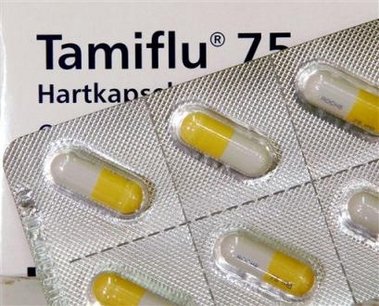
tamiflu%20capsules.jpg
My first read every morning when I sit in front of the computer is www.recombinomics.com, the Website run by Dr. Henry Niman. Dr. Niman has some very interesting information regarding the H274Y Tamiflu-resistant mutation that is the subject of an increasing number of media reports over the past few days. Even the New York Times and AP have picked up on the Helen Branswell/Canadian Press story of this week.
Here's what is peculiar: Normally, you would expect Tamiflu-resistant H1N1 influenza to show up in areas where Tamiflu is prescribed. But that is not the case here! There are no known cases of H1N1 with the H274Y mutation in Japan, where Tamiflu is habitually overprescribed; and 70% of H1N1 is showing Tamiflu resistance in distant Norway, where Tamiflu is rarely, if ever, prescribed. Quite a conundrum.
Dr. Niman believes that Tamiflu-resistant H1N1 with the H274Y mutation has already been detected in these US isolates:
ISDN282211 A/Hawaii/21/2007 H1N1
ISDN282224 A/Hawaii/28/2007 H1N1
ISDN282222 A/Hawaii/28/2007 H1N1
CY027037 A/Kansas/UR06-0104/2007 H1N1
ISDN282240 A/Minnesota/23/2007 H1N1
ISDN263890 A/Texas/31/2007 H1N1

According to Dr. Niman,
The above comments describe the appearance of the oseltamivir resistance marker, H274Y, in recent H1N1 isolates in Europe.

However, a search of public sequences identifies H274Y suddenly appearing in 2007 H1N1 isolates from the United States (see list below. The number of complete human influenza sequences has grown steadily, largely because of the NIAID influenza sequencing project. At the Los Alamos sequence database, there are 1030 N1 sequences from H1N1 human isolates. 340 are from 2007 and all of the sequences below are from 2007. Thus, although the percentage of samples was low, all were from 2007 and all were Solomon Island-like.

In the United States the change was in the Solomon Islands variant, which links back to Asia, where the identical change has been seen in H5N1 from patients treated with Tamiflu, as well as birds, including wild birds in Astrakhan in 2005.
These Solomon-Island lake sequences trace back to Asia, where Tamiflu blankets are frequently applied in the treatment of H5N1. The N1 in H5N1 has donor sequences for human N1 in the region adjacent to the acquisition which generates H274Y, which is the precise change found in the most common form of oseltamivir resistance in H5N1 patients, primarily in Vietnam.
The two complete commentaries from Dr. Niman can be found at:
http://www.recombinomics.com/News/01290802/H1N1_Tamiflu_US.html
http://www.recombinomics.com/News/01300804/H1N1_H274Y_H5N1.html
Remember that the "A" refers to Influenza A, next comes the location where the virus was first typed, then the lab number, then the year, and then the subtype.
Now, over at FluTrackers, the forum is as lively as ever. And speculation centers around the actual inner workings of Tamiflu itself. I am treading dangerously close to incompetence if I speculate any further, having reached the edge of my envelope on the surface properties of N1 vs. N2 subtypes of neuranimidase and their susceptibility to Tamiflu versus Relenza. So I will simply give you the link and let you follow the bouncing ball:
http://www.flutrackers.com/forum/showthread.php?t=51648
So what does this mean? It means that Tamiflu is still the #1 arrow in the quiver against pandemic flu. It also means the people who make Relenza can rejoice somewhat, because it ups the ante for buying their product.
But the deeper meaning is this: After years and years of use, the sudden appearance of this genetic marker in seasonal H1N1 has to be the result of a relatively recent series of developments. Tamiflu resistance had to be acquired by H1N1. The most likely place for it to have done so is in Asia, or Egypt. Or both: There are compelling arguments for both, as we see geographically distinct Hawaii, Kansas and Minnesota isolates showing the mutation. And talk about geographically distinct! Again, from Branswell's story:
Eight of 81 H1N1 viruses tested carry the H274Y mutation - one each from British Columbia and Newfoundland and Labrador, and six from Ontario. Plummer said that total includes one virus (from British Columbia) recovered from a child who is believed to have been infected in Sudan.
That means this mutation is all over the place! It could have come from anywhere. But it is appropriate to zero in on the areas where Tamiflu resistance is most likely to be manufactured: Wherever a Tamiflu blanket has been applied to try and quell an H5N1 outbreak. Dr. Niman makes a compelling argument that these Tamiflu blankets may have spawned this mutation.
The theory is that H5N1 segments recombined with H1N1 seasonal flu to produce a new, Tamiflu-resistant substrain of H1N1. Also keep in mind that the Southeast Asian strain of H5N1 is of a different clade (Fujian) than the Egyptian strain (Qinghai), so Tamiflu resistance would either have been conferred before the subtype split into two distinct clades (sometime in early 2005?), or they independently mutated with simultaneous Tamiflu resistance. This "parallel development" theory is entirely plausible.
But what if H1N1 was not the only virus that changed? If H1N1 and H5N1 can get together this way, have they already gotten together before and spawned a mild H5N1 that is easily passed off as seasonal flu? Again, Niman postulates that in Southeast Asia and in Egypt, there may be a mild form of H5N1 that is beginning to spread. Now before we rejoice at the thought of a mild, nonlethal reassortant/recombinant H5N1, recall that in 1918, the second pandemic wave -- not the first wave -- was the murderer. The first wave was passed off as normal, seasonal influenza. Experts said, "No biggie; nothing to see here, folks."
Of course, today's typing and surveillance is so much better, right?
If you say "Yes," then you didn't read my blog of yesterday. Go get it: http://www.scottmcpherson.net/journal/2008/1/30/no-magic-bullets-to-fight-panflu.html
...

 
Re: :::Emergence of seasonal influenza viruses type A/H1N1 with:::

Re: :::Emergence of seasonal influenza viruses type A/H1N1 with:::

Japan has had H5N1 outbreaks

Is there any Tamiflu resistance showing up in Japan either in birds or in the seasonal flu of humans?
 
Re: :::Emergence of seasonal influenza viruses type A/H1N1 with:::

Re: :::Emergence of seasonal influenza viruses type A/H1N1 with:::

Japan has had H5N1 outbreaks
Is there any Tamiflu resistance showing up in Japan either in birds or in the seasonal flu of humans?
"... there is no evidence of Japanese H1N1 with the Tamiflu-resistant gene H274Y."
 
Re: :::Emergence of seasonal influenza viruses type A/H1N1 with:::

Re: :::Emergence of seasonal influenza viruses type A/H1N1 with:::

use of Tamiflu for H5N1 is negligable compared with seasonal flu.

Japan had 2% resistent viruses earlier, AFAIR
(will search the source...)

http://www.newslocale.org/health/hn...trains_appear_to_be_emerging_20070405248.html

researchers collected samples from 422 untreated children and adults with flu[-B in Japan].
Here they discovered seven samples [2%] showing signs of drug resistance.
[coauthor Yoshihiro Kawaoka, Tokyo]


other interesting things, which I found while searching:


http://en.wikipedia.org/wiki/Oseltamivir

Mutant H3N2 influenza A virus isolates resistant to oseltamivir were found in 18% of a group of 50 Japanese children treated with oseltamivir [17]. This rate was similar to another study where resistant isolates of H1N1 influenza virus were found in 16.3% of another cohort of Japanese children [7].

[7] ^ a b c d Ward P, Small I, Smith J, Suter P, Dutkowski R. Oseltamivir (Tamiflu) and its potential for use in the event of an influenza pandemic. J Antimicrob Chemother 2005;55 (Suppl 1): i5-i21. PMID 15709056
http://www.ncbi.nlm.nih.gov/pubmed/15709056
full paper .pdf: http://jac.oxfordjournals.org/cgi/reprint/55/suppl_1/i5


http://content.nejm.org/cgi/content/full/353/25/2633

A 2000–2001 Japanese study also revealed resistant influenza A (H1N1) viruses with the H274Y mutation in 7 of 43 oseltamivir-treated children (16 percent).4
The surprisingly high rate of emerging resistance in the Japanese studies may have been due to the use of insufficient doses of the drug and resultant failure to eradicate the virus. In both studies, the children were given 2 mg of oseltamivir per kilogram of body weight, and many were very young (75 percent were one to three years of age in the 2004 study, as were 43 percent of those in the 2000–2001 study). Of 147 children in a U.S. trial (including 26 younger than five years) who received the age- and weight-tailored (and therefore sometimes substantially higher) doses that have been approved outside of Japan, none shed resistant virus.1

1
4


----------------------------------


New data published by the World Health Organisation (WHO) has confirmed a low frequency of resistance to Tamiflu (oseltamivir) over 3 influenza seasons (2003 ?2006)1.
The information, published by the Neuraminidase Inhibitor Susceptibility Network in the WHO’s Weekly Epidemiological Record, has shown that resistance of around 0.3% to oseltamivir was seen during the influenza seasons in which there had been substantial Tamiflu use in Japan (35 million patients), the highest use in any market. This level of resistance is extremely low compared to rates of 65% seen in Japan with another antiviral, amantadine2.
"These results confirm that the potential for the development of resistance to Tamiflu is very low, even when used extensively in the management of seasonal influenza," commented Dr. David Reddy, Pandemic Task Force Leader, Roche
 
Re: :::Emergence of seasonal influenza viruses type A/H1N1 with:::

Re: :::Emergence of seasonal influenza viruses type A/H1N1 with:::

"This rate was similar to another study where resistant isolates of H1N1 influenza virus were found in 16.3% of another cohort of Japanese children [7].
[7] ^ a b c d Ward P, Small I, Smith J, Suter P, Dutkowski R. Oseltamivir (Tamiflu) and its potential for use in the event of an influenza pandemic. J Antimicrob Chemother 2005;55 (Suppl 1): i5-i21. PMID 15709056 "

I didn't read the [7], but the "others" seems to stated that in those resistant isolate wasn't a H274Y ("It does not have H274Y").

Anyway, surprisingly (or not, viewing the new WHO clearance policy), I didn't saw any statement texts from the terminated 50 world top scientists teleconference meeting!

The results of the (terminated) 50 world top scientists teleconference meeting about this matter?
 
Re: :::Emergence of seasonal influenza viruses type A/H1N1 with:::

Re: :::Emergence of seasonal influenza viruses type A/H1N1 with:::

the recent increase of the H274Y mutation
in seasonal H1N1, do you think it is due to
Tamiflu use - the virus escaping with resistance ?
Or is it just coincidence or the mutation serves some
other evolutionary benefit for the virus unrelated to Tamiflu ?

What do you consider more likely ? What do you think
contributed more, drug-escape or other factors ?

ECDC (or/and Hayden ?) said that it's unlikely that it has to do
with drug use _in Europe_.
And in Japan, where Tamiflu use is common,
no H274Y mutations have been reported.


Hayden:
> It is unlikely to have been from use of Tamiflu
> in part because no cases have been detected in Japan, where the
> drug is often used in treatment.
> Perplexingly, Japan - the country that uses more Tamiflu by far
> than any other in the world - has not found any of these
> resistant viruses this flu season
--------------------------------------------
McKimm-Breschkin:
> It is disturbing that resistant viruses are now being detected
> in Europe, which has a very low level'' of antiviral use,
> This suggests that resistant viruses have obtained a growth
> advantage elsewhere on the globe, and have been sufficiently
> fit to now start spreading possibly globally even in the absence
> of widespread drug use.
_________________
ask vaccine producers, how much 13B doses of pandemic vax within 6months would cost !

Last edited by gsgs on Sun Feb 03, 2008 1:34 am; edited 2 times in total


the Amantadine resistance , is it due to drug use ?
This is commonly assumed, I think. But I couldn't
find a clear statement or a paper.

Shouldn't it go away, if we stop using Amantadine ?

Is Amantadine, Tamiflu also used in swine ?
_________________


Hayden 2006 about Amantadine-resistance:
"absence of sustained selective drug pressure"

http://content.nejm.org/cgi/content/full/354/8/785

The high frequency of resistance among recent isolates of influenza A (H3N2) from North America appears to be attributable to an unprecedented global spread of viruses with a specific mutation (Ser31Asn), which has occurred despite the absence of sustained selective drug pressure. This observation clearly indicates that this mutation does not reduce transmissibility. Indeed, the fact that this particular mutation has been found consistently in community isolates of H3N2 whereas other resistance mutations are uncommon, along with the fact that this mutation has not been found in high frequency in isolates of H1N1, suggests that it confers a transmission advantage, perhaps mediated by compensatory mutations in other genes, or that it has been incorporated into efficiently spreading viruses.
 
Re: :::Emergence of seasonal influenza viruses type A/H1N1 with:::

Re: :::Emergence of seasonal influenza viruses type A/H1N1 with:::

Oct. 3 (Bloomberg) -- Roche Holding AG's Tamiflu persists in waste water, which may make the drug a less effective weapon in an influenza pandemic, Swedish researchers said.
The medicine's active ingredient, oseltamivir carboxylate, is excreted in the urine and feces of those taking it. Scientists at Sweden's Umea University found the drug isn't removed or degraded in normal sewage treatment, and its presence in waterways may allow flu-carrying birds to ingest it and incubate resistant viruses.
My post is at: http://www.scottmcpherson.net/journal/2007/10/4/killing-two-birds-with-one-stone.html and I hope you all periodically go back and search my blogs, in case my short-term memory ever malfunctions!
1.
The reason why I bring it up is that Japan takes enough Tamiflu to make Roche very, very happy. Yet, despite the theoretical presence of lots of peed-out Tamiflu in its wastewater systems, there is no evidence of Japanese H1N1 with the Tamiflu-resistant gene H274Y. This would further supprt the theories of Dr. Henry Niman and others that this H1N1 mutation is not the result of a mutation derived from people taking mass quantities of Tamiflu.
2.
It does, by proxy, support the theory that the H274Y gene was picked up via some recombination event elsewhere(s), and then came to Europe and North America via human contact.
3.a)
It may also point us toward reservoirs of excreted Tamiflu in wastewater and, in some remote corners of the world, drinking water commingled with drinking water, in the vicinity of Tamiflu blankets. Wherever a Tamiflu blanket is applied, are we checking the waste/groundwater to see how much residual antiviral is still active? Could a combination of excreted Tamiflu in Indonesian, Egyptian, German, Mongolian, Chinese, and Egyptian lakes be a source of Tamiflu-resistant H5N1, incubated and then carried by migrating birds?

AH1N1 Tamiflu resistant strain question

With the new WHO flu reports policy, and in the absence of the ultimate news of the "telemeeting of the 50.", we can only speculate:

The 1. text answer seems excluded because the lack of H274Y.

The 3.a) text answer seems possible because of the many (in distant various places) Tamiflu blankets, the possible source region (the supposed Asiatic/Solomon/?) of that virus

3. b) very probably that it was created into some AH1N1 flu patient assumed Tamiflu for H5N1 blanket protection, and than spreaded (plain, etc.) un-noticed by asimptomatic spreaders, or superspreaders with lab. non checked illness.

The 2. text answer is enaugh logic, with many speculation possibilities.

Virus genetic fingerprints sourcing point to 2., 3.a, or?
 
Re: :::Emergence of seasonal influenza viruses type A/H1N1 with:::

Re: :::Emergence of seasonal influenza viruses type A/H1N1 with:::

you already said that in post 73.
I don't believe that.
1) oseltamivir carboxylate is not effective. We had this 2 years ago when someone suggested -but then retracted- to drink the urine in order
to amplify Tamiflu.
2) H1N1 doesn't usually jump from birds to humans, the recent H274Y
is in a human genetic background, not avian
No recombination of H5N1 and H1N1 found
3) no oseltamivir carboxylate found in wastewater yet.
4) not much resistance in Japan (...found yet)
 
Back
Top Bottom