• FluTrackers.com Inc. does not provide medical advice. Information on this web site is collected from various internet resources, and the FluTrackers board of directors makes no warranty to the safety, efficacy, correctness or completeness of the information posted on this site by any author or poster. The information collated here is for instructional and/or discussion purposes only and is NOT intended to diagnose or treat any disease, illness, or other medical condition. Every individual reader or poster should seek advice from their personal physician/healthcare practitioner before considering or using any interventions that are discussed on this website. By continuing to access this website you agree to consult your personal physican before using any interventions posted on this website, and you agree to hold harmless FluTrackers.com Inc., the board of directors, the members, and all authors and posters for any effects from use of any medication, supplement, vitamin or other substance, device, intervention, etc. mentioned in posts on this website, or other internet venues referenced in posts on this website.
  • We are not asking for any donations. Do not donate to any entity who says they are raising funds for us.

Argentina - Outbreaks of highly pathogenic avian influenza H5 (N untyped) in mammals 2023

Mary Wilson

Well-known member
Saturday, August 12th 2023 - 10:47 UTC

Argentine authorities Friday confirmed the detection of the highly pathogenic avian influenza (HPAI) H5 in sea lions found dead on the Tierra del Fuego shores.

“The finding was made in 7 of 21 fur seals found dead in Río Grande, in the province of Tierra del Fuego,” Argentina's National Agrifood Health and Quality Service (Senasa) said in a statement after laboratory tests were returned. Samples had been sent for analysis as avian flu H5 was feared following the finding of the lifeless animals. ...

https://en.mercopress.com/2023/08/12/bird-flu-detected-in-dead-sea-lions-on-tierra-del-fuego-shores
 
Avian influenza: A positive case was confirmed in wild mammals in Tierra del Fuego

It was diagnosed by the Senasa Laboratory, after analyzing samples of 21 sea lions found dead in Rio Grande.
Posted on Friday, August 11, 2023​


Buenos Aires - The National Agrifood Health and Quality Service (Senasa) confirmed the first positive case of Highly Pathogenic Avian Influenza (HPAI) H5 in wild mammals . The finding was made in 7 of 21 sea lions that were found dead in Río Grande , in the province of Tierra del Fuego, Antarctica and the South Atlantic Islands.
Given the suspicion of mortality, samples were sent to the Senasa National Laboratory , which were diagnosed as positive for H5 avian influenza. To date, two previous suspicions in sea lions had been addressed in the country, which were negative.
Photo courtesy Fuegian Institute of Tourism
The finding was made within the framework of surveillance actions and measures carried out throughout the national territory for the prevention of the disease, established by the declaration of emergency by HPAI - Senasa Resolution No. 147/2023 - and with the objective of preserving the recent self-declaration of a country free of the disease in poultry .
In this context, Senasa formed, together with the provincial government and the municipality of Río Grande , a monitoring committee for the development of control and containment tasks in the affected area .
Likewise, the health agency continues to work with the different regions , together with national, provincial, and municipal organizations and the productive sector, since the state of alert is maintained in the face of the behavior of the disease and its forms of transmission and dissemination.
It should be noted that when the sea lions were stranded in the protected area of ​​the Atlantic coast, Senasa and the provincial environmental authorities established a sanitary protocol for their intervention .
In a preventive manner, access and approach to the coastal sector of the Río Grande Reserve were disabled and the corresponding samples were taken and sent to Buenos Aires to be analyzed.
Based on international experience, it has been observed that marine mammals can be susceptible to AI and that, infrequently, they can become infected . Other positive cases have been reported in countries in the region, such as Peru and Chile. In the latter country, in Puerto Williams, the appearance of a South American sea lion ( Otaria flavescens ) with avian influenza in June of this year stands out.
On the day of the date, a meeting was held to establish the work guidelines that will be followed to eradicate the outbreak and mitigate the risk of spreading the disease, in which members of the National Directorate of Animal Health of Senasa and of its Regional Center Patagonia Sur ; representatives of the Ministry of Production and Environment and Health of the province of Tierra del Fuego, Antarctica and South Atlantic Islands; municipalities and other relevant actors for the region.
recommendations
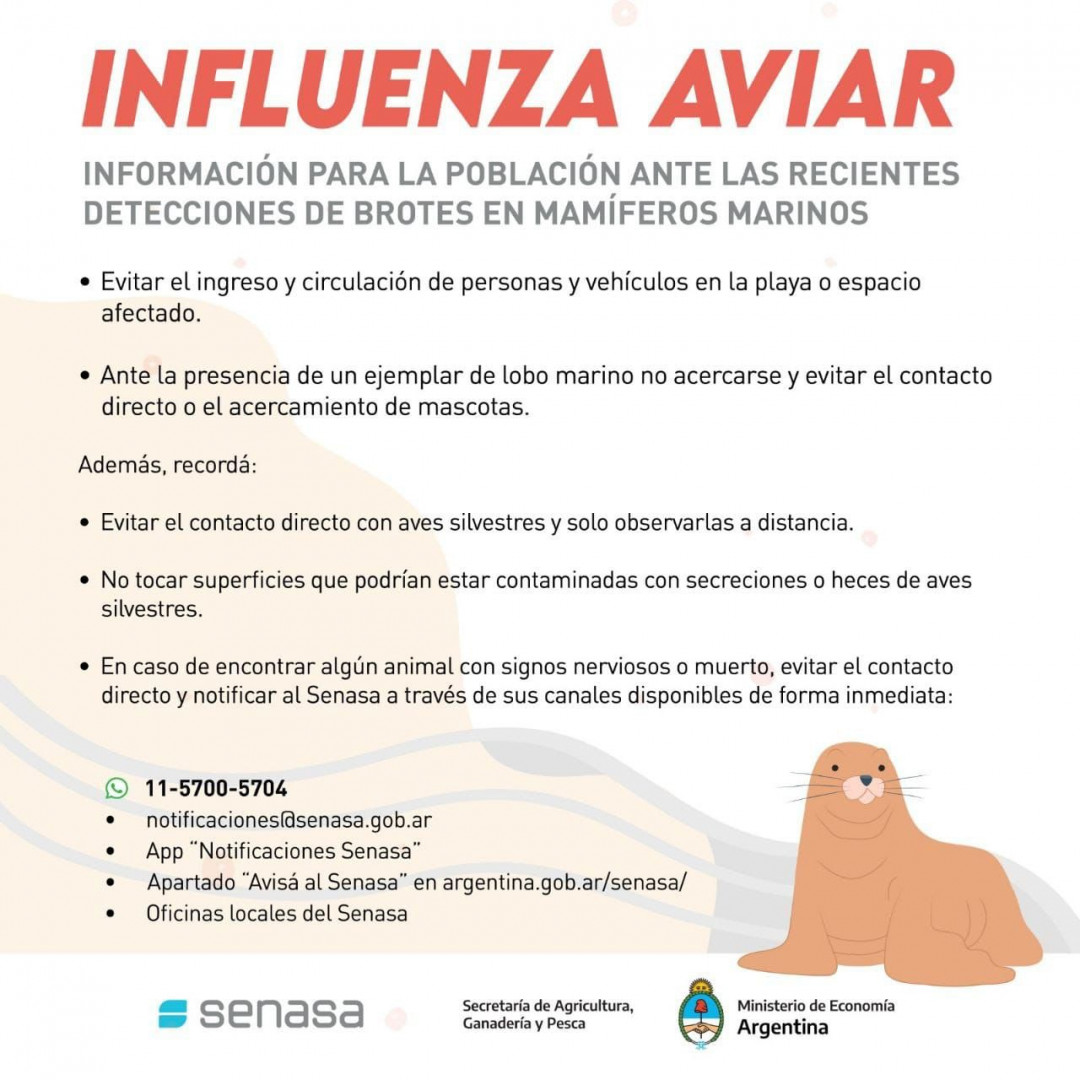
Senasa reminds producers, institutions and the general public not to visit poultry establishments after having been in contact with dead animals or that have presented symptoms compatible with HPAI.
In addition, it recommends the importance of notifying Senasa if high mortality of susceptible species, nervous, digestive and/or respiratory signs are identified in wild birds or commercial or backyard domestic birds, through the following channels: By personally attending the nearest Senasa office , by calling 11 5700 5704 ; through the App for mobile devices "Senasa Notifications" , available in the Play Store; writing to the email: notificaciones@senasa.gob.ar or through the section Notify Senasa , available on its website. More information on the avian influenza microsite.

https://www.argentina.gob.ar/notici...o-en-mamiferos-silvestres-en-tierra-del-fuego

 
Argentina - Influenza A viruses of high pathogenicity (Inf. with) (non-poultry including wild birds) (2017-) - Immediate notification

GENERAL INFORMATION
COUNTRY/TERRITORY OR ZONE
COUNTRY/TERRITORY

ANIMAL TYPE
TERRESTRIAL

DISEASE CATEGORY
Listed disease

EVENT ID
5189

DISEASE
Influenza A viruses of high pathogenicity (Inf. with) (non-poultry including wild birds) (2017-)

CAUSAL AGENT
Highly pathogenic avian influenza virus

GENOTYPE / SEROTYPE / SUBTYPE
H5 (N untyped)

START DATE
2023/08/08

REASON FOR NOTIFICATION
Unusual host species

DATE OF LAST OCCURRENCE
-

CONFIRMATION DATE
2023/08/10

EVENT STATUS
On-going

END DATE
-

SELF-DECLARATION
NO

REPORT INFORMATION
REPORT NUMBER
Immediate notification

REPORT ID
IN_162461

REPORT REFERENCE
-

REPORT DATE
2023/08/25

REPORT STATUS
Validated

NO EVOLUTION REPORT
-

EPIDEMIOLOGY
SOURCE OF EVENT OR ORIGIN OF INFECTION
Unknown or inconclusive

EPIDEMIOLOGICAL COMMENTS
No epidemiological comment

QUANTITATIVE DATA SUMMARY
MEASURING UNIT
Animal

SpeciesSusceptibleCasesDeathsKilled and Disposed ofSlaughtered/ Killed for commercial useVaccinated
South-American sea lion (WILD)
NEW - - 57
- - -
TOTAL - - 57 - - -​

...

NEW OUTBREAKS

OB_124358 - IAAP SILVESTRES - 20053 - PUERTO LOYOLA - SANTA CRUZ - PUERTO LOYOLA
OB_124321 - IAAP SILVESTRES - 20035 - RIO GRANDE - TIERRA DEL FUEGO - RIO GRANDE
OB_124359 - IAAP SILVESTRES - 20058 - NECOCHEA -BUENOS AIRES - NECOCHEA
OB_124322 - IAAP SILVESTRES - 20044 - LA LOBERIA - RIO NEGRO - LA LOBERIA - RESERVA FAUNISTICA PUNTA BERMEJA

https://wahis.woah.org/#/in-review/5189​
 
Translation Google

Avian influenza: A new positive case was confirmed in sea lions in Buenos Aires

In addition, Senasa informs the sanitary protocol carried out together with the Health and Fauna areas at the municipal and provincial level.

Posted on Tuesday, August 29, 2023​


Buenos Aires - The National Agrifood Health and Quality Service (Senasa) confirmed today a new case of Highly Pathogenic Avian Influenza (HPAI) H5 detected in marine mammals in the Mayor Buratovich Spa, Buenos Aires. The Senasa National Laboratory diagnosed new positive samples for the disease, which were taken from sea lions that were found dead in the mentioned locality.

To date, positive cases of the disease have been detected in Río Grande, province of Tierra del Fuego, Antarctica and the South Atlantic Islands , it was the first positive case in this species; in the Punta Bermeja Protected Natural Area, Rio Negro ; in Necochea, Buenos Aires and Punta Loyola, Santa Cruz , in Mar del Plata, Buenos Aires and Puerto Pirámides, Chubut , the three yesterday in Claromecó and San Blas, Buenos Aires, and in San Antonio Este, Río Negro , and the one in today.

The findings were made within the framework of surveillance actions and sanitary measures that are carried out throughout the national territory for the prevention of the disease, established by the declaration of emergency by HPAI - Senasa Resolution 147/2023.

It should be noted that since the day Senasa was notified of the suspected cases, the National Health Agency works together with municipal, provincial and national institutions in the implementation of the intervention protocol in these cases and to coordinate health strategies and actions of outbreak containment and provide information to entities.

In addition, within the protocol for taking samples from the animals, together with the local authorities, the place for the burial of the animals killed by the disease is identified to avoid any type of contamination or contagion from other animals or people.

The procedure implies that if there are animals with symptoms or dead, Senasa must be notified, so that it can come to the place to assess the situation. If applicable, take the samples and send them to the laboratory. He then proceeds to bury the animals that have died.

In positive cases, action is taken together with the municipality and the province to bury the dead animals and with those that are sick, follow-up and monitoring is carried out. Senasa clarifies that neither sanitary sacrifice nor euthanasia of wild animals is carried out.

Likewise, Senasa emphasizes that the recent detections in marine mammals do not affect the animal health status self-declared before the World Organization for Animal Health (WHO) , where Argentina is recognized as a country free of Highly Pathogenic Avian Influenza in poultry.

Senasa continues to work with the different regions, together with national, provincial, municipal organizations and the productive sector, since the state of alert is maintained, given the behavior of the disease, and its forms of transmission and dissemination.

Recommendations

From Senasa it is recommended not to handle dead animals or animals with suspicious symptoms. Likewise, producers, institutions and the general public are reminded of the importance of notifying if high mortality of susceptible species, nervous, digestive and/or respiratory signs are identified in wild birds or commercial or backyard domestic birds.


https://www.argentina.gob.ar/notici...aso-positivo-en-lobos-marinos-en-buenos-aires
 
Avian flu: do we have to worry in Bahía Blanca?


“The issue is to remain on permanent alert so that the situation does not spread to humans,” said Ezequiel Jouglard, Undersecretary of Health for the Municipality of Bahía Blanca. More and more cases of dead sea lions are being recorded.

05:00 | 09/04/2023


snip


“What must be understood with the influenza (flu) virus is that when it passes from one animal species to another it is due to a mutation change and thus it becomes more adaptable. Now, when it reaches man, it is something new and, since we were never exposed, we have no defenses and the degree of affectation is usually greater than the viruses we are used to living with, ”he said.
“Why is it more worrying now than initially with the affectation of birds? Because there is an affectation to a group of mammals; in this case, sea lions”, indicated the official.
Argentina is not the only country affected by cases of bird flu.
The new strain of the virus —called H5N1 clade 2.3.4.4b— appeared in 2020 and since 2022 it has circulated in the United States and Canada. Later, it arrived in South America due to the migratory processes of birds. Cases in animals have so far occurred in 16 countries in Latin America and the Caribbean.
For this reason, the National Agri-Food Health and Quality Service announced —this Monday the 29th— the restrictions on access to the beaches of the Argentine Atlantic coast, as well as specifically to the affected areas. According to the agency, the first positive case occurred in Río Grande, province of Tierra del Fuego, Antarctica and the South Atlantic Islands.

snip

—Although some suspicious cases are recently appearing in Monte Hermoso, clearly what you have to avoid is being in contact with some kind of marine animal, or with birds, especially if you observe them in a situation of illness or even death. They must not be touched, since eventual manipulation makes it possible to come into contact with a potentially pathogenic virus for humans.

more... https://www.lanueva.com/nota/2023-9-4-5-0-22-gripe-aviar-tenemos-que-preocuparnos-en-bahia-blanca
 
Argentina - Influenza A viruses of high pathogenicity (Inf. with) (non-poultry including wild birds) (2017-) - Follow up report 1

GENERAL INFORMATION
COUNTRY/TERRITORY OR ZONE
COUNTRY/TERRITORY

ANIMAL TYPE
TERRESTRIAL

DISEASE CATEGORY
Listed disease

EVENT ID
5189

DISEASE
Influenza A viruses of high pathogenicity (Inf. with) (non-poultry including wild birds) (2017-)

CAUSAL AGENT
Highly pathogenic avian influenza virus

GENOTYPE / SEROTYPE / SUBTYPE
H5 (N untyped)

START DATE
2023/08/08

REASON FOR NOTIFICATION
Unusual host species

DATE OF LAST OCCURRENCE
-

CONFIRMATION DATE
2023/08/10

EVENT STATUS
On-going

END DATE
-

SELF-DECLARATION
NO

REPORT INFORMATION
REPORT NUMBER
Follow-up report 1

REPORT ID
FUR_162586

REPORT REFERENCE
-

REPORT DATE
2023/09/01

REPORT STATUS
Validated

NO EVOLUTION REPORT
-

EPIDEMIOLOGY

SOURCE OF EVENT OR ORIGIN OF INFECTION
Unknown or inconclusive

EPIDEMIOLOGICAL COMMENTS
No epidemiological comment

QUANTITATIVE DATA SUMMARY
MEASURING UNIT
Animal

SpeciesSusceptibleCasesDeathsKilled and Disposed ofSlaughtered/ Killed for commercial useVaccinated
South American fur seal (WILD)
NEW - - 3
- - -
TOTAL - - 3 - - -
South-American sea lion (WILD)
NEW - - 345
- - -
TOTAL - - 402 - - -
All species
NEW - - 348
- - -
TOTAL - - 405 - - -​

DIAGNOSTIC DETAILS
CLINICAL SIGNS
YES
...

NEW OUTBREAKS

OB_124590 - IAAP SILVESTRES - 20087 - CALETA OLIVIA -SANTA CRUZ - CALETA OLIVIA
OB_124589 - IAAP SILVESTRES - 20071 - MAYOR BURATOVICH -BUENOS AIRES - MAYOR BURATOVICH
OB_124588 - IAAP SILVESTRES - 20070 - CLAROMECÓ -BUENOS AIRES - CLAROMECÓ
OB_124587 - IAAP SILVESTRES - 20068 - PUNTA VILLARINO -RIO NEGRO - PUNTA VILLARINO
OB_124586 - IAAP SILVESTRES - 20067 - SAN BLAS -BUENOS AIRES - BAHIA SAN BLAS
OB_124584 - IAAP SILVESTRES - 20056 - PUERTO PIRAMIDES -CHUBUT - PUERTO PIRAMIDES
OB_124585 - IAAP SILVESTRES - 20059 - MAR DEL PLATA -BUENOS AIRES - MAR DEL PLATA

UPDATED OUTBREAKS

OB_124359 - IAAP SILVESTRES - 20058 - NECOCHEA -BUENOS AIRES - NECOCHEA
OB_124322 - IAAP SILVESTRES - 20044 - LA LOBERIA - RIO NEGRO - LA LOBERIA - RESERVA FAUNISTICA PUNTA
BERMEJA

PREVIOUSLY REPORTED OUTBREAKS

OB_124358 - IAAP SILVESTRES - 20053 - PUERTO LOYOLA - SANTA CRUZ - PUERTO LOYOLA
OB_124321 - IAAP SILVESTRES - 20035 - RIO GRANDE - TIERRA DEL FUEGO - RIO GRANDE
...
https://wahis.woah.org/#/in-review/5189​
 
Argentina - Influenza A viruses of high pathogenicity (Inf. with) (non-poultry including wild birds) (2017-) - Follow up report 2

GENERAL INFORMATION
COUNTRY/TERRITORY OR ZONE
COUNTRY/TERRITORY

ANIMAL TYPE
TERRESTRIAL

DISEASE CATEGORY
Listed disease

EVENT ID
5189

DISEASE
Influenza A viruses of high pathogenicity (Inf. with) (non-poultry including wild birds) (2017-)

CAUSAL AGENT
Highly pathogenic avian influenza virus

GENOTYPE / SEROTYPE / SUBTYPE
H5 (N untyped)

START DATE
2023/08/08

REASON FOR NOTIFICATION
Unusual host species

DATE OF LAST OCCURRENCE
-

CONFIRMATION DATE
2023/08/10

EVENT STATUS
On-going

END DATE
-

SELF-DECLARATION
NO

REPORT INFORMATION
REPORT NUMBER
Follow-up report 2

REPORT ID
FUR_162683

REPORT REFERENCE
-

REPORT DATE
2023/09/08

REPORT STATUS
Validated

NO EVOLUTION REPORT
-

EPIDEMIOLOGY
SOURCE OF EVENT OR ORIGIN OF INFECTION
Unknown or inconclusive

EPIDEMIOLOGICAL COMMENTS
No epidemiological comment

QUANTITATIVE DATA SUMMARY
MEASURING UNIT
Animal

SpeciesSusceptibleCasesDeathsKilled and Disposed ofSlaughtered/ Killed for commercial useVaccinated
South American fur seal (WILD)
NEW - - - - - -
TOTAL - - 3 - - -
South-American sea lion (WILD)
NEW - - 313
- - -
TOTAL - - 715 - - -
All species
NEW - - 313
- - -
TOTAL - - 718 - - -​

...

NEW OUTBREAKS

OB_124756 - IAAP SILVESTRES - 20061 -ORENSE -BUENOS AIRES - BALNEARIO ORENSE
OB_124757 - IAAP SILVESTRES - 20093 -PUERTO MADRYN -CHUBUT - PUERTO MADRYN
OB_124758 - IAAP SILVESTRES - 20094 -SIERRA GRANDE -RIO NEGRO - SIERRA GRANDE
OB_124759 - IAAP SILVESTRES - 20106 -PUERTO DESEADO - SANTA CRUZ - PUERTO DESEADO
OB_124760 - IAAP SILVESTRES - 20108 -CAMARONES - CHUBUT - CAMARONES

UPDATED OUTBREAKS

OB_124589 - IAAP SILVESTRES - 20071 - MAYOR BURATOVICH -BUENOS AIRES - MAYOR BURATOVICH
OB_124585 - IAAP SILVESTRES - 20059 - MAR DEL PLATA -BUENOS AIRES - MAR DEL PLATA
OB_124322 - IAAP SILVESTRES - 20044 - LA LOBERIA - RIO NEGRO - LA LOBERIA - RESERVA FAUNISTICA PUNTA BERMEJA
...
https://wahis.woah.org/#/in-review/5189​
 
Translation Google

New positive cases in marine mammals in the province of Chubut

23-08-11_lobos_marinos_de_un_pelo_1.jpg
Buenos Aires, September 11, 2023 - The National Agri-Food Health and Quality Service (Senasa) today confirmed new cases of Highly Pathogenic Avian Influenza (HPAI) H5 detected in marine mammals in Comodoro Rivadavia, Rada Tilly and Punta Tombo, Chubut.

The agency's National Laboratory diagnosed new samples positive for the disease, which were taken from sea lions and elephant seals found dead in the aforementioned places. Based on notification, assistance to the site, collection and processing of samples, avian influenza was detected in a new species of marine mammals (elephant seals).

To date, positive cases of the disease have been detected in Río Grande, province of Tierra del Fuego, Antarctica and South Atlantic Islands , it was the first positive case in this species; in the Punta Bermeja Protected Natural Area, Rio Negro ; in Necochea, Buenos Aires and Punta Loyola, Santa Cruz , in Mar del Plata, Buenos Aires and Puerto Pirámides, Chubut , in Claromecó and San Blas, Buenos Aires, and in San Antonio Este, Río Negro , in the Balneario Mayor Buratovich, Buenos Aires , in Caleta Olivia, Santa Cruz , in Puerto Madryn, Chubut and Sierra Grande, Río Negro , in Camarones, Chubut and Puerto Deseado, Santa Cruz, and today's cases in Chubut.


Health guidelines for the detection of cases in marine mammals

...

https://www.argentina.gob.ar/senasa/influenza-aviar

 
Translation Google

Avian influenza: Epidemiological situation in marine mammals in Argentina

Senasa reports on the cases detected, the affected provinces and the interdisciplinary work to manage the cases.

Published on Friday, September 15, 2023


Buenos Aires – The National Agri-Food Health and Quality Service (Senasa) presented a report on the epidemiological monitoring of Highly Pathogenic Avian Influenza (HPAI), based on the first detection of the virus in marine mammals on the Argentine Atlantic coast.

On August 10, Senasa confirmed the first case of HPAI H5 in fur seals (Otaria flavescens) on the coast of Tierra del Fuego , near Río Grande. Days later, other positive cases of the same species were confirmed in the provinces of Río Negro, Santa Cruz, Buenos Aires and Chubut.

Likewise, on August 28, the HPAI virus was detected in a two-haired sea lion (Artocephalus australis) that was found dead in Punta Villarino, San Antonio Oeste, Río Negro along with other one-haired sea lions. Finally, and added to other detections of the disease in different provinces of the country, on September 11, the first positive was confirmed in an elephant seal (Mirounga leonina) from the Punta Tombo Natural Reserve, Chubut .

In total, 28 suspicions were attended to, of which 17 were positive . Most of the cases presented mortality in sea lions. The affected animals that could be observed still alive showed neurological and respiratory clinical signs. Of the 28 suspicions addressed, only in five were a small number of dead birds seen near the wolves.

Recommendations


Because the virus is found in the secretions and excretions of sick or dead animals, institutions and the general public are reminded not to approach dead animals or animals with suspicious symptoms and to notify Senasa if mortality, nervous signs, digestive and/or respiratory in marine mammals or birds, both wild and domestic, including mainly ducks, chickens, chickens, roosters, geese and turkeys.

Furthermore, in the presence of wild animals, such as sick or dead birds and sea lions, it is recommended not to approach them and avoid direct contact. Prevent your pets from being in contact with symptomatic or dead animals, restricting their access to the beaches.
whatsapp_image_2023-08-25_at_17.57.35.jpeg
Epidemiological situation

Senasa highlights that the recent detections in marine mammals do not affect the zoosanitary status declared before the World Organization for Animal Health (WHO), where Argentina maintains its status as a country free of Highly Pathogenic Avian Influenza in poultry. According to the guidelines of that Organization, the presence of the disease can occur in the subpopulation of wild animals and remain free of the disease with biosecurity measures and surveillance of the subpopulation of domestic birds.

Senasa will continue working with the different regions, together with national, provincial, municipal organizations and the productive sector, since the state of alert and epidemiological surveillance is maintained to try to contain the spread of the disease.

Notification methods

Avian influenza is a notifiable disease in our country according to Senasa Resolution 153/2021 and any person can notify the Agency if they identify mortality, nervous, digestive and/or respiratory signs in wild or poultry birds, through the following channels:
Going in person to the nearest Senasa office , calling 11 5700 5704 ; through the “Senasa Notifications” App for mobile devices , available in the Play Store; by writing to the email notifications@senasa.gob.ar or through the Notify Senasa section , available on its website. More information on the avian influenza microsite.


downloads

Report on the epidemiological situation in marine mammals (0.74 MB)
Download file


https://www.argentina.gob.ar/notici...demiologica-en-mamiferos-marinos-en-argentina
 
Argentina - Influenza A viruses of high pathogenicity (Inf. with) (non-poultry including wild birds) (2017-) - Follow up report 3

GENERAL INFORMATION
COUNTRY/TERRITORY OR ZONE
COUNTRY/TERRITORY

ANIMAL TYPE
TERRESTRIAL

DISEASE CATEGORY
Listed disease

EVENT ID
5189

DISEASE
Influenza A viruses of high pathogenicity (Inf. with) (non-poultry including wild birds) (2017-)

CAUSAL AGENT
Highly pathogenic avian influenza virus

GENOTYPE / SEROTYPE / SUBTYPE
H5 (N untyped)

START DATE
2023/08/08

REASON FOR NOTIFICATION
Unusual host species

DATE OF LAST OCCURRENCE
-

CONFIRMATION DATE
2023/08/10

EVENT STATUS
On-going

END DATE
-

SELF-DECLARATION
NO

REPORT INFORMATION
REPORT NUMBER
Follow-up report 3

REPORT ID
FUR_162756

REPORT REFERENCE
-

REPORT DATE
2023/09/20

REPORT STATUS
Validated

NO EVOLUTION REPORT
-

EPIDEMIOLOGY
SOURCE OF EVENT OR ORIGIN OF INFECTION
Unknown or inconclusive

EPIDEMIOLOGICAL COMMENTS
No epidemiological comment

QUANTITATIVE DATA SUMMARY
MEASURING UNIT
Animal

...

NEW OUTBREAKS

OB_124986 - IAAP SILVESTRES - 20122 -TRELEW -CHUBUT - PUNTA TOMBO


OUTBREAK REFERENCE
IAAP SILVESTRES - 20122 -TRELEW -CHUBUT

START DATE
2023/09/07

END DATE
-

DETAILED CHARACTERISATION
-

FIRST ADMINISTRATIVE DIVISION
Chubut

SECOND ADMINISTRATIVE DIVISION
Florentino Ameghino

THIRD ADMINISTRATIVE DIVISION
-

EPIDEMIOLOGICAL UNIT
Natural park

LOCATION
Punta Tombo

Latitude, Longitude
-44.044823 , -65.22235

OUTBREAKS IN CLUSTER
-

MEASURING UNIT
Animal

AFFECTED POPULATION DESCRIPTION
Ten animals were found dead: 3 penguins, 2 imperial shags, 1 southern giant petrel, 2 South American sea lion, 1 elephant seal and 1 bovine. All were negative for HPAI, except for the sea lions and the elephant seals.


SpeciesSusceptibleCasesDeathsKilled and Disposed ofSlaughtered/ Killed for commercial useVaccinated
Southern elephant seal (WILD)
Wild
NEW--2---TOTAL--2---
South-American sea lion (WILD)
Wild
NEW--2---
TOTAL--2---
All species
NEW--4-
--
TOTAL--4---​
...
https://wahis.woah.org/#/in-review/5189​
 
Source: https://canal12web.com/avanza-la-gripe-aviar-en-chubut-murieron-elefante-marino-en-peninsula-valdes/

Avian flu advances in Chubut: 74% of baby elephant seals died in Peninsula Valdés
The report reveals that calf mortality generally remains below 1%. However, this year an extreme mortality rate was recorded that varies between 56% and 74%, depending on the area monitored.
October 21, 2023 - 12:17
Channel 12 Editorial

A report recently published on October 20 highlights an alarming mortality rate of southern elephant seal pups in the Valdés Peninsula. Although confirmation is still pending, it is suggested that the most likely cause of this high mortality is related to highly pathogenic avian influenza H5N1.

This shocking discovery is the result of a joint registry carried out by the University of California – Davis and the National University of the Center of the Province of Buenos Aires. The report sheds light on a worrying situation affecting this population of elephant seals.

Among the highlights of the document, it mentions that during the reproductive season of elephant seals, calf mortality generally remains below 1%. However, this year an extreme mortality rate was recorded that varies between 56% and 74%, depending on the area monitored. This was detailed by experts from WCS Argentina and specialized veterinarians from the National University of the Center of the Province of Buenos Aires (UNICEN) and the University of California – Davis.
Deceased adult and subadult specimens

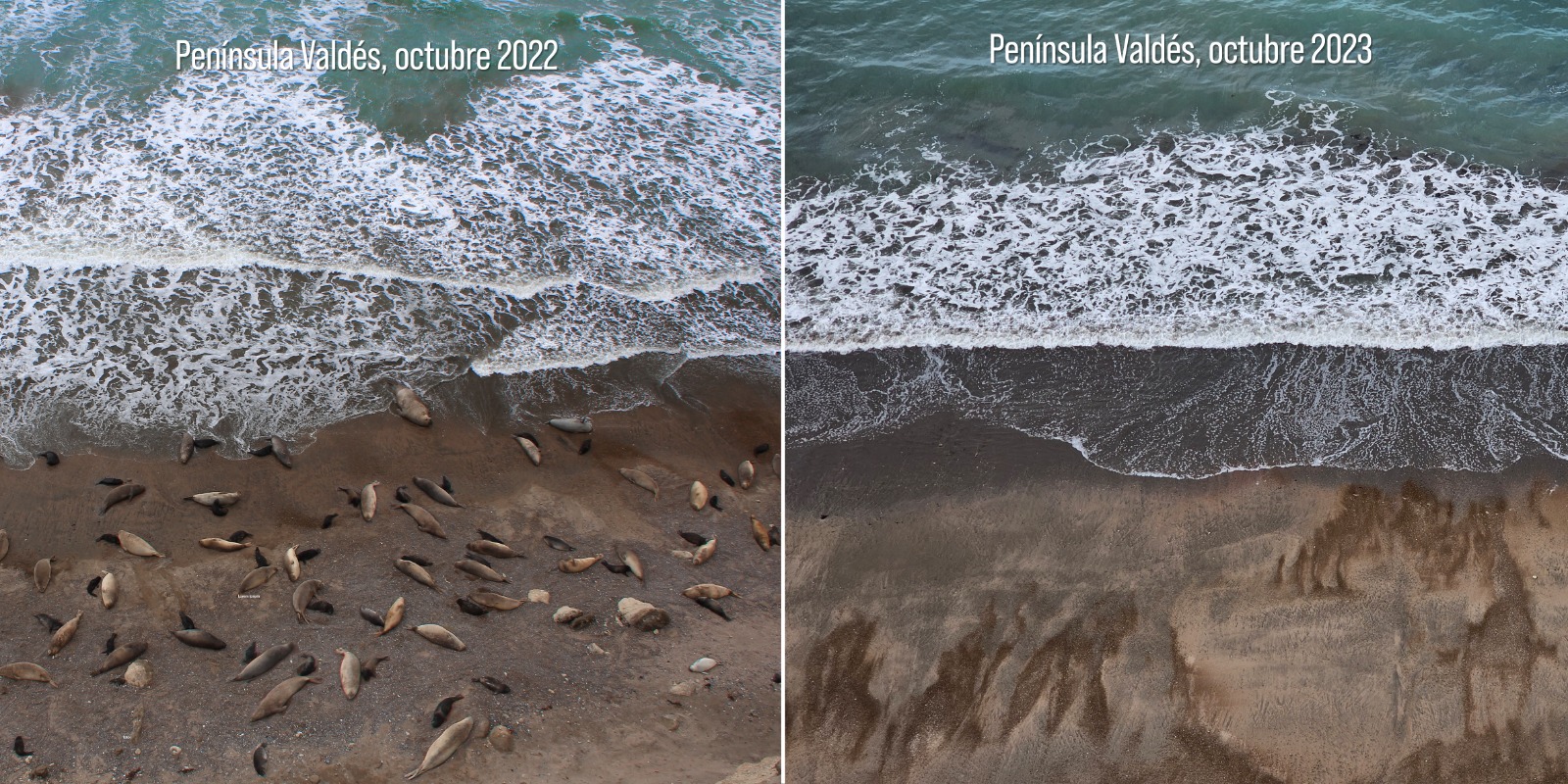
In addition to the high mortality of the offspring, an unusual number of deceased adults and subadults was observed. In some sectors, a 40% to 70% reduction in the population of adult individuals was recorded, depending on gender and location.

The report is not limited to elephant seals; During the recording, demographic data of the elephant populations were taken and dead individuals of other species were recorded, such as the South American Tern, the Royal Tern, the Yellow-billed Tern, the Swallow Tern, the Kelp Gull and the Fur Seal. . In addition, specialized veterinarians authorized by the Directorate of Wild Fauna and Flora of the province of Chubut collected samples to investigate the epidemiology and genetic characteristics of the HPAI H5N1 virus.

Laboratory reports

Although confirmation of the laboratory results is awaited, the magnitude of the impact and the clinical signs observed in the animals suggest that the HPAI H5N1 virus could be the cause of the high mortality of elephant seals in the Valdés Peninsula.

This tragic event marks the first record of mass mortality of southern elephant seals in this population, the only continental one of the species, and could represent the first global record of mass mortality of elephant seals caused by avian influenza, if confirmed. the diagnosis.
Recommendations to the Population

Given this worrying situation, it is essential to inform the community about the epidemiology that affects these species of Chubut's fauna. Citizens are urged to take precautionary measures to not add stressors to already impacted populations. Immediate actions are required to minimize the impact on animals exposed to the virus and ensure prevention of the spread of the disease through human action:

If you find a dead or sick specimen on the coast, it is important to maintain a minimum distance of 15 meters and not approach the animal.
Pets should be prevented from coming into contact with sick or dead animals on the beach. If you enter beaches enabled for walking with pets, they must be kept on a leash.
It is recommended not to touch surfaces that may be contaminated with feces or secretions from sick animals.
If you walked on a beach where dead birds or mammals were found, your footwear should be disinfected by washing the sole with a brush and soap, and then submerging the sole for 5 minutes in a solution of water with 10% bleach.
If you find a dead animal or with symptoms compatible with avian influenza, you must inform SENASA through the following means: in person if you are near an office, through the “SENASA notifications” App, by phone at 011-5700 -5704, on the SENASA website in the section “notify SENASA,” or by email to notifications@senasa.gob.ar.

 
Translation Google

Extreme mortality of southern elephant seal pups in Peninsula Valdés

By | Views: 398 | October 20, 2023

Still pending confirmation, highly pathogenic avian influenza H5N1 would be the most probable cause for the high mortality of elephant seals recorded in the population of Peninsula Valdés during October of this year. The results arise from a registry carried out by WCS Argentina, University of California - Davis and the National University of the Center of the Province of Buenos Aires. They recommend to the population a series of precautionary measures to minimize exposure and potential contagion to people.
IMG_0836%20%28Ralph%20by%20VZ%29.jpg

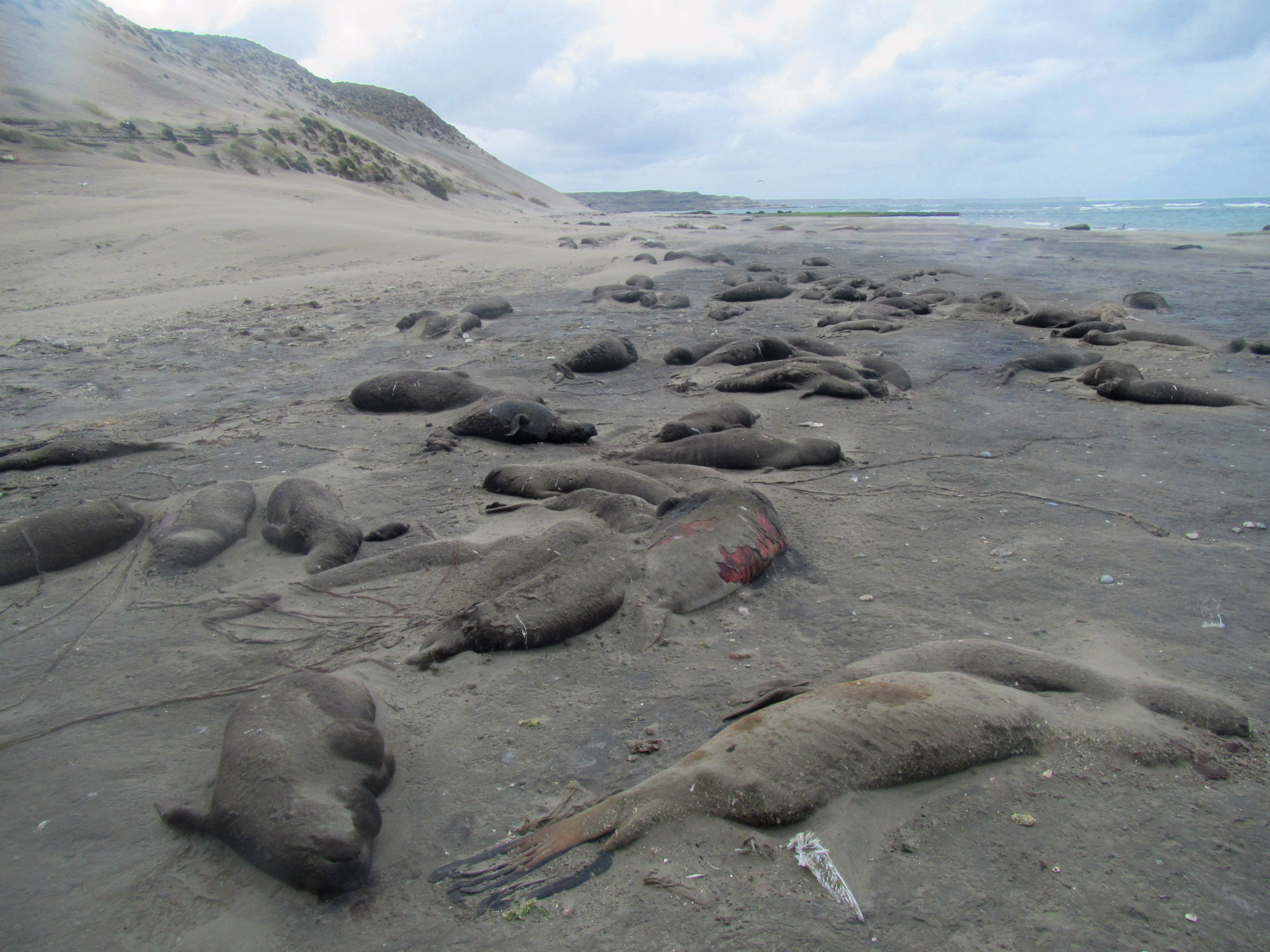
Mortality of southern elephant seal pups (Mirounga leonina) on the beaches of Punta Delgada, October 2023. On the right a dead sea lion (Otaria flavescens). Photo: Ralph Vanstreels.

Friday, October 20, Puerto Madryn (Chubut) - The report “Extreme Mortality of Southern Elephant Seal Calves (Mirounga leonina) in Peninsula Valdés attributable to Highly Pathogenic Avian Influenza H5N1”, presented alarming results from the population census of southern elephant seals carried out in strategic sectors of Peninsula Valdés during the first half of October 2023, which show extreme mortality of offspring, most likely infected with the HPAI H5N1 virus.

“The mortality of calves during the reproductive season of elephant seals always remains at values ​​less than 1% (a result that is recorded and has remained constant for decades). This year, however, an extreme mortality was recorded that varied between 56 and 74%, depending on the site monitored," details the report carried out by professionals from WCS Argentina, and veterinary specialists from the National University of the Center of the Province of Buenos Aires (UNICEN) and the University of California -Davis.

The document also revealed that, along with the high mortality of pups of different sizes and degrees of development, an unusual number of dead adults and subadults was observed, and a reduction of between 40% and 70% of adult individuals on the coasts. (depending on sector and sex).

During the count, demographic data of the elephant groups was recorded, and all dead individuals found of other species were counted, such as South American Tern, Royal Tern, Yellow-billed Tern, Swallow Tern, Kelp Gull and Fur Fur Seal. In addition, specialist veterinarians authorized by the Directorate of Wild Fauna and Flora of the province of Chubut took samples for investigation of the epidemiology and genetic characteristics of the HPAI H5N1 virus.

Although confirmation of the laboratory results is awaited, the large number of affected individuals and some clinical signs observed in sick animals suggest that the HPAI H5N1 virus would be responsible for the mortality recorded in the elephant seals of Peninsula Valdés.

“This is the first record of mass mortality of southern elephant seals for this group, the only continental one of the species, in addition to representing the first world record of mass mortality of elephant seals due to avian influenza, if the diagnosis were confirmed,” warn the authors of the report.
WhatsApp%20Image%202023-10-20%20at%2016_42_14.jpeg

RECOMMENDATIONS TO THE POPULATION

It is essential and urgent to inform citizens about the epidemiological situation that this and other species of Chubut's fauna are going through, requesting extreme precautions to not add stress factors to the already impacted populations. This situation requires urgent management measures to be taken to minimize the impact on animals exposed to the virus and survivors, and to guarantee the prevention of the spread of the disease due to human action:
  • If you see a dead or sick specimen on the coast, do not approach it, maintaining a minimum distance of 15 meters.
  • Prevent pets from coming into contact with sick or dead animals on the beach. In the case of entering beaches authorized for walking with pets, it must be with their corresponding leash.
  • Avoid touching surfaces that could be contaminated with feces or secretions from sick individuals.
  • If you walked on a beach with the presence of dead birds or mammals, disinfect your footwear by washing the sole with a brush and soap and then submerging the sole for 5 minutes in water with 10% bleach.
If you observe dead animals, or with symptoms compatible with avian influenza, notify SENASA:
  • In person (if you are near an office).
  • Through the “SENASA notifications” App.
  • By phone: 011 - 5700 – 5704.
  • On the SENASA website, section “ Notify SENASA ”.
  • By email to: notificaciones@senasa.gob.ar
BACKGROUND AND MUTATION OF THE VIRUS

Although the epidemiological results related to this event are pending, there are indications that the virus has acquired new contagion capabilities among mammals, which increases the risk of mortality in wildlife.

In Argentina and Uruguay, sporadic cases began to be detected in aquatic and poultry birds since February 2023. In August 2023, with the incursion of the virus from Tierra del Fuego towards the north along the Atlantic coast, a growing impact has been seen on the Argentine and Uruguayan fauna. A new and surprising aspect of the spread of the HPAI H5N1 2.3.4.4b virus in South America was the unusual rate of infection in wild mammals, especially pinnipeds (wolves and elephant seals).

Given that almost no dead birds are observed associated with outbreaks in marine mammals on the Argentine coast, it is possible that the H5N1 HPAI virus variants circulating in the country have acquired new genetic characteristics that increase their ability to infect mammals. This point is relevant and justifies taking extreme preventive measures to minimize the risk of zoonoses (infectious diseases transmissible from animals to people).


MONITORING, MANAGEMENT AND CONSERVATION

Counts of the southern elephant seal population in different coastal sectors of Peninsula Valdés were carried out on October 9, 10 and 12, 2023, as part of the monitoring program for priority coastal and marine species of WCS Argentina. The work team was made up of census takers belonging to different institutions, including WCS Argentina, the Ministry of Tourism and Protected Areas of the Province of Chubut and the Fundación Vida Silvestre Argentina.

It will be key to maintain a survey during the imminent molting season (changing skin) of elephant seals that begins in November, to record the impact on the juvenile categories (now in the sea), particularly the young females that are expected to reproduce in the next season.

“Next year, in September-October 2024, we will be able to measure the impact that this devastating mortality of elephant seals had on the population of Peninsula Valdés. To do this, a new total census must be organized, jointly and articulated with CONICET and the provincial authorities. Today, more than ever, the importance of maintaining long-term monitoring of priority species, work that we have been developing at WCS Argentina since the 1980s, recommends Valeria Falabella, Director of the Coastal-Marine Program at WCS Argentina.

CONTACT: 

Florencia Lemoine, Communications Manager WCS Argentina, +11 33171923, flemoine@wcs.org

https://argentina.wcs.org/es-es/Quienes-somos/Noticias/articleType/ArticleView/articleId/21287.aspx
 
Source: https://www.rionegro.com.ar/socieda...alles-del-ultimo-parte-en-la-loberia-3329006/

Avian Flu in sea lions: the details of the latest report in La Lobería
La Lobería is the only beach on the Río Negro coast that is closed. The Committee met and provided the latest results.
By Editorial
12/25/2023 18:06

The intensely hot days push people to the coast of Río Negro to enjoy a relaxed day, however, there is a beach that is still closed to the public and is unique on the coast of Río Negro. This is La Lobería, where the first sea lion infected with avian flu was detected in August. The Crisis Committee met again and determined that that beach will continue to be closed until further notice.

In the last meeting it was reported that so far there are a total of 817 cases of sea lions detected, after the first case of avian influenza (H5N1), in the Punta Bermeja Protected Natural Area (ANP).

The last case was detected in December and forced the authorities to keep La Lobería beach closed, the place with the highest number of infections on the coast of Río Negro.

According to municipal authorities, the restriction will remain in place until after the New Year holidays. If there are no new cases detected and confirmed by the National Agri-Food Health and Quality Service (SENASA), the beach could reopen to the public in January.

Removing sea lion carcasses is not easy. The unique geography with cliffs of up to 50 meters, with the only access through a ladder, makes the manual removal and burial of corpses difficult.

The particularity of this region lies not only in its topography, but also in its proximity to the sea lion colony (one of the largest in South America). This coexistence with marine fauna has turned the area into a center for the accumulation of sick and dead specimens.

A test operation transported 101 dead animals using quadricycles and lingas. Then the tide carried away the bodies. Now the same is expected to happen with this specimen, although we will have to wait for 21 days to pass since the last confirmed case, for the opening of the beach to be approved.​..
 
Bird flu kills 17,000 elephant seal pups in Argentina

Conservationists say the ‘catastrophic’ mass seal deaths have never been seen before in Patagonia

Lilia Sebouai
5t\23 January 2024 • 4:03pm

Bird flu has wiped out more than 17,000 southern elephant seal pups in Argentina, scientists say.

An estimated 95 per cent of the population at the Valdes Peninsula in the south of the country were found dead in November, according to a report analysing the “catastrophic mortality” inflicted by the virus throughout the Patagonia region.

The animals tested positive for the H5N1 strain of bird flu, which has now spread to every continent, other than Oceania, since 2021, killing millions of birds. During this time, it has also jumped into and spread within several mammal species.

“I started to work with these animals in the ‘70s, and I have never seen something like this. Nobody has seen something like this,” said Claudio Campagna, a conservation researcher at the Wildlife Conservation Society (WCS) in Argentina.

...
https://www.telegraph.co.uk/global-...-kills-17000-elephant-seal-pups-in-argentina/
 
Elefantes%20marinos%20%28haren%20playa%29%20foto%20Valeria%20Falabella%20WCS%20Argentina%20.JPEG

Avian influenza is a devastating setback for the Patagonian elephant seal population
  • by Debora Mazzola, WCS Argentina
  • April 16, 2025
It may take a century before a southern elephant seal colony, hit by an epidemic, comes back to original numbers, according to a new study published by WCS Argentina, CONICET and the University of California, Davis.

Spanish Translation Here

New York, April 16, 2025-- It may take 100 years for the southern elephant seal colony of Península Valdés in Argentine Patagonia to look like it did in 2022. A study published in Marine Mammal Science has projected population trajectories after the 2023 epidemic of the High Pathogenicity Avian Influenza H5N1 virus, which killed almost all newborn pups and an unknown number of adults.

Had the episode killed only pups, the future population could recover to 2022 levels (18,000 adult females) as soon as 2029, and as late as 2051. This is because natural mortality is always high at the early stages of life for the species. But if the disease had mainly impacted a significant part of the reproductive female population, the expected year of recovery would be 2091.

There are even worse possible scenarios, such as when female mortality is combined with lost reproductive opportunities due to adult male mortality, or when the epidemic repeats and kills seals that are susceptible. In the worst cases, the population would not look like that of 2022 until the mid-22nd century.

The first real-world test of the hypothetical scenarios occurred during the 2024 breeding season. Counts yielded support to scenarios of high adult mortality, with 67% fewer reproductive females at beaches that had typically been the most densely populated of the entire colony (6,938 females in 2022 vs. 2,256 in 2024). Differences could be attributed to mortality, a delay in the arrival of animals, animals that skipped a season, or a redistribution and colonization of new places. Yet, data for the molting season strongly suggest that adult mortality explains the results.

So far, evidence suggests that the viral episode significantly impacted adult individuals, reversing the conservation status of a population previously having no significant threats to stable growth. It demonstrates how in just a few weeks, the future of the population mutated from no conservation concern to quite vulnerable and uncertain. The risk of infectious diseases impacting natural populations could increase with the worsening of climate change.

Said Valeria Falabella, WCS Argentina director of coastal-marine conservation and co-author of the study: "With decades of growth, the southern elephant seal of Península Valdes was a healthy population and a protagonist of amazing natural spectacles. Until the avian flu of 2023 left thousands of dead calves and our eyes in tears. The continuous monitoring carried out by WCS Argentina and CONICET allows us to measure the impact, and now more than ever we will need the support of our donors to continue monitoring this and other sentinel species of the integrity of our coastal and marine ecosystems."

Dr. Marcela Uhart, director of the Latin America program at the University of California, Davis, and co-author of this study, noted that “Avian influenza has starkly demonstrated the devastating impact that infectious diseases can have on wildlife populations. These effects are likely to intensify under current and projected climate change conditions. It is imperative that we significantly strengthen our upstream prevention efforts to mitigate future risks.”

Dr. Claudio Campagna, WCS Argentina senior advisor and also co-author of the study, pointed that "only resilient populations with healthy numbers and ample distribution may survive these threats and remain safe from most of the many causes of mortality associated with human activities, such as high-impact fisheries, large-scale agriculture and mining, and pollution. Yet, the more global warming and ocean acidification are out of control, the worse for biodiversity in general, making epidemics a path toward potential extinctions."

These scenarios are supported by decades of demographic and animal health data gathered by researchers from the Wildlife Conservation Society Argentina (WCS Argentina), the National Research Council of Argentina (CONICET) and the University of California, Davis, supported by the Liz Claiborne and Art Ortenberg Foundation, a key donor for monitoring coastal-marine species in Patagonia.

Media Resources

Media Contact
https://ohi.vetmed.ucdavis.edu/news...g-setback-patagonian-elephant-seal-population

----------------------------------------------------

Translation Google

The law for the protection of elephant seals in Chubut was approved.

By | Views: 328 | abril 24, 2025

In 2023, an avian flu epidemic killed 97% of the southern elephant seal's offspring and a high proportion of breeding adults on the Valdés Peninsula. According to a recent study published in Marine Mammal Science, it will take decades for the Patagonian population of this emblematic species to recover. The new law promoted by provincial representative Sergio Daniel González seeks to contribute to their care, especially on beaches where the animals are exposed to human disturbance.
Elefantes%20marinos%20%28destetado%29%20foto%20Valeria%20Falabella%20WCS%20Argentina%20IMG_5725.jpg
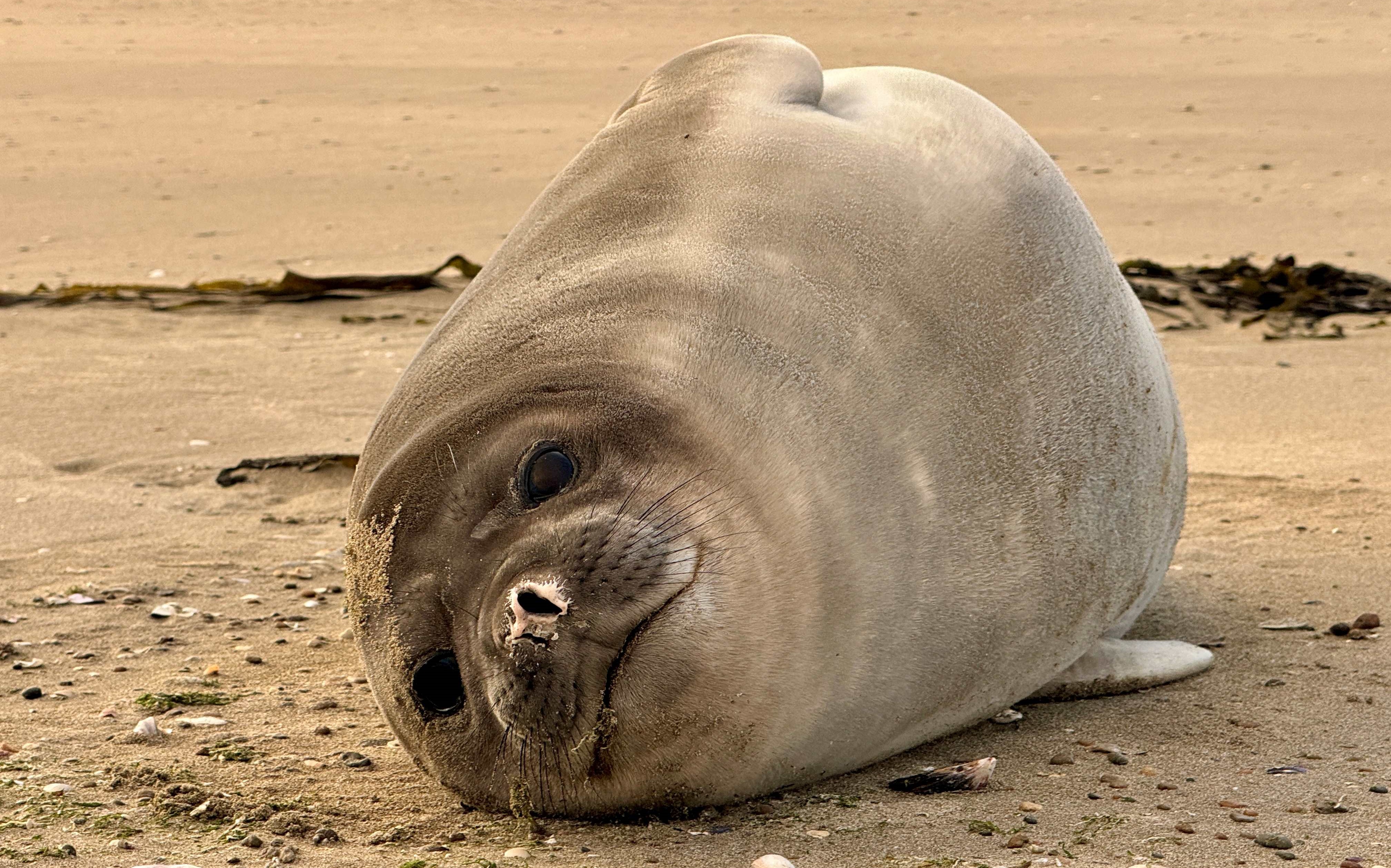
Elephant seal calf. Credit: Valeria Falabella - WCS Argentina.

April 24, 2025 - On Thursday, April 24, the Chubut Legislature approved the law declaring the protection of the southern elephant seal ( Mirounga leonina ) throughout the province. This is the largest seal in the world and is one of the tourist attractions of Peninsula Valdés, where more than 80% of the only continental breeding colony is concentrated. Until 2022, this population remained healthy; however, during the 2023 breeding season, it was severely affected by the avian flu epidemic, which killed 97% of the pups and an undetermined number of breeding adults, reclassifying its conservation status to "vulnerable." The new law seeks to contribute to its recovery by protecting these animals on the Chubut coasts, especially on beaches where they are exposed to human disturbance.

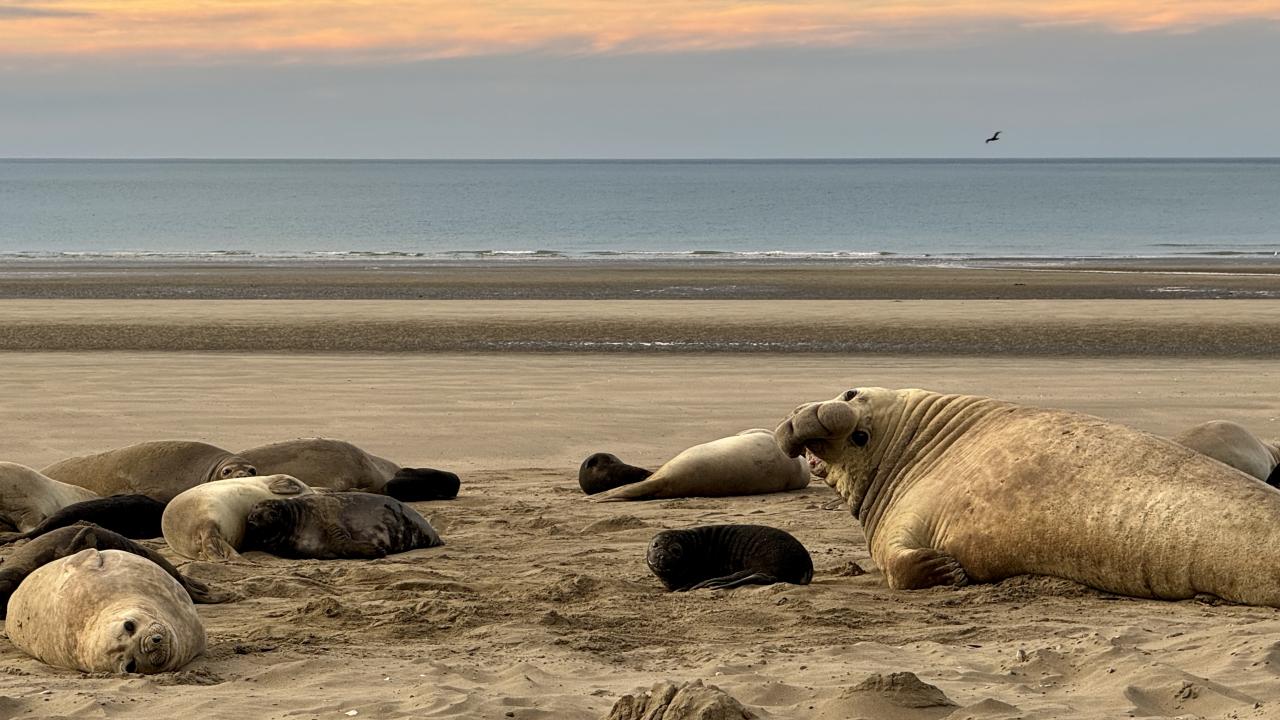
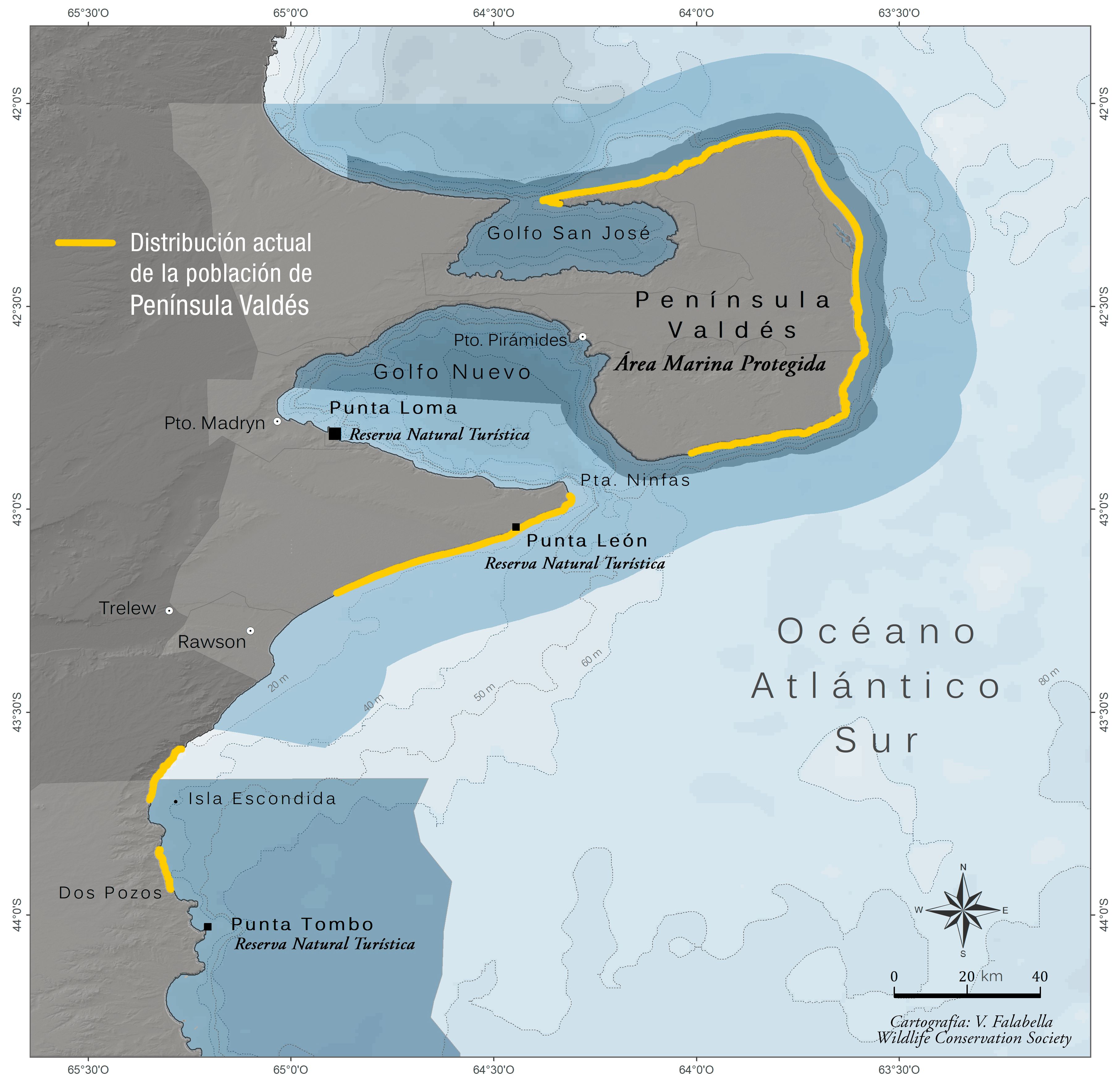
Southern elephant seals are exceptional animals; adult males are characterized by their prominent trunk and large size; they can weigh up to 3.5 tons and measure up to 5.5 meters in length, while females can reach 3 meters and weigh about 900 kg. They spend most of their time at sea, where they travel thousands of kilometers to feed, diving to depths of up to 2,000 meters in search of fish and squid. Each year, they complete two terrestrial stages: they reproduce in September and October, and they molt between November and March. The species is protected within the Valdés Peninsula ; however, to the south of that protected area, in the area between Punta Ninfas and Bajo de los Huesos, and in the Isla Escondida sector, the elephant seal population is distributed along coastlines where there is no protection whatsoever.

“The periods these animals spend on land are particularly vulnerable because they are completing essential stages of their life cycle, such as nursing their young, during which they undergo prolonged fasting. Vehicle traffic and the proximity of people and pets affect their behavior and can lead to undesirable consequences, such as abandoning the young if the mother feels threatened, or high energy expenditure from having to move,” explains Julieta Campagna, Valdés landscape coordinator for WCS Argentina, an organization that has contributed to elephant seal research and conservation since the 1980s.

In this regard, the approved regulation seeks to define strategies based on scientific evidence and implement monitoring and management actions to protect critical habitats and essential areas for the species from human and environmental impacts. For example, it promotes responsible tourism practices by establishing a 50-meter "no approach" safety zone around specimens when they are found on the coast, outside of protected areas, in order to reduce stress and prevent alterations in their natural behavior. It also provides an awareness program on the importance of preserving the species.
“Chubut's wildlife is a natural spectacle that attracts tourists from all over the world. This law seeks to increase the protection of elephant seals along the entire coast, raise awareness among visitors about the necessary care and the consequences that their proximity can cause, and create a fund to cover conservation efforts,” emphasizes provincial representative Sergio Daniel González.
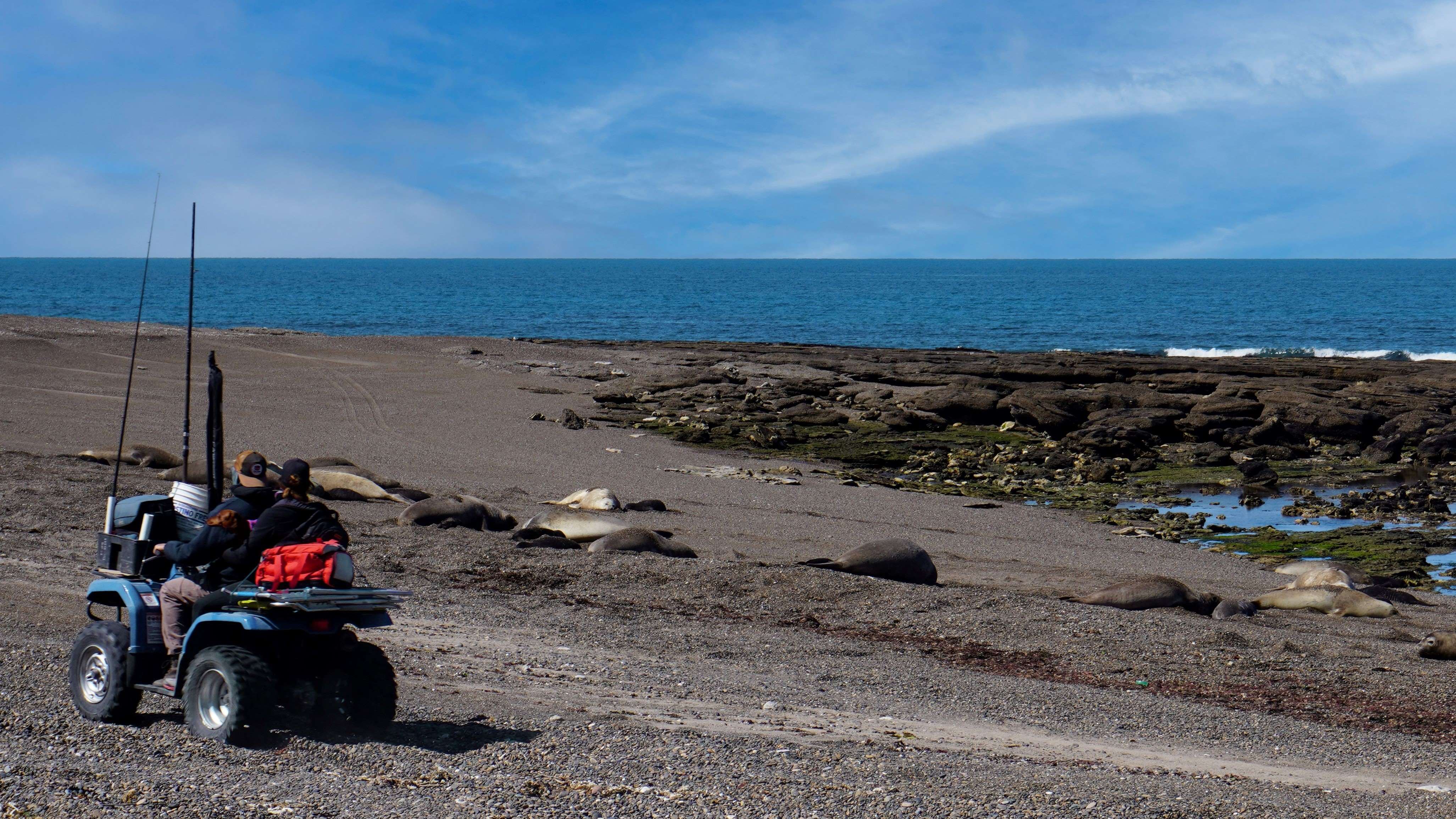
disturbio%20para%20la%20fauna%20-%20Cuatriciclos%20en%20Isla%20Escondida%20-%20credito%20Julieta%20Campagna.jpg
ATVs ride along the beach where elephant seals rest. Credit: Julieta Campagna - WCS Argentina.

The new law sets a unique precedent for Chubut and strengthens the collaborative efforts of the community, organizations, and government to protect this species. The project was achieved thanks to the collaborative efforts of WCS Argentina, Representative Sergio González and his team, Natalia García, Manager of the Mixed Rawson Tourism Board (EMRaTur), nature photographer Adriana Sanz, Representative Fabián Gandon, Gabriela Bellazzi, President of the Puerto Pirámides City Council, Nadia Bravo, Undersecretary of Conservation and Protected Areas, and Fernando Bersano of the provincial Wildlife and Flora Directorate.


A key law for the recovery of a vulnerable species

According to specialists, it will take decades for the southern elephant seal population of the Valdés Peninsula to recover from the avian flu epidemic it suffered in 2023. In April 2025, a study was published in the scientific journal Marine Mammal Science conducted by WCS Argentina, CONICET and the University of California Davis indicating that it could take three human generations without new impacts to see these animals as healthy and numerous as they were before the epidemic.

Scientific projections are alarming: if the outbreak had affected only the young, the population could recover by 2035. If the epidemic significantly reduced the number of reproductive females, population recovery would take more than 50 years. The worst-case scenario would be a recurrence of the epidemic, which would pose a risk of incalculable proportions to this and many other species, including humans.

In coastal areas not formally protected, the main impact of human presence is related to careless behavior, such as driving all-terrain vehicles on beaches with elephant seals, throwing rocks at them to mobilize them, allowing dogs to approach them, and even reports of extreme behavior such as shooting them with firearms. Furthermore, the presence of waste left by visitors or plastic debris from fishing, such as nets and straps, can cause entanglement of this and other species.

At sites with elephant seals exposed to disturbances during the breeding and nursing stages, calf mortality can be five times higher than at protected beaches. Therefore, the recently passed law is key to defining precautionary and responsible management along the entire coast regarding activities that can be carried out, particularly during the spring, which coincides with the reproductive period of this species on the coast of Chubut.
Mapa-Distribucion%20Elefantes%20marinos_.jpg

Map showing the distribution area of ​​the southern elephant seal off the Patagonian coast. Credit: WCS Argentina.

RELATED LINKS:
...
https://argentina.wcs.org/es-es/Quienes-somos/Noticias/articleType/ArticleView/articleId/24487.aspx
 
Back
Top