• FluTrackers.com Inc. does not provide medical advice. Information on this web site is collected from various internet resources, and the FluTrackers board of directors makes no warranty to the safety, efficacy, correctness or completeness of the information posted on this site by any author or poster. The information collated here is for instructional and/or discussion purposes only and is NOT intended to diagnose or treat any disease, illness, or other medical condition. Every individual reader or poster should seek advice from their personal physician/healthcare practitioner before considering or using any interventions that are discussed on this website. By continuing to access this website you agree to consult your personal physican before using any interventions posted on this website, and you agree to hold harmless FluTrackers.com Inc., the board of directors, the members, and all authors and posters for any effects from use of any medication, supplement, vitamin or other substance, device, intervention, etc. mentioned in posts on this website, or other internet venues referenced in posts on this website.
  • We are not asking for any donations. Do not donate to any entity who says they are raising funds for us.

Discussion: Chinese Academy of Sciences (CAS) in Wuhan has been working with bats and coronavirus for many years - DNA manipulations, cloning.... - Ja

Did COVID-19 escape from a lab?
https://allianceforscience.cornell.edu/blog/2020/04/did-covid-19-escape-from-a-lab/

A frenzy of speculation has arisen around the idea that the novel coronavirus responsible for the global COVID-19 pandemic might originally have escaped from a laboratory in the Chinese city of Wuhan.

While there is so far no evidence being offered to support this suggestion, the fact that the mere possibility is being reported in mainstream media outlets like the Washington Post and Yahoo News might seem to give credence to earlier conspiracy theories about the virus being engineered in a biowarfare laboratory and deliberately released into the human population.

But don’t be fooled. Whether the virus first infected humans at the infamous Wuhan “wet market” or somehow took a more complicated route via a so far unidentified Chinese laboratory, the ultimate source of the novel coronavirus is still the same: wild populations of bats.
The bat connection


None of the current speculation changes the one fact that is established beyond reasonable doubt — SARS-CoV-2 is a zoonotic virus, meaning it came from an animal and jumped into the human population.

It appears that the Wuhan Institute of Virology is currently under suspicion because its scientists were studying bat coronaviruses in order to evaluate the possibility of the emergence of just such a pandemic as is currently underway.

Indeed, it is thanks to their work that we know that SARS-CoV-2 is 96 percent “identical at the whole-genome level to a bat coronavirus” (to quote from a Feb. 3 Nature paper co-authored by the institute’s scientists) and that its most likely original host is the horseshoe bat.
 
Claim That Coronavirus Came from a Lab in China Completely Unfounded, Scientists Say
https://www.newsweek.com/claim-that...a-completely-unfounded-scientists-say-1498308

There is no evidence to back claims the coronavirus that has caused the COVID-19 pandemic emerged from a lab in China, scientists have told Newsweek.

Adam Lauring, an associate professor at the University of Michigan Medical School and an expert in the evolution of viruses, told Newsweek: "This claim is a conspiracy theory and it is not supported at all by the available data."

Alexandre Hassanin, a lecturer at France's Sorbonne University National Museum of Natural History department of origins and evolution, similarly highlighted to Newsweek: "Even if it is difficult to prove that a laboratory accident did not take place, you should know that SARS-CoV-2 is not closely related to any previous viruses; it was never sequenced (even partially) in previous studies, and the COVID-19 outbreak began in November/December, as in previous SARS epidemic events (2002 and 2003)."

Hassanin said: "These two points suggest therefore that the current outbreak was not the consequence of a laboratory accident."
 
Virus Researchers Cast Doubt On Theory Of Coronavirus Lab Accident
https://www.google.com/url?sa=t&rct=...Qv8mrfHarsyXkI

By Geoff Brumfiel and Emily Kwong

NPR.org, April 23, 2020 ? Virus researchers say there is virtually no chance that the new coronavirus was released as result of a laboratory accident in China or anywhere else.

The assessment, made by more than half-a-dozen scientists familiar with lab accidents and how research on coronaviruses is conducted, casts doubt on recent claims that a mistake may have unleashed the coronavirus on the world.
 
The coronavirus was not engineered in a lab. Here's how we know.
https://www.livescience.com/coronavirus-not-human-made-in-lab.html

One persistent myth is that this virus, called SARS-CoV-2, was made by scientists and escaped from a lab in Wuhan, China, where the outbreak began.

A new analysis of SARS-CoV-2 may finally put that latter idea to bed. A group of researchers compared the genome of this novel coronavirus with the seven other coronaviruses known to infect humans: SARS, MERS and SARS-CoV-2, which can cause severe disease; along with HKU1, NL63, OC43 and 229E, which typically cause just mild symptoms, the researchers wrote March 17 in the journal Nature Medicine.

"Our analyses clearly show that SARS-CoV-2 is not a laboratory construct or a purposefully manipulated virus," they write in the journal article.
 
Scientists Are Tired of Explaining Why The COVID-19 Virus Was Not Made in a Lab

https://www.sciencealert.com/here-s...k-of-the-coronavirus-was-made-in-a-lab-rumour

JACINTA BOWLER
20 APRIL 2020


It's a rumour that just won't die. When asked whether the COVID-19 virus was genetically engineered in a lab, scientists have already said "no" rather firmly, but the matter of the new coronavirus' origin is unlikely to be put to rest so easily.

Discussions around this subject have become even more pertinent since US government intelligence officials are reportedly investigating the potential source of the pandemic, focussing on theories that it may have originated in a laboratory, despite all evidence pointing to SARS-CoV-2 not being human-made.
"All evidence so far points to the fact the COVID-19 virus is naturally derived and not man-made," explains immunologist Nigel McMillan from the Menzies Health Institute Queensland.
"If you were going to design it in a lab the sequence changes make no sense as all previous evidence would tell you it would make the virus worse. No system exists in the lab to make some of the changes found."
 
Tackling Rumors of a Suspicious Origin of nCoV2019

Novel 2019 coronavirusnCoV-2019 Evolutionary History


profbillg1901
Feb 7


I have been privately dealing with rumors and inquiries, focused on the RRAR potential furin cleavage site, that nCoV2019 may have a suspicious origin as an engineered, laboratory-generated virus either accidentally or deliberately released in the area of the Wuhan seafood and animal market. The publication of the highly similar RaTG13 sequence about a week ago has fueled this type of speculation.
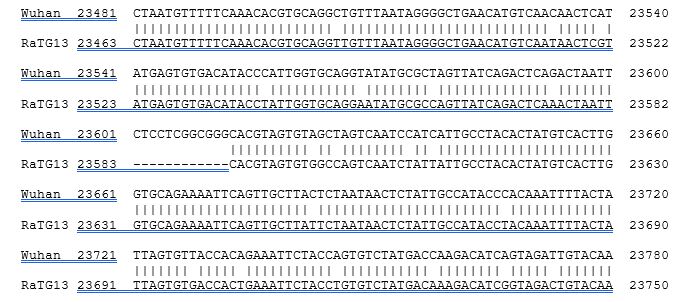
As I have told people privately, I see no evidence at all to support such a claim. In sharp contrast, I have studied the question in detail, using RaTG13 and Wuhan sequence at the S1/S2 boundary, and find convincing proof of exactly opposite conclusion – that RaTG13 could NOT be a proximal source of the Wuhan virus.
At first glance of an alignment of the S protein sequence of both, it is natural that the issue of an engineered insertion should be considered. On either side of the new furin site, the amino acid sequence is identical in both from aa614 to aa1133 – an apparent insert of PRRA is the only difference in an otherwise 100% conserved 519 amino acid region.
RaTG13 vs Wuhan peptide1419?96 43.7 KB

But that is at first glance.
One has to consider that the PRRA is an unusual sequence to introduce to generate a furin site – others even among coronaviruses like MHV A59 are so much better. Also that the underlying code CCTCGGCGGGCA introduces an unnecessarily G and C rich region where none otherwise exists. Not likely scenarios for something a gene jockey would do.
Then one looks at the actual RNA alignment. The “insert” is actually not in frame, but CTCCTCGGCGGG, or -2 out of frame. Again, who does that?
But the PROOF lies in looking at the 288 alignable nucleotides on either side of the “insert”. While they cover identical protein sequence, the RNA is not at all identical, but 6.6% different – 19 mutations out of 288. All 19 are mutations in the wobble base of their respective codons. There are so many that the frame can be inferred from the 2/1 pattern even without knowing the beginning or the end, or indeed that the encoded protein sequence is identical – those are self-evident by looking at the RNA itself.
022035f70c8bebf532ee7aaa5a307936817a5342.jpeg

We know from influenza H1N1, for which we have serial isolates from 1918 to the present, that wobble base mutagenesis occurs at a rate of 0.95% per decade. This permits an estimation of the TMRCA of the two sequences nCoV2019 and RaTG13 of 69.5 years ago – roughly 1950 +/- 10 years or so.
RaTG13, or anything nearly identical to it at the RNA level, simply could not be a proximal source of nCoV2019. It just LOOKS like it might be…at first glance.
Given that furin cleavage signals are present in other coronaviruses at exactly that point in the S1/S2 boundary region, it only LOOKS unusual, especially against the backdrop of SARS. The preponderance of evidence, coupled with Ockham’s razor (that the simplest explanation is preferred) dictates that the PRRA sequence has been conserved in nCoV2019 from a long ago ancestor virus. It is not of suspicious origin. The closest bat virus sequence is really not close at all.

RNA don’t lie.

Bill Gallaher


http://virological.org/t/tackling-rumors-of-a-suspicious-origin-of-ncov2019/384
 
"Why the scientific journal Nature does not want to clarify the relation between the two strains?"
Why would they? RdRp is heavily constrained and conserved across all CoVs and recombination is rife. It is normal to find common sequences. TMPRSS2 is used for cleaving S1/S2 and it is used by flu does this mean a flu sequence has been bio-engineered into SARS-2? Bits of any bat betaCoV will have 100% homology with any other virus derived from the same genetic pool and small sections will have the same AA sequence with other pathogens. 30% of our DNA is of viral origin but I do not think I was a genetically engineered lab escape based on that.
 
From the article of Zhou et al: https://www.nature.com/articles/s41586-020-2012-7

"We then found that a short region of RNA-dependent RNA polymerase (RdRp) from a bat coronavirus (BatCoV RaTG13)—which was previously detected in Rhinolophus affinis from Yunnan province—showed high sequence identity to 2019-nCoV. We carried out full-length sequencing on this RNA sample (GISAID accession number EPI_ISL_402131)"

Where was this sequence stored in the last 7 years if it was so special as we now all see?

I believe RaTG13 means R = Rhinolophus A =affinis TG= Total Genomic 13= 2013 sequence. Was it then already full sequenced in 2013? Why was it never published before 2020? Why the spike protein of BtCoV/4991 was sequenced but never made public? BtCoV/4991 looks also very special, see the phylogenetic trees in the only two works that cite this sequence.

If there is nothing to hide, we should get the complete genomic sequence for BtCoV/4991 and RaTG13 should be sequenced by another group. The number of wobble bases in the S2 region of the spike protein seems to be too high (76, I read) in relationship with other coronaviruses. By contrast, no one aminoacidic change.

It is not so common that different viruses share exactly the same RdRp, otherwise this gene would not be used for phylogenetic analysis, I believe.
 
Please help me understand this argument, for my sake and for the sake of other readers who are not virologists. I have read all the above posts. Then I wrote to my cousin, a former President of the Pasteur Institute. She sent me this paper from Nature Medicine. It seems to claim that there is irrefutable evidence that Covid 19 evolved by natural selection as a spillover. I am still confused about whether our pandemic virus is more likely from bats or from pangolins. OK, dear friends, could you please help me understand what evidence is irrefutable, and what seems to you today as being the logical zoonotic source of Covid 19? I think a clear history and argument, written for the intelligent public, would be a valuable contribution.
 

Attachments

With my posts on the topic I do not want to say that SARS-CoV-2 is 100 % for sure lab made. There is no definitive proof, like there is no definitive proof that it jumped, as virologists say, from bats to humans. Both possibilities should be taken really seriously in consideration but a possible synthetic origin of the virus is a taboo subject and it goes under censorship. With the article that you cite from Nature https://www.nature.com/articles/s41591-020-0820-9 , some researchers claim that they proved that it is not possible that the virus is synthetic. But many researchers think that the arguments that they use are very questionable. It is also not possible to post comments online on the internet page of this paper and usually it is possible.

I personally believe that some virologists might be concerned that if a synthetic origin of the virus will be ever proved, they will not be able anymore to do gain of function studies. This means to insert in a virus a piece from another virus that might increase pathogenesis, creating a new virus that it does not exist in nature. These studies have been carried out for many years in different countries on coronaviruses. They have been very controversial, because no lab is 100 % safe from leak. In USA they were banned for some years, but since 2017 they are again possible https://www.thelancet.com/journals/l...006-9/fulltext
And not only labs in China had problems of leakage https://www.nytimes.com/2019/08/05/h...biohazard.html


https://www.washingtontimes.com/news/2020/apr/27/anthony-fauci-should-explain-37-million-wuhan-labo/

So, researchers should take a very serious investigation on all possible causes of SARS-CoV-2, mostly to avoid that it could happen again in future, if it is the case. Next virus could have 100% mortality rate.
 
Last edited:
You can judge the amount of work by the volume of publications especially those with high citations. It’s indisputable that Wuhan has worked on this since at least mid-2000s, and some really groundbreaking work has come out of that team in recent years. The Wuhan Institute of Virology (WIV) was a BSL3 lab that upgraded to BSL4 in 2018, but by checking author affiliations, we know that some of the work involving dissection of bats to recover e.g. hantavirus is done at the Wuhan CDC (WHCDC) lab which is only BSL2 but which is <300m from the seafood market, plus also being right next door to the hospital with first major HCW outbreak in Dec, from asymptomatic neurosurgical patient.

In fact, this is a district with a large number of hospitals, and one can just as easily say the outbreak started with patients that arrived in those hospitals in that district, people who worked, lived, went to market there. Everything, market, lab, hospitals, are within 1km of each other, except for the WIV lab which is 9 miles away.

The conventional wisdom was bats are the natural reservoir, but bat CoV are not well adapted enough to jump directly to humans, and an intermediate host is required (e.g. civets or camels for MERS). So when a new virus of such transmissibility appears, one of the most urgent things to do is to try and find the intermediate host, because you know, it could still be spreading. Suspicions were first aroused because of the unusual behavior of the Wuhan authorities. Guan Yi was the HKU expert (top 11th cited in microbiology in world) who uncovered the connection with civets in 2003. He went to Wuhan mid-January and then gave an extraordinary interview, that a) the market was shut and decontaminated b) he was denied access to market or any environmental samples taken c) he knocked on several doors of scientific community but "epidemiology experts and scientists do not seem to be welcomed in the city."

That is a red flag, and it's been reinforced by the fact that Chinese researchers don’t seem particularly keen to work on this either. Wuhan is a center of expertise on this very subject, it’s inconceivable that they would decontaminate the market without taking animal samples. That’s like a researcher’s dream to be the first to identify the source. So either they were actively stopped, or they did take samples but kept quiet. (Raw data from environmental as opposed to animal samples have since been shared privately between researchers but not published, and it appears that these are poorly labelled with regards to where exactly they were taken. These partial sequences match patient samples, so they could well be from human shedding only.) The other thing is, even if that market was closed, it would be reasonable to go and take samples from other wildlife markets, because the stuff was being sold on the streets all through January. Nobody has published anything, even though a ton has been published on all other aspects of this outbreak, including from WIV scientists. The data from market surveillance is so important that even negative results would have been useful (perhaps too useful).

I’m skeptical in general with the bioweapons theory because it’s hard to control a respiratory virus, but I looked into some of these allegations, specifically that the virus may have been subject to human engineering because certain mutations seem suspiciously well adapted to humans or appear to be similar to other sequences from other viruses. But here’s the thing. There’s still a vast universe of bat CoV that’s not yet mapped, but the ones already sequenced show a great deal of heterogeneity and recombination (i.e. these viruses in the wild are mixing and exchanging genetic materials all the time), plus if you dig deeper, there’s published data that some of these specific regions are in fact found in wild-type bat-CoV, so it isn’t as unusual as some would make out, to find such features. Plus, it’s a basic requirement that a virus has to acquire human adaptations to be capable of h2h transmission, so it just seems circular logic to assert human intervention on such grounds alone.

With the 2003 virus, it was found that viruses found in humans and civets were very similar, with a mutation that allow the virus to bind to human-type ACE2 receptors, which was absent from the corresponding bat SLCoV. Since then many labs have done sampling of bat CoV from all over China. Despite diversity, not one sample showed the human-adapted receptor binding domain RBD, so it was believed that bat CoV would have difficulty infecting humans without adaptation via an intermediate host. Secondly, nobody had ever isolated a live bat-SL-CoV, one that could be grown in cell culture.

All that changed in 2013 when the WIV published a study, based on 5 years of surveillance of a particular bat population in Yunnan. link They found a bunch of bat-SL-CoV and published 2 representative sequences. For the first time, these had the human-adapted RBD mutation. Also, they were able to isolate a live virus, now called WIV1, with which they were able to do experiments. Prior to this experiments were done with genetically engineered viruses using the sequence under investigation on a backbone of a virus that’s lab-adapted to infect e.g. mice but is otherwise harmless. This is common practice. But now they had this wild-type virus with a human-adapted RBD, which is a whole different ballgame. On top of that, they took samples from villagers and found some of them had antibodies to this wild-type bat virus, thus showing that no intermediate host is required for human infection, although no evidence of h2h was found. All sorts of alarm bells started ringing and other labs started collaborating; one paper was explicitly titled SARS-like WIV1-CoV poised for human emergence.by researchers from N Carolina, Harvard, FDA, Switzerland, a whole who’s who of this field. link

Amazingly before 2002 the WIV lab was an agricultural lab (insect-borne viruses and pesticide testing), but converted to work on human pathogens in 2003, the same year during which approval was given to convert from BSL3 to BSL4. That seems a degree of haste, but in line with China government policy on rapid expansion of biotech sector. By the time construction was finished in 2015 (but before certification for actual research 2018) 3 other BSL4 were in various stages of completion. This is reminiscent of Chernobyl, when the Soviets brought nuclear power plants online without prototype and without sufficient time for the first one to be robustly tested. It doesn’t help that the French institute that was supposed to build the lab had its contract prematurely terminated and the Chinese finished the work on its own (having copied/stolen the plans to build the other 3). This hastiness is reckless, but also prompts suspicion of dual use intentions, because one can always do with more power plants, but the amount of civilian, medical research that requires such capabilities is kind of limited. SARS itself requires only BSL3, but experiments with non-human primates would require BSL4. In the 2013 paper and others that followed, they described transmission experiments in mice with WIV1 plus some chimera viruses with the human ACE2 affinity. The next logical step from rodents would be primates, but even smaller mammals they were using such as raccoon cats (simulating civets) would have been perfectly adequate intermediate hosts that could, if biosecurity was lax, result in a human-adapted virus escaping the lab. We already know that the 2003 virus escaped numerous times from a Beijing lab. Bear in mind their own finding, that you don’t even need an intermediate host.

With all that in mind, now check this out. In Jan, scientists studied the new virus in comparison to known sequences in the public database, and found some that were 89% match. And then, a bomb shell. The WIV lab published that the closest match 96% is actually a sequence RaTG13, from their own collection from the 2013 Yunnan studies. At first it was mystifying, because the paper did not give citations for RaTG13. Turns out this sequence was submitted to GISAID database (for researchers) only on Jan 27 2020, by the very same WIV lab! In other words, the closest match for this pandemic virus is a sample they’ve had in their lab but left unpublished all these years. Now, having a sequence is not the same as having a virus, and not publishing all your findings is not necessarily a sign of nefarious intentions, but at a minimum it shows that the same set of samples that produced the by-now well studied WIV1 group, also contained all along the closest one to this pandemic virus. And, as we know, they’ve been working hard at this, doing all sorts of experiments, all along.

One can still stick with the eating wildlife story, as many still do, and I can’t discount it, but what’s the statistical probability that this once-in-a-century virus would emerge, of all places, out of the millions of wet markets in China, in the exact same city that is on the forefront of this research, that hosts the lab with the closest sequence?

The possibility of lab escape is not hot air, with the WIV, but there’s also the WHCDC. On the surface, they appear to be working on viruses that do not require higher biosafety (BSL2 = general hospital precautions), but who knows?. I read one paper from that lab on hantavirus, and it is concerning, because for this study they were capturing wild animals, a total of 450 bats, 81 insectivores and 2 shrews from different provinces, all kept alive in cages until they were dissected. So if we were to ask, where in the city of Wuhan could you find large numbers of bats kept in close proximity with other wild animals so that the virus could cross species, well, by all accounts, no bats were found in the wet market, but lo and behold, you can find these exact conditions in the WHCDC lab. The bats in the study were from different provinces including Yunnan although not from same region as the 2013 samples, but some were of the same genus that carried RaTG13. So while they might have thought they were working on the hantavirus, did they not realize that CoV was also in there, being shed all over the place? And that’s just one study; I’m sure that line of work has been ongoing for some years.

We know that in the wild mixing and recombination among bat SL-CoV is very common, but the diversity at one single location is still limited geographically. Plus RBD is never the whole story, and even 96% similarity is quite a ways off from human adaptation. For a bat virus to get to h2h, most likely several changes are needed. It’s likely these mutations already exist in the wild, but not necessarily in the same virus, and most importantly not in the same geographic location. One particular mutation may be prevalent in a cave in Yunnan, but another may exist only in Zhejiang or elsewhere, so they would not have a chance to meet and mix, except now they’re being collected and brought together, not just as blood or swab samples as in the WIV study, but as live animals. Bats are naturally sequestered in their habitats, but when you remove them and put them together with those from other locations, and/or with other animals, you drastically increase the chance of mixing until eventually you hit the (pandemic) jackpot. And if you do that in a metropolis with 11 million people that’s also a transport hub, as opposed to a remote cave in Yunnan, and only under BSL2, technically you may not be deliberately making a bioweapon, but you ought to be accountable for the consequences just the same. Just saying.

More on biosafety. One author of the hantavirus paper, who also published other work in collaboration with WIV on CoV (working in both labs appears to be a common practice), had gotten some national fame for working on bat viruses, having described in media interviews being splashed with bat blood, and being peed on by bats in caves. On both occasions, he recounted having to self-quarantine for 14 days, so they understood perfectly well their exposure risk. I’m not sure, though, that BSL2 containment measures are sufficient for say, disposal of contaminated waste with such pathogens. I’m not just talking about carelessness and lack of adherence to protocol, both rampant in China. There’s also a whole underground industry of re-packaging medical waste to be sold as new, from syringes, IV sets to bandages and test swabs. Also the sale of ‘surplus’ experimental animals for meat, which in one officially reported case resulted in millions in profit. So biological waste is one entirely plausible route, for a virus with pandemic potential, to leak into the community.

Another equally plausible but less dramatic possibility would be quite simply someone got infected but was either asymptomatic or had such mild symptoms that they never got tested, but nevertheless infected others, as we now know happens frequently with this virus. The seemingly explosive transmission at the wet market is likely to be a super-spreader event, which has happened so many time all over the world that it should no longer be a curiosity, and certainly not an indicator of origins.

 
Phylogeny and Origins of Hantaviruses Harbored by Bats, Insectivores, and Rodents
  • Wen-Ping Guo ,
  • Xian-Dan Lin ,
  • Wen Wang ,
  • Jun-Hua Tian ,
  • Mei-Li Cong ,
  • Hai-Lin Zhang ,
  • Miao-Ruo Wang ,
  • Run-Hong Zhou,
  • Jian-Bo Wang,
  • Ming-Hui Li,
  • Jianguo Xu,
  • Edward C. Holmes,
  • Yong-Zhen Zhang
Abstract


Hantaviruses are among the most important zoonotic pathogens of humans and the subject of heightened global attention. Despite the importance of hantaviruses for public health, there is no consensus on their evolutionary history and especially the frequency of virus-host co-divergence versus cross-species virus transmission. Documenting the extent of hantavirus biodiversity, and particularly their range of mammalian hosts, is critical to resolving this issue.

Here, we describe four novel hantaviruses (Huangpi virus, Lianghe virus, Longquan virus, and Yakeshi virus) sampled from bats and shrews in China, and which are distinct from other known hantaviruses. Huangpi virus was found in Pipistrellus abramus, Lianghe virus in Anourosorex squamipes, Longquan virus in Rhinolophus affinis, Rhinolophus sinicus, and Rhinolophus monoceros, and Yakeshi virus in Sorex isodon, respectively. A phylogenetic analysis of the available diversity of hantaviruses reveals the existence of four phylogroups that infect a range of mammalian hosts, as well as the occurrence of ancient reassortment events between the phylogroups. Notably, the phylogenetic histories of the viruses are not always congruent with those of their hosts, suggesting that cross-species transmission has played a major role during hantavirus evolution and at all taxonomic levels, although we also noted some evidence for virus-host co-divergence.

Our phylogenetic analysis also suggests that hantaviruses might have first appeared in Chiroptera (bats) or Soricomorpha (moles and shrews), before emerging in rodent species. Overall, these data indicate that bats are likely to be important natural reservoir hosts of hantaviruses.

snip

Trapping of small animals and specimen collection


Bats were captured with mist nets or harp traps in caves of natural roosts in Zhejiang Province in the spring of 2011, or in villages or caves in Hubei Province in the spring of 2012 (Figure 1). According to protocols described previously [47], insectivore animals were trapped in cages using fried foods as bait in the Inner Mongolia Autonomous Region in 2006 or in Yunnan Province in the autumns of 2010 and 2011. All animals kept were alive after capture. They were initially identified by morphological examination according to the criteria for bats described by Wang [48] and for insectivores by Chen [49], and further confirmed by sequence analysis of the mt-cyt b gene. All animals were anesthetized with ether before surgery, and all efforts were made to minimize suffering. Tissue samples of heart, liver, spleen, lung, kidney and brain were collected from bats and insectivores for detecting hantaviruses.

snip

A total of 450 bats of eight different species were captured in Longquan city and Wenzhou city, Zhejiang Province in the spring of 2011 (Figure 1 and Table 1). Similarly, 155 bats representing eight species were captured in Hubei Province in the spring of 2012. A total of 81 insectivores (representing two species – Anourosorex squamipes and Suncus murinus) were captured in Lianghe county, Yunnan Province in the spring of 2010 and autumn of 2011. In 2006, two shrews (from the species Sorex isodon and Suncus murinus) were collected from Yakeshi city, Inner Mongolia Autonomous Region.


more..


https://journals.plos.org/plospathog...l.ppat.1003159


---------------------------------------------------------------------------------
The origin, transmission and clinical therapies on coronavirus disease 2019 (COVID-19) outbreak – an update on the status
Military Medical Research volume 7, Article number: 11 (2020) Cite this article
  • 205k Accesses
  • 19 Citations
  • 238 Altmetric
  • Metrics
snip


Conclusions


The outbreak of COVID-19 swept across China rapidly and has spread to 85 countries/territories/areas outside of China as of 5 March 2020 [2]. Scientists have made progress in the characterization of the novel coronavirus and are working extensively on the therapies and vaccines against the virus. We have summarized the current knowledge of SARS-CoV-2 as follows: Firstly, the emerging pneumonia, COVID-19, caused by SARS-CoV-2, exhibits strong infectivity but less virulence, compared to SARS and MERS, in terms of morbidity and mortality. Originating from reservoir of bats and unknown intermediate hosts, SARS-CoV-2 binds to ACE2 with high affinity as a virus receptor to infect humans. Secondly, the susceptible population involves the elderly and people with certain underlying medical conditions, which requires more attention and care. Thirdly, so far, the supporting treatments, combined with potent antiviral drugs, such as remdesivir, chloroquine, or lopinavir/ritonavir, have been conducted with definite effect on treat COVID-19 patients, while solid data from more clinical trials are needed. However, questions remain vague and more studies are urgent to explore the transmission and pathogenicity mechanism of the emerging coronavirus. To make clear the evolutionary path from the original host to cross-species transmission so as to potentially limit the transmission to na?ve animals or humans. In addition, to uncover the mystery of the molecular mechanism of viral entry and replication, which provides the basis of future research on developing targeted antiviral drugs and vaccines.

Given more than 80% of patients are confirmed in Hubei province, the hospitals and medical workers in Hubei are facing and bearing enormous pressure and severe challenge, including a high risk of infection and inadequate protection, as well as overwork, frustration and exhaustion [105]. Chinese Government and authorities have launched psychological intervention, and we sincerely hope that Chinese people and other countries overcome the epidemic as fast as possible.

https://mmrjournal.biomedcentral.com...79-020-00240-0
 
pr?alable : Merci Kathy, pour tes interventions lumineuses ...

Je retiens de tout ceci:
- que ces march?s humides ne sont pas la cause, mais devraient faire l'objet d'un suivi dans le cadre de ONE HEALTH qui d'ailleurs aurait permis de les disculper plus vite ( Messieurs les chinois ouvraient le bal car vous n' ?tes pas les seuls ...)
- que la recherche virologique mondiale civile et ou militaire, directe et ou indirecte, est la cause de cette ?pid?mie.
- que le su concernant, l'existence et la gestion de cellules et d'animaux transg?niques, con?us pour permettre le passage est bien trop peu ?clair?.
- que la localisation de ces laboratoires ? risque, vu les accidents pass?s et visiblement pr?sent, ont certes vu leurs r?gles de gestion de risque ?voluer, mais, franchement, il ne devrait pas y avoir une nouvelle s?rieuse discussion sur leur localisation et leur gestion ?

En tout cas: cette situation ne donne envie que d'une chose:

limiter et ou supprimer bien ou tous les cr?dits et aussi, car cela est pire, tous les appels aux dons pour la recherche virologique, parce que franchement ils sont collectivement indigne, ? ce stade, de recevoir le moindre centime...


Je serai heureux d'avoir ? me d?dire . Entre temps que toutes ces grosses t?tes expliquent le pourquoi de la diff?rence de chiffres entre la Chine et ailleurs ce sera plus productif et surtout beaucoup plus sain...


j'ai ?crit recherche mondiale, car dans ce monde l?, tr?s tr?s petit, on ne peut, exister sans au minimum, le savoir des autres... Enfin, c'est toujours d?solant de lire que des personnes qui se pr?tendent des scientifiques n'ont pas publi? ceci ou cela.

Ce qui ne se publie pas, c'est de la science ?
 
You can judge the amount of work by the volume of publications especially those with high citations. It’s indisputable that Wuhan has worked on this since at least mid-2000s, and some really groundbreaking work has come out of that team in recent years. The Wuhan Institute of Virology (WIV) was a BSL3 lab that upgraded to BSL4 in 2018, but by checking author affiliations, we know that some of the work involving dissection of bats to recover e.g. hantavirus is done at the Wuhan CDC (WHCDC) lab which is only BSL2 but which is <300m from the seafood market, plus also being right next door to the hospital with first major HCW outbreak in Dec, from asymptomatic neurosurgical patient.

In fact, this is a district with a large number of hospitals, and one can just as easily say the outbreak started with patients that arrived in those hospitals in that district, people who worked, lived, went to market there. Everything, market, lab, hospitals, are within 1km of each other, except for the WIV lab which is 9 miles away.

The conventional wisdom was bats are the natural reservoir, but bat CoV are not well adapted enough to jump directly to humans, and an intermediate host is required (e.g. civets or camels for MERS). So when a new virus of such transmissibility appears, one of the most urgent things to do is to try and find the intermediate host, because you know, it could still be spreading. Suspicions were first aroused because of the unusual behavior of the Wuhan authorities. Guan Yi was the HKU expert (top 11th cited in microbiology in world) who uncovered the connection with civets in 2003. He went to Wuhan mid-January and then gave an extraordinary interview, that a) the market was shut and decontaminated b) he was denied access to market or any environmental samples taken c) he knocked on several doors of scientific community but "epidemiology experts and scientists do not seem to be welcomed in the city."

That is a red flag, and it's been reinforced by the fact that Chinese researchers don’t seem particularly keen to work on this either. Wuhan is a center of expertise on this very subject, it’s inconceivable that they would decontaminate the market without taking animal samples. That’s like a researcher’s dream to be the first to identify the source. So either they were actively stopped, or they did take samples but kept quiet. (Raw data from environmental as opposed to animal samples have since been shared privately between researchers but not published, and it appears that these are poorly labelled with regards to where exactly they were taken. These partial sequences match patient samples, so they could well be from human shedding only.) The other thing is, even if that market was closed, it would be reasonable to go and take samples from other wildlife markets, because the stuff was being sold on the streets all through January. Nobody has published anything, even though a ton has been published on all other aspects of this outbreak, including from WIV scientists. The data from market surveillance is so important that even negative results would have been useful (perhaps too useful).

I’m skeptical in general with the bioweapons theory because it’s hard to control a respiratory virus, but I looked into some of these allegations, specifically that the virus may have been subject to human engineering because certain mutations seem suspiciously well adapted to humans or appear to be similar to other sequences from other viruses. But here’s the thing. There’s still a vast universe of bat CoV that’s not yet mapped, but the ones already sequenced show a great deal of heterogeneity and recombination (i.e. these viruses in the wild are mixing and exchanging genetic materials all the time), plus if you dig deeper, there’s published data that some of these specific regions are in fact found in wild-type bat-CoV, so it isn’t as unusual as some would make out, to find such features. Plus, it’s a basic requirement that a virus has to acquire human adaptations to be capable of h2h transmission, so it just seems circular logic to assert human intervention on such grounds alone.

With the 2003 virus, it was found that viruses found in humans and civets were very similar, with a mutation that allow the virus to bind to human-type ACE2 receptors, which was absent from the corresponding bat SLCoV. Since then many labs have done sampling of bat CoV from all over China. Despite diversity, not one sample showed the human-adapted receptor binding domain RBD, so it was believed that bat CoV would have difficulty infecting humans without adaptation via an intermediate host. Secondly, nobody had ever isolated a live bat-SL-CoV, one that could be grown in cell culture.

All that changed in 2013 when the WIV published a study, based on 5 years of surveillance of a particular bat population in Yunnan. link They found a bunch of bat-SL-CoV and published 2 representative sequences. For the first time, these had the human-adapted RBD mutation. Also, they were able to isolate a live virus, now called WIV1, with which they were able to do experiments. Prior to this experiments were done with genetically engineered viruses using the sequence under investigation on a backbone of a virus that’s lab-adapted to infect e.g. mice but is otherwise harmless. This is common practice. But now they had this wild-type virus with a human-adapted RBD, which is a whole different ballgame. On top of that, they took samples from villagers and found some of them had antibodies to this wild-type bat virus, thus showing that no intermediate host is required for human infection, although no evidence of h2h was found. All sorts of alarm bells started ringing and other labs started collaborating; one paper was explicitly titled SARS-like WIV1-CoV poised for human emergence.by researchers from N Carolina, Harvard, FDA, Switzerland, a whole who’s who of this field. link

Amazingly before 2002 the WIV lab was an agricultural lab (insect-borne viruses and pesticide testing), but converted to work on human pathogens in 2003, the same year during which approval was given to convert from BSL3 to BSL4. That seems a degree of haste, but in line with China government policy on rapid expansion of biotech sector. By the time construction was finished in 2015 (but before certification for actual research 2018) 3 other BSL4 were in various stages of completion. This is reminiscent of Chernobyl, when the Soviets brought nuclear power plants online without prototype and without sufficient time for the first one to be robustly tested. It doesn’t help that the French institute that was supposed to build the lab had its contract prematurely terminated and the Chinese finished the work on its own (having copied/stolen the plans to build the other 3). This hastiness is reckless, but also prompts suspicion of dual use intentions, because one can always do with more power plants, but the amount of civilian, medical research that requires such capabilities is kind of limited. SARS itself requires only BSL3, but experiments with non-human primates would require BSL4. In the 2013 paper and others that followed, they described transmission experiments in mice with WIV1 plus some chimera viruses with the human ACE2 affinity. The next logical step from rodents would be primates, but even smaller mammals they were using such as raccoon cats (simulating civets) would have been perfectly adequate intermediate hosts that could, if biosecurity was lax, result in a human-adapted virus escaping the lab. We already know that the 2003 virus escaped numerous times from a Beijing lab. Bear in mind their own finding, that you don’t even need an intermediate host.

With all that in mind, now check this out. In Jan, scientists studied the new virus in comparison to known sequences in the public database, and found some that were 89% match. And then, a bomb shell. The WIV lab published that the closest match 96% is actually a sequence RaTG13, from their own collection from the 2013 Yunnan studies. At first it was mystifying, because the paper did not give citations for RaTG13. Turns out this sequence was submitted to GISAID database (for researchers) only on Jan 27 2020, by the very same WIV lab! In other words, the closest match for this pandemic virus is a sample they’ve had in their lab but left unpublished all these years. Now, having a sequence is not the same as having a virus, and not publishing all your findings is not necessarily a sign of nefarious intentions, but at a minimum it shows that the same set of samples that produced the by-now well studied WIV1 group, also contained all along the closest one to this pandemic virus. And, as we know, they’ve been working hard at this, doing all sorts of experiments, all along.

One can still stick with the eating wildlife story, as many still do, and I can’t discount it, but what’s the statistical probability that this once-in-a-century virus would emerge, of all places, out of the millions of wet markets in China, in the exact same city that is on the forefront of this research, that hosts the lab with the closest sequence?

The possibility of lab escape is not hot air, with the WIV, but there’s also the WHCDC. On the surface, they appear to be working on viruses that do not require higher biosafety (BSL2 = general hospital precautions), but who knows?. I read one paper from that lab on hantavirus, and it is concerning, because for this study they were capturing wild animals, a total of 450 bats, 81 insectivores and 2 shrews from different provinces, all kept alive in cages until they were dissected. So if we were to ask, where in the city of Wuhan could you find large numbers of bats kept in close proximity with other wild animals so that the virus could cross species, well, by all accounts, no bats were found in the wet market, but lo and behold, you can find these exact conditions in the WHCDC lab. The bats in the study were from different provinces including Yunnan although not from same region as the 2013 samples, but some were of the same genus that carried RaTG13. So while they might have thought they were working on the hantavirus, did they not realize that CoV was also in there, being shed all over the place? And that’s just one study; I’m sure that line of work has been ongoing for some years.

We know that in the wild mixing and recombination among bat SL-CoV is very common, but the diversity at one single location is still limited geographically. Plus RBD is never the whole story, and even 96% similarity is quite a ways off from human adaptation. For a bat virus to get to h2h, most likely several changes are needed. It’s likely these mutations already exist in the wild, but not necessarily in the same virus, and most importantly not in the same geographic location. One particular mutation may be prevalent in a cave in Yunnan, but another may exist only in Zhejiang or elsewhere, so they would not have a chance to meet and mix, except now they’re being collected and brought together, not just as blood or swab samples as in the WIV study, but as live animals. Bats are naturally sequestered in their habitats, but when you remove them and put them together with those from other locations, and/or with other animals, you drastically increase the chance of mixing until eventually you hit the (pandemic) jackpot. And if you do that in a metropolis with 11 million people that’s also a transport hub, as opposed to a remote cave in Yunnan, and only under BSL2, technically you may not be deliberately making a bioweapon, but you ought to be accountable for the consequences just the same. Just saying.

More on biosafety. One author of the hantavirus paper, who also published other work in collaboration with WIV on CoV (working in both labs appears to be a common practice), had gotten some national fame for working on bat viruses, having described in media interviews being splashed with bat blood, and being peed on by bats in caves. On both occasions, he recounted having to self-quarantine for 14 days, so they understood perfectly well their exposure risk. I’m not sure, though, that BSL2 containment measures are sufficient for say, disposal of contaminated waste with such pathogens. I’m not just talking about carelessness and lack of adherence to protocol, both rampant in China. There’s also a whole underground industry of re-packaging medical waste to be sold as new, from syringes, IV sets to bandages and test swabs. Also the sale of ‘surplus’ experimental animals for meat, which in one officially reported case resulted in millions in profit. So biological waste is one entirely plausible route, for a virus with pandemic potential, to leak into the community.

Another equally plausible but less dramatic possibility would be quite simply someone got infected but was either asymptomatic or had such mild symptoms that they never got tested, but nevertheless infected others, as we now know happens frequently with this virus. The seemingly explosive transmission at the wet market is likely to be a super-spreader event, which has happened so many time all over the world that it should no longer be a curiosity, and certainly not an indicator of origins.



 
Bonjour,
n'est pas l'?ditrice en chef d'un tel lieu qui veut ...

Il existe un tuto pour expliquer comment mettre un like ? votre message ?
 
At the bottom far right of a post, there is a little "thumbs up" symbol followed by the word "Like". You just click that and should see the counter tick up.
 
Sharon while we have been in disagreement on some aspects of China's performance that is a excellent resume and very well argued, kudos.
 
Originally posted by Pathfinder View Post

Translation Google

EXCLUSIVE - The thesis of a manipulated virus escaped from a Chinese laboratory: the pavement in the pool of Pr Luc Montagnier

By Th. B.
...
Posted on 04/16/2020 at 6:00 p.m. | |

THE ESSENTIAL

Professor Luc Montagnier, 2008 Nobel Prize laureate, says that SARS-CoV-2 is a manipulated virus accidentally released from a laboratory in Wuhan, China
Chinese researchers reportedly used this coronavirus as part of work to develop an AIDS vaccine
HIV DNA fragments allegedly found in the SARS-CoV-2 genome

We knew the Chinese version of the emergence of the coronavirus more and more undermined, but here is a thesis that tells a whole different story about the Covid-19 pandemic already responsible for more than 120,000 deaths in the world. According to Professor Luc Montagnier, 2008 Nobel Prize in Medicine for having "co-discovered" the HIV causing the AIDS epidemic with Fran?ois Barr?-Sinoussi today affirmed that SARS-CoV-2 is a manipulated virus and accidentally left a laboratory in Wuhan, China during the last quarter of 2019. This laboratory known to work on coronaviruses, according to Professor Montagnier, sought to use one of these viruses as an HIV vector as part of the looking for an AIDS vaccine!

"With my colleague, the bio-mathematician Jean-Claude Perez, we looked closely at the description of the genome of this RNA virus," explained Luc Montagnier, interviewed by Dr. Jean-Fran?ois Lemoine for the daily audio journal of Pourquoi Doctor , adding that others had already explored this track: "Indian researchers had already tried to publish the results of analyzes showing that this genome harbored sequences of another virus which is ... HIV, the virus of AIDS, but they were forced to retract, the pressures were too strong! ".

"To insert an HIV sequence into this genome, you need molecular tools"
[snip]


https://www.ncbi.nlm.nih.gov/pubmed/17162377
ETA:
Clin Dev Immunol. 2006 Jun-Dec;13(2-4):353-60.
Towards a coronavirus-based HIV multigene vaccine.

Eriksson KK[SUP]1[/SUP], Makia D, Maier R, Ludewig B, Thiel V. End ETA, Emily


HIV gp120 and gag discussed above and in retracted study.

https://www.biorxiv.org/content/10.1101/2020.01.30.927871v1
"Importantly, amino acid residues in all the 4 inserts have identity or similarity to those in the HIV-1 gp120 or HIV-1 Gag. Interestingly, despite the inserts being discontinuous on the primary amino acid sequence, 3D-modelling of the 2019-nCoV suggests that they converge to constitute the receptor binding site. The finding of 4 unique inserts in the 2019-nCoV, all of which have identity /similarity to amino acid residues in key structural proteins of HIV-1 is unlikely to be fortuitous in nature."

It would be a total screw-up to mix up a common cold virus and a novel bat virus.

But perhaps an unstable vector?

https://jvi.asm.org/content/79/20/12742.short
Gene Delivery
Coronaviruses as Vectors: Stability of Foreign Gene Expression
Cornelis A. M. de Haan, Bert Jan Haijema, David Boss, Frank W. H. Heuts, Peter J. M. Rottier
DOI: 10.1128/JVI.79.20.12742-12751.2005
ABSTRACT

Coronaviruses are enveloped, positive-stranded RNA viruses considered to be promising vectors for vaccine development, as (i) genes can be deleted, resulting in attenuated viruses; (ii) their tropism can be modified by manipulation of their spike protein; and (iii) heterologous genes can be expressed by simply inserting them with appropriate coronaviral transcription signals into the genome. For any live vector, genetic stability is an essential requirement. However, little is known about the genetic stability of recombinant coronaviruses expressing foreign genes...

http://www.cnki.com.cn/Article/CJFDTotal-BDXB201203019.htm
Machine translation:
《Journal of Virology》 2012-03 Research progress of coronavirus vector Yang Yang Tan Wenjie
Abstract: With the development of directed recombination technology and reverse genetics system, it is possible to use the unique transcription mechanism of coronavirus to express foreign genes. Two types of coronavirus-based expression vectors have been developed, namely helper virus-dependent expression vector systems and single genome expression vector systems. By modifying the coronavirus infectious cDNA, high-efficiency (50 μg / 106 cells) and stable (30 generations) expression of foreign genes can be obtained. In addition, the following characteristics of coronavirus vectors make it a very attractive vector:
① by deleting non-structural genes and group-specific genes, coronavirus can be transformed into avirulent virus;
② through the modification of S protein Change the tissue and species tropism of coronavirus, so as to direct the expression of foreign genes to different tissues and organs or species. Therefore, coronaviruses are very promising vectors for vaccine development and gene therapy.
[Author Unit]: Institute of Viral Disease Control and Prevention, Chinese Center for Disease Control and Prevention; [Fund]: National Ministry of Science and Technology 973 Project (2011CB504704) Major Special Project on Infectious Diseases (2009ZX1004-705) [Classification number]: R373.1
 
Back
Top