Provider Alert: Update on Avian Influenza in Yakima County
jazlinp | Published November 6, 2026
11/06/2026
Current Situation
Avian influenza (bird flu) has been detected in dairy cattle in Yakima County.
There are currently 3 confirmed human cases of avian influenza in Yakima County and the risk to the general public is low. A Yakima County resident who was previously hospitalized with severe illness due to avian influenza has died. The resident, who had underlying health conditions, was infected with avian influenza following exposure at a dairy with infected cattle. Yakima Health District extends its heartfelt condolences to the individual’s family and loved ones. For additional information, please see our
news release.
Action Requested
IDENTIFY
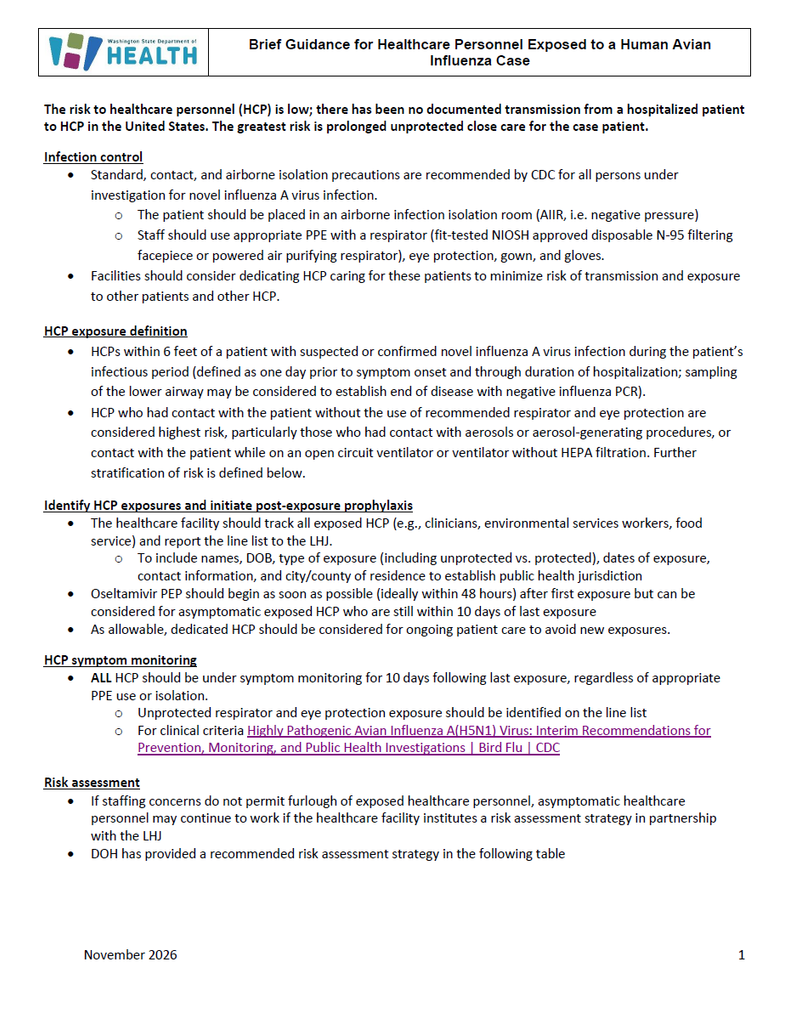
- Be aware of and review the Brief Guidance for Healthcare Personnel Exposed to Human Avian Influenza Case.
- Be aware of Health Advisory: Avian Influenza Detected in Dairy Cattle in Yakima County to learn more about testing and treatment of avian influenza.
- Be alert for patients with symptoms of influenza.
- Symptoms of avian influenza infection in humans can range from mild to severe.
- Symptoms of avian influenza infection in humans can be similar to symptoms from seasonal influenza viruses; getting an accurate exposure history from symptomatic patients is very important to rapidly identify potential patients with HPAI.
- Assess exposure history for all patients with suspected or confirmed influenza.
- Assess these patients for the following exposures:
- Working on a dairy farm or having close contact with sick or dead animals or their environments, especially dairy cattle, birds, wildlife, livestock (including poultry), or domestic animals suspected of being infected with HPAI, OR
- Close contact (within six feet) with a person who is suspected or confirmed to have avian influenza, also called bird flu.
- Consuming or handling raw animal products (e.g., raw cow milk, products made with raw cow milk, and raw meat-based pet food).
- NOTE: A negative influenza test result does not rule out avian influenza in symptomatic patients with one or more exposures to sources of HPAI.
- Clinicians who suspect HPAI in a patient should immediately notify the Yakima Health District at (509) 249-6541. For reporting after hours and weekend, call (509) 575-4040 Option 1.
- HPAI should remain on the differential with maintenance of contact, droplet, and airborne isolation.
NOTIFY
- Clinicians and facilities in all healthcare settings are required to IMMEDIATELY report the following to their Local Health Jurisdiction:
- All influenza A specimens that result as “unsubtypeable” (when test results expected to a seasonal influenza subtype and resulted influenza A positive but did not produce a subtype).
- All suspected or confirmed cases of novel influenza, including HPAI (H5 or H7), and regardless of influenza test results.
TEST
- Collect specimens for influenza testing as soon as possible after illness onset, ideally within 24 hours of first symptoms. Acceptable specimens include:
- nasopharyngeal (NP) swab, or
- a nasal swab combined with an oropharyngeal (OP) swab (e.g., two swabs collected separately and combined into one viral transport media vial).
- If the patient has conjunctivitis: conjunctival swab.
- If the patient is severely ill: lower respiratory tract specimens (e.g., an endotracheal aspirate or bronchoalveolar lavage (BAL) fluid from intubated patients, or induced sputum).
- Test all hospitalized patients with compatible influenza symptoms AND exposure history (when HPAI is suspected) within 24 hours of presentation to the hospital.
- A negative influenza result does not rule out avian influenza;HPAI should remain on the differential for hospitalized patients with a compatible exposure.
- Repeat influenza testing on at least two consecutive days for hospitalized patients.
- If the patient has severe respiratory disease, consider collecting lower respiratory tract specimens; these specimens have a higher likelihood of detecting avian influenza virus.
- Positive influenza A specimens should be subtyped(tested to determine the subtype of influenza A, i.e., H1, H3, etc.)
- Specimens should be submitted for subtyping to your facility’s clinical or commercial laboratory, if possible.
- If subtyping is not available, specimens should be submitted to the WA DOH Public Health Laboratories (WAPHL) for subtyping.
- All specimens collected from dairy farm workers with potential exposure to HPAI should be submitted to WAPHL for subtyping, regardless of whether subtyping is available through a clinical or commercial laboratory.
MANAGE
- Isolate patients with suspected or confirmed HPAI:
- Use contact, droplet, and airborne precautions with eye protection (goggles or face shield)
- If possible, isolate the patient in an airborne infection isolation room (AIIR; negative pressure).
- Treat suspect HPAI patients immediately with oseltamivir, do not wait for influenza confirmation.
- Consider combination antiviral treatment (e.g., oseltamivir and baloxavir) for hospitalized patients with suspected or confirmed HPAI virus infection.
- Refer to CDC’s Interim Guidance on the Use of Antiviral Medications for additional information about treating patients with suspected or confirmed HPAI.
ADVISE
- Advise patients not to handle sick or dead birds or other wildlife. Instead:
- Advise patients who work with domestic birds or domestic animals (e.g. poultry, dairy cattle) to wear all recommended personal protective equipment while working in animal environments where avian influenza is suspected or confirmed.
- WA DOH continues to recommend seasonal influenza vaccine for patients 6 months of age and older.
- Getting a yearly flu vaccination is the best way to reduce the risk from influenza and its potentially serious complications.
- While the seasonal influenza vaccine will not protect against avian influenza, it may prevent patients from getting infected with both strains of influenza at the same time. This is particularly important among people at higher risk for avian influenza, such as people who own or work with birds or other animals, including dairy cattle.
BACKGROUND
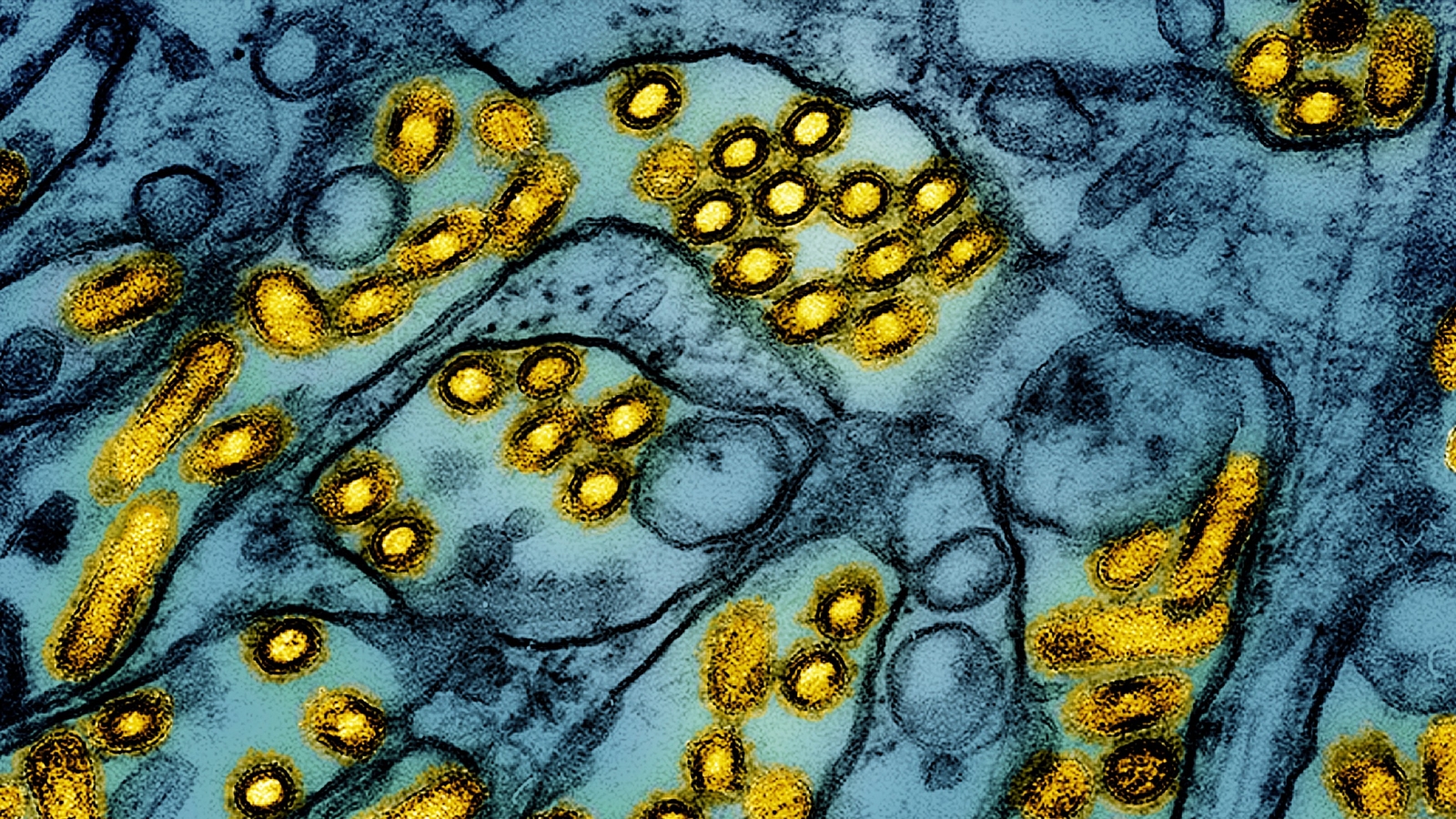
Avian influenza is a disease caused by influenza type A viruses, which naturally occur in wild aquatic birds around the world. On rare occasions, avian influenza can infect people and make them sick. People can become infected if the virus enters their mouth, nose, or eyes. Most cases have occurred among people who have been exposed to sick or infected animals. The risk of avian influenza increases in the fall and winter because migratory birds can carry the virus and spread it to domestic animals including commercial poultry farms and backyard flocks.
Transmission of avian influenza between humans is extremely rare and has not been documented in the United States.
Report immediately
If you suspect cases of HPAI or for any other questions, please contact the Yakima Health District at
(509) 249-6541. For reporting after hours and weekend, call (509) 575-4040 Option 1.
Resources
For more information about H5 Influenza, please visit:
11/06/2026 Current Situation Avian influenza (bird flu) has been detected in dairy cattle in Yakima County. There are currently 3 confirmed human cases of avian influenza in Yakima County and the risk…

providers.yakimahealthdistrict.org


 www.facebook.com