• FluTrackers.com Inc. does not provide medical advice. Information on this web site is collected from various internet resources, and the FluTrackers board of directors makes no warranty to the safety, efficacy, correctness or completeness of the information posted on this site by any author or poster. The information collated here is for instructional and/or discussion purposes only and is NOT intended to diagnose or treat any disease, illness, or other medical condition. Every individual reader or poster should seek advice from their personal physician/healthcare practitioner before considering or using any interventions that are discussed on this website. By continuing to access this website you agree to consult your personal physican before using any interventions posted on this website, and you agree to hold harmless FluTrackers.com Inc., the board of directors, the members, and all authors and posters for any effects from use of any medication, supplement, vitamin or other substance, device, intervention, etc. mentioned in posts on this website, or other internet venues referenced in posts on this website.
  • We are not asking for any donations. Do not donate to any entity who says they are raising funds for us.

NZ Govt Media Releases

Re: NZ Govt Media Releases

Media Release

23 April 2010

Fever and convulsions in children receiving flu vaccine


The Ministry of Health is aware of reports that some children in Australia who have received the seasonal flu vaccine have experienced febrile convulsions. There have also been some cases in New Zealand. All of the cases are linked to one of the vaccines, Fluvax.

New Zealand used Fluvax in March but supplies are likely to be very low as we shifted to a different supplier after Easter in order to meet demand. As a sensible precaution, until further information is available from Australia we recommend that doctors do not use Fluvax (made by CSL) for children under 5, but use Vaxigrip (made by Sanofi) if it is available.

The Chief Advisor for Child and Youth Health, Dr Pat Tuohy, says ?The welfare of children is the Ministry's top priority. There isn?t a lot of information at this stage, but as a sensible precaution we recommend that providers avoid giving Fluvax to children under 5 until there have been further investigations. We still recommend that children at higher risk for flu complications get immunised using other brands of the vaccine. Our experience during the 2009 pandemic showed that children are more likely to catch the pandemic strain, and that a number became very unwell.?

?Fever is a common reaction to flu vaccines and is part of the immune response.

About 3-4% of children will have a short convulsion if they get a high fever, no matter what the cause. Febrile convulsions are frightening for parents and may result in a short admission to hospital but they do not cause long term harm.?

Providers and parents need to be aware that fever following immunisation is common and know how to treat it.

"It's always important for people to keep an eye out for symptoms in the 24 hours after they, or their child, are vaccinated," Pat Tuohy says. "In the event of fever, give an appropriate dose of paracetamol or ibuprofen and keep the child cool - perhaps by reducing the number of layers of clothing and sponging with a damp cloth.

"If it's a high fever, or in rare case if there are convulsions within 24 hours of a vaccination, phone Healthline, or your GP and seek medical advice and assistance." Dr Tuohy said.

It is also important that doctors and parents report adverse reactions to vaccines to the Centre for Adverse Reactions Monitoring

The Australian Chief Medical Officer has recommended that doctors do not use the seasonal flu vaccine for any children under 5 years old. Health authorities in Western Australia have suspended the free seasonal flu vaccination program for children under the 5 after 22 cases of high fevers requiring hospital admission. WA health authorities describe this step as "precautionary" and are reviewing the situation to determine whether the cases are in the expected range of side-effects, or indicate a problem with the vaccine or a particular batch.

New Zealand has used 265,000 doses of Fluvax (CSL) this year, 273,800 doses of Influvac (Solvay), and 317,660 doses of Vaxigrip (Sanofi). Most of the Fluvax would have been used several weeks ago during March, so the risk of febrile convulsions should be well past by now. More supplies of Vaxigrip are expected next week, once flights from Europe resume.

The Ministry of Health encourages all parents, consumers and healthcare professionals to report all suspected adverse reactions to the Centre for Adverse Reactions Monitoring http://carm.otago.ac.nz/CARM.asp.


Additional Background: Febrile Convulsions


Additional user-friendly information on febrile convulsions, and how to respond to them can be seen at the following websites:

Key information on these websites includes:


What is a febrile convulsion?


  • A febrile convulsion is a convulsion that occurs with a fever.
  • Many infections in children cause fevers. In some children the fever triggers a convulsion.
  • Febrile convulsions are also called fever fits, or febrile seizures.
  • Febrile convulsions are common. They are not the same as epilepsy.

Who gets febrile convulsions?


  • About one in 25 children will have a febrile convulsion. They occur between the ages of six months and five years. Febrile convulsions are uncommon after the age of five years.
  • There is an increased chance of your child having a febrile convulsion if a close relative had febrile convulsions as a child. The tendency to febrile convulsions runs in families.

Key points to remember


  • febrile convulsions are a common childhood problem
  • they are usually caused by a fever with a viral infection
  • they look scary, but very rarely cause long-term problems
  • the most important thing is to try to keep calm, and lie your child down on their side, in the recovery position, until the convulsion is finished
  • dial 111 and ask for urgent medical help if the convulsion lasts more than five minutes, or if your child has trouble breathing, or you are worried
  • you should get your child checked by a doctor afterwards to find the cause of the fever
  • when your child is having a convulsion do not put anything in their mouth and do not put them into a bath to cool down


    For further information, please contact Michael Tull, Ministry of Health (021) 243 6805

    http://www.moh.govt.nz/moh.nsf/indexmh/fever-and-convulsions-in-children-receiving-flu-vaccine
 
Re: NZ Govt Media Releases

<FORM action="">

<MAP name=mohmap><AREA accessKey=1 id=mohmaplink1 href="/moh.nsf?OpenDatabase" shape=rect alt="Go to home page - Ministry of Health" coords=1,0,131,60><AREA accessKey=. id=mohmaplink2 href="/whatsnew.html" shape=rect alt="Whats New - Ministry of Health" coords=132,0,251,60><AREA accessKey=6 id=mohmaplink3 href="/moh.nsf/wpg_Index/Publications-Index" shape=rect alt="Publications - Ministry of Health" coords=252,0,360,60><AREA accessKey=5 id=mohmaplink4 href="/moh.nsf/wpg_Index/Forums-Index" shape=rect alt="Forums - Ministry of Health" coords=361,0,439,60><AREA accessKey=8 id=mohmaplink5 href="/moh.nsf/wpg_Index/Links-Index" shape=rect alt="Links - Ministry of Health" coords=439,0,510,60><AREA accessKey=9 id=mohmaplink6 href="/moh.nsf/wpg_Index/Contact-Index" shape=rect alt="Contact - Ministry of Health" coords=511,0,596,60><AREA accessKey=3 id=mohmaplink7 href="/moh.nsf/wpg_Index/About-Index" shape=rect alt="About - Ministry of Health" coords=596,0,666,60><AREA accessKey=4 id=mohmaplink8 href="/moh.nsf/wpg_Index/Search-Index" shape=rect alt="Search - Ministry of Health" coords=666,0,750,60></MAP>
mohlogofull.gif
<!-- these are extra accessability keys not in the graphic menu above-->http://www.moh.govt.nz/moh.nsf/wpg_index/About-accessibilityhttp://www.moh.govt.nz/healthtopicshttp://www.moh.govt.nz/disabilityhttp://www.moh.govt.nz/copyrighthttp://www.govt.nz/
<!--PICOSEARCH_SKIPALLSTART-->[FONT=Arial, Helvetica]Print this[/FONT] [FONT=Arial, Helvetica]Email this[/FONT]<!--PICOSEARCH_SKIPALLEND-->

Media Release

28 April 2010

Pandemic Influenza H1N1 2009 (swine flu) ? Update 183


Overall influenza activity in New Zealand continues to be low although we are starting to see small increases, as we would expect at this time of year. There has been a small increase in the number of people visiting a GP with influenza-like illness however, the numbers remain below baseline levels.

The number of people calling Healthline (0800 611 116) for advice is slightly higher than at this time last year. Many people are seeking advice about caring for babies and young children with symptoms of influenza-like illness.

Autumn is when colds and other viruses start to circulate in the community so it's timely to remember that we can all help reduce the spread of these by washing and drying hands frequently, covering coughs and sneezes, and staying home from work or school when you have a cold or influenza.

It's also timely to remind those who are at greatest risk of complications for pandemic influenza, to seek medical advice as soon as they develop influenza-like symptoms. Young children are at higher risk of complications of pandemic influenza, as are women who are pregnant or recently pregnant, severely overweight people and those with serious underlying medical conditions.


Provisional findings from coroner takes death toll to 35


The Ministry of Health has previously reported 20 deaths due to pandemic influenza. This week we are including provisional findings from Coroners' offices of an additional 15 deaths attributable to or associated with pandemic influenza. These deaths occurred between June and August 2009.

Most of the additional 15 people had underlying health conditions that put them at higher risk of complications from influenza. Five died while in hospital and ten died in the community. The 15 cases were located in Auckland, Counties Manukau, Canterbury, Otago, South Canterbury, Southland, Taranaki and Waikato DHB areas.

Confirmed decisions on these cases are expected from Coroners over the coming months. In addition to the coronial review process, the Ministry of Health has a pandemic influenza mortality group reviewing the number of deaths that may be attributed to pandemic influenza. Findings from this group are expected to be released in the coming months, once clinical review is complete.


Vaccine Supply


New Zealand's seasonal flu vaccine stockpile became depleted over the past fortnight, due to the recent widespread closure of European airports. This affected our ability to restock, as our current supplier of seasonal flu vaccine ships from France.

On Tuesday 27 April the first new stock arrived in New Zealand and was cleared for delivery. 47,000 doses arrived, which is less than our usual order - however a second shipment of equivalent size is expected before the end of this week

Larger shipments are due next week, and once the first of those arrives we should be back to 'business as usual' with flu vaccinations.


Vaccination of children under the age of five


Australian health authorities continue to investigate what they have described as a "spike" in the number of under-fives admitted to hospital in that country with fever, and in some cases febrile convulsions, within 24 hours of having received a seasonal flu vaccine.

As a precautionary measure, last Friday (23 April 2010) the New Zealand Ministry of Health recommended that health professionals do not use the Fluvax brand of seasonal flu vaccine when vaccinating children under the age of five. That recommendation remains in place at this time.

The Ministry is liaising with Australian health authorities as they investigate this situation, however the data available for New Zealand do not suggest that we are seeing an increase in high fevers or febrile convulsions in young children after flu vaccination. More than 800,000 doses of seasonal flu vaccine have been delivered across New Zealand so far in 2010, many of those to children under the age of five. According to the Centre for Adverse Reactions Monitoring (CARM) data the total number of reported cases of febrile convulsions within 24 hours of seasonal flu vaccination in New Zealand stood at five in the 2010 year up to Friday April 23.

The Ministry is reminding health professionals and parents to report any adverse reactions to vaccines to the Centre for Adverse Reactions Monitoring. Given this, and extensive media coverage of the Australian situation, we anticipate that the number of cases reported will increase.


Weekly consultation rates for influenza-like illness in New Zealand, 2008-2010


Week 16: 21 - 28 April
0.1534

*A weekly rate of less than 50 ILI consultations per 100,000 patient population is considered baseline activity. A rate of 50-249 is considered indicative of normal seasonal influenza activity, and a rate of 250-399 indicative of higher than expected influenza activity. A rate of over 400 ILI consultations per 100,000 patient population indicates an epidemic level of influenza activity.

Source: Institute of Environmental Science and Research, Influenza Weekly Update 2010/16


The international picture


As at 23 April 2010, WHO reports it is continuing to actively monitor the progress of the pandemic. The most active areas of pandemic virus transmission currently are in parts of West and Central Africa, but transmission is also occurring in South East Asia and Central America.

Pandemic influenza activity remains low in much of the temperate zone of both the northern and southern hemispheres. Since the pandemic began in April 2009, almost all countries have experienced outbreaks of pandemic influenza and over 17,853 laboratory-confirmed deaths have been reported worldwide.

For the WHO?s latest updates on the global pandemic, check their website: http://www.who.int/csr/disease/swineflu/en/

ENDS

Please attribute to Dr Fran McGrath, Deputy Director of Public Health, Ministry of Health.

For health information and advice, call Healthline on 0800 611 116
For latest updates on Pandemic (H1N1) 2009, visit http://www.moh.govt.nz
Follow us on Twitter: http://twitter.com/minhealthnz
For media queries related to this update, call the National Health Coordination Centre, Communications Desk at +64 (04) 816 3660 or +64 (21) 243 6805 or email H1N1comms@moh.govt.nz


<HR align=left SIZE=1 width=750>http://www.moh.govt.nz/moh.nsf/indexmh/influenza-a-h1n1-update-183-280410


</FORM>
 
Re: NZ Govt Media Releases

<FORM action="">

<MAP name=mohmap><AREA accessKey=1 id=mohmaplink1 href="/moh.nsf?OpenDatabase" shape=rect alt="Go to home page - Ministry of Health" coords=1,0,131,60><AREA accessKey=. id=mohmaplink2 href="/whatsnew.html" shape=rect alt="Whats New - Ministry of Health" coords=132,0,251,60><AREA accessKey=6 id=mohmaplink3 href="/moh.nsf/wpg_Index/Publications-Index" shape=rect alt="Publications - Ministry of Health" coords=252,0,360,60><AREA accessKey=5 id=mohmaplink4 href="/moh.nsf/wpg_Index/Forums-Index" shape=rect alt="Forums - Ministry of Health" coords=361,0,439,60><AREA accessKey=8 id=mohmaplink5 href="/moh.nsf/wpg_Index/Links-Index" shape=rect alt="Links - Ministry of Health" coords=439,0,510,60><AREA accessKey=9 id=mohmaplink6 href="/moh.nsf/wpg_Index/Contact-Index" shape=rect alt="Contact - Ministry of Health" coords=511,0,596,60><AREA accessKey=3 id=mohmaplink7 href="/moh.nsf/wpg_Index/About-Index" shape=rect alt="About - Ministry of Health" coords=596,0,666,60><AREA accessKey=4 id=mohmaplink8 href="/moh.nsf/wpg_Index/Search-Index" shape=rect alt="Search - Ministry of Health" coords=666,0,750,60></MAP>
mohlogofull.gif
<!-- these are extra accessability keys not in the graphic menu above-->http://www.moh.govt.nz/moh.nsf/wpg_index/About-accessibilityhttp://www.moh.govt.nz/healthtopicshttp://www.moh.govt.nz/disabilityhttp://www.moh.govt.nz/copyrighthttp://www.govt.nz/
<!--PICOSEARCH_SKIPALLSTART-->[FONT=Arial, Helvetica]Print this[/FONT] [FONT=Arial, Helvetica]Email this[/FONT]<!--PICOSEARCH_SKIPALLEND-->

Media Release

6 May 2010

Pandemic Influenza H1N1 2009 (swine flu) ? Update 184


Surveillance data from GP practices and Healthline for the week ending 30 April shows a continued increase in both the number of people calling healthline for free health advice on influenza-like illness, and visiting the doctor with an influenza-like illness. While numbers are still below baseline, this continued increase could signal the start of a higher level of pandemic influenza activity in New Zealand.

The number of people calling Healthline (0800 611 116) for advice is slightly higher than at this time last year.

Autumn is when colds and other viruses start to circulate in the community so it's timely to remember that we can all help reduce the spread of these by washing and drying hands frequently, covering coughs and sneezes, and staying home from work or school when you have symptoms of influenza.

It's also timely to remind those who are at greatest risk of complications for pandemic influenza, to seek medical advice as soon as they develop influenza-like symptoms. Young children are at higher risk of complications of pandemic influenza, as are women who are pregnant or recently pregnant, severely overweight people and those with serious underlying medical conditions.


Vaccine Supply


Air freight is now returning to normal, following the widespread closure of European airports in mid-April caused by the eruption of Eyjafjallaj?kull in Iceland. Those airport closures created a backlog for air freight, which delayed the delivery of seasonal flu vaccine from France to New Zealand over the past few weeks.

Large shipments of vaccine are now possible, with the first (of 108,000 doses) arriving in New Zealand today (Thursday May 6).

This enables our seasonal flu vaccine stockpile to return to a state where it is well stocked - and in the next week will enable us to resume advertising to encourage people to access the protection provided by seasonal vaccination.

Having a healthy stockpile will also enable GPs and other key providers in the community to resume scheduling "vaccination clinics" - a practice we advised against in recent weeks when vaccines were in short supply.


Studying the effects of H1N1


Solid progress is being made in two important studies which examine the true impact of pandemic influenza H1N1 in New Zealand last year.

The first of these is a Seroprevalence Study, which uses laboratory examination of randomly selected blood samples to estimate what percentage of the New Zealand population came into contact with H1N1 during 2009. This is important because people who were infected last year should have immunity to the virus this time around. The study also looks at differences in exposure by region, ethnicity, age group and other categories. This will help us understand much more about the first wave, and importantly will help identify how vulnerable New Zealanders are to a significant second wave. This study has now reached the peer review stage, and we hope to be able to release it in the weeks ahead.

The Ministry of Health also has a Pandemic Influenza Mortality & Morbidity Review Group which is reviewing the number of deaths that may be attributed to pandemic influenza. Their report will include the 35 deaths which have been established to date, and also looks at clinical records for other deaths where pandemic illness was present and may have been a contributing factor. Findings from this group are expected to be released around two months from now, once clinical review is complete.


Vaccination of children under the age of five


The Ministry of Health continues to gather data, and liaise with Australian health authorities, over the best approach to the issue of seasonal flu vaccination for children under the age of 5. This follows in the wake of Australian authorities beliving there had been "a spike" in admissions to hospital in western Australia within 24 hours of receiving the vaccine with symptoms such as febrile convulsions.

We have not seen a similar "spike" in New Zealand, prompting the Ministry's chief advisor on Child & Youth Health, Dr Pat Tuohy, to observe:

?All of the evidence which I?ve seen to date indicates that there has not been any perceptible increase in the overall rate of febrile convulsions occurring. (Also) There does not appear to be any difference between the number of people who return to their GP after receiving the 2010 seasonal flu vaccine, and the rate of re-presentation to GPs for other vaccines in previous years. The Ministry of Health's advice for New Zealand remains the same as it was on Friday last week: People, including children under 5, at risk of increased complications from flu should get a flu vaccine.?


Weekly consultation rates for influenza-like illness in New Zealand, 2008-2010


0.15E2

*A weekly rate of less than 50 ILI consultations per 100,000 patient population is considered baseline activity. A rate of 50-249 is considered indicative of normal seasonal influenza activity, and a rate of 250-399 indicative of higher than expected influenza activity. A rate of over 400 ILI consultations per 100,000 patient population indicates an epidemic level of influenza activity.

Source: Institute of Environmental Science and Research, Influenza Weekly Update 2010/17


The international picture


As at 30 April 2010, WHO reports it is continuing to actively monitor the progress of the pandemic. The current situation is largely unchanged since the last update. The most active areas of pandemic virus transmission continue to be in parts of West and Central Africa with some focal ares of activity in South and Southeast Asia. Pandemic influenza activity remains low in much of the temperate zone of both the northern and southern hemispheres. Since the pandemic began in April 2009, almost all countries have experienced outbreaks of pandemic influenza and over 17,919 laboratory-confirmed deaths have been reported worldwide.

For the WHO?s latest updates on the global pandemic, check their website: http://www.who.int/csr/disease/swineflu/en/

ENDS

Please attribute to Dr Mark Jacobs, Director of Public Health, Ministry of Health.

For health information and advice, call Healthline 0800 611 116.
For latest updates on Pandemic Influenza H1N1 2009 (swine flu), visit http://www.moh.govt.nz.
Follow us on Twitter: http://twitter.com/minhealthnz


<HR align=left SIZE=1 width=750>Privacy | Copyright | Disclaimer | About Us | Access Keys | Feedback | Contact Us | Employment | newzealand.govt.nz


http://www.moh.govt.nz/moh.nsf/indexmh/influenza-a-h1n1-update-184-060510</FORM>
 
Re: NZ Govt Media Releases

<FORM action="">

<MAP name=mohmap><AREA accessKey=1 id=mohmaplink1 href="/moh.nsf?OpenDatabase" shape=rect alt="Go to home page - Ministry of Health" coords=1,0,131,60><AREA accessKey=. id=mohmaplink2 href="/whatsnew.html" shape=rect alt="Whats New - Ministry of Health" coords=132,0,251,60><AREA accessKey=6 id=mohmaplink3 href="/moh.nsf/wpg_Index/Publications-Index" shape=rect alt="Publications - Ministry of Health" coords=252,0,360,60><AREA accessKey=5 id=mohmaplink4 href="/moh.nsf/wpg_Index/Forums-Index" shape=rect alt="Forums - Ministry of Health" coords=361,0,439,60><AREA accessKey=8 id=mohmaplink5 href="/moh.nsf/wpg_Index/Links-Index" shape=rect alt="Links - Ministry of Health" coords=439,0,510,60><AREA accessKey=9 id=mohmaplink6 href="/moh.nsf/wpg_Index/Contact-Index" shape=rect alt="Contact - Ministry of Health" coords=511,0,596,60><AREA accessKey=3 id=mohmaplink7 href="/moh.nsf/wpg_Index/About-Index" shape=rect alt="About - Ministry of Health" coords=596,0,666,60><AREA accessKey=4 id=mohmaplink8 href="/moh.nsf/wpg_Index/Search-Index" shape=rect alt="Search - Ministry of Health" coords=666,0,750,60></MAP>
mohlogofull.gif
<!-- these are extra accessability keys not in the graphic menu above-->http://www.moh.govt.nz/moh.nsf/wpg_index/About-accessibilityhttp://www.moh.govt.nz/healthtopicshttp://www.moh.govt.nz/disabilityhttp://www.moh.govt.nz/copyrighthttp://www.govt.nz/
<!--PICOSEARCH_SKIPALLSTART-->[FONT=Arial, Helvetica]Print this[/FONT] [FONT=Arial, Helvetica]Email this[/FONT]<!--PICOSEARCH_SKIPALLEND-->

Media Release

13 May 2010


Pandemic Influenza H1N1 2009 (swine flu) ? Update 185


The overall level of influenza activity in New Zealand continues to be low, and the number of people visiting a GP with influenza-like illness remains below baseline levels.

However, we are still seeing some signs of a gradual increase in influenza activity. And as we head into winter, it's timely to remember that we can all help reduce the spread of influenza and colds by washing and drying hands frequently, covering coughs and sneezes, and staying home from work or school if you are sick. Also, if you or your family are ill and you are concerned, or if your condition worsens, get health advice early by calling your GP or Healthline on 0800 611 116.

It's recommended that those at greatest risk of complications for pandemic influenza get protected by having a seasonal influenza vaccination. It's also important to remember that people who are in the 'high risk of complications' categories should seek medical advice as soon as they develop influenza-like symptoms. Young children are at higher risk of complications of pandemic influenza, as are women who are pregnant or recently pregnant, severely overweight people and those with serious underlying medical conditions.

Vaccine Supply

We now have good supplies of vaccine in the country, and the seasonal flu vaccination programme has seen more than 900,000 doses of vaccine distributed throughout the country. This is nearly as many doses as were distributed in the entire 2009 influenza season.

If you haven't yet been immunised, it?s important to get the vaccine before the flu season begins, as it takes a up to a fortnight for the vaccine to offer its full level of protection. Young children also need a longer time as they require two doses a month apart to be assured of best protection.

Influenza immunization is especially recommended that those at greatest risk of complications from pandemic influenza, including women who are pregnant or recently pregnant, very young children, severely overweight people and those with underlying medical conditions. Immunisation is free for eligible groups only until 30 June.

Weekly consultation rates for influenza-like illness in New Zealand, 2008-2010


Week 18: 4 May - 10 May
0.A7C

*A weekly rate of less than 50 ILI consultations per 100,000 patient population is considered baseline activity. A rate of 50-249 is considered indicative of normal seasonal influenza activity, and a rate of 250-399 indicative of higher than expected influenza activity. A rate of over 400 ILI consultations per 100,000 patient population indicates an epidemic level of influenza activity.
Source: Institute of Environmental Science and Research, Influenza Weekly Update 2010/18


The international picture

As at 7 May 2010, WHO reports it is continuing to actively monitor the progress of the pandemic. The current situation is largely unchanged since the last update. The most active areas of pandemic virus transmission are in parts of West Africa, the Caribbean, and Southeast Asia. In the temperate zone of the northern and southern hemisphere, overall pandemic influenza activity remains sporadic. Since the pandemic began in April 2009, almost all countries have experienced outbreaks of pandemic influenza and over 18,001 laboratory-confirmed deaths have been reported worldwide.

For the WHO?s latest updates on the global pandemic, check their website: http://www.who.int/csr/disease/swineflu/en/

ENDS <TABLE border=0 cellSpacing=0 cellPadding=0><TBODY><TR vAlign=top><TD width=599>
ecblank.gif
</TD></TR></TBODY></TABLE>
Please attribute to Dr Darren Hunt, Deputy Director of Public Health, Ministry of Health.

For health information and advice, call Healthline 0800 611 116.
For latest updates on Pandemic Influenza H1N1 2009 (swine flu), visit http://www.moh.govt.nz.
Follow us on Twitter: http://twitter.com/minhealthnz
For media queries, call the National Health Coordination Centre, Communications Desk at +64 (021) 243 6805 or email H1N1comms@moh.govt.nz


<HR align=left SIZE=1 width=750>Privacy | Copyright | Disclaimer | About Us | Access Keys | Feedback | Contact Us | Employment | newzealand.govt.nz


http://www.moh.govt.nz/moh.nsf/indexmh/influenza-a-h1n1-update-185-130510</FORM>
 
Re: NZ Govt Media Releases

<FORM action="">

<MAP name=mohmap><AREA accessKey=1 id=mohmaplink1 href="/moh.nsf?OpenDatabase" shape=rect alt="Go to home page - Ministry of Health" coords=1,0,131,60><AREA accessKey=. id=mohmaplink2 href="/whatsnew.html" shape=rect alt="Whats New - Ministry of Health" coords=132,0,251,60><AREA accessKey=6 id=mohmaplink3 href="/moh.nsf/wpg_Index/Publications-Index" shape=rect alt="Publications - Ministry of Health" coords=252,0,360,60><AREA accessKey=5 id=mohmaplink4 href="/moh.nsf/wpg_Index/Forums-Index" shape=rect alt="Forums - Ministry of Health" coords=361,0,439,60><AREA accessKey=8 id=mohmaplink5 href="/moh.nsf/wpg_Index/Links-Index" shape=rect alt="Links - Ministry of Health" coords=439,0,510,60><AREA accessKey=9 id=mohmaplink6 href="/moh.nsf/wpg_Index/Contact-Index" shape=rect alt="Contact - Ministry of Health" coords=511,0,596,60><AREA accessKey=3 id=mohmaplink7 href="/moh.nsf/wpg_Index/About-Index" shape=rect alt="About - Ministry of Health" coords=596,0,666,60><AREA accessKey=4 id=mohmaplink8 href="/moh.nsf/wpg_Index/Search-Index" shape=rect alt="Search - Ministry of Health" coords=666,0,750,60></MAP>
mohlogofull.gif
<!-- these are extra accessability keys not in the graphic menu above-->http://www.moh.govt.nz/moh.nsf/wpg_index/About-accessibilityhttp://www.moh.govt.nz/healthtopicshttp://www.moh.govt.nz/disabilityhttp://www.moh.govt.nz/copyrighthttp://www.govt.nz/
<!--PICOSEARCH_SKIPALLSTART-->[FONT=Arial, Helvetica]Print this[/FONT] [FONT=Arial, Helvetica]Email this[/FONT]<!--PICOSEARCH_SKIPALLEND-->

Media Release

20 May 2010


Pandemic Influenza H1N1 2009 (swine flu) ? Update 186


The overall level of influenza activity in New Zealand continues to be low, and the number of people visiting a GP with influenza-like illness remains below baseline levels. In the past week there was a slight increase in the number of people calling Healthline for advice on influenza-like illness.

We are seeing some signs of a gradual increase in influenza activity. And as we head into winter, it's timely to remember that we can all help reduce the spread of influenza and colds by doing those common sense things we all did last year- washing and drying hands frequently, covering coughs and sneezes, and staying home from work or school if you are sick. Also, if you or your family are ill and you are concerned, or if your condition worsens, get health advice early by calling your GP or Healthline on 0800 611 116.

It's recommended that particularly those at greatest risk of complications for pandemic influenza get protected by having a seasonal influenza vaccination. It's also important to remember that people who are in the 'high risk of complications' categories should seek medical advice as soon as they develop influenza-like symptoms. Young children are at higher risk of complications of pandemic influenza, as are women who are pregnant or recently pregnant, severely overweight people and those with significant underlying medical conditions.

Immunisation - free for those in eligible groups till 30 June

Influenza immunisation is especially recommended that those at greatest risk of complications from pandemic influenza, including women who are pregnant or recently pregnant, very young children, severely overweight people and those with underlying medical conditions. Immunisation is free for eligible groups only until 30 June.

If you haven't yet been immunised, it?s important to get the vaccine before the flu season begins, as it takes a up to a fortnight for the vaccine to offer its full level of protection. Young children also need a longer time as they require two doses a month apart to be assured of best protection.

Weekly consultation rates for influenza-like illness in New Zealand, 2008-2010


Week 19: 10 May - 16 May
0.A3C

*A weekly rate of less than 50 ILI consultations per 100,000 patient population is considered baseline activity. A rate of 50-249 is considered indicative of normal seasonal influenza activity, and a rate of 250-399 indicative of higher than expected influenza activity. A rate of over 400 ILI consultations per 100,000 patient population indicates an epidemic level of influenza activity.

Source: Institute of Environmental Science and Research, Influenza Weekly Update 2010/19


The international picture

As at 14 May 2010, the most active areas of pandemic virus transmission are in parts of the Carribean and Central America, and to a lesser extent in West Africa sand South and Southeast Asia. In the temperate zone of the northern and southern hemisphere, overall pandemic influenza activity remains sporadic. Since the pandemic began in April 2009, almost all countries have experienced outbreaks of pandemic influenza and over 18,036 laboratory-confirmed deaths have been reported worldwide. The WHO is continuing to actively monitor the progress of the pandemic.
For the WHO?s latest updates on the global pandemic, check their website: http://www.who.int/csr/disease/swineflu/en/

Please attribute to Dr Mark Jacobs, Director of Public Health, Ministry of Health.

For health information and advice, call Healthline 0800 611 116.
For latest updates on Pandemic Influenza H1N1 2009 (swine flu), visit http://www.moh.govt.nz.
Follow us on Twitter: http://twitter.com/minhealthnz
For media queries, call the National Health Coordination Centre, Communications Desk at +64 (021) 243 6805 or email H1N1comms@moh.govt.nz


<HR align=left SIZE=1 width=750>Privacy | Copyright | Disclaimer | About Us | Access Keys | Feedback | Contact Us | Employment | newzealand.govt.nz


http://www.moh.govt.nz/moh.nsf/indexmh/influenza-a-h1n1-update-186-200510</FORM>
 
Pandemic Influenza H1N1 2009 (swine flu) ? Update 187

Pandemic Influenza H1N1 2009 (swine flu) ? Update 187

We continue to see some signs of a gradual increase in influenza activity, however, overall the level of influenza activity in New Zealand is at a level similar to this time last year, and the number of people visiting a GP with influenza-like illness remains below baseline levels. Over the past week there was a slight increase in the number of people calling Healthline for advice on influenza-like illness.

As we head into winter, it's timely to remember that we can all help reduce the spread of influenza and colds by washing and drying hands frequently, covering coughs and sneezes, and staying home from work or school if you are sick. Also, if you or your family are ill and you are concerned, or if your condition worsens, get health advice early by calling your GP or Healthline on 0800 611 116.

(read more, link)
 
New Zealand : Pandemic Influenza H1N1 2009 (swine flu) ? Update 189

New Zealand : Pandemic Influenza H1N1 2009 (swine flu) ? Update 189

The number of consultations for influenza-like illness has been increasing slowly, particularly over the past two weeks. Many general practices are seeing more young children who are unwell. There is certainly evidence of winter illnesses in the community and the predominant influenza virus is likely to be the pandemic strain.

(Link)
 
Re: NZ Govt Media Releases

Media Release

17 June 2010

Pandemic Influenza H1N1 2009 (swine flu) ? Update 190

The number of GP consultations for influenza-like illness appears stable after increasing over the past three weeks. Many general practices are seeing more young children who are unwell. There is certainly evidence of winter illnesses in the community and the predominant influenza virus is likely to be the pandemic strain.

Healthline, New Zealand's free health 24 hour health advice line has seen a slight increase in the number of calls regarding people with influenza-like illnesses. Over the past week just over 17% of all calls to Healthline were people calling with influenza-like illnesses.

We can all help reduce the spread of influenza and colds by washing and drying hands frequently, covering coughs and sneezes, and staying home from work or school if you are sick. Also, if you or your family are ill and you are concerned, or if your condition worsens, get health advice by calling your GP or Healthline on 0800 611 116.

If you get symptoms of influenza, call you GP early so they can decide whether it's appropriate for an antiviral to be prescribed.

Antiviral medications such as Tamiflu and Relenza can reduce the severity and length of your illness, and are best given within the first two days. Antivirals for influenza are important to get early, especialy for: women who are pregnant or recently pregnant, very young children, severely overweight people and those with underlying medical conditions such as asthma, diabetes, cancer, heart and lung disease and other conditions including autoimmune diseases. Antivirals are available free of charge, on prescription - talk to your GP as soon as you get symptoms of influenza.

It's not too late to get immunised - free vaccination extended beyond 30 June

If you're not one of the million New Zealanders who's already had their flu immunisation it?s not too late. It's important to get the vaccine as soon as you can, as it takes a up to a fortnight for the vaccine to offer its full level of protection. Young children also need a longer time as they require two doses a month apart to be assured of best protection.

Free immunisation for people in eligible groups will continue beyond 30 June until vaccine supplies run out. This year's seasonal influenza vaccine contains the pandemic H1N1 virus strain and is especially recommended for those at greatest risk of complications from pandemic influenza, including women who are pregnant or recently pregnant, very young children, severely overweight people and those with underlying medical conditions.

Influenza immunisation is especially recommended for those at greatest risk of complications from pandemic influenza, including women who are pregnant or recently pregnant, very young children, severely overweight people and those with underlying medical conditions.


Weekly consultation rates for influenza-like illness in New Zealand, 2008-2010


Week 23: 7 - 14 June 2010
0.D82

The international picture


As reported by WHO on 10 June 2010, pandemic virus transmission is active but declining in parts of the tropics, particularly Southeast Asia and the Carribean. As countries of the southern hemisphere enter winter, only sporadic influenza activity has been detected to far, except in Chile and Uruquay where they have reported small numbers. Seasonal influenza B viruses are currently the predominant type of influenza virus circulating globally, although at low levels.

Worldwide, more than 214 countries and overseas territories or communities have reported laboratory confirmed cases of pandemic influenza H1N1 2009, including over 18156 deaths.

The WHO is continuing to actively monitor the progress of the pandemic. For the WHO?s latest updates on the global pandemic, check their website: http://www.who.int/csr/disease/swineflu/en/

ENDS

Please attribute to Dr Mark Jacobs, Director of Public Health, Ministry of Health.
http://www.moh.govt.nz/moh.nsf/indexmh/influenza-a-h1n1-update-190-170610
 
Re: NZ Govt Media Releases

<FORM action="">

<MAP name=mohmap><AREA accessKey=1 id=mohmaplink1 href="/moh.nsf?OpenDatabase" shape=rect alt="Go to home page - Ministry of Health" coords=1,0,131,60><AREA accessKey=. id=mohmaplink2 href="/whatsnew.html" shape=rect alt="Whats New - Ministry of Health" coords=132,0,251,60><AREA accessKey=6 id=mohmaplink3 href="/moh.nsf/wpg_Index/Publications-Index" shape=rect alt="Publications - Ministry of Health" coords=252,0,360,60><AREA accessKey=5 id=mohmaplink4 href="/moh.nsf/wpg_Index/Forums-Index" shape=rect alt="Forums - Ministry of Health" coords=361,0,439,60><AREA accessKey=8 id=mohmaplink5 href="/moh.nsf/wpg_Index/Links-Index" shape=rect alt="Links - Ministry of Health" coords=439,0,510,60><AREA accessKey=9 id=mohmaplink6 href="/moh.nsf/wpg_Index/Contact-Index" shape=rect alt="Contact - Ministry of Health" coords=511,0,596,60><AREA accessKey=3 id=mohmaplink7 href="/moh.nsf/wpg_Index/About-Index" shape=rect alt="About - Ministry of Health" coords=596,0,666,60><AREA accessKey=4 id=mohmaplink8 href="/moh.nsf/wpg_Index/Search-Index" shape=rect alt="Search - Ministry of Health" coords=666,0,750,60></MAP>
mohlogofull.gif
<!-- these are extra accessability keys not in the graphic menu above-->http://www.moh.govt.nz/moh.nsf/wpg_index/About-accessibilityhttp://www.moh.govt.nz/healthtopicshttp://www.moh.govt.nz/disabilityhttp://www.moh.govt.nz/copyrighthttp://www.govt.nz/
<!--PICOSEARCH_SKIPALLSTART-->[FONT=Arial, Helvetica]Print this[/FONT] [FONT=Arial, Helvetica]Email this[/FONT]<!--PICOSEARCH_SKIPALLEND-->

Media Release

24 June 2010

Pandemic Influenza H1N1 2009 (swine flu) ? Update 191


The level of influenza activity in New Zealand remains relatively low at the moment, however there is still circulation of the pandemic influenza H1N1 virus and other respiratory viruses in the community. The predominant influenza virus is likely to be the pandemic strain. Many general practices are seeing more young children who are unwell.

Healthline, New Zealand's free health 24 hour health advice line has seen a slight increase in the number of calls regarding people with influenza-like illnesses. Over the past week just over 17% of all calls to Healthline were people calling with influenza-like illnesses.

We can all help reduce the spread of influenza and colds by washing and drying hands frequently, covering coughs and sneezes, and staying home from work or school if you are sick. Also, if you or your family are ill and you are concerned, or if your condition worsens, get health advice by calling your GP or Healthline on 0800 611 116.

If you get symptoms of influenza, call you GP early so they can decide whether it's appropriate for an antiviral to be prescribed.

Antiviral medications such as Tamiflu and Relenza can reduce the severity and length of your illness, and are best given within the first two days. Antivirals for influenza are important to get early, especialy for: women who are pregnant or recently pregnant, very young children, severely overweight people and those with underlying medical conditions such as asthma, diabetes, cancer, heart and lung disease and other conditions including autoimmune diseases. Antivirals are available free of charge, on prescription - talk to your GP as soon as you get symptoms of influenza.

It's not too late to get immunised - free vaccination extended beyond 30 June

If you're not one of the million New Zealanders who's already had their flu immunisation it?s not too late. It's important to get the vaccine as soon as you can, as it takes a up to a fortnight for the vaccine to offer its full level of protection. Young children also need a longer time as they require two doses a month apart to be assured of best protection.

Free immunisation for people in eligible groups will continue beyond 30 June until vaccine supplies run out. This year's seasonal influenza vaccine contains the pandemic H1N1 virus strain and is especially recommended for those at greatest risk of complications from pandemic influenza, including women who are pregnant or recently pregnant, very young children, severely overweight people and those with underlying medical conditions.

Influenza immunisation is especially recommended for those at greatest risk of complications from pandemic influenza, including women who are pregnant or recently pregnant, very young children, severely overweight people and those with underlying medical conditions.

Consultation rates: Week 24, 15 - 21 June 2010


0.D64

The international picture

As reported by WHO on 18 June 2010, the situation remains largely unchanged since the last update. Overall pandemic influenza activity remains low worldwide, with geographically limited circulation of pandemic influenza virus in parts of the tropics, particularly in parts of Central Americal and the Caribbean and in parts of South and Souteast Asia. Seasonal influenza B viruses are currently the predominant type of influenza virus circulating globally, although at low levels. As countries of the temperate southern hemisphere enter winter, overall only sporadic influenza activity has been detected so far.

Worldwide, more than 214 countries and overseas territories or communities have reported laboratory confirmed cases of pandemic influenza H1N1 2009, including over 18172 deaths.

The WHO is continuing to actively monitor the progress of the pandemic. For the WHO?s latest updates on the global pandemic, check their website.

ENDS

Please attribute to Dr Darren Hunt, Deputy Director of Public Health, Ministry of Health.
<HR align=left SIZE=2 width="100%">
For health information and advice, call Healthline 0800 611 116.
For latest updates on Pandemic Influenza H1N1 2009 (swine flu), visit www.moh.govt.nz.
Follow us on Twitter: http://twitter.com/minhealthnz.
For media queries, call the National Health Coordination Centre, Communications Desk at +64 (021) 243 6805 or email H1N1comms@moh.govt.nz


<HR align=left SIZE=1 width=750>Privacy | Copyright | Disclaimer | About Us | Access Keys | Feedback | Contact Us | Employment | newzealand.govt.nz

http://www.moh.govt.nz/moh.nsf/indexmh/influenza-a-h1n1-update-191-240610

</FORM>
 
Re: NZ Govt Media Releases

Pandemic Influenza H1N1 2009 ? Update 192
Thursday, 1 July 2010, 5:02 pm
Press Release: Ministry of Health

1 July 2010

Media Release

Pandemic Influenza H1N1 2009 (swine flu) ? Update 192


Overall influenza activity is gradually increasing and is at the level usually seen at this time of year. The pandemic influenza virus is circulating in our communities, though the rate of consultation for influenza-like illness identified through sentinel general practices remains below the baseline level.

http://www.scoop.co.nz/stories/GE1007/S00012.htm
 
Re: NZ Govt Media Releases

New Zealand : Pandemic Influenza H1N1 2009 (swine flu) ? Update 193

Overall influenza activity continues to increase and is at the level usually seen at this time of year. The pandemic influenza virus is circulating in our communities, though the rate of consultation for influenza-like illness identified through sentinel general practices remains below the baseline level.

As was the case last year, although most people get over the infection without developing complications or becoming more seriously ill, this is not the case for everyone. So far during 2010 there have been 4 people treated in ICUs, and one person suspected as having died due to the infection.

http://www.moh.govt.nz/moh.nsf/indexmh/influenza-a-h1n1-update-193-010708?Open
 
Re: NZ Govt Media Releases

Media Release
16 July 2010


Pandemic Influenza H1N1 2009 (swine flu) - Update 195
A second death of a 51 year old male linked to pandemic influenza (swine flu) has been reported to the Ministry of Health.

The tragic death is an unfortunate reminder of the impact the disease can have, as the numbers of people seeing their GP with influenza symptoms slowly rise.

The death occurred in the North Island in the last two weeks, the man had an underlying health condition which was exacerbated by swine flu. Further details will be available and released at a later date.

Key information about steps the public can take remain:


get vaccinated against the seasonal influenza which includes protection against swine flu, there is still time but act quickly
phone for medical advice quickly (GP or Healthline) if you are sick to be assessed for antiviral medicine treatment
wash and dry hands frequently, cover coughs and sneezes and stay home if you are sick.
More details about these key messages is available in Update 194.
If you or your family are sick with influenza, particularly if you have underlying health conditions, or if your condition worsens, get health advice by calling your GP or Healthline on 0800 611 116.
Please attribute these comments to Dr Fran McGrath, Deputy Director of Public Health.

ENDS


For further information, please contact Peter Abernethy on 021 366 111
http://www.moh.govt.nz/moh.nsf/indexmh/influenza-a-h1n1-update-195-160710
 
Re: NZ Govt Media Releases

Pandemic Influenza H1N1 2009 (swine flu) – Update 196

Ministry of HealthThursday 22 July 2010, 4:56pm

Media release from the Ministry of Health

Increasing influenza activity

Influenza activity continues to increase. In some areas of New Zealand - and as is often the case during winter - both GPs and hospitals are becoming increasingly busy with visits for influenza-like illness and other respiratory illness.


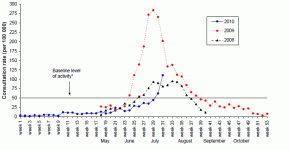
Weekly consultation rates for influenza-like illness in New Zealand, 2008-2010

<center>
<a href="http://s190.photobucket.com/albums/z27/prandot/?action=view&current=h1n1196.jpg" target="_blank"><img src="http://i190.photobucket.com/albums/z27/prandot/h1n1196.jpg" border="0" alt="Photobucket"></a><br /><br />
</center>


Source: Institute of Environmental Science and Research, Influenza Weekly Update 2010/28

*A weekly rate of <50 ILI consultations per 100,000 patient population is considered baseline activity. A rate of 50-249 is considered indicative of normal seasonal influenza activity, and a rate of 250-399 indicative of higher than expected influenza activity. A rate of >400 ILI consultations per 100,000 patient population indicates an epidemic level of influenza activity.

http://www.nzdoctor.co.nz/un-doctor...enza-h1n1-2009-(swine-flu)-–-update-196-.aspx
 
Re: NZ Govt Media Releases

Pandemic Influenza H1N1 2009 (swine flu) ? Update 197

Increasing influenza activity

Influenza activity is beginning to increase significantly. In some areas, particularly in most of the top half of the North Island there is a marked increase in influenza-like illness and other respiratory illness.

There have been 59 people admitted to hospital reported in the last week with influenza type illness, bringing to 158 the total admitted to hospital this year. There have been no admissions to intensive care reported this week.


http://www.moh.govt.nz/moh.nsf/indexmh/influenza-a-h1n1-update-197-290710
 
Re: NZ Govt Media Releases

Pandemic Influenza H1N1 2009 (swine flu) ? Update 198


Increasing influenza activity

Influenza activity is beginning to increase significantly and this is reflected in the graph below showing the rates of influenza-like illness in the community. The number of calls to Healthline continues to increase, and last week 22.4% of all calls to Healthline were related to influenza-like illness. This is the highest rate this year, however, it is well below the 35.8% seen at this time last year, just after the peak of the 2009 pandemic wave.

The pandemic influenza strain is the predominant strain circulating this winter. In some areas, particularly those who were not greatly affected last year, are now being hit with high levels of illness in the community.

We are seeing higher levels of hospitalisation in areas that weren't severely affected last year. There have been 58 people admitted to hospital reported in the last week with influenza type illness, bringing the total to 222 admitted to hospital this year.

http://www.moh.govt.nz/moh.nsf/indexmh/influenza-a-h1n1-update-198-050810?Open
 
Re: NZ Govt Media Releases

Pandemic Influenza H1N1 2009 (swine flu) ? Update 198


Influenza activity is beginning to increase significantly and this is reflected in the graph below showing the rates of influenza-like illness in the community.

The number of calls to Healthline continues to increase, and last week 22.4% of all calls to Healthline were related to influenza-like illness. This is the highest rate this year, however, it is well below the 35.8% seen at this time last year, just after the peak of the 2009 pandemic wave.

The pandemic influenza strain is the predominant strain circulating this winter. In some areas, particularly those who were not greatly affected last year, are now being hit with high levels of illness in the community.

We are seeing higher levels of hospitalisation in areas that weren't severely affected last year.

There have been 58 people admitted to hospital reported in the last week with influenza type illness, bringing the total to 222 admitted to hospital this year.

We know that for most people it's a mild illness, however for some it can be severe, which it's why it's important to seek medical advice early.

This is particularly important for people at higher risk of severe illness like pregnant women, young children, those who are severely overweight and people with other significant health problems. Call your GP or Healthline 0800 611 116.

It's quite likely that DHBs with lower rates of hospitalisations last year could have greater numbers of people still susceptible to the disease, and so higher rates this year.

Three DHBs have already reported higher rates of people hospitalised with influenza pandemic (H1N1) swine flu than they did last year - they are Bay of Plenty, Lakes and Taranaki. These DHBs had low hospitalisation rates last year.

DHBs with low rates last year which are seeing quite a lot of early influenza activity this year are Waikato, South Canterbury and MidCentral DHBs. Other DHBs with low rates last year were Otago, West Coast, Wairarapa, Whanganui, Nelson Marlborough and Southland.

At the other end of the scale we'd expect that Capital and Coast, Hutt and Tairawhiti DHBs to be hit less hard this year because they were hit hard last year.

<center>
<a href="http://s190.photobucket.com/albums/z27/prandot/?action=view&current=NZ.jpg" target="_blank"><img src="http://i190.photobucket.com/albums/z27/prandot/NZ.jpg" border="0" alt="Photobucket"></a><br /><br />
</center>

http://www.nzdoctor.co.nz/un-doctor...enza-h1n1-2009-(swine-flu)-–-update-198-.aspx
 
Re: NZ Govt Media Releases

Pandemic Influenza H1N1 2009 (swine flu) ? Update 199

Continued vigilance is important as the level of influenza in many of our communities continues to rise.

Although the World Health Organization has announced the shift to a post-pandemic period, they have also emphasized that some countries, such as New Zealand, will still see significant levels of H1N1 transmission. Levels of the H1N1 influenza virus in New Zealand are showing a lot of regional variation, with central areas of the North Island being particularly hardest hit at the moment. There are still a number of other areas, especially in the South Island, that did not have high levels of influenza last year and may see increasing levels of influenza in the near future.

There have been 332 hospitalisations of lab-confirmed pandemic influenza H1N1 so far in 2010 in New Zealand, including 46 admissions to intensive care (note - this includes updated information reported on earlier ICU admissions). These figures do not include influenza-like illness among people admitted to hospital without a positive H1N1 lab test result.

http://www.moh.govt.nz/moh.nsf/indexmh/influenza-a-h1n1-update-199-120810?Open
 
Re: NZ Govt Media Releases

Media Release
16 August 2010


Pandemic Influenza H1N1 2009 (swine flu) ? Update 200

With the increase in influenza H1N1 currently circulating the Ministry will now be providing public updates twice weekly.

There have been 389 hospitalisations of lab-confirmed pandemic influenza H1N1 this year to date in New Zealand, including 10 people currently in intensive care. There have been a total of 59 admissions to intensive care so far this year. These figures do not include influenza-like illness among people admitted to hospital without a positive H1N1 lab test result.

So far this year there have been six deaths reported as linked to swine flu - four of these deaths are currently being considered by the Coroner and so are not yet considered as confirmed as swine flu deaths.

Healthline handled around1400 calls each day during the weekend of all types. Average call volumes are running nearly 35 per cent higher than normal seasonal levels. Calls requiring an assessment of influenza-like illness make up about a quarter of daily call volume.

Schools are reporting routine levels of children being away from school due to illness - based on information from sentinel schools around the country, at the end of last week no region was reporting average sickness rates above 15%. The absenteeism rates in Wairarapa schools now appear to be returning to normal levels.


Protecting yourself and others
For some people, influenza can be a very serious illness. The basic measures to protect yourself and others remain the same, but are more important as we see more influenza circulating in the community:


know the symptoms of influenza, which can include a high fever, headache, cough, sore throat, tiredness and generally aching all over
phone for medical advice quickly (call your GP or Healthline on 0800 611 116) if you have influenza-like symptoms, including consideration of whether you need antiviral medicine treatment. Antiviral medication may lessen the severity and length of your illness, but is best started within the first 48 hours. Antiviral treatment is currently available free of charge on prescription.
seeking early medical advice is especially important for women who are pregnant, severely overweight people and those with underlying medical conditions such as asthma, diabetes, cancer, heart and lung disease and other conditions including autoimmune diseases
wash and dry hands frequently, cover coughs and sneezes and stay home if you are sick.
If you haven't yet been immunised, there are still small numbers of influenza vaccine (6400 doses) still available. While these are likely to run out by the end of August, the Ministry is looking at options for extending immunisation while demand continues. It's important to book in to get immunised now, as it takes up to a fortnight for the vaccine to offer its full level of protection. Young children also need a longer time as they require two doses a month apart to be assured of best protection. Immunisation is especially recommended for those at greatest risk of complications from H1N1 influenza, including women who are pregnant, very young children, severely overweight people and those with underlying medical conditions.

More information can be found on the Ministry of Health's Influenza webpages at: http://www.moh.govt.nz/influenza-a-h1n1.

Please attribute this statement to Dr Mark Jacobs, Director of Public Health

For health information and advice, call Healthline 0800 611 116.
For latest updates on Pandemic Influenza H1N1 2009 (swine flu), visit http://www.moh.govt.nz.
Follow us on Twitter: http://twitter.com/minhealthnz
For media queries, call the National Health Coordination Centre, Communications Desk at +64 (021) 243 6805 or email H1N1comms@moh.govt.nz
http://www.moh.govt.nz/moh.nsf/indexmh/influenza-a-h1n1-update-200-160810?Open
 
Re: NZ Govt Media Releases

<FORM action="">
</FORM><!--close lotus notes page form-->

<!-- Start PicoSearch search engine code --><FORM id=search class=noprint method=post name=search action=http://www.picosearch.com/cgi-bin/ts.pl>Media Release</FORM><FORM>19 August 2010

Pandemic Influenza H1N1 2009 (swine flu) - Update 201


Influenza H1N1 activity is continuing to increase, and the Ministry of Health is now providing twice-weekly updates.

As at 8am this morning, there have been 454 hospitalisations of lab-confirmed pandemic influenza H1N1 this year to date in New Zealand, including 14 people currently in intensive care with confirmed H1N1. There have been a total of 67 admissions of confirmed H1N1 to intensive care so far this year. These figures do not include influenza-like illness among people admitted to hospital without a positive H1N1 lab test result.

Pandemic influenza H1N1 is the most common strain of influenza circulating in the community, although most people will not be tested for it. For the majority of people it's a mild to moderate illness, but for some it can be serious.

So far this year there have been nine deaths reported as linked to swine flu. Six of these deaths have so far been confirmed as being due to swine flu. The three deaths reported since Monday's update - all confirmed as due to swine flu - occurred in the Waitemata, Auckland and Waikato DHB areas. Further information on these new cases is available from each DHB's website.

There continues to be strong uptake of recommendations to seek medical advice early. Healthline handled over 2000 calls from people with influenza-like illness last week. Call volumes are running at around the same rates they were at this time last year during the pandemic. Calls requiring an assessment of influenza-like illness made up about a third of all calls during the last week.

GPs are continuing to see increasing numbers of people with influenza-like illness. In the last week there was a notable increase in the number of pre-schoolers being seen by GPs. If you have flu-like symptoms, phoning your GP first before you go in can help them manage your care and prevent spread to others.

Overall, schools are reporting routine levels of children being away from school due to illness, however this has been varying across the country and communities.

Weekly consultation rates for influenza-like illness in New Zealand, 2008-2010


0.ACA

Source: <CITE>Institute of Environmental Science and Research, Influenza Weekly Update 2010/32 </CITE>

*A weekly rate of <50 ILI consultations per 100,000 patient population is considered baseline activity. A rate of 50-249 is considered indicative of normal seasonal influenza activity, and a rate of 250-399 indicative of higher than expected influenza activity. A rate of >400 ILI consultations per 100,000 patient population indicates an epidemic level of influenza activity.


Protecting yourself and others

For some people, influenza can be a very serious illness. The basic measures to protect yourself and others remain the same, but are more important as we see more influenza circulating in the community:

  • know the symptoms of influenza, which can include a high fever, headache, cough, sore throat, tiredness and generally aching all over
  • phone for medical advice quickly (call your GP or Healthline on 0800 611 116 begin_of_the_skype_highlighting 0800 611 116 end_of_the_skype_highlighting) if you have influenza-like symptoms, including consideration of whether you need antiviral medicine treatment. Antiviral medication may lessen the severity and length of your illness, but is best started within the first 48 hours. Antiviral medication is currently available free of charge for people who are prescribed it for influenza treatment.
  • seeking early medical advice is especially important for women who are pregnant, severely overweight people and those with underlying medical conditions such as asthma, diabetes, cancer, heart and lung disease and other conditions including autoimmune diseases
  • wash and dry hands frequently, cover coughs and sneezes and stay home if you are sick.
Immunisation

If you haven't yet been immunised, it's important to book in to get immunised now, as it takes up to a fortnight for the vaccine to offer its full level of protection. Young children also need a longer time as they require two doses a month apart to be assured of best protection. Immunisation is especially recommended for those at greatest risk of complications from H1N1 influenza, including women who are pregnant, very young children, severely overweight people and those with underlying medical conditions.

To allow us flexibility over the weeks ahead, the Ministry has reached an agreement with Sanofi, who will supply up to 35,000 doses of Intanza for the subsidised influenza immunisation programme. Intanza provides protection against the same strains of influenza as Vaxigrip (the brand which is currently in use) including pandemic influenza H1N1 (swine flu). Intanza is only approved for use in individuals aged 18 to 59 ? therefore only individuals with chronic conditions, obese individuals or pregnant women in this age range will be subsidised for Intanza.

Intanza, perhaps best known for its very small needle, is new on the scene this year, and until now has only been available on the private market. Please be aware that, as per our planning, at some stage in the next few weeks warehouse supplies of Vaxigrip will be depleted, making Intanza the only seasonal flu vaccine available for subsidised patients.

More information can be found on the Ministry of Health's Influenza webpages at: http://www.moh.govt.nz/influenza-a-h1n1.

ENDS

Please attribute this statement to Dr Darren Hunt, Deputy Director of Public Health


For health information and advice, call Healthline 0800 611 116 begin_of_the_skype_highlighting 0800 611 116 end_of_the_skype_highlighting.
For latest updates on Pandemic Influenza H1N1 2009 (swine flu), visit
http://www.moh.govt.nz.
Follow us on Twitter:
http://twitter.com/minhealthnz
For media queries, call the National Health Coordination Centre, Communications Desk at +64 (021) 243 6805 begin_of_the_skype_highlighting +64 (021) 243 6805 end_of_the_skype_highlighting or email
H1N1comms@moh.govt.nz


http://www.moh.govt.nz/moh.nsf/indexmh/influenza-a-h1n1-update-201-190810?Open

<!--close navbottom--></FORM><!--close lotus form-->
<!--close wrapper--></FORM>
 
Back
Top