• FluTrackers.com Inc. does not provide medical advice. Information on this web site is collected from various internet resources, and the FluTrackers board of directors makes no warranty to the safety, efficacy, correctness or completeness of the information posted on this site by any author or poster. The information collated here is for instructional and/or discussion purposes only and is NOT intended to diagnose or treat any disease, illness, or other medical condition. Every individual reader or poster should seek advice from their personal physician/healthcare practitioner before considering or using any interventions that are discussed on this website. By continuing to access this website you agree to consult your personal physican before using any interventions posted on this website, and you agree to hold harmless FluTrackers.com Inc., the board of directors, the members, and all authors and posters for any effects from use of any medication, supplement, vitamin or other substance, device, intervention, etc. mentioned in posts on this website, or other internet venues referenced in posts on this website.
  • We are not asking for any donations. Do not donate to any entity who says they are raising funds for us.

NZ Govt Media Releases

Re: NZ Govt Media Releases

<FORM action="">

<MAP name=mohmap><AREA id=mohmaplink1 accessKey=1 shape=RECT alt="Go to home page - Ministry of Health" coords=1,0,131,60 href="/moh.nsf?OpenDatabase"><AREA id=mohmaplink2 accessKey=. shape=RECT alt="Whats New - Ministry of Health" coords=132,0,251,60 href="/whatsnew.html"><AREA id=mohmaplink3 accessKey=6 shape=RECT alt="Publications - Ministry of Health" coords=252,0,360,60 href="/moh.nsf/wpg_Index/Publications-Index"><AREA id=mohmaplink4 accessKey=5 shape=RECT alt="Forums - Ministry of Health" coords=361,0,439,60 href="/moh.nsf/wpg_Index/Forums-Index"><AREA id=mohmaplink5 accessKey=8 shape=RECT alt="Links - Ministry of Health" coords=439,0,510,60 href="/moh.nsf/wpg_Index/Links-Index"><AREA id=mohmaplink6 accessKey=9 shape=RECT alt="Contact - Ministry of Health" coords=511,0,596,60 href="/moh.nsf/wpg_Index/Contact-Index"><AREA id=mohmaplink7 accessKey=3 shape=RECT alt="About - Ministry of Health" coords=596,0,666,60 href="/moh.nsf/wpg_Index/About-Index"><AREA id=mohmaplink8 accessKey=4 shape=RECT alt="Search - Ministry of Health" coords=666,0,750,60 href="/moh.nsf/wpg_Index/Search-Index"></MAP>
mohlogofull.gif
<!-- these are extra accessability keys not in the graphic menu above-->http://www.moh.govt.nz/moh.nsf/wpg_index/About-accessibilityhttp://www.moh.govt.nz/healthtopicshttp://www.moh.govt.nz/disabilityhttp://www.moh.govt.nz/copyrighthttp://www.govt.nz/
<!--PICOSEARCH_SKIPALLSTART-->[FONT=Arial, Helvetica]Print this[/FONT] [FONT=Arial, Helvetica]Email this[/FONT]<!--PICOSEARCH_SKIPALLEND-->

Media Release

14 October 2009


Pandemic Influenza (H1N1) 09 Swine Flu - Update 155


The rate of Pandemic Influenza infections is continuing to decrease in New Zealand, however it is still circulating.

As at midday today one person is in hospital with confirmed swine flu (H1N1) 09 or its complications ? down from four last week.

The cumulative total of people in New Zealand who have returned a positive laboratory test for swine flu (H1N1) 09 is 3175, up one from last week

The number of deaths from Pandemic Influenza (H1N1) swine flu is unchanged from last week at 18. Some deaths are still being investigated by the Coroner.

Vigilance

While Pandemic Influenza case numbers are decreasing people should still remain vigilant to the signs and symptoms of the disease and seek medical advice if the person who is sick is pregnant or obese or has underlying medical conditions such as respiratory disease, heart disease, liver disease, blood disorders, is immuno-suppressed or has a neurological condition.

If someone has flu-like symptoms and their condition worsens, you should seek medical advice straight away. Healthline provides free medical advice 24 hours a day, seven days a week. Healthline 0800 611 116.

Healthline Calls

The percentage of callers to Healthline with influenza-like symptoms continues to decline and is at a rate similar to last year.

GP Consultations

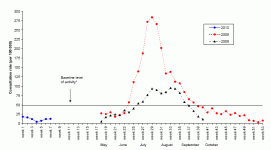
Figure 1:ESR Sentinel Surveillance of GP consultations for ILI by week during 2007, 2008 and 2009 (Reporting to week 40 for 2009 (which ended at 2400hrs on Sunday, 4/10/09)
  • 205.41A4
The number of GP consultations based on a sample of sentinel practices, continues to decline and is only slightly higher than at the same time in the last two years.

The data is from the Institute of Environmental Science and Research's (ESR) sentinel general practice surveillance system.


Australian Situation

For the number of confirmed cases in Australia, go to the Australian Government's Department of Health and Ageing website at:
http://www.healthemergency.gov.au/internet/healthemergency/publishing.nsf/Content/updates

International Update from the World Health Organization

http://www.who.int/en/

ENDS

For health information and advice, the public should call Healthline 0800 611 116
For latest updates on Influenza A (H1N1) Swine Flu, visit http://www.moh.govt.nz
Follow us on Twitter: http://twitter.com/minhealthnz

For media queries related to this update, please call the National Health Coordination Centre, Communications Desk at +64 (021) 243 6805 or email H1N1comms@moh.govt.nz


<HR align=left width=750 SIZE=1>Privacy | Copyright | Disclaimer | About Us | Access Keys | Feedback | Contact Us | Employment | newzealand.govt.nz

http://www.moh.govt.nz/moh.nsf/indexmh/influenza-a-h1n1-update-155-141009

</FORM>
 
Re: NZ Govt Media Releases

<form action=""><map name="mohmap"><area shape="rect" coords="1,0,131,60" id="mohmaplink1" href="http://www.moh.govt.nz/moh.nsf?OpenDatabase" accesskey="1" alt="Go to home page - Ministry of Health"><area shape="rect" coords="132,0,251,60" id="mohmaplink2" href="http://www.moh.govt.nz/whatsnew.html" accesskey="." alt="Whats New - Ministry of Health"><area shape="rect" coords="252,0,360,60" id="mohmaplink3" href="http://www.moh.govt.nz/moh.nsf/wpg_Index/Publications-Index" accesskey="6" alt="Publications - Ministry of Health"><area shape="rect" coords="361,0,439,60" id="mohmaplink4" href="http://www.moh.govt.nz/moh.nsf/wpg_Index/Forums-Index" accesskey="5" alt="Forums - Ministry of Health"><area shape="rect" coords="439,0,510,60" id="mohmaplink5" href="http://www.moh.govt.nz/moh.nsf/wpg_Index/Links-Index" accesskey="8" alt="Links - Ministry of Health"><area shape="rect" coords="511,0,596,60" id="mohmaplink6" href="http://www.moh.govt.nz/moh.nsf/wpg_Index/Contact-Index" accesskey="9" alt="Contact - Ministry of Health"><area shape="rect" coords="596,0,666,60" id="mohmaplink7" href="http://www.moh.govt.nz/moh.nsf/wpg_Index/About-Index" accesskey="3" alt="About - Ministry of Health"><area shape="rect" coords="666,0,750,60" id="mohmaplink8" href="http://www.moh.govt.nz/moh.nsf/wpg_Index/Search-Index" accesskey="4" alt="Search - Ministry of Health"></map>
mohlogofull.gif
<!-- these are extra accessability keys not in the graphic menu above-->
<!--PICOSEARCH_SKIPALLSTART-->[FONT=Arial, Helvetica]Print this[/FONT] [FONT=Arial, Helvetica]Email this[/FONT]<!--PICOSEARCH_SKIPALLEND-->
Media Release

28 October 2009


Pandemic Influenza (H1N1) 09 Swine Flu - Update 157

The international picture


Pandemic influenza cases are increasing in many northern hemisphere countries. According to the World Health Organization's (WHO) latest update USA is reporting high rates of pandemic H1N1 and influenza-like illness (ILI). Canada too reports increased ILI rates for the fourth week in a row, and Mexico reports influenza in some areas. Influenza activity is low but showing a small increase in Europe and Northern Asia. Further information is available on the WHO's website http://www.who.int/en/

Pandemic influenza (H1N1) 2009 is decreasing in New Zealand, however, it is still circulating and people with influenza-like illness are being treated by their GPs. The tried and true protections are covering coughs and sneezes, washing and drying hands regularly, and staying home while unwell.

With influenza cases increasing in the northern hemisphere, and with international travel we expect that we may see further clusters of cases here over the coming months. While a significant upsurge in cases may occur at any time, autumn next year seems the most likely time. The Ministry of Health continues to monitor the situation and remains vigilant in case of a second wave of pandemic influenza.

Vaccine update


Next year's seasonal influenza vaccine will contain the pandemic influenza strain and will be available in New Zealand in autumn. Immunisation from pandemic influenza will be available as part of the seasonal influenza programme. For some people it will be free of charge - the Government subsidises seasonal influenza immunisation for people aged 65 years or over and people aged 6 months to 64 years with a range of chronic conditions.

The numbers


The total number of deaths attributed to swine flu remains at 19. Please note that this number is likely to change as Coroners complete investigations into a number of influenza-related deaths that have occurred over the last few months.

As at midday today there was noone in hospital with confirmed pandemic influenza (H1N1) 2009 or its complications. This is the second consecutive week with no one in hospital.

Remain alert to signs and symptoms and ways to reduce spread


People should still remain vigilant to the signs and symptoms of the disease and seek medical advice if the person who is sick is pregnant or obese, or has underlying medical conditions such as respiratory disease, heart disease, liver disease, blood disorders, is immuno-suppressed or has a neurological condition.

If someone has flu-like symptoms and their condition worsens, you should phone for medical advice straight away. Healthline provides free advice 24 hours a day, seven days a week. Healthline 0800 611 116.

We should all continue to follow the same tried and true public health advice- regularly wash and dry hands, stay home if sick with flu symptoms, and cover your coughs and sneezes.

Healthline Calls


The number of ILI calls to HealthLine over the past week remains stable, but overall levels are still a little above those at the same time last year. Over the past week, around 17% of all calls to HealthLine were ILI-related calls.

GP Consultations


Figure 1: ESR Sentinel Surveillance of GP consultations for ILI by week during 2007, 2008 and 2009 Reporting to week 42 for 2009 (which ended at 2400hrs on Sunday 181/10/09)


  • 19.3106

The number of GP consultations based on a sample of sentinel practices has been generally decreasing and is only slightly higher than at the same time in the last two years.

The data are from the Institute of Environmental Science and Research's (ESR) sentinel general practice surveillance system.

Australian Situation


For the number of confirmed cases in Australia, go to the Australian Government's Department of Health and Ageing website at: http://www.healthemergency.gov.au/internet/healthemergency/publishing.nsf/Content/updates

International Update from the World Health Organization


As at 18 October 2009, worldwide there have been more than 414945 laboratory-confirmed cases of pandemic influenza 2009 and at least 4999 deaths reported to the World Health Organisation. For more information check: http://www.who.int/en/

ENDS

Please attribute comment in this update to Dr Fran McGrath, Deputy Director of Public Health.

For health information and advice, the public should call Healthline 0800 611 116
For latest updates on Influenza A (H1N1) Swine Flu, visit http://www.moh.govt.nz
Follow us on Twitter: http://twitter.com/minhealthnz
For media queries related to this update, please call the National Health Coordination Centre, Communications Desk at +64 (021) 243 6805 or email H1N1comms@moh.govt.nz.


http://www.moh.govt.nz/moh.nsf/indexmh/influenza-a-h1n1-update-157-281009</form>
 
Re: NZ Govt Media Releases

<form action=""><map name="mohmap"><area shape="rect" coords="1,0,131,60" id="mohmaplink1" href="http://www.moh.govt.nz/moh.nsf?OpenDatabase" accesskey="1" alt="Go to home page - Ministry of Health"><area shape="rect" coords="132,0,251,60" id="mohmaplink2" href="http://www.moh.govt.nz/whatsnew.html" accesskey="." alt="Whats New - Ministry of Health"><area shape="rect" coords="252,0,360,60" id="mohmaplink3" href="http://www.moh.govt.nz/moh.nsf/wpg_Index/Publications-Index" accesskey="6" alt="Publications - Ministry of Health"><area shape="rect" coords="361,0,439,60" id="mohmaplink4" href="http://www.moh.govt.nz/moh.nsf/wpg_Index/Forums-Index" accesskey="5" alt="Forums - Ministry of Health"><area shape="rect" coords="439,0,510,60" id="mohmaplink5" href="http://www.moh.govt.nz/moh.nsf/wpg_Index/Links-Index" accesskey="8" alt="Links - Ministry of Health"><area shape="rect" coords="511,0,596,60" id="mohmaplink6" href="http://www.moh.govt.nz/moh.nsf/wpg_Index/Contact-Index" accesskey="9" alt="Contact - Ministry of Health"><area shape="rect" coords="596,0,666,60" id="mohmaplink7" href="http://www.moh.govt.nz/moh.nsf/wpg_Index/About-Index" accesskey="3" alt="About - Ministry of Health"><area shape="rect" coords="666,0,750,60" id="mohmaplink8" href="http://www.moh.govt.nz/moh.nsf/wpg_Index/Search-Index" accesskey="4" alt="Search - Ministry of Health"></map>
mohlogofull.gif
<!-- these are extra accessability keys not in the graphic menu above-->
<!--PICOSEARCH_SKIPALLSTART-->[FONT=Arial, Helvetica]Print this[/FONT] [FONT=Arial, Helvetica]Email this[/FONT]<!--PICOSEARCH_SKIPALLEND-->
Media Release

4 November 2009

Pandemic Influenza (H1N1) 09 Swine Flu - Update 158

During the week ending 30 October there was a slight rise in the number of New Zealanders seeing their doctor in relation to influenza-like illnesses (ILI). Most people were seeking advice for sick babies and children aged under four. As at midday today there is one person in intensive care with confirmed H1N1 pandemic influenza.

The total number of deaths attributed to swine flu remains at 19. Please note that this number is likely to change as Coroners complete investigations into a number of influenza-related deaths that have occurred over the last few months.

The Ministry of Health is closely monitoring the situation and remains vigilant in case a second wave of pandemic influenza starts to spread in New Zealand.


The international picture

Pandemic influenza cases are continuing to increase in many northern hemisphere countries. In America, the CDC (Centres for Disease Control and Prevention) have reported steep increases in all indicators of influenza activity. Visits to doctors, hospitalisations, and deaths due to influenza or pneumonia are all higher than expected for this time of year. The number of people seeking medical advice is now at a rate higher than during a regular flu season.

The World Health Organization's (WHO) latest update states that Mexico has reported more confirmed cases of pandemic influenza since September, than during the springtime epidemic. In Europe, high rates of influenza illness have been observed in Iceland, Ireland, the UK, Belgium, the Netherlands and Ukraine. Many other countries in Europe and Western and Central Asia are showing evidence of early influenza transmission including Spain, Austria, parts of Northern Europe, Russia and Turkey. In Japan, influenza activity has increased sharply - this is around ten weeks ahead of the usual winter influenza season.

There is little influenza activity being reported in temperate regions of the southern hemisphere (which includes New Zealand and Australia)

Futher information is available on the WHO's website http://www.who.int/en/


Vaccine update - seasonal influenza vaccination to be free for more people at risk of developing complications

Next year's seasonal influenza vaccine will contain the pandemic (swine flu) strain and be free to extra groups who are at particular risk from swine flu. Health Minister Tony Ryall announced yesterday that free vaccines will be available next year to people over 65, but also to pregnant women, people who are morbidly obese and children aged six months to four years who are enrolled in particular high deprivation General Practices.

Seasonal flu immunisation is already free (paid for by the Government) for all people over 65 and to those aged 6 months to 64 years with certain pre-existing health conditions. Those conditions include people with chronic respiratory disease and diabetes, who were particularly susceptible to more severe outcomes from swine flu.


Remain alert to signs and symptoms and ways to reduce spread

People should still remain vigilant to the signs and symptoms of the disease and seek medical advice if the person who is sick is pregnant or obese, or has underlying medical conditions such as respiratory disease, heart disease, liver disease, blood disorders, is immuno-suppressed or has a neurological condition.

If someone has flu-like symptoms and their condition worsens, you should phone for medical advice straight away. Healthline provides free advice 24 hours a day, seven days a week. Healthline 0800 611 116.

We should all continue to follow the same tried and true public health advice- regularly wash and dry hands, stay home if sick with flu symptoms, and cover your coughs and sneezes.


Study to test pandemic influenza immunity

A study investigating the level of immunity New Zealanders have to pandemic influenza (H1N1) will get underway this month. Blood samples will be taken from 2500 people to see how many have been exposed to pandemic influenza and developed immunity to it. This information will be used to establish how many people are still at risk of contracting the illness.

The study is being undertaken by Environmental Science and Research (ESR) on behalf of the Ministry of Health. The results of the survey will be useful for the Ministry of Health so it can plan for a possible second wave.

A two week pilot study is expected to begin within the next few days at a single practice in the Hutt Valley. It will be followed by a nationwide study that will run from later in November until March next year. People randomly selected from participating general practices throughout the country will be asked to take part. The final report is expected in May.


Healthline Calls

The number of ILI calls to HealthLine over the past week remains stable, but overall levels are still above those at the same time last year. Over the past week, around 16% of all calls to HealthLine were ILI-related calls.


GP Consultations

Figure 1: ESR Sentinel Surveillance of GP consultations for ILI by week during 2007, 2008 and 2009 (Reporting to week 43 for 2009 which ended at 2400hrs on Sunday, 25/10/09)
0.179A


The number of GP consultations based on a sample of sentinel practices has been generally decreasing and is only slightly higher than at the same time in the last two years.

The data are from the Institute of Environmental Science and Research's (ESR) sentinel general practice surveillance system.


Australian Situation

For the number of confirmed cases in Australia, go to the Australian Government's Department of Health and Ageing website at: http://www.healthemergency.gov.au/internet/healthemergency/publishing.nsf/Content/updates


International Update from the World Health Organization

As at 25 October 2009, worldwide there have been more than 440000 laboratory-confirmed cases of pandemic influenza 2009 and at over 5700 deaths reported to the World Health Organisation. For more information check: http://www.who.int/en/

ENDS

Please attribute comment in this update to Dr Mark Jacobs, Director of Public Health

For health information and advice, the public should call Healthline 0800 611 116
For latest updates on Influenza A (H1N1) Swine Flu, visit http://www.moh.govt.nz
Follow us on Twitter: http://twitter.com/minhealthnz
For media queries related to this update, please call the National Health Coordination Centre, Communications Desk at +64 (021) 243 6805 or email H1N1comms@moh.govt.nz.


http://www.moh.govt.nz/moh.nsf/indexmh/influenza-a-h1n1-update-158-041109</form>
 
Re: NZ Govt Media Releases

<form action=""><map name="mohmap"><area shape="rect" coords="1,0,131,60" id="mohmaplink1" href="http://www.moh.govt.nz/moh.nsf?OpenDatabase" accesskey="1" alt="Go to home page - Ministry of Health"><area shape="rect" coords="132,0,251,60" id="mohmaplink2" href="http://www.moh.govt.nz/whatsnew.html" accesskey="." alt="Whats New - Ministry of Health"><area shape="rect" coords="252,0,360,60" id="mohmaplink3" href="http://www.moh.govt.nz/moh.nsf/wpg_Index/Publications-Index" accesskey="6" alt="Publications - Ministry of Health"><area shape="rect" coords="361,0,439,60" id="mohmaplink4" href="http://www.moh.govt.nz/moh.nsf/wpg_Index/Forums-Index" accesskey="5" alt="Forums - Ministry of Health"><area shape="rect" coords="439,0,510,60" id="mohmaplink5" href="http://www.moh.govt.nz/moh.nsf/wpg_Index/Links-Index" accesskey="8" alt="Links - Ministry of Health"><area shape="rect" coords="511,0,596,60" id="mohmaplink6" href="http://www.moh.govt.nz/moh.nsf/wpg_Index/Contact-Index" accesskey="9" alt="Contact - Ministry of Health"><area shape="rect" coords="596,0,666,60" id="mohmaplink7" href="http://www.moh.govt.nz/moh.nsf/wpg_Index/About-Index" accesskey="3" alt="About - Ministry of Health"><area shape="rect" coords="666,0,750,60" id="mohmaplink8" href="http://www.moh.govt.nz/moh.nsf/wpg_Index/Search-Index" accesskey="4" alt="Search - Ministry of Health"></map>
mohlogofull.gif
<!-- these are extra accessability keys not in the graphic menu above-->
<!--PICOSEARCH_SKIPALLSTART-->[FONT=Arial, Helvetica]Print this[/FONT] [FONT=Arial, Helvetica]Email this[/FONT]<!--PICOSEARCH_SKIPALLEND-->
Media Release

11 November 2009

Pandemic Influenza (H1N1) 09 Swine Flu - Update 159

Although the number of new pandemic influenza cases in New Zealand is now low, the virus is still circulating and causing illness in our communities. It is therefore important that people stay alert to the signs and symptoms of disease, and that the health sector remains vigilant in case of any significant increase in cases.

The need for constant vigilance is being demonstrated by the unusually early start to the winter influenza season across many countries in Europe and Asia, as well as parts of the United States, Mexico and Canada.

New Zealanders travelling overseas should be aware of countries in which pandemic influenza is widespread, and take precautions by regularly washing and drying their hands and staying away from people who are sick. If travellers have any health conditions that may put them at risk from influenza, they should discuss this with their GP before travelling.

Individuals that have been identified as ?at risk? of more complicated or severe illness associated with infection by the pandemic influenza virus include: pregnant women, infants and children under 5 years, patients who are severely obese or with chronic health conditions such as cardiovascular, respiratory or liver disease, or diabetes, and patients with immunosuppression related to treatment for cancer or due to other diseases.

We are alert to any signs of a second wave of this pandemic influenza virus as occurred in previous pandemics. We have taken stock of what we have learned from the first wave and there is considerable work already underway to be ready for any second wave.


International situation


The World Health Organization?s update as of 6 November 2009 cited over 482,300 laboratory-confirmed cases and at least 6071 deaths. Although active monitoring by WHO has so far detected no signs that the pandemic influenza virus has mutated to a more virulent form, infections in different animal species (pig, turkey, ferret, cat and mink) have been reported. WHO stressed that these infections were isolated events and pose no special risks to human health.

WHO also reported that influenza-like illness (ILI) due to the pandemic influenza virus continues to increase across many countries of Europe and central and western Asia as well as parts of North America. Visits to doctors for ILI in the US, Mexico and Canada exceeded levels seen over the past six flu seasons.

Temperate regions of the southern hemisphere (which includes New Zealand) report declining influenza activity.

Further information on the progress of the pandemic is available on the WHO website: http://www.who.int/csr/don/2009_11_06/en/index.html.


GP consultations


Data from the Institute of Environmental Science and Research?s sentinel general practice surveillance system show that visits to doctors for ILI continue to decline but are still slightly higher than the level recorded at the same time last year.

Graph of weekly rate of ILI GP presentations per 100,000 registered population for all ages


  • 2.2DDC
ENDS

Please attribute the comments in this update to Dr Fran McGrath, Deputy Director of Public Health

For health information and advice, the public should call Healthline 0800 611 116
For latest updates on Influenza A (H1N1) Swine Flu, visit http://www.moh.govt.nz
Follow us on Twitter: http://twitter.com/minhealthnz
For media queries related to this update, please call the National Health Coordination Centre, Communications Desk at +64 (021) 243 6805 or email H1N1comms@moh.govt.nz.


http://www.moh.govt.nz/moh.nsf/indexmh/influenza-a-h1n1-update-159-111109</form>
 
Re: NZ Govt Media Releases

<form action=""><map name="mohmap"><area shape="rect" coords="1,0,131,60" id="mohmaplink1" href="http://www.moh.govt.nz/moh.nsf?OpenDatabase" accesskey="1" alt="Go to home page - Ministry of Health"><area shape="rect" coords="132,0,251,60" id="mohmaplink2" href="http://www.moh.govt.nz/whatsnew.html" accesskey="." alt="Whats New - Ministry of Health"><area shape="rect" coords="252,0,360,60" id="mohmaplink3" href="http://www.moh.govt.nz/moh.nsf/wpg_Index/Publications-Index" accesskey="6" alt="Publications - Ministry of Health"><area shape="rect" coords="361,0,439,60" id="mohmaplink4" href="http://www.moh.govt.nz/moh.nsf/wpg_Index/Forums-Index" accesskey="5" alt="Forums - Ministry of Health"><area shape="rect" coords="439,0,510,60" id="mohmaplink5" href="http://www.moh.govt.nz/moh.nsf/wpg_Index/Links-Index" accesskey="8" alt="Links - Ministry of Health"><area shape="rect" coords="511,0,596,60" id="mohmaplink6" href="http://www.moh.govt.nz/moh.nsf/wpg_Index/Contact-Index" accesskey="9" alt="Contact - Ministry of Health"><area shape="rect" coords="596,0,666,60" id="mohmaplink7" href="http://www.moh.govt.nz/moh.nsf/wpg_Index/About-Index" accesskey="3" alt="About - Ministry of Health"><area shape="rect" coords="666,0,750,60" id="mohmaplink8" href="http://www.moh.govt.nz/moh.nsf/wpg_Index/Search-Index" accesskey="4" alt="Search - Ministry of Health"></map>
mohlogofull.gif
<!-- these are extra accessability keys not in the graphic menu above-->
<!--PICOSEARCH_SKIPALLSTART-->[FONT=Arial, Helvetica]Print this[/FONT] [FONT=Arial, Helvetica]Email this[/FONT]<!--PICOSEARCH_SKIPALLEND-->
Media Release

18 November 2009


Pandemic Influenza (H1N1) 09 Swine Flu - Update 161

Influenza activity in New Zealand continues to to be low, with visits to doctors for influenza-like illness (ILI) being below the "baseline" level. Deaths attributed to pandemic influenza remain at 20.

Graph of weekly consultation rates for influenza-like illness in New Zealand, 2007-2009

0.238

Source: Institute of Environmental Science and Research, Influenza Weekly Update

Based on our experience and those of other countries, only a small minority of patients develop severe illness. However, the risk factors for severe disease are similar to those identified for complications from seasonal flu. Persons at increased risk of more complicated or severe illness associated with infection by the pandemic influenza virus include children under five years, pregnant women, patients who are severely obese or with chronic pulmonary, cardiac, renal and/or liver disease, and patients with immunosuppression related to treatment for cancer or due to other diseases.

People who are ill and their caregivers should be aware of the warning signs for severe influenza, and when to seek medical care. Information on the signs and symptoms of influenza, and tips in caring for yourself and others are available on the Ministry of Health website (http://www.moh.govt.nz/influenza-a-h1n1). Free health advice is available on Healthline (0800 611 116).


International situation

The World Health Organization?s latest update on 13 November 2009 cited over half a million laboratory-confirmed cases and at least 6200 deaths. Cases have been reported from nearly all countries and territories.

Rates of ILI show early signs of peaking in parts of North America and are intensifying across much of Europe and Central and Eastern Asia. Further information on the progress of the pandemic is available on the WHO website: http://www.who.int/csr/don/2009_11_13/en/index.html

With the infection now being widespread overseas, particularly in the northern hemisphere, it would be wise for New Zealanders planning overseas travel to be aware of the situation and to take appropriate precautions when away. In particular, they should follow the same basic precautions that stood us in good stead during our earlier wave here - regularly washing and drying hands, staying away from people who are unwell, covering coughs and sneezes, and staying away from others if they themselves become sick.

WHO has just released a document outlining key planning considerations for organisers of mass gatherings in light of the pandemic. The document is a useful resource for event planners given the continuing spread of the pandemic influenza virus worldwide. http://www.who.int/csr/resources/publications/swineflu/h1n1_mass_gatherings/en/index.html

ENDS

Please attribute this statement to Dr Mark Jacobs, Director of Public Health.


For health information and advice, call Healthline 0800 611 116.
For latest updates on Pandemic Influenza (H1N1) Swine Flu, visit http://www.moh.govt.nz.
Follow us on Twitter: http://twitter.com/minhealthnz.
For media queries, call the National Health Coordination Centre, Communications Desk at +64 (021) 243 6805 or email H1N1comms@moh.govt.nz.


http://www.moh.govt.nz/moh.nsf/indexmh/influenza-a-h1n1-update-161-181109</form>
 
Re: NZ Govt Media Releases

<form action=""><map name="mohmap"><area shape="rect" coords="1,0,131,60" id="mohmaplink1" href="http://www.moh.govt.nz/moh.nsf?OpenDatabase" accesskey="1" alt="Go to home page - Ministry of Health"><area shape="rect" coords="132,0,251,60" id="mohmaplink2" href="http://www.moh.govt.nz/whatsnew.html" accesskey="." alt="Whats New - Ministry of Health"><area shape="rect" coords="252,0,360,60" id="mohmaplink3" href="http://www.moh.govt.nz/moh.nsf/wpg_Index/Publications-Index" accesskey="6" alt="Publications - Ministry of Health"><area shape="rect" coords="361,0,439,60" id="mohmaplink4" href="http://www.moh.govt.nz/moh.nsf/wpg_Index/Forums-Index" accesskey="5" alt="Forums - Ministry of Health"><area shape="rect" coords="439,0,510,60" id="mohmaplink5" href="http://www.moh.govt.nz/moh.nsf/wpg_Index/Links-Index" accesskey="8" alt="Links - Ministry of Health"><area shape="rect" coords="511,0,596,60" id="mohmaplink6" href="http://www.moh.govt.nz/moh.nsf/wpg_Index/Contact-Index" accesskey="9" alt="Contact - Ministry of Health"><area shape="rect" coords="596,0,666,60" id="mohmaplink7" href="http://www.moh.govt.nz/moh.nsf/wpg_Index/About-Index" accesskey="3" alt="About - Ministry of Health"><area shape="rect" coords="666,0,750,60" id="mohmaplink8" href="http://www.moh.govt.nz/moh.nsf/wpg_Index/Search-Index" accesskey="4" alt="Search - Ministry of Health"></map>
mohlogofull.gif
<!-- these are extra accessability keys not in the graphic menu above-->
<!--PICOSEARCH_SKIPALLSTART-->[FONT=Arial, Helvetica]Print this[/FONT] [FONT=Arial, Helvetica]Email this[/FONT]<!--PICOSEARCH_SKIPALLEND-->
Media Release

25 November 2009

Pandemic Influenza (H1N1) 09 Swine Flu - Update 162

The situation in New Zealand essentially remains the same since the last update on 18 November 2009. Influenza activity, as indicated by the number of visits to doctors for influenza-like illness (ILI), continues to be low.


Weekly consultation rates for influenza-like illness in New Zealand, 2007-2009


229.4D54

  • Source: Institute of Environmental Science and Research, Influenza Weekly Update


Whilst there is presently little influenza activity in New Zealand, it's important that we do not lose sight of the basic hygiene that helps reduce the spread of the virus - regularly washing and drying hands, staying away from others if sick, and covering coughs and sneezes.

People should still remain vigilant to the signs and symptoms of influenza. If the ill person's condition worsens, or they are in a high-risk group, they should seek health advice straight away by phoning Healthline (0800 611 116) or their healthcare provider. Free health advice is available on Healthline 24 hours a day, seven days a week. The risk factors for severe disease include being pregnant or severely obese, having underlying medical conditions such as chronic respiratory, heart and liver disease, blood disorders, neurological conditions, or being immuno-suppressed.


International situation


The World Health Organization?s latest update on 20 November 2009 reported the continuing spread of the pandemic influenza virus worldwide. Over 526,000 laboratory-confirmed cases of pandemic influenza and at least 6770 deaths have been reported.

Transmission of the pandemic influenza virus continues to intensify across parts of North America and much of Europe. In central and western Asia, increases in ILI or acute respiratory infections continue to be reported in several countries. Further information on the global spread of the pandemic influenza is available on the WHO website: http://www.who.int/csr/don/2009_11_20a/en/index.html.

WHO estimates around 80 million doses of pandemic vaccine have been distributed and around 65 million people have been vaccinated. Although intense monitoring of vaccine safety continues, WHO cites that all data compiled to date indicate that pandemic vaccines match the safety profile of seasonal influenza vaccines, which have been used for more than 60 years. More information on the safety of pandemic vaccines is available on the WHO website: http://www.who.int/csr/disease/swineflu/notes/briefing_20091119/en/index.html.


ENDS


Please attribute this statement to Dr Darren Hunt, Deputy Director of Public Health.

For health information and advice, the public should call Healthline 0800 611 116

For latest updates on Influenza A (H1N1) Swine Flu, visit http://www.moh.govt.nz

Follow us on Twitter: http://twitter.com/minhealthnz

For media queries related to this update, please call the National Health Coordination Centre, Communications Desk at +64 (04) 816 3660 or +64 (021) 243 6805 or email H1N1comms@moh.govt.nz


http://www.moh.govt.nz/moh.nsf/indexmh/influenza-a-h1n1-update-162-251109</form>
 
Re: NZ Govt Media Releases

Media Release

23 December 2009

Pandemic Influenza (H1N1) 09 Swine Flu - Update 166

During the week 7 - 13 December the number of New Zealanders visiting a doctor with an influenza-like illness remains low. The rates of pandemic influenza are still at a low level in New Zealand, however, with the holiday season upon us, and more people travelling internationally, we would expect to see small local outbreaks over the coming months.

If you're travelling overseas during the holidays, check for the latest advice at www.safetravel.govt.nz. This includes making adequate preparations prior to travel, consulting your doctor about any medicines to take with you, and taking protective measures such as regular handwashing. New Zealanders with flu-like symptoms are advised to consider delaying their overseas travel until they are well.


Vaccine update

Based on the northern hemisphere experience, a resurgence of pandemic influenza (H1N1 09) seems likely in New Zealand late in March with a possible peak in late April/early May 2010.

The 2010 seasonal vaccine will include the pandemic strain (as well as two other strains of influenza) however, the vaccine may not be available until mid to late March. The Ministry of Health is in close contact with the vaccine manufacturers to ensure supplies will be available as soon as possible. Because of the likely delay in the arrival of the seasonal vaccine, in February 2010 the Ministry of Health will offer vaccination with a monovalent (single H1N1 strain) vaccine to frontline health care workers and people at higher risk of developing complications from pandemic influenza.


Weekly consultation rates for influenza-like illness in New Zealand, 2007-2009


0.828

Source: Institute of Environmental Science and Research, Influenza Weekly Update 2009/47

Sentinel surveillance data from the Institute of Environmental Science and Research shows the current level of pandemic influenza activity in New Zealand is below baseline levels.


International situation

The World Health Organization reports that as of 18 December 2009, worldwide more than 208 countries and overseas territories and communities have reported laboratory-confirmed cases of pandemic influenza H1N1 2009, including at least 10,582 deaths.

More information on the global progress of the pandemic is available on the WHO website: http://www.who.int/csr/disease/swineflu/en/

In the United States and Canada, overall levels of influenza-like illness have declined to near seasonal baseline levels. In Europe, widespread and active transmission of the virus continues, however it's declining in at least ten countries. High levels of influenza activity are reported in Eastern Europe, and Western and Central Asia. In East Asia, influenza transmission remains active however influenza transmission appears to be declining. The situation is similar in Japan and China.

Influenza transmission remains geographically widespread, but appears to be declining in Central and Southern America. It's active in much of Western and Central Asia and there is evidence of pandemic virus circulation in most regions of Africa. Pandemic influenza appears to be the predominant influenza virus circulating in Northern and Eastern Africa, with pandemic and seasonal viruses detected in West Africa.

ENDS

Please attribute this statement to Dr Fran McGrath, Deputy Director of Public Health

For health information and advice, call Healthline 0800 611 116.
For latest updates on Pandemic Influenza (H1N1) Swine Flu, visit http://www.moh.govt.nz.
Follow us on Twitter: http://twitter.com/minhealthnz.
For media queries, call the National Health Coordination Centre, Communications Desk at +64 (021) 243 6805 or email H1N1comms@moh.govt.nz.


Note - This is the last update for 2009. Pandemic Influenza Updates will resume on Weds 13 January 2010
http://www.moh.govt.nz/moh.nsf/indexmh/influenza-a-h1n1-update-166-231209
 
Re: NZ Govt Media Releases

Media Release

21 January 2010

Pandemic Influenza (H1N1) 09 Swine Flu - Update 168

Internationally the most intense pandemic activity continues to be centred in a few places in the world such as North Africa, in Southern Asia and in parts of East and Southeast Europe. In other parts of the world, activity is declining, however, there is still transmission of the pandemic H1N1 virus, so it has not disappeared.

In New Zealand GP consultations and calls to Healthline for influenza-like illness remain low which is what we'd expect to see at this time of year. The Ministry of Health continues to monitor for any early signs of an upswing in influenza - at the moment the rates of pandemic influenza remain at very low levels.

Vaccine update

This year the Ministry of Health is taking a phased approach to protecting New Zealanders from influenza.

The first phase, 'Earlybird Protection' kicks off next month when a single-strain pandemic H1N1 vaccine will be offered to those most at risk of getting influenza and developing complications. Those eligible for this vaccine include frontline healthcare workers as well as people under 65 years of age (including children) with certain medical conditions (as for seasonal influenza), pregnant women, people who are morbidly obese, and all children aged 6 months to five years, who are enrolled with designated GP practices that have high numbers of patients who are Maori, Pacific or from high deprivation areas.

The second phase is the seasonal influenza programme. This year the seasonal influenza vaccine contains the pandemic H1N1 strain along with two prevalent influenza strains. Three suppliers are providing vaccine to New Zealand, and it's expected to be available at GPs early to mid March. As in previous years, the seasonal influenza vaccine is available free for many people including anyone aged over 65, and all other people who meet the criteria for having a serious on-going medical condition. In addition, pregnant women, morbidly obese people and children from certain GP practices (as outlined above) are also eligible to receive the vaccine free of charge this year. Further information on who's eligible for the free vaccine is available on the Ministry of Health website: http://www.moh.govt.nz/moh.nsf/indexmh/influenza-a-h1n1-questions#vaccine


Weekly consultation rates for Influenza-like illness in New Zealand 2008, 2009, 2010


  • 10.41A4

See here for graph
http://www.moh.govt.nz/moh.nsf/indexmh/influenza-a-h1n1-update-168-210110


International situation


The World Health Organization reports that as at 10 January 2010 worldwide more than 208 countries and overseas territories and communities have reported laboratory-confirmed cases of pandemic influenza H1N1 2009, including at least 13,554 deaths.

More information on the global progress of the pandemic is available on the WHO website: http://www.who.int/csr/disease/swineflu/en/

The most intense areas of pandemic influenza virus transmission currently are in parts of North Africa, South Asia, and east and southeastern Europe.

The Global Influenza Surveillance Network (GISN) continues monitoring the global circulation of influenza viruses, including pandemic, seasonal and other influenza viruses infecting, or wiht the potential to infect, humans including seasonal influenza. For more information on this refer to the weekly virology update on the WHO website.

http://www.moh.govt.nz/moh.nsf/indexmh/influenza-a-h1n1-update-168-210110
 
Re: NZ Govt Media Releases

28 January 2010


Pandemic Influenza (H1N1) 09 Swine Flu - Update No. 169

The Ministry of Health continues to monitor for any early signs of an upswing in influenza - at the moment the rates of pandemic influenza remain at very low levels.

Vaccine update

This year the Ministry of Health is taking a phased approach to protecting New Zealanders from influenza.

The first phase, 'Early Protection' kicks off next month when a single-strain pandemic H1N1 vaccine will be offered to those most at risk of getting influenza and developing complications. Those eligible for this vaccine include frontline healthcare workers as well as people under 65 years of age (including children) with certain medical conditions (as for seasonal influenza), pregnant women, people who are morbidly obese, and all children aged six months to five years who are enrolled with designated GP practices that have high numbers of patients who are Maori, Pacific or from high deprivation areas. This vaccine, which involves a two-dose course, will be progressively rolled out through DHBs from next week.

The second phase is the seasonal influenza programme. This year the seasonal influenza vaccine contains the pandemic H1N1 strain along with two prevalent influenza strains. Three suppliers are providing vaccine to New Zealand, and it's expected to be available at GPs from early to mid March. As in previous years, the seasonal influenza vaccine is available free for many people including anyone aged over 65, and all other people who meet the criteria for having a serious on-going medical condition. In addition, pregnant women, morbidly obese people and children from certain GP practices (as outlined above) are also eligible to receive the vaccine free of charge this year. Further information on who's eligible for the free vaccine is available on the Ministry of Health website: http://www.moh.govt.nz/moh.nsf/indexmh/influenza-a-h1n1-questions#vaccine

Weekly consultation rates for Influenza-like illness in New Zealand 2008, 2009, 2010


0.D06


International situation

The World Health Organization reports that as at 17 January 2010 worldwide more than 209 countries and overseas territories and communities have reported laboratory-confirmed cases of pandemic influenza H1N1 2009, including at least 14,142 deaths.

WHO report that the overall situation is largely unchanged since last week. The most intense transmission of pandemic influenza virus continues to occur in North Africa, South Asia, and in limited areas of Eastern Europe. Overall pandemic influenza activity in the temperate Northern hemisphere peaked between late October and late November 2009 and has continued to decline since.

The Global Influenza Surveillance Network (GISN) continues monitoring the global circulation of influenza viruses, including pandemic, seasonal and other influenza viruses infecting, or wiht the potential to infect, humans including seasonal influenza. For more information on this refer to the weekly virology update on the WHO website.

ENDS

Please attribute this statement to Dr Mark Jacobs, Director of Public Health

http://www.moh.govt.nz/moh.nsf/indexmh/influenza-a-h1n1-update-169-280110
 
Re: NZ Govt Media Releases

<form action=""><map name="mohmap"><area shape="rect" coords="1,0,131,60" id="mohmaplink1" href="http://www.moh.govt.nz/moh.nsf?OpenDatabase" accesskey="1" alt="Go to home page - Ministry of Health"><area shape="rect" coords="132,0,251,60" id="mohmaplink2" href="http://www.moh.govt.nz/whatsnew.html" accesskey="." alt="Whats New - Ministry of Health"><area shape="rect" coords="252,0,360,60" id="mohmaplink3" href="http://www.moh.govt.nz/moh.nsf/wpg_Index/Publications-Index" accesskey="6" alt="Publications - Ministry of Health"><area shape="rect" coords="361,0,439,60" id="mohmaplink4" href="http://www.moh.govt.nz/moh.nsf/wpg_Index/Forums-Index" accesskey="5" alt="Forums - Ministry of Health"><area shape="rect" coords="439,0,510,60" id="mohmaplink5" href="http://www.moh.govt.nz/moh.nsf/wpg_Index/Links-Index" accesskey="8" alt="Links - Ministry of Health"><area shape="rect" coords="511,0,596,60" id="mohmaplink6" href="http://www.moh.govt.nz/moh.nsf/wpg_Index/Contact-Index" accesskey="9" alt="Contact - Ministry of Health"><area shape="rect" coords="596,0,666,60" id="mohmaplink7" href="http://www.moh.govt.nz/moh.nsf/wpg_Index/About-Index" accesskey="3" alt="About - Ministry of Health"><area shape="rect" coords="666,0,750,60" id="mohmaplink8" href="http://www.moh.govt.nz/moh.nsf/wpg_Index/Search-Index" accesskey="4" alt="Search - Ministry of Health"></map>
mohlogofull.gif
<!-- these are extra accessability keys not in the graphic menu above-->
<!--PICOSEARCH_SKIPALLSTART-->[FONT=Arial, Helvetica]Print this[/FONT] [FONT=Arial, Helvetica]Email this[/FONT]<!--PICOSEARCH_SKIPALLEND-->
Media Release

4 February 2010

Pandemic Influenza H1N1 2009 (swine flu) - Update 170

The overall situation in New Zealand is largely unchanged since last week. Sentinel surveillance data from the Institute of Environmental Science and Research show that visits to doctors for influenza-like illness (ILI) remained at very low levels during the week of 25-31 January 2010.


Weekly consultation rates for influenza-like illness in New Zealand, 2008-2010


  • 229.39F4
*A weekly rate of less than 50 ILI consultations per 100,000 patient population is considered baseline activity. A rate of 50-249 is considered indicative of normal seasonal influenza activity, and a rate of 250-399 indicative of higher than expected influenza activity. A rate of over 400 ILI consultations per 100,000 patient population indicates an epidemic level of influenza activity.

Source: Institute of Environmental Science and Research, Influenza Weekly Update 2010/04


Whilst the continued low influenza activity is good news, it is important not to lose sight of the fact that the pandemic is not over. A possible second wave of pandemic influenza, for which we have been preparing, could occur anytime.

To help protect New Zealanders against the flu, the Ministry is currently making a monovalent (single viral strain) pandemic vaccine available through an early targeted immunisation programme. The Ministry recommends that those at highest risk of complications have this monovalent vaccine (followed by the seasonal influenza immunisation when it becomes available from early March). Those eligible to receive this monovalent pandemic vaccine are pregnant women, people under 65 years of age (including children) with certain conditions (as for seasonal influenza) or are morbidly obese, and all children aged from 6 months to their fifth birthday enrolled in designated practices that have high proportions of people who are Maori, Pacific and/or from high deprivation areas. It is being made available through clinics, and eligible people who are interested in receiving the early vaccine can get information about these clinics from their DHB.

The early immunisation will also be available to frontline healthcare workers, including staff in general practices, emergency departments, intensive care units and those who may have direct contact with at-risk patients.


International situation


Pandemic influenza has been reported from virtually all countries and nearly 15,000 laboratory-confirmed deaths have been reported worldwide as of 29 January 2010, the World Health Organization (WHO) said in its latest update.

Pandemic influenza activity in the northern hemisphere peaked between late October and late November 2009 and has continued to decline since except in some areas. Transmission of the pandemic virus continues in North Africa, some parts of eastern and southeastern Europe, and in parts of South and East Asia. Sporadic cases of pandemic influenza continue to be reported in the southern hemisphere, though there is no evidence yet of sustained community transmission. More information on the global progress of the pandemic is available on the WHO website: http://www.who.int/csr/don/2010_01_29/en/index.html.

Over the past week, WHO also addressed allegations that it had been influenced by the pharmaceutical industry to create a ?fake? pandemic (http://www.who.int/mediacentre/news/statements/2010/h1n1_pandemic_20100122/en/index.html).

ENDS


Please attribute this statement to Dr Mark Jacobs, Director of Public Health

For health information and advice, call Healthline on 0800 611 116
For latest updates on Pandemic (H1N1) 2009, visit http://www.moh.govt.nz
Follow us on Twitter: http://twitter.com/minhealthnz
For media queries related to this update, call the National Health Coordination Centre, Communications Desk at +64 (04) 816 3660 or +64 (21) 243 6805 or email H1N1comms@moh.govt.nz


<hr align="left" width="750px" size="1"> Privacy | Copyright | Disclaimer | About Us | Access Keys | Feedback | Contact Us | Employment | newzealand.govt.nz

http://www.moh.govt.nz/moh.nsf/indexmh/influenza-a-h1n1-update-170-040210

</form>
 
Re: NZ Govt Media Releases

7a719f7632c98e1451f9.jpeg

Update 171 (Not yet available on the MOH website:

Overall pandemic influenza activity in New Zealand remained at very low levels during the week of 1-7 February 2010.
Related Stories on Scoop


Results powered by search.scoop.co.nz More Related Stories >>>

Weekly consultation rates for influenza-like illness in New Zealand, 2008-2010
*A weekly rate of less than 50 ILI consultations per 100,000 patient population is considered baseline activity. A rate of 50-249 is considered indicative of normal seasonal influenza activity, and a rate of 250-399 indicative of higher than expected influenza activity. A rate of over 400 ILI consultations per 100,000 patient population indicates an epidemic level of influenza activity.
Source: Institute of Environmental Science and Research, Influenza Weekly Update 2010/05
International situation
The World Health Organization?s latest update said more than 15,000 laboratory-confirmed deaths from pandemic influenza have been reported worldwide.
Overall pandemic influenza activity continues to decline or remains low in most regions of the northern hemisphere since peaking during late October and November 2009. Active but declining transmission of the pandemic virus continues in North Africa and some parts of Eastern Europe and East Asia. Sporadic cases of pandemic influenza continue to be reported in the southern hemisphere, though there is no evidence yet of sustained community transmission.
More information on the global progress of the pandemic is available on the WHO website: http://www.who.int/csr/don/2010_02_5/en/index.html.


http://www.scoop.co.nz/stories/GE1002/S00045.htm
 
Re: NZ Govt Media Releases

Media Release

18 February 2010

Pandemic Influenza H1N1 2009 (swine flu) - Update 172

During the week of 8-14 February 2010, overall influenza activity in New Zealand remained at the same low levels as in the previous week. Sentinel surveillance data show that visits to doctors for influenza-like illness (ILI) nationally remained below baseline. The daily volume of calls to Healthline (0800 611 116) for ILI remains relatively stable.


Weekly consultation rates for influenza-like illness in New Zealand, 2008-2010


0.368

*A weekly rate of less than 50 ILI consultations per 100,000 patient population is considered baseline activity. A rate of 50-249 is considered indicative of normal seasonal influenza activity, and a rate of 250-399 indicative of higher than expected influenza activity. A rate of over 400 ILI consultations per 100,000 patient population indicates an epidemic level of influenza activity.

Source: Institute of Environmental Science and Research, Influenza Weekly Update 2010/6


We are on track to start the seasonal influenza vaccination programme in March. We expect the seasonal influenza vaccine, which is a trivalent vaccine containing the current H1N1 viral strain and two other influenza strains, will help protect New Zealanders against the flu.

The Ministry is currently making a monovalent (single viral strain) pandemic vaccine available through an early targeted immunisation programme. The Ministry recommends that those at highest risk of complications from pandemic influenza have this monovalent vaccine. Those eligible to receive this monovalent pandemic vaccine are pregnant women, people under 65 years of age (including children) with certain conditions (as for seasonal influenza) or are morbidly obese, and all children aged from 6 months to their fifth birthday enrolled in designated practices that have high proportions of people who are Maori, Pacific and/or from high deprivation areas. It is being made available through clinics, and eligible people who are interested in receiving the early vaccine can get information about these clinics from their DHB.

The early immunisation is also available to frontline healthcare workers, including staff in general practices, emergency departments, intensive care units and those who may have direct contact with at-risk patients.


International situation


Nearly 15,300 laboratory-confirmed deaths from pandemic influenza have been reported worldwide, the World Health Organization said in its 12 February 2010 update.

Overall pandemic influenza activity continues to decline in most countries in the northern hemisphere. Although transmission of the pandemic virus continues in northern Africa, South Asia and East Asia, a substantial decline in pandemic influenza activity has been observed over the past month across the region.

In Europe, the pandemic influenza virus continues to circulate widely, but the overall intensity of influenza activity has declined substantially from peaks seen during the earlier part of winter. Sporadic cases of pandemic influenza continue to be reported in the southern hemisphere, though there is no evidence yet of sustained community transmission.

Information on the global progress of the pandemic is available on the WHO website: http://www.who.int/csr/don/2010_02_12/en/index.html

ENDS


Please attribute this statement to Dr Fran McGrath, Deputy Director of Public Health


For health information and advice, call Healthline on 0800 611 116
For latest updates on Pandemic (H1N1) 2009, visit http://www.moh.govt.nz
Follow us on Twitter: http://twitter.com/minhealthnz
For media queries related to this update, call the National Health Coordination Centre, Communications Desk at +64 (04) 816 3660 or +64 (21) 243 6805 or email H1N1comms@moh.govt.nz
 
Re: NZ Govt Media Releases

Media Release
25 February 2010


Pandemic Influenza H1N1 2009 (swine flu) ? Update 173
The Ministry of Health is currently making a monovalent (single viral strain) pandemic vaccine available through an early targeted immunisation programme.

Those eligible to receive this single-strain pandemic vaccine are pregnant women, people under 65 years of age (including children) with certain conditions (as for seasonal influenza) or are morbidly obese, and all children aged from 6 months to their fifth birthday enrolled in designated practices that have high proportions of people who are Maori, Pacific and/or from high deprivation areas. It is being made available through clinics, and eligible people who are interested in receiving the early vaccine can get information about these clinics from their District Health Board.

The early immunisation is also available to frontline healthcare workers, including staff in general practices, emergency departments, intensive care units and those who may have direct contact with at-risk patients.

We are on track to start the seasonal influenza vaccination programme in March. We expect the seasonal influenza vaccine, which contains the current H1N1 viral strain and two other influenza strains, will help protect New Zealanders against the flu.

During the week of 15-21 February 2010, overall influenza activity in New Zealand remained at the same low levels as in the previous week. Visits to doctors for influenza-like illness (ILI) nationally remained below baseline.


Weekly consultation rates for influenza-like illness in New Zealand, 2008-2010


NZ.gif


*A weekly rate of less than 50 ILI consultations per 100,000 patient population is considered baseline activity. A rate of 50-249 is considered indicative of normal seasonal influenza activity, and a rate of 250-399 indicative of higher than expected influenza activity. A rate of over 400 ILI consultations per 100,000 patient population indicates an epidemic level of influenza activity.

Source: Institute of Environmental Science and Research, Influenza Weekly Update 2010/07


International situation
On 24 February 2010, the Director-General of the World Health Organization (WHO) determined to maintain the current pandemic status after considering the views of the Emergency Committee and the current epidemiological evidence. The Committee advised the Director-General of WHO that it was premature to conclude that all parts of the world have passed the peak of transmission of the pandemic virus and that additional time and information was needed to provide expert advice on the status of the pandemic. The Committee will convene again in a few weeks to review intervening developments and related epidemiological information.

Most countries in the northern hemisphere have passed the peak of transmission. Other countries are still experiencing a high level of transmission especially in north Africa, east and south Europe, and south and southeast Asia. However, the overall transmission of the pandemic virus at global level is declining.

Since the pandemic began in April 2009, almost all countries have experienced outbreaks of pandemic influenza and nearly 16,000 laboratory-confirmed deaths have been reported worldwide.

WHO?s latest update on the global pandemic situation is available on its website:
http://www.who.int/csr/don/2010_02_19/en/index.html.


ENDS

Please attribute this statement to Dr Mark Jacobs, Director of Public Health


For health information and advice, call Healthline on 0800 611 116 0800 611 116
For latest updates on Pandemic (H1N1) 2009, visit http://www.moh.govt.nz
Follow us on Twitter: http://twitter.com/minhealthnz
For media queries related to this update, call the National Health Coordination Centre, Communications Desk at +64 (04) 816 3660 +64 (04) 816 3660 or +64 (21) 243 6805 +64 (21) 243 6805 or email H1N1comms@moh.govt.nz

http://www.moh.govt.nz/moh.nsf/indexmh/influenza-a-h1n1-update-173-250210
 
Re: NZ Govt Media Releases

Media Release

5 March 2010


Pandemic Influenza H1N1 2009 (swine flu) ? Update 174

Overall influenza activity in New Zealand remains at low levels.

The seasonal influenza vaccination programme is being rolled out through GP practices over the coming weeks. This year's seasonal influenza vaccine contains three strains of influenza, including the current H1N1 strain, and will help protect New Zealanders against the flu.

For more information txt FLU to 515, visit www.fightflu.co.nz or call 0800 IMMUNE or talk to your doctor or nurse.

During the week 22- 28 February 2010, overall influenza activity in New Zealand remained at the same low levels as in the previous week. Visits to doctors for influenza-like illness (ILI) nationally remained below baseline. Counties Manukau DHB had the highest consultation rates for influenza-like illness 57.4 per 100,000 people, followed by Whanganui 28.2 per 100,000 and Southland 22.5 per 100,000 people.

Weekly consultation rates for influenza-like illness in New Zealand, 2008-2010
0.50A

*A weekly rate of less than 50 ILI consultations per 100,000 patient population is considered baseline activity. A rate of 50-249 is considered indicative of normal seasonal influenza activity, and a rate of 250-399 indicative of higher than expected influenza activity. A rate of over 400 ILI consultations per 100,000 patient population indicates an epidemic level of influenza activity.

Source: Institute of Environmental Science and Research, Influenza Weekly Update 2010/08

International situation

As at 26 February 2010, WHO reports it is continuing to actively monitor the progress of the pandemic. In the northern hemisphere pandemic influenza virus continues to be detected across many countries, however, overall influenza activity continues to wane in most places. The most active areas of transmission are currenlty in parts of south and southeast Asia and in limited areas of east and southeastern Europe.

Since the pandemic began in April 2009, almost all countries have experienced outbreaks of pandemic influenza and over 16,000 laboratory-confirmed deaths have been reported worldwide.

For the WHO?s latest updates on the global pandemic, check their website: http://www.who.int/csr/disease/swineflu/en/

ENDS

Please attribute this statement to Dr Darren Hunt, Deputy Director of Public Health

For health information and advice, call Healthline 0800 611 116.
For latest updates on Pandemic Influenza H1N1 2009 (swine flu), visit http://www.moh.govt.nz.
Follow us on Twitter: http://twitter.com/minhealthnz
For media queries, call the National Health Coordination Centre, Communications Desk at +64 (021) 243 6805 or email H1N1comms@moh.govt.nz

http://www.moh.govt.nz/moh.nsf/indexmh/influenza-a-h1n1-update-174-050310
 
New Zealand: Pandemic Influenza H1N1 2009 (Swine Flu) - Update 175

New Zealand: Pandemic Influenza H1N1 2009 (Swine Flu) - Update 175

Overall influenza activity in New Zealand continues to be low with some small fluctuations, and this is not unexpected at this time of year.

The seasonal influenza vaccination programme was launched this week and is being rolled out through GP practices over the coming weeks. This year's seasonal influenza vaccine contains three strains of influenza, including the current H1N1 strain, and will help protect New Zealanders against the flu, including the pandemic (swine) flu.

For more information txt FLU to 515, visit www.fightflu.co.nz or call 0800 IMMUNE or talk to your doctor or nurse.

During the week 1 - 7 March 2010, overall influenza activity in New Zealand showed a small increase from the low levels of the previous week. Weekly consultation rates for influenza-like illness in New Zealand, 2008-2010 *A weekly rate of less than 50 ILI consultations per 100,000 patient population is considered baseline activity. A rate of 50-249 is considered indicative of normal seasonal influenza activity, and a rate of 250-399 indicative of higher than expected influenza activity. A rate of over 400 ILI consultations per 100,000 patient population indicates an epidemic level of influenza activity. International situation

As at 5 March 2010, WHO reports it is continuing to actively monitor the progress of the pandemic. In the northern hemisphere pandemic influenza virus continues to be detected across many countries, however, overall influenza activity continues to decline in most areas. The most active areas of transmission are currently in parts of Southeast Asia and in East and Southeastern Europe.

Since the pandemic began in April 2009, almost all countries have experienced outbreaks of pandemic influenza and over 16,000 laboratory-confirmed deaths have been reported worldwide.

http://www.voxy.co.nz/national/pandemic-influenza-h1n1-2009-swine-flu-update-175/5/41394
 
Re: NZ Govt Media Releases

Media Release

11 March 2010


Pandemic Influenza H1N1 2009 (swine flu) ? Update 175

Overall influenza activity in New Zealand continues to be low with some small fluctuations, and this is not unexpected at this time of year.

The seasonal influenza vaccination programme was launched this week and is being rolled out through GP practices over the coming weeks. This year's seasonal influenza vaccine contains three strains of influenza, including the current H1N1 strain, and will help protect New Zealanders against the flu, including the pandemic (swine) flu.

For more information txt FLU to 515, visit www.fightflu.co.nz or call 0800 IMMUNE or talk to your doctor or nurse.
During the week 1 - 7 March 2010, overall influenza activity in New Zealand showed a small increase from the low levels of the previous week.

Weekly consultation rates for influenza-like illness in New Zealand, 2008-2010


0.890
*A weekly rate of less than 50 ILI consultations per 100,000 patient population is considered baseline activity. A rate of 50-249 is considered indicative of normal seasonal influenza activity, and a rate of 250-399 indicative of higher than expected influenza activity. A rate of over 400 ILI consultations per 100,000 patient population indicates an epidemic level of influenza activity.

Source: Institute of Environmental Science and Research, Influenza Weekly Update 2010/09

http://www.moh.govt.nz/moh.nsf/indexmh/influenza-a-h1n1-update-175-110310
 
Re: NZ Govt Media Releases

19 March 2010

Pandemic Influenza H1N1 2009 (swine flu) ? Update 176

Influenza activity remains low and this is what we would expect at this time of year.

The seasonal influenza vaccination programme is in full swing, and early feedback suggests that people are keen to take advantage of the protection provided against three strains of influenza, including H1N1 (the pandemic strain).

During the week 8 - 14 March 2010, none of the swabs collected from patients presenting with influenza-like illnesses tested positive for influenza. The number of people with an influenza-like illness visiting their doctor has increased slightly, however, activity remains below 'baseline' levels.

Weekly consultation rates for influenza-like illness in New Zealand, 2008-2010

0.3B0


*A weekly rate of less than 50 ILI consultations per 100,000 patient population is considered baseline activity. A rate of 50-249 is considered indicative of normal seasonal influenza activity, and a rate of 250-399 indicative of higher than expected influenza activity. A rate of over 400 ILI consultations per 100,000 patient population indicates an epidemic level of influenza activity.

Source: Institute of Environmental Science and Research, Influenza Weekly Update 2010/10

http://www.moh.govt.nz/moh.nsf/indexmh/influenza-a-h1n1-update-176-190310
 
Re: NZ Govt Media Releases

<FORM action="">

<MAP name=mohmap><AREA id=mohmaplink1 accessKey=1 shape=RECT alt="Go to home page - Ministry of Health" coords=1,0,131,60 href="/moh.nsf?OpenDatabase"><AREA id=mohmaplink2 accessKey=. shape=RECT alt="Whats New - Ministry of Health" coords=132,0,251,60 href="/whatsnew.html"><AREA id=mohmaplink3 accessKey=6 shape=RECT alt="Publications - Ministry of Health" coords=252,0,360,60 href="/moh.nsf/wpg_Index/Publications-Index"><AREA id=mohmaplink4 accessKey=5 shape=RECT alt="Forums - Ministry of Health" coords=361,0,439,60 href="/moh.nsf/wpg_Index/Forums-Index"><AREA id=mohmaplink5 accessKey=8 shape=RECT alt="Links - Ministry of Health" coords=439,0,510,60 href="/moh.nsf/wpg_Index/Links-Index"><AREA id=mohmaplink6 accessKey=9 shape=RECT alt="Contact - Ministry of Health" coords=511,0,596,60 href="/moh.nsf/wpg_Index/Contact-Index"><AREA id=mohmaplink7 accessKey=3 shape=RECT alt="About - Ministry of Health" coords=596,0,666,60 href="/moh.nsf/wpg_Index/About-Index"><AREA id=mohmaplink8 accessKey=4 shape=RECT alt="Search - Ministry of Health" coords=666,0,750,60 href="/moh.nsf/wpg_Index/Search-Index"></MAP>
mohlogofull.gif
<!-- these are extra accessability keys not in the graphic menu above-->http://www.moh.govt.nz/moh.nsf/wpg_index/About-accessibilityhttp://www.moh.govt.nz/healthtopicshttp://www.moh.govt.nz/disabilityhttp://www.moh.govt.nz/copyrighthttp://www.govt.nz/
<!--PICOSEARCH_SKIPALLSTART-->[FONT=Arial, Helvetica]Print this[/FONT] [FONT=Arial, Helvetica]Email this[/FONT]<!--PICOSEARCH_SKIPALLEND-->

Media Release

25 March 2010

Pandemic Influenza H1N1 2009 (swine flu) ? Update 177


Influenza activity is remains low, at the usual level for this time of year.

During the week 15 - 22nd March 2010, none of the swabs collected from patients presenting with influenza-like illnesses tested positive for influenza. The number of people with an influenza-like illness visiting their doctor is tracking at similar levels to last week and remains under 'baseline' levels.

Weekly consultation rates for influenza-like illness in New Zealand, 2008-2010


0.322

*A weekly rate of less than 50 ILI consultations per 100,000 patient population is considered baseline activity. A rate of 50-249 is considered indicative of normal seasonal influenza activity, and a rate of 250-399 indicative of higher than expected influenza activity. A rate of over 400 ILI consultations per 100,000 patient population indicates an epidemic level of influenza activity.

Source: Institute of Environmental Science and Research, Influenza Weekly Update 2010/11


International situation


As at 19 March 2010, WHO reports that since the pandemic began in April 2009 more than 213 countries and overseas territories or communities have reported laboratory confirmed cases of pandemic influenza H1N1 2009, including 16813 laboratory-confirmed deaths. WHO is continuing to actively monitor the progress of the pandemic. The most active areas of transmission are currently in parts of Southeast Asia amd West Africa Limited data suggests that on-going community transmission continues to increase across parts of Central America and the Caribbean.

For the WHO?s latest updates on the global pandemic, check their website: http://www.who.int/csr/disease/swineflu/en/


ENDS

Please attribute this statement to Dr Fran McGrath, Deputy Director of Public Health


For health information and advice, call Healthline 0800 611 116.
For latest updates on Pandemic Influenza H1N1 2009 (swine flu), visit http://www.moh.govt.nz.
Follow us on Twitter: http://twitter.com/minhealthnz
For media queries, call the National Health Coordination Centre, Communications Desk at +64 (021) 243 6805 or email H1N1comms@moh.govt.nz


<HR align=left width=750 SIZE=1>Privacy | Copyright | Disclaimer | About Us | Access Keys | Feedback | Contact Us | Employment | newzealand.govt.nz


</FORM>

http://www.moh.govt.nz/moh.nsf/indexmh/influenza-a-h1n1-update-177-250310
 
Re: NZ Govt Media Releases

<FORM action="">

<MAP name=mohmap><AREA id=mohmaplink1 accessKey=1 shape=RECT alt="Go to home page - Ministry of Health" coords=1,0,131,60 href="/moh.nsf?OpenDatabase"><AREA id=mohmaplink2 accessKey=. shape=RECT alt="Whats New - Ministry of Health" coords=132,0,251,60 href="/whatsnew.html"><AREA id=mohmaplink3 accessKey=6 shape=RECT alt="Publications - Ministry of Health" coords=252,0,360,60 href="/moh.nsf/wpg_Index/Publications-Index"><AREA id=mohmaplink4 accessKey=5 shape=RECT alt="Forums - Ministry of Health" coords=361,0,439,60 href="/moh.nsf/wpg_Index/Forums-Index"><AREA id=mohmaplink5 accessKey=8 shape=RECT alt="Links - Ministry of Health" coords=439,0,510,60 href="/moh.nsf/wpg_Index/Links-Index"><AREA id=mohmaplink6 accessKey=9 shape=RECT alt="Contact - Ministry of Health" coords=511,0,596,60 href="/moh.nsf/wpg_Index/Contact-Index"><AREA id=mohmaplink7 accessKey=3 shape=RECT alt="About - Ministry of Health" coords=596,0,666,60 href="/moh.nsf/wpg_Index/About-Index"><AREA id=mohmaplink8 accessKey=4 shape=RECT alt="Search - Ministry of Health" coords=666,0,750,60 href="/moh.nsf/wpg_Index/Search-Index"></MAP>
mohlogofull.gif
<!-- these are extra accessability keys not in the graphic menu above-->http://www.moh.govt.nz/moh.nsf/wpg_index/About-accessibilityhttp://www.moh.govt.nz/healthtopicshttp://www.moh.govt.nz/disabilityhttp://www.moh.govt.nz/copyrighthttp://www.govt.nz/
<!--PICOSEARCH_SKIPALLSTART-->[FONT=Arial, Helvetica]Print this[/FONT] [FONT=Arial, Helvetica]Email this[/FONT]<!--PICOSEARCH_SKIPALLEND-->

Media Release

1 April 2010

Pandemic Influenza H1N1 2009 (swine flu) ? Update 178


Influenza activity remains low and at the usual level for this time of year.

During the week ending 29 March 2010, none of the swabs collected from patients presenting with influenza-like illness (ILI) tested positive for influenza. The number of people with ILI visiting their doctor is at similar levels as last week and remains under "baseline".


Weekly consultation rates for influenza-like illness in New Zealand, 2008-2010


0.30E


*A weekly rate of less than 50 ILI consultations per 100,000 patient population is considered baseline activity. A rate of 50-249 is considered indicative of normal seasonal influenza activity, and a rate of 250-399 indicative of higher than expected influenza activity. A rate of over 400 ILI consultations per 100,000 patient population indicates an epidemic level of influenza activity.

Source: Institute of Environmental Science and Research, Influenza Weekly Update 2010/12


International situation


The World Health Organization has announced a review of the global response to the current influenza pandemic, which will examine how well the world was prepared, how well it responded, and how the International Health Regulations (2005) functioned. The review, which will be undertaken by about 29 experts in public health and science from around the world, aims to identify lessons learned and what the world needs to do to be better prepared for future pandemics and future threats to global public health.

As at 26 March 2010, more than 213 countries and overseas territories or communities have reported laboratory-confirmed cases of pandemic influenza, including nearly 17,000 laboratory-confirmed deaths. WHO is continuing to actively monitor the progress of the pandemic. The most active areas of transmission currently are in parts of Southeast Asia, West Africa, and in the tropical zone of the Americas.

WHO?s latest update on the pandemic is available on: http://www.who.int/csr/disease/swineflu/en/

ENDS


Please attribute this statement to Dr Mark Jacobs, Director of Public Health

For health information and advice, call Healthline on 0800 611 116
For latest updates on Pandemic (H1N1) 2009, visit http://www.moh.govt.nz
Follow us on Twitter: http://twitter.com/minhealthnz
For media queries related to this update, call the National Health Coordination Centre, Communications Desk at +64 (04) 816 3660 or +64 (21) 243 6805 or email H1N1comms@moh.govt.nz


<HR align=left width=750 SIZE=1>Privacy | Copyright | Disclaimer | About Us | Access Keys | Feedback | Contact Us | Employment | newzealand.govt.nz


http://www.moh.govt.nz/moh.nsf/indexmh/influenza-a-h1n1-update-178-010410</FORM>
 
Re: NZ Govt Media Releases

<FORM action="">

<MAP name=mohmap><AREA id=mohmaplink1 accessKey=1 shape=RECT alt="Go to home page - Ministry of Health" coords=1,0,131,60 href="/moh.nsf?OpenDatabase"><AREA id=mohmaplink2 accessKey=. shape=RECT alt="Whats New - Ministry of Health" coords=132,0,251,60 href="/whatsnew.html"><AREA id=mohmaplink3 accessKey=6 shape=RECT alt="Publications - Ministry of Health" coords=252,0,360,60 href="/moh.nsf/wpg_Index/Publications-Index"><AREA id=mohmaplink4 accessKey=5 shape=RECT alt="Forums - Ministry of Health" coords=361,0,439,60 href="/moh.nsf/wpg_Index/Forums-Index"><AREA id=mohmaplink5 accessKey=8 shape=RECT alt="Links - Ministry of Health" coords=439,0,510,60 href="/moh.nsf/wpg_Index/Links-Index"><AREA id=mohmaplink6 accessKey=9 shape=RECT alt="Contact - Ministry of Health" coords=511,0,596,60 href="/moh.nsf/wpg_Index/Contact-Index"><AREA id=mohmaplink7 accessKey=3 shape=RECT alt="About - Ministry of Health" coords=596,0,666,60 href="/moh.nsf/wpg_Index/About-Index"><AREA id=mohmaplink8 accessKey=4 shape=RECT alt="Search - Ministry of Health" coords=666,0,750,60 href="/moh.nsf/wpg_Index/Search-Index"></MAP>
mohlogofull.gif
<!-- these are extra accessability keys not in the graphic menu above-->http://www.moh.govt.nz/moh.nsf/wpg_index/About-accessibilityhttp://www.moh.govt.nz/healthtopicshttp://www.moh.govt.nz/disabilityhttp://www.moh.govt.nz/copyrighthttp://www.govt.nz/
<!--PICOSEARCH_SKIPALLSTART-->[FONT=Arial, Helvetica]Print this[/FONT] [FONT=Arial, Helvetica]Email this[/FONT]<!--PICOSEARCH_SKIPALLEND-->

Media Release

8 April 2010

Pandemic Influenza H1N1 2009 (swine flu) ? Update 179


Overall influenza activity in New Zealand continues to be low with some local increases, and this is what we would expect at this time of year. The number of people visiting a GP with influenza-like illness remains below baseline levels.

The number of people calling Healthline (0800 611 116) for advice relating to influenza is relatively stable.

Weekly consultation rates for influenza-like illness in New Zealand, 2008-2010


Week 13: 29 March - 4 April
0.2CC


*A weekly rate of less than 50 ILI consultations per 100,000 patient population is considered baseline activity. A rate of 50-249 is considered indicative of normal seasonal influenza activity, and a rate of 250-399 indicative of higher than expected influenza activity. A rate of over 400 ILI consultations per 100,000 patient population indicates an epidemic level of influenza activity.

Source: Institute of Environmental Science and Research, Influenza Weekly Update 2010/13


International situation


As at 28 March 2010, WHO reports it is continuing to actively monitor the progress of the pandemic. The most active areas of transmission are currently in parts of the tropical zones of Asia, the Americas and Africa. Pandemic influenza activity remains low in most of the temperate areas of the northern and southern hemispheres.

Since the pandemic began in April 2009, almost all countries have experienced outbreaks of pandemic influenza and over 17,483 laboratory-confirmed deaths have been reported worldwide.

For the WHO?s latest updates on the global pandemic, check their website: http://www.who.int/csr/disease/swineflu/en/

ENDS

Please attribute this statement to Dr Fran McGrath, Deputy Director of Public Health

For health information and advice, call Healthline on 0800 611 116
For latest updates on Pandemic (H1N1) 2009, visit http://www.moh.govt.nz
Follow us on Twitter: http://twitter.com/minhealthnz
For media queries related to this update, call the National Health Coordination Centre, Communications Desk at +64 (04) 816 3660 or +64 (21) 243 6805 or email H1N1comms@moh.govt.nz


<HR align=left width=750 SIZE=1>Privacy | Copyright | Disclaimer | About Us | Access Keys | Feedback | Contact Us | Employment | newzealand.govt.nz


http://www.moh.govt.nz/moh.nsf/indexmh/influenza-a-h1n1-update-179-080410</FORM>
 
Back
Top