• FluTrackers.com Inc. does not provide medical advice. Information on this web site is collected from various internet resources, and the FluTrackers board of directors makes no warranty to the safety, efficacy, correctness or completeness of the information posted on this site by any author or poster. The information collated here is for instructional and/or discussion purposes only and is NOT intended to diagnose or treat any disease, illness, or other medical condition. Every individual reader or poster should seek advice from their personal physician/healthcare practitioner before considering or using any interventions that are discussed on this website. By continuing to access this website you agree to consult your personal physican before using any interventions posted on this website, and you agree to hold harmless FluTrackers.com Inc., the board of directors, the members, and all authors and posters for any effects from use of any medication, supplement, vitamin or other substance, device, intervention, etc. mentioned in posts on this website, or other internet venues referenced in posts on this website.
  • We are not asking for any donations. Do not donate to any entity who says they are raising funds for us.

NZ Govt Media Releases

Re: NZ Govt Media Releases

Pandemic Influenza H1N1 2009 (swine flu) - Update 202


Influenza H1N1 activity is continuing to increase with some areas reporting higher hospitalisation rates than experienced during last year's pandemic.

As at midday today, there have been 501 hospitalisations of lab-confirmed pandemic influenza H1N1 this year to date in New Zealand, including 16 people currently in intensive care with confirmed H1N1. There have been a total of 77 admissions of confirmed H1N1 to intensive care so far this year. These figures do not include influenza-like illness among people admitted to hospital without a positive H1N1 lab test result.

Pandemic influenza H1N1 is the most common strain of influenza circulating in the community, although most people will not be tested for it. For the majority of people it's a mild to moderate illness, but for some it can be serious.

So far this year there have been ten deaths reported as linked to swine flu. Six of these deaths have so far been confirmed as being due to swine flu. The death reported since last Thursday's (19/8) update occurred in the Taranaki region. Further information on this case is available from Taranaki DHB's website.

There continues to be strong uptake of recommendations to seek medical advice early - this is particularly important for people with underlying medical conditions or who are severely overweight or pregnant as they are at greater risk of a more severe illness. If you have flu-like symptoms, phoning your GP first before you go in can help them manage your care and prevent spread to others.

http://www.nzdoctor.co.nz/un-doctor...enza-h1n1-2009-(swine-flu)---update-202-.aspx
 
Re: NZ Govt Media Releases

Suspected Pandemic Influenza H1N1 Death in Taranaki
August 23 2010

A Taranaki woman who died last week has tested positive for Pandemic Influenza (H1N1).

The woman, who was in her 50s, had underlying medical conditions. The death has been referred to the Coroner.

To respect the privacy of her family, no further details about this case will be released by Taranaki DHB.

Symptoms of influenza can include a high fever, headache, cough, sore throat, tiredness and aching all over.

Taranaki Medical Officer of Health Dr Greg Simmons reminds people to take steps to protect themselves and others from influenza. Wash and dry hands frequently, cover coughs and sneezes and stay home if you are sick.

This year, Taranaki is experiencing a higher incidence of influenza with a total of 41 cases to date in 2010 compared to 33 cases for the whole of 2009.

Seeking early medical advice is especially important for those who are likely to suffer more severe illness. These include women who are pregnant, severely overweight people and those with underlying medical conditions such as asthma, diabetes, cancer, heart and lung disease and other conditions resulting in lowered immunity.

Limited stocks of Influenza vaccine are still available and immunisation is recommended.

If you have any concerns, call your GP or Healthline 0800 611 116.


For more information please call

Krysti Wetton
TDHB Communications Advisor
Phone 06 753 7777 x 8486 or 021 457 978

Last updated: Monday, August 16, 2010
http://www.tdhb.org.nz/news/swine_flu/documents/media_release_2010_8_23.shtml
 
Re: NZ Govt Media Releases

Pandemic Influenza H1N1 2009 (swine flu) - Update 203

Influenza H1N1 activity is continuing across the country, with variable rates of infection according to geographic region. Hawke's Bay has been experiencing the highest rates of influenza-like illness, with many people visiting their GP. Recent information suggests that some regions may be starting to see a decline in influenza activity, especially in the North Island where most activity has been occurring, however it is too early to tell whether this definitely the start of a downward trend.

The number of calls to Healthline is still higher than normal, and at a similar level to this time last year. Over the past week around a third of all calls to Healthline were from people seeking advice for influenza-like illness.

As at midday today, there have been 583 hospitalisations of lab-confirmed pandemic influenza H1N1 this year to date in New Zealand, including 13 people currently in intensive care with confirmed H1N1 (in intensive care at four hospitals in the North Island and two hospitals in the South Island). So far this year, there have been a total of 91 admissions of confirmed H1N1 to intensive care. These figures do not include influenza-like illness among people admitted to hospital without a positive H1N1 lab test result.

Pandemic influenza H1N1 is the most common strain of influenza circulating in the community, although most people will not be tested for it. For the majority of people it's a mild to moderate illness, but for some it can be serious.

So far this year there have been fifteen deaths reported as linked to swine flu.
Eleven of these deaths have so far been confirmed as being due to swine flu. The five deaths reported since Monday's (23/8) update occurred in the Auckland and Waitemata DHB regions. Further information on these cases is available from Auckland and Waitemata DHBs websites.

http://www.moh.govt.nz/moh.nsf/indexmh/influenza-a-h1n1-update-203-260810?Open
 
Re: NZ Govt Media Releases

<center>
<a href="http://s190.photobucket.com/albums/z27/prandot/?action=view&current=NZimg.gif" target="_blank"><img src="http://i190.photobucket.com/albums/z27/prandot/NZimg.gif" border="0" alt="Photobucket"></a><br /><br />
</center>
 
Re: NZ Govt Media Releases

Media Release
30 August 2010
Pandemic Influenza H1N1 2009 (swine flu) - Update 204


Influenza H1N1 activity is continuing across the country, with variable rates of infection according to geographic region. Recent information suggests that some regions may be starting to see a decline in influenza activity, especially in the North Island where most activity has been occurring. However, it is too early to tell whether this is the start of a downward trend.

The number of calls to Healthline is still higher than normal, though the number of calls requiring assessment of influenza-like illness seems to be decreasing.

As at midday today, there have been 609 hospitalisations of laboratory-confirmed cases of pandemic influenza H1N1, including 14 people currently in intensive care. So far this year, a total of 99 people with confirmed H1N1 have been admitted to intensive care. These figures do not include influenza-like illness among people admitted to hospital without a positive H1N1 laboratory test result.

Since last Thursday's update, there has been an additional death linked to swine flu, bringing the total this year to 16. Twelve of these deaths have so far been confirmed as being due to swine flu. Further information on the latest death is available on Auckland DHB?s website.

It's important to seek medical advice early, particularly for people with underlying medical conditions or who are severely overweight or pregnant as they are at greater risk of a more severe illness. If you have flu-like symptoms, phone your GP first before you go in to help them manage your care and prevent spread to others. For health advice, call Healthline on 0800 611 116.

http://www.moh.govt.nz/moh.nsf/indexmh/influenza-a-h1n1-update-204-300810?Open
 
Re: NZ Govt Media Releases

Pandemic Influenza H1N1 2009 (swine flu) - Update 206

Influenza H1N1 activity reports are continuing to show a decline.

The number of influenza calls to Healthline is back to normal - currently at the same rate as in 2008 - the year before the pandemic. Though the picture is complicated by the Christchurch earthquake which has bumped up the number of calls to Healthline overall.

Since last Thursday's update, there has been one additional death linked to swine flu reported. This brings the total to date to 17. Thirteen of these deaths have so far been confirmed as being due to swine flu. Details of the latest death is reported on the Auckland DHB website.

As at midday today, there have been 648 hospitalisations of laboratory-confirmed cases of pandemic influenza H1N1, including 11 people currently in intensive care. So far this year, a total of 103 people with confirmed H1N1 have been admitted to intensive care. These figures do not include influenza-like illness among people admitted to hospital without a positive H1N1 laboratory test result.

It's important to seek medical advice early, particularly for people with underlying medical conditions or who are severely overweight or pregnant as they are at greater risk of a more severe illness. If you have flu-like symptoms, phone your GP first before you go in to help them manage your care and prevent spread to others. For health advice, call Healthline on 0800 611 116.

http://www.moh.govt.nz/moh.nsf/indexmh/influenza-a-h1n1-update-206-060910
 
Re: NZ Govt Media Releases

Media Release
9 September 2010


Pandemic Influenza H1N1 2009 (swine flu) - Update 207

Overall, national influenza H1N1 activity in the community has peaked and is falling. There remains some regional variation, with some areas experiencing higher than usual influenza activity.

The Ministry's twice weekly updates will now reduce to one per week - produced each Thursday.

The number of influenza related calls to Healthline has returned to the usual seasonal level, though there are more calls overall to Healthline, the majority are related to the Christchurch earthquake.

There has been one additional death linked to swine flu reported, bringing the total to date to 18. Thirteen of these deaths have so far been confirmed as being due to swine flu. Details of the latest death is reported on the Hutt Valley DHB website.

As at midday Thursday, there have been 669 hospitalisations of laboratory-confirmed cases of pandemic influenza H1N1, including 9 people with confirmed H1N1 currently in intensive care. So far this year, a total of 104 people with confirmed H1N1 have been admitted to intensive care. These figures do not include influenza-like illness among people admitted to hospital without a positive H1N1 laboratory test result.

It's still important to seek medical advice early, particularly for people with underlying medical conditions or who are severely overweight or pregnant as they are at greater risk of a more severe illness. If you have flu-like symptoms, phoning your GP first before you go in can help them manage your care and prevent spread to others. For health advice, call Healthline on 0800 611 116. Stay home if you are unwell.


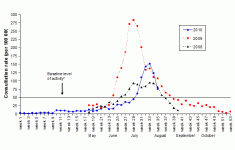
Weekly consultation rates for influenza-like illness in New Zealand, 2008-2010

NZ.gif

Source: Institute of Environmental Science and Research, Influenza Weekly Update 2010/35

*A weekly rate of <50 ILI consultations per 100,000 patient population is considered baseline activity. A rate of 50-249 is considered indicative of normal seasonal influenza activity, and a rate of 250-399 indicative of higher than expected influenza activity. A rate of >400 ILI consultations per 100,000 patient population indicates an epidemic level of influenza activity.


Protecting yourself and others
For some people, influenza can be a very serious illness. The main measures to protect yourself and others are:


Know the symptoms of influenza, which can include a high fever, headache, cough, sore throat, tiredness and generally aching all over.
Phone for medical advice quickly (call your GP or Healthline on 0800 611 116) if you have influenza-like symptoms, including consideration of whether you need antiviral medicine treatment. Antiviral medication may lessen the severity and length of your illness, but is best started within the first 48 hours. Antiviral medication is currently available free of charge for people who are prescribed it for influenza treatment.
Seeking early medical advice is especially important for women who are pregnant, severely overweight people and those with underlying medical conditions such as asthma, diabetes, cancer, heart and lung disease and other conditions including autoimmune diseases.
Wash and dry hands frequently, cover coughs and sneezes and stay home if you are sick.
The seasonal influenza vaccination programme is now winding down. Subsidised vaccine remains available for eligible persons, with two brands on offer - Intanza (approved for those 18 to 59 years old) and Vaxigrip (for all ages). However, uptake has slowed markedly in recent weeks. This is expected given that the subsidised vaccine has now been available for six months and we are now well through the normal flu season.


International situation
With the downgrading from a pandemic by the World Health Organization there are now fewer international reports. The most recent WHO update reported that transmission of the pandemic influenza remains most intense in parts of India and parts of the southern hemisphere, including New Zealand and Australia. The 27 August update is available on: http://www.who.int/csr/don/2010_08_27/en/index.html

ENDS

Please attribute this statement to Dr Mark Jacobs, Director of Public Health

For health information and advice, call Healthline 0800 611 116.
For latest updates on Pandemic Influenza H1N1 2009 (swine flu), visit http://www.moh.govt.nz.
Follow us on Twitter: http://twitter.com/minhealthnz
For media queries, call the National Health Coordination Centre, Communications Desk at +64 (021) 243 6805 or email H1N1comms@moh.govt.nz
 
Re: NZ Govt Media Releases

Media Release

16 September 2010

Pandemic Influenza H1N1 2009 (swine flu) - Update 208


Influenza H1N1 activity in the community, including influenza related calls to Healthline, continues to fall.

As at midday Thursday, there have been 690 hospitalisations of laboratory-confirmed cases of pandemic influenza H1N1, including four people with confirmed H1N1 currently in intensive care. So far this year, a total of 103 people with confirmed H1N1 have been admitted to intensive care. These figures do not include influenza-like illness among people admitted to hospital without a positive H1N1 laboratory test result. In the year to date, the deaths of 18 people have been linked to swine flu and 14 of these have been confirmed as being due to swine flu.

It's still important to seek medical advice early, particularly for people with underlying medical conditions or who are severely overweight or pregnant as they are at greater risk of a more severe illness. If you have flu-like symptoms, phoning your GP first before you go in can help them manage your care and prevent spread to others. For health advice, call Healthline on 0800 611 116. Stay home if you are unwell.

Weekly consultation rates for influenza-like illness in New Zealand, 2008-2010


9.4DE4

Source: Institute of Environmental Science and Research, Influenza Weekly Update 2010/36

*A weekly rate of <50 ILI consultations per 100,000 patient population is considered baseline activity. A rate of 50-249 is considered indicative of normal seasonal influenza activity, and a rate of 250-399 indicative of higher than expected influenza activity. A rate of >400 ILI consultations per 100,000 patient population indicates an epidemic level of influenza activity.

Protecting yourself and others

For some people, influenza can be a very serious illness. The main measures to protect yourself and others are:

  • Know the symptoms of influenza, which can include a high fever, headache, cough, sore throat, tiredness and generally aching all over.
  • Phone for medical advice quickly (call your GP or Healthline on 0800 611 116) if you have influenza-like symptoms, including consideration of whether you need antiviral medicine treatment. Antiviral medication may lessen the severity and length of your illness, but is best started within the first 48 hours. Antiviral medication is currently available free of charge for people who are prescribed it for influenza treatment.
  • Seeking early medical advice is especially important for women who are pregnant, severely overweight people and those with underlying medical conditions such as asthma, diabetes, cancer, heart and lung disease and other conditions including autoimmune diseases.
  • Wash and dry hands frequently, cover coughs and sneezes and stay home if you are sick.
The seasonal influenza vaccination programme continues to wind down. Subsidised vaccine remains available for eligible persons, with two brands on offer - Intanza (approved for those 18 to 59 years old) and Vaxigrip (for all ages). However, uptake has slowed markedly in recent weeks. This is expected given that the subsidised vaccine has now been available for six months and we are now well through the normal flu season.
http://www.moh.govt.nz/moh.nsf/indexmh/influenza-a-h1n1-update-208-160910?Open
 
Re: NZ Govt Media Releases

Pandemic Influenza H1N1 2009 (swine flu) ? Update 209


Overall influenza H1N1 activity, which has been decreasing since the last week of August, has dropped below the baseline in the past week.

There have been 702 hospitalisations of laboratory-confirmed cases of pandemic influenza H1N1 so far this year, including 104 people with confirmed H1N1 admitted in intensive care. These figures do not include influenza-like illness among people admitted to hospital without a positive H1N1 laboratory test result. Fourteen of the 18 swine flu-related deaths reported so far this year were confirmed to be associated with swine flu.

http://www.scoop.co.nz/stories/GE1009/S00155/pandemic-influenza-h1n1-2009-swine-flu-update.htm
 
Re: NZ Govt Media Releases

Overall influenza H1N1 activity continues to decrease below baseline levels. While some cases and clusters of influenza are likely to continue, this is much less frequent now and at a national level we are nearing the end of the second wave of pandemic influenza H1N1 in New Zealand. The Ministry's weekly updates will end next week.

There have been 724 hospitalisations of laboratory-confirmed cases of pandemic influenza H1N1 so far this year. This includes 4 hospitalisations in the past week confirmed with H1N1 (as well as updated figures for the year to date). These figures do not include influenza-like illness among people admitted to hospital without a positive H1N1 laboratory test result. Intensive Care Units have seen much less H1N1 admissions in recent weeks and are no longer routinely reporting cases in their care.

There have been a further two deaths linked to swine flu reported, bringing the total this year to 20; of these 15 have been confirmed as being due to swine flu. Details of these most recent deaths are reported on the Auckland and Counties Manukau DHB websites.

http://www.moh.govt.nz/moh.nsf/indexmh/influenza-a-h1n1-update-210-300910
 
Re: NZ Govt Media Releases

Pandemic Influenza H1N1 2009 (swine flu) - Update 211

Overall influenza activity continued its steady drop below the baseline for the third consecutive week. Our influenza season is almost over, and this will be the Ministry of Health?s last update on the pandemic influenza.

But as the World Health Organization pointed out when it announced the shift to the post-pandemic period on 10 August 2010, continued vigilance is important.

The swine flu virus has not gone away. WHO expects the virus will continue to circulate for some years to come and take on the behaviour of a seasonal influenza virus. And of course the basic advice about regular hand washing and drying, covering coughs and sneezes, and staying home when sick remain important ways we can reduce the risk not just of swine flu but also many other infections.

In New Zealand, 727 people have been hospitalised with laboratory-confirmed cases of pandemic influenza so far this year. Fifteen of the 20 swine flu-related deaths reported to date were confirmed to be due to swine flu.

http://www.moh.govt.nz/moh.nsf/indexmh/influenza-a-h1n1-update-211-071010
 
Re: NZ Govt Media Releases

Tony Ryall2 JUNE, 2011
Countdown to a million for flu immunisation

The countdown is on to get a million New Zealanders immunised against seasonal influenza with almost 950,000 doses of vaccine distributed so far.

"Last year more than a million doses of flu vaccine were distributed by the end of the flu season, and the signs are good that we will reach this milestone again by the end of July," says Health Minister Tony Ryall.

“The pandemic showed New Zealanders how serious flu can be. Although flu can be a mild to moderate illness for most of us, for some people, it can lead to serious complications – even death.

“With the official start of winter this week, it’s important people who want to get protected against flu get immunised as soon as possible as it can take up to two weeks to develop immunity, ” says Mr Ryall.

"People may not realise that getting the flu is also very expensive as was seen in a recent study of the H1N1 flu pandemic," says Mr Ryall.

The analysis of critical care costs of the pandemic in Australia and New Zealand in 2009 showed the average total hospital cost of a swine flu patient was NZ$110,000 – including NZ$85,000 for treatment in an intensive care unit alone.

The study was based on 762 patients admitted to ICU in Australia and New Zealand during the pandemic, between 1 June and 31 august 2009.

The 2011 seasonal flu vaccine provides protection against three strains of flu including the Pandemic H1N1 (swine flu), seasonal H3N2 and B viruses, which are all expected to circulate this season.

Influenza immunisation is free for New Zealanders at high risk of complications– people aged 65 and over and anyone under 65 years of age with certain long term health conditions. Pregnant women are also eligible for free influenza immunisation as studies have shown they are particularly susceptible to severe complications from influenza.
Free flu immunisation is available to eligible groups until 31 July.

"This year free flu immunisation has also been offered to Cantabrians under the age of 18 as part of the response to the Christchurch earthquake."

"New Zealanders are opting in increasing numbers to get immunised against flu. About three years ago we would only have distributed about 750,000 doses of flu vaccine by this time. This year we’ve distributed almost 200,000 more," says Mr Ryall.

Information about influenza immunisation can be found at www.fightflu.co.nz or text FLU to 515, or call Healthline 0800 611 116.

Source: http://www.beehive.govt.nz/release/countdown-million-flu-immunisation

Please note also that the media releases should be here: http://www.health.govt.nz/search/results/flu?filters=type%3Amedia%20created%3A%5B2011-01-01T00%3A00%3A00Z%20TO%202012-01-01T00%3A00%3A00Z%5D but are not yet.
 
Back
Top