

Pathfinder
Editor, Senior Moderator
Translation Google
Opinion of the Health Risk Monitoring and Anticipation Committee
(COVARS)
from November 22, 2022
ON THE MONKEYPOX VIRUS OUTBREAK
...
22 NOVEMBER 2022, Amended on 27 November 2022
REFERRAL ON THE MONKEYPOX VIRUS OUTBREAK
from September 29, 2022
by Mrs Sylvie RETAILLEAU, Minister of Higher Education and Research
and Mr François BRAUN, Minister of Health and Prevention.
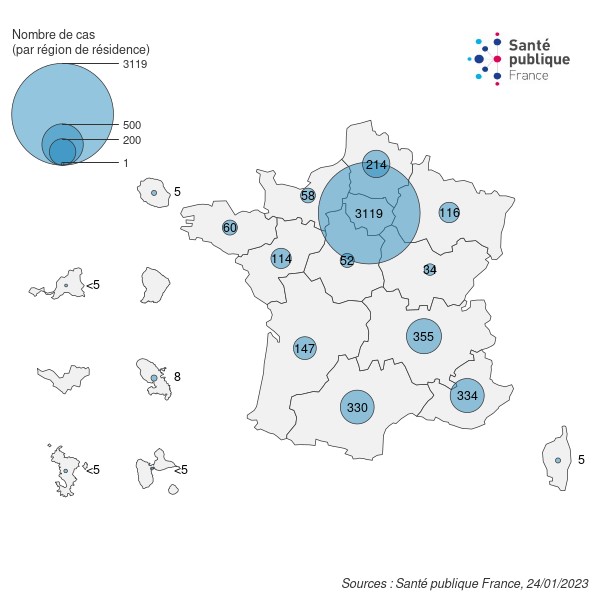
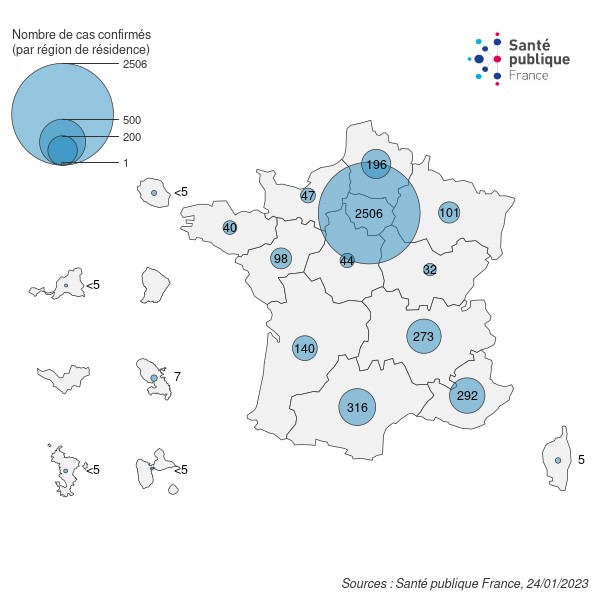
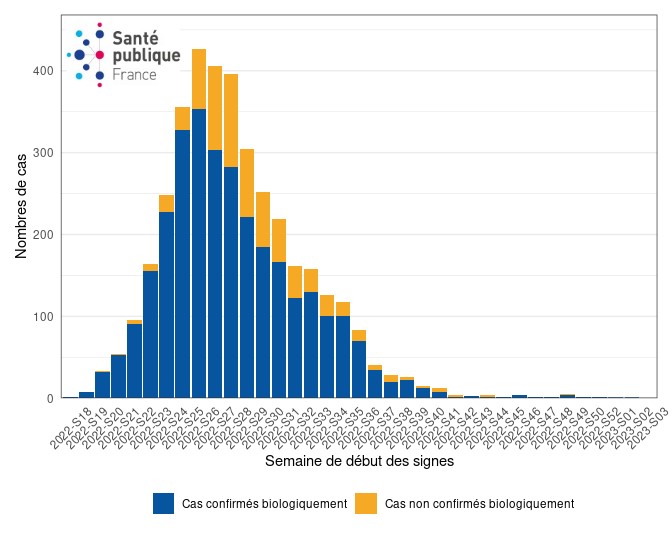
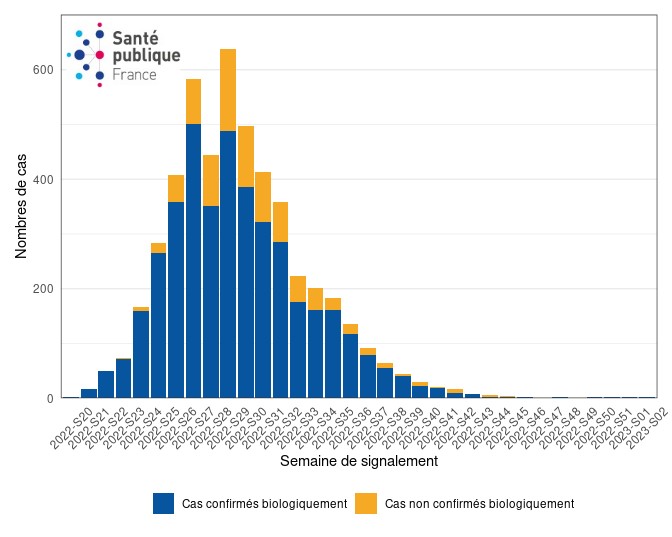
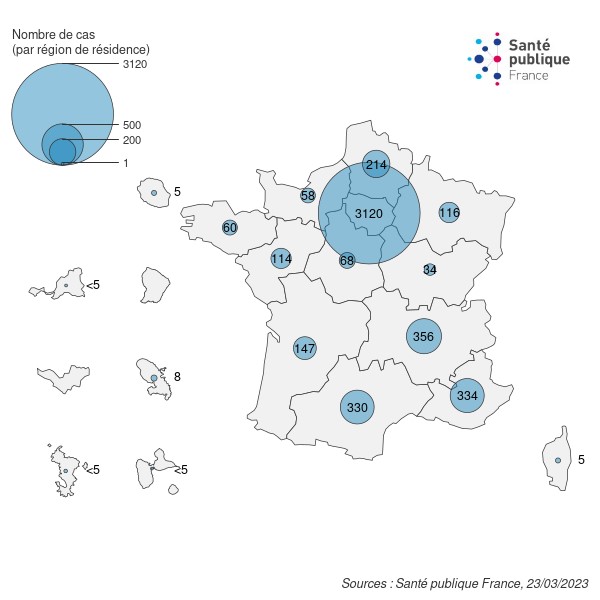
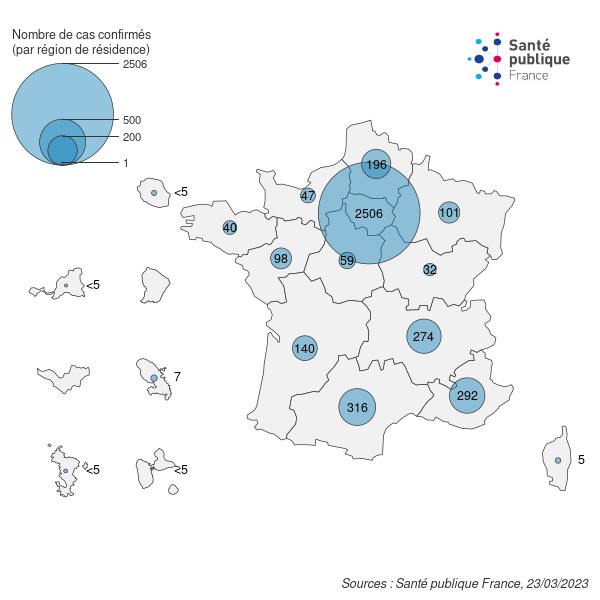
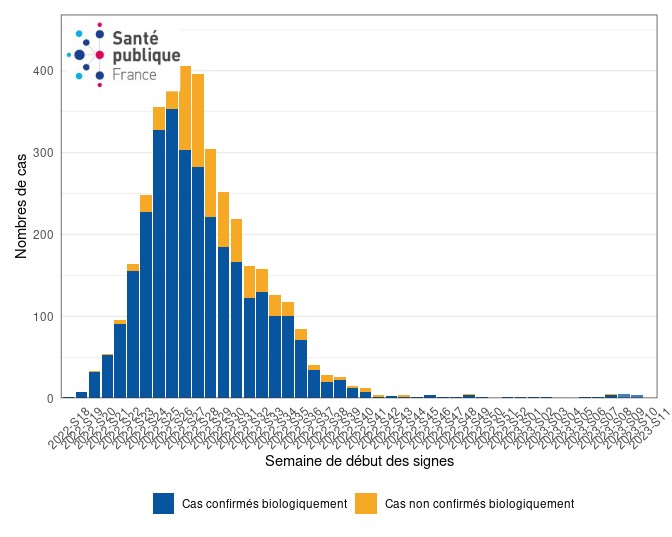
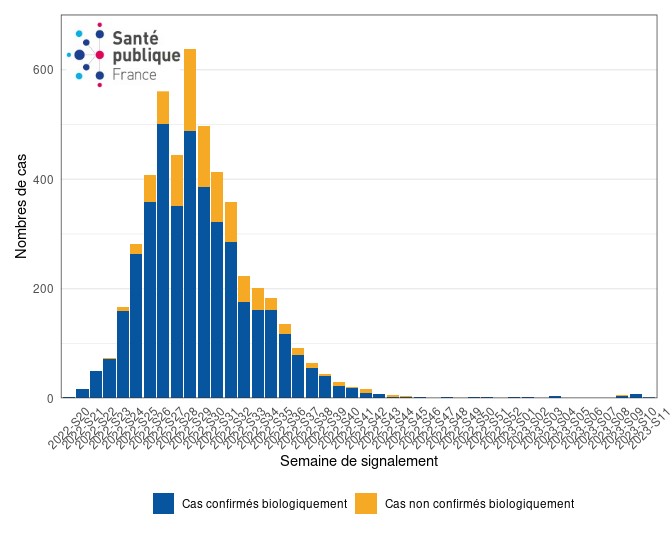
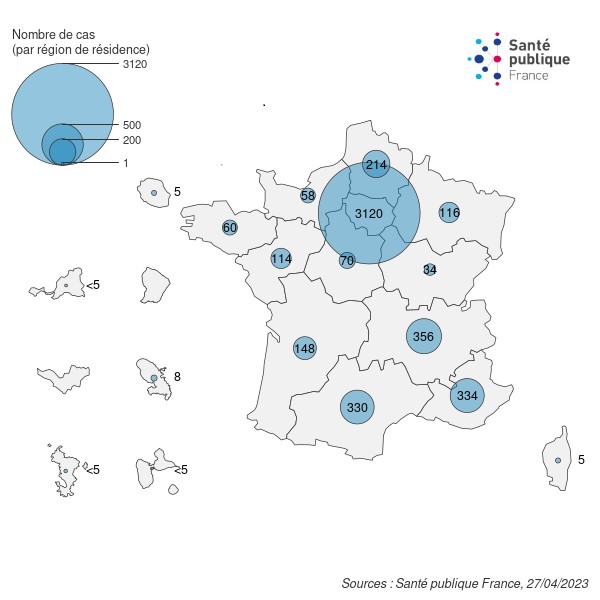
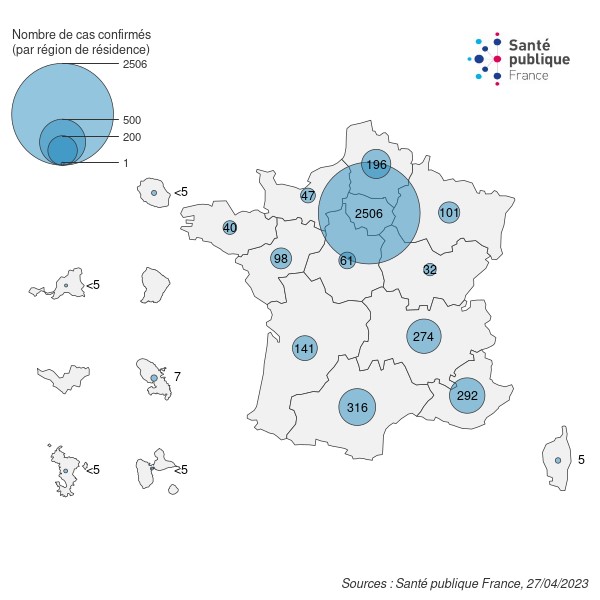
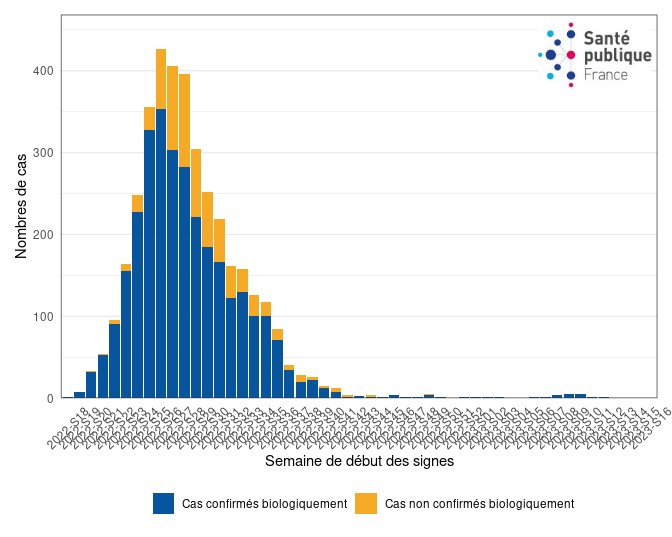
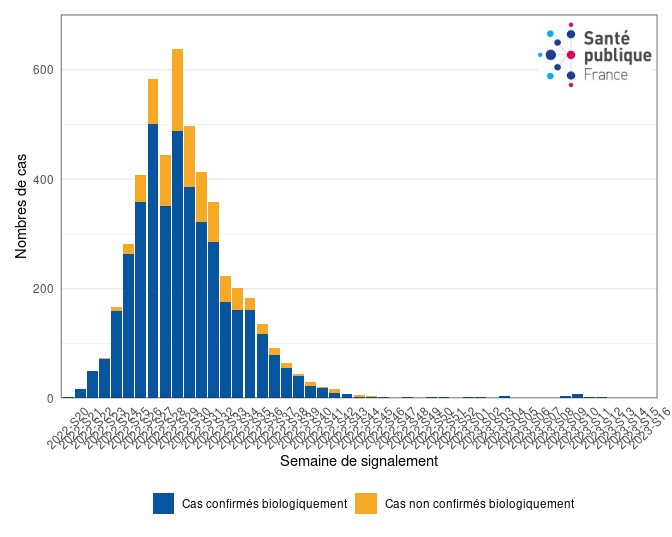
For the past few weeks, a decrease in the number of weekly cases has been observed, and a
regular increase in the number of vaccinated subjects with around 100,000 vaccinated subjects at
date with a first dose. The number of reported cases is probably not consistent with the
reality, samples and declarations not being systematically carried out. It nevertheless seems
that the epidemic, in decline, remains confined to subjects at risk. What is the assessment of COVARS on
this subject, its projections on the future of the epidemic, in France and in Europe?
...
22 NOVEMBER 2022, Amended on 27 November 2022
FOREWORD
The COVARS, questioned on the future of the so-called “monkey pox” epidemic due to Monkeypox virus infection
raging in France and around the world since May 2022 has highlighted the particularities of this epidemic, differentiating it
endemic infection in Africa. These peculiarities reside in the affected population - mainly
young men- and in the mode of transmission, mainly linked to multiple sexual contacts. The epidemic
decreased rapidly in France and around the world, after a peak in the summer of 2022, partly thanks to strong actions of
prevention measures implemented by health authorities and associations linking these communities. The control of
the epidemic also benefited from the prior existence of a treatment and a vaccine directed against the neighboring virus
smallpox.
COVARS has carried out a documented review of knowledge and data on the epidemiological situation of the virus
and disease, its treatment and prevention. COVARS also listened to the institutions responsible for monitoring
epidemiology (Santé Publique France [SPF]) and research (National Agency for Research on AIDS,
hepatitis and emerging infectious diseases [ANRS-MIE]) as well as two experts in infectious diseases at
sexual transmission and zoonoses linked to poxviruses.
Like all national and international experts, COVARS has emphasized the preeminent role of
behavioral changes in the initial reduction of the epidemic relayed by the vaccine intervention
allowing a lasting reduction of the epidemic. COVARS also underlined the importance of eliminating
rapid and precautions to be taken vis-à-vis domestic and wild animals in order to avoid retrozoonotic
transmission in our countries. COVARS also raised issues related to the low level of knowledge about this
infection, its natural hosts, its modes of transmission, the efficacy and durability of vaccine protection and
highlighted specific areas for research.
Current uncertainties have not allowed modellers to build robust forecasting models.
However, taking into account the elimination objectives defined by the WHO for the European region, the COVARS has
collectively proposed scenarios concerning the general population for which the epidemic risks are
weak, as well as the population currently affected by the disease. For the latter, a trajectory towards the elimination of
symptomatic infection with Monkeypox virus is possible in the short term thanks to the maintenance of the measures of
prevention.
For COVARS, the most likely scenario in the medium and long term is that of maintaining viral circulation at
Europe-wide low noise making the hypothesis of complete elimination of Monkeypox virus infection
unlikely and leading to a risk of epidemic or even seasonal outbreaks in France and Europe.
In order to limit these risks of resurgence and increase resilience to the disease, COVARS recommends
strengthen the actions of:
▪ PREVENTION by involving, in a coordinated and participatory manner, the actions of health authorities and
associations and by strengthening the vaccination campaign to induce lasting immunity,
▪ SURVEILLANCE in the human population by including this disease in the burden of infections with
sexual transmission,
▪ RESEARCH, in order to better characterize this disease, the vaccine and the treatment and to implement
monitoring and anticipation actions in the human population and in wildlife in order to prevent risks
of epidemic recovery.
...
Téléchargement du pdf (1.2 Mo)
https://solidarites-sante.gouv.fr/actualites/presse/dossiers-de-presse/article/comite-de-veille-et-d-anticipation-des-risques-sanitaires
Opinion of the Health Risk Monitoring and Anticipation Committee
(COVARS)
from November 22, 2022
ON THE MONKEYPOX VIRUS OUTBREAK
...
22 NOVEMBER 2022, Amended on 27 November 2022
REFERRAL ON THE MONKEYPOX VIRUS OUTBREAK
from September 29, 2022
by Mrs Sylvie RETAILLEAU, Minister of Higher Education and Research
and Mr François BRAUN, Minister of Health and Prevention.
For the past few weeks, a decrease in the number of weekly cases has been observed, and a
regular increase in the number of vaccinated subjects with around 100,000 vaccinated subjects at
date with a first dose. The number of reported cases is probably not consistent with the
reality, samples and declarations not being systematically carried out. It nevertheless seems
that the epidemic, in decline, remains confined to subjects at risk. What is the assessment of COVARS on
this subject, its projections on the future of the epidemic, in France and in Europe?
...
22 NOVEMBER 2022, Amended on 27 November 2022
FOREWORD
The COVARS, questioned on the future of the so-called “monkey pox” epidemic due to Monkeypox virus infection
raging in France and around the world since May 2022 has highlighted the particularities of this epidemic, differentiating it
endemic infection in Africa. These peculiarities reside in the affected population - mainly
young men- and in the mode of transmission, mainly linked to multiple sexual contacts. The epidemic
decreased rapidly in France and around the world, after a peak in the summer of 2022, partly thanks to strong actions of
prevention measures implemented by health authorities and associations linking these communities. The control of
the epidemic also benefited from the prior existence of a treatment and a vaccine directed against the neighboring virus
smallpox.
COVARS has carried out a documented review of knowledge and data on the epidemiological situation of the virus
and disease, its treatment and prevention. COVARS also listened to the institutions responsible for monitoring
epidemiology (Santé Publique France [SPF]) and research (National Agency for Research on AIDS,
hepatitis and emerging infectious diseases [ANRS-MIE]) as well as two experts in infectious diseases at
sexual transmission and zoonoses linked to poxviruses.
Like all national and international experts, COVARS has emphasized the preeminent role of
behavioral changes in the initial reduction of the epidemic relayed by the vaccine intervention
allowing a lasting reduction of the epidemic. COVARS also underlined the importance of eliminating
rapid and precautions to be taken vis-à-vis domestic and wild animals in order to avoid retrozoonotic
transmission in our countries. COVARS also raised issues related to the low level of knowledge about this
infection, its natural hosts, its modes of transmission, the efficacy and durability of vaccine protection and
highlighted specific areas for research.
Current uncertainties have not allowed modellers to build robust forecasting models.
However, taking into account the elimination objectives defined by the WHO for the European region, the COVARS has
collectively proposed scenarios concerning the general population for which the epidemic risks are
weak, as well as the population currently affected by the disease. For the latter, a trajectory towards the elimination of
symptomatic infection with Monkeypox virus is possible in the short term thanks to the maintenance of the measures of
prevention.
For COVARS, the most likely scenario in the medium and long term is that of maintaining viral circulation at
Europe-wide low noise making the hypothesis of complete elimination of Monkeypox virus infection
unlikely and leading to a risk of epidemic or even seasonal outbreaks in France and Europe.
In order to limit these risks of resurgence and increase resilience to the disease, COVARS recommends
strengthen the actions of:
▪ PREVENTION by involving, in a coordinated and participatory manner, the actions of health authorities and
associations and by strengthening the vaccination campaign to induce lasting immunity,
▪ SURVEILLANCE in the human population by including this disease in the burden of infections with
sexual transmission,
▪ RESEARCH, in order to better characterize this disease, the vaccine and the treatment and to implement
monitoring and anticipation actions in the human population and in wildlife in order to prevent risks
of epidemic recovery.
...
Téléchargement du pdf (1.2 Mo)
https://solidarites-sante.gouv.fr/actualites/presse/dossiers-de-presse/article/comite-de-veille-et-d-anticipation-des-risques-sanitaires

 ii=2200923