Continued from Post #1:
How CDC is monitoring influenza data among people to better understand the current avian influenza A (H5N1) situation
Weekly Snapshot for Week Ending February 8, 2025
Overview
This page provides information on how CDC systems that monitor national, state, and local level influenza data are being used during the
current avian influenza A(H5N1) situation.
- Influenza virus and illness activity are monitored year-round through a collaborative effort between CDC and many partners, including state, local, and territorial health departments; public health and clinical laboratories; clinics; and emergency departments.
- Human cases of novel influenza, which are human infections with non-human influenza A viruses that are different from currently spreading seasonal human influenza viruses, are nationally notifiable. Every identified case is investigated and reported to CDC.
- CDC is actively looking at multiple flu indicators during the current situation to monitor for influenza A(H5N1) viruses, including looking for spread of the virus to, or among people, in jurisdictions where the virus has been identified in people or animals.
Monitoring of Persons Exposed to Infected Animals*
February 2022 – Present
CDC and state and local health departments monitor people exposed to infected birds, poultry, dairy cows or other animals for 10 days after exposure. Between February 2022 and now, there have been
- At least 24,100 people monitored and
- At least 1,060 people tested for novel influenza A
Current HPAI Outbreak (2024)
CDC and state and local health departments monitor people exposed to infected birds, poultry, dairy cows and other animals for 10 days after exposure. Between March 24, 2024, and now, there have been
- At least 14,800 people monitored
- At least 8,700 with exposures to dairy cows
- At least 6,100 with exposures to birds and other animals including poultry (non-dairy cow source)
- At least 770 persons tested for novel influenza A
- At least 194 with exposures to dairy cows
- At least 580 with exposures to birds and other animals including poultry (non-dairy cow source)
*CDC numbers are based on weekly state aggregate reports since 2022. CDC defers to states for updated information on people being monitored and tested. March 24, 2024, was the date of the first reported dairy cow infections in the United States.
Main Findings from Surveillance Systems
CDC has multiple surveillance systems that are used year-round to monitor key flu indicators. These data are reviewed comprehensively each week. Taken together, as of February 14, 2025, these systems currently show no indicators of unusual flu activity in people, including avian influenza A(H5N1) viruses.
Case Reporting
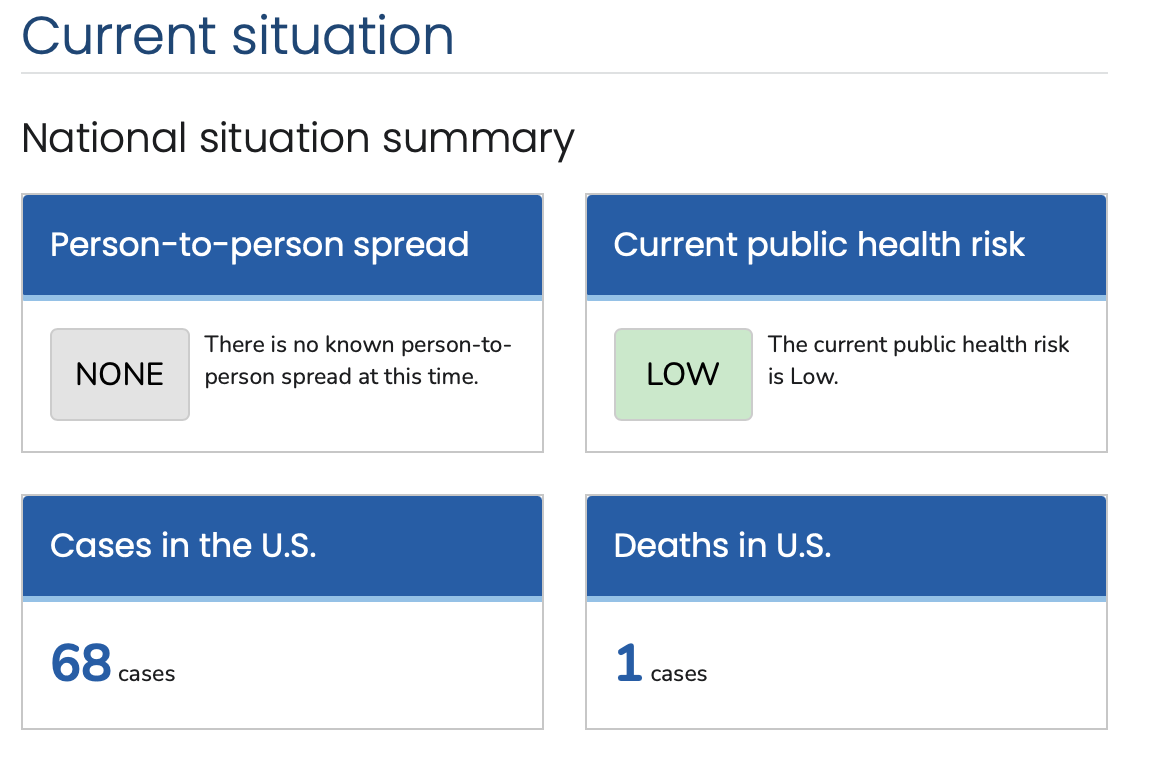
For the latest case counts, please visit the
H5 Bird Flu: Current Situation page.
Public Health Laboratory Monitoring
Since February 25, 2024, 127,373 specimens have been tested using a protocol that would have detected A(H5) and other novel viruses.
Clinical Laboratory Trends
CDC has not identified any unusual trends in reported clinical laboratory data at the national, state, or local levels.
Emergency Departments
CDC has not identified any unusual trends in emergency department visits associated with influenza or potentially related symptoms at the national, state, or local levels.
Wastewater Surveillance
For the week ending February 08, 2025, 387 sites reported results for avian influenza A(H5) in wastewater, and 15 (3.9%) sites from 3 states (California, Nevada, New Jersey) reported H5 detections.
Monitoring for Novel Influenza A virus infections among people, including Influenza A (H5)
Rapid detection and
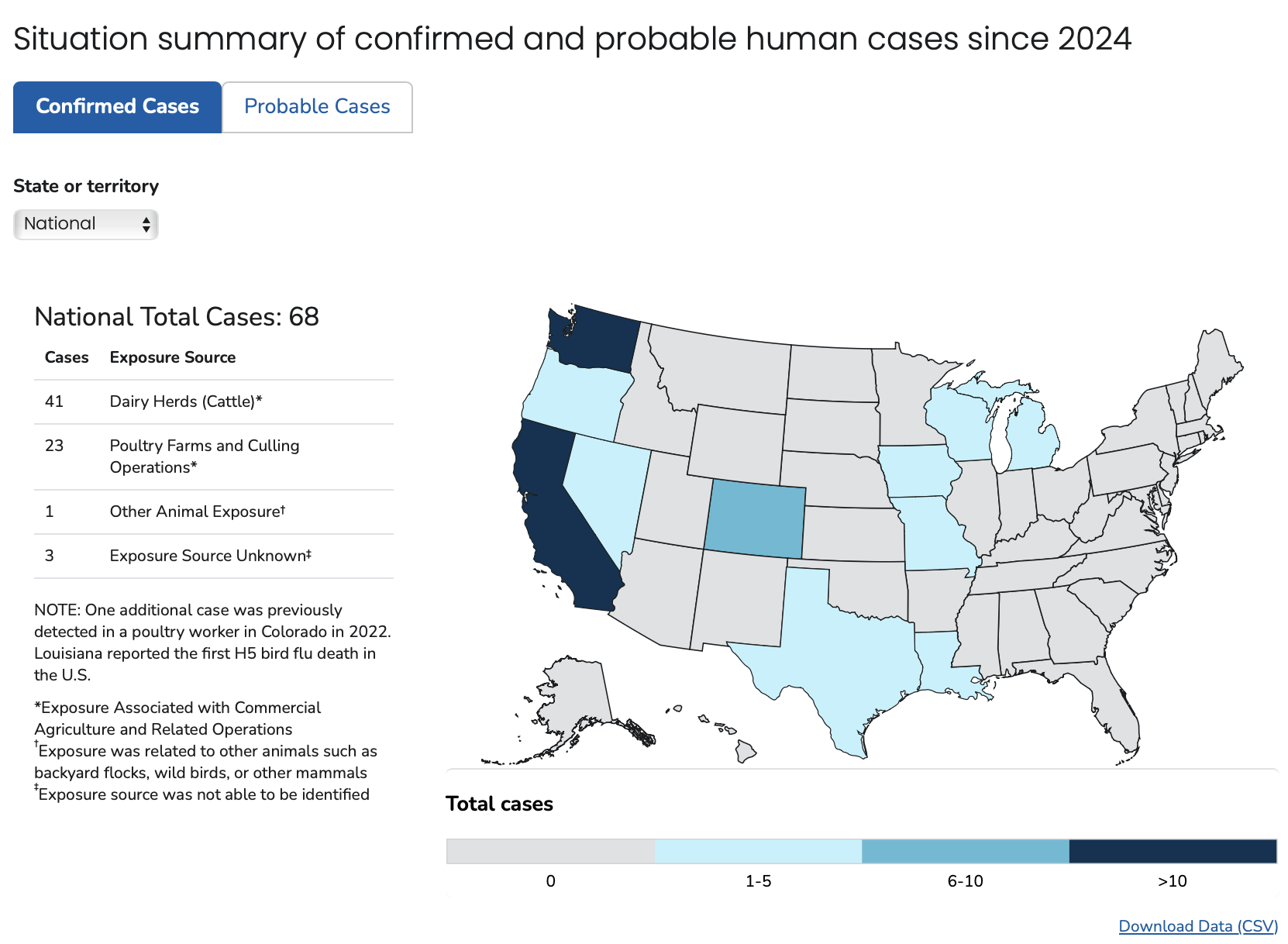
reporting of human infections with novel influenza A viruses, including influenza A(H5), is important to facilitate prompt awareness and an effective public health response. For confirmed cases, the reporting jurisdiction completes a case report form, which is submitted to CDC. The information includes patient demographics, symptoms, the clinical course of illness, and exposure history. The reporting jurisdiction for influenza A(H5) cases reported in 2024 are summarized below.
Data presented through: 2/8/2025; Data as of: 2/12/2025
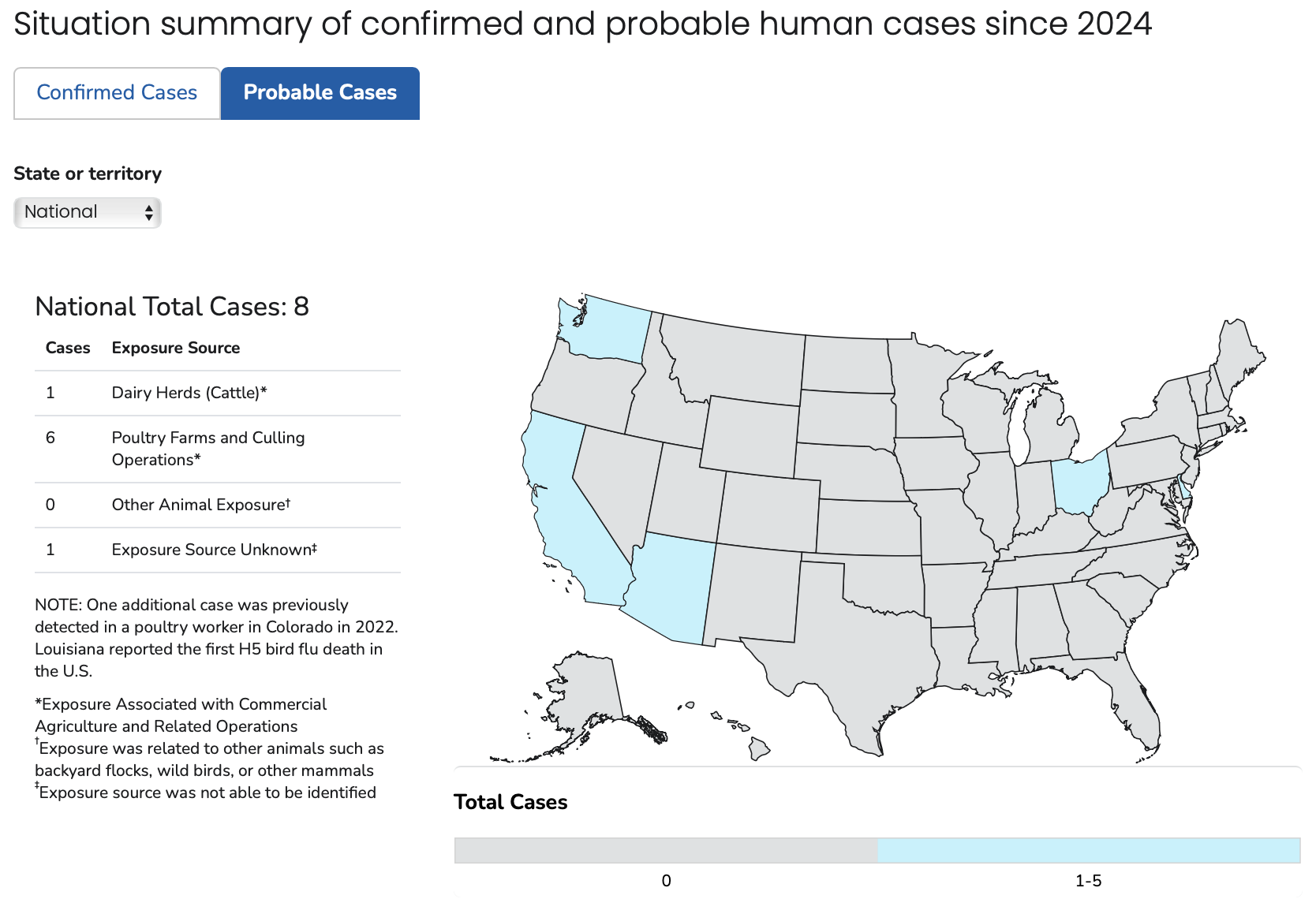
Additional cases meeting the
Council of State and Territorial Epidemiologists (CSTE) probable case definition have been reported by states: CA (1), WA (3), AZ (2), DE (1). Confirmatory testing at CDC for these cases was negative.