• FluTrackers.com Inc. does not provide medical advice. Information on this web site is collected from various internet resources, and the FluTrackers board of directors makes no warranty to the safety, efficacy, correctness or completeness of the information posted on this site by any author or poster. The information collated here is for instructional and/or discussion purposes only and is NOT intended to diagnose or treat any disease, illness, or other medical condition. Every individual reader or poster should seek advice from their personal physician/healthcare practitioner before considering or using any interventions that are discussed on this website. By continuing to access this website you agree to consult your personal physican before using any interventions posted on this website, and you agree to hold harmless FluTrackers.com Inc., the board of directors, the members, and all authors and posters for any effects from use of any medication, supplement, vitamin or other substance, device, intervention, etc. mentioned in posts on this website, or other internet venues referenced in posts on this website.
  • We are not asking for any donations. Do not donate to any entity who says they are raising funds for us.

Avian flu H5N1 discussion - news/case lists links - 2022+

Post #76 update:

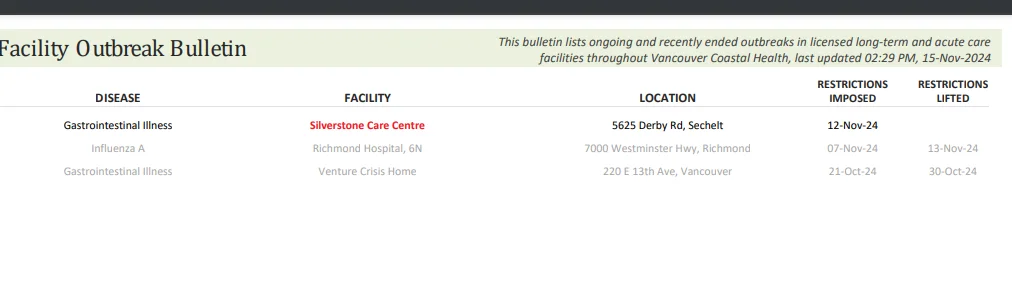
The influenza A outbreak at Richmond Hospital has reappeared in the PDF file, with restrictions lifted on November 13.

https://www.vch.ca/sites/default/files/2024-11/External Facility Outbreak Bulletin 20241115 1429.pdf

Screenshot:


Screenshot 2024-11-17 070709.png
 
:tiphat:
So he’s so sick, he can’t...

​​​​​​… didn’t realize that this current strain in birds caused conjunctivitis as that EVERYONE with the cow strain has that very symptom .. just saying..

:tiphat:from niman, don’t know if relevant ..

Speaking of risk I looked at the #H5N1 D1.1 wild bird seqs from BC they are wild type for S247 N1 comes low path wild birds (with N1) closest match to the D1.1 is an H1N1 low path from BC A/Mallard/BC/AIVPHL-2360/2024 collected 8/20/24 WITH S247N H5N1 D1.1 may be mixture​

:tiphat: I guess I’m asking could the teen be sick from a mixture of magic cow and flying strains?

:tiphat:
Seems like it may have


Michael
@mrmickme2
This is bad news. Sequence from infected BC teen has same mammalian adaption signature as B3.13 cattle clade.
Quote
default_profile_normal.png

Henry Niman @hlniman.bsky.social
@HNimanFC
·
Nov 15
Replying to @HNimanFC
OOPs Spoke too soon Mixed signal for PB2 E627K​

from here :tiphat:
https://x.com/mrmickme2/status/1857605969825632616
 
Translation Google

RTL INVESTIGATION - Brazilian chicken infected with bird flu on our plates?

An audit report by the European Commission, revealed by RTL, highlights failures in the management of the risk of avian flu in Brazil, the world's leading poultry exporter. The inspectors stress that the Brazilian authorities are prioritising the protection of local businesses to the detriment of health controls.

Virginie Garin
published on 11/20/2024 at 07:40 - updated on 11/20/2024 at 07:40

It was an unappetizing discovery made in the spring of 2024 by inspectors from the European Commission's Directorate-General for Health and Food Safety. They went to Brazil to conduct an audit from April 15 to May 3 to see how the country's authorities were managing the risk of avian flu in the poultry sector.

These checks concerned farms exporting products to Europe. Written last October, the report resulting from this audit concludes that the system of surveillance of livestock farms set up in Brazil "provides sufficient guarantees (...) so that products likely to be exported to the EU are, except as regards the surveillance of highly pathogenic avian influenza".

The report speaks of "particularly worrying" facts which could lead to the appearance of undetected sources of contamination.

No protocol for slaughtering poultry

So cases can be reported, but are not systematically brought to the attention of the country's health authorities. The report highlights "the weakness of the criteria governing declarations of suspected cases."

And even worse, if a case were discovered, the protocols of the companies audited by Europe "did not contain any modus operandi for the slaughter of poultry". Which means that the chickens could still be marketed and therefore eaten.

Major failures

The inspectors denounce significant failures in the Brazilian control system. While recalling that this is less a matter of public health (there are no health risks in consuming this meat once cooked) than a matter of unfair competition for our farmers.

Because in Europe, when a case is reported, the entire herd must be eliminated. This also has an impact on the export trade relations of the countries concerned: for example, China, the world's largest importer, "imposes a total embargo on all imports from a country when a case is reported, which has immense economic consequences for the exporting country."

Europe imports more than 300,000 tonnes of poultry each year

This report concluded that the "weaknesses of Brazilian controls allow the world's leading producer and exporter not to endanger its market shares compared to other producers on the planet".

Have Brazilian poultry companies ever hidden cases to avoid being penalized for exports? Have we in Europe imported and therefore consumed meat from infected poultry? In any case, the control system set up in this country does not allow this to be denied.

In Brazil, only cases in wild birds have been reported since the virus appeared in this country in May 2023. But no farm has officially been affected.

Brazil is now the world's largest exporter of poultry. Europe imports more than 300,000 tons each year and the agreement that could be signed with Mercosur provides for an additional 180,000 tons.

https://www.rtl.fr/actu/enquete-rtl...-grippe-aviaire-dans-nos-assiettes-7900442342

----------------------------------

image.png

Brazil 2024-8002

Country Brazil

Audit number 2024-8002

Title evaluate the animal health controls in place, in particular on avian influenza in relation to export of poultry, eggs and their products to the European

Union Audit period 04-05 2024

Published date 09-11-2024

Report EN (812 kb) FR (288 kb) DE (312 kb)

Annex Competent authority action plan (353 kb)​
...
https://ec.europa.eu/food/audits-analysis/rep_details_en.cfm?rep_inspection_ref=2024-8002


From the PDF link above:
...
Executive summary

This report describes the outcome of the hybrid audit of Brazil, carried out from 16 April to 3 May
2024 as part of Directorate-General for Health and Food Safety work programme.

The objective of this hybrid audit was to evaluate the systems developed and implemented by
Brazilian competent authorities to certify that animal health requirements related to avian influenza
are met for consignments of relevant poultry commodities exported to the European Union.

The audit concludes that the system provides sufficient assurances that commodities which might be
exported to the EU comply with the most of relevant import requirements, except for the surveillance
for HPAI that might not be sufficient for the earliest detection of the disease.

1. The veterinary services can deliver appropriate animal health controls in relevant areas, such
as the registration of commercial poultry establishments, bird movements, traceability, and
import controls. Coupled with mandatory biosecurity measures applied on commercial
establishments, these activities effectively contribute to reducing the likelihood of highly
pathogenic avian influenza (HPAI) entering the country through imported commodities and
provide a good basis for disease control in case the disease reaches commercial farms.

2. The knowledge on non-commercial (backyard) poultry establishments varies between states.
The low registration of these farms in some states complicates the organisation of active
surveillance, controls, and enhanced surveillance in zones around outbreaks, and they might
result in undetected reservoirs of infection. The authorities are making efforts to improve their
registration, in particular in HPAI high-risk areas.

3. The official controls on commercial poultry farms give guarantees on the correct and effective
application of preventive measures to reduce the risk of HPAI in those establishments and
verify the capability of operators to contribute to the early detection of the disease.

4. The less sensitive (mortality) and incomplete production criteria set for declaring suspicion of
HPAI, combined with the low sampling of suspected cases not fully adapted to the
epidemiological risk, weakens the authority capability to detect disease at earliest occasion.
This creates a potential risk of delayed detection, response and containment of HPAI
outbreaks. Although official information campaigns are increasing stakeholders’ disease
awareness, the situation does not yet provide assurances equivalent to the EU standards and
weaken the early warning system for HPAI.

5. The surveillance of HPAI in wild birds does not include all priority locations and key sites,
including two of the three main bird migratory routes. Therefore, the authorities have
incomplete information for assessing the risks for virus spread following findings of HPAI in
wild birds. To address this, the authorities are revising their surveillance plan.

6. The design and implementation of active surveillance for HPAI follows international standards
and complements other components of surveillance for the disease. Although its
implementation does not contribute to early detection of HPAI, provided the early warning
system for the disease is adequately improved, active surveillance can reinforce the credibility
of the country’s free disease status.

7. Authorities effectively applied measures to control outbreaks in backyard establishments
according to the adapted contingency plan. Despite not being equivalent to the zones
mandated by EU law, the surveillance and restriction zones established around noncommercial
farms with outbreaks were deemed appropriate for preventing the spread of the
disease, considering the non-commercial nature of the farms and additional measures
implemented.

8. The authorities have designated a laboratory network for avian influenza diagnoses. Despite
the official monitoring of the network, some laboratories performing screening tests for avian
influenza do not have proof of satisfactory participation in a recent proficiency test to
demonstrate the reliability of their results.

9. The only laboratory involved in investigating suspect cases of the disease provides timely and
reliable results. However, concerns arise regarding Brazil's extensive poultry production.
Given the scale and potential severity of a large HPAI epidemic, the current testing capacity
may be insufficient, and it is unclear whether authorities would be able to get timely result
delivery to implement subsequent controls. The authority is considering expanding testing
capacity by involving other laboratories for disease confirmation.

10. The authorities have not tested their contingency plan for HPAI. The limited practical
arrangements in place – especially concerning farm depopulation - raises doubts about their
readiness to effectively manage larger epidemics.

11. The verification procedures in place (audits, inspections, supervision of implementation)
contribute to ensure compliance with the rules, improve effectiveness of the official controls
and activities and facilitate continuous improvement.

12. The certification system is clear and robust, contributing to the overall strength of the system.
The report contains recommendations to the competent authority to address the shortcomings
identified.​
...

 
Bird flu is racing through farms, but Northwest states are rarely testing workers

​Nov 20, 2024
By Rachel Spacek

By the end of the day, avian flu had been discovered among some of those chickens. By the end of the week, four workers came down with the illness, which had infected only a handful of other people in the U.S. And after two more days of testing by the Benton Franklin Health District, another 10 workers at the farm tested positive.

That outbreak, initially detected Oct. 14, represented the first human cases this year of the avian flu in the Pacific Northwest. The first human case in Oregon was confirmed Nov. 15, adding to mounting evidence that the flu is spreading to farmworker populations across the Western U.S. But efforts to test and monitor the disease among workers are spotty and inconsistent and leave the responsibility for getting tested on the laborers themselves, many of whom are undocumented and can’t afford to take time off if they test positive.
​-snip-
In Idaho, which has recorded the most cases among livestock of any state in the region, only seven human tests have been conducted, and officials are not gathering information about workers on farms with animal outbreaks. By contrast, Washington has tested 77 people — all of whom were associated with the Franklin County farm — and Oregon has tested 33, and both states are gathering information about exposed workers.​
-snip-
“The ratios of how many herds and flocks have tested positive versus how many people have been tested, that stresses me out in every state,” said Elizabeth Strater, spokesperson for United Farm Workers, who is based in Los Angeles and previously worked on farmworker union efforts in Washington and Oregon.​
-snip-

None of the three Northwestern states require testing of people exposed to animals with avian flu. In Idaho, health districts are waiting for a human case before even beginning to gather information about exposed workers. In Oregon, health districts offer testing, but they don’t require it and only offer tests to people who work with a sick animal without personal protective equipment.

Mike Lang, spokesperson for the Washington State Department of Health, said the state “will evaluate each opportunity to test people as it comes.
​-snip-

Past protocols in cases of a transmissible illness outbreak include contact tracing, which is when a health district gathers a list of people who were exposed and their contact information, age, location and symptoms so that they can screen them for the illness.

But public health districts in Idaho are not doing such contact tracing yet.
​-snip-
In Idaho, it is up to the individual employers to encourage workers to be tested.
-snip-
Idaho’s dairy industry employs over 33,000 workers and is ranked third in the U.S. for milk production. Around 90% of Idaho dairy workers are migrant workers, and many of them are undocumented.​
-snip-
Jonathan Modie, spokesperson for the Oregon Health Authority, said they reserve testing for people with symptoms or asymptomatic people who had a high-risk exposure, meaning a breach or misuse of PPE. Lang said the Washington Department of Health is clarifying the new CDC guidelines before it implements more testing.
-snip-
https://www.investigatewest.org/inv...st-states-are-rarely-testing-workers-17733478
 
[We are mentioned a few times in his latest post]

Hail the Revolution but Mind the Alligators!
HOGVET51
NOV 24, 2024​


Once again my articulate colleague Dr. Kay Russo with RSM posted a great summation of the past week’s new related to H5 in cattle, poultry, and people

Kay Russo - RSM Post 1- cows and birds | Feed | LinkedIn

Kay Russo-Post 2 -Human | Feed | LinkedIn

-snip-

For today, I’d like to stick to some “big picture” impressions I took away from a swine industry H5N1 webinar as well as from further developments as covered by Kay and CIDRAP in this past week’s review of the H5 whirlwind of events in Canada, U.S., in poultry, cows, and people.

Perhaps the most alarming summaries in the news this weekend came from articles I came across courtesy of links found on Sharon Sanders’ FluTrackers.com: The first is an interview with the President of the California Poultry Federation: California’s avian influenza outbreak escalating - Brownfield Ag News

The President of the California Poultry Federation is concerned about the speed highly pathogenic avian influenza is spreading in his state.

“If it doesn’t slow its pace in the next month, we’re in serious trouble.”

Bill Mattos tells Brownfield California has been able to avoid the disease for a long time, but interstate cattle movement has escalated the current outbreak.

“Unfortunately, most of the dairies and the poultry industry is right next to each other from Sacramento to Bakersfield, that’s where we grow everything,” he shares. “The quarantine areas are set up immediately if a dairy is checked positive and there are already 400 dairies positive.”

Mattos says producers are on high alert with enhanced biosecurity measures.

“The veterinarians are warning people that we have to look at every avenue to try to stop this disease because we don’t know if it’s sustainable if we keep going like this,” he shares. “The way we’ve seen it in California the last two, three weeks—it’s very scary.”

The California Department of Food and Agriculture reported its first case of the virus on a dairy farm at the beginning of September and cases have increased to 402 as of Wednesday.

In the last 30 days, the USDA says 22 commercial flocks have been affected and more than 5.2 million birds have been depopulated in California.

The state has also confirmed 29 human cases of the virus with nearly all of them linked to cattle exposure.

Let that sink in - 402 dairy herds, 22 commercial poultry flocks with 5.2 million birds, and 29 KNOWN human infections just in California through November 22nd, plus an “unattributed source” H5N1 human infection (genotype still not released by CDC). As Kay Russo so passionately states, we lack timely genotype information on the California poultry outbreaks; however, many are likely from dairy cattle genotype exposure.

I would actually go further than Mr. Mattos states above; I think poultry production in California is already doomed into the winter as the dairy outbreak plays out. We have shown no ability in any state with concentrated dairy populations to stop viral spread between dairy farms or to poultry operations. Further, we have not been able to control human exposure in workers on farms or in response activities. All of our guidance for increased biosecurity and worker PPE have met with minimal success in stemming the spread of this virus across the Central Valley in California. We witness virtually unchecked intra and inter-herd area spread within cattle herds and between cattle herds, poultry flocks, nearby people and other susceptible species. I hope our universities and researchers currently have staff on the ground documenting viral loads in communities and testing area spread theories as this plays out. The virus is undoubtedly also spreading into peridomestic species and domestic pets, all which should be closely monitored and tested.
-snip-

If the California situation is not dire enough, another FluTrackers link summarizes the situation in Canada, as reported by CFIA:

Status of ongoing avian influenza response by province - inspection.canada.ca

continued: https://hogvet51.substack.com/p/hail-the-revolution-but-mind-the


America’s Alarming Bird-Flu Strategy: Hope for the Best
​Excerpts:

There is still no evidence such transmission is taking place, and authorities say risk to the public is low. But this problem clearly isn’t going away, and the U.S.response to it has been sluggish and opaque. David O’Connor, a well-known professor of pathology and laboratory medicine at the University of Wisconsin, has been a notable critic of the government’s approach. I spoke with him and his colleague Tom Friedrich, a virology professor at Wisconsin, about how COVID fatigue, fragmented health-care oversight, and mistrust of the medical Establishment has combined to create a high-risk situation.

Professor O’Connor, you had a memorable quote in a recent New York Times op-ed by Tulio de Oliveira: “It seems that the United States is addicted to gambling with H5N1, but if you gamble long enough, the virus may hit a jackpot.” Can you explain exactly how we’re gambling here? What are we doing that’s so risky with regards to this virus?
David O’Connor: It’s been eight months since we first recognized that there were infections in dairy cattle. And while there has been a government response and a lot of conversations about it, the response has been what I would call too little and too late. It simply isn’t matching the scope of the potential risk, and we are gambling by not trying to take that more seriously. If you think about the dairy-cattle outbreak in particular, you have a bit of a gap. The USDA, CDC, and FDA can all credibly claim that they should be leading the response, but it doesn’t seem like any one organization has particularly taken up the mantle as the one in charge. USDA regulates agriculture; CDC is concerned about the spillover risk to human health; the FDA regulates milk. And they’ve all been involved, but I think you’d be hard-pressed to find one organization that would say they are running lead on this — that they are the H5 influenza czar overseeing and coordinating all aspects of the response.

When everyone’s in charge, no one’s in charge.
David O’Connor: So what you have are these policies by half-measure. Back in May, the USDA asked farms to voluntarily provide milk for bulk testing, but there was no particular incentive for them to do that, so very little bulk testing of raw milk was done. It took until November for the USDA to announce a rollout of bulk-tank testing, and that still appears to be a slow process. A couple of states took it upon themselves to do bulk-tanktesting. And guess what? They found a bunch of previously unknown dairy herds that were affected. Colorado, Connecticut, and Massachusetts are the three I know.

​So some states have done it, but that’s three out of 50. Where has the leadership been in terms of getting the bulk-tank testing so that we would simply know how widespread this virus is in dairy herds?​
-snip-

There was a lot of talk during COVID about our fragmented health-care system then, and how that was a real impediment. But this is more about the limits of our fragmented government surveillance system. Is there any workaround to that? Is that just the way the system is set up?
Tom Friedrich: As you guys both alluded to, there’s no one agency in charge. That’s not only true at the federal level, but as you were saying about the health-care system, which is also fragmented, there’s like 4,500 state and local public-health agencies in the country. And the CDC is not a national public-health agency. They have no authority to tell any jurisdiction what to do to take public-health measures. They can only make recommendations.​

continued: https://nymag.com/intelligencer/article/is-bird-flu-inching-closer-to-becoming-a-pandemic.html
 
Related to:
Outbreak of Highly Pathogenic Avian Influenza A(H5N1) Virus in Seals, St. Lawrence Estuary, Quebec, Canada
Go to post

Avian flu virus sparks mammal mutation concerns in Quebec
...
Author of the article:La Presse Canadienne
La Presse Canadienne
Katrine Desautels
Published Nov 24, 2024 • Last updated 1 hour ago •
...
Between April 1 and Sept. 30, 2022, 209 dead or sick seals were reported in the Estuary and Gulf of St. Lawrence. The increase in summer deaths among harbour and grey seals was almost four times greater than historical data. For several specimens, the H5N1 strain of avian flu was identified as the cause of death.
...
“In the epidemic we saw in 2022 in harbour seals, especially, there doesn’t seem to be any evidence that the virus was transmitted from one seal to another,” explained survey co-author Stéphane Lair. “What we can assume is that the disease was so acute, the death was so rapid, that the animals didn’t have time to excrete the virus for very long.”

However, the current H5N1 strain has caused “very significant” deaths in pinnipeds, especially sea lions in South America.

“We’re talking about several thousand animals that have died, which suggests that in these cases, there have been transmissions from one sea lion to another. And in these herds of sea lions, they have a lot more close contact with each other, which may have favoured this kind of direct transmission between sea lions,” Lair said.
...
Brian Ward, professor in the Department of Medicine at McGill University and co-director of the Vaccine Centre of the MUHC, is also moderately concerned.
...
“Transmission in birds is mainly via the faecal oral route, so faeces contain the virus. There are birds around seals. Aerosols are formed in these environments. It’s possible that even without a receptor, which is appropriate in an infection, the seal could fall ill because of the intensity of the aerosols,” Ward said.
...

https://montrealgazette.com/news/lo...ept. 30, 2022, 209 dead,as the cause of death.
 
FluTrackers.com
@FluTrackers
·
42s


US -We are going to count any #H5N1 re-infection of a
herd as a new infection and include this event in our herd count.
A re-infection should be counted for clarity of the current
situation.

Same with human cases. Any positive test results should be counted.

Just unreal...


There Is No Need to Panic About Bird Flu

Leave a Comment / By Gertrud U. Rey / 5 December 2024
...
The published sequence of the H5N1 virus isolated from the British Columbian teenager displays nucleotide differences that produce ambiguous amino acid changes at positions 190 and 226 of the hemagglutinin amino acid sequence. The ambiguity is likely due to the presence of mixed viral sequences and further supports the notion that the virus evolved after it infected the teenager. Although these findings have inspired multiple alarmist news headlines, there are a couple of reasons for why there is currently no need to panic.

First, there are at least two other obstacles that prevent sustained human-to-human transmission of H5N1, in addition to receptor preference. One obstacle involves the H5N1 polymerase enzyme, which normally functions at 40℃, the temperature of the avian digestive tract, but would have to adapt to function at the 33-35℃ temperature range of the human upper respiratory tract to replicate in a human, in order to transmit effectively from this site. Another obstacle relates to the pH inside the endosome – the membrane vesicle that forms around a viral particle once it enters a host cell. H5N1 viruses are only stable in the high pH environment of the avian endosome and would easily degrade at the low pH of the human endosome, leading to inefficient replication and transmission to a new host.
...
The changes observed in the sequence of viral RNA isolated from the teenager in British Columbia are necessary but not sufficient to trigger a human pandemic. Therefore, the public health risk associated with H5N1 influenza virus is still low at this time. Nevertheless, circulating viruses should be continually monitored for changes in genomic sequences that signal the potential for human-to-human transmission. Meanwhile, it is a good idea to avoid touching sick or dead animals in the wild, and to prevent contact between domesticated and wild animals.

https://virology.ws/2024/12/05/there-is-no-need-to-panic-about-bird-flu/
 
Why hasn’t the bird flu pandemic started?

Some scientists examining mutations found in H5N1 viruses fear major outbreak is imminent but others says pathogen remains unpredictable

5 Dec 20246:40 PM ET By Kai Kupferschmidt

If the world finds itself amid a flu pandemic in a few months, it won’t be a big surprise. Birds have been spreading a new clade of the H5N1 avian influenza virus, 2.3.4.4b, around the world since 2021. That virus spilled over to cattle in Texas about a year ago and spread to hundreds of farms across the United States since. There have been dozens of human infections in North America. And in some of those cases the virus has shown exactly the kinds of mutations known to make it better suited to infect human cells and replicate in them.

No clear human-to-human transmission of H5N1 has been documented yet, but “this feels the closest to an H5 pandemic that I’ve seen,” says Louise Moncla, a virologist at the University of Pennsylvania. “If H5 is ever going to be a pandemic, it’s going to be now,” adds Seema Lakdawala, a flu researcher at Emory University.

Others are more sanguine, noting that similarly menacing avian flu viruses, such as one called H7N9, have petered out in the past. “Why didn’t H7N9 end up being easily human-to-human transmissible and cause a pandemic?” asks Caitlin Rivers, an epidemiologist at the Johns Hopkins Center for Health Security. “I feel like there’s really no way to estimate and it could go either way.”
...

https://www.science.org/content/article/why-hasn-t-bird-flu-pandemic-started
 
Bird poop may be the key to stopping the next flu pandemic. Here’s why.

By Brenda Goodman, CNN
10 minute read
Published 7:06 AM EST, Fri December 27, 2024
,..
On his first trip to the Delaware Bay in 1985, Webster and his team found that 20 percent of the bird poop samples they brought back with them contained influenza viruses, and they realized the area was an ideal observatory to track flu viruses as they traveled in birds along the Atlantic flyway, which runs between South America and the Artic Circle in northern Canada.
...
The team at Cape May had never before found H5N1 in the birds they sampled there. But with the virus spreading in cows in several states, they wondered where else it might be. Had it reached these birds, too?
...
After fully sequencing the samples this year, they didn’t find H5N1 in either the Cape May samples or the duck samples from Canada.

“We don’t know exactly why,” Kercher said in an interview last week. “We’ve always been a little curious about that.”
...
After missing the virus in the spring and summer, the the St. Jude team moved the mobile lab to a location they’d never tried before: a huge wintering ground for mallards and other ducks in northwest Tennessee.

They swabbed 534 ducks there in November and December and found the D1.1 genotype of the virus in about a dozen samples.

“We did get the same strain that’s causing all the havoc in the people and in the wild birds,” Kercher said.

D1.1 is a newer group of viruses. Scientists don’t know as much about it as they’ve learned about the cattle viruses. But the team’s samples, they said, have helped them connect the virus to the Mississippi flyway, which runs through central Canada, and follows the Mississippi River to the Gulf of Mexico.
...
The surveillance data that the team collected recently contributed to a new preprint study, which was posted last week ahead of peer review.
...
https://www.cnn.com/2024/12/27/health/bird-poop-stopping-the-next-flu-pandemic/index.html
-----------------------------------
New Results Follow this preprint

Intensive transmission in wild, migratory birds drove rapid geographic dissemination and repeated spillovers of H5N1 into agriculture in North America

View ORCID ProfileLambodhar Damodaran, View ORCID ProfileAnna Jaeger, View ORCID ProfileLouise H. Moncla
doi: https://doi.org/10.1101/2024.12.16.628739


Abstract

Since late 2021, a panzootic of highly pathogenic H5N1 avian influenza virus has driven significant morbidity and mortality in wild birds, domestic poultry, and mammals. In North America, infections in novel avian and mammalian species suggest the potential for changing ecology and establishment of new animal reservoirs. Outbreaks among domestic birds have persisted despite aggressive culling, necessitating a re-examination of how these outbreaks were sparked and maintained. To recover how these viruses were introduced and disseminated in North America, we analyzed 1,818 Hemagglutinin (HA) gene sequences sampled from North American wild birds, domestic birds and mammals from November 2021-September 2023 using Bayesian phylodynamic approaches. Using HA, we infer that the North American panzootic was driven by ∼8 independent introductions into North America via the Atlantic and Pacific Flyways, followed by rapid dissemination westward via wild, migratory birds. Transmission was primarily driven by Anseriformes, shorebirds, and Galliformes, while species such as songbirds, raptors, and owls mostly acted as dead-end hosts. Unlike the epizootic of 2015, outbreaks in domestic birds were driven by ∼46-113 independent introductions from wild birds, with some onward transmission. Backyard birds were infected ∼10 days earlier on average than birds in commercial poultry production settings, suggesting that they could act as “early warning signals” for transmission upticks in a given area. Our findings support wild birds as an emerging reservoir for HPAI transmission in North America and suggest continuous surveillance of wild Anseriformes and shorebirds as crucial for outbreak inference. Future prevention of agricultural outbreaks may require investment in strategies that reduce transmission at the wild bird/agriculture interface, and investigation of backyard birds as putative early warning signs.
...
https://www.biorxiv.org/content/10.1101/2024.12.16.628739v1.full
 
US News and World Report

1/2/25
Experts Warn of Growing Risks as Bird Flu Cases Rise

A Canadian teen's severe bird flu infection has highlighted growing concerns about the H5N1 virus, commonly known as bird flu, which has seen a steady rise in human cases across the U.S.

According to a news release, the 13-year-old, who was hospitalized in November, had asthma and obesity but was otherwise in good health before catching H5N1. She became critically ill with multiorgan failure and required advanced life support, including extracorporeal membrane oxygenation (ECMO) and continuous dialysis.

The teen recovered after aggressive treatment with three antiviral medications, but the source of her infection is still unknown.

“She had multiorgan failure and was horribly ill,Dr. Megan Ranney, dean of the Yale School of Public Health, told CNN. “Were those extraordinary treatment modalities not available, she likely would not have lived.”

continued: https://www.usnews.com/news/health-...-warn-of-growing-risks-as-bird-flu-cases-rise
 
Time.com
1/2/25
Scientists Are Racing to Develop a New Bird Flu Vaccine

​Excerpt:


“Public-health and infectious disease folks around the world are watching bird flu very, very carefully,” says Dr. William Schaffner, professor of infectious diseases at Vanderbilt University Medical Center and spokesperson for the Infectious Disease Society of America. “The concern is that this virus could acquire the capacity to attach to human cells and spread widely. That would be opening the door to a new pandemic for sure.”

For that to happen, the H5N1 virus would have to develop the right mutations that allow it to more easily infect human cells—a process that could occur more easily if someone were to be infected with both seasonal flu and H5N1, for instance, allowing the two viruses to exchange genetic information and recombine into a strain that readily infects and spreads among people.

Fortunately, that hasn’t occurred yet, but health officials aren’t waiting around. Work on a vaccine is underway to protect the public in the event of a pandemic, and earlier this year, Dr. Mandy Cohen, director of the U.S. Centers for Disease Control and Prevention (CDC), pointed to mRNA as a preferred platform for the shot since vaccines can be developed and distributed quickly.

Here's the latest on the efforts to develop a new bird flu vaccine.

continued: https://time.com/7203820/h5n1-new-bird-flu-vaccine-update/
 
A "major" media peep asked me what I think yesterday. Their mistake. Sorry for the rant but I am posting it because I am full disclosure on what I send. I do not post anything publicly without approval from the other party first but I do post my own replies/answers:


From:
"FluTrackers" <flutrackers@earthlink.net>
To: REDACTED
Subject: Re: REDACTED Sharon. Happy New Year!
Date: Jan 2, 2025 11:10 PM​

Do you want to speak or is email ok? REDACTED time zone sentence.


If we email you can refer back instead of trying to remember....lol...as I get older email gives me a record! lol


Basically the situation is an environmental disaster in the US....as it stands now....without any large human outbreaks. Just the saturation of the animals is enough to qualify. I am sure you know this already.


From today on the site:


Pennsylvania - "Around 200 snow geese were found dead in the greater Allentown area on Monday, and officials suspect Avian influenza as the cause."

https://flutrackers.com/forum/forum/united-states/h5n1-tracking-af/pennsylvania/990258-%E2%80%8B%E2%80%8B%E2%80%8B%E2%80%8B%E2%80%8B%E2%8 0%8B%E2%80%8Bpennsylvania-avian-influenza-in-wild-birds-2024#post1003765


Ohio - ​"Trumpeter swans and Canada geese have been found dead in Sandusky County and are being tested for bird flu. The Ohio Department of Natural Resources is recommending precautions."

https://flutrackers.com/forum/forum/united-states/h5n1-tracking-af/ohio/994705-ohio-avian-influenza-in-wild-birds-2024?p=1003771#post1003771


3 weeks ago there were reports of Canadian geese falling out of the sky in Kansas. It was not very cold then. I suspect H5N1.


We should be asking - Where isn't H5N1 in the US?


I am 100% not happy about how the US situation was handled. AT ALL. Now - it is completely out-of-hand. Period. I made my feelings clear about the lack of US action on our discussion threads since the beginning.


What is the real risk to humans in the US (and shortly all of the Americas)? I say medium at this point. With the level of spread in small mammals, domestic mammals, wild birds, livestock...every person is at risk of environmental contamination i.e poop, water, soil, contact with contaminated household cats and dogs, backyard farms, etc. I believe the storm water runoff numbers are mostly due to environmental contamination in areas with single runoff systems. H5N1 is everywhere...and it runs down the drains to the treatment plants....


Also from the site today: A government vet in France who has been testing cat blood samples believes 1000s or even 10,000s of cats have been infected there....


France - H5N1 has been detected in a significant proportion of cats according to a virologist


If that has been going on in France - what does the US look like?


It seems the US gov plan is to get human vaccines ready and hope we don't need them. They think they have all the time in the world to ask states to join their USDA reimbursement programs. Ok...maybe we have years to control H5N1 in dairy cattle....after H5N1 is already endemic in the environment....sure, that will work....


Sorry if I am ranting...but you get the idea of what I think....and I am not alone. Everyone I talk to who is experienced (in) pandemics thinks the same thing.


If you need any links let me know. I screen much each day. If I don't have the link, I might know where to point you.


If you still want to ask me anything after this rant, please do!


Sincerely,


Sharon
 
Back
Top