• FluTrackers.com Inc. does not provide medical advice. Information on this web site is collected from various internet resources, and the FluTrackers board of directors makes no warranty to the safety, efficacy, correctness or completeness of the information posted on this site by any author or poster. The information collated here is for instructional and/or discussion purposes only and is NOT intended to diagnose or treat any disease, illness, or other medical condition. Every individual reader or poster should seek advice from their personal physician/healthcare practitioner before considering or using any interventions that are discussed on this website. By continuing to access this website you agree to consult your personal physican before using any interventions posted on this website, and you agree to hold harmless FluTrackers.com Inc., the board of directors, the members, and all authors and posters for any effects from use of any medication, supplement, vitamin or other substance, device, intervention, etc. mentioned in posts on this website, or other internet venues referenced in posts on this website.
  • We are not asking for any donations. Do not donate to any entity who says they are raising funds for us.

Australia (mainland) - Australia Changes How It Reports H5N1 (290 confirmed `events') - Tasmania Detect H5 In Wild Bird - Victoria 1st Penguin

Australia: DAFF Confirms 4th H5N1 Positive Wild Bird


#19,222


A week ago Australia reported its first 2 detections of HPAI H5N1, both in migratory birds (Brown Skua & Giant Petrel) in Western Australia (see Australia: 2nd H5N1 Infected Bird Confirmed), followed last Wednesday by a 3rd confirmed detection in South Australia - roughly 1,000 miles east - on the Fleurieu Peninsula, very near Adelaide.

While detections remain sporadic, the overriding message from the Australian government is to avoid close contact with sick birds (or wildlife), record the incident details, and report sightings to the the Emergency Animal Disease Hotline.​


Today we've have the following brief confirmation from Australia's DAFF of a 4th positive case - again in Western Australia - which also reports a presumed 5th case, also in WA.

H5 bird flu testing update

27 June 2026

Attributable to Australian Chief Veterinary Officer, Dr Beth Cookson:

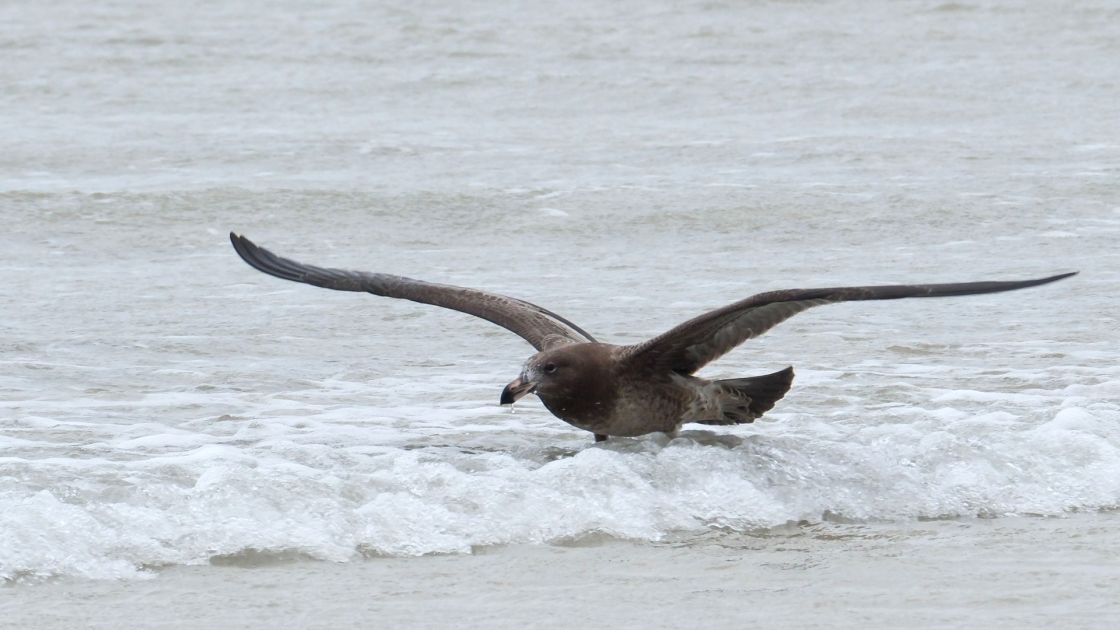
Testing at CSIRO’s Australian Centre for Disease Preparedness (ACDP) has confirmed H5 high pathogenicity avian influenza (bird flu) in a giant petrel in Western Australia.

This detection marks the fourth wild migratory seabird in Australia to return a positive result for H5 bird flu, with two others confirmed in Western Australia and one in South Australia.

Western Australian has also reported a further suspect positive detection, in a giant petrel found at Roses Beach, west of Esperance, with samples sent for confirmatory testing at CSIRO’s ACDP. At this stage, there have only been detections in vagrant migratory seabirds that occasionally visit southern Australia. There remains no evidence of any mass mortality events and there are no detections in poultry or in our agricultural production system.

The risk to human health remains low.

You can help to determine if H5 bird flu has spread. If you see multiple sick or dead birds or other animals, do not touch them. Avoid contact. Record what you see. Report it to the Emergency Animal Disease Hotline on 1800 675 888 from anywhere in Australia.

For more information visit:
birdflu.gov.au
.


https://afludiary.blogspot.com/2026/06/australia-daff-confirms-4th-h5n1.html
 
Re: Michael Coston’s post above (#21):

image.png - Click image for larger version  Name:	image.png Views:	2 Size:	60.1 KB ID:	1037530

Quindalup
Google map
​------------------------------------------------------------------------------------------------------------------------​-------------------------
image.png - Click image for larger version  Name:	image.png Views:	2 Size:	60.1 KB ID:	1037530


Third positive H5 bird flu case confirmed in WA

Media release

Western Australia has now confirmed the detection of H5 bird flu in a giant petrel found in Quindalup on the State’s South West coast.

updated: 27 June 2026

Western Australia has now confirmed the detection of H5 bird flu in a giant petrel found in Quindalup on the State’s South West coast.

CSIRO’s Australian Centre for Disease Preparedness confirmed the result of H5 bird flu in the single migratory petrel this morning.

There have been four confirmed detections of H5 bird flu in Australia.

The number of confirmed WA cases has now reached three – including two migratory seabirds previously reported - a brown skua and giant petrel found in the remote Cape Le Grand area, east of Esperance.

Results of a further suspect positive detection in a giant petrel on the WA south coast at Roses Beach, 30 kilometres west of Esperance, are pending.


There has been a total of 476 reports from WA to the Emergency Animal Disease (EAD) hotline since Friday 19 June. Of these reports, 53 have been prioritised by DPIRD based on the risk of H5 bird flu for further investigation or testing.

To date, a total of 17 negative test results have been recorded for the following coastal regions – Esperance area, Mid West, Great Southern, South West, Peel and the Perth metropolitan area.

Testing of other collected samples is ongoing, and results will be provided when available. Reports to the EAD hotline are routinely investigated and there is no suggestion any of these reports will be H5 bird flu.

Importantly, there are no detections in poultry, evidence of spread to local wildlife or large-scale deaths in any animals.

Reporting to the EAD hotline, and the resulting investigations, are a part of Australia’s well-established approaches and biosecurity system.

A national surveillance plan is in operation to monitor for any further detections and facilitate a rapid, coordinated response.

Anyone who sees sick or dead birds or marine mammals should AVOID and not handle the animals but RECORD and take photos or a video and REPORT to the Emergency Animal Disease Hotline on 1800 675 888.

For more information visit the Australian Government's Bird flu (Avian influenza) website.


https://www.wa.gov.au/government/announcements/third-positive-h5-bird-flu-case-confirmed-wa
 
image.png


Bird flu rapid response ready

Sunday 28 June 2026 Biosecurity Media release

gallery_popup-h.jpg

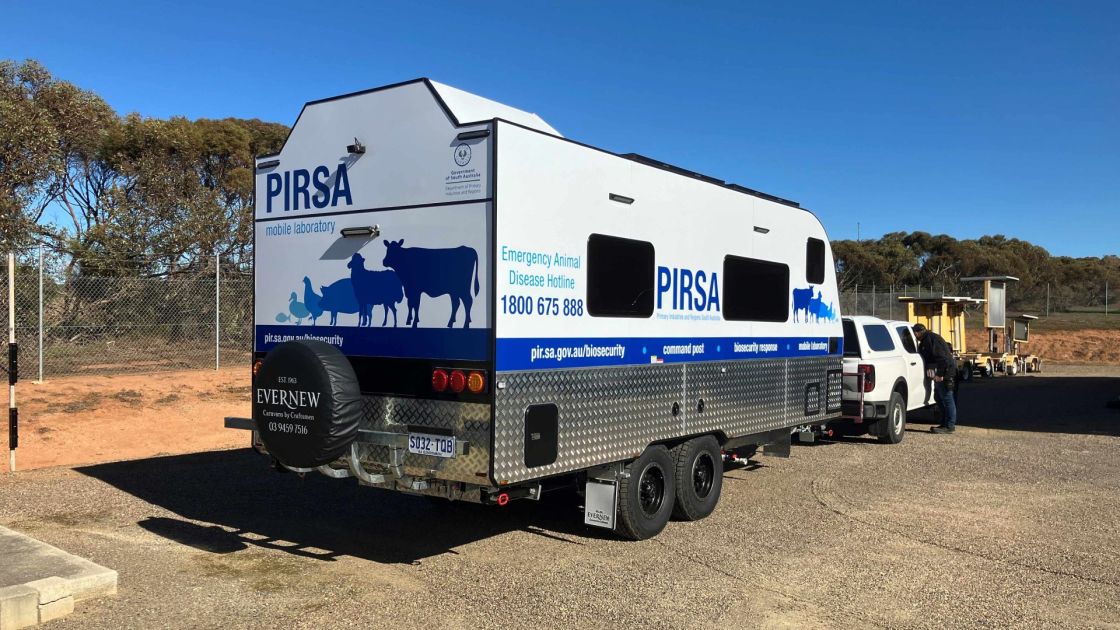
The Malinauskas Government stands ready to respond to any potential H5 bird flu outbreak, backed by an arsenal of specialised resources including a mobile diagnostic laboratory, rapid response units and decontamination facilities.

These resources each play a crucial role in the delivery of an efficient and integrated emergency management response in the event of an outbreak of H5 bird flu.

This equipment includes:
  • a mobile diagnostic laboratory to support rapid testing
  • rapid response units carrying equipment used for decontamination, sampling and other bird flu response activities
  • portable decontamination units to clean vehicles and equipment on infected properties.
To date, there has been only one detection of H5 bird flu in a wild migratory bird in SA.

Importantly, bird flu has not been detected in commercial poultry flocks, captive birds or any other birds in South Australia, nor has it become established in any part of Australia.


But this is no reason to stop preparing for the risk that further detections could eventually lead to an outbreak.

It’s the first time this strain has been detected in South Australia. Since 1 January 2026, more than 780 samples from birds have been tested in SA.

South Australia has been preparing for H5 bird flu for the past few years, with the State and Federal Governments investing a combined $8.1 million into PIRSA to boost its emergency response capabilities, surveillance, diagnostics, workforce capability and overall readiness.

Other preparedness efforts have included training and simulation exercises, and other targeted environmental and wildlife activities.

A further $3.5 million has been invested into the Department for Environment and Water from the Federal Government to support activities to prepare for, build on-ground resilience in, and support response efforts for the environment and our wildlife, including:
  • management and response planning in key areas such as Seal Bay Conservation Park, Coorong National Park, Adelaide International Bird Sanctuary National Park, and Adelaide International Dolphin Sanctuary
  • habitat restoration and feral bird control on offshore islands of Fleurieu Peninsula
  • predator control and habitat restoration to safeguard migratory and threatened birds on the Limestone Coast
  • fox and feral cat control to protect bird species’ breeding, nesting and roosting sites along the metropolitan coast
  • feral pig control at the Coongie Lakes Ramsar site in the Far North
  • treating sea lion pups for parasites, and installing pup shelters for exposure protection
  • feral cat control around Seal Bay, noting that feral cats are potential vectors for H5 bird flu.
Federal funding has also been allocated to the Zoo and Aquarium Association to help safeguard threatened native species at Cleland Wildlife Park, Adelaide Zoo and Monarto Safari Park.

The community is urged to be vigilant and report any dead or sick birds or wildlife showing signs of bird flu. Possible signs of bird flu in birds include:
  • multiple sick or dead birds in one location
  • weakness, inability to stand or fly
  • neurological signs or abnormal behaviour
  • swelling or discolouration
  • respiratory distress.
If you see sick or dead birds or other wildlife, do not touch them. Avoid contact. Record what you see. Report it to the Emergency Animal Disease Hotline on 1800 675 888 from anywhere in Australia.

For more information visit birdflu.gov.auOpens in new window. For more information on bird flu preparedness in SA, see avian influenza.


https://pir.sa.gov.au/news/biosecurity/bird-flu-rapid-response-ready
 
Wishful thinking by the SA gov.. The agriculture minister already has admitted H5N1 can not be stopped. From post #16 above:

COLLINS: Well, what we have learnt from overseas is that we cannot prevent it from spreading, and we've been very clear about that. And we cannot stop it arriving, it would come via migratory birds and get into wildlife

The proper communications here for the states is "We are pretty much screwed but we working with the federal government to do things to lessen the impact...here is what you can do..."

Frank truth is the way.
 
Australia Confirms 5th Detection of H5N1 In Migratory Birds


#19,226

Last Saturday we learned of the 4th confirmed detection of H5N1 in Australian wild birds, and that a 5th test was presumed positive. Today Australian authorities confirmed that fifth case.

As of 2:00pm AEST, 30 June 2026, Australia has five cases of H5 bird flu in wild birds confirmed by CSIRO’s Australian Centre for Disease Preparedness (ACDP).

There are four confirmed in Western Australia (WA) and one in South Australia (SA).

There is no evidence of any mass mortality. There is no evidence of infection in poultry or the wider agriculture industry.

The risk to human health remains low.

Australia is well prepared to respond quickly.

If you notice multiple sick or dead birds or other animals, you should not touch them or get too close. Record your location and report it to the 24-hour Emergency Animal Disease Hotline on 1800 675 888.

More information is available in the update below.

While the 5th detection overall, this is the 4th in Western Australia. We get more details from the Department of Primary Industries and Regional Development.
Western Australia has recorded its fourth confirmed detection of H5 bird flu in a migratory seabird on the State’s South Coast.
Last updated: 30 June 2026

Western Australia has recorded its fourth confirmed detection of H5 bird flu in a migratory seabird on the State’s South Coast.

CSIRO’s Australian Centre for Disease Preparedness today confirmed the H5 bird flu strain in the previously reported suspect giant petrel found at Roses Beach, west of Esperance.

There has now been a total of five confirmed detections of H5 bird flu in Australia, including four in WA and one in South Australia.

All of the detections have involved migratory seabirds that are known to occasionally visit southern Australia.

There is still no evidence of spread or large-scale deaths in local wildlife or any detections in poultry.

The Department of Primary Industries and Regional Development (DPIRD) is leading the response in WA, with a focus on enhanced surveillance and early detection in this investigative phase.

The response is being coordinated across multiple levels of government, involving joint efforts from DPIRD, the Department of Biodiversity, Conservation and Attractions, local governments and other State agencies.

Divisional commands have been established in the South West and South Coast.

Surveillance along the Esperance coast continues and the DPIRD patrol vessel PV Hamelin will be deployed to support monitoring in the area.

This will enable observations of wildlife colonies in priority areas for any signs of ill health, death or unusually low numbers of species that would normally populate the islands in winter.

A community meeting will be held in Esperance early next week for authorities to share an update on the State’s response activities.

Training sessions are also being delivered with DBCA to support local governments, veterinarians and wildlife rehabilitators to safely retrieve sick or dead birds.

DPIRD is encouraging the community to continue to report unwell or deceased birds through to the Emergency Animal Disease Hotline on 1800 675 888.

There has been more than
672 reports from WA to the Emergency Animal Disease (EAD) hotline since Friday 19 June. These reports are being prioritised by DPIRD for further investigation or testing, based on the risk of H5 bird flu.

To date, a total of
25 negative test results have been recorded for coastal regions across the State, including the Esperance area, Mid West, Great Southern, South West, Peel and the Perth metropolitan area.

Anyone who sees sick or dead birds or marine mammals should AVOID and not handle the animals but RECORD and take photos or a video and REPORT to the Emergency Animal Disease Hotline on 1800 675 888.

More information is available on the
Australian Government's Bird Flu (Avian influenza) website.

While confirmed numbers remain low, this report indicates there is a sizable backlog of reports from the EAD hotline that have not been investigated or tested.

So far, no poultry has been affected, but the bulk of Australia's poultry industry is located in the eastern half of the country, well away from these first detections.​


(Graphic generated using Perplexity)


Only time will tell if this is a short-lived, limited incursion or - as we saw in North America in late 2021 - the prelude to a hostile takeover.

Stay tuned.

https://afludiary.blogspot.com/2026/06/australia-confirms-5th-detection-of.html
 
Doorstop at Parliament House, Canberra


30 June 2026

E&OE TRANSCRIPT
DOORSTOP
PARLIAMENT HOUSE, CANBERRA
TUESDAY, 30 JUNE 2026

SUBJECTS: H5 Bird Flu

JULIE COLLINS, MINISTER FOR AGRICULTURE, FISHERIES AND FORESTRY: I'm pleased to be joined by our Chief Veterinary Officer Dr Beth Cookson today to provide you all with an update on the H5 bird flu testing results from the CSIRO labs. We've just received an update from Dr Cookson and I'm advised that the CSIRO testing has confirmed the detection of the H5 bird flu in an additional migratory seabird. This giant petrel was found at Roses Beach near Esperance in Western Australia. This brings the total number of confirmed H5 bird flu detections to five, with all detections in migratory seabirds. Four of these detections were from seabirds found in Western Australia, and one seabird was found in South Australia. As of this afternoon, there remains no new suspected positives from State testing. I also want to confirm that State testing on a sick migratory sea bird in Victoria has today returned a negative result for the H5 bird flu. I want to again reiterate there remains no evidence of any mass mortalities in wildlife. There is no evidence currently of infection in our poultry or agriculture systems, and there remains a low risk to human health. As I've said many times, given the spread of the H5 globally, it's not unexpected that other migratory seabirds may have also arrived at other locations along Australia's coastline. That's why our Government has been preparing for this. We've invested over $113 million to boost our H5 bird flu preparedness as part of our $2 billion investments in additional biosecurity since we've come to office. Our response to bird flu has been both swift and coordinated, and as I've repeated, our national biosecurity response arrangements have been enacted, with States and Territory governments managing the on-ground response. Again, I want to thank Australians for reporting the sick or dead birds over recent weeks, and reiterate again, if you see a sick or a dead bird or other animals, please do not touch them, avoid contact and record what you see and make a report to birdflu.gov.au. I’ll hand over to Dr Cookson to say a few words.

DR BETH COOKSON, AUSTRALIAN CHIEF VETERINARY OFFICER: Thanks Minister, and thanks everyone for the opportunity to provide an update today. As the Minister has mentioned, we have today confirmed that the fifth of the migratory seabirds that was under investigation has today been confirmed as positive by our Australian Centre for Disease Preparedness. So this means that there have been three others also confirmed in Western Australia and the one from South Australia. We want to be clear that there is no evidence of mass mortality. At this stage there is no infection in poultry or the wider agriculture industry, and the risk to human health remains low. As I've previously stated, the nation has been preparing for this outcome for a long time, and we have the benefit from learning from the international experience. My focus and the focus of my colleagues within the States and Territories is to make sure that we are putting those learnings into practice and that our responses are as appropriate as possible with the evidence that we've got available. This builds on Australia's long standing emergency animal disease frameworks and national coordination mechanisms. Almost 100 negative tests have now been reported across the nation through the enhanced surveillance that's been undertaken since the first reported case. I do want to thank the members of the public for their assistance in reporting sick or dead wildlife. This is a sign of our strong biosecurity system working. If you do come across sick or dead wildlife, we continue to encourage you to avoid contact with them, to record information that is useful in identifying their location, as well as photos or videos that can support triaging and assessment of whether further investigation is needed, and to report to the emergency animal disease hotline. We do have a range of very good public information on birdflu.gov.au and for anyone who is interested in that information I encourage you to go there. We are still in the investigative phase and there will be information that will continue to emerge over the coming days and potentially weeks. I will continue to keep the public informed as any new information is available.

COLLINS: Happy to take some questions.

JOURNALIST: Maybe for Dr Cookson, if I could start. Given that there's, I mean I think it's fair to say, quite a big geographic spread now of positive cases, could you know, tell us what you think the chances are that the majority or all the birds, infected birds that have arrived in Australia, or is it sort of inevitable that infected birds are landing that we're not finding?

COOKSON: I think it's a real strength of our biosecurity system that we have detected these individual cases. Of course I, like others, would acknowledge that these birds are active in our southern waters during this period of year, and the climatic conditions do mean that they are occasionally sighted on the southern shoreline. So our activities will continue to assess the situation over the coming weeks and months, including through enhanced surveillance to determine whether there have been any additional cases or spread into resident populations.

JOURNALIST: There have been complaints in the media from South Australian tourism operators saying that they haven't had enough information to help them detect. What has been the outreach apart from having the website and directing people to that? Has there actually been a proactive effort to educate people on the ground who might be able to help detection?

COOKSON: We’re working very closely with our State and Territory counterparts. Western Australia and South Australian Governments are leading the operational responses on the ground. They have increased their public information and communication, they are proactively holding webinars and other information resources with wildlife carers, with veterinary hospitals, with local governments and others who may be involved in observing animals on the ground. So I would encourage people to stay up to date with information that their State Government's providing as well, and there are plenty of resources out there to assist people who require further information.

JOURNALIST: And just that petrel that was found in Esperance on Roses Bay, that was one of five giant petrels there. We're told that the other ones were negative. Does there need to be re-testing of those birds or are we confident that they weren't suspected cases? Is that just a coincidence that there were five dead birds on the one beach?

COOKSON: The test results, as you indicate, were negative for those birds. I think it's very difficult to speculate as to whether they were or were not infected. What we do know about the impacts of infection with something like bird flu on animals is that it can weaken them and make it so that they are unable to weather storms or other conditions that can bring them to the shore. So we won't be able to definitively rule in or out whether they were infected. I guess I would just reinforce that these are cases in the same sort of location in Esperance or around that Esperance area. There has been a very active response in that area given that it is a site of high sightings, and it doesn't substantially change what we know about the current situation, which is that the detections so far have been in wild migratory seabirds and that there's no evidence of spread to resident populations. That's our absolute priority at the moment.

JOURNALIST: What is the testing process now from here, given like, you know, what sort of backlog are we talking about, or where are the priorities really for the testing going forward from here now that there are additional cases?

COLLINS: I can start and hand to Dr Cookson if you like. Certainly, the process to date has been because of the migratory birds and because there's five essentially isolated migratory birds that evidence would suggest have arrived in Australia with the disease. We have been working with the States and Territories. They are doing the testing on the ground and the triaging of the reports of dead birds and animals. And then if they get a positive, we then have been sending it to the CSIRO lab for the Australian Centre for Disease Preparedness for confirmatory testing. That process will continue until we have some trigger or evidence that we need to step up our response, and I'll hand to Dr Cookson about what that might look like.

COOKSON: Thanks very much for the question. As the reports to the emergency animal disease hotline increase, our State and Territory counterparts are triaging those calls so that they can identify the highest priority for investigation. That would be based on species, so obviously the seabirds that are migratory and being found on our southern coastline at the moment are a high priority. As are resident populations where there's aggregations in large numbers or whether there might be high indicators of a more than baseline death rate, and we certainly don't have any indication of mass mortalities at this stage. So investigations that fill those criteria will be prioritised. They will be tested initially through the State lab, and as the Minister has indicated we will continue to have those confirmed through the Australian Centre for Disease Preparedness.

JOURNALIST: Question for maybe the Minister and Dr Cookson, you spoke about learning from international experience. Just wondering, drawing from that particularly Europe and the US, has the Federal Government discussed any measures or controls with the States about regulations or behavioural change for people that have cats, chickens, birds, off leash areas for dogs, particularly around wetlands and beaches? And then separately, has the Federal Government been in discussions with States where duck hunting is permitted about putting a pause or disallowing duck hunting during the heightened risk of H5N1.

COLLINS: I'll start and then I'll hand to Dr Cookson. Certainly, we have had obviously regular contact with the States through the emergency response committee. We've also had my Secretary meet with the State Secretaries of their Departments in relation to the response. And we continue to get updates from the States and Territories in relation to where they're at. Our Chief Vet is meeting with all of the States' Chief Vets on a regular basis in terms of those updates. What I can say is that our advice has been to do not touch dead or injured birds or animals who are dead, and that advice is for humans but it's also advice for don't let your pets near them, I would say. You wouldn't ordinarily take a dog off a leash in a national park or an area where there's dead wildlife. So, you know, you just use your common sense, and you would adhere to, you know, do not touch the dead birds or dead animals.

JOURNALIST: So is common sense enough? That's my question. Have you discussed with States measures that go beyond common sense, or will this be a sort of laissez faire approach?

COLLINS: Well we've been very clear that people shouldn't touch the dead birds or dead animals where there's signs that they may have bird flu or have, you know, some sort of illness.

JOURNALIST: Understood, but I'm talking about potential regulations?

COLLINS: I'll hand to Dr Cookson for that.

COOKSON: Thank you. We have been monitoring the overseas situation and the approaches there very closely. We are aware that there are a number of different scenarios that people will be interested in, in getting advice for. I would emphasise that at this stage we have confirmed the cases only in five migratory sea birds along the southern coastline. So the advice for most of Australia is that the situation about risk hasn't changed and that remains very low. Part of our surveillance approach will be to monitor whether that changes and whether the advice to people in different areas needs to adapt over time. But for now we are dealing with the situation that we've got, which is the five wild migratory birds along the southern coastline. When it comes to the advice for those different groups, certainly we have prepared a lot of information for backyard poultry producers. There are some really practical steps that we would recommend regardless of the risk from bird flu in terms of enhanced biosecurity. So that's making sure that pens and aviaries are kept clean. That as far as possible netting or other material keeps wild birds or other rodents and pests out. That people practice appropriate hygiene, so washing hands and the like between interacting with their birds and other birds. For pet owners, again, we would encourage just usual appropriate management of pets in public places to take place. The risk to pets is generally low, but we would still advise that for public places where pets might be interacting with wildlife, either sick or dead, that that is avoided and dogs are kept on leashes and that cats are kept indoors and prevented from interacting with wildlife.

JOURNALIST: Has modelling been conducted about the possibility of spread among resident birds? Is it positive that the numbers are still quite low and they're with migratory birds at the moment?

COOKSON: Australia obviously is in quite a unique situation because we are the last continent for this virus to arrive on. So it is a little bit difficult to predict exactly what we might see. However, there are some good modelling tools out there that can provide us some indicators of where the highest priority sites and locations might be, particularly where there are large numbers of waterfowl aggregating that might be more involved in dispersing the virus. But I do have to emphasise at this stage there has been no indication of disease having spread into those populations, and that continues to be our highest priority, to monitor where the detections are occurring in wild migratory birds and if there's any indication of spread or mass mortality.

JOURNALIST: Minister, have you been able to convince PNG to remove the remaining restriction on Australian chicken products from WA?

COLLINS: As I said late last week, we've certainly been in discussions with the Papua New Guinea Government in relation to its initial ban on our poultry and chicken products. And certainly we have had them lifted but with some exceptions in relation to some issues with Western Australia. My understanding is we continue to have those discussions. Thanks very much.

https://minister.agriculture.gov.au...-parliament-house-bird-flu-fifth-bird-30-june
 
Australia: NWS & Perth (WA) Report Suspected Positive HPAI H5 Detections

AVvXsEgGXInVaGWjAM1hERjrdvr7svFYyQbCORbB5LbIsQue52Do0Z1yI9nF0aWDG_Mwozb_eJRQdoBEieLEdbmTfmCih-WgxdZvYHxnITXxWVByoI0nDSQOqahs3uOD5mByJtKn634G-ZXECFwJ1zSL_oQzqa1h4zGB5CEH5wVrsczCYoDvDfIvqfnduw=w400-h400


#19,232


Overnight Australia has reported two new suspected (preliminarily positive) H5 detections some 3,300 km apart, with one in Perth (WA) and the other on NSW's Bennetts Beach.

The report from New South Wales is particularly concerning, because NSW is the largest poultry producing state in the the country, producing nearly 40% of the nation's chicken meat and 1/3rd of its eggs.​

This from NWS's DPIRD (Department of Primary Industries and Regional Development).

New South Wales is currently responding to a suspected positive case of H5 bird flu.
The Giant Petrel, found at Hawks Nest was sampled as a result of a Hotline report and was sent for testing at Elizabeth Macarther Agricultural Institute where it tested positive for H5 bird flu.

Samples have been sent to CSIRO’s Australian Centre for Disease Preparedness (ACDP) for confirmatory testing.

This is the first suspect positive case in NSW.

At this stage, bird flu has not been detected in commercial poultry flocks, captive birds or any other birds in NSW. There is no evidence of any mass mortality in wildlife or spread to other animals.

Confirmed Australian cases to date: Western Australia: 4 confirmed
South Australia: 1 confirmed


This strain of avian influenza has had significant impacts overseas, causing widespread mortality in poultry, wild birds and some mammals.

It is important that we all continue to remain vigilant and report any sick or dead poultry, wild birds or wildlife.

If you see multiple sick or dead birds or other animals, do not touch them.

Avoid contact. Record what you see. Report it to the Emergency Animal Disease Hotline on 1800 675 888 from anywhere in Australia.

Australia has well-established national response arrangements in place to respond to animal disease incidents, including H5 bird flu.

The NSW Government is reminding poultry producers that
on-farm biosecurity practices are crucial to protect the health of their flocks.

For more information, visit
Bird flu (Avian influenza) - DAFF.

NSW's is not only the largest poultry producer in Australia, it is the 2nd in the country for cattle, and 1st in raising sheep.
If confirmed, this will no doubt raise concerns in New Zealand as well, as it brings the virus much closer to its shores (see New Zealand: DOC to vaccinate ‘at risk’ birds against bird flu).

Meanwhile, Western Australia is testing a bird carcass found on a local beach.

Suspect positive detection of H5 bird flu on northern Perth beach

Media release

Western Australia has recorded a suspect positive detection of H5 bird flu in a migratory seabird on a northern Perth beach (between Whitfords and Mullaloo beaches).

Last updated: 3 July 2026

Western Australia has recorded a suspect positive detection of H5 bird flu in a migratory seabird on a northern Perth beach (between Whitfords and Mullaloo beaches).

Samples from a deceased giant petrel were submitted to the Department of Primary Industries and Regional Development (DPIRD) laboratory returning a suspect positive result for H5 influenza in preliminary testing.

The deceased bird was reported on Tuesday (30 June) to the Emergency Animal Disease Hotline.

Samples have been sent to CSIRO’s Australian Centre for Disease Preparedness to confirm the results and determine if it is the H5 bird flu strain of concern.

There have been five confirmed detections of H5 bird flu in Australia, including four in WA and one in South Australia.

All of the detections have involved migratory seabirds that are known to occasionally visit southern Australia.

There is still no evidence of spread or large-scale deaths in local wildlife or any detections in poultry.

The community is encouraged to keep pets away from wildlife, including preventing cats from roaming and keeping dogs on leads in wildlife areas.

The Department of Primary Industries and Regional Development (DPIRD) is leading the response in WA, with a focus on enhanced surveillance and early detection in this investigative phase.

The response is being coordinated across multiple levels of government, involving joint efforts from DPIRD, the Department of Biodiversity, Conservation and Attractions, local governments and other State agencies.

DPIRD will be utilising its team of fisheries officers to conduct increased beach patrols along the metropolitan coast and assist with the surveillance effort.

DPIRD is encouraging the community to continue to report unwell or deceased birds through to the Emergency Animal Disease Hotline on 1800 675 888.

There has been a total of 795 reports from WA to the Emergency Animal Disease (EAD) hotline since Friday 19 June.

Of these reports, 118 have been prioritised by DPIRD based on the risk of H5 bird flu for further investigation or testing.

To date, a total of 58 negative test results have been recorded.


More information is available at birdflu.gov.au

Although the number of reported bird deaths in WA (n=759) far exceeds the testing capacity of local labs - with less than 10% processed to date - the main goal is to detect trends and expansion of the threat.

Little can be done to prevent the spread of HPAI in the wild, but enhanced surveillance and increased biosecurity by the poultry and livestock industry (cattle/sheep/goats, etc.) can help limit both the spread an economic damage.​

While this is the first incursion of HPAI H5N1 into Australia, poultry producers there are no strangers to dealing with avian flu. As recently as 2024-2025 NSW, Victoria, and ACT dealt with a prolonged outbreak of several homegrown H7 viruses.


Hopefully some of the lessons learned from that encounter will prove helpful in dealing with this newest threat.

Stay tuned.


https://afludiary.blogspot.com/2026/07/australia-nws-perth-wa-report-suspected.html
 
image.png


Ministerial media release

NSW Government response plan in place after suspected H5 detection

Published: 3 July 2026 Released by: Minister for Agriculture
Listen
New South Wales is responding to a suspect positive case of H5 bird flu.

Samples from a Giant Petrel near Hawks Nest has tested positive for H5 influenza in preliminary testing at DPIRD’s laboratory at Elizabeth Macarthur Agricultural Institute (EMAI).

Samples have been sent to CSIRO’s Australian Centre for Disease Preparedness (ACDP) to confirm if it is the H5 high pathogenicity avian influenza (bird flu) strain.

This marks the first wild migratory seabird in NSW to return a suspect positive result for H5 bird flu.

At this stage, there have only been confirmed detections in vagrant migratory seabirds that occasionally visit southern Australia.

Importantly, bird flu has not been detected in commercial poultry flocks, captive birds or any other birds in NSW, nor has it become established in any part of Australia.

The risk to human health remains low.

If unusual deaths or illness in wild birds are observed please AVOID contact, RECORD by taking photos or video and REPORT immediately to the Emergency Animal Disease (EAD) Hotline on 1800 675 888.

The State Coordination Centre is operating at the Department of Primary Industry and Regional Development (DPIRD)’s Orange Agricultural Institute since 19 June 2026 to provide coordination of surveillance operations and NSW’s response.

Surveillance operations had ramped up in NSW in preparation for a potential detection across the state, including establishing a H5 bird flu call centre, and training over 500 additional staff, including Local Land Services and National Parks and Wildlife Service field officers to undertake surveillance for H5 bird flu.

NSW Minister for Agriculture Tara Moriarty said:

“This latest development is incredibly concerning for both agriculture and for wildlife.

“The impact of H5 worldwide on wild birds and poultry has been devastating.


“But NSW and the rest of the country have been preparing for this moment for many years.

“We are working with Federal, State and Territory governments as we roll out plans that have been developed with all stakeholders including industry, agriculture and wildlife organisations.

“The community can help by avoiding contact with sick or dead wildlife and their environment, recording what you see and reporting any unusual sickness or mass mortality to the Emergency Animal Disease Hotline.

“We will be relying on our partners in industry to help with this and that’s why we have delivered more than 50 briefings and workshops to key agricultural and wildlife stakeholders, ensuring the community have the vital information to manage an outbreak.

NSW Chief Veterinary Officer Jo Coombe said:

“Our focus now is to increase surveillance and to detect any further infections early.

“We have now ramped up surveillance operations having trained more than 500 additional staff, including Local Land Services and National Parks and Wildlife Service field officers to undertake surveillance for H5 bird flu.

“The State Coordination Centre has been stood up in Orange, we have established the H5 bird flu call centre and we are briefing all key stakeholders on the current situation.

“We have innovative spatial mapping tools, decision-support systems and response databases to enable rapid, evidence-based action during a wildlife outbreak.

“We are using the best available data now to target actions for our most at-risk wildlife species and important natural places.”

To report a sick bird call the 24-hour Emergency Animal Disease Hotline on 1800 675 888.

For more information visit: birdflu.gov.au

https://www.nsw.gov.au/ministerial-releases/suspected-bird-flu-detection
 
Australia: NSW H5N1 Detection Confirmed


AVvXsEh2w0rPZAnxb9dCvZSfb3l9wiRrWWGxDpDUttAVsipF-YZvee6DfLS-NBvcWTzJFCsaj3pjg5n8X9PyBoN-8TqC4Wzp3DGi85XtDiEsrV5bdyDneX3DhnKgPfNwcl8szW0DWYn3MaKQd3km3aFHhLNIwjTzfcneYC220WImwxCXvpsikWyTKpcvjg=w400-h393


#19,234

Overnight Australia has confirmed the previously suspected H5 detection on NSW's Bennetts Beach, bringing the number of confirmed detections in Australian birds to 6. There are, however,hundreds of as-yet uninvestigated reports of dead birds in WA alone.

This report from New South Wales is concerning because they are the largest poultry producing state in the the country, producing nearly 40% of the nation's chicken meat and 1/3rd of its eggs.​

This from NWS's DPIRD (Department of Primary Industries and Regional Development).

Current situation

New South Wales is responding to a confirmed detection of H5 bird flu in a giant petrel found near Hawks Nest. This is the first confirmed detection of H5 bird flu in NSW.

The NSW Government is working in collaboration with other jurisdictions and the Australian Government, with increased surveillance now underway.

At this stage, bird flu has not been detected in commercial poultry flocks, captive birds or any other birds in NSW. There is no evidence of any mass mortality in wildlife or spread to other animals.

Confirmed Australian cases to date:

  • Western Australia: 4 confirmed
  • South Australia: 1 confirmed
  • New South Wales: 1 confirmed
This strain of avian influenza has had significant impacts overseas, causing widespread mortality in poultry, wild birds and some mammals.

It is important that we all continue to remain vigilant and report any sick or dead poultry, wild birds or wildlife.

If you see sick or dead birds or other animals, do not touch them.

Avoid contact. Record what you see. Report it to the Emergency Animal Disease Hotline on 1800 675 888 from anywhere in Australia.

Australia has well-established national response arrangements in place to respond to animal disease incidents, including H5 bird flu.

The NSW Government is reminding poultry producers that
on-farm biosecurity practices are crucial to protect the health of their flocks.

For more information, visit
Bird flu (Avian influenza) - DAFF.

.

https://afludiary.blogspot.com/2026/07/australia-nsw-h5n1-detection-confirmed.html

 
Australia: WA Designates 5th Suspected H5N1 Case as `Presumed Positive'


AVvXsEhAWfJayBSq7ou8HGq9hS1p6r8qcVN5np4KZNKmKdJG7yrpz7BSEgpJ3yqvG6N-Cn2gOQakm7SHxVnATK0lowJd_Fw0MHKJC5jA_VBYjtZAycoypiA7RFABVX3lWAlfsIickd82oAnyjDx4GahWLnG6Rkb7DBu7AaqMnM0Kq2rdzAtfqvmE-x5HiA=w320-h315


#19,236

Four days ago Western Australia announced the discovery of a suspected H5N1 infected bird in Perth (collected 6/30). To date, more than 1,000 dead birds have been reported in WA alone, but collection and testing takes time, and so only a small percentage have been processed.
And testing - particularly of bird or animal remains - can be difficult, as the ability to detect the virus can degrade over time.​

Normally, after a local lab detects the H5 virus, Australian samples are sent to the national CSIRO lab for confirmation. In the case of the above mentioned Perth sample, after nearly a week - while they confirmed H5 - they were unable fully sequence the virus.
However, WA's Chief Veterinary Officer Dr Katie Webb announced today, “This case will be considered as ‘presumed positive’ based on the available test results, species involved, coastal location and the broader epidemiological picture.”

So far WA has received more than 1,000 reports of dead birds, but due to the high volume, the DPIRD has prioritized 172 for further investigation. Of those already processed in WA, 5 have tested positive and 64 have tested negative.


As with any disease surveillance system - whether in birds, livestock, or people - confirmed cases will represent only the tip of the pyramid.

AVvXsEhxSfDWKJ5-trDhbIBc9xfYkdJ5Gl9U0FVxyNn9p5jDXqXiWN-oLOS8JhQYrHVWjWdD4JWzNdilL5jKmAmStIDEYfkwC2ovLmmBXDIzrcnezW1aPfW0PaVS87hMmjmH_EG7kGnxKA


In the case of H5N1 in birds:
  • Only a percentage of birds will sicken and die (varies by species)
  • Only a fraction of those birds will be seen, reported, and collected
  • Of those, only a subset will be prioritized for testing
  • And of that group, some may not have detectable levels of virus


While 7 cases detected across 3 Australian states may not sound like much, it is actually a pretty strong signal that multiple incursions of HPAI have likely occurred in recent weeks.

This update from the Western Australian government website:

Additional testing of the previously reported migratory giant petrel found in the Whitfords - Mullaloo beach area has determined the case is a ‘presumed positive’ detection of the serious H5 bird flu strain.
Last updated: 6 July 2026

Additional testing of the previously reported migratory giant petrel found in the Whitfords - Mullaloo beach area has determined the case is a ‘presumed positive’ detection of the serious H5 bird flu strain.

Testing at CSIRO’s Australian Centre for Disease Preparedness has confirmed the petrel had an influenza virus of the H5 subtype.

The case has been classified as a presumed positive because viral sequencing to confirm the virus as H5 bird flu was not able to be achieved.

The inability to obtain a sequence may be due to a range of factors, including the level of decomposition of the carcass.

WA Acting Chief Veterinary Officer Dr Katie Webb said it was considered highly likely the bird was infected with H5 bird flu, but this could not be definitively proven at this stage.

“This case will be considered as ‘presumed positive’ based on the available test results, species involved, coastal location and the broader epidemiological picture,” Dr Webb said.

“This does not change our response in WA. We are treating this the same as a positive case based on the available epidemiological and laboratory evidence.”

This presumed positive case adds to the six confirmed positive detections of H5 bird flu nationally, including four in WA on the southern and south west coasts, one in South Australia and one in New South Wales.

Importantly, there is no evidence the virus has spread beyond these individual migratory seabirds, but we ask the community to be alert and follow advice about reporting sick or dead wildlife.

People should AVOID and not handle the animals, RECORD and take photos or a video and REPORT to the Emergency Animal Disease (EAD) Hotline on 1800 675 888.

There have been more than 1000 reports from WA to the EAD hotline since Friday 19 June. Of these reports, 172 have been prioritised by DPIRD for further investigation or testing based on the risk of H5 bird flu.

To date, a total of 64 negative test results have been recorded across the State.

More information is available on the
Australian Government's Bird flu (avian influenza) website.
.

https://afludiary.blogspot.com/2026/07/australia-wa-designates-5th-suspected.html

 
image.png

...
Jul, 6 2026 | High pathogenicity avian influenza (H5 Bird Flu)

Incident – H5N1 high pathogenicity avian influenza (H5 bird flu) in migratory seabirds, Australia - ongoing

Australia has confirmed its first detections of H5 high pathogenicity avian influenza (H5 bird flu) in wild birds. There are a total of five confirmed cases of H5 bird flu (H5N1 high pathogenicity avian influenza 2.3.4.4.b), four in Western Australia and one in South Australia. This is the first time the globally circulating H5 bird flu strain has been detected in Australia. New South Wales is now also responding to a confirmed detection of H5 bird flu in a giant petrel found near Hawks Nest (NSW DPIRD – Avian influenza) and a suspect case from Perth WA is pending confirmation at CSIRO’s Australian Centre for Disease Preparedness (ACDP).

All species are migratory seabirds that occasionally visit southern Australia.

There is no evidence of mass mortalities in wildlife or any infection in poultry at this time.

The Western Australia Department of Primary Industries and Regional Development (WA DPIRD), South Australia Department of Primary Industries and Regions (PIRSA) and NSW’s Department of Primary Industries and Regional Development (NSW DPIRD) are leading on-ground activities and the Department of Agriculture, Fisheries and Forestry is supporting national coordination.

AVOID. RECORD. REPORT.

Any unusual illness or death in wild birds should be reported via the Emergency Animal Disease Hotline on 1800 675 888.

For more information on these H5 bird flu events, see:
See Australian reports to the World Organisation for Animal Health (WOAH) for more information: Event 7649

WHA information can be found on the WHA H5 Bird Flu resource centre, which provides information sheets, videos and toolkits for preparing, understanding and responding to H5 bird flu.

https://wildlifehealthaustralia.com...d-flu-in-migratory-seabirds-australia-ongoing
 
image.png


Bird flu (Avian influenza)

Together we can prepare to better protect our people, wildlife and farms from H5 bird flu.

June 2026 H5 bird flu detection

As of 9am AEST, 7 July 2026, Australia has seven confirmed (or presumed) detections of H5 bird flu in wild birds.

There are five confirmed in Western Australia (WA), one in South Australia (SA) and one in New South Wales (NSW).

There is no evidence of any mass mortality. There is no evidence of infection in poultry or the wider agriculture industry.

The risk to human health remains low.

Australia is well prepared to respond quickly.

If you notice sick or dead birds or other animals, you should not touch them or get too close. Record your location and report it to the 24-hour Emergency Animal Disease Hotline on 1800 675 888.

More information is available in the update below.

https://www.agriculture.gov.au/campaigns/birdflu
 
image.png - Click image for larger version  Name:	image.png Views:	1 Size:	6.3 KB ID:	1038037


Scavenger animals are the missing link in Australia’s bird flu response. Three experts explain

Published: July 7, 2026 3:48pm EDT

Authors

Niraj Meisuria
PhD Student in Disease Ecology, University of Sydney

Michael Ward
Chair of Veterinary Public Health and Food Safety, University of Sydney

Thomas Newsome
Associate Professor in Global Ecology, University of Sydney
...

Australia is racing to contain the spread of highly pathogenic avian influenza (HPAI), which is now believed to have infected seven seabirds.

There are currently five confirmed or suspected cases of the H5N1 clade 2.3.4.4b strain in Western Australia, alongside one in South Australia and one in New South Wales.

HPAI is still not established in Australia, and currently poses little risk to human health. But the H5N1 strain has already devastated wildlife populations globally.

We’re yet to see how this deadly virus will affect our country’s wildlife. But an urgent concern is the potential for scavenger animals to spread H5N1 further by eating infected carcasses.

The role of scavengers

The term carcass, which refers to the body of a dead animal, may make you queasy. But carcasses are a natural and vital part of our ecosystems.

They provide food for scavengers, who in turn ensure our landscapes aren’t littered with dead animal material. Vultures are the most well-known example.

But Australia has no vultures. Instead, our “clean up crew” is made up of a hodgepodge list of native and invasive species including dingoes, Tasmanian devils, red foxes, feral pigs, quolls, raptors such as kites and sea eagles, and corvids such as crows and ravens.

We now know 48 species of Australian vertebrate animals will, in certain conditions, feed on carcasses. But scavenging isn’t limited to carnivores. In fact, research shows almost all animals will scavenge if needed, including herbivores such as brushtail possums.

Infected carcasses are a risk

H5N1 in Australia poses a risk to any species that scavenges, or even touches, an infected carcass.

Raptors, corvids and gulls commonly scavenge along shorelines and are most vulnerable to the virus. Mammals that forage along coastlines, such as red foxes, may also be more at risk.

The H5N1 strain can survive in infected carcasses for up to 30 days at 20°C, and 240 days at 4°C. This creates a wide window during which scavengers can be exposed to the virus.

A scavenger that eats a contaminated carcass may get sick. But they can also spread the virus by moving infected carcass material or infecting other animals through their bodily fluids. Scavengers may also die from the virus and contaminate any other scavengers that feed on their carcass.

It’s difficult to predict how H5N1 may spread through Australia’s scavenger species, because we don’t have any detailed research looking at which species actually eat dead birds.

However, international research shows mammals can be infected after consuming infected bird carcasses. Scientists have also observed high rates of H5N1 infection and death in vultures in Europe and the US.

Scavenging may be seasonal

Whether scavengers actually feed on carcasses often depends on the season. Research suggests birds and mammals scavenge more in winter compared to summer. That’s because there is typically less live prey available in the colder months.

This is concerning, given the H5N1 strain has arrived in the middle of the Australian winter. However, summer may slow the spread of the virus. One reason is scavenging insects such as flies, ants and beetles can consume carcasses extremely quickly, sometimes even faster than mammals and birds. In doing so, they may reduce how many infected carcasses scavengers are exposed to.

So, what can we do?

There are several ways we can curb the spread of H5N1 through our scavenger species.

One is to immediately remove any infected carcasses, particularly from high-value conservation areas. We should also limit activities likely to cause the build-up of carcasses, such as recreational duck or quail hunting.

Where we can’t get rid of carcasses, we must track scavenger activity. This is possible through carcass monitoring, which can help identify which species are actually eating dead birds and whether they are native or introduced. We want to protect our native scavengers, while limiting the harm introduced scavengers may do to our ecosystems.

We must also monitor the scavengers themselves. As with wild birds, this allows us to notice any virus-related health problems and measure overall infection rates.

Our bird flu response must prioritise the health and management of scavenger animals. Only then can we protect our animals, ecosystems and communities from a wider H5N1 outbreak.


https://theconversation.com/scaveng...ird-flu-response-three-experts-explain-286046
 
Largest aerial survey of coastline in decades as SA records second bird flu case


Wednesday 8 July 2026
gallery_popup-h.jpg

The largest aerial survey undertaken in more than four decades of South Australia’s coastline, islands and reefs has found no evidence of widespread impacts from H5 bird flu on wildlife.

It comes as South Australia records its second confirmed detection of H5 bird flu, in a giant petrel collected from Hardwicke Bay on Yorke Peninsula. The first case in SA was confirmed on June 24 in another giant petrel at Port Elliot on Fleurieu Peninsula.

Testing at PIRSA’s Glenside facility has also led to two further suspect cases in giant petrels. Both birds were collected on Monday 6 July, one from Port Vincent on the Yorke Peninsula and the second from Emu Bay on Kangaroo Island. Samples from both birds have been sent to the CSIRO’s Australian Centre for Disease Preparedness in Geelong for further analysis.

Bird flu has not been detected in commercial poultry or any non-migratory wild birds in SA, nor has it become established in any part of Australia.

The extensive rapid surveillance operation covered almost 5,000 kilometres, with more than 30,000 seabirds and seals recorded from about 600 locations, including 85 islands, islets and reefs between the Head of Bight and The Pages (east of Kangaroo Island).

In terms of scale and geographic coverage, this is the largest coordinated survey of South Australia’s offshore islands and coastal wildlife since the landmark island surveys of the 1970s and early 1980s. Those surveys took almost a decade to build a picture of South Australia’s offshore biodiversity.

This survey, which is the first of many, was conducted in two and a half days utilising helicopters, a fixed wing plane, remote-control drones and field crews on the ground.

It provides an important baseline of population size and breeding locations for key South Australian marine species such as coastal seabirds, and marine mammals that can be impacted by H5 bird flu such as Long-nosed Fur Seals and Australian Sea Lions.

Importantly, no evidence of multiple sick or dead seabirds or seals or widespread impact was observed during the surveys, with conditions appearing normal across the surveyed areas.

Additional aerial surveys have targeted other remote areas in the state, including Kati Thanda-Lake Eyre, the Riverland, the Lower Lakes and the Coorong.

South Australia has been preparing for H5 bird flu for the past few years, with the State and Federal Governments investing a combined $8.1 million into PIRSA to boost its emergency response capabilities, surveillance, diagnostics, workforce capability and overall readiness.

Other preparedness efforts have included training and simulation exercises, and other targeted environmental and wildlife activities.

A further $3.5 million has been invested into the Department for Environment and Water from the Federal Government to support preparedness and resilience building activities for the environment and at-risk wildlife.

Federal funding has also been allocated to the Zoo and Aquarium Association to help safeguard threatened native species at Cleland Wildlife Park, Adelaide Zoo and Monarto Safari Park.

What you can do

The community is encouraged to report any dead or sick birds or wildlife showing signs of bird flu. Possible signs of bird flu in birds include:
  • multiple sick or dead birds in one location
  • weakness, inability to stand or fly
  • neurological signs or abnormal behaviour
  • swelling or discolouration
  • respiratory distress.
If you see sick or dead birds or other wildlife, do not touch them.

Avoid contact. Record what you see. Report it to the Emergency Animal Disease Hotline on 1800 675 888 from anywhere in Australia.

For more information on bird flu visit birdflu. For information on bird flu preparedness in South Australia, visit birdflu.

https://pir.sa.gov.au/news/biosecur...in-decades-as-sa-records-second-bird-flu-case
 
image.png

Bird flu (Avian influenza)

Together we can prepare to better protect our people, wildlife and farms from H5 bird flu.​

June 2026 H5 bird flu detection

As of 9am AEST, 9 July 2026, Australia has eight confirmed (or presumed) detections of H5 bird flu in wild birds.

There are five confirmed in Western Australia (WA), two in South Australia (SA) and one in New South Wales (NSW).

There is no evidence of any mass mortality. There is no evidence of infection in poultry or the wider agriculture industry.

The risk to human health remains low.

Australia is well prepared to respond quickly.

If you notice sick or dead birds or other animals, you should not touch them or get too close. Record your location and report it to the 24-hour Emergency Animal Disease Hotline on 1800 675 888.

More information is available in the update below.

https://www.agriculture.gov.au/campaigns/birdflu
 
image.png


Avian influenza

Avian influenza is an infectious viral disease caused by strains of influenza A virus. It mainly affects birds.

Last updated: 8 July 2026

There are different strains of avian influenza. A new highly pathogenic strain H5N1 clade 2.3.4.4b (known as H5 avian influenza or H5 bird flu) has been affecting wild birds, poultry and wild and domestic mammals across the world.

The Department of Primary Industries and Regional Development (DPIRD) is responding to the confirmed (or presumed) detection of H5 bird flu in 5 wild migratory sea birds east of Esperance, at Quindalup and in the Whitfords-Mullaloo beach area of Perth.

DPIRD is also responding to two additional suspect detections in wild migratory seabirds. These suspect detections were from two individual dead petrels, observed at Horrocks Beach in the Shire of Northampton and at Mullaloo Beach on Perth’s north metropolitan coast.


DPIRD is leading the State response working in collaboration with the departments of Biodiversity, Conservation and Attractions and Health, and the Western Australian Local Government Association, with national coordination led by the Australian Government Department of Agriculture, Fisheries and Forestry.

Anyone who sees sick or dead birds, marine mammals or other wildlife, should report it to the Emergency Animal Disease hotline on 1800 675 888. Avoid contact with the animals and take photos or video if possible and note the location to assist with the report.

https://www.wa.gov.au/organisation/...ries-and-regional-development/avian-influenza
 
image.png


Jul, 9 2026 | High pathogenicity avian influenza (H5 Bird Flu)

Incident – H5N1 high pathogenicity avian influenza (H5 bird flu) in migratory seabirds, Australia - ongoing

In June 2026, Australia confirmed its first detections of H5 high pathogenicity avian influenza (H5 bird flu) in wild birds. There are a total of eight confirmed (or presumed) cases of H5 bird flu (H5N1 high pathogenicity avian influenza 2.3.4.4.b), five in Western Australia, two in South Australia, and one in New South Wales. The most recent detection in WA is presumed positive as laboratory testing was unable to fully confirm the specific H5 strain.

Four suspect detections, two from SA (Yorke Peninsula and Kangaroo Island) and two from WA (Horrocks Beach and Perth) are awaiting results from confirmatory testing at CSIRO’s Australian Centre for Disease Preparedness (ACDP).


To date all detections have been in individual migratory seabirds whose species are known to occasionally visit coastal areas of southern Australia.

There is no evidence of mass mortalities in wildlife or any infection in poultry at this time.

The Western Australia Department of Primary Industries and Regional Development (WA DPIRD), South Australia Department of Primary Industries and Regions (PIRSA) and New South Wales Department of Primary Industries and Regional Development (NSW DPIRD) are leading on-ground activities and the Department of Agriculture, Fisheries and Forestry is supporting national coordination.

AVOID. RECORD. REPORT.

Any unusual illness or death in wild birds should be reported via the Emergency Animal Disease Hotline on 1800 675 888.

For more information on these H5 bird flu events, see:
See Australian reports to the World Organisation for Animal Health (WOAH) for more information: Event 7649

WHA information can be found on the WHA H5 Bird Flu resource centre, which provides information sheets, videos and toolkits for preparing, understanding and responding to H5 bird flu.


https://wildlifehealthaustralia.com...d-flu-in-migratory-seabirds-australia-ongoing
 
Australia Confirms H5N1 in Local Seabird - Confirmed Detections (N=13)


AVvXsEiDfPBlqb6fl2TLz5EcwXvngWWi1HworhiPE5eqZm0AqSVHRxYwAWIhSPrVO8K_cgRsiqq9NQXqXni4vCu497lilhK-jLP6QcEoW9OfN1ni6wR7Iu61aR1ph-9Bi1o-D9ZlJ5_SKUn1N01ZGW2q9MW3ykXWvjM85LOf2wT0Pk7ORGZFjWvws8GV0A=w187-h200

Greater Crested Tern
Link CC 4.0 Author mattf1996


#19,241

While long expected (see Australia : Biodiversity Council Webinar on HPAI H5 Avian Flu Threat), just three weeks ago Australia reported their first detection of HPAI H5N1 in a migratory bird (brown skua) in Western Australia.

Since then two other states (South Australia & NSW) have reported detections in migratory birds - with the nation's tally standing at 7 as of Monday, July 6th.​

Overnight (here in the U.S.) Reuters has reported two new events of import - the first detection of H5N1 in a local seabird in SA, and testing of a dead seal in NSW - although the most recent governmental summary report mentions neither of them.

It is also worth noting that some of the granular reporting featured in earlier announcements (exact locations, dates of recovery, suspected cases under investigation, etc.) have recently been replaced by briefer summaries.​

First, the latest official update.

June 2026 H5 bird flu detection

As of 8.30pm AEST, 10 July 2026, Australia has 13 confirmed detections of H5 bird flu in wild birds.
There are seven confirmed in Western Australia (WA), five in South Australia (SA) and one in New South Wales (NSW).

There is no evidence of any mass mortality. There is no evidence of infection in poultry or the wider agriculture industry.
The risk to human health remains low. Australia is well prepared to respond quickly. If you notice sick or dead birds or other animals, you should not touch them or get too close. Record your location and report it to the 24-hour Emergency Animal Disease Hotline on 1800 675 888. More information is available in the update below.

While a bit terse, we get some additional detail - including confirmation of the detection in a local seabird - in the following report from Australia's Chief Veterinary Officer:
10 July 2026

Attributable to the Australian Chief Veterinary Officer, Dr Beth Cookson:

Testing at CSIRO’s Australian Centre for Disease Preparedness has confirmed four additional detections of H5 high pathogenicity avian influenza (bird flu).

This includes a detection in a greater crested tern, found near Robe, South Australia. This is the first detection of H5 bird flu in an Australian wild non-migratory seabird.

CSIRO’s ACDP has confirmed two additional positive cases in wild migratory seabirds from South Australia. The petrels were found in Port Vincent, Yorke Peninsula and Emu Bay, Kangaroo Island.
CSIRO’s ACDP has also confirmed another positive result in a previously reported suspect petrel from Mullaloo Beach, Perth in Western Australia. Testing remains underway for a further suspect case from a petrel at Horrocks Beach in the Shire of Northampton.

There have now been 12 confirmed or presumed positive detections of H5 bird flu in Australia.

There remains no evidence of any mass mortality events, and there are no detections in poultry or in our agricultural production system.

The risk to human health remains low.

And lastly we get the following update from Western Australia's Department of Primary Industries and Regional Development, where roughly 100 of > 1,400 wildlife-related reports have thus far been investigated, producing 7 positive results.
Western Australia has now recorded seven confirmed (or presumed positive) cases of H5 bird flu in individual wild migratory seabirds.

Last updated: 10 July 2026

Western Australia has now recorded seven confirmed (or presumed positive) cases of H5 bird flu in individual wild migratory seabirds.

Testing at CSIRO’s Australian Centre for Disease Preparedness today confirmed the virus in the previously reported suspect positive dead petrel at Mullaloo Beach on the north Perth metropolitan coast.

Another dead petrel previously reported at Horrocks Beach near Northampton was classified as presumed positive with further testing unable to definitively determine H5 bird flu virus through viral sequencing.

It is considered highly likely this bird was infected with H5 bird flu based on the H5 test results, species involved, coastal location and the broader epidemiological picture.

WA is responding to both cases with heightened surveillance in the coastal areas.

Nationally, there have been 13 confirmed or presumed positive results of H5 bird flu in Australia.

This includes 12 wild migratory seabirds, and one confirmed detection announced today in a greater crested tern found near Robe in South Australia. This is the first confirmed detection in an Australian non-migratory seabird.

Importantly, at this time, there is no evidence of any large-scale deaths in wildlife, nor any evidence of infection in poultry or in our agricultural production system

The seven confirmed detections in WA are isolated occurrences and dispersed along a significant length of coastline from east of Esperance to Northampton.

Coastal communities are encouraged to report sick or dead wildlife to the Emergency Animal Disease (EAD) Hotline for assessment.

There has been more than 1400 wildlife-related reports from WA to the hotline since the first confirmed case on 19 June. Of these reports, 228 have been prioritised for further investigation.

To date, a total of 93 negative test results has been recorded across the State.

Each report is carefully reviewed and assessed based on factors such as the species involved, the number of animals affected, the location and the likelihood of disease risk.

Not every report will result in birds being tested or collected, but every report does help inform the understanding of the disease and what is happening in the environment.

People are reminded to avoid handing the animals, record their observations by photo or video and report to the EAD hotline on 1800 675 888.


Based on the previous report of July 6th, the number of wildlife hotline reports has increased by roughly 400 in the past 4 days, while the number of samples tested in WA have risen from 70 to roughly 100.

Given that 7% of the first 100 tests from WA have come back positive, it is probably safe to say that we are only seeing the tip of the iceberg.​

Stay tuned.


https://afludiary.blogspot.com/2026/07/australia-confirms-h5n1-in-local.html
 
Doorstop in Hobart, Tasmania

10 July 2026

E&OE TRANSCRIPT
DOORSTOP
HOBART
FRIDAY, 10 JULY 2026

SUBJECTS: H5 bird flu; Rushy Lagoon sale

JULIE COLLINS, MINISTER FOR AGRICULTURE, FISHERIES AND FORESTRY: CSIRO lab testing has confirmed H5 bird flu in a Greater Crested Tern found in Robe, South Australia. This detection in South Australia is the first case of the H5 bird flu in an Australian seabird. Two further cases from South Australia and one from Western Australia have now been confirmed as H5 bird flu through CSIRO lab testing. This brings the total detections of H5 bird flu in Australia to 12. There is one further suspected positive from Western Australia that is still with the CSIRO lab for confirmatory testing. Our scientists are undertaking further work to establish the potential pathway that resulted in the Australian seabird’s infection. What we do know is that this is a coastal seabird that has an overlapping coastal range with migratory seabirds that have previously tested positive for H5. I have been briefed this morning by Australia’s Chief Veterinary Officer on this development, and our experts are continuing to meet to discuss the ongoing response. While this, of course, is a concerning development, it is not unexpected and is another sign that our strong biosecurity system is working. The South Australian Government, who is leading the response on the ground in South Australia, is implementing enhanced surveillance in the area where this bird was found. This will help to establish if there have been further spread of the H5 bird flu. I do want to reiterate, though, that at this time there is still no evidence of any mass mortalities due to the H5 bird flu, nor is there any evidence of spread to other animal productions or populations at this time. There is no evidence currently of any infection in our poultry or agriculture system, and there remains a low risk to human health. Our Government has been preparing for this with over $113 million invested to boost our H5 bird flu preparedness and response capability as part of our additional $2 billion biosecurity resourcing that we have delivered since coming to Government. Our response to bird flu has been both swift and coordinated. As I’ve indicated several weeks ago, our national biosecurity response arrangements have been enacted, with states and territory governments managing the situation on the ground. But I also want to again thank the Australian public for reporting sick or dead birds in recent weeks. And if you see sick or dead birds or animals, please do not touch them, avoid contact with them, record where they are and record them if possible and make a report to birdflu.gov.au. I’m happy to take some questions.

JOURNALIST: Just on the Greater Crested Tern, you must be worried about that, being the first Australian seabird that’s tested positive? And can you give us an idea, when you talk about enhanced surveillance, are you talking about extra personnel? Can you just give us a picture of what that looks like?

COLLINS: In terms of the Greater Crested Tern, this is the first Australian bird that we have detected the H5 bird flu in, and it shows that our biosecurity system is working. This was a single bird located in Robe in South Australia. The South Australians then sent it off for testing. It’s then gone to the CSIRO lab where it has been confirmed as a Greater Crested Tern and with the H5 bird flu. So certainly, we are working closely with the South Australian Government in terms of their enhanced surveillance. They have already increased their surveillance, and they’ve been doing coastal surveillance, and they still have quite healthy populations of Australian seabirds, and they have not detected any mass mortalities. They’ll continue this surveillance, and the Minister in South Australia will stand up this afternoon and will have more to say.

JOURNALIST: All right. That surveillance, like, are we talking 20 people, 40 people down the coast going through the bush?

COLLINS: This is managed on the ground by the states and territories, and I’m obviously providing you with this information at the earliest opportunity, and that means that I may not have as much detail as you are seeking at this point in time. We are being as upfront with the Australian public at the earliest opportunity in every case. And certainly, I have only just been briefed this morning, and these lab results have only just come through this morning. The South Australian Government Minister will be standing up later today in response to this in South Australia. And certainly, the South Australians have been putting more people on the ground. And this was found and identified by a member of the public and reported it through the animal disease hotline. So that can be found at birdflu.gov.au. And certainly it was a single bird. There were not other dead birds found with this bird in the location, as I’m advised.

JOURNALIST: Can you tell us a bit more about what that location was and when exactly it was found?

COLLINS: It was found just a few days ago, and it’s taken a bit of time for the laboratory testing to come through. But certainly, in Robe in South Australia. I understand it was in a coastal area, and the South Australian Minister will provide more detail in relation to the exact location and where it was.

JOURNALIST: Do you know if this is a bird species that travels alone or is it likely to be part of a flock?

COLLINS: That is a technical question, I don’t have the detail. But I do understand it is a coastal seabird and it does overlap with the migratory seabirds that we have found the H5 bird flu in.

JOURNALIST: Last weekend the Chief Vet advised poultry farmers of free range flocks to bring the flocks indoors if they could for the next fortnight. It wasn’t a mandatory request. Are you aware of how many farmers have actually abided by that advice and put their flocks indoors?

COLLINS: Well, those orders are actually enacted by states and territories, and states and territories have been working with local industry in those areas close to where the detections have been found. And they have been working with, particularly, poultry farmers, substantial farmers in those regions in relation to what sort of housing orders need to be in place. And as you indicated, they were temporary in terms of the 14 days in those regions and areas, if the Government has actually enacted them.

JOURNALIST: Do you know whether people have adhered to that advice?

COLLINS: Well, that would be a matter for it being managed on the ground by the states and territories.

JOURNALIST: If I could ask, how across the preparations are you in Tasmania, whether Tasmania has learned anything from how other states are responding to this?

COLLINS: My understanding is that in Tasmania we have had some reports of dead birds and that the Tasmanian state government has been testing those. At this stage there are no suspected positives in Tasmania, and the Tasmanian Government has been working on the ground. As I said earlier, I really do want to thank the public because they are our first line of defence when it comes to biosecurity and they have been extraordinary. We have been dealing with literally hundreds of calls – thousands, in fact, nationwide. And they are being triaged by the states and territories. And we’ve now tested hundreds of birds across the country.

JOURNALIST: Do you know if that particular – again, a technical question – that particular kind of bird does travel to Tasmania?

COLLINS: I don’t know the detail, but I’m happy to find out for you.

JOURNALIST: With 12 confirmed or 12 detections now at this point in time, at what point will federal authorities need to consider ramping up any responses to ensure that it is able to keep on top of any future escalations of these detection numbers?

COLLINS: So our technical experts are meeting on a regular basis as needed, and they’ll meet when we get some more detail in terms of the sequency, and that comes from the CSIRO lab, and seek to determine whether this particular tern has caught it off these migratory birds. If it’s the same sort of sequence as that or not, and to see if they’re able to get any more information. They may not be able to, but they’re certainly working around the clock to try and get us the best information they have available for our technical experts to make those decisions. And they’ll then provide advice to governments.

JOURNALIST: Do you know how many reports have been made in Tasmania and what the average testing time is?

COLLINS: No, but we could probably get that information for you.

JOURNALIST: Minister, I’ve got some questions about Rushy Lagoon, if everyone else is done with bird flu?

COLLINS: Everybody finished with bird flu?

JOURNALIST: With Rushy Lagoon, the Acting Premier here has asked the Prime Minister to intervene in the sale of Rushy Lagoon. Will he?

COLLINS: Well, obviously this is a significant investment in northern Tasmania at a time when our Premier is actually overseas seeking this type of investment in Tasmania. We’re talking about a $140 million investment. We’re talking about 190 jobs, so this is a significant investment in Northern Tasmania.

JOURNALIST: Will the Prime Minister intervene? That’s the point of the question.

COLLINS: Well, obviously it’s gone through quite a process with the Foreign Investment Review Board, and that process has been gone through and a recommendation was made to the Treasurer that this sale be approved. It’s obviously up to Tasmanian landowners on who they wish to sell their property to, and it has gone through an appropriate and proper process.

JOURNALIST: Tasmanians are pretty cranky about this, particularly the green energy finance – Clean Energy Finance Corporation also being part of this sale. Does it pass the pub test?

COLLINS: What I would say there is obviously in the local community there has been a lot of what I would call misinformation, and concern out there. What I would reiterate is this is a significant investment in northern Tasmania at a time when northern Tasmania needs local jobs. We’re talking about 190 jobs. We’re also importantly talking about some timber and farming still occurring on the site. But, importantly, timber at a time when Australia has a timber shortage and at a time when we do need timber for construction of homes.

JOURNALIST: How confident are you that this bid by the foreign company backed by the Clean Energy Finance Corporation with taxpayer support hasn’t crowded out Tasmanian farmers and companies from buying that land?

COLLINS: This property has been on the market for a very long time – I understand for almost 10 years. And this process, of course, has been ongoing for some time in terms of the sale and has gone through a rigorous process. I would reiterate, this is a significant investment and, we do, of course, need the timber. As I’ve said, there’s a timber shortage nationally, and this timber will be important in terms of housing construction in the future.

JOURNALIST: Northern Tasmania, though, has seen failed managed investment schemes before. We’ve heard harrowing stories more than a decade ago. It’s similar in the kind of proposal that is being put forward now as to what to turn Rushy Park into. Are you confident that this is not going to end in tears like that last time?

COLLINS: Well, the Clean Energy Finance Corporation obviously acts independently of Government and it has assessed it in a rigorous process and has determined that this investment is worthwhile. And obviously this is an equity investment, so there would be a return to the Clean Energy Finance Corporation and, therefore, the Australian taxpayer from this investment occurring in northern Tasmania.

JOURNALIST: Sure. You’re the senior Federal Government Cabinet Minister here in Tasmania. You would have known how devastating the MIS scheme was. We’re talking more than a decade ago. Are you confident that this is not going to end in tears?

COLLINS: Well, what I’m confident about is that it’s gone through rigorous independent processes, through the Foreign Investment Review Board and through the Clean Energy Finance Corporation, and that the $140 million investment in Tasmania, in northern Tasmania, is much needed.

JOURNALIST: Acting Premier Bridget Archer yesterday said that there had been local interest expressed with Rushy Lagoon. As the Federal Agriculture Minister, were you aware of any local interest from Tasmania being expressed to purchase that land?

COLLINS: Well, as I’m sure as you would appreciate, it would be inappropriate for me to have, you know, a specified role in terms of who a private seller sells their land to. This was owned by a New Zealand company and has been bought by another company. And certainly it is not my role to go around and tell people what they can and can’t do with their individual land. The Tasmanian state government had the land classifications on it, and this is within the land classifications that the Tasmanian government has set.

JOURNALIST: But were you or the federal government aware that there was local interest in this land?

COLLINS: Well, obviously it’s a matter for the land seller on who they sell their land to, and it’s gone through a rigorous process.

JOURNALIST: Do you believe this is the best outcome for Tasmania’s environment long term?

COLLINS: Well, I do think that it’s important that we continue to have investment in Tasmania. We’re talking about farming activities continuing, but we’re also talking about significant investment that will create jobs in northern Tasmania. And we’re also talking about additional timber that certainly Tasmania and the country needs.

JOURNALIST: Was local interest given a fair look in for a potential purchase of this land?

COLLINS: Local interests would have had the same opportunities as everybody else in terms of any bids that they put towards the seller.

JOURNALIST: Can the public have confidence that the government in future purchases like this will be transparent about the involvement of the Clean Energy Finance Corporation?

COLLINS: Well, obviously these go through rigorous processes, as I’ve indicated. And in terms of the Foreign Investment Review Board, those decisions are taken by the Board and there are recommendations to Government, and the Treasurer has made a decision in line with the recommendation. They do go through a very rigorous process, as they have under previous Governments of all persuasions.

https://minister.agriculture.gov.au...scripts/doorstop-hobart-bird-flu-rushy-lagoon

 
Back
Top