Check out the FAQ,Terms of Service & Disclaimers by clicking the
link. Please register
to be able to post. By viewing this site you are agreeing to our Terms of Service and Acknowledge our Disclaimers.
FluTrackers.com Inc. does not provide medical advice. Information on this web site is collected from various internet resources, and the FluTrackers board of directors makes no warranty to the safety, efficacy, correctness or completeness of the information posted on this site by any author or poster.
The information collated here is for instructional and/or discussion purposes only and is NOT intended to diagnose or treat any disease, illness, or other medical condition. Every individual reader or poster should seek advice from their personal physician/healthcare practitioner before considering or using any interventions that are discussed on this website.
By continuing to access this website you agree to consult your personal physican before using any interventions posted on this website, and you agree to hold harmless FluTrackers.com Inc., the board of directors, the members, and all authors and posters for any effects from use of any medication, supplement, vitamin or other substance, device, intervention, etc. mentioned in posts on this website, or other internet venues referenced in posts on this website.
We are not asking for any donations. Do not donate to any entity who says they are raising funds for us.
Announcement
Collapse
No announcement yet.
Arsenic - A Fatal Complication for Pandemic Flu - MUST READ
Yep, that's pretty much what I was afraid of. Someone saw "swine flu" and assumed it meant the current circulating strain. It's still significant information, even though it basically just confirms what other studies had already shown.
Thanks for catching this, (also to Tropical and pjie2), I was thinking that news report meant the same exact strain as the current human pandemic strain.
The links between atypical deaths and high arsenic levels outlined here from all the great research still make me hopeful that the virus hasn't become more virulent.
"...there’s an obvious contest that’s happening between different sectors of the colonial ruling class in this country. And they would, if they could, lump us into their beef, their struggle." ---- Omali Yeshitela, African People’s Socialist Party
(My posts are not intended as advice or professional assessments of any kind.) Never forget Excalibur.
Re: Arsenic - A Fatal Complication for Pandemic Flu - MUST READ
Emily, a brilliant piece of detective work. Bravo. This opens up a possibility of why the dough-boys died in such huge numbers in the trenches. If vitamin D reduces the risk of cytokine storms then the boys should have fared better as they must have had their full quotas of D. Why then did they die in such high numbers? Perhaps many of them were exposed to abnormally high levels of arsenic? Would make a fascinating graduate study.
Please do not ask me for medical advice, I am not a medical doctor.
Avatar is a painting by Alan Pollack, titled, "Plague". I'm sure it was an accident that the plague girl happened to look almost like my twin.
Thank you,
Shannon Bennett
Re: Arsenic - A Fatal Complication for Pandemic Flu - MUST READ
I can't get this to play at my present location. How does it relate to this discussion? I believe the St. Theresa MB thread sets out another powerpoint presentation about the kidney difficulties in the north.
As well, the history of Island lake is bound up in population movement due to flooding and erosion from dam construction - a major activity in MB for decades. And mining activity. And forestry erosion. So, aresenic levels are a big concern for First Nations in the lake water.
These communities draw their drinking water directly from the lake - as simple as plunking a bucket it beside the shore. No filtration - that's expensive, and local lore is that northern CN lakes are the cleanest water in the world.
So we come back to Shannon's linkage: arsenic + low Vit D => cytokine storm.
This makes sense in St. Theresa Point after the winter low sunlight and lakeside erosion. It makes sense in Argentia and Mexico suburbs with low vit D due to inner city living and pollution.
But the spike in cases in MB are confirmed only; there's only 4 deaths so far, I believe. So shouldn't we have seen more deaths if the propensity to cytokine storm is accentuated with low vit D and aresenic?
And it doesn't make sense in the Winnipeg spike of comfirmed cases lately, assuming these case are actually about Winnipeg residents and not people seeking treatment here. Winnipeg water comes from Shoal Lake near Lake of the Woods (sort of near Kenora), shipped via aquaduct and stored in retaining ponds in the city, with some treatment during the summer for algae - chlorine a fluorine. I don't think it's filtered in any significant way. Older parts of the City, where many Aboriginals live, may have asbesots-containing water pipes - but that may not link to arsenic.
Re: Arsenic - A Fatal Complication for Pandemic Flu - MUST READ
I said:
"And it doesn't make sense in the Winnipeg spike of confirmed cases lately, assuming these case are actually about Winnipeg residents and not people seeking treatment here."
This is wrong. We don't know anything about the background of the people involved in the spike of Winnipeg cases. It's a very good chance that Aboriginals in Winnipeg are displaced populations, migrating to Winnipeg for jobs in the very recent past. The exodus from the north is a well known trend around here.
So if arsenice is accumulated in the body, the source may be from a northern community, but the effect is felt in Winnipeg.
There are now 5 deaths in Winnipeg, and 321 confirmed cases.
The Accumulation, Distribution, and To~cologicaEi ffects of Arsenic in Lake
Whitefish (Coregonus clupeaformis) and Lake Trout (Salvelinus namaycush)
Exposed by the Dietary Route of Uptake.
[snip]
The release of mining wastes into fieshwater systems has resulted in
concentrations of As exceeding the PEL by one to two orders of magnitude. For
exarnple. Moira Lake, Ontario has been contaminated by mining and minerai processing
wastes since the 1 8301s. Azcue and Nriaga (1 993) found the mean concentration of As in
surficial sediments of Moira Lake to be 545 pg/g (d.w.), and the maximal concentration
of As (1000 pg/g, d-W.) occurred at depths of 23-27 cm. Great Slave Lake has received
wastes from gold mining operations and concentrations of As over 2800 pg/g (d.w.) have
been measured in sediments (Mudroch et al., 1989). Also. sediment As concentrations
exceeding 5000 pglg (d-W.) have been found in northern Saskatchewan lakes receiving
effluents from uranium mining operations (Klaverkamp et al., 2000), and in lakes near
Red Lake. Ontario, which have received gold-mining effluents for over 50 years (J.F.
Klaverkamp. unpublished data).
Re: Arsenic - A Fatal Complication for Pandemic Flu - MUST READ
Would make a fascinating graduate study.
Thank you for the kind comments and I wish someone would do or have done that study. Maybe the 1918 numbers would be less frightening and we'd know where to focus efforts now.
cartski, you are doing a great job relating current clusters to possible high arsenic.
I'll check out the thread on "Cytokine Storm & Vitamin D relationship", thanks!
"...there’s an obvious contest that’s happening between different sectors of the colonial ruling class in this country. And they would, if they could, lump us into their beef, their struggle." ---- Omali Yeshitela, African People’s Socialist Party
(My posts are not intended as advice or professional assessments of any kind.) Never forget Excalibur.
Arsenic compound "Salvarsan" used to treat syphilis from 1910 on
Chemical weapons were not the only source of arsenic for soldiers during WW-I. Another was "Salvarsan," the latest and best treatment for syphilis, which was endemic at this period and an even greater problem among soldiers.
"Also known as arsenobenzol, "606", and arsenophenolamin hydrochlorid, is 3-diamino-4-dihydroxyl-l-arseno benzene hydrochlorid. Corresponds to 31.57 per cent, arsenic (As)" (definition from Handbook of Useful Drugs (1913), which can be found at http://chestofbooks.com/health/mater...san-N-N-R.html).
"The drug made its way to the clinic with speed unheard of in this day and age: Discovered in the fall of 1909, Salvarsan was in clinical use by 1910. Salvarsan proved to be amazingly effective, particularly when compared with the conventional therapy of mercury salts. Manufactured by the German chemical company Hoechst, Salvarsan quickly became the most widely prescribed drug in the world. It was the world's first blockbuster drug and remained the most effective drug for syphilis until penicillin became available in the 1940s.
Salvarsan's success represented the promise of modern medicine--that effective synthetic drugs could be devised to treat disease."
"Salvarsan was a synthetic drug produced to treat the STI syphilis. The drug was developed by Paul Ehrlich (1854-1915), a German medical scientist and his team in 1909 after three years of research. German manufacturers had the monopoly on producing this wonder drug. With the outbreak of the First World War, British companies had to develop manufacturing techniques to supply the demand for Salvarsan. The only company with the capability to do so was Burroughs, Wellcome & Co. They produced Salvarsan under the brand name ?Kharvisan? from 1914 onwards."
WOODS HOLE, MA ? Researchers studying the link between exposure to arsenic and a reduced immune response to influenza A virus (H1N1) are reporting for the first time how arsenic exposure affects the severity of the disease, a July 17 Environmental Health News (EHN) report said.
The EHN report reviews the study, ?Low Dose Arsenic Compromises the Immune Response to Influenza A Infection in vivo.? The study, initially published online in May by peer-reviewed journal Environmental Health Perspectives, has been reviewed, revised and accepted for print publication. Researchers include Joshua Hamilton of Marine Biological Laboratory (MBL) in Woods Hole, MA, and Courtney Kozul of Dartmouth Medical School, Hanover, NH.
At the time of online publication, researchers Joshua Hamilton of Marine Biological Laboratory (MBL) in Woods Hole, MA, and Courtney Kozul of Dartmouth Medical School, Hanover, NH, et al, reported that the study, conducted in mice, concluded that low-level, long-term exposure to arsenic, such as through contaminated drinking water, ?significantly compromises the immune response? to H1N1, also known as swine flu. Theirs is the first study to link arsenic exposure to a reduced immune response, as WaterTech Online? reported.
The researchers now are reporting that those mice exposed to arsenic exhibit a decrease in the number of dendritic cells, immune cells that lead the immune system response against infections. Research also showed that exposure changed important immune functions, such as reducing dendritic cell movement into the lungs. These changes predisposed the mice to the severe immune failure following H1N1 infection, the study said.
The results suggest those people most exposed to arsenic through their drinking water may be more susceptible to illness and possibly death when infected with the H1N1 swine flu virus, EHN reported.
We push good science and journalism into public discussion and public policy on environmental health issues, including climate change.
Arsenic makes mice more susceptible to H1N1 flu virus.
Jul 17, 2009
Kozul, CD, KH Ely, RI Enelow and JW Hamilton. 2009. Low dose arsenic compromises the immune response to influenza A infection in vivo. Environmental Health Perspectives doi:10.1289/ehp.0900911.
Context
What did they do?
What did they find?
What does it mean?
Resources
More new science from EHN
Synopsis by Kathleen M. McCarty, Sc.D. and Wendy Hessler
2009-0713womanatwellbrazil
World Bank
People around the world drink well water that is tainted with arsenic.
Low dose exposure to arsenic compromises the immune response to infection in mice, increasing their vulnerability to the flu virus. By itself, the metal altered the number and function of certain immune cells. The changes predisposed the rodents to more severe reactions when exposed to the Influenza A virus.
This is the first study to link arsenic exposure to a reduced immune response. The results suggest those people most exposed to arsenic through their drinking water may be more susceptible to illness and possibly death when infected with the H1N1 swine flu virus.
Context
Arsenic is a natural metal found globally. It occurs in higher levels and is more widespread in some areas of the world – such as Bangladesh, other Southeast Asian countries and Mexico – than other areas – such as the US – due to regional geology.
People are exposed to arsenic mainly through drinking water from underground wells (Kumar et al. 2009). It leaches naturally into the water from deposits in the bedrock or from areas disturbed by human activity – for example, mining or drilling.
When arsenic is in its inorganic form, it is a human carcinogen and has been linked to liver, bladder, kidney and lung cancers (Marshal et al. 2007). Arsenic is also associated with increased risk of type II diabetes, heart and circulation problems, lung disfunctions and compromised immune system function. It is unique because it can affect lung health after eating rather than breathing. The organic form of arsenic, present in some seafood, is not associated with these health outcomes and is not a threat to human health.
The risk to human health depends on many factors, including dose and length of exposure. Public water supplies are monitored for the metal. The drinking water standard in the US and by the World Health Organization (WHO) is 10 parts per billion (ppb) of arsenic.
Yet, millions of people worldwide are exposed to much higher levels on a regular basis. And, cell and animal studies show some effects below that standard (Kozul et al. 2009).
H1N1 flu virus is a human flu that was first observed in April 2009. Government health organizations consider the strain highly virulant and one that could cause a worldwide flu epidemic (H1N1 also called the swine flu).
It is estimated that a half million people worldwide die each year because of influenza. Lung and other respiratory infections sometime accompany the flu and increase the risk of death. Recent research has hinted that environmental contaminants, such as dioxin and cigarette smoke, could affect the immune response in people and make them more susceptible to infections and illnesses (Burleson et
al. 1996; Gualano et al. 2008; Warren et al. 2000)
The immune system is a complex network of organs and cells that are designed to attack and destroy foreign invaders, such as bacteria and viruses. Dendrite cells are important players in that process because they help start the immune response by activating the T cells that latch onto and try to destroy the pathogens.
What did they do?
Mice were separated into four groups – arsenic exposed, flu exposed, arsenic plus flu exposed, no exposure (controls) – to determine if arsenic alters the immune response to lung infection in mice.
The researchers exposed some of the rodents to a chronic, low dose of arsenic (100 ppb) in drinking water for five weeks. The mice were then injected with the H1N1 virus, and their responses were compared with the other three groups for their ability to deal with the infection.
The mice were weighed daily and were considered very ill if they lost more than 20 percent of their body weight. A number of immune system functions were measured in the animals, including the number of infected lung cells and the levels of cytokines, chemokines, albumin and dendritic cells.
What did they find?
Arsenic exposure by itself and in combinations with the flu virus was associated with a number of significant changes in the rodents' immune system and in their response to influenza.
The mice exposed to both arsenic and the virus had a much greater risk of severe disease than mice exposed only to arsenic or only to the H1N1 virus. The co-exposed animals lost a great deal of weight (more than 20 percent) and were so sick they were euthanized.
The co-exposed mice, when compared to mice exposed to only the flu virus, had a 10-fold increase in lung influenza virus antibodies that occurred about the same time they got severely ill, about day 7 after being infected. The lungs started to fill with water and hemorrhaged. They also had fewer dendritic cells in the lymph nodes at the beginning of the flu infection.
The mice exposed only to the flu virus lost some weight but recovered and were well again after 16 days.
Alone, arsenic affected neither weight nor growth in the mice, but it did affect the immune response relative to the control animals. The exposure changed some important immune cell functions, reducing dendridic cell movement into the lungs and decreasing both macrophage and neutrophil numbers and percents of cells. These changes predisposed the mice to the severe immune failure following H1N1 infection.
"Thus, the increased morbidity was due to the combination of arsenic in drinking water and influenza infection at an infectious dose at which mice not exposed to arsenic recover," explain the authors.
What does it mean?
Low-dose arsenic exposure had a dramatic effect on immune system responses which results in a more acute sickness to the H1N1 flu virus.
This is the first time arsenic exposure is shown to affect the immune system and the dendritic cells that lead the immune system response against infections. While this study was conducted in mice, it suggests a potential role for arsenic to modify exposure to H1N1 flu virus and immune response in humans.
Human population studies have reported that arsenic exposure through drinking water increases the risk of several respiratory diseases, including lung cancer, lung function and bronchiectasis. This mouse study provides a description of how arsenic may influence the severity of these diseases and raises new study questions. Furthermore, the results of this study support that health effects can be observed with low dose inorganic arsenic exposure.
These findings have global implications. Inorganic arsenic exposure through drinking water is a serious concern in Bangladesh, India, Argentina, Mexico, Vietnam, Chile and other regions. Worldwide there are millions of individuals with drinking water concentrations between 50 and 1,500 ppb.
These same regions, often in southeast Asia, Mexico and parts of South America, are also regions with high rates of viral outbreaks of various flu strains. This study used the H1N1 flu virus, which is the same virus responsible for the recent pandemic.
Public water supplies are tested for arsenic concentration, and there are standards in place. While the US drinking water standard is 10 ppb, this standard does not cover private wells. Wells in New Hampshire, Nevada and other regions of the US are reported to have concentrations similar to those used in this study.
Between 5-20 percent of the world's population will contract influenza infection annually. Infection with the flu virus results in more than 3-5 million hospitalizations and between 250,000 and 500,000 deaths worldwide. In the US, there are 200,000 cases of hospitalization due to influenza infection and an estimated 35,000 deaths (not H1N1-related).
The authors conclude that identifying risk factors, including environmental exposures such as arsenic, could have an immediate impact on protecting public health.
Resources
Burleson, GR, H Lebrec, YG Yang, JD Ibanes KN Pennington and LS Birnbaum. 1996.
Effect of 2,3,7,8-tetrachlorodibenzo-p-dioxin (TCDD) on influenza virus host resistance
in mice. Fundamental and Applied Toxicology 29(1):40-47.
Gever, J. Arsenic in drinking water linked to Type 2 Diabetes. MedPage Today August 19, 2008.
Gualano, RC, MJ Hansen, R Vlahos, JE Jones, RA Park-Jones, G Deliyannis, SJ Turner, KA Duca and GP Anderson. 2008.
Cigarette smoke worsens lung inflammation and impairs resolution of influenza infection
in mice. Respiratory Research 9:53.
H1N1 flu. Centers for Disease Control and
Kozul, CD, TH Hampton, JC Davey, JA Gosse, AP Nomikos, P Eisenhauer, DJ Weiss, JE Thorpe, MA Ihnat and JW Hamilton. 2009.
Chronic exposure to arsenic in the drinking water alters the expression of immune response genes in mouse lung. Environmental Health Perspectives 117:1108–1115.
Kumar, A, P Adak, PL Gurian and JR Lockwood. 2009. Arsenic exposure in US public and domestic drinking water supplies: A comparative risk assessment. Journal of Exposure Science and Environmental Epidemiology doi:10.1038/jes.2009.24.
Marshall, G, C Ferreccio, Y Yuan, MN Bates, C Steinmaus, S Selvin, J Liaw and AH Smith. 2007. Fifty-year study of lung and bladder cancer mortality in Chile related to arsenic in drinking water. Journal of the National Cancer Institute 99(12):920-8.
Swine flu. World Health Organization.
Warren, TK, KA Mitchell, and BP Lawrence. 2000. Exposure to 2,3,7,8-tetrachlorodibenzo-pdioxin (TCDD) suppresses the humoral and cell-mediated immune responses to influenza
A virus without affecting cytolytic activity in the lung. Toxicologial Sciences 56(1):114-123.
Re: Arsenic - A Fatal Complication for Pandemic Flu - MUST READ
#72:
"At the time of online publication, researchers Joshua Hamilton of Marine Biological Laboratory (MBL) in Woods Hole, MA, and Courtney Kozul of Dartmouth Medical School, Hanover, NH, et al, reported that the study, conducted in mice, concluded that low-level, long-term exposure to arsenic, such as through contaminated drinking water, ?significantly compromises the immune response? to H1N1, also known as swine flu. Theirs is the first study to link arsenic exposure to a reduced immune response, as WaterTech Online? reported."
OK, it is time to start filling claims onto the environmental polluters which actions lead to a harm of our body immunity and exposed us possibly to death because of this flu pandemic vawe or some other future mutation ...
Re: Arsenic - A Fatal Complication for Pandemic Flu - MUST READ
Effect Measure takes this up today:
Swine flu and environmental arsenic
Category: Infectious disease ? Swine flu
Posted on: July 18, 2009 6:55 AM, by revere
Back in May there were some stories on the wires and flublogia regarding a new study about arsenic exposure and risk of flu. I didn't write about it at the time for purely arbitrary reasons (I was writing about other things), but I noticed it and in fact I know the senior author and his work fairly well. For reasons having nothing to do with flu I revisited the paper the other day, along with a bunch of others on arsenic toxicity from the same group up at Dartmouth (the senior author, Josh Hamilton, has now moved to the Marine Biological Laboratory at Woods Hole, Massachusetts, but I think most of the work was done while he and his students were still in New Hampshire). Before getting to the flu connection, let me put the series of papers, of which the May publication was a part, in context.
Arsenic is a metal and a notorious poison known since classical times. It was a favorite murder weapon in Renaissance Italy. It is only in the last couple of decades, however, that arsenic toxicology has been transformed by the techniques of modern molecular toxicology. What Hamilton's and other groups have found is that this ancient poison has widespread and fundamental biological effects on many different systems, often in very subtle ways we are only starting to unravel. Arsenic is not just a historical curiosity. Weathering and solution of natural mineral formations has put it in drinking water wells in many places and New Hampshire, where Dartmouth is located, is one of them. After a long tussle with a food dragging Bush administration, public health advocates were finally able to get the standard for arsenic in community drinking water supplies reduced from 50 parts per billion (ppb) to 10 ppb, but private wells are not covered and many exceed it by wide margins. Almost half of New Hampshire residents get their water from private wells. Many other US states are also affected and arsenic contamination of water is a major problem in Bangladesh, Chile, Argentina and many other places. The levels in some places is high enough to cause frank poisoning, but in the US the levels are much lower. One significance of the work of Hamilton's lab and those of several other scientists is to show that arsenic can cause important biological effects in animal models at environmentally relevant levels, meaning, 10 ppb to 100 ppb in drinking water.
In a series of papers scientist have show arsenic to be an endocrine disrupting chemical (see our discussion here of endocrine disruption in connection with bisphenol A), interfering with steroid receptors, retinoic acid receptor and thyroid hormone receptor in rat cells at environmentally relevant levels (for an example and more references see here). Endocrine disruption is bad enough. But -- again at environmentally relevant doses -- arsenic also interferes with DNA repair. We're still trying to untangle the mechanisms, but it is clear that arsenic makes fixing some kinds of genetic mistakes more difficult, implicating this in arsenic's known carcinogenic effects (a paper on this subject here).
That's some of the context to the next couple of papers. In March Hamilton's group published a paper in Environmental Health Perspectives on arsenic exposure in drinking water and alteration of gene products associated with the immune response in mouse lung. Arsenic may be one of the few, if not the only, poison toxic to the lung by ingestion rather than inhalation. The cells in the lungs of mice who drank water with 10 or 100 ppb of arsenic for 5 weeks expressed messenger RNA and proteins associated with the innate immune response differently than mice not exposed. But what does this kind of molecular finding have to do with the ability of the mice to protect themselves against infection? It was with this background, not the swine flu outbreak, that the May paper on arsenic and influenza appeared.
Despite news reports that reported that experiments had shown that arsenic exposure increased the susceptibility to swine flu, it wasn't swine flu virus that was tested in the experiments. Close, perhaps, but not swine flu. The virus was a standard laboratory strain isolated in 1934 known as PR8. True, it is an H1N1 serotype descended from the same 1918 H1N1 as the recent swine flu (but via many twists, turns, divergences and stop overs in various species). Plausibly what we find out with PR8 has relevance to swine flu. But it wasn't an experiment directly testing an arsenic - swine flu connection. That's no surprise. These carefully done experiments must have been designed and conducted before the swine flu outbreak to have gone through review and publication by May 20 (just a month after the first swine flu H1N1 isolations).
So what did these experiments show (paper here)? Standard lab mice (C57BL/6J if you're interested) were inoculated intranasally with a sublethal dose of PR8. Some mice had partaken of 5 weeks of 100 ppb arsenic laced water before inoculation, others water without arsenic. Then the mice were studied for the way they responded to the virus. The arsenic treated mice were sicker (lost more weight) and had higher titers of influenza virus in their lungs as well fewer cells (dendritic cells) associated with preparing antigen for presentation to the immune system. The researchers interpreted this as showing that arsenic significantly compromised the lung's immune response to influenza infection.
That's basically the evidence at this point. The processes implicated are part of the early innate immune response and could determine whether viral replication is sufficient to exceed some critical threshold and lead to a catastrophic response. At this point, however, this is an example of an animal model that suggests how modulating host responses through the environment might affect outcome. Virulence is not just a property of a virus. It is something that depends on the virus, its interaction with the host and the environment both are part of.
There are lots of reasons not to be exposed to arsenic in your food and water. It's an endocrine disruptor, is implicated in cancer and may affect the immune system in subtle ways. And, yes, chronic exposure might make a difference in how you respond to a flu infection.
Re: Arsenic - A Fatal Complication for Pandemic Flu - MUST READ
Arsenic may be one of the few, if not the only, poison toxic to the lung by ingestion rather than inhalation.
Thanks for the info from Effect Measure. Here is some test data on on arsenic levels in chicken, if anyone is interested. (I think Florida1 started a discussion about feed additives containing arsenic.)
Chemical weapons were not the only source of arsenic for soldiers during WW-I. Another was "Salvarsan," the latest and best treatment for syphilis, which was endemic at this period and an even greater problem among soldiers.
[snip]
Very interesting, Nancy. You are sure right that the use of arsenic-based remedies was widespread during the 1918 epidemic. Those museum photos are really something! (Scary.)
"...there’s an obvious contest that’s happening between different sectors of the colonial ruling class in this country. And they would, if they could, lump us into their beef, their struggle." ---- Omali Yeshitela, African People’s Socialist Party
(My posts are not intended as advice or professional assessments of any kind.) Never forget Excalibur.
Thank you for the link to Health Observatory, very useful article. I deal daily with someone who claims factory-farm chicken is perfectly all right to eat.
Last edited by Lizw; August 1, 2009, 07:08 AM.
Reason: link correction
Re: Arsenic - A Fatal Complication for Pandemic Flu - MUST READ
Here's a couple of places hit really hard by the 1918 pandemic that had the characteristics of heavy industrial pollution and large military installations in common:
"As the disease continued to spread, makeshift hospitals were set up to treat the sick. One such auxiliary hospital was the Majestic Theater at Chillicothe, Ohio (located about 45 miles south of Columbus), where there were so many victims that they were described as being, "stacked like cordwood.""
Dig into Ohio's past with hands on experiences and resources.
"World War I contributed immensely to Chillicothe's growth. In 1917, the United States government established Camp Sherman on the outskirts of the city. Within a few months, more than two thousand buildings had been built. They housed soldiers in training for duty in World War I. The city's population swelled from sixteen thousand people to approximately sixty thousand people practically overnight....
....Chillicothe businesses continue to produce paper, an industry that had its beginnings in the town in 1810. Chillicothe was the original home of the Mead Corporation, one of the United States' leading paper manufacturers. Daniel Mead established the company in 1890 in the city. "
"But Chicago saw the most awful impacts. While the pandemic raged toward its dreadful peak, the city saw an average of 12,000 new cases each week. More than 2,100 Chicagoans died during the second week of October. More than 2,300 died during the third week.
The city ran out of hearses. Signs were posted banning public funerals, and limiting funeral attendees to no more than 10, in addition to the undertaker, the minister, and necessary drivers. No bodies were allowed in churches.
A U.S. Public Health Services Officer named Jo Cobb, who was working at the city's Marine Hospital wrote to a friend, "Our beds were filled as fast as emptied."
Navy nurse Josie Brown, who served at Naval Hospital in Great Lakes remembered:
"The morgues were packed almost to the ceiling with bodies stacked one on top of another. The morticians worked day and night. You could never turn around without seeing a big red truck loaded with caskets for the train station so bodies could be sent home. We didn't have the time to treat them. We didn't take temperatures; we didn't even have time to take blood pressure. We would give them a little hot whisky toddy; that's about all we had time to do. "
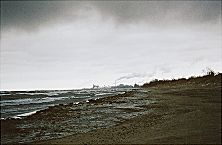
"The rapid growth of the steel industry in the Calumet region after the turn of the century shifted both the makeup and geography of industrial pollution. Steel mills in South Chicago, East Chicago, and Gary anchored a vast industrial complex along the southern Lake Michigan shoreline that also included oil refineries, chemical plants, and over a hundred metal-fabricating factories. The steel mills discharged the largest quantities of waste. Skies glowed red at night from iron oxide particles spewed by open-hearth ovens. Slag from blast furnaces was used to fill swampy land and extend the lakeshore. Coal tars from coke plants and acids from finishing mills coated the Grand Calumet River."
ETA:
Looks like a Chicago firm was selling flasks of Lewisite for use by banks to booby-trap their vaults, too.
"...there’s an obvious contest that’s happening between different sectors of the colonial ruling class in this country. And they would, if they could, lump us into their beef, their struggle." ---- Omali Yeshitela, African People’s Socialist Party
(My posts are not intended as advice or professional assessments of any kind.) Never forget Excalibur.

 Tweet
Tweet






Comment