kiwibird
Editor, Senior Moderator
http://oehha.ca.gov/water/phg/pdf/nit2_c.pdfCalifornia?s current drinking water standard for nitrate is 45 mg nitrate/L (equivalent to 10 mg
nitrate-nitrogen/L) and for nitrite is 1 mg nitrite-nitrogen/L. In addition, there is a joint
nitrate/nitrite standard of 10 mg/L, expressed on a nitrogen basis. These values were adopted by
the DHS in 1994 from U.S. EPA?s MCLs promulgated in 1991.
Moreover, well contamination is aggravated by low groundwater levels (Davisson and Criss 1993), so one can predict that further rapid degradation of drinking-water supplies will accompany the current drought conditions in the western United States. This problem has been most severe in California, where several municipalities in the Central Valley and coastal valleys such as the Salinas have been forced to abandon entire well fields because nitrate levels have risen sharply above the maximum contaminant level (Davisson and Criss 1996).
http://findarticles.com/p/articles/mi_m0CYP/is_10_112/ai_n15688580/
Yucca Valley is very close to Coachella and probably upstream if the water drains into the Salton Sea.http://docs.google.com/gview?a=v&q=...ifornia+nitrates+"drinking+water"&hl=en&gl=nzCharles Springer reported that nitrate concentrations exceeding California Drinking Water Standards (45mg/L) are present in Yucca Valley and have resulted in four major potable water supply wells becoming unusable. Due to the absence of waste water treatment facilities, the community disposes of municipal waste water via septic systems.


<script type="text/javascript" charset="utf-8"> new Slideshow({ id: 'slideshow', width: 734, height: 132, wait_duration: 3, images: [{"id": 4, "image": "/uploads/slide-4.jpg"}, {"id": 2, "image": "/uploads/slide-2.jpg"}, {"id": 3, "image": "/uploads/slide-3.jpg"}, {"id": 1, "image": "/uploads/slide-1.jpg"}, {"id": 5, "image": "/uploads/slide-5.jpg"}, {"id": 6, "image": "/uploads/slide-6.jpg"}] }); </script>
- About Us
- Programs
- Waterkeepers
- Take Action
- Newsroom
- Donate
- <form action="/search" method="get" accept-charset="utf-8"> <input name="query" value="SEARCH" id="search_query" onfocus="if(this.value == 'SEARCH'){ this.value = ''; }" type="text"> </form> Go
In This Section
- Main Page
- Clean, Abundant Water
- Healthy Marine Habitats
- Mapping Initiative
- California Polluted Waters
- California Polluted Beaches
- Fish Barriers
- Nitrates in Groundwater
- Arsenic in Groundwater
- People & Government
Related News
- An international water perspective: Water in crisis
08.18.2009
- Rural well water linked to Parkinson?s; California study implicates farm pesticides
08.05.2009
- California's looming groundwater catastrophe
07.14.2009
- Study: Valley Could Be Sinking Due To Excessive Water Pumping
07.14.2009
- Feds document shrinking San Joaquin Valley aquifer
07.13.2009
- View Archive
Nitrates in Groundwater
Mapping Nitrate Contamination in California?s Groundwater Aquifers
These maps developed by CCKA, using U.S. Geological Survey (USGS) data, provide a picture of nitrate contamination in the aquifers of central California. The wells mapped are domestic, private water supply wells, and the water quality data taken at these wells are intended to provide an indication of the drinking water quality of Californians that rely on private domestic wells for drinking water. Data points are largely clustered in the Central Valley because this is where USGS studies have focused in California.
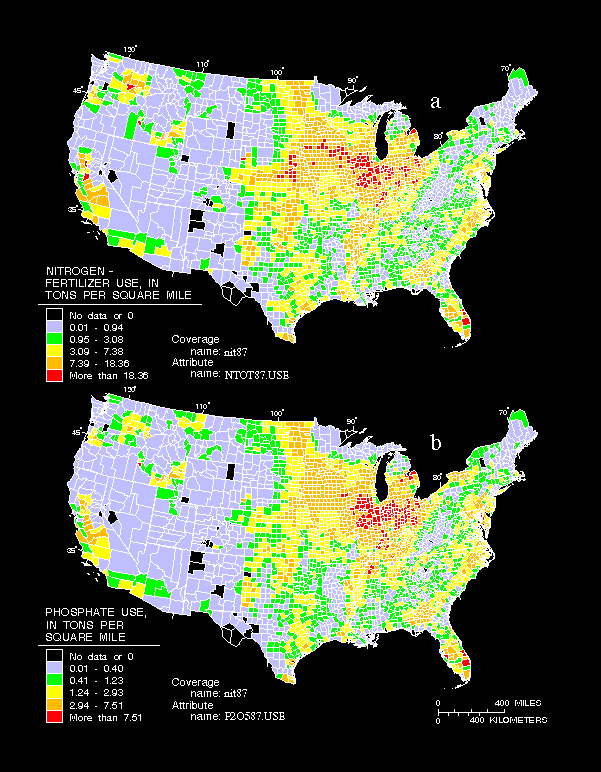
The primary source of nitrate contamination in California is agriculture. Commercial fertilizers and animal wastes release highly soluble nitrates, which then leach through the soil from land application or run off into surface waters and eventually work their way down into groundwater aquifers. The U.S. Environmental Protection Agency?s (EPA) Maximum Contaminant Level (MCL) for nitrates is 10 milligrams per liter (mg/L), though nitrate concentrations far less than that can damage aquatic species. Infants and children are particularly susceptible to illness from nitrate contamination: immature human digestive systems convert nitrate into nitrites, which enters the bloodstream and reduces the ability of blood to carry oxygen. This can lead to the potentially fatal "blue baby syndrome". The maps below show that numerous areas of the state have groundwater concentrations of nitrates above or near the maximum contaminant level, even in areas where residents? primary source of drinking water is groundwater. Visit CCKA?s Groundwater Page to learn more about pollution in California?s aquifers.
Pick a Map to View
Wells and Agricultural Irrigation
Wells and Domestic Groundwater Withdrawals
Wells and Land Cover

California Coastkeeper Alliance
P.O. Box 3156, Fremont, CA 94539

<script type="text/javascript"> var gaJsHost = (("https:" == document.location.protocol) ? "https://ssl." : "http://www."); document.write(unescape("%3Cscript src='" + gaJsHost + "google-analytics.com/ga.js' type='text/javascript'%3E%3C/script%3E")); </script><script src="http://www.google-analytics.com/ga.js" type="text/javascript"></script> <script type="text/javascript"> try { var pageTracker = _gat._getTracker("UA-5307799-1"); pageTracker._trackPageview(); } catch(err) {} </script>