Re: US School Districts Draft First-Of-Their-Kind Ebola Policies
Should colleges and universities isolate or quarantine students and faculty who have recently returned to the US from countries where the Ebola outbreaks are occurring?
CDC is not recommending colleges and universities isolate or quarantine students, faculty, or staff based on travel history alone.
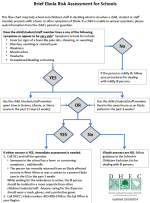
Colleges and universities should identify students, faculty, and staff who have been in countries where Ebola outbreaks are occurring within the past 21 days and should conduct a risk assessment with each identified person to determine his or her level of risk exposure (high- or low-risk exposures, or no known exposure).
All students, faculty, and staff who have been in these countries within the past 21 days should be given instructions for health monitoring (see below).
If the students have had NO symptoms of Ebola for 21 days since leaving a West African country with Ebola outbreaks, they do NOT have Ebola. No further assessment is needed.
If a student, faculty, or staff member has had a high- or low-risk exposure, state or local public health authorities should be notified, and school officials should consult with public health authorities for guidance about how that person should be monitored. Anyone with a potential exposure should receive thorough education about immediately reporting symptoms and staying away from other people if symptoms develop.
In the event that a person who has had a high- or low-risk exposure develops symptoms consistent with Ebola, the person should be medically evaluated while following recommended infection control precautions. Guidance is available in the CDC Ebola Virus Disease Information for Clinicians in U.S. Healthcare Settings. Public health authorities should be notified.
What can colleges and universities do to keep people on campus safe from Ebola?
Ensure that student health center staff are aware of exposure risks, signs and symptoms of Ebola and are prepared to follow recommendations in the CDC Health Advisory: Guidelines for Evaluation of US Patients Suspected of Having Ebola Virus Disease.
Provide Ebola education to all people who have recently arrived from countries where outbreaks are occurring covering the following topics:
Self-monitoring for symptoms
Reporting procedures for those who develop symptoms
Importance of immediately reporting symptoms and staying separated from other people as soon as symptoms develop
Consider posting information in dorms and other campus buildings with recommendations for people who have recently arrived from countries where Ebola outbreaks are occurring.
Infographic: Recently in West Africa?
Additional Ebola Outbreak Infographics
For Students, Faculty, and Staff Who Have Recently Traveled to Countries Where the Ebola Outbreaks Are Happening
What should I do if I have traveled to one of the countries where the Ebola outbreaks are happening?
See CDC?s Interim Guidance for Monitoring and Movement of Persons with Ebola Virus Disease Exposure to learn about your risk level.
Pay attention to your health after you return:
Monitor your health for 21 days.
Take your temperature every morning and evening.
Watch for other Ebola symptoms: severe headache, muscle pain, vomiting, diarrhea, stomach pain, or unexplained bleeding or bruising.
If your temperature is 100.4?F (38?C) or higher or you have any other Ebola signs or symptoms, seek medical care immediately.
Call and tell the doctor about your recent travel and your symptoms before you go to the doctor?s office or hospital. Advance notice will help the doctor care for you and protect other people who may be in the doctor?s office or hospital.
Limit your contact with other people when you travel to the doctor; avoid public transportation.
Do not travel anywhere except to the doctor?s office or hospital.
Limit your contact with other people if you are sick. Do not go to work, classes, or other student activities until you have been medically evaluated.
During the time that you are monitoring your health, if you have no symptoms, you can continue your normal activities, including work and school. If you get symptoms of Ebola, it is important to stay separated from other people and to call your doctor right away.
What should I do if I have traveled to one of the countries where the Ebola outbreaks are happening and have been exposed to Ebola?
If you were exposed to people who had Ebola, or their blood or body fluids, talk with a school administrator or student health center staff even if you do not have symptoms. They will tell you what school-specific instructions you should follow. A doctor should evaluate your exposure level and symptoms if you have them and consult with public health authorities to determine if actions? such as medical evaluation and testing for Ebola, monitoring, or travel restrictions? are needed.
Follow the instructions above for monitoring your health.
What should I do to protect my health if I come in contact with people on campus who have recently returned from a country where the Ebola outbreaks are happening?
Ebola poses little risk to the US general population and is not contagious until symptoms appear. It is spread through direct contact with blood or body fluids (such as urine, saliva, sweat, feces, vomit, and semen) of an infected person, or with objects like needles that have been contaminated with the virus. This includes through intimate contact, such as sex. Once people recover from Ebola, they can no longer spread the virus to people in the community. However, because Ebola can stay in semen after recovery, men should abstain from sex (including oral sex) for three months. If abstinence is not possible, condoms may help prevent the spread of Ebola. Sexual transmission of Ebola has never been reported.
It is always good to avoid contact with anyone who is sick and to wash your hands regularly. Use soap and water if available or use hand sanitizer. Doing so can help you prevent getting sick from many different illnesses.
link:
http://wwwnc.cdc.gov/travel/page/ad...ities-and-students-about-ebola-in-west-africa