• FluTrackers.com Inc. does not provide medical advice. Information on this web site is collected from various internet resources, and the FluTrackers board of directors makes no warranty to the safety, efficacy, correctness or completeness of the information posted on this site by any author or poster. The information collated here is for instructional and/or discussion purposes only and is NOT intended to diagnose or treat any disease, illness, or other medical condition. Every individual reader or poster should seek advice from their personal physician/healthcare practitioner before considering or using any interventions that are discussed on this website. By continuing to access this website you agree to consult your personal physican before using any interventions posted on this website, and you agree to hold harmless FluTrackers.com Inc., the board of directors, the members, and all authors and posters for any effects from use of any medication, supplement, vitamin or other substance, device, intervention, etc. mentioned in posts on this website, or other internet venues referenced in posts on this website.
  • We are not asking for any donations. Do not donate to any entity who says they are raising funds for us.

US School Districts Draft First-Of-Their-Kind Ebola Policies

Amish Country

Well-known member
School Districts Draft First-Of-Their-Kind Ebola Policies

Among the new policies being put into place:
...Superintendents are being the power to close down (schools/districts?) if there is a threat of Ebola.
If there were new students from certain parts of West Africa or even domestic areas of the country that where there was Ebola, that those students actually go to a health clinic and get a clean bill of health before they enter in school.
Setting up a room where students can be isolated if they are showing signs of the disease.
If there is a thereat of contagion don't send kids out on field trips or travel sports events.
If a student is rumored to have Ebola but is not showing any symptoms it is not OK to prevent them from coming to school.


Source:
https://screen.yahoo.com/wall-stree...schools-draft-first-kind-ebola-210203855.html
 
Re: US School Districts Draft First-Of-Their-Kind Ebola Policies

Should colleges and universities isolate or quarantine students and faculty who have recently returned to the US from countries where the Ebola outbreaks are occurring?

CDC is not recommending colleges and universities isolate or quarantine students, faculty, or staff based on travel history alone.

Colleges and universities should identify students, faculty, and staff who have been in countries where Ebola outbreaks are occurring within the past 21 days and should conduct a risk assessment with each identified person to determine his or her level of risk exposure (high- or low-risk exposures, or no known exposure).
All students, faculty, and staff who have been in these countries within the past 21 days should be given instructions for health monitoring (see below).
If the students have had NO symptoms of Ebola for 21 days since leaving a West African country with Ebola outbreaks, they do NOT have Ebola. No further assessment is needed.

If a student, faculty, or staff member has had a high- or low-risk exposure, state or local public health authorities should be notified, and school officials should consult with public health authorities for guidance about how that person should be monitored. Anyone with a potential exposure should receive thorough education about immediately reporting symptoms and staying away from other people if symptoms develop.
In the event that a person who has had a high- or low-risk exposure develops symptoms consistent with Ebola, the person should be medically evaluated while following recommended infection control precautions. Guidance is available in the CDC Ebola Virus Disease Information for Clinicians in U.S. Healthcare Settings. Public health authorities should be notified.


What can colleges and universities do to keep people on campus safe from Ebola?


Ensure that student health center staff are aware of exposure risks, signs and symptoms of Ebola and are prepared to follow recommendations in the CDC Health Advisory: Guidelines for Evaluation of US Patients Suspected of Having Ebola Virus Disease.

Provide Ebola education to all people who have recently arrived from countries where outbreaks are occurring covering the following topics:
Self-monitoring for symptoms
Reporting procedures for those who develop symptoms
Importance of immediately reporting symptoms and staying separated from other people as soon as symptoms develop

Consider posting information in dorms and other campus buildings with recommendations for people who have recently arrived from countries where Ebola outbreaks are occurring.
Infographic: Recently in West Africa?
Additional Ebola Outbreak Infographics


For Students, Faculty, and Staff Who Have Recently Traveled to Countries Where the Ebola Outbreaks Are Happening


What should I do if I have traveled to one of the countries where the Ebola outbreaks are happening?

See CDC?s Interim Guidance for Monitoring and Movement of Persons with Ebola Virus Disease Exposure to learn about your risk level.

Pay attention to your health after you return:

Monitor your health for 21 days.
Take your temperature every morning and evening.
Watch for other Ebola symptoms: severe headache, muscle pain, vomiting, diarrhea, stomach pain, or unexplained bleeding or bruising.
If your temperature is 100.4?F (38?C) or higher or you have any other Ebola signs or symptoms, seek medical care immediately.
Call and tell the doctor about your recent travel and your symptoms before you go to the doctor?s office or hospital. Advance notice will help the doctor care for you and protect other people who may be in the doctor?s office or hospital.
Limit your contact with other people when you travel to the doctor; avoid public transportation.
Do not travel anywhere except to the doctor?s office or hospital.
Limit your contact with other people if you are sick. Do not go to work, classes, or other student activities until you have been medically evaluated.
During the time that you are monitoring your health, if you have no symptoms, you can continue your normal activities, including work and school. If you get symptoms of Ebola, it is important to stay separated from other people and to call your doctor right away.


What should I do if I have traveled to one of the countries where the Ebola outbreaks are happening and have been exposed to Ebola?

If you were exposed to people who had Ebola, or their blood or body fluids, talk with a school administrator or student health center staff even if you do not have symptoms. They will tell you what school-specific instructions you should follow. A doctor should evaluate your exposure level and symptoms if you have them and consult with public health authorities to determine if actions? such as medical evaluation and testing for Ebola, monitoring, or travel restrictions? are needed.
Follow the instructions above for monitoring your health.


What should I do to protect my health if I come in contact with people on campus who have recently returned from a country where the Ebola outbreaks are happening?

Ebola poses little risk to the US general population and is not contagious until symptoms appear. It is spread through direct contact with blood or body fluids (such as urine, saliva, sweat, feces, vomit, and semen) of an infected person, or with objects like needles that have been contaminated with the virus. This includes through intimate contact, such as sex. Once people recover from Ebola, they can no longer spread the virus to people in the community. However, because Ebola can stay in semen after recovery, men should abstain from sex (including oral sex) for three months. If abstinence is not possible, condoms may help prevent the spread of Ebola. Sexual transmission of Ebola has never been reported.
It is always good to avoid contact with anyone who is sick and to wash your hands regularly. Use soap and water if available or use hand sanitizer. Doing so can help you prevent getting sick from many different illnesses.

link:
http://wwwnc.cdc.gov/travel/page/ad...ities-and-students-about-ebola-in-west-africa

 
Re: US School Districts Draft First-Of-Their-Kind Ebola Policies

Fair use

Cut off from school, children in Ebola-stricken Sierra Leone get lessons by radio
Washington Post
By Abby Ohlheiser October 9

Because of the Ebola epidemic, schools are closed in Sierra Leone, a country with about 2 million school-aged children. So as the deadliest Ebola outbreak in history continues to rage, government officials have launched a project to deliver school lessons to those kids over the airwaves.

For six days a week, Sierra Leone's children can listen to four-hour lessons on dozens of the country's radio stations, along with its only television channel, the AFP reported.

It's hardly a perfect solution, but it seems to be the best option for education officials: As the Conference of Principals of Secondary Schools's Sylvester Meheaux told the AFP, schools there probably won't open until early 2015 at the soonest.

A single mother named Fatima Sheriff, living in Freetown, told the AFP she was worried the school closures would hit young, school-aged girls the hardest as "the end of their educational dreams as the choice of the going into prostitution and other vices loom."

The government program, which launched this week, has the support of many education advocates working in the country, including UNICEF.

Uche Ezirim, a Freetown-based education manager for UNICEF, said the lessons were critical for Sierra Leone's children, given that the Ebola epidemic effectively means that "school children cannot come together in a classroom to learn," without fear of catching the deadly virus.

The lessons, Ezirim added, will cover primary, secondary and senior secondary students, as well as a weekly preschool lesson on Fridays.

School-aged children make up a significant portion of Sierra Leone's population of nearly 6 million. By secondary school, however, only about 40 percent of male and 33 percent of female students still attend classes, according to UNICEF's statistics. About 75 percent of primary school-aged kids attend school.

Radio could very well be the best option while schools are closed: A 2007 study found that radio access in Sierra Leone ranges from 65 to 96 percent, with access higher in major cities.

However, that includes both those who own a radio and those who have access to someone else's. The actual ownership rate is about 25 percent across the country, according to the AFP.

UNICEF, Ezirim said, is trying to help the government maximize how many students are actually able to hear these lessons by "using village town criers to reach every house hold where there is a school-aged child to listen to the radio lessons."

The Ministry of Education Science and Technology is encouraging parents to keep their children chore-free during the lesson times.

Link to source:
http://www.washingtonpost.com/news/...a-stricken-sierra-leone-get-lessons-by-radio/
 
Re: US School Districts Draft First-Of-Their-Kind Ebola Policies

Fair use.

Upstate school districts release Ebola response plans

Published 11:30 AM EDT Oct 20, 2014
wyff4.com

GREENVILLE, S.C. —Two Upstate school districts have released their plans to respond to concerns about the Ebola virus.

Greenville County School District released this statement on Friday:

"In an abundance of caution, our district has developed a plan to address concerns about the possible spread in the United States of Ebola, a virus that has created significant world-wide concerns. We have gathered information from the Centers for Disease Control, Department of Health and Environmental Control (DHEC), and other sources, to help make our schools as safe as possible. While no active cases of the Ebola virus have been reported in our state or across our region, it is wise to be proactive in this important matter.

Beginning October 20, parents/guardians of new enrollees to our school district will be asked a series of questions, which are designed to determine whether or not the student has significant risk factors. Any student identified through this screening process will not be enrolled, pending a medical clearance. The intent is to protect our students and employees to the greatest extent possible.

The district will be requesting that parents notify us if their family or child travels to any area known to currently be impacted by the Ebola virus. We have posted a link on our district webpage to provide additional information on Ebola.

In addition to this communication to the media and information posted on our website, parents will be notified directly of the specifics of these procedures via School Messenger, the district’s telephone communications system, on Monday, October 20.

We believe that good communication, factual knowledge about the Ebola virus, and common sense measures will serve us well as we all deal with this health concern. It is a priority of Greenville County Schools to keep our students, employees, and community as safe as possible.

District personnel will be closely monitoring this issue, have been and will continue to be in close communication with DHEC, and will make any adjustments to our procedures as may be necessary."

Spartanburg County School District:

Spartanburg County School Districts 6 officials said it will follow guidelines provided to it by the Department of Health and Environmental Control and the Centers for Disease Control, regarding the Ebola virus. Click HERE to see what they have posted on the district website about Ebola.

Link to source information:
http://www.wyff4.com/news/upstate-school-districts-release-ebola-response-plans/29231620
 
Re: US School Districts Draft First-Of-Their-Kind Ebola Policies

Fair use.
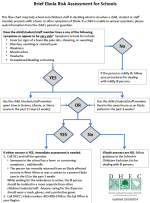
This was copied from the Sparttenburg County School District 6 (South Carolina, US) web site. There is more information at the web site in the form of a flow chart as to how the school plans to evaluate a student's risk as far as Ebola. -AC

Source link:
http://www.spartanburg6.k12.sc.us/news.aspx?article_id=3008


Ebola Virus Disease

What is Ebola?
Ebola virus disease (also known as Ebola Hemorrhagic Fever) is an illness
caused by one of several Ebola Virus strains. Ebola virus disease can be a severe illness with reported mortality rates ranging from 25 to 90 percent depending on the strain.

What are the symptoms of Ebola?
  • Subjective fever or measured temperature
  • Severe headache
  • Muscle pain
  • Weakness
  • Diarrhea
  • Vomiting
  • Abdominal (stomach) pain
  • Unexplained hemorrhage (bleeding or bruising).
The average incubation period is 8 to 10 days, but symptoms may appear anywhere from 2 to 21 days after exposure to Ebola.

How is the Ebola virus spread?
The natural reservoir for Ebola virus is thought to be in wild animals. H
Humans can get the virus by eating raw meat from an infected animal, or
having contact to the blood or fluids of an infected animal. Ebola virus
can also be passed from person to person through direct contact to mucous membranes or broken skin with body fluids (blood, vomitus, stool,
semen, breast milk, saliva, tears, and sweat) of a person who is sick with Ebola. It can also be transmitted by contact with objects or surfaces contaminated with the virus. A person infected with Ebola cannot pass it to others before symptoms appear.

Prevention of Ebola infection:

1. Avoid travel to areas affected by an Ebola outbreak
2. If you travel to an Ebola affected area, make sure to do the following to prevent infection:
  • Practice careful hygiene
  • Wash your hands with soap and water or an alcohol-based hand sanitizer
  • Do not handle items that may have come in contact with blood or body fluids
  • Avoid funeral or burial rituals that require handling remains from Ebola
  • victims
  • Avoid contact with bats and nonhuman primates or their blood, fluids, or raw meat
  • Avoid hospitals where Ebola patients are being treated
3. Travelers returning from Ebola affected area should monitor your health
for 21 days.
  • Call your healthcare provider right away if you or anyone in your travel group gets a fever, headache, vomiting, diarrhea, or joint and muscle aches during this time.
  • Tell them your symptoms and that you traveled to an Ebola affected area , so that you will receive the appropriate level of care right away.
  • Tell your doctor what activities you were involved in and if you had contact with anyone who had Ebola
4. There is no FDA = approved vaccine available for Ebola

Resources:
DHEC 10/16/14
 
Re: US School Districts Draft First-Of-Their-Kind Ebola Policies

Fair use.
This was copied from the Sparttenburg County School District 6 (South Carolina, US) web site. There is more information at the web site in the form of a flow chart as to how the school plans to evaluate a student's risk as far as Ebola.

Source link:
http://www.spartanburg6.k12.sc.us/ne...rticle_id=3008

Ebola Flow Chart.png
 
Re: US School Districts Draft First-Of-Their-Kind Ebola Policies

This attachment touches on the need for protocol, PPE's and resources needed to clean up bodily fluids in a school setting. IMHO anyone who has worked in a preschool or any school should know how to do this correctly for their personal safety and the safety of students, staff, etc. Once I worked in a store, visited by a lot of pregnant women and young children. The store's protocol for bodily fluids was to post a "Wet Floor" sign at the site of the mess and have an employee stand there and direct people away from the site until another employee could come with cleaning supplies and gloves to clean up the mess. In dealing with Ebola perhaps a more in depth elaboration on the proper PPE's, use of these PPE's, and a protocol for dealing with bodily fluids (clean up and, disinfection) could be provided by an appropriate health care professional?

In an educational or preschool setting maybe health care professional could discuss how to properly sanitize commonly touched objects such as toys, sports equipment and door knobs? - AC

Fair use.
From the PDF:

2. Equipping all staff (school bus drivers, school nurses, teachers, paraprofessionals, custodians and office personnel) with gloves and barriers that can be used to prevent exposure to blood
and body fluids.

3. Maintaining puncture-proof needle-disposal boxes in the nurse’s office.

4. Having a strict protocol for cleanups of blood and body fluids.

5. Judicious use of disinfectants and sanitizers to clean up blood and body fluid spills.

Source document:
http://www.aft.org/sites/default/files/wysiwyg/ebola_preparinginschools.pdf
For more information, contact the AFT health, safety and well-being department at Health&Safety@aft.org.
 

Attachments

Re: US School Districts Draft First-Of-Their-Kind Ebola Policies

Emergency Preparedness Planning Considerations* for College Health Centers Regarding Ebola Virus Disease

1. Is your campus emergency response plan up to date so it can be activated if needed to respond to a case of Ebola on campus or in the local community? Is it coordinated with the local public health department on a community response to a case of Ebola?

2. Does your campus have a communications plan and team in place to respond to the communications need if a case were to emerge on campus, in the community, or at another institution? Is the communications plan coordinated with the local community so that your campus would be informed if a case emerges in the community, allowing communication to students and parents?

3. If the public health department orders a quarantine for a high risk exposure, does the campus have a location and plan to provide food and clothing to a quarantined person? Does the campus have a mechanism (qualified contractor) in place to dispose of waste?

4. Is the student health center screening all patients for travel in the past 21 days? Are there plans in place to quickly respond to an ill student with a travel history from an Ebola affected area? What about other emerging pathogens?

5. Is there a mechanism to identify and contact students, faculty, and staff who are returning to campus from an Ebola affected area and refer appropriately to the public health department for monitoring?

6. Who is responsible for monitoring individual and group institutional travelers? Is there a policy and/or mechanism in place to restrict travel based on the CDC travel warning?


* These questions are offered as just some of the planning considerations that should be contemplated as college health professionals increase vigilance regarding the emerging public health challenge of Ebola Virus Disease (EVD). This list is not intended as an exhaustive representation of all planning considerations, nor does it replace or supersede any official guidance from national, state or local public health authorities. Readers are encouraged to remain informed about EVD through the various mechanisms used by the U.S. Centers for Disease Control and Prevention (CDC) as well as other state and local public health agencies.

Source:
ACHA American College Health Association
http://www.acha.org/topics/docs/ACHA_Emergency_Preparedness_Planning_Ebola.pdf

Additional information and links at this site can be found at:
http://www.acha.org/topics/ebola.cfm
There are links regarding Ebola information at this site.
 
Back
Top