• FluTrackers.com Inc. does not provide medical advice. Information on this web site is collected from various internet resources, and the FluTrackers board of directors makes no warranty to the safety, efficacy, correctness or completeness of the information posted on this site by any author or poster. The information collated here is for instructional and/or discussion purposes only and is NOT intended to diagnose or treat any disease, illness, or other medical condition. Every individual reader or poster should seek advice from their personal physician/healthcare practitioner before considering or using any interventions that are discussed on this website. By continuing to access this website you agree to consult your personal physican before using any interventions posted on this website, and you agree to hold harmless FluTrackers.com Inc., the board of directors, the members, and all authors and posters for any effects from use of any medication, supplement, vitamin or other substance, device, intervention, etc. mentioned in posts on this website, or other internet venues referenced in posts on this website.
  • We are not asking for any donations. Do not donate to any entity who says they are raising funds for us.

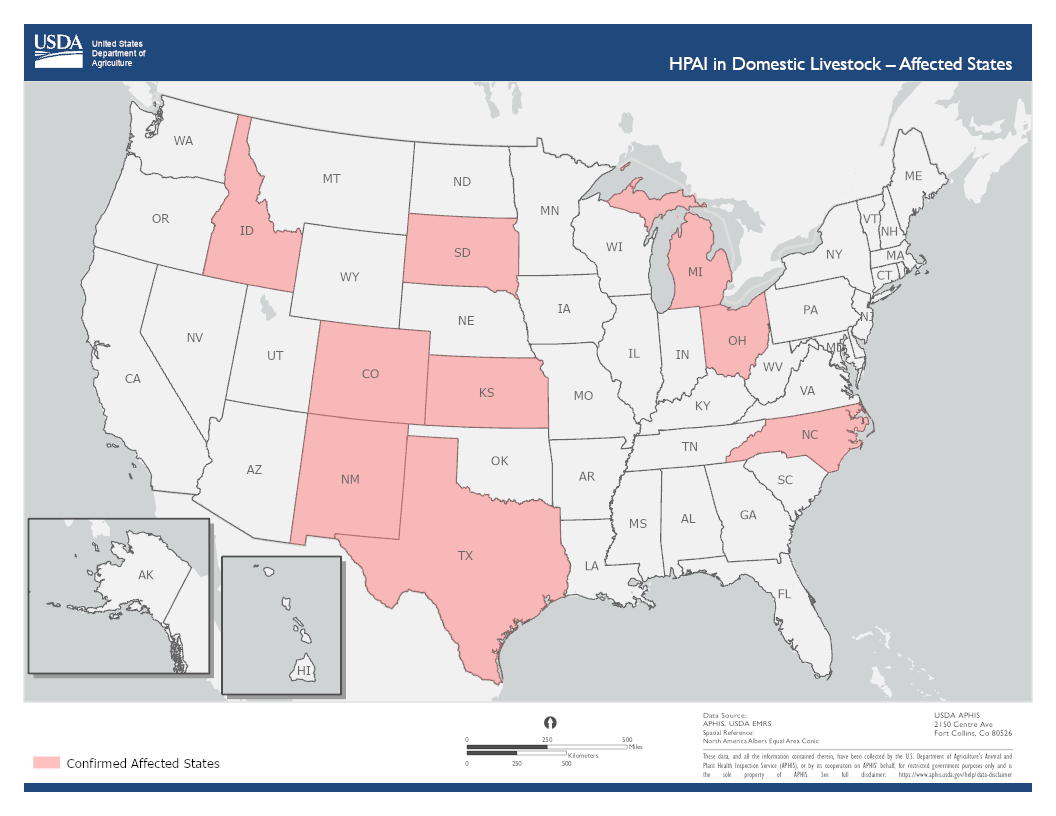
US - Dairy cows test positive for H5N1 avian flu in Texas, Kansas, Idaho, Michigan, New Mexico, Ohio, North Carolina, South Dakota, Colorado, Iowa, Mi

Status
Not open for further replies.
Minnesota

HIGHLY PATHOGENIC AVIAN INFLUENZA (HPAI) AND DAIRY CATTLE
  1. Minnesota Department of Agriculture
  2. Business Dev, Loans, Grants
  3. Animals & Livestock
  4. Avian Influenza
  5. Highly Pathogenic Avian Influenza (HPAI) and Dairy Cattle
Main navigation
On Monday, March 25, 2024, the U.S. Department of Agriculture (USDA), Food and Drug Administration (FDA), and Centers for Disease Control and Prevention (CDC) confirmed the detection of highly pathogenic avian influenza (HPAI) in two dairy herds in Texas and two dairy herds in Kansas that had cattle exhibiting decreased lactation, low appetite, and other symptoms.

USDA has since confirmed the presence of HPAI other states. For the latest on the HPAI detection in dairy cattle, visit the USDA website.

Minnesota animal health officials are monitoring this developing situation and are in contact with industry officials. Farm Biosecurity


Dairy producers are encouraged to consider heightened biosecurity measures such as those described in the Secure Milk Supply Plan.

The Minnesota Board of Animal Health notes some important biosecurity points:
  • Separate all incoming animals for 21-30 days and screen for signs of disease before allowing them into your herd.
  • Milk imported animals last.
  • Use a Line of Separation and specific access points to restrict staff or visitors to certain areas on the farm.
  • Create a clean/dirty line at barn or parlor entries where staff or visitors can change into barn specific footwear or clothing and clean and disinfect (This point is especially important if staff travel between different locations).
  • Report clinical signs or suspected illnesses to your veterinarian immediately.
  • Know where you source your feed and keep rodents and wildlife away from stored feed. Keep feed covered or contained and clean any feed spills immediately.
  • Provide clean water and keep wildlife away from troughs.
Milk & Dairy Product Safety


There continues to be no concern about the safety of the commercial milk supply because products are pasteurized before entering the market. Pasteurization has continually proven to inactivate bacteria and viruses, like influenza, in milk. Pasteurization is required for any milk entering commerce for human consumption.

Also, dairies are required to send only milk from healthy animals into processing for human consumption. Because milk from impacted animals looks abnormal, it is discarded and does not enter the human food supply.

People should not prepare or eat uncooked or undercooked food, such as unpasteurized (raw) milk or raw cheeses, from animals with suspected or confirmed HPAI virus infection. Raw milk or unpasteurized dairy products may contain harmful bacteria or viruses and can cause illness.

The FDA has information on the safety of the milk supply and dairy products. Farm Worker Safety


The CDC considers the human health risk of H5N1 for the general public low. However, people with close or prolonged, unprotected exposures to infected birds or other animals (including livestock), or to an environment contaminated by infected birds or other animals, are at greater risk of infection. The CDC has interim recommendations for prevention, monitoring, and public health investigations of HPAI viruses.​:tiphat: https://www.mda.state.mn.us/busines...genic-avian-influenza-hpai-dairy-cattle​​​​​​
 
image.png - Click image for larger version  Name:	image.png Views:	5 Size:	25.3 KB ID:	988162

Curry County
/https://en.wikipedia.org/wiki/Curry_County,_New_Mexico

------------------------------------------

Avian flu confirmed in NM dairy cows in two Curry County herds
...

BY: DANIELLE PROKOP AND AUSTIN FISHER - APRIL 3, 2024 3:20 AM
...
On Tuesday, the state’s top veterinarian said that cows from two separate herds have been confirmed positive for highly pathogenic avian influenza and another herd has “presumptive positives,” meaning suspected positive cases.

All of the known cases are in Curry County.
...
In a statement, officials said the New Mexico Department of Health is managing the diagnosis, treatment and prevention efforts.
...
“To date, there are no laboratory-confirmed human cases of avian influenza A (H5N1) in New Mexico,” the statement stated.
...
Several other New Mexico dairy herds are undergoing tests after some cows appeared sick, Uhrig said Tuesday. This includes collecting nose swabs, and samples of blood, fecal matter and milk.
...
What caused the outbreak in NM?

There’s no answers yet, Uhrig said, but investigators are looking to water and feed sources that could have been contaminated by migratory birds.

“We suspect that there may have been multiple introductions at different locations from wild birds,” Uhrig said. “We’re not really sure why it is now affecting cattle the way that it is. That’s the big question.”

Uhrig said the method of transmission is still unclear. The transmission may be manually spreading by cows sharing the same feed bucket or touching infected objects.

“We don’t have an indication that it is directly spreading from one cow to another, but that there may be some sort of mechanical transmission that’s a lateral transmission as well,” Uhrig said. “We can’t rule any of those things out.”

She said symptoms are not respiratory.

“In people, that’s what we look at: our nasal swabs, because that’s the route of transmission,” she said. “In cattle, the nasal swabs are not as hot, per se, with the viral load, but the milk does have a pretty heavy viral load.”
...

https://sourcenm.com/2024/04/03/avian-flu-confirmed-in-nm-dairy-cows-in-two-curry-county-herds/
 
Tennessee

.....Although there have been no detections of HPAI in cattle in Tennessee, producers are reminded to practice strong biosecurity. Cattle owners should minimize animal movements and isolate sick cattle. New animals should be quarantined for a minimum of two weeks before introducing them to an established herd.

Cattle impacted by HPAI may exhibit low appetite, flu-like symptoms, and thick and discolored milk accompanied by a sharp reduction in milk production. No cattle have died from infection. Older cows may be more likely to be severely impacted than younger cows. If Tennessee dairy producers believe cattle within their herd are showing clinical signs of HPAI, they should report these signs immediately to their local veterinarian, to the State Veterinarian’s Office at 615-837-5120, or the USDA APHIS at 1-866-536-7593.
​:tiphat: https://3bmedianews.com/state-veter...-cattle-movement-coming-into-tennessee/​​​​​​
 
What we know about H5N1 bird flu in cows — and the risk to humans
By Helen Branswell April 3, 2024

snip

Is that the full extent of the problem?
Some experts believe it’s unlikely — if only because people haven’t been looking for bird flu infections in cattle before now. “It could have been infecting dairy cattle a year ago. We just never thought about looking … for it,” said David Swayne, an avian influenza expert who is now a private consultant after having worked for the U.S. Department of Agriculture for nearly 30 years.

snip

Are dairy cows spreading the virus to other cows?

That’s suspected, but it is uncertain at this point. The infected herd in Michigan had received cows recently from Texas.

more...

​:tiphat:

https://www.statnews.com/2024/04/03/h5n1-bird-flu-in-cows-risk-to-humans/


Last edited by sharon sanders; Today, 12:18 PM. Reason: fixed link, shortened due to copyright​
 
Highly Pathogenic Avian Influenza Detected in Ohio Dairy Herd

April 03, 2024
GettyImages-950280908+%281%29.jpg

A meadow with cows taken from the air with a drone

The Ohio Department of Agriculture (ODA) received confirmation from the United States Department of Agriculture’s (USDA) National Veterinary Services Laboratory (NVSL) of the detection of highly pathogenic avian influenza (HPAI) in a dairy cattle herd. This is the first case of HPAI in a livestock operation in Ohio.

The dairy operation in Wood County received cows on March 8, 2024, from a Texas dairy, which later reported a confirmed detection of HPAI. Ohio’s animal health officials were notified when the livestock began showing clinical signs compatible with sick, lactating dairy cows in other states.

The U.S. Department of Agriculture (USDA), Food and Drug Administration (FDA) and Centers for Disease Control and Prevention (CDC), as well as state veterinary and public health officials, continue to investigate the emerging illness among dairy cows that is causing decreased lactation, low appetite, and other symptoms.

On Monday, March 25, state animal health officials were notified when federal agencies confirmed the detection of HPAI in dairy herds in Texas and Kansas that had cattle exhibiting these symptoms. USDA’s NVSL has since confirmed the presence of HPAI in additional dairy cattle herds in Idaho, New Mexico, and Michigan.

Federal and state agencies continue to conduct additional testing from sick animals and in unpasteurized clinical milk samples from sick animals, as well as viral genome sequencing, to assess whether HPAI or another unrelated illness may be underlying any symptoms. Clinically sick dairy cattle from affected herds range from 1% - 20%, with an average of 10% of the milking herd affected. There are no confirmed reports of death loss in dairy cattle directly attributed to these detections. Most sick cows begin recovering within a few days.

According to the Food and Drug Administration and Centers for Disease and Prevention, there is no concern about the safety of commercially pasteurized dairy products due to both federal animal health requirements and pasteurization and the public health risk associated with HPAI remains low.

ODA is working with state industry partners and federal agencies to encourage farmers and veterinarians to report cattle illnesses quickly, to monitor potential additional cases and minimize the impact and risk to farmers, farmworkers, consumers, and other animals.

Producers are urged work with their veterinarian to practice enhanced biosecurity measures and review and limit cattle movements within production systems to avoid disease spread or bringing in cattle from known disease areas or infected herds. More information on biosecurity measures can be found here.

At this current time, no quarantines or movement restrictions on livestock are being issued by ODA. As officials continue to assess the risks of the emerging disease, and assess epidemiological information, further regulatory control actions may be implemented. If dairy producers in Ohio should see unusual clinical symptoms similar to those described, they are to contact their herd veterinarians.

For more information on the detections of HPAI in cattle, please visit the U.S. Department of Agriculture’s website.


https://agri.ohio.gov/home/news-and...c-avian-influenza-detected-in-ohio-dairy-herd
 
WHO Director-General's opening remarks at the media briefing – 3 April 2024

3 April 2024​

...
Now to the United States, where the US CDC has confirmed one case of H5N1 avian influenza in a person who works at a commercial dairy farm.

The patient did not report any symptoms apart from eye redness, was not hospitalized, and is recovering.

Investigations are continuing into how the person was infected, and WHO is in close contact with the US CDC.

Any case of H5N1 is concerning because it is highly dangerous to humans, although it has never been shown to be easily transmissible between people.

WHO and our partners track influenza viruses globally to monitor the evolution and spread of viruses in both animals and humans.

===

https://www.who.int/news-room/speec...-remarks-at-the-media-briefing---3-april-2024
 
CIDRAP- CDC sequencing of H5N1 avian flu samples from patient yields new clinical clues

https://www.cidrap.umn.edu/avian-in...flu-samples-patient-yields-new-clinical-clues

CDC sequencing of H5N1 avian flu samples from patient yields new clinical clues


Lisa Schnirring


Today at 2:14 p.m.

Avian Influenza (Bird Flu)
The Centers for Disease Control and Prevention (CDC) last night released a detailed analysis of H5N1 avian flu samples taken from a patient in Texas who was exposed to sick cows, which suggests that the infection might involve the eyes but perhaps not the upper respiratory tract.

Also, when CDC scientists compared the human H5N1 samples to viruses from cattle, wild birds, and poultry, they found in the human sample a mutation with known links to host adaptation.

Meanwhile, the US Department of Agriculture (USDA) Animal and Plant Health Inspection Service (APHIS) announced that highly pathogenic avian flu has been confirmed in a cow herd from Idaho and Ohio agriculture officials said tests have confirmed the virus in a dairy herd that had received cows from Texas.

Sequencing shows adaptation change, but not increased transmissibility


The CDC detailed its sequencing findings, along with its observations about what those findings might mean for the clinical picture, in a technical update on its website. Scientists saw minor differences between the human specimens and the cattle samples and that the viruses had avian characteristics.

However, the human samples had one change—PB2 E67K—that has a known link to virus adaptation to mammalian hosts, seen before in people and animals infected with H5N1, as well as other avian flu viruses. Scientists emphasized that the marker hasn't been linked to transmission and that the results of the analysis doesn't change the CDC's assessment for H5N1 clade 2.3.4.4b viruses that the overall risk to human health remains low.

This highlights the value of increased genomic surveillance.

Raj Rajnarayanan, MSc, PhD, a computational biologist with the New York Institute of Technology, on X (formerly known as Twitter) said PB2 E67K alone isn't sufficient to enable efficient human to human transmission. "However, this highlights the value of increased genomic surveillance and rapid dissemination of sequence data ASAP."

Patient swabs didn't show upper respiratory involvement


Also, the CDC detailed what they found during testing of the patient's nasopharyngeal and eye swabs. According to earlier reports, the patient's only symptom was conjunctivitis, a mild symptom seen in some earlier avian flu infections.

Testing on the nasopharyngeal sample didn't yield enough RNA for sequencing, but CDC scientists were able to sequence material from the eye swab sample.

"Notably, the patient reported only conjunctivitis with no respiratory or other symptoms, which likely resulted in lower viral RNA concentrations detected in the nasopharyngeal sample and is suggestive of a lack of respiratory infection in the patient," the CDC said.

Angela Rasmussen, PhD, a virologist with the University of Saskatchewan, on X said that it's good that the patient in Texas didn't become seriously ill, but she said a mild symptom like conjunctivitis may have a down side if mild cases aren't recognized and isolated.

We don’t want to give H5N1 the opportunity to adapt to efficient growth in humans. It can be deadly.

She warned that undetected cases gives the virus more opportunities to adapt to human hosts, underscoring the importance improved surveillance to identify infections in cows and humans and prevent new ones from occurring, along with reducing exposure risk.

"We don’t want to give H5N1 the opportunity to adapt to efficient growth in humans. It can be deadly," Rasmussen said. "To prevent the public health crisis of tomorrow, solve the problem of today."

Promising hints for vaccine and antiviral treatments


CDC scientists also looked at how well the hemagglutinin (HA) gene from the human specimen aligns with two candidate vaccine virus (CVV) strains it had already prepared for vaccine makers to make a vaccine, if needed. It said the HA from the human virus is very closely to the HA of both CVVs, which suggest that the vaccines would likely protect against the virus.

And finally, scientists looked at how well the virus from the human specimen might react to antivirals. The neuraminidase (NA) gene didn't have any resistance markers, which bodes well for the use of neuraminidase inhibitors like oseltamivir. They also examined other gene segments and found no resistance markers to antivirals that target the PA segment (baloxavir) or M2 (amantadine, rimantadine).

Confirmation in Idaho and Ohio herds


In other developments yesterday, APHIS said testing at the USDA's National Veterinary Services Laboratory (NVSL) in Ames, Iowa, has now confirmed a presumptive positive for highly pathogenic avian influenza in the dairy herd from Idaho. Earlier reports said the facility had received cows from another earlier affected state.

Today the Ohio Department of Agriculture announced NVSL has confirmed the virus in a dairy herd in Wood County, the state's first detection. It said the farm, located in the northwestern part of the state, on March 8 had received cows from a Texas far where the virus was later confirmed.

It added that the Ohio cows were tested after showing illness signs similar to those in other affected states.

APHIS also noted confirmation is also pending on more presumptive positive results from Texas, Kansas, and New Mexico.
 
APHIS: Recommendations for (HPAI) H5N1 in Livestock For State Animal Health Officials, Accredited Veterinarians and Producers


AVvXsEiV9zDAP0_DiNsc4rq3ZTKIOGTob8ymVKjzTIkNM503Y1bDT-P2SHHxhICglYzqraLD5pZ1XVYUP2tKdA761Z7grfbKw9GlqYErLk1hdzjIdtPzbQbeldrTsUnasX2BrCv-1IAF1_7MATz2tOuF84Zku00SUD2qxMxUiQ3A8YobivbEVbw8Wya7NQ=w320-h205


Credit USDA


#17,987

It's been just over 10 days since we learned that a widespread illness reported in dairy cattle in northern Texas since January was, in fact, HPAI H5N1 (see USDA Statement on HPAI In Dairy Cattle in Texas & Kansas Herds).

Although experimental infection of cattle with avian flu had been demonstrated in 2008, cattle were thought to be relatively immune to influenza A, and unlikely hosts for H5N1. As a result, it took several weeks before influenza testing was done.​

While investigations are ongoing, there are early, worrisome signs that cow-to-cow transmission of the virus may be occurring, and at least 6 states (Texas, Kansas, New Mexico, Michigan, Idaho & Ohio) have reported cases. Additionally, at least 3 dead cats and birds recovered from affected dairy farms have tested positive for the virus.

While the risk to the public is still considered low, 4 days ago the state of Texas announced the first (mild) human infection in a dairy worker (see Texas DSHS Health Alert: 1st Human Case of H5N1 Influenza In Texas).

AVvXsEgVa3dHQADGpNlESkR06ZuqTYvfpMdtHzmxaGCkLsx-QFVvZdW_lM7gvNYzzj2YoAWlL4lG3_-vXkx7RC0l_2wmmnS3lU8uHMvr-NGOv1ZyiY0OjhbCRR2O5QXmwSdresxeHzjnpoVCJiWOr0d0VqIdVZxe69OFhHYtCfC1WW3ezFRKVdEjm9gDqA=w234-h225

Since then we've seen a flurry of technical documents and guidance issued by the USDA and the CDC, including: While it isn't clear how much of a risk all of this poses, we are clearly in uncharted territory. We've no idea how long H5N1 has been circulating in cattle, or how widespread it may be. With the report of HPAI infected goats in Minnesota in late March, the possibility of spillover into other livestock - including swine - must be considered.

Testing takes time, and uses (finite) laboratory resources, and right now the emphasis is on testing symptomatic dairy cows . While it would certainly be helpful if we could cast a wider net, the logistics are daunting.
We've neither the time, nor the lab capacity, to test more than a tiny percentage of U.S. livestock. And even if we could, it would only provide a snapshot of a brief point in time. There is also a strong possibility that HPAI H5 has quietly made inroads into cattle or pigs in other countries around the globe.

While we will certainly learn more over time, the emphasis right now is on limiting the damage, even if we can't see the full extent of the threat. And that means increasing farm biosecurity, minimizing the movement of cattle, improving the safety of farm workers (PPEs, vaccines, etc.), and increased surveillance of both livestock and farm workers.

While far from ideal, it may be our only option at this time. To that end, APHIS (the Animal and Plant Health Inspection Service of the USDA) published a 4-page set of guidance this week for State Health Officials, Veterinarians, and Producers.​

I've reproduced the first page below, follow the link to read it in its entirety. I'll have a postscript after you return.


There is much debate over just how big of a deal all of this is. With the dearth of information at present, it is fair to say no one really knows. The jump to cattle - and apparent cow-to-cow transmission - is a clear escalation of the threat, but it isn't necessarily a prelude to a pandemic.

Yes, it does provide the virus with more opportunities to adapt to mammalian species, and a better chance of spilling back into humans than - say - from infected sea lions or skunks in the wild.​

But it isn't nearly as alarming as finding it spreading in pigs (or mink), which already carry a wide array of influenza A viruses and offer much better potential for reassortment.


That, of course, could still happen. Hopefully, increased testing of swine is in the works, particularly for exhibition pigs (see EID Journal: Shortening Duration of Swine Exhibitions to Reduce Risk for Zoonotic Transmission of Influenza A Virus), which have sparked small outbreaks of swine variant virus infections in the past.

While some of the `worst-case scenarios' being bandied about online, or in the tabloids, are probably overblown (see Revisiting the H5N1 CFR (Case Fatality Rate) Debate), anything over a 1% fatality rate would be devastating.​

Whether it is caused by HPAI H5, or some other novel subtype (e.g. H5N6, H3N8, H9N2, etc.) - another influenza pandemic is inevitable. And if it turns out to be severe, we'd better be bettered prepared to deal with it than we were with COVID.

https://afludiary.blogspot.com/2024/04/aphis-recommendations-for-hpai-h5n1-in.html

 
Highly Pathogenic Avian Influenza (HPAI) Detections in Livestock

Last Modified: April 04, 2024​
...
Confirmed Cases of HPAI in Domestic Livestock


*Data updated weekdays by 4 pm ET.
hpai-livestock-map.png
​State Species Date confirmed by NVSL

Texas Dairy Milking Cattle 3/25/2024
Kansas Dairy Milking Cattle 3/26/2024
Texas Dairy Milking Cattle 3/26/2024
Texas Dairy Milking Cattle 3/27/2024
Michigan Dairy Milking Cattle 3/29/2024
Texas Dairy Milking Cattle 3/30/2024
New Mexico Dairy Milking Cattle 4/1/2024
Kansas Dairy Milking Cattle 4/1/2024
Idaho Dairy Milking Cattle 4/1/2024
New Mexico Dairy Milking Cattle 4/1/2024
Ohio Dairy Milking Cattle 4/2/2024

...
https://www.aphis.usda.gov/livestock-poultry-disease/avian/avian-influenza/hpai-detections/livestock
 
CDC to doctors: Look out for bird flu infections among dairy farm workers

By Helen Branswell
CYNTHIA GOLDSMITH/CDC The Centers for Disease Control and Prevention urged medical practitioners on Friday to be on the lookout for people who might have contracted H5N1 bird flu from cows. The agency also urged state health departments to rapidly assess any suspected human cases, and recommended that dairy farms with confirmed or suspected outbreaks require workers to use personal protective equipment.

The recommendations were outlined in a health alert network advisory, or HAN in CDC parlance. The advisory is in response to the outbreak of H5N1 avian influenza in at least 16 dairy herds in six states across the country, which has led to at least one human infection so far.​….
:tiphat:
Statnews.com
 
United States of America - Influenza A viruses of high pathogenicity (Inf. with) (non-poultry including wild birds) (2017-) - Follow up report 45


GENERAL INFORMATION

COUNTRY/TERRITORY OR ZONE
ZONE

ANIMAL TYPE
TERRESTRIAL

DISEASE CATEGORY
Listed disease

EVENT ID
4451

DISEASE
Influenza A viruses of high pathogenicity (Inf. with) (non-poultry including wild birds) (2017-)

CAUSAL AGENT
Highly pathogenic avian influenza virus

GENOTYPE / SEROTYPE / SUBTYPE
H5N1

START DATE
2022/03/30

REASON FOR NOTIFICATION
Unusual host species

DATE OF LAST OCCURRENCE- CONFIRMATION DATE
2022/05/05

EVENT STATUS
On-going

END DATE- SELF-DECLARATION

NO REPORT INFORMATION

REPORT NUMBER
Follow-up report 45

REPORT ID
FUR_166720

REPORT REFERENCE- REPORT DATE
2024/04/05

REPORT STATUS
Validated

NO EVOLUTION REPORT

EPIDEMIOLOGY

SOURCE OF EVENT OR ORIGIN OF INFECTION
  • Contact with wild species
  • Unknown or inconclusive
EPIDEMIOLOGICAL COMMENTS
Highly pathogenic avian influenza (HPAI) H5N1 Eurasian lineage goose/Guangdong clade 2.3.4.4b has been confirmed in samples from sick cattle collected from dairy farms in Idaho (ID), Kansas (KS), Michigan (MI), New Mexico (NM) and Texas (TX). Updates to the detections of highly pathogenic avian influenza (HPAI) in livestock can be found at: https://www.aphis.usda.gov/livestock-poultry-disease/avian/avian-influenza/hpai-detections/livestock

QUANTITATIVE DATA SUMMARY

MEASURING UNIT
Animal

SpeciesSusceptibleCasesDeathsKilled and Disposed ofSlaughtered/ Killed for commercial useVaccinated Coyote (WILD)NEW------TOTAL-1-1-- Cats (DOMESTIC)NEW------TOTAL-714-- Virginia Opossum (WILD)NEW------TOTAL-431-- Domestic cat (WILD)NEW------TOTAL-611-- Goats (DOMESTIC)NEW------TOTAL16555--- Gray Seal (WILD)NEW------TOTAL-11--- Bobcat (WILD)NEW-11---TOTAL-752-- Striped Skunk (WILD)NEW------TOTAL-422714-- Tiger (WILD)NEW------TOTAL-11--- Harbor Seal (WILD)NEW------TOTAL-21192-- Racoon (Northern raccoon) (WILD)NEW------TOTAL-1554-- Puma (WILD)NEW------TOTAL-2222--- Bottlenose dolphin (WILD)NEW------TOTAL-11--- American Black Bear (black bear) (WILD)NEW------TOTAL-413-- Brown bear (Grizzly Bear) (WILD)NEW------TOTAL-431-- Polar Bear (WILD)NEW------TOTAL--1--- Red Fox (WILD)NEW------TOTAL-854819-- Amur Leopard (WILD)NEW------TOTAL-11--- Fisher (WILD)NEW------TOTAL-321-- North American river otter (WILD)NEW------TOTAL-11--- American marten (WILD)NEW------TOTAL-11--- Abert's squirrel (WILD)NEW------TOTAL-1---- Bovine (DOMESTIC)NEW------TOTAL-90000 All speciesNEW-11---TOTAL1652421495300

DIAGNOSTIC DETAILS

CLINICAL SIGNS
YES

METHOD OF DIAGNOSTIC
Diagnostic test, Clinical
Real-time reverse transcription polymerase chain reaction (rRT-PCR)National Veterinary Services Laboratories (NVSL), Ames, IowaBobcat,Domestic cat,Racoon (Northern raccoon),American Black Bear (black bear),Cats,Gray Seal,Brown bear (Grizzly Bear),Red Fox,Puma,Tiger,Fisher,Bottlenose dolphin,Harbor Seal,American marten,Bovine,Coyote,Striped Skunk,Amur Leopard,Virginia Opossum,Polar Bear,North American river otter,Abert's squirrel,Goats1882022/05/052024/04/02Positive
https://wahis.woah.org/#/in-review/4451
 
Excerpts from the WOAH report posted by Lance (above):

NEW OUTBREAKS

Kansas
Kearny County
Farm
A commercial dairy premises. Clinical signs in lactating cattle included a drop in milk production.
-----------
Kansas
Gray County

Farm
A commercial dairy premises. Clinical signs in lactating cattle included a drop in milk production.
------------
New Mexico
Curry County

Farm
A commercial dairy premises. Clinical signs in lactating cattle included acute decrease in production.
--------------
Texas
Moore County

Farm
A commercial dairy premises. Clinical signs in lactating cattle included decreased milk production, constipation and mastitis.
------------------
Texas
Lamb County

Farm
A commercial dairy premises. Clinical signs in lactating cattle included acute decrease in milk production.
-------------------
Texas
Hale County

Farm
A commercial dairy premises. Clinical signs in lactating cattle included off feed, decreased milk production, anorexia, tacky manure, thickened yellow-milk and fever. H5N1 was detected in one feral barn cat on the premises.
------------------
Texas
Dallam County

Farm
A commercial dairy premises. Clinical signs in lactating cattle included decreased rumination, tacky manure, creamy/thick milk. Pneumonia noted in some cows. HPAI H5N1 was detected in barn cats on the premises.
-------------------------
Texas
Dallam County

Farm
A commercial dairy premises. Clinical signs in lactating cattle included a drop in milk production.
---------------------------
Idaho
Cassia County

Farm
A commercial dairy premises. Clinical signs in lactating cattle included decreased feed intake with decreased milk production.
-------------------------
Michigan
Montcalm County

Farm
A commercial dairy premises. Clinical signs in lactating cattle included production drop, fever and thick yellow milk.
-----------------------------
Texas
Castro County

Farm
A commercial dairy premises. Clinical signs in lactating cattle included decreased milk production and increased somatic cell counts.
----------------------

Washington
King County

Wild bobcat (Lynx rufus).
Cases 1
Deaths 1
 
The New Mexico Livestock Board is monitoring the import status of states:

...
The states listed below have special import requirements, or imports of cattle are not allowed at all. Click on the state below for more information regarding that state.

Alabama

Cattle from a premises that has had animals confirmed positive for the Bovine Associated Influenza A (H5N1) Syndrome are, until further notice, restricted from importation into Alabama without written permission from the State Veterinarian.

California

All dairy breed cattle originating from any state(s) where Bovine Associated Influenza A (H5N1) Syndrome** has, or have been diagnosed, must be accompanied by a Certificate of Veterinary Inspection(CVI) and signed by an accredited veterinarian within seven (7) days of transport that includes the following statement: "All animals identified on this Certificate of Veterinary Inspection (CVI) have been inspected and do not originate from a premises with a confirmed detection of Bovine Associated Influenza A (H5N1) Syndrome** or that is currently under investigation as a suspect premises." ** Signs of Bovine Associated Influenza A (H5N1) Syndrome in cattle include: • Drop in milk production • Loss of appetite • Changes in manure consistency • Thickened or colostrum-like milk • Low-grade fever

Idaho

Idaho State Department of Agriculture will prohibit importation of all cattle into Idaho, not destined directly to an approved slaughter facility, from all locations originating from the State of New Mexico.

Nebraska

NDA is issuing an importation order effective immediately. The importation order will require all breeding female dairy cattle entering the state of Nebraska to obtain a permit issued by NDA prior to entry. To obtain a permit, producers will need to contact the NDA at 402-471-2351. The new importation order will be in place for 30 days (until April 30, 2024) and will be re-evaluated at that time. More information is available on NDA’s website at www.nda.nebraska.gov/animal/imports.

Tennessee

No dairy cattle exhibiting clinical signs and testing positive for HPAI shall be allowed to move into Tennessee. All adult dairy cattle entering Tennessee from states affected by HPAI in dairy cattle shall require permitting by the Tennessee Department of Agriculture and may be required to complete pre-movement testing as determined by the State Veterinarian. Failure to abide by these import requirements shall result in a whole premises quarantine on imported animals for 21 days and negative PCR testing for HPAI before release from quarantine.

Arizona

A Certificate of Veterinary Inspection (CVI) being used to ship dairy cattle from any state(s) that has, or have had, a detection of Highly Pathogenic Avian Influenza (HPAI) Virus in dairy cattle in the past 30 days is valid for not more than 10 days. All CVIs for dairy cattle from a state(s) that has, or have had, a detection of HPAI in dairy cattle in the past 30 days shall be accompanied by a CVI containing the following supplemental statement by the Accredited Veterinarian: "All animals identified on this Certificate of Veterinary Inspection (CVI) have been inspected and do not originate from a premises with a confirmed detection of HPAI or that is currently under investigation as a suspect premises."

Delaware

No dairy cattle from an affected herd exhibiting symptoms consistent with HPAI infection shall be allowed to move into Delaware until further notice. If any cattle from an affected premises exhibit these signs, all cattle on that premises shall be restricted. Dairy cattle outside the Delmarva Peninsula require a signed health certificate within 48 hours of entry. Upon arrival, all dairy cattle will be quarantined for 30 days.

Kentucky

All Dairy cattle originating from states with affected herds exhibiting symptoms consistent with HPAI shall require a Kentucky Department of Agriculture, Office of State Veterinarian issued permit prior to movement into the Commonwealth of Kentucky, until further notice. Please contact the KDA at (502) 573-0282 via phone or StateVet@ky.gov for permit instructions that will accompany your CVI. Dairy cattle moved into the Commonwealth shall be quarantined via physical segregation for 28 days starting from the time of unloading at the premises of destination. Please contact the KDA for quarantine release instructions.

North Carolina

No cattle from an affected herd experiencing low appetite, decreased lactation, thickened or colostrum-like milk, or other variable clinic signs that have been associated with signs of cattle that have tested positive for highly pathogenic avian influenza shall be allowed to move into North Carolina until further notice.

Utah

To protect the health of Utah dairy herds, for the next 30 days, Certificates of Veterinary Inspection issued for lactating dairy cattle from states affected with the emerging cattle disease that started in Texas must be issued within seven days of transport and must include a statement that there have been no signs of the emerging cattle disease in the herd.

Arkansas

No dairy cattle exhibiting clinical signs and testing positive for HPAI will be allowed to move into Arkansas. All dairy cattle entering Arkansas from states affected by HPAI in dairy cattle will require permitting by the Arkansas Department of Agriculture and may be required to complete pre-movement testing as determined by the State Veterinarian. Permits can be obtained at ar.accessgov.com/livestockpoultry/Forms/Page/livestock-poultry/entrypermit/. Failure to abide by these import requirements shall result in a whole premises quarantine on imported animals for 21 days and negative PCR testing for HPAI before release from quarantine.

Hawaii

Due to the recent Highly Pathogenic Avian Influenza (HPIA) detections in livestock in Texas, Kansas, New Mexico, Idaho, Ohio and Michigan, Hawaii is currently not accepting cattle from premises where HPIA has infected cattle. Therefore, effective April 5, 2024, Certificates of Veterinary Inspection (CVI) for cattle must include the statement: "All animals identified on this Certificate of Veterinary Inspection (CVI) have been inspected by me and do not originate from premises with a confirmed detection of HPAI in cattle or premises that is currently under investigation with a suspect herd." Additionally, eligible cattle from unaffected premises in states where HPAI has been detected in cattle, must be inspected within 72 hours of shipment and found to be free of signs of HPIA infection. The additional statement should appear on the CVI for these animals: “I have examined the animals identified on this certificate within 72 hours of shipment and found them to be free of signs of HPAI infection.” Additional import requirements may be instituted on short notice. Contact HDOA.LDC@hawaii.gov with questions or for additional information

Louisiana

A Certificate of Veterinary Inspection (CVI) being used to ship dairy cattle to Louisiana from any state(s) that has, or has had, a detection of Highly Pathogenic Avian Influenza (HP Al) in dairy cattle in the past 30 days is valid for not more than 7 days. All CVls for dairy cattle from a state( s) that has, or has had, a detection of HP AI in dairy cattle in the past 30 days shall be accompanied by a CVI containing the following supplemental statement by the Accredited Veterinarian: "All animals identified on this Certificate of Veterinary Inspection (CVI) have been inspected and do not originate from a premises with a confirmed detection of HP AI or that is currently under investigation as a suspect premises."

Pennsylvania

Dairy cattle from a premises where Influenza A Virus has been confirmed in dairy cattle, or where the premises meets the USDA case definition, may not be imported into the Commonwealth until the premises has been declared free of disease by the respective State Animal Health Official. Testing requirements apply. Please contact Commonwealth of Pennsylvania, Department of Agriculture, Bureau of Animal Health, 2301 North Cameron Street, Harrisburg, PA 17110 or by telephone at 717-772-2852, or email at RA-ahds@pa.gov.

West Virginia

A Certificate of Veterinary Inspection (CVI) for dairy cattle from a state that has been confirmed for a detection of HPAI in dairy cattle in the past 30 days is valid for 10 days from date of issuance and shall contain the following statement by an accredited veterinarian: “All animals identified on this Certificate of Veterinary Inspection have been inspected and do not originate from a premise with a confirmed detection of Bovine Associated Influenza A (H5N1) Syndrome, or that is currently under investigation as a suspect premise.”


If a state is not listed, we are not aware of any change in requirements. Check with that state.
...

https://www.nmlbonline.com/news​
 
AABP Decides to Reference Cattle Disease as Bovine Influenza A Virus (BIAV)

By RHONDA BROOKS April 8, 2024

On Sunday evening, the American Association of Bovine Practitioners (AABP), released a letter to its media partners to update them on how the organization will reference the emerging cattle disease, currently confirmed in dairy herds in six states, moving forward.

"Because this infection in cattle is not the same as highly pathogenic avian influenza (HPAI), after thoughtful consideration and discussion with many experts, the AABP will now refer to this as Bovine Influenza A Virus (BIAV), which more accurately depicts it," wrote Geni Wren, director of marketing and communications for the organization, in an email accompanying the letter.

The letter was developed and signed by AABP executive director, Fred Gingrich, DVM, and president Michael Capel, DVM.

...https://www.bovinevetonline.com/new...ce-cattle-disease-bovine-influenza-virus-biav

 
:tiphat: 9 herds in texas


Highly Pathogenic Avian Influenza (HPAI) Detections in Livestock


Last Modified: April 08, 2024
Print
The U.S. Department of Agriculture, Food and Drug Administration, Centers for Disease Control and Prevention, and State veterinary and public health officials are investigating an illness among dairy cows.


As we learn more about this evolving situation, APHIS will continue to provide confirmatory testing for samples from livestock as well as guidance for producers, veterinarians, and state animal health officials. As the situation changes, we will continue to post updated information at the links below.

Detection of Highly Pathogenic Avian Influenza in Dairy Herds: Frequently Asked Questions
APHIS Recommendations for HPAI H5N1 Virus in Livestock (214.38 KB) Confirmed Cases of HPAI in Domestic Livestock
TexasDairy Milking Cattle4/4/2024
TexasDairy Milking Cattle3/30/2024
TexasDairy Milking Cattle3/27/2024
TexasDairy Milking Cattle3/26/2024
TexasDairy Milking Cattle3/25/2024
OhioDairy Milking Cattle4/2/2024
New MexicoDairy Milking Cattle4/1/2024
MichiganDairy Milking Cattle3/29/2024
KansasDairy Milking Cattle4/1/2024
KansasDairy Milking Cattle3/26/2024
IdahoDairy Milking Cattle4/1/2024
​:tiphat: https://www.aphis.usda.gov/livestock-poultry-disease/avian/avian-influenza/hpai-detections/livestock
 
Related to post #110​

More states added to the list:

​Mississippi

Movement of animals to Mississippi off an affected dairy (not just sick but all animals for affected herd) is prohibited. Rule lasts for 6 months unless renewed.

Oklahoma

Recommend but do not require that dairy cattle have pre-movement HPAI testing prior to exportation and be isolated for 21 days once in Oklahoma.​

Florida

Cattle from premises which are known or suspected to be infected or exposed to Bovine Associated Influenza A Syndrome are prohibited from import into Florida unless moving under permit issued by the Florida State Veterinarian’s Office. FDACS will not be permitting such movements at this time.


https://www.nmlbonline.com/news​​
 
Avian Influenza A(H5N1) - United States of America

9 April 2024

Situation at a Glance

The World Health Organization (WHO) was notified about a laboratory-confirmed case of human infection with an influenza A(H5N1) virus on 1 April 2024 by the United States of America IHR National Focal Point (NFP). The patient developed symptoms on 27 March and had a history of exposure to dairy cattle (cows) presumed to be infected with influenza A (H5N1) virus. This is the first human infection with A(H5N1) acquired from contact with infected cattle and the second confirmed human case of influenza A(H5N1) detected in the country. No additional associated cases of human infection with influenza A(H5N1) have been identified. Since the virus has not acquired mutations that facilitate transmission among humans and based on available information, WHO assesses the public health risk to the general population posed by this virus to be low and for occupationally exposed persons, the risk of infection is considered low-to-moderate.

Description of the Situation


On 1 April 2024, the IHR NFP of the United States of America notified WHO of a laboratory-confirmed human case of avian influenza A(H5N1) detected in the state of Texas.

The case is aged over 18 years. On 27 March, the case developed conjunctivitis, was reported to be while working at a commercial dairy cattle farm and had a history of exposure to dairy cattle (cows) presumed to be infected with influenza A(H5N1) virus (1).

On 28 March, respiratory and conjunctival specimens were collected from the case and tested at the Texas Tech University Bioterrorism Response Laboratory. Reverse transcription-polymerase chain reaction (RT-PCR) analysis indicated that both specimens were presumptive positive for influenza A(H5) virus. The specimens were then sent to the United States Centers for Disease Control and Prevention (US CDC) for further testing. They were received and tested at the US CDC on 30 March and confirmed as high pathogenicity avian influenza (HPAI) A(H5N1) virus clade 2.3.4.4b by RT-PCR and sequencing (1) (2). Genome sequencing of the virus didn’t show new mutations possibly associated with increased transmission to humans.

On 28 March, the patient was advised to isolate and given antiviral treatment (oseltamivir) following US CDC guidance. The patient did not report symptoms other than conjunctivitis, was not hospitalized, and at the time of reporting, was recovering (1).

Household contacts of the patient have not reported illness and have been provided influenza antiviral prophylaxis as per US CDC recommendations. No additional cases of human infection with influenza A(H5N1) associated with this case have been identified (1).

In the United States, since January 2022, detections of HPAI A(H5N1) virus among wild birds have been reported in 50 states or territories. There have been reports of sporadic A-(H5) virus outbreaks among poultry and backyard flocks as well as sporadic detections in mammals and outdoor cats on the dairy facilities as reported by the United States Department of Agriculture (USDA) Animal Plant Health Inspection Service (APHIS).

Influenza A virus infection is exceptionally rare in bovine species (3). This human case had exposure to dairy cattle in Texas, presumed to be infected with HPAI A(H5N1) virus (4)(5). On 25 March, the USDA reported the first detection of HPAI A(H5N1) virus in dairy cattle and unpasteurized milk samples from cattle in Texas and Kansas in four dairy herds. On 29 March, USDA announced confirmation of additional detections in dairy cattle in Michigan dairy cattle that recently received cows from Texas. USDA has also announced additional confirmed detections in dairy cattle in Idaho, New Mexico, and Ohio. To date, USDA has announced confirmed detections on 15 farms across six states: Idaho (n=1), Kansas (n=3), Michigan (n=1), New Mexico (n=2), Ohio (n=1), and Texas (n=7) (5,6,7). USDA is continuing to monitor and test samples collected from other farms where cattle are displaying decreased lactation, low appetite, and other signs (1,5,6,7).

The USDA has publicly posted the genetic sequences of several recently detected HPAI A(H5N1) viruses found in US wild birds, poultry, wild mammals and cattle in Texas (8). The viruses are from clade 2.3.4.4b, which is the most common HPAI A(H5N1) virus circulating among birds worldwide currently. CDC has publicly posted the genome of the virus identified from the patient in Texas and identified only minor changes when compared to the animal viruses (2). Between 9 February 2022 to 29 March 2024, more than 8000 people were actively monitored in the United States following exposure to animals presumed to be infected with HPAI A(H5N1) viruses.

Epidemiology


Animal influenza A viruses normally circulate in animals but can also infect humans. Infections in humans have primarily been acquired through direct contact with infected animals or contaminated environments. Depending on the original host, influenza A viruses can be classified as avian influenza, swine influenza, or other types of animal influenza viruses.

Avian influenza virus infections in humans may cause diseases ranging from mild upper respiratory tract infection to more severe diseases and can be fatal. Conjunctivitis, gastrointestinal symptoms, encephalitis and encephalopathy have also been reported in previous human infections with A (H5N1) viruses. There have also been a few detections of A(H5N1) virus in asymptomatic persons who had exposure to infected birds.


Laboratory tests are required to diagnose human infection with influenza. WHO periodically updates technical guidance protocols for the detection of zoonotic influenza using molecular methods, e.g. RT-PCR. Evidence suggests that some antiviral drugs, notably neuraminidase inhibitors (oseltamivir, zanamivir), can reduce the duration of viral replication and improve prospects of survival in some cases.


Avian influenza A(H5N1) virus belonging to Gs/GD lineage, clade 2.3.4.4b Eurasian-origin infections have been reported in birds in the United States since 2022. In late March 2024, HPAI A(H5N1) was also detected in dairy herds in Texas and Kansas (4,5).

This is the first human infection caused by avian influenza A(H5N1) virus in 2024 in the United States and the second confirmed detection in human in the country. This also appears to be the first human infection with A(H5N1) acquired from contact with an infected mammal although human infections with other influenza subtypes have been acquired from mammals. The first detection of influenza A(H5N1) in human in the United States was identified in April 2022, in a person involved in culling birds at a commercial poultry facility in Colorado (9).

In the past, small clusters of A(H5) virus infections were reported, including some involving health care workers, where limited human-to-human transmission could not be excluded; however, sustained human-to-human transmission has not been detected. In this event, the case had direct contact with cows presumed to be infected with A(H5N1) viruses and no further human cases have been detected associated with this event.

Public Health Response


Local and national health authorities implemented the following public health measures (1,10):
  • Public health officials are conducting surveillance activities in Texas in response to this detection.
  • US CDC is working with state health departments to monitor workers who may have been in contact with infected or potentially infected birds/animals and test those people who develop symptoms.
  • US CDC has issued recommendations for the public regarding avoiding unprotected contact with sick or dead animals, including wild birds, poultry, other domestic fowl, and other wild or domestic animals, as well as animal droppings, litter, or materials contaminated by birds or other animals with suspected or confirmed HPAI A (H5N1) virus infection.
  • US CDC has issues recommendations to avoid consumption of raw or undercooked food or related uncooked food products, such as unpasteurized (raw) milk or raw cheese, from animals with suspected or confirmed infection with HPAI A(H5N1) virus.
The United States has a robust surveillance system that is designed to mitigate the spread of animal diseases, thereby protecting public health, and maintaining a safe food supply for domestic and international markets. The U.S. surveillance system includes a national network of border protection personnel at ports of entry (1).


WHO Risk Assessment


This human case was reportedly exposed to dairy cattle in Texas, where HPAI A (H5N1) has recently been confirmed in dairy herds.

From 2003 to 1 April 2024, a total of 889 cases and 463 deaths (CFR 52%) caused by influenza A(H5N1) virus have been reported worldwide from 23 countries. The most recently reported case in humans prior to the current case, was in March 2024 in Viet Nam (11). The human case in Texas is the fourth reported in the region of the Americas, the most recent prior case having been reported in Chile in March 2023 (12).

Whenever avian influenza viruses are circulating in birds, there is a risk for sporadic infections in mammals and humans due to exposure to infected animals (including livestock), or contaminated environments and thus, further human cases are not unexpected. Influenza A infection has been rarely reported in bovine species and spread among dairy cattle herds in four U.S. States is being assessed. Previously, there have been human infections with other avian influenza subtypes following exposure to infected mammals.

Since the virus has not acquired mutations that facilitate transmission among humans and based on available information, WHO assesses the public health risk to the general population posed by this virus to be low and for occupationally exposed persons the risk of infection is considered low-to-moderate.

There are no specific vaccines for preventing influenza A(H5N1) virus infection in humans. Candidate vaccines to prevent H5 infection in humans have been developed for pandemic preparedness purposes. Close analysis of the epidemiological situation, further characterization of the most recent viruses (from human cases and animal) and comprehensive investigations around human cases are critical to assess associated risk and to adjust risk management measures in a timely manner.

If needed, the risk assessment will be reviewed should further epidemiological or virological information become available.

WHO Advice


This case does not change the current WHO recommendations on public health measures and surveillance of influenza. Establishing and monitoring the extent of influenza A(H5N1) virus in dairy herds in the affected localities of the country should inform changes in the ongoing risk assessment.

Due to the constantly evolving nature of influenza viruses, WHO continues to stress the importance of global surveillance to detect and monitor virological, epidemiological and clinical changes associated with emerging or circulating influenza viruses that may affect human (or animal) health and timely virus sharing for risk assessment.

When there has been human exposure to a known outbreak of an influenza A virus in or when there has been an identified human case of infection with such a virus, enhanced surveillance in potentially exposed human populations becomes necessary. Enhanced surveillance should consider the health care seeking behaviour of the population, and could include a range of active and passive health care and/or community-based approaches, including: enhanced surveillance in local influenza-like illness (ILI)/severe acute respiratory infection (SARI) systems, active screening in hospitals and of groups that may be at higher occupational risk of exposure, and inclusion of other sources such as traditional healers, private practitioners and private diagnostic laboratories.

In the case of a confirmed or suspected human infection caused by a novel influenza A virus with pandemic potential, including avian influenza virus, a thorough epidemiologic investigation (even while awaiting the confirmatory laboratory results) of history of exposure to animals, of travel, and contact tracing should be conducted. The epidemiologic investigation should include early identification of unusual events that could signal person-to-person transmission of the novel virus and clinical samples collected from the time and place that the case occurred should be tested and sent to a WHO Collaboration Center for further characterization.

Travelers to countries with known outbreaks of animal influenza should avoid farms, contact with animals in live animal markets, entering areas where animals may be slaughtered, or contact with any surfaces that appear to be contaminated with animal feces. Travelers should also wash their hands often with soap and water. Travelers should follow good food safety and good food hygiene practices. Should infected individuals from affected areas travel internationally, their infection may be detected in another country during travel or after arrival. If this were to occur, further community-level spread is considered unlikely as this virus has not acquired the ability to transmit easily among humans.

All human infections caused by a novel influenza A virus subtype are notifiable under the International Health Regulations (IHR) and State Parties to the IHR (2005) are required to immediately notify WHO of any laboratory-confirmed case of a recent human infection caused by an influenza A virus with the potential to cause a pandemic. Evidence of illness is not required for this report.

WHO does not advise special traveler screening at points of entry or restrictions regarding the current situation of influenza viruses at the human-animal interface.​

...

https://www.who.int/emergencies/disease-outbreak-news/item/2024-DON512

 
Status
Not open for further replies.
Back
Top