• FluTrackers.com Inc. does not provide medical advice. Information on this web site is collected from various internet resources, and the FluTrackers board of directors makes no warranty to the safety, efficacy, correctness or completeness of the information posted on this site by any author or poster. The information collated here is for instructional and/or discussion purposes only and is NOT intended to diagnose or treat any disease, illness, or other medical condition. Every individual reader or poster should seek advice from their personal physician/healthcare practitioner before considering or using any interventions that are discussed on this website. By continuing to access this website you agree to consult your personal physican before using any interventions posted on this website, and you agree to hold harmless FluTrackers.com Inc., the board of directors, the members, and all authors and posters for any effects from use of any medication, supplement, vitamin or other substance, device, intervention, etc. mentioned in posts on this website, or other internet venues referenced in posts on this website.
  • We are not asking for any donations. Do not donate to any entity who says they are raising funds for us.

Sante Publique France - Acute respiratory infections (influenza, bronchiolitis, COVID-19). Bulletin of April 15, 2026

Pathfinder

Editor, Senior Moderator
Translation Google
Acute respiratory infections (influenza, bronchiolitis, COVID-19). Bulletin of November 5, 2025.


Published on November 5, 2025.
Updated on November 5, 2025.

Print Share

Key points

Acute respiratory infections (ARI)
  • Activity is increasing among children under 5 and is generally stable in other age groups.
Flu
  • All indicators are at their baseline level in all regions except for Mayotte, which entered the pre-epidemic phase in week 44.
Bronchiolitis
  • Syndromic indicators are increasing in the city and in hospitals at a baseline level in most regions. Epidemic phase in Île-de-France.
COVID-19
  • Syndromic activity is decreasing in the city and is generally stable in the hospital. The indicator continues to decline in wastewater.

PDF 4.9 MB


https://www.santepubliquefrance.fr/...iolite-covid-19-.-bulletin-du-5-novembre-2025
 
Translation Google
Acute respiratory infections (influenza, bronchiolitis, COVID-19). Bulletin of November 13, 2025.


Published on November 13, 2025
Updated on November 13, 2025

Print Share

Key points

Acute respiratory infections (ARI)
  • Activity is generally stable in those under 15 years of age and decreasing in adults.
Flu
  • All indicators are at their baseline level in all regions except Mayotte, which has been in the pre-epidemic phase since week 44.
Bronchiolitis
  • Syndromic indicators are stable in the community and decreasing in hospitals; this may be temporary following the school holidays. Indicators are at their baseline level in most regions. Epidemic phase in Île-de-France.
COVID-19
  • Syndromic and virological activity is decreasing in the city and in hospitals. The indicator in wastewater is continuing to decline.
PDF 2.93 MB

https://www.santepubliquefrance.fr/...olite-covid-19-.-bulletin-du-13-novembre-2025
 
Translation Google
Acute respiratory infections (influenza, bronchiolitis, COVID-19). Bulletin of November 19, 2025.


Published on November 19, 2025.
Updated on November 19, 2025.

Print Share

Key points

Acute respiratory infections (ARI)
  • Activity is generally stable across all age groups, but increasing among those under 15.
Flu
  • All indicators are still at their baseline level in all regions except for Mayotte, which has been in the pre-epidemic phase since week 44.
Bronchiolitis
  • Syndromic indicators are increasing. Epidemic phase in Île-de-France and Normandy. Pre-epidemic phase in Auvergne-Rhône-Alpes, Brittany, Hauts-de-France and Pays de la Loire.
COVID-19
  • Syndromic and virological activity is generally decreasing in the city and in hospitals. The indicator continues to decrease in wastewater.


PDF 4.48 MB


https://www.santepubliquefrance.fr/...olite-covid-19-.-bulletin-du-19-novembre-2025
 
Translation Google
Acute respiratory infections (influenza, bronchiolitis, COVID-19). Bulletin of November 26, 2025.


Published on November 26, 2025.
Updated on November 26, 2025.

Print Share

Key points

Acute respiratory infections (ARI)
  • Activity is clearly increasing in children and is generally stable in adults.
Flu
  • Increase in flu indicators with the transition of the Île-de-France, Normandy and Nouvelle-Aquitaine regions to pre-epidemic, and of Mayotte to epidemic.
Bronchiolitis
  • Syndromic indicators are increasing. Epidemic phase in Île-de-France, Normandy, Brittany and Pays de la Loire. Six metropolitan regions are in the pre-epidemic phase.
COVID-19
  • All indicators are decreasing and at low levels.

PDF 4.86 MB

https://www.santepubliquefrance.fr/...olite-covid-19-.-bulletin-du-26-novembre-2025

 
Translation Google
Acute respiratory infections (influenza, bronchiolitis, COVID-19). Bulletin of December 3, 2025.


Published on December 3, 2025.
Updated on December 3, 2025.

Print Share

Key points

Acute respiratory infections (ARI)
  • Activity is increasing significantly across all age groups.
Flu
  • A sharp increase in flu indicators across all age groups. Île-de-France, Normandy, and Nouvelle-Aquitaine have entered epidemic status. All other mainland regions are in the pre-epidemic stage, except for Corsica. Mayotte has been experiencing an epidemic since week 47.
Bronchiolitis
  • Syndromic indicators are increasing. Twelve regions in metropolitan France are experiencing an epidemic. A pre-epidemic phase is underway in Guadeloupe and Martinique.
COVID-19
  • Syndromic indicators are generally stable and at low levels. There is a slight upward trend, but at a low level, in the indicator monitoring SARS-CoV-2 in wastewater.


PDF 5.06 MB

https://www.santepubliquefrance.fr/...iolite-covid-19-.-bulletin-du-3-decembre-2025
--------------------------------------------------------------------------------

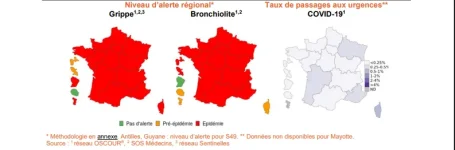
​Excerpt from the PDF link above:
(image translated by Google)


image.png - Click image for larger version  Name:	image.png Views:	1 Size:	223.4 KB ID:	1024818
​..
....
 
Translation Google
Acute respiratory infections (influenza, bronchiolitis, COVID-19). Bulletin of December 10, 2025.


Published on December 10, 2025.
Updated on December 10, 2025.

Print Share

Key points

Acute respiratory infections (ARI)
  • Activity is increasing significantly across all age groups.
Flu
  • Influenza indicators continue to rise across all age groups. All metropolitan regions are experiencing an epidemic except for Corsica, which has moved to a pre-epidemic stage. French Guiana also moved to a pre-epidemic stage in week 48, and Mayotte has been experiencing an epidemic since week 47.
Bronchiolitis
  • The epidemic continues in mainland France. Guadeloupe and Martinique have declared epidemic status. Corsica, Réunion, and Mayotte are in a pre-epidemic phase.
COVID-19
  • Syndromic indicators are generally stable and at low levels. The SARS-CoV-2 monitoring indicator in wastewater is increasing.

PDF 5.45 MB

https://www.santepubliquefrance.fr/...olite-covid-19-.-bulletin-du-10-decembre-2025
 
Translation Google
Acute respiratory infections (influenza, bronchiolitis, COVID-19). Bulletin of December 17, 2025.


Published on December 17, 2025.
Updated on December 17, 2025.

Print Share

Key points

Acute respiratory infections (ARI)
  • Activity is increasing significantly across all age groups.
Flu
  • Indicators continue to rise across all age groups. All metropolitan regions are experiencing an epidemic. An epidemic has been present in French Guiana and Saint-Martin since week 49 and in Mayotte since week 47. Guadeloupe and Martinique moved into the pre-epidemic phase in week 49.
Bronchiolitis
  • The epidemic continues in mainland France. Guadeloupe and Martinique are experiencing an epidemic. Réunion and Mayotte are in a pre-epidemic phase.
COVID-19
  • Overall, indicators are generally stable and at low levels. The indicator for monitoring SARS-CoV-2 in wastewater is increasing.


PDF 3.19 MB


https://www.santepubliquefrance.fr/...olite-covid-19-.-bulletin-du-17-decembre-2025

----------------------------------------------------------------------
​Excerpts from the PDF link above:

Week 50 (December 8-14, 2025). Publication: December 17, 2025
...

image.png

...
Situation Update


In week 50, indicators for acute respiratory infections (ARIs) showed a significant increase
in both community and hospital settings, across all age groups. The proportion of activity for lower respiratory tract infections in the community
and among emergency room visits remained at a low intensity level for all ages combined
and for those aged 15 and over, but reached a moderate intensity level among those under 15 years of age.
ARI activity was still primarily driven by the circulation of influenza viruses.

In week 50, influenza indicators continued to increase in all age groups in
mainland France, where all regions were experiencing an epidemic.
Influenza activity in the community and in hospitals
reached a moderate intensity level among those under 15 years of age and those aged 65 and over, and
remained at a low intensity level among those aged 15-64 and for all ages combined. The proportion of
influenza among deaths reported by electronic certificate increased and was twice as high
as that observed in week 50/2024 (1.8% vs. 0.9%).
Furthermore, the number of episodes of
ARI clusters in long-term care facilities exclusively attributed to influenza increased sharply in week 49 compared
to the previous week (57 vs. 29, unconsolidated data). Type A viruses predominated
very largely, with a higher proportion of the A(H3N2) subtype compared to the A(H1N1)pdm09 subtype
since week 48. Among the influenza viruses sequenced since the end of September, sub-clade
K was predominant for subtype A(H3N2) and sub-clade D.3.1 was predominant for subtype A(H1N1)pdm09.
In the French overseas territories, influenza activity was at its baseline level in Réunion. French Guiana had been experiencing an epidemic since week 49, with active circulation of type A influenza viruses.
Mayotte remained in an epidemic phase since week 47. In the French West Indies, Guadeloupe and Martinique had entered the pre-epidemic phase and Saint-Martin the epidemic phase in week 49, also with circulation of
type A influenza viruses.

The bronchiolitis epidemic continued in mainland France. Syndromic indicators were increasing in the community, at levels close to those observed during the previous season at the same
period. A trend towards stabilization was observed for emergency room visits, but
hospitalizations after these visits were increasing. In mainland France, all regions were
in an epidemic phase except for Corsica, which was in the pre-epidemic phase. In the overseas departments and regions, Guadeloupe and Martinique were in an epidemic phase and Réunion and Mayotte in the pre-epidemic phase. The detection rate of RSV (respiratory syncytial virus) across all age groups was
increasing in nasopharyngeal samples taken by medical biology laboratories in the community and was beginning to decrease in hospitals.

Most COVID-19 indicators in the community and in hospitals were stable and at low levels. The positivity rate for SARS-CoV-2 was decreasing in the community and stable in hospitals.
The indicator for monitoring SARS-CoV-2 in wastewater was increasing sharply for the
third consecutive week. The proportion of electronically certified COVID-19 deaths was
slightly increasing. The number of new acute respiratory infection (ARI) episodes in healthcare facilities was increasing in week 49. The majority of episodes were attributed to influenza.

Given the current intensification of influenza virus circulation throughout the French population and the forecasts for the epidemic's dynamics in mainland France established by the Pasteur Institute and Santé publique France, based on modeling work published on the Santé publique France website, an increase in the use of healthcare services in the community and in hospitals is anticipated in the coming weeks, with a potentially significant impact on the healthcare system.

As the holiday season approaches, the systematic adoption of preventive measures by everyone is essential to slow the spread of respiratory viruses and protect those most at risk of severe illness: handwashing, ventilating rooms, and wearing a mask in crowded places or in the presence of vulnerable individuals if experiencing symptoms (fever, runny nose, or cough).


It is still possible to get vaccinated against both influenza and COVID-19.
...
Hospital setting
...

Influenza


In week 50, the proportion of influenza among hospitalizations after emergency room visits increased sharply and exceeded the moderate intensity threshold for all age groups combined, for those under 15 years old and those 65 years and older, and remained at a low level for those aged 15-64 years.
...
Bronchiolitis

In week 50, among children under 1 year old, bronchiolitis accounted for 20.5% of emergency room visits
and 37.5% of hospitalizations in this age group.

Among the 3,270 children under 1 year old seen in the emergency room for bronchiolitis in week 50, 1,103
(33.7%) were hospitalized.

The proportion of bronchiolitis among hospitalizations after emergency room visits increased in
week 50 at the hospital, but stabilized among emergency room visits. The intensity level of
the proportion of bronchiolitis was at a low level this week.
...
COVID-19

The proportion of hospitalizations after emergency room visits for COVID-19/suspected COVID-19
remained low in all age groups. Among those aged 65 and over, 248 hospitalizations were
recorded, representing 0.7% (vs. 0.6% in week 49), among those aged 15-64, the number of hospitalizations was
40, representing 0.1% (vs. 0.1% in week 49), among those aged 5-14, 2 hospitalizations were recorded, representing 0.1%
(vs. 0.0% in week 49), and among those aged 0-4, 13 hospitalizations were recorded, representing 0.2% (vs. 0.4%
in week 49).

Among hospitalizations in intensive care units after emergency room visits, 5 were for
COVID-19/suspected COVID-19 in week 50, representing 0.2% (vs. 0.2% in week 49). ...
Severe cases in intensive care
...
Mortality
Electronic certification

In week 50, among the 7,400 deaths reported by electronic certificate, 1.8% were reported with a
mention of influenza as a morbid condition that directly caused or contributed to the death (vs.
1.0% in week 49).
COVID-19 was mentioned in 1.0% of deaths (75 deaths vs. 54 deaths, or
0.7% in week 49).

In week 50, the proportion of deaths mentioning influenza among all electronically certified
deaths was twice as high as that observed in week 50/2024 (0.9%).
Among the influenza-related
deaths reported since week 40, 91% involved people aged 65 and over, 8%
involved people aged 15 to 64, and 1% involved children under 15 years of age.
...​​
 
Translation Google
Acute respiratory infections (influenza, bronchiolitis, COVID-19). Bulletin of December 24, 2025.


Published on December 24, 2025.
Updated on December 24, 2025.

Print Share

Key points

Acute respiratory infections (ARI)
  • Activity continues to increase across all age groups.
Flu
  • Influenza indicators continue to rise across all age groups. Activity is moderate in both urban and hospital settings. All French regions are experiencing an epidemic, except for Réunion, which moved into the pre-epidemic phase in week 51.
Bronchiolitis
  • The epidemic continues in mainland France and the French West Indies. There is a slight decrease in syndromic indicators in cities, but an increase in all virological indicators.
COVID-19
  • Syndromic indicators are generally stable and at low levels. The SARS-CoV-2 monitoring indicator in wastewater is stable.


PDF 3.22 MB


https://www.santepubliquefrance.fr/...olite-covid-19-.-bulletin-du-24-decembre-2025

-------------------------------------------------------------------

​Excerpts from the PDF link above:
...
Situation Update

In week 51, acute respiratory infection (ARI) indicators continued to rise sharply in both community and
hospital settings, across all age groups. Activity levels for low-grade ARI were moderate in both community and
emergency departments, across all age groups. ARI activity remained primarily driven by the circulation of
influenza viruses.

In week 51, influenza activity continued to increase throughout mainland France, with all regions
experiencing an epidemic. This increase affected all age groups but was particularly pronounced among children
under 15. In both community and hospital settings, the proportion of activity for influenza/flu-like illness was at
a moderate level across all age groups. The proportion of influenza among deaths reported electronically
and the number of clusters of ARI cases in long-term care facilities attributed exclusively to influenza also
continued to rise Type A viruses were by far the most prevalent, with the proportion of subtype A(H3N2)
exceeding that of subtype A(H1N1)pdm09 since week 49. In the French overseas territories, influenza activity
was again increasing in Reunion, which returned to a pre-epidemic state in week 51. Mayotte remained in an
epidemic state since week 47, French Guiana and Saint Martin since week 49, and Guadeloupe and Martinique entered
an epidemic state in week 50.

The bronchiolitis epidemic continued in mainland France. Syndromic indicators were beginning to decrease in
urban areas, reaching levels close to those observed at the same time last season. A stabilization trend was
observed for emergency department visits, while hospitalizations following visits were declining. In mainland
France, all regions were experiencing an epidemic except for Corsica, which was in the pre-epidemic phase. In the overseas
departments and regions, Guadeloupe and Martinique were experiencing an epidemic, while Reunion and
Mayotte were in the pre-epidemic phase. RSV (respiratory syncytial virus) detection rates across all age
groups were increasing in nasopharyngeal swabs taken in both urban and hospital settings

Syndromic indicators of COVID-19 were stable and at low levels in the community and in the hospital. The positivity rate for
SARS-CoV-2 was decreasing in the community and in the hospital. The SARS-CoV-2 monitoring indicator in wastewater was
stabilizing. The proportion of electronically certified COVID-19 deaths was slightly increasing​.
...
 
Translation Google
Acute respiratory infections (influenza, bronchiolitis, COVID-19). Bulletin dated December 31, 2025.


Published on December 31, 2025.
Updated on December 31, 2025.

Print Share

Key points

Acute respiratory infections
  • Activity continues to increase across all age groups.
Flu
  • Continued increase in influenza indicators across all age groups in the city and in hospitals.
  • Activity at a moderate intensity level in the city and high in the hospital.
  • All French regions experiencing an epidemic, with the exception of Réunion.
Bronchiolitis
  • The epidemic continues in mainland France and the French West Indies.
  • Decrease in syndromic and virological indicators in the city, and stabilization of the RSV virological indicator in the hospital.
COVID-19
  • Syndromic indicators are stable and at low levels. The SARS-CoV-2 monitoring indicator in wastewater is decreasing.


PDF 3.14 MB


https://www.santepubliquefrance.fr/...olite-covid-19-.-bulletin-du-31-decembre-2025
------------------------------------------------------------------------------------------------------
​Excerpts from the PDF link above:

Situation Update

In week 52, acute respiratory infections (ARIs) continued to increase in both community and hospital settings, across all age groups. In the community, the proportion of activity for lower respiratory tract infections remained at a moderate intensity level across all ages and reached a high intensity level among those aged 65 and over. In hospitals, the proportion of activity for lower respiratory tract infections among emergency room visits reached a high intensity level across all ages and a very high level among those under 15 years old. Finally, the proportion of lower respiratory tract infections among hospitalizations after emergency room visits increased to a moderate intensity level in all age groups. ARI activity was still primarily driven by the circulation of influenza viruses.

In week 52, influenza activity continued to increase in all regions, all of which were experiencing an epidemic, with the exception of Réunion. This increase was particularly pronounced in hospitals, where activity reached a high intensity level across all ages, among children under 15 years old, and among those over 65 years old. In the community, the proportion of activity for influenza/influenza-like illness was at a moderate intensity level across all ages, but decreasing among those under 15 years old, probably due to the school holiday period. However, it was at a high intensity level among those aged 65 and over. The proportion of influenza among deaths reported by electronic certificate also increased (4.1% vs. 2.7% in week 51) and was at a level comparable to that observed in week 52/2024 (3.9%). Type A viruses predominated overwhelmingly, with a higher proportion of subtype A(H3N2) compared to subtype A(H1N1)pdm09 since week 49. In the French overseas territories, influenza activity had returned to its baseline level in Réunion. Mayotte remained in an epidemic phase since week 47, French Guiana and Saint Martin since week 49, and Guadeloupe and Martinique since week 50.

The bronchiolitis epidemic continued in mainland France, and Corsica also entered the epidemic phase in week 52. Syndromic indicators stabilized in urban areas, at levels close to those observed during the same period of the previous season. A decrease was observed in emergency room visits, and hospitalizations after emergency room visits remained stable compared to the previous week. In the overseas departments and regions, Guadeloupe and Martinique were in an epidemic phase, and Mayotte and Réunion were in a pre-epidemic phase. Indicators in French Guiana were at a baseline level. The detection rate of RSV (respiratory syncytial virus) across all age groups was decreasing in nasopharyngeal samples taken in urban areas and stable in hospitals.

COVID-19 syndromic indicators remained stable and at low levels in urban areas and hospitals. The positivity rate for SARS-CoV-2 was decreasing in urban areas and stable in hospitals.
The indicator for monitoring SARS-CoV-2 in wastewater was decreasing. The proportion of COVID-19 deaths certified electronically remained stable.

The number of new acute respiratory infection (ARI) episodes in medico-social establishments (MSEs) was stable in week 51. The majority of episodes were attributed to influenza.

As of November 30, 2025, influenza vaccination coverage is estimated at 38.1% among all targeted individuals, 44.2% among those aged 65 and over, and 21.3% among those under 65 at risk of severe influenza. These estimates are higher than those observed on the same date in 2024. The
details of these vaccination coverage rates are available in the "Prevention" section at the end of this bulletin.
Given the very high circulation of influenza viruses throughout the French population
and the forecasts for the dynamics of the epidemic in mainland France established by
the Pasteur Institute and Public Health France, based on modeling work published on the
Public Health France website, a significant strain on healthcare systems in both outpatient and hospital settings cannot
be ruled out in the coming weeks.

In the context of the holiday season, the systematic adoption of preventive measures by everyone
is essential to slow the spread of respiratory viruses and protect those most
at risk of severe forms of illness: hand washing, ventilating rooms, and wearing a mask if
symptoms are present (fever, runny nose, or cough), in crowded places or in the presence of
vulnerable individuals. It is still possible to get vaccinated against the flu, as well as COVID-19.​
 
Translation Google
Acute respiratory infections (influenza, bronchiolitis, COVID-19). Bulletin of January 7, 2026.


Published on January 7, 2026.
Updated on January 7, 2026.

Print Share

Key points

Acute respiratory infections (ARI)
  • Moderate to high activity in those under 65 and very high in those 65 or older, both in the city and in the hospital.
Flu
  • Influenza activity is stable or decreasing in urban areas and emergency departments, but hospitalizations and deaths continue to rise. All French regions are experiencing an epidemic except for Réunion, which is in a pre-epidemic phase.
Bronchiolitis
  • The epidemic continues in 12 regions of mainland France and in the French West Indies. Île-de-France has entered the post-epidemic phase. Most syndromic indicators are decreasing in both urban and hospital settings.
COVID-19
  • Syndromic indicators are stable and at low levels. The SARS-CoV-2 monitoring indicator in wastewater is stabilizing.

PDF 3.23 MB


https://www.santepubliquefrance.fr/...hiolite-covid-19-.-bulletin-du-7-janvier-2026
​--------------------------------------------------------------------------

​Excerpts from the PDF link above:

Situation Update

In week 01, activity for acute respiratory infection (ARI) varied depending on age group. For all ages combined and among those under 65, activity was stable or decreasing and of moderate intensity in the community, and moderate to high in emergency departments. Conversely, among those aged 65 and over, the proportion of activity due to ARI continued to increase and was at a very high intensity level in both the community and hospitals. This activity was still primarily driven by the circulation of influenza viruses.

Similar to ARI activity, influenza activity varied according to age group and type of healthcare setting, still driven by the co-circulation of A(H1N1)pdm09 and A(H3N2) viruses. The proportion of activity due to influenza/influenza-like illness was stable or decreasing and of moderate intensity in the community and emergency departments for all ages combined. However, the proportion of activity due to influenza/influenza-like illness among hospitalizations after emergency department visits continued to increase and was at a high intensity level for all ages combined and among those aged 65 and over. The proportion of influenza among deaths reported via electronic certificate and the number of clusters of ARI cases in nursing homes exclusively attributed to influenza continued to increase in week 01. Overall, these data indicate that a peak in activity was reached in week 51 in the community and in week 52 in emergency departments. Given the continued sustained circulation of influenza viruses throughout the French population and the forecasts of the epidemic's dynamics in mainland France established by the Pasteur Institute and Santé publique France, based on modeling work published on the Santé publique France website, the possibility of a resurgence of the epidemic in January cannot be ruled out at this stage. The syndromic indicators for bronchiolitis decreased in both community and hospital settings across all age groups, reaching levels close to those observed during the same period of the previous season. This decrease in syndromic indicators in hospitals was observed in most age groups, although there was a trend towards stabilization in infants under 6 months compared to the previous week. In mainland France, all regions were experiencing an epidemic except for Île-de-France, which entered the post-epidemic phase. In the overseas departments and regions, Guadeloupe and Martinique were experiencing an epidemic. Mayotte and Réunion remained in the pre-epidemic phase. Indicators in French Guiana were at baseline levels. The detection rate of RSV (respiratory syncytial virus) across all ages increased in nasopharyngeal samples taken in the community and decreased in hospitals.

The syndromic indicators for COVID-19 remained stable and at low levels in both community and hospital settings. The positivity rate for SARS-CoV-2 was stable in both community and hospital settings. The indicator for monitoring SARS-CoV-2 in wastewater stabilized. The proportion of COVID-19 deaths certified electronically remained stable.

The number of new episodes of acute respiratory infection (ARI) in medico-social establishments (EMS) slightly increased in week 51. The majority of episodes were attributed to influenza.

As of November 30, 2025, influenza vaccination coverage is estimated at 38.1% among all targeted individuals, 44.2% among those aged 65 and over, and 21.3% among those under 65 at risk of severe influenza. These estimates are higher than those observed on the same date in 2024. The
details of these vaccination coverage rates are available in the "Prevention" section at the end of the bulletin.

The first estimates of the real-world effectiveness of the influenza vaccine against infection
by an influenza virus, produced by the CNR-VIR using data from the RELAB network, indicate
an effectiveness of 36.5% (95% confidence interval: 30-42.4%) for all ages combined. This is a
moderate level of effectiveness for the influenza vaccine, similar to other preliminary European
estimates and higher than expected, particularly given the significant antigenic divergence of the
K subclade from the A(H3N2) strain included in the vaccine used this winter.
...
Severe cases in intensive care units

Since week 40, 377 cases of influenza, 128 cases of COVID-19, and 76 cases of RSV* infections have
been reported by intensive care units participating in the surveillance (non-exhaustive surveillance). 4 cases
of influenza/COVID-19 co-infections, 3 cases of influenza/RSV co-infections, and 3 cases of
COVID-19/RSV co-infections have also been reported.
...
Among the 377 influenza cases, 57% were 65 years of age or older. The presence of at least one comorbidity
was reported for 89% of the cases. A type A virus was identified in 100% of the cases where the virus
was typed (336/336). Among the 248 cases for which vaccination status was available, 73% were not
vaccinated against influenza. A total of 41 deaths have been reported, including 30 among those aged 65 and over
(data not yet consolidated).

​Among the 128 cases of COVID-19, 67% were 65 years of age or older. The presence of at least one
comorbidity was reported for 88% of cases. Among the 67 cases for which vaccination status was
available, 88% were not vaccinated against COVID-19 in the last 6 months. In total,
27 deaths were reported, 25 of which were in those aged 65 and over (unconsolidated data).

Among the 76 cases of RSV infections in individuals aged 18 and over, 64% were 65 years of age or older. The presence
of at least one comorbidity was reported for 95% of cases. In total, 10 deaths were reported,
all 10 of which were in those aged 65 and over (unconsolidated data).
...
Antigenic and genetic characterization of influenza viruses

Between weeks 38 and 48, a total of 245 A(H1N1) viruses, 67 A(H3N2) viruses, and 3 B(VIC) viruses were
sequenced by the National Reference Center for Respiratory Infections Viruses. The majority sub-clade was sub-clade K (52/67; 77.6%) for the A(H3N2) subtype and sub-clade D.3.1.1 (209/245; 85.3%) for the A(H1N1)pdm09 subtype. The three sequenced B viruses belong to sub-clade C.5.6 of the
Victoria lineage. These sequencing data are preliminary. They will be consolidated and
supplemented by antigenic characterization analyses in the coming weeks.
...
Mortality
Electronic certification


In week 01, among the 8,766 deaths reported by electronic certificate... The proportion of these deaths with mention of influenza increased significantly compared to week 52/2025 (6.3% vs. 4.0%) and was comparable to that observed in week 1/2025 (6%). Among the influenza-related deaths reported since week 40/2025, 92.6% concerned people aged 65 and over, 7.1% people aged 15 to 64, and 0.3% children under 15 years of age.

COVID-19 was mentioned in 1.0% of deaths (vs. 1.0% in week 52).
...​
 
Translation Google

Acute respiratory infections (influenza, bronchiolitis, COVID-19). Bulletin of January 14, 2026.


Published on January 14, 2026
Updated on January 14, 2026

Print Share

Key points

Acute respiratory infections (ARI)
  • Moderate activity in the city and in the hospital across all age groups.
Flu
  • Healthcare utilization is generally stable or decreasing among adults, but is increasing again among children, particularly in primary care. The number of deaths continues to rise. All French regions are experiencing an epidemic except for Réunion, which is in a pre-epidemic phase.
Bronchiolitis
  • Decrease in syndromic indicators in the city and in hospitals. Continued epidemic in 5 regions of mainland France and in the French West Indies. 7 regions have moved to post-epidemic status and one to baseline level.
COVID-19
  • Syndromic indicators are stable and at very low levels. The SARS-CoV-2 monitoring indicator in wastewater is slightly increasing.


PDF 3.17 MB


https://www.santepubliquefrance.fr/...iolite-covid-19-.-bulletin-du-14-janvier-2026

----------------------------------------------------------

​Excerpts from the PDF link above:

Situation Update

During week 2, activity for acute respiratory infection (ARI) remained varied according to
age groups and type of healthcare access. In general practice, ARI activity increased
in all age groups according to data from the Sentinelles/IQVIA network. Conversely,
activity for lower respiratory tract infections decreased across all age groups and among adults, and stabilized in
children under 15 years of age according to SOS Médecins data. In hospitals, the proportion of lower respiratory
tract infection activity among emergency department visits and subsequent hospitalizations was decreasing
in all age groups. ARI syndromic indicators were at a moderate level of intensity
across all age groups in both general practice and hospitals. This activity was still primarily
driven by the circulation of influenza viruses.

After a decrease observed in general practice between weeks 51/2025 and 01/2026,
activity for influenza-like illness began to rise again in week 2 across all age groups. This trend
was particularly marked in children under 15 years of age. In hospitals, the proportion of activity
for influenza/flu-like illness among emergency room visits and subsequent hospitalizations
decreased across all age groups and in adults, stabilized in the 5-14 age group, and
increased again in children under 5. The positivity rate for influenza was stable or
decreasing in both general practice and hospitals across all age groups, while remaining at moderate levels,
indicating continued active circulation of influenza viruses. These were still overwhelmingly type A, with co-circulation of the A(H1N1)pdm09 and A(H3N2) subtypes. The proportion of influenza among deaths reported electronically continued to rise in week 2, reaching the level seen at the peak of the 2024-25 epidemic (7%), and excess all-cause mortality was observed in week 1. Finally, the number of clusters of acute respiratory infections (ARIs) reported in long-term care facilities and attributed exclusively to influenza continued to increase in week 1. This resurgence in influenza virus circulation among children, following the start of the school year in early January, could lead to a surge in healthcare utilization among adults in the coming weeks
​to come. However, it is very difficult to anticipate the impact that such an epidemic resurgence could have
on the healthcare system. In the French overseas territories, all regions were experiencing an epidemic except for La
Réunion, which was again in a pre-epidemic phase since week 1.

As of December 31, 2025, influenza vaccination coverage was estimated at 46.3% among all
targeted individuals, 53.3% among those aged 65 and over, and 27.1% among those under 65 at risk
of severe influenza. These estimates are higher than those observed on the same date in 2024. The
details of this vaccination coverage are available in the "Prevention" section at the end of the bulletin.

The first estimates of the real-world effectiveness of the influenza vaccine against infection
by an influenza virus, produced by the CNR-VIR from RELAB network data, indicate
an effectiveness of 36.5% (95% confidence interval: 30-42.4%) for all ages combined. This is a
moderate level of effectiveness for the influenza vaccine, similar to other preliminary European estimates
and higher than expected, particularly given the strong antigenic divergence of the
K subclade from the A(H3N2) strain included in the vaccine used this winter. With
the application of barrier measures, vaccination remains the most effective way to protect against
complications related to influenza.

Syndromic indicators for bronchiolitis were decreasing in the community and in hospitals for all ages
combined, to levels close to those observed in the previous season at the same time. The
intensity level of bronchiolitis returned to its baseline level in the community and was at the limit of the
baseline level in hospitals. In mainland France, 5 regions remained in an epidemic phase, 7 regions entered the
post-epidemic phase this week, and the Île-de-France region returned to its baseline level. In the overseas departments and
regions, Guadeloupe and Martinique were in an epidemic phase, while Mayotte remained in the
pre-epidemic phase. The indicators in French Guiana were at a baseline level, as were those in Réunion
this week. The detection rate of RSV (respiratory syncytial virus) across all age groups was
increasing in nasopharyngeal samples taken in the community and decreasing in hospital samples,
but remained stable in laboratory samples from the community.

The syndromic indicators for COVID-19 remained stable and at low levels in both community and
hospital settings. The positivity rate for SARS-CoV-2 decreased in laboratory samples
in the city, the situation remained generally stable for both community-based and hospital-based healthcare.
The indicator for monitoring SARS-CoV-2 in wastewater showed a slight increase.
...
 
Translation Google
Acute respiratory infections (influenza, bronchiolitis, COVID-19). Bulletin of January 21, 2026.


Published on January 21, 2026.
Updated on January 21, 2026.

Print Share

Key points

Acute respiratory infections (ARI)
  • Activity is generally low and declining in adults, low to moderate and increasing in children.
Flu
  • Healthcare utilization continues to decline among adults and increase among children, both in outpatient settings and in hospitals. Influenza viruses remain highly contagious. All French regions are experiencing an epidemic except for Mayotte, which has moved into the post-epidemic phase, and Réunion, which has returned to baseline levels.
Bronchiolitis
  • Decrease in syndromic indicators in the city and in hospitals. The epidemic continues in Bourgogne-Franche-Comté and the French West Indies. Four regions have moved into the post-epidemic phase, and three regions in mainland France have returned to baseline levels this week. Mayotte has moved into the epidemic phase.
COVID-19
  • Syndromic indicators are stable and at very low levels. The SARS-CoV-2 monitoring indicator in wastewater is decreasing.

PDF 5.86 MB


https://www.santepubliquefrance.fr/...iolite-covid-19-.-bulletin-du-21-janvier-2026
 
Translation Google
Acute respiratory infections (influenza, bronchiolitis, COVID-19). Bulletin of January 28, 2026.


Published on January 28, 2026.
Updated on January 28, 2026.

Print Share

Key points

Acute respiratory infections (ARI)
  • Low to moderate activity in the city and low in the hospital.
Flu
  • Healthcare utilization is declining across all age groups, both in urban areas and hospitals, but influenza viruses continue to circulate actively. All French regions are experiencing an epidemic except for Mayotte, which is in the post-epidemic phase, and Réunion, which is at baseline levels.
Bronchiolitis
  • Increase in syndromic indicators in the city and in hospitals. Continued epidemic in Mayotte and the French West Indies. Bourgogne-Franche-Comté enters the post-epidemic phase.
COVID-19
  • Syndromic indicators are stable and at very low levels. The SARS-CoV-2 monitoring indicator in wastewater is decreasing.


PDF 3.29 MB

https://www.santepubliquefrance.fr/...iolite-covid-19-.-bulletin-du-28-janvier-2026

 
Translation Google
Acute respiratory infections (influenza, bronchiolitis, COVID-19). Bulletin of February 4, 2026.


Published on February 4, 2026.
Updated on February 4, 2026.

Print Share

Key points

Acute respiratory infections (ARI)
  • Activity is stable or decreasing in the city and decreasing in the emergency department. Intensity level is low to moderate.
Flu
  • Healthcare utilization is declining across all age groups, both in urban areas and hospitals, with viral circulation still active. All French regions are experiencing an epidemic, except for Île-de-France and Mayotte, which moved to the post-epidemic phase in weeks 5 and 3 respectively, and Réunion, which remains at baseline levels.
Bronchiolitis
  • Syndromic indicators at baseline levels in both community and hospital settings. RSV continues to circulate actively, with a higher positivity rate in general practice than at the same time last season. The epidemic continues in Mayotte and Martinique. Centre-Val de Loire, Hauts-de-France, and Guadeloupe have moved into the post-epidemic phase.
COVID-19
  • Syndromic indicators are stable and at very low levels. The SARS-CoV-2 monitoring indicator in wastewater is increasing.

PDF 3.28 MB


https://www.santepubliquefrance.fr/...hiolite-covid-19-.-bulletin-du-4-fevrier-2026
 
Translation Google
Acute respiratory infections (influenza, bronchiolitis, COVID-19). Bulletin of February 11, 2026.


Published on February 11, 2026.
Updated on February 11, 2026.

Print Share

Key points

Acute respiratory infections (ARI)
  • Overall activity is low and declining in the city and at the hospital.
Flu
  • Healthcare utilization is declining across all age groups, both in urban areas and hospitals, with viral circulation still active. All French regions are experiencing an epidemic, except for Mayotte, Île-de-France, and Auvergne-Rhône-Alpes, which have moved into the post-epidemic phase in weeks 3, 5, and 6 respectively, and Réunion, which remains at baseline levels.
Bronchiolitis
  • Syndromic indicators at their baseline level in the city and in hospitals. The epidemic continues in Mayotte and Martinique.
COVID-19
  • Syndromic indicators are stable and at very low levels. The SARS-CoV-2 monitoring indicator in wastewater is increasing.

PDF 3.26 MB


https://www.santepubliquefrance.fr/...iolite-covid-19-.-bulletin-du-11-fevrier-2026
 
Acute respiratory infections (influenza, bronchiolitis, COVID-19). Bulletin of February 18, 2026.


Published on February 18, 2026.
Updated on February 18, 2026.

Print Share

Key points

Acute respiratory infections (ARI)
  • Activity is declining and at a low to moderate intensity level in the city and low in the hospital.
Flu
  • Healthcare utilization is declining across all age groups, both in urban areas and hospitals, with viral circulation still active. Seven regions in mainland France are in the post-epidemic phase, five of them since week 07, and six regions are still experiencing an epidemic. In the French overseas territories, the Antilles and French Guiana are experiencing an epidemic, Mayotte is in the post-epidemic phase, and Réunion is at baseline levels.
Bronchiolitis
  • Syndromic indicators are declining and at their baseline levels in both urban and hospital settings. The epidemic continues in Mayotte and Martinique.
COVID-19
  • Syndromic indicators are stable and at low levels. The SARS-CoV-2 monitoring indicator in wastewater is rising.

PDF 3.25 MB


https://www.santepubliquefrance.fr/...iolite-covid-19-.-bulletin-du-18-fevrier-2026
 
Acute respiratory infections (influenza, bronchiolitis, COVID-19). Bulletin of February 25, 2026.


Published on February 25, 2026.
Updated on February 25, 2026.

Print Share

Key points

Acute respiratory infections (ARI)
  • Low and declining activity in all age groups, both in the city and in the hospital.
Flu
  • Indicators are declining across all age groups, both in urban areas and hospitals. The epidemic is over in mainland France, with 9 regions in the post-epidemic phase and 4 at baseline levels. In the French overseas territories, the Antilles and French Guiana remain in the epidemic phase, Mayotte is in the post-epidemic phase, and Réunion is at baseline levels.
Bronchiolitis
  • Syndromic indicators are increasing in the community and stable in hospitals. In mainland France, 4 regions are in the post-epidemic phase and 9 are at baseline levels. The epidemic continues in Mayotte and Martinique, Guadeloupe is in the post-epidemic phase, and French Guiana and Réunion are at baseline levels.
COVID-19
  • Indicators are generally stable and at low levels, except for the SARS-CoV-2 monitoring indicator in wastewater, which is still increasing.

PDF 3.35 MB


https://www.santepubliquefrance.fr/...iolite-covid-19-.-bulletin-du-25-fevrier-2026
 
Acute respiratory infections (influenza, bronchiolitis, COVID-19). Bulletin of March 18, 2026.


Published on March 18, 2026
Updated on March 18, 2026

Print Share

Key points

Acute respiratory infections (ARI)
  • Activity decreased among adults and stabilized among children, both in the city and in hospitals. Indicators returned to their baseline levels across all age groups.
Flu
  • Indicators at their baseline level in all metropolitan regions. In the overseas territories, the Antilles are still experiencing an epidemic, Mayotte is in the post-epidemic phase, and French Guiana and Réunion are at their baseline level.
Bronchiolitis
  • Syndromic indicators at their baseline level nationally. In mainland France, all regions are at their baseline level. The epidemic continues in Mayotte.
COVID-19
  • Syndromic indicators are generally stable and at low levels. The SARS-CoV-2 monitoring indicator in wastewater is decreasing.

PDF 3.34 MB


https://www.santepubliquefrance.fr/...nchiolite-covid-19-.-bulletin-du-18-mars-2026
 
Translation Google
Acute respiratory infections (influenza, bronchiolitis, COVID-19). Review of the 2025-2026 season.


Published on April 15, 2026
Updated on April 15, 2026

Print Share


Key points

Acute respiratory infections (ARI)
  • Activity concentrated between November 2025 and February 2026 with a peak of moderate intensity in the city but high in the hospital, occurring at the end of 2025 and driven mainly by influenza.
Flu
  • Epidemic caused exclusively by type A viruses occurring between December 2025 and mid-February 2026 (duration: 10 weeks), of low to moderate intensity in the city but high in the hospital, and with a significant impact on mortality observed at the beginning of 2026.
Bronchiolitis
  • Epidemic with the usual time frame and short duration (8 weeks) between November and December 2025, of low intensity and comparable to the 2024-2025 epidemic.
COVID-19
  • Low use of healthcare during the 2025-2026 season despite continued circulation of SARS-CoV-2 in the general population.


PDF 5.77 MB


https://www.santepubliquefrance.fr/...olite-covid-19-.-bilan-de-la-saison-2025-2026
--------------------------------------------------------------

​Excerpts from the PDF link above:

Situational Update

Acute Respiratory Infections (ARI)

During the 2025–2026 season (Weeks 40/2025 – 15/2026), an increase in healthcare utilization for acute respiratory infections (ARI) was observed between November 2025 and February 2026. Overall, this activity was of low to moderate intensity in primary care settings, peaking in Week 52/2025. Conversely, activity was of moderate to high intensity in hospitals, with peaks in emergency department visits in Week 52/2025 and hospital admissions in Week 01/2026 (Oscour® network).

Lower respiratory tract ARI activity was driven primarily by RSV in November and December—accounting for approximately 303,000 attributable consultations in primary care (Sentinelles network) across all age groups, and 16,200 hospital admissions following emergency department visits for bronchiolitis among infants under one year of age—followed by influenza between December and mid-February,accounting for approximately 1.2 million attributable consultations in primary care and 28,300 hospital admissions following emergency department visits for influenza or influenza-like illness. Healthcare utilization for COVID-19 remained at a low level throughout the season, with approximately 181,000 consultations attributable to SARS-CoV-2 in primary care and 7,100 hospital admissions; this occurred despite continuous viral circulation within the population, as detected in wastewater.

Similar to data derived from primary care and emergency departments, the impact of acute respiratory infections (ARIs) in medico-social facilities (MSFs) and intensive care units was primarily driven by influenza (37% of clustered cases in MSFs and 75% of severe cases reported during the winter season), RSV (5.5% of clustered cases and 13.6% of severe RSV infection cases among individuals aged 18 and older, as well as 507 severe cases of bronchiolitis among children under 2), and COVID-19 (30.5% of clustered cases in MSFs and 10.5% of severe cases).

Other respiratory viruses also circulated during the winter—as is typically the case—particularly rhinoviruses/enteroviruses and metapneumovirus; however, these had a lesser impact on healthcare utilization.​

Influenza

The 2025–26 influenza epidemic began rather early, in early December (Week 49, 2025), at the national level. It quickly reached a peak in community-based care settings in late December (Week 51) and concluded in mid-February (Week 06, 2026)—a duration of 10 weeks, which corresponds to the average duration of an influenza epidemic in mainland France during the 2011–25 period. This epidemic was driven exclusively by Type A viruses, with a dominance of the A(H3N2) subtype—predominantly of sub-clade K—over the A(H1N1)pdm09 subtype.

This epidemic was characterized by a low-to-moderate level of intensity in community-based care settings, with an estimated 1.2 million consultations attributable to influenza according to data from the Sentinelles network, and nearly 158,000 interventions for influenza-like illness recorded by SOS Médecins between Week 49, 2025, and Week 06, 2026 (across all age groups). These figures are significantly lower than those recorded during the 2024–25 influenza epidemic.

The impact of influenza was more substantial in hospital settings, with a high-intensity peak in activity reached in Week 52 in emergency departments and in Week 01 for hospital admissions. Over the course of the epidemic, approximately 115,000 emergency department visits and 24,000 hospital admissions following an emergency visit for influenza or influenza-like illness were recorded. While these figures—across all age groups—remain lower than those recorded during the 2024–25 epidemic (approximately 156,000 emergency department visits and 30,000 hospitalizations following an emergency visit), it is worth noting that the proportion of activity attributed to influenza/influenza-like illness among hospitalizations—at the peak of the 2025–26 epidemic—slightly exceeded the peak value observed in 2024–2025 across all age groups (5.5% vs 5.4% in 2024–25), and did so even more markedly among those aged 65 and over (7.3% vs 6.7%, respectively). Furthermore, during the 2025–26 epidemic, 21% of emergency department visits for influenza/influenza-like illness resulted in hospitalization—a figure higher than that of 2024–2025 (19%) and the average for the period spanning 2016–17 to 2024–2025 (16%).

The 2025–2026 season was characterized by a high number of reports of severe influenza cases submitted by the network of sentinel intensive care units participating in this surveillance, with 1,382 cases reported (vs 1,888 in 2024–2025), as well as clusters of acute respiratory infections (ARI) exclusively attributed to influenza in long-term care facilities (EMS), with 1,155 reports (vs 1,501 in 2024–2025). Finally, the impact of the 2025–26 influenza epidemic on mortality was high at its peak—occurring in Week 02 of 2026—with 7.3% of deaths reported via electronic death certificates being linked to influenza; this figure is slightly higher than that reached at the peak of the 2024–25 epidemic (7.1%). However, the total number of influenza-related deaths reported through this system in 2025–26 remained lower than that of the previous season (4,389 vs 4,925). The same applied to all-cause excess mortality, estimated at approximately 12,700 deaths during the 2025–26 epidemic (vs 17,900 in 2024– 2025).

At the conclusion of the influenza vaccination campaign (February 28, 2026), influenza vaccination coverage was estimated at 49.6% among all at-risk individuals targeted for vaccination, 56.7% among those aged 65 and over, and 28.9% among those under 65 at risk of severe influenza. It should be noted that these vaccination coverage rates are higher than those of the 2024–2025 season (+3.1 percentage points among all targeted individuals; +3.6 percentage points among those aged 65 and over); such an increase has been observed for the first time since the COVID-19 pandemic. Real-world vaccine effectiveness estimates against laboratory-confirmed symptomatic influenza, derived from data from the RELAB network of community laboratories (analyses by the CNR), indicate moderate effectiveness against Type A viruses across all age groups (30% [95% CI: 25–36]), comparable to estimates from the 2024–2025 season. The protective effect of vaccination appears to be higher among children (0–17 years: 67% [95% CI: 49–78]) and decreases with age (18–64 years: 34% [95% CI: 25–41]; 65 years and older: 23% [95% CI: 13–31]).

​Bronchiolitis

The bronchiolitis epidemic for the 2025–2026 season in mainland France began in Week 47 (mid-November). The peak was reached in Week 50 (mid-December), and the epidemic concluded in Week 02 (mid-January). The epidemic lasted 8 weeks and followed the same dynamics as that of the 2024–2025 season [1]. These dynamics are broadly comparable to those of the seasons preceding the emergence of COVID-19 (seasons 2015–16 through 2019–2020). However, the duration of the epidemics during that earlier period tended to be longer [2]. During the four seasons between 2020–2021 and 2023–24, the dynamics of bronchiolitis epidemics were disrupted, characterized by later starts (season 2020–2021) or earlier starts (seasons 2021–22 through 2023–24).

In terms of intensity—both in primary care settings and in hospitals—the epidemic this season remained at low levels; these levels were comparable to, or even slightly lower than, those of the previous season. The observed levels remained below those seen during the epidemics of the seasons preceding the emergence of COVID-19 [2].

The proportion of bronchiolitis cases among SOS Médecins consultations for children under one year of age reached the "moderate intensity" threshold only during the week of the epidemic peak. The proportion of bronchiolitis cases among hospital admissions following an emergency department visit remained at a "low intensity" level throughout the entire epidemic. It should be noted that, as of the 2025–2026 season, data derived from syndromic surveillance are limited to children under one year of age.

Data observed in infants under 6 months of age indicate that the epidemic had a similar impact on emergency department visits—and on subsequent hospitalizations—compared to the previous season; indeed, the impact was slightly lower among infants aged 3 to 5 months. This impact is notably lower than that observed during epidemics preceding the emergence of COVID-19. Among infants aged 6 months and older, hospital activity related to bronchiolitis remained at the lower end of the historical range for this age group.

This low-intensity epidemic—particularly among infants under 6 months—may be linked, at least in part, to passive immunization campaigns for newborns against RSV infections, achieved either through maternal vaccination during pregnancy or via the administration of a monoclonal antibody. This reduced intensity had already been observed during the previous season among infants under 3 months of age.

A lower number of severe cases of RSV infection and bronchiolitis was reported during the 2025–2026 season (250 and 507 cases, respectively, compared to 321 and 572 in 2024–2025). Furthermore, among the 3,309 clusters of acute respiratory infections (ARI) occurring in medico-social care facilities, RSV was identified as the sole etiology in 172 clusters (compared to 193 in 2024–2025), and was identified either as the sole etiology or in co-infection with another pathogen in 375 clusters (compared to 437 in 2024–2025).

​COVID-19

In 2025–26, at the national level, COVID-19 surveillance indicators rose in mid-August and September, reaching a peak just before the start of the winter season. A decline was observed starting in early October, reaching very low levels by late October—levels that persisted throughout the winter season until Week 15 (S15), albeit with some fluctuations. The activity of most COVID-19 indicators followed a similar dynamic, but featured only a single peak—at levels lower than those observed during the 2024–2025 season—and, once
again, without a distinct winter peak.

At the beginning of the winter season, the situation was characterized by the circulation of various sub-lineages of the Omicron variant; the most frequently detected variant between September and November 2025 was XFG (a recombinant of LF.7 and LP.8.1.2). From late November onwards, the NB.1.8.1 lineage (a descendant of XDV) began to increase relative to the previous month. Starting in February, the BA.3.2*, XFG*, and NB.1.8.1* lineages—along with all their respective sub-lineages—co-circulated and accounted for the majority of all sequences analyzed in France, with the RE.2.2 lineage (a descendant of BA.3.2.2) being the most frequently detected in March.

The volume of outpatient care sought was lower than that observed during the 2024–2025 season across all age groups and remained at very low levels. Among patients seen in general practice consultations for an acute respiratory infection, the Sentinelles network estimates that approximately 181,000 consultations were attributable to COVID-19 within the outpatient care setting over the course of the season. In hospitals, the proportion of activity attributable to COVID-19 among admissions following an emergency department visit was lower than that observed in 2024–2025, with approximately 7,100 hospitalizations recorded during the 2025–26 winter season. These hospitalizations primarily involved individuals aged 65 and older. The share of emergency department visits—and subsequent hospitalizations—had been declining since Week 41 of 2025, reaching very low levels by Week 15 of 2026.

Among reported cases of severe illness admitted to intensive care units, the number linked exclusively to COVID-19 was lower compared to the 2024–2025 season (194 vs. 326). The number of acute respiratory infection (ARI) episodes in long-term care facilities linked to COVID-19—during the peak preceding the start of the winter season—was slightly lower than that of the previous season.

SARS-CoV-2 surveillance in wastewater indicated that viral circulation began to rise in mid-March (Week 12, 2025), reaching a single peak in Week 39 of 2025—prior to the onset of the 2025–26 winter season. The magnitude of this peak was slightly lower than that observed prior to the preceding winter season (2024–25). Throughout the winter season, SARS-CoV-2 levels in wastewater fluctuated but remained at a low level, exerting no notable impact on the healthcare system.

Since Week 40, among the 213,004 all-cause deaths reported via electronic death certificates, 1,906 deaths—a figure lower than that of the previous season—were reported with a mention of COVID-19 (0.9%); of these, 96% involved individuals aged 65 or older. Following the vaccination campaign conducted from October 2025 to February 2026—after this season's COVID-19 peak—vaccination coverage among individuals aged 65 and older who received a COVID-19 vaccine dose stood at 16.8% (a decrease of 4.9 percentage points compared to the 2024–2025 season). However, this figure is likely an underestimate.

A new COVID-19 vaccination campaign will begin on April 20, 2026, and continue until June 30, 2026, targeting the most vulnerable populations (individuals aged 80 and older, immunocompromised persons, and residents of nursing homes and long-term care facilities). These individuals will be eligible to receive a vaccine dose starting three months after their last injection or SARS-CoV-2 infection.

...

 
Back
Top