• FluTrackers.com Inc. does not provide medical advice. Information on this web site is collected from various internet resources, and the FluTrackers board of directors makes no warranty to the safety, efficacy, correctness or completeness of the information posted on this site by any author or poster. The information collated here is for instructional and/or discussion purposes only and is NOT intended to diagnose or treat any disease, illness, or other medical condition. Every individual reader or poster should seek advice from their personal physician/healthcare practitioner before considering or using any interventions that are discussed on this website. By continuing to access this website you agree to consult your personal physican before using any interventions posted on this website, and you agree to hold harmless FluTrackers.com Inc., the board of directors, the members, and all authors and posters for any effects from use of any medication, supplement, vitamin or other substance, device, intervention, etc. mentioned in posts on this website, or other internet venues referenced in posts on this website.
  • We are not asking for any donations. Do not donate to any entity who says they are raising funds for us.

Russia Influenza Surveillance 2013-2014

Ronan Kelly

Retired 2020
Link to 2012-2013 thread; http://www.flutrackers.com/forum/showthread.php?t=193823

Link to Research Institute of Influenza; http://www.influenza.spb.ru/en/influenza_surveillance_system_in_russia/epidemic_situation/

Week 40: 30.09.2013-06.10.2013

Influenza and ARI morbidity data

Epidemiological data show increase of influenza and other ARI activity in Russia in comparison with previous week. The nationwide ILI & ARI morbidity level (60.9 per 10 000 of population) was lower than the national baseline (69.3) by 12.1%.
ILI and ARI epidemic thresholds were not exceeded in all 59 cities collaborating with two WHO NICs in Russia.
...
umulative number of diagnosed influenza cases

Cumulative results of influenza laboratory diagnosis by different tests were submitted by 46 RBLs and two WHO NICs. According to these data as a result of 1192 patients investigation the overall proportion of respiratory samples positive for influenza was estimated as 0.3% including 0.1% for influenza A(H3N2) and 0.2% for influenza type B virus.

...
Conclusion

Influenza and ARI morbidity data. Increased influenza and other ARI activity was registered during the week 40.2013 in traditional surveillance system in Russia. The nationwide ILI & ARI morbidity level (60.9 per 10 000 of population) was lower than the national baseline by 12.1%.
Etiology of ILI & ARI morbidity. The overall proportion of respiratory samples tested positive for influenza was estimated as 0.3%. Percent of positive ARI cases of non-influenza etiology (PIV, adeno- and RSV) was estimated as 20.1% of investigated patients by IFA and 13.2% by PCR.
In sentinel surveillance system clinical samples from 65 SARI and ILI/ARI patients were investigated by rRT-PCR. No influenza cases were detected.
 
Re: Russia Influenza Surveillance 2013-2014

Week 42: 14.10.2013-20.10.2013

Influenza and ARI morbidity data

Epidemiological data show decrease of influenza and other ARI activity in Russia in comparison with previous week. The nationwide ILI & ARI morbidity level (54.8 per 10 000 of population) was lower than the national baseline (69.3) by 20.9%.
ILI and ARI epidemic thresholds were not exceeded in all 59 cities collaborating with two WHO NICs in Russia.
...
Cumulative number of diagnosed influenza cases

Cumulative results of influenza laboratory diagnosis by different tests were submitted by 45 RBLs and two WHO NICs. According to these data as a result of 1281 patients investigation the overall proportion of respiratory samples positive for influenza was estimated as 0.8% including 0.2% for influenza A, 0.2% for influenza A(H3N2) and 0.5% for influenza type B virus.
...
Conclusion

Influenza and ARI morbidity data. Decreased influenza and other ARI activity was registered during the week 42.2013 in traditional surveillance system in Russia. The nationwide ILI & ARI morbidity level (54.8 per 10 000 of population) was lower than the national baseline by 20.9%.
Etiology of ILI & ARI morbidity. The overall proportion of respiratory samples tested positive for influenza was estimated as 0.8%. Percent of positive ARI cases of non-influenza etiology (PIV, adeno- and RSV) was estimated as 23.5% of investigated patients by IFA and 13.2% by PCR.
In sentinel surveillance system clinical samples from 59 SARI and ILI/ARI patients were investigated by rRT-PCR. No influenza cases were detected.
http://www.influenza.spb.ru/en/influenza_surveillance_system_in_russia/epidemic_situation/
 
Re: Russia Influenza Surveillance 2013-2014

Week 43: 21.10.2013-27.10.2013

Influenza and ARI morbidity data

Epidemiological data show decrease of influenza and other ARI activity in Russia in comparison with previous week. The nationwide ILI & ARI morbidity level (54.3 per 10 000 of population) was lower than the national baseline (69.3) by 21.6%.
ILI and ARI epidemic thresholds were not exceeded in all 59 cities collaborating with two WHO NICs in Russia.
...
Cumulative number of diagnosed influenza cases

Cumulative results of influenza laboratory diagnosis by different tests were submitted by 45 RBLs and two WHO NICs. According to these data as a result of 1385 patients investigation the overall proportion of respiratory samples positive for influenza was estimated as 0.7% including 0.07% for influenza A(H1N1)pdm09, 0.4% for influenza A(H3N2), 0.07% for influenza A and 0.1% for influenza type B virus. One influenza virus A(H3N2) was isolated in Saint-Petersburg.
...
Conclusion

Influenza and ARI morbidity data. Decreased influenza and other ARI activity was registered during the week 43.2013 in traditional surveillance system in Russia. The nationwide ILI & ARI morbidity level (54.3 per 10 000 of population) was lower than the national baseline by 21.6%.
Etiology of ILI & ARI morbidity. The overall proportion of respiratory samples tested positive for influenza was estimated as 0.7%. Percent of positive ARI cases of non-influenza etiology (PIV, adeno- and RSV) was estimated as 25.6% of investigated patients by IFA and 14.4% by PCR. One influenza virus A(H3N2) was isolated during this week.
In sentinel surveillance system clinical samples from 87 SARI and ILI/ARI patients were investigated by rRT-PCR. No influenza cases were detected.
Antigenic characterization. First influenza A(H3N2) virus was isolated in Saint-Petersburg NIC. Antigenically virus was like influenza A/Texas/50/12 reference strain.
http://www.influenza.spb.ru/en/influenza_surveillance_system_in_russia/epidemic_situation/
 
Re: Russia Influenza Surveillance 2013-2014

Week 44: 28.10.2013-03.11.2013

Influenza and ARI morbidity data

Epidemiological data show decrease of influenza and other ARI activity in Russia in comparison with previous week. The nationwide ILI & ARI morbidity level (52.9 per 10 000 of population) was lower than the national baseline (69.3) by 23.7%.
ILI and ARI epidemic thresholds were not exceeded in all 59 cities collaborating with two WHO NICs in Russia.
...
Cumulative number of diagnosed influenza cases

Cumulative results of influenza laboratory diagnosis by different tests were submitted by 47 RBLs and two WHO NICs. According to these data as a result of 1420 patients investigation the overall proportion of respiratory samples positive for influenza was estimated as 0.6% including 0.07% for influenza A(H1N1)pdm09, 0.4% for influenza A(H3N2) and 0.2% for influenza type B virus. One influenza virus A(H1N1)pdm09 was isolated in Moscow.
...
Conclusion

Influenza and ARI morbidity data. Decreased influenza and other ARI activity was registered during the week 44.2013 in traditional surveillance system in Russia. The nationwide ILI & ARI morbidity level (52.9 per 10 000 of population) was lower than the national baseline by 23.7%.
Etiology of ILI & ARI morbidity. The overall proportion of respiratory samples tested positive for influenza was estimated as 0.6%. Percent of positive ARI cases of non-influenza etiology (PIV, adeno- and RSV) was estimated as 24.6% of investigated patients by IFA and 15.5% by PCR. One influenza virus A(H1N1)pdm09 was isolated during this week.
In sentinel surveillance system clinical samples from 67 SARI and ILI/ARI patients were investigated by rRT-PCR. No influenza cases were detected.

http://www.influenza.spb.ru/en/influenza_surveillance_system_in_russia/epidemic_situation/
 
Re: Russia Influenza Surveillance 2013-2014

Week 45: Week 04.11.2013-10.11.2013

Influenza and ARI morbidity data

Epidemiological data show decrease of influenza and other ARI activity in Russia in comparison with previous week. The nationwide ILI & ARI morbidity level (43.9 per 10 000 of population) was lower than the national baseline (69.3) by 36.7%.
ILI and ARI epidemic threshold was exceeded only in one of 59 cities collaborating with two WHO NICs in Russia.
...
Cumulative number of diagnosed influenza cases

Cumulative results of influenza laboratory diagnosis by different tests were submitted by 45 RBLs and two WHO NICs. According to these data as a result of 1205 patients investigation the overall proportion of respiratory samples positive for influenza was estimated as 0.2% including 0.08% for influenza A(H1N1)pdm09 and 0.08% for influenza A(H3N2).
...
Conclusion

Influenza and ARI morbidity data. Decreased influenza and other ARI activity was registered during the week 45.2013 in traditional surveillance system in Russia. The nationwide ILI & ARI morbidity level (43.9 per 10 000 of population) was lower than the national baseline by 36.7%.
Etiology of ILI & ARI morbidity. The overall proportion of respiratory samples tested positive for influenza was estimated as 0.2%. Percent of positive ARI cases of non-influenza etiology (PIV, adeno- and RSV) was estimated as 22.2% of investigated patients by IFA and 15.3% by PCR.
In sentinel surveillance system clinical samples from 73 SARI and ILI/ARI patients were investigated by rRT-PCR. No influenza cases were detected.
http://www.influenza.spb.ru/en/influenza_surveillance_system_in_russia/epidemic_situation/
 
Re: Russia Influenza Surveillance 2013-2014

Week 46: 11.11.2013-17.11.2013

Influenza and ARI morbidity data

Epidemiological data show increase of influenza and other ARI activity in Russia in comparison with previous week. The nationwide ILI & ARI morbidity level (49.5 per 10 000 of population) was lower than the national baseline (69.3) by 28.6%.
ILI and ARI epidemic thresholds were not exceeded in all 59 cities collaborating with two WHO NICs in Russia.

Cumulative number of diagnosed influenza cases

Cumulative results of influenza laboratory diagnosis by different tests were submitted by 48 RBLs and two WHO NICs. According to these data as a result of 1429 patients investigation the overall proportion of respiratory samples positive for influenza was estimated as 0.8% including 0.07% for influenza A, 0.4% for influenza A(H3N2) and 0.3% for influenza type B virus.

...
Conclusion

Influenza and ARI morbidity data. Increased influenza and other ARI activity was registered during the week 46.2013 in traditional surveillance system in Russia. The nationwide ILI & ARI morbidity level (49.5 per 10 000 of population) was lower than the national baseline by 28.6%.
Etiology of ILI & ARI morbidity. The overall proportion of respiratory samples tested positive for influenza was estimated as 0.8%. Percent of positive ARI cases of non-influenza etiology (PIV, adeno- and RSV) was estimated as 22.4% of investigated patients by IFA and 18.9%by PCR.
In sentinel surveillance system clinical samples from 62 SARI and ILI/ARI patients were investigated by rRT-PCR. No influenza cases were detected.
http://www.influenza.spb.ru/en/influenza_surveillance_system_in_russia/epidemic_situation/
 
Re: Russia Influenza Surveillance 2013-2014

Week 48: 25.11.2013-01.12.2013

Influenza and ARI morbidity data

Epidemiological data show increase of influenza and other ARI activity in Russia in comparison with previous week. The nationwide ILI & ARI morbidity level (57.5 per 10 000 of population) was lower than the national baseline (69.3) by 17.0%.
ILI and ARI epidemic threshold was exceeded only in one of 59 cities collaborating with two WHO NICs in Russia.
...
Cumulative number of diagnosed influenza cases

Cumulative results of influenza laboratory diagnosis by different tests were submitted by 52 RBLs and two WHO NICs. According to these data as a result of 1545 patients investigation the overall proportion of respiratory samples positive for influenza was estimated as 0.7% including 0.3% for influenza A(H3N2) and 0.5% for influenza type B virus.
...
Conclusion

Influenza and ARI morbidity data. Increased influenza and other ARI activity was registered during the week 48.2013 in traditional surveillance system in Russia. The nationwide ILI & ARI morbidity level (57.5 per 10 000 of population) was lower than the national baseline by 17.0%.
Etiology of ILI & ARI morbidity. The overall proportion of respiratory samples tested positive for influenza was estimated as 0.7%. Percent of positive ARI cases of non-influenza etiology (PIV, adeno- and RSV) was estimated as 22.5% of investigated patients by IFA and 14.6%by PCR.
In sentinel surveillance system clinical samples from 72 SARI and ILI/ARI patients were investigated by rRT-PCR. No influenza cases were detected.
http://www.influenza.spb.ru/en/influenza_surveillance_system_in_russia/epidemic_situation/
 
Re: Russia Influenza Surveillance 2013-2014

Week 49: 02.12.2013-08.12.2013

Influenza and ARI morbidity data

Epidemiological data show increase of influenza and other ARI activity in Russia in comparison with previous week. The nationwide ILI & ARI morbidity level (58.9 per 10 000 of population) was lower than the national baseline (69.3) by 15.0%.
ILI and ARI epidemic thresholds were not exceeded in all 59 cities collaborating with two WHO NICs in Russia.
...
Cumulative number of diagnosed influenza cases

Cumulative results of influenza laboratory diagnosis by different tests were submitted by 49 RBLs and two WHO NICs. According to these data as a result of 1600 patients investigation the overall proportion of respiratory samples positive for influenza was estimated as 0.3% including 0.1% for influenza A(H3N2) and 0.1% for influenza type B virus.
...
Conclusion

Influenza and ARI morbidity data. Increased influenza and other ARI activity was registered during the week 49.2013 in traditional surveillance system in Russia. The nationwide ILI & ARI morbidity level (58.9 per 10 000 of population) was lower than the national baseline by 15.0%.
Etiology of ILI & ARI morbidity. The overall proportion of respiratory samples tested positive for influenza was estimated as 0.3%. Percent of positive ARI cases of non-influenza etiology (PIV, adeno- and RSV) was estimated as 25.5% of investigated patients by IFA and 21.7%by PCR.
In sentinel surveillance system clinical samples from 94 SARI and ILI/ARI patients were investigated by rRT-PCR. No influenza cases were detected.
http://www.influenza.spb.ru/en/influenza_surveillance_system_in_russia/epidemic_situation/
 
Re: Russia Influenza Surveillance 2013-2014

Week 50: 09.12.2013-15.12.2013

Influenza and ARI morbidity data

Epidemiological data show increase of influenza and other ARI activity in Russia in comparison with previous week. The nationwide ILI & ARI morbidity level (60.1 per 10 000 of population) was lower than the national baseline (69.3) by 13.3%.
ILI and ARI epidemic threshold was exceeded only in one of 59 cities collaborating with two WHO NICs in Russia.
...
Cumulative number of diagnosed influenza cases

Cumulative results of influenza laboratory diagnosis by different tests were submitted by 49 RBLs and two WHO NICs. According to these data as a result of 1469 patients investigation the overall proportion of respiratory samples positive for influenza was estimated as 1.0% including, 0.3% for influenza A(H3N2), 0.6% for influenza A and 0.1% for influenza type B virus. One influenza B virus was isolated in Khabarovsk (Far-Eastern Federal District).
...
Conclusion

Influenza and ARI morbidity data. Increased influenza and other ARI activity was registered during the week 50.2013 in traditional surveillance system in Russia. The nationwide ILI & ARI morbidity level (60.1 per 10 000 of population) was lower than the national baseline by 13.3%.
Etiology of ILI & ARI morbidity. The overall proportion of respiratory samples tested positive for influenza was estimated as 1.0%. Percent of positive ARI cases of non-influenza etiology (PIV, adeno- and RSV) was estimated as 20.2% of investigated patients by IFA and 17.9% by PCR.
In sentinel surveillance system clinical samples from 68 SARI and ILI/ARI patients were investigated by rRT-PCR. No influenza cases were detected.
One influenza B virus was isolated in Khabarovsk (Far-Eastern Federal District).
http://www.influenza.spb.ru/en/influenza_surveillance_system_in_russia/epidemic_situation/
 
Re: Russia Influenza Surveillance 2013-2014

Week 51: 16.12.2013-22.12.2013

Influenza and ARI morbidity data

Epidemiological data show slightly decrease of influenza and other ARI activity in Russia in comparison with previous week. The nationwide ILI & ARI morbidity level (59.7 per 10 000 of population) was lower than the national baseline (69.3) by 13.9%.
ILI and ARI epidemic thresholds were exceeded in two of 59 cities collaborating with two WHO NICs in Russia.

Cumulative number of diagnosed influenza cases

Cumulative results of influenza laboratory diagnosis by different tests were submitted by 47 RBLs and two WHO NICs. According to these data as a result of 1692 patients investigation the overall proportion of respiratory samples positive for influenza was estimated as 1.3%, including 0.4% for influenza А(H1N1)pdm09, 0.6% for influenza A(H3N2), 0.2% for influenza A and 0.06% for influenza type B virus.
Three influenza А(H1N1)pdm09 viruses were isolated in Vladivostok (Far-Eastern Federal District).
...
Conclusion

Influenza and ARI morbidity data. Slightly decreased influenza and other ARI activity was registered during the week 51.2013 in traditional surveillance system in Russia. The nationwide ILI & ARI morbidity level (59.7 per 10 000 of population) was lower than the national baseline by 13.9%.
Etiology of ILI & ARI morbidity. The overall proportion of respiratory samples tested positive for influenza was estimated as 1.3%. Percent of positive ARI cases of non-influenza etiology (PIV, adeno- and RSV) was estimated as 21.6% of investigated patients by IFA and 21.7% by PCR.
In sentinel surveillance system clinical samples from 76 SARI and ILI/ARI patients were investigated by rRT-PCR. A total 5 influenza А(H1N1)pdm09 cases were detected.
Three influenza А(H1N1)pdm09 viruses were isolated in Vladivostok (Far-Eastern Federal District).
Antigenic characterization. Totally 2 influenza viruses were characterizated antigenically since start of 2013-2014 season including one A(H1N1)pdm09 strain and one A(H3N2) strain. A(H1N1)pdm09 virus was drift variant of influenza A/California/07/09 reference strain. A(H3N2) virus was like influenza A/Texas/50/12 reference strain.
As a result of genetic characterization of 2 new influenza viruses one A(H1N1)pdm09 virus was genetically related to 6 group A(H1)pdm09, represented by A/St. Peterburg/27/2011 virus, and one influenza A(H3N2) virus was belonged to A/Texas/50/2012 group.
Susceptibility to antiviral drugs. According to Munana-test investigations showed that one influenza A(H1N1)pdm09 virus and one A(H3N2) virus were susceptible to oseltamivir.
http://www.influenza.spb.ru/en/influenza_surveillance_system_in_russia/epidemic_situation/
 
Re: Russia Influenza Surveillance 2013-2014

Russia 2013


Emergent H7N9 Homology in Fatal Human pH1N1 Case Near Caspian Sea

Rospotrebnadzor of Moscow, Russia released a set of human pH1N1 sequences without age or gender at GISAID.

  • Fatal - Count 06
  • Analytics - Polymorphism Detail
  • Map - Active and Detailed
  • Volgograd [EPI471832]
    • 2013_02_28
    • HA 225G
    • Fatal
  • Orenburg [EPI471833]
    • 2013_02_13
    • HA 166I
    • Fatal
  • Astrakhan [EPI471831]
    • 2013_02_05
    • HA 166I
    • Fatal
  • Astrakhan [EPI471830]
    • 2013_01_28
    • HA 77I
    • HA 89G
      • H7N9 wild type
    • HA 129Q
    • HA 131L
    • HA 179V
      • pH1N1 Novel
      • Emergent H7N9 wild type
    • HA 477M
      • SpainCatalonia5925S_29F_2013_02_05 [PhyloTree]
      • sH1N1
    • Fatal
  • Moscow [EPI471828]
    • 2013_01_28
    • HA 225G
    • HA 259T
    • Fatal
  • Astrakhan [EPI471829]
    • 2013_01_26
    • HA 77I
    • HA 89G
      • H7N9 wild type
    • Fatal
  • Kazan [EPI471827]
    • 2012_12_29
    • HA 219T
      • H7N9
 
Re: Russia Influenza Surveillance 2013-2014

Week 52: 23.12.2013-29.12.2013

Influenza and ARI morbidity data

Epidemiological data show decrease of influenza and other ARI activity in Russia in comparison with previous week. The nationwide ILI & ARI morbidity level (52.5 per 10 000 of population) was lower than the national baseline (69.3) by 24.2%.
ILI and ARI epidemic thresholds were not exceeded in all 59 cities collaborating with two WHO NICs in Russia.
...
Cumulative number of diagnosed influenza cases

Cumulative results of influenza laboratory diagnosis by different tests were submitted by 47 RBLs and two WHO NICs. According to these data as a result of 1464 patients investigation the overall proportion of respiratory samples positive for influenza was estimated as 2.3%, including 0.8% for influenza А(H1N1)pdm09, 1.2% for influenza A(H3N2), and 0.3% for influenza type B virus.
...
Conclusion

Influenza and ARI morbidity data. Decreased influenza and other ARI activity was registered during the week 52.2013 in traditional surveillance system in Russia. The nationwide ILI & ARI morbidity level (52.5 per 10 000 of population) was lower than the national baseline by 24.2%.

Etiology of ILI & ARI morbidity. The overall proportion of respiratory samples tested positive for influenza was estimated as 2.3%. Percent of positive ARI cases of non-influenza etiology (PIV, adeno- and RSV) was estimated as 30.0% of investigated patients by IFA and 19.7% by PCR.

In sentinel surveillance system clinical samples from 47 SARI and ILI/ARI patients were investigated by rRT-PCR. A total 3 influenza А(H1N1)pdm09 and one A(H3N2) cases were detected.
12 influenza А(H1N1)pdm09 viruses were isolated in Vladivostok (Far-Eastern Federal District) and two А(H3N2) viruses in Moscow (NIC) (Central Federal District).

Antigenic characterization. Totally 3 influenza viruses were characterizated antigenically since start of 2013-2014 season including one A(H1N1)pdm09 strain, one A(H3N2) strain and one influenza type B strain. Antigenically influenza A(H1N1)pdm09 virus was drift variant of influenza A/California/07/09 reference strain. A(H3N2) virus was like influenza A/Texas/50/12 reference strain. Influenza B strain was characterized as B/Brisbane/60/08-like, belonged to B/Victoria/02/87 lineage.

As a result of genetic characterization of 2 new influenza viruses one A(H1N1)pdm09 virus was genetically related to 6 group A(H1)pdm09, represented by A/St. Peterburg/27/2011 virus, and one influenza A(H3N2) virus was belonged to A/Texas/50/2012 group.

Susceptibility to antiviral drugs. According to Munana-test investigations showed that one influenza A(H1N1)pdm09 virus and one A(H3N2) virus were susceptible to oseltamivir.

http://www.influenza.spb.ru/en/influenza_surveillance_system_in_russia/epidemic_situation/
 
Re: Russia Influenza Surveillance 2013-2014

pH1N1 Child Vaccine Escape
CDC Early 2013


<div style="text-align: center;">
<hr style="width: 30%;" />41 Cases over 43 Sequences<hr style="width: 30%;" /></div>
Introduction

In the 30 days covering 2013-02-28 to 2013-03-29, the <span style="color: #783f04;"><b>United States CDC</b></span> released a total of 43 <b><span style="color: #632423; font-family: "Trebuchet MS";">pH1N1</span></b> sequences at <strong>GISAID </strong>on 41 human cases<strong> </strong>sampled from October 2012 to February 2013. Geographic surveillance includes <b>America,</b> <b>Africa, Asia </b>and<b> Russia. </b>Although <b><span style="color: #632423; font-family: "Trebuchet MS";">pH1N1</span></b> in most locales during the 2012-2013 season was the <b><span style="color: #783f04;">minority</span></b> serotype, the sequences in this Analytic Report describe a high level of human-infective diversity and an ease of avian genetic acquisition, including multiple instances demonstrating concentrated transport of <b><span style="color: #660000;">High-CFR</span></b> <b><span style="color: #632423; font-family: "Trebuchet MS";">pH1N1 </span><span style="color: #783f04;">Upsilon</span></b> polymorphisms onto single sequences.

. . .

Read the Open-Access, Full-Text
Investigational Analytic
including Genetic Details​
 
Re: Russia Influenza Surveillance 2013-2014

Week 1: 30.12.2013-05.01.2014

Influenza and ARI morbidity data

Epidemiological data show decrease of influenza and other ARI activity in Russia in comparison with previous week. The nationwide ILI & ARI morbidity level (27.2 per 10 000 of population) was lower than the national baseline (69.3) by 60.8%.
ILI and ARI epidemic thresholds were not exceeded in all 57 cities collaborating with two WHO NICs in Russia.
...
Cumulative number of diagnosed influenza cases

Cumulative results of influenza laboratory diagnosis by different tests were submitted by 19 RBLs and two WHO NICs. According to these data as a result of 252 patients investigation the overall proportion of respiratory samples positive for influenza was estimated as 9.9%, including 8.3% for influenza А(H1N1)pdm09 and 1.6% for influenza A(H3N2) virus.
2 influenza А(H1N1)pdm09 viruses were isolated in Vladivostok (Far-Eastern Federal District), one influenza А(H1N1)pdm09 and one А(H3N2) viruses were isolated in Moscow (NIC) (Central Federal District).
Antigenic characterization. Totally 3 influenza viruses were characterizated antigenically since start of 2013-2014 season including one A(H1N1)pdm09 strain, one A(H3N2) strain and one influenza type B strain.Antigenically influenza A(H1N1)pdm09 virus was drift variant of influenza A/California/07/09 reference strain. A(H3N2) virus was like influenza A/Texas/50/12 reference strain. Influenza B strain was characterized as B/Brisbane/60/08-like, belonged to B/Victoria/02/87 lineage.
As a result of genetic characterization of 2 new influenza viruses one A(H1N1)pdm09 virus was genetically related to 6 group A(H1)pdm09, represented by A/St. Peterburg/27/2011 virus, and one influenza A(H3N2) virus was belonged to A/Texas/50/2012 group.
Susceptibility to antiviral drugs. According to Munana-test investigations showed that one influenza A(H1N1)pdm09 virus and one A(H3N2) virus were susceptible to oseltamivir.
...
Conclusion

Influenza and ARI morbidity data. Decreased influenza and other ARI activity was registered during the week 1.2014 in traditional surveillance system in Russia. The nationwide ILI & ARI morbidity level (27.2 per 10 000 of population) was lower than the national baseline by 60.8%.
Etiology of ILI & ARI morbidity. The overall proportion of respiratory samples tested positive for influenza was estimated as 9.9%. Percent of positive ARI cases of non-influenza etiology (PIV, adeno- and RSV) was estimated as 42.6% of investigated patients by IFA and 31.0% by PCR.
In sentinel surveillance system clinical samples from 22 SARI and ILI/ARI patients were investigated by rRT-PCR. A total one influenza А(H1N1)pdm09 was detected.
Two influenza А(H1N1)pdm09 viruses were isolated in Vladivostok (Far-Eastern Federal District), one influenza А(H1N1)pdm09 and one А(H3N2) viruses were isolated in Moscow (NIC) (Central Federal District).
Antigenic characterization. Totally 3 influenza viruses were characterizated antigenically since start of 2013-2014 season including one A(H1N1)pdm09 strain, one A(H3N2) strain and one influenza type B strain. Antigenically influenza A(H1N1)pdm09 virus was drift variant of influenza A/California/07/09 reference strain. A(H3N2) virus was like influenza A/Texas/50/12 reference strain. Influenza B strain was characterized as B/Brisbane/60/08-like, belonged to B/Victoria/02/87 lineage.
As a result of genetic characterization of 2 new influenza viruses one A(H1N1)pdm09 virus was genetically related to 6 group A(H1)pdm09, represented by A/St. Peterburg/27/2011 virus, and one influenza A(H3N2) virus was belonged to A/Texas/50/2012 group.
Susceptibility to antiviral drugs. According to Munana-test investigations showed that one influenza A(H1N1)pdm09 virus and one A(H3N2) virus were susceptible to oseltamivir.

Week 2: 06.01.2014-12.01.2014

Influenza and ARI morbidity data

Epidemiological data show increase of influenza and other ARI activity in Russia in comparison with previous week. The nationwide ILI & ARI morbidity level (31.7 per 10 000 of population) was lower than the national baseline (69.3) by 54.3%.
ILI and ARI epidemic thresholds were not exceeded in all 59 cities collaborating with two WHO NICs in Russia.
...
Cumulative number of diagnosed influenza cases

Cumulative results of influenza laboratory diagnosis by different tests were submitted by 43 RBLs and two WHO NICs. According to these data as a result of 627 patients investigation the overall proportion of respiratory samples positive for influenza was estimated as 8.3%, including 2.9% for influenza А(H1N1)pdm09, 3.0% for influenza A(H3N2), 2.1% for influenza type A and 0.3% for influenza type B virus.
Antigenic characterization. Totally 10 influenza viruses were characterizated antigenically since start of 2013-2014 season including 5 A(H1N1)pdm09 strains, 4 A(H3N2) strains and one influenza type B strain.Antigenically 4 influenza A(H1N1)pdm09 viruses were like influenza A/California/07/09 reference strain and one strain was drift variant of A/California/07/09. All 4 A(H3N2) viruses were like influenza A/Texas/50/12 reference strain. Influenza B strain was characterized as B/Brisbane/60/08-like, belonged to B/Victoria/02/87 lineage.
As a result of genetic characterization of 2 new influenza viruses one A(H1N1)pdm09 virus was genetically related to 6 group A(H1)pdm09, represented by A/St. Peterburg/27/2011 virus, and one influenza A(H3N2) virus was belonged to A/Texas/50/2012 group.
Susceptibility to antiviral drugs. According to Munana-test investigations showed that one influenza A(H1N1)pdm09 virus and one A(H3N2) virus were susceptible to oseltamivir.
...
Conclusion

Influenza and ARI morbidity data. Increased influenza and other ARI activity was registered during the week 2.2014 in traditional surveillance system in Russia. The nationwide ILI & ARI morbidity level (31.7 per 10 000 of population) was lower than the national baseline by 54.3%.
Etiology of ILI & ARI morbidity. The overall proportion of respiratory samples tested positive for influenza was estimated as 8.3%. Percent of positive ARI cases of non-influenza etiology (PIV, adeno- and RSV) was estimated as 18.4% of investigated patients by IFA and 17.5%by PCR.
In sentinel surveillance system clinical samples from 42 SARI and ILI/ARI patients were investigated by rRT-PCR. No influenza cases were detected.
Antigenic characterization.
Totally 10 influenza viruses were characterizated antigenically since start of 2013-2014 season in two WHO NICs including 5 A(H1N1)pdm09 strains, 4 A(H3N2) strains and one influenza type B strain. Antigenically 4 influenza A(H1N1)pdm09 viruses were like influenza A/California/07/09 reference strain and one strain was drift variant of A/California/07/09. All 4 A(H3N2) viruses were like influenza A/Texas/50/12 reference strain. Influenza B strain was characterized as B/Brisbane/60/08-like, belonged to B/Victoria/02/87 lineage.
As a result of genetic characterization of 2 new influenza viruses one A(H1N1)pdm09 virus was genetically related to 6 group A(H1)pdm09, represented by A/St. Peterburg/27/2011 virus, and one influenza A(H3N2) virus was belonged to A/Texas/50/2012 group.
Susceptibility to antiviral drugs. According to Munana-test investigations showed that one influenza A(H1N1)pdm09 virus and one A(H3N2) virus were susceptible to oseltamivir

http://www.influenza.spb.ru/en/infl..._russia/epidemic_situation/?year=2014&week=02

 
Re: Russia Influenza Surveillance 2013-2014

Week 4: 20.01.2014-26.01.2014

Influenza and ARI morbidity data

Epidemiological data show increase of influenza and other ARI activity in Russia in comparison with previous week. The nationwide ILI & ARI morbidity level (53.9 per 10 000 of population) was lower than the national baseline (69.3) by 22.2%.
ILI and ARI epidemic threshold was exceeded in one city in Far-Eastern Federal District (FD) of 59 cities collaborating with two WHO NICs in Russia.

Cumulative number of diagnosed influenza cases

Cumulative results of influenza laboratory diagnosis by different tests were submitted by 48 RBLs and two WHO NICs. According to these data as a result of 1626 patients investigation the overall proportion of respiratory samples positive for influenza was estimated as 6.5%, including 2.6% for influenza А(H1N1)pdm09, 3.3% for influenza A(H3N2), 0.4% for influenza type A and 0.2% for influenza type B virus.

Conclusion

Influenza and ARI morbidity data. Increased influenza and other ARI activity was registered during the week 4.2014 in traditional surveillance system in Russia. The nationwide ILI & ARI morbidity level (53.9 per 10 000 of population) was lower than the national baseline by 22.2%.
Etiology of ILI & ARI morbidity. The overall proportion of respiratory samples tested positive for influenza was estimated as 6.5%. Percent of positive ARI cases of non-influenza etiology (PIV, adeno- and RSV) was estimated as 25.0% of investigated patients by IFA and 16.8% by PCR.
In sentinel surveillance system clinical samples from 101 SARI and ILI/ARI patients were investigated by rRT-PCR. 10 influenza А(Н1N1)pdm09 cases were detected.
Antigenic characterization.
Totally 14 influenza viruses were characterizated antigenically since start of 2013-2014 season in two WHO NICs including 5 A(H1N1)pdm09 strains, 8 A(H3N2) strains and one influenza type B strain. Antigenically 4 influenza A(H1N1)pdm09 viruses were like influenza A/California/07/09 reference strain and one strain was drift variant of A/California/07/09. All 8 A(H3N2) viruses were like influenza A/Texas/50/12 reference strain. Influenza B strain was characterized as B/Brisbane/60/08-like, belonged to B/Victoria/02/87 lineage.
As a result of genetic characterization of 2 new influenza viruses one A(H1N1)pdm09 virus was genetically related to 6 group A(H1)pdm09, represented by A/St.Peterburg/27/2011 virus, and one influenza A(H3N2) virus was belonged to A/Texas/50/2012 group.
Susceptibility to antiviral drugs. According to Munana-test investigations showed that one influenza A(H1N1)pdm09 virus and one A(H3N2) virus were susceptible to oseltamivir.
http://www.influenza.spb.ru/en/infl..._russia/epidemic_situation/?year=2014&week=04
 
Re: Russia Influenza Surveillance 2013-2014

Week 5: 27.01.2014-02.02.2014

Influenza and ARI morbidity data

Epidemiological data show increase of influenza and other ARI activity in Russia in comparison with previous week. The nationwide ILI & ARI morbidity level (61.3 per 10 000 of population) was lower than the national baseline (69.3) by 11.5%.
ILI and ARI epidemic thresholds were exceeded in three cities (Far-Eastern and Volga Federal Districts (FDs)) of 59 cities collaborating with two WHO NICs in Russia.
...
Cumulative number of diagnosed influenza cases

Cumulative results of influenza laboratory diagnosis by different tests were submitted by 50 RBLs and two WHO NICs. According to these data as a result of 1722 patients investigation the overall proportion of respiratory samples positive for influenza was estimated as 9.1%, including 3.9% for influenza А(H1N1)pdm09, 4.4% for influenza A(H3N2), 0.4% for influenza type A and 0.4% for influenza type B virus.
...
Conclusion

Influenza and ARI morbidity data. Increased influenza and other ARI activity was registered during the week 5.2014 in traditional surveillance system in Russia. The nationwide ILI & ARI morbidity level (61.3 per 10 000 of population) was lower than the national baseline by 11.5%.
Etiology of ILI & ARI morbidity. The overall proportion of respiratory samples tested positive for influenza was estimated as 9.1%. Percent of positive ARI cases of non-influenza etiology (PIV, adeno- and RSV) was estimated as 24.6% of investigated patients by IFA and 15.9% by PCR.
In sentinel surveillance system clinical samples from 89 SARI and ILI/ARI patients were investigated by rRT-PCR. 16 influenza А(Н1N1)pdm09, three А(H3N2) and one influenza B cases were detected.
Antigenic characterization.
Totally 26 influenza viruses were characterizated antigenically since start of 2013-2014 season including 8 A(H1N1)pdm09 strains, 16 A(H3N2) strains and two influenza type B strains. Antigenically 7 influenza A(H1N1)pdm09 viruses were like influenza A/California/07/09 reference strain and one strain was drift variant of A/California/07/09. All 8 A(H3N2) viruses were like influenza A/Texas/50/12 reference strain.
One influenza B strain was characterized as B/Brisbane/60/08-like, belonged to B/Victoria/02/87 lineage, one influenza B strain was characterized as B/Massachusetts/02/2012-like, belonged to B/Yamagata/16/88 lineage.
As a result of genetic characterization of 2 new influenza viruses one A(H1N1)pdm09 virus was genetically related to 6 group A(H1)pdm09, represented by A/St.Peterburg/27/2011 virus, and one influenza A(H3N2) virus was belonged to A/Texas/50/2012 group.
Susceptibility to antiviral drugs. According to Munana-test investigations showed that one influenza A(H1N1)pdm09 virus and one A(H3N2) virus were susceptible to oseltamivir.
http://www.influenza.spb.ru/en/infl..._russia/epidemic_situation/?year=2014&week=05
 
Re: Russia Influenza Surveillance 2013-2014

Week 6: 03.02.2014-09.02.2014

Influenza and ARI morbidity data

Epidemiological data show increase of influenza and other ARI activity in Russia in comparison with previous week. The nationwide ILI & ARI morbidity level (65.1 per 10 000 of population) was lower than the national baseline (69.3) by 6.1%.
ILI and ARI epidemic threshold was exceeded in one city in Far-Eastern Federal District (FD) of 59 cities collaborating with two WHO NICs in Russia.
...
Cumulative number of diagnosed influenza cases

Cumulative results of influenza laboratory diagnosis by different tests were submitted by 52 RBLs and two WHO NICs. According to these data as a result of 2157 patients investigation the overall proportion of respiratory samples positive for influenza was estimated as 9.1%, including 3.5% for influenza А(H1N1)pdm09, 4.8% for influenza A(H3N2), 0.4% for influenza type A and 0.5% for influenza type B virus.

...
Conclusion

Influenza and ARI morbidity data. Increased influenza and other ARI activity was registered during the week 6.2014 in traditional surveillance system in Russia. The nationwide ILI & ARI morbidity level (65.1 per 10 000 of population) was lower than the national baseline by 6.1%.
Etiology of ILI & ARI morbidity. The overall proportion of respiratory samples tested positive for influenza was estimated as 9.1%. Percent of positive ARI cases of non-influenza etiology (PIV, adeno- and RSV) was estimated as 19.7% of investigated patients by IFA and 16.0% by PCR.
In sentinel surveillance system clinical samples from 81 SARI and ILI/ARI patients were investigated by rRT-PCR. 11 influenza А(Н1N1)pdm09, 10 А(H3N2) and one influenza B cases were detected.
Antigenic characterization: Totally 33 influenza viruses were characterizated antigenically since start of 2013-2014 season including 12 A(H1N1)pdm09 strains, 19 A(H3N2) strains and two influenza type B strains. Antigenically 10 influenza A(H1N1)pdm09 viruses were like influenza A/California/07/09 reference strain and two strains were drift variants of A/California/07/09. All 19 A(H3N2) viruses were like influenza A/Texas/50/12 reference strain. One influenza B strain was characterized as B/Brisbane/60/08-like, belonged to B/Victoria/02/87 lineage, one influenza B strain was characterized as B/Massachusetts/02/2012-like, belonged to B/Yamagata/16/88 lineage.
Genetic characterization: Influenza A(H1N1)pdm09 virus was shown to be genetically related to clade represented by A/St.Peterburg/27/2011 virus, group 6 of A(H1)pdm09 virus. Influenza A(H3N2) virus belonged to clade represented A/Perth/16/2009 - A/Texas/50/2012 subgroup (3C).
Susceptibility to antiviral drugs. According to Munana-test investigations showed that one influenza A(H1N1)pdm09 virus and one A(H3N2) virus were susceptible to oseltamivir.
http://www.influenza.spb.ru/en/influenza_surveillance_system_in_russia/epidemic_situation/
 
Re: Russia Influenza Surveillance 2013-2014

Week 7: 10.02.2014-16.02.2014
http://www.influenza.spb.ru/en/influenza_surveillance_system_in_russia/epidemic_situation/

Influenza and ARI morbidity data

Epidemiological data show increase of influenza and other ARI activity in Russia in comparison with previous week. The nationwide ILI & ARI morbidity level (70.5 per 10 000 of population) has exceeded the national baseline (69.3) by 1.7%.
ILI and ARI epidemic thresholds were exceeded in two cities of Far-Eastern Federal District (FD) from 59 cities of Russia collaborating with two WHO NICs in Russia.
...
Cumulative number of diagnosed influenza cases

Cumulative results of influenza laboratory diagnosis by different tests were submitted by 51 RBLs and two WHO NICs. According to these data as a result of 2136 patients investigation the overall proportion of respiratory samples positive for influenza was estimated as 14.5%, including 5.2% for influenza А(H1N1)pdm09, 8.1% for influenza A(H3N2), 0.3% for influenza type A and 0.9% for influenza type B virus.
...
Conclusion

Influenza and ARI morbidity data. Increased influenza and other ARI activity was registered during the week 7.2014 in traditional surveillance system in Russia. The nationwide ILI & ARI morbidity level (70.5 per 10 000 of population) has exceeded the national baseline by 1.7%.

Etiology of ILI & ARI morbidity. The overall proportion of respiratory samples tested positive for influenza was estimated as 14.5%. Percent of positive ARI cases of non-influenza etiology (PIV, adeno- and RSV) was estimated as 22.5% of investigated patients by IFA and 21.9% by PCR.

In sentinel surveillance system clinical samples from 96 SARI and ILI/ARI patients were investigated by rRT-PCR. 11 influenza А(Н1N1)pdm09 and 21 А(H3N2) cases were detected.

Antigenic characterization: Totally 51 influenza viruses were characterizated antigenically since start of 2013-2014 season including 17 A(H1N1)pdm09 strains, 32 A(H3N2) strains and two influenza type B strains. Antigenically 14 influenza A(H1N1)pdm09 viruses were like influenza A/California/07/09 reference strain and three strains were drift variants of A/California/07/09. All 32 A(H3N2) viruses were like influenza A/Texas/50/12 reference strain. One influenza B strain was characterized as B/Brisbane/60/08-like, belonged to B/Victoria/02/87 lineage, one influenza B strain was characterized as B/Massachusetts/02/2012-like, belonged to B/Yamagata/16/88 lineage.

Genetic characterization: Influenza A(H1N1)pdm09 virus was shown to be genetically related to clade represented by A/St.Peterburg/27/2011 virus, group 6 of A(H1)pdm09 virus. Influenza A(H3N2) virus belonged to clade represented A/Perth/16/2009 - A/Texas/50/2012 subgroup (3C).

Susceptibility to antiviral drugs. According to Munana-test investigations showed that one influenza A(H1N1)pdm09 virus and one A(H3N2) virus were susceptible to oseltamivir.
 
Re: Russia Influenza Surveillance 2013-2014

Week 8: 17.02.2014-23.02.2014

Influenza and ARI morbidity data

Epidemiological data show increase of influenza and other ARI activity in Russia in comparison with previous week. The nationwide ILI & ARI morbidity level (72.5 per 10 000 of population) has exceeded the national baseline (69.3) by 4.6%.
ILI and ARI epidemic thresholds were not exceeded in all 59 cities collaborating with two WHO NICs in Russia.
...
Cumulative number of diagnosed influenza cases

Cumulative results of influenza laboratory diagnosis by different tests were submitted by 52 RBLs and two WHO NICs. According to these data as a result of 2403 patients investigation the overall proportion of respiratory samples positive for influenza was estimated as 14.7%, including 5.2% for influenza А(H1N1)pdm09, 8.7% for influenza A(H3N2), 0.2% for influenza type A and 0.5% for influenza type B virus.
...
Conclusion

Influenza and ARI morbidity data. Increased influenza and other ARI activity was registered during the week 8.2014 in traditional surveillance system in Russia. The nationwide ILI & ARI morbidity level (72.5 per 10 000 of population) has exceeded the national baseline by 4.6%.
Etiology of ILI & ARI morbidity. The overall proportion of respiratory samples tested positive for influenza was estimated as 14.7%. Percent of positive ARI cases of non-influenza etiology (PIV, adeno- and RSV) was estimated as 22.0% of investigated patients by IFA and 16.0% by PCR.
In sentinel surveillance system clinical samples from 124 SARI and ILI/ARI patients were investigated by rRT-PCR. 21 influenza А(Н1N1)pdm09, 14 А(H3N2) and two influenza B cases were detected.
Antigenic characterization: Totally 71 influenza viruses were characterizated antigenically since start of 2013-2014 season including 20 A(H1N1)pdm09 strains, 49 A(H3N2) strains and two influenza type B strains. Antigenically 17 influenza A(H1N1)pdm09 viruses were like influenza A/California/07/09 reference strain and three strains were drift variants of A/California/07/09. All 49 A(H3N2) viruses were like influenza A/Texas/50/12 reference strain. One influenza B strain was characterized as B/Brisbane/60/08-like, belonged to B/Victoria/02/87 lineage, one influenza B strain was characterized as B/Massachusetts/02/2012-like, belonged to B/Yamagata/16/88 lineage.
Genetic characterization: Influenza A(H1N1)pdm09 virus was shown to be genetically related to clade represented by A/St.Peterburg/27/2011 virus, group 6 of A(H1)pdm09 virus. 3 influenza A(H3N2) viruses were belonged to clade represented A/Perth/16/2009 - A/Texas/50/2012 subgroup (3C).
Susceptibility to antiviral drugs. According to Munana-test investigations showed that one influenza A(H1N1)pdm09 virus and one A(H3N2) virus were susceptible to oseltamivir.
http://www.influenza.spb.ru/en/influenza_surveillance_system_in_russia/epidemic_situation/
 
Re: Russia Influenza Surveillance 2013-2014

Week 9: 24.02.2014-02.03.2014

Influenza and ARI morbidity data

Epidemiological data show increase of influenza and other ARI activity in Russia in comparison with previous week. The nationwide ILI & ARI morbidity level (77.3 per 10 000 of population) has exceeded the national baseline (69.3) by 11.5%.
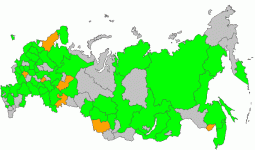
ILI and ARI epidemic thresholds were exceeded in 7 cities of North-Western, Central, Ural, Volga, Siberian, Far-Eastern Federal Districts (FD) from 59 cities of Russia collaborating with two WHO NICs in Russia.

Russia.gif

Cumulative number of diagnosed influenza cases

Cumulative results of influenza laboratory diagnosis by different tests were submitted by 51 RBLs and two WHO NICs. According to these data as a result of 2482 patients investigation the overall proportion of respiratory samples positive for influenza was estimated as 16.2%, including 6.4% for influenza А(H1N1)pdm09, 8.7% for influenza A(H3N2), 0.4% for influenza type A and 0.7% for influenza type B virus.

...
Conclusion

Influenza and ARI morbidity data. Increased influenza and other ARI activity was registered during the week 9.2014 in traditional surveillance system in Russia. The nationwide ILI & ARI morbidity level (77.3 per 10 000 of population) has exceeded the national baseline (69.3) by 11.5%.

Etiology of ILI & ARI morbidity. The overall proportion of respiratory samples tested positive for influenza was estimated as 16.2%. Percent of positive ARI cases of non-influenza etiology (PIV, adeno- and RSV) was estimated as 21.2% of investigated patients by IFA and 19.4% by PCR.

In sentinel surveillance system clinical samples from 108 SARI and ILI/ARI patients were investigated by rRT-PCR. 18 influenza А(Н1N1)pdm09, 14 А(H3N2) and one influenza B cases were detected.

Antigenic characterization: Totally 102 influenza viruses were characterizated antigenically since start of 2013-2014 season including 25 A(H1N1)pdm09 strains, 75 A(H3N2) strains and two influenza type B strains. Antigenically 22 influenza A(H1N1)pdm09 viruses were like influenza A/California/07/09 reference strain and three strains were drift variants of A/California/07/09. All 75 A(H3N2) viruses were like influenza A/Texas/50/12 reference strain. One influenza B strain was characterized as B/Brisbane/60/08-like, belonged to B/Victoria/02/87 lineage, one influenza B strain was characterized as B/Massachusetts/02/2012-like, belonged to B/Yamagata/16/88 lineage.

Genetic characterization: Influenza A(H1N1)pdm09 virus was shown to be genetically related to clade represented by A/St.Peterburg/27/2011 virus, group 6 of A(H1)pdm09 virus. 3 influenza A(H3N2) viruses were belonged to clade represented A/Perth/16/2009 - A/Texas/50/2012 subgroup (3C).

Susceptibility to antiviral drugs. According to Munana-test investigations showed that one influenza A(H1N1)pdm09 virus and one A(H3N2) virus were susceptible to oseltamivir.
http://www.influenza.spb.ru/en/influenza_surveillance_system_in_russia/epidemic_situation/
 
Back
Top Bottom