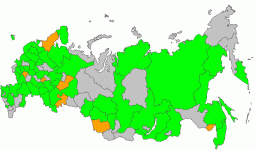
Re: Russia Influenza Surveillance 2013-2014
Week 1: 30.12.2013-05.01.2014
Influenza and ARI morbidity data
Epidemiological data show decrease of influenza and other ARI activity in Russia in comparison with previous week. The nationwide ILI & ARI morbidity level (27.2 per 10 000 of population) was lower than the national baseline (69.3) by 60.8%.
ILI and ARI epidemic thresholds were not exceeded in all 57 cities collaborating with two WHO NICs in Russia.
...
Cumulative number of diagnosed influenza cases
Cumulative results of influenza laboratory diagnosis by different tests were submitted by 19 RBLs and two WHO NICs. According to these data as a result of 252 patients investigation the overall proportion of respiratory samples positive for influenza was estimated as 9.9%, including 8.3% for influenza А(H1N1)pdm09 and 1.6% for influenza A(H3N2) virus.
2 influenza А(H1N1)pdm09 viruses were isolated in Vladivostok (Far-Eastern Federal District), one influenza А(H1N1)pdm09 and one А(H3N2) viruses were isolated in Moscow (NIC) (Central Federal District).
Antigenic characterization. Totally 3 influenza viruses were characterizated antigenically since start of 2013-2014 season including one A(H1N1)pdm09 strain, one A(H3N2) strain and one influenza type B strain.Antigenically influenza A(H1N1)pdm09 virus was drift variant of influenza A/California/07/09 reference strain. A(H3N2) virus was like influenza A/Texas/50/12 reference strain. Influenza B strain was characterized as B/Brisbane/60/08-like, belonged to B/Victoria/02/87 lineage.
As a result of genetic characterization of 2 new influenza viruses one A(H1N1)pdm09 virus was genetically related to 6 group A(H1)pdm09, represented by A/St. Peterburg/27/2011 virus, and one influenza A(H3N2) virus was belonged to A/Texas/50/2012 group.
Susceptibility to antiviral drugs. According to Munana-test investigations showed that one influenza A(H1N1)pdm09 virus and one A(H3N2) virus were susceptible to oseltamivir.
...
Conclusion
Influenza and ARI morbidity data. Decreased influenza and other ARI activity was registered during the week 1.2014 in traditional surveillance system in Russia. The nationwide ILI & ARI morbidity level (27.2 per 10 000 of population) was lower than the national baseline by 60.8%.
Etiology of ILI & ARI morbidity. The overall proportion of respiratory samples tested positive for influenza was estimated as 9.9%. Percent of positive ARI cases of non-influenza etiology (PIV, adeno- and RSV) was estimated as 42.6% of investigated patients by IFA and 31.0% by PCR.
In sentinel surveillance system clinical samples from 22 SARI and ILI/ARI patients were investigated by rRT-PCR. A total one influenza А(H1N1)pdm09 was detected.
Two influenza А(H1N1)pdm09 viruses were isolated in Vladivostok (Far-Eastern Federal District), one influenza А(H1N1)pdm09 and one А(H3N2) viruses were isolated in Moscow (NIC) (Central Federal District).
Antigenic characterization. Totally 3 influenza viruses were characterizated antigenically since start of 2013-2014 season including one A(H1N1)pdm09 strain, one A(H3N2) strain and one influenza type B strain. Antigenically influenza A(H1N1)pdm09 virus was drift variant of influenza A/California/07/09 reference strain. A(H3N2) virus was like influenza A/Texas/50/12 reference strain. Influenza B strain was characterized as B/Brisbane/60/08-like, belonged to B/Victoria/02/87 lineage.
As a result of genetic characterization of 2 new influenza viruses one A(H1N1)pdm09 virus was genetically related to 6 group A(H1)pdm09, represented by A/St. Peterburg/27/2011 virus, and one influenza A(H3N2) virus was belonged to A/Texas/50/2012 group.
Susceptibility to antiviral drugs. According to Munana-test investigations showed that one influenza A(H1N1)pdm09 virus and one A(H3N2) virus were susceptible to oseltamivir.
Week 2: 06.01.2014-12.01.2014
Influenza and ARI morbidity data
Epidemiological data show increase of influenza and other ARI activity in Russia in comparison with previous week. The nationwide ILI & ARI morbidity level (31.7 per 10 000 of population) was lower than the national baseline (69.3) by 54.3%.
ILI and ARI epidemic thresholds were not exceeded in all 59 cities collaborating with two WHO NICs in Russia.
...
Cumulative number of diagnosed influenza cases
Cumulative results of influenza laboratory diagnosis by different tests were submitted by 43 RBLs and two WHO NICs. According to these data as a result of 627 patients investigation the overall proportion of respiratory samples positive for influenza was estimated as 8.3%, including 2.9% for influenza А(H1N1)pdm09, 3.0% for influenza A(H3N2), 2.1% for influenza type A and 0.3% for influenza type B virus.
Antigenic characterization. Totally 10 influenza viruses were characterizated antigenically since start of 2013-2014 season including 5 A(H1N1)pdm09 strains, 4 A(H3N2) strains and one influenza type B strain.Antigenically 4 influenza A(H1N1)pdm09 viruses were like influenza A/California/07/09 reference strain and one strain was drift variant of A/California/07/09. All 4 A(H3N2) viruses were like influenza A/Texas/50/12 reference strain. Influenza B strain was characterized as B/Brisbane/60/08-like, belonged to B/Victoria/02/87 lineage.
As a result of genetic characterization of 2 new influenza viruses one A(H1N1)pdm09 virus was genetically related to 6 group A(H1)pdm09, represented by A/St. Peterburg/27/2011 virus, and one influenza A(H3N2) virus was belonged to A/Texas/50/2012 group.
Susceptibility to antiviral drugs. According to Munana-test investigations showed that one influenza A(H1N1)pdm09 virus and one A(H3N2) virus were susceptible to oseltamivir.
...
Conclusion
Influenza and ARI morbidity data. Increased influenza and other ARI activity was registered during the week 2.2014 in traditional surveillance system in Russia. The nationwide ILI & ARI morbidity level (31.7 per 10 000 of population) was lower than the national baseline by 54.3%.
Etiology of ILI & ARI morbidity. The overall proportion of respiratory samples tested positive for influenza was estimated as 8.3%. Percent of positive ARI cases of non-influenza etiology (PIV, adeno- and RSV) was estimated as 18.4% of investigated patients by IFA and 17.5%by PCR.
In sentinel surveillance system clinical samples from 42 SARI and ILI/ARI patients were investigated by rRT-PCR. No influenza cases were detected.
Antigenic characterization.
Totally 10 influenza viruses were characterizated antigenically since start of 2013-2014 season in two WHO NICs including 5 A(H1N1)pdm09 strains, 4 A(H3N2) strains and one influenza type B strain. Antigenically 4 influenza A(H1N1)pdm09 viruses were like influenza A/California/07/09 reference strain and one strain was drift variant of A/California/07/09. All 4 A(H3N2) viruses were like influenza A/Texas/50/12 reference strain. Influenza B strain was characterized as B/Brisbane/60/08-like, belonged to B/Victoria/02/87 lineage.
As a result of genetic characterization of 2 new influenza viruses one A(H1N1)pdm09 virus was genetically related to 6 group A(H1)pdm09, represented by A/St. Peterburg/27/2011 virus, and one influenza A(H3N2) virus was belonged to A/Texas/50/2012 group.
Susceptibility to antiviral drugs. According to Munana-test investigations showed that one influenza A(H1N1)pdm09 virus and one A(H3N2) virus were susceptible to oseltamivir
http://www.influenza.spb.ru/en/infl..._russia/epidemic_situation/?year=2014&week=02