• FluTrackers.com Inc. does not provide medical advice. Information on this web site is collected from various internet resources, and the FluTrackers board of directors makes no warranty to the safety, efficacy, correctness or completeness of the information posted on this site by any author or poster. The information collated here is for instructional and/or discussion purposes only and is NOT intended to diagnose or treat any disease, illness, or other medical condition. Every individual reader or poster should seek advice from their personal physician/healthcare practitioner before considering or using any interventions that are discussed on this website. By continuing to access this website you agree to consult your personal physican before using any interventions posted on this website, and you agree to hold harmless FluTrackers.com Inc., the board of directors, the members, and all authors and posters for any effects from use of any medication, supplement, vitamin or other substance, device, intervention, etc. mentioned in posts on this website, or other internet venues referenced in posts on this website.
  • We are not asking for any donations. Do not donate to any entity who says they are raising funds for us.

President of Iceland & Scientists Warn about Volcano Katla

sharon sanders

Editor-in-Chief & President
From Texas A&M University -

Another Iceland Volcano To Erupt? Katla Could Be The Worse


snip

”So as bad as Eyafjallajokull is, Katla could be much, much worse.” Miller says Katla has been more active than others in the region.
Eyjafjallajokull has erupted only three times in the past 1,000 years, while Katla has erupted at least 20 times since then. But Katla seems to erupt whenever Eyjafjallajokull does. Three times in history when Eyjafjallajokull has erupted – in 920, 1612 and 1821 – Katla has, too.


That’s why the current eruption could be a bad omen: Every time Eyjafjallajokull has erupted – as it has for the past week – Katla follows behind, always erupting within the same year, sometimes just a few months after its little sister.


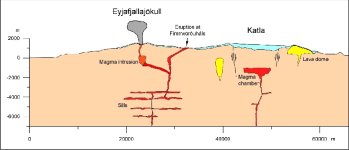
“We don’t know when because volcanoes in that part of the world are very difficult to predict,” he notes, adding that Katla is located about 10 to 12 miles from Eyjafjallajokull but is not part of the same volcano system.


“We do know that Katla has been a much more active volcano. Its last significant eruption came in 1918,” he notes. “An eruption from nearby Grimsvotn volcano in 1783 occurred and so much volcanic haze and ash covered Europe and Asia that it had a dramatic cooling effect. Ben Franklin, who was ambassador to France at the time, called it ‘the year without a winter’ and he later wrote a paper about volcanoes affecting climate called ‘Meteorological Imaginations and Conjectures’ and presented it at a conference the following year.


“History tells us that we need to watch Mount Katla very closely,” Miller adds.

http://tamunews.tamu.edu/2010/04/20/another-iceland-volcano-to-erupt-katla-could-be-the-worse/
 
Re: Icelandic volcano spews ash cloud - European flights to resume

Re: Icelandic volcano spews ash cloud - European flights to resume

Iceland president warns of second volcano threat

<!-- font resizer -->
  • transparent.gif
  • transparent.gif
21/04/2010


The president of Iceland yesterday warned that a second "much bigger" volcano is set to erupt and could spark further chaos.


President Olafur Grimsson fears if the second volcano, Katla, blows, it could have devastating consequences worldwide.

Katla is east of the smaller Eyjafjallajokull volcano which sparked the ash cloud and in the past has triggered subsequent eruptions from the Katla volcano.


Mr Grimsson added: "We have emergency plans in our own country, so I think that it's high time for European governments and airline authorities to start planning."


http://www.mirror.co.uk/news/top-st...rns-of-second-volcano-threat-115875-22200510/
 
Re: Icelandic volcano spews ash cloud - European flights to resume

Re: Icelandic volcano spews ash cloud - European flights to resume

http://ca.news.yahoo.com/s/capress/100420/science/science_eu_volcano_science

Travellers worry about flights but scientists fear Icelandic volcano's violent neighbour Katla

Tue Apr 20, 9:07 PM <!-- phugc --> By Carlo Piovano, The Associated Press

excerpt:
...
"A Katla eruption would be 10 times stronger and shoot higher and larger plumes of ash into the air than its smaller neighbour, which has already brought European air travel to a standstill for five days and promises severe travel delays for days more."
...
 
Re: President of Iceland & Scientists Warn about Volcano Katla

The historical record is a matter of fact. The disruption to the supply chain could be immense. It makes sense to seriously look at this situation.
 
Re: President of Iceland & Scientists Warn about Volcano Katla

Please post only news items on this thread. Speculation belongs in the discussion forum. Thanks!
 
Re: President of Iceland & Scientists Warn about Volcano Katla

<TABLE cellSpacing=3 cellPadding=3 width=652 bgColor=#ffffff border=0><TBODY><TR><TD height=29>More powerful Icelandic volcano may explode soon</TD></TR></TBODY></TABLE>

NK [FONT=Verdana, Arial, Helvetica, sans-serif]4/21/2010 1:00:33 PM[/FONT] - A far bigger Icelandic volcano, Katla, is tipped to erupt in the coming months, potentially causing much more savage and sustained disruption to industry and society, The Independent reports.

A week ago, sister volcano Eyjafjallajokull erupted, forcing European governments to impose a no-fly zone.

Historically, each time Eyjafjallajokull has erupted in the past 2,000 years, the Katla has exploded within six months.

"I certainly wouldn''t be surprised if Katla erupted within the next year, but how much it affects Britain and northern Europe depends on what happens with the winds at the time," volcanologist Bill McGuire told The Independent.

Professor McGuire, who sits on the Government''s Cobra emergency committee, pointed out that Katla was 10 times bigger than Eyjafjallajokull. It also has a much bigger ice cap, and it is the mixture of melting cold water and lava that causes explosions and for ash to shoot to high altitudes.

Jon Davidson, a professor of Earth sciences at Durham University, shared his concern, saying that because Katla has invariably exploded into life after Eyjafjallajokull, the aviation industry should be ?less surprised? by its potential impact.

http://www.expressnews.lk/english/head_view.asp?key_c=22365
 
Re: President of Iceland & Scientists Warn about Volcano Katla

Scientists warn Eyjafjallajokull could trigger the Katla volcano to erupt

Excerpts:

"Geologists and geophysicists point out that the Earth like anything else operates on a system of cause and effect which is logical and proved time and again. One event can trigger or contribute to triggering another event in concert with other factors that may or may not seem related but still somehow tie in together. In the case of these Icelandic volcanoes, Eyjafjallajokull has served as the opening act or at the least a contributing trigger for Katla more than once. "

------------------------------


"The pair of volcanoes are only separated by approximately 12 miles above ground, but geologists believe that beneath the surface they are connected by a series of shared magma channels which is why they so often erupt in relative unison. Like Eyjafjallajokull, Katla is buried beneath a glacier called Myrdalsjokull which is among the largest in Iceland. Myrdalsjokull is estimated to be about 550 yards thick - or about 5.5 U.S. football fields for comparison. This is twice as thick as the glacier over Eyjafjallajokull was prior to the eruption."

------------------------------

"While not everyone is taking the threat of a Katla eruption seriously, the residents of Vik are taking steps to prepare for an evacuation just in case the need arises. The residents of Vik estimate they have up to three hours to vacate the area should Katla erupt, but many towns would have somewhere in the area of only 20-30 minutes which is not terribly comforting. Still these locals say life must go on and they cannot live in fear of what might happen, and can do no better than be aware and prepared for the possibility of a Katla eruption and nothing more.

At this time there have been small tremors at Katla, but geologists and geophysicists believe these are not indicators of an eruption, but rather the after effects of Eyjafjallajokull that triggered glacial displacement and are slightly skewing sensors causing false positive readings. While there is no fear of an imminent threat from a Katla eruption as Katla could erupt tomorrow or hold off another 1, 5, or 20 years before becoming active again, all anyone is saying is that people need to be aware of the history of the two volcanoes and be prepared. It all goes back to that thing about an ounce of prevention and never underestimating the will of nature."

Full text at:

http://www.helium.com/items/1810671...kull-could-trigger-the-katla-volcano-to-erupt
 
Re: President of Iceland & Scientists Warn about Volcano Katla

Katla Volcano

The home of the Katla volcano is M?rdalsj?kull glacier which is the southernmost glacier in Iceland and is almost 600 km2. It covers the upper part of a large volcano, the Katla caldera. Katla is about 30 km in diameter and the highest parts reach almost 1500 m a.s.l. In the center of the M?rdalsj?kull ice cap is the Katla caldera. It is oval in shape with the longest axis NW-SE and covers an area 110 km2. The highest points of the ice cap lie on the caldera rim and include Go?abunga, H?abunga, Austmannsbunga, Enta, Entukollar. Within the caldera the ice is hundreds of meters thick.

During the summer of 1999 some activity was noted within the M?rdalsj?kull caldera. On the night of the 18th July came a sudden flood in the river J?kuls? ? S?lheimasandi. The source of the flood was meltwater from a depression formed simultaneously in the glacier surface, within the ice drainage basin of S?lheimaj?kull. After the flood existing depressions enlarged and crevasses were formed. The depressions became deeper during the summer and increased in number. The reason was increased geothermal activity. It is possible that there was a small eruption at the head of S?lheimaj?kull that formed a depression and caused the flood.

Katla erupted very powerfully in 1918 but there are evidence of smaller eruptions after that. Icelandic volcanologists are expecting another eruption in next few years so the Myrdalsjokull glacier and the Katla caldera are monitored quite closely. Just west of Katla and Myrdalsjokull glacier is another glacier, Eyjafjallajokull which is much smaller (50 km?).

The volcano Katla is subglacial and has a reputation as one of the most dangerous volcanoes of Iceland. Its peak reaches 1493 m in height and the extension of the glacier M?rdalsj?kull which lies over it reaches 595 km?.

M?rdalsj?kull is the 4th biggest glacier in Iceland.

The crater of the volcano has a diameter of 10 km and the volcano normally erupts every 40 - 80 years. The last eruption took place in 1918, meaning scientists monitor the volcano very carefully. Since 930, 16 eruptions have been documented. The Laki craters and the Eldgj? are part of the same volcanic system, so it can be regarded as one of the most powerful in the world.

Before the National motorway no.1 had been constructed, people feared traversing the plains in front of the volcano because of the often occurring glacier runs and the deep rivers to cross. Especially fatal was the glacier run after the eruption of 1918.

Through the ages many farms have been swept away by Katla eruptions with that of 1311 being recorded as particularly damaging. A farmer named Sturla is said to have survived with his young son by clinging to an iceberg which later drifted back to shore. An eighteenth century eruption killed several people while others were stranded for days on mountains that turned to islands as floods engulfed the plains.

In Katla?s last eruption in 1918 icebergs the size of houses were seen floating out to sea. More recently in 1955 and 1979 there have been floods though no eruption that you could see.

A glacier run (literal translation of Icelandic "j?kulhlaup") is due to the eruption of a volcano under a glacier. The ice over the volcano melts because of the heat, causing water to form a lake under the remaining ice-cap. Then the ice-cap collapses, or the water breaks through the barrier in front of it, and there follows a more or less disastrous flooding of the land below the mountain. A glacier run is a type of lahar.

It is not by chance that the term "glacier run" comes from the Icelandic, as the south of Iceland has very often been victim to such catastrophes. Lately, this was the case when in 1996 the volcano under the Grimsv?tn lakes belonging to the Vatnaj?kull glacier erupted and the river Skei?ar? flooded the land in front of Skaftafell National Park. The glacier run reached 45 000 m3s-1 and destroyed parts of the Hringvegur (road no. 1) estimated cost of roads and bridges destroyed was IKR 2.000.000.000.

After the flooding some icebergs 10 m high could be seen on the banks of the river where the glacier run had left them behind.
Since 1996 the volcano under Grimsvotn has erupted twice, 1998 and 2004. The glaciar runs that followed were nowhere near the catastropic one in 1996.

A modern tale? An officer on the US naval base in Keflavik clames that when the glaciar run in 1996 started four of his friends wera on the bridge crossing Skei?ar? in a Volkswagen beetle. All of them dissapeared and have never been found. This story has not been confirmed but the officer clames that it was kept from the press by the US and Icelandic governments.
<TABLE class=small cellPadding=0 width="100%" bgColor=#cccccc border=0><TBODY><TR><TD>Eruption site</TD><TD>Year/century</TD><TD>Date </TD><TD>Duration (days)</TD></TR><TR><TD>Katla</TD><TD>1955</TD><TD colSpan=2>(small subglacial eruption)</TD></TR><TR><TD>Katla</TD><TD>1918</TD><TD>12 October</TD><TD>24</TD></TR><TR><TD>Katla</TD><TD>1860</TD><TD>8 May</TD><TD>20</TD></TR><TR><TD>Katla</TD><TD>1823</TD><TD>26 June</TD><TD>28</TD></TR><TR><TD>Katla</TD><TD>1755</TD><TD>17 October</TD><TD>~120 </TD></TR><TR><TD>Katla</TD><TD>1721</TD><TD>11 May</TD><TD>~100 </TD></TR><TR><TD>Katla</TD><TD>1660</TD><TD>3 November</TD><TD>~60 </TD></TR><TR><TD>Katla</TD><TD>1625</TD><TD>2 September</TD><TD>13 </TD></TR><TR><TD>Katla</TD><TD>1612</TD><TD>12 October </TD><TD></TD></TR><TR><TD>Katla</TD><TD>1580</TD><TD>11 August </TD><TD></TD></TR><TR><TD>Katla </TD><TD>~1500 </TD><TD></TD><TD></TD></TR><TR><TD>Katla</TD><TD>15. century </TD><TD></TD><TD></TD></TR><TR><TD>Katla</TD><TD>1416 </TD><TD></TD><TD></TD></TR><TR><TD>Katla</TD><TD>~1357 </TD><TD></TD><TD></TD></TR><TR><TD>Katla</TD><TD>1262</TD><TD></TD><TD></TD></TR><TR><TD>Katla</TD><TD>1245 </TD><TD></TD><TD></TD></TR><TR><TD>Katla</TD><TD>~1179 </TD><TD></TD><TD></TD></TR><TR><TD>Katla </TD><TD>12. century </TD><TD></TD><TD></TD></TR><TR><TD>Eldgj?-Katla</TD><TD>~934 </TD><TD></TD><TD></TD></TR><TR><TD>Katla</TD><TD>~920 </TD><TD></TD><TD></TD></TR><TR><TD>Katla</TD><TD colSpan=3>Late 9. cent. or early 10. c</TD></TR></TBODY></TABLE>
http://iceland.vefur.is/iceland_nature/Volcanoes_in_Iceland/katla.htm
 
Re: President of Iceland & Scientists Warn about Volcano Katla

Published Thursday, April 22, 2010 12:03 AM

Beware of Katla erupting, expert says

By VIMAL PATEL
vimal.patel@theeagle.com
<!-- None -->
</EM>

The ash plume over Europe that disrupted air travel this week is a reminder of Earth's power, but the damage from Eyjafjallojokull's eruption could be dwarfed by that of a neighboring volcano, a Texas A&M researcher said.

The mountain has only erupted three other times over the past 1,100 years -- in 920, 1612 and 1821 -- and each time so has Katla, a few miles away and about 10 times as large.

"It's a bigger volcanic system, and much more active," said Jay Miller, a scientist with Texas A&M's Integrated Ocean Drilling Program who has studied Icelandic volcanoes since the 1980s.

A KEyjafjallojokull, which Miller estimates was about a 2 on the Volcanic Explosivity atla eruption could be hundreds of times more powerful than that of Index -- a measurement that, like the magnitude of earthquakes, gets exponentially larger. Katla could be up to a 6, Miller said.

Icelanders have tools to gauge volcanic activity, such as pressure and elevation changes, Miller said. So far, Katla looks quiet, he said, but it should be closely monitored. Historically, it erupts every 80 years or so, and 1918 was the last time, he said.

The pattern of eruptions between the two mountains could be a coincidence, he said, or not. They are not part of the same volcanic system.

"It may be that when Eyjafjallojokull erupts, it changes the conditions of pressure underground and that's translated through the ground to the Katla volcanic system and triggers the eruption," he said. "That's a possibility."

Regardless, it was not the volcanic eruption that caused the shutting down of air travel.

"What caused all the ruckus was not the volcano itself, per se, it was the prevailing wind that carried the ash cloud over Europe," Miller said.

/.../
More at:
http://www.theeagle.com/am/Beware-of-Katla-erupting--expert-says
 
Re: President of Iceland & Scientists Warn about Volcano Katla

Recriminations erupt in ash-fueled aviation crisis

By ASSOCIATED PRESS
Published: Apr 22, 2010 02:17 Updated: Apr 22, 2010 14:23

Excerpt:

"In Iceland, the volcano under the Eyjafjallajokull remained active Wednesday - throwing magma chunks the size of cars into the air, bubbling lava and producing tremors. But it was not shooting ash and smoke four to six miles into the air like it did previously.

?There is much, much less ash production and the plume is low,? said Gudrun Nina Petersen, meteorologist at the Icelandic Met Office, adding that mild winds kept the ash away from crowded air flight corridors.

But scientists at Zurich's Federal Institute of Technology said an initial analysis of samples collected over Zurich last weekend by special weather balloons concluded that safety concerns were warranted and the volcano could be getting more dangerous.

The concentration of particles was ?very high? at up to 600 micrograms per cubic meter, according to Professor Thomas Peter.

The composition of the volcanic magma also appeared to be changing into a form that could become more explosive.

Peter Ulmer, a professor of petrology, said the magma has been gaining in silicate content.

If it continues, or if the nearby Katla volcano also erupts, ?this could lead to the most feared of all eruptions: A Plinian eruption,? Ulmer said.

That kind of eruption is named for Pliny the younger, who witnessed the devastating of Vesuvius in 79 A.D. that destroyed Pompeii. Such an event could last for weeks or months, he said."


http://arabnews.com/world/article45903.ece?comments=all
 
Re: President of Iceland & Scientists Warn about Volcano Katla

Katla, the 'witch' volcano, looms over Iceland

By Sebastian Smith (AFP) ? 19 hours ago

Excerpts:

"SOLHEIMAJOKULL GLACIER, Iceland ? A metal sign reads: "Warning! The glacier can be dangerous." A rumbling growl from under the mountains speaks far louder.

Solheimajokull glacier is part of the ice cap sealing Katla, a volcano 10 times more powerful than neighboring Eyjafjoell, whose eruption last week clogged Europe's skies with ash and grounded the continent's airlines.

If Katla blows up, the current eruption will resemble "a small rehearsal," Iceland's president, Olafur Grimsson, warned.

The frightening reputation of Katla is mirrored in a savage landscape of black volcanic ridges, blue ice, and snow swept and hardened by powerful winds.

Reaching the glacier requires a four-wheel-drive vehicle, or mountaineering equipment and snowmobiles to go further. During a visit Thursday, a huge raven on a boulder was the sole living creature visible.

The worry for Icelanders is that each time Eyjafjoell has erupted over the last millennium, Katla, named after an Icelandic witch, quickly followed.

Explosive percussions heard every few minutes here testify to lava explosions inside Eyjafjoell, a few kilometers (miles) to the west, and the threat that Katla might be awaiting its cue."

------------------------------------------------

"Iceland's volcanologists watch Katla the way police keep suspected bomb makers under surveillance.

Monitors linked to Global Positioning Satellite (GPS) devices ring the volcano, measuring minute movements in the ground -- whether Katla is shifting up, down or across.

Similar sensors on Eyjafjoell detected significant motion during the current eruption as the mountain heaved and convulsed, says Kristin Vogfjord, a geologist at the Icelandic Meteorological Office.

But there has recently been "none around Katla," Vogfjord said. "There is no seismicity in Katla."

Those reassurances have not calmed a torrent of speculation, much to the annoyance of Iceland's growing tourist industry.

When the president referred in a BBC interview to the current eruption being a rehearsal for Katla, many here were furious.

Even Finance Minister Steingrimur Sigfusson joined critics, saying "we cannot give out the message that chaos or a frightening situation reigns."

<TABLE style="WIDTH: 1px"><TBODY><TR><TD colSpan=2>

</TD></TR><TR><TD colSpan=2>
ALeqM5iR2K-HXplzbTHSWgi5e_79vzyI5Q


</TD></TR><TR><TD colSpan=2>The frightening reputation of Katla is mirrored in a savage landscape of black volcanic ridges (AFP)

<TABLE style="WIDTH: 1px"><TBODY><TR><TD colSpan=2>
ALeqM5gZDKgMxDJh7KLKsDibxzppYYQRdQ


</TD></TR><TR><TD colSpan=2>Solheimajokull glacier is part of the ice cap sealing Katla, a volcano 10 times more powerful than neighboring Eyjafjoell (AFP)


</TD></TR></TBODY></TABLE>


</TD></TR></TBODY></TABLE>
<TABLE style="WIDTH: 1px"><TBODY><TR><TD colSpan=2>

</TD></TR><TR><TD colSpan=2>
ALeqM5iB2HdPy4Z59h6Hh67fu9LH9yJHug


</TD></TR><TR><TD colSpan=2>The last eruption of Katla was in 1918 and it has been its longest pause on record(AFP)


</TD></TR></TBODY></TABLE>

/.../

Read more at:
http://www.google.com/hostednews/afp/article/ALeqM5g3eYX3qQfWEWAA0o9wuByiSxEM-w
 
Re: President of Iceland & Scientists Warn about Volcano Katla

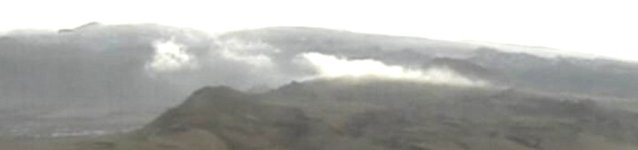
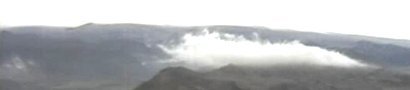
Iceland fog ...

#16/18/19

after the debacled (bunkered, 'cause not measurement backed) web news speculation of "7 days to Katla eruption",
I prefered to fog,
an seemingly ongoing smoke "calumet" ...

as they are used to say:
"we'll hear it" ...
 
Back
Top Bottom