• FluTrackers.com Inc. does not provide medical advice. Information on this web site is collected from various internet resources, and the FluTrackers board of directors makes no warranty to the safety, efficacy, correctness or completeness of the information posted on this site by any author or poster. The information collated here is for instructional and/or discussion purposes only and is NOT intended to diagnose or treat any disease, illness, or other medical condition. Every individual reader or poster should seek advice from their personal physician/healthcare practitioner before considering or using any interventions that are discussed on this website. By continuing to access this website you agree to consult your personal physican before using any interventions posted on this website, and you agree to hold harmless FluTrackers.com Inc., the board of directors, the members, and all authors and posters for any effects from use of any medication, supplement, vitamin or other substance, device, intervention, etc. mentioned in posts on this website, or other internet venues referenced in posts on this website.
  • We are not asking for any donations. Do not donate to any entity who says they are raising funds for us.

Peru: H5N1 in poultry and mammals

Shiloh

Editor, Senior Moderator
Source: https://larepublica.pe/sociedad/202...ontagio-de-influenza-h5n1-en-lambayeque-lrnd/

Avian flu: 1,000 poultry died after contagion of H5N1 influenza in Lambayeque
Senasa registered domestic birds that died from this disease and others were sacrificed to prevent the spread of the virus in the San José district.
2 Dec. 2022


The head of the Epidemiology area of the Lambayeque Regional Health Management (Geresa), Dafne Moreno, reported that in the Gallito town center, in the San José district, 1,000 poultry died due to the H5N1 influenza outbreak. The professional remarked that a group of these animals were sacrificed by the National Agrarian Health Service of Peru (Senasa) to prevent the spread of the virus.

The specialist stated that the first outbreak of bird flu in domestic birds was detected after the owner of the property informed Senasa that 200 of 600 birds died in adulthood. The owner reported that, at first, he believed that this event was a consequence of the vaccination against Newcastle disease in birds...
 
Peru - High pathogenicity avian influenza viruses (poultry) (Inf. with) - Immediate notification

GENERAL INFORMATION
COUNTRY/TERRITORY OR ZONE
ZONE

ANIMAL TYPE
TERRESTRIAL

DISEASE CATEGORY
OIE-listed

EVENT ID
4765

DISEASE
High pathogenicity avian influenza viruses (poultry) (Inf. with)

CAUSAL AGENT
Highly pathogenic avian influenza virus

GENOTYPE / SEROTYPE / SUBTYPE
Untyped or partially typed

START DATE
2022/11/09

REASON FOR NOTIFICATION
First occurrence in the country

DATE OF LAST OCCURRENCE
-

CONFIRMATION DATE
2022/11/27

EVENT STATUS
On-going

END DATE
-

SELF-DECLARATION
NO

REPORT INFORMATION
REPORT NUMBER
Immediate notification

REPORT ID
IN_158127

REPORT REFERENCE
-

REPORT DATE
2022/12/02

REPORT STATUS
Validated

NO EVOLUTION REPORT
-

EPIDEMIOLOGY
SOURCE OF EVENT OR ORIGIN OF INFECTION
Contact with wild species

EPIDEMIOLOGICAL COMMENTS

On November 18, during epidemiological surveillance activities in nearby areas where seabirds are dying, a notification of mortality in poultry was received in a farm in the locality of Gallito, district of San José, province and department of Lambayeque, 21 sick birds were found (lethargy, greenish diarrhea and cyanosis of the chin), tissue samples and swabs were collected from a rooster and a duck, and sent to SENASA's Animal Health Diagnostic Center. The dead birds were buried. The owner stated that 15 days ago he vaccinated his birds against Newcastle and Fowl Cholera, 7 days after vaccination he observed a mortality of 200 ducks. On November 30, all the birds on the farm were culled, followed by sanitary burial in the same place, cleaning and disinfection of the farm. Within the area between 1 and 5 km from the outbreak there are 5 commercial poultry farms with a total population of 105,600 birds. The type identified is Avian Influenza type A subtype H5. Neuraminidase typing is pending.
,...
NEW OUTBREAKS
OB_109773 - LOCALIDAD DE GALLITO, DISTRITO DE SAN JOSE SAN ANTONIO, PROVINCIA Y DEPARTAMENTO DE LAMBAYEQUE
OUTBREAK REFERENCE
-

START DATE
2022/11/09

END DATE
-

DETAILED CHARACTERISATION
-

FIRST ADMINISTRATIVE DIVISION
Lambayeque

SECOND ADMINISTRATIVE DIVISION
Lambayeque

THIRD ADMINISTRATIVE DIVISION
San Jose

EPIDEMIOLOGICAL UNIT
Backyard

LOCATION
Localidad de Gallito, distrito de San Jose San Antonio, provincia y departamento de Lambayeque

Latitude, Longitude
-6.76343 , -79.94907

OUTBREAKS IN CLUSTER
-

MEASURING UNIT
Animal

AFFECTED POPULATION DESCRIPTION
-

SpeciesSusceptibleCasesDeathsKilled and Disposed ofSlaughtered/ Killed for commercial useVaccinated
Birds (DOMESTIC)
NEW 360 119 119 241 0 0
TOTAL 360 119 119 241 0 0
...
https://wahis.woah.org/#/in-review/4765
 
Source: https://elcomercio.pe/lima/sucesos/...-enfermedad-en-aves-domesticas-de-6-regiones- lima-peru-news/

Senasa reports that it has controlled 46 outbreaks of bird flu in domestic birds from 6 regions
The entity indicated that it ordered to maintain the epidemiological fences and has intensified surveillance actions
EC writing
02/06/2023 12:15 PM - UPDATED TO 02/06/2023 12:17 PM

The National Agrarian Health Service of Peru (Senasa) reported that it has managed to control 46 outbreaks of type A H5N1 bird flu in domestic birds from Lambayeque, Cajamarca, La Libertad, Áncash, Lima and Ica.

"It has been decided to maintain the epidemiological fences and epidemiological surveillance actions have been intensified at the national level for rapid detection, in order to eradicate the disease in the shortest possible time," said the entity of the Ministry of Agrarian Development and Irrigation. (Midagri).

“The provisions established through the declaration of a health emergency remain in force. It is still prohibited to hold gallistic events, to mobilize domestic birds without a Senasa certificate, among other measures, "he added...
 
Translation Google

Senasa reported that bird flu killed mammals: a dolphin and three sea lions

/ Monday, February 6, 2023

In addition, the results of a lion from the Huancayo Municipal Zoo are still pending.

The National Agrarian Health Service of Peru (Senasa) reported that a dolphin and three sea lions that days ago were found dead on the Peruvian coast had avian influenza type A (H5N1).

Through a letter addressed to the Center for Epidemiology, Prevention and Disease Control of the Ministry of Health (Minsa), Senasa confirmed this information after analyzing the sea lions found on the Lima coast and the dolphin found in Paita (Piura). In addition, he informed that they await the results of a lion from the Huancayo Municipal Zoo.

Senasa also indicated that they have controlled 46 outbreaks of bird flu that were detected in domestic birds from Lambayeque, Cajamarca, La Libertad, Áncash, Lima and Ica.

Likewise, he pointed out that they will maintain epidemiological fences and intensify epidemiological surveillance actions at the national level for rapid detection, "in order to eradicate the disease in the shortest possible time."

“The provisions established through the declaration of a health emergency remain in force. It is still prohibited to hold gallistic events, to mobilize domestic birds without a Senasa certificate, among other measures, "added the entity.
...
Contagion in humans

Although the common route of contagion of H5N1 avian influenza is airborne and not exactly through bites, zootechnical veterinarian Carlos Calvo pointed out that proximity to infected mammals puts humans at risk.

Therefore, people who have had contact with a sea lion with or without signs of illness or other mammals should go to a health center to be treated or monitored.

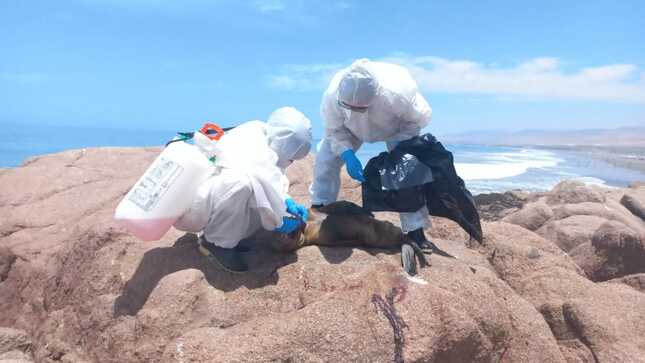
Likewise, the personnel in charge of handling the corpses must have all the biosafety protocols as a precaution.

Senasa urged citizens to continue reporting any case of domestic bird mortality to the cell phone: 946 922 469 or to the email reporta.peru@senasa.gob.pe, with the aim of reducing the risk of spreading the disease.

For its part, the National Forest and Wildlife Service (Sefor) recalls that if we find stranded animals such as sea lions on the coast, we must keep our distance and inform Alerta Serfor, through a WhatsApp message at 947 588 269 .

http://www.actualidadambiental.pe/s...o-a-mamiferos-un-delfin-y-tres-lobos-marinos/

---------------------------------------

Actualidad Ambiental@actualidadspda

#ALERTA 🚨 #influenzaaviar ) is confirmed in 3 dead sea lions in Lima and a dolphin, from Paita (Piura), according to the official document of @Senasa_Peru. In addition, the results of a lion from the Huancayo municipal zoo are awaited. (1/5) @Minsa_Peru @SerforPeru


FoOsaQJWYAI-BDP


Serfor Perú and CONSERVACCION
2:22 PM · Feb 5, 2023·
 
Peru: SERNANP Reports At Least 585 Sea Lions & 50,000 birds killed by Avian Flu

https://flutrackers.com/forum/forum...85-sea-lions-50-000-birds-killed-by-avian-flu

--------------------------------------------

Translation Google

They confirm death of a lion in the Huancayo zoo due to avian flu

/ Tuesday February 7, 2023

This Monday, the director general of the National Center for Epidemiology, Prevention and Disease Control (CDC) of the Ministry of Health (Minsa), César Munayco, confirmed that the death of a lion at the Huancayo Municipal Zoo was due to type A avian influenza ( H5N1).

In an interview with RPP, he pointed out that a working group has been created made up of the National Agrarian Health Service of Peru (Senasa), the National Forestry and Wildlife Service (Serfor) and other directorates of the health portfolio to follow up on this matter.

Yesterday, the National Service of Natural Areas Protected by the State (Sernanp) reported that to date the death of about 55,000 birds and 585 sea lions have been recorded in areas protected by this virus.

However, the contagion to the lion at the Huancayo zoo is still a mystery. Jesús Lescano, a specialist in conservation and management of wildlife from Serfor, told the same media outlet that this case "allows us to explore the routes of transmission of the virus" and is still under investigation.

One of the hypotheses is that sick domestic birds are being transferred , despite the health emergency decreed by Senasa that ends on February 28 of this year.

“It is quite tangible that these carnivores are infected by food, considering that they consume quail or chicken without cooking. Sick animals are being transferred from the coast to the mountains , which is the responsibility of vendors and farms, and they are reaching zoos and markets ," said the specialist.

Prevention in Junín

Before reporting the death of the lion, Senasa had already confirmed the death of birds from bird flu at the Huancayo Municipal Zoo. For this reason, on January 26, the Junín Regional Health Directorate took samples from eight local workers on suspicion of possible contagion, but all of them were negative.

There is currently an epidemiological alert to intensify prevention and control measures.

https://www.actualidadambiental.pe/...eon-en-zoologico-de-huancayo-por-gripe-aviar/
 
Translation Google

SENASA: Death of pigeons due to avian influenza is ruled out

Press release
People are urged to follow the recommendations of SENASA, not to approach or have contact with dead or sick domestic birds.
standard_palomas.jpg.jpg

Photos: Senasa


Technical secretary
February 9, 2023 - 9:24 a.m.


The National Agrarian Health Service (SENASA) reported that after carrying out the corresponding analyses, the samples of pigeons from the districts of Concepción and Chupaca gave negative results for avian influenza.

As is known, during the last weeks the death of pigeons was reported in these districts of the Junín region; where the authorities took the appropriate sanitary measures in order to rule out the presence of the disease and protect the health of the people who had contact with these birds.

Despite the fact that the presence of this disease in these birds has been ruled out, people are required to follow SENASA's recommendations not to approach or have contact with dead or sick domestic birds and to notify these cases for the appropriate measures to WhatsApp on the cell phone. : 946 922 469 or email reporta.peru@senasa.gob.pe .

Zoo case

After confirming positive cases of avian influenza in two black eagles and a lioness, the Huancayo municipal zoo remains in quarantine for a period of thirty (30) days.

To keep this disease under control, SENASA has been leading various health actions through three teams made up of veterinarians, technicians, and support personnel. The first team is oriented to verify the health status of the animals (inventory), disinfection and sampling of sick animals.

The second team is responsible for surveillance around the focus (from 3 to 5 km), and is in charge of collecting information on bird breeding, its population and possible new cases. To date, no new cases of the disease have been detected.

The third team is focused on visiting farms and authorized slaughterhouses to verify their biosecurity system and the management of sanitary filters.


https://www.gob.pe/institucion/sena...escarta-muerte-de-palomas-por-influenza-aviar
 
Translation Google

Ministry of Health

Minsa promotes multisectoral actions against H5N1 bird flu

Press release

CDC Peru holds permanent meetings with competent institutions such as Agro Rural and Sernanp
standard_Minsa%20promueve%20acciones%20multisectoriales%20frente%20a%20la%20gripe%20aviar%20H5N1.jpg.jpg


February 10, 2023 - 7:28 p.m.

With the objective of articulating joint actions to combat outbreaks of avian influenza, the Ministry of Health (Minsa) , through the National Center for Epidemiology, Prevention and Control of Diseases (CDC Peru) , convened the technical teams of the competent institutions as Agro Rural and National Service of Protected Natural Areas (Sernanp).

The entity responsible for epidemiological surveillance in public health at the national level reported that the meeting with the representatives of Agro Rural had as its main axis to reinforce the sanitary recommendations to minimize the risk of contagion by the influenza virus in the workers who work in the islands and islets extracting guano from seabirds and possible human-to-human transmission.

Likewise, the Agro Rural technical team will share the information on the guano extraction schedules by islands, the times and the number of people who participate in the various stages of said process in order to map the exposed areas and develop the actions of prevention and control in the event of someone presenting with symptoms.

On the other hand, in the meeting with Sernanp, the SMART application focused on the surveillance of protected natural areas was presented, taking into account the exchange of information on epizootics in different marine species, as well as information on an unusual increase in mortality in birds and marine mammals to articulate intervention actions and avoid exposure of zoonotic diseases between animals and humans.

In this context, the CDC Peru recommends that the population not approach or touch sick or dead animals, especially birds or marine mammals, because they represent a potential risk of transmission of avian influenza to people and the risk of spreading to the population.


https://www.gob.pe/institucion/mins...multisectoriales-frente-a-la-gripe-aviar-h5n1
 
Translation Google

National Forest and Wildlife Service

Arequipa: SERFOR intensifies security protocols by confirming the presence of bird flu in sea lions

Press release

Training will be carried out in district and provincial municipalities

standard_toma%20de%20muestras%20lobos%20%282%29.jpeg.jpeg

...
February 15, 2023 - 11:26 AM m.

Arequipa, February 14, 2023.- The National Forestry and Wildlife Service (SERFOR) - Arequipa urges the population to avoid any type of contact with sea lions and seabirds that come out or are on the beaches and rocky areas, since they could have the influenza A H5N1 virus, detected in the tests that the National Agrarian Health Service of Peru (Senasa) carried out on sea lions in the province of Caravelí.

Given this, this Wednesday the 15th, Thursday the 16th and Friday the 17th, training will be carried out for the district and provincial municipalities of Islay, Camaná and Caravelí. The activity is also aimed at personnel from the Peruvian National Police and the Health sector.

To date, Arequipa has reported 36 sea lion alerts stranded on the coasts of the provinces of Caravelí, Camaná and Islay, for which SERFOR Arequipa has been coordinating with the district and provincial municipalities for their attention.

The purpose of the training is to provide information on avian influenza, attention to sea lion alerts stranded on beaches, and the use of personal protective equipment (PPE) for handling these specimens.

Recommendations

The population is asked not to touch these wild animals, not to try to feed them, take them to another place, much less return them to the sea, because they can become infected and spread the virus.

Likewise, the population is asked to report these cases to the SERFOR Alert number, 947-588269 (only written messages), with photos of the animal, the location, a contact person and concise and brief information to offer timely attention.

https://www.gob.pe/institucion/serf...rse-presencia-de-gripe-aviar-en-lobos-marinos

--------------------------------------------------------------------

National Forest and Wildlife Service

SERFOR alerts vacationers about the risk of handling sea lions on beaches of the Peruvian coast


Press release

Mammals should not be moved out of their habitat or fed because they could be sick with avian influenza.

standard_WhatsApp%20Image%202023-02-16%20at%2007.47.49.jpeg.jpeg


standard_WhatsApp%20Image%202023-02-16%20at%2007.47.48%20%281%29.jpeg.jpeg

...
February 16, 2023 - 7:54 am

Lima, February 16, 2023.- The team of specialists from the National Forest and Wildlife Service (SERFOR) visits the southern beaches of Lima and Cañete every day, in order to attend to reports of sea lions stranding and alert bathers about the risks of handling these mammals that suffer from Avian Influenza type A H5N1.

During a tour carried out by SERFOR's Lima Technical Forestry and Wildlife Administration (ATFFS), a total of nine beaches were visited. These were Yaya in Chilca; Totoritas and Bujamas in Mala and various spas (Chocalla, Farallones, Bahía del Mar, Arenas, Coral, Sarapampa) located in Asia, Cañete, where dead sea lions and two live pups were found resting on the shores of the sea.

The SERFOR veterinarian, Javier Jara, warned bathers that they should not handle sea lions, whether they are adults or pups. He explained that females can give birth on dry land and leave their young while they search for food, and then return at night to feed them.

He also distributed flyers with information of interest in this regard to vacationers, lifeguards and condominium managers; and answered questions about the stranding of these mammals.

According to recent SERFOR reports, from January 17 to February 13, SERFOR responded to 322 sea lion sighting alerts, of which 46% were weak or sick sea lions, 12% were of dead animals and 17% of the cases reported that the mammals returned to the sea by their own means. Most of these cases were reported from Asia, Cerro Azul, Chorrillos, San Antonio and Chilca.

SERFOR reminds you that the beaches are also part of the natural habitat of sea lions, so it is possible to observe them resting at certain times of the year.

The analyzes confirmed the positive presence of influenza type A H5N1 in sea lions, which is highly pathogenic and affects wild seabirds (pelicans, gulls, cormorants, boobies, among others) since last year. Based on this, SERFOR coordinates with the National Agrarian Health Service (SENASA) and with local governments to continue with this prevention campaign against avian influenza.

In the event of a sighting of a sea lion that shows signs of weakness or illness, a written message should be sent to SERFOR ALERT WhatsApp (947 588 269), accompanied by a recent video, a contact person and the exact location. There they will be provided with timely guidance and the report will be channeled to specialists so that it can be attended to and monitored.

https://www.gob.pe/institucion/serf...ar-lobos-de-mar-en-playas-del-litoral-peruano
 
Translation Google

Avian flu: for the first time there has been a massive contagion from birds to mammals in Latin America

By Yvette Sierra Praeli on February 20, 2023

So far, more than 600 sea lions and more than 55,000 birds killed by the H5N1 virus have been registered in protected areas of Peru.

The presence of the virus dates back to the 1990s when it was found in places of poultry production. After 2020, a change in the dynamics of the virus occurred and it began to be detected more frequently in wild species.


First it was the seabirds that appeared dead on the coast of Peru due to the presence of the H5N1 virus or bird flu , but then the disease spread to mammals, particularly sea lions.

In Latin America, for the first time the jump of this virus from birds to mammals has been recorded in a massive way , indicate the scientists who are following the trail of this epidemic unleashed on almost the entire planet. "It is the first report in Latin America of contagion of avian influenza in many mammals at the same time, since until now the impact in Latin American countries had only been in birds, or some isolated case of a mammal," says Víctor Gamarra-Toledo. , researcher at the Natural History Museum (MUSA) of the National University of San Agustín de Arequipa.

Gamarra-Toledo explains that reports of contagion from birds to mammals had occurred in European countries such as Russia and Spain —in the latter country an outbreak of H5N1 in mink on a fur farm has recently been reported—, as well as in North America, but never It had previously been reported in Latin American countries. "The situation seems to be complicated because the virus could be adapting quite well."

Figures from the National Service for Natural Areas Protected by the State (Sernanp) indicate that more than 600 sea lions and 55,000 sea birds have been killed by the bird flu virus. However, these numbers correspond only to what is reported within protected areas.

The first cases of birds in Peru occurred in early November 2022. A few weeks after the first reports, on November 30, the National Agrarian Health Service (Senasa) declared a health emergency throughout the country for a period of 90 days.

During the period that the health emergency lasts, Senasa prohibited the movement of live domestic birds from places where the virus has been detected, the transfer of birds without a health certificate granted by this institution and the development of fairs or rooster events throughout the country. country, among other complementary measures.

The advance of bird flu

“The first report of massive death of birds, which was later confirmed to be due to avian flu, was between November 12 and 13, when Agrorural warned us of this mortality on Lobos de Tierra island, in the north, which is part of the Guaneras Islands, Islets and Points System National Reserve (RNSIIPG). At that moment we activated the health alert in coordination with Senasa”, says Deyvis Huamán, Director of Management of Sernanp Protected Natural Areas.

Huamán explains that the massive death affected, in a first wave, pelicans ( Pelicanus thagus ) and then continued with boobies ( Sula variegata ), until a third wave reached sea lions. “We have recorded dead birds in eight protected areas and wolves in 7 protected areas,” he adds.

The Sernanp official specified that until February 9 there was a record of 634 sea lions and 55,246 dead seabirds . The official indicates that this number must be greater than what was recorded because the measurements are not made every day or in the entire extension of the protected areas. What Huamán does specify is that the number of animals that die under normal circumstances is only between 10% and 20% of what is now being recorded with bird flu.

“It's a fairly aggressive subtype that obviously causes us concern. It started in birds, now it is in sea lions, and there is even a dolphin that, according to what we have been informed, has tested positive for avian flu", comments Huamán, therefore, he adds, it is important to avoid approaching animals that seem sick or have died because of the risk that the virus could be transmitted to people.


Huamán also shows his concern for what these massive deaths of species mean for conservation. In the case of pelicans, for example, the official says that many of those who have died in northern Peru were nesting . "There are at least two thousand abandoned nests," he says, but adds that pelican mortality is declining, so it is hoped that, in protected areas, as there is no intervention from human activities, these populations can recover. .

“What caught our attention the most were the Peruvian coastal seabirds, particularly the pelicans, because this virus killed about 20% of the known pelican population within protected areas. In four weeks, a very important part of the pelican population was lost, which is catastrophic for the species and its ecosystem," says Sergio Lambertucci, director of the Conservation Biology Research Group at the Biodiversity and Environment Research Institute (Inibioma). -Conicet), from the National University of Comahue. "20% mortality is a very high percentage for birds that live a long time and don't have a very high reproductive rate."

Lambertucci points out that the virus has also killed many boobies and guano birds in general, which means "a threat to the conservation of certain species" at least in this part of the planet. The most affected are usually waterfowl, including seabirds —continues Lambertucci—, including ducks, but there may be cases for many other species of birds. "In fact, at this moment we are doing a survey (inventory) of all the species of birds that have been affected by avian influenza on a global scale, which includes other groups such as scavengers, which feed on dead animals, and hunters. ", Add. The expert comments that for the moment there is no massive mortality, but cases have been reported among vultures, vultures and eagles.

Overcrowding of animals for food

The presence of this virus among animals is not recent, but dates back to the 1990s, when the virus was found in poultry production sites in Asian countries and then spread to other continents. Veterinarian Pablo Plaza, a researcher at the Biodiversity and Environment Research Institute (Inibioma-Conicet), explains that in recent years, after 2020, a change occurred in the dynamics of the virus and it began to be detected more frequently in wild species. .

“It is a virus mainly adapted to reproduce in birds, but in very close contact it can pass to mammals and even to humans, which is why poultry farm employees, and those who are in close contact with infected birds and other animals, are people who may be at risk,” adds Plaza.

For Plaza, it is important to analyze the behavior of the virus and its adaptation that it has had in the transmission to the sea lion, "because as the virus changes, a further step will be taken so that the risk of it being transmitted between beings arises. humans".

The vet also explains that it is a highly pathogenic virus —that is, highly contagious— that causes alterations in the lungs and even in the nervous system, therefore, animals infected with H5N1 die with signs of neurological and respiratory.

Until now, what was known about this virus is that it is not transmitted from individual to individual among mammals, and also that infections to humans are not frequent. However, transmission between European mink on a farm in Spain has recently been suggested. Gamarra-Toledo points out that from 2003 to 2021 only 850 cases of the H5N1 virus in humans have been reported, but the lethality has been 50%. "The lethality is worrisome."

Among the cases of animals that have died in Peru from bird flu is also a lioness at the Huancayo zoo in Junín. “This case occurred on January 23 and was confirmed because eagles that tested positive for bird flu died. And in Ecuador, a girl has been infected with the virus who had to be hospitalized.

Some migratory birds can carry the virus, therefore, the epidemic that began in Asia, continued through Europe and then to North America, now extends to the rest of the American continent. However, the origin of this problem is in poultry, Lambertucci mentions; that is, it is in the production systems of the animals that serve as food for people. “They can be chickens, geese, ducks, in general, many animals that are raised together and under stressful conditions, when the virus arrives it becomes the perfect cocktail for an epidemic to be generated. And if they are in areas where there are wild birds that can interact, such as a wetland or a lagoon, these individuals can be infected.

Patricia Castañeda, Director of Food Policies and Research at the Association for the Rescue and Protection of Animals (Arba), explains the problems of mass production systems for animals. In the case of laying hens —says Castañeda— they have an average productive life of two years during which they live in confined spaces, crowded in cages, where they cannot exercise their natural behaviors, such as spreading their wings or taking baths. of Earth. "Under these conditions it is much more likely that they can get sick and infect different conditions typical of the species."

Castañeda explains that in Peru there are three types of breeding for chickens. The most widely used is the cage, called battery, which is used in 90% of poultry production companies. "They are spaces with artificial light where they place a large number of chickens for two years with a high level of stress, which is a trigger to reduce the immune system." The other forms of breeding are the so-called shed or corral and those that are raised in open spaces, outside of cages.

In recent weeks, the spread of avian influenza in animals has been reported in at least thirteen countries on the continent from Canada and the United States, passing through Honduras, Mexico, Panama, Chile, Colombia, Ecuador, Peru, Venezuela and Bolivia. In addition, in mid-February cases were also confirmed for Argentina and Uruguay. In several of these countries, cases of outbreaks in laying hen farms have been reported; in Bolivia, for example, 250,000 of these infected birds have been reported.

https://es.mongabay.com/2023/02/contagio-masivo-de-aves-a-mamiferos-de-gripe-aviar-en-peru/

 
Peruvian authorities extended the avian flu health emergency on Saturday until December 31 after thousands of cases in wild species and a growing number of poultry.

Peru’s Ministry of Agriculture prolonged the health emergency for the H5N1 strain until the end of 2023 as authorities worry the virus could spread beyond the eleven regions where infections have been spotted, the national news agency reported on Saturday.

https://www.nationthailand.com/world/americas/40025228
 
translate google

March 2, 2023e
Sernanp reports sea lions affected by avian influenza...

Specialists from the National Service of Natural Areas Protected by the State (Sernanp), an organization attached to the Ministry of the Environment, recorded the death of 3,487 chusco wolves (Otaria flavescens) (ETA: South American sea lions). in seven protected natural areas of the coast, which represents 3.29% of just over 105,000 (Imarpe, 2020) of this species that inhabits Likewise, the death of 5 fine wolves (Artocephalus australis) has been reported, representing 0.06% of the 8,000 fine wolves (Imarpe, 2021) registered in the protected natural areas of Peru.

This report includes a solid information base since November 2022, which mainly covers the affectation in the national reserves of Paracas (Ica); System of Islands, Islets and Guanas Points (Lambayeque, La Libertad, Áncash, Lima, Ica, Arequipa and Moquegua) and Illescas (Piura).

Since the beginning of the H5N1 avian influenza emergency, at least 63,000 dead birds have been detected in eight protected natural areas, the most affected species being boobies, pelicans and guanayes.
-snip-
This virus is affecting countries such as Bolivia, Uruguay and Argentina, and recently there have been reports of deaths of animals with symptoms similar to that found in Peru and diagnosed with avian influenza, in northern Chile.
-snip-
This field surveillance plan has mapped risk areas and recognition of places with the presence of dead animals, through permanent routes and the use of drones; in these places the specialist and park ranger staff has adequate implements for the proper and safe management and disposal of the deceased fauna, possibly affected by the H5N1 Avian Influenza. In this way, it seeks to reduce the threats of contagion, as well as minimize the exposure of the fauna present in those areas.

continued:

https://www.gob.pe/institucion/serna...les-protegidas
 
Translation Google

logo.png


...
14 Sea 2023

“Avian influenza in humans can become an epidemic”

BY GIANFRANCO QUISPE ALARCON
INTERVIEW INVESTIGATION RESEARCH AND OPINION LIME MEDICINE PRESS HEALTH AVIAN FLU EPIDEMIC


Professor Augusto Quispe, from the Faculty of Human Medicine, explains the composition of the H5N1 virus and how avian flu, which affects birds and mammals, can spread to people.

By Gianfranco Quispe Alarcón . March 14, 2023. Published in Mail, on March 13, 2023.

Dr. Quispe Chau reports that Peru has become the country with the most wild animals affected by bird flu, with more than 55,000 birds and 3,500 dead sea lions, the health emergency due to bird flu type A (H5N1) has spread until December 31, 2023.

In this context, the professor of the Faculty of Human Medicine of the University of Piura , gives us information about the composition of the virus, its development and symptoms in people. “The influenza A H5N1 virus is very contagious for domestic birds, producing epidemics with very high mortality, and can even infect humans through direct contact with birds infected with the virus (whether alive or dead),” he explained.

What is H5N1 Avian Influenza?

First of all, we must understand that the flu is caused by influenza viruses, of which there are three types (A, B and C). Influenza A viruses, in turn, are divided into several subtypes based on 2 of their proteins that they have on their surface: Hemagglutinin (H) and Neuraminidase (N).

In this way, the viruses take different names according to these proteins (H1N1, H1N2, H2N2, etc.). The H1N1, H1N2 and H3N2 subtypes are the ones that usually cause human influenza; while H5N1 produces the so-called avian influenza or “chicken flu”.

How does this virus develop in animals?

The natural reservoir of the influenza A H5N1 virus is migratory birds, in which it does not normally cause any disease. These migratory birds, when infected, transmit the virus through saliva, nasal secretions and feces.

Poultry (chickens, hens, turkeys) become infected with the H5N1 influenza A virus through contact with the feces and secretions of migratory birds. The influenza A H5N1 virus is very contagious for domestic birds, producing epidemics with very high mortality, and can even infect humans through direct contact with birds infected by the virus (whether alive or dead).

So how does it affect humans? What are the symptoms?

The initial symptoms include high fever (greater than 38º C), malaise, myalgia (muscle pain) and symptoms suggestive of lung involvement (cough, respiratory distress). That is, they are symptoms quite similar to the common flu. Other symptoms described are diarrhea, vomiting, abdominal pain, nosebleeds, etc.

More than 3,500 sea lions have recently died from this virus. What does this spread of this virus to mammals mean?

This transmission from birds to mammals would indicate that there has been a massive infection of birds (epidemic), and that due to exposure to their excreta and/or secretions to sea lions there has been an infection of these.

How can it affect people?

The expansion of H5N1 infection to different species leads to an increased risk of exposure to humans and potentially a new future epidemic.

What should be done if you come into contact with an animal killed by this virus?

It is important to bear in mind that the virus can be spread both through live or dead birds, as well as through the secretions that these animals can produce. In the event of a suspicious contact, we must go to a trusted doctor or health center or clinic to receive timely medical attention.

What prevention measures can we take to mitigate this virus?

It is important to remember that we have to comply with what we have already learned with COVID-19 in terms of prevention, that is: wear a mask, wash your hands frequently and maintain a distance of 2 meters from others. We must avoid exposing ourselves to dead birds and/or marine animals that are dead or show signs of being sick.

Audio:
https://www.udep.edu.pe/hoy/2023/03...nos-puede-convertirse-en-una-futura-epidemia/
 
:tiphat:834 birds and 401 sea lions in just two days​..
[FONT=Gelasio !important]Arequipa: hundreds of birds and sea lions were found dead on the beaches of Camaná and Islay[/FONT]

[FONT=Gelasio !important]Authorities detected an unusual mortality of animals on the Arequipa coast and that it is associated with bird flu.[/FONT]
By Ibon
Posted: May 16, 2023​​


A few days ago the authorities detected an unusual increase in dead marine animals on the beaches of Arequipa. According to the executive director of Environmental Sanitation, Yuri Isasi Rosas, these deaths are related to bird flu , a disease that continues to spread and spread among wild animals in the country.
Isasi Rosas specified that they have found the corpses of 834 birds and 401 sea lions in just two days (May 4 and 5), on the beaches of La Punta de Bombón and Mejía, in the province of Islay; and also in Samuel Pastor, in the province of Camaná.
The vast majority of the animals were found dead, while a few were still dying. Likewise, the official also said that they found the remains of a stranded dolphin on the beaches of Camaná this past Monday.
He added that the health teams carry out constant monitoring on the beaches and it is due to this work that the death of so many animals has drawn attention. At the beginning of the year, avian influenza had only been reported in pelicans, and about 100 deaths were recorded daily.

Bird flu in other animals in Arequipa


Bird flu has begun to spread to other birds such as boobies and guanays, as well as contaminating sea lions.
Local municipalities and the National Agrarian Health Service (Senasa) have proceeded to bury the corpses in desert areas to prevent the disease from spreading to domestic birds.
[FONT=Gelasio !important]“Minsa is preventing people from approaching dead animals. Samples have been taken, but they are negative," said Yuri Isasi Rosas.[/FONT]


The official advised the population not to approach dead or dying animals to prevent the disease from being transmitted to people. So far that has not happened. Likewise, he recommended calling the health or Senasa authorities to collect the bodies.
The avian flu continues to maintain a constant in the contagion curve and at the moment there has not been any rebound or peak.
Despite the situation, the authorities do not see fit to adopt other measures such as the closure of the beaches of Arequipa, since the summer season is over and there is no massive attendance of people. However, they insist that they follow the recommendations of health personnel.


:tiphat: https://elbuho.pe/2023/05/arequipa-...hallados-muertos-en-playas-de-camana-e-islay/

 
Translation Google

29 May 2023 | 10:37 a.m

Sea lions and birds die on the beaches of Arequipa due to bird flu

New peak. On the beach of Punta de Bombón, a large number of bodies of these animals lie. Only one team works to collect the species to bury them. Lack of municipal support.

Arequipa . A strong smell of putrefaction is perceived as soon as we approach the beach in the Punta de Bombón district in the province of Islay . It comes from dead sea lions and wild birds lying on the sand, already in a state of decomposition. Almost at every step there is a lifeless animal. It is the H5N1 bird flu virus that is infecting and killing them in a matter of days.

A team from the National Agrarian Health Service (Senasa), supported by a brigade from the Corporación Rico company, is in charge of collecting the corpses and their subsequent burial on the beaches. His work is hard.

On Thursday, May 25, they collected 8 sea lions and 11 infected birds only at the El Faro de Matarani artisanal landing stage , took samples from them, and then proceeded to bury the bodies in a part of the third beach of Mollendo. To do so, they followed a Senasa sanitary protocol that indicates that they must dig a two-meter-deep pit. The abnormal waves made their work difficult.

(video)
They pour a powerful disinfectant over the corpses and then bury the bodies. They immediately headed towards Punta de Bombón, a town that is the most affected at this time.

The team considers this to be a third wave of bird flu. In November 2022, when the virus arrived in the country by migratory birds, the pelican population was the most affected; At the beginning of this year, 2023, it began to affect wild birds such as the booby and the guanay cormorant more. And since April, funny sea lions have begun to die in large numbers, currently being the most affected species. There are sea lion pups that go out to the beach in search of their mothers, while occasional visitors try to feed them, without measuring the risk.

According to Senasa, from November of last year to March of this 2023, 152,540 wild animals were buried.

Little municipal support

Ricardo Madariaga Medina, manager of the Environment and Public Services of the Provincial Municipality of Islay , maintained that the commune has carried out an epidemiological fence to prevent the virus from reaching backyard birds and that they are supported by collection. However, the team that collects the bodies maintains that in general there is very little municipal support. Last week, they only did the sweep one day. When they request mobility, they are told that it is broken.

The most complete inaction is in the district of Punta de Bombón , where there is no response to requests to lend heavy machinery to dig the graves, nor support with personnel.

According to article 80 of the Organic Law of Municipalities, these are the ones in charge of the sanitation, health and health of their population. However, there is no such fulfillment.

On the beaches, where the corpses lie, you can see how the vultures perch on their prey and the dogs devour the bodies. The collection team maintains that this is a risk, since these dogs then travel to the city and could carry the virus to other domestic animals or to human beings themselves. For this reason, they demand more support to face this peak of the virus.

The municipal official indicated that they are disseminating information regarding the H5N1 flu through social networks .

It should be noted that in other regions, positive cases have already been reported in domestic birds. According to Senasa, there are 169 positive cases that were controlled. Likewise, the application of more than 17 million doses of vaccination against avian influenza has been authorized.


https://larepublica.pe/sociedad/202...mueren-en-playas-por-gripe-aviar-lrsd-1588736
 
Back
Top Bottom