• FluTrackers.com Inc. does not provide medical advice. Information on this web site is collected from various internet resources, and the FluTrackers board of directors makes no warranty to the safety, efficacy, correctness or completeness of the information posted on this site by any author or poster. The information collated here is for instructional and/or discussion purposes only and is NOT intended to diagnose or treat any disease, illness, or other medical condition. Every individual reader or poster should seek advice from their personal physician/healthcare practitioner before considering or using any interventions that are discussed on this website. By continuing to access this website you agree to consult your personal physican before using any interventions posted on this website, and you agree to hold harmless FluTrackers.com Inc., the board of directors, the members, and all authors and posters for any effects from use of any medication, supplement, vitamin or other substance, device, intervention, etc. mentioned in posts on this website, or other internet venues referenced in posts on this website.
  • We are not asking for any donations. Do not donate to any entity who says they are raising funds for us.

Japan - Fukushima Daiichi Nuclear Power Plant Crisis - Units 1 - 6 Reports, News, Graphics - March 11 - March 16

Status
Not open for further replies.
Re: Japan - Fukushima Daiichi Nuclear Power Plant - Unit 1 Meltdown & Radiation released, Unit 3 had hydrogen explosion, Unit 2 problem cooling & possible fuel rod failure, and release of radioactive material

Re: Japan - Fukushima Daiichi Nuclear Power Plant - Unit 1 Meltdown & Radiation released, Unit 3 had hydrogen explosion, Unit 2 problem cooling & possible fuel rod failure, and release of radioactive material

Live news conference on cnn.com
javascript:cnnLiveVideo('3&hpt=T1');
 
Re: Japan - Fukushima Daiichi Nuclear Power Plant - Unit 1 Meltdown & Radiation released, Unit 3 had hydrogen explosion, Unit 2 problem cooling & possible fuel rod failure, and release of radioactive material

Re: Japan - Fukushima Daiichi Nuclear Power Plant - Unit 1 Meltdown & Radiation released, Unit 3 had hydrogen explosion, Unit 2 problem cooling & possible fuel rod failure, and release of radioactive material

It seems like an explosion at unit 2 may have cracked the container vessel causing radioactive water to leak out. The radiation level peaked, and has since dropped while remaining high. Possibly the leak is higher in the vessel. Suggesting that everyone within the 20 k zone stay inside or cover mouth while breathing.
 
Re: Japan - Fukushima Daiichi Nuclear Power Plant - Unit 1 Meltdown & Radiation released, Unit 3 had hydrogen explosion, Unit 2 problem cooling & possible fuel rod failure, and release of radioactive material

Re: Japan - Fukushima Daiichi Nuclear Power Plant - Unit 1 Meltdown & Radiation released, Unit 3 had hydrogen explosion, Unit 2 problem cooling & possible fuel rod failure, and release of radioactive material

machine translation -

Explosions evacuate employees in the No. 2

4:09 min 3 twitter tweet on May 15 (NHK leaves the site and click)

The Fukushima Daiichi Nuclear Power Station Unit 2 TEPCO, around 6:00 am on July 15, I heard an explosion in the vicinity of the facility to adjust the pressure in the reactor containment vessel that contains lowers the pressure in the containment rose sharply because of the radiation dose around the site is that it started to evacuate some employees at the discretion of the Director of origin.

Toukyoudenryoku According to the Nuclear and Industrial Safety Agency and the Ministry of Economy, around 6:00 am on July 15 at Fukushima Daiichi Unit 2 nuclear power plant near the facility, called Sapuresshonpuru regulating the pressure of the reactor containment vessel that contains for the explosions in. Shortly afterwards, the pressure is rapidly lowered from inside the facility, NISA, the more you know, but are expected to this facility was damaged. Immediately after the confirmation of explosions, around the site of the Fukushima Daiichi nuclear power plant to measure the value of 965.5 microsievert radiation, this value has exceeded the national standards for emergency notify the Director of Primary is that it started to evacuate some employees discretion. Been the subject of the workers are not directly involved in the work to cool the reactor is that it has moved to a safe location, nuclear power plants. For this, NISA is "not yet known to be more. If you have a hole in Sapuresshonpuru equipment temporarily, depending on where broken, the gas will vary depending on whether more fluid leak" he said. In Unit 2, but was expected to be followed by the entire rod is exposed to the water level drops, then water levels recovered slightly from the surface to the nuclear fuel is exposed to about 2.7 m I understand that. The exposed length of about half of the entire nuclear fuel hit, TEPCO has decided to continue the process of injecting water into the reactor continuously.

http://www3.nhk.or.jp/news/html/20110315/t10014678471000.html
 
Re: Japan - Fukushima Daiichi Nuclear Power Plant - Unit 1 Meltdown & Radiation released, Unit 3 had hydrogen explosion, Unit 2 problem cooling & possible fuel rod failure, and release of radioactive material

Re: Japan - Fukushima Daiichi Nuclear Power Plant - Unit 1 Meltdown & Radiation released, Unit 3 had hydrogen explosion, Unit 2 problem cooling & possible fuel rod failure, and release of radioactive material

machine translation -

No cover fuel pool Unit 3
12:09 min 3 twitter tweet on May 15 (NHK leaves the site and click)

TEPCO's press conference, at around 5:07 am on July 15 at the top of the building containing the reactor of Fukushima Daiichi Nuclear Power Station Unit 3, revealed that the kind of steam drifting was. In Unit 3 of Fukushima Daiichi Nuclear Power Station, a pool to store spent nuclear fuel located in the containment, the hydrogen explosion occurred Thursday morning, it blew the roof of the containment pool also found that state to have run out on the cover.

This pool is provided for cooling equipment is moved over the spent fuel will be burned in nuclear reactors used. Under normal conditions, but to cool the nuclear fuel by circulating pool water, the primary Fukushima Daiichi from and what is happening is a power outage, is that the greater the possibility that the loss of functional cooled. TEPCO in a press conference, the relationship that is floating in some kind of steam at the top of the building containing the reactor of Unit 3, "At this point a definite answer is not" trying to.

http://www3.nhk.or.jp/news/html/20110315/t10014678661000.html
 
Re: Japan - Fukushima Daiichi Nuclear Power Plant - Unit 1 Meltdown & Radiation released, Unit 3 had hydrogen explosion, Unit 2 problem cooling & possible fuel rod failure, and release of radioactive material

Re: Japan - Fukushima Daiichi Nuclear Power Plant - Unit 1 Meltdown & Radiation released, Unit 3 had hydrogen explosion, Unit 2 problem cooling & possible fuel rod failure, and release of radioactive material

Are these dates translation errors?

4:09 min 3 twitter tweet on May 15 (NHK leaves the site and click)

The Fukushima Daiichi Nuclear Power Station Unit 2 TEPCO, around 6:00 am on July 15, I heard an explosion in the vicinity of the facility to adjust the pressure in the reactor containment vessel
 
Re: Japan - Fukushima Daiichi Nuclear Power Plant - Unit 1 Meltdown & Radiation released, Unit 3 had hydrogen explosion, Unit 2 problem cooling & possible fuel rod failure, and release of radioactive material

Re: Japan - Fukushima Daiichi Nuclear Power Plant - Unit 1 Meltdown & Radiation released, Unit 3 had hydrogen explosion, Unit 2 problem cooling & possible fuel rod failure, and release of radioactive material

Explosion at 6:14 around suppression pool, pressure dropped noticably, radiation rose to 965 microSv/hour.
Some TEPCO staff have been evacuated.
Peak at 8,217 microSv/hour - 3 times dangerous amount.
dropped to 2,400 microSv/hour by 8:35
 
Re: Japan - Fukushima Daiichi Nuclear Power Plant - Unit 1 Meltdown & Radiation released, Unit 3 had hydrogen explosion, Unit 2 problem cooling & possible fuel rod failure, and release of radioactive material

Re: Japan - Fukushima Daiichi Nuclear Power Plant - Unit 1 Meltdown & Radiation released, Unit 3 had hydrogen explosion, Unit 2 problem cooling & possible fuel rod failure, and release of radioactive material

Are these dates translation errors?

Those are translation machine artifacts.
 
Re: Japan - Fukushima Daiichi Nuclear Power Plant - Unit 1 Meltdown & Radiation released, Unit 3 had hydrogen explosion, Unit 2 problem cooling & possible fuel rod failure, and release of radioactive material

Re: Japan - Fukushima Daiichi Nuclear Power Plant - Unit 1 Meltdown & Radiation released, Unit 3 had hydrogen explosion, Unit 2 problem cooling & possible fuel rod failure, and release of radioactive material

A huge explosion hit another reactor at an earthquake-damaged Japanese nuclear power plant early Tuesday, the third blast since Saturday, the plant operator said.

"There was a huge explosion" between 6:00 am (2100 GMT Monday) and 6:15 am at the number-two reactor of Fukushima No.1 nuclear power plant, a Tokyo Electric Power Co (TEPCO) spokesman said.

The government also reported apparent damage to part of the container shielding the same reactor at Fukushima 250 kilometres (155 miles) northeast of Tokyo, although it was unclear whether this resulted from the blast.

Chief Cabinet Secretary Yukio Edano told reporters the suppression pool of the number-two nuclear reactor appeared to have been damaged.

This is the bottom part of the container, which holds water used to cool it down and control air pressure inside.

http://www.telegraph.co.uk/news/wor...sion-raises-spectre-of-nuclear-nightmare.html
 
Re: Japan - Fukushima Daiichi Nuclear Power Plant - Unit 1 Meltdown & Radiation released, Unit 3 had hydrogen explosion, Unit 2 problem cooling & possible fuel rod failure, and release of radioactive material

Re: Japan - Fukushima Daiichi Nuclear Power Plant - Unit 1 Meltdown & Radiation released, Unit 3 had hydrogen explosion, Unit 2 problem cooling & possible fuel rod failure, and release of radioactive material

...suppression pool of the number-two nuclear reactor appeared to have been damaged.

BBC radio is reporting this also, as I type.

.
 
Re: Japan - Fukushima Daiichi Nuclear Power Plant - Unit 1 Meltdown & Radiation released, Unit 3 had hydrogen explosion, Unit 2 problem cooling & possible fuel rod failure, and release of radioactive material

Re: Japan - Fukushima Daiichi Nuclear Power Plant - Unit 1 Meltdown & Radiation released, Unit 3 had hydrogen explosion, Unit 2 problem cooling & possible fuel rod failure, and release of radioactive material

They mentioned "faults" in the suppression pool. I am not sure what this means.
 
Re: Japan - Fukushima Daiichi Nuclear Power Plant - Unit 1 Meltdown & Radiation released, Unit 3 had hydrogen explosion, Unit 2 problem cooling & possible fuel rod failure, and release of radioactive material

Re: Japan - Fukushima Daiichi Nuclear Power Plant - Unit 1 Meltdown & Radiation released, Unit 3 had hydrogen explosion, Unit 2 problem cooling & possible fuel rod failure, and release of radioactive material

They think that the vessel containing the fuel rod assembly and its sea water coolant has possibly cracked based on

1. A dramatic drop in reactor pressure
2. A peak in radioactivity

there is the possibility of radioactive water being released. Also since the fuel rods seem to be still half exposed, a more serious meltdown seems very possible.
 
Re: Japan - Fukushima Daiichi Nuclear Power Plant - Unit 1 Meltdown & Radiation released, Unit 3 had hydrogen explosion, Unit 2 problem cooling & possible fuel rod failure, and release of radioactive material

Re: Japan - Fukushima Daiichi Nuclear Power Plant - Unit 1 Meltdown & Radiation released, Unit 3 had hydrogen explosion, Unit 2 problem cooling & possible fuel rod failure, and release of radioactive material

They mentioned "faults" in the suppression pool. I am not sure what this means.

While it could be cracks, I keep thinking how what they're doing is outside design specs, therefore with unpredictable consequences. So they might be referring to the fact that they're doing things that they know are testing the limits of designs - risking "faults" in the working system.

.
 
Re: Japan - Fukushima Daiichi Nuclear Power Plant - Unit 1 Meltdown & Radiation released, Unit 3 had hydrogen explosion, Unit 2 problem cooling & possible fuel rod failure, and release of radioactive material

Re: Japan - Fukushima Daiichi Nuclear Power Plant - Unit 1 Meltdown & Radiation released, Unit 3 had hydrogen explosion, Unit 2 problem cooling & possible fuel rod failure, and release of radioactive material

machine translation -

Observed over the radiation standards Tokai-mura
52 min 9:00 3 twitter tweet on May 15 (NHK leaves the site and click)

The Tokyo facility in Tokai-mura, Ibaraki Prefecture, 110 kilometers away to the south over the Fukushima Daiichi Nuclear Power Station is 46 minutes 7:00 am to 5 microsievert observed values ​​of radiation per hour, continued for 10 minutes microsievert because it exceeded the reference value of 5, with a notification under Article 10 of the National Nuclear Disaster Special Measures Law until 8:15 am. The radiation dose is that now is a three hour microsievert. Normal dose in this location is that it microsievert 0.05 per hour.

http://www3.nhk.or.jp/news/html/20110315/t10014679121000.html
 
Re: Japan - Fukushima Daiichi Nuclear Power Plant - Unit 1 Meltdown & Radiation released, Unit 3 had hydrogen explosion, Unit 2 problem cooling & possible fuel rod failure, and release of radioactive material

Re: Japan - Fukushima Daiichi Nuclear Power Plant - Unit 1 Meltdown & Radiation released, Unit 3 had hydrogen explosion, Unit 2 problem cooling & possible fuel rod failure, and release of radioactive material

Japan earthquake: live

(snipped)

00.20 Radiation levels in the air surrounding Japan's quake-stricken nuclear power plant have risen four-fold after a fresh explosion at the site on Tuesday, the plant operator said.

The radiation reading at 08:31am local time (2331 GMT) climbed to 8,217 microsieverts an hour from 1,941 about 40 minutes earlier, Tokyo Eletcric Power Co said.

Japanese authorities say levels would need to reach 1 million or so before causing large-scale radiation sickness.

Read more at:

http://www.telegraph.co.uk/news/worldnews/asia/japan/8375373/Japan-earthquake-live.html
 
Re: Japan - Fukushima Daiichi Nuclear Power Plant - Unit 1 Meltdown & Radiation released, Unit 3 had hydrogen explosion, Unit 2 problem cooling & possible fuel rod failure, and release of radioactive material

Re: Japan - Fukushima Daiichi Nuclear Power Plant - Unit 1 Meltdown & Radiation released, Unit 3 had hydrogen explosion, Unit 2 problem cooling & possible fuel rod failure, and release of radioactive material

current (9PM UTC Mon Mar 14) surface winds:

Capture.JPG

.
 
Re: Japan - Fukushima Daiichi Nuclear Power Plant - Unit 1 Meltdown & Radiation released, Unit 3 had hydrogen explosion, Unit 2 problem cooling & possible fuel rod failure, and release of radioactive material

Re: Japan - Fukushima Daiichi Nuclear Power Plant - Unit 1 Meltdown & Radiation released, Unit 3 had hydrogen explosion, Unit 2 problem cooling & possible fuel rod failure, and release of radioactive material

Comparison and description of various dose levels
Dose level Description
1 mrem (10 micro Sieverts) Approximate daily dose from natural background radiation, including radon
2.5 mrem (25 micro Sv) Cosmic dose to a person on a one-way airplane flight from New York to Los Angeles
10 mrem (100 micro Sv)Annual exposure limit set by EPA for exposures from airborne emissions from operations of nuclear fuel cycle facilities, including power plants, uranium mines, and mills
45 mrem (450 microSv) Average yearly dose from cosmic radiation received by people in the Paducah area
46 mrem (460 micro Sv) Estimate of the largest dose any off-site person could have received from the March 28, 1979, Three Mile Island nuclear accident
66 mrem (660 micro Sv) Average yearly dose to people in the United States from human-made sources
100 mrem (1000 micro Sv) Annual limit of dose from all DOE facilities to a member of the public who is not a radiation worker
110 mrem (1100 micro Sv) Average occupational dose received by U.S. commercial radiation workers in 1980
244 mrem (2440 micro Sv) Average dose from an upper gastrointestinal diagnostic X-ray series
300 mrem (3000 micro Sv) Average yearly dose to people in the United States from all sources of natural background radiation
1 to 5 rem (10000 - 50,000 micro Sv) Level at which EPA Protective Action Guidelines state that public officials should take emergency action when this is a probable dose to a member of the public from a nuclear accident
5 rem (50,000 micro Sv) Annual limit for occupational exposure of radiation workers set by the U.S.
Nuclear Regulatory Commission and DOE
10 rem (100,000 micro Sv) Estimated level at which an acute dose would result in a lifetime excess risk of death from cancer 0.8%
25 rem (250,000 micro Sv)EPA guideline for voluntary maximum dose to emergency workers for
non-lifesaving work during an emergency
75 rem (750,000 micro Sv) EPA guideline for maximum dose to emergency workers volunteering for lifesaving work
50 to 600 rem (500,000 - 6,000,000 micro Sv) Level at which doses received over a short period of time produce radiation sickness in varying degrees. At the lower end of this range, people are expected to recover completely, given proper medical attention. At the top of this range, most people will die within 60 days


Adapted from Savannah River Site Environmental Report for 1993, Summary Pamphlet,
WSRC-TR-94-076, Westinghouse Savannah River Company, 1994.

http://www.ornl.gov/sci/env_rpt/aser95/tb-a-2.pdf

I did the microSv conversions based on 1 mrem = 10 microSieverts

 
Re: Japan - Fukushima Daiichi Nuclear Power Plant - Unit 1 Meltdown & Radiation released, Unit 3 had hydrogen explosion, Unit 2 problem cooling & possible fuel rod failure, and release of radioactive material

Re: Japan - Fukushima Daiichi Nuclear Power Plant - Unit 1 Meltdown & Radiation released, Unit 3 had hydrogen explosion, Unit 2 problem cooling & possible fuel rod failure, and release of radioactive material

machine translation -


20~30 kilometer sphere indoor taking shelter indication

March 15th 11:9 Government, as the range of the evacuation indication of the peripheral inhabitant of the first nuclear power plant, sort is designated so far as radius 20 kilometers, in the range of 30 kilometers, announced the indication of indoor taking shelter from radius 20 kilometers.


http://www3.nhk.or.jp/news/html/20110315/t10014681321000.html
 
Re: Japan - Fukushima Daiichi Nuclear Power Plant - Unit 1 Meltdown & Radiation released, Unit 3 had hydrogen explosion, Unit 2 problem cooling & possible fuel rod failure, and release of radioactive material

Re: Japan - Fukushima Daiichi Nuclear Power Plant - Unit 1 Meltdown & Radiation released, Unit 3 had hydrogen explosion, Unit 2 problem cooling & possible fuel rod failure, and release of radioactive material

machine translation -

Fire in the No. 4 Fukushima Daiichi nuclear power plant
13:11 min 3 twitter tweet on May 15 (NHK leaves the site and click)

TEPCO, held a press conference at 11 am at the head office in Tokyo, at around 9:00 am 38, in Unit 4 of Fukushima Daiichi Nuclear Power Station, near the northwestern part of the fourth floor of the reactor building, fire Confirmed that unveiled. Also, earlier, after the explosions at the Fukushima Daiichi nuclear power plant in the morning 15 in the Unit 4 reactor building, is that the damage found on the fifth floor near the roof.

http://www3.nhk.or.jp/news/html/20110315/t10014681241000.html
 
Re: Japan - Fukushima Daiichi Nuclear Power Plant - Unit 1 Meltdown & Radiation released, Unit 3 had hydrogen explosion, Unit 2 problem cooling & possible fuel rod failure, and release of radioactive material

Re: Japan - Fukushima Daiichi Nuclear Power Plant - Unit 1 Meltdown & Radiation released, Unit 3 had hydrogen explosion, Unit 2 problem cooling & possible fuel rod failure, and release of radioactive material

machine translation -

"The number of possible physical effects"

35 min at 11 May 15 at 3 twitter tweet (click on the site leaves the NHK)

Chief Cabinet Secretary 枝野 the news conference from Shortly after 11 am, "the value of monitoring posts located in the nuclear power plant Fukushima Daiichi at the time of 22 minutes at 10 am, 30 between No. 3 and the No. 2 mSv, 400 mSv in the vicinity of No. 3, and found it to No. 4 in the vicinity of 100 mSv. Unlike traditional values, a different unit. is a number that may affect the body It is certain, "he said.

http://www3.nhk.or.jp/news/html/20110315/t10014681921000.html
 
Re: Japan - Fukushima Daiichi Nuclear Power Plant - Unit 1 Meltdown & Radiation released, Unit 3 had hydrogen explosion, Unit 2 problem cooling & possible fuel rod failure, and release of radioactive material

Re: Japan - Fukushima Daiichi Nuclear Power Plant - Unit 1 Meltdown & Radiation released, Unit 3 had hydrogen explosion, Unit 2 problem cooling & possible fuel rod failure, and release of radioactive material

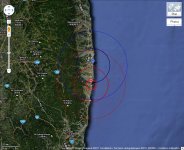
snap20110315114016.jpgvia yamahiro
http://maps.google.co.jp/maps/ms?gl=jp&ie=UTF8&brcurrent=3,0x6020efcb3edec50d:0x84ba4122ed907c54,0&oe=UTF8&msa=0&msid=216614052816461214939.00049e41a88ce9b7c54b6
 
Status
Not open for further replies.
Back
Top