Shiloh
Editor, Senior Moderator
Source: http://weblogs.baltimoresun.com/fea...g/2008/06/removing_a_tick_the_monday_con.html
Removing a tick -- the Monday consult
Lyme diseaseLyme Disease, and how to avoid it, is the subject of today's Consult, because it's the time of year to be outside. Readers wanted to know how to remove a tick, how to look for symptoms of the disease, and whether they should subject their kids to an annual Lyme disease test.
As it happens, the Maryland Department of Health & Mental Hygiene has a great web site on the subject. Here's a primer on how to remove the tick. You'll need tweezers.
As for how to recognize the symptoms of Lyme disease. ...in an interview with my colleague Michelle Deal-Zimmerman last year, Dr. Robert Edelman, a University of Maryland pediatrician and infectious disease specialist, said the surest sign is the distinctive bull's-eye rash, which 90 percent of those who get Lyme disease exhibit. Other symptoms are headache, fatigue, and muscle aches.
As for the blood test, he said that it may not always be helpful because it can take weeks after an infection for the test to register a positive result.
Our sometime expert Dr. Daniel Levy got back to me with a few other thoughts; I'm posting them as a comment below.
Now, as for next week: Karen, we'll get to positive vs. negative discipline then if possible. In the meantime, can you provide a few more details on what you want to know that might help the expert and other parents weigh in?
Comment From Dr. Dan Levy:
Ticks are insects that are attracted to warm-blooded animals, and feed by attaching themselves to the skin of an animal or human host. Typically, the tick injects a bit of saliva into the wound, which helps draw blood into its body. Since the tick attaches to the skin, the best means for removal is the use of a tweezer, with gentle, gradual traction on the head of the tick until it's wholly removed. If a tweezer isn't available, use a tissue and grasp the tick with the fingernails. Clean the area with alcohol or peroxide.
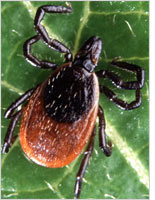
Lyme disease is a bacterial infection caused by the tiny deer tick, which is about the size of the head of a pin. It is known that the Lyme bacteria is injected into the host as the tick withdraws blood. If the tick is attached less than 24-36 hours there is little likelihood of infection.
Symptoms of Lyme often appear within days to several weeks of the bite. Common symptons include fever, headache, joint pain, and a round, slightly raised, red rash with a clear center known as a target lesion. If Lyme is suspected in a child, a blood test called a Lyme titer is done, but the child is generally treated because lab tests can be unreliable.
There is no acceptable vaccine for Lyme Disease, and kids should not be routinely tested for Lyme.
Dan Levy
Removing a tick -- the Monday consult
Lyme diseaseLyme Disease, and how to avoid it, is the subject of today's Consult, because it's the time of year to be outside. Readers wanted to know how to remove a tick, how to look for symptoms of the disease, and whether they should subject their kids to an annual Lyme disease test.
As it happens, the Maryland Department of Health & Mental Hygiene has a great web site on the subject. Here's a primer on how to remove the tick. You'll need tweezers.
As for how to recognize the symptoms of Lyme disease. ...in an interview with my colleague Michelle Deal-Zimmerman last year, Dr. Robert Edelman, a University of Maryland pediatrician and infectious disease specialist, said the surest sign is the distinctive bull's-eye rash, which 90 percent of those who get Lyme disease exhibit. Other symptoms are headache, fatigue, and muscle aches.
As for the blood test, he said that it may not always be helpful because it can take weeks after an infection for the test to register a positive result.
Our sometime expert Dr. Daniel Levy got back to me with a few other thoughts; I'm posting them as a comment below.
Now, as for next week: Karen, we'll get to positive vs. negative discipline then if possible. In the meantime, can you provide a few more details on what you want to know that might help the expert and other parents weigh in?
Comment From Dr. Dan Levy:
Ticks are insects that are attracted to warm-blooded animals, and feed by attaching themselves to the skin of an animal or human host. Typically, the tick injects a bit of saliva into the wound, which helps draw blood into its body. Since the tick attaches to the skin, the best means for removal is the use of a tweezer, with gentle, gradual traction on the head of the tick until it's wholly removed. If a tweezer isn't available, use a tissue and grasp the tick with the fingernails. Clean the area with alcohol or peroxide.
Lyme disease is a bacterial infection caused by the tiny deer tick, which is about the size of the head of a pin. It is known that the Lyme bacteria is injected into the host as the tick withdraws blood. If the tick is attached less than 24-36 hours there is little likelihood of infection.
Symptoms of Lyme often appear within days to several weeks of the bite. Common symptons include fever, headache, joint pain, and a round, slightly raised, red rash with a clear center known as a target lesion. If Lyme is suspected in a child, a blood test called a Lyme titer is done, but the child is generally treated because lab tests can be unreliable.
There is no acceptable vaccine for Lyme Disease, and kids should not be routinely tested for Lyme.
Dan Levy