Pathfinder
Editor, Senior Moderator
Translation Google
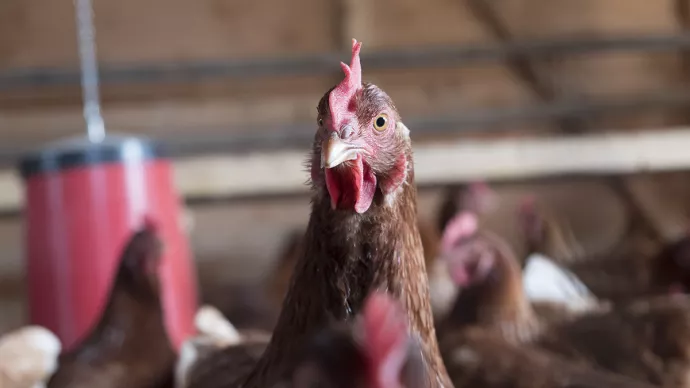
Pascal Xicluna / agriculture.gouv.fr
October 15, 2025 Press Release
Highly pathogenic avian influenza: France places its territory at "moderate" risk level to strengthen protection of poultry farms
A decree published on October 15, 2025, in the Official Journal raises the risk level for highly pathogenic avian influenza (HPAI) from "negligible" to "moderate" throughout metropolitan France. Prevention and biosecurity measures for poultry farms are being strengthened.
Detections of highly pathogenic avian influenza (HPAI) are increasing in Europe among migratory birds, particularly in Spain, Germany, and also in France. These cases confirm a strong infection dynamic among wild birds using descending migration corridors during this time of year.
Furthermore, two first outbreaks of HPAI were confirmed in France, on October 10, 2025 in a pheasant and partridge farm in Pas-de-Calais, then on October 14 in a farmyard in Seine-Maritime.
Given the risk of further introduction of the HPAI virus into livestock farming from migratory wild birds, the Ministry of Agriculture, Agri-Food and Food Sovereignty is raising the risk level from "negligible" to "moderate" across the entire metropolitan territory as of October 16, 2025 (see the ministerial decree here). France has been at the "negligible" risk level since May 8, 2025.
This decision results in the implementation of the following reinforced prevention and biosecurity measures:
These enhanced measures complement the mandatory vaccination campaign for commercial flocks with more than 250 ducks. Launched for the first time in France on October 1, [SUP]2023[/SUP] , mandatory duck vaccination has proven its effectiveness: only 10 outbreaks during the 2023-2024 season and 15 in 2024-2025, compared to several hundred before vaccination. These positive results have led to the renewal of this vaccination strategy for the 2025-2026 campaign.
The strategy to combat HPAI in France is based on a coherent and complementary triptych:
- Biosecurity aims to limit contact between poultry and potential sources of infection.
- Regular surveillance allows for early detection of outbreaks, essential for rapid and effective management.
- Vaccination ensures lasting immune protection for at-risk flocks, reducing the spread of the virus and its economic impacts.
As a reminder, the consumption of meat, foie gras and eggs – and more generally, any food product – from poultry vaccinated against HPAI does not present any risk to humans.
[SUP]1 [/SUP]ZRD : zone at risk of diffusion with a high density of palmiped farms
[SUP]2 [/SUP]ZRP : zone at particular risk in which natural conditions increase the risk of contamination of farms by wild fauna.
...
https://agriculture.gouv.fr/iahp-la...isque-modere-pour-renforcer-la-protection-des
--------------------------------------------
See also:
https://flutrackers.com/forum/forum...-france-2025-2026-h5n1-in-poultry#post1021022
Pascal Xicluna / agriculture.gouv.fr
October 15, 2025 Press Release
Highly pathogenic avian influenza: France places its territory at "moderate" risk level to strengthen protection of poultry farms
A decree published on October 15, 2025, in the Official Journal raises the risk level for highly pathogenic avian influenza (HPAI) from "negligible" to "moderate" throughout metropolitan France. Prevention and biosecurity measures for poultry farms are being strengthened.
Detections of highly pathogenic avian influenza (HPAI) are increasing in Europe among migratory birds, particularly in Spain, Germany, and also in France. These cases confirm a strong infection dynamic among wild birds using descending migration corridors during this time of year.
Furthermore, two first outbreaks of HPAI were confirmed in France, on October 10, 2025 in a pheasant and partridge farm in Pas-de-Calais, then on October 14 in a farmyard in Seine-Maritime.
Given the risk of further introduction of the HPAI virus into livestock farming from migratory wild birds, the Ministry of Agriculture, Agri-Food and Food Sovereignty is raising the risk level from "negligible" to "moderate" across the entire metropolitan territory as of October 16, 2025 (see the ministerial decree here). France has been at the "negligible" risk level since May 8, 2025.
This decision results in the implementation of the following reinforced prevention and biosecurity measures:
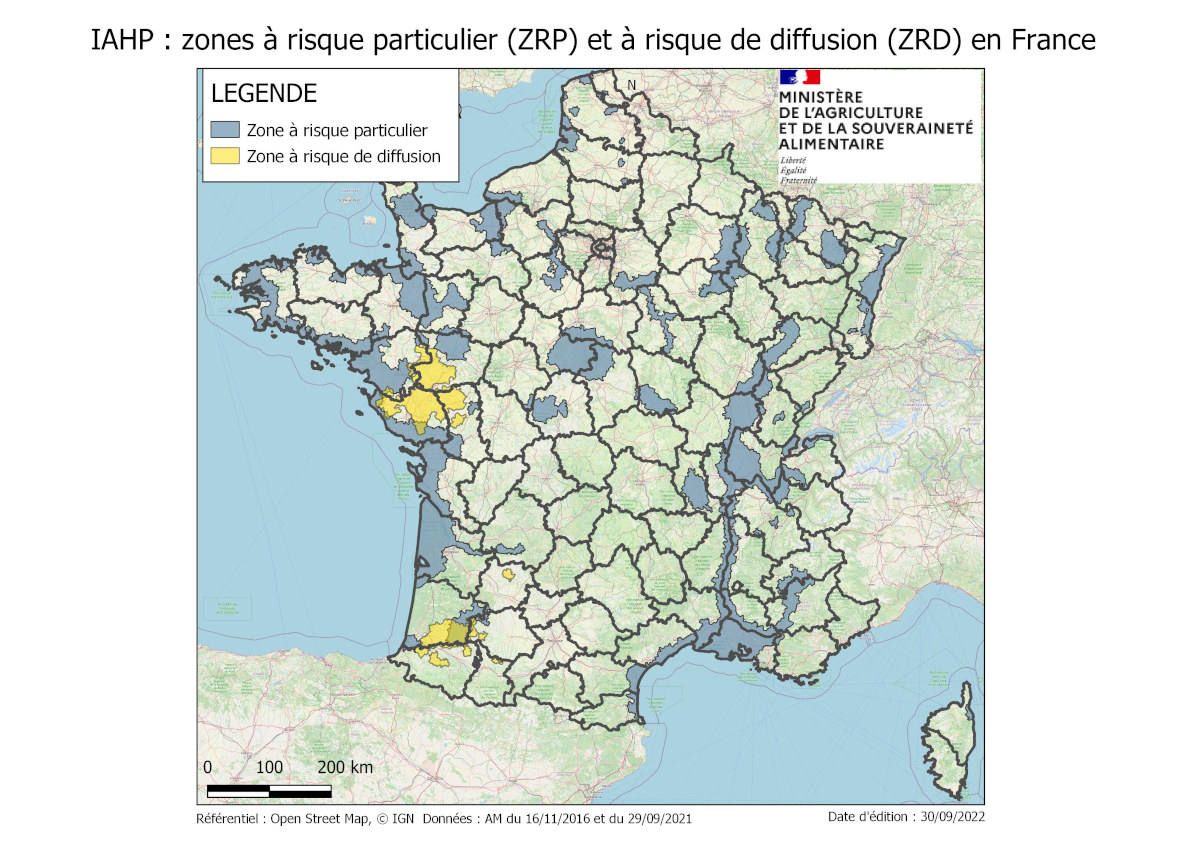
- Areas at risk of dissemination (ZRD [SUP]1[/SUP] ) : shelter for palmipeds less than 42 days old; ban on gatherings of birds.
- Special risk areas (ZRP [SUP]2[/SUP] ) : sheltering of poultry of all species; restrictions on the use of decoys according to the categories of holders; conditions before the movement of game birds; prohibition of gatherings of birds.
- For the entire territory : implementation of reinforced biosecurity measures during the transport of web-footed birds; special conditions for transport and use of decoys.
These enhanced measures complement the mandatory vaccination campaign for commercial flocks with more than 250 ducks. Launched for the first time in France on October 1, [SUP]2023[/SUP] , mandatory duck vaccination has proven its effectiveness: only 10 outbreaks during the 2023-2024 season and 15 in 2024-2025, compared to several hundred before vaccination. These positive results have led to the renewal of this vaccination strategy for the 2025-2026 campaign.
The strategy to combat HPAI in France is based on a coherent and complementary triptych:
- Biosecurity aims to limit contact between poultry and potential sources of infection.
- Regular surveillance allows for early detection of outbreaks, essential for rapid and effective management.
- Vaccination ensures lasting immune protection for at-risk flocks, reducing the spread of the virus and its economic impacts.
As a reminder, the consumption of meat, foie gras and eggs – and more generally, any food product – from poultry vaccinated against HPAI does not present any risk to humans.
[SUP]1 [/SUP]ZRD : zone at risk of diffusion with a high density of palmiped farms
[SUP]2 [/SUP]ZRP : zone at particular risk in which natural conditions increase the risk of contamination of farms by wild fauna.
...
https://agriculture.gouv.fr/iahp-la...isque-modere-pour-renforcer-la-protection-des
--------------------------------------------
See also:
https://flutrackers.com/forum/forum...-france-2025-2026-h5n1-in-poultry#post1021022