• FluTrackers.com Inc. does not provide medical advice. Information on this web site is collected from various internet resources, and the FluTrackers board of directors makes no warranty to the safety, efficacy, correctness or completeness of the information posted on this site by any author or poster. The information collated here is for instructional and/or discussion purposes only and is NOT intended to diagnose or treat any disease, illness, or other medical condition. Every individual reader or poster should seek advice from their personal physician/healthcare practitioner before considering or using any interventions that are discussed on this website. By continuing to access this website you agree to consult your personal physican before using any interventions posted on this website, and you agree to hold harmless FluTrackers.com Inc., the board of directors, the members, and all authors and posters for any effects from use of any medication, supplement, vitamin or other substance, device, intervention, etc. mentioned in posts on this website, or other internet venues referenced in posts on this website.
  • We are not asking for any donations. Do not donate to any entity who says they are raising funds for us.

H5N1 bird flu spread by drinking water ?

Gert van der Hoek

In Memoriam - Editor, Senior Moderator
machinetranslated

07.07.2007 05:02 Dipl. - engineer Wilfried Soddemann

H5N1 bird flu by drinking water transferably

Risk evaluations of BfR/FLI and UBA are fundamentally wrong .
The lethal H5N1 bird flu virus will be transferred also into Germany to humans via drinking water, as with the birds.

Recent research results must worry: So far the virus had to reach the bronchi and the lung of humans, in order to stick on.

Now it infects the upper respiratory system (mucous membranes of the throat when drinking, mucous membranes of the nose in Indonesia also and vmtl. also the binding skin of the eyes as well as the ear drum skin diaphragm e.g. at showering).

In three cases (Viet Nam, Thailand) stomach and intestine were by the H5N1-Virus stricken, not however the bronchi and the lung. The virus must have been thus orally taken up, e.g. when drinking contaminated water.

The Vireneliminationsleistung of the drinking water processing plants in Germany does not fulfill regularly the requirements of the WHO and the USA. A Virenelimination of maximally 99.5%, the WHO reaches the flocculation and filtration of Oberflächenwasser demands 99.9999% to 99.999999%. The ventilation and high-speed filtration from groundwater to the Enteisenung and Entmanganung do not bring Virenelimination.

The USA require 99.99%. Conventional disinfection procedures like the Chlorung bring few, because Viruspartikel are chlorine tolerant and occur in the Rohwasser not individually, but clumped and therefore by chlorine cannot be achieved.


http://www.ad-hoc-news.de/Aktuelle-...ona Köhler-- (Mit Bild)#kommentarbereichunten
 
Last edited by a moderator:
Re: H5N1 bird flu by drinking water ?

Re: H5N1 bird flu by drinking water ?

he says viruses may glue together so not all viruses are reached by chlorine.
But apparantly he is civil engineer, not a virologist, and gives no sources.

=====================================================================

The monitoring drinking water system in Germany: neither independent nor efficient
The monitoring drinking water system in Germany is considered to be problematic as the survey of the drinking water is almost exclusively being performed by the water distribution companies themselves or by their order. German water distribution companies usually are municipal companies under public law, purpose federations or associations under private law with a municipal cooperation. For the legal control of the drinking water - also on the municipal level - the health authorities of the county district and those cities without a surrounding district are in charge. The function of a regular control of the drinking water on site does not belong to the field of duty to the Federation and the counties.
Positive bacteriological findings have to be rare as chlorinated drinking water is regularly being analysed for indicator viruses regulated by the drinking water ordinance after the chlorination. Negative bacteriological findings are no evidence for the absence of viruses. Examinations for Noro- and Rotaviruses are hardly being performed in Germany, although it is known from a multitude of examinations that viruses can be contained in the drinking water. The Norovirus- and the Rotavirusinfections are the virus infections that are the most often being reported to the Robert Koch-Institute Berlin by the health authorities.
The feeding stuff water is - if at all - being analysed only for few bacteriological parameters and chlorinated water in most cases after the chlorination. Microbiological pollution of the feeding stuff water may lead to the high use of antibiotics concerning the productive livestock and via the produced meat it may lead to antibiotic resistance among the humans.
The testing of drinking water is to be conferred on independent authorities and laboratories of the counties. Analyses for indicator viruses regulated by the drinking water ordinance have to be effected before the chlorination. Drinking water has to be analysed systematically for Noro- and Rotaviruses. The feeding stuff water has to be monitored in the same way.

umwelt-medizin-gesellschaft 19 (2): 134-139

Autor: Bauassessor Dipl.-Ing. Wilfried Soddemann, Wilhelm-Ziemons-Straße 103, 52078 Aachen, E-Mail: soddemann-aachen@t-online.de


==========================================================================


http://www.schattenblick.de/infopool/umwelt/wasser/uwama077.html Shade view? INFO. POOL? ENVIRONMENT? WATER MASSNAHMEN/077: Drinking water also on viruses examine (BBU) BBU WATER CIRCULAR NR. 841 - December 2006 Freiburger working group water in the Federal association citizens' initiatives environmental protection e.V. (BBU) Drinking water must be examined also for viruses... demands LEENA MAUNULA et aluminium in its essay "from drinking water outgoing Norovirus epidemic diseases" in ENVIRONMENTAL MEDICINE COMPANY 2/06, S. 141-145. Due to Norovirusepidemien in Finland the authoresses come to the result: "legal measures for the viralen monitoring of the drinking water as part of the mikrobiellen Risikoassessments of drinking water production should be seriously considered." The exclusive Beprobung on bacteria is not sufficient, since by it viral caused disease transmissions over the drinking water path not be recognized and not prevented cannot: "the monitoring water depends nevertheless on indicator organisms as coliformen germs or Enterokokkoken, whose survival rate is shorter in the water than from Enteroviren, in particular of Noroviren and the hepatitis AVirus. Therefore viruses can be easily in ' mikrobiell immaculate ' water present." In Finland epidemic diseases could be observed from 1998 to 2003 41 water-caused Norovirus. With 28 of these 41 disease outbreaks the drinking water on Noroviren could be examined. Ten samples were positive - which is classified of the authoresses as "considerably". With nine samples the analyzed sequences of these viruses were found to with the patients identical the kind of virus, so that nine disease outbreaks could be attributed clearly to viral the contaminated drinking water. The large amount of genetically different Norovirus Genotypen for the Nachverfolgung of proved water-conditioned epidemic diseases than extremely favourably. As far as disease outbreaks were attributed to viral loaded groundwater, the Noravirusepidemien in eight cases in public-local potable water supply systems arose. Filters of cases were observed with the use of private groundwater wells with holiday houses and camping sites. Flu viruses in the drinking water? The German drinking water commission at the Federal Office for Environment Protection assumes that, "that it no epidemiological proofs for it gives that human Influenzaviren will transfer over the drinking water". To begin, WILFRIED SODDEMANN, formerly director/conductor of the national environmental office in Aachen (s. RUNDBR has the rebutting evidence. 617/4), made its task of life. Under the heading "micro-biological drinking water monitoring in Germany: neither independently nor efficiently "SODDEMANN in ENVIRONMENTAL MEDICINE COMPANY, S publishes 2/06. 134 - 139, a Philippika against the ignorant authorities. SODDEMANN it criticizes among other things that the drinking water investigations are accomplished "almost exclusively" by the water supply enterprises themselves or in their order - and not by independent instances. So it is to be also explained that the drinking water in Germany was not examined as at all as well for pathogene viruses. That is among other things precarious, because the potable water supply plants in Germany would exhibit altogether low conditions "for the elimination of smallest particles and thus from viruses". And the often used Chlorung "does not kill viruses lastingly surely off". Therefore also flu epidemic diseases could be released over the drinking water path (cf. 620/2 3; s. box). Virus infections over the "cooling chain" in the potable water supply The more coldly the drinking water, the more largely is the survival rate of the viruses. That is of importance, because toward end of the winter in months cooled down February and March waters as well as those the drinking water pipelines shifted in the soil so strongly, "that in many potable water supply areas a constant cooling chain (.) from the raw water winning to the annexes of the consumers adjusted itself". From it resulting the conclusion of SODDEMANN: "via cooling chain potable water supply know thus with in the months February and March 4 - 5 degrees Celsius cold drinking water (.) pathogene viruses from waters to humans arrive." And soaking water for the animals on farms is not examined already at all. To that extent it is not to be excluded that also over mikrobiell loaded soaking water will transfer the bird flu could. Since soaking water is not usually even gechlort, not only virale, but also bacterially released animal diseases can be transferred, which leads again to a high antibiotic employment during the keeping of domestic cattle - with all consequences for the resistance formation. Further information: Mr. Bauassesor Dipl. Ing. Wilfried Soddemann William Ziemons STR. 103 52078 A A C h e n E-Mail: soddemann aachen@t online.de * Everything over Legionellen can reread you in our gathering of material over these malicious pathogens from the warm water line. The gathering of material "Legionellen" gives it approximately VOREINSENDUNG from 10 euro (v-cheque, euro Briefm., bar) at the Ak to water, Rennerstr. 10, 79106 Frbg. How does one make water soft? Our gathering of material over the central softening in the water company can approximately VOREINSENDUNG of 11 euro (v cheque, bar, Briefm.) are requested. (case receipts to be needed, please the order always a prepared receipt for stamping settle!) * Source: BBU WATER CIRCULAR - NR. 841/2006 publisher: Freiburger working group water in the Federal association citizens' initiatives environmental protection e.V. (BBU) Rennerstr. 10, D-79106 Freiburg Tel.: 0761/275693. Fax: 0761/288216 E-Mail: nik@akwasser.de InterNet: http://www.akwasser.de The BBU WATER CIRCULAR can be subscribed by Voreinzahlung of 30 euro for 30 expenditures on the postal bank account working group water, acc. no.. 41952 757, postal bank Klrh., BLZ 660,100 75. Our communication connections: Tel.: 0761/275693. Fax: 288216; email: nik@akwasser.de; in the InterNet we are under to find: http://www.akwasser.de Opinion contributions do not show in every case the position of the BBU! The further use of the information in this CIRCULAR is desired with indication of source (!)! (C): Freiburger Ak water in the BBU BBU WATER CIRCULAR NR. 841 published in the shade view to 7 February 2007
 
Re: H5N1 bird flu by drinking water ?

Re: H5N1 bird flu by drinking water ?

According to a report recently released by the World Health Organization (WHO), the risk of avian flu (H5N1) spreading via public drinking water and sewage systems is minimized, if not eliminated, through basic disinfection practices. The document, Review of Latest Available Evidence on Risks to Human Health through Potential Transmission of Avian Influenza (H5N1) Through Water and Sewage, examines the routes of entry of the avian influenza H5N1 virus into water and sewage, ...

The report concludes that water supplies receiving treatment as recommended in the WHO Guidelines for Drinking Water Quality are considered unlikely to pose infection risk, even if infected waterfowl are present in source waters.

Cited in the study is the fact that influenza viruses are susceptible to disinfectants due to their structures. The introduction of chlorination or alternative disinfectant residuals into water distribution systems by authorities is considered necessary to managing risk. Additionally, WHO advises that in individual households where water safety is questionable, drinking water should undergo home chlorination (addition of bleach) or boiling to deactivate the virus.


From Water Quality and Health, May 8, 2006

http://www.waterandhealth.org/news_center/in_news050806.php3

Links to source documents contained within newsletter.
 
Re: H5N1 bird flu by drinking water ?

Re: H5N1 bird flu by drinking water ?

H5N1 bird flu: Spread by drinking water
Risk evaluations of the German authorities BfR/FLI and UBA are fundamentally wrong. The lethal H5N1 bird flu virus will be strong seasonal in the cold transferred to humans via cold drinking water also in Germany, as with the birds.
Recent research results must worry: So far the virus had to reach the bronchi and the lungs of humans in order to infect man. Now in Indonesia it infects the upper respiratory system (mucous membranes of the throat and mucous membranes of the nose e.g. when drinking and probably also the conjunctiva of the eyes as well as the ear drum skin diaphragm e.g. at showering).
In three cases (Viet Nam, Thailand) stomach and intestine by the H5N1 Virus were stricken, not however the bronchi and the lungs. The virus must have been thus orally taken up, e.g. when drinking contaminated water.
Ground water in Germany used for drinking water is not free from viruses as the German authorities BfR/FLI and UBA wrong insist. The performance of the drinking water processing plants to eliminate viruses in Germany regularly does not meet the requirements of the WHO and the USA. The performance of flocculation and filtration to eliminate viruses from surface water reaches maximally 99.5%. The WHO Drinking Water Guidelines (2004) demands 99.9999% to 99.999999%. The ventilation and high-speed filtration from groundwater to eliminate iron and manganese do not eliminate any viruses. The US Ground Water Rule requires 99.99%. Conventional disinfection procedures by chlorine are poor, because viruses are chlorine tolerant and occur in the raw water not individually, but clumped and therefore by chlorine cannot be achieved.
Contact: soddemann-aachen@t-online.de


Grippe de l'oiseau H5N1 transmise par l'eau potable.
Les ?valuations de risque des administrations allemandes BfR/FLI et UBA sont fondamentalement faux que le virus mortel de grippe de l'oiseau H5N1 sera transf?r? aux humains ?galement en l'Allemagne exact saisonnier pendant le froid par l'interm?diaire de l'eau froid potable, comme avec les oiseaux.
Les r?sultats de la recherche r?cents doivent s'inqui?ter: Jusqu'ici le virus a d? atteindre les bronches et le poumon des humains, afin de coller dessus. Maintenant il infecte en Indon?sie le syst?me respiratoire sup?rieur (membranes muqueuses de la gorge par exemple en buvant, les membranes muqueuses du nez ?galement et probable ?galement la peau obligatoire des yeux aussi bien que le diaphragme de peau de tambour d'oreille par exemple ? la douche).
Dans trois cas (Vietnam, Tha?lande) l'estomac et l'intestin ?taient par le H5N1-Virus frapp?, pas cependant les bronches et le poumon. Le virus doit avoir ?t? oralement pris ainsi, par exemple quand l'eau souill?e potable.
L?eau du sous-sol en Allemagne utile comme eau potable n?est pas ainsi de quelle puret? et sans virus comme les administrations allemandes BfR/FLI et UBA faux pr?tendre. La performance d?elimination virus des installations de transformation d'eau potable en Allemagne ne remplit pas r?guli?rement les conditions de l'OMS et des Etats-Unis. La floculation et la filtration atteint l?elimination virus au maximum de 99.5%, l'OMS exige pour l?eau surface 99.9999% ? 99.999999%. La ventilation et la filtration ? grande vitesse des eaux souterraines ? l'elimination de fer et de mangan?se n'apportent pas du tout de performance d?elimination virus. Les Etats-Unis exigent 99.99%. Les proc?dures conventionnelles de d?sinfection comme avec chlore apportent peu, parce que virus sont chlore tol?rant et se produisent dans l?eau pas individuellement, mais group? en masse compacte et donc par le chlore ne peut pas ?tre r?alis?.
Contact: soddemann-aachen@t-online.de


H5N1 Vogelgrippe durch Trinkwasser ?bertragbar
Die Risikobewertungen von BfR/FLI und UBA sind grundlegend falsch. Das lebensgef?hrliche H5N1 Vogelgrippe-Virus wird auch in Deutschland streng saisonal zeitgleich mit dem Maximum der K?ltesumme des Winters auf die Menschen via kaltem Trinkwasser ?bertragen werden, wie bei den V?geln. J?ngste Forschungsergebnisse m?ssen beunruhigen: Bisher musste das Virus die Bronchien und die Lunge der Menschen erreichen, um anzustecken. Jetzt infiziert es in Indonesien auch die oberen Atemwege (Schleimh?ute des Rachens beim Trinken, Schleimh?ute der Nase und vmtl. auch die Bindehaut der Augen sowie die Ohrtrommelfellmembran z.B. beim Duschen). In drei F?llen (Vietnam, Thailand) waren Magen und Darm durch das H5N1-Virus befallen, nicht jedoch die Bronchien und die Lunge. Das Virus muss also oral aufgenommen worden sein, z.B. beim Trinken von kontaminiertem Wasser.
Das in Deutschland als Trinkwasser genutzte Grundwasser ist bei weitem nicht virenfrei, wie BfR/FLI und UBA falsch behaupten. Die Vireneliminationsleistung der Trinkwasseraufbereitungsanlagen in Deutschland erf?llt regelm??ig nicht die Anforderungen der WHO und der USA. Die Flockung und Filtration von Oberfl?chenwasser erreicht eine Virenelimination von maximal 99,5%, die WHO fordert 99,9999% bis 99,999999%. Die Bel?ftung und Schnellfiltration von Grundwasser zur Enteisenung und Entmanganung bringt keine Virenelimination. Die USA verlangen 99,99%. Herk?mmliche Desinfektionsverfahren wie die Chlorung bringen wenig, weil Viruspartikel chlortolerant sind und im Rohwasser nicht einzeln, sondern verklumpt vorkommen und deshalb vom Chlor nicht erreicht werden k?nnen.
Kontakt: soddemann-aachen@t-online.de


H5N1 and Drinking Water
References
Dinh PN, Long HT, Tien NTK, Hien NT, Mai LTQ, Phong LH, et al. Risk factors for human infection with avian influenza A H5N1, Vietnam, 2004. Emerg Infect Dis [serial on the Internet]. 2006 Dec [date cited]. Available from http://www.cdc.gov/ncidod/EID/vol12no12/06-0829.htm
EFFECT MEASURE, Bird flu in water. How big a problem? Available from http://www.agoravox.com/article.php3?id_article=5455
Walker K on Webster RG, H5N1 Adapts To Summer Water Heat, TERRA DAILY, Oxford, England (UPI) May 03, 2006. Available from http://www.terradaily.com/reports/H5N1_Adapts_To_Summer_Water_Heat.html
RIVM NL, Schijven FJ, Teunis PFM, Roda Husman AM de, Quantitative Risk Assessment of Avian Influenza Virus Infection via Water. Available from http://www.rivm.nl/bibliotheek/rapporten/703719012.html
BfR/FLI, Zum Risiko der ?bertragung des Vogelgrippevirus ?ber Trinkwasser, Gemeinsame Stellungnahme Nr. 017/2006 des Friedrich-Loeffler-Instituts und des BfR vom 22. M?rz 2006. Available from http://www.bfr.bund.de/cm/208/zum_risiko_der_uebertragung_des_vogelgrippevirus_ueber_trinkwasser.pdf
UBA, Keine Gefahr f?r Trinkwasser aus den ?ffentlichen Leitungsnetzen durch Vogelgrippe, Hinweise f?r Trinkwassernutzer, Stand 19. April 2006. Available from http://www.umweltbundesamt.de/uba-info-presse/hintergrund/vogelgrippe-trinkwasser.pdf
UBA, Trinkwasser und Avi?re Influenza A/H5N1, Hinweise f?r Wasserversorger, Stand 19. April 2006. Available from http://www.umweltbundesamt.de/uba-info-presse/hintergrund/trinkwasser-aviaere-influenza.pdf
WHO, Questions & Answers on potential transmission of avian influenza (H5N1) through water, Sanitation and Hygiene and ways to reduce the risks to human health. Available from http://www.who.int/water_sanitation_health/emerging/AI_WASH_working_group_qas_april_2007.pdf
WHO, Review of latest available evidence on potential transmission of avian influenza (H5N1) through water and sewage and ways to reduce the risks to human health, Last updated 30/05/2006. Available from http://www.who.int/water_sanitation_health/emerging/h5n1background.pdf
WHO, Guidelines for drinking-water quality, third edition, incorporating first addendum, 7, Microbial aspects, 131-141. Available from
http://www.who.int/water_sanitation_health/dwq/gdwq0506_7.pdf
U.S. EPA, Ground Water Rule (GWR). EPA published the Ground Water Rule in the Federal Register on November 08, 2006. Available from http://www.epa.gov/safewater/disinfection/gwr/
SODDEMANN W, Influenza in Deutschland: Als Zoonose durch Trinkwasser ?bertragbar? Hinweise und Indizien, umwelt-medizin-gesellschaft 18 (1): 49-60. Available from http://www.umg-verlag.de/umwelt-medizin-gesellschaft/105_sodd.html
 
Re: H5N1 bird flu spread by drinking water ?

Thanks for participating mr Soddemann and welcome at FluTrackers. :)

Being no expert at all, it seems you have a point here: chlorification of the water cannot kill 100% of the virusses.

Your input raises some questions, if were are talking about a substantial health risk or not:

1. To get infected by a virus you need a certain "viral load"? It seems very hard to receive a "sufficient" viral load by drinking water which is disinfected by chlorine? (Even if not 100% disinfected?).

2. If you find the virus in the stomach and intestines, that does not prove the virus got there orally? A virus can travel through the body to other organs?

3. Most of the drinking water in Germany is from wells or springs? Not from lakes or rivers?

Just some questions from a humble newssweeper.


credits Highflyer for input
 
Re: H5N1 bird flu spread by drinking water ?

It would be interesting to know if the Kelbra lake supplies drinking water to central Germany. Since it was formed by damming the river, I would suspect that hydroelectric power and some manner of drinking water or water for irrigation might come from there.

That having been said, we should have seen some human infections by now all over the world if indeed drinking water was the cluprit, if not some full-blown outbreaks, much larger than what we have seen already.

We know there have been recent studies potentially linking lake and pond water to the transfer of H5N1 in wild birds and ducks/geese, but not treated, potable water.

www.scottmcpherson.net
 
Re: H5N1 bird flu spread by drinking water ?

In three cases (Viet Nam, Thailand) stomach and intestine by the H5N1 Virus were stricken, not however the bronchi and the lungs. The virus must have been thus orally taken up, e.g. when drinking contaminated water.

I believe there were some cases reported last year where eating contaminated poultry was believed to be the source of the virus or possibly the ingestion of infected feces. Why do you think those cases with the virus in the gastrointestinal tract contracted the virus through contaminated water?
 
Re: H5N1 bird flu spread by drinking water ?

@Dutchy
Your input raises some questions, if were are talking about a substantial health risk or not:
1. To get infected by a virus you need a certain "viral load"? It seems very hard to receive a "sufficient" viral load by drinking water which is disinfected by chlorine? (Even if not 100% disinfected?).
@1. Infection dose for seasonal influenza is very low. Infection dose for H5N1 is unknown. If H5N1 infects the upper respiratory system (mucous membranes of the throat and mucous membranes of the nose and probably also the conjunctiva of the eyes as well as the ear drum skin diaphragm) it may be, that the infection dose for H5N1 is like the seasonal influenza infection dose very low too.
2. If you find the virus in the stomach and intestines, that does not prove the virus got there orally? A virus can travel through the body to other organs?
@2. OK. But in this 3 cases the virus was NOT found in the the bronchi and the lungs.
3. Most of the drinking water in Germany is from wells or springs? Not from lakes or rivers?
@3. Deep, old, good filtered, from soil well protected, therefore ?real? Groundwater is rare in Germany. Ground water is contaminated by viruses too. Spring water is surface water. ?Clear? mountain spring water is not filtered by the clefts of the rock but contaminated at least by wildlife animals like birds.


@scottmcpherson
It would be interesting to know if the Kelbra lake supplies drinking water to central Germany.
@: Kelbra lake is a dam for the time the river is in flood.


@Laidback AI
I believe there were some cases reported last year where eating contaminated poultry was believed to be the source of the virus or possibly the ingestion of infected feces. Why do you think those cases with the virus in the gastrointestinal tract contracted the virus through contaminated water?
@: It?s one likely possibility. In the evolution viruses came always out of the water. Waterfowl are infected by H5N1 in the water by wild birds ? and if the infection dose is low enough humans too.

best regards
Wilfried Soddemann
Dipl.-Ing.


http://www.cidrap.umn.edu/cidrap/content/influenza/avianflu/news/jun0607indonesia.html
CIDRAP
Indonesia suspects ominous H5N1 mutations
?
Wayan Teguh Wibawan, a microbiologist from Indonesia's avian flu commission, told Reuters that the suspicions are based on preliminary results of genetic tests at laboratories in Indonesia. The amino acid structure of poultry H5N1 samples is becoming increasingly similar to that seen in human H5N1 samples, he said.
The similarity in amino acid structure makes it easier for the virus to attach to receptors on cells that line the throat and lungs, Wibawan told Reuters. The virus would have to attach readily to human cell receptors in order to easily pass from birds to humans, he said.


http://www.who.int/mediacentre/factsheets/avian_influenza/en/index.html#history
WHO, Avian influenza (" bird flu") - Fact sheet
?
THE DISEASE IN HUMANS
?
The second mechanism is a more gradual process of adaptive mutation, whereby the capability of the virus to bind to human cells increases during subsequent infections of humans.
?
Swimming in water bodies where the carcasses of dead infected birds have been discarded or which may have been contaminated by faeces from infected ducks or other birds might be another source of exposure. In some cases, investigations have been unable to identify a plausible exposure source, suggesting that some as yet unknown environmental factor, involving contamination with the virus, may be implicated in a small number of cases.
?
For unknown reasons, most cases have occurred in rural and periurban households ? . Again for unknown reasons, very few cases have been detected in presumed high-risk groups, such as commercial poultry workers, workers at live poultry markets, cullers, veterinarians, and health staff caring for patients without adequate protective equipment. Also lacking is an explanation for the puzzling concentration of cases in previously healthy children and young adults. Research is urgently needed to better define the exposure circumstances, behaviours, and possible genetic or immunological factors that might enhance the likelihood of human infection.
Assessment of possible cases. ? Exposure to an environment that may have been contaminated by faeces from infected birds is a second, though less common, source of human infection. To date, not all human cases have arisen from exposure to dead or visibly ill domestic birds. Research published in 2005 has shown that domestic ducks can excrete large quantities of highly pathogenic virus without showing signs of illness.
?
Clinical features.
Initial symptoms include a high fever, usually with a temperature higher than 38?C, and influenza-like symptoms. Diarrhoea, vomiting, abdominal pain, chest pain, and bleeding from the nose and gums have also been reported as early symptoms in some patients. Watery diarrhoea without blood appears to be more common in H5N1 avian influenza than in normal seasonal influenza. The spectrum of clinical symptoms may, however, be broader, and not all confirmed patients have presented with respiratory symptoms. In two patients from southern Viet Nam, the clinical diagnosis was acute encephalitis; neither patient had respiratory symptoms at presentation. In another case, from Thailand, the patient presented with fever and diarrhoea, but no respiratory symptoms.


Here you can read sound thoughts on bird flu in water:

http://www.agoravox.com/article.php3?id_article=5455
Bird flu in water. How big a problem?
By Effect Measure
Friday 5 January 2007
One of the unanswered questions about the transmission of influenza H5N1 is the mode. We presume, probably correctly, that person to person spread is the main mode, mediated by coughing, breathing, sneezing. Whether the infective material is small enough to remain suspended in the air for long periods or whether it is primarily in large droplets that settle out quickly is a matter of importance still under debate but both possibilities pertain to person to person spread via the respiratory tract. Then there is the question of the role of inanimate objects, like door knobs, arm rests or personal physical contact, like shaking hands. There is evidence that the virus remains replicable in the environment for extended periods, although its replicable lifetime on hands may be much shorter, on the order of minutes. There is also the lingering suspicion that there may be other live reservoirs of the virus besides birds in nature we are not aware of. Even with poultry, a recognized reservoir. how the virus gets from birds to humans is a matter of debate. Is it through the bird respiratory tract or intestinal tract or feces laden dust? Finally, can a human contract H5N1 infection from water or food contaminated with the virus? If food is properly cooked it will kill the virus, although undercooked or raw food or its handling during preparation can still presumably infect someone (how, isn?t quite clear). What about water?
The issues are not just drinking water but also recreational water (lakes, streams, oceans) that might be contaminated by infected wild aquatic birds or wastewater discharges. Swimming exposes the conjunctiva of the eye (the thin tissue covering the front of the eyeball which has receptors for influenza virus), not to mention the nose and throat, both suspected sites of viral entry. Drinking water is also a concern. So it is important to have studies that try to nail down some of the unknowns.
A report out of Cornell University says neither drinking water nor wastewater containing viral discharges is likely to be a problem (the paper is published in Environmental Engineering Science and can be downloaded in .pdf format here). The Cornell researchers used the H5N2 subtype of influenza A (low pathogenic for birds and not known to be pathogenic for humans) as a surrogate for H5N1. They showed that the usual water and wastewater treatment modalities of chlorine and UV light were effective in inactivating the virus. Virus was placed into at two temperatures into water and small scale bacterial digesters (the method used in wastewater treatment plants). Each was treated with chlorine (the most common disinfectant in use in water and waste water treatment) and UV light (used primarily in wastewater treatment but also in some drinking water systems). Bacteria and viruses differ greatly in their sensitivity to treatment and no virus is thought to be indicative of the sensitivity of most other viruses. Thus the use of a relatively close avian influenza virus (H5N2) to test the sensitivity of H5N1 to treatment is a reasonable step.
We?ll skip a detailed description of the experimental protocol (you can find them in the paper and they are worth reading just to see how difficult some of these seemingly straightforward questions can be to answer). The persistence of the virus as a replicating entity in water at 4 degrees C. (about 40 degrees F.) is better and longer than at 37 degrees C. (body temperature), but in buffered water was consistently and constantly present for more than 50 hours. At 4 degrees C. in buffered water it was still there after two weeks. Thus the stuff doesn?t just disappear in the environment. It can be around for days or weeks after being deposited. In anaerobic digesters the virus was undetectable at 72 hours. The virus seemed quite sensitive to UV irradiation, although this method is used in only a small percentage of drinking water systems. We have previously discussed the use of UV lights in health care facilities as a possible prophylactic measure and these data seem to support the idea in a different context.
The data on chlorine disinfection is somewhat harder to interpret. Viruses vary widely in their sensitivity to chlorine, so it isn?t a given that chlorine disinfection will inactivate H5N1. The paper gives a Ct (contact time) value of 8 mg.min/L for the virus. Ct is the product of free available chlorine and the time it is in contact with the virus. The average free available chlorine in US drinking water systems is about 1 mg/L (1 ppm) and the paper cites average and median contact times of 237 minutes and 60 minutes, respectively, based on a literature review. This would give average and median Ct?s of 237 and 60 mg.min/L, far in excess of the inactivating levels found in this paper.
The apparent large Ct safety margin is reassuring, although these are average and median Ct?s. A median contact time of 60 minutes means half the systems had contact times less than 60, so half the systems had Cts with a safety margin less than ten fold, not quite so reassuring. Much depends on the distribution in the lower tail and the upper tail of the Ct inactivation estimate. And of course all of this only holds good for conditions similar to the bench experiments of this paper. The results do not tell us with certainty what would happen in a more natural and usual water and waste water environment. What happens when the virus is inside clumps of feces, for example, or in water of different pH or salt make-up?
There are also a number of treatment methods not tested here, among them ozone (now being used increasingly because of the resistance of parasite cysts to chlorine), chlorine dioxide, chloramines and some others. Many small water supplies (almost always groundwater sources), have no treatment at all, so none of this would apply in those cases.
This paper appears to be well done and provides good information. We need more work like it, although unfortunately this kind of work is not the road to academic stardom. It may not be elegant, but it is very, very useful.
 
Re: H5N1 bird flu spread by drinking water ?

This paper appears to be well done and provides good information. We need more work like it, although unfortunately this kind of work is not the road to academic stardom. It may not be elegant, but it is very, very useful.
very thought prevocking(spelling:D ).the lower areas of the Thames water (london)is recycled up to ten times:eek: even in the north of england problems happen a old work mate whoes father worked at a water treatment plant near us would now and again bring bottled water round for his son and grandchild,warnings were not issued:( thanks for that wilfred i will keep a open mind:tiphat:
 
Last edited by a moderator:
Re: H5N1 bird flu spread by drinking water ?

Hi deadandalive,

thanks for the flowers! You are right: Politicans don't love experts saying their concerns. From 1990 to 2005 I was the chief of the state environmental agency in Aachen, Germany, North Rhine-Westphalia.

Since 1993 I work to the subject "Waterborne Infections" and I think, that most of the strong seasonal infections like norovirus, rotavirus, salmonellae, campylobacter and - differing from the usual dogma - influenza is initial transmitted by drinking water dependent on the drinking water temperature (in Germany minimum feb/mar – maximum august). I know no evidence that influenza is primary transmitted by saliva droplets. The strong interdependence between influenza infections and environmental temperatures can’t be explained with the primary biotic transmission by saliva droplets from human to human with temperatures of 37,5°C. There must be an abiotic vehicle like cold drinking water. I don’t know another appropriate abiotic vehicle.

I looked for rotaviruses in drinking waters and found a positive rate from 20%. Than I wanted, that the water industry had to build ultrafiltration plants so that the regional politicians called for my removal. The Minister for environment and protection of consumers of North Rhine-Westphalia - at that time the “green” Bärbel Höhn - agreed and did so … Now I have the time working intensive about viruses in drinking water. I have no financial interest. Performance of drinking water processing plants to eliminate very small particles like viruses is the topic. For that Germany is a developing country. Ultra- and Nanofiltration as well as osmosis are able to remove viruses. Chlorine is less helpful. Conventional disinfection procedures by chlorine are poor, because viruses are chlorine tolerant and occur in the raw water not individually, but clumped and therefore by chlorine cannot be achieved. Effective chlorination apply to microorganisms in suspension, not embedded in particles or in biofilm.

Yours sincerely

Wilfried Soddemann
Dipl.-Ing.
 
Re: H5N1 bird flu spread by drinking water ?

@ Anne and: http://www.pasteur.fr/applications/e.../eau-prog.html


Eau, microbes et santé
Water, microbes and health
Programme and short summaries of the presentations
Jeudi 23 mars 2000
Thursday March 23, 2000

Enteroviruses as indicators of the viral contamination of water
Enteric viruses contaminating the environment represent a danger for public health. Therefore their detection in waters is of great importance.
The enteroviruses of the Picornaviridae family are represented by 66 different serotypes. They are at the origin of very different clinical manifestations, from asymptomatic infection, to digestive, cutaneous, ophtalmologic, heart and central nervous system symptoms. The enteroviruses are often detected in waste and surface waters, as well as in sea waters and shell fish. Their capacity to multiply in cell culture and the available molecular biology tools applied to their detection, predispose them as indicators of the viral contamination of waters.
Helena KOPECKA
Institut Pasteur, Paris, France

Environmental waters viruses: pathogenic agents and pollution markers
Among the many pathogenic enteric viruses which have been found in human stools and environment samples, only a few of them are well documented and known to cause environmentally transmitted diseases. Among them the Hepatitis A and E viruses and some astroviruses, rotaviruses and caliciviruses, with the Norwalk virus in particular, are implicated in serious waterborne diseases such as hepatitis and gastroenteritis. In contrast, the frequent presence of enteroviruses in environmental waters has not been considered to be a major public health problem since the vaccination efforts against poliomyelitis. However, these viruses constitute a possible indicator and a model of study for viral contamination of faecal origin. Moreover, they have been put in the foreground by the vaccination campaigns for eradicating poliomyelitis and poliovirus: enteroviruses will become the objects of accurate virus surveillance needed to monitor the disappearance of the poliovirus species from the environment. In addition, they could be the potential source of new pathogenic agents.
Francis DELPEYROUX
Institut Pasteur, Paris, France

Control of waterborne diseases in the 3rd millenium
After thousands of years, waterborne diseases are now at a very low level in most industrialized countries. Developing countries and remote areas of developed countries are still struggling not only for this control but also for water itself. Global climatic changes are forecasted for the next century and they will certainly affect the dissemination of waterborne diseases. Scarcity of potable water is a reality for many countries and emerging diseases are threatening again. Improved water treatment procedures such as membrane filtration or new disinfectants, preventive measures for the control of emerging diseases and better risk assessment methods will be some of the means to provide safe drinking water at a reasonable cost. We are still attempting to balance the risk between chemical contaminants in water and the microbes that it can transport: at the onset of the 3rd millenium we must be careful not to compromise what has been gained in terms of water quality during the 20th century by means as simple as the disinfection of water by chlorine.
Pierre PAYMENT
INRS, Institut Armand-Frappier, Laval, Canada

Microbial risk associated with water
The presentation will outline the principal linkages between water and health, and emphasise the role of water as a vector of disease when it contains microbes hazardous to human health. It will outline the principal issues and impediments to estimating the global burden of disease associated with microbial hazards encountered in drinking water. The paper will describe the major approaches adopted to regulation of these hazards in drinking water and their principal characteristics, including the approach to be followed in the development of the third edition of the World Health Organization’s "Guidelines for Drinking-water Quality".
Jamie BARTRAM
World Health Organization, Geneva, Suisse


best regards
Wilfried Soddemann
Dipl.-Ing.
 
Re: H5N1 bird flu spread by drinking water ?

lots of evidence that influenza spreads by saliva droplets,
little evidence that it spreads by drinking water.

We all know, flu usually spreads from human to human.
Also papers, tests with mice etc.
Flu mainly spreads respiratory.

I don't know about experiments showing that flu
spreads by drinking.
If it did, why aren't there tests with mice, ferrets
showing it ?

------------------

8mg.min/l , what does it mean ?

how much % of viruses are dectivated after 8min in 1 l ?
is it dependent on the concentration ?
 
Re: H5N1 bird flu spread by drinking water ?

Welcome, Wilfred. Thank you for the viewpoint and information. Glad to have you with us.
 
Re: H5N1 bird flu spread by drinking water ?

@gsgs

Hi, please help me. You say there are lots of evidence that influenza spreads by saliva droplets and we all know, flu usually spreads from human to human. Please blog some links of evidence that influenza spreads by saliva droplets. I don't know. My opinion I wrote by the following article. I think there ist a secondary biotic airborne transmission too, but first there must be an abiotic vehicle for initial primary transmission:


The primary transmission of the influenza by the bio tables droplet infection is extremely improbably because influenza epidemics
- only in 9% of the cases (season 2004/2005) together with recognized amassments arise.
- regularly first with babies and children begin.
- virologic locally singularly arise (influenza-subtypes and fine classification).
- arise geographically locally singularly.
- in large cities and densely populated areas to be proven not with priority.
- predominantly in the colder regions of Germany arise.
- their maxima regularly in certain circle/circle-free cities reach.
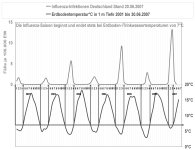
- strictly parallel to the hydrograph curve of the winter cooling sum run.
- by saliva droplets to hardly spread can. Saliva contains far less Influenza viruses than - heavier - the droplets from throats and nose.


The facts

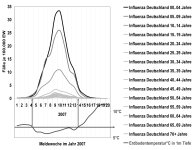
Influenza epidemics step to small extent as well as recognized amassments on (9% of the cases in the season 2004/2005) (RKI 2006). They begin regularly first with babies and children and have in their age groups also their maxima.

Influenza epidemics step virologic locally singularly on (influenza-subtypes and fine classification) (AGI 2007).

Influenza epidemics run also geographically locally singularly. They are not proven with priority in large cities and densely populated areas. They step predominantly in the colder regions of Germany on (the east also in the winter cold continental climate, southeast, altitudes) (RKI 2007). They reach their maxima regularly in certain circle/circle-free cities (absolute front runners: Frankenthal, Worms, district Stoll mountain) (RKI 2007).

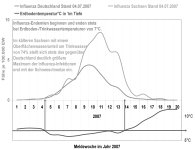
Influenza epidemics run strictly parallel to the hydrograph curve of the winter cooling sum.

Influenza epidemics can hardly spread by saliva droplets. Saliva contains far less Influenzaviruses than the substantially heavier droplets from throats and nose (ANONYMOUS 2003) (GOLDMANN 2001).

Human Influenzaviruses could being proven to pigs (faecal and oronasal), game lights (faecal and oronasal), cattle and goats in the eliminations of mammals such as, so that in principle the transmission path from the environment is over waters and the drinking water possible for BROWN (2004) (GRAVES et al. 1975) (KADEN et al. 2001) (KAWAOKA et al. 1986) (LANDOLT et al. 2003) (MARKOWSKA DANIEL et al. 1999) (RKI 1999) (VICENTE et al. 2002) (WEBSTER 1998) (ZHOU et al. 1996) (CARPENTER 2001). With considerable security in the future still further animal species infected with influenza A are discovered (WEBSTER 1998).


Elimination and inactivating of viruses during the drinking water processing

Drinking water is often not filtered in Germany or only roughly. The very small viruses are not removed surely thereby. For groundwater preparation wide-spread filtration plants for the distance of iron and manganese do not possess effect (WHO 2004) regarding the elimination of viruses. Even in Germany as particularly efficiently valid plants for the flocculation and filtration can, also with consideration of the common disinfection procedures, whose efficiency with sinking water temperature decreases [Chlorine and ozone treatment] and with micro organisms clumped in the water are only reduced effective [Chlorine, ozone treatment and UV irradiation], which do not reach from the WHO demanded eliminations and inactivating achievements (WHO 2004).


"Cooling chain of the public potable water supply"

Cold weather is with distance the most important parameter for the preservation of virulent Influenzaviruses in the water. The temperature minimum of the dam water in Germany amounts to during the months January and February 3-4?C. River water has its temperature minimum likewise in January and February of each yearly. Groundwater near the surface has in Germany at the groundwater surface - similar to the soil in 100 cm depth - its temperature minimum of for instance 3?C in February and March. Also from wells of larger depth taken groundwater can be colder with unsatisfactory sealing between the fountain and the surrounding rock by infiltration by surface water affected and therefore than the deeper groundwater. Bach hoists, from which surface water arrives on short ways at the wells, can have the same effect. Bank filtrate from wells, which were bored near the bank by surface waters, accepts the temperature in the winter of the cold surface water. Same applies to wells, from which with surface water enriched groundwater is promoted. The ground temperatures in a meter of depth correspond to the temperatures of the drinking water pipelines shifted frost-protected in the soils. The temperature minima of the ground temperatures in 100 cm depth amount to in Germany during the months February and March 3-5?C (DWD 2007). The temperatures of the drinking water pipelines and the drinking water transported in them adapt themselves to the ground temperatures. In the winter cold raw water remains cold in the drinking water processing plants and after the dressing to drinking water in the water tanks and water pipelines up to the annexe of the consumers. The temperature minimum of the drinking water at the annexe follows in particular the process of cold weather in the soil and in the water pipelines. It stops itself in the months February and March. The cold drinking water is only mixed in the dwellings at the taps with warm water from the house installation. Thus the constant "cooling chain of the public potable water supply" is described from the water winning to the consumers with a drinking water temperature of for instance 4-5?C in the months February and March of each yearly. Cold, young, freshly drinking water, taken out of surface water and badly protected groundwater near the surface as well as out of groundwater from roc, contaminated by Influenzaviruses, can be the abiotische vehicle, which transports virulent Influenzaviruses in the winter with 4-5?C conserved and over the constant "cooling chain of the public potable water supply" to humans.


Transmission paths of the drinking water

Infections by drinking water will not transfer alone by drinking the water. Further transmission paths are the inhalation of aerosols and the contact with the drinking water. Entrance gates with humans are conjunctiva, the nose mucous membrane, the mouth mucous membrane, the ear drum skin diaphragm, wounds and by catheters of affected other mucous membranes.


Conclusions

The primary transmission of the influenza by the bio tables droplet infection is already because of the strict dependence on environmental temperatures extremely improbable. The influenza must be transferred by increasingly a abiotisches vehicle efficient for the propagation of infections with increasing cold weather. Therefore must be searched for the transmission of the influenza for abiotischen vehicles dependent on cold weather. Drinking water is such a abiotisches vehicle. The stated references and indications show that cold drinking water can be that abiotische vehicle, with which virulent human Influenza viruses from the reservoirs arrives to humans and releases predominantly this way the seasonal influenza epidemics. That applies in particular also to the extremely lethal H5N1 bird flu, whose faecal transmission is indisputable.


References

AGI (2007): Arbeitsgemeinschaft Influenza http://influenza.rki.de/agi
ANONYM (2003): Understanding Sars and other Respiratory Infections May 2003.
http://www.ifh-homehygiene.org/2003/2downloadabledoc/SARS.pdf
BROWN (2004): Influenza Virus Infections of Pigs, Part 1: swine, avian & human influenza viruses. http://www.pighealth.com/influenza.htm ; Part 2: Transmission between pigs and other species. Veterinary Laboratories Agency, UK.
http://www.pighealth.com/influenzaB.htm
DWD (2007): Deutscher Wetterdienst (DWD), Wetterstation Erfurt-Bindersleben, Erdbodentemperaturen aus 100 cm Tiefe
GOLDMANN (2001): Epidemiology and Prevention of Pediatric Viral Respiratory Infections in Health-Care Institutions, Children?s Hospital and Harvard Medical School, Boston, Massachusetts, USA, Emerging Infectious Diseases, Special Issue.
http://www.cdc.gov/ncidod/eid/vol7no2/goldmann.htm
GRAVES et al. (1975): Human viruses in animals in West Bengal: An ecological analysis, Human Ecology, Volume 3, Number 2 / April, 1975, 105-130.
http://www.springerlink.com/content/u5408wx5t622ll82/
KADEN et al. (2001): Gef?hrliche Verwandtschaft. Schwarzwild - ein nat?rliches Reservoir f?r Infektionserreger und Ansteckungsquelle f?r Hausschweine? Bundes-forschungsanstalt f?r Viruskrankheiten der Tiere: Forschungsreport 1/2001: 24-28.
http://ticker-grosstiere.animal-health-online.de/20010902-00002/
KAWAOKA et al. (1986): Intestinal replication of influenza A viruses in two mammalian species, Archives of Virology, Volume 93, Numbers 3-4 / December, 1987, 303-308.
http://www.springerlink.com/content/g352726672xj5703/
LANDOLT et al. (2003): Comparison of the Pathogenesis of Two Genetically Different H3N2 Influenza A Viruses in Pigs, J Clin Microbiol. 2003 May; 41(5): 1936?1941.
http://www.pubmedcentral.nih.gov/articlerender.fcgi?tool=pmcentrez&rendertype=abstract&artid=154671
MARKOWSKA-DANIEL et al. (1999): Seroprevalence of influenza virus among wild boars in Poland. National Veterinary Research Institute, Swine Diseases Departement, Pulawy, Poland. http://www.medwet.lublin.pl/Year 1999/vol99-05/art222-98.htm
RKI (1999): Robert Koch-Institut (RKI) Merkblatt f?r ?rzte Influenza ? Verh?tung und Bek?mpfung (Stand 1999).
www.gapinfo.de/gesundheitsamt/alle/seuche/infekt/viru/grippe/mba/index.htmRKI (2006): Infektionsepidemiologisches Jahrbuch meldepflichtiger Krankheiten f?r 2005, Datenstand: 1. M?rz 2006)
RKI (2007): Robert Koch-Institut Berlin, RKI, Datenbank der nach Infektionsschutzgesetz meldepflichtigen Infektionskrankheiten in Deutschland; http://www3.rki.de/SurvStat/
VICENTE et al. (2002): Antibodies to selected viral and bacterial pathogens in European wild boars from southcentral Spain. J Wildl Dis. 38(3): 649-52.
http://www.ncbi.nlm.nih.gov/entrez/...ve&db=PubMed&list_uids=12238391&dopt=Abstract
WEBSTER (1998): Influenza: An Emerging Disease. Emerging Infectious Diseases 4(3). http://www.cdc.gov/ncidod/eid/vol4no3/webster.htm
WHO (2004): World Health Organization (WHO), 2004, Guidelines for drinking-water quality, 3rd Ed., http://www.who.int/water_sanitation_health/dwq/gdwq3/en/print.html
ZHOU et al. (1996): Influenza infection in humans and pigs in southeastern China, Archives of Virology, Volume 141, Numbers 3-4 / March, 1996, 649-661. http://www.springerlink.com/content/p220471r1r337521/
ZIMMERMANN (2001): Krankheiten des Schweines. Veterin?rmedizinische Fakult?t der Universit?t Bern, Vorlesungsskript: 49-51.
http://www.vetmed.unibe.ch/studvet/...ne_Skript_WZimmermann_234JK_WS0102_081101.pdf


best regards

Dipl.-Ing. Wilfried Soddemann
soddemann-aachen@t-online.de

 

Attachments

  • INF_2007_ALTER.jpg
    INF_2007_ALTER.jpg
    619.8 KB · Views: 1
  • INF_2007_WOCHE_1-5_ALTER.jpg
    INF_2007_WOCHE_1-5_ALTER.jpg
    385.5 KB · Views: 2
  • INFLUENZA_2001-2007.jpg
    INFLUENZA_2001-2007.jpg
    869 KB · Views: 2
  • INF_2007_D_SACHSEN.jpg
    INF_2007_D_SACHSEN.jpg
    456.5 KB · Views: 0
  • INFLUENZA_KREISE_KARTE_20070613.jpg
    INFLUENZA_KREISE_KARTE_20070613.jpg
    675.7 KB · Views: 2
Re: H5N1 bird flu spread by drinking water ?

uhh, so much data...

let me just for now say what I remember from discussion here.
General recommendation is 1 foot distance should protect
you from droplet infection.
nose/throat vs. saliva .... sneezing is mainly saliva, I think.
Remember the often posted picture

Last year there had been discussion about airborne spread
with a paper - (link ) and some other quotes
http://www.flutrackers.com/forum/showthread.php?t=18730&highlight=airborne
http://www.cdc.gov/ncidod/EID/13/1/173_174.htm

and papers about droplet spread. This is disputed, but most
still seem to think droplet is dominant.

The link to seasonality of influenza, dependance on temperature,
there had been discussion at effectmeasure

http://scienceblogs.com/effectmeasure/2007/05/to_every_flu_there_is_a_season.php

with a link to Lofgren's thesis
http://www.tufts.edu/med/informid/pub/2006-01-Lofgren.pdf

also:
http://www.setbb.com/fluwiki2/viewtopic.php?t=167&mforum=fluwiki2


maybe more later


------------------------------

http://www.eurosurveillance.org/ew/2006/060608.asp#4
Negligible risk of H5N1 infection from bathing and drinking water in Europe: ECDC risk assessment.

http://www.pubmedcentral.nih.gov/articlerender.fcgi?tool=pubmed&pubmedid=3816730
A slight excess of deaths from pneumonia and influenza was observed in communities whose residents drank chloraminated water compared to residents from chlorinated communities, as well as to all Massachusetts residents (standardized mortality ratio = 118, 95% confidence interval = 116-120 for chloraminated communities, and standardized mortality ratio = 98, 95% confidence interval = 95-100 for chlorinated communities).
 
Last edited:
Re: H5N1 bird flu spread by drinking water ?

... I had a look at the pictures

do you have the data in computer-readable form ?
I'd like to have :

influenza-cases
temperature
water-temperature

weekly for several towns.

Should be available for USA since 1918 40 towns

instead of influenza you can probably also take general mortality
and filter for seasonal effects

weather data is also probably available...


it should be possible to find out, whether air-temperature
or water temperature is important.


also flu spread is often within families, that doesn't support the
water-spread theory ?!?
 
Re: H5N1 bird flu spread by drinking water ?

gsgs:

re your:
.....let me just for now say what I remember from discussion here.
General recommendation is 1 foot distance should protect
you from droplet infection.

I believe the initial recommendation was 3 feet, then there was a study which proved it was greater.

Wilfried:

Welcome to the forum. :)

We were posting here about the influenza in 2005-2006 late winter season as it grew in Azirbaijan, Armenia, & NE Turkey. The weather was from just below freezing to about 10 degrees above freezing (during the day). I speculated that the freeze/thaw cycle was sustaining virus viability.

In areas where people have easy contact with surface water, or their animals spread that surface water to frequently touched surfaces, that temperature range combined with potential suboptimal livestock biosecurity may be a fatal combination.

.
 
Back
Top