• FluTrackers.com Inc. does not provide medical advice. Information on this web site is collected from various internet resources, and the FluTrackers board of directors makes no warranty to the safety, efficacy, correctness or completeness of the information posted on this site by any author or poster. The information collated here is for instructional and/or discussion purposes only and is NOT intended to diagnose or treat any disease, illness, or other medical condition. Every individual reader or poster should seek advice from their personal physician/healthcare practitioner before considering or using any interventions that are discussed on this website. By continuing to access this website you agree to consult your personal physican before using any interventions posted on this website, and you agree to hold harmless FluTrackers.com Inc., the board of directors, the members, and all authors and posters for any effects from use of any medication, supplement, vitamin or other substance, device, intervention, etc. mentioned in posts on this website, or other internet venues referenced in posts on this website.
  • We are not asking for any donations. Do not donate to any entity who says they are raising funds for us.

Gulf oil spill's wide environmental reach includes harm to animals, marshland

Pathfinder

Editor, Senior Moderator
Gulf oil spill's wide environmental reach includes harm to animals, marshland

By David A. Fahrenthold and Juliet Eilperin
Washington Post Staff Writers
Friday, April 30, 2010; 4:11 PM

Experts say it's not clear yet how much the massive oil spill in the Gulf of Mexico will harm the environment along the coasts of Louisiana, Mississippi and other gulf states. But they say it is clear the harm will be great.

That stretch of coastline is full of marshlands, replete with reeds and piles of dead grass that could soak up oil like a sponge. Unlike fish, the area's famous populations of blue crabs and oysters won't be able to outrun the slick. And, precisely at this time of year, the region is host to vast numbers of migratory birds returning from their wintering grounds in South America.

Besides the damage to fish and wildlife, even the land itself could be a victim of the spill. One scientist said if the oil kills marsh grasses, it could eliminate a key natural barrier that keeps Louisiana's precious coastline from eroding.

Add all that up, and one environmental activist described the range of possibilities as "bad to very bad."

"It's a potential mega-disaster," said Michael Parr, a vice president at the American Bird Conservancy. He said that migratory and native birds -- whose food often lies below the water's oil-slicked surface -- could be among the worst-hit.

"It depends on what the oil does," Parr said, meaning whether strong winds blow it toward shore, and whether recovery crews can cap the leak spilling oil from the ocean floor. "I can't imagine we're not going to see mass casualties."

The spill, which followed the explosion of the Deepwater Horizon drilling rig, is now growing by 5,000 barrels a day. If it continues for three months, the spill will be on pace to rival the infamous Exxon Valdez oil spill of 1989 -- but the oil is headed toward a different coastline.

Instead of rocky Alaskan beaches, which could at least be hosed clean, it is drifting toward Louisiana's huge coastal marshes.

"There's no way to wash the oil out of a Spartina marsh," said Thomas Shirley, a professor at Texas A&M University's Harte Research Institute for Gulf of Mexico Studies. Spartina, or cordgrass, is the dominant plant in these marshes. "It's just a big sponge."

Shirley said that these marshes rest on a thick layer of dead grass stalks, which could absorb the oil and then release it back into the water over a period of years. For now, he said, what's reached the marshes is a thin sheen of oil. But he said that's just the beginning.

"That thick layer is there. It's coming," Shirley said.

If those marshes are saturated with oil, it could be toxic to the many species that live and raise their young among the grass blades. But Ed Overton of Louisiana State University said the oil could kill the grass itself, which serves to break up waves before they hit the state's rapidly dwindling coast.

Overton said his worries grew after a university lab analyzed a sample of the oil. "It's not terribly toxic, but it does appear to be terribly sticky," he said, which meant it could coat grass blades and kill them.
/.../

More at: http://www.washingtonpost.com/wp-dyn/content/article/2010/04/30/AR2010043001788.html
 
Re: Gulf oil spill's wide environmental reach includes harm to animals, marshland

NEW YORK, May 3, 2010

Oil Spill's Potential Effect on Gulf's Wildlife

Excerpts:

On "The Early Show" Monday, CBS News Special Contributor Jeff Corwin reported from Gulfport, Miss. Corwin said the area, known for hurricanes, is experiencing a similar sense of nervous anticipation before a storm, fearful of losing precious wildlife that is a hallmark of the coast.
-------------------------
Solangi replied, "There are about 3,000 to 5,000 dolphins that are from here to the mouth of the river...
-------------------------
The Exxon Valdez spill in 1989 left more than 250,000 animals dead. If the oil in the Gulf continues to flow at its current estimated rate, it would take about six weeks to eclipse the Valdez spill.

Solangi said, "There was finite quantity with the Valdez, they knew that they had 11 million gallons, after that there was no more, here we don't know."

snip
--------------------
"What we have here is the ultimate Pandora's box," Corwin said. "And as this oil leaks out and and it invades this ecosystem, there's really no way to get it out."

Full text at:

http://www.cbsnews.com/stories/2010/05/03/earlyshow/living/petplanet/main6456077.shtml
 
Re: Gulf oil spill's wide environmental reach includes harm to animals, marshland

Oil may be wreaking havoc deep beneath the Gulf
<CITE class=vcard></CITE>
<CITE class=vcard>Excerpts:</CITE>
<CITE class=vcard></CITE>
<CITE class=vcard>By CAIN BURDEAU and HARRY R. WEBER, Associated Press Writers Cain Burdeau And Harry R. Weber, Associated Press Writers </CITE>? <ABBR class=recenttimedate title=2010-05-05T16:04:11-0700>1 hr 43 mins ago</ABBR>
<!-- end .byline -->
ORLEANS ? The oil you can't see could be as bad as the oil you can.

While people anxiously wait for the slick in the Gulf of Mexico to wash up along the coast, globules of oil are already falling to the bottom of the sea, where they threaten virtually every link in the ocean food chain, from plankton to fish that are on dinner tables everywhere.

"The threat to the deep-sea habitat is already a done deal ? it is happening now," said Paul Montagna, a marine scientist at the Harte Research Institute for Gulf of Mexico Studies at Texas A&M University-Corpus Christi.

Hail-size gobs of oil the consistency of tar or asphalt will roll around the bottom, while other bits will get trapped hundreds of feet below the surface and move with the current, said Robert S. Carney, a Louisiana State University oceanographer.

--------------------------
Scientists say bacteria, plankton and other tiny, bottom-feeding creatures will consume oil, and will then be eaten by small fish, crabs and shrimp.

They, in turn, will be eaten by bigger fish, such as red snapper, and marine mammals like dolphins.

The petroleum substances that concentrate in the sea creatures could kill them or render them unsafe for eating, scientists say.

...

http://news.yahoo.com/s/ap/20100505/ap_on_bi_ge/us_gulf_oil_spill
 
Re: Gulf oil spill's wide environmental reach includes harm to animals, marshland

BP's Gulf of Mexico oil spill: the crude facts of an oil disaster

BP's belching oil well in the Gulf of Mexico comes at the worst possible time and place. Its effect will be devastating, says Geoffrey Lean.

By Geoffrey Lean
Published: 9:44AM BST 04 May 2010

Excerpt:

Experts are warning that the rate at which the oil is pouring out from the mile-deep well could soon increase 10-fold, that one of the world's richest fisheries could be ruined for years, that Louisiana's vital wetlands could be destroyed, and that the slick could even work its way around the Florida peninsula to blacken its way up the American East Coast.

"Worst case scenarios almost never happen," Professor Robert Thomas, of New Orleans' Loyola University, was quoted as saying yesterday. "In this case, almost everyone I have known with technical knowledge of oil spills ? people who have worked in the industry 30, 40 years ? say it is upon us." Others talk of a "Gulf Coast Chernobyl".

Its not the size of oil spills that matters most, but when and where they happen. The one from the Exxon Valdez does not even rank among the world's 30 biggest, but it spread through one of America's richest and most fragile natural habitats. This one ? though it has yet to equal the numbers of gallons spilt in Alaska ? is already looking even worse.

It, too, has happened in a particularly important and vulnerable area, and the winds have blown it with unerring accuracy towards the most sensitive spot of all, at the worst possible time of year. Nearly three-quarters of all US waterfowl ? and all its 110 species of migratory neotropical songbirds ? use Louisiana's three million acres of wetlands to rest or nest.

During these very two weeks, 25 million songbirds can cross the Gulf each day, mostly making their first landfall in the wetlands. Worse, this is the most vital season for the Gulf's fisheries, which also largely depend on them. Oysters have just started to reproduce, speckled brown trout have started spawning, shrimp have just begun to grow, to name but a few. Nine out of 10 of all the region's marine species rely on wetlands at some point in their life cycle, and these are mainly in Louisiana.

...

Complete text at:
http://www.telegraph.co.uk/earth/en...spill-the-crude-facts-of-an-oil-disaster.html
 
Re: Gulf oil spill's wide environmental reach includes harm to animals, marshland

Louisiana Department of Wildlife and Fisheries Begins Wildlife Rehabilitation After Gulf Coast Oil Spill

VENICE, La. (May 8, 2010) - Biologists and enforcement agents from the Louisiana Department of Wildlife and Fisheries (LDWF) were on the water Friday, May 7, 2010, scouting for oiled wildlife and marine life. Boats left Venice early Friday morning making regular trips throughout the day.

As the oil from the Deepwater Horizon spill reaches land the crucial task of rescuing oiled wildlife begins. Oiled marine mammals such as dolphins, manatees, and whales as well as sea turtles are taken to the Aquarium of the Americas in New Orleans and other locations along the coast. Birds and other wildlife species are transported to the Oiled Wildlife Recon & Recovery Facility at Fort Jackson near Venice, LA where they are examined and triaged.

?Most of the animals are dehydrated and malnourished by the time we get them,? explains LDWF State Wildlife Veterinarian, Dr. James LaCour, ?so our first tasks are to rehydrate and feed them. Washing off the oil comes later. Once the animal is stable, then we wash off the oil. If we attempt to wash the animal first, we could worsen its condition or cause the animal to die because of its heightened stress level.?

Click here to download pictures and video.

The rehabilitation facility at Fort Jackson is fully functional. It warehouses transportation cages, provides triage, rehab areas and pens for animals that need a longer stay. Some pens include ponds especially for birds. Once a bird is preening, eating and flying on its own, it is ready for release.

?It?s sort of a ?M.A.S.H.? type set-up for the animals, with triage first, basic rehabilitation afterwards and then release.? commented Dr. LaCour. The U.S. Fish and Wildlife Service (USFWS) determines the location of the release, which can be anywhere in the United States.

When asked what to expect in the coming days, Dr. LaCour says it all depends on the oil. ?If it hits the areas where the pelicans and osprey are nesting with young chicks, it could have drastic effects. We?re taking it one day at a time.?

In preparation for injured and oiled wildlife, the Louisiana Department of Agriculture and Forestry (LDAF) delivered 3,000 animal crates to a warehouse near Fort Jackson for LDWF?s use. The crates, used for pet evacuation during hurricanes Gustav and Ike, were shipped from an animal evacuation facility at Dixon Correctional Institute near Zachary and the Central Louisiana State Hospital in Pineville.

http://emergency.louisiana.gov/Releases/05082010-birds.html
 
Re: Gulf oil spill's wide environmental reach includes harm to animals, marshland

Gulf Oil Spill Creates 'Giant Experiment' in Marine Toxicology

By ALLISON WINTER of Greenwire
Published: May 21, 2010

Damage to Gulf of Mexico marine life could last generations, federal scientists warned today.

As oil spews from a damaged well 5,000 feet beneath the surface, scientists say the reproduction of wildlife and food webs could be changed in ways that could have long-term effects on the ecosystem.

"We do anticipate long-term and perhaps widespread effects to wildlife and ecosystems that may persist -- even to animals with no evidence of oil on their feathers or fur," said Glenn Plumb, who is leading the National Park Service's spill response effort.

snip

"We are concerned about the viability and integrity of complex food webs," Plumb told reporters in a conference call today. "That is going to require another kind of monitoring and assessment and long-term work, rather than just documenting oiled wildlife in the contact zone."


snip

"We are working with reliable knowledge from that science," Plumb said, "but it is limited and not across the scale or scope of the ecosystem we are in now."

Scientists and responders are prepared to deal with oiled birds and shoreline effects, because those are the usual problems. An ongoing oil spill a mile under water is unchartered ground.

"We've never dealt with this kind of deep water, we've never dealt with this amount of dispersants, we've never dealt with the Gulf," Helm said.

snip

http://www.nytimes.com/gwire/2010/0...ll-creates-giant-experiment-in-mari-1284.html
 
Re: Gulf oil spill's wide environmental reach includes harm to animals, marshland

Dying, dead marine wildlife paint dark, morbid picture of Gulf Coast following oil spill

BY Matthew Lysiak In Grand Isle, La. and Helen Kennedy
DAILY NEWS STAFF WRITERS
Originally Published:Wednesday, June 2nd 2010, 12:52 AM
Updated: Wednesday, June 2nd 2010, 5:44 PM

alg_oil_spill_dolphin.jpg
DelMundo for News
Carcass of a decomposing dolphin on rocks at Queen Bess Island in Gulf of Mexico.


Here's what President Obama didn't see when he visited the Gulf Coast: a dead dolphin rotting in the shore weeds.

"When we found this dolphin it was filled with oil. Oil was just pouring out of it. It was the saddest darn thing to look at," said a BP contract worker who took the Daily News on a surreptitious tour of the wildlife disaster unfolding in Louisiana.

His motive: simple outrage.

"There is a lot of coverup for BP. They specifically informed us that they don't want these pictures of the dead animals. They know the ocean will wipe away most of the evidence. It's important to me that people know the truth about what's going on here," the contractor said.

"The things I've seen: They just aren't right. All the life out here is just full of oil. I'm going to show you what BP never showed the President."

The day was 85 degrees, the blue sky almost white with sunshine, the air fresh with salt tang.

After checking that he was unobserved, he motored out to Queen Bess barrier island, known to the locals as Bird Island.

The grasses by the shore were littered with tarred marine life, some dead and others struggling under a thick coating of crude.

"When you see some of the things I've seen, it would make you sick," the contractor said. "No living creature should endure that kind of suffering."

snip

... This whole island is destroyed. How do you write a check for something like this?"
...

Read more: http://www.nydailynews.com/news/nat...e_hidden_death_in_the_gulf.html#ixzz0pp4E0cQB
 
Re: Gulf oil spill's wide environmental reach includes harm to animals, marshland

The great turtle-egg evacuation

Published online 2 July 2010 | Nature | doi:10.1038/news.2010.333

Full story: http://www.nature.com/news/2010/100702/full/news.2010.333.html

A generation of sea turtles in the Gulf of Mexico is to be lifted out of the oil spill's way.

Melissa Gaskill

...
In about 10 days, eggs from nearly 800 sea-turtle nests in Alabama and the Florida 'panhandle' will be evacuated, in one of the largest of these delicate operations ever attempted.

The ambitious plan is intended to save a generation of already endangered sea turtles from the effects of immersion in oil from the Deepwater Horizon blowout. For the thousands of vulnerable hatchlings that would have emerged on these sands and swum into the Gulf of Mexico, those effects could range from infection to death.

To protect the turtles ? primarily loggerheads and some green, leatherback and Kemp's ridleys ? organizations including the US Fish and Wildlife Service (USFWS), National Marine Fisheries Service, and Florida Fish and Wildlife Conservation Commission developed the Sea Turtle Late-Term Nest Collection and Hatchling Release Plan.

In the operation, an estimated 70,000 eggs will be collected from their nests, packed into styrofoam boxes for transport by temperature-controlled Federal Express truck to a safe facility at the Kennedy Space Center near Orlando, Florida, and eventually released into unoiled waters of the Atlantic Ocean.

Mortality risk...
...
...

"We are between a rock and a hard place," Salmon adds. "If we leave the turtles where they are, they might not make it. If we move them, we may screw up their learning process."

"We have to do the best we can with what information we have at the moment, which is that a whole year's worth of turtles will be in bad shape if we leave them where they are. If we move them, they might be in better shape."
 
Re: Gulf oil spill's wide environmental reach includes harm to animals, marshland

Official: Oil Spill To Affect Generations To Come

Spill Nearly Wiped Out Bottom Of Food Chain, Environmentalist Says

POSTED: 1:51 pm CDT July 11, 2010
UPDATED: 5:46 pm CDT July 11, 2010

NEW ORLEANS --
<script type="text/javascript">IBSYS.application.Application.registerComponent('IBSYS.media.relatedClearsiteVid','N219C2',{'jsonEndPoint':'/ec/content-service/json/getContent','skin_swf_url':'/sh/flex3MediaPlayer/skins/ibDefaultSkin.swf','swfUrl':'/sh/flex3MediaPlayer/debug/VideoPlayback.swf','width':'240','height':'220','usage':'story','bg_clr':'#F7F7F7','highlight_color':'#336699','minutes_between_ads':'0.5','wmode':'transparent','video_coid':'24209912'});</script>
An environmentalist said that even if BP contains the leak, the effects of the spill in the Gulf of Mexico will be long-term.

Dr. Robert Thomas, of Loyola University, said that millions of gallons of crude are already in the Gulf.

Thomas told WDSU News that oil beneath the surface has already limited, if not wiped out, the bottom of the food chain.

That means that fishermen could go without their fisheries for decades, but other seafood will eventually come back, he said.

snip

http://www.wdsu.com/news/24216102/detail.html

<!--stopindex-->
 
Re: Gulf oil spill's wide environmental reach includes harm to animals, marshland

Scientists say oil and natural gas from Gulf spill altering food web; lasting impact unknown

<table cellspacing="0"><tbody><tr><td>
54940537.jpg
In this undated photo provided by University of Southern Mississippi and Tulane University Gulf Coast Research Laboratory small oil droplets are visible trapped inside the shell of an immature blue crab collected near Grand Isle, La. by researchers from the University of Southern Mississippi and Tulane University. Scientists are reporting early signs that the Gulf of Mexico oil spill is altering the marine food web by killing or tainting some creatures and spurring the growth of others more suited to a fouled environment. (AP Photo/USM Gulf Coast Research Laboratory) (AP / July 13, 2010)

</td></tr></tbody></table>


MATTHEW BROWN, RAMIT PLUSHNICK-MASTI Associated Press Writers
July 14, 2010

NEW ORLEANS (AP) — Scientists are reporting early signs that the Gulf of Mexico oil spill is altering the marine food web by killing or tainting some creatures and spurring the growth of others more suited to a fouled environment.

Near the spill site, researchers have documented a massive die-off of pyrosomes — cucumber-shaped, gelatinous organisms fed on by endangered sea turtles.

Along the coast, droplets of oil are being found inside the shells of young crabs that are a mainstay in the diet of fish, turtles and shorebirds.


.../
Full text:

http://www.latimes.com/news/science/wire/sns-ap-us-gulf-oil-spill-food-web,0,7995820.story
 
Re: Gulf oil spill's wide environmental reach includes harm to animals, marshland

Animal Autopsies in Gulf Yield a Mystery

By SHAILA DEWAN
Published: July 14, 2010

GAINESVILLE, Fla. ? The Kemp?s ridley sea turtle lay belly-up on the metal autopsy table, as pallid as split-pea soup but for the bright orange X spray-painted on its shell, proof that it had been counted as part of the Gulf of Mexico?s continuing ?unusual mortality event.?
Dr. Brian Stacy, a veterinary pathologist who works for the National Oceanic and Atmospheric Administration, is conducting necropsies on sea turtles found dead in the Gulf of Mexico, to begin the process of determining what killed them. Photo by Nicole Bengiveno/The New York Times

Under the practiced knife of Dr. Brian Stacy, a veterinary pathologist who estimates that he has dissected close to 1,000 turtles over the course of his career, the specimen began to reveal its secrets: First, as the breastplate was lifted away, a mass of shriveled organs in the puddle of stinking red liquid that is produced as decomposition advances. Next, the fat reserves indicating good health. Then, as Dr. Stacy sliced open the esophagus, the most revealing clue: a morsel of shrimp, the last thing the turtle ate. ?You don?t see shrimp consumed as part of the normal diet? of Kemp?s ridleys, Dr. Stacy said.

This turtle, found floating in the Mississippi Sound on June 18, is one of hundreds of dead creatures collected along the Gulf Coast since the Deepwater Horizon oil rig exploded. Swabbed for oil, tagged and wrapped in plastic ?body bags? sealed with evidence tape, the carcasses ? many times the number normally found at this time of year ? are piling up in freezer trucks stationed along the coast, waiting for scientists like Dr. Stacy, who works for the National Oceanic and Atmospheric Administration, to begin the process of determining what killed them.

Despite an obvious suspect, oil, the answer is far from clear. The vast majority of the dead animals that have been found ? 1,866 birds, 463 turtles, 59 dolphins and one sperm whale ? show no visible signs of oil contamination. Much of the evidence in the turtle cases points, in fact, to shrimping or other commercial fishing, but other suspects include oil fumes, oiled food, the dispersants used to break up the oil or even disease.

The efforts to finger a culprit ? or culprits ? amount to a vast investigation the likes of which ?CSI? has never seen. The trail of evidence leads from marine patrols in Mississippi, where more than half the dead turtles have been found, to a toxicology lab in Lubbock, Tex., to this animal autopsy room at the University of Florida in Gainesville. And instead of the fingerprint analysis and security camera video used in human homicides, the veterinary detectives are relying on shrimp boat data recorders and chromatographic spectrum analysis that can tell if the oil residue found in an animal has the same ?chemical signature? as BP crude.

The outcome will help determine how many millions BP will pay in civil and criminal penalties ? which are far higher for endangered animals like sea turtles ? and provide a wealth of information about the little-known effects of oil on protected species in the Gulf.

?It is terribly important to know, in the big scheme of things, why something died,? said Moby Solangi, the director of the Institute for Marine Mammal Studies in Gulfport, Miss., where the initial turtle necropsies and some dolphin necropsies were performed.

Full text: http://www.nytimes.com/2010/07/15/science/earth/15necropsy.html?_r=1&hp
 
Re: Gulf oil spill's wide environmental reach includes harm to animals, marshland

BP Oil Poisons the Gulf of Mexico's Food Chain
By Dahr Jamail*

<table align="right" border="0" cellpadding="10" cellspacing="0" width="25%"><tbody><tr><td class="linksmollbordeaux">
52214-20100720.jpg

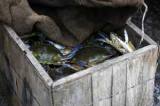
Uncontaminated blue crab can only be found in a few of southern Louisiana's bays and canals.

Credit:Erika Blumenfeld/IPS

</td></tr></tbody></table>​

NEW ORLEANS, United States, Jul 20, 2010 (IPS/IFEJ) - Shellfish in the Gulf of Mexico grow with drops of petroleum inside them, coyotes eat oil-soaked birds, and sharks suffocate when the oil coats their gills.

Oil droplets have been found beneath the shells of tiny post-larval blue crabs drifting into Mississippi coastal marshes from offshore waters, says Harriet Perry, director of the University of Southern Mississippi Gulf Coast Research Laboratory.

Many kinds of fish and shore birds feed on those young crabs. And this is just one of the many examples of how the crude oil that began to spill Apr. 20 from British Petroleum's (PB) Deepwater Horizon well has already taken its toll on the Gulf's food chain.

snip

.../

http://ipsnews.net/news.asp?idnews=52214
 
Re: Gulf oil spill's wide environmental reach includes harm to animals, marshland

Oil dispersants a threat to Gulf breeding grounds, fishery experts say

By BEN CHAMBERS

Palm Beach Post Staff Writer
<script type="text/javascript">/* <![CDATA[ */jQuery('.authorContact').click(function() {var emailLink = jQuery(this).attr('href');popupWin(emailLink, '', '', 'false', 'false', 'false', 'false', 'false', 'true');});/* ]]> */</script>Updated: 9:01 p.m. Sunday, July 25, 2010
Posted: 8:24 p.m. Sunday, July 25, 2010

snip

"We're adamantly opposed to using dispersants," he said. "It doesn't destroy the oil. It doesn't remove the oil. It leaves it in the water column, where it can do a lot of damage to all the ecosystem habitats beneath the surface.

"When the oil is on the surface, part of it is volatile and dissipates into the atmosphere. You can burn part of it. You can skim part of it. If it's in the water column, you can't do any of those things."

snip

"This is a giant experiment that the federal government, the state and BP have initiated," Condrey said. "We'd just like to be able to go out there and study it."

http://www.palmbeachpost.com/news/s...a-threat-to-gulf-breeding-grounds-822750.html
 
Re: Gulf oil spill's wide environmental reach includes harm to animals, marshland

Thousands of marine animals still in danger from hidden oil in Gulf

<SMALL>September 21, 2010 by Miles O'Brien</SMALL>

Scientists affiliated with the Woods Hole Oceanographic Institution (WHOI) have detected a plume of hydrocarbons at least 22 miles long and more than 3,000 feet below the surface of the Gulf of Mexico, a residue of the BP Deepwater Horizon oil spill. Learn more in the Sept. 2010 issue of NSF Current.
...

One complication of this trip: the smells of the huge amount of hydrocarbons that started spewing on April 20th. It could sometimes be overpowering.

"It was nauseating," says Joye. She described the intense smell as something like a cross between diesel fuel, creosote, and gasoline.
...

"The gas concentrations are outrageously high. We have measured concentrations up to 100,000 times what we typically see in the Gulf of Mexico," says Joye.
...

"We started working at 9 a.m. until 1 or 2 in the morning. It was really intensive," says Crespo-Medina. "And I really remember this water looked clear, absolutely clear, but I remember the smell of it, I can't believe this water that looks clear smells so much like gas, like diesel. And that sticks in my mind."
...

Since this NSF cruise, the Deepwater Horizon well has been capped. But Joye wants to make sure the public knows that just because the oil is no longer gushing out, the problems are far from over...

The dispersant has not been widely tested on marine organisms, according to Joye. And it makes locating plumes of oil and gas much more difficult, even impossible, with satellite imagery.

"The volume, the sheer magnitude of dispersant application is mind-boggling. The fact is that we have no idea what this could do to the system...

Full text and video:
http://www.physorg.com/news204286705.html
 
Re: Gulf oil spill's wide environmental reach includes harm to animals, marshland

Will oil bring death to Gulf's rich web of life?

By Kate Spinner

Published: Sunday, November 7, 2010 at 1:00 a.m.
Last Modified: Saturday, November 6, 2010 at 8:30 p.m.
( page all of 6 )

VENICE, La. - For birds, fish, sea turtles, marine mammals and ocean-based economies on the Gulf coast, the immediate catastrophe from the BP Deepwater Horizon oil spill has ebbed, but the long-term effects have yet to unfold.

Everything, from shrimp fleets in Louisiana to chicken wings in Buffalo, hinges on the health of tiny plants and animals at risk from oil lingering in the environment. Undetectable by sight or smell, trace amounts of degraded oil are poisoning these species, called plankton, at the bottom of the food chain, scientists say.

The extent of the damage and its implications for the health of the Gulf are unknown and likely will not surface for another year or two.

But the stakes are significant, because plankton provide vital food for shrimp and fish.

For example, plankton feed menhaden, a fish harvested widely in the Mississippi Delta for fishmeal. And fishmeal is a key ingredient in feed for farm-raised catfish, chickens and pigs. That is just one way in which the oil spill's damage to the Gulf could ripple to dinner tables across the nation.

Much more:
http://www.heraldtribune.com/article/20101107/ARTICLE/11071034?p=all&tc=pgall
 
Re: Gulf oil spill's wide environmental reach includes harm to animals, marshland

Menhaden or 'pogy' is heavily used directly in the pet and human food chain, too, according to this Al.com article:

http://blog.al.com/live/2010/10/oil_spill_gulf_menhaden.html
Millions of pounds of the shiny, oily fish are hauled from the Gulf each year, processed into meal and oils that end up in food for pets, dairy cows and farm-raised salmon, fish oil pills and butter substitutes on the grocery shelf.

It says about 1.4 billion :eek: pounds of menhaden were caught in the Gulf last year.
 
Back
Top