• FluTrackers.com Inc. does not provide medical advice. Information on this web site is collected from various internet resources, and the FluTrackers board of directors makes no warranty to the safety, efficacy, correctness or completeness of the information posted on this site by any author or poster. The information collated here is for instructional and/or discussion purposes only and is NOT intended to diagnose or treat any disease, illness, or other medical condition. Every individual reader or poster should seek advice from their personal physician/healthcare practitioner before considering or using any interventions that are discussed on this website. By continuing to access this website you agree to consult your personal physican before using any interventions posted on this website, and you agree to hold harmless FluTrackers.com Inc., the board of directors, the members, and all authors and posters for any effects from use of any medication, supplement, vitamin or other substance, device, intervention, etc. mentioned in posts on this website, or other internet venues referenced in posts on this website.
  • We are not asking for any donations. Do not donate to any entity who says they are raising funds for us.

Guinea - Ebola: Thread documenting initial outbreak - March 2014 +

Re: Guinea - A hemorrhagic disease killed 61 people including 8 health workers in Forest Guinea - Ebola lab confirmed in 13 cases

Re: Guinea - A hemorrhagic disease killed 61 people including 8 health workers in Forest Guinea - Ebola lab confirmed in 13 cases

Google Translated from French; https://wca.humanitarianresponse.in...les/INFO FIEVRE EBOLA GUINEE 24 MARS 2014.pdf

REPUBLIC OF GUINEA
*
MINISTRY OF HEALTH
NATIONAL DEPARTMENT OF HEALTH AND PREVENTION
COMMUNITY
DIVISION AND PREVENTION DISEASE CONTROL
24 March 2014
INFO ON haemorrhagic fever
EBOLA IN GUINEA CONAKRY

05 new cases of suspected viral haemorrhagic fever have been detected in
Prefectures Gu?k?dou (3 suspects including 0 deaths) and Macenta (2 cases
suspects with 0 deaths ) .
Samples of suspected haemorrhagic fever recorded Conakry
were negative virological examination by the team at the Pasteur Institute
Dakar .
The cumulative suspected cases recorded from January to March 24, 2014 , gives
a total of 86 suspected cases of viral hemorrhagic fever with 59 deaths (including
Community 34 deaths ) in certain prefectures of Guinea Forest is
a fatality rate of 69% ;
NB : Suspected cases previously reported ( 3 suspected cases with 2 deaths )
account of Conakry were extracted from these figures on the results
examination mentioned above - below .
These cases and deaths are divided as follows: Gu?k?dou ( 60 cases / 44 deaths ) ;
Macenta (19 cases / 11d?c?s ) and Kissidougou (7 cases / 4 deaths ) .
*12 samples from suspected patients and contacts, 6
samples were positive for filovirus including 3 Ebola Zaire kind in
laboratory at the Institut Pasteur de Lyon.
This leads us to wonder about the migration of this strain in Guinea?

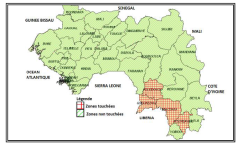
Cartograhie communities affected FH Ebola - DPLM - March 2014

Guinea.png

... continues at; https://wca.humanitarianresponse.in...les/INFO FIEVRE EBOLA GUINEE 24 MARS 2014.pdf
 
Re: Guinea - A hemorrhagic disease killed 61 people including 8 health workers in Forest Guinea - Ebola lab confirmed in 13 cases

Re: Guinea - A hemorrhagic disease killed 61 people including 8 health workers in Forest Guinea - Ebola lab confirmed in 13 cases

[Source: European Centre for Disease Prevention and Control (ECDC), full PDF document: (LINK). Edited.]


Rapid Risk Assessment: Outbreak of Ebola haemorrhagic fever in Guinea, 23 March 2014

Suggested citation: European Centre for Disease Prevention and Control. Outbreak of Ebola haemorrhagic fever in Guinea. 23 March 2014. Stockholm: ECDC; 2014.

? European Centre for Disease Prevention and Control, Stockholm, 2014


Main conclusions and recommendations

  • An outbreak of Ebola haemorrhagic fever is currently ongoing in Guinea. Eighty cases were reported, including 59 deaths. This is the first such outbreak in Guinea.
  • As of 23 March 2014, the situation in Sierra Leone is also under investigation, as there are concerns about the disease?s spread in the districts which border affected prefectures in Guinea.
  • As the incubation period can be up to three weeks, it is likely that the Guinean health authorities will identify additional cases in the coming week. Additional cases could be identified in neighbouring regions. However, control measures, such as isolation of cases and active monitoring of contacts, currently implemented in Guinea with the support of international partners, should be able to control this outbreak and prevent further spread of the disease.
  • It is unlikely, but not impossible, that travellers infected in Guinea could arrive in the EU while incubating the disease and develop symptoms while in the EU. These cases should immediately seek and receive medical attention and be isolated to prevent further transmission. Returning visitors from tropical countries that develop infectious disease symptoms such as fever, headache, diarrhoea or general malaise within three weeks after return should always seek rapid medical attention and mention their recent travel to the attending physician.
  • EU citizens in Guinea are not at risk of becoming infected unless they are in direct contact with body fluids of dead or living infected persons or animals. Avoiding such contact would effectively mitigate this risk. The risk related to seeking medical care in Guinea depends on the implementation of precautionary measures in those settings.

Source and date of request

ECDC internal decision, 22 March 2014.


Public health issue

To assess the risk at the EU level associated with the current Ebola haemorrhagic fever outbreak in Guinea.


Consulted experts

ECDC experts (Herv? Zeller, Bertrand Sudre and Denis Coulombier).


Disease background information

Infection with Ebola viruses originating from Africa causes severe disease in humans.

The onset of symptoms is sudden and includes fever, muscle aches, weakness, headache and sore throat.

The next stage is characterised by vomiting, diarrhoea, rash and malfunction of liver and kidneys. Some cases present with profuse internal and external bleeding [1,2]. In final stage, patients are developing multi-organ failure.

The incubation period varies from 2 to 21 days.

The case-fatality ratio is estimated to be between 50% and 90%.

Ebola viruses are highly transmissible by direct contact with blood, secretions, organs or other body fluids of dead or living infected persons.

Transmission through sexual contact may occur up to seven weeks after clinical recovery, as observed for Marburg filovirus [3].

Transmission can also occur by contact with dead or living infected animals, e.g. monkeys, chimpanzees, forest antelopes and bats [2].

Airborne transmission, as in measles or smallpox, has never been documented.

A review of the literature indicated a low risk of transmission in the early phase of symptomatic patients, even with high-risk exposure.

Risk of transmission may increase with transition to later stages of the disease with increasing viral titres. [4]

In a household study, secondary transmission only took place if direct contact occurred.

No transmission was reported without direct physical contact [5].

In an outbreak in 2000 in Uganda, the most important risk factor was direct repeated contact with a sick person?s body fluids during the provision of care. The risk was higher when exposure took place during the late stages of the disease.

Simple physical contact with a sick person appeared not to be sufficient for contracting Ebola infection.

Transmission through heavily contaminated fomites is apparently possible [6].

For viral haemorrhagic fevers like Marburg or Ebola infection, the goal of outbreak control is to stop direct human-to-human transmission through the early identification and systematic isolation of cases, timely contact tracing, proper personal protection, safely conducted burials, and improved community awareness about risk factors of Ebola infection and individual protective measures [7,8].

Nosocomial transmission can occur.

Healthcare workers can become infected through close contact with infected patients. The risk for infection can be significantly reduced through the appropriate use of infection control precautions and adequate barrier procedures [2,9].

Five species of ebolavirus have been identified, namely Zaire, Sudan, Reston, Tai Forest and Bundibugyo, from samples collected during humans and non-human primates outbreaks since the first outbreak in the Democratic Republic of the Congo [10,11].

Surveillance of viral haemorrhagic fevers has been enhanced in several African countries [12].

In 2013, there were no reports of outbreaks of Ebola or Marburg viral infections in Africa.

The present event is the first human outbreak of Ebola in West Africa, with the exception of a non-fatal human case reported in November 1994 which occurred after conducting a necropsy on a wild chimpanzee in Ta? forest, C?te d'Ivoire [13].

However, Guinea is at the Western end of the rain forest belt and some limited serological evidence of Ebolavirus infections in humans has been documented in Guinea, although no human cases were reported [14,15].

There are no specific prophylactic (vaccine) or therapeutic (antiviral drugs) options available to treat human infections, despite recent advances in research [16,17].


Event background information

As of 22 March 2014, 80 cases of febrile illness, including 59 deaths (case-fatality ratio of 74%), were reported in Guinea. These suspected cases were recorded in the south-eastern prefectures of Gu?ck?dou, Macenta (which border Sierra Leone and Liberia), Kissidougou, and Conakry.

(...)

This disease is characterised by fever, diarrhea, vomiting, pronounced fatigue and, in some cases, haemorrhagic symptoms.

According the Guinean Ministry of Health, the Ebola viral etiology was confirmed on 22 March 2014 by the biosafety level-4 laboratory in Lyon, France [18].

Since 9 February 2014, Guinea has experienced febrile diseases in some districts of the Forested Guinea region [18,19]. It remains difficult to document the initial phase of the outbreak, and the following information should be considered with caution as it has not been confirmed by official sources.

According to media reports quoting health authorities in Guinea, the deaths of a three-year-old child and an 18-year-old young adult were reported in Baladou, Gu?ck?dou Prefecture, on 12 and 14 March 2014, respectively.

At approximately the same time, nine deaths occurred in Gu?ck?dou commune [20]. Subsequently, a medical staff member from Gu?ck?dou hospital died; his sources of exposure were unknown. The director of the neighbouring Macenta hospital, who attended the funeral ceremony and was probably infected on this occasion, later developed the disease, and died.

Ten secondary cases were reported around the case in Gu?ck?dou, mainly among medical and laboratory staff and relatives. On 15 March, two additional suspected cases were hospitalised in Kissidougou and N?Z?r?kor? prefectures [21-23].

The origin of this outbreak is currently unknown.

However, exposure to bush meat has been suspected for the primary cases, as well as transmission through close contact with blood, secretions, organs or other biological fluids of infected animals.

Most of the secondary cases participated in funeral ceremonies and most were in direct contact with infected or deceased patients or had handled their bodies. This resulted in considering human-to-human transmission as the main of mode transmission, according to local health authorities.

Six of seven samples of clinical cases tested positive by RT-PCR assays for Ebola virus in the National Reference Centre for Viral Haemorrhagic Fevers (Institut Pasteur, INSERM BSL4 Laboratory, Lyon, France). Another five samples from contacts tested negative. Viral isolation and sequencing are in progress. Initial sequencing of a fragment from the L gene has shown a strong homology to Zaire ebolavirus [8,18,24-26].

On 21 March 2014, the Guinean Ministry of Health declared an outbreak of viral haemorrhagic fever which involved 59 suspected cases, including 25 deaths. It issued recommendations for early case detection, prevention of transmission in healthcare settings and preventive individual and community measures (educational public health messages for risk reduction) to prevent further transmission [19].

Control activities supported by WHO, UNICEF and M?decins Sans Fronti?res are being implemented, including contact tracing, enhanced surveillance and strengthening of infection control practices, free-of-charge access to healthcare for suspected cases, case isolation and management, and social mobilisation.

Media quoting WHO officials report that cases with similar symptoms, including fever, diarrhea, vomiting and bleeding, have also been reported in an area of Sierra Leone near the border with Guinea.

On 22 March, a 14-year-old suspected case who died in the town of Buedu in the eastern Kailahun District of Sierra Leone is under investigation. He had travelled to Guinea to attend the funeral of one of the outbreak's earlier victims. The health authorities in Sierra Leone are tracing contacts around the case [25].

The French Ministry of Foreign Affairs issued a travel advisory warning French citizens against travel to the affected parts of Guinea or areas of northern Liberia near the border between the two countries [27,28].


ECDC threat assessment for the EU

The presentation of this outbreak is consistent with Ebola haemorrhagic fever. Six cases have been confirmed by RT-PCR and therefore there is no doubt about the causative organism. The observed case-fatality ratio of 74% is consistent with what has been documented in previous Zaire ebolavirus outbreaks. Well-known risk factors commonly associated with such outbreaks include animal fluids (to which primary cases were exposed) and body fluids of patients (for example in connection with burials), to which secondary cases were exposed.

This is the first Ebolavirus outbreak in Western Africa.

However, this outbreak was not entirely unexpected as Guinea shares an ecological system known to be associated with Ebolavirus outbreaks, and some limited serological evidence of Ebolavirus infections in humans has been documented.

Currently, four prefectures in Guinea are suspected to be affected, including the capital Conakry. Also, one district in Sierra Leone reported suspected cases. This is of particular concern, especially in a country with no previous experience in managing such outbreaks. Furthermore, Gu?ck?dou is a trading node connecting Guinea with neighbouring countries, and cases may therefore travel to neighbouring countries, potentially spreading the disease.

It is likely that more cases will be identified in the coming weeks, given the incubation period of up to three weeks and the challenges of containing this outbreak. In addition, active case-finding and contact monitoring may identify further cases.


Risk for the EU

The EU?s capacity to detect and confirm an infection with Ebola viruses is sufficient. The risk of patients developing symptoms of Ebola haemorrhagic fever in the EU can be assessed as follows.

WHO does not recommend that any travel or trade restrictions be applied to Guinea.


Tourists returning from Guinea

Non-stop international destinations from Conakry International Airport to the EU are Paris and Brussels. However, other EU destinations can be accessed through a Royal Air Maroc hub in Casablanca, which offers connections to Paris, Nice, Lyon, Marseille, Toulouse, Barcelona, and Milan.

Other non-stop destinations from Conakry include Senegal, C?te d?Ivoire, Mali, The Gambia, Mauritania, and Guinea-Bissau [29].

The risk of tourists becoming infected after a stay in Guinea and developing symptoms while in the EU is extremely low, even if they visited affected prefectures, because transmission can only occur in the context of direct contact with blood, secretions, organs or other body fluids of dead or living infected persons or animals.


Visiting families and friends

The risk for travellers visiting friends and relatives in Guinea is similarly low, unless the travellers have been in close physical contact with sick or dead persons or animals. In such a case, active contact tracing would identify the exposure and prevent further spread of the disease through active contact monitoring.


Exposed persons seeking medical attention in the EU

There is the possibility that persons suspecting exposure might seek medical attention in the EU while potentially incubating the disease, for example EU volunteers who worked in healthcare settings in the affected districts. These persons are likely to seek immediate medical attention and should be taken care of immediately if they develop any symptoms in order to prevent any further spread of the disease.


Patients presenting with symptoms and seeking medical attention in the EU

There is a remote possibility that persons who were exposed to Ebolavirus and developed symptoms would board a commercial flight to seek medical attention in the EU. It is highly likely that such patients would seek immediate medical attention upon arrival in the EU and then be isolated to prevent further transmission. In a guidance document, ECDC pointed out the very low risk to co-passengers on the same flight [30].


Laboratory samples shipped to EU laboratories

There is a theoretical risk that an improperly labelled biological sample is sent to an EU laboratory for further testing, without proper indication of a possible connection to an Ebolavirus infection. However, compliance with sample shipment regulations and universal precautions in the receiving laboratory should mitigate this risk [31].


Aircraft passengers exposed to an Ebola case during a flight

Guidelines for tracing contacts of Ebola or Marburg haemorrhagic fever cases on airplanes have been developed by ECDC [9].

As transmission can only occur in the context of direct contact with blood, secretions, organs or other body fluids of dead or living infected persons or animals, most airplane contacts pose a low to moderate risk of exposure.

However, due to the high pathogenicity of Ebola and an expected high susceptibility in airplane passengers, contact tracing should be considered when a potentially infectious, laboratory-confirmed index case of Ebola fever was on board a flight within the last 26 days (longest incubation period 21 days plus five days due to possible non-specific symptoms during the first five days).

Contact tracing should always be initiated if an index case has been symptomatic on board or was flying within four days before the onset of symptoms.

Contact tracing should be considered for the entire cabin and crew.


Risk for EU residents in Guinea

The risk for EU residents in Guinea can be considered as very low, unless they are directly exposed to body fluids of dead or living infected persons or animals.

Avoiding such contact is an appropriate precautionary measure in this context.

The risk of acquiring the disease through exposure to contaminated fluids or equipment in healthcare settings in Guinea depends on the implementation of precautionary measures in those settings, e.g. isolation of cases, universal infection control measures.

There is a specific risk for healthcare workers and volunteers, especially if involved in caring for Ebola haemorrhagic fever patients. However, the level of precaution taken in such settings should effectively prevent the transmission of the disease.

There is a risk of transmission through unprotected sexual contact with a patient that has recently recovered from the disease.
_________


References

  1. Roddy P, Howard N, Van Kerkhove MD, Lutwama J, Wamala J, Yoti Z, et al. Clinical manifestations and case management of Ebola haemorrhagic fever caused by a newly identified virus strain, Bundibugyo, Uganda, 2007?2008. PloS one. 2012;7(12):e52986.
  2. European Centre for Disease Prevention and Control. Factsheet for health professionals. [internet]. 2014 [cited 2014 Mar 24]. Available from: http://www.ecdc.europa.eu/en/healthtopics/ebola_marburg_fevers/factsheet-for-health-professionals/Pages/factsheet_health_professionals.aspx
  3. Martini GA, Schmidt HA. [Spermatogenic transmission of the 'Marburg virus'. (Causes of 'Marburg simian disease')]. Klin Wochenschr. 1968 Apr 1;46(7):398-400.
  4. Colebunders R, Borchert M. Ebola haemorrhagic fever ? a review. J Infect. 2000 Jan;40(1):16-20.
  5. Dowell SF, Mukunu R, Ksiazek TG, Khan AS, Rollin PE, Peters CJ. Transmission of Ebola hemorrhagic fever: a study of risk factors in family members, Kikwit, Democratic Republic of the Congo, 1995. Commission de Lutte contre les Epidemies a Kikwit. J Infect Dis. 1999 Feb;179 Suppl 1:S87-91.
  6. Francesconi P, Yoti Z, Declich S, Onek PA, Fabiani M, Olango J, et al. Ebola hemorrhagic fever transmission and risk factors of contacts, Uganda. Emerg Infect Dis. 2003 Nov;9(11):1430-7.
  7. Raabea VN, Borcherta M. Infection control during filoviral hemorrhagic fever outbreaks. J Glob Infect Dis. 2012 Jan;4(1):69-74.
  8. World Health Organization. Ebola haemorrhagic fever ? fact sheet: WHO Media Centre; 2012 [20 March 2014]. Available from: http://www.who.int/mediacentre/factsheets/fs103/en/.
  9. European Centre for Disease Prevention and Control. Risk assessment guidelines for diseases transmitted on aircraft. Stockholm: ECDC; 2009. Available from: http://www.ecdc.europa.eu/en/publications/publications/0906_ter_risk_assessment_guidelines_for_infectious_diseases_transmitted_on_aircraft.pdf
  10. Ftika L, Maltezou HC. Viral haemorrhagic fevers in healthcare settings. J Hosp Infect. 2013 Mar;83(3):185-92.
  11. Li YH, Chen SP. Evolutionary history of Ebola virus. Epidemiol Infect. 2013 Sep 16:1-8.
  12. Emond RT, Evans B, Bowen ET, Lloyd G. A case of Ebola virus infection. Br Med J. 1977 Aug 27;2(6086):541-4.
  13. Mbonye A, Wamala J, Winyi K, Tugumizemo V, Aceng J, Makumbi I. Repeated outbreaks of viral hemorrhagic fevers in Uganda. Afr Health Sci. 2012 Dec;12(4):579-83.
  14. Formenty P, Hatz C, Le Guenno B, Stoll A, Rogenmoser P, Widmer A. Human infection due to Ebola virus, subtype Cote d'Ivoire: clinical and biologic presentation. J Infect Dis. 1999 Feb;179 Suppl 1:S48-53.
  15. World Health Organization. Ebola haemorrhagic fever ? Global Alert and Response (GAR). 2014 [cited 2014 22 March 2014]. Available from: http://www.who.int/csr/disease/ebola/en/.
  16. Feldmann H, Jones S, Klenk HD, Schnittler HJ. Ebola virus: from discovery to vaccine. Nat Rev Immunol. 2003 Aug;3(8):677-85.
  17. Marzi A, Feldmann H. Ebola virus vaccines: an overview of current approaches. Expert Rev Vaccines. 2014 Apr;13(4):521-31.
  18. Saphire EO. An update on the use of antibodies against the filoviruses. Immunotherapy. 2013 Nov;5(11):1221-33.
  19. Bah M. Guinea confirms Ebola as source of deadly epidemic. [internet]. 2014 [cited 2014 Mar 22]. Available from: Agence France-Presse, website: http://reliefweb.int/report/guinea/guinea-confirms-ebola-source-deadly-epidemic.
  20. Bureau de Presse de la Pr?sidence. ?pid?mie de la fi?vre virale h?morragique en Guin?e: D?claration du Ministre de la sant?. L'Express Guin?e [internet]. 2014 [cited 2014 Mar 21]. Available from: http://www.lexpressguinee.com/fichiers/blog16-999.php?pseudo=rub2&code=calb4122&langue=fr.
  21. Africatime.com ? Guin?e. Guin?e foresti?re: une maladie inconnue en Guin?e tue plusieurs personnes ? Gu?ck?dou 2014. Available from: http://fr.africatime.com/guinee/articles/guinee-forestiere-une-maladie-inconnue-en-guinee-tue-plusieurs-personnes-gueckedou.
  22. Afriquinfos.com. Guin?e : Une ?trange fi?vre fait 8 morts ? Macenta 2014. [internet]. 2014 [cited 2014 Mar 14]. Available from: http://www.afriquinfos.com/articles/2014/3/14/guinee-etrange-fievre-fait-morts-macenta-247658.asp.
  23. Guin?enews. Une ?trange maladie fait 9 morts dont 4 agents de sant? en Guin?e Foresti?re. [internet]. 2014 [cited 2014 Mar 15]. Available from: http://guineenews.org/2014/03/une-etrange-maladie-fait-9-morts-dont-4-agents-de-sante-en-guinee-forestiere-declare-dr-sakoba-keita/.
  24. Afrik.com. Guin?e : une myst?rieuse ?pid?mie tue 25 personnes. [internet]. 2014 [cited 2014 Mar 21]. Available from: http://www.afrik.com/guinee-une-mysterieuse-epidemie-fait-25-morts.
  25. Baize S, Pannetier D, National Reference Center for Viral Hemorrhagic Fevers ? Institut Pasteur/INSERM BSL4 Laboratory. Ebola virus disease ? West Africa: Guinea, Zaire Ebola virus suspected. ProMED mail [internet]. 2014 [cited 2014 Mar 23]. Available from: http://www.promedmail.org/direct.php?id=2349865.
  26. Reuters. Guinea confirms fever is Ebola, has killed up to 59. [internet]. 2014 [cited 2014 Mar 22]. Available from: http://uk.reuters.com/article/2014/03/22/us-guinea-ebola-idUKBREA2L0MI20140322.
  27. Muyembe-Tamfum JJ, Mulangu S, Masumu J, Kayembe JM, Kemp A, Paweska JT. Ebola virus outbreaks in Africa: past and present. Onderstepoort J Vet Res. 2012 Jun 20;79(2):451.
  28. French Ministry of Foreign Affairs. Conseils aux voyageurs [travel advice]. [internet]. 2014 [cited 2014 Mar 22]. Available from: http://www.diplomatie.gouv.fr/fr/conseils-aux-voyageurs/conseils-par-pays/guinee-12255/
  29. Ambassade de France en Guin?e. Message de s?curit? : fi?vre Ebola en Guin?e Foresti?re 2014. [internet]. 2014 [cited 2014 Mar 22]. Available from: http://www.ambafrance-gn.org/Message-de-securite-fievre.
  30. Guyana Civil Aviation Authority. Conakry Airport [internet]. 2014 [cited 2014 Mar 22]. Available from http://www.gcaa-gy.org/.
  31. World Health Organization. A guide for shippers of infectious substances, 2013. Geneva: WHO; 2013. [PowerPoint presentation]. Available from: http://www.who.int/ihr/infectious_substances/en/.

-
------

 
Re: Guinea - A hemorrhagic disease killed 61 people including 8 health workers in Forest Guinea - Ebola lab confirmed in 13 cases

Re: Guinea - A hemorrhagic disease killed 61 people including 8 health workers in Forest Guinea - Ebola lab confirmed in 13 cases

[Source: World Health Organization, Regional Office for Africa, full page: (LINK). Edited.]


Ebola Hemorrhagic Fever in Guinea ( Situation as of 24 March 2014)

A total of 86 cases including 59 deaths (CFR: 68.5%) reported from 4 districts ( Guekedou, Macenta, Nzerekore and Kissidougou)


Event description

The Ministry of Health (MoH) of Guinea has notified WHO of a rapidly evolving outbreak of Ebola hemorrhagic fever in forested areas south eastern Guinea.

As of 24 March 2014, a total of 86 cases including 59 deaths (case fatality ratio: 68.5%) had been reported.

The cases have been reported in Guekedou, Macenta, Nzerekore and Kissidougou districts.

In addition, three suspect cases including two deaths in Conakry are under investigation.

Four health care workers are among the victims. Reports of suspected cases in border areas of Liberia and Sierra Leone are being investigated.

Six of seven blood samples from suspect cases tested at Institut Pasteur in Lyon, France were positive for Ebola virus by PCR, confirming the first Ebola hemorrhagic fever outbreak in Guinea. Preliminary results from sequencing of a part of the L gene has showed strong homology with Zaire Ebola virus, Additional laboratory studies are ongoing to confirm these findings.


Actions taken

The Ministry of Health (MoH) together with WHO and other partners have initiated measures to control the outbreak and prevent further spread. The MoH has activated the national and district emergency management committees to coordinate response. The MoH has also advised the public to take measures to avert the spread of the disease and to report any suspected cases.

Multidisciplinary teams have been deployed to the field to actively search and manage cases; trace and follow-up contacts; and to sensitize communities on the outbreak prevention and control. M?decins Sans Fronti?res, Switzerland (MSF-CH) is working in the affected areas and is assisting with establishment of isolation facilities, and also supported transport of the biological samples from suspect cases and contacts to international reference laboratories for urgent testing.

The Emerging and Dangerous Pathogens Laboratory Network (EDPLN) is working with the Guinean VHF Laboratory in Donka, the Institut Pasteur in Lyon, the Institut Pasteur in Dakar, and the Kenema Lassa fever laboratory in Sierra Leone to make available appropriate Filovirus diagnostic capacity in Guinea and Sierra Leone.

WHO and other partners are mobilizing and deploying additional experts to provide support to the Ministry. The necessary supplies and logistics required supporting the management of patients and all aspects of outbreak control are also being mobilized.

The situation is rapidly evolving and reported figures are likely to change.

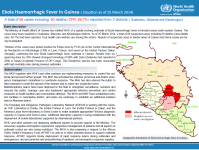
Ebola Hemorrhagic Fever in Guinea ( Situation as of 24 March 2014) (372.3 kB)


-
------
 
Re: Guinea - A hemorrhagic disease killed 61 people including 8 health workers in Forest Guinea - Ebola lab confirmed in 13 cases

Re: Guinea - A hemorrhagic disease killed 61 people including 8 health workers in Forest Guinea - Ebola lab confirmed in 13 cases

The Ebola virus in Guinea: ?The situation is of very high concern?

24 Mar 2014 ?

The epidemic of the haemorrhagic fever that has extended in the south of the country since the beginning of February appears to be the Ebola virus.?This is the worst news that one could expect as we know that this virus is the most deadly virus for human beings? regrets Olivier Feynerol, head of the Terre des hommes delegation in Guinea.
...
Terre des hommes, who has been active in the affected areas of the forests of Guinea since the nineties, has not lost anybody so far. Neither has any person working for a partner association nor any children who have been supported by Tdh?s projects been affected.?For the moment, we apply the measures recommended by WHO: we limit unnecessary travels and implement very strict hygiene measures. Nevertheless, we are able to follow the development of the situation very closely?.

As a matter of fact, several suspicious cases have been detected at Conakry and they are about to be analysed by the competent authorities.?If it will prove true that the Ebola virus reaches the capital with its two million inhabitants, the situation will take a totally different turn, unprecedented and most dramatic. This would be the first time Ebola hits a city of such a scale. The consequences would be drastic? alerts Olivier Feynerol. ?Nevertheless, we must not allow psychosis to take hold and to spread in Conakry, nothing has been proven at the moment?.

http://www.tdh.ch/en/news/the-ebola-virus-guinea-situation-is-concern
 
Re: Guinea - A hemorrhagic disease killed 61 people including 8 health workers in Forest Guinea - Ebola lab confirmed in 13 cases

Re: Guinea - A hemorrhagic disease killed 61 people including 8 health workers in Forest Guinea - Ebola lab confirmed in 13 cases

Security Message for U.S. Citizens: Ebola Hemorrhagic Fever

U.S. Embassy - Conakry, Guinea
The Government of Guinea has confirmed the presence of the Ebola virus in the Nz?r?kor? (Guinee Forestiere) region, mostly in the administrative district of Gueckedou and in the town of Macenta. Symptoms include diarrhea, vomiting, a high fever and heavy bleeding. To date over 80 cases have been recorded with 59 recorded fatalities.
The U.S. mission in Conakry strongly recommends that U.S. citizens avoid contact with individuals exhibiting the symptoms described above until further information becomes available.
Ebola Hemorrhagic Fever (HF) is a deadly disease but is preventable. It can be spread through DIRECT, unprotected contact with the blood or secretions of an infected person; or through exposure to objects (such as needles) that have been contaminated with infected secretions. The viruses that cause Ebola HF are often spread through families and friends because they come in close contact with infectious secretions when caring for ill persons. Ebola HF has a high mortality rate and early evidence suggests that the Guinea strain of Ebola is related to the Zaire Ebola strain that carries a mortality rate of 90%. Some who become sick with Ebola HF are able to recover, while others do not. The reasons behind this are not yet fully understood. However, it is known that patients who die usually have not developed a significant immune response to the virus at the time of death.
During outbreaks of Ebola HF, the disease can spread quickly within health care settings (such as a clinic or hospital). Exposure to Ebola viruses can occur in health care settings where hospital staff are not wearing appropriate protective equipment, such as masks, gowns, and gloves.
Symptoms may appear anywhere from 2 to 21 days after exposure to Ebola virus though 8-10 days is most common. A person suffering from Ebola presents with a sudden onset of high fever with any of the following: headache, vomits blood, has joint or muscle pains, bleeds through the body openings (eyes, nose, gums, ears, anus) and has reduced urine.
Since the virus spreads through direct contact with blood and other body secretions of an infected person those at highest risk include health care workers and the family and friends of an infected individual.
For more information on Ebola hemorrhagic fever, please visit the CDC website at www.cdc.gov/vhf/ebola
We strongly recommend that U.S. citizens traveling to or residing in Guinea enroll in the Department of State?s Smart Traveler Enrollment Program (STEP) at www.Travel.State.Gov. STEP enrollment gives you the latest security updates, and makes it easier for the U.S. embassy or nearest U.S. consulate to contact you in an emergency. If you don?t have Internet access, enroll directly with the nearest U.S. embassy or consulate.
Regularly monitor the State Department's website, where you can find current Travel Warnings, Travel Alerts, and the Worldwide Caution. Read the Country Specific Information for Guinea. For additional information, refer to ?A Safe Trip Abroad? on the State Department?s website.
Contact the U.S. embassy or consulate for up-to-date information on travel restrictions. You can also call 1-888-407-4747 toll-free in the United States and Canada or 1-202-501-4444 from other countries. These numbers are available from 8:00 a.m. to 8:00 p.m. Eastern Time, Monday through Friday (except U.S. federal holidays). Follow us on Twitter and Facebook, and download our free Smart Traveler iPhone App to have travel information at your fingertips.
The U.S. Embassy in Conakry is located along T2 off the Bambeto Roundabout in the Centre Aministratif de Koloma, Commune de Ratoma and is open Mon ? Friday 0800- 1630; (Tel: 224 655 104 444). For after - hours emergencies, on weekends or on holidays, please call (+224) 655.104.444 or (+224) 657.104.040 and ask to speak to Duty Officer. To call from the U.S, please dial: 00 224 655.104. 444. The U.S. Embassy website is http://conakry.usembassy.gov/index.html. :tiphat:http://conakry.usembassy.gov/ebolahemorrhagicffver.html
 
Re: Guinea - A hemorrhagic disease killed 61 people including 8 health workers in Forest Guinea - Ebola lab confirmed in 13 cases

Re: Guinea - A hemorrhagic disease killed 61 people including 8 health workers in Forest Guinea - Ebola lab confirmed in 13 cases

http://www.bbc.com/news/world-africa-26717490
24 March 2014 Last updated at 13:32 ET
Virus in Guinea capital Conakry not Ebola

There are fears that Ebola could spread quickly in the bustling city of Conakry

Tests on the suspected cases of deadly Ebola virus in Guinea's capital Conakry are negative, health officials say.

On Sunday, United Nations officials said that the virus had spread to the capital, a port city of up to two million, from remote forests in the south, where some 61 people have died.

...

After two people died from a haemorrhagic fever in Conakry, samples were sent to the Pasteur Institute in neighbouring Senegal for testing.

WHO spokesman Collins Boakye-Agyemang told the BBC these had shown that the victims had not been infected with Ebola. It is not known what killed them....
 
Last edited by a moderator:
Re: Guinea - A hemorrhagic disease killed 61 people including 8 health workers in Forest Guinea - Ebola lab confirmed in 13 cases

Re: Guinea - A hemorrhagic disease killed 61 people including 8 health workers in Forest Guinea - Ebola lab confirmed in 13 cases

Received via email to media


Subject: WHO Press Briefing at Palais - Ebola outbreak in Guinea
Date: Mar 25, 2014 7:30 AM


The Ministry of Health (MoH) of Guinea has notified WHO of a rapidly evolving outbreak of Ebola hemorrhagic fever in forested areas south eastern Guinea.

As of 25 March 2014, a total of 86 cases including 59 deaths had been reported. The cases have been reported in Guekedou, Macenta, Nzerekore and Kissidougou districts.

Six of seven blood samples tested at Institut Pasteur in Lyon, France were positive for Ebola virus by PCR, confirming the first Ebola haemorrhagic fever outbreak in Guinea. The Ebola species is confirmed to be Zaire.

Seven additional cases were confirmed by Institute Pasteur laboratory deployed from Dakar. The deployment of Dakar’s lab to the capital was facilitated by WHO.

In Guekedou, MSF Swiss has set up an isolation ward in local hospital. The EU Mobile Lab deployed through WHO alert and response network is also being based in this hospital

Two suspect cases in Conakry were tested negative by the Institut Pasteur Dakar team deployed in Guinea to support Conakry VHF Lab.

Initial reports suggest that the suspect case in Canada who travelled to Liberia was also tested negative. Confirmation will be made by Canadian health authorities

Two samples from six suspect cases including five deaths from Liberia have being taken and are to be investigated

The Ministry of Health (MoH) together with WHO and other partners have initiated measures to control the outbreak and prevent further spread. The MoH has activated the national and district emergency management committees to coordinate response

Multidisciplinary teams have been deployed to the field to actively search and manage cases; trace and follow-up contacts; and to sensitize communities on the outbreak prevention and control.

Beside facilitating deployment of 2 labs, WHO is sending two logisticians, three epidemiologists and one medical anthropologist.

The situation is rapidly evolving and reported figures are likely to change.


EBOLA BACKGROUND

The Ebola virus causes severe Ebola Virus disease (EVD) outbreaks in humans.

Ebola Virus disease outbreaks have a case fatality rate of up to 90%.

Ebola Virus disease outbreaks occur primarily in remote villages in Central and West Africa, near tropical rainforests.

The virus is transmitted to people from wild animals and spreads in the human population through human-to-human transmission.

Fruit bats of the Pteropodidae family are considered to be the natural host of the Ebola virus.

There is no treatment or vaccine available for either people or animals.

The incubation period (interval from infection to onset of symptoms) varies between 2 to 21 days.

EVD is a severe acute viral illness often characterized by the sudden onset of fever, intense weakness, muscle pain, headache and sore throat. This is followed by vomiting, diarrhoea, rash, impaired kidney and liver function, and in some cases, both internal and external bleeding.
 
Re: Guinea - A hemorrhagic disease killed 61 people including 8 health workers in Forest Guinea - Ebola lab confirmed in 13 cases

Re: Guinea - A hemorrhagic disease killed 61 people including 8 health workers in Forest Guinea - Ebola lab confirmed in 13 cases

Translation Google

24.03.2014 / GUINEA CONAKRY

Ebola in Guinea testimony at the epicenter of the epidemic
...
Souleymane Bah is a reporter for radio and television Espace . He went to Gu?ck?dou city of over 220,000 inhabitants at the end of last week.

When I arrived , the organizations were at work . The hospital is the city was being disinfected by MSF. They received huge amounts of disinfectants , including chlorine. An isolation center was opened a little further where infected people were transferred . When I was there , I was imposed not to approach the patients over 100 meters.

centre%20d%27isolement.jpg

The isolation center

I also visited the district of Baloma , located 5 km from the city center, the most affected by the virus.

We went into the house of a family that has been completely decimated. The area had been disinfected by the Red Cross. But some of their agents complain of not having proper equipment.

In this area , you really feel that the neighbors realized it was something serious. They are now panicking . But in the rest of the city , which is a crossroads of business, life goes on . We do not meet anyone with special protections.
...
Initially, neither the patients nor the doctors knew what it was. They spoke of a mysterious disease that resembled cholera and typhoid fever. So much so that some patients who had been cared for at the hospital, escaped by night to go seek the advice of traditional healers which contributed to the spread of the virus.

"When a family member is sick, all parents are at his bedside "

In the city , as in the surrounding villages , people do not know how to behave. When a family member is sick, all parents are at his bedside. Then, at his death, as it is unthinkable to abandon a body , the body is buried without taking precautions . However, at all these moments , relatives at risk of transmission.

It is essential to make real work of prevention of risks and the means of transmission. So far , the authorities make a statement on local radio , but it is not enough . I think that we have no precise idea of the number of infected persons, because we count essentially the victims passing by the centres of care. But there is probably much more if we englobe villages surroundings.
...

All images have been sent by television Espace TV. Note achieved with the help of Daouda Diallo.

http://observers.france24.com/fr/co...uinee-temoignage-epicentre-epidemie-sud-virus
 
Re: Guinea - A hemorrhagic disease killed 61 people including 8 health workers in Forest Guinea - Ebola lab confirmed in 13 cases

Re: Guinea - A hemorrhagic disease killed 61 people including 8 health workers in Forest Guinea - Ebola lab confirmed in 13 cases

Scientist who discovered Ebola frustrated by deadly Guinea outbreak

By Kate Kelland, Health and Science Correspondent
LONDON Tue Mar 25, 2014 8:49am EDT

(Reuters) - Peter Piot was 27, newly qualified and working in a microbiology lab in Antwerp when he received a flask of human blood contaminated with a mysterious pathogen that had been killing people in the forests of Zaire.
...
That tale dates from Belgium in 1976, when Piot and his team became the co-discoverers of Ebola. The young Belgian scientist then went to Zaire, now Congo, in central Africa to work in the rainforests among dying villagers and missionaries to collect samples and investigate the epidemic.

Yet almost four decades on, the disease Piot describes as "a spectacular virus - and one of the most lethal infections you can think of", has continued to rise up in the region, causing frightening but sporadic outbreaks that kill poor and vulnerable people with gruesome haemorrhagic fevers.
...
Piot says he's saddened and frustrated by this and other outbreaks - partly because they should be easy to prevent, or at least to contain, and partly because the scientific detective work behind the Ebola virus has not yet revealed its main host.

"What we're seeing is a pattern that's been repeated in nearly every single Ebola outbreak," he told Reuters.

"It started in people who live in the forest, or in close contact with it, and it's then transmitted around hospitals....and then spreads further either at funerals or in households though close contact."
...
The problem in Guinea, and in other countries in Africa where Ebola has reared up in the past few decades, is that health systems are in bad shape, he said, communications are limited, and the people are fairly mobile and very poor.
...
Piot, like others, suspects fruit bats of the Pteropodidae family are the most likely natural host, yet the uncertainty leaves scientists unable to get ahead of fresh outbreaks.

"This is a virus that is highly unpredictable," he said. "This time it popped up in Guinea where it has never been detected before.

"Why there? Why now? That's what I find frustrating. If we knew for sure the host of this virus, we could do more to say where people are more at risk."

(Editing by Raissa Kasolowsky)

http://www.reuters.com/article/2014/03/25/us-ebola-scientist-idUSBREA2O0VP20140325
 
Re: Guinea - A hemorrhagic disease killed 61 people including 8 health workers in Forest Guinea - Ebola lab confirmed in 13 cases

Re: Guinea - A hemorrhagic disease killed 61 people including 8 health workers in Forest Guinea - Ebola lab confirmed in 13 cases

Since some strange news are starting to be disseminated into the net it is perhaps time to restated that as ICTV Virus Taxonomy (2013) shows, Ebola belongs to:


  • Order: Mononegavirales
    • Family: Filoviridae (3 Genera)
      • Genus: Ebolavirus (5 Species)
        • Species: Bundibugyo ebolavirus
        • Species: Reston ebolavirus
        • Species: Sudan ebolavirus
        • Species: Tai Forest ebolavirus
        • Species: Zaire ebolavirus
Influenza A viruses instead belongs to:


  • Family: Orthomyxoviridae
    • Genus: Influenzavirus A
      • Species: Influenza A virus
More info: http://www.ictvonline.org/virusTaxonomy.asp?version=2013

Between the two families there are an ocean of evolutionary distance...
 
Re: Guinea - A hemorrhagic disease killed 61 people including 8 health workers in Forest Guinea - Ebola lab confirmed in 13 cases

Re: Guinea - A hemorrhagic disease killed 61 people including 8 health workers in Forest Guinea - Ebola lab confirmed in 13 cases

Ebola Haemorrhagic Fever in Guinea (Situation as of 25 March 2014) E-mail Print
25 March 2014 - The Ministry of Health (MoH) of Guinea has notified WHO of a rapidly evolving outbreak of Ebola haemorrhagic fever in forested areas south eastern Guinea. The cases have been reported in Guekedou, Macenta, and Kissidougou districts. As of 25 March 2014, a total of 86 suspected cases including 60 deaths (case fatality ratio: 69.7%) had been reported. Four health care workers are among the victims. Reports of suspected cases in border areas of Liberia and Sierra Leone are being investigated.

Thirteen of the cases have tested positive for Ebola virus by PCR (six at the CIRI Institut Pasteur Lyon, France, and seven at the Institut Pasteur Dakar, Senegal), confirming the first Ebola haemorrhagic fever outbreak in Guinea. Results from sequencing done by CIRI Lyon showed strongest homology of 98% with Zaire Ebolavirus last reported in 2009 in Kasai-Occidental Province of DR Congo. This Ebolavirus species has been associated with high mortality rates during previous outbreaks.

The MOH together with WHO and other partners are implementing measures to control the outbreak and prevent further spread. The MoH has activated the national, provincial and district emergency management committees to coordinate response. The MoH has also advised the public to take measures to avert the spread of the disease and to report any suspected cases.

Multidisciplinary teams have been deployed to the field to strengthen surveillance, sensitize and educate the public, manage case and implement appropriate infection prevention and control measures in health facilities and communities affected. The MOH and MSF have established isolation facilities in Gu?ck?dou district, and plans are underway to establish an additional isolation ward in Macenta district.
The Emerging and Dangerous Pathogens Laboratory Network (EDPLN) is working with the Guinean VHF Laboratory in Donka, the Institut Pasteur in Lyon, the Institut Pasteur in Dakar, and the Kenema Lassa fever laboratory in Sierra Leone to make available appropriate Filovirus diagnostic capacity in Guinea and Sierra Leone. Additional laboratory capacity is being established with the deployment of mobile laboratories supported by international partners.

WHO and other partners are deploying additional experts to provide support to the Ministry. The necessary supplies and logistics required for supportive management of patients and all aspects of outbreak control are also being mobilized. The MOH is also preparing a request to the African Public Health Emergency Fund (APHEF) as well as to other potential donors to support outbreak response. APHEF supports timely deployment of rapid response teams during outbreaks and emergencies, and procurement and prepositioning of epidemic and emergency response supplies.

WHO does not recommend that any travel or trade restrictions be applied to Guinea in respect to this event.
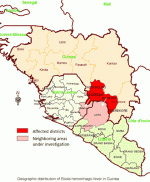
ebola-guinea-25032014.gif

http://www.afro.who.int/en/clusters...emorrhagic-fever-in-guinea-25-march-2014.html

Guinea.png
http://www.afro.who.int/index.php?option=com_docman&task=doc_download&gid=9155&Itemid=2593
 
Re: Guinea - A hemorrhagic disease killed 61 people including 8 health workers in Forest Guinea - Ebola lab confirmed in 13 cases

Re: Guinea - A hemorrhagic disease killed 61 people including 8 health workers in Forest Guinea - Ebola lab confirmed in 13 cases

Since some strange news are starting to be disseminated into the net it is perhaps time to restated that as ICTV Virus Taxonomy (2013) shows, Ebola belongs to:


  • Order: Mononegavirales
    • Family: Filoviridae (3 Genera)
      • Genus: Ebolavirus (5 Species)
        • Species: Bundibugyo ebolavirus
        • Species: Reston ebolavirus
        • Species: Sudan ebolavirus
        • Species: Tai Forest ebolavirus
        • Species: Zaire ebolavirus
Influenza A viruses instead belongs to:


  • Family: Orthomyxoviridae
    • Genus: Influenzavirus A
      • Species: Influenza A virus
More info: http://www.ictvonline.org/virusTaxonomy.asp?version=2013

Between the two families there are an ocean of evolutionary distance...


In reference to:

Translation Google

Excerpt:

"But fears do not stop there. "But the virus like to marry each other ," explains Jean -Fran?ois Lemoine . "There is a very moderately dangerous but extremely traveler virus : influenza. Imagine the traveler , flu , marries the killer Ebola . Their children are killers - travelers. " The scenario is possible, according to the Health expert: " This is not bad science fiction Remember the H1N1 It was nothing more than a marriage of this kind . ! . "

http://www.europe1.fr/International/Jusqu-ou-peut-aller-l-epidemie-d-Ebola-1924641/
 
Re: Guinea - A hemorrhagic disease killed 61 people including 8 health workers in Forest Guinea - Ebola lab confirmed in 13 cases

Re: Guinea - A hemorrhagic disease killed 61 people including 8 health workers in Forest Guinea - Ebola lab confirmed in 13 cases

In reference to:

Translation Google

Excerpt:

"But fears do not stop there. "But the virus like to marry each other ," explains Jean -Fran?ois Lemoine . "There is a very moderately dangerous but extremely traveler virus : influenza. Imagine the traveler , flu , marries the killer Ebola . Their children are killers - travelers. " The scenario is possible, according to the Health expert: " This is not bad science fiction Remember the H1N1 It was nothing more than a marriage of this kind . ! . "

http://www.europe1.fr/International/Jusqu-ou-peut-aller-l-epidemie-d-Ebola-1924641/

Twitter
Gregory H?rtl @HaertlG

Irresponsible reporting: Doit-on s'inqui?ter de l'?pid?mie d'Ebola ? eur1.fr/eAB1eIQ via @Europe1 Ebola marrying with influenza? Pls.

''Doit-on s'inqui?ter de l'?pid?mie d'Ebola ?''

''?PID?MIE - Deux pays voisins de la Guin?e ont rep?r? des cas suspects. Pour les experts, la priorit? absolue est d'endiguer la propagation.''

Europe1's @Europe1


10:07pm ? 25 Mar 14

-
------
 
Re: Guinea - A hemorrhagic disease killed 61 people including 8 health workers in Forest Guinea - Ebola lab confirmed in 13 cases

Re: Guinea - A hemorrhagic disease killed 61 people including 8 health workers in Forest Guinea - Ebola lab confirmed in 13 cases

http://www.bbc.com/news/world-africa-26735118
25 March 2014 Last updated at 16:50 ET

Guinea Ebola outbreak: Bat-eating banned to curb virus
Fruit bats are believed to be a major carrier of the Ebola virus but do not show symptoms...

<iframe src="//embed.gettyimages.com/embed/185289854?et=s0pxjxhm3k2qPEGAO1E2-g&sig=qCCtm3y2YwditkAA03s57lDeKn5PFLXP-lw3VY_-7Is=" width="507" height="407" frameborder="0" scrolling="no"></iframe>

http://www.defenceweb.co.za/index.php?option=com_content&view=article&id=34122:equipment-dispatched-to-contain-ebola-outbreak-in-guinea&catid=52:Human%20Security&Itemid=114
Equipment dispatched to contain Ebola outbreak in Guinea

Written by Reuters, Tuesday, 25 March 2014

...

“There is clearly some panic,” Dominguez said.

...

“We need to find a solution now as all is not well in Guinea ... We don't know this disease. We need to find a solution before it arrives in Conakry, otherwise it would not be good," said Mohamed Diaby, a resident of the sprawling, rubbish-strewn seaside capital.
 
Last edited:
Re: Guinea - A hemorrhagic disease killed 61 people including 8 health workers in Forest Guinea - Ebola lab confirmed in 13 cases

Re: Guinea - A hemorrhagic disease killed 61 people including 8 health workers in Forest Guinea - Ebola lab confirmed in 13 cases

Press Release IFRC Ebola in Guinea
Red Cross mobilizes teams to respond to an Ebola outbreak in Guinea

Press Release IFRC Ebola in Guinea

Press Release March 26, 2014: Conakry / Dakar: With the emergence of a confirmed outbreak of the highly contagious Ebola virus in Guinea, the International Federation and Red Crescent Societies of the Red Cross (IFRC) has deployed Today a team of assessment and coordination in the field (FACT) to help the West African country in its response against this epidemic. "This team includes a specialist in infectious diseases of the French Red Cross, and that personal psychosocial support. Together, they will assess the situation on the ground and help develop a plan for global response, "says Dr. Ben Adinoyi Adeiza, Health Coordinator for IFRC in Africa. "It is imperative that we work quickly with our partners to prevent the spread of the virus." Volunteers of the Guinean Red Cross are already involved in disinfecting the homes of victims, the collection and management of dead bodies. More than 100 additional volunteers are being mobilized to work in the affected areas in order to strengthen emergency communication, contain rumors and educate communities on how to prevent the spread of the virus. " We are dealing with a particularly virulent strain of Ebola virus, where the mortality rate is over 80 percent, "says Dr. Facely Diawara, who oversees the operations of health Guinean Red Cross. "We're training new volunteers and staff and we do d?ployerons until they are fully aware of how to protect themselves against the disease. We will also ensure that they have access to a proper protective equipment, such as gloves, masks and goggles " On March 21, the government of Guinea has reported an outbreak of Ebola in the localities of Gu?ck?dou Kissidougou and Macenta - the first documented outbreak in the country. To date, there are 45 samples examined, nineteen laboratory confirmed cases (Institut Pasteur de Lyon and Dakar), 86 suspected cases and 60 deaths, a fatality rate of 69 percent
...
http://www.dakaractu.com/Communique-de-presse-de-la-FICR-sur-la-fievre-Ebola-en-Guinee_a62779.html
 
Re: Guinea - A hemorrhagic disease killed 61 people including 8 health workers in Forest Guinea - Ebola lab confirmed in 13 cases

Re: Guinea - A hemorrhagic disease killed 61 people including 8 health workers in Forest Guinea - Ebola lab confirmed in 13 cases

Google translated;

Wed, March 26th 2014, 11:15 Posted By Amara Camara Moro Headlines , News , Health 0 2
Ebola in Guinea: no new cases and families who were under observation in Conakry, released


According to the Head of Division Prevention and Fight against disease to the Ministry of Health, Dr Sakoba Keita, no new cases of viral hemorrhagic fever has been recorded in the last 24 hours Guinean territory. But among the cases previously reported, there has been a death in Gu?ck?dou, has he said.

'' Currently 9 cases remain hospitalized in three prefectures Forest, considered outbreak sites. Among these cases, there is 7 to Gu?ck?dou city where some illness, Kissidougou and another Macenta. Wednesday, we will have a telephone meeting to update our data. It was as of today a total of 86 cases and 60 deaths'', said Dr. Sakoba Keita.

With regard to Conakry, he underlines that reports have not been confirmed and that families were under surveillance, have been released.
...
The mystery about the origin of virus

Despite the virus being identified by reference laboratories as the Pasteur Institutes, there are today a total mystery about the origin of this exact virus. A situation that Dr Sakoba is pretty weird. Because, he says, there are people who test the Ebola virus was negative, but died of hemorrhage. The samples examined were found to be partly Ebola. (original "Les ?chantillons examin?s se sont r?v?l?s en partie ?tre de la fi?vre EBOLA.") That is why the laboratories involved are involved to determine what is a'' he said.
http://guineenews.org/2014/03/ebola...ui-etaient-en-observation-a-conakry-liberees/
 
Re: Guinea - A hemorrhagic disease killed 61 people including 8 health workers in Forest Guinea - Ebola lab confirmed in 13 cases

Re: Guinea - A hemorrhagic disease killed 61 people including 8 health workers in Forest Guinea - Ebola lab confirmed in 13 cases

Source: http://www.afro.who.int/en/clusters...emorrhagic-fever-in-guinea-25-march-2014.html

Ebola Haemorrhagic Fever in Guinea (Situation as of 25 March 2014)

25 March 2014 - The Ministry of Health (MoH) of Guinea has notified WHO of a rapidly evolving outbreak of Ebola haemorrhagic fever in forested areas south eastern Guinea. The cases have been reported in Guekedou, Macenta, and Kissidougou districts. As of 25 March 2014, a total of 86 suspected cases including 60 deaths (case fatality ratio: 69.7%) had been reported. Four health care workers are among the victims. Reports of suspected cases in border areas of Liberia and Sierra Leone are being investigated.

Thirteen of the cases have tested positive for Ebola virus by PCR (six at the Centre International de Recherche en Infectiologie (CIRI) in Lyon, France, and seven at the Institut Pasteur Dakar, Senegal), confirming the first Ebola haemorrhagic fever outbreak in Guinea. Results from sequencing done by CIRI Lyon showed strongest homology of 98% with Zaire Ebolavirus last reported in 2009 in Kasai-Occidental Province of DR Congo. This Ebolavirus species has been associated with high mortality rates during previous outbreaks.

The MOH together with WHO and other partners are implementing measures to control the outbreak and prevent further spread. The MoH has activated the national, provincial and district emergency management committees to coordinate response. The MoH has also advised the public to take measures to avert the spread of the disease and to report any suspected cases.

Multidisciplinary teams have been deployed to the field to strengthen surveillance, sensitize and educate the public, manage case and implement appropriate infection prevention and control measures in health facilities and communities affected. The MOH and MSF have established isolation facilities in Gu?ck?dou district, and plans are underway to establish an additional isolation ward in Macenta district.
The Emerging and Dangerous Pathogens Laboratory Network (EDPLN) is working with the Guinean VHF Laboratory in Donka, the Institut Pasteur in Lyon, the Institut Pasteur in Dakar, and the Kenema Lassa fever laboratory in Sierra Leone to make available appropriate Filovirus diagnostic capacity in Guinea and Sierra Leone. Additional laboratory capacity is being established with the deployment of mobile laboratories supported by international partners.

WHO and other partners are deploying additional experts to provide support to the Ministry. The necessary supplies and logistics required for supportive management of patients and all aspects of outbreak control are also being mobilized. The MOH is also preparing a request to the African Public Health Emergency Fund (APHEF) as well as to other potential donors to support outbreak response. APHEF supports timely deployment of rapid response teams during outbreaks and emergencies, and procurement and prepositioning of epidemic and emergency response supplies.

WHO does not recommend that any travel or trade restrictions be applied to Guinea in respect to this event.
ebola-guinea-25032014.gif
 
Re: Guinea - A hemorrhagic disease killed 61 people including 8 health workers in Forest Guinea - Ebola lab confirmed in 13 cases

Re: Guinea - A hemorrhagic disease killed 61 people including 8 health workers in Forest Guinea - Ebola lab confirmed in 13 cases

Translation Google

Ebola fever in Guinea : The toll rises with the death of a suspect in Kankan !

Published Wednesday, 26 March 2014 24:10 Written by Diao Barry

According to Dr. Sakoba Keita, Chief Prevention Division at the Ministry of Health, interviewed this morning , the Ebola outbreak gaining ground and the number of victims in Guinea.

The statistics now go from sixty to sixty-three deaths and eighty-seven to eighty-eight suspects at the date of this Wednesday, March 26, 2014 event . Dr. Sakoba Keita said: " The cases are divided into four prefectures: we Gu?k?dou which 61 cases with 45 deaths , 19 cases Macenta including 12 deaths and Kissidougou 7 cases and 5 deaths.

Last prefecture which we have just received information that there is a suspected case Kankan, in which a citizen was received yesterday (25 March ) and who died . At the moment investigations are ongoing to determine whether the disease cause of death of the citizen is hemorrhagic fever or not .

At the moment, he has symptoms of fever and gastrointestinal bleeding with diarrhea. But as we have not yet finished the investigation , it is only a suspect . "

Diao Barry
http://www.lejourguinee.com/index.p...urdit-avec-le-deces-d-un-cas-suspect-a-kankan
 
Re: Guinea - A hemorrhagic disease killed 61 people including 8 health workers in Forest Guinea - Ebola lab confirmed in 13 cases

Re: Guinea - A hemorrhagic disease killed 61 people including 8 health workers in Forest Guinea - Ebola lab confirmed in 13 cases

Translation Google

Urgent: several Guinean passengers stranded in Dakar ...

DAKAR Dozens of travelers Guinea are currently blocked in Dakar following a decision of the Mauritanian Air Mauritania not serve Conakry due to the threat of Ebola.

According to our information, these travelers from several destinations are now stranded in Dakar since two hours without any support.

So far, no response from Air Mauritanie who took this decision when an outbreak of Ebola fever has killed at least 63 deaths in the south east.

Despite this epidemic, no restrictive actions on flights to Conakry has been taken by the World Health Organization (WHO).

http://www.africaguinee.com/articles/2014/03/26/urgent-plusieurs-passagers-guineens-bloques-dakar
 
Re: Guinea - A hemorrhagic disease killed 61 people including 8 health workers in Forest Guinea - Ebola lab confirmed in 13 cases

Re: Guinea - A hemorrhagic disease killed 61 people including 8 health workers in Forest Guinea - Ebola lab confirmed in 13 cases

Google translated;

Wed, March 26th 2014, 11:15 Posted By Amara Camara Moro Headlines , News , Health 0 2
Ebola in Guinea: no new cases and families who were under observation in Conakry, released


According to the Head of Division Prevention and Fight against disease to the Ministry of Health, Dr Sakoba Keita, no new cases of viral hemorrhagic fever has been recorded in the last 24 hours Guinean territory. But among the cases previously reported, there has been a death in Gu?ck?dou, has he said.

'' Currently 9 cases remain hospitalized in three prefectures Forest, considered outbreak sites. Among these cases, there is 7 to Gu?ck?dou city where some illness, Kissidougou and another Macenta. Wednesday, we will have a telephone meeting to update our data. It was as of today a total of 86 cases and 60 deaths'', said Dr. Sakoba Keita.

With regard to Conakry, he underlines that reports have not been confirmed and that families were under surveillance, have been released.
...
The mystery about the origin of virus

Despite the virus being identified by reference laboratories as the Pasteur Institutes, there are today a total mystery about the origin of this exact virus. A situation that Dr Sakoba is pretty weird. Because, he says, there are people who test the Ebola virus was negative, but died of hemorrhage. The samples examined were found to be partly Ebola. (original "Les ?chantillons examin?s se sont r?v?l?s en partie ?tre de la fi?vre EBOLA.") That is why the laboratories involved are involved to determine what is a'' he said.
http://guineenews.org/2014/03/ebola...ui-etaient-en-observation-a-conakry-liberees/


FluTrackers.com ‏@FluTrackers now
@HaertlG Est en partie ebola possible dans un r?sultat n?gatif? http://guineenews.org/2014/03/ebola...ui-etaient-en-observation-a-conakry-liberees/ ?

---------------------------

English:

Is it possible to have partly ebola in a negative result?
 
Back
Top