Pathfinder
Editor, Senior Moderator
Translation Google
An investigation launched after 13 cases of serious infection with the bacterium Escherichia coli in three weeks
Friday, February 25, 2022 at 9:31 PM - By Jade Peychieras , France Bleu
The Directorate General of Health announces this Friday evening that it is launching a health investigation after having detected thirteen cases of serious infections, probably linked to the bacterium Escherichia coli, reported since the beginning of February 2022. A child died.
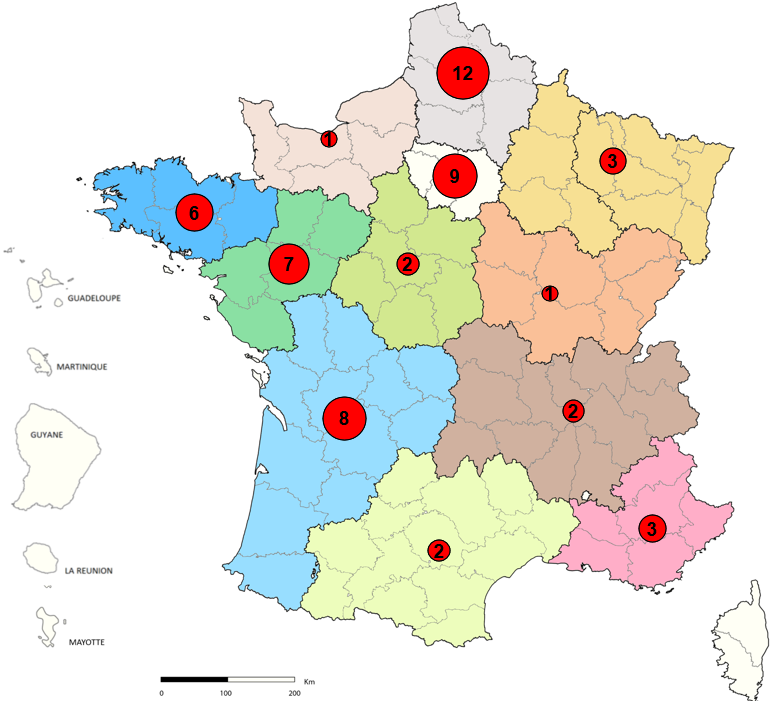
The health authorities announced this Friday evening to investigate an increase in the number of serious contaminations of children with E. coli bacteria in France since the beginning of February and in particular the suspicious death of a child. In all, thirteen cases in children aged 1 to 15 have occurred in the New Aquitaine, Hauts-de-France, Ile-de-France, Brittany and Pays de la Loire regions, indicates the France public health agency. The age of the deceased child is not specified.
All these children were affected by a haemolytic uraemic syndrome (HUS). This disease, whose origin is most often food, is potentially serious for young children: it is a complication of an episode of often bloody diarrhea , which can cause acute kidney failure. It is frequently caused by bacteria belonging to the Escherichia coli family.
The investigation aims to " identify a possible source of common contamination and to put in place the appropriate measures" . "At this stage, the epidemiological investigation does not exclude any leads" , indicates Public Health France. Several sources of potential contamination are explored : ingestion of contaminated food eaten raw or undercooked, contamination by soiled hands brought to the mouth, after touching animals carrying the bacteria or their contaminated environment, contact with a sick person who excretes the bacteria in their stool. Two categories of food are particularly sensitive: minced meat and products made from raw milk.
Each year, between 100 and 165 children with hemolytic uremic syndrome are notified to Public Health France, which has set up a surveillance system for this disease since 1996, according to the press release.
https://www.francebleu.fr/infos/fai...bacterie-escherichia-coli-en-trois-1645820690
----------------------------------------------------------------------------------------------------------------------------
Ongoing investigations of cases of pediatric hemolytic-uremic syndrome (HUS) and health recommendations
published on 25.02.22
Point position
Public Health France and the National Reference Center (CNR) Escherichia coli (Pasteur Institute - Paris), with its associated laboratory (Microbiology Laboratory of Robert Debré Hospital - Paris), are investigating an increase in the number of cases of hemolytic syndrome and uremic (HUS) and serious Escherichia coli infection, reported since the beginning of February 2022.
'
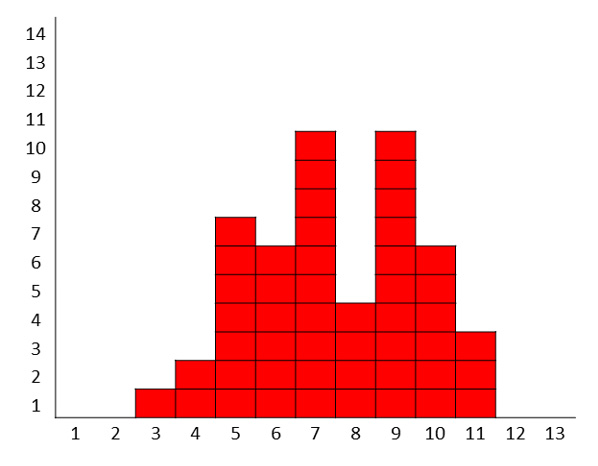
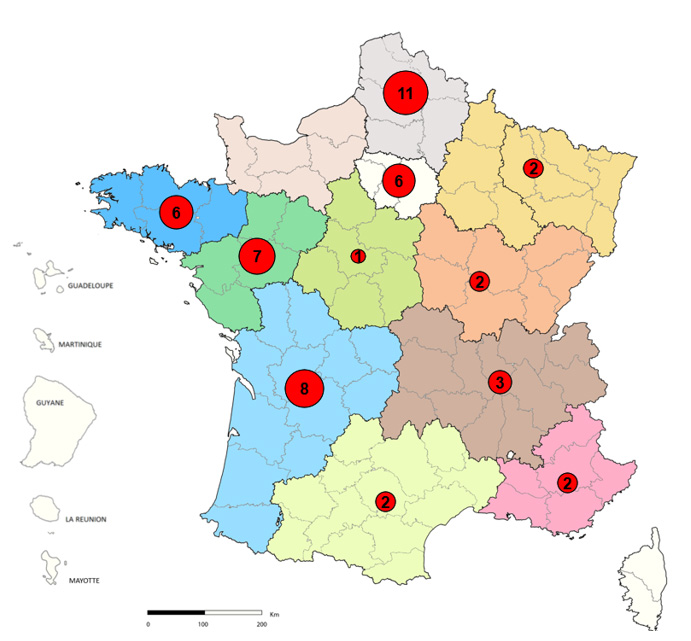
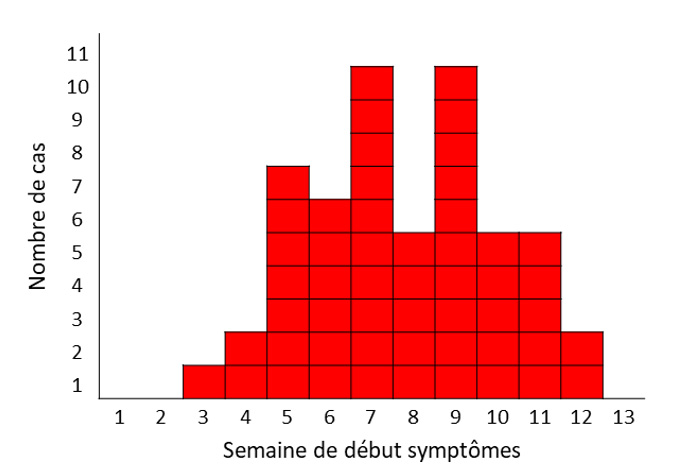
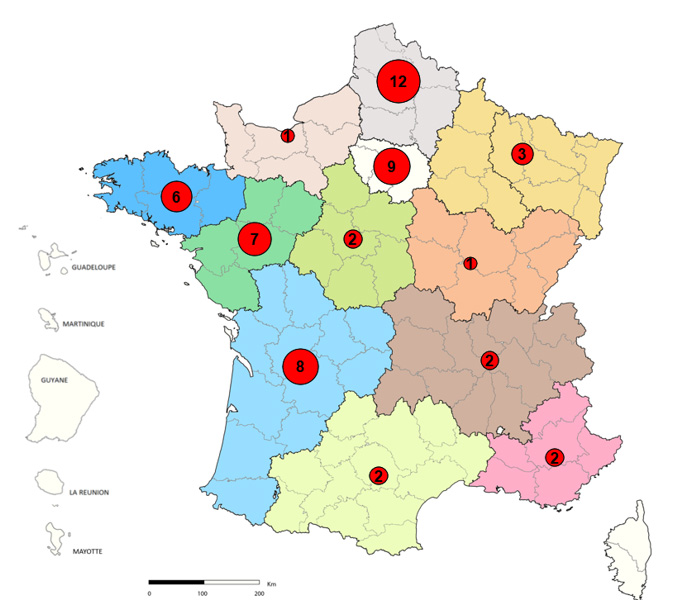
As of February 24, 2022, 13 cases of HUS, linked to Escherichia coli bacteria with similar characteristics, have been identified. These cases occurred in 5 regions of metropolitan France: New Aquitaine (5 cases), Hauts-de-France (3 cases), Ile-de-France (3 cases), Brittany (1 case) and Pays de la Loire (1 case). The sick children, aged 1 to 15 years with a median age of 8 years, presented symptoms between 01/18/2022 and 02/11/2022. A child has died.
Public Health France, in conjunction with the CNR, the Directorate General for Food, the Directorate General for Competition, Consumption and the Repression of Fraud, in coordination with the
Directorate General for Health, are carrying out investigations into the all cases of pediatric HUS reported since January 1, 2022 (31 under investigation to date) on national territory to confirm or refute a link between these cases. This, in order to identify a possible common source of contamination and put in place the appropriate measures.
The investigations revolve around two parts:
Several sources of contamination are therefore currently being investigated by the health authorities for each case:
Symptoms related to HUS
Hemolytic uremic syndrome (HUS) is an infectious disease most often of food origin, rare in France, but potentially serious. This syndrome is frequently caused by bacteria belonging to the Escherichia coli (E. coli) family. An infection by the E. coli bacterium is manifested by diarrhea often accompanied by blood, abdominal pain and sometimes vomiting which can progress, after about a week, to a severe form of the infection.
Each year, between 100 and 165 children with haemolytic uraemic syndrome are notified to Public Health France, which has set up a surveillance system for this disease since 1996.
Prevention of HUS
In the context of the prevention of haemolytic uraemic syndrome in children, two categories of food are particularly sensitive: minced meat and products made from raw milk. Simple gestures recalled on the website of the Ministry of Solidarity and Health make it possible to avoid the transmission of the disease.
As with any food poisoning, prevention requires compliance with the following rules:
For more information :
Hemolytic-uremic syndrome (HUS)
Public Health France infographic on food alerts
Enterohaemorrhagic Escherichia coli (EHEC) - Know the bacteria to avoid poisoning (ANSES)
Press contact :
Directorate General for Health
presse-dgs@sante.gouv.fr
Public health France
presse@santepubliquefrance.fr
https://solidarites-sante.gouv.fr/a...e-cas-de-syndrome-hemolytique-et-uremique-shu
An investigation launched after 13 cases of serious infection with the bacterium Escherichia coli in three weeks
Friday, February 25, 2022 at 9:31 PM - By Jade Peychieras , France Bleu
The Directorate General of Health announces this Friday evening that it is launching a health investigation after having detected thirteen cases of serious infections, probably linked to the bacterium Escherichia coli, reported since the beginning of February 2022. A child died.
The health authorities announced this Friday evening to investigate an increase in the number of serious contaminations of children with E. coli bacteria in France since the beginning of February and in particular the suspicious death of a child. In all, thirteen cases in children aged 1 to 15 have occurred in the New Aquitaine, Hauts-de-France, Ile-de-France, Brittany and Pays de la Loire regions, indicates the France public health agency. The age of the deceased child is not specified.
All these children were affected by a haemolytic uraemic syndrome (HUS). This disease, whose origin is most often food, is potentially serious for young children: it is a complication of an episode of often bloody diarrhea , which can cause acute kidney failure. It is frequently caused by bacteria belonging to the Escherichia coli family.
The investigation aims to " identify a possible source of common contamination and to put in place the appropriate measures" . "At this stage, the epidemiological investigation does not exclude any leads" , indicates Public Health France. Several sources of potential contamination are explored : ingestion of contaminated food eaten raw or undercooked, contamination by soiled hands brought to the mouth, after touching animals carrying the bacteria or their contaminated environment, contact with a sick person who excretes the bacteria in their stool. Two categories of food are particularly sensitive: minced meat and products made from raw milk.
Each year, between 100 and 165 children with hemolytic uremic syndrome are notified to Public Health France, which has set up a surveillance system for this disease since 1996, according to the press release.
https://www.francebleu.fr/infos/fai...bacterie-escherichia-coli-en-trois-1645820690
----------------------------------------------------------------------------------------------------------------------------
Ongoing investigations of cases of pediatric hemolytic-uremic syndrome (HUS) and health recommendations
published on 25.02.22
Point position
Public Health France and the National Reference Center (CNR) Escherichia coli (Pasteur Institute - Paris), with its associated laboratory (Microbiology Laboratory of Robert Debré Hospital - Paris), are investigating an increase in the number of cases of hemolytic syndrome and uremic (HUS) and serious Escherichia coli infection, reported since the beginning of February 2022.
'
As of February 24, 2022, 13 cases of HUS, linked to Escherichia coli bacteria with similar characteristics, have been identified. These cases occurred in 5 regions of metropolitan France: New Aquitaine (5 cases), Hauts-de-France (3 cases), Ile-de-France (3 cases), Brittany (1 case) and Pays de la Loire (1 case). The sick children, aged 1 to 15 years with a median age of 8 years, presented symptoms between 01/18/2022 and 02/11/2022. A child has died.
Public Health France, in conjunction with the CNR, the Directorate General for Food, the Directorate General for Competition, Consumption and the Repression of Fraud, in coordination with the
Directorate General for Health, are carrying out investigations into the all cases of pediatric HUS reported since January 1, 2022 (31 under investigation to date) on national territory to confirm or refute a link between these cases. This, in order to identify a possible common source of contamination and put in place the appropriate measures.
The investigations revolve around two parts:
- an epidemiological component , consisting of surveying parents on the risk exposures of their children for this type of infection, in particular the foods consumed, and, if necessary, tracing the origin of these foods;
- a microbiological component aimed at identifying the bacterial strain that infected each child, and determining whether these strains have similar characteristics to each other.
Several sources of contamination are therefore currently being investigated by the health authorities for each case:
- Ingestion of contaminated food eaten raw or undercooked;
- Contamination by soiled hands brought to the mouth, after touching animals carrying the bacteria or their contaminated environment;
- Contact with a sick person who excretes the bacteria in their stool.
Symptoms related to HUS
Hemolytic uremic syndrome (HUS) is an infectious disease most often of food origin, rare in France, but potentially serious. This syndrome is frequently caused by bacteria belonging to the Escherichia coli (E. coli) family. An infection by the E. coli bacterium is manifested by diarrhea often accompanied by blood, abdominal pain and sometimes vomiting which can progress, after about a week, to a severe form of the infection.
Each year, between 100 and 165 children with haemolytic uraemic syndrome are notified to Public Health France, which has set up a surveillance system for this disease since 1996.
Prevention of HUS
In the context of the prevention of haemolytic uraemic syndrome in children, two categories of food are particularly sensitive: minced meat and products made from raw milk. Simple gestures recalled on the website of the Ministry of Solidarity and Health make it possible to avoid the transmission of the disease.
As with any food poisoning, prevention requires compliance with the following rules:
- Hand washing should be systematic before preparing meals.
- Vegetables, fruits and aromatic herbs should be washed thoroughly, especially when eaten raw.
- Raw foods should be kept separate from cooked or ready-to-eat foods.
- Cooked meals and leftover food should be quickly put in the refrigerator and sufficiently reheated and consumed quickly.
- Kitchen utensils (especially when they have previously been in contact with raw food), as well as work surfaces, must be thoroughly washed.
- Children should not drink untreated water (well water, torrent, etc.) and avoid swallowing it when swimming (lake, pond, etc.).
For more information :
Hemolytic-uremic syndrome (HUS)
Public Health France infographic on food alerts
Enterohaemorrhagic Escherichia coli (EHEC) - Know the bacteria to avoid poisoning (ANSES)
Press contact :
Directorate General for Health
presse-dgs@sante.gouv.fr
Public health France
presse@santepubliquefrance.fr
DOCX
https://solidarites-sante.gouv.fr/a...e-cas-de-syndrome-hemolytique-et-uremique-shu