• FluTrackers.com Inc. does not provide medical advice. Information on this web site is collected from various internet resources, and the FluTrackers board of directors makes no warranty to the safety, efficacy, correctness or completeness of the information posted on this site by any author or poster. The information collated here is for instructional and/or discussion purposes only and is NOT intended to diagnose or treat any disease, illness, or other medical condition. Every individual reader or poster should seek advice from their personal physician/healthcare practitioner before considering or using any interventions that are discussed on this website. By continuing to access this website you agree to consult your personal physican before using any interventions posted on this website, and you agree to hold harmless FluTrackers.com Inc., the board of directors, the members, and all authors and posters for any effects from use of any medication, supplement, vitamin or other substance, device, intervention, etc. mentioned in posts on this website, or other internet venues referenced in posts on this website.
  • We are not asking for any donations. Do not donate to any entity who says they are raising funds for us.

France - Ongoing investigations of cases of pediatric hemolytic-uremic syndrome (HUS)

Pathfinder

Editor, Senior Moderator
Translation Google

An investigation launched after 13 cases of serious infection with the bacterium Escherichia coli in three weeks

Friday, February 25, 2022 at 9:31 PM - By Jade Peychieras , France Bleu

The Directorate General of Health announces this Friday evening that it is launching a health investigation after having detected thirteen cases of serious infections, probably linked to the bacterium Escherichia coli, reported since the beginning of February 2022. A child died.


The health authorities announced this Friday evening to investigate an increase in the number of serious contaminations of children with E. coli bacteria in France since the beginning of February and in particular the suspicious death of a child. In all, thirteen cases in children aged 1 to 15 have occurred in the New Aquitaine, Hauts-de-France, Ile-de-France, Brittany and Pays de la Loire regions, indicates the France public health agency. The age of the deceased child is not specified.

All these children were affected by a haemolytic uraemic syndrome (HUS). This disease, whose origin is most often food, is potentially serious for young children: it is a complication of an episode of often bloody diarrhea , which can cause acute kidney failure. It is frequently caused by bacteria belonging to the Escherichia coli family.

The investigation aims to " identify a possible source of common contamination and to put in place the appropriate measures" . "At this stage, the epidemiological investigation does not exclude any leads" , indicates Public Health France. Several sources of potential contamination are explored : ingestion of contaminated food eaten raw or undercooked, contamination by soiled hands brought to the mouth, after touching animals carrying the bacteria or their contaminated environment, contact with a sick person who excretes the bacteria in their stool. Two categories of food are particularly sensitive: minced meat and products made from raw milk.

Each year, between 100 and 165 children with hemolytic uremic syndrome are notified to Public Health France, which has set up a surveillance system for this disease since 1996, according to the press release.

https://www.francebleu.fr/infos/fai...bacterie-escherichia-coli-en-trois-1645820690

----------------------------------------------------------------------------------------------------------------------------


Ongoing investigations of cases of pediatric hemolytic-uremic syndrome (HUS) and health recommendations

published on 25.02.22


Point position

Public Health France and the National Reference Center (CNR) Escherichia coli (Pasteur Institute - Paris), with its associated laboratory (Microbiology Laboratory of Robert Debré Hospital - Paris), are investigating an increase in the number of cases of hemolytic syndrome and uremic (HUS) and serious Escherichia coli infection, reported since the beginning of February 2022.
'
As of February 24, 2022, 13 cases of HUS, linked to Escherichia coli bacteria with similar characteristics, have been identified. These cases occurred in 5 regions of metropolitan France: New Aquitaine (5 cases), Hauts-de-France (3 cases), Ile-de-France (3 cases), Brittany (1 case) and Pays de la Loire (1 case). The sick children, aged 1 to 15 years with a median age of 8 years, presented symptoms between 01/18/2022 and 02/11/2022. A child has died.

Public Health France, in conjunction with the CNR, the Directorate General for Food, the Directorate General for Competition, Consumption and the Repression of Fraud, in coordination with the

Directorate General for Health, are carrying out investigations into the all cases of pediatric HUS reported since January 1, 2022 (31 under investigation to date) on national territory to confirm or refute a link between these cases. This, in order to identify a possible common source of contamination and put in place the appropriate measures.
The investigations revolve around two parts:
  • an epidemiological component , consisting of surveying parents on the risk exposures of their children for this type of infection, in particular the foods consumed, and, if necessary, tracing the origin of these foods;
  • a microbiological component aimed at identifying the bacterial strain that infected each child, and determining whether these strains have similar characteristics to each other.
At this stage, the epidemiological investigation does not exclude any lead.

Several sources of contamination are therefore currently being investigated by the health authorities for each case:
  • Ingestion of contaminated food eaten raw or undercooked;
  • Contamination by soiled hands brought to the mouth, after touching animals carrying the bacteria or their contaminated environment;
  • Contact with a sick person who excretes the bacteria in their stool.
The HUS surveillance partners (in particular the network of pediatric nephrologists and resuscitators) have been made aware so that any new case identified can be investigated as soon as possible.

Symptoms related to HUS

Hemolytic uremic syndrome (HUS) is an infectious disease most often of food origin, rare in France, but potentially serious. This syndrome is frequently caused by bacteria belonging to the Escherichia coli (E. coli) family. An infection by the E. coli bacterium is manifested by diarrhea often accompanied by blood, abdominal pain and sometimes vomiting which can progress, after about a week, to a severe form of the infection.

Each year, between 100 and 165 children with haemolytic uraemic syndrome are notified to Public Health France, which has set up a surveillance system for this disease since 1996.

Prevention of HUS

In the context of the prevention of haemolytic uraemic syndrome in children, two categories of food are particularly sensitive: minced meat and products made from raw milk. Simple gestures recalled on the website of the Ministry of Solidarity and Health make it possible to avoid the transmission of the disease.
As with any food poisoning, prevention requires compliance with the following rules:
  • Hand washing should be systematic before preparing meals.
  • Vegetables, fruits and aromatic herbs should be washed thoroughly, especially when eaten raw.
  • Raw foods should be kept separate from cooked or ready-to-eat foods.
  • Cooked meals and leftover food should be quickly put in the refrigerator and sufficiently reheated and consumed quickly.
  • Kitchen utensils (especially when they have previously been in contact with raw food), as well as work surfaces, must be thoroughly washed.
  • Children should not drink untreated water (well water, torrent, etc.) and avoid swallowing it when swimming (lake, pond, etc.).
The health authorities, who are monitoring the evolution of the situation on a daily basis, are fully mobilized to identify the source of this contamination and put in place the appropriate health measures.
For more information :
Hemolytic-uremic syndrome (HUS)
Public Health France infographic on food alerts
Enterohaemorrhagic Escherichia coli (EHEC) - Know the bacteria to avoid poisoning (ANSES)
Press contact :
Directorate General for Health
presse-dgs@sante.gouv.fr
Public health France
presse@santepubliquefrance.fr
DOCX


https://solidarites-sante.gouv.fr/a...e-cas-de-syndrome-hemolytique-et-uremique-shu
 
Translation Google


Update on ongoing investigations into serious cases of haemolytic uraemic syndrome (HUS) in children. Reminder of food risk prevention recommendations.

Public Health France and the National Reference Center (CNR) Escherichia coli (Institut Pasteur - Paris), with its associated laboratory (Microbiology Laboratory of the Robert Debré Hospital - Paris), are continuing investigations concerning the increase in the number of cases haemolytic uremic syndrome (HUS) and severe Escherichia coli infection, reported since early February 2022.

Posted on March 12, 2022

Press contacts

Directorate General for Health :
presse-dgs@sante.gouv.fr

Public health France :
presse@santepubliquefrance.fr


Update and ongoing investigations

As of March 11, 2022, 26 cases of HUS or serious infection, linked to E. coli bacteria with similar characteristics, have been identified. These cases occurred in 9 regions of metropolitan France: New Aquitaine (6 cases), Hauts-de-France (5 cases), Ile-de-France (4 cases), Pays de la Loire (4 cases), Brittany (3 case), Bourgogne-Franche-Comté (1 case), Grand Est (1 case), Provence-Alpes-Côte-D'azur (1 case) and Auvergne-Rhône-Alpes (1 case). The sick children, aged 1 to 15 years with a median age of 8 years, presented symptoms between 01/18/2022 and 02/23/2022. Two children died. In addition, 22 additional cases are under investigation.

Public Health France, in conjunction with the CNR, the General Directorate for Food, the General Directorate for Competition, Consumption and the Repression of Fraud, and in coordination with the General Directorate for Health, are continuing investigations into all cases of pediatric HUS reported since January 1, 2022 on national territory in order to identify a possible common source of contamination and to put in place appropriate measures (for example withdrawal-recalls of incriminated products).

At this stage, the epidemiological investigation has not made it possible to incriminate a particular source of contamination. The health authorities are therefore renewing the general recommendations for the prevention of food risks, in particular for children under 16 years of age.


Recommendations to prevent HUS

The E. coli responsible for HUS are present in the intestines of many ruminant animals (cows, calves, goats, sheep, deer, etc.) and are eliminated by the excrement which can then contaminate the environment (water, manure, soil) and foods. These bacteria tolerate cold well (survival in a refrigerator or freezer), but are destroyed by cooking.
The transmission of the bacterium can be avoided by simple gestures, in particular in children under 16 and the elderly:

  • hand washing should be systematic before meal preparation;
  • meats, and especially minced beef, but also minced meat preparations, must be well cooked through (and not pink through the core);
  • raw milk, cheeses made from raw milk and dairy products made from raw milk should not be consumed by children under 5 years of age; prefer cooked pressed cheeses (such as Emmental, Comté, Gruyère, Beaufort), processed cheese spreads and pasteurized milk cheeses;
  • flour-based preparations (pizza/cookie dough/cake/pie, etc.) should not be eaten raw or undercooked;
  • vegetables, salads, fruits and aromatic herbs, in particular those which are going to be eaten raw, must be carefully washed before consumption, after peeling if necessary;
  • raw foods should be kept separate from cooked or ready-to-eat foods;
  • cooked meals and leftover food must be quickly put in the refrigerator and sufficiently reheated and consumed quickly;
  • kitchen utensils (especially when they have previously been in contact with raw food), as well as work surfaces, must be thoroughly washed;
  • children should not drink untreated water (well water, torrent, etc.) and avoid swallowing it when swimming (lake, pond, etc.);
  • finally, it is necessary to avoid the contact of very young children (under 5 years old) with cows, calves, sheep, goats, deer, etc., and their environment; in case of contact with these animals, hand washing must be systematic.
The health authorities, who are monitoring the evolution of the situation on a daily basis, are fully mobilized to identify the source of this contamination and put in place the appropriate health measures as quickly as possible to avoid the occurrence of new cases.

Symptoms related to HUS

Hemolytic uremic syndrome (HUS) is an infectious disease most often of food origin, rare in France, but serious.
Each year, approximately 160 children with HUS are notified to Public Health France, which has set up a surveillance system (nephro-pediatrics services) for this disease since 1996.

In children, this syndrome is most often caused by an infection with bacteria belonging to the E. coli family. The latter manifests itself within 3-4 days after contamination (10 days maximum) by diarrhea often accompanied by blood, abdominal pain and sometimes vomiting which can progress, after about a week, to a severe form of the infection. (HUS) in about 10% of children.

The risk of developing HUS is higher at the extreme ages of life, especially in young children who then show signs of great fatigue, pallor, a decrease in the volume of urine, which becomes darker, and sometimes convulsions. Treatment in hospital may include, among other things, blood transfusions and/or dialysis. It is therefore necessary to consult a doctor immediately in the event of suggestive symptoms.
 
Translation Google


Serious cases of haemolytic-uremic syndrome (HUS) in children: withdrawal - preventive recall of batches of Buitoni brand Fraîch'Up frozen pizzas due to possible contamination by the bacterium Escherichia coli O26.

published on 18.03.22

As part of the investigations carried out by the authorities on the cases of severe haemolytic and uraemic syndromes reported since January 1, 2022 on national territory, the analyzes (epidemiological, microbiological and traceability) carried out suggest, at this stage, a possible link with the consumption of frozen pizzas from the Fraîch'Up range of the Buitoni brand.

Investigations are continuing to determine the origin of the contamination, including for other products, as well as epidemiological investigations in order to establish potential links with all the cases detected on the territory since the beginning of January 2022.

Consequently, as a precautionary measure, and pending additional analyses, the company is proceeding today with the withdrawal-recall of all the pizzas in the Fraîch'Up range, of the Buitoni brand, marketed on this day.

Example of pizzas from the Fraîch'Up range, Buitoni brand:

pizza_buitoni.jpg

People who hold Buitoni brand Fraîch'Up pizzas are asked not to eat them and to destroy them .Provided with a photo of the packaging with the product references (Best Before Date, bar code number, batch number, production time), consumers can call the telephone number provided by the company to get a refund: 0800 22 32 42

People who, within 3-4 days after consumption of the above products (10 days maximum), present with diarrhea, abdominal pain or vomiting, are invited to consult their doctor quickly , notifying him of this consumption and the reminder. products by the company and to retain the product packaging.

If there are no symptoms, there is no need to worry .


Point position

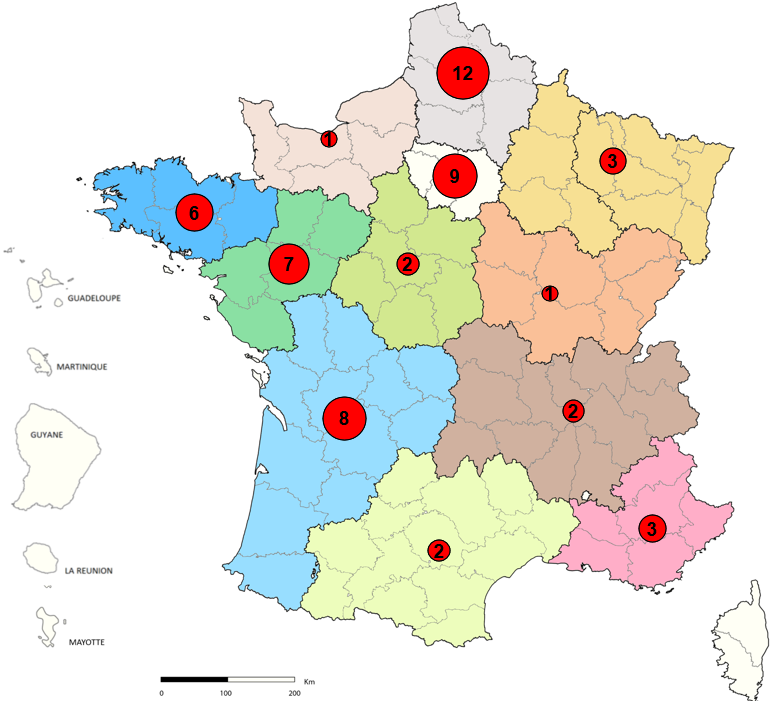
As of March 17, 2022, 27 cases of HUS or serious infection, linked to E. coli bacteria with similar characteristics, have been identified, and 31 additional cases are under investigation. These 58 cases occurred in 12 regions of metropolitan France: Hauts-de-France (13 cases), New Aquitaine (9 cases), Pays de la Loire (9 cases), Brittany (6 cases), Ile-de-France ( 6 cases), Grand Est (5 cases), Auvergne-Rhône-Alpes (3 cases), Bourgogne Franche-Comté (2 cases), Center Val-de-Loire (2 cases) Normandy (1 case), Occitanie (1 case ) and Provence-Alpes-Côte d'Azur (1 case). The sick children, aged 1 to 18 years with a median age of 5 ½ years, presented symptoms between 10/01/2022 and 10/03/2022. Two children died.

Public Health France, in connection with the National Reference Centers for E.coli, the Directorate General for Food, the Directorate General for Competition, Consumption and the Repression of Fraud, and in coordination with the Directorate General for Health, is continuing to investigate all cases of pediatric HUS reported since January 1, 2022 on national territory.


Symptoms related to HUS

Hemolytic uremic syndrome (HUS) is an infectious disease most often of food origin, rare in France, but serious.

Each year, about 160 children with HUS are notified to Public Health France, which has set up a surveillance system (nephro-pediatrics services) for this disease since 1996.
In children, this syndrome is most often caused by an infection with bacteria belonging to the E. coli family. The latter manifests itself within 3-4 days after contamination (10 days maximum) by diarrhea often accompanied by blood, abdominal pain and sometimes vomiting which can progress, after about a week, to a severe form of the infection. (HUS) in about 10% of children.
The risk of developing HUS is higher at the extreme ages of life, especially in young children. Affected people then show signs of great fatigue, pallor, a decrease in the volume of urine, which becomes darker, and sometimes convulsions. Treatment in hospital may include, among other things, blood transfusions and/or dialysis. It is therefore necessary to consult a doctor immediately in the event of suggestive symptoms.


Reminder of recommendations to prevent HUS

The E. coli responsible for HUS are present in the intestines of many ruminant animals (cows, calves, goats, sheep, deer, etc.) and are eliminated by the excrement which can then contaminate the environment (water, manure, soil) and foods. These bacteria tolerate cold well (survival in a refrigerator or freezer), but are destroyed by cooking .

The transmission of the bacterium can be avoided by simple gestures, in particular in children under 16 and the elderly:
• Washing hands must be systematic before preparing meals;
• meats, and especially minced beef, but also minced meat preparations, must be well cooked through (and not pink through); ;
• raw milk, cheeses made from raw milk and dairy products made from raw milk should not be consumed by children under 5 ; prefer cooked pressed cheeses (such as Emmental, Comté, Gruyère, Beaufort), processed cheese spreads and pasteurized milk cheeses;
• flour-based preparations (pizza/cookie dough/cake/pie, etc.) should not be eaten raw or undercooked;
• vegetables, lettuce, fruit and aromatic herbs, in particular those which are going to be eaten raw, must be carefully washed before consumption, after peeling if necessary. ;
• raw foods should be kept separate from cooked or ready-to-eat foods;
• cooked meals and leftover food must be quickly put in the refrigerator and sufficiently reheated and consumed quickly;
• kitchen utensils (especially when they have previously been in contact with raw food), as well as work surfaces, must be thoroughly washed;
• children should not drink untreated water (well water, torrent, etc.) and avoid swallowing it when swimming (lake, pond, etc.);
• finally, very young children (under 5) should avoid contact with cows, calves, sheep, goats, deer, etc., and their environment; in case of contact with these animals, hand washing must be systematic.

For more information:
puce.gif
Press release Buitoni: Recall of frozen pizzas Fraich'up Buitoni
puce.gif
Update on ongoing investigations into serious cases of haemolytic-uremic syndrome (HUS) in children: reminder of food risk prevention recommendations (press release of March 12, 2022)
puce.gif
Ongoing investigations of cases of pediatric haemolytic uremic syndrome (HUS) and health recommendations - Ministry of Solidarity and Health (solidarites-sante.gouv.fr) (press release of February 25 2022)
puce.gif
Hemolytic and uremic syndrome (Santé Publique France)
Enterohaemorrhagic Escherichia coli (EHEC) - Know the bacteria to avoid poisoning
(ANSES)
puce.gif
Hygiene advice in the kitchen


...

https://solidarites-sante.gouv.fr/ac...retrait-rappel
 
Translation Google

BUITONI PIZZAS: FAMILIES OF SERIOUSLY ILL CHILDREN CONSIDER LEGAL ACTION

Marie Dupin and Joanna Chabas
the03/28/2022 at 10:45

RMC INFO. After the massive recall of Buitoni pizzas suspected of having made several dozen children seriously ill, families of victims are breaking their silence on RMC. They are demanding answers from the authorities and considering legal action.

At the end of January, it's pizza night with Chloé's family. Her 12-year-old son Robin eats a pizza from the Fraîch'up range by Buitoni, the family's favorite brand. Two days later, he begins to have a stomach ache, becomes pale, sleeps a lot. Doctors suspect gastroenteritis. But at the end of the week, his condition worsens: he no longer eats, can no longer stand, his eyes turn yellow. Chloe then takes him to the emergency room.

"WITHIN A DAY, IT WAS TOO LATE"

'When we arrived at the hospital in Lille, the pediatrician told us that his vital prognosis was committed,' Chloe told RMC. If within 48 hours it affects the liver, brain and heart, it’s over. Your life flashes before you and you wonder if your life will stop. You imagine that he’s dead and you’re going to his funeral. And you’re wondering if you’re going to live without him. His two kidneys were stopped, they no longer worked. One day later, it was too late. He will be sentenced to life on a salt-free diet and may have kidney problems later. It’s become a constant anxiety every night I get up to see if he’s okay."

Robin's parents are no longer alone with their questions. They joined a Facebook group where the parents of child victims are listed. This group is that of the association "SHU T - Typical Hemolytic and Uremic Syndrome "Let's get out of silence"".

It is this serious syndrome that has affected children. Together, the parents, one of whose children died, are considering legal action to establish responsibilities. One of the mothers says that her two sons are hospitalized, one of whom is still in intensive care. Among these angry parents, Malo, the father of a 4-year-old girl, Sacha. She too found herself between life and death after eating a Buitoni pizza. She stayed in the hospital for three weeks and on dialysis for 15 days.

'It breaks her childhood,' Malo told RMC. 'These three weeks of hospitalization made my daughter grow up too fast. We ask her to do things she shouldn’t have to do. It hurts. Everyone has to take responsibility and not go unpunished."

LONG-AWAITED TEST RESULTS

The parents also hope that the authorities, the repression of fraud and Public Health France, will quickly publish the results of the tests to confirm the link between the 58 cases of serious poisoning and Buitoni pizzas.

For its part, Nestlé, which sells a Buitoni pizza every two seconds in France, does not wish to react further and refers to its last press release published on March 18, in which the group assured that there was no "proven link between its products and poisoning", and that the withdrawal-recall of the pizzas had been carried out "in the name of the precautionary principle".

Marie Dupin and Joanna Chabas

https://rmc.bfmtv.com/actualites/so...nt-une-action-en-justice_AV-202203280246.html
 
Translation Google

Severe cases of hemolytic-uremic syndrome (HUS) in children: new cases reported, health authorities remind you of what to do

published on 30.03.22

Epidemiological, microbiological and traceability analyzes have confirmed a link between several cases and the consumption of frozen pizzas from the Fraîch'Up range of the Buitoni brand contaminated with Escherichia coli bacteria that produce Shiga-toxins .

Given this situation, the authorities are asking people who hold Buitoni brand Fraîch'Up pizzas not to eat them and to destroy them. Each household is invited to ensure that its freezer does not contain any.It is also recommended that people holding frozen pizzas in their freezer that have been separated from their box, and whose range and brand cannot be formally identified or clearly known, not to consume them and to destroy them .

As a precautionary measure, on March 18, the company proceeded with the withdrawal-recall of all the pizzas in the Fraîch'Up range, of the Buitoni brand , marketed since June 2021. The authorities are fully mobilized to ensure the effectiveness of the withdrawal/recall measures implemented, in particular through more than 10,000 checks in the various distribution channels . Beyond the checks, if consumers find that Fraîch'Up pizzas from the Buitoni brand are still on the market, they are invited to file a report on the SignalConso platform .

As of March 28, 2022, 75 cases are under investigation, including 41 cases of HUS with similar characteristics have been identified, i.e. 14 more cases compared to the last update on March 17. 34 additional cases are under investigation .

These 75 cases occurred in 12 regions of metropolitan France: Hauts-de-France (16 cases), New Aquitaine (11 cases), Pays de la Loire (10 cases), Ile-de-France (9 cases), Brittany ( 7 cases), Grand Est (5 cases), Auvergne-Rhône-Alpes (4 cases), Center Val-de-Loire (4 cases), Provence-Alpes-Côte d'Azur (3 cases), Bourgogne Franche-Comté ( 2 cases), Normandy (2 cases) and Occitanie (2 cases).

Sick children are aged 1 to 18 years with a median age of 7 years. Two children died .

The authorities point out that after consuming the products concerned by the recall, it is important to quickly consult a doctor by reporting this consumption if:
puce.gif
within 10 days, people have diarrhea, abdominal pain, or vomiting;
puce.gif
within 15 days, people show signs of great fatigue, pallor, a decrease in the volume of urine, which becomes darker.

In the absence of symptoms within 15 days of consumption, it is also reminded that there is no need to worry.

Download the press release :
PDF
Severe cases of hemolytic-uremic syndrome (HUS) in children: (...) Download (443.5 kb)
DOCX
Severe cases of hemolytic-uremic syndrome (HUS) in children: (...) Download (48.3 kb)
For more information :
puce.gif
Serious cases of haemolytic-uremic syndrome (HUS) in children: preventive withdrawal - recall of batches of Buitoni brand Fraîch'Up frozen pizzas due to possible contamination by the bacterium Escherichia coli O26 . - Ministry of Solidarity and Health (press release of March 18, 2022)
puce.gif
Press release Buitoni: Recall of frozen pizzas Fraich'up Buitoni
puce.gif
Update on the ongoing investigations concerning serious cases of hemolytic uremic syndrome (HUS) in children: reminder of the recommendations for the prevention of food risks (Ministry of Solidarity and Health - press release of March 12, 2022)
puce.gif
Ongoing investigations of cases of pediatric hemolytic and uremic syndrome (HUS) and health recommendations(Ministry of Solidarity and Health - press release of 25 February 2022)
puce.gif
Haemolytic and uremic syndrome (Public Health France)
puce.gif
Enterohaemorrhagic Escherichia coli (EHEC) - Know the bacteria to avoid poisoning (ANSES)
puce.gif
Hygiene advice in the cooking (ANSES - National Agency for Food, Environmental and Occupational Health and Safety)
puce.gif
Information sheet “Enterohaemorrhagic Escherichia coli (ECEH)” (Institut Pasteur)

Press contacts
Directorate General for Competition, Consumer Affairs and Fraud Prevention
communication@dgccrf.finances.gouv.fr
Directorate General for Health
presse-dgs@sante.gouv.fr
Public health France
presse@santepubliquefrance.fr


https://solidarites-sante.gouv.fr/a...que-et-uremique-shu-chez-l-enfant-de-nouveaux
 
Translation Google

E.coli bacteria: "This is the largest epidemic ever described in France", according to an epidemiologist

Gabrielle Jones, epidemiologist at Public Health France, spoke of "a very large-scale event" on Wednesday on France Inter,

with France Inter - franceinfo
French Radio
Posted on 03/30/2022 20:54
Update on 03/31/2022 09:31

"This is the largest epidemic ever described in France" , put into perspective Wednesday March 30 on France Inter , Gabrielle Jones, epidemiologist at Public Health France. Contamination with the bacterium Escherichia coli resulted in 75 cases of hemolytic-uremic syndromes (HUS), including 41 serious cases.

“It is a very large-scale event” , adds the epidemiologist, who explains that around 160 hemolytic and uremic syndromes are reported each year to Public Health France. "So we are already halfway through what we usually see in a year ," she worries.

The majority of patients consumed Buitoni pizzas

Gabrielle Jones also confirms that "the vast majority of families surveyed report consumption" of Buitoni brand pizzas. "We are exploring different hypotheses to find out how the contaminations could have occurred despite the cooking of the pizza. It may be the manipulation of the pizza not yet cooked" , she speculates.

Finally, the epidemiologist explains that "for the vast majority" of patients, the symptoms are composed of "kidney complications" , but that there may also be "associated complications that affect the heart and the brain, even death, what we unfortunately had in the context of this epidemic“.

https://www.francetvinfo.fr/sante/a...france-selon-une-epidemiologiste_5053861.html
 
Translation Google

Contamination with E.coli bacteria: how does the Buitoni brand defend itself?

Lionel Gougelot (in Lille), edited by Gauthier Delomez 1:48 p.m., March 31, 2022

Health authorities have confirmed a link between Buitoni brand pizzas and certain cases of Escherichia coli contamination in French children. Of the 75 cases listed in France, 16 come from the Hauts-de-France region where the manufacturing plant is located. The brand claims that no anomaly had yet been detected.The link has now been proven: frozen pizzas from Buitoni's "Fresh Up" range are responsible for the resurgence of cases of Escherichia coli contamination in French children. For the moment, already 75 serious cases have been listed, including 16 in the Hauts-de-France region where, in Caudry in the North, the manufacturing plant now pointed out is located. “We are trying to understand what happened”, assures Jérôme Jaton, the general manager of Nestlé France who visited the site on Wednesday.

The trail of contamination from flour

The leader promises close collaboration with the health authorities on the origin of this bacterium. He evokes the hypothesis of contamination from the flour used to make the pizza dough itself. This track still needs to be confirmed by the analyzes in progress on these same production lines.

Buitoni claims that no health anomalies had been reported in recent months at the manufacturing site. Pending the conclusions of the analyses, the two production lines at the Caudry plant are shut down, while 240 employees normally work on the site. For the moment, there is no reaction from the unions, in particular on working conditions or hygiene conditions within the company.

https://www.europe1.fr/societe/cont...ment-la-marque-buitoni-se-defend-elle-4102977

---------------------------------------------------------------------------

PIZZAS BUITONI: SHOCKING IMAGES OF THE HYGIENIC CONDITIONS WITHIN THE CAUDRY FACTORY

RMC

the 03/31/2022 at 11:54

RMC has obtained images of the Buitoni factory in Caudry (Nord) where the pizzas of the "Fraich'Up" range are produced, accused by the health authorities of being the cause of the poisoning with the bacteria E.Coli of dozens of children and the death of two of them.

Health authorities confirmed on Wednesday the link between Buitoni pizzas and the serious food poisoning of dozens of children, contaminated by the E.Coli bacteria.

It is in the Caudry factory, in the North, that the offending pizzas, those of the Fraich'Up range from Buitoni , are produced . Contaminations which shock but do not surprise a former employee, who left about a year ago, after 18 months at the Caudry factory, and who transmitted images of catastrophic hygiene conditions to RMC.

"We think it's sanitized, everything is regulated. It's supposed to be perfect but it's not the reality, a lot of things are being hidden from us. I thought it was going to be fixed but there was no no change", testifies this former employee , who had alerted his management and an independent media, " Mr Mondialisation ".

"For 18 months, I talked about it and I was often told that 'yes', I was right and that precisely, they were seeing that and that it was going to change, but basically nothing was moving forward" , explains the former employee of Buitoni to RMC.

"When you see mushrooms on the wall, you know it's not okay," he says . "The paint on the metal bars was peeling off. There were bits of food that remained in some places for several days, several weeks," laments the former Buitoni employee.

"In sauce bins, cigarette butts could be found. Where flour is sent on carpets, so that the dough does not stick, there were flour worms. Most people didn’t wash their hands, even when they came back from the bathroom.There was a clear cross-contamination, and I’m surprised that there wasn’t an accident before,' said the former employee.

https://rmc.bfmtv.com/actualites/so...ein-de-l-usine-de-caudry_AD-202203310298.html

------------------------------------------------------------------

E.coli in Buitoni pizzas in France: negative tests in the factory, according to Nestlé

The Nestlé group said on Thursday that tests carried out at its French site producing Buitoni pizzas, some of which were contaminated with E.coli, turned out to be negative and assured that the incriminating images broadcast in the press did not correspond to the "usual" state of the factory.

AFP
Agency
Published on 2022-04-02 at 07:32 - Updated on 2022-04-02 at 07:35

French health authorities confirmed on Wednesday that some cases of contamination by the Escherichia coli bacterium were linked to the consumption of Fraîch'Up pizzas, the entire range of which Nestlé recalled on March 18.

Nestlé has closed the two production lines located in Caudry, in the north of France, which manufacture these frozen pizzas marketed mainly in the country.

Since the end of February, France has experienced an upsurge in cases of kidney failure in children linked to contamination with E. coli. Two children have died since the start of the year, but the link to pizza has not been confirmed in their cases.

In Belgium, where the Leader Price chain recalled the pizzas concerned, "no case of human contamination has been identified", a spokesperson for the Federal Agency for the Safety of the Food Chain told AFP on Thursday. (Afsca).

The Luxembourg food authority also reported a recall of these products.

Nestlé took 75 samples from the Caudry factory, "all negative", Nestlé France communications director Pierre-Alexandre Teulié told AFP.

"The priority is to find the cause of the contamination," he added.

Some of the photos of a dirty production line, published in May 2021 on a website, Mr Mondialisation, indeed seem to have been taken within the factory, he acknowledged.

But "what they show does not represent the normal, usual or acceptable state of the factory," Teulié told AFP.

"If this corresponds to a reality", it could only be specific situations, "after a breakdown" or "during the cleaning process", he specified, stressing that unannounced checks carried out in September 2020 and March 2021 had not identified any deviation from the regulations.

"It's never dirty like that," an employee told AFP on condition of anonymity.

The CGT union deplored for its part a reorganization of the factory in 2015 which, according to it, affected hygiene.

“Since then, the cleaning time has been reduced, and carried out by less well-trained people. This has been denounced for years, at Nestlé as elsewhere”, underlined Maryse Treton, of the CGT agri-food federation.

Nestlé said the lines were deep cleaned for 5 hours after a maximum of 27 hours of production.

https://www.lalibre.be/economie/ent...sine-selon-nestle-FOSPSQJGCRDHDNAJ4EX376SWXY/
 
Translation Google

Contamination with E. coli bacteria: the prefect of the North prohibits the production of pizzas in the Buitoni factory in Caudry

Several of these cases are linked to the consumption of Fraîch'Up pizzas from Buitoni, produced at the Caudry site, the health authorities have confirmed.

Article written by
franceinfo
France Televisions
Postedon 06/04/2022 11:06
Updateon 06/04/2022 11:57

The prefect of the North announced, Wednesday April 6, to have prohibited the production of pizzas within the Buitoni factory of Caudry. Since the end of February, France has experienced a resurgence of cases of kidney failure in children, linked to contamination with the bacterium Escherichia coli . Several of these cases are linked to the consumption of Fraîch'Up pizzas from Buitoni, produced at the Caudry site, the health authorities have confirmed.

“The industrial food production activity, with regard to the two pizza production lines of the factory” in Caudry, is “stopped” , according to a prefectural decree issued on April 1. This decision “follows two in-depth hygiene inspections” carried out on March 22 and 29 by agents from the Departmental Directorate for the Protection of Populations (DDPP) in the North and the Directorate General for Competition, Consumption and the repression of fraud (DGCCRF), "as part of their investigations carried out in connection with the E. coli STEC alert [a strain producing shigatoxins] " , specifies the prefecture.

These inspections "highlighted a degraded level of control of food hygiene in the Caudry factory, which justified the issuance of an order to cease industrial production activities in the factory" . The repeal of the decree and the resumption of production "will be conditional on the factory's compliance with its obligations in terms of food hygiene" , and "controls and risk management microbiological" . An investigation for "manslaughter", "deception" and "endangering others" was opened in this case and was entrusted to the public health center of the Paris prosecutor's office.

https://www.francetvinfo.fr/sante/a...s-dans-l-usine-buitoni-de-caudry_5064925.html
 
Translation Google

Investigation of grouped cases of hemolytic-uremic syndrome (HUS) and shiga-toxin-producing E. coli (STEC) infections linked to the consumption of Buitoni® brand Fraîch'Up pizzas

Update on April 6, 2022 on the grouped cases of haemolytic-uremic syndrome and E. coli infections producing shiga-toxin and the consumption of frozen pizzas from the Fraîch'Up range of the Buitoni brand.

Posted on April 7, 2022


Public Health France and the National Reference Center (CNR) E. coli and its associated laboratory (Institut Pasteur, Paris, and Microbiology Laboratory of the Robert Debré Hospital, Paris), in conjunction with the Directorate General for Food, the Directorate General for Competition, Consumer Affairs and Fraud Prevention, and in coordination with the Directorate General for Health, have been investigating since 02/10/2022 an increase in the number of cases of haemolytic uremic syndrome (HUS) pediatric infections and Shiga toxin-producing Escherichia coli (STEC) infections.

Epidemiological, microbiological and traceability investigations have confirmed a link between the occurrence of these grouped cases and the consumption of frozen pizzas from the Fraîch'Up range of the Buitoni brand contaminated with Shiga toxin-producing Escherichia coli (STEC) bacteria. On March 18, the company proceeded with the withdrawal-recall of all the pizzas in the Fraîch'Up range, marketed since June 2021. The authorities asked the people who hold these pizzas not to consume them and to destroy.

The number of HUS cases linked to the consumption of these pizzas seems to be stabilizing.


Update on 06/04/2022

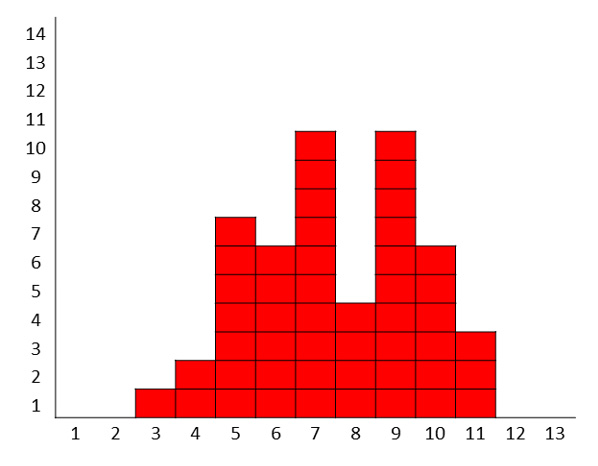
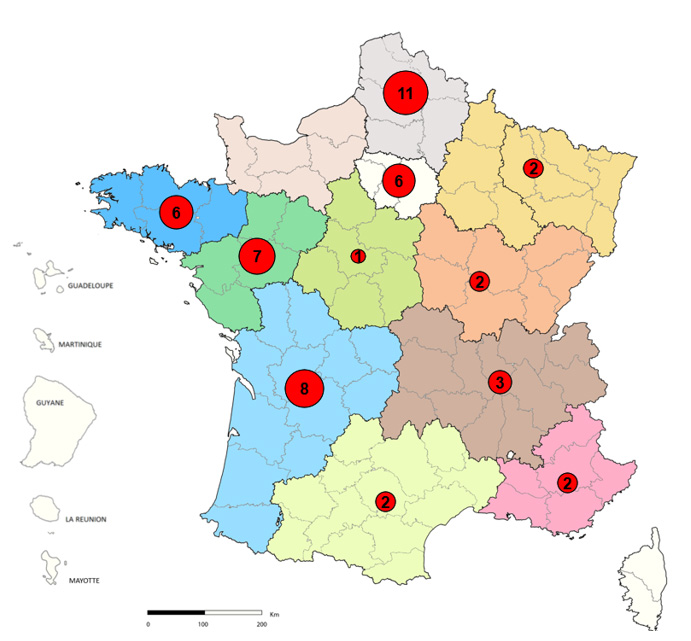
As of 06/04/2022, 50 confirmed cases have been identified, of which 48 are linked to O26 strains, and 2 to O103 strains. For 25 other cases of HUS and STEC infections notified to Public Health France, investigations are ongoing.

These 50 cases occurred in 48 children and 2 adults, who presented symptoms between 01/18/2022 (week 3) and 03/14/2022 (week 11); for 1 adult, the date of onset of symptoms is under investigation (Figure 1).

These 50 cases occurred in 11 regions of metropolitan France: Hauts-de-France (11 cases), New Aquitaine (8 cases), Pays de la Loire (7 cases), Brittany (6 cases), Ile-de-France ( 6 cases), Auvergne-Rhône-Alpes (3 cases), Bourgogne Franche-Comté (2 cases), Grand Est (2 cases), Occitanie (2 cases), Provence-Alpes-Côte d'Azur (2 cases) and Center Val-de-Loire (1 case) (figure 2).

The 48 sick children are aged from 1 to 17 years with a median age of 7 years; 20 (42%) are female; 43 (90%) presented with HUS, 5 (10%) with STEC gastroenteritis. Two children died. The 2 adults are over 90 years old; one presented with HUS, the other with STEC gastroenteritis.


Figure 1: Epidemic curve: number of confirmed cases of HUS and STEC infections, by week of onset of symptoms - metropolitan France, weeks 3 to 11, 2022
shu_fig1_nb_cas_confirmes.jpg


Figure 2: Geographical distribution of confirmed cases of HUS and STEC infections linked to the consumption of Buitoni® brand Fraîch'Up pizzas, by region of residence - metropolitan France, weeks 3 to 11, 2022
shu_fig2_carte.jpg


...
https://www.santepubliquefrance.fr/l...en-lien-avec-l
 
Translation Google

Contamination by E.Coli: Fraich'Up pizzas from Buitoni distributed in 23 countries

By Le Figaro with AFP
Posted 6 hours ago, updated 5 hours ago

These pizzas are implicated in serious contaminations in France, including two fatal ones, with E. Coli bacteria.

Twenty-three countries, including 15 in Africa, have received Fraich'Up frozen pizzas from the Buitoni brand, considered by the French health authorities to be the cause of several serious cases of contamination of children by the E.coli bacterium in France.

In addition to France, Belgium and Luxembourg, where they were subject to a recall, these pizzas from the Fraich'Up range were distributed in Switzerland, Andorra, Saint-Martin, Slovenia, Qatar, but also in Benin, Burkina Faso, Cameroon, Côte d'Ivoire, Republic of Congo, Democratic Republic of Congo, Djibouti, Gabon, Guinea, Madagascar, Mali, Mauritius, Morocco, Niger, Senegal, according to an alert mechanism notification on food risks (the Rapid Alert System for Food and Feed), confirmed Thursday by a spokesperson for the European Commission.

The pizzas in the Fraich'Up range are all made at the Buitoni factory in Caudry (Nord), where production was banned by the prefecture following two hygiene inspections. "Buitoni does not sell Fraich'up pizzas directly abroad ," a spokesperson for the brand told AFP.

First suspicions Tuesday

“Pizzas Fraich'up are distributed and marketed to distributors/resellers in France, who can export and resell on their own initiative in stores located abroad ,” continued the Buitoni representative. Nestlé, owner of Buitoni, had launched a massive recall of the affected products on March 18.

Since then, analyzes have confirmed "a link between several cases and the consumption of frozen pizzas from the Fraîch'Up range of the Buitoni brand contaminated with Escherichia coli bacteria", according to a press release published at the end of March by the General Directorate of Health, which depends on the French government.

Health authorities sounded the alarm after dozens of French children fell ill. Two have died, although the connection to the pizzas has not been confirmed in either case. On Friday, an investigation for "manslaughter", "deception" and "endangering others" was opened by the Paris prosecutor's office.

The NGO Foodwatch was the first to say in a press release on Tuesday that Fraîch'Up pizzas made in France had been "marketed in at least 15 African countries". "The number of food safety inspections decreased by 33% between 2012 and 2019 on the side of the Directorate General for Food" , also affirmed the association, which denounces a lack of means of the health control authorities in France.
...
https://www.lefigaro.fr/conso/conta...-de-buitoni-distribuees-dans-23-pays-20220407
 
Translation Google


Investigation of grouped cases of haemolytic-uremic syndrome (HUS) and shiga-toxin-producing E. coli (STEC) infections linked to the consumption of Buitoni® brand Fraîch'Up pizzas. Update on April 25, 2022.

Update on April 25, 2022 on the grouped cases of haemolytic-uremic syndrome and E. coli infections producing shiga-toxin and the consumption of frozen pizzas from the Fraîch'Up range of the Buitoni® brand.

Posted on April 28, 2022


Public Health France and the National Reference Center (CNR) E. coli and its associated laboratory (Institut Pasteur, Paris, and Microbiology Laboratory of the Robert Debré Hospital, Paris), in conjunction with the Directorate General for Food, the Directorate General for Competition, Consumer Affairs and Fraud Prevention, and in coordination with the Directorate General for Health, have been investigating since 02/10/2022 an increase in the number of cases of haemolytic uremic syndrome (HUS) pediatric infections and Shiga toxin-producing Escherichia coli (STEC) infections.

The epidemiological, microbiological and traceability investigations carried out since that date have confirmed a link between the occurrence of these grouped cases and the consumption of frozen pizzas from the Buitoni brand Fraîch'Up range contaminated with STEC bacteria. On 03/18/2022, the company proceeded with the withdrawal-recall of all the pizzas in the Fraîch'Up range, marketed since June 2021 and the authorities asked the people who hold these pizzas not to consume them and to destroy them.

The total number of cases of HUS linked to the consumption of these pizzas seems to have stabilized since the withdrawal-recall.


Case of SHU in France: update on 04/25/22

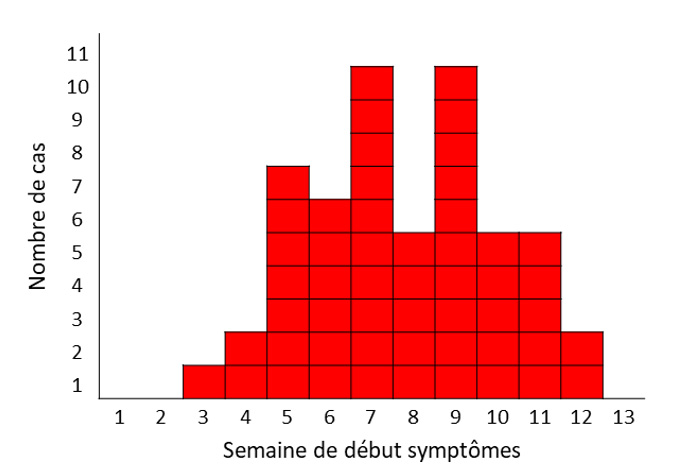
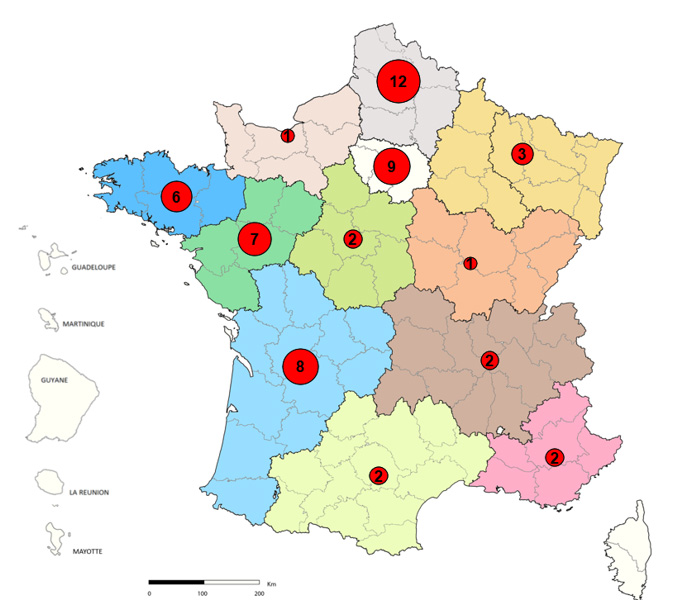
As of 04/25/2022, 55 confirmed cases have been identified, of which 53 are linked to STEC O26 strains, and 2 to STEC O103 strains.

These 55 cases occurred in 54 children and 1 adult, who presented symptoms between 18/01/2022 (week 3) and 25/03/2022 (week 12) (Figure 1). The epidemic peak is in week 7 (14/02 to 20/02) and week 9 (28/02 to 06/03), with 10 cases each of these weeks.


These 55 cases occurred in 12 regions of metropolitan France: Hauts-de-France (12 cases), Ile-de-France (9 cases), New Aquitaine (8 cases), Pays de la Loire (7 cases), Brittany ( 6 cases), Grand Est (3 cases), Auvergne-Rhône-Alpes (2 cases), Occitanie (2 cases), Provence-Alpes-Côte d'Azur (2 cases), Center Val-de-Loire (2 cases) , Bourgogne Franche-Comté (1 case) and Normandy (1 case) (figure 2).

The 54 sick children are aged from 1 to 17 years with a median age of 7 years; 24 (44%) are female; 47 (87%) presented with HUS, 7 (13%) with STEC gastroenteritis. Two children died. The adult did not present with HUS.


Figure 1 - Epidemic curve: number of confirmed cases of HUS and STEC infections, by week of onset of symptoms - Metropolitan France, weeks 3 to 12, 2022 (N=53: week of onset of symptoms not specified for 2 cases )
shu_fig1_nb_cas_confirmes_250422.jpg


Figure 2 - Geographical distribution of confirmed cases of HUS and STEC infections (N=55) linked to the consumption of Buitoni® brand Fraîch'Up pizzas, by region of residence in metropolitan France, weeks 3 to 12, 2022
shu_fig2_carte_250422.jpg
 
Translation Google
Investigation of grouped cases of haemolytic-uremic syndrome (HUS) and shiga-toxin-producing E. coli (STEC) infections linked to the consumption of Buitoni® brand Fraîch'Up pizzas. Update on May 4, 2022.

Update on May 4, 2022 on the grouped cases of haemolytic-uremic syndrome and E. coli infections producing shiga-toxin and the consumption of frozen pizzas from the Fraîch'Up range of the Buitoni® brand.

Posted May 10, 2022

Public Health France and the National Reference Center (CNR) E. coli and its associated laboratory (Institut Pasteur, Paris, and Microbiology Laboratory of the Robert Debré Hospital, Paris), in conjunction with the Directorate General for Food, the Directorate General for Competition, Consumer Affairs and Fraud Prevention, and in coordination with the Directorate General for Health, have been investigating since 02/10/2022 an increase in the number of cases of haemolytic uremic syndrome (HUS) pediatric infections and Shiga toxin-producing Escherichia coli (STEC) infections.

The epidemiological, microbiological and traceability investigations carried out since that date have confirmed a link between the occurrence of these grouped cases and the consumption of frozen pizzas from the Buitoni brand Fraîch'Up range contaminated with STEC bacteria. On 03/18/2022, the company proceeded with the withdrawal-recall of all the pizzas in the Fraîch'Up range, marketed since June 2021 and the authorities asked the people who hold these pizzas not to consume them and to destroy them.
The total number of HUS cases linked to the consumption of these pizzas has stabilized since the withdrawal-recall. Other reports of STEC infection are investigated as part of routine surveillance. To date, these reports are not linked to grouped cases or consumption of Fraîch'Up pizzas.


Case of SHU in France: update on 04/05/22

As of 04/05/2022, 56 confirmed cases have been identified, of which 54 are linked to STEC O26 strains, and 2 to STEC O103 strains.

These 56 cases occurred in 55 children and 1 adult, who presented symptoms between 18/01/2022 (week 3) and 05/04/2022 (week 14) (Figure 1). The epidemic peak is in week 7 (14/02 to 20/02) and week 9 (28/02 to 06/03), with 10 cases each of these weeks.

These 56 cases occurred in 12 regions of metropolitan France: Hauts-de-France (12 cases), Ile-de-France (9 cases), New Aquitaine (8 cases), Pays de la Loire (7 cases), Brittany ( 6 cases), Grand Est (3 cases), Provence-Alpes-Côte d'Azur (3 cases), Auvergne-Rhône-Alpes (2 cases), Occitanie (2 cases), Center Val-de-Loire (2 cases) , Bourgogne Franche-Comté (1 case) and Normandy (1 case) (Figure 2).

The 55 sick children are aged from 1 to 17 years with a median age of 6 years; 25 (45%) are female; 48 (87%) presented with HUS, 7 (13%) with STEC gastroenteritis. Two children died. The adult did not present with HUS.


Figure 1: Epidemic curve: number of confirmed cases of HUS and STEC infections, by week of onset of symptoms - metropolitan France, weeks 3 to 14, 2022 (N=54: week of onset of symptoms not specified for 2 cases )
courbe%20cas%20confirm%C3%A9s%20SHU%20et%20infection%20%C3%A0%20STEC.png


Figure 2: Geographical distribution of confirmed cases of HUS and STEC infections (N=56) linked to the consumption of Buitoni® brand Fraîch'Up pizzas, by region of residence in metropolitan France, weeks 3 to 14, 2022
shu_fig2_carte_04-05-22.png


...
https://www.santepubliquefrance.fr/...ucteurs-de-shiga-toxine-stec-en-lien-avec-la3
 
Back
Top