

Pathfinder
Editor, Senior Moderator
Translation Google
Upsurge in imported cases of dengue fever in mainland France: call for vigilance as the tiger mosquito activity season approaches
Faced with the unprecedented situation of the number of imported cases of dengue fever in mainland France since 2023 and the increase in reported cases since January 1, [SUP]2024[/SUP] , Public Health France calls for the vigilance of all to limit the risk of outbreaks on the territory.
Published on April 23, 2024
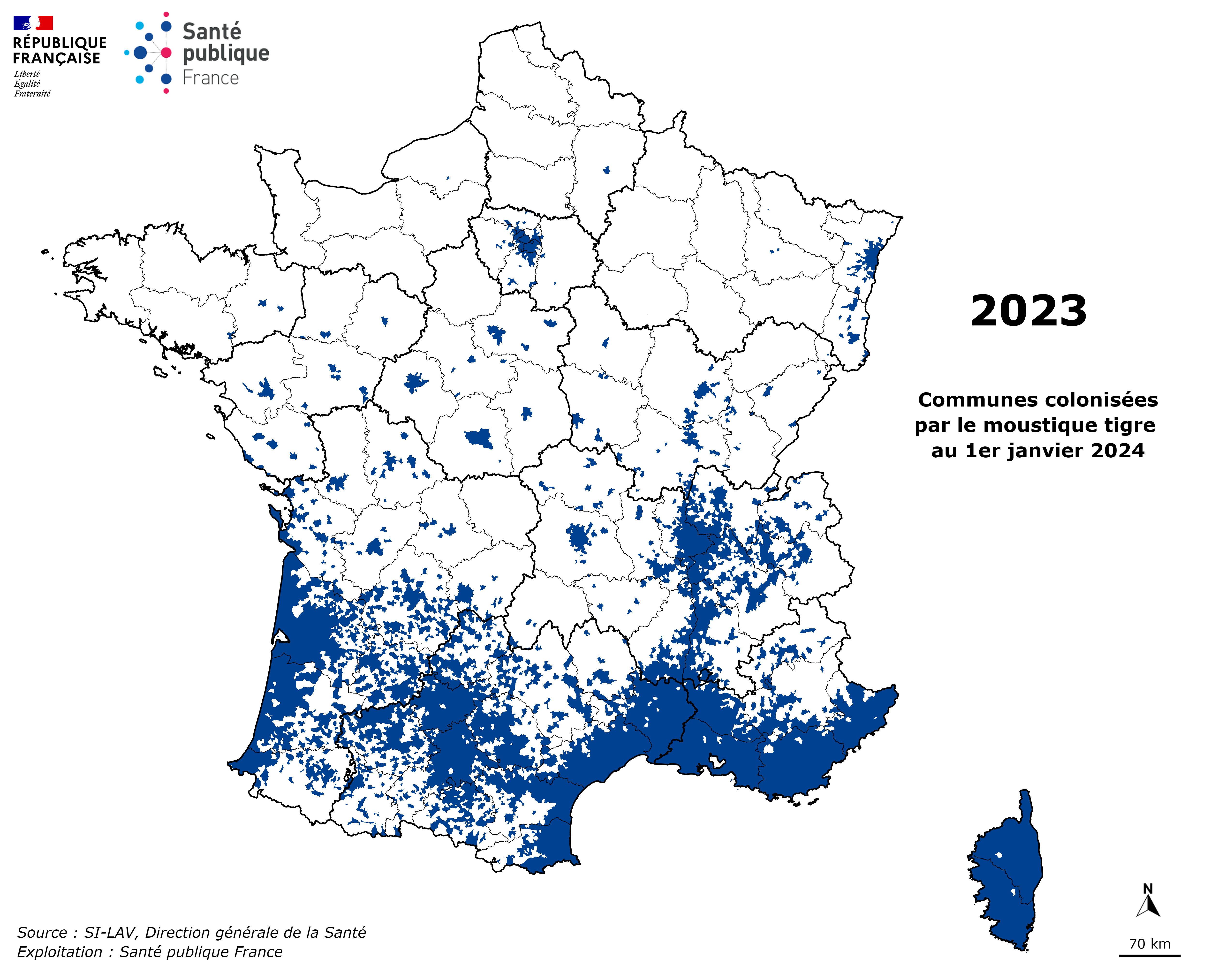
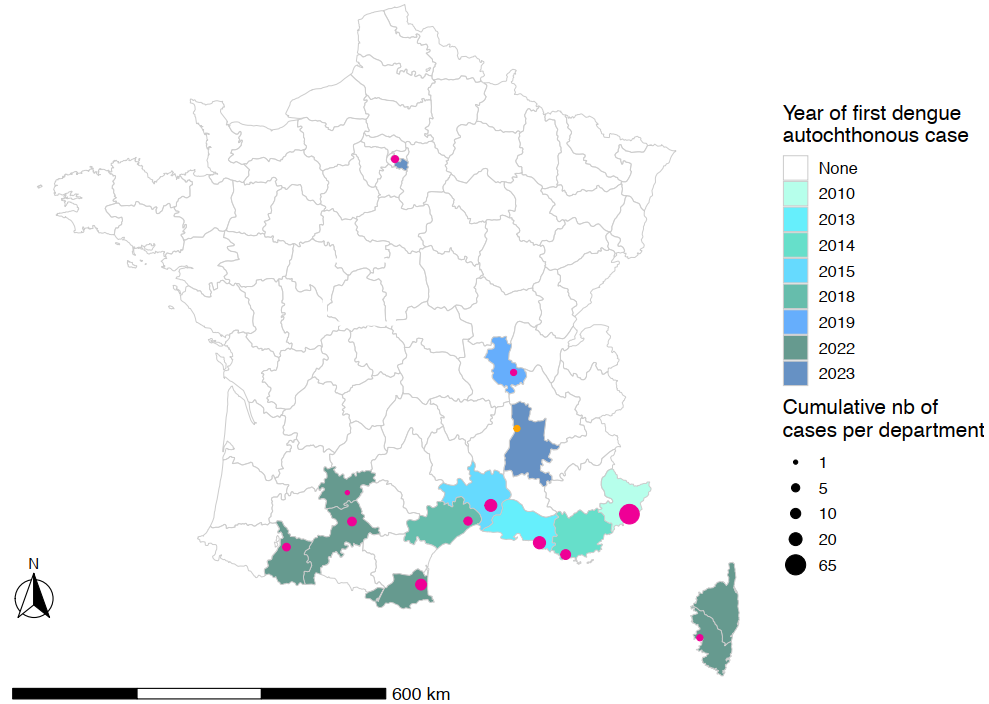
Dengue is an arbovirus transmitted by mosquitoes of the Aedes genus (commonly known as the “tiger mosquito”), now present in 78 departments . The dengue virus circulates throughout the intertropical zone but can also be transmitted in mainland France and other temperate zones. Dengue surveillance is based on the mandatory reporting of cases and is subject, during the period of mosquito activity, to reinforced surveillance, from May 1 to November 30, coordinated by Public Health France, in conjunction with the Regional health agencies and the National Reference Center for Arboviruses.
Since 2023, the number of imported cases of dengue fever reported in France has reached unprecedented figures, more than 60% of which return from the French West Indies, where an epidemic has been ongoing since mid-2023. Between January 1 and April 19, 2024, 1,679 cases of imported dengue fever were notified to Public Health France compared to 131 over the same period in 2023. Over this period, 82% of cases returned from the French West Indies.
Due to the very active circulation of dengue in the French territories of the Antilles (Martinique and Guadeloupe) and the significant increase in the number of cases imported into mainland France since the start of 2024, Public Health France calls for vigilance from health professionals to diagnose and report cases to health authorities, as well as travelers as the virus-carrying mosquito activity season approaches, between May and November.
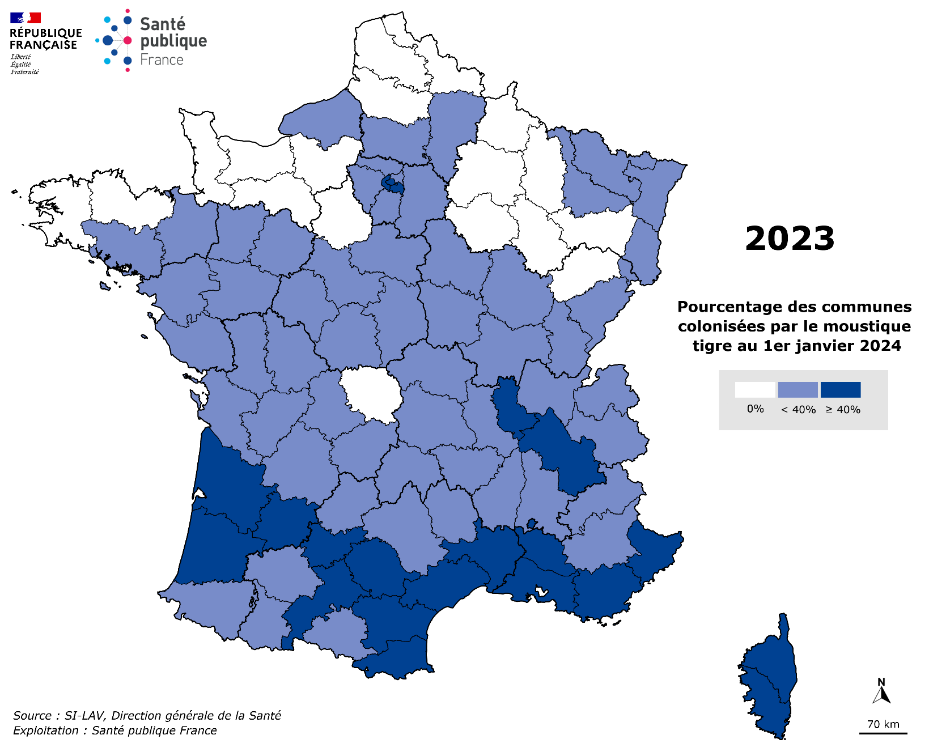
Figure 1. Percentage of municipalities colonized by the tiger mosquito as of January 1, 2024
How is the dengue virus currently circulating in France?
The number of imported cases of dengue fever in France reported by mandatory declaration has increased since mid-2023 to reach unprecedented figures in the first months of 2024. Between January 1 and April 19, 2024, and while the data were not stabilized for the last few weeks, 1,679 cases of imported dengue fever were notified compared to 131 over the same period in 2023 (figure 2).
The majority of cases (82%) returned from the French Antilles, where an epidemic has been ongoing since mid-2023 .
This situation comes as the Pan American Health Organization (PAHO) has warned of a sharp increase in dengue cases in the Americas, compared to previous years. Between weeks 2024-01 and 2024-12, the cumulative incidence rate in the Americas region was 451 cases p. 100,000 inhabitants, i.e. 3 times more than the same period in 2023 and 5 times more than the average number of cases over this period over the last 5 years (figure 3).
Figure 2. Curve of dengue cases per month imported into mainland France (2006-2024 – unconsolidated 2024 data)
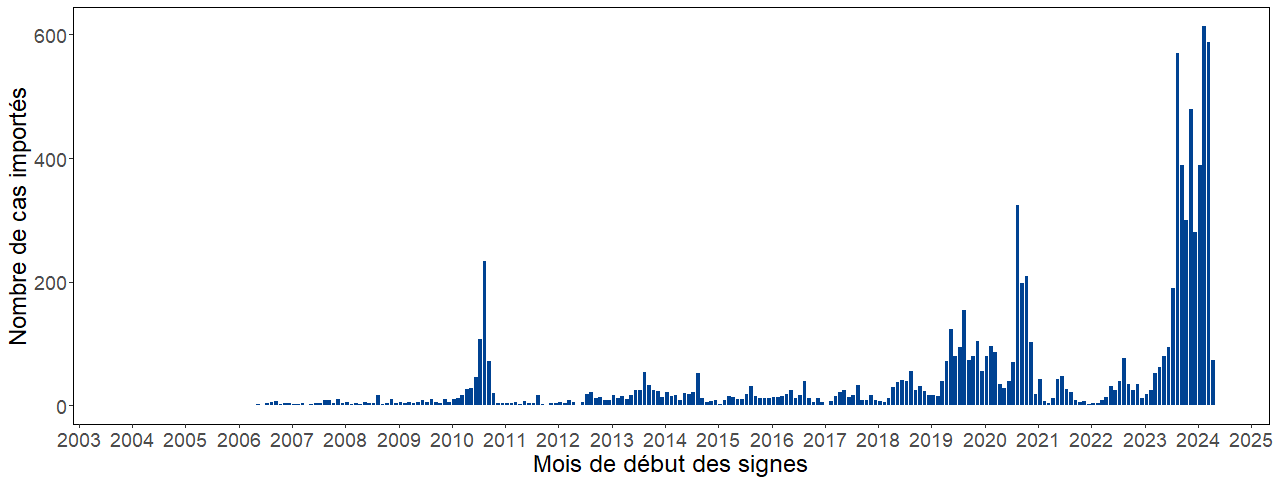
Figure 3. Total number of suspected dengue cases at the end of the 12th week of 2024, 2023 and average of the last 5 years. WHO Region of the Americas.
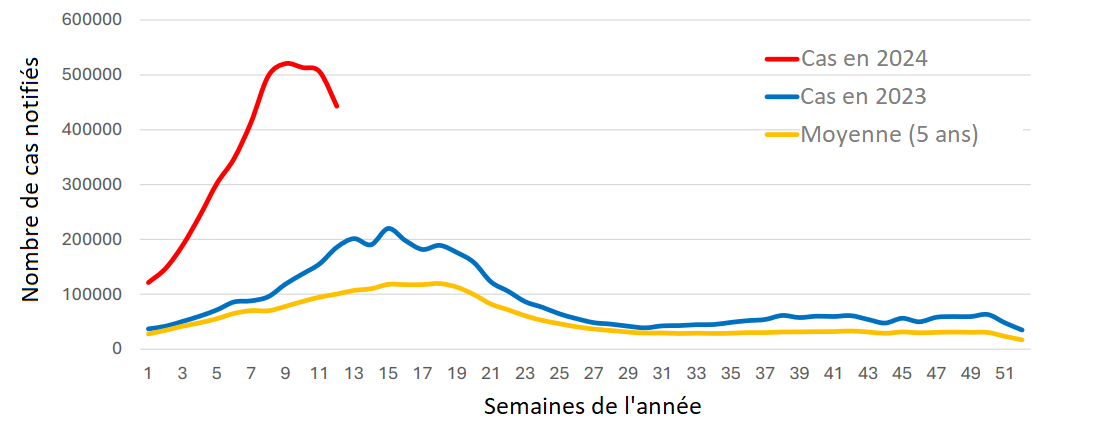
Source: PAHO, Situation Report No 9 - Dengue Epidemiological Situation in the Region of the Americas - Epidemiological Week 08, 2024 - PAHO/WHO | Pan American Health Organization
How to avoid being infected by the tiger mosquito?
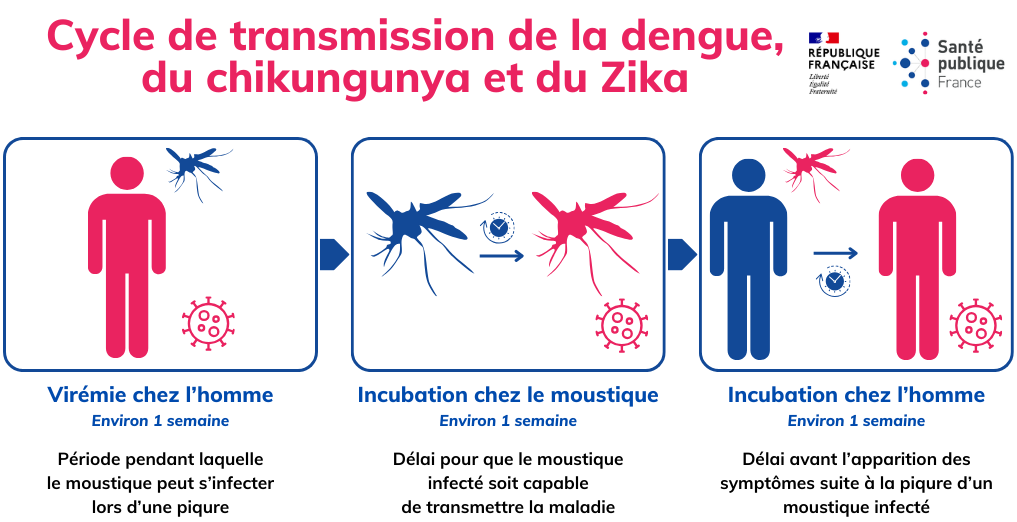
An infected person can infect a mosquito when the dengue virus is present in their blood (so-called viremic phase, lasting approximately one week). The infection is then transmitted by the contaminated mosquito vector (having previously taken the blood of an infected person) which can, during another bite, transmit the virus to a new person. After a period of about a week (between 3 and 14 days), the person thus infected may develop the following symptoms: fever with sudden onset, often accompanied by chills, headache, retro-orbital pain, joint pain, nausea and vomiting, and occasionally a rash.
The transmission cycle of dengue, chikungunya, and zika
What are the actions to adopt?
The right actions to adopt to protect yourself and avoid being bitten by mosquitoes in regions where mosquitoes infected with dengue fever can circulate are:
During the 15 days following return from areas where dengue cases have been reported, it is recommended:
https://www.santepubliquefrance.fr/...he-de-la-saison-d-activite-du-moustique-tigre
Upsurge in imported cases of dengue fever in mainland France: call for vigilance as the tiger mosquito activity season approaches
Faced with the unprecedented situation of the number of imported cases of dengue fever in mainland France since 2023 and the increase in reported cases since January 1, [SUP]2024[/SUP] , Public Health France calls for the vigilance of all to limit the risk of outbreaks on the territory.
Published on April 23, 2024
Dengue is an arbovirus transmitted by mosquitoes of the Aedes genus (commonly known as the “tiger mosquito”), now present in 78 departments . The dengue virus circulates throughout the intertropical zone but can also be transmitted in mainland France and other temperate zones. Dengue surveillance is based on the mandatory reporting of cases and is subject, during the period of mosquito activity, to reinforced surveillance, from May 1 to November 30, coordinated by Public Health France, in conjunction with the Regional health agencies and the National Reference Center for Arboviruses.
Since 2023, the number of imported cases of dengue fever reported in France has reached unprecedented figures, more than 60% of which return from the French West Indies, where an epidemic has been ongoing since mid-2023. Between January 1 and April 19, 2024, 1,679 cases of imported dengue fever were notified to Public Health France compared to 131 over the same period in 2023. Over this period, 82% of cases returned from the French West Indies.
Due to the very active circulation of dengue in the French territories of the Antilles (Martinique and Guadeloupe) and the significant increase in the number of cases imported into mainland France since the start of 2024, Public Health France calls for vigilance from health professionals to diagnose and report cases to health authorities, as well as travelers as the virus-carrying mosquito activity season approaches, between May and November.
Figure 1. Percentage of municipalities colonized by the tiger mosquito as of January 1, 2024
How is the dengue virus currently circulating in France?
The number of imported cases of dengue fever in France reported by mandatory declaration has increased since mid-2023 to reach unprecedented figures in the first months of 2024. Between January 1 and April 19, 2024, and while the data were not stabilized for the last few weeks, 1,679 cases of imported dengue fever were notified compared to 131 over the same period in 2023 (figure 2).
The majority of cases (82%) returned from the French Antilles, where an epidemic has been ongoing since mid-2023 .
This situation comes as the Pan American Health Organization (PAHO) has warned of a sharp increase in dengue cases in the Americas, compared to previous years. Between weeks 2024-01 and 2024-12, the cumulative incidence rate in the Americas region was 451 cases p. 100,000 inhabitants, i.e. 3 times more than the same period in 2023 and 5 times more than the average number of cases over this period over the last 5 years (figure 3).
Figure 2. Curve of dengue cases per month imported into mainland France (2006-2024 – unconsolidated 2024 data)
Figure 3. Total number of suspected dengue cases at the end of the 12th week of 2024, 2023 and average of the last 5 years. WHO Region of the Americas.
Source: PAHO, Situation Report No 9 - Dengue Epidemiological Situation in the Region of the Americas - Epidemiological Week 08, 2024 - PAHO/WHO | Pan American Health Organization
How to avoid being infected by the tiger mosquito?
An infected person can infect a mosquito when the dengue virus is present in their blood (so-called viremic phase, lasting approximately one week). The infection is then transmitted by the contaminated mosquito vector (having previously taken the blood of an infected person) which can, during another bite, transmit the virus to a new person. After a period of about a week (between 3 and 14 days), the person thus infected may develop the following symptoms: fever with sudden onset, often accompanied by chills, headache, retro-orbital pain, joint pain, nausea and vomiting, and occasionally a rash.
The transmission cycle of dengue, chikungunya, and zika
What are the actions to adopt?
The right actions to adopt to protect yourself and avoid being bitten by mosquitoes in regions where mosquitoes infected with dengue fever can circulate are:
- wear loose, covering clothing;
- use skin mosquito repellents;
- use fans;
- sleep under a mosquito net;
- connect electric diffusers;
- use coils outdoors.
During the 15 days following return from areas where dengue cases have been reported, it is recommended:
- to consult a doctor in case of fever and to tell him which regions you are returning from;
- to continue to protect yourself against mosquito bites to prevent a tiger mosquito from biting you and being contaminated, in turn, by the dengue virus. He could then transmit the virus to other people during an bite.
https://www.santepubliquefrance.fr/...he-de-la-saison-d-activite-du-moustique-tigre




 ii=2400195