• FluTrackers.com Inc. does not provide medical advice. Information on this web site is collected from various internet resources, and the FluTrackers board of directors makes no warranty to the safety, efficacy, correctness or completeness of the information posted on this site by any author or poster. The information collated here is for instructional and/or discussion purposes only and is NOT intended to diagnose or treat any disease, illness, or other medical condition. Every individual reader or poster should seek advice from their personal physician/healthcare practitioner before considering or using any interventions that are discussed on this website. By continuing to access this website you agree to consult your personal physican before using any interventions posted on this website, and you agree to hold harmless FluTrackers.com Inc., the board of directors, the members, and all authors and posters for any effects from use of any medication, supplement, vitamin or other substance, device, intervention, etc. mentioned in posts on this website, or other internet venues referenced in posts on this website.
  • We are not asking for any donations. Do not donate to any entity who says they are raising funds for us.

Florida - Zika tracking

Florida - New pool of mosquitoes preliminarily test positive for Zika on Miami Beach (October 01, 2016) - confirmed

New pool of mosquitoes preliminarily test positive for Zika on Miami Beach

Test results are preliminary and must be confirmed by the CDC

MIAMI (October 01, 2016) — The Miami-Dade County Mosquito Control Division learned today that a pool of mosquitoes taken from Miami Beach has preliminarily tested positive for Zika. Testing was conducted by the Florida Department of Agriculture and Consumer Services (FDACS). The pool of mosquitoes was retrieved on September 20, 2016 from a trap located at 575 W 49th Street on Miami Beach, which is within the expanded zone of transmission as designated by the State. This information has been provided to the resident at the location of the trap, and inspection and treatment in the 1/8-mile area surrounding the property has taken place.

It is extremely important to note that the results are preliminary and must be confirmed by the U.S. Centers for Disease Control and Prevention, as Miami-Dade has seen false positives on tested traps in the past. If confirmed, this would be the sixth pool, or batch, of mosquitoes testing positive for Zika on Miami Beach. Thus far, two subsequent test results received from this location have been negative.

Miami-Dade Mosquito Control continues to conduct an aggressive program to reduce and eliminate mosquito breeding and adult mosquitoes in the entire zone of transmission on Miami Beach. Residents are reminded to do their part to help reduce mosquitoes and the spread of mosquito-borne diseases by draining standing water on their properties and wearing repellent when they go outdoors.

Miami-Dade residents who wish to report a mosquito nuisance should call 311 or download the 311 app athttp://www.miamidade.gov/mobile-applications/. Information on the County’s Mosquito Control program is available atwww.miamidade.gov/mosquito.
...
http://www.miamidade.gov/releases/20...itive-trap.asp
 
[h=1]Miami-Dade Mosquitoes Test Positive for Zika[/h] [FONT=pt_sansregular]Oct 4, 2016
[/FONT]

[FONT=pt_sansregular][FONT=pt_sansbold]TALLAHASSEE, Fla. ? The Florida Department of Agriculture and Consumer Services announced today that it has detected Zika in one mosquito from the same small area in Miami Beach, where six other samples had previously tested positive for Zika. All samples have consisted of Aedes aeqypti mosquitoes and are from an area where increased trapping and intensified mosquito control measures have already been underway since the Florida Department of Health determined local transmission had occurred. The positive sample announced today was from a trap located at 1810 Jefferson Avenue in Miami Beach. Three additional mosquito samples collected from the same site have tested negative since this find.[/FONT]
[FONT=pt_sansregular]The Florida Department of Agriculture and Consumer Services has tested more than 5,000 mosquito samples, consisting of more than 64,000 mosquitoes, since May, and these seven samples are the only ones to test positive.[/FONT]
[FONT=pt_sansregular]The positive mosquito pool announced today was collected in Miami Beach within the current zone that has been treated for local transmission. Scientists with the Florida Department of Agriculture and Consumer Services tested the sample at the Bronson Animal Disease Diagnostic Laboratory in Kissimmee.[/FONT]
[FONT=pt_sansregular]A summary of the total positive mosquito samples to date is as follows:[/FONT]
  • Oct. 4, 2016: One mosquito sample, consisting of only one mosquito, from a small area in Miami Beach tested positive for Zika.
  • Oct. 1, 2016: One mosquito sample from a small area in Miami Beach tested positive for Zika
  • Sept. 16, 2016: One mosquito sample from a small area in Miami Beach tested positive for Zika.
  • Sept. 9, 2016: One mosquito sample from a small area in Miami Beach tested positive for Zika.
  • Sept. 1, 2016: Three mosquito samples from a small area in Miami Beach tested positive for Zika.
[FONT=pt_sansregular]Florida's proactive efforts, which are conducted by local mosquito control programs and supported by the expertise provided by the Florida Department of Agriculture and Consumer Services, include: eliminating larval habitats by emptying standing water, treating water-holding containers with long-lasting larvicide, providing outdoor residual and spatial insecticide treatments to reduce adult vectors, and conducting adult mosquito surveillance to evaluate the effectiveness of treatments.[/FONT]
[FONT=pt_sansregular]Miami-Dade County's Mosquito Control team will continue to conduct inspections to reduce mosquito breeding and perform spray treatments as necessary in a minimum of 200-yard radius around the trap location.[/FONT]
[FONT=pt_sansregular]Floridians can help prevent the spread of Zika by eliminating mosquito breeding grounds by draining standing water around their homes, businesses and communities.[/FONT]
[FONT=pt_sansregular]On February 3, 2016, the Florida Surgeon General declared a public health emergency in regards to the Zika virus. Floridians can assist in Zika-related response efforts by draining standing water and allowing officials who are conducting mosquito control efforts to access their property.[/FONT]
[FONT=pt_sansregular]Commissioner Adam H. Putnam issued a mosquito declaration on July 29 when local transmission first occurred in Florida and has since extended the declaration. Access a copy of the mosquito declaration [
pdf.png
819.05 KB ].[/FONT]

[FONT=pt_sansregular]For more information on the Zika virus, visit the Florida Department of Health's website at FloridaHealth.gov.[/FONT]
[/FONT]
 
[FONT=&quot] [h=1]Department of Health Daily Zika Update[/h] By Florida Department of Health, Office of Communications
October 04, 2016
[/FONT]

[FONT=&quot] Press Release[/FONT]
[FONT=&quot]
DOH_logo.png

October 4, 2016
[h=2]Department of Health Daily Zika Update[/h] Contact:
Communications Office
NewsMedia@flhealth.gov
(850) 245-4111

Tallahassee, Fla.?In an effort to keep Florida residents and visitors safe and aware about the status of the Zika virus, the department will issue a Zika virus update each week day. Updates will include a Zika case count by county and information to keep Floridians informed and prepared. In order to keep the public informed, the department has posted our investigation process here.

There are six new travel related cases today with one in Hillsborough, one in Sarasota and four involving pregnant women. Please visit our website to see the full list of travel-related cases.

There are six new non-travel related cases today in Miami-Dade County.
  • Two cases had exposure in Miami Beach.
  • Four cases are Miami-Dade County residents and the department is investigating where exposure occurred.
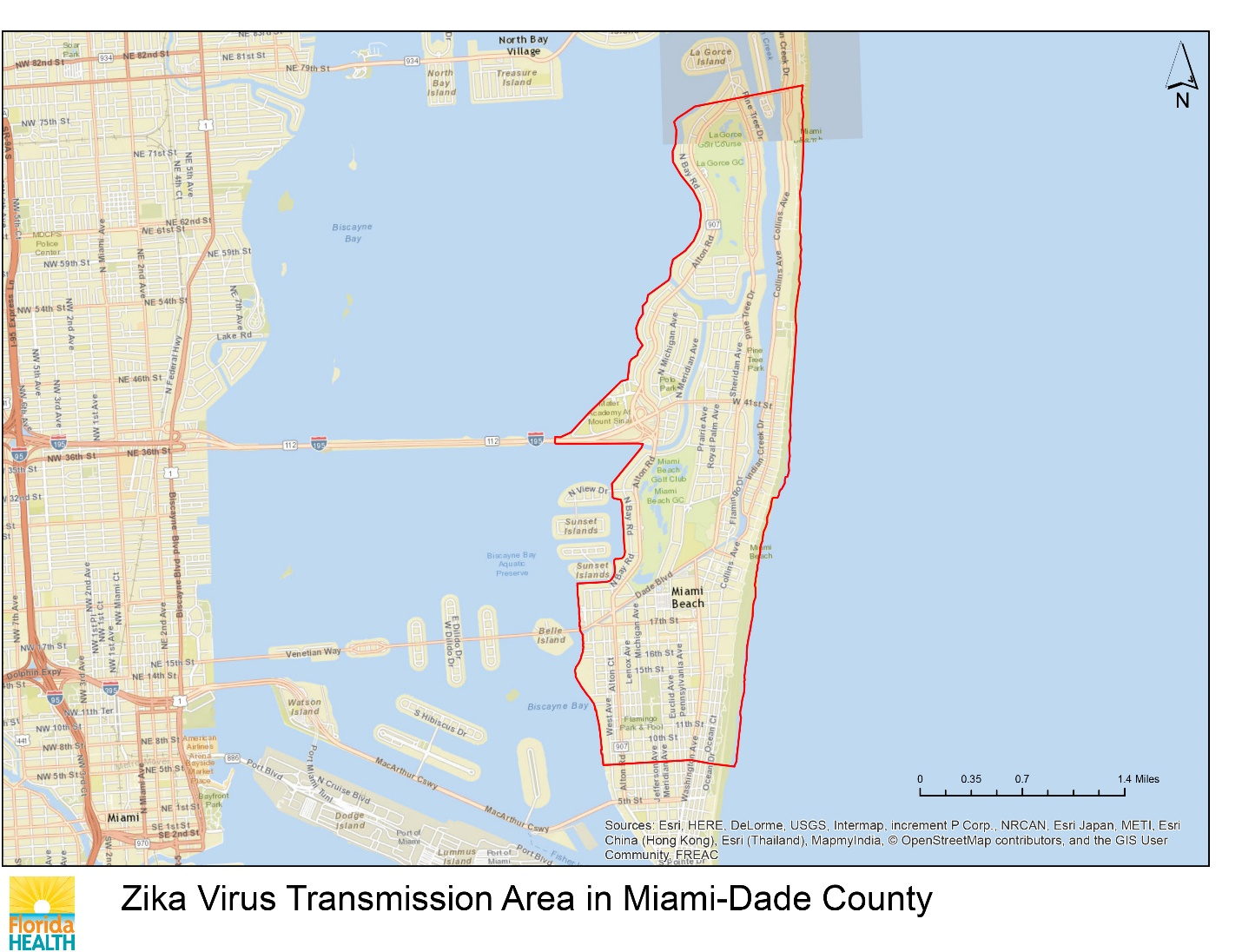
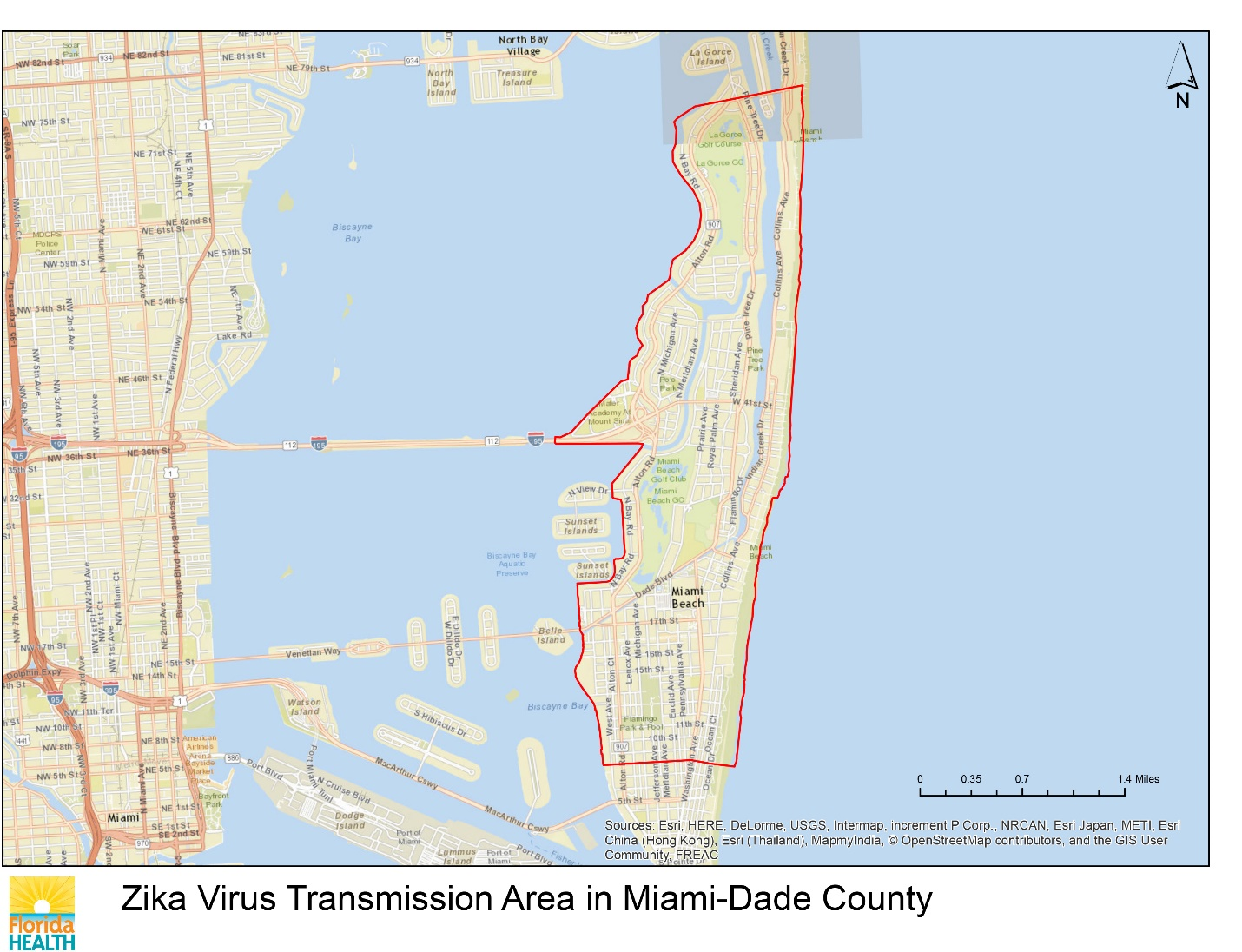
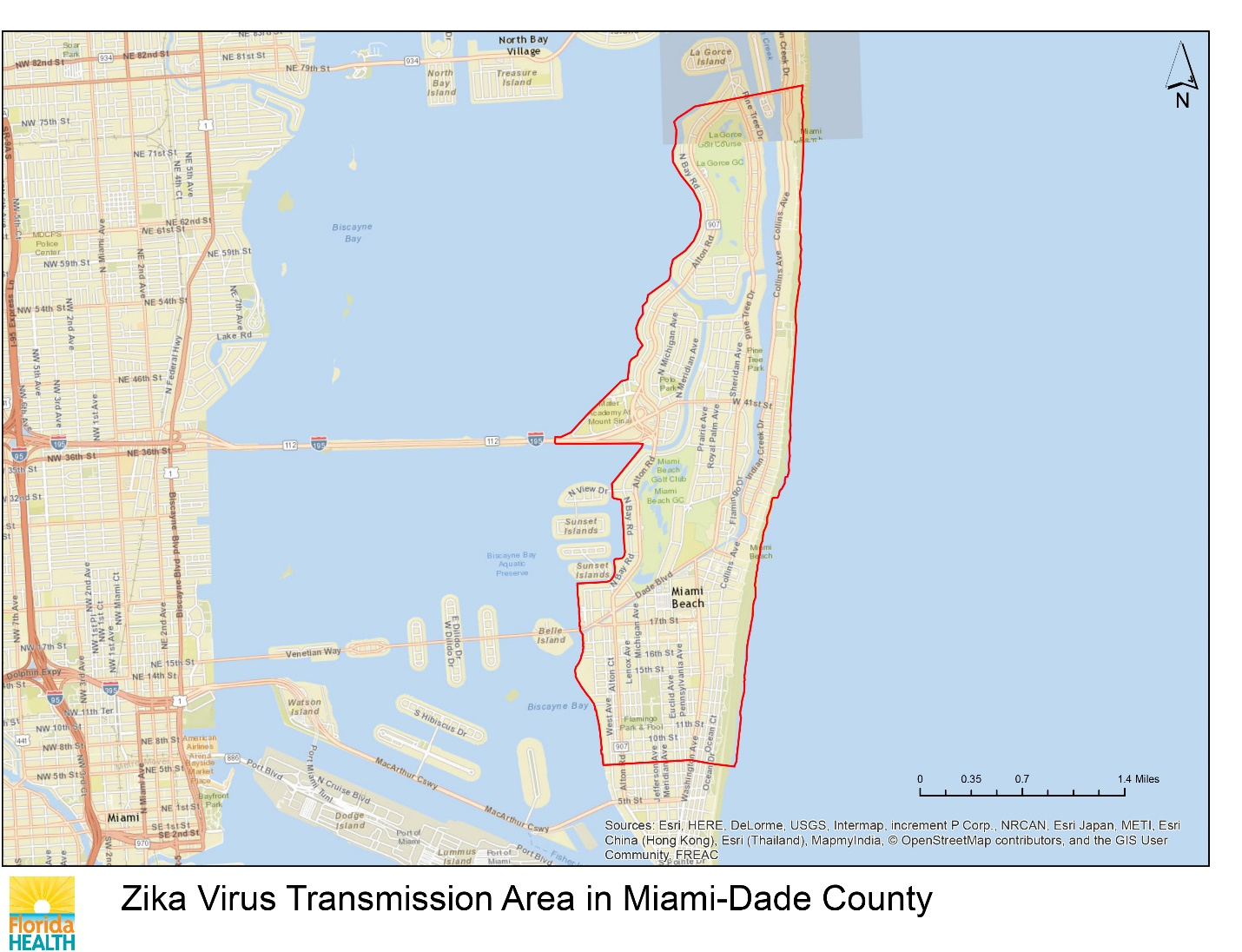
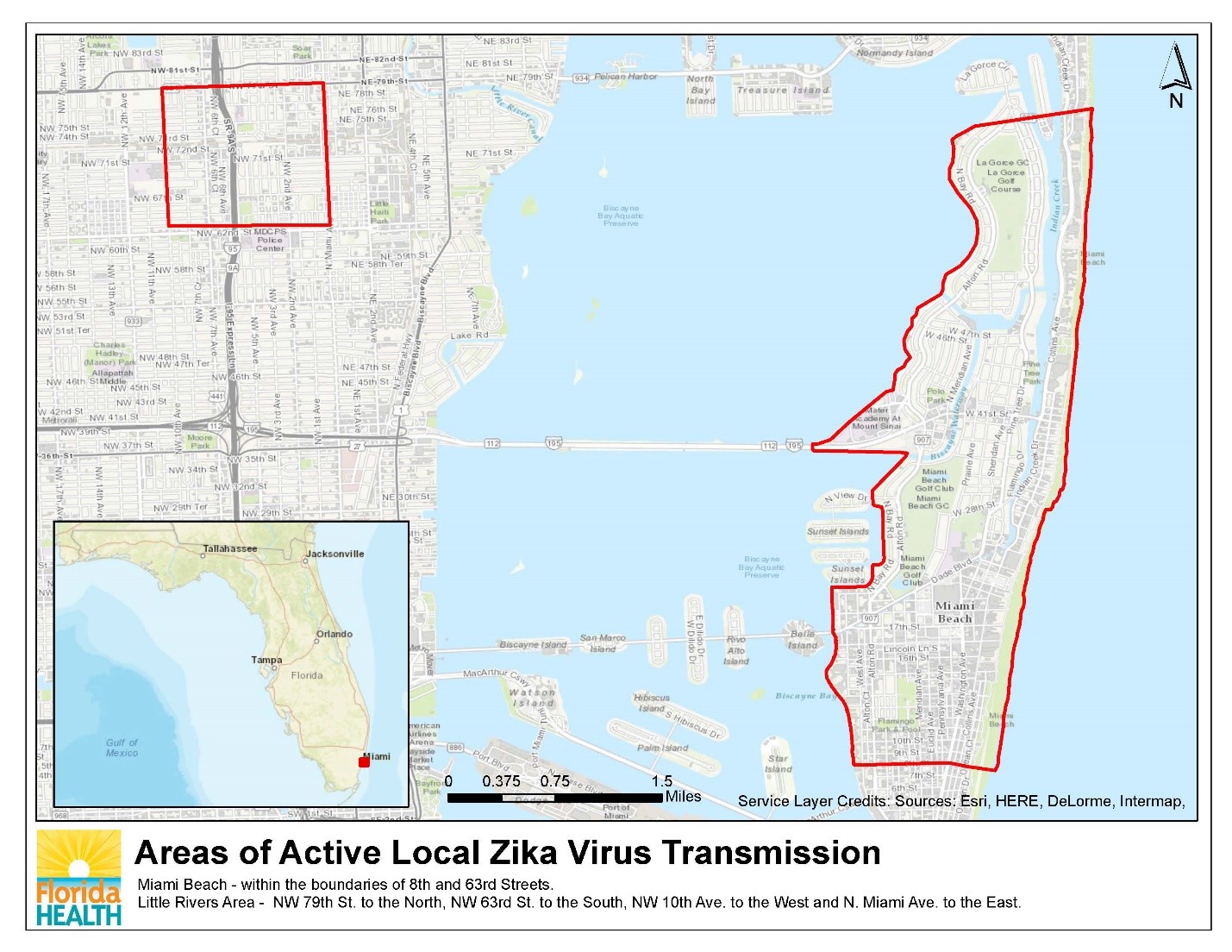
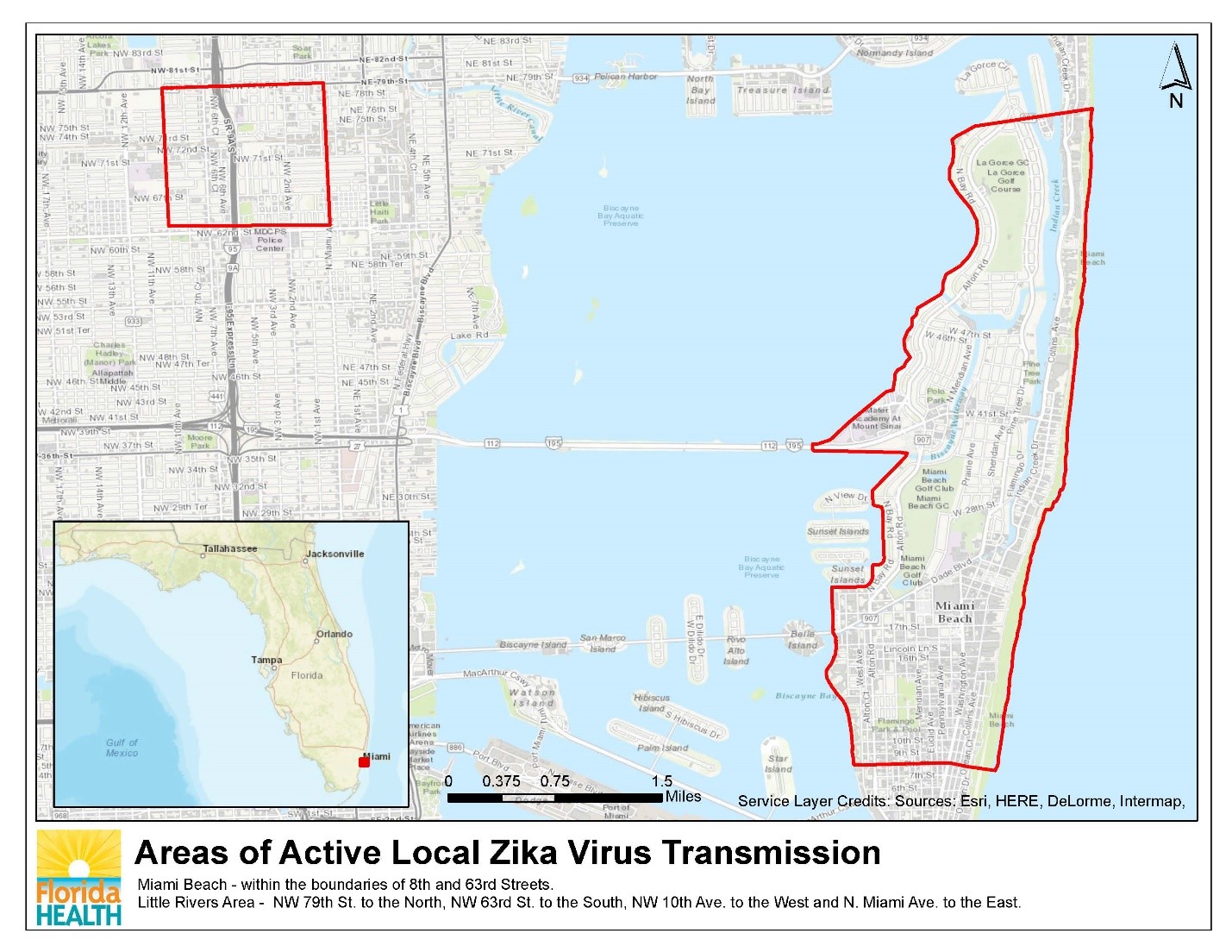
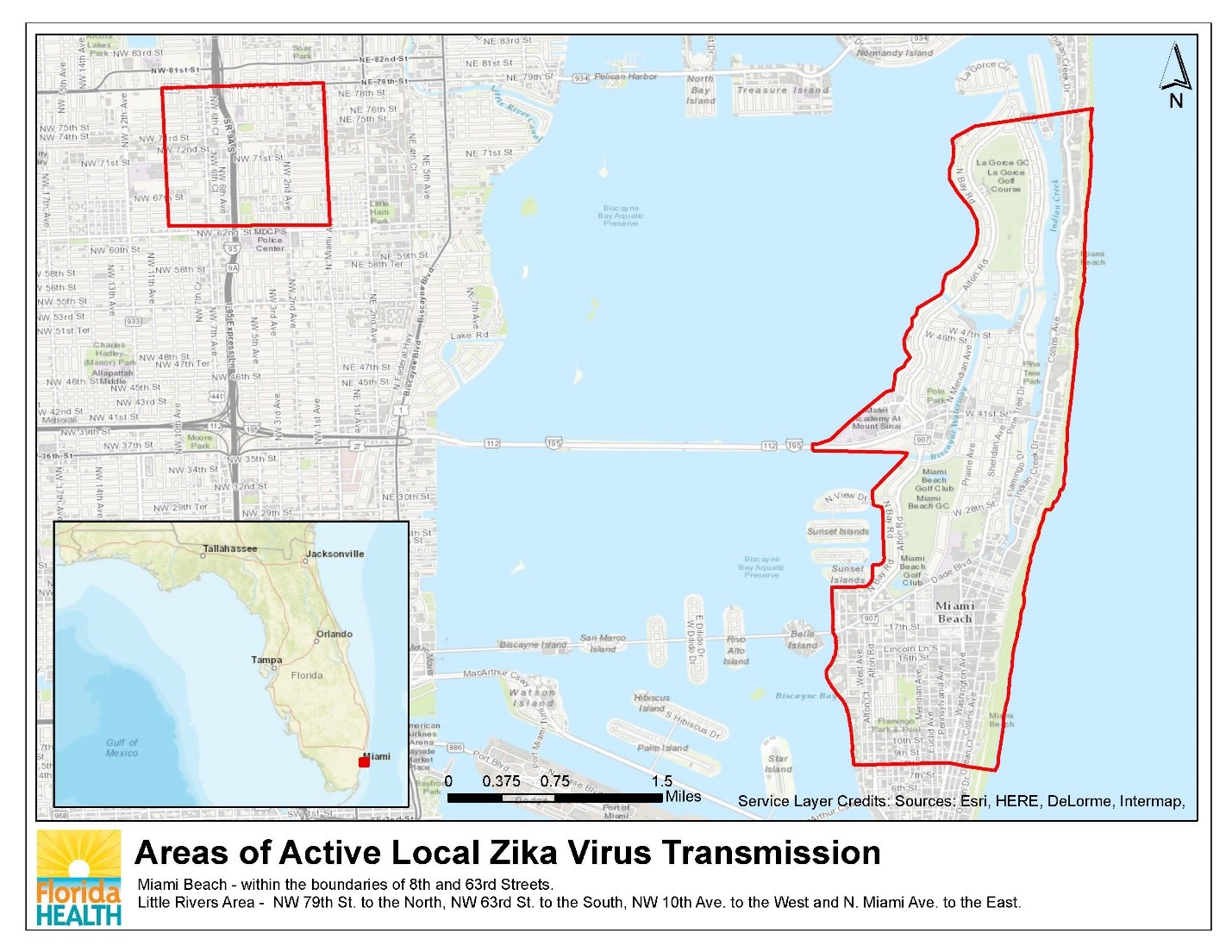
DOH continues door-to-door outreach and targeted testing in Palm Beach and Miami-Dade counties and mosquito abatement and reduction activities are also taking place around the locations that are being investigated. DOH believes ongoing transmission is only taking place within the identified area in Miami Beach in Miami-Dade County, see map below.
One case does not mean ongoing active transmission is taking place. DOH conducts a thorough investigation by sampling close contacts and community members around each case to determine if additional people are infected. If DOH finds evidence that active transmission is occurring in an area, the media and the public will be notified.
For a complete breakdown of non-travel and travel-related Zika infections to-date, please see below.
[TABLE="border: 1, cellpadding: 0, cellspacing: 0"]
[TR]
[TD="width: 390"] Infection Type
[/TD]
[TD="width: 390"] Infection Count
[/TD]
[/TR]
[TR]
[TD="width: 390"] Travel-Related Infections of Zika
[/TD]
[TD="width: 390"] 718
[/TD]
[/TR]
[TR]
[TD="width: 390"] Non-Travel Related Infections of Zika
[/TD]
[TD="width: 390"] 139
[/TD]
[/TR]
[TR]
[TD="width: 390"] Infections Involving Pregnant Women
[/TD]
[TD="width: 390"] 103
[/TD]
[/TR]
[TR]
[TD="width: 390"] Out of State Cases (not Florida Residents)
[/TD]
[TD="width: 390"] 16
[/TD]
[/TR]
[TR]
[TD="width: 390"] Undetermined
[/TD]
[TD="width: 390"] 4
[/TD]
[/TR]
[TR]
[TD="width: 390"] Total
[/TD]
[TD="width: 390"] 980
[/TD]
[/TR]
[/TABLE]
The department is currently conducting 14 active investigations. The department has closed 26 investigations. Information regarding the investigations can be found here. If investigations reveal additional areas of active transmission, the department will announce a defined area of concern.
The department has conducted Zika virus testing for more than 8,681 people statewide. Florida currently has the capacity to test 6,265 people for active Zika virus and 7,371 for Zika antibodies. At Governor Scott?s direction, all county health departments now offer free Zika risk assessment and testing to pregnant women.
Florida?s small case cluster is not considered widespread transmission, however, pregnant women are advised to avoid non-essential travel to the impacted area in Miami-Dade County (see map below). If you are pregnant and must travel or if you live or work in the impacted area, protect yourself from mosquito bites by wearing insect repellent, long clothing and limiting your time outdoors.
According to CDC guidance, providers should consider testing all pregnant women with a history of travel to a Zika affected area for the virus. It is also recommended that all pregnant women who reside in or travel frequently to the area where active transmission is likely occurring be tested for Zika in the first and second trimester. Pregnant women in the identified
area can contact their medical provider or their local county health department to be tested and receive a Zika prevention kit. CDC recommends that a pregnant woman with a history of Zika virus and her provider should consider additional ultrasounds. Additionally, the department is working closely with the Healthy Start Coalition of Miami-Dade County to identify pregnant women in the impacted areas to ensure they have access to resources and information to protect themselves. CDC recommends that a pregnant woman with a history of Zika virus and her provider should consider additional ultrasounds.

Pregnant women can contact their local county health department for Zika risk assessment and testing hours and information. A Zika risk assessment will be conducted by county health department staff and blood and/or urine samples may be collected and sent to labs for testing. It may take one to two weeks to receive results.
Florida has been monitoring pregnant women with evidence of Zika regardless of symptoms. The total number of pregnant women who have been or are being monitored is 103.
On Feb. 12, Governor Scott directed the State Surgeon General to activate a Zika Virus Information Hotline for current Florida residents and visitors, as well as anyone planning on traveling to Florida in the near future. The hotline, managed by the Department of Health, has assisted 6,819 callers since it launched. The number for the Zika Virus Information Hotline is 1-855-622-6735.
The department urges Floridians to drain standing water weekly, no matter how seemingly small. A couple drops of water in a bottle cap can be a breeding location for mosquitoes. Residents and visitors also need to use repellents when enjoying the Florida outdoors.
For more information on DOH action and federal guidance, please click here.
For resources and information on Zika virus, click here.
Miami Beach Map
click image above to enlarge
About the Florida Department of Health
The department, nationally accredited by the Public Health Accreditation Board, works to protect, promote, and improve the health of all people in Florida through integrated state, county and community efforts.
Follow us on Twitter at @HealthyFla and on Facebook. For more information about the Florida Department of Health, please visit www.FloridaHealth.gov.

http://www.floridahealth.gov/newsroom/2016/10/100416-zika-update.html

[/FONT]
 
[FONT=&quot] [h=1]Department of Health Daily Zika Update[/h] By Florida Department of Health, Office of Communications
October 05, 2016
[/FONT]

[FONT=&quot] Press Release[/FONT]
[FONT=&quot]
DOH_logo.png

October 5, 2016
[h=2]Department of Health Daily Zika Update[/h] Contact:
Communications Office
NewsMedia@flhealth.gov
(850) 245-4111

Tallahassee, Fla.?In an effort to keep Florida residents and visitors safe and aware about the status of the Zika virus, the department will issue a Zika virus update each week day. Updates will include a Zika case count by county and information to keep Floridians informed and prepared. In order to keep the public informed, the department has posted our investigation process here.

There are three new travel related cases today with one in Clay, one in Miami-Dade and one in Orange. Please visit ourwebsite to see the full list of travel-related cases.

There are two new non-travel related cases today in Miami-Dade County both with exposure in Miami-Beach.
There is one additional non-Florida resident with exposure in Miami Beach.
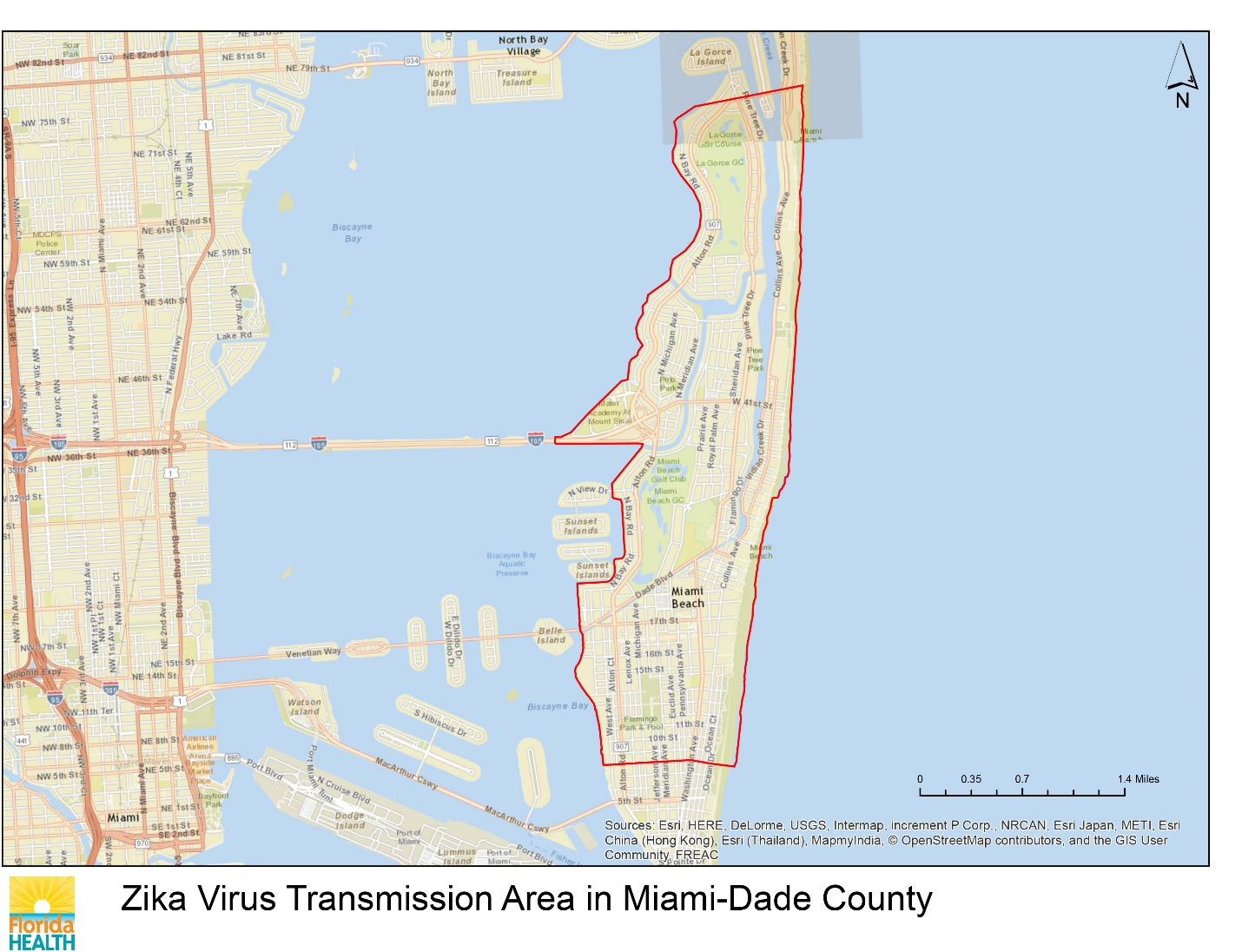
DOH continues door-to-door outreach and targeted testing in Palm Beach and Miami-Dade counties and mosquito abatement and reduction activities are also taking place around the locations that are being investigated. DOH believes ongoing transmission is only taking place within the identified area in Miami Beach in Miami-Dade County, see map below.
One case does not mean ongoing active transmission is taking place. DOH conducts a thorough investigation by sampling close contacts and community members around each case to determine if additional people are infected. If DOH finds evidence that active transmission is occurring in an area, the media and the public will be notified.
For a complete breakdown of non-travel and travel-related Zika infections to-date, please see below.
[TABLE="border: 1, cellpadding: 0, cellspacing: 0"]
[TR]
[TD="width: 390"] Infection Type
[/TD]
[TD="width: 390"] Infection Count
[/TD]
[/TR]
[TR]
[TD="width: 390"] Travel-Related Infections of Zika
[/TD]
[TD="width: 390"] 721
[/TD]
[/TR]
[TR]
[TD="width: 390"] Non-Travel Related Infections of Zika
[/TD]
[TD="width: 390"] 141
[/TD]
[/TR]
[TR]
[TD="width: 390"] Infections Involving Pregnant Women
[/TD]
[TD="width: 390"] 103
[/TD]
[/TR]
[TR]
[TD="width: 390"] Out of State Cases (not Florida Residents)
[/TD]
[TD="width: 390"] 17
[/TD]
[/TR]
[TR]
[TD="width: 390"] Undetermined
[/TD]
[TD="width: 390"] 4
[/TD]
[/TR]
[TR]
[TD="width: 390"] Total
[/TD]
[TD="width: 390"] 986
[/TD]
[/TR]
[/TABLE]
The department is currently conducting 14 active investigations. The department has closed 26 investigations. Information regarding the investigations can be found here. If investigations reveal additional areas of active transmission, the department will announce a defined area of concern.
The department has conducted Zika virus testing for more than 8,723 people statewide. Florida currently has the capacity to test 6,156 people for active Zika virus and 7,336 for Zika antibodies. At Governor Scott?s direction, all county health departments now offer free Zika risk assessment and testing to pregnant women.
Florida?s small case cluster is not considered widespread transmission, however, pregnant women are advised to avoid non-essential travel to the impacted area in Miami-Dade County (see map below). If you are pregnant and must travel or if you live or work in the impacted area, protect yourself from mosquito bites by wearing insect repellent, long clothing and limiting your time outdoors.
According to CDC guidance, providers should consider testing all pregnant women with a history of travel to a Zika affected area for the virus. It is also recommended that all pregnant women who reside in or travel frequently to the area where active transmission is likely occurring be tested for Zika in the first and second trimester. Pregnant women in the identified area can contact their medical provider or their local county health department to be tested and receive a Zika prevention kit. CDC recommends that a pregnant woman with a history of Zika virus and her provider should consider additional ultrasounds. Additionally, the department is working closely with the Healthy Start Coalition of Miami-Dade County to identify pregnant women in the impacted areas to ensure they have access to resources and information to protect themselves. CDC recommends that a pregnant woman with a history of Zika virus and her provider should consider additional ultrasounds.
Pregnant women can contact their local county health department for Zika risk assessment and testing hours and information. A Zika risk assessment will be conducted by county health department staff and blood and/or urine samples may be collected and sent to labs for testing. It may take one to two weeks to receive results.
Florida has been monitoring pregnant women with evidence of Zika regardless of symptoms. The total number of pregnant women who have been or are being monitored is 103.
On Feb. 12, Governor Scott directed the State Surgeon General to activate a Zika Virus Information Hotline for current Florida residents and visitors, as well as anyone planning on traveling to Florida in the near future. The hotline, managed by the Department of Health, has assisted 6,846 callers since it launched. The number for the Zika Virus Information Hotline is 1-855-622-6735.
The department urges Floridians to drain standing water weekly, no matter how seemingly small. A couple drops of water in a bottle cap can be a breeding location for mosquitoes. Residents and visitors also need to use repellents when enjoying the Florida outdoors.
For more information on DOH action and federal guidance, please click here.
For resources and information on Zika virus, click here.
Miami Beach Map
click image above to enlarge
About the Florida Department of Health
The department, nationally accredited by the Public Health Accreditation Board, works to protect, promote, and improve the health of all people in Florida through integrated state, county and community efforts.
Follow us on Twitter at @HealthyFla and on Facebook. For more information about the Florida Department of Health, please visit www.FloridaHealth.gov.

http://www.floridahealth.gov/newsroom/2016/10/100516-zika-update.html

[/FONT]
 
[FONT=&quot]October 6, 2016[/FONT]
[h=2]Department of Health Daily Zika Update[/h] [FONT=&quot]Contact:
Communications Office
NewsMedia@flhealth.gov
(850) 245-4111
[/FONT]

[FONT=&quot]Tallahassee, Fla.?In an effort to keep Florida residents and visitors safe and aware about the status of the Zika virus, the department will issue a Zika virus update each week day. Updates will include a Zika case count by county and information to keep Floridians informed and prepared. In order to keep the public informed, the department has posted our investigation process here.[/FONT]
[FONT=&quot]There are no new travel related cases today. Please visit ourwebsite to see the full list of travel-related cases.[/FONT]
[FONT=&quot]There are no new non-travel related cases in Florida residents today.[/FONT]
[FONT=&quot]There is one additional non-Florida resident with exposure in Miami Beach.[/FONT]
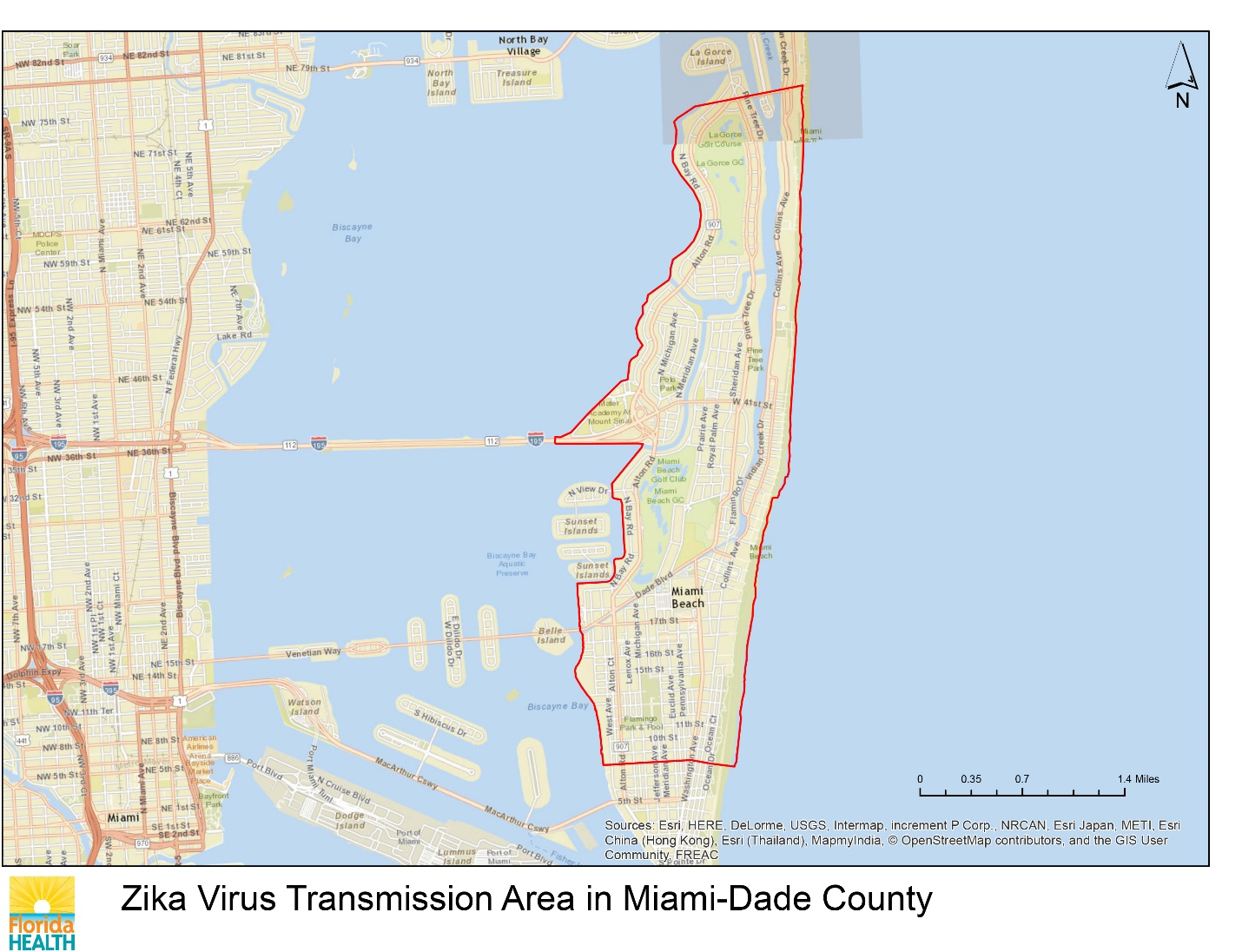
[FONT=&quot]DOH continues door-to-door outreach and targeted testing in Palm Beach and Miami-Dade counties and mosquito abatement and reduction activities are also taking place around the locations that are being investigated. DOH believes ongoing transmission is only taking place within the identified area in Miami Beach in Miami-Dade County, see map below.[/FONT]
[FONT=&quot]One case does not mean ongoing active transmission is taking place. DOH conducts a thorough investigation by sampling close contacts and community members around each case to determine if additional people are infected. If DOH finds evidence that active transmission is occurring in an area, the media and the public will be notified.[/FONT]
[FONT=&quot]For a complete breakdown of non-travel and travel-related Zika infections to-date, please see below. [/FONT]
[TABLE="border: 1, cellpadding: 0, cellspacing: 0"]
[TR]
[TD="width: 312"] [FONT=&quot]Infection Type[/FONT]
[/TD]
[TD="width: 312"] [FONT=&quot]Infection Count[/FONT]
[/TD]
[/TR]
[TR]
[TD="width: 312"] [FONT=&quot]Travel-Related Infections of Zika[/FONT]
[/TD]
[TD="width: 312"] [FONT=&quot]721[/FONT]
[/TD]
[/TR]
[TR]
[TD="width: 312"] [FONT=&quot]Non-Travel Related Infections of Zika[/FONT]
[/TD]
[TD="width: 312"] [FONT=&quot]141[/FONT]
[/TD]
[/TR]
[TR]
[TD="width: 312"] [FONT=&quot]Infections Involving Pregnant Women[/FONT]
[/TD]
[TD="width: 312"] [FONT=&quot]103[/FONT]
[/TD]
[/TR]
[TR]
[TD="width: 312"] [FONT=&quot]Out of State Cases (not Florida Residents)[/FONT]
[/TD]
[TD="width: 312"] [FONT=&quot]18[/FONT]
[/TD]
[/TR]
[TR]
[TD="width: 312"] [FONT=&quot]Undetermined[/FONT]
[/TD]
[TD="width: 312"] [FONT=&quot]4[/FONT]
[/TD]
[/TR]
[TR]
[TD="width: 312"] [FONT=&quot]Total[/FONT]
[/TD]
[TD="width: 312"] [FONT=&quot]987[/FONT]
[/TD]
[/TR]
[/TABLE]
[FONT=&quot] [/FONT]
[FONT=&quot]The department is currently conducting 14 active investigations. The department has closed 26 investigations. Information regarding the investigations can be found here. If investigations reveal additional areas of active transmission, the department will announce a defined area of concern. [/FONT]
[FONT=&quot]The department has conducted Zika virus testing for more than 8,819 people statewide. Florida currently has the capacity to test 6,032 people for active Zika virus and 7,254 for Zika antibodies. At Governor Scott?s direction, all county health departments now offer free Zika risk assessment and testing to pregnant women.[/FONT]
[FONT=&quot]Florida?s small case cluster is not considered widespread transmission, however, pregnant women are advised to avoid non-essential travel to the impacted area in Miami-Dade County (see map below). If you are pregnant and must travel or if you live or work in the impacted area, protect yourself from mosquito bites by wearing insect repellent, long clothing and limiting your time outdoors. [/FONT]
[FONT=&quot]According to CDC guidance, providers should consider testing all pregnant women with a history of travel to a Zika affected area for the virus. It is also recommended that all pregnant women who reside in or travel frequently to the area where active transmission is likely occurring be tested for Zika in the first and second trimester. Pregnant women in the identified area can contact their medical provider or their local county health department to be tested and receive a Zika prevention kit. CDC recommends that a pregnant woman with a history of Zika virus and her provider should consider additional ultrasounds. Additionally, the department is working closely with the Healthy Start Coalition of Miami-Dade County to identify pregnant women in the impacted areas to ensure they have access to resources and information to protect themselves. CDC recommends that a pregnant woman with a history of Zika virus and her provider should consider additional ultrasounds. [/FONT]
[FONT=&quot]Pregnant women can contact their local county health department for Zika risk assessment and testing hours and information. A Zika risk assessment will be conducted by county health department staff and blood and/or urine samples may be collected and sent to labs for testing. It may take one to two weeks to receive results.[/FONT]
[FONT=&quot]Florida has been monitoring pregnant women with evidence of Zika regardless of symptoms. The total number of pregnant women who have been or are being monitored is 103.[/FONT]
[FONT=&quot]On Feb. 12, Governor Scott directed the State Surgeon General to activate a Zika Virus Information Hotline for current Florida residents and visitors, as well as anyone planning on traveling to Florida in the near future. The hotline, managed by the Department of Health, has assisted 6,865 callers since it launched. The number for the Zika Virus Information Hotline is 1-855-622-6735.[/FONT]
[FONT=&quot]The department urges Floridians to drain standing water weekly, no matter how seemingly small. A couple drops of water in a bottle cap can be a breeding location for mosquitoes. Residents and visitors also need to use repellents when enjoying the Florida outdoors.[/FONT]
[FONT=&quot]For more information on DOH action and federal guidance, please click here.[/FONT]
[FONT=&quot]For resources and information on Zika virus, click here.[/FONT]
[FONT=&quot]Miami Beach Map[/FONT]
[FONT=&quot]click image above to enlarge[/FONT]
[FONT=&quot]About the Florida Department of Health[/FONT]
[FONT=&quot]The department, nationally accredited by the Public Health Accreditation Board, works to protect, promote, and improve the health of all people in Florida through integrated state, county and community efforts.[/FONT]
[FONT=&quot]Follow us on Twitter at @HealthyFla and on Facebook. For more information about the Florida Department of Health, please visit www.FloridaHealth.gov.[/FONT]


http://www.floridahealth.gov/newsroom/2016/10/100616-zika-update.html
 
[FONT=&quot]October 7, 2016[/FONT]
[h=2]Department of Health Daily Zika Update[/h] [FONT=&quot]Contact:
Communications Office
NewsMedia@flhealth.gov
(850) 245-4111
[/FONT]

[FONT=&quot]Tallahassee, Fla.?In an effort to keep Florida residents and visitors safe and aware about the status of the Zika virus, the department will issue a Zika virus update each week day. Updates will include a Zika case count by county and information to keep Floridians informed and prepared. In order to keep the public informed, the department has posted our investigation process here.[/FONT]
[FONT=&quot]
There are no new travel related cases today. Please visit ourwebsite to see the full list of travel-related cases.
[/FONT]

[FONT=&quot]There are no new non-travel related cases in Florida residents today.[/FONT]
[FONT=&quot]DOH continues door-to-door outreach and targeted testing in Palm Beach and Miami-Dade counties and mosquito abatement and reduction activities are also taking place around the locations that are being investigated. DOH believes ongoing transmission is only taking place within the identified area in Miami Beach in Miami-Dade County, see map below.[/FONT]
[FONT=&quot]One case does not mean ongoing active transmission is taking place. DOH conducts a thorough investigation by sampling close contacts and community members around each case to determine if additional people are infected. If DOH finds evidence that active transmission is occurring in an area, the media and the public will be notified.[/FONT]
[FONT=&quot]For a complete breakdown of non-travel and travel-related Zika infections to-date, please see below.[/FONT]
[TABLE="border: 1, cellpadding: 0, cellspacing: 0"]
[TR]
[TD="width: 390"] Infection Type
[/TD]
[TD="width: 390"] Infection Count
[/TD]
[/TR]
[TR]
[TD="width: 390"] Travel-Related Infections of Zika
[/TD]
[TD="width: 390"] 721
[/TD]
[/TR]
[TR]
[TD="width: 390"] Non-Travel Related Infections of Zika
[/TD]
[TD="width: 390"] 141
[/TD]
[/TR]
[TR]
[TD="width: 390"] Infections Involving Pregnant Women
[/TD]
[TD="width: 390"] 103
[/TD]
[/TR]
[TR]
[TD="width: 390"] Out of State Cases (not Florida Residents)
[/TD]
[TD="width: 390"] 18
[/TD]
[/TR]
[TR]
[TD="width: 390"] Undetermined
[/TD]
[TD="width: 390"] 4
[/TD]
[/TR]
[TR]
[TD="width: 390"] Total
[/TD]
[TD="width: 390"] 987
[/TD]
[/TR]
[/TABLE]
[FONT=&quot]The department is currently conducting 14 active investigations. The department has closed 26 investigations. Information regarding the investigations can be found here. If investigations reveal additional areas of active transmission, the department will announce a defined area of concern. [/FONT]
[FONT=&quot]The department has conducted Zika virus testing for more than 8,825 people statewide. Florida currently has the capacity to test 6,004 people for active Zika virus and 7,199 for Zika antibodies. At Governor Scott?s direction, all county health departments now offer free Zika risk assessment and testing to pregnant women.[/FONT]
[FONT=&quot]Florida?s small case cluster is not considered widespread transmission, however, pregnant women are advised to avoid non-essential travel to the impacted area in Miami-Dade County (see map below). If you are pregnant and must travel or if you live or work in the impacted area, protect yourself from mosquito bites by wearing insect repellent, long clothing and limiting your time outdoors. [/FONT]
[FONT=&quot]According to CDC guidance, providers should consider testing all pregnant women with a history of travel to a Zika affected area for the virus. It is also recommended that all pregnant women who reside in or travel frequently to the area where active transmission is likely occurring be tested for Zika in the first and second trimester. Pregnant women in the identified area can contact their medical provider or their local county health department to be tested and receive a Zika prevention kit. CDC recommends that a pregnant woman with a history of Zika virus and her provider should consider additional ultrasounds. Additionally, the department is working closely with the Healthy Start Coalition of Miami-Dade County to identify pregnant women in the impacted areas to ensure they have access to resources and information to protect themselves. CDC recommends that a pregnant woman with a history of Zika virus and her provider should consider additional ultrasounds. [/FONT]
[FONT=&quot]Pregnant women can contact their local county health department for Zika risk assessment and testing hours and information. A Zika risk assessment will be conducted by county health department staff and blood and/or urine samples may be collected and sent to labs for testing. It may take one to two weeks to receive results.[/FONT]
[FONT=&quot]Florida has been monitoring pregnant women with evidence of Zika regardless of symptoms. The total number of pregnant women who have been or are being monitored is 103.[/FONT]
[FONT=&quot]On Feb. 12, Governor Scott directed the State Surgeon General to activate a Zika Virus Information Hotline for current Florida residents and visitors, as well as anyone planning on traveling to Florida in the near future. The hotline, managed by the Department of Health, has assisted 6,865 callers since it launched. The number for the Zika Virus Information Hotline is 1-855-622-6735.[/FONT]
[FONT=&quot]The department urges Floridians to drain standing water weekly, no matter how seemingly small. A couple drops of water in a bottle cap can be a breeding location for mosquitoes. Residents and visitors also need to use repellents when enjoying the Florida outdoors.[/FONT]
[FONT=&quot]For more information on DOH action and federal guidance, please click here.[/FONT]
[FONT=&quot]For resources and information on Zika virus, click here.[/FONT]
[FONT=&quot]Miami Beach Map[/FONT]
[FONT=&quot]click image above to enlarge[/FONT]
[FONT=&quot]About the Florida Department of Health[/FONT]
[FONT=&quot]The department, nationally accredited by the Public Health Accreditation Board, works to protect, promote, and improve the health of all people in Florida through integrated state, county and community efforts.[/FONT]
[FONT=&quot]Follow us on Twitter at @HealthyFla and on Facebook. For more information about the Florida Department of Health, please visit www.FloridaHealth.gov.


http://www.floridahealth.gov/newsroom/2016/10/100716-zika-update.html
[/FONT]
 
[FONT=&quot]October 10, 2016[/FONT]
[h=2]Department of Health Daily Zika Update[/h] [FONT=&quot]Contact:
Communications Office
NewsMedia@flhealth.gov
(850) 245-4111
[/FONT]

[FONT=&quot]Tallahassee, Fla.?In an effort to keep Florida residents and visitors safe and aware about the status of the Zika virus, the department will issue a Zika virus update each week day. Updates will include a Zika case count by county and information to keep Floridians informed and prepared. In order to keep the public informed, the department has posted our investigation process here.[/FONT]
[FONT=&quot]
There are no new travel related cases today. Please visit ourwebsite to see the full list of travel-related cases.
[/FONT]

[FONT=&quot] [/FONT]
[FONT=&quot]There are five new non-travel related cases in Miami-Dade County. Two of which had exposure in Miami-Beach. The department is investigating the other three cases to determine where exposure occurred.[/FONT]
[FONT=&quot]There is one additional out-of-state case. The individual had exposure in Wynwood and symptom on-set in July. The department just received travel information from the state of residency. This does not have an impact on the clearing of Wynwood.[/FONT]
[FONT=&quot]DOH continues door-to-door outreach and targeted testing in Palm Beach and Miami-Dade counties and mosquito abatement and reduction activities are also taking place around the locations that are being investigated. DOH believes ongoing transmission is only taking place within the identified area in Miami Beach in Miami-Dade County, see map below.[/FONT]
[FONT=&quot]One case does not mean ongoing active transmission is taking place. DOH conducts a thorough investigation by sampling close contacts and community members around each case to determine if additional people are infected. If DOH finds evidence that active transmission is occurring in an area, the media and the public will be notified.[/FONT]
[FONT=&quot]For a complete breakdown of non-travel and travel-related Zika infections to-date, please see below.[/FONT]
[TABLE="border: 1, cellpadding: 0, cellspacing: 0"]
[TR]
[TD="width: 390"] Infection Type
[/TD]
[TD="width: 390"] Infection Count
[/TD]
[/TR]
[TR]
[TD="width: 390"] Travel-Related Infections of Zika
[/TD]
[TD="width: 390"] 721
[/TD]
[/TR]
[TR]
[TD="width: 390"] Non-Travel Related Infections of Zika
[/TD]
[TD="width: 390"] 146
[/TD]
[/TR]
[TR]
[TD="width: 390"] Infections Involving Pregnant Women
[/TD]
[TD="width: 390"] 103
[/TD]
[/TR]
[TR]
[TD="width: 390"] Out of State Cases (not Florida Residents)
[/TD]
[TD="width: 390"] 19
[/TD]
[/TR]
[TR]
[TD="width: 390"] Undetermined
[/TD]
[TD="width: 390"] 4
[/TD]
[/TR]
[TR]
[TD="width: 390"] Total
[/TD]
[TD="width: 390"] 993
[/TD]
[/TR]
[/TABLE]
[FONT=&quot]The department is currently conducting 14 active investigations. The department has closed 26 investigations. Information regarding the investigations can be found here. If investigations reveal additional areas of active transmission, the department will announce a defined area of concern. [/FONT]
[FONT=&quot]The department has conducted Zika virus testing for more than 8,869 people statewide. Florida currently has the capacity to test 6,004 people for active Zika virus and 7,199 for Zika antibodies. At Governor Scott?s direction, all county health departments now offer free Zika risk assessment and testing to pregnant women.[/FONT]
[FONT=&quot]Florida?s small case cluster is not considered widespread transmission, however, pregnant women are advised to avoid non-essential travel to the impacted area in Miami-Dade County (see map below). If you are pregnant and must travel or if you live or work in the impacted area, protect yourself from mosquito bites by wearing insect repellent, long clothing and limiting your time outdoors. [/FONT]
[FONT=&quot]According to CDC guidance, providers should consider testing all pregnant women with a history of travel to a Zika affected area for the virus. It is also recommended that all pregnant women who reside in or travel frequently to the area where active transmission is likely occurring be tested for Zika in the first and second trimester. Pregnant women in the identified area can contact their medical provider or their local county health department to be tested and receive a Zika prevention kit. CDC recommends that a pregnant woman with a history of Zika virus and her provider should consider additional ultrasounds. Additionally, the department is working closely with the Healthy Start Coalition of Miami-Dade County to identify pregnant women in the impacted areas to ensure they have access to resources and information to protect themselves. CDC recommends that a pregnant woman with a history of Zika virus and her provider should consider additional ultrasounds. [/FONT]
[FONT=&quot]Pregnant women can contact their local county health department for Zika risk assessment and testing hours and information. A Zika risk assessment will be conducted by county health department staff and blood and/or urine samples may be collected and sent to labs for testing. It may take one to two weeks to receive results.[/FONT]
[FONT=&quot]Florida has been monitoring pregnant women with evidence of Zika regardless of symptoms. The total number of pregnant women who have been or are being monitored is 103.[/FONT]
[FONT=&quot]On Feb. 12, Governor Scott directed the State Surgeon General to activate a Zika Virus Information Hotline for current Florida residents and visitors, as well as anyone planning on traveling to Florida in the near future. The hotline, managed by the Department of Health, has assisted 6,865 callers since it launched. The number for the Zika Virus Information Hotline is 1-855-622-6735.[/FONT]
[FONT=&quot]The department urges Floridians to drain standing water weekly, no matter how seemingly small. A couple drops of water in a bottle cap can be a breeding location for mosquitoes. Residents and visitors also need to use repellents when enjoying the Florida outdoors.[/FONT]
[FONT=&quot]For more information on DOH action and federal guidance, please click here.[/FONT]
[FONT=&quot]For resources and information on Zika virus, click here.[/FONT]
[FONT=&quot]Miami Beach Map[/FONT]
[FONT=&quot]click image above to enlarge[/FONT]
[FONT=&quot]About the Florida Department of Health[/FONT]
[FONT=&quot]The department, nationally accredited by the Public Health Accreditation Board, works to protect, promote, and improve the health of all people in Florida through integrated state, county and community efforts.[/FONT]
[FONT=&quot]Follow us on Twitter at @HealthyFla and on Facebook. For more information about the Florida Department of Health, please visit www.FloridaHealth.gov.


http://www.floridahealth.gov/newsroom/2016/10/101016-zika-update.html
[/FONT]
 
[FONT=&quot]October 11, 2016[/FONT]
[h=2]Department of Health Daily Zika Update[/h] [FONT=&quot]Contact:
Communications Office
NewsMedia@flhealth.gov
(850) 245-4111
[/FONT]

[FONT=&quot]Tallahassee, Fla. ? In an effort to keep Florida residents and visitors safe and aware about the status of the Zika virus, the department will issue a Zika virus update each week day. Updates will include a Zika case count by county and information to keep Floridians informed and prepared. In order to keep the public informed, the department has posted our investigation process here.[/FONT]
[FONT=&quot]There are eight new travel related cases today with four in Broward, two in Pinellas, one in St. Lucie and one involving a pregnant woman. Please visit our website to see the full list of travel-related cases.[/FONT]
[FONT=&quot]There is one new non-travel related case linked to Miami-Dade County. The department is to investigating where exposure occurred. [/FONT]
[FONT=&quot]DOH continues door-to-door outreach and targeted testing in Palm Beach and Miami-Dade counties and mosquito abatement and reduction activities are also taking place around the locations that are being investigated. DOH believes ongoing transmission is only taking place within the identified area in Miami Beach in Miami-Dade County, see map below.[/FONT]
[FONT=&quot]One case does not mean ongoing active transmission is taking place. DOH conducts a thorough investigation by sampling close contacts and community members around each case to determine if additional people are infected. If DOH finds evidence that active transmission is occurring in an area, the media and the public will be notified.[/FONT]
[FONT=&quot]For a complete breakdown of non-travel and travel-related Zika infections to-date, please see below.[/FONT]
[TABLE="border: 1, cellpadding: 0, cellspacing: 0"]
[TR]
[TD="width: 312"] Infection Type
[/TD]
[TD="width: 312"] Infection Count
[/TD]
[/TR]
[TR]
[TD="width: 312"] Travel-Related Infections of Zika
[/TD]
[TD="width: 312"] 728
[/TD]
[/TR]
[TR]
[TD="width: 312"] Non-Travel Related Infections of Zika
[/TD]
[TD="width: 312"] 147
[/TD]
[/TR]
[TR]
[TD="width: 312"] Infections Involving Pregnant Women
[/TD]
[TD="width: 312"] 104
[/TD]
[/TR]
[TR]
[TD="width: 312"] Out of State Cases (not Florida Residents)
[/TD]
[TD="width: 312"] 19
[/TD]
[/TR]
[TR]
[TD="width: 312"] Undetermined
[/TD]
[TD="width: 312"] 4
[/TD]
[/TR]
[TR]
[TD="width: 312"] Total
[/TD]
[TD="width: 312"] 1,002
[/TD]
[/TR]
[/TABLE]
[FONT=&quot] [/FONT]
[FONT=&quot]The department is currently conducting 16 active investigations. The department has closed 26 investigations. Information regarding the investigations can be found here. If investigations reveal additional areas of active transmission, the department will announce a defined area of concern. [/FONT]
[FONT=&quot]The department has conducted Zika virus testing for more than 8,928 people statewide. Florida currently has the capacity to test 5,957 people for active Zika virus and 7,130 for Zika antibodies. At Governor Scott?s direction, all county health departments now offer free Zika risk assessment and testing to pregnant women.[/FONT]
[FONT=&quot]Florida?s small case cluster is not considered widespread transmission, however, pregnant women are advised to avoid non-essential travel to the impacted area in Miami-Dade County (see map below). If you are pregnant and must travel or if you live or work in the impacted area, protect yourself from mosquito bites by wearing insect repellent, long clothing and limiting your time outdoors. [/FONT]
[FONT=&quot]According to CDC guidance, providers should consider testing all pregnant women with a history of travel to a Zika affected area for the virus. It is also recommended that all pregnant women who reside in or travel frequently to the area where active transmission is likely occurring be tested for Zika in the first and second trimester. Pregnant women in the identified area can contact their medical provider or their local county health department to be tested and receive a Zika prevention kit. CDC recommends that a pregnant woman with a history of Zika virus and her provider should consider additional ultrasounds. Additionally, the department is working closely with the Healthy Start Coalition of Miami-Dade County to identify pregnant women in the impacted areas to ensure they have access to resources and information to protect themselves. CDC recommends that a pregnant woman with a history of Zika virus and her provider should consider additional ultrasounds. [/FONT]
[FONT=&quot]Pregnant women can contact their local county health department for Zika risk assessment and testing hours and information. A Zika risk assessment will be conducted by county health department staff and blood and/or urine samples may be collected and sent to labs for testing. It may take one to two weeks to receive results.[/FONT]
[FONT=&quot]Florida has been monitoring pregnant women with evidence of Zika regardless of symptoms. The total number of pregnant women who have been or are being monitored is 104.[/FONT]
[FONT=&quot]On Feb. 12, Governor Scott directed the State Surgeon General to activate a Zika Virus Information Hotline for current Florida residents and visitors, as well as anyone planning on traveling to Florida in the near future. The hotline, managed by the Department of Health, has assisted 6,779 callers since it launched. The number for the Zika Virus Information Hotline is 1-855-622-6735.[/FONT]
[FONT=&quot]The department urges Floridians to drain standing water weekly, no matter how seemingly small. A couple drops of water in a bottle cap can be a breeding location for mosquitoes. Residents and visitors also need to use repellents when enjoying the Florida outdoors.[/FONT]
[FONT=&quot]For more information on DOH action and federal guidance, please click here.[/FONT]
[FONT=&quot]For resources and information on Zika virus, click here.[/FONT]
[FONT=&quot]Miami Beach Map[/FONT]
[FONT=&quot]click image above to enlarge[/FONT]
[FONT=&quot]About the Florida Department of Health[/FONT]
[FONT=&quot]The department, nationally accredited by the Public Health Accreditation Board, works to protect, promote and improve the health of all people in Florida through integrated state, county and community efforts.[/FONT]
[FONT=&quot]Follow us on Twitter at @HealthyFla and on Facebook. For more information about the Florida Department of Health please visit www.FloridaHealth.gov.

http://www.floridahealth.gov/newsroom/2016/10/101116-zika-update.html
[/FONT]
 
[FONT=&quot]October 12, 2016[/FONT]
[h=2]Department of Health Daily Zika Update[/h] [FONT=&quot]Contact:
Communications Office
NewsMedia@flhealth.gov
(850) 245-4111
[/FONT]

[FONT=&quot]Tallahassee, Fla.?In an effort to keep Florida residents and visitors safe and aware about the status of the Zika virus, the department will issue a Zika virus update each week day. Updates will include a Zika case count by county and information to keep Floridians informed and prepared. In order to keep the public informed, the department has posted our investigation process here.[/FONT]
[FONT=&quot]
There are five new travel related cases today with one in Brevard, one in Duval, one in Hillsborough, one in Orange and one in Palm Beach. Please visit our website to see the full list of travel-related cases.
[/FONT]

[FONT=&quot]There are six new non-travel related case linked to Miami-Dade County. One had exposure in Miami Beach. The department is investigating where exposure occurred for the other five cases. [/FONT]
[FONT=&quot]There is one new case where the individual had travel to both Miami-Dade and countries with widespread transmission and exposure could not definitively be determined. This individual has been added to the undetermined category.[/FONT]
[FONT=&quot]DOH continues door-to-door outreach and targeted testing in Palm Beach and Miami-Dade counties and mosquito abatement and reduction activities are also taking place around the locations that are being investigated. DOH believes ongoing transmission is only taking place within the identified area in Miami Beach in Miami-Dade County, see map below.[/FONT]
[FONT=&quot]One case does not mean ongoing active transmission is taking place. DOH conducts a thorough investigation by sampling close contacts and community members around each case to determine if additional people are infected. If DOH finds evidence that active transmission is occurring in an area, the media and the public will be notified.[/FONT]
[FONT=&quot]For a complete breakdown of non-travel and travel-related Zika infections to-date, please see below. [/FONT]
[TABLE="border: 1, cellpadding: 0, cellspacing: 0"]
[TR]
[TD="width: 390"] Infection Type
[/TD]
[TD="width: 390"] Infection Count
[/TD]
[/TR]
[TR]
[TD="width: 390"] Travel-Related Infections of Zika
[/TD]
[TD="width: 390"] 733
[/TD]
[/TR]
[TR]
[TD="width: 390"] Non-Travel Related Infections of Zika
[/TD]
[TD="width: 390"] 153
[/TD]
[/TR]
[TR]
[TD="width: 390"] Infections Involving Pregnant Women
[/TD]
[TD="width: 390"] 104
[/TD]
[/TR]
[TR]
[TD="width: 390"] Out of State Cases (not Florida Residents)
[/TD]
[TD="width: 390"] 19
[/TD]
[/TR]
[TR]
[TD="width: 390"] Undetermined
[/TD]
[TD="width: 390"] 5
[/TD]
[/TR]
[TR]
[TD="width: 390"] Total
[/TD]
[TD="width: 390"] 1,014
[/TD]
[/TR]
[/TABLE]
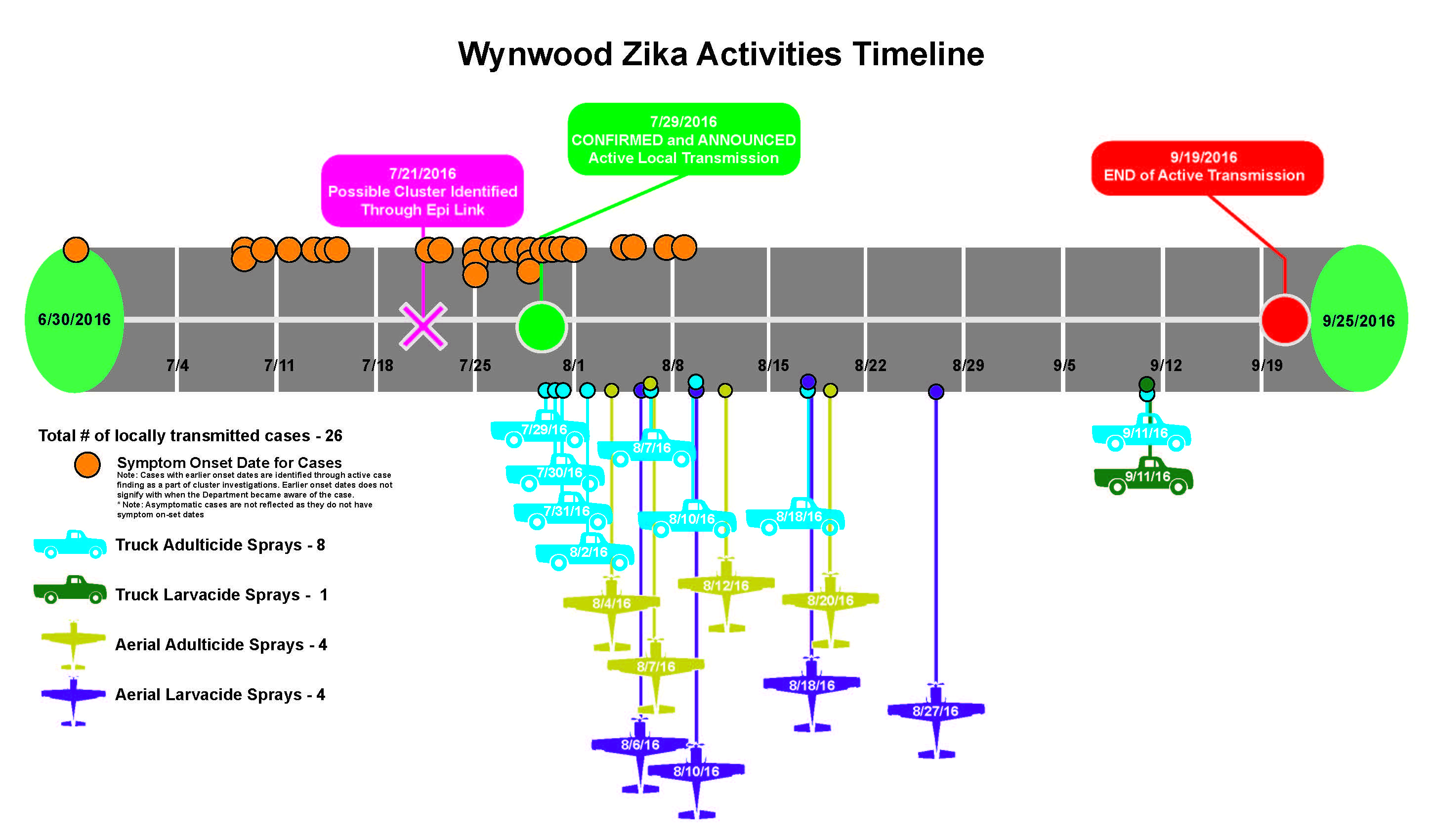
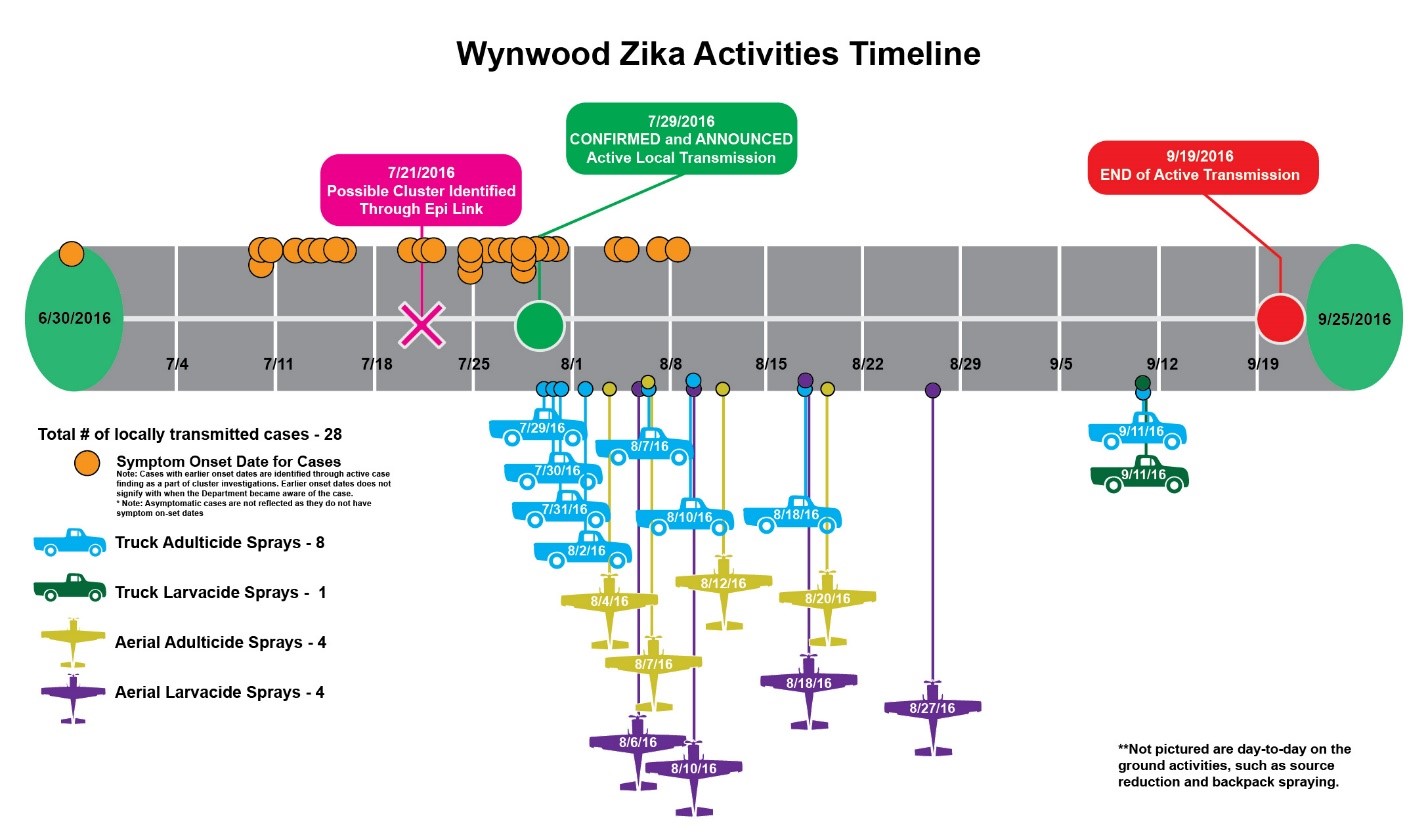
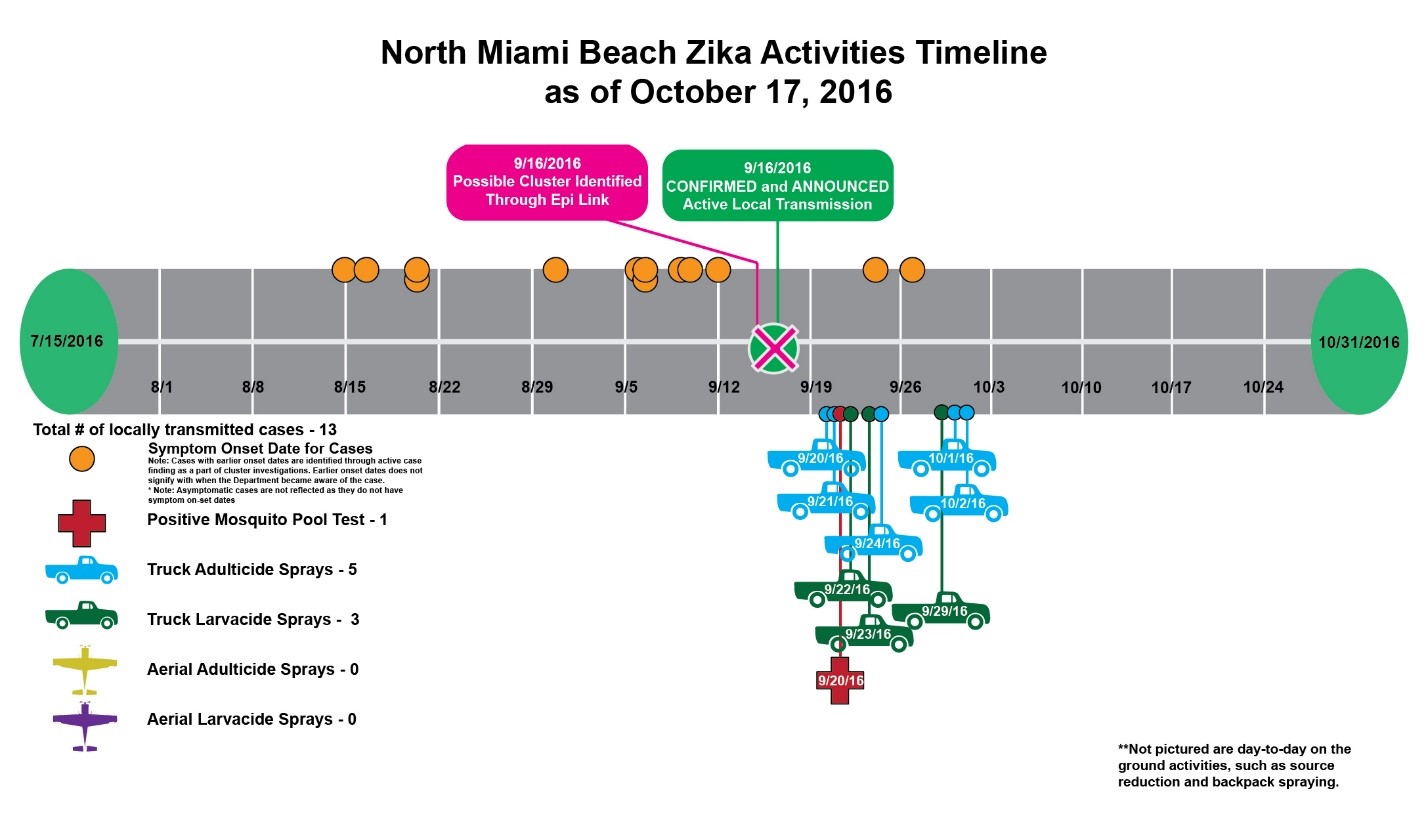
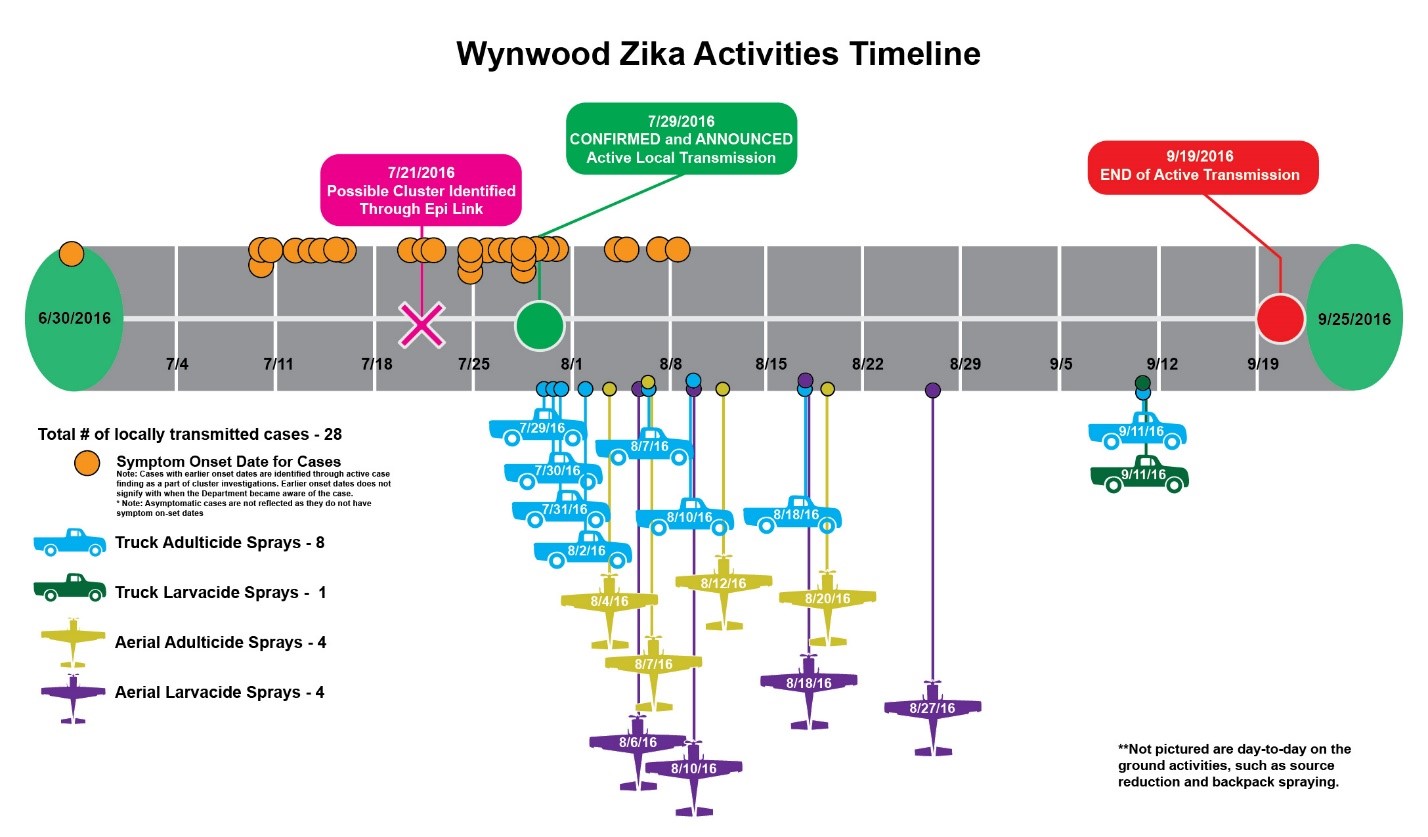
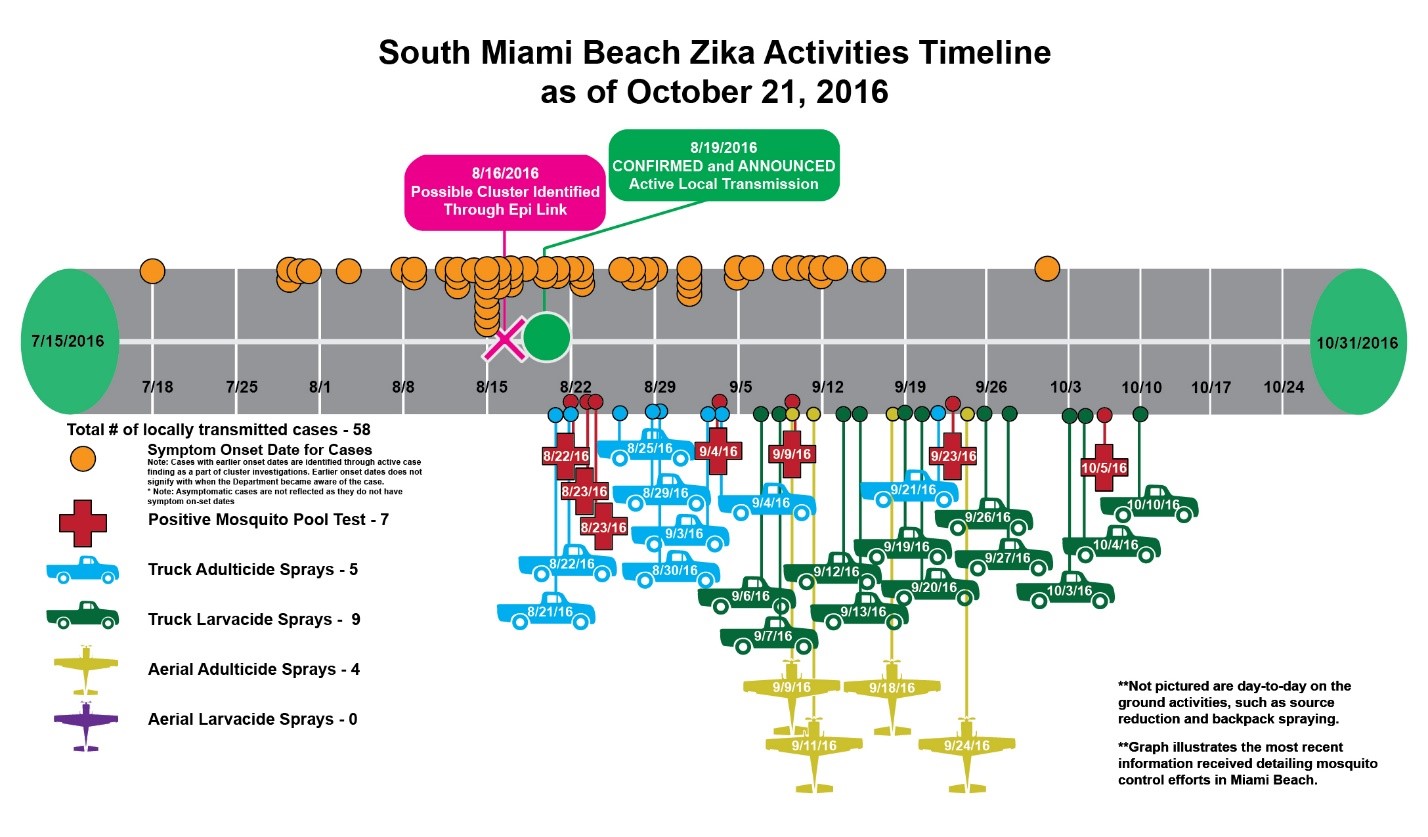
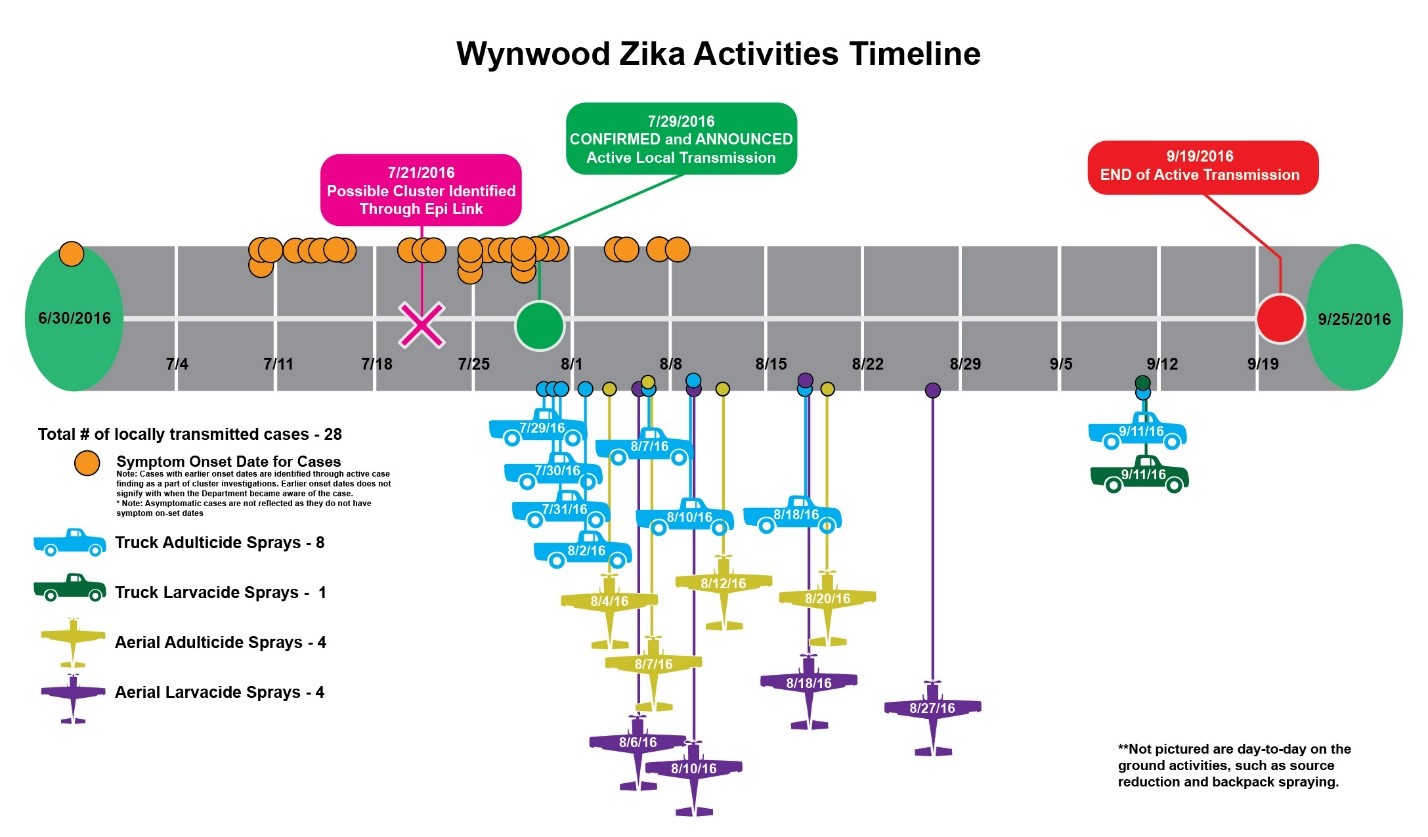
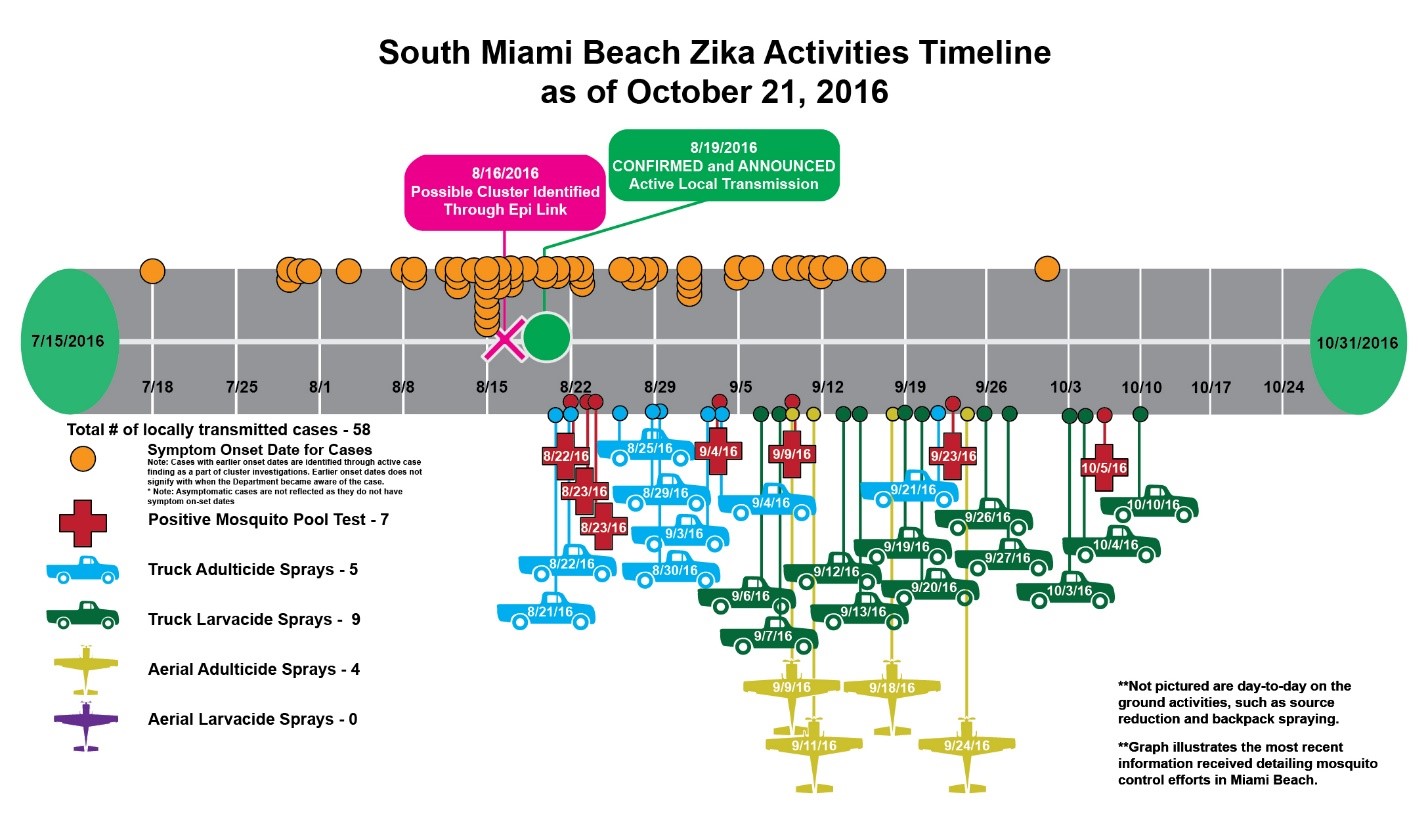
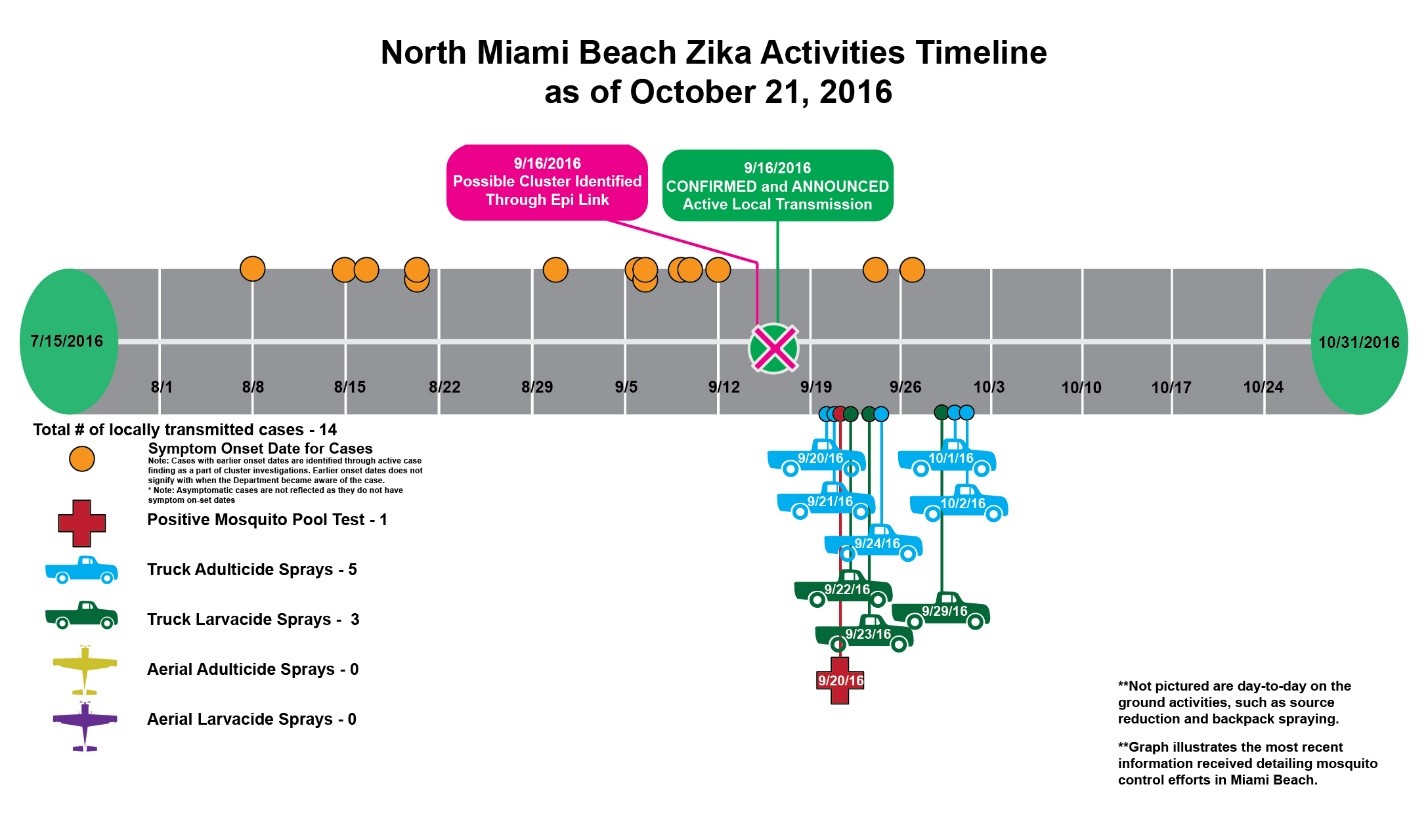
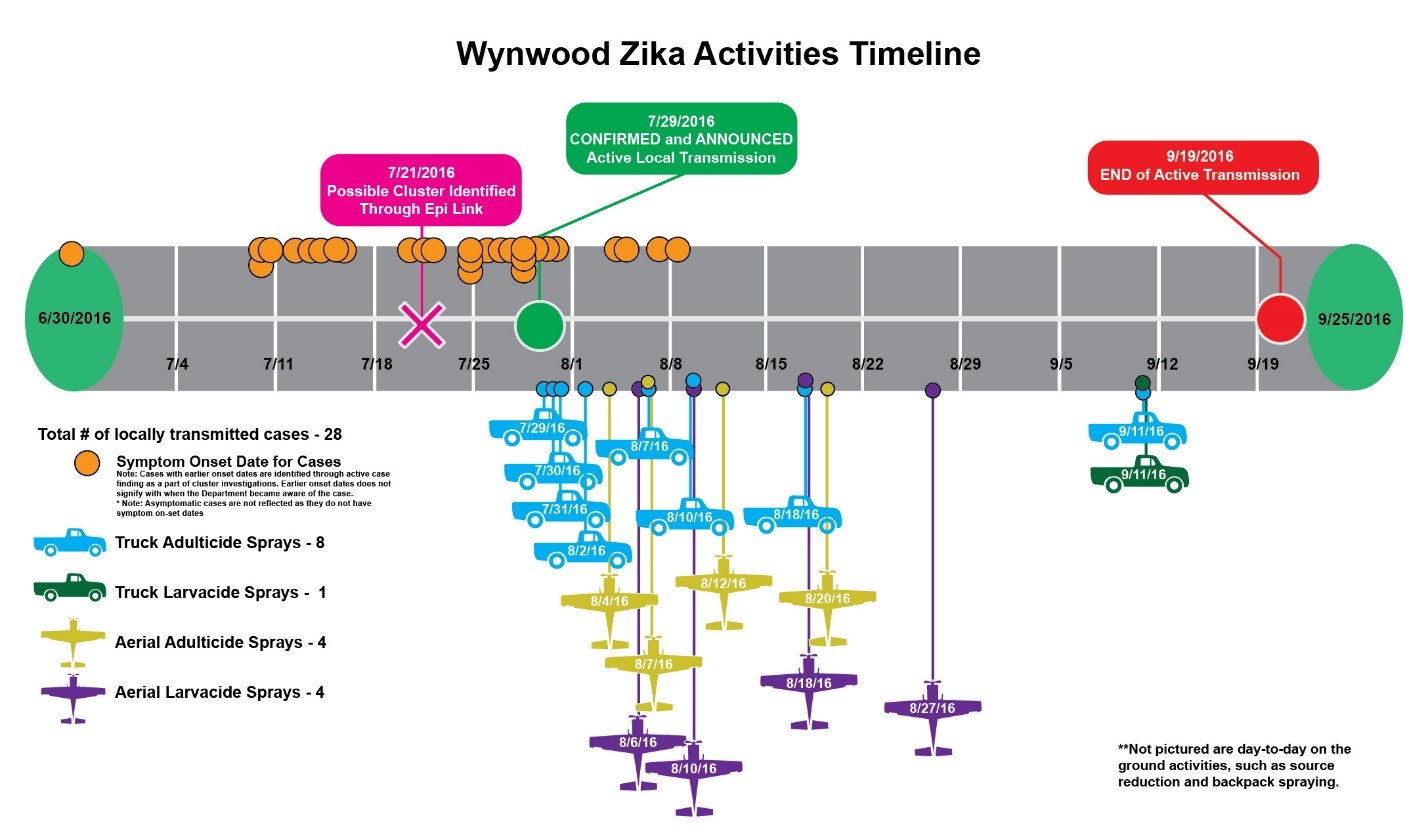
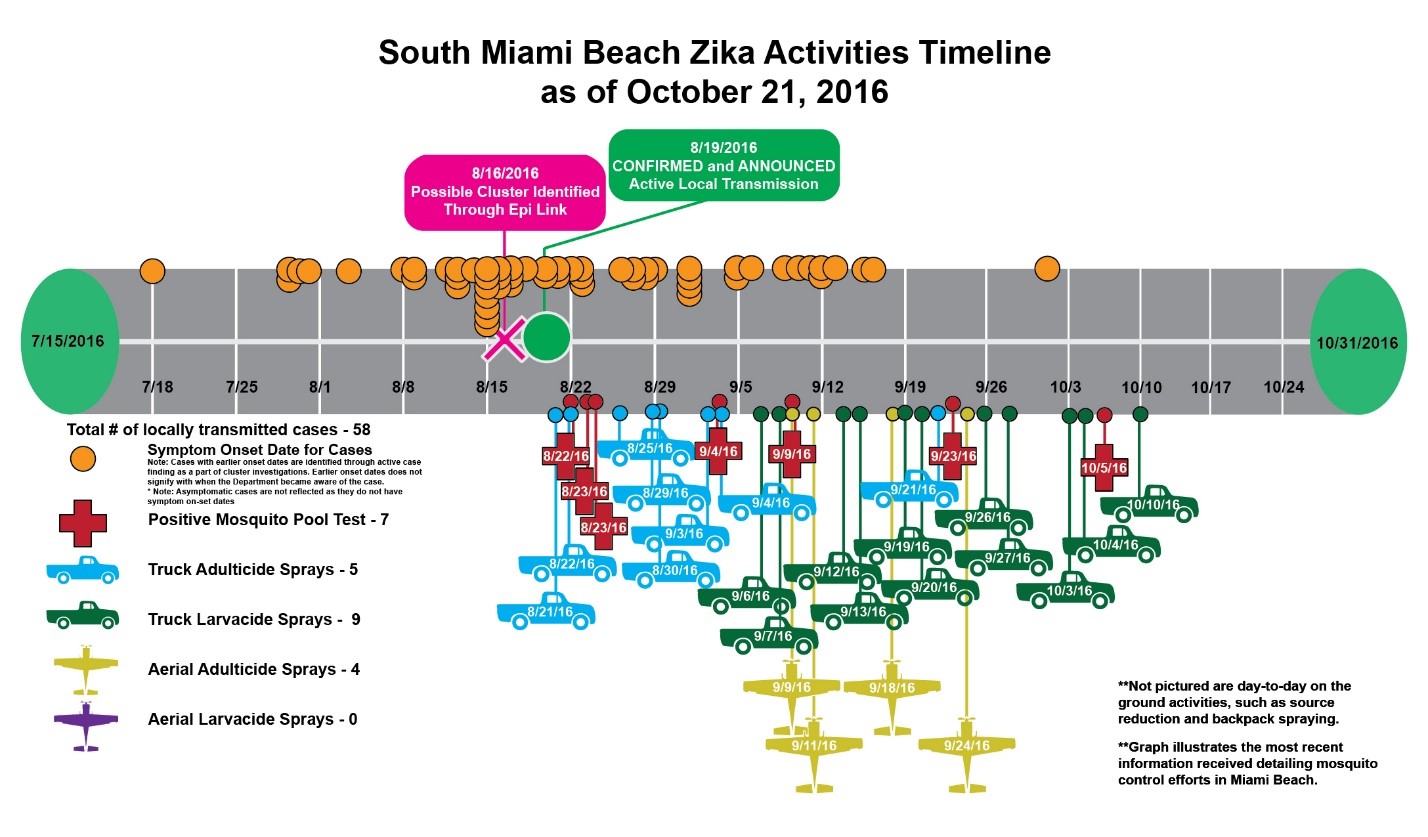
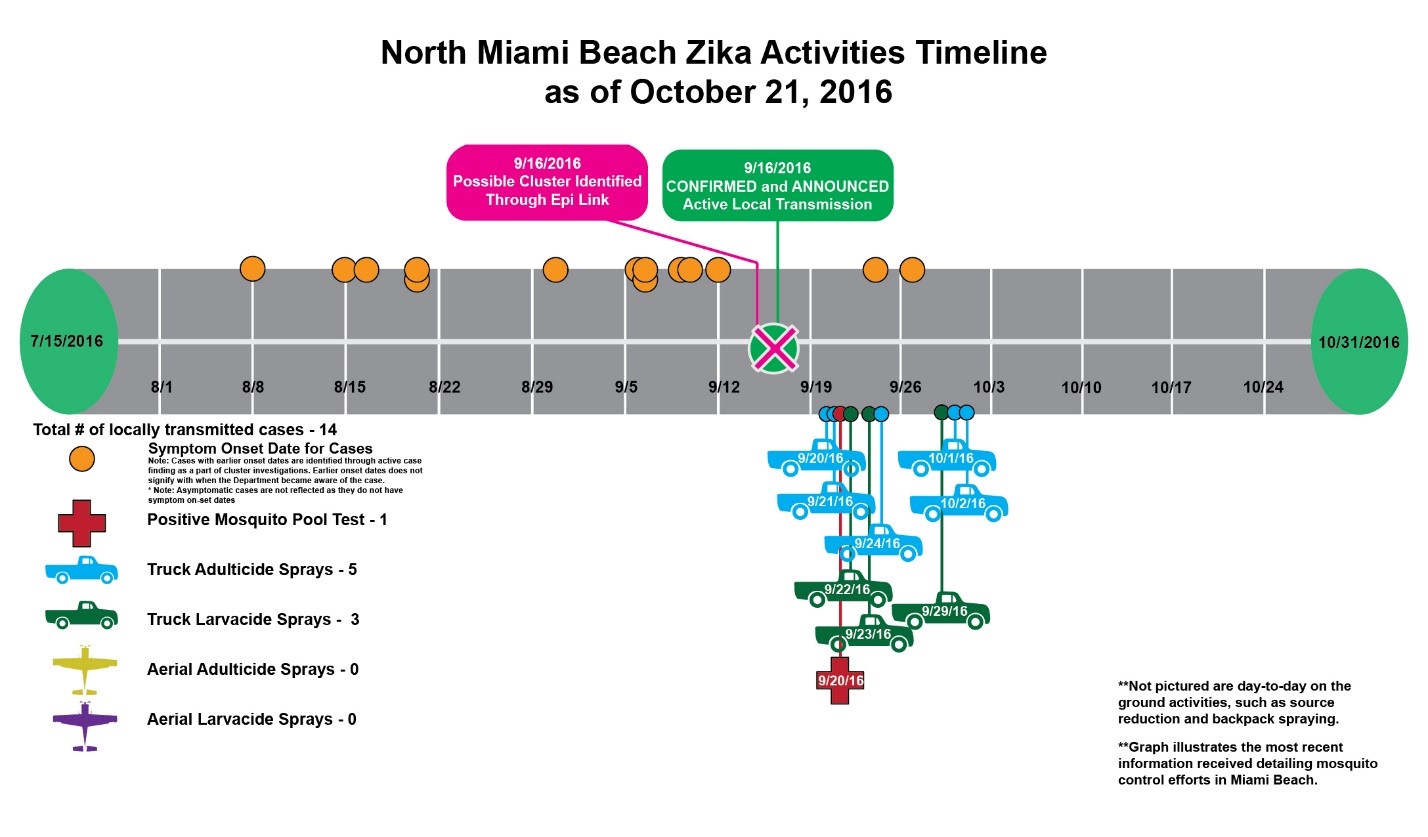
[FONT=&quot]The timelines below are as of Oct. 3 and will be updated. Note: Asymptomatic cases are not reflected as they do not have symptom on-set dates.[/FONT]
[FONT=&quot]click image above to enlarge[/FONT]
[FONT=&quot]click image above to enlarge[/FONT]
[FONT=&quot]click image above to enlarge[/FONT]
[FONT=&quot]The department is currently conducting 15 active investigations. The department has closed 29 investigations. Information regarding the investigations can be found here. If investigations reveal additional areas of active transmission, the department will announce a defined area of concern. [/FONT]
[FONT=&quot]The department has conducted Zika virus testing for more than 8,975 people statewide. Florida currently has the capacity to test 5,888 people for active Zika virus and 7,051 for Zika antibodies. At Governor Scott?s direction, all county health departments now offer free Zika risk assessment and testing to pregnant women.[/FONT]
[FONT=&quot]Florida?s small case cluster is not considered widespread transmission, however, pregnant women are advised to avoid non-essential travel to the impacted area in Miami-Dade County (see map below). If you are pregnant and must travel or if you live or work in the impacted area, protect yourself from mosquito bites by wearing insect repellent, long clothing and limiting your time outdoors. [/FONT]
[FONT=&quot]According to CDC guidance, providers should consider testing all pregnant women with a history of travel to a Zika affected area for the virus. It is also recommended that all pregnant women who reside in or travel frequently to the area where active transmission is likely occurring be tested for Zika in the first and second trimester. Pregnant women in the identified area can contact their medical provider or their local county health department to be tested and receive a Zika prevention kit. CDC recommends that a pregnant woman with a history of Zika virus and her provider should consider additional ultrasounds. Additionally, the department is working closely with the Healthy Start Coalition of Miami-Dade County to identify pregnant women in the impacted areas to ensure they have access to resources and information to protect themselves. CDC recommends that a pregnant woman with a history of Zika virus and her provider should consider additional ultrasounds. [/FONT]
[FONT=&quot]Pregnant women can contact their local county health department for Zika risk assessment and testing hours and information. A Zika risk assessment will be conducted by county health department staff and blood and/or urine samples may be collected and sent to labs for testing. It may take one to two weeks to receive results.[/FONT]
[FONT=&quot]Florida has been monitoring pregnant women with evidence of Zika regardless of symptoms. The total number of pregnant women who have been or are being monitored is 104.[/FONT]
[FONT=&quot]On Feb. 12, Governor Scott directed the State Surgeon General to activate a Zika Virus Information Hotline for current Florida residents and visitors, as well as anyone planning on traveling to Florida in the near future. The hotline, managed by the Department of Health, has assisted 6,816 callers since it launched. The number for the Zika Virus Information Hotline is 1-855-622-6735.[/FONT]
[FONT=&quot]The department urges Floridians to drain standing water weekly, no matter how seemingly small. A couple drops of water in a bottle cap can be a breeding location for mosquitoes. Residents and visitors also need to use repellents when enjoying the Florida outdoors.[/FONT]
[FONT=&quot]For more information on DOH action and federal guidance, please click here.[/FONT]
[FONT=&quot]For resources and information on Zika virus, click here.[/FONT]
[FONT=&quot]Miami Beach Map[/FONT]
[FONT=&quot]click image above to enlarge[/FONT]
[FONT=&quot]About the Florida Department of Health[/FONT]
[FONT=&quot]The department, nationally accredited by the Public Health Accreditation Board, works to protect, promote, and improve the health of all people in Florida through integrated state, county and community efforts.[/FONT]
[FONT=&quot]Follow us on Twitter at @HealthyFla and on Facebook. For more information about the Florida Department of Health, please visit www.FloridaHealth.gov.

http://www.floridahealth.gov/newsroom/2016/10/101216-zika-update.html
[/FONT]
 
US - Florida - Local Zika cases now 23.64% of total reported cases with today's release of data (local + out-of-state).

--------------------------


October 13, 2016 [TABLE="class: MsoNormalTable, border: 0, cellpadding: 0, width: 929"]
[TR]
[TD]DEPARTMENT OF HEALTH DAILY ZIKA UPDATE[/TD]
[/TR]
[TR]
[TD] [/TD]
[/TR]
[TR]
[TD="colspan: 2"]Contact:
Communications Office
NewsMedia@flhealth.gov
850-245-4111
[/TD]
[/TR]
[TR]
[TD="colspan: 2"] [/TD]
[/TR]
[TR]
[TD="colspan: 2"]Tallahassee, Fla. —In an effort to keep Florida residents and visitors safe and aware about the status of the Zika virus, the department will issue a Zika virus update each week day. Updates will include a Zika case count by county and information to keep Floridians informed and prepared.In order to keep the public informed, the department has posted our investigation process here .
There are five new travel related cases today with one in Hillsborough, one in Orange, one in Pinellas and two involving pregnant women.Please visit our website to see the full list of travel-related cases.
There are two new non-travel related cases. One case is linked to the new area of local transmission in Miami-Dade County. The other case is a Broward County resident and the department is investigating to determine where exposure occurred.
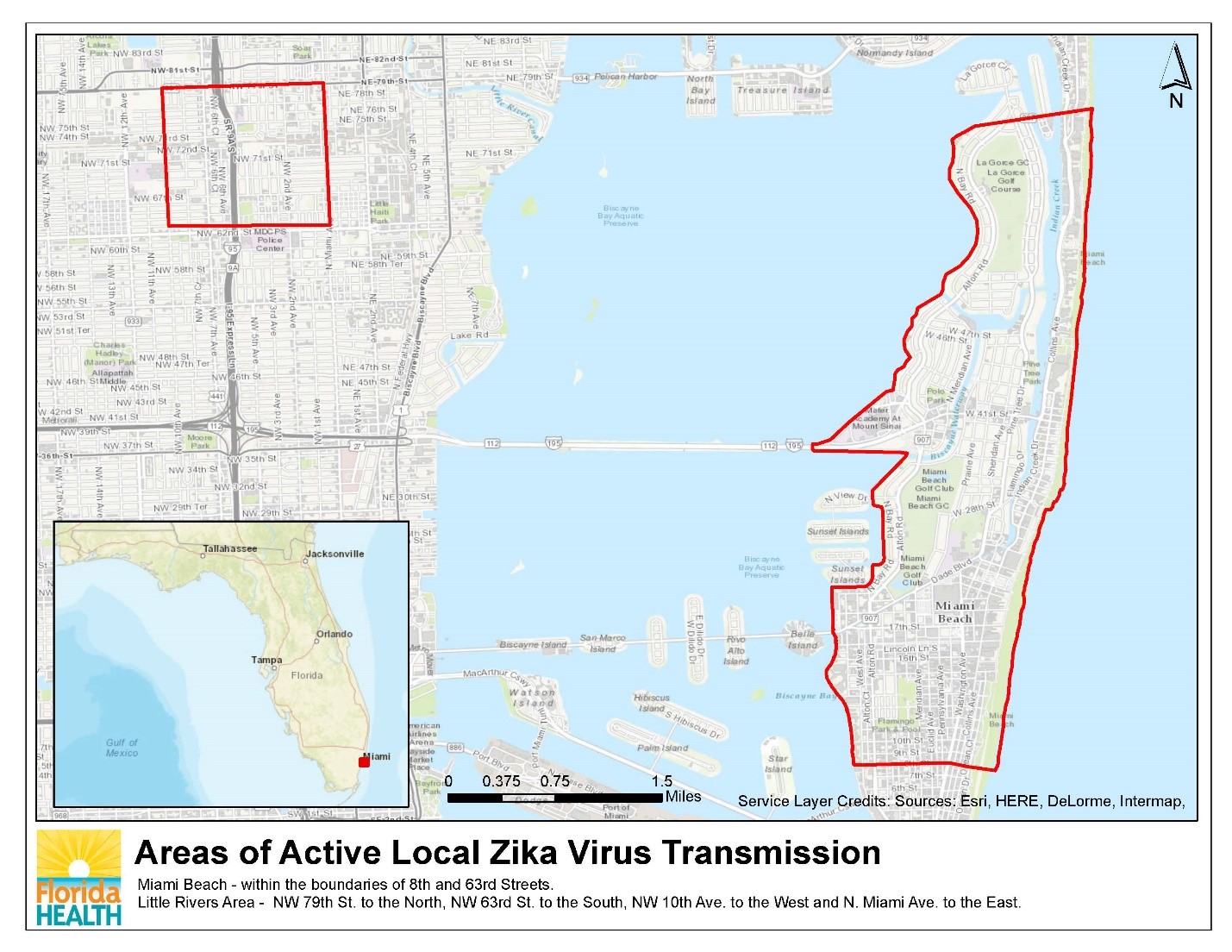
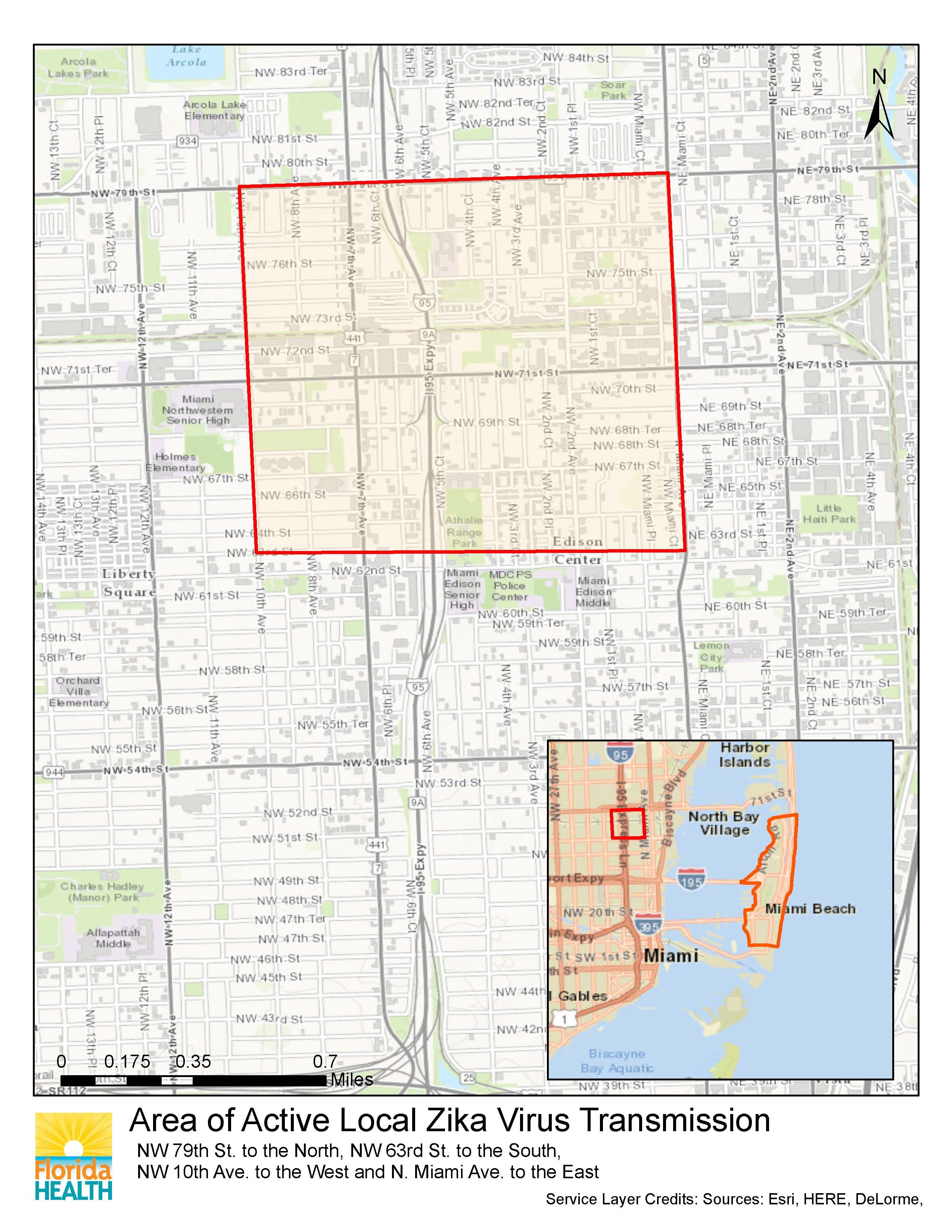
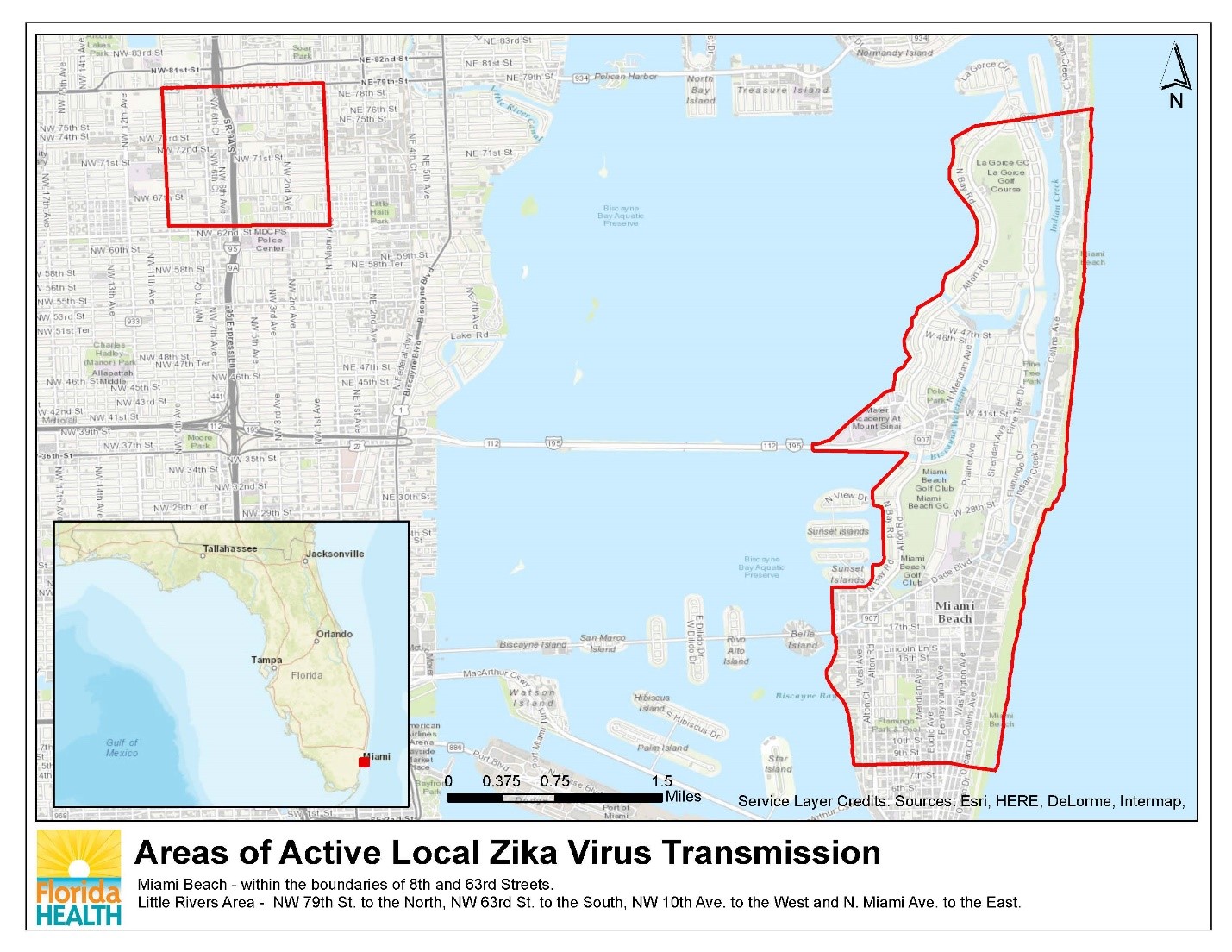
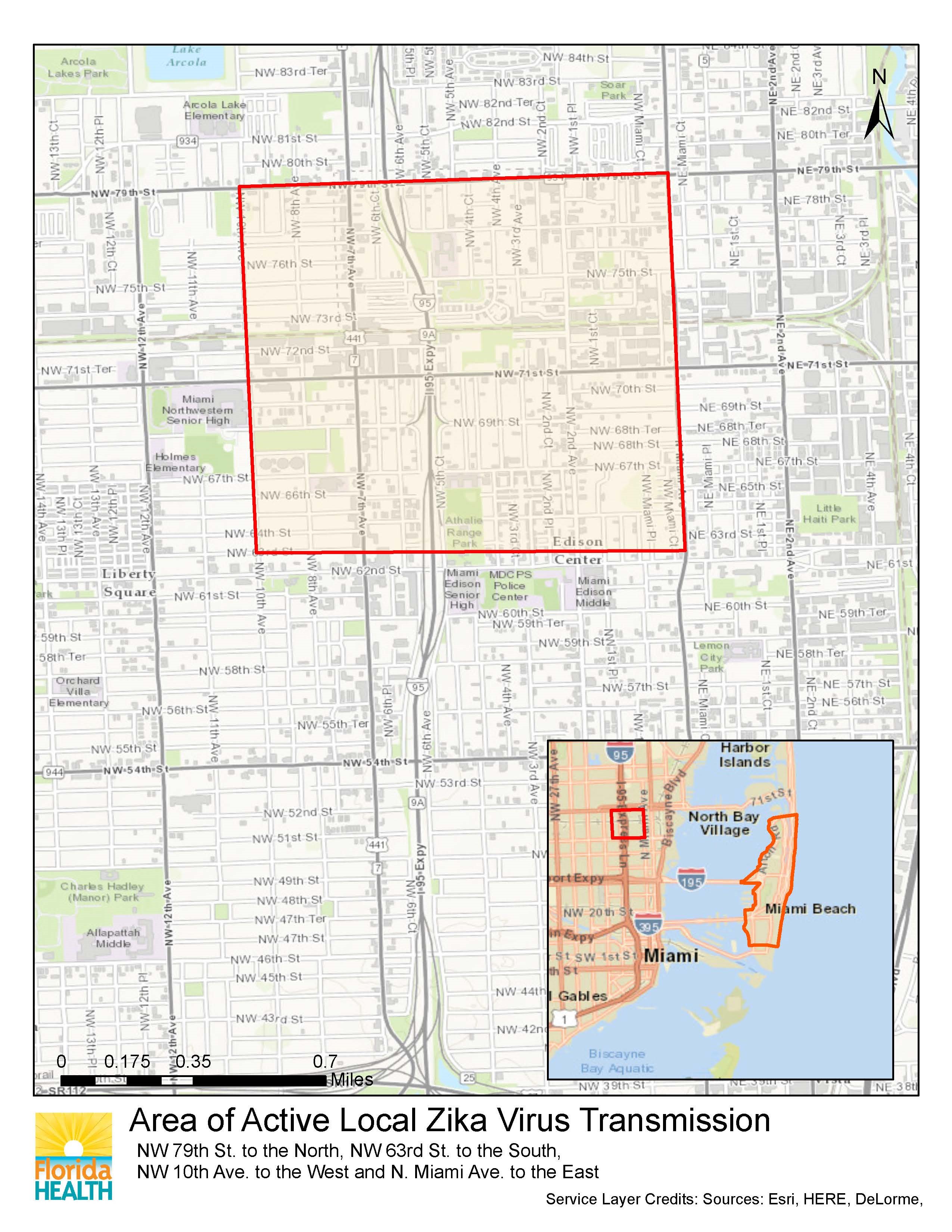
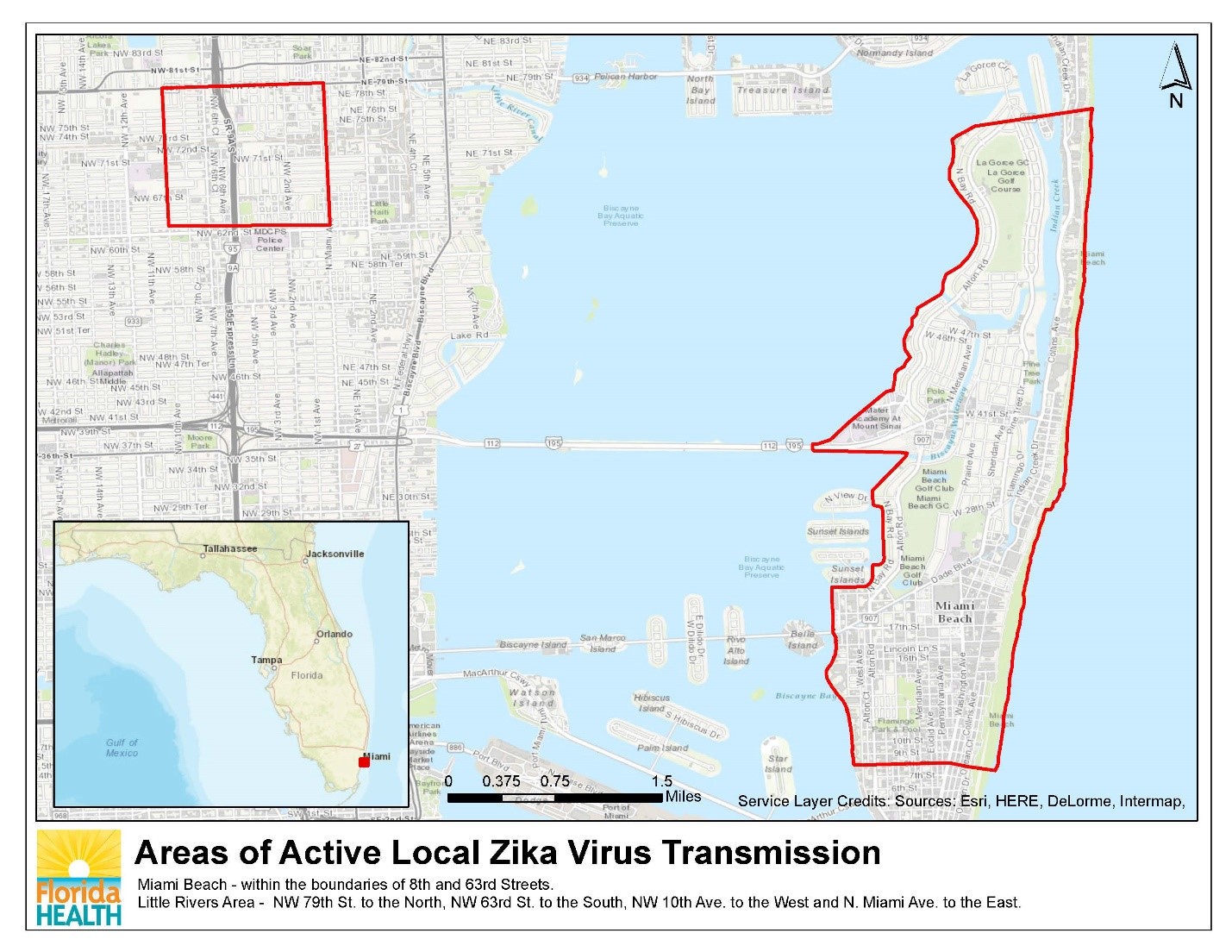
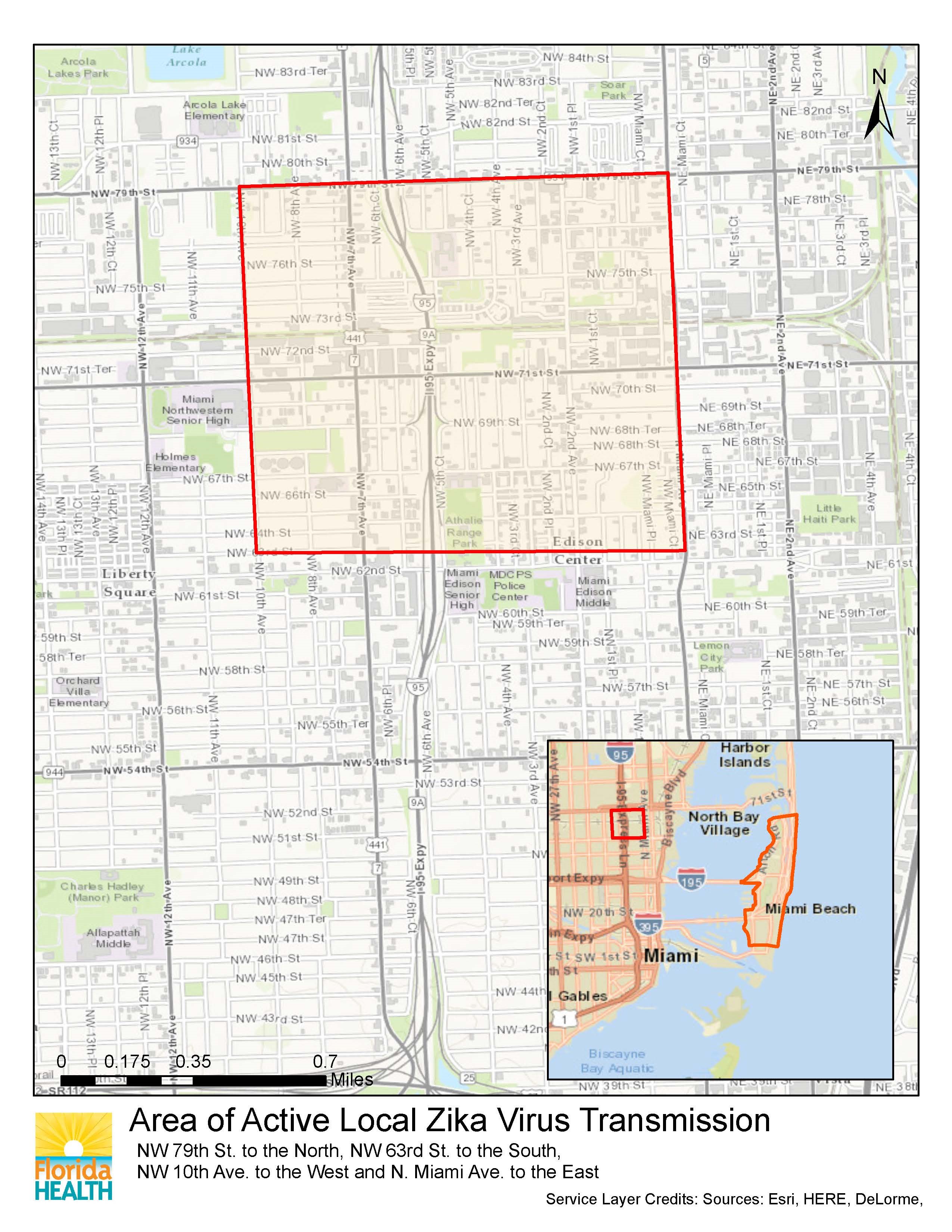
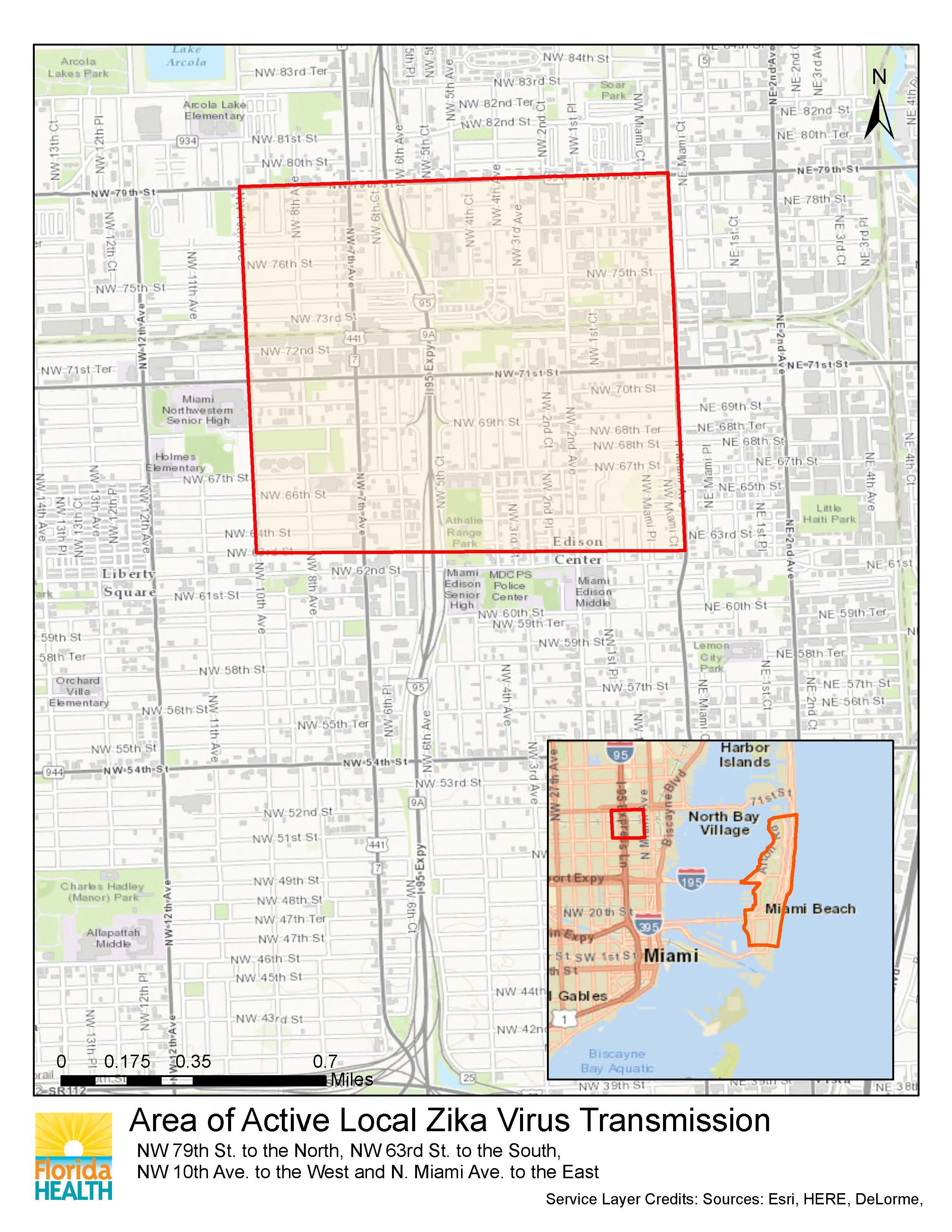
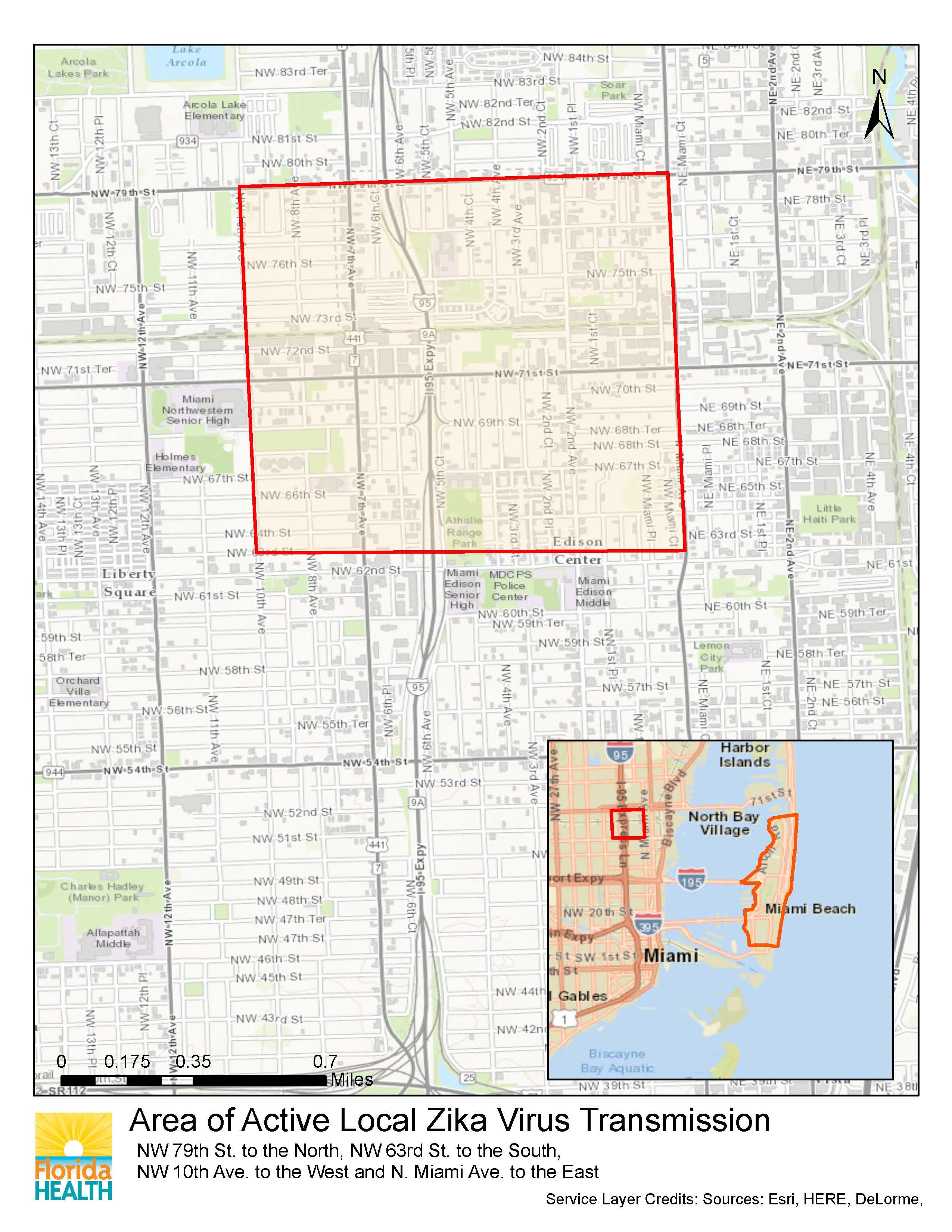
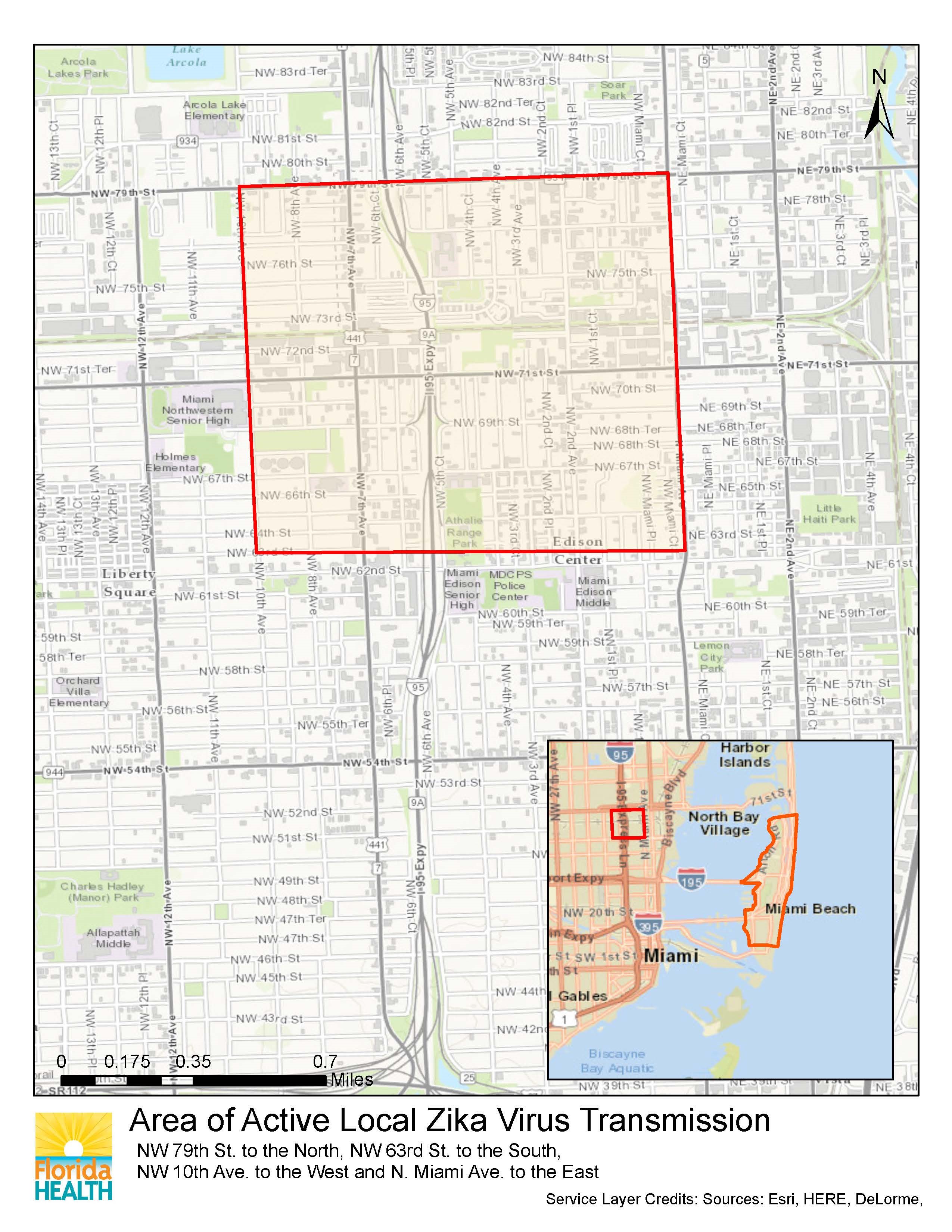
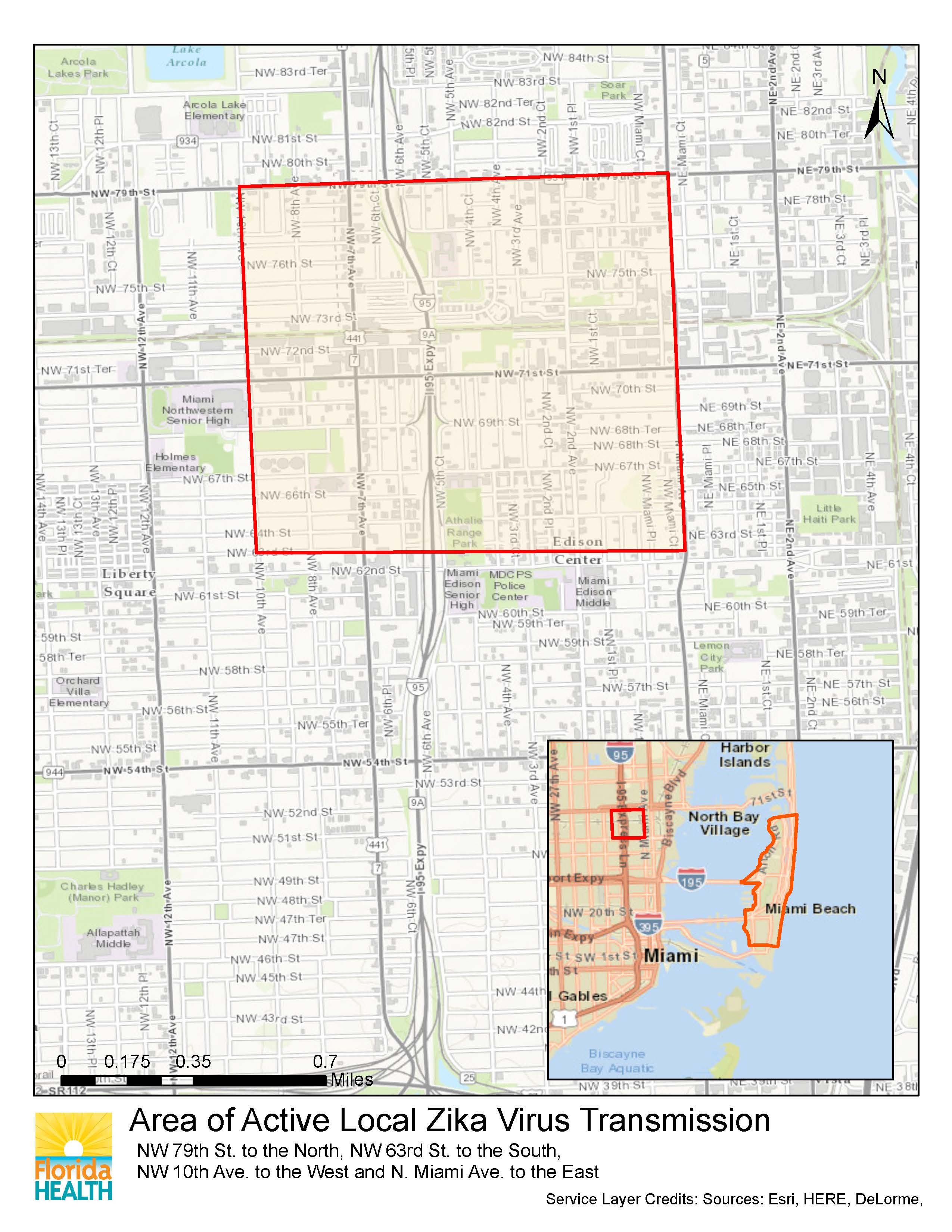
DOH has confirmed through our ongoing investigation that local transmission of Zika is occurring in a new small area in Miami-Dade County. The street boundaries are NW 79[SUP]th[/SUP] St. to the North, NW 63[SUP]rd[/SUP] St. to the South, NW 10[SUP]th[/SUP] Ave. to the West and N. Miami Ave. to the East. This is about one square mile. The department has identified five people, two women and three men, in the new area. Three live in this one square mile area. The other two either work or have visited this area. Four of these cases have already been announced and were under the normal investigation process. The investigation of the final case was completed today.
DOH continues door-to-door outreach and targeted testing in Miami-Dade County and mosquito abatement and reduction activities are also taking place around the locations that are being investigated. DOH believes ongoing transmission is only taking place within the identified areas in Miami-Dade County.
One case does not mean ongoing active transmission is taking place. DOH conducts a thorough investigation by sampling close contacts and community members around each case to determine if additional people are infected. If DOH finds evidence that active transmission is occurring in an area, the media and the public will be notified.
For a complete breakdown of non-travel and travel-related Zika infections to-date, please see below. [TABLE="class: MsoNormalTable, border: 1, cellpadding: 0, cellspacing: 0"]
[TR]
[TD="width: 312"]Infection Type[/TD]
[TD="width: 312"]Infection Count[/TD]
[/TR]
[TR]
[TD="width: 312"]Travel-Related Infections of Zika[/TD]
[TD="width: 312"]736[/TD]
[/TR]
[TR]
[TD="width: 312"]Non-Travel Related Infections of Zika[/TD]
[TD="width: 312"]155[/TD]
[/TR]
[TR]
[TD="width: 312"]Infections Involving Pregnant Women[/TD]
[TD="width: 312"]106[/TD]
[/TR]
[TR]
[TD="width: 312"]Out of State Cases (not Florida Residents)[/TD]
[TD="width: 312"]19[/TD]
[/TR]
[TR]
[TD="width: 312"]Undetermined[/TD]
[TD="width: 312"]5[/TD]
[/TR]
[TR]
[TD="width: 312"]Total[/TD]
[TD="width: 312"]1,021[/TD]
[/TR]
[/TABLE]
The timelines below are as of Oct. 12 and will be updated. Note: Asymptomatic cases are not reflected as they do not have symptom on-set dates.
3717731476389278952.jpg

3717731476389307102.jpg

3717731476389322960.jpg

The department is currently conducting 14 active investigations. The department has closed 30 investigations. Information regarding the investigations can be found here. If investigations reveal additional areas of active transmission, the department will announce a defined area of concern.
The department has conducted Zika virus testing for more than 8,995 people statewide. Florida currently has the capacity to test 9,643 people for active Zika virus and 6,989 for Zika antibodies. At Governor Scott’s direction, all county health departments now offer free Zika risk assessment and testing to pregnant women.
Florida’s small case cluster is not considered widespread transmission, however, pregnant women are advised to avoid non-essential travel to the impacted areas in Miami-Dade County (see maps below). If you are pregnant and must travel or if you live or work in the impacted area, protect yourself from mosquito bites by wearing insect repellent, long clothing and limiting your time outdoors.
According to CDC guidance, providers should consider testing all pregnant women with a history of travel to a Zika affected area for the virus. It is also recommended that all pregnant women who reside in or travel frequently to the area where active transmission is likely occurring be tested for Zika in the first and second trimester. Pregnant women in the identified area can contact their medical provider or their local county health department to be tested and receive a Zika prevention kit. CDC recommends that a pregnant woman with a history of Zika virus and her provider should consider additional ultrasounds. Additionally, the department is working closely with the Healthy Start Coalition of Miami-Dade County to identify pregnant women in the impacted areas to ensure they have access to resources and information to protect themselves. CDC recommends that a pregnant woman with a history of Zika virus and her provider should consider additional ultrasounds.
Pregnant women can contact their local county health department for Zika risk assessment and testing hours and information. A Zika risk assessment will be conducted by county health department staff and blood and/or urine samples may be collected and sent to labs for testing. It may take one to two weeks to receive results.
Florida has been monitoring pregnant women with evidence of Zika regardless of symptoms. The total number of pregnant women who have been or are being monitored is 106.
On Feb. 12, Governor Scott directed the State Surgeon General to activate a Zika Virus Information Hotline for current Florida residents and visitors, as well as anyone planning on traveling to Florida in the near future. The hotline, managed by the Department of Health, has assisted 6,840 callers since it launched. The number for the Zika Virus Information Hotline is 1-855-622-6735.
The department urges Floridians to drain standing water weekly, no matter how seemingly small. A couple drops of water in a bottle cap can be a breeding location for mosquitoes. Residents and visitors also need to use repellents when enjoying the Florida outdoors.
For more information on DOH action and federal guidance, please click here.
For resources and information on Zika virus, click here.
3717731476389416045.jpg

3717731476389442472.jpg

About the Florida Department of Health

The department, nationally accredited by the Public Health Accreditation Board, works to protect, promote and improve the health of all people in Florida through integrated state, county and community efforts.

Follow us on Twitter at @HealthyFla and on Facebook. For more information about the Florida Department of Health please visitwww.FloridaHealth.gov.
[/TD]
[/TR]
[/TABLE]
 
Florida - Local transmission of Zika is occurring in a new small area in Miami

[h=2]GOV. SCOTT: SMALL AREA OF LOCAL TRANSMISSION IN MIAMI ? NEED FEDERAL FUNDING NOW[/h] On October 13, 2016, in News Releases, by Staff


TALLAHASSEE, Fla. ? Today, Governor Rick Scott announced that the Florida Department of Health (DOH) has confirmed through its ongoing investigations that local transmission of Zika is occurring in a new small area in Miami-Dade County. The street boundaries are NW 79th St. to the North, NW 63rd St. to the South, NW 10th Ave. to the West and N. Miami Ave. to the East. This area is about one square mile. DOH has identified five people, two women and three men, in the new area. Three live in this one square mile area. The other two either work in or have visited this area. Four of these cases have already been announced by DOH and were under the normal investigation process. The investigation of the final case was completed today. With the confirmation of today?s case, this area now meets the CDC?s criteria for a new zone. All five individuals are non-travel related cases. DOH has evidence that Zika is only actively being transmitted in the two small areas including Miami Beach and this new area.
Governor Scott said, ?Today?s announcement of a new area in Miami of ongoing local transmission of the Zika virus underscores the urgent need for federal funding to combat the Zika virus. It has been two weeks since federal funding to fight Zika was approved by Congress and signed by President Obama. However, Florida has not yet received a dime. We don?t need bureaucratic timelines ? we need funding now.
?We have had more than 1,000 cases of Zika in our state, and Miami-Dade County continues to be the only area with ongoing active transmissions. I have continued to provide state funding to Miami-Dade County and this week, I allocated an additional $7 million for the county to fight mosquitoes. We have seen that aggressive mosquito control efforts have worked in areas like Wynwood and we hope the county also aggressively sprays in this area so we can limit the spread of this virus and protect pregnant women and their growing babies.
?Today I am requesting the CDC to work directly with the Miami Dade Mosquito Control District to identify best practices for defeating Zika in this new area. We know every area is different and I hope the federal government will provide guidance to the county on how to protect residents and visitors.
?We still have multiple outstanding requests to the Obama Administration for important Zika resources. We have continued to call on the CDC to quickly respond to these requests, and pregnant women who are most at-risk for the Zika virus deserve to have these requests immediately fulfilled. I am also continuing to call on Congress to hold a field hearing in Miami to hear directly from those who are on the frontlines of battling this virus. I most recently asked that Congress hold this hearing by October 1, and while that date has passed, they need to come here immediately. The threat of Zika is real and we continue to see more cases in our state.?
To date, Governor Scott has allocated $61.2 million in state funds to combat Zika. Of this funding, Miami-Dade County has received $12.6 million
Click HERE to see a detailed timeline of actions taken by Governor Scott to combat the Zika virus in Florida.
OUTSTANDING REQUESTS TO OBAMA ADMINISTRATION
  • The CDC to match Florida?s $25 million investment in Zika research to help develop a vaccine. (Governor Scott requested on Sept. 28th)
  • The CDC to take immediate action to accelerate their testing process. (Governor Scott requested on Sept. 28th)
  • The CDC to provide Miami-Dade County and the City of Miami Beach with guidance on how to better control the mosquitos that carry Zika. (Governor Scott requested on Sept. 28th)
  • The CDC to host a call with community leaders and clinicians in Miami Beach to answer questions and provide the latest information and guidance on Zika. (Governor Scott requested on Sept. 16th)
  • An additional 10,000 Zika prevention kits. (Governor Scott requested on Aug. 19th)
  • A detailed plan from the Obama Administration on how they would like Florida to work with FEMA now that Zika has become mosquito-borne. (Initially requested on June 1st ? requested again Aug. 19th)
MIAMI BEACH MAP

NEW AREA IN MIAMI
NEW-MIAMI-AREA-232x300.jpg

The timelines below are as of Oct. 12 and will be updated. Note: Asymptomatic cases are not reflected as they do not have symptom on-set dates.
Wynwood-Timeline-300x176.jpg

South-Miami-Beach-Timeline-300x176.jpg

North-Miami-Beach-Timeline-300x176.jpg


US - CDC Press Release: CDC working with Florida to respond to new active Zika transmission area in Miami-Dade County - October 13, 2016

From: "Media@cdc.gov (CDC)" <sohco@CDC.GOV>
To: MMWR-MEDIA@LISTSERV.CDC.GOV
Subject: CDC Press Release: CDC working with Florida to respond to new active Zika transmission area in Miami-Dade County
Date: Oct 13, 2016 8:10 PM

[TABLE="border: 0, cellpadding: 0, cellspacing: 0"]
[TR]
[TD] Press Release

For Immediate Release
Thursday, October 13, 2016

Contact: CDC Media Relations
(404) 639-3286

CDC working with Florida to respond to new active Zika transmission area in Miami-Dade County
The Centers for Disease Control and Prevention (CDC) continues to work with Florida health officials to investigate new cases of locally transmitted Zika virus infection in Miami-Dade County. Florida today announced a new area of active Zika transmission in an area of about one square mile in Miami-Dade County (NW 79th St. to the North, NW 63rd St. to the South, NW 10th Ave. to the West and N. Miami Ave. to the East). The Florida Department of Health (FLDOH) has identified five people, two women, and three men, in the new area. Three live in the area; the other two either work in or have visited this area. FLDOH has evidence that Zika is only actively being transmitted in this new area and the existing area in Miami Beach.
Based on this new information, CDC and Florida health officials recommend at this time:
  • Pregnant women should avoid travel to the newly designated area, in addition to the previously identified designated areas in Miami-Dade County, because active local transmission of Zika has been identified.
  • Pregnant women and their sexual partners who are concerned about potential Zika virus exposure may also consider postponing nonessential travel to all parts of Miami-Dade County.
  • All pregnant women in the United States should be evaluated for possible Zika virus exposure during each prenatal care visit. Each evaluation should include an assessment of signs and symptoms of Zika virus disease (acute onset of fever, rash, joint pain, conjunctivitis [red eyes]); their travel history; as well as their sexual partner's potential exposure to Zika virus and history of any illness consistent with Zika virus disease to determine whether Zika virus testing is indicated.
  • Pregnant women and their partners living in or who must travel to the designated areas should be aware of active Zika virus transmission and follow steps to prevent mosquito bites.
  • Women and men who live in or who have traveled to the newly designated area since August 26[SUP]th[/SUP] should be aware of active Zika virus transmission in the area.
  • Women and men who are planning to conceive in the near future should consider avoiding nonessential travel to this newly designated area.
  • Women who are diagnosed with Zika should wait at least 8 weeks after a positive laboratory testing before trying to get pregnant.
  • Men who are diagnosed with Zika should wait at least 6 months after a positive laboratory test before trying to get their partner pregnant.
  • Women who traveled to this area should wait at least 8 weeks before trying to get pregnant, regardless of whether they had symptoms.
  • Men who traveled to this area should wait at least 6 months before trying to get pregnant, regardless of whether they had symptoms.
  • Women and men who live in or frequently travel to this area and who do not have signs or symptoms of Zika should talk to their healthcare provider to inform their decisions about timing of pregnancy.
Detecting local spread of Zika virus is difficult for several reasons:
  • The incubation period for Zika virus infection is up to two weeks,
  • Many infected people have no symptoms or only mild symptoms, and
  • Diagnosis and investigation of cases may take several weeks.
For this reason, it is possible that other neighborhoods in Miami-Dade County have active Zika virus transmission that is not yet apparent.
CDC is working closely with Florida state and local health officials to review current testing recommendations.
CDC support for Florida
CDC has been working with state, local, and territorial health officials to prepare for the possibility of locally transmitted Zika virus in the United States. Officials from Florida participated in all these activities, and their experience in responding to mosquito-borne diseases similar to Zika virus disease has been an important source of knowledge in this effort. To date, CDC has provided Florida more than $8 million in Zika-specific funding and about $27 million in emergency preparedness funding that can be used toward Zika response efforts. Next week, CDC will provide Florida with more than $2.6 million in Public Health Emergency Preparedness (PHEP) funding that can be used to support Zika response efforts. These funds are part of the $44 million of PHEP funding that was included in the Zika emergency supplemental passed by Congress in September.
Since February, CDC has sent enough materials to Florida for approximately 11,025-12,600 Zika antibody tests, including materials for 6,300 tests shipped in August in response to Florida Governor Scott?s request. CDC?s Atlanta and Fort Collins, CO, laboratories are also assisting by testing specimens from pregnant women for the Florida Department of Health and are working with Florida on other possible support for Zika lab testing. As of October 11, 5 CDC personnel were deployed in Florida and 8 are pending, with a total of 30 since the beginning of the response, including 12 CDC laboratory staff.
It is understandable that women will be especially concerned, and there are things that everyone can do based on what is currently known. While there are still many unanswered questions about Zika, CDC is working hard to find out more about these infections. Here is what is known:
  • Zika is spread to people primarily through the bite of an infected Aedes species mosquito (Ae. aegypti and Ae. albopictus).
  • Zika virus can pass from a pregnant woman to her fetus during pregnancy or around the time of birth (periconceptional/intrauterine/perinatal transmission). We do not know how often this happens.
  • Zika virus infection is associated with birth defects and adverse pregnancy outcomes, especially microcephaly.
  • A person who is infected with Zika virus can pass it to sex partners.
  • Most people infected with Zika virus won?t have symptoms or will only have mild symptoms.
  • No vaccines or treatments are currently available to treat or prevent Zika infections.
As of October 12, 2016, 3,936 cases of Zika had been reported in the continental United States and Hawaii, including 878 pregnant women with laboratory evidence of possible Zika infection. These cases also include 32 believed to be the result of sexual transmission and one case that was the result of a laboratory exposure.
For more information about Zika: http://www.cdc.gov/zika/
[/TD]
[/TR]
[/TABLE]
 
[FONT=&quot] [h=1]Department of Health Daily Zika Update[/h] By Florida Department of Health, Office of Communications
October 17, 2016
[/FONT]

[FONT=&quot] Press Release[/FONT]
[FONT=&quot]
DOH_logo.png

October 17, 2016
[h=2]Department of Health Daily Zika Update[/h] Contact:
Communications Office
NewsMedia@flhealth.gov
(850) 245-4111


TALLAHASSEE, Fla. ? In an effort to keep Florida residents and visitors safe and aware about the status of the Zika virus, the department will issue a Zika virus update each week day. Updates will include a Zika case count by county and information to keep Floridians informed and prepared. In order to keep the public informed, the department has posted our investigation process here.

There are three new travel related cases today, one in Miami-Dade County and two involving pregnant women. Please visit our website to see the full list of travel-related cases.

There are four new non-travel related cases in Miami-Dade County. One case is linked to the Miami Beach investigation, two cases are linked to the new area of local transmission in Miami-Dade County and the department is investigating one case to determine where exposure occurred.
DOH continues door-to-door outreach and targeted testing in Miami-Dade County and mosquito abatement and reduction activities are also taking place around the locations that are being investigated. DOH believes ongoing transmission is only taking place within the identified areas in Miami-Dade County.
One case does not mean ongoing active transmission is taking place. DOH conducts a thorough investigation by sampling close contacts and community members around each case to determine if additional people are infected. If DOH finds evidence that active transmission is occurring in an area, the media and the public will be notified.
For a complete breakdown of non-travel and travel-related Zika infections to-date, please see below.
[TABLE="border: 1, cellpadding: 0, cellspacing: 0"]
[TR]
[TD="width: 397"] Infection Type
[/TD]
[TD="width: 382"] Infection Count
[/TD]
[/TR]
[TR]
[TD="width: 397"] Travel-Related Infections of Zika
[/TD]
[TD="width: 382"] 739
[/TD]
[/TR]
[TR]
[TD="width: 397"] Non-Travel Related Infections of Zika
[/TD]
[TD="width: 382"] 160
[/TD]
[/TR]
[TR]
[TD="width: 397"] Infections Involving Pregnant Women
[/TD]
[TD="width: 382"] 108
[/TD]
[/TR]
[TR]
[TD="width: 397"] Out of State Cases (not Florida Residents)
[/TD]
[TD="width: 382"] 19
[/TD]
[/TR]
[TR]
[TD="width: 397"] Undetermined
[/TD]
[TD="width: 382"] 5
[/TD]
[/TR]
[TR]
[TD="width: 397"] Total
[/TD]
[TD="width: 382"] 1,031
[/TD]
[/TR]
[/TABLE]
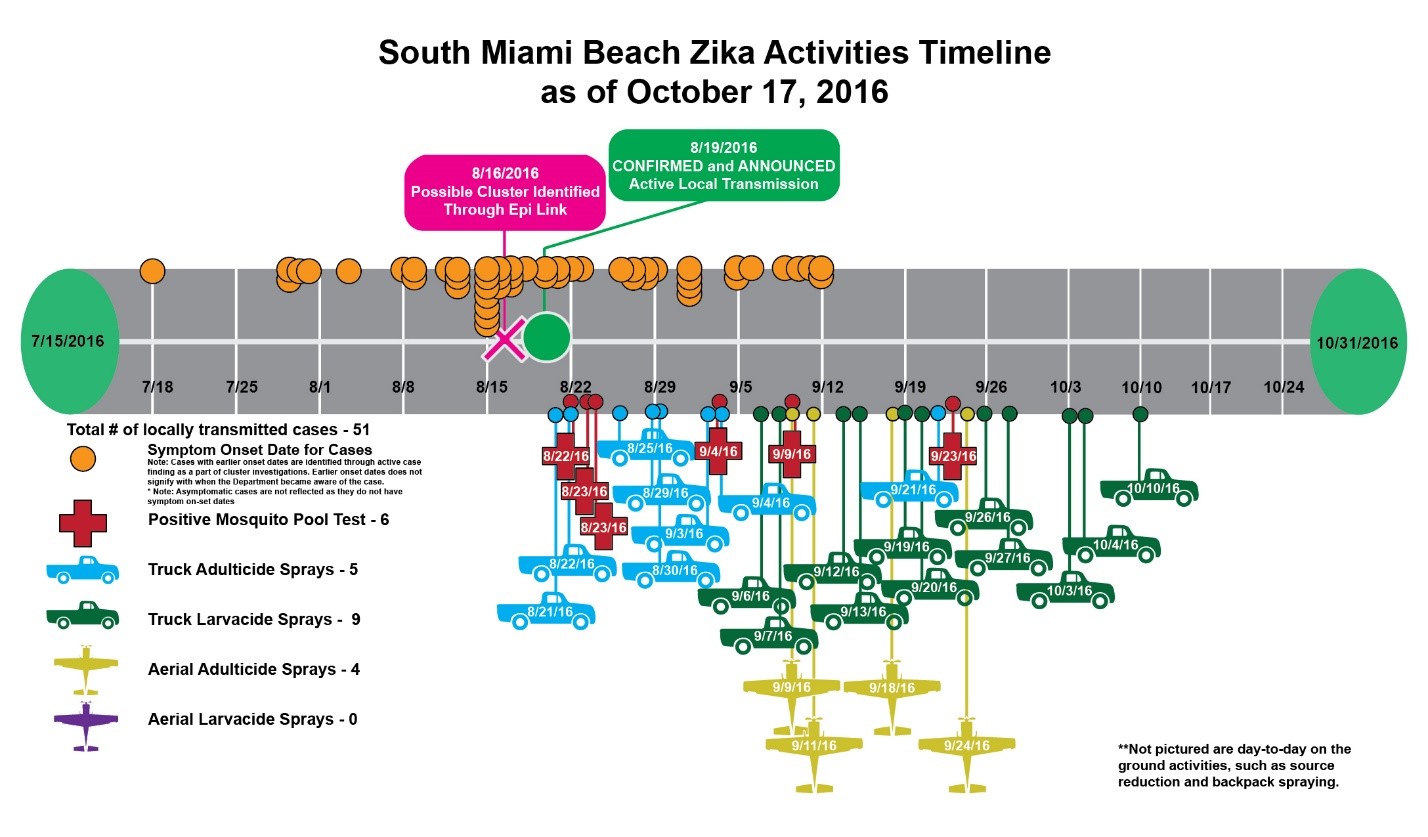
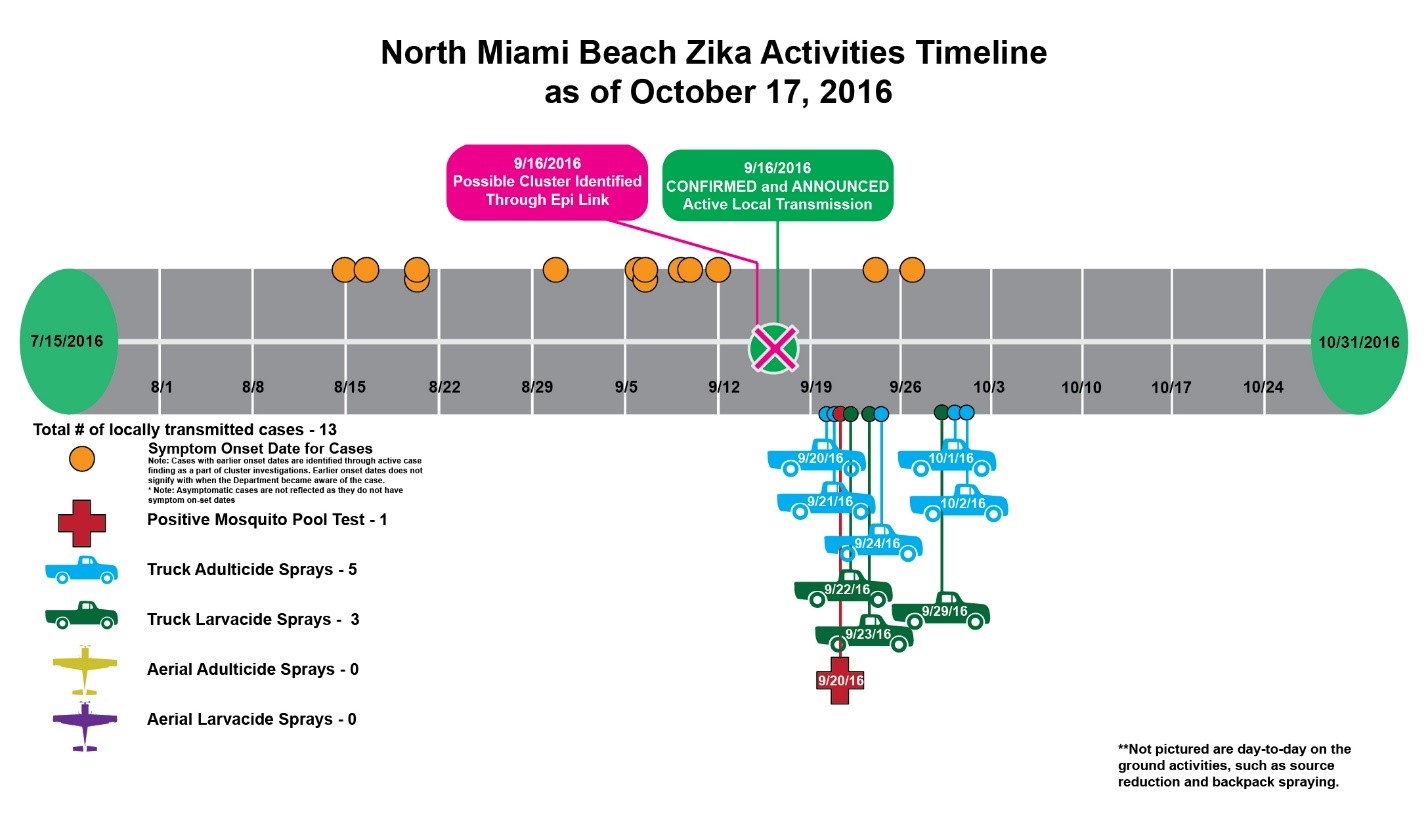
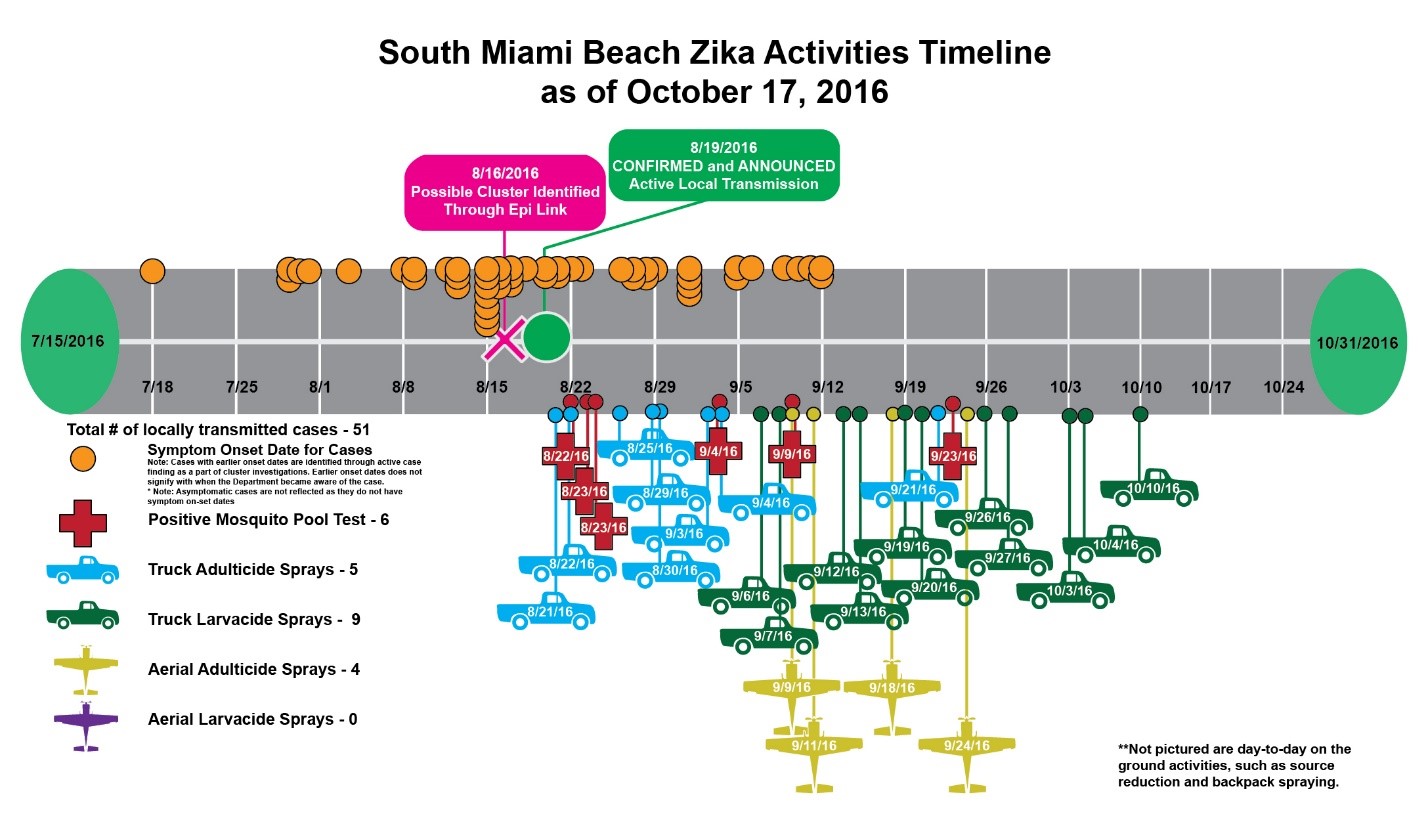
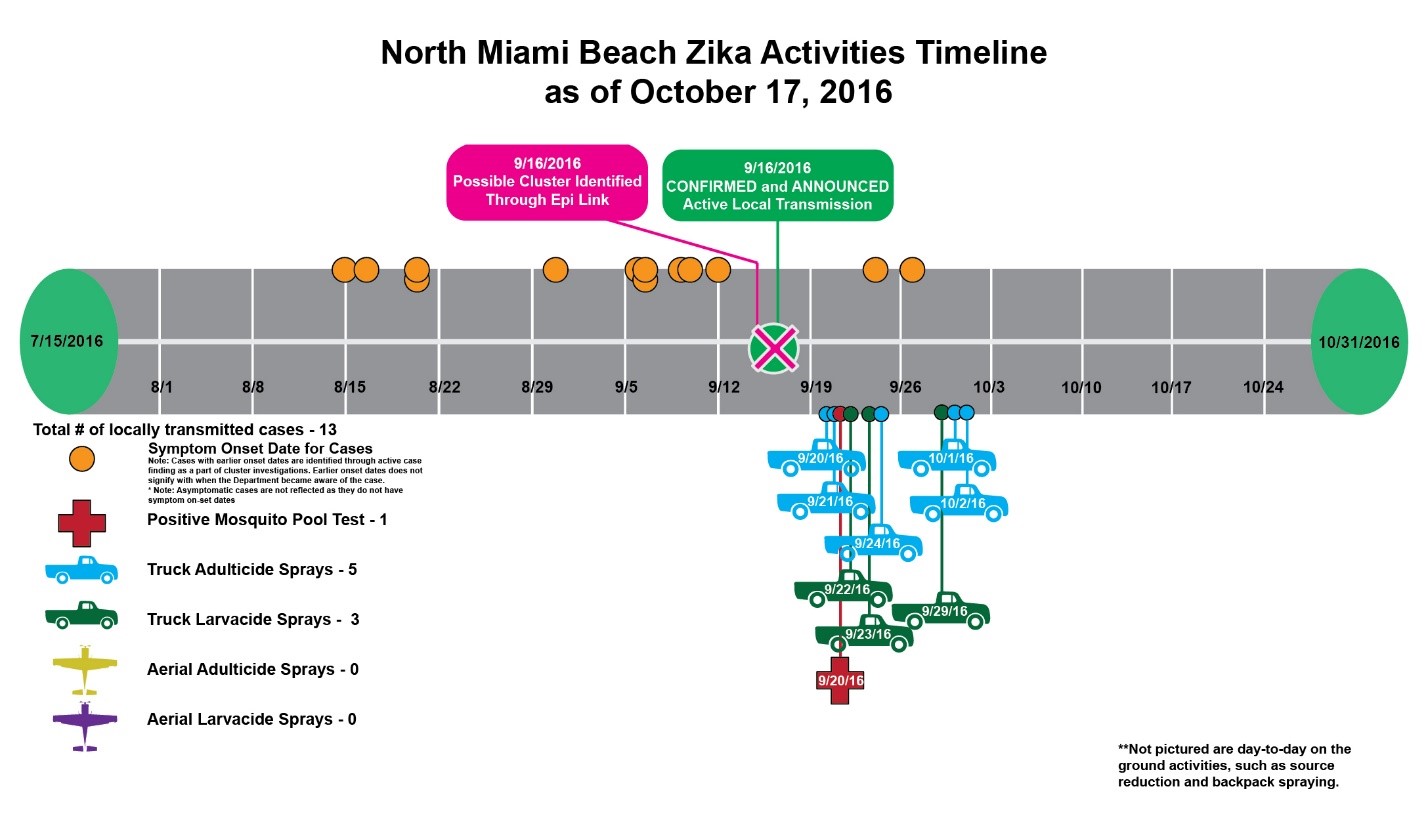
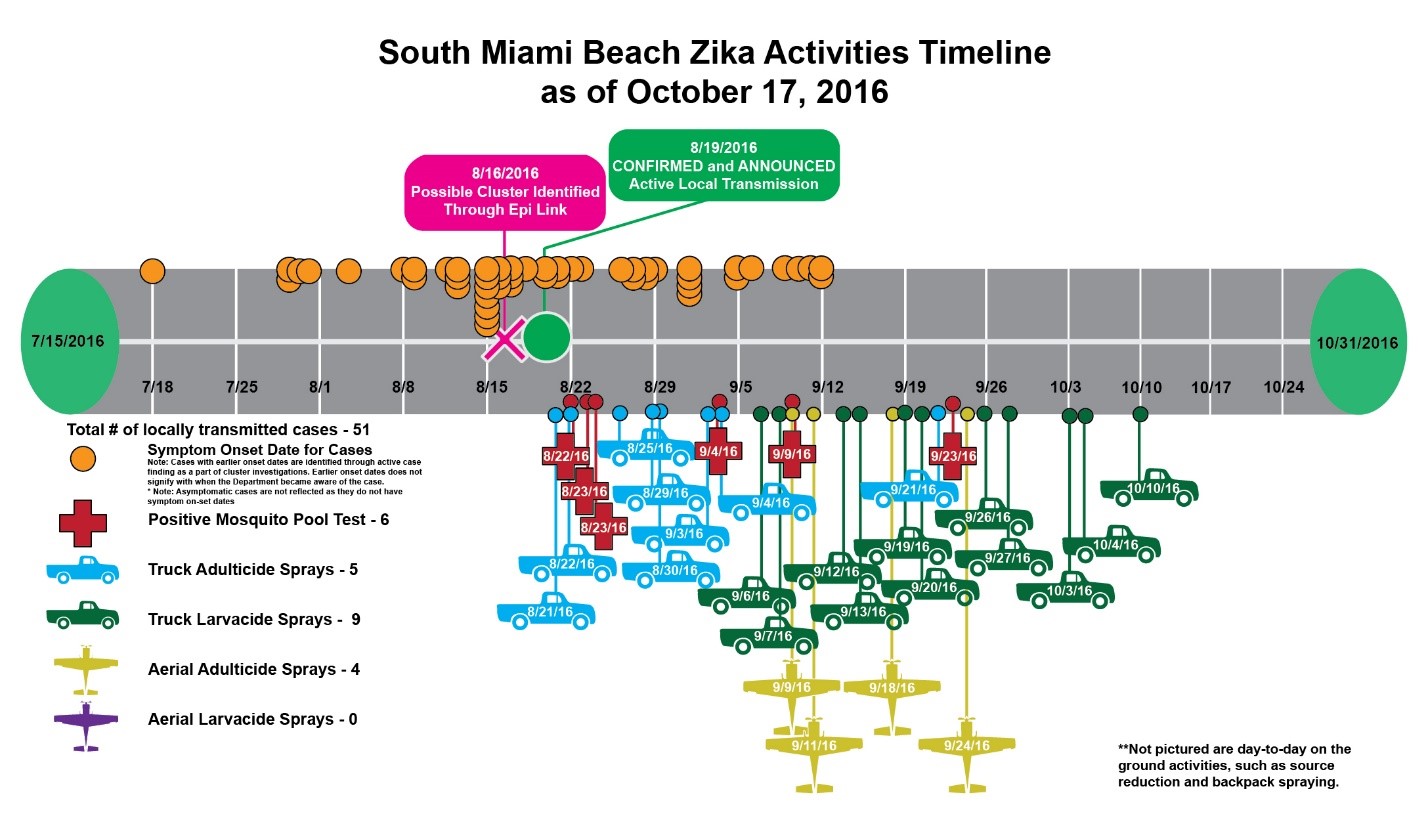
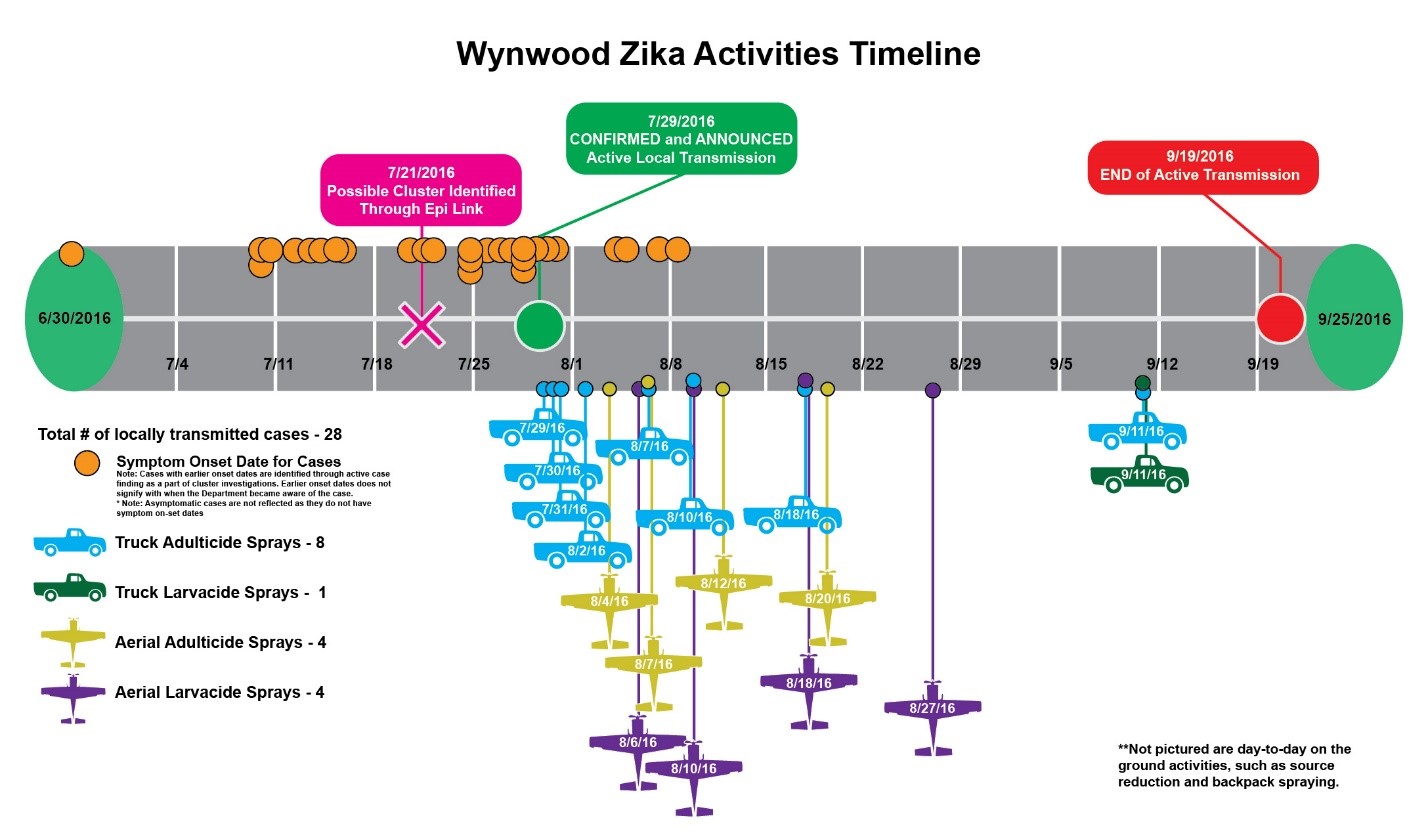
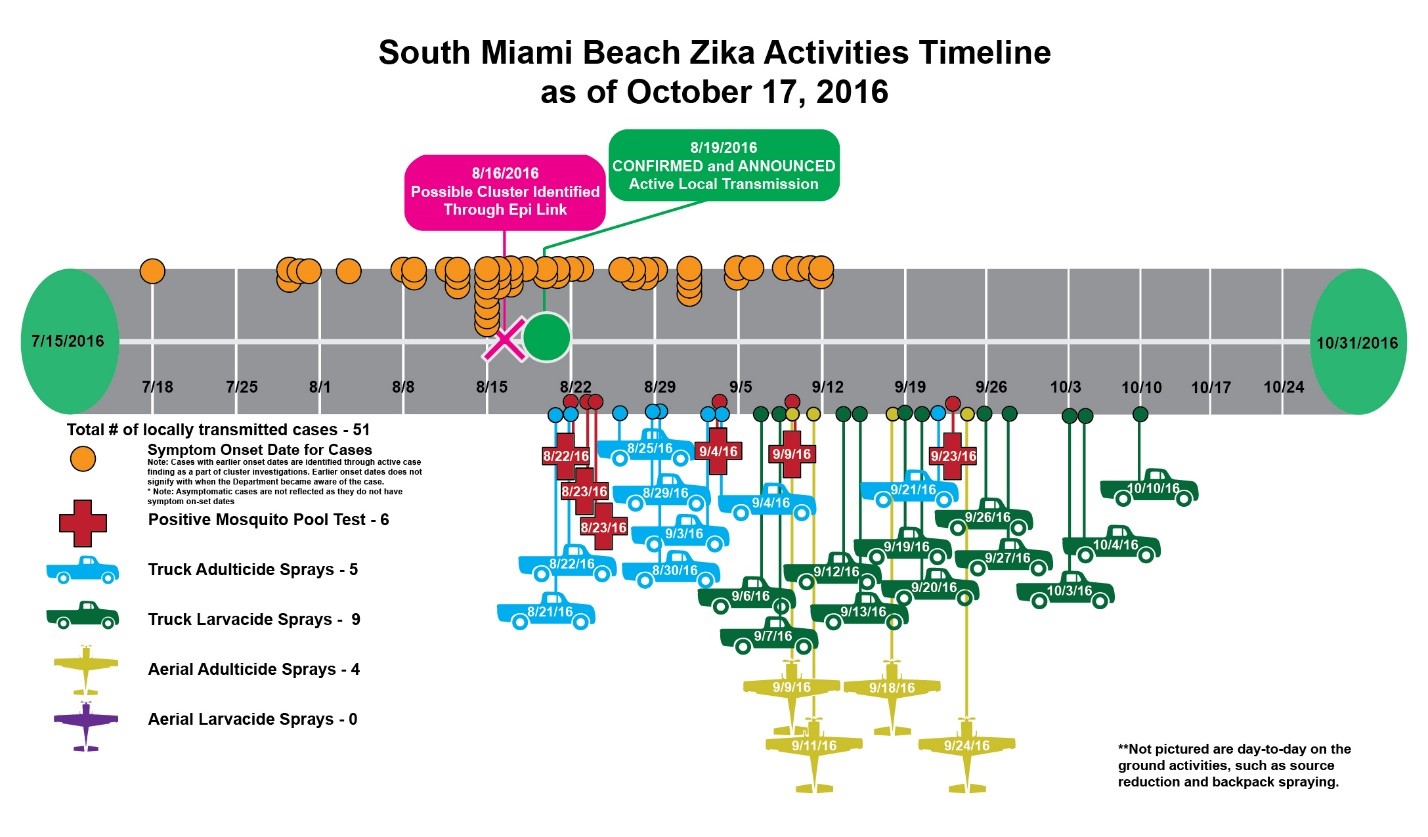
The timelines below are as of Oct. 13 and will be updated every Friday. Note: Asymptomatic cases are not reflected as they do not have symptom on-set dates.
click image above to enlarge
The department is currently conducting 10 active investigations. The department has closed 32 investigations. Information regarding the investigations can be found here. If investigations reveal additional areas of active transmission, the department will announce a defined area of concern.
The department has conducted Zika virus testing for more than 9,166 people statewide. Florida currently has the capacity to test 9,362 people for active Zika virus and 6,919 for Zika antibodies. At Governor Scott?s direction, all county health departments offer free Zika risk assessment and testing to pregnant women.
Florida?s small case clusters is not considered widespread transmission, however, pregnant women are advised to avoid non-essential travel to the impacted areas in Miami-Dade County (see maps below). If you are pregnant and must travel or if you live or work in the impacted area, protect yourself from mosquito bites by wearing insect repellent, long clothing and limiting your time outdoors.
According to CDC guidance, providers should consider testing all pregnant women with a history of travel to a Zika affected area for the virus. It is also recommended that all pregnant women who reside in or travel frequently to the area where active transmission is likely occurring be tested for Zika in the first and second trimester. Pregnant women in the identified area can contact their medical provider or their local county health department to be tested and receive a Zika prevention kit. CDC recommends that a pregnant woman with a history of Zika virus and her provider should consider additional ultrasounds. Additionally, the department is working closely with the Healthy Start Coalition of Miami-Dade County to identify pregnant women in the impacted areas to ensure they have access to resources and information to protect themselves. CDC recommends that a pregnant woman with a history of Zika virus and her provider should consider additional ultrasounds.
Pregnant women can contact their local county health department for Zika risk assessment and testing hours and information. A Zika risk assessment will be conducted by county health department staff and blood and/or urine samples may be collected and sent to labs for testing. It may take one to two weeks to receive results.
Florida has been monitoring pregnant women with evidence of Zika regardless of symptoms. The total number of pregnant women who have been or are being monitored is 106.
On Feb. 12, Governor Scott directed the State Surgeon General to activate a Zika Virus Information Hotline for current Florida residents and visitors, as well as anyone planning on traveling to Florida in the near future. The hotline, managed by the Department of Health, has assisted 6,917 callers since it launched. The number for the Zika Virus Information Hotline is 1-855-622-6735.
The department urges Floridians to drain standing water weekly, no matter how seemingly small. A couple drops of water in a bottle cap can be a breeding location for mosquitoes. Residents and visitors also need to use repellents when enjoying the Florida outdoors.
For more information on DOH action and federal guidance, please click here.
For resources and information on Zika virus, click here.
click image above to enlarge

http://www.floridahealth.gov/newsroom/2016/10/101716-zika-update.html
[/FONT]
 
[FONT=&quot]October 18, 2016[/FONT]
[h=2]Department of Health Daily Zika Update[/h] [FONT=&quot]Contact:
Communications Office
NewsMedia@flhealth.gov
(850) 245-4111
[/FONT]

[FONT=&quot]Tallahassee, Fla.?In an effort to keep Florida residents and visitors safe and aware about the status of the Zika virus, the department will issue a Zika virus update each week day. Updates will include a Zika case count by county and information to keep Floridians informed and prepared. In order to keep the public informed, the department has posted our investigation process here.[/FONT]
[FONT=&quot]There are six new travel related cases today with four in Broward County, one in Polk County and one involving a pregnant woman. Please visit our website to see the full list of travel-related cases.[/FONT]
[FONT=&quot]There are three new non-travel related cases today. All are in Miami-Dade County and are linked to the Miami Beach investigation.[/FONT]
[FONT=&quot]DOH continues door-to-door outreach and targeted testing in Miami-Dade County and mosquito abatement and reduction activities are also taking place around the locations that are being investigated. DOH believes ongoing transmission is only taking place within the identified areas in Miami-Dade County.[/FONT]
[FONT=&quot]One case does not mean ongoing active transmission is taking place. DOH conducts a thorough investigation by sampling close contacts and community members around each case to determine if additional people are infected. If DOH finds evidence that active transmission is occurring in an area, the media and the public will be notified.[/FONT]
[FONT=&quot]For a complete breakdown of non-travel and travel-related Zika infections to-date, please see below.[/FONT]
[TABLE="border: 1, cellpadding: 0, cellspacing: 0"]
[TR]
[TD="width: 397"] Infection Type
[/TD]
[TD="width: 382"] Infection Count
[/TD]
[/TR]
[TR]
[TD="width: 397"] Travel-Related Infections of Zika
[/TD]
[TD="width: 382"] 744
[/TD]
[/TR]
[TR]
[TD="width: 397"] Non-Travel Related Infections of Zika
[/TD]
[TD="width: 382"] 163
[/TD]
[/TR]
[TR]
[TD="width: 397"] Infections Involving Pregnant Women
[/TD]
[TD="width: 382"] 109
[/TD]
[/TR]
[TR]
[TD="width: 397"] Out of State Cases (not Florida Residents)
[/TD]
[TD="width: 382"] 19
[/TD]
[/TR]
[TR]
[TD="width: 397"] Undetermined
[/TD]
[TD="width: 382"] 5
[/TD]
[/TR]
[TR]
[TD="width: 397"] Total
[/TD]
[TD="width: 382"] 1,040
[/TD]
[/TR]
[/TABLE]
[FONT=&quot]The timelines below are as of Oct. 13 and will be updated every Friday. Note: Asymptomatic cases are not reflected as they do not have symptom on-set dates.[/FONT]
[FONT=&quot]click image above to enlarge[/FONT]
[FONT=&quot]click image above to enlarge[/FONT]
[FONT=&quot]click image above to enlarge[/FONT]
[FONT=&quot]The department is currently conducting 9 active investigations. The department has closed 33 investigations. Information regarding the investigations can be found here. If investigations reveal additional areas of active transmission, the department will announce a defined area of concern. [/FONT]
[FONT=&quot]The department has conducted Zika virus testing for more than 9,206 people statewide. Florida currently has the capacity to test 9,260 people for active Zika virus and 6,846 for Zika antibodies. At Governor Scott?s direction, all county health departments offer free Zika risk assessment and testing to pregnant women.[/FONT]
[FONT=&quot]Florida?s small case clusters is not considered widespread transmission, however, pregnant women are advised to avoid non-essential travel to the impacted areas in Miami-Dade County (see maps below). If you are pregnant and must travel or if you live or work in the impacted area, protect yourself from mosquito bites by wearing insect repellent, long clothing and limiting your time outdoors. [/FONT]
[FONT=&quot]According to CDC guidance, providers should consider testing all pregnant women with a history of travel to a Zika affected area for the virus. It is also recommended that all pregnant women who reside in or travel frequently to the area where active transmission is likely occurring be tested for Zika in the first and second trimester. Pregnant women in the identified area can contact their medical provider or their local county health department to be tested and receive a Zika prevention kit. CDC recommends that a pregnant woman with a history of Zika virus and her provider should consider additional ultrasounds. Additionally, the department is working closely with the Healthy Start Coalition of Miami-Dade County to identify pregnant women in the impacted areas to ensure they have access to resources and information to protect themselves. CDC recommends that a pregnant woman with a history of Zika virus and her provider should consider additional ultrasounds. [/FONT]
[FONT=&quot]Pregnant women can contact their local county health department for Zika risk assessment and testing hours and information. A Zika risk assessment will be conducted by county health department staff and blood and/or urine samples may be collected and sent to labs for testing. It may take one to two weeks to receive results.[/FONT]
[FONT=&quot]Florida has been monitoring pregnant women with evidence of Zika regardless of symptoms. The total number of pregnant women who have been or are being monitored is 106.[/FONT]
[FONT=&quot]On Feb. 12, Governor Scott directed the State Surgeon General to activate a Zika Virus Information Hotline for current Florida residents and visitors, as well as anyone planning on traveling to Florida in the near future. The hotline, managed by the Department of Health, has assisted 6,950 callers since it launched. The number for the Zika Virus Information Hotline is 1-855-622-6735.[/FONT]
[FONT=&quot]The department urges Floridians to drain standing water weekly, no matter how seemingly small. A couple drops of water in a bottle cap can be a breeding location for mosquitoes. Residents and visitors also need to use repellents when enjoying the Florida outdoors.[/FONT]
[FONT=&quot]For more information on DOH action and federal guidance, please click here.[/FONT]
[FONT=&quot]For resources and information on Zika virus, click here.[/FONT]
[FONT=&quot]click image above to enlarge[/FONT]
[FONT=&quot]click image above to enlarge

http://www.floridahealth.gov/newsroom/2016/10/101816-zika-update.html

[/FONT]
 
[FONT=&quot]Ocotber 19, 2016[/FONT]
[h=2]Department of Health Daily Zika Update[/h] [FONT=&quot]Contact:
Communications Office
NewsMedia@flhealth.gov
(850) 245-4111
[/FONT]

[FONT=&quot]Tallahassee, Fla.?In an effort to keep Florida residents and visitors safe and aware about the status of the Zika virus, the department will issue a Zika virus update each week day. Updates will include a Zika case count by county and information to keep Floridians informed and prepared. In order to keep the public informed, the department has posted our investigation process here.[/FONT]
[FONT=&quot]There are two travel related cases today with one in Sarasota County and one involving a pregnant woman. Please visit ourwebsite to see the full list of travel-related cases.[/FONT]
[FONT=&quot]There are two new non-travel related cases today. Both are in Miami-Dade County and are linked to the Miami Beach investigation.[/FONT]
[FONT=&quot]DOH continues door-to-door outreach and targeted testing in Miami-Dade County and mosquito abatement and reduction activities are also taking place around the locations that are being investigated. DOH believes ongoing transmission is only taking place within the identified areas in Miami-Dade County.[/FONT]
[FONT=&quot]One case does not mean ongoing active transmission is taking place. DOH conducts a thorough investigation by sampling close contacts and community members around each case to determine if additional people are infected. If DOH finds evidence that active transmission is occurring in an area, the media and the public will be notified.[/FONT]
[FONT=&quot]For a complete breakdown of non-travel and travel-related Zika infections to-date, please see below.[/FONT]
[TABLE="border: 1, cellpadding: 0, cellspacing: 0"]
[TR]
[TD="width: 397"] Infection Type
[/TD]
[TD="width: 382"] Infection Count
[/TD]
[/TR]
[TR]
[TD="width: 397"] Travel-Related Infections of Zika
[/TD]
[TD="width: 382"] 745
[/TD]
[/TR]
[TR]
[TD="width: 397"] Non-Travel Related Infections of Zika
[/TD]
[TD="width: 382"] 165
[/TD]
[/TR]
[TR]
[TD="width: 397"] Infections Involving Pregnant Women
[/TD]
[TD="width: 382"] 110
[/TD]
[/TR]
[TR]
[TD="width: 397"] Out of State Cases (not Florida Residents)
[/TD]
[TD="width: 382"] 19
[/TD]
[/TR]
[TR]
[TD="width: 397"] Undetermined
[/TD]
[TD="width: 382"] 5
[/TD]
[/TR]
[TR]
[TD="width: 397"] Total
[/TD]
[TD="width: 382"] 1,044
[/TD]
[/TR]
[/TABLE]
[FONT=&quot]The timelines below are as of Oct. 13 and will be updated every Friday. Note: Asymptomatic cases are not reflected as they do not have symptom on-set dates.[/FONT]
[FONT=&quot]click image above to enlarge[/FONT]
[FONT=&quot]click image above to enlarge[/FONT]
[FONT=&quot]click image above to enlarge[/FONT]
[FONT=&quot]The department is currently conducting 9 active investigations. The department has closed 33 investigations. Information regarding the investigations can be found here. If investigations reveal additional areas of active transmission, the department will announce a defined area of concern. [/FONT]
[FONT=&quot]The department has conducted Zika virus testing for more than 9,241 people statewide. Florida currently has the capacity to test 9,133 people for active Zika virus and 6,775 for Zika antibodies. At Governor Scott?s direction, all county health departments offer free Zika risk assessment and testing to pregnant women.[/FONT]
[FONT=&quot]Florida?s small case clusters is not considered widespread transmission, however, pregnant women are advised to avoid non-essential travel to the impacted areas in Miami-Dade County (see maps below). If you are pregnant and must travel or if you live or work in the impacted area, protect yourself from mosquito bites by wearing insect repellent, long clothing and limiting your time outdoors. [/FONT]
[FONT=&quot]According to CDC guidance, providers should consider testing all pregnant women with a history of travel to a Zika affected area for the virus. It is also recommended that all pregnant women who reside in or travel frequently to the area where active transmission is likely occurring be tested for Zika in the first and second trimester. Pregnant women in the identified area can contact their medical provider or their local county health department to be tested and receive a Zika prevention kit. CDC recommends that a pregnant woman with a history of Zika virus and her provider should consider additional ultrasounds. Additionally, the department is working closely with the Healthy Start Coalition of Miami-Dade County to identify pregnant women in the impacted areas to ensure they have access to resources and information to protect themselves. CDC recommends that a pregnant woman with a history of Zika virus and her provider should consider additional ultrasounds. [/FONT]
[FONT=&quot]Pregnant women can contact their local county health department for Zika risk assessment and testing hours and information. A Zika risk assessment will be conducted by county health department staff and blood and/or urine samples may be collected and sent to labs for testing. It may take one to two weeks to receive results.[/FONT]
[FONT=&quot]Florida has been monitoring pregnant women with evidence of Zika regardless of symptoms. The total number of pregnant women who have been or are being monitored is 106.[/FONT]
[FONT=&quot]On Feb. 12, Governor Scott directed the State Surgeon General to activate a Zika Virus Information Hotline for current Florida residents and visitors, as well as anyone planning on traveling to Florida in the near future. The hotline, managed by the Department of Health, has assisted more than 6,950 callers since it launched. The number for the Zika Virus Information Hotline is 1-855-622-6735.[/FONT]
[FONT=&quot]The department urges Floridians to drain standing water weekly, no matter how seemingly small. A couple drops of water in a bottle cap can be a breeding location for mosquitoes. Residents and visitors also need to use repellents when enjoying the Florida outdoors.[/FONT]
[FONT=&quot]For more information on DOH action and federal guidance, please click here.[/FONT]
[FONT=&quot]For resources and information on Zika virus, click here.[/FONT]
[FONT=&quot]click image above to enlarge[/FONT]
[FONT=&quot]click image above to enlarge

http://www.floridahealth.gov/newsroom/2016/10/101916-zika-update.html
[/FONT]
 
[FONT=&quot]October 20, 2016[/FONT]
[h=2]Department of Health Daily Zika Update[/h] [FONT=&quot]Contact:
Communications Office
NewsMedia@flhealth.gov
(850) 245-4111
[/FONT]

[FONT=&quot]Tallahassee, Fla.?In an effort to keep Florida residents and visitors safe and aware about the status of the Zika virus, the department will issue a Zika virus update each week day. Updates will include a Zika case count by county and information to keep Floridians informed and prepared. In order to keep the public informed, the department has posted our investigation process here.[/FONT]
[FONT=&quot]There are three new travel related cases today with two in Miami-Dade County and one involving a pregnant woman. Please visit our website to see the full list of travel-related cases.[/FONT]
[FONT=&quot]There is one new non-travel related case today involving a Palm Beach County resident. The case had recent travel to Miami and the department is investigating to determine the location of exposure.[/FONT]
[FONT=&quot]DOH continues door-to-door outreach and targeted testing in Miami-Dade County and mosquito abatement and reduction activities are also taking place around the locations that are being investigated. DOH believes ongoing transmission is only taking place within the identified areas in Miami-Dade County.[/FONT]
[FONT=&quot]One case does not mean ongoing active transmission is taking place. DOH conducts a thorough investigation by sampling close contacts and community members around each case to determine if additional people are infected. If DOH finds evidence that active transmission is occurring in an area, the media and the public will be notified.[/FONT]
[FONT=&quot]For a complete breakdown of non-travel and travel-related Zika infections to-date, please see below.[/FONT]
[TABLE="border: 1, cellpadding: 0, cellspacing: 0"]
[TR]
[TD="width: 397"] Infection Type
[/TD]
[TD="width: 382"] Infection Count
[/TD]
[/TR]
[TR]
[TD="width: 397"] Travel-Related Infections of Zika
[/TD]
[TD="width: 382"] 747
[/TD]
[/TR]
[TR]
[TD="width: 397"] Non-Travel Related Infections of Zika
[/TD]
[TD="width: 382"] 166
[/TD]
[/TR]
[TR]
[TD="width: 397"] Infections Involving Pregnant Women
[/TD]
[TD="width: 382"] 111
[/TD]
[/TR]
[TR]
[TD="width: 397"] Out of State Cases (not Florida Residents)
[/TD]
[TD="width: 382"] 19
[/TD]
[/TR]
[TR]
[TD="width: 397"] Undetermined
[/TD]
[TD="width: 382"] 5
[/TD]
[/TR]
[TR]
[TD="width: 397"] Total
[/TD]
[TD="width: 382"] 1,048
[/TD]
[/TR]
[/TABLE]
[FONT=&quot]The timelines below are as of Oct. 13 and will be updated every Friday. Note: Asymptomatic cases are not reflected as they do not have symptom on-set dates.[/FONT]
[FONT=&quot]click image above to enlarge[/FONT]
[FONT=&quot]click image above to enlarge[/FONT]
[FONT=&quot]click image above to enlarge[/FONT]
[FONT=&quot]The department is currently conducting 10 active investigations. The department has closed 33 investigations. Information regarding the investigations can be found here. If investigations reveal additional areas of active transmission, the department will announce a defined area of concern. [/FONT]
[FONT=&quot]The department has conducted Zika virus testing for more than 9,283 people statewide. Florida currently has the capacity to test 8,967 people for active Zika virus and 6,720 for Zika antibodies. At Governor Scott?s direction, all county health departments offer free Zika risk assessment and testing to pregnant women.[/FONT]
[FONT=&quot]Florida?s small case clusters is not considered widespread transmission, however, pregnant women are advised to avoid non-essential travel to the impacted areas in Miami-Dade County (see maps below). If you are pregnant and must travel or if you live or work in the impacted area, protect yourself from mosquito bites by wearing insect repellent, long clothing and limiting your time outdoors. [/FONT]
[FONT=&quot]According to CDC guidance, providers should consider testing all pregnant women with a history of travel to a Zika affected area for the virus. It is also recommended that all pregnant women who reside in or travel frequently to the area where active transmission is likely occurring be tested for Zika in the first and second trimester. Pregnant women in the identified area can contact their medical provider or their local county health department to be tested and receive a Zika prevention kit. CDC recommends that a pregnant woman with a history of Zika virus and her provider should consider additional ultrasounds. Additionally, the department is working closely with the Healthy Start Coalition of Miami-Dade County to identify pregnant women in the impacted areas to ensure they have access to resources and information to protect themselves. CDC recommends that a pregnant woman with a history of Zika virus and her provider should consider additional ultrasounds. [/FONT]
[FONT=&quot]Pregnant women can contact their local county health department for Zika risk assessment and testing hours and information. A Zika risk assessment will be conducted by county health department staff and blood and/or urine samples may be collected and sent to labs for testing. It may take one to two weeks to receive results.[/FONT]
[FONT=&quot]Florida has been monitoring pregnant women with evidence of Zika regardless of symptoms. The total number of pregnant women who have been or are being monitored is 106.[/FONT]
[FONT=&quot]On Feb. 12, Governor Scott directed the State Surgeon General to activate a Zika Virus Information Hotline for current Florida residents and visitors, as well as anyone planning on traveling to Florida in the near future. The hotline, managed by the Department of Health, has assisted more than 6,986 callers since it launched. The number for the Zika Virus Information Hotline is 1-855-622-6735.[/FONT]
[FONT=&quot]The department urges Floridians to drain standing water weekly, no matter how seemingly small. A couple drops of water in a bottle cap can be a breeding location for mosquitoes. Residents and visitors also need to use repellents when enjoying the Florida outdoors.[/FONT]
[FONT=&quot]For more information on DOH action and federal guidance, please click here.[/FONT]
[FONT=&quot]For resources and information on Zika virus, click here.[/FONT]
[FONT=&quot]click image above to enlarge[/FONT]
[FONT=&quot]click image above to enlarge

http://www.floridahealth.gov/newsroom/2016/10/102016-zika-update.html
[/FONT]
 
Second Miami Beach police officer contracts Zika virus

Second Miami Beach police officer contracts Zika virus
...

By Michelle Ganley - Online Editor
Posted: 8:49 PM, October 24, 2016

MIAMI -...

The officer, whose name has not been released, has been with the Miami Beach Police Department for more than 20 years. He was part of the police department?s motorcycle unit, which patrols the south end and spends a lot of time outdoors, but within the past few weeks, the officer transferred to another unit as he prepares to retire.

The Miami Shores man was showing symptoms, including body aches, so he got tested for Zika within the last week.
...
http://www.local10.com/health/zika-virus/second-miami-beach-officer-contracts-zika-virus
 
[FONT=&quot]October 21, 2016[/FONT]
[h=2]Department of Health Daily Zika Update[/h] [FONT=&quot]Contact:
Communications Office
NewsMedia@flhealth.gov
(850) 245-4111
[/FONT]

[FONT=&quot]Tallahassee, Fla.?In an effort to keep Florida residents and visitors safe and aware about the status of the Zika virus, the department will issue a Zika virus update each week day. Updates will include a Zika case count by county and information to keep Floridians informed and prepared. In order to keep the public informed, the department has posted our investigation process here.[/FONT]
[FONT=&quot]There are no new travel related cases today. Please visit ourwebsite to see the full list of travel-related cases.[/FONT]
[FONT=&quot]There are three new non-travel related cases today in Miami-Dade County. One case is linked to the Miami Beach investigation, and the department is investigating the other two cases to determine where exposure occurred.[/FONT]
[FONT=&quot]DOH continues door-to-door outreach and targeted testing in Miami-Dade County and mosquito abatement and reduction activities are also taking place around the locations that are being investigated. DOH believes ongoing transmission is only taking place within the identified areas in Miami-Dade County.[/FONT]
[FONT=&quot]One case does not mean ongoing active transmission is taking place. DOH conducts a thorough investigation by sampling close contacts and community members around each case to determine if additional people are infected. If DOH finds evidence that active transmission is occurring in an area, the media and the public will be notified.[/FONT]
[FONT=&quot]For a complete breakdown of non-travel and travel-related Zika infections to-date, please see below.[/FONT]
[TABLE="border: 1, cellpadding: 0, cellspacing: 0"]
[TR]
[TD="width: 397"] Infection Type
[/TD]
[TD="width: 382"] Infection Count
[/TD]
[/TR]
[TR]
[TD="width: 397"] Travel-Related Infections of Zika
[/TD]
[TD="width: 382"] 747
[/TD]
[/TR]
[TR]
[TD="width: 397"] Non-Travel Related Infections of Zika
[/TD]
[TD="width: 382"] 169
[/TD]
[/TR]
[TR]
[TD="width: 397"] Infections Involving Pregnant Women
[/TD]
[TD="width: 382"] 111
[/TD]
[/TR]
[TR]
[TD="width: 397"] Out of State Cases (not Florida Residents)
[/TD]
[TD="width: 382"] 19
[/TD]
[/TR]
[TR]
[TD="width: 397"] Undetermined
[/TD]
[TD="width: 382"] 5
[/TD]
[/TR]
[TR]
[TD="width: 397"] Total
[/TD]
[TD="width: 382"] 1,051
[/TD]
[/TR]
[/TABLE]
[FONT=&quot]The timelines below are as of Oct. 21 and will be updated every Friday. Note: Asymptomatic cases are not reflected as they do not have symptom on-set dates.[/FONT]
[FONT=&quot]click image above to enlarge[/FONT]
[FONT=&quot]click image above to enlarge[/FONT]
[FONT=&quot]click image above to enlarge[/FONT]
[FONT=&quot] [/FONT]
[FONT=&quot]The department is currently conducting 11 active investigations. The department has closed 33 investigations. Information regarding the investigations can be found here. If investigations reveal additional areas of active transmission, the department will announce a defined area of concern. [/FONT]
[FONT=&quot]The department has conducted Zika virus testing for more than 9,309 people statewide. Florida currently has the capacity to test 8,810 people for active Zika virus and 6,667 for Zika antibodies. At Governor Scott?s direction, all county health departments offer free Zika risk assessment and testing to pregnant women.[/FONT]
[FONT=&quot]Florida?s small case clusters is not considered widespread transmission, however, pregnant women are advised to avoid non-essential travel to the impacted areas in Miami-Dade County (see maps below). If you are pregnant and must travel or if you live or work in the impacted area, protect yourself from mosquito bites by wearing insect repellent, long clothing and limiting your time outdoors. [/FONT]
[FONT=&quot]According to CDC guidance, providers should consider testing all pregnant women with a history of travel to a Zika affected area for the virus. It is also recommended that all pregnant women who reside in or travel frequently to the area where active transmission is likely occurring be tested for Zika in the first and second trimester. Pregnant women in the identified area can contact their medical provider or their local county health department to be tested and receive a Zika prevention kit. CDC recommends that a pregnant woman with a history of Zika virus and her provider should consider additional ultrasounds. Additionally, the department is working closely with the Healthy Start Coalition of Miami-Dade County to identify pregnant women in the impacted areas to ensure they have access to resources and information to protect themselves. CDC recommends that a pregnant woman with a history of Zika virus and her provider should consider additional ultrasounds. [/FONT]
[FONT=&quot]Pregnant women can contact their local county health department for Zika risk assessment and testing hours and information. A Zika risk assessment will be conducted by county health department staff and blood and/or urine samples may be collected and sent to labs for testing. It may take one to two weeks to receive results.[/FONT]
[FONT=&quot]Florida has been monitoring pregnant women with evidence of Zika regardless of symptoms. The total number of pregnant women who have been or are being monitored is 106.[/FONT]
[FONT=&quot]On Feb. 12, Governor Scott directed the State Surgeon General to activate a Zika Virus Information Hotline for current Florida residents and visitors, as well as anyone planning on traveling to Florida in the near future. The hotline, managed by the Department of Health, has assisted more than 7,021 callers since it launched. The number for the Zika Virus Information Hotline is 1-855-622-6735.[/FONT]
[FONT=&quot]The department urges Floridians to drain standing water weekly, no matter how seemingly small. A couple drops of water in a bottle cap can be a breeding location for mosquitoes. Residents and visitors also need to use repellents when enjoying the Florida outdoors.[/FONT]
[FONT=&quot]For more information on DOH action and federal guidance, please click here.[/FONT]
[FONT=&quot]For resources and information on Zika virus, click here.[/FONT]
[FONT=&quot]click image above to enlarge[/FONT]
[FONT=&quot]click image above to enlarge

http://www.floridahealth.gov/newsroom/2016/10/102116-zika-update.html
[/FONT]
 
[FONT=&quot]October 24, 2016[/FONT]
[h=2]Department of Health Daily Zika Update[/h] [FONT=&quot]Contact:
Communications Office
NewsMedia@flhealth.gov
(850) 245-4111
[/FONT]

[FONT=&quot]Tallahassee, Fla.?In an effort to keep Florida residents and visitors safe and aware about the status of the Zika virus, the department will issue a Zika virus update each week day. Updates will include a Zika case count by county and information to keep Floridians informed and prepared. In order to keep the public informed, the department has posted our investigation process here.[/FONT]
[FONT=&quot]There are seven new travel related cases today with three in Miami-Dade, two in Broward and two involving pregnant women. Please visit our website to see the full list of travel-related cases.[/FONT]
[FONT=&quot]There are no new non-travel related cases today.[/FONT]
[FONT=&quot]DOH continues door-to-door outreach and targeted testing in Miami-Dade County and mosquito abatement and reduction activities are also taking place around the locations that are being investigated. DOH believes ongoing transmission is only taking place within the identified areas in Miami-Dade County.[/FONT]
[FONT=&quot]One case does not mean ongoing active transmission is taking place. DOH conducts a thorough investigation by sampling close contacts and community members around each case to determine if additional people are infected. If DOH finds evidence that active transmission is occurring in an area, the media and the public will be notified.[/FONT]
[FONT=&quot]For a complete breakdown of non-travel and travel-related Zika infections to-date, please see below.[/FONT]
[TABLE="border: 1, cellpadding: 0, cellspacing: 0"]
[TR]
[TD="width: 397"] Infection Type
[/TD]
[TD="width: 382"] Infection Count
[/TD]
[/TR]
[TR]
[TD="width: 397"] Travel-Related Infections of Zika
[/TD]
[TD="width: 382"] 752
[/TD]
[/TR]
[TR]
[TD="width: 397"] Non-Travel Related Infections of Zika
[/TD]
[TD="width: 382"] 169
[/TD]
[/TR]
[TR]
[TD="width: 397"] Infections Involving Pregnant Women
[/TD]
[TD="width: 382"] 113
[/TD]
[/TR]
[TR]
[TD="width: 397"] Out of State Cases (not Florida Residents)
[/TD]
[TD="width: 382"] 19
[/TD]
[/TR]
[TR]
[TD="width: 397"] Undetermined
[/TD]
[TD="width: 382"] 5
[/TD]
[/TR]
[TR]
[TD="width: 397"] Total
[/TD]
[TD="width: 382"] 1,058
[/TD]
[/TR]
[/TABLE]
[FONT=&quot]The timelines below are as of Oct. 21 and will be updated every Friday. Note: Asymptomatic cases are not reflected as they do not have symptom on-set dates.[/FONT]
[FONT=&quot]click image above to enlarge[/FONT]
[FONT=&quot]click image above to enlarge[/FONT]
[FONT=&quot]click image above to enlarge[/FONT]
[FONT=&quot]The department is currently conducting 11 active investigations. The department has closed 33 investigations. Information regarding the investigations can be found here. If investigations reveal additional areas of active transmission, the department will announce a defined area of concern. [/FONT]
[FONT=&quot]The department has conducted Zika virus testing for more than 9,430 people statewide. Florida currently has the capacity to test 8,689 people for active Zika virus and 6,667 for Zika antibodies. At Governor Scott?s direction, all county health departments offer free Zika risk assessment and testing to pregnant women.[/FONT]
[FONT=&quot]Florida?s small case clusters is not considered widespread transmission, however, pregnant women are advised to avoid non-essential travel to the impacted areas in Miami-Dade County (see maps below). If you are pregnant and must travel or if you live or work in the impacted area, protect yourself from mosquito bites by wearing insect repellent, long clothing and limiting your time outdoors. [/FONT]
[FONT=&quot]According to CDC guidance, providers should consider testing all pregnant women with a history of travel to a Zika affected area for the virus. It is also recommended that all pregnant women who reside in or travel frequently to the area where active transmission is likely occurring be tested for Zika in the first and second trimester. Pregnant women in the identified area can contact their medical provider or their local county health department to be tested and receive a Zika prevention kit. CDC recommends that a pregnant woman with a history of Zika virus and her provider should consider additional ultrasounds. Additionally, the department is working closely with the Healthy Start Coalition of Miami-Dade County to identify pregnant women in the impacted areas to ensure they have access to resources and information to protect themselves. CDC recommends that a pregnant woman with a history of Zika virus and her provider should consider additional ultrasounds. [/FONT]
[FONT=&quot]Pregnant women can contact their local county health department for Zika risk assessment and testing hours and information. A Zika risk assessment will be conducted by county health department staff and blood and/or urine samples may be collected and sent to labs for testing. It may take one to two weeks to receive results.[/FONT]
[FONT=&quot]Florida has been monitoring pregnant women with evidence of Zika regardless of symptoms. The total number of pregnant women who have been or are being monitored is 113.[/FONT]
[FONT=&quot]On Feb. 12, Governor Scott directed the State Surgeon General to activate a Zika Virus Information Hotline for current Florida residents and visitors, as well as anyone planning on traveling to Florida in the near future. The hotline, managed by the Department of Health, has assisted more than 6,824 callers since it launched. The number for the Zika Virus Information Hotline is 1-855-622-6735.[/FONT]
[FONT=&quot]The department urges Floridians to drain standing water weekly, no matter how seemingly small. A couple drops of water in a bottle cap can be a breeding location for mosquitoes. Residents and visitors also need to use repellents when enjoying the Florida outdoors.[/FONT]
[FONT=&quot]For more information on DOH action and federal guidance, please click here.[/FONT]
[FONT=&quot]For resources and information on Zika virus, click here.[/FONT]
[FONT=&quot]click image above to enlarge[/FONT]
[FONT=&quot]click image above to enlarge

http://www.floridahealth.gov/newsroom/2016/10/102416-zika-update.html
[/FONT]
 
[FONT=&quot]October 25, 2016[/FONT]
[h=2]Department of Health Daily Zika Update[/h] [FONT=&quot]Contact:
Communications Office
NewsMedia@flhealth.gov
(850) 245-4111
[/FONT]

[FONT=&quot]Tallahassee, Fla.?In an effort to keep Florida residents and visitors safe and aware about the status of the Zika virus, the department will issue a Zika virus update each week day. Updates will include a Zika case count by county and information to keep Floridians informed and prepared. In order to keep the public informed, the department has posted our investigation process here.[/FONT]
[FONT=&quot]There are four new travel related cases today with one in Miami-Dade, one in Orange, one in Volusia and one involving a pregnant woman. Please visit our website to see the full list of travel-related cases.[/FONT]
[FONT=&quot]There are two new non-travel related cases today ? one is associated with the Miami Beach investigation and the other is a Miami-Dade County resident and the department is investigating where exposure occured.[/FONT]
[FONT=&quot]DOH continues door-to-door outreach and targeted testing in Miami-Dade County and mosquito abatement and reduction activities are also taking place around the locations that are being investigated. DOH believes ongoing transmission is only taking place within the identified areas in Miami-Dade County.[/FONT]
[FONT=&quot]One case does not mean ongoing active transmission is taking place. DOH conducts a thorough investigation by sampling close contacts and community members around each case to determine if additional people are infected. If DOH finds evidence that active transmission is occurring in an area, the media and the public will be notified.[/FONT]
[FONT=&quot]For a complete breakdown of non-travel and travel-related Zika infections to-date, please see below.[/FONT]
[TABLE="border: 1, cellpadding: 0, cellspacing: 0"]
[TR]
[TD="width: 397"] Infection Type
[/TD]
[TD="width: 382"] Infection Count
[/TD]
[/TR]
[TR]
[TD="width: 397"] Travel-Related Infections of Zika
[/TD]
[TD="width: 382"] 755
[/TD]
[/TR]
[TR]
[TD="width: 397"] Non-Travel Related Infections of Zika
[/TD]
[TD="width: 382"] 171
[/TD]
[/TR]
[TR]
[TD="width: 397"] Infections Involving Pregnant Women
[/TD]
[TD="width: 382"] 114
[/TD]
[/TR]
[TR]
[TD="width: 397"] Out of State Cases (not Florida Residents)
[/TD]
[TD="width: 382"] 19
[/TD]
[/TR]
[TR]
[TD="width: 397"] Undetermined
[/TD]
[TD="width: 382"] 5
[/TD]
[/TR]
[TR]
[TD="width: 397"] Total
[/TD]
[TD="width: 382"] 1,064
[/TD]
[/TR]
[/TABLE]
[FONT=&quot]The timelines below are as of Oct. 21 and will be updated every Friday. Note: Asymptomatic cases are not reflected as they do not have symptom on-set dates.[/FONT]
[FONT=&quot]click image above to enlarge[/FONT]
[FONT=&quot]click image above to enlarge[/FONT]
[FONT=&quot]click image above to enlarge[/FONT]
[FONT=&quot] [/FONT]
[FONT=&quot] [/FONT]
[FONT=&quot]The department is currently conducting 11 active investigations. The department has closed 33 investigations. Information regarding the investigations can be found here. If investigations reveal additional areas of active transmission, the department will announce a defined area of concern. [/FONT]
[FONT=&quot]The department has conducted Zika virus testing for more than 9,470 people statewide. Florida currently has the capacity to test 8,524 people for active Zika virus and 6,524 for Zika antibodies. At Governor Scott?s direction, all county health departments offer free Zika risk assessment and testing to pregnant women.[/FONT]
[FONT=&quot]Florida?s small case clusters is not considered widespread transmission, however, pregnant women are advised to avoid non-essential travel to the impacted areas in Miami-Dade County (see maps below). If you are pregnant and must travel or if you live or work in the impacted area, protect yourself from mosquito bites by wearing insect repellent, long clothing and limiting your time outdoors. [/FONT]
[FONT=&quot]According to CDC guidance, providers should consider testing all pregnant women with a history of travel to a Zika affected area for the virus. It is also recommended that all pregnant women who reside in or travel frequently to the area where active transmission is likely occurring be tested for Zika in the first and second trimester. Pregnant women in the identified area can contact their medical provider or their local county health department to be tested and receive a Zika prevention kit. CDC recommends that a pregnant woman with a history of Zika virus and her provider should consider additional ultrasounds. Additionally, the department is working closely with the Healthy Start Coalition of Miami-Dade County to identify pregnant women in the impacted areas to ensure they have access to resources and information to protect themselves. CDC recommends that a pregnant woman with a history of Zika virus and her provider should consider additional ultrasounds. [/FONT]
[FONT=&quot]Pregnant women can contact their local county health department for Zika risk assessment and testing hours and information. A Zika risk assessment will be conducted by county health department staff and blood and/or urine samples may be collected and sent to labs for testing. It may take one to two weeks to receive results.[/FONT]
[FONT=&quot]Florida has been monitoring pregnant women with evidence of Zika regardless of symptoms. The total number of pregnant women who have been or are being monitored is 114.[/FONT]
[FONT=&quot]On Feb. 12, Governor Scott directed the State Surgeon General to activate a Zika Virus Information Hotline for current Florida residents and visitors, as well as anyone planning on traveling to Florida in the near future. The hotline, managed by the Department of Health, has assisted more than 6,864 callers since it launched. The number for the Zika Virus Information Hotline is 1-855-622-6735.[/FONT]
[FONT=&quot]The department urges Floridians to drain standing water weekly, no matter how seemingly small. A couple drops of water in a bottle cap can be a breeding location for mosquitoes. Residents and visitors also need to use repellents when enjoying the Florida outdoors.[/FONT]
[FONT=&quot]For more information on DOH action and federal guidance, please click here.[/FONT]
[FONT=&quot]For resources and information on Zika virus, click here.[/FONT]
[FONT=&quot]click image above to enlarge[/FONT]
[FONT=&quot]click image above to enlarge

http://www.floridahealth.gov/newsroom/2016/10/102516-zika-update.html
[/FONT]
 
Back
Top Bottom