• FluTrackers.com Inc. does not provide medical advice. Information on this web site is collected from various internet resources, and the FluTrackers board of directors makes no warranty to the safety, efficacy, correctness or completeness of the information posted on this site by any author or poster. The information collated here is for instructional and/or discussion purposes only and is NOT intended to diagnose or treat any disease, illness, or other medical condition. Every individual reader or poster should seek advice from their personal physician/healthcare practitioner before considering or using any interventions that are discussed on this website. By continuing to access this website you agree to consult your personal physican before using any interventions posted on this website, and you agree to hold harmless FluTrackers.com Inc., the board of directors, the members, and all authors and posters for any effects from use of any medication, supplement, vitamin or other substance, device, intervention, etc. mentioned in posts on this website, or other internet venues referenced in posts on this website.
  • We are not asking for any donations. Do not donate to any entity who says they are raising funds for us.

Florida - Zika tracking

Florida's Zika Image Problem

Florida?s Governor Rick Scott stood beside local business owners earlier this week and declared triumph in Wynwood. The small neighborhood north of Miami had been the first place in the continental United States where mosquito-borne Zika was spread, and the Centers for Disease Control and Prevention had told people to stay away.
To the great relief of local businesses, Scott said on Monday that ?everybody should be coming back here and enjoying themselves,? as he stood in front of the type of artsy building mural Wynwood is known for.

...


http://www.theatlantic.com/news/archive/2016/09/zika-free-florida-rick-scott/500834/
 
[FONT=&quot] [h=1]Department of Health Daily Zika Update[/h] By Florida Department of Health, Office of Communications
September 21, 2016
[/FONT]

[FONT=&quot] Press Release[/FONT]
[FONT=&quot]
DOH_logo.png

September 21, 2016
[h=2]Department of Health Daily Zika Update[/h] Contact:
Communications Office
NewsMedia@flhealth.gov
(850) 245-4111

Tallahassee, Fla.?In an effort to keep Florida residents and visitors safe and aware about the status of the Zika virus, the department will issue a Zika virus update each week day. Updates will include a Zika case count by county and information to keep Floridians informed and prepared. In order to keep the public informed, the department has posted our investigation process here.

There are nine new travel-related cases today with two in Broward, two in Miami-Dade, two in Orange, one in Brevard and two involving pregnant women. Please visit our website to see the full list of travel-related cases.

There is one new non-travel related case today associated with the Miami Beach investigation.
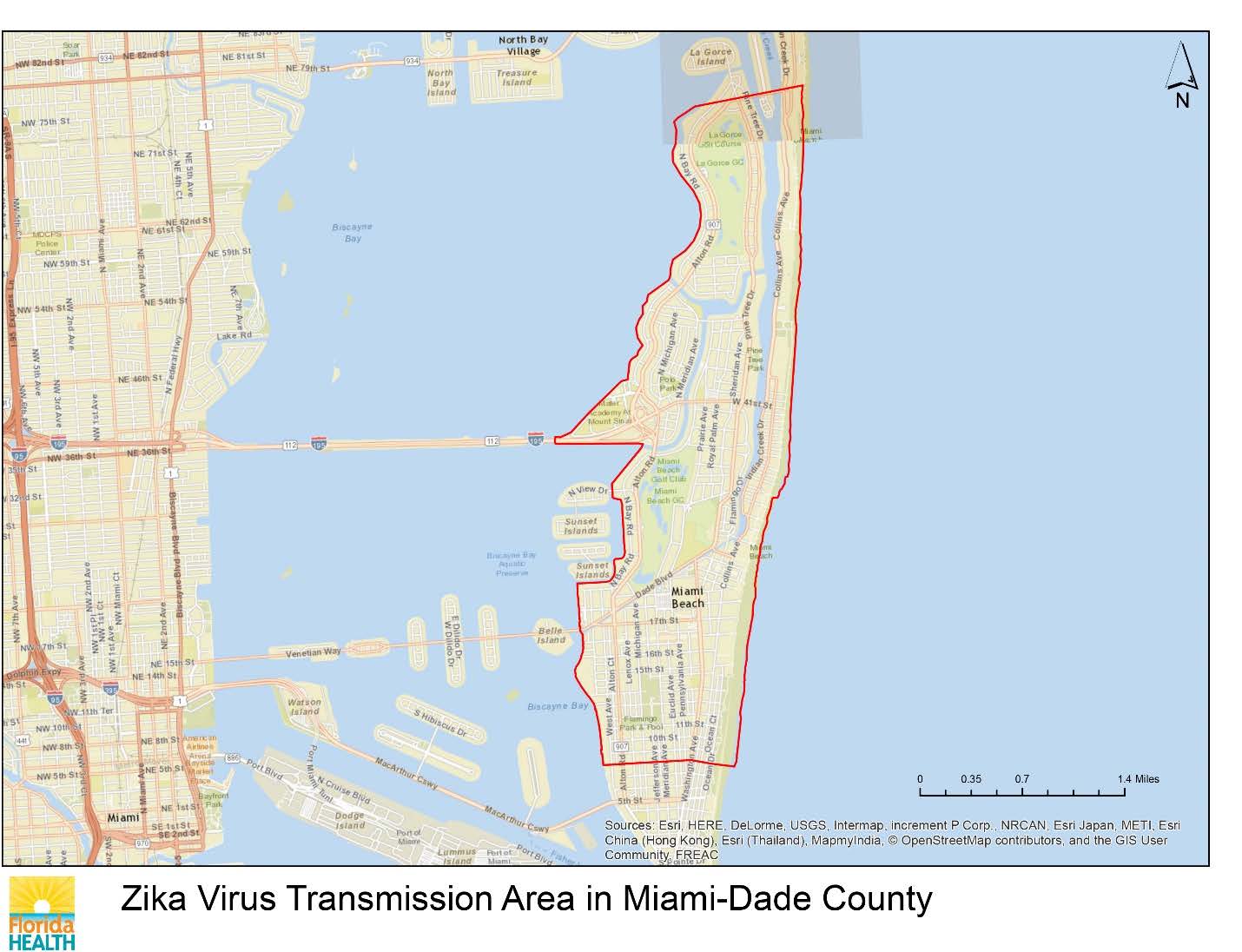
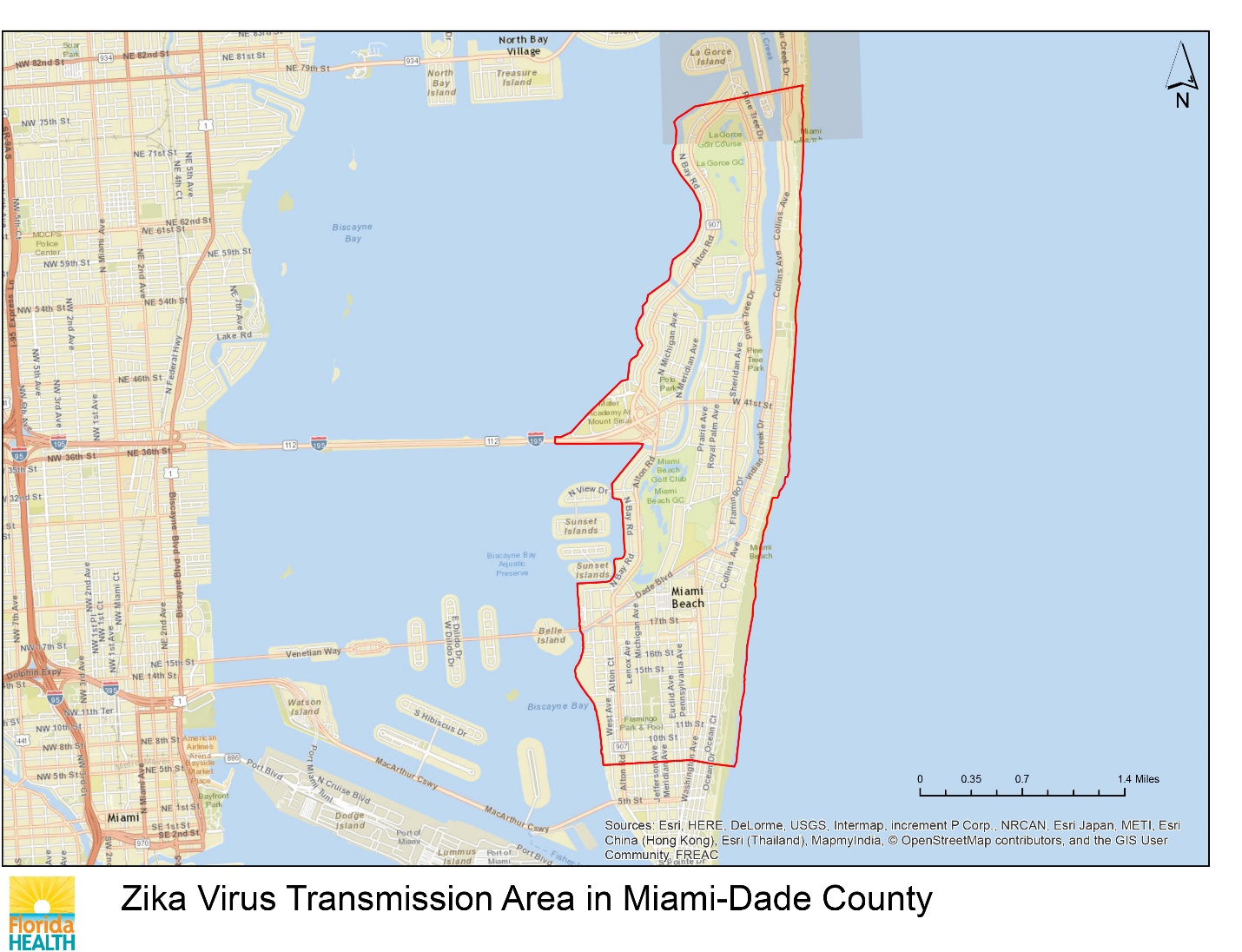
DOH continues door-to-door outreach and targeted testing in Pinellas, Palm Beach and Miami-Dade counties and mosquito abatement and reduction activities are also taking place around the locations that are being investigated. DOH believes ongoing transmission is only taking place within the identified area in Miami Beach in Miami-Dade County, see map below.
One case does not mean ongoing active transmission is taking place. DOH conducts a thorough investigation by sampling close contacts and community members around each case to determine if additional people are infected. If DOH finds evidence that active transmission is occurring in an area, the media and the public will be notified.
For a complete breakdown of non-travel and travel-related Zika infections to-date, please see below.
[TABLE="border: 1, cellpadding: 0, cellspacing: 0"]
[TR]
[TD="width: 390"] Infection Type
[/TD]
[TD="width: 390"] Infection Count
[/TD]
[/TR]
[TR]
[TD="width: 390"] Travel-Related Infections of Zika
[/TD]
[TD="width: 390"] 678
[/TD]
[/TR]
[TR]
[TD="width: 390"] Non-Travel Related Infections of Zika
[/TD]
[TD="width: 390"] 90
[/TD]
[/TR]
[TR]
[TD="width: 390"] Infections Involving Pregnant Women
[/TD]
[TD="width: 390"] 89
[/TD]
[/TR]
[TR]
[TD="width: 390"] Out of State Cases (not Florida Residents)
[/TD]
[TD="width: 390"] 10
[/TD]
[/TR]
[TR]
[TD="width: 390"] Total
[/TD]
[TD="width: 390"] 867
[/TD]
[/TR]
[/TABLE]
The department is currently conducting 10 active investigations. The department has closed 16 investigations. Information regarding the investigations can be found here. If investigations reveal additional areas of active transmission, the department will announce a defined area of concern.
The department has conducted Zika virus testing for more than 7,853 people statewide. Florida currently has the capacity to test 6,831 people for active Zika virus and 7,996 for Zika antibodies. At Governor Scott?s direction, all county health departments now offer free Zika risk assessment and testing to pregnant women.
Florida?s small case cluster is not considered widespread transmission, however, pregnant women are advised to avoid non-essential travel to the impacted area in Miami-Dade County (see map below). If you are pregnant and must travel or if you live or work in the impacted area, protect yourself from mosquito bites by wearing insect repellent, long clothing and limiting your time outdoors.
According to CDC guidance, providers should consider testing all pregnant women with a history of travel to a Zika affected area for the virus. It is also recommended that all pregnant women who reside in or travel frequently to the area where active transmission is likely occurring be tested for Zika in the first and second trimester. Pregnant women in the identified area can contact their medical provider or their local county health department to be tested and receive a Zika prevention kit. CDC recommends that a pregnant woman with a history of Zika virus and her provider should consider additional ultrasounds. Additionally, the department is working closely with the Healthy Start Coalition of Miami-Dade County to identify pregnant women in the impacted areas to ensure they have access to resources and information to protect themselves. CDC recommends that a pregnant woman with a history of Zika virus and her provider should consider additional ultrasounds.
Pregnant women can contact their local county health department for Zika risk assessment and testing hours and information. A Zika risk assessment will be conducted by county health department staff and blood and/or urine samples may be collected and sent to labs for testing. It may take one to two weeks to receive results.
Florida has been monitoring pregnant women with evidence of Zika regardless of symptoms. The total number of pregnant women who have been or are being monitored is 89.
On Feb. 12, Governor Scott directed the State Surgeon General to activate a Zika Virus Information Hotline for current Florida residents and visitors, as well as anyone planning on traveling to Florida in the near future. The hotline, managed by the Department of Health, has assisted 6,426 callers since it launched. The number for the Zika Virus Information Hotline is 1-855-622-6735.
The department urges Floridians to drain standing water weekly, no matter how seemingly small. A couple drops of water in a bottle cap can be a breeding location for mosquitoes. Residents and visitors also need to use repellents when enjoying the Florida outdoors.
For more information on DOH action and federal guidance, please click here.
For resources and information on Zika virus, click here.
Miami Beach Map
092116-county-map.jpg

About the Florida Department of Health
The department, nationally accredited by the Public Health Accreditation Board, works to protect, promote, and improve the health of all people in Florida through integrated state, county and community efforts.
Follow us on Twitter at @HealthyFla and on Facebook. For more information about the Florida Department of Health, please visit www.FloridaHealth.gov.

http://www.floridahealth.gov/newsroom/2016/09/092116-zika-update.html

[/FONT]
 
Predict Zika's spread? It's hard enough to count the cases

By Donald G. McNeil Jr., | New York Times Published 3:27 pm, Wednesday, September 21, 2016
...
Virtually no entomologists believe that the transmission of Zika is limited to a few square miles of downtown Miami and Miami Beach, no matter how vigorously state officials insist it is.

"That's just dreaming - it's totally unrealistic," said Duane J. Gubler, a former director of the vector-borne diseases division of the Centers for Disease Control and Prevention. "Mosquitoes move around, people move around. Mosquitoes even move by car sometimes."

Nonetheless, the CDC on Monday lifted its travel advisory for the Wynwood neighborhood of Miami, saying that no new locally transmitted cases had been detected there since early August and traps there had few mosquitoes since the spraying of two pesticides, naled and Bti, began.
...
The state has refused to reveal the five places where it has trapped mosquitoes that tested positive for the virus, saying the information was "not necessary to public health." Last week, arguing that it was, The Miami Herald sued Miami-Dade County to force it to name the sites.

And it's likely that some local transmission is not even known about yet. According to local doctors, hundreds of women are waiting weeks to get test results from overwhelmed state laboratories.
...
The state's first Zika outbreak is in Miami, an area of 5.5 million....
...
http://www.chron.com/news/article/Predict-Zika-s-spread-It-s-hard-enough-to-count-9237531.php
 
[FONT=&quot] [h=1]Department of Health Daily Zika Update[/h] By Florida Department of Health, Office of Communications
September 22, 2016
[/FONT]

[FONT=&quot] Press Release[/FONT]
[FONT=&quot]
DOH_logo.png

September 22, 2016
[h=2]Department of Health Daily Zika Update[/h] Contact:
Communications Office
NewsMedia@flhealth.gov
(850) 245-4111

Tallahassee, Fla.?In an effort to keep Florida residents and visitors safe and aware about the status of the Zika virus, the department will issue a Zika virus update each week day. Updates will include a Zika case count by county and information to keep Floridians informed and prepared. In order to keep the public informed, the department has posted our investigation process here.

There are five new travel-related cases today with two in Miami-Dade, one in Orange, one in Volusia and one involving a pregnant woman. Please visit our website to see the full list of travel-related cases.

There are two new non-travel related cases today in Miami-Dade County. One is associated with the Miami Beach investigation and the department is investigating the other case to determine where exposure occurred.
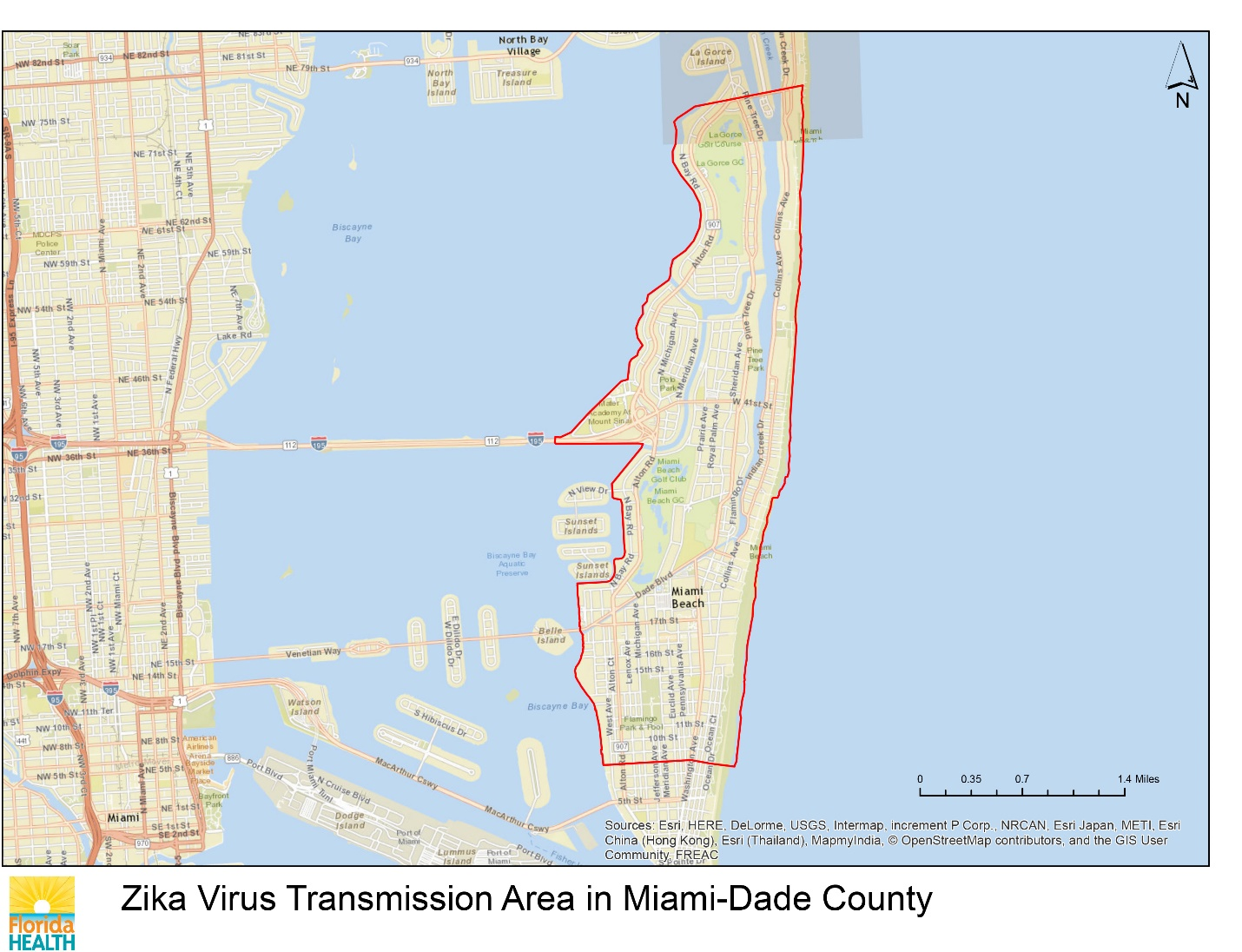
DOH continues door-to-door outreach and targeted testing in Pinellas, Palm Beach and Miami-Dade counties and mosquito abatement and reduction activities are also taking place around the locations that are being investigated. DOH believes ongoing transmission is only taking place within the identified area in Miami Beach in Miami-Dade County, see map below.
One case does not mean ongoing active transmission is taking place. DOH conducts a thorough investigation by sampling close contacts and community members around each case to determine if additional people are infected. If DOH finds evidence that active transmission is occurring in an area, the media and the public will be notified.
For a complete breakdown of non-travel and travel-related Zika infections to-date, please see below.
[TABLE="border: 1, cellpadding: 0, cellspacing: 0"]
[TR]
[TD="width: 390"] Infection Type
[/TD]
[TD="width: 390"] Infection Count
[/TD]
[/TR]
[TR]
[TD="width: 390"] Travel-Related Infections of Zika
[/TD]
[TD="width: 390"] 682
[/TD]
[/TR]
[TR]
[TD="width: 390"] Non-Travel Related Infections of Zika
[/TD]
[TD="width: 390"] 92
[/TD]
[/TR]
[TR]
[TD="width: 390"] Infections Involving Pregnant Women
[/TD]
[TD="width: 390"] 90
[/TD]
[/TR]
[TR]
[TD="width: 390"] Out of State Cases (not Florida Residents)
[/TD]
[TD="width: 390"] 10
[/TD]
[/TR]
[TR]
[TD="width: 390"] Total
[/TD]
[TD="width: 390"] 874
[/TD]
[/TR]
[/TABLE]
The department is currently conducting 11 active investigations. The department has closed 16 investigations. Information regarding the investigations can be found here. If investigations reveal additional areas of active transmission, the department will announce a defined area of concern.
The department has conducted Zika virus testing for more than 8,061 people statewide. Florida currently has the capacity to test 6,748 people for active Zika virus and 7,969 for Zika antibodies. At Governor Scott?s direction, all county health departments now offer free Zika risk assessment and testing to pregnant women.
Florida?s small case cluster is not considered widespread transmission, however, pregnant women are advised to avoid non-essential travel to the impacted area in Miami-Dade County (see map below). If you are pregnant and must travel or if you live or work in the impacted area, protect yourself from mosquito bites by wearing insect repellent, long clothing and limiting your time outdoors.
According to CDC guidance, providers should consider testing all pregnant women with a history of travel to a Zika affected area for the virus. It is also recommended that all pregnant women who reside in or travel frequently to the area where active transmission is likely occurring be tested for Zika in the first and second trimester. Pregnant women in the identified area can contact their medical provider or their local county health department to be tested and receive a Zika prevention kit. CDC recommends that a pregnant woman with a history of Zika virus and her provider should consider additional ultrasounds. Additionally, the department is working closely with the Healthy Start Coalition of Miami-Dade County to identify pregnant women in the impacted areas to ensure they have access to resources and information to protect themselves. CDC recommends that a pregnant woman with a history of Zika virus and her provider should consider additional ultrasounds.
Pregnant women can contact their local county health department for Zika risk assessment and testing hours and information. A Zika risk assessment will be conducted by county health department staff and blood and/or urine samples may be collected and sent to labs for testing. It may take one to two weeks to receive results.
Florida has been monitoring pregnant women with evidence of Zika regardless of symptoms. The total number of pregnant women who have been or are being monitored is 90.
On Feb. 12, Governor Scott directed the State Surgeon General to activate a Zika Virus Information Hotline for current Florida residents and visitors, as well as anyone planning on traveling to Florida in the near future. The hotline, managed by the Department of Health, has assisted 6,476 callers since it launched. The number for the Zika Virus Information Hotline is 1-855-622-6735.
The department urges Floridians to drain standing water weekly, no matter how seemingly small. A couple drops of water in a bottle cap can be a breeding location for mosquitoes. Residents and visitors also need to use repellents when enjoying the Florida outdoors.
For more information on DOH action and federal guidance, please click here.
For resources and information on Zika virus, click here.
Miami Beach Map
092216-county-map.png

About the Florida Department of Health
The department, nationally accredited by the Public Health Accreditation Board, works to protect, promote, and improve the health of all people in Florida through integrated state, county and community efforts.
Follow us on Twitter at @HealthyFla and on Facebook. For more information about the Florida Department of Health, please visit www.FloridaHealth.gov.
http://www.floridahealth.gov/newsroom/2016/09/092216-zika-update.html

[/FONT]
 
Florida health officials report on response to Zika in Wynwood; evidence shows aerial spraying likely helped interrupt local transmission (CDC, September 23, 2016)

[h=1]Florida health officials report on response to Zika in Wynwood; evidence shows aerial spraying likely helped interrupt local transmission[/h]


[h=4]Media Statement[/h] For Immediate Release: Friday, September 23, 2016
Contact: Media Relations,
(404) 639-3286

Florida health officials? response this summer to the first identified cases of local transmission and the first identified outbreak of Zika virus infection in the continental United States, including aggressive mosquito control efforts, helped to interrupt local transmission and reduce the effect on the community, including pregnant women.
During late June through early August, 29 people were identified as having been infected with Zika virus through local mosquito-borne transmission, including 28 in Miami-Dade County and one in Broward County. Two cases were considered to be isolated with evidence of further transmission. However, the Florida Department of Health (FL DOH) identified an area of the Wynwood neighborhood with a cluster of cases, indicating ongoing spread of Zika virus by mosquitoes. Surveillance data showed intense transmission at a worksite and in the community. Although the outbreak was focalized, it continued to spread despite intense ground-based mosquito elimination efforts. Transmission rapidly ceased after Florida health officials implemented an aerial spraying plan that included use of the pesticides naled and bacillus Thuringensis to kill both adult mosquitoes and larva.
?After mosquitoes persisted and infections continued despite ground-based spraying, aerial spraying knocked down mosquitos rapidly and was associated with interrupting transmission of Zika in Wynwood,? said CDC Director Tom Frieden, M.D., M.P.H. ?When faced with the potentially devastating outcomes of microcephaly or other serious brain defects that Zika can cause during pregnancy, we must use the best available tools to prevent infection. According to EPA assessments, when used properly, aerial spraying with naled for mosquito control doesn?t pose a risk to people or the environment.?
No new cases of locally transmitted Zika have been reported in the Wynwood-designated area since early August. As of September 19, the FL DOH has determined that active Zika virus transmission is no longer ongoing in the Wynwood area.
The FL DOH describes these investigations of mosquito-borne local transmission in this week?s MMWR (www.cdc.gov/mmwr).
CDC continues to work closely with Florida to identify and prevent ongoing Zika virus transmission in Miami Beach. Mosquito season in southern Florida continues through the fall, so additional cases could be identified. CDC recommends that people living in or traveling to Miami-Dade County strictly follow steps to prevent mosquito bites. Pregnant women should avoid travel to the identified 4.5-square-mile area of Miami Beach located in Miami-Dade County where active Zika virus transmission is ongoing. Pregnant women and their sexual partners who are concerned about potential Zika virus exposure may also consider postponing nonessential travel to all other parts of Miami-Dade County. CDC also advises state and local health departments to continue monitoring the area for any new evidence of active Zika virus transmission.
For more information about Zika: www.cdc.gov/zika/.


Miami-Dade: the Florida Department of Health told us not to disclose locations of Zika mosquitoes

SEPTEMBER 23, 2016 3:13 PM

Miami-Dade: Florida told us not to disclose locations of Zika mosquitoes

The Florida Department of Health has instructed Miami-Dade officials not to disclose the locations of five traps in Miami Beach where mosquitoes carrying the Zika virus were captured, according to a county attorney. The Miami Herald filed a lawsuit against the county on Sept. 16 seeking disclosure of records that will show the locations of the traps.
...
http://www.miamiherald.com/news/health-care/article103715552.html
 
[FONT=&quot] [h=1]Department of Health Daily Zika Update[/h] By Florida Department of Health, Office of Communications
September 23, 2016
[/FONT]

[FONT=&quot] Press Release[/FONT]
[FONT=&quot]
DOH_logo.png

September 23, 2016
[h=2]Department of Health Daily Zika Update[/h] Contact:
Communications Office
NewsMedia@flhealth.gov
(850) 245-4111

Tallahassee, Fla.?In an effort to keep Florida residents and visitors safe and aware about the status of the Zika virus, the department will issue a Zika virus update each week day. Updates will include a Zika case count by county and information to keep Floridians informed and prepared. In order to keep the public informed, the department has posted our investigation process here.

There is one new travel related case today in Hillsborough County. Please visit our website to see the full list of travel-related cases.

There are three new non-travel related cases today in Miami-Dade County, which are all associated with the Miami Beach investigation.
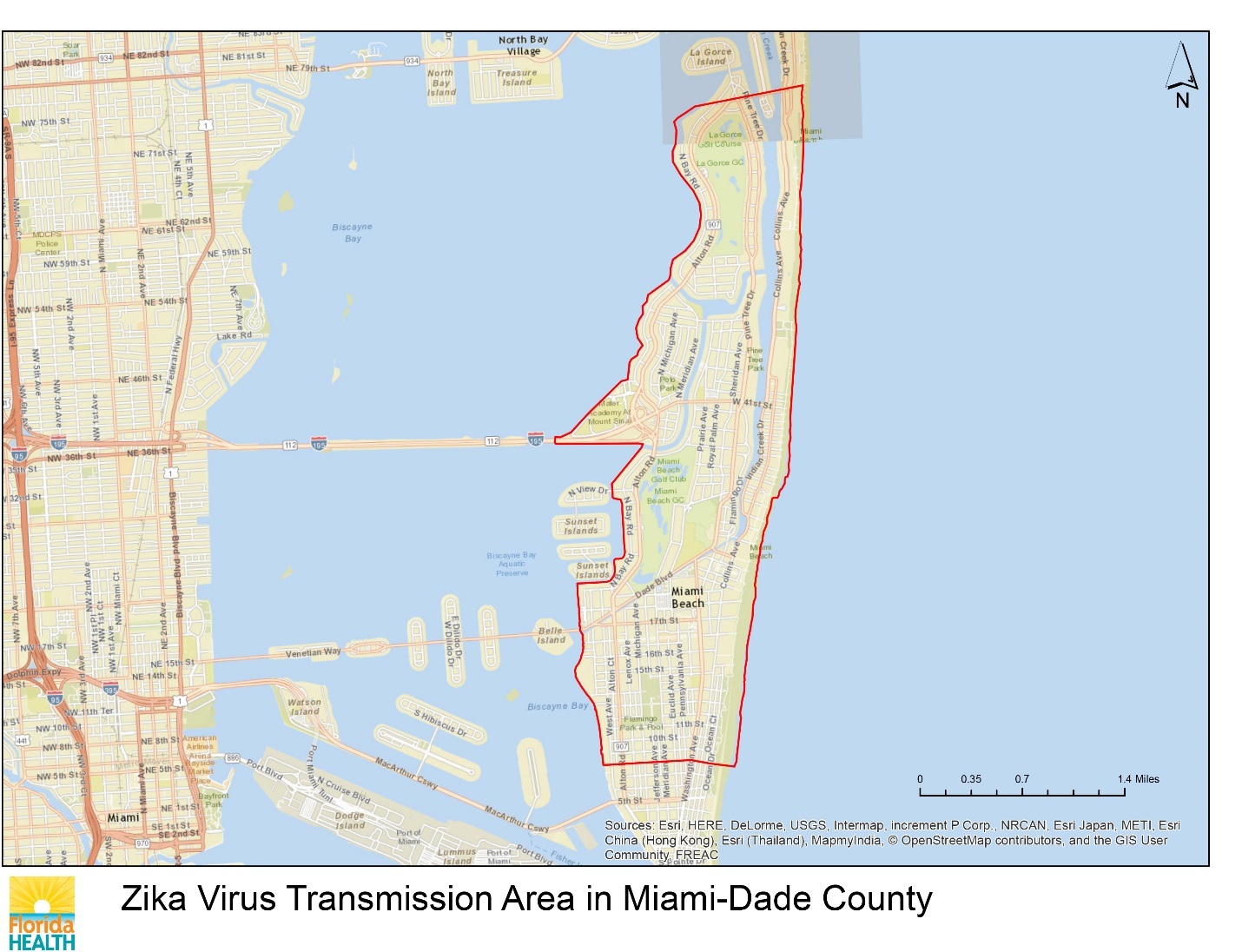
DOH continues door-to-door outreach and targeted testing in Pinellas, Palm Beach and Miami-Dade counties and mosquito abatement and reduction activities are also taking place around the locations that are being investigated. DOH believes ongoing transmission is only taking place within the identified area in Miami Beach in Miami-Dade County, see map below.
One case does not mean ongoing active transmission is taking place. DOH conducts a thorough investigation by sampling close contacts and community members around each case to determine if additional people are infected. If DOH finds evidence that active transmission is occurring in an area, the media and the public will be notified.
For a complete breakdown of non-travel and travel-related Zika infections to-date, please see below.
[TABLE="border: 1, cellpadding: 0, cellspacing: 0"]
[TR]
[TD="width: 390"] Infection Type
[/TD]
[TD="width: 390"] Infection Count
[/TD]
[/TR]
[TR]
[TD="width: 390"] Travel-Related Infections of Zika
[/TD]
[TD="width: 390"] 683
[/TD]
[/TR]
[TR]
[TD="width: 390"] Non-Travel Related Infections of Zika
[/TD]
[TD="width: 390"] 95
[/TD]
[/TR]
[TR]
[TD="width: 390"] Infections Involving Pregnant Women
[/TD]
[TD="width: 390"] 90
[/TD]
[/TR]
[TR]
[TD="width: 390"] Out of State Cases (not Florida Residents)
[/TD]
[TD="width: 390"] 10
[/TD]
[/TR]
[TR]
[TD="width: 390"] Total
[/TD]
[TD="width: 390"] 878
[/TD]
[/TR]
[/TABLE]
The department is currently conducting 11 active investigations. The department has closed 16 investigations. Information regarding the investigations can be found here. If investigations reveal additional areas of active transmission, the department will announce a defined area of concern.
The department has conducted Zika virus testing for more than 8,127 people statewide. Florida currently has the capacity to test 6,662 people for active Zika virus and 7,830 for Zika antibodies. At Governor Scott?s direction, all county health departments now offer free Zika risk assessment and testing to pregnant women.
Florida?s small case cluster is not considered widespread transmission, however, pregnant women are advised to avoid non-essential travel to the impacted area in Miami-Dade County (see map below). If you are pregnant and must travel or if you live or work in the impacted area, protect yourself from mosquito bites by wearing insect repellent, long clothing and limiting your time outdoors.
According to CDC guidance, providers should consider testing all pregnant women with a history of travel to a Zika affected area for the virus. It is also recommended that all pregnant women who reside in or travel frequently to the area where active transmission is likely occurring be tested for Zika in the first and second trimester. Pregnant women in the identified area can contact their medical provider or their local county health department to be tested and receive a Zika prevention kit. CDC recommends that a pregnant woman with a history of Zika virus and her provider should consider additional ultrasounds. Additionally, the department is working closely with the Healthy Start Coalition of Miami-Dade County to identify pregnant women in the impacted areas to ensure they have access to resources and information to protect themselves. CDC recommends that a pregnant woman with a history of Zika virus and her provider should consider additional ultrasounds.
Pregnant women can contact their local county health department for Zika risk assessment and testing hours and information. A Zika risk assessment will be conducted by county health department staff and blood and/or urine samples may be collected and sent to labs for testing. It may take one to two weeks to receive results.
Florida has been monitoring pregnant women with evidence of Zika regardless of symptoms. The total number of pregnant women who have been or are being monitored is 90.
On Feb. 12, Governor Scott directed the State Surgeon General to activate a Zika Virus Information Hotline for current Florida residents and visitors, as well as anyone planning on traveling to Florida in the near future. The hotline, managed by the Department of Health, has assisted 6,512 callers since it launched. The number for the Zika Virus Information Hotline is 1-855-622-6735.
The department urges Floridians to drain standing water weekly, no matter how seemingly small. A couple drops of water in a bottle cap can be a breeding location for mosquitoes. Residents and visitors also need to use repellents when enjoying the Florida outdoors.
For more information on DOH action and federal guidance, please click here.
For resources and information on Zika virus, click here.
Miami Beach Map
092316-county-map.png

About the Florida Department of Health
The department, nationally accredited by the Public Health Accreditation Board, works to protect, promote, and improve the health of all people in Florida through integrated state, county and community efforts.
Follow us on Twitter at @HealthyFla and on Facebook. For more information about the Florida Department of Health, please visit www.FloridaHealth.gov.
...
http://www.floridahealth.gov/newsroom/2016/09/092316-zika-update.html

[/FONT]
 
Mosquito season in southern Florida continues through the fall, so additional cases could be identified. CDC recommends that people living in or traveling to Miami-Dade County strictly follow steps to prevent mosquito bites. Pregnant women should avoid travel to the identified 4.5-square-mile area of Miami Beach located in Miami-Dade County where active Zika virus transmission is ongoing. Pregnant women and their sexual partners who are concerned about potential Zika virus exposure may also consider postponing nonessential travel to all other parts of Miami-Dade County. CDC also advises state and local health departments to continue monitoring the area for any new evidence of active Zika virus transmission.
For more information about Zika

This for emphasis.
 
Florida - Media report: Mayors say state told them to keep Zika mosquito sites secret - September 25, 2016

[FONT=&quot]SEPTEMBER 25, 2016 2:25 PM[/FONT]


Mayors say state told them to keep Zika mosquito sites secret

[FONT=&quot]BY DANIEL CHANG
dchang@miamiherald.com
[/FONT]


[FONT=&quot]The mayors of Miami-Dade County and Miami Beach on Sunday accused the Florida Department of Health of lying after the state agency said last week that it never told local officials to hide the locations in Miami Beach where mosquitoes carrying the Zika virus were captured.


more...

http://www.miamiherald.com/news/heal...104093681.html
[/FONT]
 
[FONT=&quot]September 26, 2016[/FONT]
[h=2]Department of Health Daily Zika Update[/h] [FONT=&quot]Contact:
Communications Office
NewsMedia@flhealth.gov
(850) 245-4111
[/FONT]

[FONT=&quot]Tallahassee, Fla.?In an effort to keep Florida residents and visitors safe and aware about the status of the Zika virus, the department will issue a Zika virus update each week day. Updates will include a Zika case count by county and information to keep Floridians informed and prepared. In order to keep the public informed, the department has posted our investigation process here.[/FONT]
[FONT=&quot]
There are six new travel related cases today with two in Broward, two in Miami-Dade, one in Collier and one in Polk. Please visit our website to see the full list of travel-related cases.
[/FONT]

[FONT=&quot]There are 10 new non-travel related cases today.[/FONT]
  • One is a Palm Beach resident and the department is investigating where exposure occurred.
  • One is associated with the Miami Beach investigation.
  • Five are Miami-Dade residents and the department is investigating where exposure occurred.
  • Three are cases from July associated with Wynwood that the department just received additional confirmatory test results from CDC. It is important to note that these are not new cases and they do not affect the lift of the Wynwood zone as all had symptom onset in July.
[FONT=&quot]DOH continues door-to-door outreach and targeted testing in Pinellas, Palm Beach and Miami-Dade counties and mosquito abatement and reduction activities are also taking place around the locations that are being investigated. DOH believes ongoing transmission is only taking place within the identified area in Miami Beach in Miami-Dade County, see map below.[/FONT]
[FONT=&quot]One case does not mean ongoing active transmission is taking place. DOH conducts a thorough investigation by sampling close contacts and community members around each case to determine if additional people are infected. If DOH finds evidence that active transmission is occurring in an area, the media and the public will be notified.[/FONT]
[FONT=&quot]For a complete breakdown of non-travel and travel-related Zika infections to-date, please see below.[/FONT]
[TABLE="border: 1, cellpadding: 0, cellspacing: 0"]
[TR]
[TD="width: 312"] Infection Type
[/TD]
[TD="width: 312"] Infection Count
[/TD]
[/TR]
[TR]
[TD="width: 312"] Travel-Related Infections of Zika
[/TD]
[TD="width: 312"] 689
[/TD]
[/TR]
[TR]
[TD="width: 312"] Non-Travel Related Infections of Zika
[/TD]
[TD="width: 312"] 105
[/TD]
[/TR]
[TR]
[TD="width: 312"] Infections Involving Pregnant Women
[/TD]
[TD="width: 312"] 90
[/TD]
[/TR]
[TR]
[TD="width: 312"] Out of State Cases (not Florida Residents)
[/TD]
[TD="width: 312"] 10
[/TD]
[/TR]
[TR]
[TD="width: 312"] Total
[/TD]
[TD="width: 312"] 894
[/TD]
[/TR]
[/TABLE]
[FONT=&quot]The department is currently conducting 11 active investigations. The department has closed 18 investigations. Information regarding the investigations can be found here. If investigations reveal additional areas of active transmission, the department will announce a defined area of concern. [/FONT]
[FONT=&quot]The department has conducted Zika virus testing for more than 8,297 people statewide. Florida currently has the capacity to test 6,573 people for active Zika virus and 7,830 for Zika antibodies. At Governor Scott?s direction, all county health departments now offer free Zika risk assessment and testing to pregnant women.[/FONT]
[FONT=&quot]Florida?s small case cluster is not considered widespread transmission, however, pregnant women are advised to avoid non-essential travel to the impacted area in Miami-Dade County (see map below). If you are pregnant and must travel or if you live or work in the impacted area, protect yourself from mosquito bites by wearing insect repellent, long clothing and limiting your time outdoors. [/FONT]
[FONT=&quot]According to CDC guidance, providers should consider testing all pregnant women with a history of travel to a Zika affected area for the virus. It is also recommended that all pregnant women who reside in or travel frequently to the area where active transmission is likely occurring be tested for Zika in the first and second trimester. Pregnant women in the identified area can contact their medical provider or their local county health department to be tested and receive a Zika prevention kit. CDC recommends that a pregnant woman with a history of Zika virus and her provider should consider additional ultrasounds. Additionally, the department is working closely with the Healthy Start Coalition of Miami-Dade County to identify pregnant women in the impacted areas to ensure they have access to resources and information to protect themselves. CDC recommends that a pregnant woman with a history of Zika virus and her provider should consider additional ultrasounds. [/FONT]
[FONT=&quot]Pregnant women can contact their local county health department for Zika risk assessment and testing hours and information. A Zika risk assessment will be conducted by county health department staff and blood and/or urine samples may be collected and sent to labs for testing. It may take one to two weeks to receive results.[/FONT]
[FONT=&quot]Florida has been monitoring pregnant women with evidence of Zika regardless of symptoms. The total number of pregnant women who have been or are being monitored is 90.[/FONT]
[FONT=&quot]On Feb. 12, Governor Scott directed the State Surgeon General to activate a Zika Virus Information Hotline for current Florida residents and visitors, as well as anyone planning on traveling to Florida in the near future. The hotline, managed by the Department of Health, has assisted 6,578 callers since it launched. The number for the Zika Virus Information Hotline is 1-855-622-6735.[/FONT]
[FONT=&quot]The department urges Floridians to drain standing water weekly, no matter how seemingly small. A couple drops of water in a bottle cap can be a breeding location for mosquitoes. Residents and visitors also need to use repellents when enjoying the Florida outdoors.[/FONT]
[FONT=&quot]For more information on DOH action and federal guidance, please click here.[/FONT]
[FONT=&quot]For resources and information on Zika virus, click here. [/FONT]
[FONT=&quot]Miami Beach Map[/FONT]
[FONT=&quot]
092616-county-map.png
[/FONT]

[FONT=&quot]About the Florida Department of Health[/FONT]
[FONT=&quot]The department, nationally accredited by the Public Health Accreditation Board, works to protect, promote, and improve the health of all people in Florida through integrated state, county and community efforts.[/FONT]
[FONT=&quot]Follow us on Twitter at @HealthyFla and on Facebook. For more information about the Florida Department of Health, please visit www.FloridaHealth.gov.[/FONT]

http://www.floridahealth.gov/newsroom/2016/09/092616-zika-update.html
 
From: DOH COMMUNICATIONS OFFICE <DOHCOMMUNICATIONSOFFICE@flheal...
To:
Subject: Department of Health Daily Zika Update
Date: Sep 27, 2016 2:24 PM

[TABLE="border: 0, cellpadding: 0, cellspacing: 0"]
[TR]
[TD] [TABLE="border: 0, cellpadding: 0, width: 963"]
[TR]
[TD]Sept. 27 2016[/TD]
[/TR]
[/TABLE]


[/TD]
[/TR]
[/TABLE]
[TABLE="border: 0, cellpadding: 0, width: 963"]
[TR]
[TD]DEPARTMENT OF HEALTH DAILY ZIKA UPDATE[/TD]
[/TR]
[TR]
[TD] [/TD]
[/TR]
[TR]
[TD] [/TD]
[/TR]
[TR]
[TD="colspan: 2"]Contact:
Communications Office
NewsMedia@flhealth.gov
850-245-4111[/TD]
[/TR]
[TR]
[TD="colspan: 2"] [/TD]
[/TR]
[TR]
[TD="colspan: 2"]Tallahassee, Fla. ?In an effort to keep Florida residents and visitors safe and aware about the status of the Zika virus, the department will issue a Zika virus update each week day. Updates will include a Zika case count by county and information to keep Floridians informed and prepared. In order to keep the public informed, the department has posted our investigation process here .
There are five new travel related cases today with two in Miami-Dade, one in Clay, one in Osceola and one involving a pregnant woman.Please visit our website to see the full list of travel-related cases.
There are four new non-travel related cases today in Miami-Dade County and the department is investigating to determine where exposure occurred. There is one additional non-Florida resident who has contracted Zika in Miami-Dade County.
DOH continues door-to-door outreach and targeted testing in Palm Beach and Miami-Dade counties and mosquito abatement and reduction activities are also taking place around the locations that are being investigated. DOH believes ongoing transmission is only taking place within the identified area in Miami Beach in Miami-Dade County, see map below.
One case does not mean ongoing active transmission is taking place. DOH conducts a thorough investigation by sampling close contacts and community members around each case to determine if additional people are infected. If DOH finds evidence that active transmission is occurring in an area, the media and the public will be notified.
For a complete breakdown of non-travel and travel-related Zika infections to-date, please see below. [TABLE="border: 1, cellpadding: 0, cellspacing: 0"]
[TR]
[TD]Infection Type[/TD]
[TD]Infection Count[/TD]
[/TR]
[TR]
[TD]Travel-Related Infections of Zika[/TD]
[TD]693[/TD]
[/TR]
[TR]
[TD]Non-Travel Related Infections of Zika[/TD]
[TD]109[/TD]
[/TR]
[TR]
[TD]Infections Involving Pregnant Women[/TD]
[TD]91[/TD]
[/TR]
[TR]
[TD]Out of State Cases (not Florida Residents)[/TD]
[TD]11[/TD]
[/TR]
[TR]
[TD]Total[/TD]
[TD]904[/TD]
[/TR]
[/TABLE]
The department is currently conducting seven active investigations. The department has closed 20 investigations. Information regarding the investigations can be found here. If investigations reveal additional areas of active transmission, the department will announce a defined area of concern.
The department has conducted Zika virus testing for more than 8,378 people statewide. Florida currently has the capacity to test 6,537 people for active Zika virus and 7,705 for Zika antibodies. At Governor Scott?s direction, all county health departments now offer free Zika risk assessment and testing to pregnant women.
Florida?s small case cluster is not considered widespread transmission, however, pregnant women are advised to avoid non-essential travel to the impacted area in Miami-Dade County (see map below). If you are pregnant and must travel or if you live or work in the impacted area, protect yourself from mosquito bites by wearing insect repellent, long clothing and limiting your time outdoors.
According to CDC guidance, providers should consider testing all pregnant women with a history of travel to a Zika affected area for the virus. It is also recommended that all pregnant women who reside in or travel frequently to the area where active transmission is likely occurring be tested for Zika in the first and second trimester. Pregnant women in the identified area can contact their medical provider or their local county health department to be tested and receive a Zika prevention kit. CDC recommends that a pregnant woman with a history of Zika virus and her provider should consider additional ultrasounds. Additionally, the department is working closely with the Healthy Start Coalition of Miami-Dade County to identify pregnant women in the impacted areas to ensure they have access to resources and information to protect themselves. CDC recommends that a pregnant woman with a history of Zika virus and her provider should consider additional ultrasounds.
Pregnant women can contact their local county health department for Zika risk assessment and testing hours and information. A Zika risk assessment will be conducted by county health department staff and blood and/or urine samples may be collected and sent to labs for testing. It may take one to two weeks to receive results.
Florida has been monitoring pregnant women with evidence of Zika regardless of symptoms. The total number of pregnant women who have been or are being monitored is 91.
On Feb. 12, Governor Scott directed the State Surgeon General to activate a Zika Virus Information Hotline for current Florida residents and visitors, as well as anyone planning on traveling to Florida in the near future. The hotline, managed by the Department of Health, has assisted 6,610 callers since it launched. The number for the Zika Virus Information Hotline is 1-855-622-6735.
The department urges Floridians to drain standing water weekly, no matter how seemingly small. A couple drops of water in a bottle cap can be a breeding location for mosquitoes. Residents and visitors also need to use repellents when enjoying the Florida outdoors.
For more information on DOH action and federal guidance, please click here.
For resources and information on Zika virus, click here.
Miami Beach Map
3717731475000441941.png


About the Florida Department of Health

The department, nationally accredited by the Public Health Accreditation Board, works to protect, promote and improve the health of all people in Florida through integrated state, county and community efforts.

Follow us on Twitter at @HealthyFla and on Facebook. For more information about the Florida Department of Health please visitwww.FloridaHealth.gov.[/TD]
[/TR]
[/TABLE]

 
[h=1]Miami-Dade to Release Zika-Positive Trap Locations[/h] Miami-Dade County officials say they're planning to release the locations of mosquito traps that captured Zika-positive insects in Miami Beach.
Michael Hernandez, a spokesman for Miami-Dade County Mayor Carlos Gimenez, told the Miami Herald ( https://goo.gl/rBttmw ) they'll be naming the locations Wednesday morning.
Florida Gov. Rick Scott and Surgeon General Celeste Philip encouraged county officials to release trap locations, and the county made the decision Tuesday evening.

http://abcnews.go.com/Health/wireStory/miami-dade-release-zika-positive-trap-locations-42410964
 
[FONT=&quot]SEPTEMBER 28, 2016 10:59 AM[/FONT]
[h=1]Zika mosquito sites in Miami Beach identified[/h] [FONT=&quot]...
BY DANIEL CHANG AND JOEY FLECHAS
[/FONT]

[FONT=&quot]dchang@miamiherald.com[/FONT]
...
The addresses are 1619 Meridian Ave., 932 Lenox Ave., 1236 Drexel Ave. and 2378 Prairie Ave. Health officials identified the Miami Beach Botanical Garden, 2000 Convention Center Dr., as one of the sites on Sept. 1, though the garden had been closed three days prior. The location on Prairie Avenue is near Hebrew Academy?s Rabbi Alexander Gross High School and Miami Beach Senior High, while the Meridian address is near the Lincoln Road mall.
...

http://www.miamiherald.com/news/health-care/article104627676.html
 
Miami-Dade County Mosquito Control releases mosquito trap locations (September 28, 2016)

Media Contact: Mike Hernandez
Michael.Hernandez@miamidade.gov
305-375-1545305-798-2554
Gayle Love
loveg@miamidade.gov
305-375-3508305-297-1857
Frank Calderon
fcald@miamidade.gov
305-375-4815786-516-1001
[h=1]Miami-Dade County Mosquito Control releases mosquito trap locations[/h] MIAMI (September 28, 2016) ? The Miami-Dade County Mosquito Control Division released today the locations of mosquito traps on Miami Beach where pools, or batches, of mosquitoes had tested positive for Zika.
?As I have stated many times before, Miami-Dade County remains committed to the health and safety of our residents and visitors, and to absolute transparency in our communications with the community we serve,? said Miami-Dade County Mayor Carlos A. Gimenez. ?The Department of Health instructed the County, on multiple occasions, to withhold information related to the exact location of the Zika-positive mosquito traps. Now that the County has been granted permission ? via an email from the Florida Surgeon General ? to release this information, we are releasing the addresses. This will be our protocol going forward: We will disclose the locations of any such traps that test positive for Zika to both the property owner and to anyone else who inquires. It is also important to note that while we did have five traps that tested positive for Zika on dates ranging from August 22 to September 9, multiple subsequent tests have since been conducted, and all of those tests came back negative.?
Mosquitoes trapped at five locations on Miami Beach tested positive for Zika. Each location tested positive only once; subsequent tests conducted on mosquitoes trapped at these locations yielded negative results. Immediately after notification of the positive test results at each location, Miami-Dade Mosquito Control responded and treated the respective properties and surrounding areas, as per its standard protocol.
Attached is the chart showing (PDF format):
  • The date the positive pools of mosquitoes were trapped
  • The locations of the traps
  • The number of pools of mosquitoes sent in for testing subsequent to the positive tests
  • The dates these additional negative pools of mosquitoes were collected for testing
?We are grateful to the residents who allowed us to place the mosquito traps on their properties,? Mayor Gimenez said. ?We continue to remind residents how important it is to continue to ?Drain and Cover? to reduce the population of mosquitoes and the spread of diseases in the county.?
Miami-Dade residents who wish to report a mosquito nuisance should call 311 or download the 311 app athttp://www.miamidade.gov/mobile-applications/. Information on the County?s Mosquito Control program is available atwww.miamidade.gov/mosquito.


From: DOH COMMUNICATIONS OFFICE <DOHCOMMUNICATIONSOFFICE@flheal... [Edit Address Book] To:
Subject: Department of Health Daily Zika Update
Date: Sep 28, 2016 4:42 PM

[TABLE="class: msgbody, border: 0, cellpadding: 0, cellspacing: 0"]
[TR]
[TD] [TABLE="class: MsoNormalTable, border: 0, cellpadding: 0, width: 963"]
[TR]
[TD="width: 50%"] Sept. 28, 2016
[/TD]
[/TR]
[/TABLE]

[/TD]
[/TR]
[/TABLE]
[TABLE="class: MsoNormalTable, border: 0, cellpadding: 0, width: 963"]
[TR]
[TD] DEPARTMENT OF HEALTH DAILY ZIKA UPDATE
[/TD]
[/TR]
[TR]
[TD]
[/TD]
[/TR]
[TR]
[TD="colspan: 2"] Contact:
Communications Office
NewsMedia@flhealth.gov
850-245-4111

[/TD]
[/TR]
[TR]
[TD="colspan: 2"]
[/TD]
[/TR]
[TR]
[TD="colspan: 2"] Tallahassee, Fla. ?In an effort to keep Florida residents and visitors safe and aware about the status of the Zika virus, the department will issue a Zika virus update each week day. Updates will include a Zika case count by county and information to keep Floridians informed and prepared. In order to keep the public informed, the department has posted our investigation process here .
There are eight new travel related cases today with three in Polk, two in Orange, one in Broward, one in Monroe and one involving a pregnant women. Please visit our website to see the full list of travel-related cases.
There are six new non-travel related cases today.
  • One case is a Miami-Dade County resident that had exposure in Miami Beach.
  • Three cases are Miami-Dade County residents and the department is investigating where exposure occurred.
  • One case is a Palm Beach County resident and the department is investigating where exposure occurred.
  • One Broward County resident tested positive for Zika and had likely exposure in Miami-Dade County.
    • This resident shares a household with a person who tested positive for Zika and had travel to Miami Beach and a country with widespread Zika transmission. Exposure while outside of Florida could not be ruled out, so the second individual is included in the undetermined category. We do not believe transmission occurred in Broward County.
There are also two non-Florida residents who had tested positive for Zika and had exposure in Miami-Dade County.
DOH continues door-to-door outreach and targeted testing in Palm Beach and Miami-Dade counties and mosquito abatement and reduction activities are also taking place around the locations that are being investigated. DOH believes ongoing transmission is only taking place within the identified area in Miami Beach in Miami-Dade County, see map below.
One case does not mean ongoing active transmission is taking place. DOH conducts a thorough investigation by sampling close contacts and community members around each case to determine if additional people are infected. If DOH finds evidence that active transmission is occurring in an area, the media and the public will be notified.
For a complete breakdown of non-travel and travel-related Zika infections to-date, please see below.
[TABLE="class: MsoNormalTable, border: 1, cellpadding: 0, cellspacing: 0"]
[TR]
[TD="width: 312"] Infection Type
[/TD]
[TD="width: 312"] Infection Count
[/TD]
[/TR]
[TR]
[TD="width: 312"] Travel-Related Infections of Zika
[/TD]
[TD="width: 312"] 700
[/TD]
[/TR]
[TR]
[TD="width: 312"] Non-Travel Related Infections of Zika
[/TD]
[TD="width: 312"] 115
[/TD]
[/TR]
[TR]
[TD="width: 312"] Infections Involving Pregnant Women
[/TD]
[TD="width: 312"] 92
[/TD]
[/TR]
[TR]
[TD="width: 312"] Out of State Cases (not Florida Residents)
[/TD]
[TD="width: 312"] 13
[/TD]
[/TR]
[TR]
[TD="width: 312"] Undetermined
[/TD]
[TD="width: 312"] 1
[/TD]
[/TR]
[TR]
[TD="width: 312"] Total
[/TD]
[TD="width: 312"] 921
[/TD]
[/TR]
[/TABLE]
The department is currently conducting 15 active investigations. The department has closed 22 investigations. Information regarding the investigations can be found here. If investigations reveal additional areas of active transmission, the department will announce a defined area of concern.
The department has conducted Zika virus testing for more than 8,419 people statewide. Florida currently has the capacity to test 6,505 people for active Zika virus and 7,639 for Zika antibodies. At Governor Scott?s direction, all county health departments now offer free Zika risk assessment and testing to pregnant women.
Florida?s small case cluster is not considered widespread transmission, however, pregnant women are advised to avoid non-essential travel to the impacted area in Miami-Dade County (see map below). If you are pregnant and must travel or if you live or work in the impacted area, protect yourself from mosquito bites by wearing insect repellent, long clothing and limiting your time outdoors.
According to CDC guidance, providers should consider testing all pregnant women with a history of travel to a Zika affected area for the virus. It is also recommended that all pregnant women who reside in or travel frequently to the area where active transmission is likely occurring be tested for Zika in the first and second trimester. Pregnant women in the identified area can contact their medical provider or their local county health department to be tested and receive a Zika prevention kit. CDC recommends that a pregnant woman with a history of Zika virus and her provider should consider additional ultrasounds. Additionally, the department is working closely with the Healthy Start Coalition of Miami-Dade County to identify pregnant women in the impacted areas to ensure they have access to resources and information to protect themselves. CDC recommends that a pregnant woman with a history of Zika virus and her provider should consider additional ultrasounds.
Pregnant women can contact their local county health department for Zika risk assessment and testing hours and information. A Zika risk assessment will be conducted by county health department staff and blood and/or urine samples may be collected and sent to labs for testing. It may take one to two weeks to receive results.
Florida has been monitoring pregnant women with evidence of Zika regardless of symptoms. The total number of pregnant women who have been or are being monitored is 92.
On Feb. 12, Governor Scott directed the State Surgeon General to activate a Zika Virus Information Hotline for current Florida residents and visitors, as well as anyone planning on traveling to Florida in the near future. The hotline, managed by the Department of Health, has assisted 6,648 callers since it launched. The number for the Zika Virus Information Hotline is 1-855-622-6735.
The department urges Floridians to drain standing water weekly, no matter how seemingly small. A couple drops of water in a bottle cap can be a breeding location for mosquitoes. Residents and visitors also need to use repellents when enjoying the Florida outdoors.
For more information on DOH action and federal guidance, please click here.
For resources and information on Zika virus, click here.
Miami Beach Map
3717731475094791189.png

About the Florida Department of Health

The department, nationally accredited by the Public Health Accreditation Board, works to protect, promote and improve the health of all people in Florida through integrated state, county and community efforts.

Follow us on Twitter at @HealthyFla and on Facebook. For more information about the Florida Department of Health please visitwww.FloridaHealth.gov.

[/TD]
[/TR]
[/TABLE]
 
[TABLE="class: MsoNormalTable, border: 0, cellpadding: 0, width: 963"]
[TR]
[TD] DEPARTMENT OF HEALTH DAILY ZIKA UPDATE
[/TD]
[/TR]
[TR]
[TD]
[/TD]
[/TR]
[TR]
[TD="colspan: 2"] Contact:
Communications Office
NewsMedia@flhealth.gov
850-245-4111

[/TD]
[/TR]
[TR]
[TD="colspan: 2"]
[/TD]
[/TR]
[TR]
[TD="colspan: 2"] Tallahassee, Fla. ?In an effort to keep Florida residents and visitors safe and aware about the status of the Zika virus, the department will issue a Zika virus update each week day. Updates will include a Zika case count by county and information to keep Floridians informed and prepared. In order to keep the public informed, the department has posted our investigation process here .
There are five new travel related cases today in Miami-Dade County. Please visit our website to see the full list of travel-related cases.
There are four new non-travel related cases today in Miami-Dade County.
  • One case is a Miami-Dade County resident that had exposure in Miami Beach.
  • Three cases are Miami-Dade County residents and the department is investigating where exposure occurred.
There are also two non-Florida residents who had tested positive for Zika and had exposure in Miami-Dade County.
DOH continues door-to-door outreach and targeted testing in Palm Beach and Miami-Dade counties and mosquito abatement and reduction activities are also taking place around the locations that are being investigated. DOH believes ongoing transmission is only taking place within the identified area in Miami Beach in Miami-Dade County, see map below.
One case does not mean ongoing active transmission is taking place. DOH conducts a thorough investigation by sampling close contacts and community members around each case to determine if additional people are infected. If DOH finds evidence that active transmission is occurring in an area, the media and the public will be notified.
For a complete breakdown of non-travel and travel-related Zika infections to-date, please see below.
[TABLE="class: MsoNormalTable, border: 1, cellpadding: 0, cellspacing: 0"]
[TR]
[TD="width: 312"] Infection Type
[/TD]
[TD="width: 312"] Infection Count
[/TD]
[/TR]
[TR]
[TD="width: 312"] Travel-Related Infections of Zika
[/TD]
[TD="width: 312"] 705
[/TD]
[/TR]
[TR]
[TD="width: 312"] Non-Travel Related Infections of Zika
[/TD]
[TD="width: 312"] 119
[/TD]
[/TR]
[TR]
[TD="width: 312"] Infections Involving Pregnant Women
[/TD]
[TD="width: 312"] 92
[/TD]
[/TR]
[TR]
[TD="width: 312"] Out of State Cases (not Florida Residents)
[/TD]
[TD="width: 312"] 15
[/TD]
[/TR]
[TR]
[TD="width: 312"] Undetermined
[/TD]
[TD="width: 312"] 1
[/TD]
[/TR]
[TR]
[TD="width: 312"] Total
[/TD]
[TD="width: 312"] 932
[/TD]
[/TR]
[/TABLE]
The department is currently conducting 15 active investigations. The department has closed 23 investigations. Information regarding the investigations can be found here. If investigations reveal additional areas of active transmission, the department will announce a defined area of concern.
The department has conducted Zika virus testing for more than 8,515 people statewide. Florida currently has the capacity to test 6,395 people for active Zika virus and 7,539 for Zika antibodies. At Governor Scott?s direction, all county health departments now offer free Zika risk assessment and testing to pregnant women.
Florida?s small case cluster is not considered widespread transmission, however, pregnant women are advised to avoid non-essential travel to the impacted area in Miami-Dade County (see map below). If you are pregnant and must travel or if you live or work in the impacted area, protect yourself from mosquito bites by wearing insect repellent, long clothing and limiting your time outdoors.
According to CDC guidance, providers should consider testing all pregnant women with a history of travel to a Zika affected area for the virus. It is also recommended that all pregnant women who reside in or travel frequently to the area where active transmission is likely occurring be tested for Zika in the first and second trimester. Pregnant women in the identified area can contact their medical provider or their local county health department to be tested and receive a Zika prevention kit. CDC recommends that a pregnant woman with a history of Zika virus and her provider should consider additional ultrasounds. Additionally, the department is working closely with the Healthy Start Coalition of Miami-Dade County to identify pregnant women in the impacted areas to ensure they have access to resources and information to protect themselves. CDC recommends that a pregnant woman with a history of Zika virus and her provider should consider additional ultrasounds.
Pregnant women can contact their local county health department for Zika risk assessment and testing hours and information. A Zika risk assessment will be conducted by county health department staff and blood and/or urine samples may be collected and sent to labs for testing. It may take one to two weeks to receive results.
Florida has been monitoring pregnant women with evidence of Zika regardless of symptoms. The total number of pregnant women who have been or are being monitored is 92.
On Feb. 12, Governor Scott directed the State Surgeon General to activate a Zika Virus Information Hotline for current Florida residents and visitors, as well as anyone planning on traveling to Florida in the near future. The hotline, managed by the Department of Health, has assisted 6,648 callers since it launched. The number for the Zika Virus Information Hotline is 1-855-622-6735.
The department urges Floridians to drain standing water weekly, no matter how seemingly small. A couple drops of water in a bottle cap can be a breeding location for mosquitoes. Residents and visitors also need to use repellents when enjoying the Florida outdoors.
For more information on DOH action and federal guidance, please click here.
For resources and information on Zika virus, click here.
Miami Beach Map
3717731475172111496.png


About the Florida Department of Health

The department, nationally accredited by the Public Health Accreditation Board, works to protect, promote and improve the health of all people in Florida through integrated state, county and community efforts.

Follow us on Twitter at @HealthyFla and on Facebook. For more information about the Florida Department of Health please visitwww.FloridaHealth.gov.

[/TD]
[/TR]
[/TABLE]
 
[TABLE="border: 0, cellpadding: 0, width: 963"]
[TR]
[TD]DEPARTMENT OF HEALTH DAILY ZIKA UPDATE[/TD]
[/TR]
[TR]
[TD] [/TD]
[/TR]
[TR]
[TD] [/TD]
[/TR]
[TR]
[TD="colspan: 2"]Contact:
Communications Office
NewsMedia@flhealth.gov
850-245-4111[/TD]
[/TR]
[TR]
[TD="colspan: 2"] [/TD]
[/TR]
[TR]
[TD="colspan: 2"]Tallahassee, Fla. ?In an effort to keep Florida residents and visitors safe and aware about the status of the Zika virus, the department will issue a Zika virus update each week day. Updates will include a Zika case count by county and information to keep Floridians informed and prepared. In order to keep the public informed, the department has posted our investigation process here .
There are 11 new travel related cases today with three in Orange, two in Miami-Dade, one in Palm Beach and five involving pregnant women. Please visit our website to see the full list of travel-related cases.
There are five new non-travel related cases today in Miami-Dade County.
  • One case is a Miami-Dade County resident that had exposure in Miami Beach.
  • Four cases are Miami-Dade County residents and the department is investigating where exposure occurred.
DOH continues door-to-door outreach and targeted testing in Palm Beach and Miami-Dade counties and mosquito abatement and reduction activities are also taking place around the locations that are being investigated. DOH believes ongoing transmission is only taking place within the identified area in Miami Beach in Miami-Dade County, see map below.
One case does not mean ongoing active transmission is taking place. DOH conducts a thorough investigation by sampling close contacts and community members around each case to determine if additional people are infected. If DOH finds evidence that active transmission is occurring in an area, the media and the public will be notified.
For a complete breakdown of non-travel and travel-related Zika infections to-date, please see below. [TABLE="border: 1, cellpadding: 0, cellspacing: 0"]
[TR]
[TD]Infection Type[/TD]
[TD]Infection Count[/TD]
[/TR]
[TR]
[TD]Travel-Related Infections of Zika[/TD]
[TD]711[/TD]
[/TR]
[TR]
[TD]Non-Travel Related Infections of Zika[/TD]
[TD]124[/TD]
[/TR]
[TR]
[TD]Infections Involving Pregnant Women[/TD]
[TD]97[/TD]
[/TR]
[TR]
[TD]Out of State Cases (not Florida Residents)[/TD]
[TD]15[/TD]
[/TR]
[TR]
[TD]Undetermined[/TD]
[TD]1[/TD]
[/TR]
[TR]
[TD]Total[/TD]
[TD]948[/TD]
[/TR]
[/TABLE]
The department is currently conducting 15 active investigations. The department has closed 24 investigations. Information regarding the investigations can be found here. If investigations reveal additional areas of active transmission, the department will announce a defined area of concern.
The department has conducted Zika virus testing for more than 8,560 people statewide. Florida currently has the capacity to test 6,323 people for active Zika virus and 7,505 for Zika antibodies. At Governor Scott?s direction, all county health departments now offer free Zika risk assessment and testing to pregnant women.
Florida?s small case cluster is not considered widespread transmission, however, pregnant women are advised to avoid non-essential travel to the impacted area in Miami-Dade County (see map below). If you are pregnant and must travel or if you live or work in the impacted area, protect yourself from mosquito bites by wearing insect repellent, long clothing and limiting your time outdoors.
According to CDC guidance, providers should consider testing all pregnant women with a history of travel to a Zika affected area for the virus. It is also recommended that all pregnant women who reside in or travel frequently to the area where active transmission is likely occurring be tested for Zika in the first and second trimester. Pregnant women in the identified area can contact their medical provider or their local county health department to be tested and receive a Zika prevention kit. CDC recommends that a pregnant woman with a history of Zika virus and her provider should consider additional ultrasounds. Additionally, the department is working closely with the Healthy Start Coalition of Miami-Dade County to identify pregnant women in the impacted areas to ensure they have access to resources and information to protect themselves. CDC recommends that a pregnant woman with a history of Zika virus and her provider should consider additional ultrasounds.
Pregnant women can contact their local county health department for Zika risk assessment and testing hours and information. A Zika risk assessment will be conducted by county health department staff and blood and/or urine samples may be collected and sent to labs for testing. It may take one to two weeks to receive results.
Florida has been monitoring pregnant women with evidence of Zika regardless of symptoms. The total number of pregnant women who have been or are being monitored is 97.
On Feb. 12, Governor Scott directed the State Surgeon General to activate a Zika Virus Information Hotline for current Florida residents and visitors, as well as anyone planning on traveling to Florida in the near future. The hotline, managed by the Department of Health, has assisted 6,710 callers since it launched. The number for the Zika Virus Information Hotline is 1-855-622-6735.
The department urges Floridians to drain standing water weekly, no matter how seemingly small. A couple drops of water in a bottle cap can be a breeding location for mosquitoes. Residents and visitors also need to use repellents when enjoying the Florida outdoors.
For more information on DOH action and federal guidance, please click here.
For resources and information on Zika virus, click here.
Miami Beach Map
3717731475260515919.png


About the Florida Department of Health

The department, nationally accredited by the Public Health Accreditation Board, works to protect, promote and improve the health of all people in Florida through integrated state, county and community efforts.

Follow us on Twitter at @HealthyFla and on Facebook. For more information about the Florida Department of Health please visitwww.FloridaHealth.gov.

[/TD]
[/TR]
[/TABLE]
 
Back
Top Bottom