• FluTrackers.com Inc. does not provide medical advice. Information on this web site is collected from various internet resources, and the FluTrackers board of directors makes no warranty to the safety, efficacy, correctness or completeness of the information posted on this site by any author or poster. The information collated here is for instructional and/or discussion purposes only and is NOT intended to diagnose or treat any disease, illness, or other medical condition. Every individual reader or poster should seek advice from their personal physician/healthcare practitioner before considering or using any interventions that are discussed on this website. By continuing to access this website you agree to consult your personal physican before using any interventions posted on this website, and you agree to hold harmless FluTrackers.com Inc., the board of directors, the members, and all authors and posters for any effects from use of any medication, supplement, vitamin or other substance, device, intervention, etc. mentioned in posts on this website, or other internet venues referenced in posts on this website.
  • We are not asking for any donations. Do not donate to any entity who says they are raising funds for us.

DRC - Viral hemorrhagic fever cases, deaths (including health workers) in Bulape, Kasai province - August 20, 2025 - Ebola Zaire confirmed - Outbreak

Translation Google

Teachers demand Ebola vaccination in Mweka

Published on Wed, 08/10/2025 - 15:04 | Modified on Wed, 08/10/2025 - 15:04

The National Federation of Teachers and Social Educators of Congo (FENECO), Kasai branch, launched an urgent appeal on Tuesday, October 7, to the Government to extend vaccination against the Ebola virus to teachers, students and educational staff in the Mweka territory, where an outbreak of the disease has been reported.

Now that classes have resumed, FENECO fears a rapid spread of the virus in schools and is calling for greater inclusion of teachers and students in the response strategy.

Growing concern in schools

In a statement released Tuesday, FENECO provincial president Félicien Lobo Muamba denounced the exclusion of teachers and students from the ongoing vaccination program, which is currently reserved solely for healthcare workers and those identified as at-risk.

"It is urgent that the government provide vaccines to this educational population. Teachers and students must be protected, as they are on the front line with the resumption of classes," he insisted.

He also calls for the involvement of unions in response meetings, believing that their contribution can strengthen awareness and protection in schools.

Response from health authorities

Contacted by Radio Okapi, Dr. Dieudonné Muamba, Director General of the National Institute of Public Health (INSP), clarified that the current vaccination strategy remains targeted:

"For the moment, only patients, contacts, and caregivers are eligible for vaccination. But we recognize the important role of teachers and encourage the union to contact the head doctor of the area or the PEV [Expanded Program on Vaccination] branch for better collaboration."

FENECO calls for swift and inclusive action, believing that any negligence could have dramatic consequences for the already vulnerable Mweka school community.​

https://www.radiookapi.net/2025/10/...s-reclament-la-vaccination-contre-ebola-mweka
 
Translation Google

Kasai: No confirmed cases of Ebola recorded in Bulape for 15 days

October 12, 2025

Kinshasa, October 12, 2025 (CPA).- No confirmed cases of Ebola virus disease have been recorded for 15 days in the Bulape health zone, in Kasai province, central Democratic Republic of Congo (DRC), announced the director general of the National Institute of Public Health (INSP) on Saturday during a press briefing.

" What we must remember is that we are on the 15th day without a new confirmed case. This shows a perspective in the control of this epidemic ," declared Dr. Dieudonné Mwamba, Director General of the INSP.

According to this doctor, the epidemiological situation to date includes 53 confirmed cases including 32 deaths, 11 probable cases with a lethality of 60% and 17 patients cured and discharged from the Ebola treatment center.

The Director General of the INSP indicated that response actions are underway, the coordination of this epidemic is under the management of the National Institute of Public Health (INSP), through its Public Health Emergency Operations Center (COUSP).

Regarding the daily monitoring of contacts and investigations of alerts: " we have listed more than 2,800 contacts, of which more than 1,500 were followed up for 21 days and were discharged after the monitoring process, and we have approximately 789 contacts who are currently being monitored ," he said, before specifying that all those who complete their 21-day monitoring process and who do not show signs of the disease are released.

Dr. Mwamba also explained that Risk and Commitment Communication (CREC) raises awareness among the community and the community leader to be able to obtain their support in response actions.

There are also vaccination activities as well as infection prevention and control activities at the level of health facilities and communities.

In the same vein, he recalled that on October 8, he accompanied the Minister of Public Health, Hygiene and Social Welfare, Dr. Roger Kamba, to Bulape at the epicenter to take the temperature and see how the response is being conducted.

On site, continued Dr. Mwamba, the Minister of Health encouraged the teams for the work done to date, before visiting the new Ebola Treatment Center (ETC) which was inaugurated for the occasion and which was the first center to receive the very first case of Ebola.

Dr. Mwamba indicated that the minister spoke with the teams, the provincial minister, and the customary authorities who reassured them of their involvement in the response.

At the same time, the Minister of Health, Hygiene and Social Security handed over to the COUSP coordinator who was on the ground, the inputs consisting of personal protective equipment and materials as well as locomotive means to help them carry out contact tracing and active case research.

ACP/CL

https://acp.cd/science-sante-enviro...e-debola-enregistre-depuis-15-jours-a-bulape/
 
Translation Google

Kasai: No new cases of Ebola in Bulape for 16 days, according to the provincial Minister of Communication

Posted on Oct. 14, 2025 at 9:59 am

The epidemiological situation is improving in the Bulape health zone in Kasai. No new confirmed cases of Ebola virus disease have been recorded for sixteen days, announced the provincial Minister of Communications, Bazin Mpembe, on Monday, October 13, 2025.

According to the daily report from the health services, no new infections have been detected in the last 24 hours. However, ten new admissions have been recorded at the Ebola Treatment Center (ETC), all classified as suspected cases.

"No positive cases were reported today. Ten new admissions were recorded at the CTE, all considered suspicious. No recoveries were reported, but the total number of recovered patients remains at eighteen. Three people were declared non-cases and discharged from the center," the minister said.

To date, twenty-one patients remain in care, including twenty suspected cases, mainly children under five years old, and one confirmed case: a 31-year-old man with a severe form of the disease.

This lull in Bulape reflects the significant progress made in the response to Ebola in Kasai, thanks to better coordination between provincial authorities, technical partners and local communities.

Governor Mukendi reaffirmed his government's determination to support the health sector in the prevention and management of health emergencies, recalling that public health remains a major priority of his action for a Kasai "more resilient and better prepared to face epidemiological crises."

With this in mind, the provincial authority is expected in Bulape before the end of the week to assess the evolution of the situation, encourage the medical teams and strengthen the coordination of ongoing actions.

Jacques Youssein Kijaja

https://www.congo-press.com/sante/k...n-le-ministre-provincial-de-la-communication/
 
Source: https://reliefweb.int/report/democr...i-province-situation-report-5-october-15-2025

DR Congo: Ebola Outbreak, Kasai Province Situation Report #5, October 15, 2025
Format Situation Report
Source IMC
Posted 16 Oct 2025
Originally published 15 Oct 2025


FAST FACTS

• On September 4, the DRC Ministry of Health officially declared an outbreak of Ebola virus disease (EVD) in the Bulape and Mweka health zones in Kasai province. Since then, the virus has spread to the Bambale, Bulape, Dikolo, Ingongo and Mpianga health areas, inside of Bulape Health Zone.

• According the the World Health Organization, as of October 15, there have been 53 confirmed and 11 probable cases of EVD, and 45 deaths (34 confirmed, 11 probable) in Bulape Health Zone.

• As of October 15, there have been 18 days without a new case of EVD.

• Gaps remain in the response, including in case-management capacity, blood supplies and mo​re...
 
DRC: Ebola in Kasai Province - Information About the Response

Format News and Press Release Source MSF Posted 15 Oct 2025 Originally published 15 Oct 2025

Since the Ebola Virus Disease (EVD) epidemic was declared in Bulape (Kasai) on 4 September, Médecins Sans Frontières (MSF) has been supporting the Ministry of Health in its response. From the outset, MSF teams have been treating patients and building treatment and isolation centres. Now that the epidemic appears to be under control, Dr. Maria Mashako, MSF's medical coordinator in the DRC, reflects on their efforts.

What is the current situation with the epidemic?

Maria Mashako: "More than a month after the epidemic was declared, the situation seems to be under control. Around 50 cases were confirmed within a month, but none have been reported since the end of September. Many suspected cases are detected through the authorities' surveillance system, but the number of new patients requiring Ebola treatment has dropped. As of 14 October, there was only one confirmed patient at the Bulape treatment centre, along with around 15 'suspected' patients awaiting test results.

There are good reasons to be optimistic at this stage, especially as vaccinations have been carried out in all outbreak areas. With the emergency phase now over, we can begin preparing the handover of activities, so that the remaining care can be managed by other organisations
...
https://reliefweb.int/report/democr...ola-kasai-province-information-about-response
 
image.png


7:00 AM · Oct 16, 2025
 
Translation Google
DRC: 40-day customary mourning helps curb Ebola transmission
image.png


October 18, 2025

Bulape – In Bulape, Jacob Mukaba, 54, now lives alone with his children after his wife died of Ebola. Since then, his home has become a symbol of quiet courage. Respecting local tradition, he self-quarantined for 40 days, without going out or working, in accordance with the customs of the Kété tribe. This practice also aims to protect the community: it prevents high-risk contacts from traveling and makes it easier for health teams to monitor them.

Every day, epidemiological surveillance agents check his health to ensure he does not show any suspicious signs. If necessary, he will be placed directly in isolation and samples will be taken for medical analysis. Thanks to this approach, all high-risk contacts have been identified and vaccinated.

“I’m complying with self-quarantine and monitoring, but it’s difficult. I can no longer go to the fields or provide for my children,” says a visibly moved Jacob. Surveillance teams are well aware of this reality. Beyond the numbers, their mission relies on a human approach and constant vigilance. Dr. John Otshudiema, an epidemiologist and team leader of the World Health Organization (WHO) surveillance team in Bulape, points out that surveillance is the central pillar of the Ebola response. “It’s what allows us to detect and break the chain of transmission, particularly through contact tracing.”

In Bulape, more than 250 people work in the field every day on epidemiological surveillance, the majority of whom are community health workers trained in alert detection, contact tracing, and awareness raising. On average, 50 alerts are investigated each day, and nearly 10 suspected cases are isolated for testing. Since the beginning of the epidemic, nearly 1,000 alerts have been notified, leading to the identification of 64 cases, including 53 confirmed and 11 probable cases. Around these cases, more than 2,300 contacts were followed for 21 days, while ensuring their vaccination.

But the challenge remains immense because geographical accessibility complicates the task. Some areas can only be reached after several hours of walking through forest or swamps. “Sometimes it takes two hours to cover just 24 kilometers,” explains Dr. Otshudiema. “But that doesn't stop us from going all the way, even to the most remote camps.”

Dr. Richard Kitenge, the Ministry of Health's Ebola incident manager, applauds this determination. "Many indicators show the progress made. Today, all contacts are being seen daily. We have very few unmonitored cases thanks to close supervision and effective coordination between the ministry and the WHO," he emphasizes. However, he points out: "Nineteen days without a single case is not yet a victory. We must remain vigilant every day, as if it were the first day."

On the ground, the support of WHO and partners has proven decisive, both technically and logistically. National epidemiologists have been deployed to reinforce local teams, with appropriate resources: 6 vehicles including 2 ambulances, 150 tons of medical equipment and supplies, 12 off-road motorcycles and 200 digital tablets for rapid data transmission. WHO has also organized several series of training sessions for epidemiologists, community health workers and community surveillance teams, to strengthen their skills in early detection, rapid investigation of alerts, rapid evacuation by ambulance and isolation of suspected cases at the ETC, as well as contact tracing.

"Together, we are stronger. The joint work between the Ministry and the WHO has helped strengthen prevention, detection, and response," notes Dr. Jean Djemba, an expert at the Department of Epidemiological Surveillance at the Ministry of Health.

A major innovation in this response lies in the jewelry contact tracing, an approach based on lessons learned from previous epidemics.

“In some outbreaks, monitoring was only done once a day. Here, we have introduced two daily visits, which allows us to detect signs earlier and act more quickly,” explains Dr. Mory Keita, Ebola incident manager for WHO Africa.

“This precision work is vital. In surveillance, 99% is not enough. We need to reach 100%, because the missing 1% can restart the epidemic.”

The response in Bulape also relies on strong community mobilization. Village leaders are supporting monitoring teams and raising awareness among the population about vaccination and self-isolation.

Public forums are regularly organized to identify at-risk contacts and encourage collaboration. This shared vigilance has become the most powerful weapon against the spread of the virus.

“Epidemiological surveillance is not just a technique; it’s a link between communities and public health,” emphasizes Dr. Keita. “It’s how we move forward—not just against Ebola, but in strengthening the trust, dignity, and resilience of our health systems.”

In Bulape, Jacob and his children embody this collective fight. Every day, they remind us that victory against the Ebola virus disease depends on the vigilance, solidarity, and silent perseverance of the women and men who watch over the health of all.


https://www.afro.who.int/fr/countri...-40-jours-aide-freiner-la-transmission-debola
 
Translation Google

DRC: Central region moves towards end of Ebola epidemic

The Democratic Republic of Congo is moving toward the end of the Ebola epidemic that authorities declared in early September. The last patient treated at the Bulape treatment center in Kasai province, in the center of the country, has recovered. But it will now take 42 days for the official end of this epidemic to be declared by authorities and international health organizations.

Published on:10/20/2025 - 3:04 PM

By : RFI

With our correspondent in Kinshasa, Paulina Zidi

This Monday morning, October 20, the Bulape treatment center in central DRC no longer has any Ebola patients. This is the first time since the official announcement of this new wave, the first case of which was recorded on August 20, 2025. On September 4, the authorities then officially declared the epidemic in the Kasai province.

A total of 64 cases have been recorded, 53 of which were confirmed by PCR tests. Of these, 19 patients have been able to return home fully recovered. These numbers have remained virtually unchanged for a month; in fact, no new cases have been recorded at the Bulape center since September 25.

A strain already taken care of
In early September, Dr. Kaseya of the Africa CDC, the African Union Centers for Disease Control and Prevention, expressed optimism about the country's ability to lead this response.

The reason is that the strain of Ebola causing these new infections is the Zaire strain. This is the one we know how to treat best today, since there is a vaccine and a treatment based on monoclonal antibodies that was developed here in Kinshasa.

https://www.rfi.fr/fr/afrique/20251...s-se-dirige-vers-la-fin-de-l-épidémie-d-ebola

---------------------------------------------------------------​
image.png - Click image for larger version  Name:	image.png Views:	7 Size:	32.8 KB ID:	1021308

image.png - Click image for larger version  Name:	image.png Views:	7 Size:	389.8 KB ID:	1021309

8:12 AM · Oct 19, 2025

---------------------------------------------------------------

image.png - Click image for larger version  Name:	image.png Views:	7 Size:	32.8 KB ID:	1021308

image.png - Click image for larger version  Name:	image.png Views:	7 Size:	32.8 KB ID:	1021308


8:40 AM · Oct 19, 2025
------------------------------------------------------------------------
Last Ebola patient in Democratic Republic of the Congo discharged

19 October 2025

Bulape – The last Ebola patient in the Democratic Republic of the Congo was discharged today, marking an important milestone in the efforts to end the outbreak. The recovery kicks off a 42-day countdown to declaring the outbreak over if no further cases are confirmed.

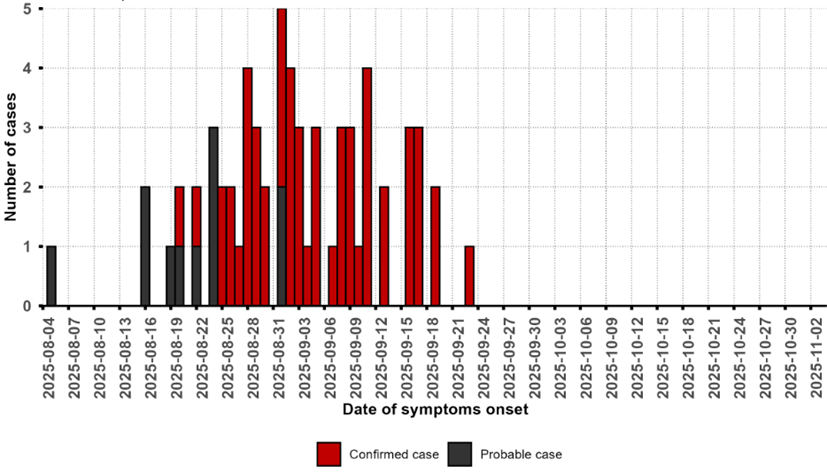
A total of 19 patients have recovered from the disease. No new cases have been reported since 25 September. In total, 64 cases (53 confirmed and 11 probable) have been reported since the outbreak was declared on 4 September in Bulape health zone, in Kasai Province.

The outbreak occurred in a rural and hard-to-reach locality. Despite the challenges of distance, poor roads, and limited infrastructure, the Ministry of Health, with strong support from World Health Organization (WHO) and partners, acted swiftly to scale up outbreak response measures.

WHO deployed multidisciplinary teams to strengthen surveillance, clinical care, infection prevention and control, logistics, community engagement and other key response measures. A 32-bed Ebola treatment centre, fitted with a two-bed Intensive Infectious Disease Treatment Module (IIDTM), was set up in record time, the first deployment of its kind outside a simulation exercise setting in the region. Additionally, more than 35 000 people have been vaccinated against Ebola in Bulape.

“The recovery of the last patient just six weeks after the outbreak was declared is a remarkable achievement that shows how strong partnership, national expertise and determination have contributed to overcoming challenges to save and protect lives,” said Dr Mohamed Janabi, WHO Regional Director for Africa

WHO and partners remain on the ground, working closely with government to ensure measures are maintained to swiftly detect and respond to any cases as the country counts down to the end of the outbreak.

If no new cases are detected, the outbreak will be declared over in early December 2025.

https://www.afro.who.int/news/last-ebola-patient-democratic-republic-congo-discharged
 
Last edited:
Translation Google

Ebola in Kasai, Democratic Republic of Congo: we transferred our activities to the local health authorities

After nearly two months of responding to the Ebola outbreak in Kasai, Democratic Republic of Congo, we have handed over the management of the Bulape Treatment Center to local authorities. The last confirmed case was recorded on September 26, and if no new infections appear, the outbreak can be declared over by November 30. We commend the collaboration with the Ministry of Health, the WHO, and the community, which was key to containing the epidemic. However, it is urgent to strengthen the health system to better respond to future emergencies.

MSF
29/10/2025

After several weeks of collaboration with the Ministry of Health, the World Health Organization (WHO) and local authorities, our teams handed over all activities of the Bulape Ebola Treatment Center (ETC) last Friday.

The last confirmed case of Ebola virus disease was recorded on September 26, and since then the number of alerts and suspected patients admitted to the Bulape Emergency Treatment Center has decreased dramatically . The last person to recover was discharged on October 19. If no new cases are confirmed, the outbreak can be officially declared over on November 30 , in accordance with the 42-day rule without any new confirmed infections.

“Thanks to this positive development, we have been able to conclude our emergency intervention in Bulape , withdraw our teams, and allow other organizations—particularly the Ministry of Health—to take over,” explains Dr. Maria Mashako, our medical coordinator in Kinshasa. “We are proud to have played a key role once again in the response to this epidemic , where collaboration with the authorities, the WHO, and the community enabled us to overcome numerous challenges.”

Our teams were among the first to arrive in Bulape after the outbreak was declared on September 4, alongside the Ministry of Health, its Emergency Response Team (COUSP), and the WHO. After providing immediate support to Bulape General Hospital and establishing a temporary treatment center, MSF collaborated with the WHO to build a new, more suitable facility , while continuing to provide care to suspected and confirmed patients. We also carried out community outreach activities and set up a transit center for suspected patients in Mpianga, which was handed over to the health authorities a few days ago.

“Ministry of Health staff have now replaced the MSF teams at the Bulape CTE. We will continue to provide financial support for another two weeks, and they will retain the infrastructure, equipment, and medicines we donated when we leave,” adds Dr. Mashako.

The response to the sixteenth Ebola outbreak in the Democratic Republic of Congo benefited from the rapid mobilization of authorities , experienced organizations, and local communities. This collective effort contained the spread of the epidemic , which tragically resulted in 45 deaths, including 34 confirmed cases. A total of 64 cases were recorded (53 confirmed and 11 probable), of which 19 patients recovered thanks to the care they received at the CTE (Ebola Treatment Center).

MSF reaffirms its readiness to support the Congolese authorities again if the outbreak resurfaces, and its commitment to continue working with national and international partners to protect public health and build on lessons learned to strengthen future epidemic responses.

“While this response has succeeded in controlling the outbreak, it has once again highlighted the need to strengthen the health system as a whole to better prevent, detect, and respond to crises of this kind,” concludes Dr. Mashako. “Experience shows that improving the quality of and access to primary care is the foundation of any effective emergency response . Mobilization at this level is therefore essential.”


https://www.msf.es/noticia/ebola-kasai-rd-congo-transferimos-actividades-autoridades-locales
 
image.png

image.png


(screenshots)

Special Briefing on Mpox & other Health Emergencies || Oct 30, 2025
https://www.youtube.com/watch?v=JD9YohdqvBA
 
Care, compassion and recovery of youngest patient in Democratic Republic of the Congo Ebola outbreak

image.png


05 November 2025

Bulape — Ebola virus disease is a serious illness. When detected late, it claims many lives, even with recent advances in vaccines and therapeutics. Although the disease has become more manageable with improved care and as response capacities, it still takes a heavy toll on families and communities.

The Democratic Republic of the Congo is experiencing its sixteenth Ebola outbreak in Bulape Health Zone in Kasai Province. A countdown to declare the end of the outbreak is ongoing after the last patient was discharged on 19 October 2025. There have been 64 cases (53 confirmed and 11 probable) and 45 deaths—a case fatality rate of 70%. The outbreak occurred in a remote and difficult-to-access locality, making it challenging to scale up and sustain response operations.

Despite the challenges, there have been moments of hope. A month after the outbreak was declared, a special event gave everyone involved in the response renewed strength: the recovery of one of the youngest Ebola patients in the outbreak—a eleven-month-old baby boy whose mother sadly died from the disease.

“I am so happy and deeply grateful to everyone who cared for my baby at the Ebola treatment centre, especially Jean and all those who dedicated themselves to his survival,” says Alidor Mashala Katshiabala, the baby’s father, referring to Jean Mikobi Tshilomba, who looked after the baby as they both recovered from Ebola at the treatment centre.

“I don’t know how to thank them or offer them something as precious as the life they saved. For me, the most important thing is that they protected and saved my child. I can only say thank you from the bottom of my heart,” says Katshiabala.

The baby was admitted at Bulape Ebola treatment centre on 19 September with his stepmother and three siblings, where they were all tested for Ebola. While his family members tested negative and returned home the following day, the baby tested positive, likely contracting the illness through breastfeeding and close contact with his mother, and had to remain at the treatment centre for care.

But as important as medical care is, babies, especially very young ones, also need comfort and human connection. This compassion came from Jean Mikobi Tshilomba, who was also diagnosed with Ebola and receiving treatment at the centre. He cuddled the baby when he cried, changed him and fed him as guided by the medical team. Tshilomba continued caring for the baby even after he was declared cured, remaining at the treatment centre until the infant also recovered.

“What moved me the most was thinking about my own child at home. I told myself that maybe one day, I could die and leave my child an orphan. So, if someone else could take care of them the way I’m doing today for this child, it would be a blessing. I do it simply out of love because I’m a parent and I deeply love children,” Tshilomba says.

A total of 19 patients have recovered from Ebola and no new cases have been reported since 25 September.

“Seeing this baby recover was one of the most moving moments of this outbreak. It reminded all of us why we do this work, every effort, every long day, every sleepless night is to save lives and bring hope back to families,” says Dr Mory Keita, World Health Organization (WHO) Incident Manager for Ebola response in Bulape.

Outbreaks begin and end in communities, and this is especially true for Ebola. In recent years, lessons from previous outbreaks have helped develop and improve valuable tools such as vaccines and treatments. More importantly, they have underscored the power of community ownership and engagement in the response, fostering a holistic approach to outbreak management.

Under the leadership of the Ministry of Health, WHO continues to provide operational and technical support to end the outbreak and assist survivors on their road to recovery.

https://www.afro.who.int/countries/...ient-democratic-republic-congo-ebola-outbreak
 
Translation Google

Ebola outbreak in Bulape: the situation remains under control

Published on Tue, 11/11/2025 - 14:39 | Modified on Tue, 11/11/2025 - 14:39

In the Bulape health zone, Mweka territory (Kasai), it has been 23 days since the last Ebola patient was discharged from the treatment center after recovering. The epidemic remains under control, according to Dr. Dieudonné Muamba, Director General of the National Institute of Public Health (INSP).

In an interview with Radio Okapi, Dr. Muamba indicated that all people identified as having been in contact with the sick are now out of the monitoring period, and that no new confirmed cases have been recorded since.

The 42-day countdown has already begun, the period required by the WHO to officially declare the end of the epidemic in an affected area.

“If no new cases are recorded by the end of November, we will be able to declare the end of the outbreak in Bulape. All response teams are still in the field, the mobile laboratory is in place, and community surveillance has been strengthened to report any alerts,” Dr. Muamba stated.

He urged the local population to remain vigilant, to promptly report any suspected cases, and to continue to adhere to preventative measures against the Ebola virus, including hand hygiene, limiting physical contact if symptoms appear, and seeking prompt medical attention.

The next crucial step: day 42, potentially marking the end of the epidemic if the situation remains stable.

https://www.radiookapi.net/2025/11/...ebola-bulape-la-situation-reste-sous-controle
 
Prevention as the first line of defence against Ebola

14 November 2025
image.png


Bulape, Democratic Republic of the Congo—In Bulape locality in the Democratic Republic of the Congo’s Kasai Province, the first signs of the Ebola were detected in a local maternity ward. A pregnant woman arrived showing unusual symptoms: difficulty breathing and haemorrhage. Juliette, the midwife on duty at the time, assisted the woman through labour. While handling the needle used on the patient, she accidentally pricked herself. A few days later, she sadly passed away—along with the mother and newborn.

Antho, the head of the maternity ward, was also present. She helped with the patient’s care but followed simple safety steps that protected her from infection.
“Not only was I wearing gloves, but each time I touched the patient, I went out and washed my hands with soap and water,” she says, visibly emotional about losing her colleague. “It was hard to lose Juliette. We’d worked together for a long time, and even in the toughest moments, she supported the team. Her loss has left a big void.”​


In public health emergencies, infection prevention and control is pivotal in saving lives. The ongoing Ebola response in the Democratic Republic of the Congo has focused on strengthening infection prevention along with other key outbreak control measures.

At the Bulape hospital as well as the maternity ward, infection prevention and control measures were reinforced. The measures included screening and triage at entry points, separate patient pathways to reduce risk, improved hand hygiene, safe injection practices, regular cleaning, availability of personal protective equipment and strict waste management procedures.

To make these changes sustainable, a committee on infection prevention and control was set up. Seventy-five hygienists, 32 nurses and 18 doctors received hands-on training in essential practices: triage, hand hygiene, safe injections, waste management, correct use of personal protective equipment, environmental hygiene and safe delivery.

The Ebola outbreak was declared on 4 September 2025 after 28 suspected cases and 15 deaths were reported, including four among health care workers. The country has since 19 October been counting down to declare the end of the outbreak. A total of 53 confirmed cases, 34 deaths, and 11 probable cases have been reported.

With better protection, health care personnel now work with confidence. Every day, Antho ensures that each birth is a moment of life, not a risk:
“Before, we worked out of habit. Now, we work with protection as a priority. I pass this message to every new colleague,” says Antho.​


In the hospital courtyard, Etienne Makashi Pongo, who supervises sanitation and hygiene, provides constant support to his team.
“IPC (infection prevention and control) isn’t about making work harder. It’s about making sure we all go home healthy at the end of the day,” he says, emphasizing the impact of the practices on staff safety.​


World Health Organization (WHO) has supported the efforts to strengthen infection prevention and control by assessing capacity in 16 health facilities across 10 of Bulape’s 21 health zones, developing improvement plans, and providing supervision and mentorship. The Organization also provided 200 pieces of personal protective equipment to health facilities, as well as 20 paediatric beds and mattresses. It also provided a safe water supply system and equipment to sustainably strengthen the maternity ward.
“Deliveries have resumed in a setting that ensures the safety of both patients and healthcare workers. Health workers are following standard precautions and working with great confidence. Patients are no longer afraid to come,” says Dr Justin-Marie Bongbango, acting head of infection prevention and control at WHO.​


For Antho, the experience has served a crucial lesson.
“This experience taught me that to save others, you must first protect yourself.”​

https://www.afro.who.int/countries/...s/prevention-first-line-defence-against-ebola
 
Translation Google

After Ebola, a new beginning: in Bulape, the Cured Program gives hope to Héritier

November 17, 2025

Bulape, DRC – In Bulape, in the heart of a community scarred by the Ebola epidemic, 25-year-old Héritier Bope Mpona is working to rebuild his life. A market vendor, he mainly sold beans to support his family.

At the start of the outbreak, his two-year-old daughter and his mother were the first victims. Shortly after, he and his wife developed the same symptoms. Testing positive, they were taken to the Ebola Treatment Center (ETC) for three weeks of treatment. Héritier survived, but his wife was not so fortunate.

Simply put, he sums up his experience: "I came out alive, but I came out alone," he confides.

Upon leaving the CTE, the house is empty. The neighbors are still hesitant to approach. Without immediate income, Héritier must find a new balance.

To address these needs, the Ebola Survivors Program was established by the Ministry of Public Health, Hygiene and Social Welfare, with support from the World Health Organization (WHO). This program supports the 18 Ebola survivors in Bulape, providing them with medical follow-up, psychosocial support, and assistance with social and economic reintegration.

Since the beginning of the response, the WHO has been providing technical and operational support to the Ministry for the implementation of the Program. This support includes the deployment of five experts to strengthen post-Ebola care, clinical monitoring, mental health, and community support.

The WHO coordinated the training of 15 healthcare providers, supplied essential medicines, consultation kits, personal protective equipment, and the necessary tools for clinical and psychosocial follow-up. Other partners are gradually joining these efforts to ensure the continuity of the program and the sustainable reintegration of survivors.

From the very first hours of the response, the WHO mobilized alongside the National Institute of Public Health to rapidly establish follow-up care for those who had recovered, according to Dr. Richard Kitenge, National Coordinator of the Ebola Recovered Persons Care and Follow-up Program and Incident Manager for this epidemic. This effort is part of a collaborative approach with the World Food Programme (WFP), which is distributing dry food to those who have recovered, and UNICEF, which has deployed a staff member to the field to strengthen local capacities. "This multi-partner support is essential to ensure continuity of follow-up, promote the reintegration of survivors, and guarantee lasting health stability in the area," he emphasizes.

To underline the importance of this work, Dr. Brys Busanga Shibari, head of the WHO's Ebola Recovered Programme, reminds us: "Surviving Ebola does not mark the end of the story. It is the beginning of a rebuilding process. No survivor should have to face this alone," he affirms.

At the clinic for those who have recovered, Héritier comes once a month for his follow-up appointment. The teams check his general condition, his vision, his sleep, and his pain, but above all, they take the time to talk to him. For him, this moment is important: "Here, I'm not just a patient. They listen to me and help me regain my confidence," he says.

Among the trained professionals, Thérèse Mboli, a clinical psychologist, regularly accompanies him. She sees her role as essential for the recovery:

"After Ebola, it is also necessary to treat what is not visible: fatigue, fear, sadness. My job is to be present and to move forward at his pace," she explains.

To complement this support, the Chief Medical Officer of the area, Dr. Jean Paul Mbantshi Beya, emphasizes the social dimension of healing: "Being healed is not enough. You have to be able to take your place again and feel surrounded. That is also part of healing," he stresses.

In Bulape, resuming life after Ebola is becoming a reality thanks to continuity of care, regular follow-up, psychosocial support, and assistance for survivors in their reintegration. This collective effort aims to restore the confidence, dignity, and autonomy of each survivor.

Héritier has not yet resumed his business at the market, but he now knows he can count on support. "Ebola turned my life upside down, but it didn't change who I am. Today, I am regaining confidence. Slowly but surely," he says.


image.png - Click image for larger version  Name:	image.png Views:	1 Size:	588.1 KB ID:	1023513

...

https://www.afro.who.int/fr/countri...-programme-des-gueris-redonne-espoir-heritier
 
Democratic Republic of the Congo declares end of 16th Ebola outbreak

01 December 2025

Kinshasa—The Democratic Republic of the Congo today declared the end of the Ebola virus disease outbreak in Kasai Province, after no new cases were reported in the past 42 days since the last patient was discharged from treatment centre on 19 October 2025.

“On behalf of the government— and taking into account all the scientific and operational indicators confirming that the chain of transmission of the virus has been broken—I hereby officially declare the end of the 16th Ebola outbreak in the Democratic Republic of the Congo,” said Dr Samuel Roger Kamba, Minister of Public Health, Hygiene and Social Welfare.

The rapid and coordinated response by the Ministry of Health, with support from World Health Organization (WHO) and partners, was pivotal in halting the spread of the virus which affected Bulape Health Zone, a rural community with limited road and telecommunication infrastructure. In total, 64 cases (53 confirmed, 11 probable) and 45 deaths were recorded in the outbreak.

A total of 112 WHO experts and frontline responders were deployed to support the national authorities to swiftly scale up and sustain the response, and over 150 tonnes of medical supplies and equipment were delivered to protect health workers and communities.

“Controlling and ending this Ebola outbreak in three months is a remarkable achievement. National authorities, frontline health workers, partners and communities acted with speed and unity in one of the country’s hard-to-reach localities,” said Dr Mohamed Janabi, WHO Regional Director for Africa. “WHO is proud to have supported the response and to leave behind stronger systems, from clean water to safer care, that will protect communities long after the outbreak has ended.”

For the first time in an outbreak, an innovative treatment facility known as the Infectious Disease Treatment Module (IDTM) was set up to bolster safer and more patient-friendly care. The module - developed by WHO, the World Food Programme and other partners—was designed to better protect health workers while enabling more dignified and effective care for patients.

To protect communities and health workers, more than 47 500 people were vaccinated against Ebola, with vaccination initially targeting contacts of people confirmed with the virus and later expanded to communities in and around Bulape.

Gavi, the Vaccine Alliance, played a key role in supporting the response by enabling the swift deployment of over 48 000 vaccine doses from the Gavi-funded global stockpile. The support also enabled the International Coordinating Group on Vaccine Provision to preposition doses and maintain a small stock in the country and, in partnership with WHO and the Ministry of Health, provided delivery funding for vaccine activities and essential cold chain and logistical support.

“The swift resolution to this Ebola outbreak is a testament to the dedication of healthcare workers, the Ministry of Health, partners and communities—and to what is possible when mechanisms are in place to fight deadly vaccine-preventable diseases,” said Allyson Russell, Senior Programme Manager, Global Health Security at Gavi, the Vaccine Alliance. “With vaccines from the global Gavi-funded stockpile and timely delivery support, coupled with other critical interventions such as surveillance, contact tracing, isolation and case management, our colleagues in the DRC have demonstrated that it is now possible to rapidly bring Ebola outbreaks like this one under control, dramatically reducing cases, long-term disabilities and deaths. Gavi remains committed to the fight against Ebola by maintaining the global stockpile and through continued support for preventive vaccination for frontline health workers in at-risk countries.”

Among the response challenges was the lack of reliable clean water supply to Bulape hospital for clinical use. WHO and partners set up a piped water system to the hospital as well as public taps, which will continue providing clean water to the community in the years to come. Additionally, reconstruction and rehabilitation work continues at the hospital and other facilities to bolster long-term health system resilience.

The outbreak was the country’s 16th since the disease was identified in 1976. Previous outbreaks in Kasai Province were in 2007 and 2008.

Ebola virus disease is a rare but severe, often fatal illness in humans. Human-to-human transmission is through direct contact with blood or body fluids of a person who is sick with or has died from Ebola, or objects and surfaces contaminated with body fluids from a person sick with Ebola or the body of a person who died from Ebola.

With the outbreak declared over, efforts are now shifting from Ebola-specific surveillance to the broader Integrated Disease Surveillance and Response system. WHO continues to work closely with national and provincial authorities to maintain vigilance and ensure preparedness, rapid and effective response in case of any flare-ups.

The country now begins a 90-day period of enhanced disease surveillance. As part of the sustained vigilance, a survivor care programme established with support from WHO and partners is helping to provide holistic post-recovery support for Ebola survivors.

https://www.afro.who.int/countries/...ublic-congo-declares-end-of16thebola-outbreak
 
Source: https://www.who.int/emergencies/dis...us-disease---democratic-republic-of-the-congo
Ebola virus disease - Democratic Republic of the Congo

1 December 2025


Situation at a glance

On 1 December 2025, the Ministry of Health (MoH) of the Democratic Republic of the Congo (DRC) declared the end of the Ebola virus disease (EVD) outbreak which had been declared on 4 September 2025. The end was declared after two consecutive incubation periods (a total of 42 days) since the last person confirmed with EVD tested negative for the virus and was discharged on 19 October 2025. A total of 64 cases (53 confirmed, 11 probable), including 45 deaths (CFR 70.3%), were reported from six health areas in Bulape Health Zone, Kasai Province. WHO and partners provided technical, operational and financial support to the government to contain the outbreak. This is the country’s 16th outbreak of Ebola. Although the outbreak has been declared over, health authorities are maintaining surveillance to rapidly identify and respond to any re-emergence. Risk communication and community engagement activities will continue to provide accurate information, monitor and address community feedback and rumours, and support efforts to reduce stigma toward individuals affected by the outbreak.

Description of the situation

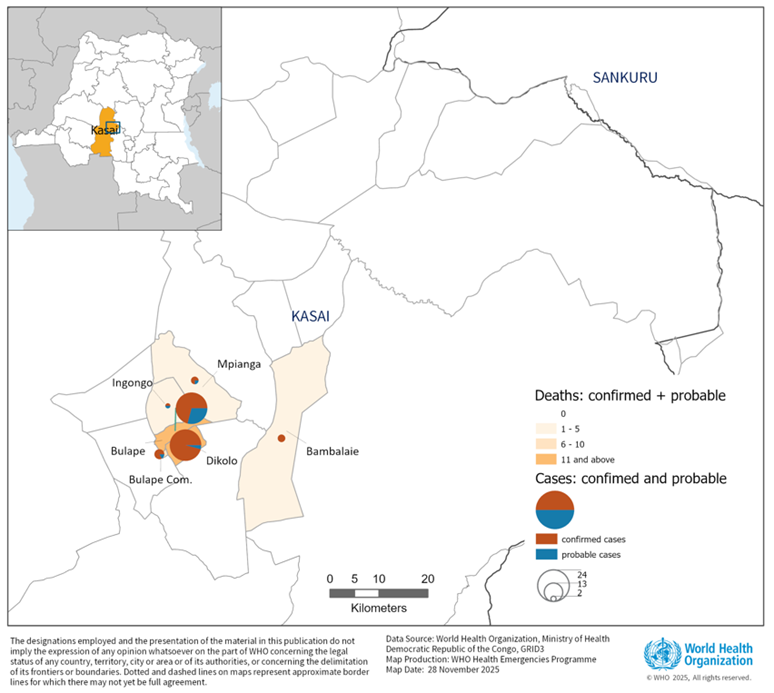
The EVD outbreak in the Democratic Republic of the Congo (DRC) was declared on 4 September 2025. As of 30 November 2025, a total of 64 cases (53 confirmed, 11 probable), including 45 deaths (CFR 70.3%), have been reported from six health areas (Bambalaie, Bulape, Bulape Com, Dikolo, Ingongo and Mpianga) in Bulape Health Zone, Kasai Province. Since the last confirmed case reported on 25 September 2025, no new confirmed EVD cases have been reported.
There have been five cases among health workers (four nurses and one laboratory technician), three of whom have died. The epicentres of the outbreak have been localised in Dikolo (26 cases, 15 deaths) and Bulape (24 cases, 22 deaths) health areas, which together account for 78.1% of the total cases reported and 82.2% of all deaths. The outbreak initially involved nosocomial transmission and a high-transmission funeral gathering, with high mortality among young children. As of 12 October 2025, a total of 572 contacts were followed up.
On 1 December 2025, the Ministry of Health declared the end of the outbreak. This declaration came after two consecutive incubation periods (42 days) since the last person confirmed with EVD tested negative for the virus and was discharged on 19 October 2025, as per WHO recommendations.
Figure 1. Map of confirmed and probable cases and deaths of Ebola virus disease, Bulape Health Zone, Kasai province, Democratic Republic of the Congo, as of 30 November 2025
Map EVD-DRC - Map EVD-DRC
Figure 2: Epidemic curve of confirmed and probable Ebola virus disease cases in Bulape Health Zone, Kasai province, Democratic Republic of the Congo, as of 30 November 2025
EVD-DRC_epi curve - EVD-DRC_epi curve


Epidemiology

Ebola virus disease is a severe disease caused by the Ebola virus (EBOV). The virus is transmitted to humans through close contact with the blood or secretions of infected wildlife and then spreads through human-to-human transmission by direct contact with bodily fluids, organs, or contaminated surfaces and materials.
The incubation period, the time between infection with the virus and the onset of symptoms, ranges from 2 to 21 days, but typically is 7–11 days. People are not infectious during the incubation period; they become contagious with early symptoms; therefore, transmission risk begins at the onset of clinical signs and increases with disease severity.
Case fatality ratios ranging from 25% to 90% have been reported in previous outbreaks. The disease is characterized by an acute onset of fever with non-specific symptoms/signs (e.g., abdominal pain, anorexia, fatigue, malaise, myalgia, sore throat) usually followed several days later by nausea, vomiting, diarrhoea, and occasionally a variable rash. Severe illness may include haemorrhagic manifestations (e.g., bleeding), encephalopathy, shock/hypotension, multi-organ failure, and spontaneous abortion in infected pregnant women. Individuals who recover may experience prolonged sequelae (e.g., arthralgia, neurocognitive dysfunction, uveitis, sometimes followed by cataract formation), and clinical and subclinical persistent infection may occur in immune-privileged compartments (e.g., central nervous system, eyes, testes). Family members, health and care providers, and participants in burial ceremonies with direct contact with the deceased are at particular risk.

Public health response

Health authorities, with support from WHO and partners, implemented public health measures, including but not limited to the following:
Coordination
  • The Ministry of Health (MoH) coordinated the outbreak response with WHO and partners, while the Incident Management Team in Bulape Health Zone oversaw field operations.
  • A high-level national delegation led by the Minister of Health visited Kasai Province to assess response activities, reaffirm government commitment, and inaugurate a newly constructed Ebola Treatment Centre.
  • WHO deployed 112 experts and frontline responders to support the national authorities to swiftly scale up and sustain the response.
  • A regional strategic preparedness and response plan was developed and disseminated to guide efforts in surveillance, case management, diagnostics, vaccination, IPC, community engagement, and operational readiness.
  • WHO launched a US$21 million appeal to scale up response operations, supported by contributions from partners.
Surveillance
  • Surveillance activities were scaled up in Bulape and nearby areas, and more than 100 alerts were investigated.
  • Community health workers were trained to support community-based surveillance using simplified case definitions.
  • Congolese Red Cross volunteers were engaged in reporting community deaths and supporting surveillance efforts, while mortality surveillance was initiated in health facilities
  • Surveillance, health screening and risk communication were reinforced at points of entry and points of control, including border crossings, with sensitization of staff at points of entry to detect and manage suspected cases.
  • Border communities were integrated into early warning systems and the national surveillance network.
  • WHO deployed epidemiologists in Bulape and supports the 90-day heightened surveillance period following the declaration of the end of the outbreak.
Laboratory
  • MoH and partners strengthened laboratory capacities and deployed a mobile laboratory to reduce turnaround time for laboratory results.
  • MoH performed full genome sequencing on the sample of the first confirmed case and findings indicate the outbreak was most likely the result of a spillover event from a zoonotic reservoir.
Case management
  • MoH, with support from WHO and partners, set up an Ebola treatment centre in Bulape
  • Case management strategy was scaled up to ensure sufficient capacities to provide care for all probable and confirmed cases in all hotspots.
  • Surge teams and partners supported clinical care. Patients received monoclonal antibody treatment.
  • WHO experts supported case management, essential health services, and survivor program implementation.
Vaccination
  • A total of 47 577 individuals were vaccinated with the rVSVΔG-ZEBOV-GP (Ervebo) Ebola vaccine in Bulape, Bulambae, and Mweka Health Zones.
  • A ring vaccination strategy implemented, targeting contacts, potential contacts, and high-risk healthcare/frontline workers, complemented by geographic targeting in hotspots.
  • Ultra cold chain equipment installed in Kananga, Mweka and Tshikapa to support vaccine storage and distribution.
Infection prevention and control
  • Infection prevention and control (IPC) response coordination mechanism activated, including the IPC ring around cases, which included cleaning and disinfection of sites where confirmed cases passed through.
  • Recommendations provided to health workers, district leaders, and the public to strengthen detection of suspected cases and implement appropriate IPC measures.
  • Supervision and support provided to Bulape General Hospital, Ebola treatment centre , and four health centres.
Risk Communication and Community Engagement
  • An integrated community engagement approach was implemented, enabling the Risk Communication and Community Engagement (RCCE) team to work alongside other response pillars to facilitate safe access to affected communities and strengthen acceptance of response activities such as community surveillance, contact tracing and vaccination.
  • Tailored risk communication messages were developed and disseminated widely, promoting protective behaviours and timely care- seeking, while sustained and evolving engagement with religious leaders, teachers, traditional healers and other trusted influencers helped build trust and community cooperation.
  • WHO provided technical guidance and on the ground expertise to conduct a rapid community assessment to better understand the knowledge, perceptions, experiences, needs and bottom-up solutions of local communities affected by the EVD outbreak. These findings are being used to inform appropriate and localized public health measures for community protection. Community health volunteers were trained and supported, expanding local capacity for community outreach and engagement.
Operations Support and Logistics
    • WHO and partners established a temporary airbridge to accelerate delivery of supplies and personnel to affected areas.
    • WHO delivered over 150 tonnes of medical supplies and equipment to protect health workers and communities. Additional logistics include an epi-shuttle, generator, motorbikes, mattresses, and food for patients.
    • The coordination with partners enabled rapid access to remote health zones.
Preparedness and readiness
  • Eight of nine neighbouring countries completed readiness assessments
  • DRC’s high-risk provinces were supported in planning.
  • Capacity building conducted on readiness in five health zones
Prevention of Sexual Exploitation, Abuse and Harassment
  • Prevention of sexual exploitation, abuse, and harassment (PRSEAH) integrated into response activities through responder briefings, community sensitization, and risk analysis.
  • Individuals from three churches and responders/community members were oriented on PRSEAH and reporting mechanisms.
  • PRSEAH focal points identified in collaboration with the Bulape Health Zone authorities.
  • Posters with PRSEAH principles and reporting information were displayed in health centres and offices.
WHO risk assessment

The current outbreak constitutes the 16[SUP]th[/SUP] Ebola disease occurrence in the DRC since 1976. The last outbreak was reported from North Kivu in 2022.
This outbreak occurred in difficult, hard to reach areas with limited existing infrastructure. A future outbreak is not unexpected given that EVD is endemic in the country. Ebola virus is enzootic and a resurgence from viral persistence in survivors has been described in recent epidemics. Re-emergence of EVD is a major public health concern in the Democratic Republic of the Congo; gaps remain in the country's capacity to recover, prepare for, and respond to outbreaks. The country is facing several outbreaks, including mpox, cholera, and measles. In addition, the country is experiencing a long-term economic and political crisis. The country's resources and capacity to effectively respond to the outbreak were therefore limited.
The epicentre of the outbreak was in proximity with the Angolan border (approximately 100 to 200 kilometres, depending on the nearest border crossing point). Although the affected district is a hard-to-reach rural area relatively far from the two main urban centres of Mbuji Mayi and Kananga, population movements between different parts of the province are frequent, especially between Bulape and Tshikapa.
The outbreak has most likely originated from a new zoonotic spillover and led to sustained human-to-human transmission. Infections and deaths among healthcare workers were reported, which raised the risk of nosocomial amplification and further spread within health facilities.
The outbreak is declared over, as of 30 November 2025, with no new cases reported for 42 consecutive days....



Back
Top