• FluTrackers.com Inc. does not provide medical advice. Information on this web site is collected from various internet resources, and the FluTrackers board of directors makes no warranty to the safety, efficacy, correctness or completeness of the information posted on this site by any author or poster. The information collated here is for instructional and/or discussion purposes only and is NOT intended to diagnose or treat any disease, illness, or other medical condition. Every individual reader or poster should seek advice from their personal physician/healthcare practitioner before considering or using any interventions that are discussed on this website. By continuing to access this website you agree to consult your personal physican before using any interventions posted on this website, and you agree to hold harmless FluTrackers.com Inc., the board of directors, the members, and all authors and posters for any effects from use of any medication, supplement, vitamin or other substance, device, intervention, etc. mentioned in posts on this website, or other internet venues referenced in posts on this website.
  • We are not asking for any donations. Do not donate to any entity who says they are raising funds for us.

DRC - Viral hemorrhagic fever cases, deaths (including health workers) in Bulape, Kasai province - August 20, 2025 - Ebola Zaire confirmed - Outbreak

Translation Google

Kasai: Ebola response strengthened after vaccination of INSP teams

By Serge Mavungu

The response to the resurgence of Ebola in Kasai province is intensifying with preventive vaccination against the virus by experts from the INSP - National Institute of Public Health - and technical and financial partners of the Congolese Government, before reaching Bulape, the epicentre of the epidemic .

The go-ahead was given by the Coordinator of COUSP (Centre for Public Health Emergency Operations), Professor Christian Ngandu, who himself set an example by being publicly vaccinated. This strong gesture marks the official launch of the vaccination of field teams before their deployment.

These experts will strengthen the team already at work since September 5.

Their main missions are to support epidemiological surveillance, patient care, local communication with communities, and targeted vaccination of at-risk populations.

Under the leadership of INSP Director General Dr. Dieudonné Mwamba, the response is being coordinated through COUSP, a veritable command center. With 43 confirmed cases, including 15 deaths, this outbreak is the 16th episode of Ebola in the DRC since 1976, when the first epidemic was reported in Yambuku, in what is now Mongala province.

As in similar situations, health authorities are calling on the population to be vigilant and to strictly respect hygiene measures to help break the chain of transmission of the virus.

Monday, September 8, 2025 - 08:21

https://www.opinion-info.cd/societe...renforcee-apres-la-vaccination-des-equipes-de
 
Image translated by Google

image.png


image.png

image.png

image.png


https://insp.cd/wp-content/uploads/2025/09/SITREP-MVE_002_06-SEPT-2025.pdf

https://insp.cd/ebola/
 
DRC: The Kasai provincial government confines the city of Bulape in the face of the Ebola epidemic

The provincial government of Kasai, in the center of the Democratic Republic of Congo (DRC), has announced the lockdown of the city of Bulape, located in the territory of Mweka, due to the spread of the Ebola virus. This decision was made following the alert launched by local health authorities, who identified several cases in the region.​
According to an official statement from the provincial government, strict measures have been put in place to control travel between Bulape and other surrounding areas. "Control posts will be installed at the three main entrances to the city, namely those of Dekese, Mushenge and Dombo, to monitor people who try to enter or leave the area concerned," says the press release.
In addition, two additional checkpoints will be installed at the Tshimbinda and Luenda River bridges, respectively at the entrance to the city of Tshikapa and on National number 1, before the city of Kakumba. These measures are intended to control the movements of people coming from Mweka, in order to limit the spread of the virus to the provincial capital.
Health authorities also urge the population to observe strict hygiene and health safety rules to avoid contamination. Recommendations include avoiding direct contact with sick people or their secretions, as well as compliance with barrier measures, such as washing hands with soap and water, avoiding crowds, and wearing a mask.
We count on everyone's vigilance to limit the spread of this deadly disease, "says the statement, also calling for the avoidance of any form of stigmatization of Ebola patients.

The confinement of Bulape is part of a set of measures taken to contain the disease and protect the population, as the DRC is fighting this epidemic that threatens to spread to other regions of the country.​
:tiphat:
https://congointer.info/2025/09/09/...ne-la-cite-de-bulape-face-a-lepidemie-debola/
 
Level 1 Practice Usual Precautions


Ebola in the Democratic Republic of the Congo


Level 4 - Avoid All Travel
Level 3 - Reconsider Nonessential Travel
Level 2 - Practice Enhanced Precautions
Level 1 - Practice Usual Precautions Key points
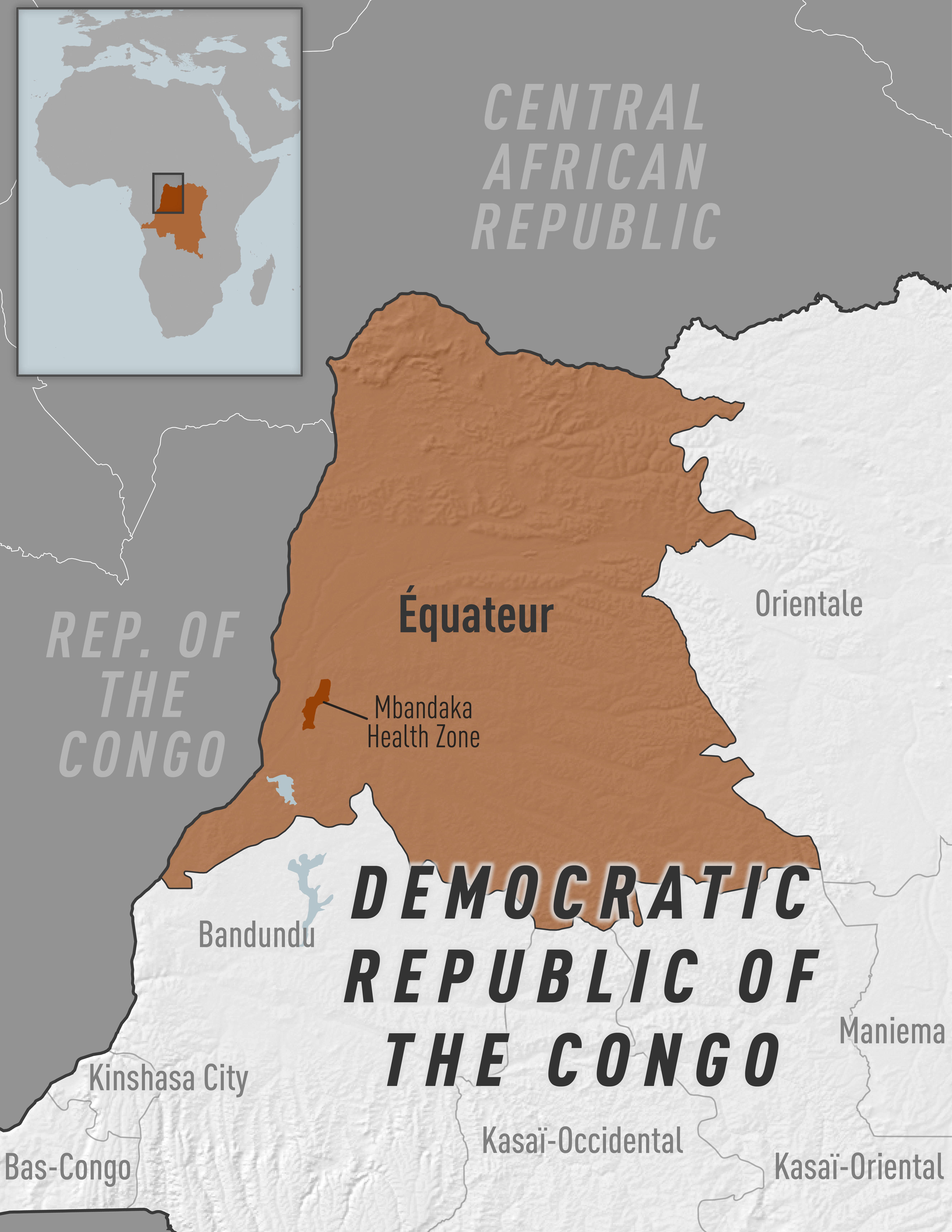
  • The Democratic Republic of the Congo (DRC) is experiencing an Ebola outbreak in the Bulape and Mweka Health Zones of Kasai Province (see map).
  • This outbreak has been linked to Ebola virus (species Orthoebolavirus zairense).
  • Local health authorities in the DRC are working to identify infected people and sources of transmission, conduct investigations, take action to prevent further transmission, and educate communities and the public about the risks and dangers of Ebola.
  • While not commercially available, there is an FDA-approved vaccine for the prevention of Ebola virus (species Orthoebolavirus zairense only). It is presently available to certain individuals in select occupations (e.g., outbreak responders). Contact your healthcare provider about eligibility and access to the vaccine.
  • If you travel to Bulape or Mweka Health Zones in the DRC, you should:
    • Review Health Information for Travelers to the Democratic Republic of the Congo to find out about routine precautions travelers should take when traveling to the DRC.
    • Consider getting travel insurance before you travel, including health and medical evacuation insurance, to cover yourself in case delays, injuries, or illnesses occur on your trip.
    • Avoid contact with sick people who have symptoms, such as fever, muscle pain, and rash.
    • Avoid contact with blood and other body fluids or objects that are contaminated with them.
    • Avoid contact with bats, forest antelopes, nonhuman primates (e.g., monkeys, chimpanzees, gorillas), and blood, fluids, or raw meat from these or unknown animals.
    • Avoid going into areas where bats live, such as mines or caves.
  • Watch your health for symptoms of Ebola while in the outbreak area and for 21 days after leaving. If you develop fever, headache, muscle pain, weakness, diarrhea, vomiting, stomach pain, and unexplained bleeding or bruising (a late stage of illness):
    • Separate yourself from others (isolate) immediately.
    • Do not travel.
    • Contact local health authorities or a healthcare facility for advice. Calling ahead before going to a healthcare facility helps the facility prepare for your arrival, including contacting health authorities and taking any precautions needed to protect staff and other patients.
Traveler Information
Clinician Information
Information for Organizations
ebola-drc.png

Map of the Democratic Republic of the Congo (View larger)​

What is Ebola?

Ebola disease (Ebola) is a rare and deadly illness that has, at times, caused outbreaks in several African countries.

Ebola is spread by contact with the blood or body fluids of a person who is infected with or has died from Ebola. It is also spread by contact with contaminated objects (such as clothing, bedding, needles, and medical equipment), or by contact with animals, such as bats and nonhuman primates, that are infected with Ebola virus.

Symptoms include fever, headache, muscle pain, weakness, diarrhea, vomiting, stomach pain, and unexplained bleeding or bruising (a late stage of illness).

Two Food and Drug Administration-approved treatments are currently available to treat Ebola virus disease due to infection with Ebola virus (species Orthoebolavirus zairense): Inmazeb™ and Ebanga™.

Ebola viruses can cause serious and often deadly disease, with a mortality rate as high as 80 to 90 percent without treatment.
Page last reviewed: September 08, 2025​
:tiphat:
https://wwwnc.cdc.gov/travel/notices/level1/ebola-democratic-republic-of-the-congo
 
Translation Google

Sankuru population urged to strengthen barrier measures against Ebola (Provincial Minister of Health)

September 9, 2025

Kinshasa, September 2025 (ACP).- The population and health workers of Sankuru, in the center of the Democratic Republic of Congo (DRC), were called on Monday to strengthen barrier gestures and preventive measures against Ebola, which is raging in the health zone of Bulape, in Kasai province neighboring Sankuru, during an awareness message. "I would like to give this message of awareness and prevention against the spread of the Ebola virus disease to the population of Sankuru and health workers. I call on the population and health workers to strengthen preventive measures and observe barrier gestures," said Tony Elonge, provincial Minister of Health. According to him, there is an epidemic of Ebola virus disease that has been declared in the neighboring province of Kasai, in the health zone of Bulape, a health zone that borders our health zones of Benadibélé and Koke. According to Dr. Elonge, given this geographical proximity and the shared flora and fauna, as well as the exchanges between our communities, we must strengthen measures of vigilance, prevention, and solidarity. "We are providing these recommendations for the population as part of individual hygiene and prevention. Therefore, we must wash our hands regularly with water, ash, and soap. Or with a chlorine solution," he added. The Sankuru Provincial Health Minister indicated that during this period, we must avoid touching or handling animal carcasses found in the forest. "You know that we share the same equatorial forest, of course, but especially in the territories of Colé and Loméla. We should not consume bush meat that comes from sick or dead animals. We should not come into direct contact with the blood, secretions, or objects of a person suspected of or sick with Ebola." And as part of community behavior, anyone with high fever, vomiting, diarrhea, or unusual bleeding should be promptly reported to the nearest health workers,” he said. As part of care and biosecurity, Mr. Elonge recommended strict adherence to prevention and infection control measures, the wearing of gloves, masks, gowns, and regular handwashing, immediately referring suspected cases to specialized treatment centers, properly disinfecting places frequented by patients, and safely managing biomedical waste. ACP/

https://acp.cd/sante/la-population-...contre-ebola-ministre-provincial-de-la-sante/
 
Translation Google

Intensification of the response to the Ebola virus disease epidemic in the DRC


image.png

September 10, 2025

Kinshasa – Following the declaration of the Ebola virus disease outbreak in Kasai province in the Democratic Republic of the Congo (DRC), the World Health Organization (WHO) is stepping up its efforts to support the government in strengthening measures to stop the spread of the virus as quickly as possible.

As soon as the outbreak alert was announced, WHO mobilized experts to join an advance team of first responders from the Ministry of Health, deployed to the Bulape and Mweka health zones in Kasai province. WHO also delivered two tons of emergency medical supplies and equipment during the advance team's deployment.

Additionally, within 48 hours of the outbreak being declared on 4 September 2025, WHO also airlifted 12 tonnes of outbreak control supplies, including personal protective equipment, patient isolation equipment, and water, sanitation, and hygiene supplies, to support clinical care and protect frontline health workers. More supplies are being shipped to the country to strengthen the response.

“The affected areas are difficult to access. We are working day and night to rapidly deploy response measures to ensure rigorous control of the outbreak, prevent the spread of the virus, and save lives,” said Dr. Mohamed Janabi, WHO Regional Director for Africa.

On September 7, first responder teams were vaccinated against Ebola in Kinshasa before their deployment to the field, thanks to a stockpile of vaccines prepositioned in Kinshasa with support from WHO and partners.

As the response to the outbreak intensifies, efforts are also underway to strengthen health emergency coordination. WHO is working with partner organizations to mobilize the necessary efforts, resources, and expertise to support national authorities in implementing an effective response.

The Organization is working with national authorities in 10 priority countries neighboring the DRC to launch preparedness assessments and contingency plans.

In Tanzania, for example, disease surveillance is being strengthened in areas bordering the DRC to rapidly detect and respond to any cases, thereby limiting any risk of the virus spreading. In Angola, WHO is supporting national authorities in strengthening preparedness, particularly in Lunda Norte province, which borders Kasai province in the DRC.

This is the 16th Ebola outbreak in the DRC since the virus was identified in 1976. It is occurring in a complex epidemiological and humanitarian context.

The DRC is simultaneously facing several other epidemics, including Mpox, cholera, and measles.

WHO assesses the overall public health risk posed by the current outbreak as high at the national level, moderate at the regional level, and low at the global level.

Ebola virus disease is a rare but serious illness that is often fatal in humans. Human-to-human transmission occurs through direct contact with the blood or bodily fluids of a person who has or has died from Ebola, or with objects contaminated by these fluids.

However, with effective treatments currently available, patients have a significantly higher chance of survival if they are treated promptly and receive supportive care.


https://www.afro.who.int/fr/countri...oste-lepidemie-de-maladie-virus-debola-en-rdc
 
Ebola epidemic in Kasai: already 20 deaths and 53 confirmed cases

September 10, 2025 editorial

Kasai province is facing a worrying resurgence of the Ebola epidemic. According to the Minister of Communications and spokesperson for the provincial government, Bazin Mpembe Ndjale, 20 deaths have already been recorded since the outbreak began.

To date, 53 cases have been confirmed and more than 200 suspected cases are under medical monitoring. Among the confirmed cases, one was identified in Dekese and two others in Mushenge, the minister said.

"The situation may change in the coming hours, but I urge the population not to panic. The most important thing is to respect the barrier measures to avoid contamination. The provincial government is working to ensure the protection of the population," Bazin Mpembe said on Wednesday, September 10, 2025.

The authorities are calling for vigilance and reiterating the importance of respecting preventive measures: avoiding direct contact with sick people, washing hands regularly and immediately reporting any suspected cases to the health services.

Marcel Mbombo

https://journaldesnations.net/epidemie-debola-au-kasai-deja-20-deces-et-53-cas-confirmes/

 
image.png - Click image for larger version  Name:	image.png Views:	2 Size:	48.1 KB ID:	1019139

/https://en.wikipedia.org/wiki/Kikwit
---------------------------------------------------------
(I am not familiar with these sources)

Translation Google


Ebola in Kikwit? Three suspected cases under analysis

September 9, 2025

Concern is mounting in the town of Kikwit, Kwilu province, following the emergence of three suspected cases of Ebola virus disease (EVD). Local health authorities confirmed that samples have been sent to the National Institute of Biomedical Research (INRB) in Kinshasa for further analysis. Results are expected by October 19.

According to initial information gathered:

The first case involved a motorcycle taxi driver who became unwell and vomited shortly after eating a meal in a public place. He died shortly after being admitted to the Kikwit General Reference Hospital (HGR).

The second case is a family member of the deceased, presenting similar symptoms, who also died.

The third case, also related, is currently being treated at HGR Kikwit.

At this stage, the cases remain suspect , and no official confirmation of the presence of the Ebola virus has been made. Authorities are urging caution while avoiding panic. Enhanced surveillance measures have been put in place, and medical teams are closely monitoring the situation.

Jemima Tshimbalanga Shukrani

https://santenews.info/ebola-a-kikwit-trois-cas-suspects-en-cours-danalyse/

-------------------------------------------------------------------
Health: Two deaths suspected of being linked to Ebola virus disease in Kikwit

By Truethematic-September 10, 2025

An alert has been issued in the town of Kikwit, capital of Kwilu province, after two deaths with signs suggestive of the Ebola virus were recorded at the Kikwit General Reference Hospital (HGR).

According to information obtained from a local source, the first case involved a motorcycle driver who reportedly experienced discomfort accompanied by vomiting blood, a few minutes after sharing a meal in a cafeteria with his colleagues. He was rushed to the Kikwit Higher Regional Hospital, where he died an hour after being admitted.

According to the same source, the second case is a woman with the same symptoms, taken by her family to HGR Kikwit, where she died shortly after arrival.

However, the latter's family took the body to an unknown destination, raising fears of risky handling, which could compromise public health if the Ebola virus is confirmed.

Faced with this situation, the security services were mobilized to find the body of this patient who died in suspicious circumstances at HGR Kikwit.

Currently, authorities are awaiting the results of samples taken from the first suspected case.

"The samples from the first case will be sent to the INRB tomorrow. All identified contacts have been asked to stay at home for close monitoring," the same source said.

An emergency meeting bringing together political, administrative and health authorities and technical and financial partners (TFPs) is scheduled for this Wednesday, September 10, 2025 at 10 a.m., to take stock of the situation.

Enock Nseka

https://vraiethematique.net/actuali...tre-lies-a-la-maladie-a-virus-ebola-a-kikwit/

----------------------------------------------------------
mike.mulamba


9h
#Health : Clarifications on the current situation regarding the appearance of suspected cases of hemorrhagic fever (Ebola) in Kwilu province, specifically in Kikwit, all of whom unfortunately died at the Kikwit HGR.

This is a motorcycle driver who became unwell and vomited blood a few minutes after having a meal in a local malewa with his colleagues. They brought him to the HGR, where he died within an hour.

The second case is a woman brought by her family to the Kikwit HGR with the same symptoms. She also died.

The family of this second case took the body to a destination that is still unknown. Security services are deployed to locate this destination.

The third case, who presented the same symptoms and was near the Lukolela Clinic, has also just died.

The samples taken from the first case will be sent to the INRB tomorrow.

All contacts of the first case have been identified and are being asked to stay home for medical follow-up.

An emergency meeting involving political and administrative authorities, health authorities, and technical and financial partners present on site is scheduled for today, September 10, 2025, at 10:00 a.m., on this matter.

https://www.instagram.com/p/DOab-bxkdl6/
 
Translation Google

Kasai: 68 cumulative cases of Ebola recorded in the Bulape health zone

September 10, 2025

Kinshasa, September 10, 2025 (ACP).- Sixty-eight (68) cumulative cases of Ebola virus disease, including 15 deaths, have been recorded up to September 8, 2025 in the Bulape health zone, in Kasai, central Democratic Republic of Congo, according to a press release from the National Institute of Public Health received by the ACP on Wednesday.

" The Bulape health zone, in the Mweka territory, has recorded since the official declaration of the epidemic until September 8, 68 cumulative cases and 15 deaths, representing a lethality rate of 22%," the statement read.

According to the source, patients are being treated free of charge at the Bulape Ebola treatment center.

The response is coordinated by the National Institute of Public Health (INSP), through its Public Health Emergency Operations Center (COUSP), under the authority of Dr. Dieudonné Mwamba, with the support of the Congolese government's technical and financial partners.

The statement noted that the main actions underway are the delivery of vaccine doses from Kinshasa to Bulape. Community awareness-raising on preventive measures, namely: avoiding contact with the body of a person who has died of Ebola, washing hands regularly with soap and water, not touching objects soiled by a sick or deceased person, and getting vaccinated against Ebola.

The source also cited the organization of dignified and secure burials (EDS), the protection and training of healthcare personnel as well as reinforced surveillance and contact tracing, among the main actions underway.

The installation of an INRB mobile mini-laboratory in Bulape and the validation of the national response plan by the Minister of Health and partners are also among these actions.

This is the 16th episode of Ebola resurgence in the DRC. Accessibility to intervention areas remains a major challenge due to the critical condition of the roads, which slows the delivery of supplies and the deployment of personnel.

Health authorities, through the INSP, are reminding everyone that prevention is the most effective weapon against Ebola and are calling on the population to rigorously apply hygiene and protection measures in order to break the chain of transmission. ACP/UKB

https://acp.cd/sante/kasai-68-cas-cumules-debola-enregistres-dans-la-zone-de-sante-de-bulape/
 
Related to post #29:

Translation Google


DRC: Preventive measures taken in Kikwit to prevent the spread of Ebola

September 10, 2025 editorial

Kwilu provincial authorities announced on Wednesday, September 10, 2025, that they have put in place several measures to protect the town of Kikwit, in the southwest of the Democratic Republic of Congo, against the Ebola virus disease.

Following a security meeting, the mayor of the commune of Nzinda, Serge Mushila, reassured the population, calling for calm in the face of rumors of confirmed cases in the town.

"We need to clarify some of the information circulating about the existence of Ebola cases in Kikwit. According to the doctors' report, the disease is currently located in Kasai province. But since our city is a major crossroads, we must take significant measures to prevent the worst from happening again, as in 1995, when the epidemic claimed many victims," ​​he explained.

Kikwit remains scarred by the memory of the serious Ebola epidemic of 1995, which caused several hundred deaths. Today, local authorities say they are strengthening prevention and health surveillance to prevent any spread to Kwilu.

Marcel Mbombo

https://journaldesnations.net/rdc-d...s-a-kikwit-pour-eviter-la-propagation-debola/

-----------------------------------------------------------------------------------------
Kikwit: City Hall denies rumors of Ebola outbreak, but calls on population to be vigilant

Yabiso News
September 11, 2025

The mayor of Kikwit city denies rumors about the presence of the Ebola virus in his jurisdiction, in the province of Kwilu.

In a press release released on Wednesday, September 10, 2025, a copy of which was sent to the Yabisonews.cd editorial team, Mayor Abe Ngiama reassured his constituents that no cases of the Ebola virus have been detected in the town of Kikwit.

"To date, there are no cases of Ebola in Kikwit," he reassures.

However, the mayor of the city of Kikwit called for the observance of barrier measures, given the proximity of his city to that of the province of Kasai which currently has 34 cases, including 24 confirmed cases and nearly 20 deaths recorded.

"Given the proximity and the migratory flow between the two provinces, we are obliged to strengthen surveillance and preventive measures in the city of Kikwit, which constitutes a crossroads for these different movements," the statement said.

Abe Ngiama also called on his constituents to remain calm and to respect the barrier measures against the Ebola virus, while awaiting the results of samples taken from a few suspected cases and sent to the INRB to confirm or not the presence of this virus in the city of Kikwit.

Let us recall that the city of Kikwit already faced this virus around 1995.

Patrick Isebey

https://yabisonews.cd/kikwit-lhotel...la-mais-appelle-la-population-a-la-vigilance/

----------------------------------------------------

No confirmed cases of Ebola outbreak recorded in Kwilu province (Provincial Health Division)

September 11, 2025

Kinshasa, September 11, 2025 (CPA).- No confirmed cases of Ebola virus disease (EVD) have been recorded in Kwilu province, in the southwest of the Democratic Republic of Congo (DRC), we learned Thursday from an official source.

" I say to the people of Kwilu province, from Bukedi health zone to Koshibanda health zone and Itam health zone, and to us, the people of Kikwit and its surrounding areas, that we have no cases of Ebola in our province ," said Dr. Jean Paul Matela, head of the Kwilu Provincial Health Division (DPS).

" Some people have talked about three cases. In any case, that's false. The only case of Ebola that we suspected out of vigilance was that of a taxi driver who died on September 9 after vomiting blood ," he said.

The results of the sample taken are pending at the National Institute for Biomedical Research (INRB), he said, before calling on the population to continue to respect hygiene measures, including regular hand washing with soap and water, as well as limiting physical contact.

This information from the Kwilu DSP comes as rumors about the presence of the Ebola virus were circulating in the said province, and more specifically in the town of Kikwit.

The 16th Ebola outbreak was declared on September 4 by the National Minister of Health in Kasai Province. A cumulative 68 cases, including 15 deaths, have been recorded as of September 8, 2025, in the Bulape health zone. The Ebola virus is transmitted to humans through direct contact with the blood, secretions, organs, or other bodily fluids of infected animals. Human-to-human transmission occurs through close contact with the bodily fluids of infected people, particularly through the mucous membranes (mouth, nose). MSF had already supported health authorities during previous outbreaks in the region in 2007 and 2008.

The new outbreak of Ebola virus disease (EVD), Zaire strain, was declared on September 4, 2025, by the Minister of Public Health, Hygiene and Social Welfare, in the Bulape health zone, in the Mweka territory, which is a remote region in the south-central part of the DRC. ACP/JF

https://acp.cd/sante/aucun-cas-conf...nce-du-kwilu-division-provincial-de-la-sante/
 
Last edited:
UN GENEVA PRESS BRIEFING

12 September 2025 UN Geneva Press Briefing​
...
Update on Ebola Outbreak in the Democratic Republic of the Congo

Dr Patrick Otim, Programme Area Manager for Emergency Responses, World Health Organization (WHO), said that as of yesterday, there had been one next confirmed case of Ebola, bringing the total number of confirmed cases to 25. There had been 14 deaths amongst the confirmed cases, making the case fatality rate around 56 per cent. There were also an additional 10 deaths being investigated that were suspected to be linked to Ebola. WHO was trying to ramp up case management to reduce the mortality rate and spread.

There were 13 villages that had been affected, mainly in Kasaï Province, with adults aged 20 to 40 representing around 40 per cent of cases. Some 55 per cent of cases were women and 67 per cent of deaths had been women. This was typical in such outbreaks, as it was mainly women who provided care. Over 560 contacts had been listed and WHO was working to record 100 per cent of contacts. Yesterday, 91 per cent of contacts were visited.

WHO was working with the Government and had ramped up efforts to achieve a full-scale response on the ground as soon as possible. It had deployed 42 experts, some of whom had arrived already, with the remainder arriving this morning. Some 87 per cent of deployments were nationals. WHO had also moved 12 tonnes of essential supplies and medicines for managing cases, including the therapeutic monoclonal antibody.

This morning, the first 400 doses of the vaccine were being delivered. The vaccination process would be fast-tracked, with an additional 1,500 doses of the vaccine ready to be moved in once the ultra-cold chain was in place. It was requesting additional vaccines from the International Coordinating Group (ICG) on Vaccine Provision and had released two million USD from its contingency fund for emergencies to help with this work. WHO had collaborated with the United Nations Organization Stabilization Mission in the Democratic Republic of the Congo (MONUSCO) to secure an air route deliveries.

This was the first outbreak in Kasaï in the last 18 years, so case management capacity in the region was limited and support needed to be ramped up. Access to the region was also problematic, almost unreachable without air support, and insecurity further hampered efforts.

WHO was finalising its Regional Strategic Preparedness and Response Plan, which would be launched over the weekend. It carried a cost of 20 million USD to support the response over the next three months.

This was a resource intensive response. WHO only had funds to use a helicopter for two more weeks, after which its response time would decrease. The new case confirmed yesterday was 70 kilometres from the current epicentre. WHO was worried about the potential expansion of the disease, and about the risk for neighbouring countries.

WHO had the expertise to respond to the outbreak, but it needed to be able to pay for its operations, and it needed boots and supplies on the ground. It was possible to contain the outbreak if responses were scaled up massively in the next two weeks, but it would be challenging if this window of opportunity was missed.

In response to questions, Dr Otim said 2,000 vaccines had been prepositioned in Kinshasa. WHO could not move these until it had identified the exact strain of the virus. It was now moving the first 400 doses of the required vaccine to reach contacts and contacts of contacts. It could only move 400 at a time due to limitations in ultra cold storage delivery, but was working to scale up this delivery system. Vaccines had moved from Kinshasa to Kananga, and from Kananga to Bulape. This was the first time that the vaccine had been used in Kasaï.

WHO would request an additional 40 to 50,000 doses to be brought into Kinshasa and would engage with local manufacturers to increase production, in case massive scaling up was needed.
...

https://www.ungeneva.org/en/news-media/press-briefing/2025/09/un-geneva-press-briefing-2
 
Translation Google

Kikwit: Suspected Ebola Case Declared Negative, Population Urged Not to Panic

Saturday, September 13, 2025 - 11:45 PM

The city of Kikwit has not reported any positive cases of the Ebola epidemic. This assurance comes from health authorities after a panic movement observed in Kikwit for two days.

The National Institute for Biomedical Research ruled out the disease after an initial sample was taken and sent by the health service.

The provincial health division chief reported that it was a motorcycle driver who vomited blood after eating at a restaurant commonly known as Malewa and died a few minutes after being transferred to a health facility.

Dr. Jean-Pierre Matela assures that measures are being taken to ensure the safety of all those who have come into contact with the deceased.

"We took the sample, sent it to the laboratory, thank God, it was not a case of Ebola virus disease," reassures the head of the provincial health division.

The Kwilu Provincial Health Division calls on the population to continue to respect barrier gestures and not to give in to panic.

"This is to stop the spread of the disease from one person to another. We must observe measures for greeting, cleaning hands with running water and soap, and reporting any suspected case that has shown signs," explains Dr. Jean-Pierre Matela.

Surveillance at the borders is being reinforced, particularly for a health check at the road border between the town of Kikwit and Kasai where temperature sampling will be carried out.

Kikwit is one of the towns in the DRC that bears the scars of Ebola. Around 1994, several people died from the disease in the economic city of Kwilu.

Jonathan Mesa

https://actualite.cd/2025/09/13/kik...negatif-la-population-invitee-ne-pas-ceder-la
 
Ebola vaccination begins in the Democratic Republic of the Congo

image.png - Click image for larger version  Name:	image.png Views:	1 Size:	103.9 KB ID:	1019322


14 September 2025

Bulape, Democratic Republic of the Congo — Vaccination of frontline health workers and contacts of people infected with Ebola virus disease has begun in Bulape health zone in the Democratic Republic of the Congo’s Kasai Province where an outbreak of the disease has been declared.

An initial 400 doses of the Ervebo Ebola vaccine—from the country’s stockpile of 2000 doses prepositioned in the capital Kinshasa—have been delivered to Bulape, one of the current hotspots of the outbreak. Additional doses will be delivered to the affected localities in the coming days.

The vaccine is being administered through ring vaccination strategy, which entails vaccinating individuals at highest risk of infection after having come into contact with a patient confirmed with the virus. It is also recommended for health care and frontline workers responding to the outbreak who may be in contact with Ebola patients. The Ervebo vaccine is safe and protects against the Zaire ebolavirus species, which has been confirmed as the cause of the ongoing outbreak.

The International Coordinating Group on Vaccine Provision has approved around 45 000 additional Ebola vaccine doses to be shipped to the Democratic Republic of the Congo as part of the ongoing outbreak response. WHO supported the health authorities to develop the request for additional doses, and with partners, including UNICEF, also supported the development of a vaccination plan for the rollout of the doses. Vaccination teams are also being trained in data collection and receiving field support.

In addition to the vaccines, treatment courses of the monoclonal antibody therapy (Mab114) drug have also been sent to treatment centres in Bulape for clinical care.

On the ground, WHO has so far deployed 48 experts in disease surveillance, clinical care, infection prevention and control, logistics and community engagement who, along with partner organizations, are supporting the government to rapidly strengthen outbreak response measures to halt the spread of the virus.

In countries neighbouring the Democratic Republic of Congo, WHO is working with national authorities to bolster operational readiness to enable rapid detection of cases and prompt initiation of measures to curb further spread.

WHO assesses the overall public health risk posed by the ongoing outbreak as high at the national level, moderate at the regional level and low at the global level.

https://www.afro.who.int/countries/democratic-republic-of-congo/news/ebola-vaccination-begins-democratic-republic-congo?country=Democratic%20Republic%20of%20Congo&n ame=Democratic%20Republic%20of%20Congo

-----------------------------------------------------------------------------

Translation Google

Kasai: 360 doses of Ebola vaccine arrive in Bulape

September 14, 2025

Tshikapa, September 14, 2025 (ACP).- Three hundred and sixty (360) doses of vaccine against Ebola hemorrhagic fever were received in the Bulape health zone, Mweka territory, Kasai province, in the center of the Democratic Republic of Congo, announced Sunday, the coordinator of the response on site during the reception.

"The first batch of 360 vaccine doses was received in the Bulape health zone this weekend. Vaccination teams have already been briefed, and the campaign will begin this Sunday. Patient care with the Ebanga molecule had already begun. The advantage of the arrival of these vaccines is that care will now be better provided, in accordance with standards," said Matthias Mossoko, response coordinator in Bulape.

He also called on the population to strictly respect barrier measures in order to limit the spread of the epidemic and avoid further deaths.

As of Sunday, September 14, 2025, 27 confirmed cases have been recorded in the Bulape health zone, including 16 deaths, as well as more than 50 suspected cases.

ACP/ CL

https://acp.cd/sante/kasai-arrivee-de-360-doses-de-vaccin-contre-la-fievre-ebola-a-bulape/

---------------------------------------------------------------------------------------

Government launches Ebola vaccination in Bulape

Published on Sun, 09/14/2025 - 5:15 PM | Modified on Sun, 09/14/2025 - 8:23 PM

The fight against the Ebola epidemic declared in the Bulape health zone, Kasai province, is entering an active phase. The government has launched vaccination against the virus, the World Health Organization (WHO) announced this Sunday, September 14. This vaccination is targeting frontline healthcare workers and contacts of infected people, according to the so-called ring vaccination strategy.

With the support of DRC partners, including the WHO, a first batch of 400 doses of the Ervebo vaccine, from the national stockpile of 2,000 doses pre-positioned in Kinshasa, was sent to Bulape, identified as one of the epicenters of the epidemic. Other doses will be sent to affected areas in the coming days, according to the WHO press release. The Ervebo vaccine protects against the Zaire ebolavirus species, responsible for the current epidemic.

The International Coordinating Group for Vaccine Procurement has approved the shipment of an additional 45,000 doses to the DRC. WHO supported health authorities in submitting this request and developing the vaccination plan. Field teams are also being trained in data collection and are receiving technical support.

Treatments and expertise deployed

Monoclonal antibody treatments (Mab114) were sent to treatment centers in Bulape to improve clinical management. WHO mobilized 48 experts specialized in epidemiological surveillance, clinical care, logistics, infection prevention, and community engagement.

In neighboring countries, WHO is working with national authorities to strengthen operational preparedness, enabling rapid case detection and immediate response. The organization assesses the health risk as high at the national level, moderate at the regional level, and low at the global level.

The Bulape health zone is facing significant logistical and health challenges. Local authorities have welcomed the arrival of vaccines and treatments, while calling for community mobilization to facilitate the response. Awareness campaigns are underway to encourage the population to cooperate with medical teams and promptly report suspected cases.

Epidemic on the rise

As of September 14, the Ebola virus has already affected 81 people, including 28 deaths, representing a fatality rate of 34.6% in the Bulape region, since the official declaration of the epidemic on September 4. 58 new contacts have been identified, bringing to 716 the number of people who have been in contact with carriers of the virus.

https://www.radiookapi.net/2025/09/...ment-lance-la-vaccination-contre-ebola-bulape

 
Translation Google
Meeting of the Provincial Emergency Committee MVE Bulape, September 13, 2025
  • September 14, 2025
  • Posted by insp.cd
    a3267bd82c0190152a3a79560a7e9b7959946e4c57d216699786c971bbb8f4f5
WhatsApp-Image-2025-09-14-at-12.06.09.jpeg

14Sep

On Saturday, September 13, 2025, the meeting room of the Kasai Provincial Health Division (DPS) hosted the meeting of the Provincial Emergency Committee on Ebola Virus Disease (EVD), in connection with the epidemic declared in the Bulape Health Zone.

  • Epidemiological situation as of September 12, 2025
    The update presented revealed:
    •⁠ ⁠2 new deaths recorded,
    •⁠ ⁠5 new confirmed cases out of 7 suspects in Bulape,
    •⁠ ⁠58 new contacts identified, bringing the total to 716 contacts listed.

    To date, the Bulape Health Zone has a total of 81 cases, including 28 deaths, representing a case fatality rate of 34.6%.
  • Progress in the response
    Vaccination efforts continue with:
    •⁠ ⁠The arrival of 400 doses of vaccine in Bulape,
    •⁠ ⁠360 additional doses received in Tshikapa by the national team of the Expanded Programme on Immunization (EPI), currently on its way to Bulape.
  • Community Risk Communication and Engagement (CREC) Activities
    The CREC teams carried out several major actions, including:
    •⁠ ⁠A guided tour of the Ebola Treatment Center (ETC) with a religious leader (pastor),
    •⁠ ⁠- The removal of 6 community resistances in Bulape and Dikolo,
    •⁠ ⁠13 epidemiological alerts raised,
    •⁠ ⁠Support for the installation of a health checkpoint in Bambalaie.
    The meeting highlighted the importance of community mobilization, multi-sectoral coordination and logistical reinforcement to contain the spread of the disease in the province.
WhatsApp-Image-2025-09-14-at-12.06.09-1.jpeg


https://insp.cd/reunion-du-comite-provincial-durgence-mve-bulape-13-septembre-2025/
 
Translation Google

Ebola in Kasai: First cured patients leave treatment center

Wednesday, September 17, 2025 - 07:07

The first survivors of the Ebola virus disease, declared on September 4 in the Bulape health zone (Mweka territory), in the Kasai province, have been fully cured and have returned home after a few days of treatment at the Bulape general referral hospital, announced Médecins Sans Frontières (MSF) on Tuesday, September 16.

The organization did not specify the exact number of people cured, but emphasized that this recovery is the result of care provided by the Ministry of Health, Médecins Sans Frontières (MSF), the World Health Organization (WHO), and the National Institute for Biomedical Research (INRB). These organizations, according to MSF, have contributed to reducing mortality and saved several Ebola patients.

The fight against the Ebola epidemic in the Bulape health zone is entering an active phase. The government has launched vaccination against the virus, the WHO announced on Sunday, September 14. This campaign targets frontline healthcare workers as well as contacts of infected people, according to the so-called ring vaccination strategy.

With the support of DRC partners, including the WHO, a first batch of 400 doses of the Ervebo vaccine, from the national stockpile of 2,000 doses pre-positioned in Kinshasa, was sent to Bulape, identified as one of the epicenters of the epidemic. Further doses will be sent to affected areas in the coming days, according to the WHO press release.

The International Coordinating Group for Vaccine Procurement has approved the shipment of an additional 45,000 doses to the DRC. WHO supported health authorities in submitting this request and developing the vaccination plan. Field teams have also been trained in data collection and are receiving technical support.

As of Tuesday, September 16, the Ebola virus has already affected 81 people, including 28 deaths, representing a case fatality rate of 34.6% in the Bulape region, since the official declaration of the epidemic on September 4. Fifty-eight new contacts have been identified, bringing the total number of people who have been in contact with carriers of the virus to 716.

Joshua Mutanava

https://actualite.cd/index.php/2025...ients-gueris-quittent-le-centre-de-traitement

--------------------------------------------------------

image.png - Click image for larger version  Name:	image.png Views:	1 Size:	47.4 KB ID:	1019412

image.png - Click image for larger version  Name:	image.png Views:	1 Size:	458.2 KB ID:	1019413

image.png


https://www.facebook.com/OMSRegionA...-maladie-à-virus-ebola-vienn/803690638705276/

-------------------------------------------------------------------------

Ebola survivors reunite with their families after recovery in Bulape

Published on Wed, 09/17/2025 - 12:58 | Modified on Wed, 09/17/2025 - 1:38 PM

Two Ebola survivors, after being successfully treated, have left the Bulape General Reference Hospital in Mweka Territory, Kasai Province, after a few days of treatment.

The Director General of the National Institute of Public Health, Dr. Dieudonné Mwamba, announced this good news on Wednesday, September 17, specifying that sixteen confirmed cases are currently continuing to receive treatment.

The cured patients left the hospital with joy and euphoria, warmly welcomed by their families upon leaving the center. Among these survivors was a member of the healthcare staff, a nurse who participated in the care of the sick. After her recovery, she became involved in raising awareness among communities about respecting barrier gestures and encouraging people to go to the hospital quickly as soon as the first symptoms appeared, in order to increase the chances of recovery.

" To the entire community, I want to say that the disease exists. I am the first person to have contracted this disease because I am a nurse in this center, I work as a midwife, but I caught this disease. I cannot hide it. I went to the hospital as quickly as possible for treatment ," she testified.

Meanwhile, the vaccination campaign launched on Sunday, September 14, continues. It targets healthcare workers on the front lines of the fight against the virus and those in contact with patients. To date, more than 500 people have been vaccinated.

Preventive measures

Dr. Dieudonné Mwamba reminds us that to prevent Ebola hemorrhagic fever, it is essential to:

Wash your hands regularly with soap and water
Avoid contact with people who are sick or have died from Ebola
Do not handle wild animals found dead or sick
Limit travel and risky activities in affected areas
Get vaccinated if you are identified as a contact or exposed.

He also calls on the population to be attentive to the characteristic symptoms of the disease, such as high fever, headaches, body aches, nausea, vomiting and diarrhea, sometimes tinged with blood.

The recovery of these patients from Bulape is the result of the joint efforts of the Ministry of Health and its partners, including Médecins Sans Frontières (MSF), the World Health Organization (WHO), and the National Institute for Biomedical Research (INRB).

https://www.radiookapi.net/2025/09/...retrouvent-leurs-familles-apres-leur-guerison
 
Democratic Republic of the Congo (DRC), Emergency Appeal MDRCD047 - Ebola

Format Situation Report Source
Posted 17 Sep 2025 Originally published 17 Sep 2025 Origin View original

Attachments
SITUATION OVERVIEW

EVD is a severe, often fatal illness in humans caused by infection with the Ebola virus. It is transmitted to people from wild animals and spreads in human populations through direct contact with blood, secretions, organs or other bodily fluids of infected individuals, and through contaminated surfaces and materials. The average case fatality rate is around 50 per cent but can vary from 25 to 90 per cent depending on the outbreak and the timeliness of treatment and control measures. Case numbers are evolving rapidly. As of the 14 September reporting cycle, 30 cases have been confirmed and 27 deaths have been reported, including four health workers. There are 43 suspected cases across four districts including Bulape, Mweka, Mushenge and Kanzala, and contacts have been traced to Tshikapa, reflecting ongoing investigations and data consolidation. Operational constraints are significant. Road access from Kinshasa can take up to three days and the nearest isolation unit has roughly 15 beds, well below current needs. Surveillance, contact tracing and Safe & Dignified Burials (SDB) must scale up quickly as well to interrupt transmission chains. Currently, 2,000 doses of the Ervebo vaccine are pre-positioned in Kinshasa for ring vaccination of contacts and frontline workers.

https://reliefweb.int/report/democr...lic-congo-drc-emergency-appeal-mdrcd047-ebola
----------------------------------------
More from the PDF link above:
...

TARGETING

People affected/at risk

• Directly affected zones as of 14 September: Bulape (epicentre); Mweka; Mushenge; and Kanzala, with alerts and contacts validated in Dekese and movement into Tshikapa. Population in immediate risk zones is approximately 680,000.

• Extended risk areas: contacts may move into adjacent health zones in Kasai, Kasai Central and Sankuru, with potential spread in a catchment area of approximately 2 million people.

People to be assisted (calculated over an initial period of 12 weeks4 ):

• Total to be assisted: 965,000.
• Direct and high-intensity support - approx. 23,200 people: this includes support to cases both confirmed and suspected, as well as contacts and close relatives. It also accounts for services and support provided to healthcare workers in both facilities and in the community, as well as Red Cross volunteers.
• Community prevention in immediate at-risk areas - approx. population in the area 680,000: this has a coverage target of 65 per cent through Risk Communication & Community Engagement (RCCE), health promotion, Community-based Surveillance (CBS), Mental Health & Psychosocial Support (MHPSS) and WASH for an estimated 442,000 people.
• Preparedness in extended at-risk areas, covering 2 million people: coverage target of 25 per cent of this (500,000 people) through radio campaigns, engagement with community leaders and light-touch WASH. The 965,000 figure reflects the unique-reach target over the next 12 weeks, recognizing overlap between groups but ensuring comprehensive epidemic control. It balances direct case-related interventions with community-wide prevention, consistent with Ministry of Public Health (MOPH)/DRC Centre des Operation’s des Urgences de Santé Publique (COUSP) priorities and the Emergency Appeal operational strategy.
...
 
Source: https://halifax.citynews.ca/2025/09...ebola-cases-in-congo-have-resulted-in-deaths/


WHO says 31 of 38 Ebola cases in Congo have resulted in deaths
By Ope Adetayo, The Associated Press
Posted Sep 18, 2025 10:27:15 AM.

Last Updated Sep 18, 2025 10:31:34 AM.

LAGOS, Nigeria (AP) — The World Health Organization said Thursday that 31 of 38 confirmed Ebola cases have resulted in deaths in southern Congo, where authorities are battling a new outbreak of the deadly virus.

The latest figures show the casualty rate has nearly doubled since last week — from 16 — and that the disease is spreading rapidly as more than 900 contacts have been identified so far, according to the WHO. Vaccinations began in the affected region on Sunday.

“More than 500 health care workers and contacts have received their vaccination, offering them crucial protection,” said Dr. Patrick Otim, an official at WHO Africa’s program.

A fresh Ebola outbreak was announced by Congolese authorities on Sept. 5 in the locality of Bulape in Kasai, a south-central region in Congo close to Angola.​...
 
Accelerating response to end Ebola outbreak in the Democratic Republic of the Congo

18 September 2025

Brazzaville — Response to the Ebola outbreak in the Democratic Republic of the Congo is accelerating, with a range of control measures being scaled up leading to quicker detection of the virus, early start of treatment and care, contact tracing, as well as vaccine rollout.

Two weeks since the declaration of the outbreak on 4 September 2025, over 90% of contacts of confirmed cases are being monitored and followed up, from just 19% a fortnight ago. Monitoring of contacts is important for—among other measures—rapid detection, prompt isolation and quick initiation of treatment when Ebola symptoms appear. A total of 943 contacts are being followed up in Bulape health zone, the current epicentre of the outbreak. The goal is to disrupt the chain of transmission in the community.

Sixteen patients are receiving treatment at Bulape treatment centre, where a 34-bed treatment centre has been set up with clinical care experts and therapeutics deployed to improve treatment. The first two patients to recover from Ebola were discharged on 15 September.

Laboratory testing of samples is now being conducted on site in Bulape. Sample testing turnaround time has also significantly improved, with results now obtained within 4—6 hours, down from 4—5 days previously when samples would be shipped to Kinshasa.

To reduce community transmission as well as safeguard the health workers who are at most risk, a total of 523 frontline health workers in Bulape health zone and contacts have been vaccinated as of 16 September. Six teams are carrying out the vaccination. Around 45,000 additional doses of the Ervebo vaccines have been approved and an initial consignment of 2000 doses has been delivered.

“While we’re witnessing important improvements in the response, we’re still in the early days of the outbreak. A determined action is vital to consolidate these positive steps, gain ground against the virus, end its spread and protect the population,” said Dr Mohamed Janabi, World Health Organization (WHO) Regional Director for Africa.

WHO and partners, including Médecins Sans Frontières, UNICEF, ALIMA and others, are working closely with the national health authorities to strengthen all key aspects of outbreak response. Logistics, for instance, has been bolstered, with supplies now stockpiled closer to the epicentre. Thanks to support from World Food Programme and the UN peacekeeping mission in the country (MONUSCO), an airbridge has been established, cutting travel time to just hours from several days at the start of the outbreak.

The outbreak has so far affected 14 localities in Bulape, with no cases recorded in other health zones of Kasai Province. A total of 48 cases (38 confirmed and 10 probable), and 31 deaths have been reported as of 17 September.

“Our aim is to work with the community to disrupt the transmission chain by intensifying disease surveillance in communities, alert management, contact tracing, active case searching and strengthen preparedness efforts in the surrounding health zones and provinces,” said Dr Patrick Okumu Abok, Acting Regional Emergency Director, WHO Regional Office for Africa.

Genomic analysis has shown close similarity of the current outbreak to one in 1976, suggesting that it is due to a new zoonotic spill-over and not directly linked to previous outbreaks in Kasai Province in 2007and 2008.

Ebola is a severe, often fatal illness affecting humans and other primates. Case fatality rates have varied from 25% to 90% in past outbreaks. Effective treatment is available and if patients receive treatment early, as well as supportive care, their chances of survival improve significantly.


https://www.afro.who.int/countries/...-end-ebola-outbreak-democratic-republic-congo
 
Back
Top