

Install the app
How to install the app on iOS
Follow along with the video below to see how to install our site as a web app on your home screen.
Note: This feature may not be available in some browsers.
-
FluTrackers.com Inc. does not provide medical advice. Information on this web site is collected from various internet resources, and the FluTrackers board of directors makes no warranty to the safety, efficacy, correctness or completeness of the information posted on this site by any author or poster. The information collated here is for instructional and/or discussion purposes only and is NOT intended to diagnose or treat any disease, illness, or other medical condition. Every individual reader or poster should seek advice from their personal physician/healthcare practitioner before considering or using any interventions that are discussed on this website. By continuing to access this website you agree to consult your personal physican before using any interventions posted on this website, and you agree to hold harmless FluTrackers.com Inc., the board of directors, the members, and all authors and posters for any effects from use of any medication, supplement, vitamin or other substance, device, intervention, etc. mentioned in posts on this website, or other internet venues referenced in posts on this website.
-
We are not asking for any donations. Do not donate to any entity who says they are raising funds for us.
You are using an out of date browser. It may not display this or other websites correctly.
You should upgrade or use an alternative browser.
You should upgrade or use an alternative browser.
DRC – 17th Ebola Outbreak (Bundibugyo virus) - Concerns over reliability of Government reported cumulative cases and deaths - May 2026+
- Thread starter Michael Coston
- Start date
Pathfinder
Editor, Senior Moderator
Translation Google
Kinshasa: The boat suspected of carrying Ebola has been released, vigilance has been increased.
Sun 09/08/2026 - 15:24
The ship that was immobilized at the gates of Kinshasa after an alert related to a suspected case of Ebola has been released, as no cases of the disease were detected on board, Congolese Health Minister Roger Kamba told ACTUALITE.CD on Sunday.
The boat was stopped about 65 kilometers from the capital after an alert was issued by the Ministry of Health's monitoring system.
A health zone in Mongala province reported the death of a person who presented with symptoms including fever, diarrhea, and vomiting after disembarking from a boat. This person died without having undergone testing, making it impossible to determine if they had Ebola.
According to Roger Kamba, the alert sent to the authorities also indicated that the boat came from Kisangani, an area affected by the current epidemic. This information proved to be incorrect after the vessel was intercepted.
"The mistake was the surveillance system that alerted us, thinking the boat was coming from Kisangani," the minister stated. The boat actually came from Mongala, according to information gathered from the captain, crew, and passengers.
Seven people on board exhibiting symptoms were tested for Ebola, and all results came back negative, Roger Kamba stated. The ship had also been at sea for more than 21 days when it was intercepted, according to the minister.
The boat and its occupants were released on Friday. "We had absolutely no cases of Ebola virus disease on board," said Roger Kamba, who also stated that no cases of Ebola had been detected in Kinshasa.
However, the authorities have decided to permanently maintain the surveillance system installed 65 kilometers upstream from the capital.
https://actualite.cd/index.php/2026...suspecte-debola-libere-la-vigilance-renforcee
Kinshasa: The boat suspected of carrying Ebola has been released, vigilance has been increased.
Sun 09/08/2026 - 15:24
The ship that was immobilized at the gates of Kinshasa after an alert related to a suspected case of Ebola has been released, as no cases of the disease were detected on board, Congolese Health Minister Roger Kamba told ACTUALITE.CD on Sunday.
The boat was stopped about 65 kilometers from the capital after an alert was issued by the Ministry of Health's monitoring system.
A health zone in Mongala province reported the death of a person who presented with symptoms including fever, diarrhea, and vomiting after disembarking from a boat. This person died without having undergone testing, making it impossible to determine if they had Ebola.
According to Roger Kamba, the alert sent to the authorities also indicated that the boat came from Kisangani, an area affected by the current epidemic. This information proved to be incorrect after the vessel was intercepted.
"The mistake was the surveillance system that alerted us, thinking the boat was coming from Kisangani," the minister stated. The boat actually came from Mongala, according to information gathered from the captain, crew, and passengers.
Seven people on board exhibiting symptoms were tested for Ebola, and all results came back negative, Roger Kamba stated. The ship had also been at sea for more than 21 days when it was intercepted, according to the minister.
The boat and its occupants were released on Friday. "We had absolutely no cases of Ebola virus disease on board," said Roger Kamba, who also stated that no cases of Ebola had been detected in Kinshasa.
However, the authorities have decided to permanently maintain the surveillance system installed 65 kilometers upstream from the capital.
https://actualite.cd/index.php/2026...suspecte-debola-libere-la-vigilance-renforcee
Pathfinder
Editor, Senior Moderator
SitRep N°085/MVEBDB/07/08/2026


...
https://insp.cd/sitrep-n085-mvebdb-07-08-2026/
- août 9, 2026
- Posted by insp.cd
...
https://insp.cd/sitrep-n085-mvebdb-07-08-2026/
Pathfinder
Editor, Senior Moderator
Pathfinder
Editor, Senior Moderator
Google map
--------------------------------------------------------------------------------------
Translation Google
North Kivu: Two confirmed Ebola cases have died in the Lubero health zone; more than 110 contacts have already been identified.
24 minutes ago RMBB Editorial Staff
The Lubero health zone is already affected by the 17th Ebola Bundibugyo outbreak. It has recorded two confirmed cases since August 2, 2026. Health sources report that both patients have died.
To date, more than 110 contacts have already been identified by local health teams. The military administrator of the Lubero territory is concerned about the rapid spread of the disease within his jurisdiction.
According to Colonel Kiwawa Mitela Alain, the Lubero health zone is the third affected in his territory, after Musienene and Masereka. He mentions several difficulties in the response, including the lack of supplies for infection prevention and control, the shortage of medications, and the distance of the treatment center from hospitals and referral health centers.
“The Lubero health zone has become the third health zone affected by the Ebola epidemic in the Lubero territory, after the Masereka and Musienene health zones. There are some challenges I would like us to address, such as the need for the Ebola treatment center to be located close to our referral hospitals. There are also other supplies that are lacking here. First, there are protective kits for healthcare workers; it is crucial that they are equipped with these kits. We need camouflage, for example, and body bags; these are also essential. I would like to ask the population to recognize that this disease is real. As soon as the disease is detected very early, the patient can recover. We already have cases of recovery in other health zones, such as Musienene and Masereka,” he emphasized.
The epidemiological report on Ebola virus disease, published Sunday, August 9, 2026, reports five provinces and 53 health zones affected.
In Ituri province, the affected health zones are: Aru, Aungba, Bambu, Bunia, Damas, Drodro, Gety, Kilo, Komanda, Lita, Logo, Mambasa, Mangala, Mongbwalu, Nizi, Nyankunde, Rimba, Rwampara, Tchomia, Kambala, Nia-Nia, Fataki, Mandima, Lolwa, Boga, Ariwara, Mahagi and Adja.
In the province of North Kivu, the affected health zones are: Beni, Butembo, Goma, Kalunguta, Katwa, Kyondo, Oicha, Vuhovi, Mabalako, Masereka, Musienene and Lubero.
Justin Kasembo
https://www.radiomoto.net/2026/08/1...-lubero-plus-de-110-contacts-deja-identifies/
Pathfinder
Editor, Senior Moderator
Pathfinder
Editor, Senior Moderator
(screenshot)

...
"Last week I travelled to the #DRC, where I had the honour of meeting with His Excellency President Félix Tshisekedi, and other leaders and partners.
Together we assessed the response to the [HASHTAG="c783"]Ebola[/HASHTAG] epidemic in the country’s northeast, and how to address the challenges we face.
I very much welcome the President’s leadership and commitment to doing everything he can to bring this outbreak under control.
It is already the second-biggest Ebola epidemic on record, and it is moving faster than any previous Ebola outbreak.
At its current pace, it is on track to eclipse the West African Ebola outbreak of 2014 to 2016.
Officially, 4449 confirmed cases have been reported, with 2061 deaths across five provinces and 53 health zones.
The outbreak had a big head start, it is still way ahead of us, and we are playing catch-up.
About 90% of all cases and 80% of deaths are in the province of Ituri, with sustained transmission in the towns of Bunia, Rwampara, Nizi and Lita.
Most concerningly, we see a high proportion of deaths in communities instead of treatment units, outside of known contact lists.
That tells us there are chains of transmission we don’t know about, and until we know about – and break – every chain of transmission, we will not stop the outbreak.
Most transmission happens when people have late-stage disease and are not in treatment, or when their body is handled after they have died"-
@DrTedros
...
9:07 AM · Aug 12, 2026
...
"Last week I travelled to the #DRC, where I had the honour of meeting with His Excellency President Félix Tshisekedi, and other leaders and partners.
Together we assessed the response to the [HASHTAG="c783"]Ebola[/HASHTAG] epidemic in the country’s northeast, and how to address the challenges we face.
I very much welcome the President’s leadership and commitment to doing everything he can to bring this outbreak under control.
It is already the second-biggest Ebola epidemic on record, and it is moving faster than any previous Ebola outbreak.
At its current pace, it is on track to eclipse the West African Ebola outbreak of 2014 to 2016.
Officially, 4449 confirmed cases have been reported, with 2061 deaths across five provinces and 53 health zones.
The outbreak had a big head start, it is still way ahead of us, and we are playing catch-up.
About 90% of all cases and 80% of deaths are in the province of Ituri, with sustained transmission in the towns of Bunia, Rwampara, Nizi and Lita.
Most concerningly, we see a high proportion of deaths in communities instead of treatment units, outside of known contact lists.
That tells us there are chains of transmission we don’t know about, and until we know about – and break – every chain of transmission, we will not stop the outbreak.
Most transmission happens when people have late-stage disease and are not in treatment, or when their body is handled after they have died"-
@DrTedros
...
9:07 AM · Aug 12, 2026
Pathfinder
Editor, Senior Moderator
Event description
Democratic Republic of the Congo The Bundibugyo virus disease (BVD) outbreak in the Democratic Republic of the Congo remains in a phase of intense and expanding transmission, with cumulative deaths crossing the grim milestone of 2,000 only 86 days after the outbreak was officially declared on 15 May 2026. Since External Situation Report #12, an additional 579 confirmed cases and 304 confirmed deaths have been reported, bringing the cumulative total to 4,381 confirmed cases and 2,011 confirmed deaths as of 9 August 2026, corresponding to a case fatality ratio of 45.9%. Ituri remains the epicentre, accounting for 85.8% of cumulative cases and 80.6% of cumulative deaths.
The epidemic is increasingly characterized by sustained transmission within interconnected geographic clusters alongside continued geographic expansion. The Bunia–Rwampara–Mongbwalu–Nizi corridor remains the principal transmission focus, while persistent transmission in North Kivu and increasing activity in Haut-Uélé indicate spread beyond the original Ituri epicentre. The number of affected health zones increased from 51 in External Situation Report #12 to 53 as of 9 August 2026, with Gombari in Haut-Uélé and Bafwasende in Tshopo being the most recently affected health zones. Overall, the outbreak now affects 53 of 140 health zones across five provinces.
...
Persistently high mortality continues to highlight gaps in early detection and timely access to care. Community deaths remain frequent, with 34 of 51 reported deaths (66.7%) occurring outside treatment centres on 9 August 2026. Surveillance performance improved, with all 242 validated suspected cases being investigated on 9 August 2026. Contact follow-up also increased to 86.7%, exceeding 85% for the first time, although performance remained substantially lower in Haut-Uélé at 57.9%, partly due to incomplete reporting. Despite these improvements, gaps in alert reporting, contact identification and follow-up around confirmed cases persist. Treatment capacity also remains under pressure, with several treatment and transit centres in Ituri saturated, while North Kivu continues to face constraints in referral capacity and Haut-Uélé still lacks a standard Ebola treatment centre in its six affected health zones.
Intense transmission is also occurring against a backdrop of increasing operational and workforce pressures. Challenges related to the timely remuneration of response personnel have been reported in some affected areas, with potential implications for workforce motivation and the continuity of response activities, including community-based interventions and operations at points of entry and points of control. Community resistance, insecurity and operational incidents continued to pose challenges to the timely implementation of response activities, including safe and dignified burials. These pressures are particularly concerning as epidemiological analyses indicate that transmission is occurring faster than cases are being detected and isolated, while contact-tracing capacity is increasingly stretched.
Despite the absence of further international transmission, the continued high incidence in eastern Democratic Republic of the Congo poses a substantial risk of cross-border spread, particularly to Uganda and South Sudan through major population movement corridors. Surveillance at points of entry (PoEs) and points of control (PoCs) continued along key mobility corridors, although operational constraints persist at some sites. Continued strengthening of cross-border surveillance, information sharing and coordination with neighbouring countries remains essential for the early detection and management of potential cross-border transmission.
...
Situation interpretation
The BVD outbreak remains uncontrolled, with transmission continuing to outpace response capacity. Persistent community deaths, geographic expansion and gaps in contact follow-up indicate continued undetected community transmission, while pressure on treatment facilities, uneven infection prevention and control capacity, workforce constraints and community resistance continue to challenge response effectiveness. The response should now shift to targeted interruption of transmission in the main clusters and emerging hotspots, while deepening community leadership and ownership of the response. This requires empowering trusted local leaders and community networks to drive active case finding, contact tracing, early care-seeking, and safe and dignified burials, alongside faster case investigation and isolation and rapid infection prevention and control interventions. Workforce and payment constraints require urgent resolution, while neighbouring countries should maintain heightened preparedness given the continued risk of cross-border spread.
https://iris.who.int/server/api/core/bitstreams/21922255-8b77-4612-bc0e-1064fafcf6ef/content
Pathfinder
Editor, Senior Moderator
Translation Google
Haut-Uélé: 18 confirmed cases of Ebola recorded in the Bomamangbetu health zone
August 12, 2026
Isiro, August 12, 2026 (ACP). – Eighteen (18) confirmed cases of Ebola virus disease, out of forty-seven (47) contacts, recorded in the Bomamangbetu health zone, in the Wamba territory, Haut-Uélé province, in the Northeast of the Democratic Republic of Congo (DRC), were reported on Wednesday, according to a health source.
“ Since the official declaration of the epidemic on July 10 by the national Minister of Health for the province of Haut-Uélé, the Bomamangbetu health zone has recorded forty-seven (47) contact cases including eighteen (18) confirmed cases of Ebola virus disease, but also eight (8) deaths have been recorded, while 23 patients are being treated and 16 cases are awaiting laboratory results ,” said Dr. Charles Kongasa, Chief Medical Officer of the Bomamangbetu health zone.
...
According to him, the delay in paying staff affects the motivation of the teams and could compromise the organization as well as the monitoring of response activities in this health zone.
Dr. Kongasa stressed that the practice of family members taking care of deaths and illnesses within the community further reduces the efforts of response teams to stop the spread of Ebola.
He deplored the failure of some families to comply with the health guidelines and measures put in place to combat the epidemic, particularly those relating to the proper care of the sick and the safe management of deaths. ACP/CA
https://acp.cd/province/haut-uele-1...istres-dans-la-zone-de-sante-de-bomamangbetu/
Haut-Uélé: 18 confirmed cases of Ebola recorded in the Bomamangbetu health zone
August 12, 2026
Isiro, August 12, 2026 (ACP). – Eighteen (18) confirmed cases of Ebola virus disease, out of forty-seven (47) contacts, recorded in the Bomamangbetu health zone, in the Wamba territory, Haut-Uélé province, in the Northeast of the Democratic Republic of Congo (DRC), were reported on Wednesday, according to a health source.
“ Since the official declaration of the epidemic on July 10 by the national Minister of Health for the province of Haut-Uélé, the Bomamangbetu health zone has recorded forty-seven (47) contact cases including eighteen (18) confirmed cases of Ebola virus disease, but also eight (8) deaths have been recorded, while 23 patients are being treated and 16 cases are awaiting laboratory results ,” said Dr. Charles Kongasa, Chief Medical Officer of the Bomamangbetu health zone.
...
According to him, the delay in paying staff affects the motivation of the teams and could compromise the organization as well as the monitoring of response activities in this health zone.
Dr. Kongasa stressed that the practice of family members taking care of deaths and illnesses within the community further reduces the efforts of response teams to stop the spread of Ebola.
He deplored the failure of some families to comply with the health guidelines and measures put in place to combat the epidemic, particularly those relating to the proper care of the sick and the safe management of deaths. ACP/CA
https://acp.cd/province/haut-uele-1...istres-dans-la-zone-de-sante-de-bomamangbetu/
Pathfinder
Editor, Senior Moderator
Images translated by Google
SitRep N°089/MVEBDB/11/08/2026


...
https://insp.cd/sitrep-n089-mvebdb-11-08-2026/
SitRep N°089/MVEBDB/11/08/2026
- août 13, 2026
- Posted by insp.cd
...
https://insp.cd/sitrep-n089-mvebdb-11-08-2026/
Pathfinder
Editor, Senior Moderator

/https://en.wikipedia.org/wiki/Buta,_Democratic_Republic_of_the_Congo
----------------------------------------------------------------------
Congo reports Ebola death in new province, official says
By Reuters
August 13, 20268:10 AM CDT
Updated 1 hour ago
...
The case involves a motorcycle taxi driver who travelled to Bas-Uele province, where no cases had previously been reported, from Haut-Uele province, where cases had already been confirmed, Jean-Jacques Muyembe, head of Congo's National Institute for Biomedical Research, told Reuters.
The patient died in Bas-Uele's capital Buta after developing haemorrhagic symptoms consistent with Ebola and tested positive for the virus after he died, Muyembe said.
Haut-Uele, one of five provinces affected by the outbreak, which was announced on May 15, has recorded 113 confirmed cases, according to the latest available government data published on Tuesday.
Bas-Uele would not be added to the list of affected provinces until there is a case involving local transmission.
But Muyembe said the motorcycle taxi driver visited several health facilities before his death, and fellow motorcycle taxi drivers tried to retrieve his body, prompting the local police to intervene, raising fears that several people may have been infected.
...
https://www.reuters.com/business/he...-death-new-province-official-says-2026-08-13/
/https://en.wikipedia.org/wiki/Buta,_Democratic_Republic_of_the_Congo
----------------------------------------------------------------------
Congo reports Ebola death in new province, official says
By Reuters
August 13, 20268:10 AM CDT
Updated 1 hour ago
...
The case involves a motorcycle taxi driver who travelled to Bas-Uele province, where no cases had previously been reported, from Haut-Uele province, where cases had already been confirmed, Jean-Jacques Muyembe, head of Congo's National Institute for Biomedical Research, told Reuters.
The patient died in Bas-Uele's capital Buta after developing haemorrhagic symptoms consistent with Ebola and tested positive for the virus after he died, Muyembe said.
Haut-Uele, one of five provinces affected by the outbreak, which was announced on May 15, has recorded 113 confirmed cases, according to the latest available government data published on Tuesday.
Bas-Uele would not be added to the list of affected provinces until there is a case involving local transmission.
But Muyembe said the motorcycle taxi driver visited several health facilities before his death, and fellow motorcycle taxi drivers tried to retrieve his body, prompting the local police to intervene, raising fears that several people may have been infected.
...
https://www.reuters.com/business/he...-death-new-province-official-says-2026-08-13/
Pathfinder
Editor, Senior Moderator
(Screenshots from the video)


...
Special Briefing on Ebola Outbreak Response | Aug. 13, 2026

Africa Centres for Disease Control and Prevention
https://www.youtube.com/watch?v=QPdaU3HEBHU
...
Special Briefing on Ebola Outbreak Response | Aug. 13, 2026
Africa Centres for Disease Control and Prevention
https://www.youtube.com/watch?v=QPdaU3HEBHU
Pathfinder
Editor, Senior Moderator
Images translated by Google
SitRep N°090/MVEBDB/12/08/2026


...

...
https://insp.cd/sitrep-n090-mvebdb-12-08-2026/
SitRep N°090/MVEBDB/12/08/2026
- August 14, 2026
- Posted by insp.cd
...
...
https://insp.cd/sitrep-n090-mvebdb-12-08-2026/
Pathfinder
Editor, Senior Moderator
Translation Google

Ebola in the DRC: a sixth province affected, WHO strengthens regional response
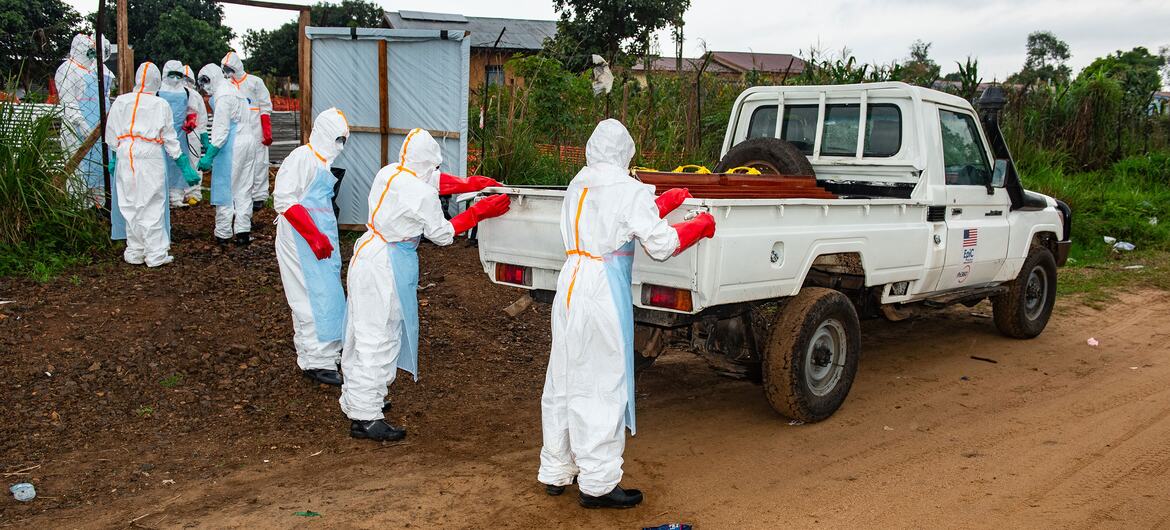 © OCHA / Ramatoulaye Moussa MazMembers of a community team prepare to bury a person who died of Ebola in eastern Democratic Republic of Congo (DRC).
August 14, 2026 Health
A sixth province in the Democratic Republic of Congo (DRC) has now been affected by the Ebola virus disease epidemic. The detection of a fatal case in Bas-Uele, bordering the Central African Republic, comes as the World Health Organization (WHO) convenes health authorities from five neighboring countries in Bangui to strengthen cross-border coordination and prevent regional spread of the virus.
The detection of a death linked to the Bundibugyo strain of Ebola virus in Bas-Uele marks a new stage in the evolution of the epidemic. Until now spared, this northern province shares a border with the Central African Republic (CAR). According to the African Union's health agency, Africa CDC, the deceased had traveled from Haut-Uele province, which has already been affected by the epidemic.
With this new province affected, six provinces of the DRC are now concerned: Bas-Uele, Ituri, North Kivu, South Kivu, Haut-Uele and Tshopo.
Buta, the 54th health zone affected
According to Congolese health authorities, the Buta health zone in Bas-Uele is now the 54th health zone affected by the epidemic.
The latest situation report indicates 4,665 confirmed cases, including 2,184 deaths, since the outbreak was declared in May. A total of 965 people have recovered.
Ituri remains the epicenter of the epidemic. The case fatality rate stands at 46%, while the contact tracing rate reaches 84%.
It is in this context that the WHO Regional Director for Africa, Mohamed Janabi, arrived Thursday in the Central African capital, Bangui. On Friday, he is participating in a two-day high-level meeting on the Bundibugyo virus with health authorities from the Central African Republic, the DRC, Uganda, South Sudan, and the Republic of Congo.
Borders at the heart of the response
In Bangui, the objective is to strengthen coordination between countries, identify weaknesses at borders and anticipate any new transmission.
"Strong cross-border collaboration is needed to prevent further spread and avoid a larger regional health crisis," said the WHO official.
However, the issue goes beyond mere coordination between health services. The proximity of the affected areas to several neighboring countries raises fears of the virus spreading beyond Congo's borders.
“And here we are facing a cholera epidemic. On the other side, they have Bundibugyo. So, if we do not protect the Central African Republic, there is a risk that the epidemic will spread here and also reach Kinshasa, which is a large city; it is a risk that we all have to take into account,” insisted the head of the WHO regional office for Africa.
Faced with a virus that does not stop at borders, the WHO is calling for a coordinated response: sharing expertise, joint surveillance, information exchange and strengthening partnerships should make it possible to quickly detect cases and limit the risks of transmission.
This cooperation is all the more important as the incidence remains high in eastern DRC, particularly along the main routes of movement towards Uganda and South Sudan.
Monitor high-risk mobility corridors
On the ground, surveillance continues at entry points and checkpoints located along the main mobility corridors, despite persistent operational constraints at some sites.
For the WHO, it is essential to further strengthen cross-border surveillance and information sharing in order to enable early detection and rapid management of any transmission across borders.
In Bangui, health officials from the DRC's five neighboring countries must, in particular, "learn from the Ugandan experience, understand what is currently happening in the Democratic Republic of Congo, and that the most important measure to prevent the spread is to strengthen the border."
The WHO's latest epidemiological report identifies several priorities: strengthening surveillance along high-risk cross-border mobility corridors, including informal crossings, developing event-based surveillance and active case finding, and ensuring real-time information sharing through regular coordination meetings between countries.
For the WHO, the objective now is to prevent the progression of the epidemic in the DRC from turning into a regional health crisis.
https://news.un.org/fr/story/2026/08/1159315
Ebola in the DRC: a sixth province affected, WHO strengthens regional response
August 14, 2026 Health
A sixth province in the Democratic Republic of Congo (DRC) has now been affected by the Ebola virus disease epidemic. The detection of a fatal case in Bas-Uele, bordering the Central African Republic, comes as the World Health Organization (WHO) convenes health authorities from five neighboring countries in Bangui to strengthen cross-border coordination and prevent regional spread of the virus.
The detection of a death linked to the Bundibugyo strain of Ebola virus in Bas-Uele marks a new stage in the evolution of the epidemic. Until now spared, this northern province shares a border with the Central African Republic (CAR). According to the African Union's health agency, Africa CDC, the deceased had traveled from Haut-Uele province, which has already been affected by the epidemic.
With this new province affected, six provinces of the DRC are now concerned: Bas-Uele, Ituri, North Kivu, South Kivu, Haut-Uele and Tshopo.
Buta, the 54th health zone affected
According to Congolese health authorities, the Buta health zone in Bas-Uele is now the 54th health zone affected by the epidemic.
The latest situation report indicates 4,665 confirmed cases, including 2,184 deaths, since the outbreak was declared in May. A total of 965 people have recovered.
Ituri remains the epicenter of the epidemic. The case fatality rate stands at 46%, while the contact tracing rate reaches 84%.
It is in this context that the WHO Regional Director for Africa, Mohamed Janabi, arrived Thursday in the Central African capital, Bangui. On Friday, he is participating in a two-day high-level meeting on the Bundibugyo virus with health authorities from the Central African Republic, the DRC, Uganda, South Sudan, and the Republic of Congo.
Borders at the heart of the response
In Bangui, the objective is to strengthen coordination between countries, identify weaknesses at borders and anticipate any new transmission.
"Strong cross-border collaboration is needed to prevent further spread and avoid a larger regional health crisis," said the WHO official.
However, the issue goes beyond mere coordination between health services. The proximity of the affected areas to several neighboring countries raises fears of the virus spreading beyond Congo's borders.
“And here we are facing a cholera epidemic. On the other side, they have Bundibugyo. So, if we do not protect the Central African Republic, there is a risk that the epidemic will spread here and also reach Kinshasa, which is a large city; it is a risk that we all have to take into account,” insisted the head of the WHO regional office for Africa.
Faced with a virus that does not stop at borders, the WHO is calling for a coordinated response: sharing expertise, joint surveillance, information exchange and strengthening partnerships should make it possible to quickly detect cases and limit the risks of transmission.
This cooperation is all the more important as the incidence remains high in eastern DRC, particularly along the main routes of movement towards Uganda and South Sudan.
Monitor high-risk mobility corridors
On the ground, surveillance continues at entry points and checkpoints located along the main mobility corridors, despite persistent operational constraints at some sites.
For the WHO, it is essential to further strengthen cross-border surveillance and information sharing in order to enable early detection and rapid management of any transmission across borders.
In Bangui, health officials from the DRC's five neighboring countries must, in particular, "learn from the Ugandan experience, understand what is currently happening in the Democratic Republic of Congo, and that the most important measure to prevent the spread is to strengthen the border."
The WHO's latest epidemiological report identifies several priorities: strengthening surveillance along high-risk cross-border mobility corridors, including informal crossings, developing event-based surveillance and active case finding, and ensuring real-time information sharing through regular coordination meetings between countries.
For the WHO, the objective now is to prevent the progression of the epidemic in the DRC from turning into a regional health crisis.
https://news.un.org/fr/story/2026/08/1159315
Pathfinder
Editor, Senior Moderator
‘Ebola is winning’: Epidemic now killing one person every 30 minutes
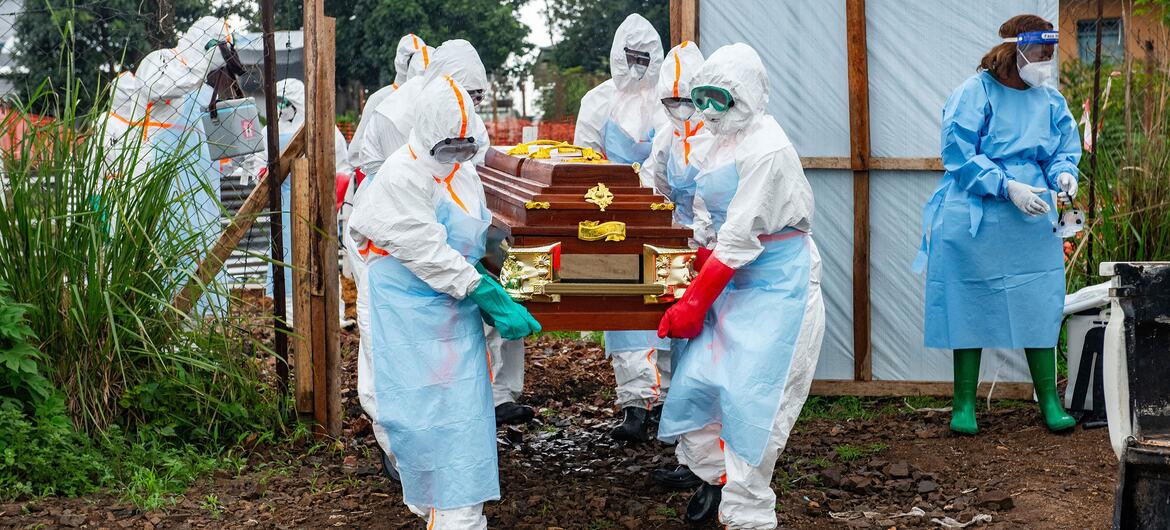
14 August 2026 Health
The Ebola outbreak in the eastern Democratic Republic of the Congo (DRC) – the fastest-growing on record and on track to become the deadliest – is killing one person every 30 minutes.
“Ebola is winning in the Democratic Republic of the Congo,” UN humanitarian affairs chief Tom Fletcher said. “We cannot let the virus outrun our response.”
Alongside the startling current fatality rate, Mr. Fletcher announced on Friday that he has allocated an additional $30.5 million from the UN’s Central Emergency Response Fund (CERF) – building on the $24 million previously allocated to the DRC and its neighbors to tackle the outbreak.
The UN’s humanitarian office (OCHA) recently deployed a further 20 staff to the epicentre of the outbreak, but Mr. Fletcher said more may be needed to slow the spread.
Declared on 15 May by national authorities in the DRC, the Ebola Bundibugyo outbreak has now killed 2,184 people – nearly 47 per cent of those who have been infected.
Six of the DRC’s 26 provinces have recorded Ebola cases, and Uganda has reported 20 cases.
“This is a wake-up call,” Mr. Fletcher said.” We need speed, scale and solidarity before this virus gets even further ahead of us.”
WFP expands food assistance
Starting tomorrow, the UN’s World Food Programme (WFP) will bring its hot meal programme to additional Ebola treatment centres in Ituri and other provinces, UN spokesperson Daniela Gross said on Friday.
Civilians in the North Kivu and South Kivu provinces are simultaneously dealing with Ebola and the ongoing conflict between the Congolese military and Rwanda-backed M23 militia.
Ituri province remains the heart of the outbreak; of the more than 4,660 cases total, Ituri has recorded over 3,400.
Across eastern DRC, 2.6 million people are seriously malnourished, with more than half located in Ituri.
Since the end of May, WFP has provided more than 260,000 hot meals at treatment and isolation centres in Ituri, North Kivu and South Kivu provinces.
Following Friday’s meeting of the UN’s Inter-Agency Standing Committee, Mr. Fletcher said the world’s largest humanitarian organisations had agreed to scale up the global Ebola response.
More support needed
Still, Ms. Gross said that civilians’ needs in the DRC far outpace the Ebola response, and that more support is needed.
In order to protect lives across the region, Mr. Fletcher said the UN and its partners responding to Ebola must double the number of teams ensuring safe and dignified burials, triple the treatment capacity, improve contact tracing, and deploy more experienced managers.
They also need to keep providing water, hygiene and healthcare assistance to those affected by the both outbreak and the years-long conflict between multiple armed groups and national troops which is complicating the fight against Ebola.
Food insecurity assistance is only 25 per cent funded, highlighting the need for additional funding for lifesaving food aid.
“The world needs to wake up and show up,” Mr. Fletcher said.
https://news.un.org/en/story/2026/08/1168148
Pathfinder
Editor, Senior Moderator
Images translated by Google
SitRep N°091/MVEBDB/13/08/2026


...


...
https://insp.cd/sitrep-n091-mvebdb-13-08-2026/
SitRep N°091/MVEBDB/13/08/2026
- août 14, 2026
- Posted by insp.cd
...
...
https://insp.cd/sitrep-n091-mvebdb-13-08-2026/
Pathfinder
Editor, Senior Moderator
Translation Google
Ebola in Tshopo: the province goes from nine to 13 confirmed cases
August 14, 2026
Kisangani, August 14, 2026 (ACP).- The provincial Minister of Health for Tshopo, in the Northeast of the Democratic Republic of Congo (DRC) announced Friday in Kisangani that the number of positive cases of Ebola patients has increased from nine (9) to thirteen (13), during a meeting of the provincial committee for the response against this epidemic.
“We have gone from nine to thirteen confirmed cases of Ebola in our province. This indicates shortcomings in the reporting of alerts. Hence, the health zones must do their job properly. I fear that the city of Kisangani is not as protected as we initially thought ,” said Dr. Simon Bokongo.
The top health official in Tshopo province also criticized the fact that despite the existence of epidemics dating back 50 years, the national and international community is not acting adequately in response to a very deadly epidemic like Ebola.
In view of the rise in Ebola cases in Kisangani, although most come from the Ituri province from Nia-Nia, the provincial minister pleaded for the protection of healthcare providers, who regularly receive cases without initially realizing it.
“At university clinics and other hospitals across the city, healthcare providers are not protected while receiving suspected cases. I fear we could lose our local providers, especially the young doctors doing their internships at the university clinics in Kisangani,” the Minister of Health stated, before appealing to both the provincial and national governments, as well as technical and financial partners, to mobilize resources to enable the authorities to take action.
“I am limited by resources. This prevents me from implementing my ministry’s policy in response to the Ebola epidemic,” added Dr. Bokongo.
The province of Tshopo plans to seek support from the INRB
The provincial health division chief, Dr. Bienvenu Ikomo, indicated that there are concerns about several negative results after testing samples at the provincial laboratory.
“At the laboratory level on site, we are recording many invalid results. We have asked Bunia if we can benefit from supervision from the INRB, so that we are all comfortable with the results, while clinically, we are seeing signs related to Ebola,” pleaded the head of the provincial health division.
The report from the provincial health division's case management team indicates thirteen confirmed cases in Tshopo, with a case fatality rate of 39%. As for the four suspected cases, no samples have been collected to date. Meanwhile, the number of reported and validated alerts has reached 64.
To effectively protect the city of Kisangani, DPS experts and partners have advocated for the Avakubi triangle (in Bafwasende in Tshopo), Pk 51 towards Haut-Uelé and Nia-Nia to be reinforced in terms of surveillance.
ACP/Kisi
https://acp.cd/province/ebola-dans-la-tshopo-la-province-passe-de-neuf-a-13-cas-confirmes/
Ebola in Tshopo: the province goes from nine to 13 confirmed cases
August 14, 2026
Kisangani, August 14, 2026 (ACP).- The provincial Minister of Health for Tshopo, in the Northeast of the Democratic Republic of Congo (DRC) announced Friday in Kisangani that the number of positive cases of Ebola patients has increased from nine (9) to thirteen (13), during a meeting of the provincial committee for the response against this epidemic.
“We have gone from nine to thirteen confirmed cases of Ebola in our province. This indicates shortcomings in the reporting of alerts. Hence, the health zones must do their job properly. I fear that the city of Kisangani is not as protected as we initially thought ,” said Dr. Simon Bokongo.
The top health official in Tshopo province also criticized the fact that despite the existence of epidemics dating back 50 years, the national and international community is not acting adequately in response to a very deadly epidemic like Ebola.
In view of the rise in Ebola cases in Kisangani, although most come from the Ituri province from Nia-Nia, the provincial minister pleaded for the protection of healthcare providers, who regularly receive cases without initially realizing it.
“At university clinics and other hospitals across the city, healthcare providers are not protected while receiving suspected cases. I fear we could lose our local providers, especially the young doctors doing their internships at the university clinics in Kisangani,” the Minister of Health stated, before appealing to both the provincial and national governments, as well as technical and financial partners, to mobilize resources to enable the authorities to take action.
“I am limited by resources. This prevents me from implementing my ministry’s policy in response to the Ebola epidemic,” added Dr. Bokongo.
The province of Tshopo plans to seek support from the INRB
The provincial health division chief, Dr. Bienvenu Ikomo, indicated that there are concerns about several negative results after testing samples at the provincial laboratory.
“At the laboratory level on site, we are recording many invalid results. We have asked Bunia if we can benefit from supervision from the INRB, so that we are all comfortable with the results, while clinically, we are seeing signs related to Ebola,” pleaded the head of the provincial health division.
The report from the provincial health division's case management team indicates thirteen confirmed cases in Tshopo, with a case fatality rate of 39%. As for the four suspected cases, no samples have been collected to date. Meanwhile, the number of reported and validated alerts has reached 64.
To effectively protect the city of Kisangani, DPS experts and partners have advocated for the Avakubi triangle (in Bafwasende in Tshopo), Pk 51 towards Haut-Uelé and Nia-Nia to be reinforced in terms of surveillance.
ACP/Kisi
https://acp.cd/province/ebola-dans-la-tshopo-la-province-passe-de-neuf-a-13-cas-confirmes/
Pathfinder
Editor, Senior Moderator
Images translated by GrokAIX
SitRep N°092/MVEBDB/14/08/2026
...
 ...
...
 ...
...
https://insp.cd/sitrep-n092-mvebdb-14-08-2026/
SitRep N°092/MVEBDB/14/08/2026
- August 15, 2026
- Posted by insp.cd
...
https://insp.cd/sitrep-n092-mvebdb-14-08-2026/
Pathfinder
Editor, Senior Moderator
Translation Google
Bas-Uélé: The provincial health minister calls for vigilance in the face of Ebola
August 15, 2026
Buta, August 15, 2026 (ACP).– The provincial Minister of Health of Bas-Uélé, in the northeast of the Democratic Republic of Congo, called on the population on Saturday, through the ACP, to strengthen vigilance and strictly observe the prevention measures against the Ebola virus disease, in the face of a worrying health situation reported in the Rubi Lisanga health area, in the Buta health zone.
"Under no circumstances should a suspicious corpse be touched or handled," insisted the provincial minister, particularly warning against the handling of remains.
During this interview, he refrained from making any official declaration of an epidemic, recalling that this falls exclusively under the jurisdiction of the authorized authority, in particular the provincial governor or the national Minister of Health, in accordance with the procedures in force.
According to him, patients with signs consistent with Ebola virus disease have been detected in the Rubi Lisanga health area and are currently being treated in the Buta health zone.
The situation is being managed appropriately by the health authorities: those affected, as well as consultants and contacts of healthcare facilities, have been placed under surveillance and subjected to preventive isolation measures.
The hospital in question has also been closed until further notice.
Faced with this situation, the provincial minister urged the population to avoid any behavior that could promote the spread of the disease, including non-essential travel and outings, gatherings and physical contact with people showing suspicious signs.
He stressed the importance of regularly washing hands with soap and water or an alcohol-based hand sanitizer, as well as installing handwashing stations in offices, outside churches, in markets and other busy public places.
He also called for limiting gatherings during funerals and favouring safe burials, organised under the supervision of health teams.
The public is also urged to promptly report any case showing suspicious signs to the health services and to follow exclusively the information communicated by the health authorities, in order to avoid panic, rumors and misinformation.
Adherence to these measures, combined with epidemiological surveillance and early management of suspected cases, remains essential to prevent any potential spread of the disease in the province. ACP/NA ADJA
https://acp.cd/province/bas-uele-le...la-sante-appelle-a-la-vigilance-face-a-ebola/
Bas-Uélé: The provincial health minister calls for vigilance in the face of Ebola
August 15, 2026
Buta, August 15, 2026 (ACP).– The provincial Minister of Health of Bas-Uélé, in the northeast of the Democratic Republic of Congo, called on the population on Saturday, through the ACP, to strengthen vigilance and strictly observe the prevention measures against the Ebola virus disease, in the face of a worrying health situation reported in the Rubi Lisanga health area, in the Buta health zone.
"Under no circumstances should a suspicious corpse be touched or handled," insisted the provincial minister, particularly warning against the handling of remains.
During this interview, he refrained from making any official declaration of an epidemic, recalling that this falls exclusively under the jurisdiction of the authorized authority, in particular the provincial governor or the national Minister of Health, in accordance with the procedures in force.
According to him, patients with signs consistent with Ebola virus disease have been detected in the Rubi Lisanga health area and are currently being treated in the Buta health zone.
The situation is being managed appropriately by the health authorities: those affected, as well as consultants and contacts of healthcare facilities, have been placed under surveillance and subjected to preventive isolation measures.
The hospital in question has also been closed until further notice.
Faced with this situation, the provincial minister urged the population to avoid any behavior that could promote the spread of the disease, including non-essential travel and outings, gatherings and physical contact with people showing suspicious signs.
He stressed the importance of regularly washing hands with soap and water or an alcohol-based hand sanitizer, as well as installing handwashing stations in offices, outside churches, in markets and other busy public places.
He also called for limiting gatherings during funerals and favouring safe burials, organised under the supervision of health teams.
The public is also urged to promptly report any case showing suspicious signs to the health services and to follow exclusively the information communicated by the health authorities, in order to avoid panic, rumors and misinformation.
Adherence to these measures, combined with epidemiological surveillance and early management of suspected cases, remains essential to prevent any potential spread of the disease in the province. ACP/NA ADJA
https://acp.cd/province/bas-uele-le...la-sante-appelle-a-la-vigilance-face-a-ebola/

Treyfish
Moderator
Ebola outbreak in Democratic Republic of Congo becomes deadliest in country's history
By Reuters
August 16, 20266:16 PM EDTUpdated 4 hours ago
Aug 16 (Reuters) - The Ebola outbreak in Democratic Republic of Congo has killed 2,325 people, government data showed on Sunday, surpassing the toll from the 2018-2020 outbreak to become the deadliest in the country's history.
Congo's public health institute said in its latest report that confirmed cases had risen to 4,945, including 101 new cases detected in the previous 24 hours.…
...lots more..
:tiphat:
https://www.reuters.com/business/he...them&utm_medium=trueanthem&utm_source=twitter
By Reuters
August 16, 20266:16 PM EDTUpdated 4 hours ago
Aug 16 (Reuters) - The Ebola outbreak in Democratic Republic of Congo has killed 2,325 people, government data showed on Sunday, surpassing the toll from the 2018-2020 outbreak to become the deadliest in the country's history.
Congo's public health institute said in its latest report that confirmed cases had risen to 4,945, including 101 new cases detected in the previous 24 hours.…
...lots more..
:tiphat:
https://www.reuters.com/business/he...them&utm_medium=trueanthem&utm_source=twitter