• FluTrackers.com Inc. does not provide medical advice. Information on this web site is collected from various internet resources, and the FluTrackers board of directors makes no warranty to the safety, efficacy, correctness or completeness of the information posted on this site by any author or poster. The information collated here is for instructional and/or discussion purposes only and is NOT intended to diagnose or treat any disease, illness, or other medical condition. Every individual reader or poster should seek advice from their personal physician/healthcare practitioner before considering or using any interventions that are discussed on this website. By continuing to access this website you agree to consult your personal physican before using any interventions posted on this website, and you agree to hold harmless FluTrackers.com Inc., the board of directors, the members, and all authors and posters for any effects from use of any medication, supplement, vitamin or other substance, device, intervention, etc. mentioned in posts on this website, or other internet venues referenced in posts on this website.
  • We are not asking for any donations. Do not donate to any entity who says they are raising funds for us.

DRC – 17th Ebola Outbreak (Bundibugyo virus) - Concerns over reliability of Government reported cumulative cases and deaths - May 2026+

More from the WHO Africa report posted above :

image.png
 
image.png - Click image for larger version  Name:	image.png Views:	1 Size:	54.4 KB ID:	1039174

Google map
-----------------------------------------------------------------------------------------------------------------
Translation Google

Approximately 100 community deaths from Ebola in one week at PK 51 of Mambasa

Published on Wed, 29/07/2026 - 05:05 | Modified on Wed, 29/07/2026 - 06:16

The health situation is becoming alarming at kilometer marker 51 (PK51), in the Mambasa territory (Ituri), where around one hundred community deaths have been recorded in one week. More than forty health facilities, previously operational in this mining area, have closed.

A large part of the medical staff took refuge in Niania after the destruction of the Ebola treatment center on June 30 by some residents who dispute the existence of the epidemic.

Mortality on the rise

Between ten and fifteen community deaths linked to Ebola are reported daily at PK51, located in the Mambasa territory, about 400 kilometers from Bunia. According to the chief medical officer of the Niania health zone, nearly one hundred people have died in one week.

The health official attributes this situation to the refusal of a segment of the population to acknowledge the existence of the epidemic. This resistance notably led to the ransacking of the Ebola treatment center on June 30th.

More than 40 healthcare facilities closed

Following the violence, 40 of the 50 healthcare facilities in the area have ceased operations.

Healthcare workers and community health workers, targeted by the protesters, have left the area for fear of their safety.

According to local medical sources, this situation not only compromises the care of patients, but also awareness and prevention activities.

Mistrust facilitates the spread of the epidemic.

According to the same sources, this mistrust contributes to the spread of the disease. Some residents continue to reject preventative measures and handle the bodies of Ebola victims without taking precautions.

Furthermore, many patients are only transferred to Niania at a very advanced stage of the illness, which significantly increases the risk of death.

Faced with this situation, the chief medical officer of the Niania health zone states that measures are being taken to contain the epidemic at PK51 and prevent its spread to neighboring areas.

https://www.radiookapi.net/2026/07/...munautaires-debola-en-une-semaine-au-pk-51-de
 
EXCLUSIVE: Congo’s Ebola epidemic started at least 4 months before it was detected

A remote mining town gripped by fear saw hundreds of suspected cases before the government declared an outbreak, report says

30 Jul 20265:40 PM ET
By Kai Kupferschmidt

Mysterious deaths that extinguished entire families. A cemetery unable to cope with the flood of dead bodies. Taxi drivers who refused to go to certain parts of town. Months before the Democratic Republic of the Congo (DRC) officially declared its latest Ebola outbreak on 15 May, the disease was already sowing fear and death in Mongbwalu, a gold mining town in Ituri province, an unpublished analysis by three researchers suggests.

After interviewing almost 100 people in and around Mongbwalu—including nurses and doctors, community leaders, survivors, grieving family members, coffinmakers, and cemetery caretakers—the team concluded the epidemic ignited in January, and perhaps even earlier, in Mongbwalu’s outskirts. A patient seeking care may have brought it to the city from a rural area.
...
One transmission chain started with a 50-year-old woman identified only as A who died on 25 January after vomiting blood. Her mother died 6 days later; her husband fell ill but recovered. On 11 February, A’s nephew died, bleeding profusely from facial orifices. He was buried the next day, during a funeral attended by many people. The nephew’s wife died a few days later, and then their child. Several more people in the family passed away. Others fell ill but recovered.

Altogether, the scientists identified more than 500 suspected cases between mid-January and 15 May. Medical staff were hit hard, as often happens early during Ebola outbreaks: Thirteen “front-line workers”—including nurses, midwives, and Red Cross first responders—died, and 42 others fell ill but recovered, Villa told researchers on today’s call. Some private health care facilities closed and health care workers fled. Mongbwalu’s cemetery was overstretched, with as many as 20 burials in a single day.

Until now, estimates about when the epidemic started had relied mostly on genetic evidence. Comparing the sequences of Ebola virus found in patients allows scientists to build a family tree and estimate the age of the earliest common ancestor. One such analysis, posted online in early July, suggested the earliest cases occurred in mid-March. But most of the genomes analyzed so far came from Bunia, where the disease erupted later. “I think January is plausible … because we don’t have many sequences from Mongbwalu,” says an author of the analysis, evolutionary biologist Andrew Rambaut of the University of Edinburgh.
...

https://www.science.org/content/art...idemic-started-least-4-months-it-was-detected
 
image.png


Disease Outbreak News

Ebola disease caused by Bundibugyo virus - Democratic Republic of the Congo

1 August 2026

Situation at a glance

The Bundibugyo virus disease (BVD) outbreak in the Democratic Republic of the Congo is intensifying, with sustained transmission and continued increases in reported cases and deaths. Initially confined to the Mongbwalu health zone in Ituri Province, over the last two months, the outbreak has expanded to five provinces (Ituri, North Kivu, South Kivu, Haut-Uélé and Tshopo), now affecting 49 health zones. The outbreak is now the largest Ebola outbreak ever reported in the Democratic Republic of the Congo. As of 30 July 2026, a total of 3605 confirmed cases, including 1587 deaths, have been reported, corresponding to a crude case fatality ratio (CFR) of 44%. The continued increase in cases, expanding geographic spread, and persistently high mortality underscore the rapidly evolving nature of this public health emergency. During the most recent complete reporting week (epidemiological week 30), the highest weekly number of reported cases (567) and deaths (296) to date were recorded, underscoring the exceptional pace of transmission. The convergence of insecurity, population displacement and mobility, and cross-border movements complicate response operations and increase the risk of further geographical spread. National authorities in the Democratic Republic of the Congo, in collaboration with WHO and partners, continue to implement extensive response measures, however, a substantial scaling up of response activities is needed to get ahead of the outbreak. A regional preparedness and prioritization framework continues to guide readiness and response activities across the African Region. On 28 July, the Ministry of Health of Uganda declared the end of the BVD outbreak in the country, following 42 days without a new confirmed locally transmitted case after the last confirmed case was discharged from care on 16 June 2026. The most recent imported case was discharged from a treatment centre on 16 July after two negative tests results. Following international guidance WHO will be monitoring the situation for 42 days from this date to ensure no chains of transmission have been missed. Uganda remains at risk of imported cases and re-introduction of BVD, due to ongoing transmission in neighbouring Democratic Republic of the Congo. WHO reiterates the need to maintain heightened surveillance, preparedness and control measures, particularly in view of continued population movement and the risk of cross-border transmission.

Description of the situation


Since the previous Disease Outbreak News was published on 17 July 2026, additional confirmed cases and deaths have been reported only in the Democratic Republic of the Congo.

Cumulatively, 3626 confirmed cases have been reported: 3605 in the Democratic Republic of the Congo (including two cases diagnosed in the Democratic Republic of the Congo and subsequently treated in Germany), 20 in Uganda and one in France. A total of 1589 deaths have been reported, including two in Uganda. As of 30 July, at least 651 people in the Democratic Republic of the Congo, and 18 from Uganda have recovered.

This outbreak is now the largest recorded Ebola virus disease outbreak in the country, surpassing the previous largest outbreak, which occurred from 2018 to 2020, and resulted in 3317 confirmed cases.

Figure 1. Distribution of cumulative confirmed cases of Bundibugyo virus disease in the Democratic Republic of the Congo as of 30 July

Geographic distribution of confirmed cases in Democratic Republic of the Congo and Uganda - Geographic distribution of confirmed cases in Democratic Republic of the Congo and Uganda

Democratic Republic of the Congo

Since 17 July 2026 when the last Disease Outbreak News was published, an additional 1481 confirmed cases, including 759 confirmed deaths, have been reported in the Democratic Republic of the Congo. The increase is in part due to expansion of surveillance activities, enhanced laboratory testing, and diagnostic capacity. However, most of the increase reflects the expansion of the outbreak.

As of 30 July 2026, a total of 3605 confirmed cases, including 1587 deaths (CFR 44%), have been reported in the Democratic Republic of the Congo. To date, 651 patients have recovered.

Cases have been reported from 49 health zones (HZ) across five provinces: Ituri (28/36 HZ), North Kivu (11/34 HZ), South Kivu (1/34 HZ), Haut- Uélé (5/13 HZ) and Tshopo (4/23 HZ).[SUP][1][/SUP] An additional HZ, Wanie-Rukula in Tshopo, is awaiting data harmonisation at the health province level.

Of the 49 affected health zones, the outbreak remains active in 33, with confirmed cases reported within the past seven days. During this period, 641 confirmed cases, including 282 confirmed deaths, were reported.

Ituri remains the most affected province, accounting for 88% (3176/3605) of all confirmed cases and 82.6% (1311/1587) of reported deaths nationwide. Within the province, the highest number of confirmed cases have been reported from Bunia (880 cases), Rwampara (627 cases), Mongbwalu (541 cases), Nizi (377 cases), Lita (131 cases), and Nyankunde (114 cases) health zones.

As of 30 July, 17 863 contacts have been identified and are under follow-up across Ituri (11 638), North Kivu (5667), Haut-Uélé (458) and 65 in Tshopo. Of these, 13 455 contacts were under active follow-up, corresponding to follow-up rates of 75.5% in Ituri, 74.6% in North Kivu, 80.6% in Haut-Uélé, and 66.2% in Tshopo. Previously identified contacts in South Kivu have completed the required 21-day follow-up period.

Infections among health workers continue, with 151 confirmed cases, including 44 deaths (CFR: 29%) and 68 recoveries. These infections highlight ongoing occupational exposure risks, persistent challenges in implementing infection prevention and control (IPC) in health-care facilities, and continued exposure risk in the community.

The outbreak is occurring in a complex humanitarian and conflict-affected setting, characterized by population displacement, high population mobility, and limited access to essential services, including health care, clean water, food, shelter, and protection. These conditions increase the risk of disease transmission, including in overcrowded sites for internally displaced persons (IDPs).

Insecurity and attacks affecting health facilities have hampered response operations in affected provinces, by restricting access for response teams, disrupting surveillance and response activities and increasing the risk of undetected transmission. These challenges underscore the importance of community-centred response efforts led by local authorities and trusted community leaders.

Figure 2: Number of confirmed cases (n = 3605), in the Democratic Republic of the Congo, by date of reporting, as of 30 July 2026 Confirmed cases in Democratic Republic of the Congo - Confirmed cases in Democratic Republic of the Congo

* Note that the large number of reported cases on 22 July represents the completion of a data reconciliation exercise, including cases that occurred earlier in the outbreak, rather than newly recorded cases.

Figure 3: Number of deaths among confirmed cases (n = 1587), in the Democratic Republic of the Congo, by date of reporting, as of 30 July 2026.

Number of deaths in Democratic Republic of the Congo - Number of deaths in Democratic Republic of the Congo

* Note that the large number of reported deaths on 22 July represents the completion of a data reconciliation exercise, including deaths that occurred earlier in the outbreak, rather than newly recorded deaths.

Epidemiology


Bundibugyo virus disease (BVD) is a severe Ebola disease caused by the Bundibugyo virus, one of the Orthoebolavirus species. It is a zoonotic disease, with fruit bats suspected to be the natural reservoir.

Human infection is thought to occur through close contact with the blood or secretions of infected wildlife, such as bats or non-human primates, and it subsequently spreads from person-to-person through direct contact with the blood, secretions, organs, or other bodily fluids of infected individuals or contaminated surfaces and materials. Transmission is particularly amplified in health-care settings when IPC measures are inadequate and during unsafe burial practices involving direct contact with deceased individuals.

The incubation period for BVD ranges from two to 21 days, and infected individuals are not infectious until symptom onset. Early symptoms such as fever, fatigue, muscle pain, headache, and sore throat are non-specific, which complicates clinical diagnosis and can delay detection. These symptoms then progress to gastrointestinal symptoms, organ dysfunction, and, in some cases, haemorrhagic manifestations.

CFRs in the past two BVD outbreaks, reported in Uganda and in the Democratic Republic of the Congo in 2007 and 2012, were 30% and 50%, respectively.

Differentiating BVD from other endemic febrile illnesses such as malaria is challenging without laboratory confirmation using PCR or antigen- or antibody-based assays. Outbreak control relies on rapid case identification, isolation and care, contact tracing, safe burials and strong community engagement, as no approved vaccines or specific treatments currently exist for BVD.

Public health response


Health authorities in the Democratic Republic of the Congo, in collaboration with WHO and partners, continue to implement extensive public health measures, including implementing the continental preparedness and response plan a strategic six-month framework plan designed to guide coordinated efforts to strengthen outbreak response measures, including emergency coordination, disease surveillance, laboratory testing, infection prevention and control, clinical care, community engagement, research, logistics and support for essential health services, engaging donors and mobilizing additional resources to address critical funding gaps and sustain response operations across affected and at-risk areas. A substantial scale-up will be needed in all pillars to get ahead of the outbreak.

For further information about public health response actions by the respective Ministry of Health, WHO and partners, please refer to the latest situation reports published by the WHO Regional Office for Africa: Ebola Bundibugyo Virus Disease Outbreak Democratic Republic of the Congo | Uganda Weekly External Situation Report | WHO | Regional Office for Africa

WHO risk assessment


On 6 June 2026, WHO reassessed the risk of the outbreak of BVD to incorporate newly available information and align with the WHO Temporary Recommendations. The risk for countries sharing land borders with countries with documented Bundibugyo virus detection, the Democratic Republic of the Congo and Uganda at the time of assessment, was separated from the risk for other countries in the African Region.

The risk in the Democratic Republic of the Congo was assessed as very high due to ongoing transmission and the continued expansion of the outbreak into new health zones, increasing the potential for further national and regional spread.

The risk in Uganda was assessed as high due to confirmed cross-border spread through imported cases and ongoing epidemiological links along the eastern Democratic Republic of the Congo–western Uganda corridor, which has historically been affected by Ebola outbreaks, including Bundibugyo virus and Sudan virus disease.

The risk for countries sharing land borders with countries reporting BDBV detection was assessed as high due to sustained population mobility linked to cross-border trade and mining activities, variation in capacities and experience of BVD response, and variable levels of readiness.

The risk for the rest of the African region and at the global level was assessed as low.

For further information, please see the WHO Rapid Risk Assessment – Ebola disease caused by Bundibugyo virus, Democratic Republic of the Congo, Uganda and countries with land borders adjoining countries with documented BDBV detection v3.

An updated Rapid Risk Assessment is currently being developed in advance of the upcoming IHR Emergency Committee meeting regarding the epidemic of Ebola Bundibugyo virus disease scheduled for 18 August.

WHO advice


Based on the currently available information, WHO advises against any restriction of travel to, or trade with, affected countries. WHO continues to closely monitor and, where necessary, verify travel and trade measures in relation to this event.

For further information on the considerations for implementing border health and international travel-related temporary recommendations, please see the relevant technical note issued on 26 May 2026.

The Temporary Recommendations issued to States Parties on 22 May 2026 underscore the importance of coordinated outbreak control, strengthened cross‑border collaboration, and sustained surveillance and preparedness to prevent further regional spread and ensure an effective public health response.

Rapid recognition of cases, testing and optimized supportive care can reduce mortality, and improve community perceptions and acceptance of health care within the response.

WHO has convened several technical advisory groups, including the Strategic Advisory Group of Experts on Immunization (SAGE) to assess candidate vaccines and therapeutics for BVD. Key recommendations are available in the news release published on 28 May 2026.

Regular Information products on the outbreak of BVD in the Democratic Republic of the Congo and Uganda

Daily update: Epidemiological update on BVD outbreak in Democratic Republic of the Congo and Uganda

Published every Tuesday: Weekly External Situation Report on Ebola Bundibugyo Virus Disease Outbreak, Democratic Republic of the Congo | Uganda

Published biweekly:Disease Outbreak News | All Hazards Public Health Events, Ebola disease caused by Bundibugyo virus, Democratic Republic of the Congo

...

https://www.who.int/emergencies/disease-outbreak-news/item/2026-DON614
 
Translation Google

A third Chinese team of medical experts arrives in the DRC to support the Ebola response.

French.news.cn | 2026-08-02 at 03:33

KINSHASA, Aug. 1 (Xinhua) -- The third Chinese team of medical experts tasked with supporting the Ebola response arrived Saturday in Kinshasa, the capital of the Democratic Republic of Congo (DRC), to support the country's efforts to strengthen its epidemic response.

Luku Maleyo Marius, representative of the Congolese Ministry of Health, welcomed the team at the airport.

He indicated that the Ebola situation in the DRC remained complex and that response operations continued to face significant pressure. The arrival of Chinese experts will provide important support for epidemiological surveillance, patient care, and laboratory analysis, he stated.

The DRC is willing to further strengthen its cooperation with China and jointly improve its epidemic response capabilities, he added.

Yang Xiaochen, head of the third team of experts, indicated that it would build on the work done by the two previous teams, continue its technical assistance according to the specific needs of the response and deepen exchanges and cooperation with Congolese health authorities as well as with relevant international partners.

The team will put Chinese expertise at the service of efforts to end the current Ebola epidemic as quickly as possible, Mr. Yang said. End

https://french.news.cn/20260802/ceb0dfaa285c485386931e0c31ce5bcb/c.html
 
Related to post #320
Go to post

Translation Google

Ebola in Tchomia: 25 deaths recorded out of 41 confirmed cases, case fatality rate of approximately 61% (chief medical officer of the health zone)

August 2, 2026

Tchomia, August 2, 2026 (ACP).- Twenty-five (25) deaths out of 41 confirmed positive cases of Ebola have been recorded in the Tchomia health zone, Ituri province, in the North-East of the Democratic Republic of Congo (DRC), representing a case fatality rate of approximately 61% since the start of the epidemic, the chief medical officer of this health zone revealed to ACP on Sunday.

" We have already recorded about 25 deaths out of the 41 confirmed cases since the start of the Ebola epidemic in the Tchomia health zone, which is a case fatality rate of about 61% ," said Dr. Hervé Bavi.

When asked about the main cause of this high mortality rate, he explained that the major problem remains the fact that many people arrive late at health facilities.

" When they arrive after death, the tests often reveal that the case was positive for Ebola, while the people who had been in contact with the sick person are already exposed ," he continued.

Dr. Bavi also highlighted the laxity observed within the community, including the gradual abandonment of handwashing and the failure to comply with certain preventive measures against the spread of the disease.

Taking the opportunity, he called on the population to avoid self-medication and to quickly notify any suspected cases to health facilities in order to allow for early treatment.

“ We are asking families not to keep sick people at home. Health centers exist to receive patients and prevent the spread of the disease ,” he recommended. ACP/AU

https://acp.cd/province/ebola-a-tch...te-denviron-61-medecin-chef-de-zone-de-sante/
 
Related to the SitRep N°078​ report posted above (#362):

Translation Google

Ebola: Tshopo declares a fifth affected health zone, which is not yet reflected in the national totals.

The seventh case in Tshopo, confirmed on July 29, has been assigned by the province to the Wanie-Rukula health zone. The COUSP (Emergency Response Coordination Unit) has not yet included it in its cumulative total, which remains at 49 affected areas.

The Editorial Team
Kinshasa - August 2, 2026 - 2:32 PM WAT

The seventh confirmed case in Tshopo province was validated on July 29 in the Wanie-Rukula health zone, southeast of Kisangani. The province has assigned it to this zone, bringing the number of affected zones to five out of twenty-three. However, the Public Health Emergency Operations Center has not yet recorded it: "This classification is not included in the cumulative totals pending harmonization with the provincial health division," states its situation report No. 078, dated July 31. The previous day's report went further: its cover page already listed "Tshopo (5/23): Kabondo, Lubunga, Makiso-Kisangani, Mangobo, and Wanierukula," while its own provincial table only listed four zones, and it noted that "its classification remains to be determined." Twenty-four hours later, the cover page of No. 078 reverted to four.

The national tally reflects this. The same section of highlights opens with, "No new health zones affected in the last 24 hours. The total remains at 49 affected health zones out of 140 across the five provinces," before noting that Tshopo has reported a fifth affected zone. The four health zones in the province that remain listed are Kabondo, Lubunga, Makiso-Kisangani, and Mangobo.

The province has seven confirmed cases, five deaths, and one recovery. Based on these seven cases, the case fatality rate stands at 71.4%, the highest in the country, ahead of North Kivu (66.4%), Haut-Uélé (49.1%), Ituri (41.4%), and South Kivu (33.3%). With such a small number of cases, one more or less death shifts the rate by fourteen points. Tshopo also reports the least. On July 31, its alerts were not transmitted, nor were its contact tracing or data from border crossings. "Tshopo did not report its alerts for July 31: its indicators remain unavailable," the report notes, which only provides one figure for the province: the proportion of activated checkpoints—four out of nineteen. No tests were reported that day, and contact tracing in Kabondo remained at zero .

On the ground, the disputed area is already being treated as an affected zone. An infection prevention and control kit has been packed and delivered, and the site for the construction of a large-capacity treatment center has been visited with the COUSP (Emergency Response Coordination Unit), the NGO IMA, and Doctors Without Borders. The province's logistics arm has four liaison vehicles, four motorcycles, and four ambulances, while the stated requirement is ten vehicles and twenty-seven motorcycles. Furthermore, the Village Reach organization has only delivered 500 of the promised 1,000 liters of diesel fuel.

In the Madula health area, which falls under the jurisdiction of Wanie-Rukula, three high-risk contacts among frontline staff are undergoing what the report calls an experimental treatment, without specifying the product or documenting its results. Neither treatment nor vaccine is licensed against the Bundibugyo strain, which is responsible for this seventeenth outbreak; the authorized molecules and vaccine are for the Ebola-Zaire virus. The report adds that "no vaccination activity is reported by the provinces today." The provincial total of hospitalized confirmed cases stands at four, including two deaths, one recovery, and one currently receiving treatment; the patient being treated at the HC Kisangani treatment center was stable on the third day.

The health zone in dispute falls within the territory of Ubundu, about sixty kilometers southeast of Kisangani, the city where the epidemic first appeared in mid-July . Nationally, the cumulative total reached 3,674 confirmed cases and 1,621 deaths as of July 31, compared to 3,605 cases and 1,587 deaths the previous day , across forty-nine health zones, or fifty if the provincial count is included.

https://beto.cd/ebola-tshopo-wanie-rukula-cinquieme-zone-cumuls/
 
Translation Google

image.png - Click image for larger version  Name:	image.png Views:	3 Size:	3.1 KB ID:	1039442


DRC: Faced with a record-breaking Ebola epidemic, the response is changing scale


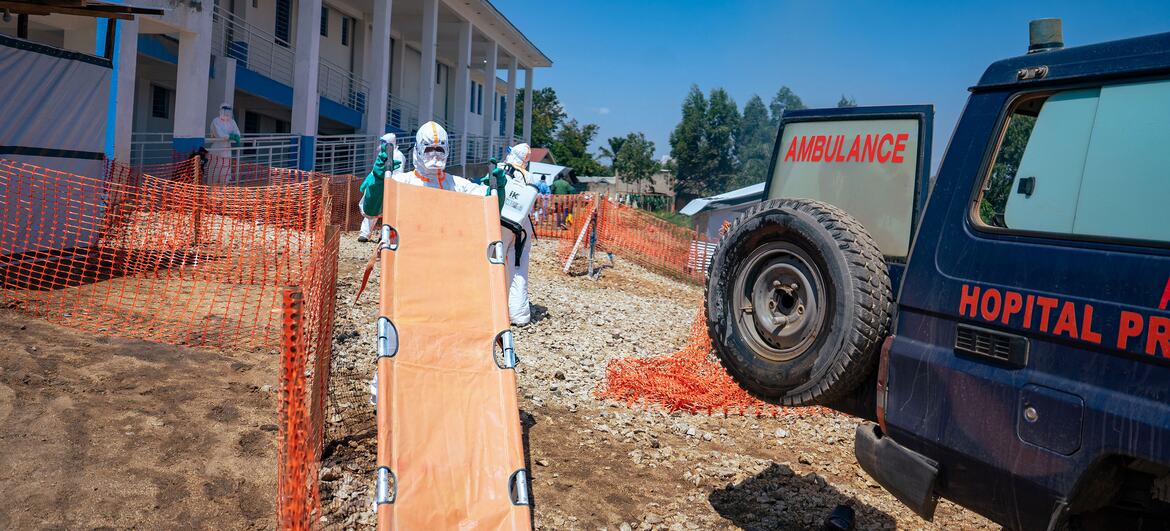
image1170x530cropped.jpg

© WHO / Josua Mulala RaymondA health worker carries a stretcher in an Ebola treatment center in the Democratic Republic of Congo (DRC).

August 3, 2026 Health

The Ebola epidemic in eastern Democratic Republic of Congo (DRC) is progressing at an unprecedented rate. To try to catch up, the response is being scaled up: new treatment centers, strengthened surveillance, and increased deployment of UN agencies on the ground. Despite this escalation, the epidemic continues to spread.


Declared on May 15 in Ituri province, in the east of the country, the epidemic quickly became the largest ever recorded in the DRC. According to the latest update from the World Health Organization ( WHO ), published on Saturday , 3,605 confirmed cases and 1,587 deaths had been recorded as of July 30, representing a case fatality rate of 44% . Even more concerning, 567 new cases and 296 deaths were recorded in a single week . These are the highest weekly figures since the start of the Ebola outbreak .

In less than two months, the virus spread beyond its initial epicenter in Mongbwalu to reach five provinces: Ituri, North Kivu, South Kivu, Haut-Uele, and Tshopo . Most of these territories continue to record new infections. Ituri, however, remains the epicenter of the epidemic, accounting for nearly 90% of cases .

A response that is strengthening

Faced with this acceleration, the capacities for providing care are also beginning to change scale.

On Monday, the humanitarian organization International Medical Corps ( IMC ), with the support of the United Nations, was scheduled to open the largest Ebola treatment center ever established in the country . Equipped with 100 beds , it will significantly increase treatment capacity in Ituri province.

In parallel, at the Kigonze displacement site, IMC has set up, with the help of the US government, a transit center intended to quickly identify suspected cases before their transfer to treatment centers.

A few kilometers further north, in Nizi, also in Ituri, the WHO has also strengthened the capacity of another treatment center, which now has 80 beds . This locality, near Mongbwalu, hosts more than 80,000 displaced people spread across more than twenty sites and experiences significant population movements linked to mining activities, all factors that contribute to the spread of the virus.

The virus thrives in the cracks of the crisis

Because Ebola does not progress in a health vacuum. It spreads in the heart of a region where armed conflicts, population displacements and the collapse of public services feed off each other.

Nearly 270,000 people are currently living in displacement camps in Ituri after fleeing violence perpetrated by armed groups. Cases of Ebola have now been confirmed there, raising fears of transmission in the often overcrowded camps.

This is compounded by significant daily mobility around mining areas, of which the DRC is rich, as well as cross-border movements to neighboring countries. According to the WHO, the combined effect of insecurity, population displacement, and migration flows considerably complicates response operations and increases the risk of the virus spreading geographically.

Last Friday, the United Nations Office for the Coordination of Humanitarian Affairs ( OCHA ) announced it was coordinating a mission to Nia-Nia, Ituri, where recent attacks have disrupted the operation of an Ebola treatment center and other humanitarian activities. UN teams are meeting with local authorities, community leaders, and humanitarian partners to restore access to healthcare and strengthen community support for the response.
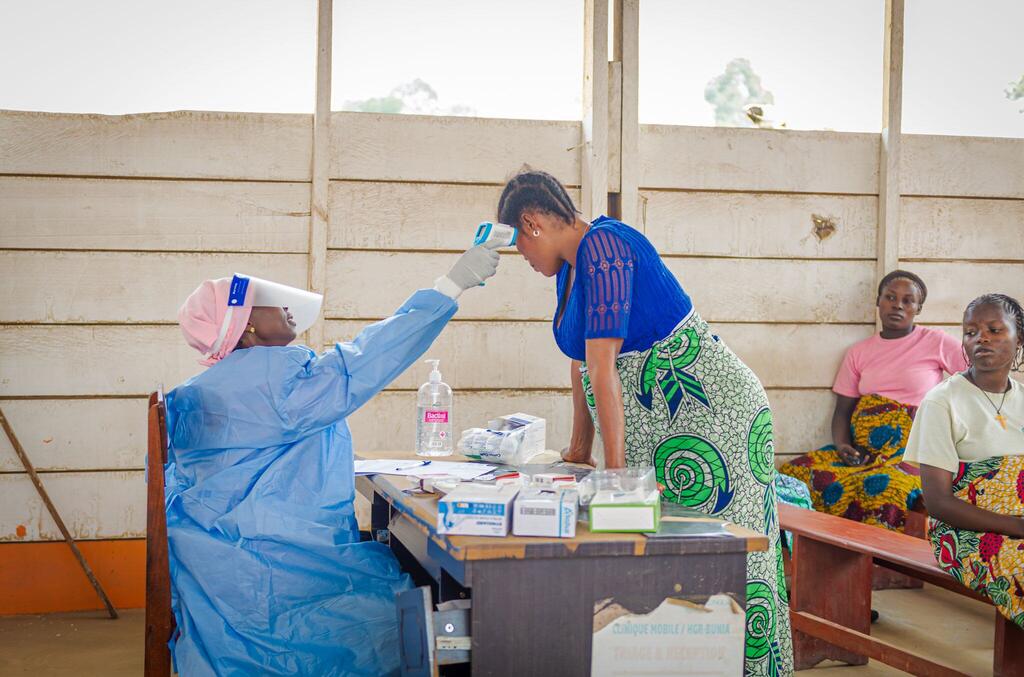
image1024x768.jpg

© UNFPA / Junior MayinduA health worker takes the temperature of a pregnant woman in eastern Democratic Republic of Congo (DRC), where the Ebola epidemic continues.

Convince before treating

Beyond infrastructure, one of the main challenges remains getting patients to seek medical help early enough.

The success of the response largely depends on community trust, in a region where distrust of authorities and external actors remains high. Health officials are increasing awareness campaigns and monitoring of people who have been in contact with infected individuals: nearly 18,000 contacts have been identified so far , of which more than 13,000 are still being actively monitored.

Specialized centers also provide increasingly comprehensive care. Infected breastfeeding women are temporarily separated from their infants to prevent transmission of the virus through breast milk. Before breastfeeding can resume, the breast milk is tested to ensure it no longer contains the virus.

A mobilization that remains insufficient

Despite this increase in capacity, the WHO believes that the response remains insufficient to meet the needs.

Since July 17, 1,481 new cases and 759 additional deaths have been recorded in the DRC. While this increase partly reflects improved testing and strengthened laboratory capacity, it primarily reflects the continued spread of the epidemic. Infections among healthcare workers also continue to rise: 151 healthcare professionals have been infected since the start of the outbreak, 44 of whom have died .

In its assessment published on Saturday, the WHO insists on the need for a " substantial change of scale " in the response in order to hope to regain the advantage over the virus.

The WHO Regional Director for Africa, Mohamed Janabi, is scheduled to visit Ituri in the coming days to meet with frontline teams. This latest visit underscores the importance being placed on an epidemic whose outcome now depends as much on medical treatment as on the ability to restore security, maintain humanitarian access, and convince the population to trust healthcare workers.


https://news.un.org/fr/story/2026/08/1159258
 
Translation Google

The IFRC is stepping up its Ebola response in the DRC as essential supplies reach frontline teams.


03/08/2026 | Press release

Kinshasa/Geneva, August 3, 2026 – The International Federation of Red Cross and Red Crescent Societies (IFRC) has strengthened its response to the Ebola epidemic in the Democratic Republic of Congo (DRC) with the arrival in Bunia of a new shipment of essential supplies to combat the epidemic, including 23 Safe and Dignified Burial (SDB) kits and 8,000 body bags.

This new shipment of SDB kits will allow for 460 safe and dignified burials. It comes as existing stocks were nearly depleted. Sixty-seven additional SDB kits are expected to arrive this week, further bolstering response capacity in the affected areas.

This strengthened response comes as the Ebola epidemic continues to worsen. The virus has now spread to five provinces (Ituri, North Kivu, Haut-Uélé, Tshopo and South Kivu) and has caused 1,657 confirmed deaths, highlighting the urgent need to intensify prevention and response efforts.

“The rapid delivery of vital supplies to frontline teams helps to better protect communities,” said Ariel Kestens, IFRC Delegation Chief in the DRC. “Safe and dignified burials are one of the most effective measures to reduce transmission while allowing families to honor their loved ones with dignity. Combined with community mobilization and early case detection, these supplies are essential to staying ahead of the epidemic.”

In response to the deteriorating situation, the IFRC has revised its Emergency Appeal to reflect increased operational needs and the anticipated spread of the epidemic. The appeal amount has been raised from 29.5 million Swiss francs (CHF) to 65 million CHF, with the goal of providing assistance to 9 million people.
These additional resources will enable the IFRC, in collaboration with the DRC Red Cross, to significantly scale up community engagement and accountability activities, surveillance and early detection, safe and dignified burials, infection prevention and control, mental and psychosocial health support, risk communication, logistics and emergency health interventions in the most at-risk areas.

Each safe and dignified burial kit contains the essential equipment needed to carry out safe Ebola-related burials, including personal protective equipment (PPE), gloves, masks, disinfectants and body handling equipment, enabling trained teams to protect themselves and surrounding communities while ensuring burials are carried out with dignity.

The IFRC also calls for faster and simpler cross-border logistics, customs, and clearance procedures so that vital supplies can reach affected communities without delay. In a rapidly evolving epidemic, every day counts, and removing logistical barriers can help save lives and keep the response ahead of the virus's spread.


...
https://www.ifrc.org/fr/press-relea...urnitures-essentielles-equipes-premiere-ligne
 
Back
Top