• FluTrackers.com Inc. does not provide medical advice. Information on this web site is collected from various internet resources, and the FluTrackers board of directors makes no warranty to the safety, efficacy, correctness or completeness of the information posted on this site by any author or poster. The information collated here is for instructional and/or discussion purposes only and is NOT intended to diagnose or treat any disease, illness, or other medical condition. Every individual reader or poster should seek advice from their personal physician/healthcare practitioner before considering or using any interventions that are discussed on this website. By continuing to access this website you agree to consult your personal physican before using any interventions posted on this website, and you agree to hold harmless FluTrackers.com Inc., the board of directors, the members, and all authors and posters for any effects from use of any medication, supplement, vitamin or other substance, device, intervention, etc. mentioned in posts on this website, or other internet venues referenced in posts on this website.
  • We are not asking for any donations. Do not donate to any entity who says they are raising funds for us.

DRC – 17th Ebola Outbreak (Bundibugyo virus) - Concerns over reliability of Government reported cumulative cases and deaths - May 2026+

from the gov. thru August 2, dated August 3.

CFR climbing again.....

Screenshot 2026-08-04 135610.png


https://insp.cd/sitrep-n080-mve-b_02-08-2026/
 
The Lancet - Correspondence - Congolese hospital staff cohort admitted with infectious symptoms in the setting of the Bundibugyo virus outbreak, April and May 2026, Bunia, DR Congo

​Correspondence

Online first August 03, 2026


Congolese hospital staff cohort admitted with infectious symptoms in the setting of the Bundibugyo virus outbreak, April and May 2026, Bunia, DR Congo

Patrick LaRochellea,b,c Send email to larochelle.patrick@gmail.com ∙ Melinda McKnighta,b,d ∙ Ufoymungo Ucama Patricka,b ∙ Musungufu Ambitapio Davina,b
Affiliations & Notes
Article Info
Linked Articles (1)

...
For over 3 weeks before the May 15 outbreak announcement CME-Bunia had been undergoing a wave of illnesses among hospital staff. Starting around April 20, three nurses in CME-Bunia's internal medicine service became ill. They were hospitalised in rooms adjacent to the paediatric service and cared for by paediatric nurses. Within a week, two paediatric nurses also became ill. By May 15, at least 15 staff members had been admitted to hospital. In total, between April 20 and May 28, 37 (24%) of 157 hospital staff, including 20 nurses, eight doctors, two pharmacists, one laboratory technician, one nurse anaesthetist, one midwife, one physical therapist, two administrative personnel, and one other staff member were admitted to hospital, generally with high fevers, myalgias, and headaches (figure and appendix pp 2–3).
...
In the aftermath of the May 15 announcement, the pressing question for CME-Bunia has been whether the outbreak among hospital staff and the intense pruritus that so many staff had was part of the Bundibugyo virus infection, or whether it could represent a co-occurring outbreak of another pathogen.... In total, 11 of 37 in our cohort eventually tested positive for Bundibugyo virus. 12 of 37 tested negative... Pruritus was reported by 83% of staff who tested negative and 73% of staff who tested positive to Bundibugyo virus (figure).

The other notable feature of this cohort is that only two staff members died.
...
Before May 15, Ebola seemed an improbable diagnosis given the high incidence of pruritus and the low mortality among our unwell staff. However, we now hypothesise that this intense pruritus might represent a previously unrecognised characteristic of this Bundibugyo virus variant.2 ...This raises the question of whether many of our negative tests might be false negatives, perhaps owing to delayed testing. ... If this hypothesis about false negative results is correct, our data suggests a case–fatality rate that is considerably lower than reported case–fatality ratios for this Bundibugyo virus outbreak (39%)4 and for outbreaks in 2007 (32·1%) and 2012 (36·1%).5
...

https://www.thelancet.com/journals/laninf/article/PIIS1473-3099(26)00420-2/fulltext
 
Tshopo -

Translation Google

An Ebola-related death on a boat departing from Kisangani is being traced; Kinshasa is strengthening its preparedness.

Wed 05/08/2026 - 08:40

Congolese health authorities are seeking to trace the contacts of an Ebola virus disease-related death that occurred on board a ship that left Kisangani between July 19 and 21, according to the latest outbreak situation report, while the World Health Organization (WHO) is strengthening preparations at a strategic entry point in Kinshasa.

In this report covering the situation as of August 3, the Public Health Emergency Operations Center (PHEOC) indicates that three new recommendations have been made in Tshopo province, one of which concerns "the tracing of an Ebola virus (EV) death that occurred on a boat departing from Kisangani between July 19 and 21." The document also mentions "the persistent resistance of high-risk contacts" in another death that occurred in Kabondo, as well as a pre-shortage of personal protective equipment and laboratory supplies.

The report does not specify the name of the ship, its route, or its destination, nor does it establish a link to any potential spread to other provinces. It also provides no information on the number of passengers or contacts potentially affected.

Tshopo has so far recorded seven confirmed cases and five deaths related to Ebola, with no new confirmed cases in the last 24 hours, according to health authorities.

Meanwhile, the WHO announced it was strengthening preparedness capacities at the Maluku entry point in Kinshasa, in support of the Congolese Ministry of Health, "with a view to a possible response" to the Bundibugyo virus.

In their analysis of the main challenges of the response, health authorities identify the high mobility of populations and the risk of river and cross-border spread among the factors likely to promote the spread of the epidemic, calling in particular for the strengthening of entry points and coordination.

https://actualite.cd/2026/08/05/un-...de-kisangani-fait-lobjet-dun-tracage-kinshasa

--------------------------------------------------------------------------------
SitRep N°081 (post #372)

Page 9/15


image.png


Translated by Google:

image.png

​​
 
Follow-up on the post above (#374)

Translation Google

Kinshasa: The ship carrying a death linked to Ebola has arrived at the port of Maluku; passenger reception arrangements have been put in place by health services.

Wed 05/08/2026 - 10:42

The ship being traced following a possible Ebola case on board in Kisangani arrived in Maluku, Kinshasa, on Wednesday morning, August 5. The vessel, carrying approximately 200 passengers, was escorted by the navy to the port of Maluku. Congolese health authorities are working to trace the contacts of a death linked to Ebola virus disease that occurred on board the ship.

On site, a police presence is noted to ensure supervision and security. Passenger reception facilities, including tents, have been erected for the care and isolation of passengers. The World Health Organization (WHO) is also present. The UN agency indicated that, in support of the Congolese Ministry of Health, it has strengthened preparedness capacities at the Maluku entry point in Kinshasa "in preparation for a possible response" to the Bundibugyo virus.

In this report covering the situation as of August 3, the Public Health Emergency Operations Center (PHEOC) indicates that three new recommendations have been made in Tshopo province, one of which concerns "the tracing of an Ebola virus (EV) death that occurred on a boat departing from Kisangani between July 19 and 21." The document also mentions "the persistent resistance of high-risk contacts" in another death that occurred in Kabondo, as well as a pre-shortage of personal protective equipment and laboratory supplies.

The report does not specify the name of the ship, its route, or its destination, nor does it establish a link to any potential spread to other provinces. It also provides no information on the number of passengers or contacts potentially affected.

Tshopo has so far recorded seven confirmed cases and five deaths related to Ebola, with no new confirmed cases in the last 24 hours, according to health authorities.

In their analysis of the main challenges of the response, health authorities identify the high mobility of populations and the risk of river and cross-border spread among the factors likely to promote the spread of the epidemic, calling in particular for the strengthening of entry points and coordination.

https://actualite.cd/2026/08/05/kin...teau-trace-avec-un-cas-de-deces-lie-ebola-les
-------------------------------------------------------------------------------------------------
Ebola: Authorities call for calm in Kinshasa after the interception of a suspicious boat in Maluku

Published on Wed, 05/08/2026 - 16:04 | Modified on Wed, 05/08/2026 - 16:04

Health and security authorities are calling on the population of Kinshasa to remain calm after the interception, on Wednesday, August 5, of a boat coming from Kisangani, on board which was the body of a person whose death is suspected to be linked to the Ebola virus disease.

Upon arrival near the port of Maluku in Kinshasa, the vessel was carrying approximately two hundred passengers, who were subject to enhanced health protocols before disembarking.

The authorities had put this system in place since Tuesday evening in order to prevent passengers from leaving the boat before the control operations.

According to the Director General of the National Institute of Public Health (INSP), Dieudonné Mwamba, the vessel was intercepted near Bende Bende, before its arrival at the port of Maluku.

Elements of the security forces, supported by medical intervention teams, were deployed to supervise the passengers and ensure the smooth running of operations.

Passenger screening and identification

Health teams have initiated operations to identify, screen and quarantine passengers in order to detect any suspected cases and trace contacts.

On this occasion, the Director General of the INSP called on the population to remain calm and to continue their activities normally, while trusting in the prevention measures implemented by the health authorities.

The World Health Organization (WHO), a partner of the government in the response to epidemics, has confirmed the deployment of its teams to the port of Maluku to support control operations.

According to health authorities, this measure also addresses a second issue: another ship from the province of Ecuador, on board which a suspected death linked to cholera was reported, must also be subject to a health intervention upon its arrival.

Authorities are continuing their investigations to determine the circumstances of the suspicious death recorded on the boat coming from Kisangani and to rule out any risk of the disease spreading.

https://www.radiookapi.net/2026/08/...llent-les-kinois-au-calme-apres-linterception
-------------------------------------------------------------------------------------------------
image.png - Click image for larger version  Name:	image.png Views:	4 Size:	27.8 KB ID:	1039541

image.png - Click image for larger version  Name:	image.png Views:	4 Size:	531.9 KB ID:	1039542

8:39 AM · Aug 5, 2026
 
image.png - Click image for larger version  Name:	image.png Views:	1 Size:	11.5 KB ID:	1039544


Ebola Response Update – August 5, 2026

Media Note

Office of the Spokesperson

August 5, 2026

The Department of State, in close coordination with the U.S. Centers for Disease Control and Prevention (CDC), and in partnership with the governments of the Democratic Republic of the Congo (DRC), Uganda, and other countries in the region, is continuing to mount a rapid and comprehensive response to the Ebola outbreak in the DRC. While the trajectory of the outbreak in the DRC remains concerning, the United States commends Uganda for swift and decisive action to respond to the outbreak and limit the spread of Ebola.

Today, the Department is announcing that, working with Congress, it intends to provide an additional $242 million in funding for immediate Ebola response and preparedness efforts in the region and humanitarian assistance related to the outbreak. This additional funding is aligned with the U.S. government’s commitment at the G7 Leader’s Summit on June 16 to provide up to an additional $500 million on Ebola response efforts. The Department of State’s assistance announcements to combat the outbreak have now exceeded $512 million in direct assistance, enabling implementing organizations to expand the ongoing response in Africa. This is in addition to $350 million for critical humanitarian assistance in the DRC, South Sudan, and Uganda, as part of our $1.8 billion in assistance to the UN Office for the Coordination of Humanitarian Affairs announced on May 14.

The United States continues to be the largest financial contributor to the Ebola response. This additional funding will enable the United States to continue work with governments, private sector partners, and humanitarian implementers to mount a robust and comprehensive response. The United States continues to call on other donors to dedicate resources toward tackling this Ebola outbreak.

Protecting Americans


The Trump Administration has no higher priority than the safety and security of U.S. citizens. The Department of State continues to operate our dedicated, 24/7 consular call center in order to maintain constant communication with affected U.S. citizens by providing real-time security updates and critical health information.

The Department of State is assisting U.S. citizens who are currently or were recently in the DRC or are otherwise impacted by travel restrictions. This includes providing financial assistance loans to support U.S. citizens who need to change their travel plans and secure temporary lodging in a country outside the DRC before returning to the United States. U.S. citizens affected by the “Do Not Board” restrictions may contact the nearest U.S. Embassy or Consulate, or the Department of State, to request information and/or financial assistance. Loan recipients repay the funds after returning to the United States.

Our Travel Advisory for the DRC, as well as those for Uganda and South Sudan, remains at Level 4 – Do Not Travel. Americans should not travel for any reason to these countries. The Department of State continues to work closely with the CDC, the lead federal agency for this response, to mobilize our global resources in support of this outbreak response, while putting the protection of Americans and preventing Ebola from reaching the American homeland first. Supporting the Regional Response


Today, the Department is announcing that, working with Congress, it intends to provide an additional $242 million in funding for Ebola response and preparedness efforts in the DRC and Uganda as well as humanitarian assistance related to the outbreak. Through more than $512 million announced by the Department of State, implementing organizations are conducting critical Ebola response and preparedness efforts focused on surveillance and detection, isolation and treatment, border and point-of-entry screening, strengthening health clinics in affected areas, and engaging communities to address misinformation and garner trust in Ebola response activities to help combat further spread.

To date, State Department funding has:
  • Supported 8.6 million health screenings across affected and at-risk countries;
  • Reached more than one million people with risk communication messaging;
  • Supported more than 180 health facilities in Ebola-affected areas and contributed to the direct operation of 12 specialized facilities in DRC to isolate and treat Ebola patients;
  • Procured and distributed nearly 300 metric tons of critical supplies, including personal protective equipment and other critical commodities for water, sanitation, and hygiene and infection prevention and control; and
  • Strengthened diagnostic capacity at 11 operational laboratories across the region.
Additional information about Ebola response, preparedness, and humanitarian efforts supported by the Department can be found on our Ebola Response Updates page.


https://www.state.gov/releases/offi.../2026/08/ebola-response-update-august-5-2026/
 
image.png - Click image for larger version  Name:	image.png Views:	1 Size:	27.1 KB ID:	1039546

Mahagi
Google map
---------------------------------------------------------------------------------------
Translation Google

Ebola in Ituri: three deaths out of four positive cases recorded in Mahagi

August 5, 2026

Mahagi, August 5, 2026 (ACP) - Three deaths out of the four positive cases of Ebola have been reported in the Mahagi health zone, in Ituri in the Northeast of the Democratic Republic of Congo (DRC), an official from the response team told ACP on Wednesday.

“ Of the four cases of Ebola virus disease recorded in the Mahagi health zone, there are three deaths. All of these cases are linked to a chain of transmission that started with a woman from the Mongbwalu health zone, the epicenter of the outbreak. These four cases all occurred in the last three weeks ,” said Venance Kumirarac, chair of the Risk Communication and Community Engagement (RCCE) pillar of the Mahagi health zone.

He indicated that this woman, considered the index case in this chain of contamination, died after being admitted to a health facility in Mahagi. " After the mother's death, her daughter also died. The next day, it was the nurse who had been caring for her who died ," he explained.

Mr. Kumirarac indicated that this situation highlights the high risk of disease spreading when infection prevention and control measures are not strictly followed.

He also called on the public to promptly report any suspected cases, avoid contact with anyone showing symptoms of Ebola, and cooperate with response teams to break the chain of transmission. ACP/MN

https://acp.cd/province/ebola-en-ituri-trois-deces-sur-quatre-cas-positifs-enregistres-a-mahagi/
 
Translation Google

Statement by Dr. Philippa Boulle, Deputy Medical Director of MSF, on the occasion of the visit to the DRC of the WHO Director-General, Dr. Tedros Adhanom Ghebreyesus

Press releases

August 5, 2026


“Two and a half months after the declaration of the Ebola epidemic, the situation in eastern Democratic Republic of Congo (DRC) is more critical than ever. The epidemic is spreading at an alarming and unprecedented rate despite the tireless efforts of the medical teams on the front line.”

According to the WHO, 3,605 confirmed cases had been reported as of August 1st, making it the largest Ebola outbreak ever recorded in the DRC, surpassing that of 2018. Just 11 weeks after it was declared, nearly 1,500 people had died. This is a much higher death toll than previous outbreaks over comparable periods: the devastating 2014 Ebola epidemic in West Africa caused 279 deaths during the same timeframe.

Even more worrying, the epidemic shows no signs of slowing down. New suspected cases are being reported almost daily in new locations and outside of already identified chains of transmission. To prevent further loss of life, the response must accelerate to outpace the current rate of transmission. The international medical response must be scaled up without delay, and many critical gaps still need to be addressed.

Undeniable progress has been made in testing and contact tracing, but these efforts remain insufficient to contain the epidemic. At MSF's Ebola Treatment Center (ETC) in Bunia, 90% of admitted patients were not being monitored contacts, while across Ituri province, only 59% of contacts were traced. To achieve this, improved collaboration with communities is urgently needed. A successful response can only be achieved if it is built with and led by local actors. Without communities at the heart of the response, surveillance and contact tracing will continue to miss some cases. Therefore, greater integration of community members is imperative to ensure that cases are detected as early as possible and rigorously monitored.

This epidemic is exacerbating an already existing humanitarian crisis. Malaria, measles, cholera, malnutrition, and other preventable yet treatable diseases continue to cause serious illness and death. Maintaining support for health facilities is therefore equally crucial so they can continue providing essential medical services throughout the Ebola response and thus help protect healthcare workers.

Access remains a critical issue, particularly in remote areas where the start of the rainy season will complicate movement and threaten to disrupt operations. Ensuring the delivery of medical supplies, as well as maintaining allowances and support for frontline health workers, is essential. Clear guarantees are needed to ensure that border restrictions, health measures, or administrative constraints do not impede the rotation of humanitarian staff, medical evacuations and transfers, or the delivery of supplies. At this stage, the situation remains uncertain.

Strengthening epidemiological surveillance, improving engagement with communities and ensuring access for humanitarian personnel are absolute priorities.

The response is intensifying, but it is still not reaching communities quickly enough to break the chains of transmission. We need to act without delay. Every day lost allows the virus to maintain its lead and for more lives to be lost.

Note to editors:

More than 1,400 MSF staff are currently mobilized to respond to the Ebola outbreak in eastern DRC. MSF runs seven Ebola Treatment Centers (ETCs) and more than 15 isolation units in Ituri, North Kivu, South Kivu, and Tshopo, with a total capacity of over 480 beds. Since the start of the outbreak, our teams have admitted more than 1,362 patients, including 554 confirmed cases, and have supported the recovery of 282 people through treatment. MSF is supporting the Ministry of Health in its surveillance and testing activities, community mobilization, training, and efforts to ensure safe access to other essential health services. We also continue to provide general and hospital healthcare in several provinces across the country.

https://www.msf.org/fr/rdcongo/décl...ce-médicale-adjointe-de-msf-à-loccasion-de-la
 
Follow-up on posts #374 and 375

image.png - Click image for larger version  Name:	image.png Views:	2 Size:	50.6 KB ID:	1039564

Mongala
/https://en.wikipedia.org/wiki/Mongala
-------------------------------------------------------------------------------------
Translation Google

​DRC: A boat suspected of carrying Ebola was intercepted before arriving in Kinshasa

In the DRC, the 17th Ebola outbreak is now the largest the country has experienced, with over 3,800 confirmed cases and 1,751 deaths. Currently, five provinces are affected, but the possibility of further spread remains a concern. On Wednesday, August 5, a suspicious boat traveling on the Congo River was intercepted by authorities upon its arrival in Kinshasa province.

Published on:05/08/2026 - 14:52
By : RFI
With our correspondent in Kinshasa, Paulina Zidi

The Yingfeng 2 arrived at midday in the port of Maluku, north of the city-province of Kinshasa, following an alert due to the presence of a suspected Ebola case on board . It is estimated that there are more than 200 people on board. They were met by a significant medical team. Tents were set up and medical teams from the WHO, the Ministry of Health, and other organizations were deployed.

All passengers will be examined. Suspected cases will be isolated and tested for diagnosis. Teams will try to identify all asymptomatic contacts to quarantine them. The ship must be disinfected.

An alert triggered by the passage of a probable case on board

This boat left Kisangani, the provincial capital of Tshopo and a city recently affected by the epidemic, on July 20 or 21. During its passage through Mongala, the neighboring province downstream on the Congo River, a passenger presented symptoms similar to those of Ebola.

The man disembarked the boat and was taken to the Bongela health center. He died during his transfer to the Pimu area's referral hospital. His body could not be examined before burial, but his clinical condition alerted the authorities, who then traced his movements and placed the boat under surveillance.

The priority now is to trace the contacts of this person and to check if anyone in Maluku is at risk, but also all along their journey on the river.

https://www.rfi.fr/fr/afrique/20260...ebola-intercepté-avant-son-arrivée-à-kinshasa
-------------------------------------------------------------------
DRC: After a suspected case of Ebola, a mobile laboratory is deployed and the ship is kept 60 km from Kinshasa

Wed 05/08/2026 - 21:12

Congolese authorities on Tuesday kept a boat carrying more than 200 passengers about 60 kilometers from Kinshasa after a suspected case of Ebola virus disease was reported, while a mobile laboratory was deployed to test passengers and crew, authorities announced.

“We suspected a case in the Pimbu health zone in Mongala. This person was on the boat. He got off the boat and it was outside the boat that he presented symptoms. He went to a health center and he died,” said Health Minister Roger Kamba.

"As soon as we were alerted, we started to follow this boat. The boat is being kept at a distance of about sixty kilometers from Kinshasa and we are doing this as a precaution," he added.

According to the minister, the authorities do not consider, at this stage, that this is a confirmed case of Ebola.

“We are going to test all the staff. We have not said that it is a confirmed case, but a suspected case. We are being cautious. There have been no other deaths on this ship. We have a mobile laboratory on site to test everyone,” he specified.

The Minister of Communication and Media, Patrick Muyaya, indicated that "all passengers will be tested" by teams from the National Institute of Biomedical Research (INRB).

“Other boats have arrived to pick up those who will be tested. There is a cordon that has been put in place,” he said.

Earlier in the day, the World Health Organization (WHO) announced it was strengthening preparedness capacities at the Maluku entry point, east of Kinshasa, to ensure a "rapid and coordinated response" to a possible introduction of the virus. The International Organization for Migration (IOM), for its part, indicated it was supporting Congolese authorities after the arrival of a boat carrying more than 200 passengers amid an alert related to a suspected case of Ebola virus disease.

This operation comes as the latest situation report on the epidemic indicates that health authorities are working to trace an Ebola-related death that occurred on a boat that left Kisangani between July 19 and 21.

The DRC has been facing its 17th Ebola outbreak, caused by the Bundibugyo virus, since May 15. As of August 3, health authorities had recorded 3,874 confirmed cases, 1,751 deaths and 749 recoveries, with the epidemic remaining concentrated in five provinces.

Clément Muamba

https://actualite.cd/2026/08/05/rdc...toire-mobile-deploye-et-le-bateau-maintenu-60
 
image.png - Click image for larger version  Name:	image.png Views:	1 Size:	61.0 KB ID:	1039577

Google map
-----------------------------------------------------------------------------------------------
Translation Google

Ebola in Tshopo: the first locally acquired case confirmed in Bafwasende

August 5, 2026

Kisangani, August 5, 2026 (ACP) – Tshopo province, in the northeast of the Democratic Republic of Congo, has recorded its first confirmed locally acquired case of Ebola in the Bafwasende territory, the provincial health minister announced Wednesday during a press briefing. “Upon arriving in the Baego area, we found the chief of the group ill. Samples were taken and came back positive. This is therefore a confirmed case of Ebola at kilometer marker 147 on National Route 4. We are truly facing an epidemic,” stated Dr. Simon Bokongo Lokofo Kawaya, the provincial health minister.

The head of health services in Tshopo province announced that, in addition to the seven (7) confirmed imported cases from Nia-Nia in Ituri, Tshopo has now recorded an eighth case, which is locally transmitted. Furthermore, the head of the health sector in Tshopo indicated that in the Bafwasende territory, specifically at the Avakubi border post (an Arabized community) located 12 kilometers from Nia-Nia, there were no handwashing facilities before entering Tshopo, due to misinformation surrounding the Ebola virus disease. "We were attacked by the local population, who didn't want to see the vehicles of our partners," he stated.

“We were able to engage with community leaders and install the very first handwashing station accepted by the population. We understood that the fight is not just a medical matter. That is why we want the army, the police, and other specialized services to be involved, given the experience gained during this mission,” explained Dr. Simon Bokongo.

As an assessment, he indicated that in the Bafwasende territory, the provincial Ebola response coordination committee observed that the border between Ituri and Tshopo is not secure with regard to the epidemic. He also deplored poor communication, uncontrolled contact cases, and unsafe burials. "Soon, Tshopo province risks experiencing local infections in Avakubi, Bafwasende-centre, and Kisangani, similar to the Haut-Uele province," he warned. The provincial health minister concluded by emphasizing that the close proximity of populations between Nia-Nia and Bafwasende constitutes a major risk factor. ACP/KIS/B.

https://acp.cd/province/ebola-dans-la-tshopo-un-tout-premier-cas-autochtone-confirme-a-bafwasende/
 
image.png - Click image for larger version  Name:	image.png Views:	7 Size:	68.1 KB ID:	1039579

image.png - Click image for larger version  Name:	image.png Views:	7 Size:	20.8 KB ID:	1039580

...
image.png - Click image for larger version  Name:	image.png Views:	7 Size:	991.3 KB ID:	1039581

5:42 AM · Aug 6, 2026

-------------------------------------------------------------------------------------------------------------------


Translation Google

image.png


PRESS RELEASE
Suspicion of Ebola virus disease on a boat coming from Tshopo: the INSP reassures the population about the response measures implemented

Kinshasa, July 5, 2026. The Ministry of Public Health, Hygiene and Social Welfare, through the National Institute of Public Health (INSP), informs national and international opinion that following the report of a suspected case of Ebola virus disease on board a boat coming from the province of Tshopo, a rapid response system was immediately activated in accordance with national public health emergency management procedures.

As part of this intervention, a mobile laboratory was deployed to ensure screening of all passengers on the boat. At the same time, a health security system was put in place to keep the boat under observation on the river, approximately 65 kilometers from Kinshasa, time to carry out the necessary epidemiological and biological investigations.

Initial information collected indicates that the suspected case died in Pimu, in the province of Mongala, located more than 1,200 kilometers from Kinshasa, before the boat arrives towards the capital. At this stage, there is no confirmation that this death is linked to Ebola virus disease. Ongoing laboratory analyzes and epidemiological investigations will make it possible to precisely establish the cause of death and guide appropriate public health measures.

The INSP would also like to point out that, contrary to information relayed on certain social networks, no other deaths have been recorded on board this boat. Passengers are subject to a health assessment in accordance with national surveillance and prevention protocols.

The Government of the Republic is following this situation with the greatest vigilance. Under the very high attention of the President of the Republic, all the ministries and services concerned remain fully mobilized to guarantee a rapid response, coordinated and based on best public health practices.

The National Institute of Public Health calls on the population to calm down, be vigilant and respect the information disseminated through official channels. It invites everyone to avoid the spread of rumors or false information likely to compromise response efforts and recalls that any communication relating to this situation will be regularly updated on the basis scientific results available.

INSP reaffirms its commitment to ensuring enhanced epidemiological surveillance, protecting populations and ensuring transparent, evidence-based communication, in strict compliance with International Health Regulations and national standards for managing public health emergencies.

Done in Kinshasa, July 6, 2026
National Institute of Public Health
General management


https://insp.cd/communique-de-presse/
 
​Excerpt from SitRep N°082 (above) concerning the suspected case of Ebola virus disease on a boat:

Page 10/15

image.png


Translation Google

image.png
​​​
 
image.png

Translation Google

In the DRC, Ebola has spread to camps for displaced persons.


image1170x530cropped.jpg

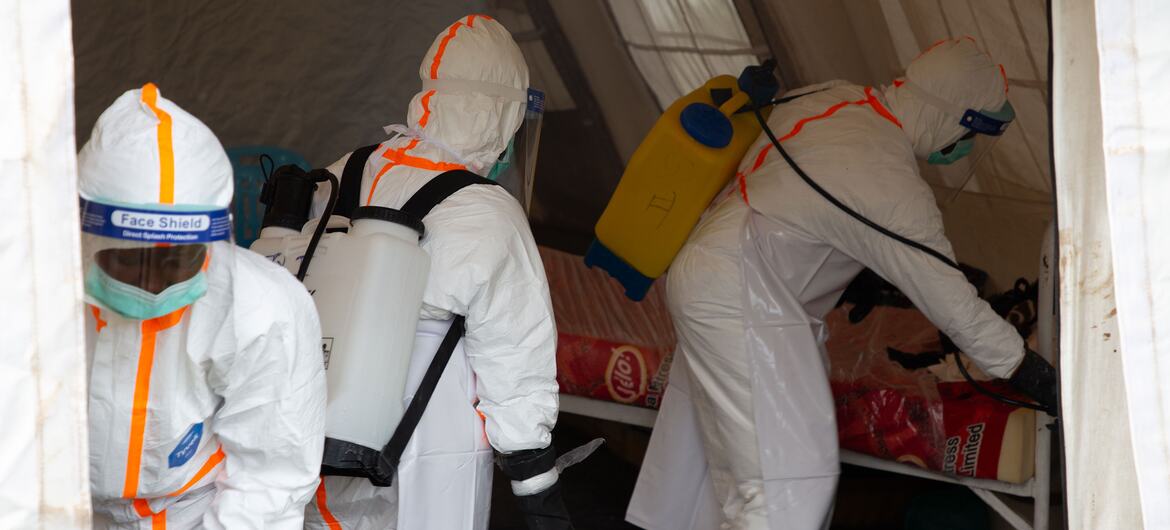
© UNICEF/ John JamesA team of hygiene workers disinfects a tent in Bunia, Ituri province, Democratic Republic of Congo.

August 6, 2026 Health

The Ebola epidemic has reached a new stage in the Democratic Republic of Congo (DRC). The Bundibugyo virus has now spread to camps for displaced people. Nineteen displaced people have already been infected, five of whom have died, raising fears among United Nations agencies of an acceleration of the epidemic among millions of uprooted people, who are particularly vulnerable due to their living conditions.

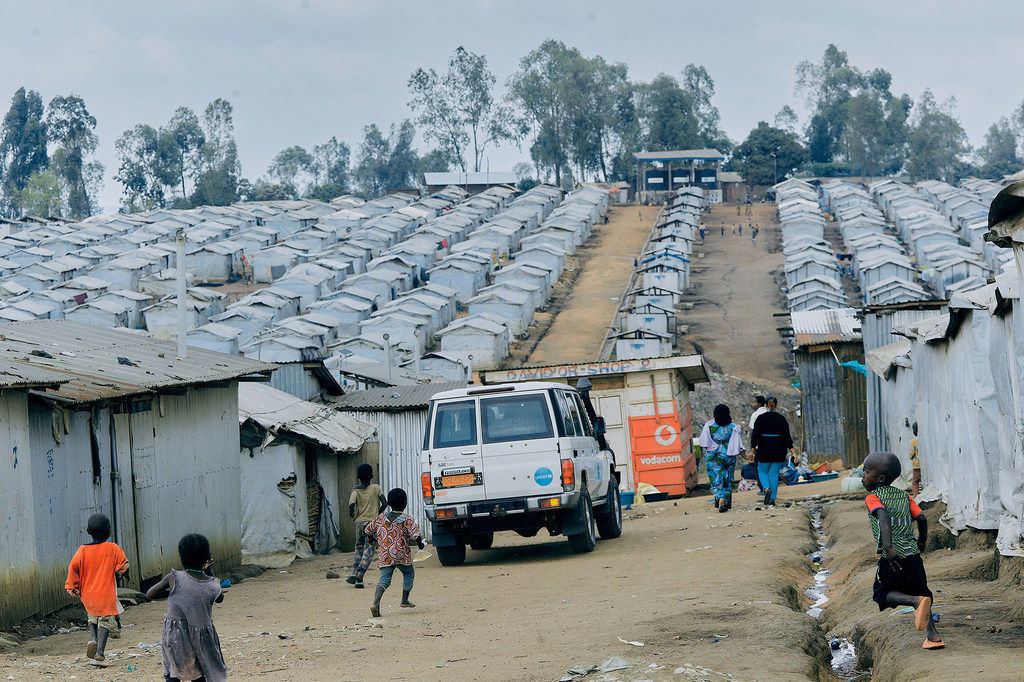
According to the United Nations High Commissioner for Refugees ( UNHCR ), at least five of the 69 displacement sites identified in Ituri province have recorded confirmed cases of Ebola , including several deaths.

For UNHCR, overcrowding, a lack of water and sanitation infrastructure, and distrust of health services create fertile ground for the rapid spread of the virus. Misinformation further hinders early detection and complicates the implementation of response measures, including safe burials.

image1024x768.jpg

© UNICEF/Prince WamwamiThe Kigonze displaced persons site in Bunia, the capital of Ituri province, in the northeast of the Democratic Republic of Congo (DRC).

4.4 million displaced people at risk

In total, the affected provinces are hosting nearly 4.4 million forcibly displaced people, including 3.8 million internally displaced persons, more than 274,000 refugees and asylum seekers, and 290,000 returnees. In Ituri province alone, more than 46,000 South Sudanese refugees are also living near the epicenter of the epidemic.

The outbreak of the disease in camps for displaced persons comes amid persistent insecurity in the areas most affected by the epidemic. In Ituri province, local sources report dozens of civilians killed and others abducted during the last two weeks of July.

According to the UN Office for the Coordination of Humanitarian Affairs ( OCHA ), several thousand people have also been displaced.

"The intersectoral data published by OCHA highlight the increasing overlap between population displacements and the transmission of the Ebola virus in Ituri," UNHCR emphasizes in its latest report, noting that the epidemic is taking place in a context of armed conflict, attacks against health personnel and frequent population movements, further complicating prevention and response.


More than 1,800 deaths

In the neighbouring province of North Kivu, local authorities report that at least three civilians were killed in an armed attack on August 2 in the territory of Beni.
In a context marked by violence and forced displacement, the epidemic continues to spread faster than the resources deployed to contain it. According to the World Health Organization ( WHO ), the number of new cases has doubled in one week in some transmission hotspots.

To date, 3,973 confirmed cases, including more than 1,801 deaths, have been recorded in the provinces of Ituri, North Kivu, South Kivu, Haut-Uele and Tshopo. Ituri alone accounts for nearly 87% of infections.

Faced with this acceleration, the WHO Director-General, Tedros Adhanom Ghebreyesus, is calling for an "urgent and massive" intensification of the response, by strengthening access to care, epidemiological surveillance and safe burials, while placing communities at the heart of the response despite the persistent insecurity.

image1170x530cropped.jpg

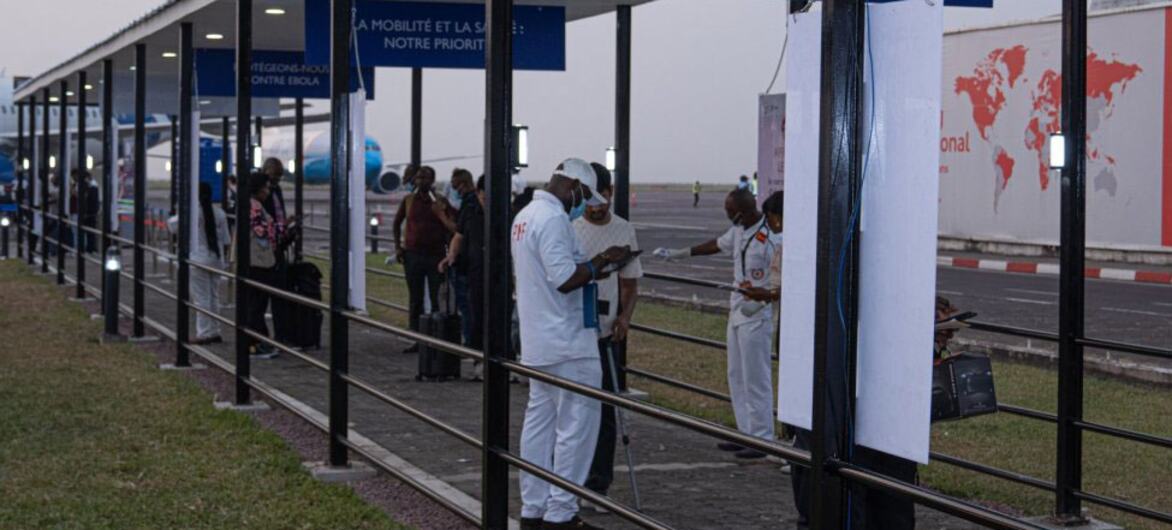
© IOMPassengers arriving in Kinshasa, the capital of the Democratic Republic of Congo, are subject to health checks as part of Ebola prevention efforts.

Refugee returns resume under surveillance

While insecurity continues to complicate health operations, authorities and humanitarian agencies are simultaneously trying to maintain essential population movements while strengthening Ebola prevention measures.

Despite the epidemic, UNHCR continues its efforts to reconcile refugee protection with health imperatives. After several weeks of negotiations with the authorities of the DRC and Rwanda regarding Ebola-related border restrictions, 529 Rwandan refugees were finally able to voluntarily return to their country, ending more than two months of waiting in transit centers.

In South Kivu, where no new cases have been recorded since the three infections detected at the end of May, voluntary returns of Congolese refugees from Rwanda continue: nearly 62,000 people had returned by July 21.

While the borders with Rwanda and Uganda remain closed, the one with South Sudan remains open for asylum seekers.

In parallel, the UN agency is maintaining healthcare in the camps and strengthening diagnostic capabilities with a second mobile laboratory now operational in Kasenyi.

image1170x530cropped.jpg

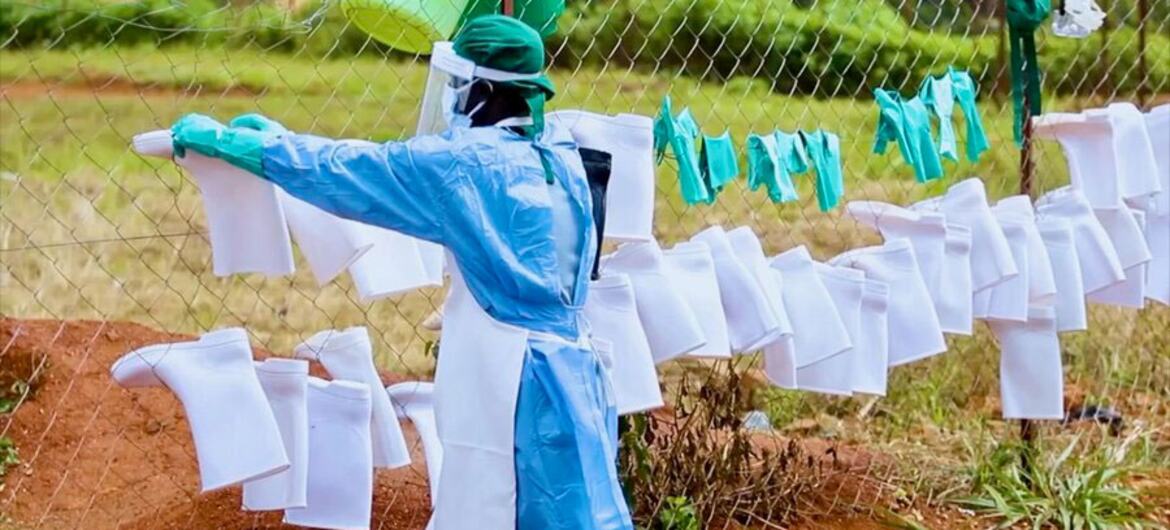
© PAM/ Arete Seros MuisaIn the northeast of the Democratic Republic of Congo, where the Ebola epidemic is raging, a health worker hangs disinfected boots.

More than 300 children have died

While 743 cases have been confirmed in children (aged 0 to 17 years) including 330 child deaths, UNICEF warns that the epidemic also threatens essential health services.
Between April and June 2026, the use of essential health services fell by 42% in the main outbreak hotspots of Bunia, Mongbwalu, Nizi, and Rwampara. Routine childhood immunization coverage fell by more than half in the most affected areas, with a particularly sharp drop of 69% in the first dose of measles vaccination in Mongbwalu, the epicenter of the outbreak.

Across the province, booster vaccinations also declined: the third dose of the pentavalent vaccine decreased by 22% and the second dose of the measles vaccine by 18%. Health facilities administered more than 23,000 fewer doses of routine childhood vaccines in May and June compared to April.

Maternal health facilities have also been affected, with the number of assisted deliveries in facilities falling by 13% across the province, and by 38%, 30% and 70% respectively in Bunia, Rwampara and Nizi.

No comparable seasonal decline had been observed during the same period in 2025.

"A doctor told our team that before the current epidemic, his facility used to treat an average of 500 patients per month, but that this number had fallen to almost zero," said John Agbor, UNICEF representative in the DRC.

https://news.un.org/fr/story/2026/08/1159274

 
Follow-up on post #380

Translation Google

Ebola: Surveillance intensified in Bafwasende after first local case confirmed

August 7, 2026

Kisangani, August 7, 2026 (ACP).- Epidemiological surveillance has been strengthened in the Bafwasende health zone, in the Tshopo province, in the Northeast of the Democratic Republic of Congo (DRC), after the confirmation of a first local case of Ebola, the chief medical officer of this health entity assured ACP on Friday.

" In terms of epidemiological surveillance, this case is the sixth we have had to follow that has tested positive. To date, we have pre-listed at least 32 people identified as contacts, whom we are monitoring ," said Dr. Marcel Likilo, chief medical officer of the Bafwasende health zone.

He specified that contact tracing includes, in particular, medical staff who treated the patient, his work colleagues, and members of his family.

“ Within his biological family, where we were threatened in the first few days, some members finally understood the situation. They started to cooperate and we are now monitoring them ,” he added.

The chief medical officer for the area explained that the investigation teams had encountered difficulties with the patient's family before awareness campaigns promoted better collaboration, thus allowing the follow-up to continue.

In addition, two alert cases were recorded on Thursday at the Bafwasende general reference hospital.

These alerts are currently being monitored by investigation teams, composed of ten agents trained with the support of partners to assist health services in epidemiological surveillance.

This new case of local transmission of Ebola virus disease in Tshopo province brings the total number of recorded cases to eight, including seven imported from the neighbouring Ituri province.

ACP/L

https://acp.cd/province/ebola-renfo...fwasende-apres-un-premier-cas-local-confirme/
 
image.png - Click image for larger version  Name:	image.png Views:	1 Size:	53.2 KB ID:	1039680

Nia-Nia
Google map
-----------------------------------------------------------------------------
Translation Google

Ituri: More than 60% fatality rate due to the Ebola epidemic in Nia-Nia

August 7, 2026

Bunia, August 7, 2026 (ACP).- The Nia-Nia health zone, located in the Mambasa territory in Ituri, in the Northeast of the Democratic Republic of Congo (DRC), is facing a high Ebola fatality rate, with 119 confirmed cases, 72 deaths and 24 recoveries, representing a fatality rate of over 60%, the chief medical officer of this health zone told ACP on Friday.

“ We have 119 confirmed cases, 72 deaths and 24 recoveries. We are therefore exceeding 60% fatality rate ,” said Dr. Joseph Pemanakue.

He explained that this critical situation is mainly due to the difficulties in carrying out post-mortem sampling in the PK51 area.

In this area, response activities remain limited due to major security constraints.

Dr. Pemanakue stated that nearly 90% of post-mortem samples taken in this locality are positive, highlighting intense community transmission.

He finally stressed the need to accelerate the full resumption of health interventions at PK51, in order to reduce mortality and quickly interrupt the chain of contamination.

ACP/

https://acp.cd/province/ituri-plus-de-60-de-letalite-due-a-lepidemie-debola-a-nia-nia/
 
Translation Google

Translation Google

Ebola: Nine confirmed cases, including five deaths, recorded to date in Tshopo

August 7, 2026

Kisangani, August 7, 2026 (ACP).- The province of Tshopo, in the Northeast of the Democratic Republic of Congo (DRC), has recorded nine (9) confirmed cases of Ebola to date, including five (5) deaths, representing an overall case fatality rate of 56%, a response official indicated on Friday, during the meeting of the Ebola awareness commission established by the provincial governor.

This report was presented by Dr. Franck Mebwa Mohala, in charge of operations for the Ebola virus disease response team of the provincial health division.

He specified that at the Ebola treatment center (ETC), the province recorded three (3) deaths.

" Currently, we have two people who have recovered and whom we are preparing to discharge ," he said.

Furthermore, he added that 127 contacts have been identified and are being properly monitored at 100%. Despite this encouraging result, the operations team continues to face significant challenges in public health action on the ground.

“ At the Cité de Refuge church, since the 6th case, a man, arrived in Kisangani, he went to this place of worship seeking help. This person vomited there. We still have the work of compiling a list of contacts in this area to carry out public health actions. We have been waiting for 10 days for the approval of the spiritual leader of this church who is in Kinshasa ,” he explained.

Dr. Mebwa also reported the case of a military officer, a captain from Bunia, who refuses to be evacuated to the CTE.

He is currently at Bangboka International Airport and is seeking to travel to Kinshasa.

Furthermore, this operations manager deplored the lack of public health activities in the locality of Baego (at kilometer point 147 on national road number 4), in the territory of Bafwasende.

This situation concerns the monitoring of contacts of the head of this group, who is the very first positive case recorded in Tshopo since the outbreak of the epidemic in the province.

As a reminder, a joint Ebola response team returned from Bafwasende on Monday, August 3rd. Awareness-raising activities were conducted there to convince the population of the seriousness of the situation, using the example of the positive Ebola case detected in their territory.

ACP/KIS/B/HM

https://acp.cd/province/ebola-neuf-...q-deces-enregistres-a-ce-jour-dans-la-tshopo/
 
Translation Google

Ebola Bundibugyo: DRC prepares to expand the use of the Ervebo vaccine

As the Ebola epidemic caused by the Bundibugyo virus continues to spread in the DRC, health authorities and their partners are moving towards a new vaccination strategy. The Ervebo vaccine, previously approved against Ebola Zaire, could be used on a larger scale, while trials must begin quickly to precisely measure its effectiveness against Bundibugyo.

Published on:08/08/2026 - 19:07
By : Patient Ligodi

The turning point was announced by the director general of Africa CDC, Jean Kaseya. Following discussions held in Kinshasa with Congolese authorities, he stated that it had been decided to expand the use of Ervebo to the population of Ituri and North Kivu, the two provinces at the heart of the response.

This approach is based on observations that people previously vaccinated against Ebola Zaire appear to benefit from a certain level of protection against Bundibugyo, particularly against fatal forms.

But this cross-protection has not yet been definitively demonstrated in humans. This is precisely what the new trials must establish.

A test on Ervebo is expected soon

Scientists associated with Africa CDC indicate that an initial trial focused on the cross-protection of Ervebo could begin in the coming weeks.

According to Professor Placide Mbala, who is involved in the research conducted in the DRC, a first trial could begin within two to three weeks. This trial should allow for a better assessment of the vaccine's ability to protect against the Bundibugyo virus, drawing in particular on data collected during previous Ebola vaccination campaigns.

Another scientific official from Africa CDC, for his part, mentions the launch, in about two weeks, of a small cohort intended to study this cross-protection, before moving on to larger-scale work.

This acceleration comes after a new recommendation from the World Health Organization's technical group tasked with prioritizing vaccine candidates. Meeting on July 31, this group determined that, in the absence of a vaccine specifically designed against Bundibugyo – immediately available for large-scale evaluation – Ervebo should be prioritized for a phase 3 trial during the current epidemic.

This phase should help answer a central question: does the vaccine actually protect people exposed to Bundibugyo? Since Ervebo is already licensed against Ebola Zaire, the primary challenge is no longer to establish its safety, which has already been extensively documented, but its effectiveness against this other strain.

Muyembe proposes a " vaccination curtain "

In the DRC, Professor Jean-Jacques Muyembe, Director General of the National Institute of Biomedical Research (INRB), proposes to go further in the way the vaccine is used.

In an interview with RFI, he advocates for the creation of what he calls a vaccination "curtain" around the areas most exposed to the spread of the epidemic. His idea is to prioritize vaccinating populations living in provinces threatened by the virus's progression, particularly Tshopo and Haut-Uélé.

The goal would be to create an initial barrier before the virus gains new ground.


This approach would differ from the so-called "ring vaccination" strategy, commonly used during previous Ebola epidemics. This strategy involves vaccinating people who have been in contact with a confirmed case, and then the contacts of those contacts.

For Jean-Jacques Muyembe, the two strategies are not incompatible. Preventive protection of at-risk areas could be implemented as a priority, then supplemented by vaccination around confirmed cases. The Director General of the INRB emphasizes that such a campaign would be a public health measure and not a clinical trial.

The question of doses

The implementation of large-scale vaccination will, however, depend directly on vaccine availability. Jean-Jacques Muyembe indicates that approximately 2,000 doses are currently available in the DRC.

Internationally, Africa CDC reports that 500,000 doses of Ervebo are available in the global stockpile. Gavi, the Vaccine Alliance, has pledged $40 million to make these doses available if the vaccine is recommended for this use. The price mentioned by Africa CDC is $98 per dose.

African officials are also working with the manufacturer MSD and several partners to improve production capacity in the longer term, particularly in Africa. However, these projects do not constitute an immediate solution to the current epidemic.

A two-tiered strategy

The new approach is therefore taking shape on two levels.

On one hand, researchers want to quickly obtain solid evidence of Ervebo's effectiveness against Bundibugyo. On the other hand, Africa CDC and Congolese officials are already considering its use as a public health tool in the face of an epidemic that continues to spread.

This development comes as vaccines specifically designed against Bundibugyo are also being evaluated. Two candidates have already reached phase 1 trials, in the United Kingdom and Canada. These studies must first verify their safety and their ability to trigger an immune response before determining whether they actually protect against the disease.

Ervebo therefore presents an immediate advantage: the vaccine already exists, its safety is known, and hundreds of thousands of doses are available. The question now facing researchers is to determine the extent of its protection against Bundibugyo and under what conditions it can be used without waiting for the completion of vaccines specifically designed against this strain.

https://www.rfi.fr/fr/afrique/20260...pare-à-élargir-l-utilisation-du-vaccin-ervebo
-----------------------------
See also:

Bundibugyo Ebola outbreak: first findings to guide the development of an effective vaccine

https://flutrackers.com/forum/forum...uide-the-development-of-an-effective-vaccine​
 
Back
Top