• FluTrackers.com Inc. does not provide medical advice. Information on this web site is collected from various internet resources, and the FluTrackers board of directors makes no warranty to the safety, efficacy, correctness or completeness of the information posted on this site by any author or poster. The information collated here is for instructional and/or discussion purposes only and is NOT intended to diagnose or treat any disease, illness, or other medical condition. Every individual reader or poster should seek advice from their personal physician/healthcare practitioner before considering or using any interventions that are discussed on this website. By continuing to access this website you agree to consult your personal physican before using any interventions posted on this website, and you agree to hold harmless FluTrackers.com Inc., the board of directors, the members, and all authors and posters for any effects from use of any medication, supplement, vitamin or other substance, device, intervention, etc. mentioned in posts on this website, or other internet venues referenced in posts on this website.
  • We are not asking for any donations. Do not donate to any entity who says they are raising funds for us.

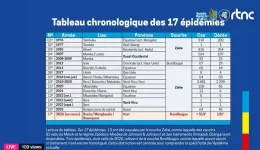
DRC – 17th Ebola Outbreak (Bundibugyo virus) - Concerns over reliability of Government reported cumulative cases and deaths - May 2026+

Translation Google

Ebola in Ituri: Between health monitoring and travel restrictions, concern is growing in humanitarian circles

Sunday, May 17, 2026 - 5:56 PM

The resurgence of the Ebola epidemic in Ituri province is beginning to produce its first effects within humanitarian and expatriate circles operating in the east of the Democratic Republic of Congo.

While Congolese health authorities are intensifying the response in the affected areas, the United States has advised its citizens against traveling to Ituri due to the risks associated with the spread of the Ebola virus, according to several diplomatic and humanitarian sources contacted in Bunia.

At the same time, preventive health surveillance measures have been strengthened around certain people considered as potential contacts in the context of the ongoing epidemiological monitoring.

According to a medical source who requested anonymity due to the sensitivity of the case.

"Some people who have potentially been exposed to the virus are currently undergoing health monitoring in accordance with international Ebola prevention protocols."

This source specifies however that _"despite being placed under surveillance, this does not automatically mean being sick"_, recalling that health authorities systematically carry out preventive monitoring of contacts in order to avoid any possible spread of the virus.

In humanitarian circles in Bunia and the affected areas, the situation is beginning to cause concern, particularly due to the increase in suspected cases and the gradual strengthening of health controls.

"The teams remain mobilized, but there is inevitably concern because Ebola directly affects movements, human contacts and field operations," confides a humanitarian actor under the condition of anonymity.

According to the latest available health data, Ituri concentrates the majority of suspected cases recorded in the DRC, particularly in the health zones of Mongbwalu and Rwampara.

Faced with the risk of spread, Congolese authorities have already announced the upcoming installation of treatment centers in Bunia, Mongbwalu and Rwampara, while specialized teams continue contact tracing and community awareness operations.

The national Minister of Public Health, Roger Kamba, recently called on the population to avoid panic and to cooperate with medical teams.

"This is not a mystical disease. The sooner we take care of the patient, the sooner we will stop the spread of the virus," he said during his visit to Bunia.

Within humanitarian organizations, several structures have reportedly already begun to reassess certain movements to areas considered high risk, pending developments in the epidemiological situation.

Freddy Upar, in Bunia

https://actualite.cd/2026/05/17/ebo...e-et-restrictions-de-voyage-linquietude-monte
 
Screenshot

image.png


4:56 PM · May 17, 2026
 
Transcript - Update on Ebola Outbreak in the Democratic Republic of the Congo and Uganda, 5/17/2026

TRANSCRIPT


For immediate release: May 17, 2026 Length: 15 minutes 52 seconds
CDC
CDC Media Relations
(404) 639-3286
media@cdc.gov
https://www.cdc.gov/media/
Please Note: This transcript is not edited and may contain errors.

00:00:00 Operator

Good afternoon and thank you all for standing by. For the duration of today's call all listeners are in a listen only mode until the question and answer section. At that time credentialed members of the media can press star one to ask a question or star two to withdraw a question. Today's call is being recorded, if you have any objections please disconnect at this time. I will now introduce Mr. Benjamin Haynes. Thank you Sir. You may begin.

00:00:31 Benjamin Haynes, CDC Moderator

Thank you Brad and good afternoon everyone. I'd like to thank you all for joining us today for an update on CDC 's Ebola response. I know on Friday we briefly mentioned that we were aware of the outbreak and we're responding. So today Dr. Satish Pillai will give an update and then we'll take your questions. When we get to the question and answers,

we wanted to make sure that Dr. David Fitter is here just in case you may have some lingering hantavirus questions. I'll now turn the call over to Dr. Pillai.

00:01:01 CAPT Satish K. Pillai, MD, MPH, CDC Ebola Response Incident Manager

Thank you Ben and thank you all for joining us on a Sunday afternoon. As mentioned earlier in the week, CDC is responding to an outbreak of Ebola disease in the Democratic Republic of Congo and Uganda. In DRC this outbreak has now affected at least 9 health zones; there have also been 2 confirmed cases identified in Uganda in people who traveled there from DRC. Yesterday, the World Health Organization declared this outbreak a public health emergency of international concern, or a PHEIC. There are 4 types of Ebola virus that cause illness in people. This specific outbreak is caused by the Bundibugyo virus subtype of Ebola.

CDC is urgently coordinating with our interagency partners on this outbreak to ensure the outbreak is managed and prevent further spread of Ebola. CDC has activated our Emergency Response Center for this outbreak. And through our CDC country office in DRC and Uganda, we are providing in country support for surveillance, contact tracing, laboratory testing, infection prevention and control, border health activities, and community engagement.

We're also mobilizing additional support from our headquarters in Atlanta. Friday, we posted 2 travel health notices for DRC and Uganda and yesterday CDC posted a situation update on our website.

At present, there are no FDA approved vaccines or therapeutics for Ebola virus Bundibugyo. And proactive supportive care including fluid and electrolyte management and treatment of complications is the most effective strategy for optimizing patient outcomes.

This is the 18th recorded Ebola outbreak in DRC since the virus was first identified in 1976. The previous Ebola outbreak in DRC ended December 2025. There have only been a few Bundibugyo species outbreaks before this one, one in Uganda in 2007, one DRC in 2015.

To the American public, the risk to the United States remains low.

Travelers to the region should avoid contact with sick people, report symptoms immediately and follow our travel health guidance.

Thank you.

00:03:50 Mr. Haynes

Thank you Dr. Pillai; Brad we are ready to take questions.

00:04:11 Operator

Thank you. We will now begin the question and answer session. If you are a credentialed member of the media and would like to ask a question during the call, press star one on your touch tone phone. Press star 2 to withdraw your question. You may queue up at anytime. The first question for today will come from Helen Branswell of STAT your line is open.

00:04:36 Helen Branswell

Thank you very much for doing this and thank you very much for taking my question. Dr. Pillai, I'm hearing reports that there have been some exposures of Americans in DRC, I think about 6, I think 2 or 3 of those people may have had high risk exposures and that one may be symptomatic now and that the United states may be looking to either repatriate those people, at least get them somewhere where they could be monitored and cared for. Can you please tell us about that?

00:05:17 Dr. Pillai

Thank you Helen for the question. The CDC headquarters and the CDC country office is actively working with our interagency partners, the embassy to fully assess the situation and the needs on the ground. It is a highly dynamic situation, and at this point what I would say is we continue to assess. We will continue to keep you posted as we learn more and thank you.

00:05:50 Helen Branswell

I'm sorry that didn't answer my question.

00:05:54 Dr. Pillai

Yeah, I would say again we are assessing the needs on the ground, the situation, and working with our interagency partners and we will continue to keep individuals posted as we learn more.

00:06:10 Mr. Haynes

Next question please.

00:06:16 Operator

The next question comes from Mike Stobbe of The Associated Press, your line is open.

00:06:22 Mike Stobbe

Hi thank you for taking my question, a couple, first a follow up from Helen Branswell, I don't understand, are you saying that there are Americans who are being assessed and were exposed? I mean, that's the, I know this administration is striving for transparency, so could you please answer the question directly? Also, could you say how many people CDC has in its office in the DRC, how many people it has in Uganda, and how many people more, how many more people you're sending, thank you?

00:06:56 Dr. Pillai

Thank you, so I will say we don't discuss or comment on individual dispositions. As the US government has additional information to share, we will continue to share. Regarding the second question, the DRC country office has over 30 individuals. We are identifying deployers to head out early this week and will continue to identify what the needs are and deployment requests against that and similarly the Uganda country office has requested deployers and we're actively moving to get people into the field.

00:07:36 Mr. Haynes

Next question please.

00:07:39 Operator

The next question will come from Youri Benadjaoud of ABC News, your line is open.

00:07:46 Youri Benadjaoud

Thanks for taking this call guys. How concerned are you that this outbreak is going to continue to grow ,especially given the fact that there's no vaccines and treatments? Are you aware of anyone that's already taking an international flight?

00:08:02 Dr. Pillai

Regarding the issue of no therapeutics, I do want to emphasize the fact that we have known ways to control Ebola outbreaks through contact tracing, active case identification, early testing, quarantine and isolation measures, those have been proven effective and those are the measures to undertake with Bundibugyo outbreaks and those are the measures that we're going to be emphasizing in this outbreak.

00:08:40 Mr. Haynes

Next, sorry Youri, go ahead.

00:08:44 Youri Benadjaoud

On the international flights, do you know of any cases or exposures that have taken an international flight so far?

00:08:53 Dr. Pillai

I can't speak to that, I'm not aware of any, and I would say that we have measures in the US that, for exit screening in countries as well as and have provided ongoing support on border health activities with our country offices and the ministries of health.

00:09:19 Mr. Haynes

Next question please Brad.

00:09:23 Operator

The next question comes from Jonathan Lambert of NPR your line is open.

00:09:29 Jonathan Lambert

Hi thanks for taking my question. I wonder if you could speak to why it took so long for the outbreak to become recognized as Ebola. Was CDC involved in supporting the transfer or testing of samples in the early days of the outbreaks and did aid cuts affect these surveillance programs?

00:09:50 Dr. Pillai

CDC was notified of the DRC outbreak, of the confirmed case on Thursday evening and Uganda Friday, directly from our ongoing relationships with the Ministry of Health. As soon as we learned of the activity we began mobilizing efforts at headquarters. The location in Bunia is a challenging area with really, concerns and challenges with I think public health practice. As soon as the outbreak was identified we have been actively mobilizing.

00:10:41 Mr. Haynes

Next question please Brad.

00:10:44 Operator

The next question will come from Lynne Peterson with Trends in Medicine, your line is open.

00:10:51 Lynne Peterson

Thank you, I guess I'll add to the list of people asking, are any Americans infected in the DRC? We're not asking you to tell us who they are, but we would like to know if there are any Americans involved. That's the first part of my question. Do we have an answer to that?

00:11:12 Dr. Pillai

I will say again at this juncture we're actively assessing the situation on the ground, and we aren't going to comment on individual dispositions of infection, exposure.

00:11:28 Lynne Peterson

And secondly, in respect to travel, is it actually safe to let anybody fly out of those countries right now? Because there's no test? We're not testing everybody that flies and they could be asymptomatic. So should there not be, are you considering a complete travel ban out of the countries?

00:11:54 Dr. Pillai

So there is diagnostic capabilities for Bundibugyo. That's how these cases were identified both in Uganda and DRC. The biology of Bundibugyo virus is such that individuals are infectious only if they're symptomatic. And we have exit screening activities in both DRC and Uganda, in discussions with our embassies and our country offices.

00:12:27 Mr. Haynes

Brad we have time for 2 more questions.

00:12:31 Operator

Thank you, the next question comes from Nadia Kounang of CNN, your line is open.

00:12:39 Nadia Kounang

Hi thanks for taking our questions. I wanted to follow up on the traveler situation. You mentioned there's exit screening activities both in DRC and Uganda. One: can you clarify or expand on what those exit screening strategies are, and secondly is there further discussion then about monitoring travelers who have come from those areas to the United States and monitoring them for symptoms?

00:13:07 Dr. Pillai

So with, I think one important point is both Uganda and DRC are experienced with viral hemorrhagic fever outbreaks, Ebola outbreaks. The role of exit screening is appropriate symptom monitoring and assessing from signs and symptoms. Both countries have experience in implementing these. And again, even as of a few hours ago, we were in discussions with our country office partners about this, and we will continue to reinforce those practices. And on the ports of entry, the US has appropriate, is putting in appropriate measures for identifying individuals with any symptoms.

00:13:59 Mr. Haynes

And our last question please.

00:14:03 Operator

Yes, your last question will come from George Solis of NBC News, your line is open.

00:14:09 George Solis

Hi thank you so much for doing this. I know we can't talk about the, any cases specifically related to Americans, but just generally speaking, how concerned do Americans or the American public need to be about these cases, and how soon would you get a sense of just the number of cases before this could become a pandemic style emergency?

00:14:32 Dr. Pillai

So I think to start, the risk to Americans is low. I think this is different than a respiratory transmissible disease such as COVID. Individuals are at risk of transmitting infection when they're symptomatic, there is not an asymptomatic phase, and therefore again going back to the idea of being able to identify individuals, appropriately triage individuals, test, either quarantine or isolate appropriately, and provide supportive care are the critical public health interventions. So again, that that speaks to the fact that this is different than a respiratory transmissible infectious disease, and the risk to the American people is low.

00:15:31 Mr. Haynes

Thank you Dr. Pillai and thank you all for joining us today. A transcript and audio file of this call will be posted to the CDC media site later today, and this will conclude our call, thank you.

00:15:44 Operator

Thank you all for your participation and for joining today's conference. You may now all disconnect.
​:tiphat:
https://www.cdc.gov/media/releases/2026/transcript-ebola-update-05-17-2026.html

 
From:
"Media (CDC)" <sohco@CDC.GOV>[Add to Address Book or Unsubscribe]
To: <MMWR-MEDIA@LISTSERV.CDC.GOV>
Subject: CDC Mobilizes International Response Following Ebola Disease Outbreak
Date: May 17, 2026 7:04 PM​

Media Statement


For Immediate Release


Sunday, May 17, 2026


Contact: CDC Media Relations


CDC Mobilizes International Response
Following Ebola Disease Outbreak in DRC and Uganda


The Centers for Disease Control and Prevention (CDC) has mobilized response activities following confirmation of an Ebola outbreak in Ituri Province, Democratic Republic of the Congo (DRC) and cases in Uganda. Through existing relationships with the DRC and Uganda Ministries of Health, CDC was notified of the ongoing outbreak as soon as cases were confirmed and have been actively working to support needs. Last night, the WHO followed this notification with a declaration of a public health emergency of international concern with regard to this epidemic of Ebola disease caused by the Bundibugyo (Bun-dee-BOO-joh) virus, a species of orthoebolavirus, in the DRC and Uganda.
At this time, the risk to the American public remains low. Ebola virus spreads through direct contact with the bodily fluids of an infected person and does not spread through casual contact or air. CDC continues to closely monitor the situation and has systems in place to detect and respond rapidly to potential public health threats.
The CDC's Country Offices in the DRC and Uganda have been coordinating across the U.S. Government, Ministries of Health, other members of the USG, and international partners to support response operations, including surveillance, laboratory diagnostics, infection prevention and control, and other outbreak containment efforts.
CDC is also supporting interagency partners who are actively coordinating the safe withdrawal of a small number of Americans who are directly affected by this outbreak.
The affected areas of Ituri Province are logistically challenging regions in eastern DRC, with limited transportation infrastructure, difficult terrain, and ongoing security concerns that can complicate access for response teams and medical personnel. CDC has extensive experience and some of the world's foremost experts in supporting Ebola response operations in the region and remains committed to protecting global health security. Most recently, the CDC responded to an Ebola outbreak in the DRC that ended in December 2025.
To date, there are reports of 10 confirmed cases, 336 suspected cases including 88 deaths in DRC, and 2 confirmed cases including 1 death in Uganda. Cases and death numbers are subject to adjustment as the situation evolves. This marks the DRC's 18th Ebola virus outbreak since 1976, and its second outbreak of Bundibugyo virus.
For the latest updates and public health information, visit Ebola Disease: Current Situation.


Ebola in Ituri: 350 suspected cases including 91 probable deaths (Minister)

Published on Mon, 18/05/2026 - 05:42 | Modified on Mon, 18/05/2026 - 5:42

More than 350 suspected cases of Ebola have already been recorded, with 91 probable deaths, said the Minister of Public Health of the DRC, Samuel Roger Kamba, on Sunday, May 17, 2026 before the press in Bunia (Ituri). According to him, 59 Ebola patients are currently being treated in various health facilities in Bunia and Mongwalu, considered the main epicenters of this epidemic.

Among the response measures announced, the minister indicated that three new support sites are being built in order to increase the reception capacity of health structures in the face of the magnitude of the epidemic:

"We have already deployed the response and today we have come to complete this deployment of the response with material resources but also human resources from the public health emergency operations center. The sites are already chosen in Rampara and then in Mongwalu and then here in Bunia".

Sunday morning, according to him, all the tents were brought to set up the treatment centers.

"We have 59 patients who are currently actively being treated. In total, we are around 350 suspected cases. We are preparing to have treatment centers on the three sites so that we can expand our capacities. In terms of deaths, 91 deaths reported but these are probable deaths, "said the minister.​
:tiphat:
https://www.radiookapi.net/2026/05/...as-suspects-dont-91-deces-probables-ministre#
 
Translation Google

Ebola in the DRC: "For the moment, no one has control of the figures" (Professor Jean-Jacques Muyembe)

May 18, 2026

Kinshasa, May 18, 2026 (ACP).- The director of the National Institute of Biomedical Research (INRB) in Kinshasa stated on Monday, during an interview on an international radio station, that for the moment, no one has control of the figures on the 17th Ebola epidemic, declared in Ituri, in the northeast of the Democratic Republic of Congo (DRC).

“ Frankly, at the moment, no one can give a figure. No one has control of the figures. We cannot say how many cases there are, how many contacts, how many deaths from Ebola. They are working on it. Now, we are going to make a linear list of all the suspected cases and trace if there are links between these cases ,” said Professor Jean-Jacques Muyembe, director of the National Institute of Biomedical Research (INRB).

“ We will know exactly how big the problem is. But for the moment, it’s just panic because they say it’s a new strain. In fact, it’s not that new. It’s not the deadliest strain ,” he added.


He therefore called on international organizations to moderate their stance, calm down, and wait for initial investigations to reveal exactly when the disease began, how many cases there are, and who the contacts are. It is at that point, Professor Muyembe explained, that the true extent of the epidemic will begin to be assessed.

No confirmed positive cases in Kinshasa

Addressing the issue of a possible positive Ebola case in Kinshasa, this world-renowned virologist stated: “ Regarding the case that came from Bunia, it was a case where the individual had gone to the funeral of his deceased father in Bunia. Then, when he returned, when we started talking about this epidemic, he spontaneously presented himself at the INRB to get tested. But the test is negative. For the moment, he is being kept under observation ,” explained Jean-Jacques Muyembe.

The National Institute of Public Health (INSP), consulted on Sunday, informed the public that no confirmed cases of Ebola virus disease (EVD) have been recorded in Kinshasa to date, contrary to information relayed on social networks and in some communication channels.

" No official statement has been made regarding the presence of confirmed cases of Ebola in the city-province of Kinshasa ," the source added.

The INSP recalls that through the Public Health Emergency Operations Centre (COUSP) which remains the national technical reference structure authorized to ensure the coordination of information relating to public health emergencies in the DRC.

To that end, he invited the population to refer exclusively to official communications from the Ministry of Public Health, Hygiene and Social Welfare and his institute for any reliable and verified information.

The INSP also calls on everyone to act responsibly and vigilantly, avoiding the spread of false information that could create psychosis and panic within communities.

The technical teams remain fully mobilized and continue epidemiological surveillance across the entire national territory in order to ensure a rapid, coordinated and effective response to any health alert.

Regarding the management of the epidemic in an area controlled by the rebellion, Dr. Muyemba indicated that on the ground, they always manage to reach an agreement, to find solutions so that the work can be done in the best possible conditions.

" I believe the minister will give instructions for local staff to be used. Instead of taking staff from Kinshasa, the logistics would be very complicated; it is perhaps better to use local staff to gain the trust of the population ," said the virologist.

The Ebola virus epidemic, it is recalled, was declared by the Minister of Public Health, Hygiene and Social Welfare on May 15 before he made a trip to the affected area.

ACP/CL
https://acp.cd/science-sante-enviro...des-chiffres-professeur-jean-jacques-muyembe/
 
U.S. DEPARTMENT OF HEALTH AND HUMAN SERVICES

CENTERS FOR DISEASE CONTROL AND PREVENTION (CDC)

ORDER UNDER SECTIONS 362 & 365 OF THE PUBLIC HEALTH SERVICE ACT

(42 U.S.C. §§ 265, 268) and 42 CFR 71.40

ORDER SUSPENDING THE RIGHT TO INTRODUCE

CERTAIN PERSONS FROM COUNTRIES

WHERE A QUARANTINABLE COMMUNICABLE DISEASE EXISTS

I.Executive Summary

The Centers for Disease Control and Prevention (CDC), a component of the U.S.

Department of Health and Human Services (HHS), issues this Order pursuant to Sections 362

and 365 of the Public Health Service (PHS) Act, 42 U.S.C. §§ 265, 268, and their implementing

regulations. This Order suspends the right to introduce “covered aliens,” as defined herein, into

the United States for a period of thirty days, subject to the outcome of an ongoing comprehensive

public health risk assessment. This Order is necessary to protect the health of the United States

from the serious risk posed by the introduction of Ebola disease into the United States by

covered aliens based on the emergent outbreak of Ebola disease caused by the Bundibugyo virus

strain confirmed present in Democratic Republic of the Congo (DRC) and Uganda.

This suspension Order applies to covered aliens who have departed from, or were

otherwise present within, DRC, Uganda, or South Sudan during the last 21 days (regardless of

their country of origin). This Order is based on an assessment of the most recently available data

and current conditions regarding the Ebola disease outbreak.

This order is time-limited and shall be in effect for 30 days from the date of issuance.

This Order is intended to address the serious risk of introduction of Ebola disease into the United

States, while allowing the U.S. Government the time necessary to conduct a full assessment of

the unique public health risks posed by Ebola disease, assist with implementing surveillance,

diagnostic capabilities and contact tracing, and develop a comprehensive mitigation and

containment strategy in consultation with other stakeholders.

II.Authority, Scope, and Purpose

I issue this Order pursuant to Sections 362 and 365 of the Public Health Service (PHS)

Act, 42 U.S.C. §§ 265, 268, and their implementing regulations under 42 CFR part 71,1 which

1 Control of Communicable Diseases; Foreign Quarantine: Suspension of the Right to Introduce and Prohibition of

Introduction of Persons into United States from Designated Foreign Countries or Places for Public Health Purposes,

85 Fed. Reg. 56424 (Sept. 11, 2020); 42 CFR 71.40.

1authorize the CDC Director to suspend the right to introduce2 persons into the United States

when the Director determines that the existence of a quarantinable communicable disease in a

foreign country or place creates a serious danger of the introduction of such disease into the

United States and the danger is so increased by the introduction of persons from the foreign

country or place that a temporary suspension of the right of such introduction is necessary to

protect public health.

This Order applies to persons who have departed from, or were otherwise present within,

Democratic Republic of Congo, Uganda, and South Sudan during the last 21 days (regardless of

their country of origin), subject to the exceptions detailed below. For purposes of this Order, I

refer to persons covered by the Order as “covered aliens.”

This Order does not apply to the following:

• U.S. citizens, U.S. nationals, and lawful permanent residents;3

• Members of the armed forces of the United States and associated personnel, U.S.

government personnel serving overseas, associated personnel, and their spouses and

children, subject to required assurances;4

• Persons whom customs officers determine, with approval from a supervisor, should

be excepted from this Order based on the totality of the circumstances, including

consideration of significant law enforcement, officer and public safety, humanitarian,

and public health interests. The U.S. Department of Homeland Security (DHS) will

consult with CDC regarding the standards for such exceptions to help ensure

consistency with current CDC guidance and public health recommendations; and

• Noncitizens who would otherwise be subject to this Order, who are permitted to enter

the United States as part of a DHS-approved process, where the process approved by

DHS has been documented and shared with CDC, and includes appropriate mitigation

protocols, per CDC guidance.

The purpose of this order is two-fold. First, this Order aims to immediately minimize the

number of covered aliens entering the United States who have been within countries

experiencing a known or suspected outbreak of Ebola disease and thereby reduce the risk of

introduction of Ebola disease into the United States. Second, this Order is intended to facilitate a

thorough assessment and complete understanding of the full public health risk profile associated

with the Ebola disease outbreak. Thirty days is the minimum amount of time necessary for CDC

to conduct the assessment, which will enable the acting CDC Director to make an informed

determination regarding what restrictions are necessary going forward and provide the

opportunity for the development of a comprehensive mitigation and containment plan in

consultation with other stakeholders.

-snip-

In testimony whereof, the Senior Official carrying out the delegable duties of the

Director, Centers for Disease Control and Prevention, U.S. Department of Health and Human

Services, has hereunto set his hand at Fairfax County, Virginia this 18th day of May, 2026.


__________________________

Jay Bhattacharya, MD, Ph.D.

Senior Official Carrying out the Delegable Duties of the Director

Centers for Disease Control and Prevention


https://www.cdc.gov/ebola/media/pdfs/2026/05/2026-05-18-Title-42-Order.pdf
 
CDC Statement on the Use of Public Health Travel Restrictions to Prevent the Introduction of Ebola Disease into the United States

For Everyone

May 18, 2026 What to know


On May 18, 2026, CDC, DHS, and other appropriate federal agencies implemented enhanced travel screening, entry restrictions, and public health measures to prevent Ebola disease from entering the United States amid ongoing outbreaks in East and Central Africa.

Statement on Title 42 Order

Title 42 Order


Title 42 Order Suspending the Right to Introduce Certain Persons from Countries Where a Quarantinable Communicable Disease Exists

The Centers for Disease Control and Prevention (CDC), and the Department of Homeland Security (DHS), and other appropriate federal agencies, are taking proactive measures to protect the health and safety of the American public in response to ongoing Ebola Virus Disease (EVD) outbreaks.

Under authority granted by Sections 362 and 365 of the Public Health Service (PHS) Act, 42 U.S.C. §§ 265, 268, and their implementing regulations, CDC is implementing targeted public health measures intended to reduce the risk of Ebola disease caused by the Bundibugyo virus (EVD) by preventing its introduction into the United States. These actions are based on current epidemiological evidence, ongoing risk assessments, and the highly serious nature of EVD. This order will be in effect for 30 days, effective immediately.

Effective immediately, CDC will:
  • Enhance public health screening and traveler monitoring for individuals arriving from areas affected by Ebola outbreaks in the region.
  • Entry restrictions on non-US passport holders if they have been in Uganda, DRC, or South Sudan in the previous 21 days.
  • Coordinate with airlines, international partners, and port-of-entry officials to identify and manage travelers who may have been exposed to Ebola virus.
  • Enhance port health protection response activities, contact tracing, laboratory testing capacity, and hospital readiness nationwide.
  • Continue deployment of CDC personnel to support outbreak containment efforts in affected regions.
At this time, CDC assesses the immediate risk to the general U.S. public as low, but we will continue to evaluate the evolving situation and may adjust public health measures as additional information becomes available.

If you have traveled through the affected countries you are encouraged to monitor CDC travel health notices and seek medical attention immediately if you develop symptoms consistent with Ebola, including fever, weakness, vomiting, diarrhea, or unexplained bleeding, within 21 days of travel to affected areas.

https://www.cdc.gov/ebola/situation-summary/title-42-order.html
 
Translation Google

DRC: Ebola spreads to Butembo, an American doctor tests positive among the new cases in Bunia

Monday, May 18, 2026 - 5:33 PM

The Ebola virus is spreading. Eight new samples analyzed this Monday by the National Institute of Biomedical Research (INRB) in Kinshasa revealed six positive results, bringing to five the geographical areas confirmed as affected by the epidemic in the DRC, the INRB confirmed to ACTUALITE.CD.

Among the confirmed cases is an American doctor, whose sample was one of six received from Bunia.

Today's results

Of the eight samples received this Monday, two came from Butembo-Katwa, in North Kivu. Both tested positive. This is the first confirmed case of Ebola in this area since the outbreak was declared on May 15. Six came from Bunia, the capital of Ituri. Four of these tested positive. One of these cases is an American citizen working as a doctor.

A geography that is expanding

With these new results, five areas are now officially affected: Goma, Bunia, Rwampara, Mongwalu, and Butembo. The epidemic, initially confined to the health zones of Mongwalu and Rwampara in Ituri, has now reached two major urban centers, Bunia in the east and Butembo in North Kivu, as well as Goma, the capital of North Kivu, which has been under the administration of the AFC/M23 since early 2025.

Butembo is a trading city of several hundred thousand inhabitants, already hit during the 2018-2020 Ebola Zaire epidemic which caused more than 2,200 deaths in the region.

The Bundibugyo Ebola epidemic, the seventeenth recorded in the DRC since 1976, was declared on May 15 by the Minister of Health, Roger Kamba. The complete sequencing of the viral genome, finished overnight Sunday to Monday by the INRB (National Institute of Biomedical Research), confirmed that it is a genetically distinct variant from the previous Bundibugyo epidemics of 2007 and 2012, originating directly from an animal reservoir, according to INRB Director Jean-Jacques Muyembe.

According to Oxfam, citing the WHO, the number of suspected cases has exceeded 400 and the death toll has reached 89. The World Health Organization declared a Public Health Emergency of International Concern on May 17.

https://actualite.cd/2026/05/18/rdc...mericain-positif-parmi-les-nouveaux-cas-bunia

--------------------------------------------------------------------------------------------

Ebola/DRC: 118 suspected deaths, two new areas affected (updated figures/May 18)

Monday, May 18, 2026 - 5:59 PM

The death toll from the Ebola epidemic in the DRC continues to rise. Government spokesman Patrick Muyaya reported 118 suspected deaths on Monday, compared to 80 on Friday, based on information provided by Health Minister Roger Kamba, who is currently visiting the Ituri region.

Two new health zones are now affected compared to Friday's figures.

The new homes

Nyankunde, in the Irumu territory of Ituri, 45 kilometers southwest of Bunia, is officially affected. Two cases have been confirmed in Katwa, in the city of Butembo in North Kivu. One case has been reported in Goma, the capital of North Kivu.

The epidemic is now affecting several distinct geographical areas: Mongwalu, Rwampara, Bunia, Nyankunde in Ituri, as well as Butembo-Katwa and Goma in North Kivu.

Rapid progress

The increase from 80 to 118 suspected deaths in three days illustrates the rapid spread of the epidemic. These figures include suspected deaths, not just laboratory-confirmed cases.

Butembo is a trading city of several hundred thousand inhabitants in North Kivu, already badly affected during the 2018-2020 Ebola Zaire epidemic. Goma, under the administration of the AFC/M23 since early 2025, represents a major regional transit hub on the borders of Rwanda and Uganda.

Context

The Bundibugyo Ebola epidemic, the seventeenth recorded in the DRC since 1976, was declared on May 15. Complete sequencing of the viral genome confirmed that it is a genetically distinct variant from the previous Bundibugyo epidemics of 2007 and 2012, originating directly from an animal reservoir, according to INRB director Jean-Jacques Muyembe.

The World Health Organization declared a Public Health Emergency of International Concern on May 17. According to Oxfam, the global toll exceeds 400 suspected cases and 89 deaths.

https://actualite.cd/2026/05/18/ebo...ouvelles-zones-touchees-bilan-actualise18-mai
 
Media Advisory


Embargoed Until Monday


May 18, 2026, 2:00 p.m. EDT


Contact: CDC Media Relations


Update on Ebola Outbreak in the Democratic Republic of the Congo and Uganda


What

CDC will provide an update on its response to an Ebola outbreak in the Democratic Republic of the Congo (DRC) and Uganda.

Who

CAPT Satish K. Pillai, M.D., M.P.H., Incident Manager for CDC’s Ebola response

When

Monday, May 18, 2026, 2:00 p.m. EDT​

A transcript will be available following the briefing on CDC’s website: www.cdc.gov/media.​


-----------------------------------------------------


Quick Notes - Please excuse typos.


Moderator: Benjamin Haynes

Presenter: Dr. Pillai

1) Complex situation,
2) Federal partners working around the clock,
3) One American Ebola case, tested positive over the weekend, moving this peep to Germany plus more high risk contacts being sent to Germany,
4) Implemented entry screening and restrictions for anyone who has been in DRC, Uganda, S. Sudan in last 21 days,
5) Opened Emergency Operations Center and working in all facets of disease management with all domestic and international partners.


Questions:

CBS News:
Is the infected US personal have a family, any post infection vaccine? treatment?

No details on any patient. 1 symptomatic person and moving 6 other people. Making all treatments available incl. post-exposure situation. There is a family involved.


Guardian US:
What is being deployed globally by the US?

Testing.


Science:
How many CDC staff are in DRC? How many in affected province? Compare the 2 admins...

25 CDC peeps in country office (same number as last admin) + technical CDC peeps going from Atlanta. Will surge staff.


Politico:
Why the delay in the discovery of this outbreak?

Remote area. MoH notified CDC. Anything that is requested will send and support.


Reuters:
6 exposed peeps going to Germany? What antibodies therapy?

Moving people to Germany. ASPIR and BARDA looking at antibodies.


FOX 26 Houston:
What about the world cup travel situations?

Evolving situation. More to follow.


IDSC:
No treatment for this strain? What about decreases in funding effect here?

Correct no specific treatment. CDC working to be sure capacity is in place. Worked there for decades. Have networks there. Will continue to support lab need s for MoH.

End.
 
image.png


ECDC activates the EU Health Task Force, deploying experts to support Ebola outbreak response

Press release

18 May 2026

The European Centre for Disease Prevention and Control (ECDC) is deploying experts to support the response to the ongoing Ebola disease outbreak in the Democratic Republic of the Congo (DRC).

ECDC Director Dr Pamela Rendi-Wagner met with Dr Jean Kaseya, the Director-General of the Africa Centres for Disease Control and Prevention, to discuss the current situation and ongoing efforts. They agreed on the details of collaboration, and ECDC will promptly deploy its experts to the region.

As a first step, ECDC will immediately deploy an expert from the EU Health Task Force to Africa CDC’s headquarters to support coordination and operational planning. In parallel, ECDC is in discussions with the European Civil Protection and Humanitarian Aid Operations and the Global Outbreak Alert and Response Network regarding the possible deployment of additional experts as the situation evolves, for example, in infection prevention, epidemiology, surveillance, and risk communication, to support response activities in DRC and Uganda.

As of 16 May 2026, 246 suspected cases and 80 suspected deaths have been reported in at least three health zones in Ituri Province in the DRC. Two additional cases with a history of travel from the DRC have also been reported in Uganda.

Significant uncertainties remain regarding the scale of transmission, and the outbreak may be larger than currently detected. Response efforts are further challenged by insecurity and humanitarian challenges in the affected areas, as well as by the fact that the outbreak is caused by Bundibugyo virus, for which no licensed vaccines or specific treatments are currently available.

https://www.ecdc.europa.eu/en/news-...oying-experts-support-ebola-outbreak-response
 
News & Updates

American Medical Missionary Tests Positive for Ebola in Democratic Republic of Congo

Serge_stck_tag_ONnewJOY_linen_texture-100x100.png

Serge

FOR IMMEDIATE RELEASE

Contact:
Holly McAfee
Director of Communications, Serge
news@serge.org
101 West Avenue, Suite 305
Jenkintown, PA 19046
www.serge.org

________________________________________

American Medical Missionary Tests Positive for Ebola
in Democratic Republic of Congo


BUNIA, DEMOCRATIC REPUBLIC OF CONGO — May 18, 2026Serge, an international Christian missions organization, confirmed today that medical missionary Dr. Peter Stafford has tested positive for the Bundibugyo ebolavirus variant in Bunia, Democratic Republic of Congo (DRC). Dr. Stafford was exposed while treating patients at Nyankunde Hospital, where he has served with Serge since 2023.

Dr. Stafford sought testing under the guidance of the Africa Centres for Disease Control and Prevention (Africa CDC) in partnership with the World Health Organization (WHO) after presenting symptoms consistent with the virus.

Dr. Stafford is currently one of three Serge medical missionaries who were treating patients in the region when the outbreak began. The other two physicians, including his wife, Dr. Rebekah Stafford, and Dr. Patrick LaRochelle, remain asymptomatic. All three medical professionals have strictly adhered to established quarantine protocols since the potential exposure.

Serge leadership is grateful for international cooperation to safely care for Dr. Peter Stafford, Dr. Rebekah Stafford, their four young children, and Dr. Patrick LaRochelle in a location where they can undergo continued risk monitoring and receive specialized medical care.

“Our medical teams labor in some of the most demanding settings in the world, serving vulnerable communities who have limited access to healthcare,” said Joel Hylton, Serge’s Senior Director of Mission. “We are profoundly grateful for their dedication to the people of the DRC, and we deeply lament the hardship they are enduring under this current threat. Our concern extends equally to our Congolese colleagues and friends in the region who face these same risks.”

This diagnosis follows a joint announcement on Friday, May 15, by the Africa CDC and the DRC’s Ministry of Health confirming a new Ebola epidemic in the Ituri Province. To date, authorities have documented 390 suspected cases and 100 fatalities. The epicenter of the outbreak is located in Mongwalu, approximately 25 miles north of the Serge team’s base in Bunia.

Serge requests urgent prayer and support for the health, protection, and resilience of the affected families, their medical colleagues, and the local Congolese communities currently impacted by the outbreak.

We ask that you respect the families’ privacy at this time and refrain from contacting them directly or using photos of their children. Further updates will be provided as official information becomes available. All inquiries should be directed to Holly McAfee, Director of Communications at news@serge.org.

About Serge

Serge is an international mission organization that sends workers to serve globally in healthcare, education, church planting, business, and community development, partnering with local communities to bring hope and restoration to some of the world’s most vulnerable regions. Serge sends and cares for more than 325 missionaries in 29 countries.

https://serge.org/blog/american-med...ve-for-ebola-in-democratic-republic-of-congo/
 
image.png


News / Press Releases

Africa CDC Declares the Ongoing Bundibugyo Ebola Outbreak a Public Health Emergency of Continental Security


EBOLA-Emergency-Declaration-1024x683.jpg

Addis Ababa, Ethiopia, 18 May 2026 – The Africa Centres for Disease Control and Prevention (Africa CDC), acting on the recommendations of its Emergency Consultative Group (ECG), has officially declared the ongoing Bundibugyo ebolavirus disease outbreak affecting the Democratic Republic of the Congo (DRC) and Uganda a Public Health Emergency of Continental Security (PHECS).

This declaration, under Article 3, Paragraph F of the Africa CDC Statute, empowers the organisation to lead and coordinate responses to significant public health emergencies across the continent. The statute mandates Africa CDC to “coordinate and support Member States in health emergency responses, particularly those declared a PHECS or Public Health Emergency of International Concern (PHEIC), as well as health promotion and disease prevention through health systems strengthening.”

The declaration follows extensive consultations at political, strategic and technical levels, including consultations with H.E. Mahmoud Ali Youssouf, the African Union Commission chairperson; H.E. Cyril Ramaphosa, President of South Africa and the African Union Champion for Pandemic Preparedness, Prevention and Response (PPPR); and consultations with Member States affected or at risk. This declaration was built on recommendations from the ECG, chaired by Professor Salim Abdool Karim, which reviewed the evolving epidemiological situation, regional risks, response capacities, and the implications of the confirmed Bundibugyo ebolavirus strain.

To date, about 395 suspected cases and 106 associated deaths have been reported in the DRC (mainly in the Mongwalu, Rwampara, and Bunia Health Zones) and in Kampala, Uganda, where two cases and one death have been reported so far.

Africa CDC is deeply concerned about the high risk of regional spread due to intense cross-border population movement, mining-related mobility, insecurity in affected areas, weak infection prevention and control measures, community deaths occurring outside formal healthcare systems, and the proximity of affected areas to Rwanda and South Sudan.

H.E. Dr Jean Kaseya, Director General of Africa CDC, emphasised the urgency of coordinated continental action: “Today, we declare this PHECS to mobilise our institutions, our collective will, and our resources to act swiftly and decisively. The confirmation of the Bundibugyo ebolavirus in interconnected countries reminds us once again that Africa’s health security is indivisible. We must act early, act together, and act based on science.”

Dr Kaseya highlighted that the declaration would strengthen regional coordination, facilitate rapid mobilisation of financial and technical resources, reinforce surveillance and laboratory systems, support the deployment of emergency responders, and accelerate preparedness activities in neighbouring countries considered at heightened risk of transmission.

He further stressed the importance of an Africa-led and partner-supported response: “This outbreak is occurring in one of the most complex operational environments on the continent, marked by insecurity, population mobility, fragile health systems, and limited medical countermeasures for the Bundibugyo ebolavirus disease. We call upon our Member States and international partners to stand together with Africa CDC, the World Health Organization (WHO), UNICEF and the affected countries to prevent further spread and protect our populations.”

Africa CDC and the WHO are working jointly to strengthen coordination by activating an Incident Management Support Team (IMST), building on the successful model used during the mpox and cholera responses under the “4 Ones” principle: one team, one plan, one budget, and one monitoring framework.

Africa CDC has already deployed multidisciplinary experts, including specialists in epidemiology, infection prevention and control, laboratory systems, risk communication, logistics and emergency coordination, and has internally mobilised US$2 million to support the continental response.

The declaration also comes amid growing concerns about the limited availability of validated vaccines and therapeutics for the Bundibugyo ebolavirus disease. Africa CDC is therefore working closely with various partners to assess available medical countermeasures and accelerate operational research and evidence generation efforts to inform outbreak response strategies.

Professor Karim, chair of the ECG, noted: “The ECG carefully reviewed the epidemiological evidence, regional risk profile, and operational realities surrounding this outbreak. The interconnected nature of transmission between DRC and Uganda, combined with the challenges posed by insecurity and cross-border movement, requires urgent coordinated continental action.”

Ebola is a severe and often fatal illness transmitted through direct contact with bodily fluids of infected persons, contaminated materials, or deceased individuals infected with the virus. Early detection, rapid isolation and care, contact tracing, infection prevention and control, community engagement, and safe and dignified burials remain essential to interrupt transmission.

Africa CDC will continue to provide regular updates as additional epidemiological, laboratory, and sequencing information becomes available.

###

About Africa CDC

The Africa Centres for Disease Control and Prevention (Africa CDC) is the public health agency of the African Union. As an autonomous institution, Africa CDC supports AU Member States to strengthen health systems, improve disease surveillance, and enhance emergency preparedness and response. For more information, visit: http://www.africacdc.org and follow Africa CDC on LinkedIn, X, Facebook, and YouTube.

Media Contact:

Wilson Johwa, Senior Communications Officer, Directorate of Communication & Public Information | JohwaW@africacdc.org

https://africacdc.org/news-item/afr...lic-health-emergency-of-continental-security/
 
At least 131 dead in Ebola outbreak in DR Congo, official says


7 hours ago

Sofia Ferreira Santos​


At least 131 deaths have been reported in an Ebola outbreak in the Democratic Republic of Congo, with more than 513 cases suspected, local officials have said.

A spokesman for the DR Congo government said cases were now being reported over a wider area.

more... https://www.bbc.com/news/articles/cq6pz60p996o

 
image.png - Click image for larger version  Name:	image.png Views:	1 Size:	12.4 KB ID:	1035106


WHO Director-General's address to Member States at the 79th World Health Assembly – 19 May 2026

19 May 2026

President of the 79th World Health Assembly, Dr Victor Atallah Lajam,

Excellencies, Honourable Ministers and heads of delegation,

Dear colleagues and friends,

Early on Sunday, I declared a public health emergency of international concern over an epidemic of Ebola disease in the Democratic Republic of the Congo and Uganda.

This is the first time a Director-General has declared a PHEIC before convening an Emergency Committee.

I did not do this lightly.

I did it in accordance with Article 12 of the International Health Regulations, after consulting the Ministers of Health of both countries, and because I am deeply concerned about the scale and speed of the epidemic.

We will convene the Emergency Committee today to advise us on temporary recommendations.

So far, 30 cases have been confirmed in the DRC, from the northeastern province of Ituri.

Uganda has also informed WHO of two confirmed cases in the capital Kampala, including one death, among two individuals who travelled from DRC.

An American national has also been confirmed positive, and been transferred to Germany, as reported by the U.S.


We’re working with the DRC, Uganda and the United States.

There are several factors that make us concerned about the potential for further spread and further deaths.

First, beyond the confirmed cases, there are more than 500 suspected cases and 130 suspected deaths.

These numbers will change as field operations are scaling up, including strengthening surveillance, contact tracing and laboratory testing.

Second, cases have been reported in urban areas, including Kampala and the city of Goma in the DRC;

Third, deaths have been reported among health workers, indicating healthcare-associated transmission.

Fourth, there is significant population movement in the area.

The province of Ituri is highly insecure, as you may know. Conflict has intensified since late 2025, and fighting has escalated significantly over the past two months, resulting in civilian deaths.

Over 100 000 people have been newly displaced, and in Ebola outbreaks, you know what displacement means.

The area is also a mining zone, with high levels of population movement that increase the risk of further spread.

And fifth, this epidemic is caused by Bundibugyo virus, a species of Ebola virus for which there are no vaccines or therapeutics.

In the absence of a vaccine, there are many other measures countries can take to stop the spread of the virus and save lives, even without medical countermeasures, including risk communication and community engagement.

I thank the Government of Uganda for postponing the annual Martyrs’ Day celebrations, which can attract up to two million people, because of the risk posed by the epidemic.

WHO has a team on the ground supporting national authorities to respond. We have deployed people, supplies, equipment and funds.

I have approved an additional US$ 3.4 million from the Contingency Fund for Emergencies, bringing the total to US$ 3.9 million.

I would like to use this opportunity to thank all countries who contribute to the CFE, and we will continue to keep all Member States informed.

===
...

https://www.who.int/news-room/speec...-the-79th-world-health-assembly---19-may-2026
 
image.png - Click image for larger version  Name:	image.png Views:	4 Size:	11.9 KB ID:	1035359

...
image.png - Click image for larger version  Name:	image.png Views:	4 Size:	10.3 KB ID:	1035360
​​

Statement on the Ebola Outbreak in the D.R. Congo

For decades, I have treated patients in eastern Democratic Republic of the Congo, at the heart of conflicts that have destroyed the very health systems on which the population depends to survive. Today, a rare strain of Ebola - against which there is neither vaccine nor treatment - is spreading through Ituri province - already devastated by armed groups, population displacements, and saturation of health services - as well as in neighboring regions.

I welcome the speed with which the World Health Organization (@WHO) has declared this situation a “Public Health Emergency of International Concern.” However, the international community must act with the same urgency: by deploying resources, protecting health workers, and providing support to the populations of eastern Congo and Uganda, who are on the front lines of this crisis. To that end, we urge all involved parties - including the occupying forces - to reopen Goma International Airport without further delay in order to facilitate the humanitarian response and the delivery of aid. The world cannot look away on the pretext that this crisis is unfolding in a conflict zone that many have already forgotten.

This outbreak starkly reminds us that, when health systems are destroyed by war and deprived of funding, the spread of diseases becomes inevitable. All the arguments in favor of finalizing the Pandemic Accord, investing in epidemiological surveillance, accelerating research on emergency vaccines and treatments, and protecting health workers in conflict zones - all these principles are being tested right now, in real time, within the communities I know and serve.

None of us will be safe until we all are. The health workers on the front lines must not face this ordeal alone.​

image.png - Click image for larger version  Name:	image.png Views:	4 Size:	169.3 KB ID:	1035361

image.png - Click image for larger version  Name:	image.png Views:	4 Size:	1.44 MB ID:	1035362


7:06 AM · May 19, 2026
 
Quick notes - Please excuse typos


Media Advisory

Embargoed Until Tuesday

May 19, 2026, 3:00 p.m. EDT

Contact: CDC Media Relations


Update on CDC Responses to Ebola Outbreak and Hantavirus


What


CDC will provide an update on its response to an Ebola outbreak in the Democratic Republic of the Congo (DRC) and Uganda, and on its response to hantavirus linked to the M/V Hondius cruise ship.


Who


CAPT Satish K. Pillai, M.D., M.P.H., Incident Manager for CDC’s Ebola response


David Fitter, M.D., Incident Manager for CDC’s hantavirus response


When


Tuesday, May 19, 2026, 3:00 p.m. EDT


Transcript


A transcript will be available following the briefing on CDC’s website: www.cdc.gov/media.​


Moderator: Benjamin Haynes

Presenters: Dr. Pillai, Dr. Fitter


Dr. Pillai:

1) Complex and fast moving situation,
2) American with Ebola in transit to Germany for care,
3) Other 6 peeps will be transferred to Europe shortly,
4) This strain is similar genetically to 2007, 2012 outbreaks,
5) CDC has established travel protocols, giving clinical guidance domestically and internationally, 24/7 testing available to parties, deploying resources for many disease tracking and control efforts on the ground in DRC,
6) Risk to US is low,


Dr. Fitter:

1) No Hantavirus cases in returned passengers,
2) US risk is low,
3) Working will all local and state entities.


Questions:


CBS news:
Is ramping up US testing/screening protocols? Hantavirus measures?
Yes, US has capacity for Ebola. Nebraska peeps will stay there until May 31.

Did not hear media
What groups are working with CDC on ground in DRC?
Multiple groups in many different areas. Worked with them before in both DRC and Uganda. Expansive list of groups.

NBC5 Dallas/Ft. Worth
What about World Cup situation?
Actively working with FIFA to ensure safe passage for players/staff and safety for US.

ABC news
On American doctor...any plans to move to US?
At present treatment is paramount...Germany is closer and high level of care. 6 other peeps will be traveling to Europe incl Germany.

Reuters:
How many CDC peeps in US and in RDC/Uganda working on the Ebola situation?
CDC has been working with RDC and Uganda for decades. 130 staff long standing on the ground. Brought in additional peeps as partners there. Maybe 100s.

CNN:
Any restrictions on US passports holders? What airports are screening?
Using the tools we have based on evolving situation. Will be revisited...will continue to work with state and local govs.

NBC news:
Staffing in RDC and Uganda...how many are actual CDC staff vs. local hires? Another person leaving for Africa shortly. Both types of hires. NE quarantine situation...have passengers to stay until May 31 after further eval.

New York Times:
6 peeps went to Europe...where exactly....41 peeps hantavirus monitoring, now how many?
6 to Germany, 7th peep may go to Czech Republic, Hantavirus monitoring numbers go down as time goes on....

Did not hear last question....technical probs....


End.​
 
Back
Top