• FluTrackers.com Inc. does not provide medical advice. Information on this web site is collected from various internet resources, and the FluTrackers board of directors makes no warranty to the safety, efficacy, correctness or completeness of the information posted on this site by any author or poster. The information collated here is for instructional and/or discussion purposes only and is NOT intended to diagnose or treat any disease, illness, or other medical condition. Every individual reader or poster should seek advice from their personal physician/healthcare practitioner before considering or using any interventions that are discussed on this website. By continuing to access this website you agree to consult your personal physican before using any interventions posted on this website, and you agree to hold harmless FluTrackers.com Inc., the board of directors, the members, and all authors and posters for any effects from use of any medication, supplement, vitamin or other substance, device, intervention, etc. mentioned in posts on this website, or other internet venues referenced in posts on this website.
  • We are not asking for any donations. Do not donate to any entity who says they are raising funds for us.

Discussion - Thoughts on a global outbreak of monkeypox

Translation Google

In Kamituga, "sins" at the source of the mpox epidemic in the DRC

AFP , 09/30/2024 at 05:00 Modified on 09/30/2024 at 09:15

Gold panners, traders, prostitutes: at nightfall, hundreds of them crowd into the gloomy bars of Kamituga, a mining town in South Kivu, in the east of the Democratic Republic of Congo.
...
Kamituga, known for its gold mines, is the starting point of the epidemic which has been hitting the Democratic Republic of Congo (DRC) since September, according to health authorities

The deposits abandoned by Belgian companies in the 1990s attracted a host of artisanal miners and entrepreneurs of all kinds.

Today, there are some 300,000 inhabitants, double that number according to local estimates, walking the crowded streets of the city centre.

The buildings inherited from the colonial era have disappeared under a layer of dust and a jumble of makeshift buildings. Gold buying offices, gold panning equipment and, above all, nightclubs and bars for the "atmosphere" after a hard day's work in the mines.
...
"Some 20% of our patients are infected by sexual transmission and condoms do not protect," explains Dr. Dally Muamba Kambaji, from the NGO Alima.

Doctors at the local hospital were the first to face the resurgence of MPOX as early as September 2023.

"We noticed unusual skin lesions on the manager of a nightclub ," recalls Dr. James Wakilonga Zanguilwa.

"When we noticed that some free women in the same box started to develop similar lesions, we raised the alarm ," he continues.

The nightclub "Mambegeti" has since closed its doors but left its name to the disease. In Kamituga, prostitutes have been the main vector for the spread of "Mambegeti" , the local nickname for mpox.
...
Despite the pitiful state of National Road 2, which links Kamituga to the provincial capital, Bukavu, 180 kilometers away, the comings and goings of populations have spread the virus throughout the province of South Kivu, which has become the epicenter of the epidemic.

https://www.la-croix.com/a-kamituga-les-peches-a-la-source-de-l-epidemie-de-mpox-en-rdc-20240930
 
UK - 2024-2025 MPox

UK Health Security Agency

@UKHSA
·
24m


We have detected a single confirmed human case of Clade Ib mpox. This is the first detection of this Clade of mpox in the UK, the wider risk to the UK population remains low. Read the full story here: https://gov.uk/government/news/ukhsa-detects-first-case-of-clade-ib-mpox…
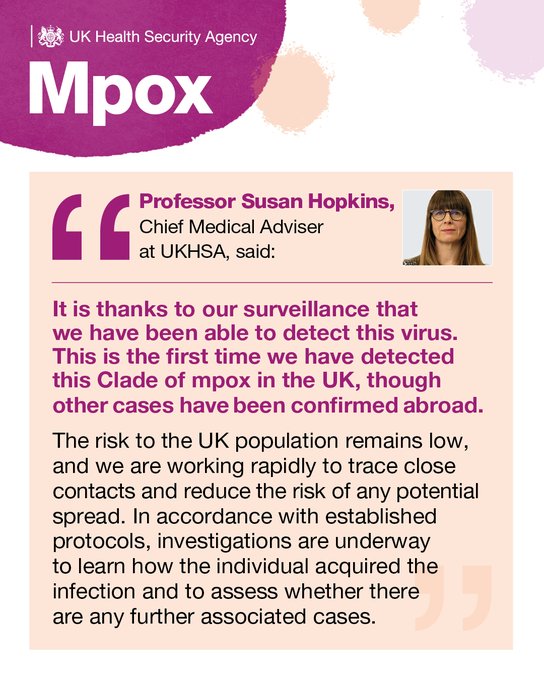
Quote card. Professor Susan Hopkins, Chief Medical Adviser at UKHSA, said: “It is thanks to our surveillance that we have been able to detect this virus. This is the first time we have detected this Clade of mpox in the UK, though other cases have been confirmed abroad.  “The risk to the UK population remains low, and we are working rapidly to trace close contacts and reduce the risk of any potential spread. In accordance with established protocols, investigations are underway to learn how the individual acquired the infection and to assess whether there are any further associated cases.”


5


29


15

5.2K


Square profile picture
UK Health Security Agency

@UKHSA
·
24m


Cases of Clade I are managed as a high consequence infectious disease and close contacts of the case are being followed up by UKHSA and partner organisations. What do you need to know about mpox? Read our blog:

ukhsa.blog.gov.uk
Mpox clade I: what you need to know
In this blog post, we share more information about what mpox is, the different clades, the key symptoms and how UKHSA is working with partners to respond to the outbreak.
 
News story

UKHSA detects first case of Clade Ib mpox


The UK Health Security Agency (UKHSA) has detected a single confirmed human case of Clade Ib mpox. From: UK Health Security Agency

Published 30 October 2024

The UK Health Security Agency (UKHSA) has detected a single confirmed human case of Clade Ib mpox. The risk to the UK population remains low.

This is the first detection of this Clade of mpox in the UK. It is different from mpox Clade II that has been circulating at low levels in the UK since 2022, primarily among gay, bisexual and other men-who-have-sex-with-men (GBMSM).

UKHSA, the NHS and partner organisations have well tested capabilities to detect, contain and treat novel infectious diseases, and while this is the first confirmed case of mpox Clade Ib in the UK, there has been extensive planning underway to ensure healthcare professionals are equipped and prepared to respond to any confirmed cases.

The case was detected in London and the individual has been transferred to the Royal Free Hospital High Consequence Infectious Diseases unit. They had recently travelled to countries in Africa that are seeing community cases of Clade Ib mpox. The UKHSA and NHS will not be disclosing any further details about the individual.

Close contacts of the case are being followed up by UKHSA and partner organisations. Any contacts will be offered testing and vaccination as needed and advised on any necessary further care if they have symptoms or test positive.

UKHSA is working closely with the NHS and academic partners to determine the characteristics of the pathogen and further assess the risk to human health. While the existing evidence suggests mpox Clade Ib causes more severe disease than Clade II, we will continue to monitor and learn more about the severity, transmission and control measures. We will initially manage Clade Ib as a high consequence infectious disease (HCID) whilst we are learning more about the virus.

Professor Susan Hopkins, Chief Medical Adviser at UKHSA, said:
It is thanks to our surveillance that we have been able to detect this virus. This is the first time we have detected this Clade of mpox in the UK, though other cases have been confirmed abroad.

The risk to the UK population remains low, and we are working rapidly to trace close contacts and reduce the risk of any potential spread. In accordance with established protocols, investigations are underway to learn how the individual acquired the infection and to assess whether there are any further associated cases.​


Health and Social Care Secretary Wes Streeting, said:
I am extremely grateful to the healthcare professionals who are carrying out incredible work to support and care for the patient affected.

The overall risk to the UK population currently remains low and the government is working alongside UKHSA and the NHS to protect the public and prevent transmission.

This includes securing vaccines and equipping healthcare professionals with the guidance and tools they need to respond to cases safely.

We are also working with our international partners to support affected countries to prevent further outbreaks.​


Steve Russell, NHS national director for vaccination and screening, said:
The NHS is fully prepared to respond to the first confirmed case of this clade of mpox.

Since mpox first became present in England, local services have pulled out all the stops to vaccinate those eligible, with tens of thousands in priority groups having already come forward to get protected, and while the risk of catching mpox in the UK remains low, if required the NHS has plans in place to expand the roll out of vaccines quickly in line with supply.​


Clade Ib mpox has been widely circulating in the Democratic Republic of Congo (DRC) in recent months and there have been cases reported in Burundi, Rwanda, Uganda, Kenya, Sweden, India and Germany.

Clade Ib mpox was detected by UKHSA using polymerase chain reaction (PCR) testing.

Common symptoms of mpox include a skin rash or pus-filled lesions which can last 2 to 4 weeks. It can also cause fever, headaches, muscle aches, back pain, low energy and swollen lymph nodes.

The infection can be passed on through close person-to-person contact with someone who has the infection or with infected animals and through contact with contaminated materials. Anyone with symptoms should continue to avoid contact with other people while symptoms persist.

The UK has an existing stock of mpox vaccines and last month announced further vaccines are being procured to support a routine immunisation programme to provide additional resilience in the UK. This is in line with more recent independent JCVI advice.

Working alongside international partners, UKHSA has been monitoring Clade Ib mpox closely since the outbreak in DRC first emerged, publishing regular risk assessment updates.

The wider risk to the UK population remains low.

UKHSA has published its first technical briefing on clade I mpox which provides further information on the current situation and UK preparedness and response.

https://www.gov.uk/government/news/ukhsa-detects-first-case-of-clade-ib-mpox
 
hat tip Michael Coston


News story Latest update on cases of Clade Ib mpox


The UK Health Security Agency (UKHSA) confirms 2 additional cases of Clade Ib mpox. From: UK Health Security Agency Published 30 October 2024 Last updated 4 November 2024 —

See all updates
Two cases of Clade Ib mpox have been detected in household contacts of the first case, the UK Health Security Agency (UKSHA) can confirm. This brings the total number of confirmed cases to 3.

The 2 patients are currently under specialist care at Guy’s and St Thomas’ NHS Foundation Trust in London. The risk to the UK population remains low.

There has been extensive planning underway to ensure healthcare professionals are equipped and prepared to respond to any further confirmed cases.

Professor Susan Hopkins, Chief Medical Adviser at UKHSA, said:
Mpox is very infectious in households with close contact and so it is not unexpected to see further cases within the same household.

The overall risk to the UK population remains low. We are working with partners to make sure all contacts of the cases are identified and contacted to reduce the risk of further spread.​

Contacts of all 3 cases are being followed up by UKHSA and partner organisations. All contacts will be offered testing and vaccination as needed and advised on any necessary further care if they have symptoms or test positive.

https://www.gov.uk/government/news/ukhsa-detects-first-case-of-clade-ib-mpox
 
hat tip Michael Coston


News story Latest update on cases of Clade Ib mpox


The UK Health Security Agency (UKHSA) confirms additional cases of Clade Ib mpox. From: UK Health Security Agency Published 30 October 2024
Last updated 6 November 2024 — See all updates

One further case of Clade Ib mpox has been detected in a household contact of the first case, the UK Health Security Agency (UKSHA) can confirm.

This brings the total number of confirmed cases to 4, all of which belong to the same household.

The patient is currently under specialist care at Guy’s and St Thomas’ NHS Foundation Trust in London. The risk to the UK population remains low.

The patient has been isolating since identified as a contact of the first case and no additional contact tracing is required.

Professor Susan Hopkins, Chief Medical Adviser at UKHSA, said:
Mpox is very infectious in households with close contact and so it is not unexpected to see further cases within the same household.

The overall risk to the UK population remains low. We are working with partners to make sure all contacts of the cases are identified and contacted to reduce the risk of further spread.​


Contacts of cases are being followed up by UKHSA and partner organisations. All contacts will be offered testing and vaccination as needed and advised on any necessary further care if they have symptoms or test positive.

There has been extensive planning underway to ensure healthcare professionals are equipped and prepared to respond to any further confirmed cases.


https://www.gov.uk/government/news/ukhsa-detects-first-case-of-clade-ib-mpox
 
Stopping mpox: wild meat markets are a root cause and must be made safer


Published: November 5, 2024 7:40am EST
Authors
  1. Steven Lam
    Postdoctoral Scientist, CGIAR System Organization
  2. Delia Grace
    Professor Food Safety Systems at the Natural Resources Institute (UK) and contributing scientist ILRI, International Livestock Research Institute
Disclosure statement


Steven Lam's work is part of the CGIAR One Health Initiative, which is supported by the CGIAR Trust Fund.

Delia Grace does not work for, consult, own shares in or receive funding from any company or organization that would benefit from this article, and has disclosed no relevant affiliations beyond their academic appointment.
...

file-20241104-15-q618tg.jpg


A young hunter displays captured rats for sale, along with other bushmeat, in Cameroon, The country has also been hit by the current mpox outbreak. Nabila El Hadad/AFP via GettyImages

In many countries around the world, wild animals are sometimes killed for food, including monkeys, rats and squirrels.

Wild meat makes significant contributions to nutrition in Africa and to satisfying food preferences in Asia.

In Africa, the annual harvest of wild meat, estimated at between 1 million and 5 million metric tonnes, is substantial compared to the continent’s livestock production of about 14 million metric tonnes per year.

Public health researchers have long highlighted unhygienic wild meat practices as potentially harmful due to the risk of pathogens jumping from animals to humans, especially through close contact during hunting, processing or consuming undercooked meat.

This concern was particularly pronounced during the 2014 Ebola outbreak in the Democratic Republic of Congo. Ebola is known to jump from animals to humans, who are likely infected either by touching or consuming sick or dead infected forest animals, such as fruit bats.

Mpox is another zoonotic disease that is known to jump from animals to humans. More than 1,100 people have died of mpox in Africa, where some 48,000 cases have been recorded since January 2024 in 19 countries.

Strategies to beat the 2024 mpox outbreak have so far largely focused on preventing human-to-human transmission.

But we also need to go back to the root causes of disease, particularly where mpox is transmitted from animals to humans.

Applying lessons from food safety is key to solving this urgent public health concern.

‘Wet’ markets

Wild meat is often sold alongside other fresh foods in informal markets, also known as “wet” markets. These markets typically operate with little regulation and hygiene standards, which increases the risk of diseases.

We are public health researchers specialising in testing and evaluating solutions to zoonoses (when humans are infected with a disease by wild animals), antimicrobial resistance (when antibiotics are no longer effective) and food safety.

In a new paper, together with colleagues at CGIAR, a global partnership to address challenges of food systems, we look at promising solutions to address risks from wild meat.

Key to this is a One Health approach. One Health brings together public health experts, veterinarians, wildlife specialists and community leaders to develop comprehensive measures.

Three-legged stool

Our research has shown that food safety in hard-to-reach markets can be improved if, and only if, three key areas are addressed:

Capacity building: Capacity-building provides training and simple technologies to workers in food chains and consumers.

Food safety efforts in informal markets have traditionally focused on encouraging local communities to adopt safer practices.

Understanding how people see disease risk and what influences these perceptions is key.

In the Democratic Republic of Congo, for example, there was distrust of formal institutions and a rejection of government health messages linking Ebola to bushmeat.

In communities where people already recognise the risks associated with bushmeat, health messages could focus on practical, protective steps.

In places where scepticism exists, sharing evidence of health risks may be more successful.
Read more: Food safety policy neglects informal markets in developing countries - 3 ways this can change
Instead of pushing an anti-hunting agenda, a more helpful approach could involve providing ways to reduce the risk of disease transmission without completely discouraging hunting and consumption.

While this approach may not eliminate all risks, it is likely to be more effective than a campaign that fails to resonate with the community.

While having the right knowledge is important for encouraging change, there is also a need for incentives.

Motivation and incentives: Although food safety is a large concern for consumers worldwide, it often takes a back seat to affordability. For those who struggle to afford food, food safety is not a priority compared to cost.

Governments have frequently relied on bans and enforcement measures, including fines and inspections, as “negative incentives” for change.
Read more: Informal food markets: what it takes to make them safer
The Nigerian government prohibited the sale of bushmeat as a precaution to stop the spread of mpox in June 2022. However, these bans can have unintended consequences, such as driving bushmeat practices underground with worse hygiene practices.

Potentially more effective is to focus on economic, social, or moral gains.

Economic incentives might include describing the potential financial gains from attracting a larger customer base due to the credibility of safer meat.

Social incentives could involve earning the trust of community members.

Moral incentives could stem from the pride in ensuring that bushmeat is handled and sold in a way that reduces health risks.

Enabling policies and regulations: In some poorer communities, food safety laws are either nonexistent or not applicable to informal markets.

Recognising vendors who achieve notable improvements in food safety might inspire others to follow their lead.
Read more: Chickens from live poultry markets in Nigeria could be bad for your health - scientists explain why
Additionally, promoting alternative protein sources by providing access to affordable, nutritious food options and supporting sustainable agricultural practices can help to reduce reliance on bushmeat.

Looking forward

So, as countries plan their responses to mpox, three key considerations should be top of mind:
  • Firstly, it is important to recognise that bushmeat is a crucial part of many communities’ lives and contributes to their health and well-being.
  • Secondly, responses should be developed with input from local communities which will increase the chances of success.
  • Lastly, high-income countries should lead by not only sharing knowledge but also boosting funding for global health initiatives, as this can substantially reduce the risk of future outbreaks.
...
https://theconversation.com/stoppin...re-a-root-cause-and-must-be-made-safer-242120
 
UKHSA Reports A 2nd Imported Mpox Clade Ib Case


AVvXsEjQk9-locoIyPOrtcPKMtH5kcKAFhx4ssgMemOjaerc7rnVbl9kIg7USAw7dcgid7juGlBhEHzfIU0lIFRAHPRcQFFWOSEoamFR4ng8VubuBAuu1r8Bv2XscYkmHHAj_BEMoHevr3U0FGrqsvxbs-2iDiUvnuAo5rWsSfgAfHbbZ51ITpba210XQg


#18,453

Four weeks ago the UK became the fifth non-African nation to report an imported Mpox Clade Ib case in a recent traveler to Africa. Since then 3 house mates of this index case have become infected, and we've seen the both the United States and Canada report imported cases.

Unlike the milder Clade II Mpox virus, which began its world tour in the spring of 2022, clade Ib is believed to be more virulent, and potentially more easily transmitted. For that reason, it has been designated a high consequence infectious disease (HCID) in the UK​


Today the UK's Health Security Agency has announced a second imported clade Ib case, this time in Leeds.

Latest update

A new case of Clade Ib mpox has been detected in England, the UK Health Security Agency (UKHSA) can confirm.

The case was detected in Leeds and the individual is now under specialist care at Sheffield Teaching Hospitals NHS Foundation Trust. They had recently returned from Uganda, which is seeing community transmission of Clade Ib mpox. The UKHSA and NHS will not be disclosing any further details about the individual.

The risk to the UK population remains low. We expect to see the occasional imported case of Clade Ib mpox in the UK.

This is the fifth case of Clade Ib mpox confirmed in England in recent weeks. This case has no links to the previous cases identified. All 4 previous cases were from the same household and all have now fully recovered.

Close contacts of the case are being followed up by UKHSA and partner organisations. Any contacts will be offered testing and vaccination as needed and advised on any necessary further care if they have symptoms or test positive.

Professor Susan Hopkins, Chief Medical Adviser at UKHSA, said:

It is thanks to clinicians rapidly recognising the symptoms and our diagnostics tests that we have been able to detect this new case.

The risk to the UK population remains low following this fifth case, and we are working rapidly to trace close contacts and reduce the risk of any potential spread. In accordance with established protocols, investigations are underway to learn how the individual acquired the infection and to assess whether there are any further associated cases.

Clade Ib mpox has been widely circulating in the Democratic Republic of Congo (DRC), Burundi, Rwanda, Uganda and Kenya in recent months. Imported cases have been detected in Canada, Sweden, India, Thailand and Germany.

There has been extensive planning underway to ensure healthcare professionals are equipped and prepared to respond to any further confirmed cases.


​https://afludiary.blogspot.com/2024/11/ukhsa-reports-2nd-imported-mpox-clade.html
 
WHO Director-General's opening remarks at the media briefing – 28 November 2024

28 November 2024
...
Now to mpox.

Last Friday, the Emergency Committee met and advised me that the outbreaks of mpox in Africa continue to represent a public health emergency of international concern. I accepted that advice.

Yesterday, the Emergency Committee issued updated temporary recommendations, adding some new recommendations, and extending or modifying others.

As we have said many times, we are not dealing with one outbreak of one virus, but several simultaneous and overlapping outbreaks of different strains, or clades of the virus, affecting different groups in different places.

So far this year, 20 countries in Africa have reported more than 14 thousand confirmed cases, including 55 deaths.

More than 75% of all confirmed cases and deaths in Africa this year have been in the Democratic Republic of the Congo, where the outbreak of clade 1b has now spread to six provinces, including the capital Kinshasa.

Clade 1b has also spread to four neighbouring countries:

In Burundi, more than 2 000 cases have been reported, largely in urban areas;

In Uganda, there are 649 cases and a fast-expanding epidemic, especially in the capital Kampala,

In Rwanda, 37 cases have been confirmed and in Kenya there are 19 cases;

And cases have also been reported in at least 8 other countries in Africa, the Americas and Europe.

WHO, Africa CDC and our partners are continuing to support countries to respond to these outbreaks and prevent further ones under our joint continental preparedness and response plan.

Together, we are strengthening the “five Cs” of outbreak response:

Coordination;

Collaborative surveillance and detection;

Community protection;

Care that is safe and scalable;

And countermeasures, including vaccines.

So far, six million vaccine doses have been pledged, of which 1.6 million are ready for distribution by the end of the year.

Almost 56 000 people have been vaccinated in 7 provinces of the DRC, and health officials there are preparing to administer a second dose, with vaccination starting in Kinshasa this week.

We still face many challenges to bring these outbreaks under control.

To meet them, we need stronger political commitment to scale up response activities;

We need fully resourced preparedness and response plans;

We need further contributions of medical countermeasures including diagnostics and vaccines;

And we need continued transparency and collaboration between affected countries and partners.

===
https://www.who.int/news-room/speec...arks-at-the-media-briefing---28-november-2024
 
Source: https://www.bbc.com/news/articles/cr46n2l9q6do

New case of more spreadable mpox detected
5 hours ago
Cash Boyle
BBC News, South East​

A new case of Clade Ib mpox has been detected in East Sussex, the UK Health Security Agency (UKHSA) has confirmed.

First detected in central Africa, this variant of the virus appears to transmit more easily between people. Symptoms include pus-filled lesions, fever, headaches and low energy.

The individual is now under specialist care at Guy's and St Thomas' NHS Foundation Trust. They had recently returned from Uganda where there is currently community transmission of Clade Ib mpox.

This case becomes the sixth to be confirmed in England since October 2024​..
 
Latest update


Another case of clade Ib mpox has been detected, bringing the total number of confirmed cases since October 2024 to 7, the UK Health Security Agency (UKHSA) can confirm.

The individual had recently travelled to Uganda. The risk to the UK population remains low.

The UKHSA and NHS will not be disclosing any further details about the individual.

Professor Susan Hopkins, Chief Medical Adviser at UKHSA, said:
The risk to the UK population remains low. Close contacts have been identified and offered appropriate advice in order to reduce the chance of further spread.​

https://www.gov.uk/government/news/ukhsa-detects-first-case-of-clade-ib-mpox
 
London, England: Latest update on cases of Clade Ib mpox

From: UK Health Security Agency
Published: 30 October 2024
Last updated: 31 January 2025​

A new case of clade Ib mpox has been detected in England, the UK Health Security Agency (UKHSA) can confirm.

The case was detected in London and the individual is now under specialist care at the Royal Free Hospital High Consequence Infectious Diseases unit. They had recently returned from Uganda, where there is currently community transmission of clade Ib mpox. The UKHSA and NHS will not be disclosing any further details about the individual. ...

https://www.gov.uk/government/news/ukhsa-detects-first-case-of-clade-ib-mpox
 
Translation Google

Mpox in the DRC: residents of a Kinshasa shanty town on the front line

Published: February 4, 2025 7:29am EST

Author
Yap Boom
Professor in the faculty of Medicine, Mbarara University of Science and Technology
...
Walking through the crowded streets of the Pakadjuma neighborhood in Kinshasa, capital of the Democratic Republic of Congo, I am struck by the vibrant atmosphere around me.

Children play happily in puddles, surrounded by piles of plastic bags and open sewage ditches. Shacks patched together with pieces of corrugated iron fill the city. Rumba music fills the air as young people party in open bars, waiting for grilled pork or chicken. Sex workers sit outside tin shacks in narrow alleys, hailing clients.

Nearby, a Médecins Sans Frontières sorting center is the only reminder that this shantytown is the epicentre of Kinshasa’s mpox outbreak. There are no posters, brochures or banners warning residents of the dangers of this viral disease that was declared a continental and global emergency in August last year.

At the clinic, patients suspected of having MPOX are referred to one of three specialized centers in the city. The most common symptoms are fever, headache, muscle aches, chills, exhaustion, swollen lymph nodes and lesions. With symptomatic care, most patients recover within 7 to 35 days, depending on the severity of the case.

As an epidemiologist co-leading the MPOX response for the Africa Centres for Disease Control and Prevention , I travelled to Pakadjuma to get a clearer picture of the situation on the ground.

MPOX is historically a rural disease in the DRC. This microcosm of Kinshasa highlights the complex challenges of managing the epidemic in a city.

Fighting on two fronts

With a population of over 17 million, Kinshasa is Africa's largest megacity . Pakadjuma is one of the city's many overcrowded neighborhoods where people live in extreme poverty.

Kinshasa, often called “Kin the Beautiful,” is facing a unique crisis in the fight against MPOX. Both strains of the virus, clade Ia and clade Ib, are circulating simultaneously in the city. This is the first time this has happened.

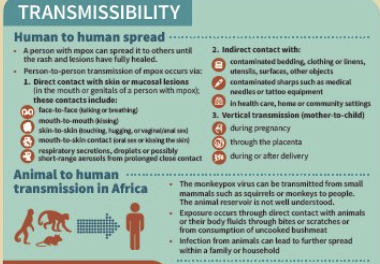
Clade Ia , which is transmitted primarily from animals to humans and then within households through touch, has been endemic in Africa for decades.

Clade Ib is a new strain that is primarily contracted through sexual contact. This is the strain that has spread rapidly across 21 African countries during the current outbreak in East and Central Africa.

This dual transmission makes the fight against MPOX even more complicated: how do we tackle a public health crisis rooted both in intimate human relationships and in structural inequalities such as living in crowded areas?

Although the strains are treated clinically similarly, their spread and transmission differ.

Clade Ia is primarily associated with zoonotic (animal-to-human) transmission in rural areas. Animal surveillance and community education are needed to control spillovers.

Clade Ib, which has higher human-to-human transmissibility, requires intensified contact tracing, vaccination and preventive measures in urban and peri-urban areas.

Adapting strategies to these differences is essential to contain the epidemic.

When Condoms Don't Work

Pakadjuma, in the northeast of the city, is known for its poverty and high crime rates. For many girls and young women, sex work is the only option available to survive.

One of the most pressing challenges in combating the virus in the region is curbing sexual transmission.

Unlike HIV, for which condoms can significantly reduce the risk of spread, smallpox poses a different problem: because the virus is transmitted by touch, there is no practical preventative measure for sexual transmission other than total abstinence.

Smallpox lesions develop in the groin, making any movement excruciating. For these sex workers, abstinence is not an option. It would mean losing their livelihood and the ability to feed their children.

As for their clients, who come from all over the city, they would have to change a key aspect of their lives for a disease they consider less deadly than Ebola . There is no easy answer to this dilemma.

Trace the spread

Contact tracing, a cornerstone of epidemic control, is another obstacle.

Identifying and tracing contacts of sex workers is complex. As a result, only a tiny fraction of MPOX cases are confirmed by laboratory testing.

On average, each mpox case has about twenty contacts, but it is virtually impossible to trace the clients of a highly confidential sex network.

In the absence of effective contact tracing, infected people remain in the community and often only seek treatment when their condition worsens. Discussions with Médecins Sans Frontières staff in the triage area show that suspected cases of COPD usually arrive at an advanced stage of the disease, when symptoms are clearly visible. Many patients first try other remedies, such as traditional healing methods, before seeking medical care.

Fortunately, Kinshasa has a strong network of laboratories led by the National Institute of Biomedical Research, and test results are available within 48 to 72 hours. This cutting-edge institute was created by Dr. Jean Jacques Muyembe , the microbiologist who discovered the Ebola virus.

During the first week of January 2025, there were 1,155 confirmed cases and 27 deaths in the city, according to the DRC Ministry of Health.

Even for those seeking treatment at specialist centres to combat the disease, navigating the chaotic and congested roads is a nightmare. The yellow minibuses - known locally as the "spirit of death" - are packed and it can take hours to reach their destination.

With the number of patients increasing, the city's MPOX treatment centres are overwhelmed.

The fight on all fronts

The fight against the MPOX epidemic in Kinshasa requires a multifaceted approach:

Vaccination: Widespread vaccination campaigns offer the best hope for controlling the outbreak in hotspots such as Pakadjuma, where contact tracing is nearly impossible. In these cases, the entire community must be vaccinated.

This could break chains of transmission while allowing those at risk, such as sex workers, to continue to work.

Prevention and control: Home-based care is essential, especially in informal settlements like Pakadjuma. Providing food and material support to patients and their families and encouraging isolation of infected relatives will help limit the spread of the disease.

These measures, however, require a new way of thinking as people try to survive day to day.

Engaging with the community: This is difficult because of the stigma surrounding the disease, but it must be at the heart of the response.

Amplify the message: Media, local leaders and trusted community members must be mobilized to get the message across effectively.

All this must be done without delay, otherwise the epidemic will be almost impossible to contain in this vast and sprawling city. The consequences would be disastrous.

https://theconversation.com/mpox-en...donville-de-kinshasa-en-premiere-ligne-248564

 
Update


From 5 February 2025 UKHSA will no longer provide updates on new clade Ib mpox cases on a case-by-case basis. Case numbers will continue to be updated weekly, on a Thursday, within this statistical release.


Current confirmed cases


As of 4 February 2025, the UK Health Security Agency (UKHSA) has confirmed 9 cases of clade Ib mpox in the UK.


Cases reported by date


The first case was reported on 30 October 2024 with 3 further household contact cases confirmed. A fifth, unrelated travel-associated case was reported on 29 November 2024.

A sixth case was reported on 20 January 2025. A seventh case was reported on 27 January 2025. Both cases had a travel history to Uganda.

An eighth case was reported on 31 January 2025, the individual had a travel history to Uganda and there is no known link to any previous UK cases.

A ninth case was reported on 4 February 2025, also with a travel history to Uganda.


Methods and definitions


A confirmed mpox case is defined as a person with a laboratory-confirmed infection following a polymerase chain reaction (PCR) test.

Mpox surveillance data in England is based on mpox virus test results from the Rare and Imported Pathogens Laboratory (RIPL), which is the UKHSA mpox reference laboratory, and other UK laboratories with mpox testing.

Any counts of confirmed cases in Wales, Northern Ireland, and Scotland will be submitted to UKHSA by Public Health Wales, Public Health Agency Northern Ireland, and Public Health Scotland respectively.


Further information and advice


See GOV.UK for further information on the background of these clades.

UKHSA has published a range of guidance and advice on the epidemiology, symptoms, diagnosis, and management of mpox virus infections as well as technical reports and risk assessments.


https://www.gov.uk/guidance/confirmed-cases-of-mpox-clade-ib-in-united-kingdom

 
UKHSA Reports A Case of Mpox Clade Ib Without Recent Travel or Known Exposure

UKHSA Reports A Case of Mpox Clade Ib Without Recent Travel or Known Exposure


#18,409

Three weeks ago the UKHSA announced that while - `Mpox remains a serious infection for some individuals and remains a World Health Organization (WHO) public health emergency of international concern (PHEIC)' - the Clade I Mpox No Longer Meets the Criteria of a High Consequence Infectious Disease (HCID) in the UK.

Today the UK announced their 11th confirmed mpox Clade Ib case (see below).

What sets this case apart is - all previously reported cases have had recent travel to endemic countries, or known exposure to someone who has - while this case has neither.

Last updated 7 April 2025
Latest update

The UK Health Security Agency (UKHSA) has detected a single confirmed human case of Clade Ib mpox where the case had no reported travel history and no reported link with previously confirmed cases in the UK.

More work is ongoing to determine where the individual, who is resident in the North East of England, may have caught the infection.

The individual was diagnosed in March, all contacts have been followed up and no further cases identified. The risk to the UK population remains low. Clade Ia and Ib mpox are no longer classified as a high consequence infectious disease (HCID).

UKHSA has robust mechanisms in place to investigate suspected cases of mpox of all clade types, irrespective of travel history.

All previous cases in the UK to date have either travelled to an affected country or have a link to someone that has.

Common
symptoms of mpox include a skin rash or pus-filled lesions which can last 2 to 4 weeks. It can also cause fever, headaches, muscle aches, back pain, low energy and swollen lymph nodes.

Further information about symptoms is available on the
NHS website.

UKHSA Mpox Incident Director Dr Gillian Armstrong said:

The risk to the UK population from mpox remains low.

The majority of people who have presented with symptoms report close physical contact, including massages, or sex prior to developing symptoms.

Regardless of whether you have travelled or not, it is important to remain alert to the risks. Anyone who thinks they may have mpox should contact NHS 111 for advice on what to do.

While mpox infection is mild for many, it can be severe for some and UKHSA is committed to preventing its spread within the UK.


Whether this turns out to be a one-off event, or an early indication of community transmission, remains to be seen.

Stay tuned.


https://afludiary.blogspot.com/2025/04/ukhsa-reports-case-of-mpox-clade-ib.html
 
Explosive mpox outbreak in Sierra Leone overwhelms health systems

Rapid transmission through sexual networks raises fears of wider spread in the region

2 Jun 20257:20 PM ET By Kai Kupferschmidt​
...
Researchers from Sierra Leone reported on virological.org on 28 May that the virus belongs to clade IIb, a variant that circulated for several years in Nigeria before it suddenly caused a global outbreak in 2022, primarily among men who have sex with men (MSM). It continues to spread in MSM networks in many countries, but at a slower pace.

The variant is behaving very differently in Sierra Leone, however. Its explosive spread, combined with the fact that cases seem evenly split between men and women, initially led some scientists to believe the virus might have undergone changes that make it more transmissible without sexual contact. “The spread of Mpox in Sierra Leone is unlike anything we have ever seen,” Kristian Andersen, an evolutionary biologist at Scripps Research, wrote on Bluesky on 22 May. “This could be the next one.”

Other scientists point out that cases were roughly equally divided between men and women in recent outbreaks in the Democratic Republic of the Congo and its neighbor Burundi. Those were largely driven by sexual transmission. And like those countries, Sierra Leone is seeing many serious cases, including people who have lesions all over their bodies. Those outbreaks, however, were caused by a different variant of the virus, clade Ib. “We are still a bit puzzled by what is going on,” Boum says. “The situation [in Sierra Leone], while it is due to clade IIb, looks like a clade Ib in terms of transmission mode but also clinical features.” A team of 10 epidemiologists will be sent to the country to investigate, he says.
​...


https://www.science.org/content/art...tbreak-sierra-leone-overwhelms-health-systems
 
Back
Top