• FluTrackers.com Inc. does not provide medical advice. Information on this web site is collected from various internet resources, and the FluTrackers board of directors makes no warranty to the safety, efficacy, correctness or completeness of the information posted on this site by any author or poster. The information collated here is for instructional and/or discussion purposes only and is NOT intended to diagnose or treat any disease, illness, or other medical condition. Every individual reader or poster should seek advice from their personal physician/healthcare practitioner before considering or using any interventions that are discussed on this website. By continuing to access this website you agree to consult your personal physican before using any interventions posted on this website, and you agree to hold harmless FluTrackers.com Inc., the board of directors, the members, and all authors and posters for any effects from use of any medication, supplement, vitamin or other substance, device, intervention, etc. mentioned in posts on this website, or other internet venues referenced in posts on this website.
  • We are not asking for any donations. Do not donate to any entity who says they are raising funds for us.

Deepwater Horizon oil spill disaster- Update on BP's attempt to stop the oil leaks - The Macondo 252 well is now officially DEAD

Re: Deepwater Horizon oil spill disaster- Update on BP's attempt to stop the oil leaks

Re: Deepwater Horizon oil spill disaster- Update on BP's attempt to stop the oil leaks

Press Briefing by National Incident Commander June 17, 2010

Excerpt:

ADMIRAL ALLEN: Good morning folks. A lot of activity yesterday regarding the meeting with British Petroleum. A lot has been said about claims, the capabilities being stood up and the escrow amounts. I?m going to address more operational issues because I think that?s been thoroughly discussed and vetted in the last 24 hours.

"While this has been going on, we?ve continued to produce oil out of the well head through the containment cap. As of yesterday though, we have the added capacity now what we call the Q4000 mobile drilling units on scene. It is actually drawing oil up through the kill pipe. That?s where we actually sent the mud down during the top kill operation. We?re actually using that as a way to evacuate more oil out in addition to what?s being produced by the Discover Enterprise.

We now, once we get these both operating, have the potential to bring our production capacity up to about 28,000 barrels a day. Probably by sometime early next week. They?ll bring the rates up slowly to make sure they can control it.

The Q4000, what we are doing is we?re bringing up both natural gas and oil and they?re both being flared off. There?s an EverGreen burning device on the Q4000 that looks much like the flaring device for natural gas but it?s capable of flaring the oil itself with natural gas in it, a fairly clean burn.
Not nearly what the amount of smoke that you see for an in situ burning.

We?ll look at, further down the line, the ability to actually transfer that oil ashore and actually offload it. But for now, it?s giving us several thousand more barrels a day capacity and that?s several thousand barrels a day that?s not going into the environment.

We?re also working very closely with British Petroleum. We have given them direction to increase their redundancy and capacity of their containment operations. There were two parts of the meeting with BP at the White House yesterday. One was on the claims as I mentioned earlier. The second was on the containment efforts so far.

BP laid out and we?ve approved where they are headed right now to bring in needed capacity. And under the current containment cap that sits on the well head by bringing additional vessels in and being able to draw oil off the choke and the kill lines and produce that on the surface, we expect to get to a capacity of around 53,000 barrels a day by the end of June.

At that point, sometime during the month of July, we want to convert over and put a new cap on the well bore that will allow us to have multiple hoses come up to a much larger processing vessel. And the goal is by the end of July if we, if it is required by the amount of oil that?s coming out to increase our capacity between 60 and 80,000 barrels a day. So we continue to make progress there.

It?s the same point Development Driller II, which is the, drilling the relief well is proceeding at pace and they are 9,000 feet below the sea floor right now and starting to close in on the well bore itself. We anticipate over the next three to four weeks they will close in and be able to tap into the well itself. At that point, they will pump mud down it and attempt to the, what we call, the bottom kill and actually cap the well. Development Driller III is the platform that is drilling the second well or the backup well, the risk mitigator well a mere currently 4,500 feet below the sea floor and continuing to drill ahead.

The areas we?re trying to concentrate on right now generally across the coast or to take advantage of the extraordinary response we?ve had to vessels of opportunity, these are local watermen from small boats up to shrimp boats that have signed up to do work in response to the spill. The good news is we have over 2,000 vessels of opportunity that have registered. The challenge we have is organizing all of them so they can be effectively employed.

This is in fact more vessels than there are in the actual Coast Guard itself so we are doing a number of things including putting tracking devices on some of these boats so we can have a better idea of where they?re at, connecting them with tactical radio communications and in many cases providing on scene Coast Guard units to actually coordinate them in small squadrons, if you will. Then to link them overhead with aerial surveillance. And the goal there is to take this increasing threat we have, which is anywhere from the shoreline out to about 15 to 20 miles now that the spill has proliferated from south central Louisiana over towards Fort Walton Beach, Florida. And be able to have increased capacity for skimming in shore.

We will continue to skim in and around the well head. But as I?ve said in previous operational briefs, we?re dealing with a pretty expansive area of patches of oil right now. It?s not a monolithic spill. It?s literally a collection of hundreds of thousands of patches of oil. Some are miles long or some are several hundred yards long."

Full text at:
http://www.deepwaterhorizonresponse.com/go/doc/2931/671291/
 
Re: Deepwater Horizon oil spill disaster- Update on BP's attempt to stop the oil leaks

Re: Deepwater Horizon oil spill disaster- Update on BP's attempt to stop the oil leaks

<TABLE height=522 cellSpacing=0 cellPadding=0 width=575 border=0 wi><TBODY><TR><TD vAlign=top colSpan=7>
Gulf_of_mexico_response_575.gif
</TD></TR><TR><TD vAlign=top align=left width=300 bgColor=#009900>
ROV_control_room-300x574.jpg
</TD><TD vAlign=top align=left width=9 bgColor=#009900>
clear.gif
clear.gif
clear.gif
</TD><TD vAlign=top align=left width=363 bgColor=#009900><TABLE cellSpacing=0 cellPadding=0 width=300 border=0><TBODY><TR><TD width=10></TD><TD class=whiteLargeBold width=270>
clear.gif
</TD><TD width=10 rowSpan=12></TD></TR><TR><TD>
clear.gif
</TD><TD>Subsea operational update:</TD></TR><TR><TD colSpan=2>
clear.gif
</TD></TR><TR><TD vAlign=top>?</TD><TD class=whiteRegular>For the last 12 hours on June 17th (noon to midnight), approximately 8,020 barrels of oil were collected and approximately 4,770 barrels of oil and 24.5 million cubic feet of natural gas were flared. </TD></TR><TR><TD colSpan=2>
clear.gif
</TD></TR><TR><TD vAlign=top>?</TD><TD class=whiteRegular>Optimization of the dual recovery system continues; on June 17th, total oil recovered was aprox. 25,290 barrels.
  • approximately 16,020 barrels of oil were collected,
  • approximately 9,270 barrels of oil were flared,
  • and approximately 50.3 million cubic feet of natural gas were flared.
</TD></TR><TR><TD vAlign=top>?</TD><TD class=whiteRegular>Total oil recovered from both the LMRP Cap and Q4000 systems since they were implemented is approximately 204,200 barrels. </TD></TR><TR><TD colSpan=2>
clear.gif
</TD></TR><TR><TD vAlign=top>?</TD><TD class=whiteRegular>The free standing riser installation is progressing for the long term containment option.</TD></TR><TR><TD vAlign=top colSpan=2>
clear.gif
</TD></TR><TR><TD vAlign=top>?</TD><TD class=whiteRegular>The next update will be provided at 6:00pm CDT on June 18, 2010. </TD></TR><TR><TD vAlign=top colSpan=2>
clear.gif
</TD></TR><TR><TD vAlign=top></TD><TD>Updated June 18 at 9:00am CDT / 3:00pm BST</TD></TR></TBODY></TABLE></TD></TR></TBODY></TABLE>
http://www.bp.com/extendedsectiongenericarticle.do?categoryId=40&contentId=7061813
 
Re: Deepwater Horizon oil spill disaster- Update on BP's attempt to stop the oil leaks

Re: Deepwater Horizon oil spill disaster- Update on BP's attempt to stop the oil leaks

<TABLE id=tableBody style="WIDTH: 1003px" cellSpacing=0 cellPadding=0 summary=summary border=0><TBODY><TR><TD noWrap colSpan=3></TD><TD vAlign=top align=left width="70%">


<LINK href="http://www.bp.com/english/css/text.css" type=text/css rel=stylesheet><TABLE height=522 cellSpacing=0 cellPadding=0 width=575 border=0 wi><TBODY><TR><TD vAlign=top colSpan=7>
Gulf_of_mexico_response_575.gif
</TD></TR><TR><TD vAlign=top align=left width=300 bgColor=#009900>
ROV_control_room-300x574.jpg
</TD><TD vAlign=top align=left width=9 bgColor=#009900>
clear.gif
clear.gif
clear.gif
</TD><TD vAlign=top align=left width=363 bgColor=#009900><TABLE cellSpacing=0 cellPadding=0 width=300 border=0><TBODY><TR><TD width=10></TD><TD class=whiteLargeBold width=270>
clear.gif
</TD><TD width=10 rowSpan=12></TD></TR><TR><TD>
clear.gif
</TD><TD>Subsea operational update:</TD></TR><TR><TD colSpan=2>
clear.gif
</TD></TR><TR><TD vAlign=top>?</TD><TD class=whiteRegular>For the last 12 hours on June 18th (noon to midnight), approximately 6,100 barrels of oil were collected and approximately 5,150 barrels of oil and 21.4 million cubic feet of natural gas were flared. </TD></TR><TR><TD colSpan=2>
clear.gif
</TD></TR><TR><TD vAlign=top>?</TD><TD class=whiteRegular>On June 18th, total oil recovered was approx. 24,500 barrels:
  • approx. 14,400 barrels of oil were collected,
  • approx. 10,100 barrels of oil were flared,
  • and approx. 47.4 million cubic feet of natural gas were flared.
</TD></TR><TR><TD colSpan=2>
clear.gif
</TD></TR><TR><TD vAlign=top>?</TD><TD class=whiteRegular>Total oil recovered from both the LMRP Cap and Q4000 systems since they were implemented is approx. 228,500 barrels.</TD></TR><TR><TD colSpan=2>
clear.gif
</TD></TR><TR><TD vAlign=top>?</TD><TD class=whiteRegular>The Enterprise shutdown at 20:23 on June 18th due to a blocked flame arrestor; restart is expected today after a lightning storm leaves the area.</TD></TR><TR><TD vAlign=top colSpan=2>
clear.gif
</TD></TR><TR><TD vAlign=top>?</TD><TD class=whiteRegular>The next update will be provided at 6:00pm CDT on June 19, 2010. </TD></TR><TR><TD vAlign=top colSpan=2>
clear.gif
</TD></TR><TR><TD vAlign=top></TD><TD>Updated June 19 at 9:00am CDT / 3:00pm BST</TD></TR><TR><TD vAlign=top></TD><TD></TD></TR></TBODY></TABLE></TD></TR></TBODY></TABLE>
http://www.bp.com/extendedsectiongenericarticle.do?categoryId=40&contentId=7061813


</TD></TR></TBODY></TABLE>
 
Re: Deepwater Horizon oil spill disaster- Update on BP's attempt to stop the oil leaks

Re: Deepwater Horizon oil spill disaster- Update on BP's attempt to stop the oil leaks

PROGRESS


DDII - MC 252 #2


Spudded well - May 16th


Set 36" casing at 5,471' - May 16th


Set 28" casing at 6,614' - May 21st


Set 22" casing at 8,576' - May 24th


Drilled to 10,000'
Currently setting 18" casing - June 18th


PROGRESS


DDIII - MC 252 #3


Spudded well - May 2nd


Set 36" casing at 5,494' - May 2nd


Set 28" casing at 6,730' - May 5th


Set 22" casing at 8,762' - May 8th


Set 18" casing at 9,945' - May 24th


Set 16" casing at 12,057' - June 2nd


Set 13 5/8" casing at 13,869' - June 9th


Drilled to 15,938'
Currently setting 11 7/8" casing - June 18th


ReliefWellDiagram06182010.gif
<!-- Begin: LINK TEXT --><!-- End: LINK TEXT --><!-- END: MODIFIED ENH_FEB_REL_CR_741 --><!-- BEGIN: MODIFIED ENH_FEB_REL_CR_741 -->
Graphic depiction of BP's progress in drilling two wells designed to intersect the original wellbore above the oil reservoir and allow heavy fluid to be pumped into the well and stop the oil from flowing
<TABLE cellSpacing=0 cellPadding=0 width=372 border=0><TBODY><TR><TD></TD></TR><TR><TD></TD></TR></TBODY></TABLE> View high resolution image of the graphic (pdf, 708KB)

 
Re: Deepwater Horizon oil spill disaster- Update on BP's attempt to stop the oil leaks

Re: Deepwater Horizon oil spill disaster- Update on BP's attempt to stop the oil leaks

<TABLE height=522 cellSpacing=0 cellPadding=0 width=575 border=0 wi><TBODY><TR><TD vAlign=top align=left width=300 bgColor=#009900>
ROV_control_room-300x574.jpg
</TD><TD vAlign=top align=left width=9 bgColor=#009900>
clear.gif
clear.gif
clear.gif
</TD><TD vAlign=top align=left width=363 bgColor=#009900><TABLE cellSpacing=0 cellPadding=0 width=300 border=0><TBODY><TR><TD width=10></TD><TD class=whiteLargeBold width=270>
clear.gif
</TD><TD width=10 rowSpan=12></TD></TR><TR><TD>
clear.gif
</TD><TD>Subsea operational update:</TD></TR><TR><TD colSpan=2>
clear.gif
</TD></TR><TR><TD vAlign=top>?</TD><TD class=whiteRegular>For the last 12 hours on June 19th (noon to midnight), approximately 7,690 barrels of oil were collected and approximately 4,860 barrels of oil and 26.5 million cubic feet of natural gas were flared. </TD></TR><TR><TD colSpan=2>
clear.gif
</TD></TR><TR><TD vAlign=top>?</TD><TD class=whiteRegular>On June 19th, total oil recovered was approx. 21,040 barrels:
  • approx. 11,050 barrels of oil were collected,
  • approx. 9,990 barrels of oil were flared,
  • and approx. 43.4 million cubic feet of natural gas were flared.
</TD></TR><TR><TD vAlign=top>?</TD><TD class=whiteRegular>Total oil recovered from both the LMRP Cap and Q4000 systems since they were implemented is approx. 249,500 barrels. </TD></TR><TR><TD colSpan=2>
clear.gif
</TD></TR><TR><TD vAlign=top>?</TD><TD class=whiteRegular>As previously reported, volumes were slightly lower on the 19th due to the Enterprise shutdown to clean a flame arrestor and passing of a lightning storm.</TD></TR><TR><TD vAlign=top colSpan=2>
clear.gif
</TD></TR><TR><TD vAlign=top>?</TD><TD class=whiteRegular>The next update will be provided at 6:00pm CDT on June 20, 2010. </TD></TR><TR><TD vAlign=top colSpan=2>
clear.gif
</TD></TR><TR><TD vAlign=top></TD><TD>Updated June 20 at 9:00am CDT / 3:00pm BST</TD></TR></TBODY></TABLE></TD></TR></TBODY></TABLE>

http://www.bp.com/extendedsectiongenericarticle.do?categoryId=40&contentId=7061813
 
Re: Deepwater Horizon oil spill disaster- Update on BP's attempt to stop the oil leaks

Re: Deepwater Horizon oil spill disaster- Update on BP's attempt to stop the oil leaks

From Rigzone:

http://www.rigzone.com/news/article.asp?a_id=94877
Dockwise Delivers Vessel to Oil Spill
Dockwise Ltd. 6/18/2010


Dockwise announced its commitment to assist with the oil spill clean up in the Gulf of Mexico. In a coordinated effort with T&T International Fire & Salvage, and BP, Dockwise has delivered the semi-submersible heavy-lift vessel, Mighty Servant 3, to the clean-up operation.

As one of the largest vessels of its type in the world, the Mighty Servant 3 has been outfitted in Galveston, Texas, with an assortment of equipment focused on the collection of oil-saturated solid material and oily water. With its large size (180.00 m x 40.00 m), and a deadweight of 27,270 metric tons, the sheer mass of this unique vessel means it is perfectly suited to handle this type of large clean up. Outfitted with long reach excavating equipment and a stern mounted skimming system, the Mighty Servant 3 will serve a two-fold purpose as part of the coordinated clean-up effort. The long-reach excavators will be able to collect solid debris that is saturated with oil. This debris will be collected and stored in a large containment area on the vessel's extensive deck. The skimming system will collect oil and then transfer it to a tank barge working alongside the Mighty Servant 3. The vessel will work in coordination with other smaller vessels assisting in the clean-up.

Robb Erickson, Vice President Heavy Marine Transport, said, "Looking for innovative solutions is our business. And we're bringing in a big vessel to handle a big job. The opportunity to deploy this unique piece of equipment in support of this unprecedented clean-up effort instills positive emotions about making an impact, but at the same time this is a very humbling experience when one considers the magnitude of the spill."
 
Re: Deepwater Horizon oil spill disaster- Update on BP's attempt to stop the oil leaks

Re: Deepwater Horizon oil spill disaster- Update on BP's attempt to stop the oil leaks

Update on Gulf of Mexico Oil Spill Response - 21 June

Release date: 21 June 2010

BP today provided an update on developments in the response to the MC252 oil well incident in the Gulf of Mexico.
<!--END:Plain Text para-->

<!-- Begin: Links. --><!-- End: Links -->
Subsea Source Control and Containment

<!--END: Addition of header tag for TB07 -->
Two systems continue to collect oil and gas flowing from the MC252 well and transport them to vessels on the surface. The first is the lower marine riser package (LMRP) containment cap located on top of the Deepwater Horizon?s failed blow-out preventer (BOP). This system, which was installed on June 3, takes oil and gas to the Discoverer Enterprise. A second system, which started on June 16, is connected directly to the BOP and carries oil and gas through a manifold and hoses to the Q4000 vessel on the surface. The Q4000 uses a specialised clean-burning system to flare both oil and gas captured by this second system.

On June 19, a total of approximately 11,050 barrels of oil was collected and 25.6 million cubic feet of natural gas was flared on the Discoverer Enterprise. This is less than recent averages because process facilities were shutdown for part of the day. In the same 24-hour period, 9,990 barrels of oil and 17.8 million cubic feet of natural gas were flared on the Q4000. The total volume of oil recovered from both the LMRP containment cap system and the Q4000 since they became operational is approximately 249,500 barrels.

Approximately 103,000 barrels of collected oil were transferred from storage on the Discoverer Enterprise to the Overseas Cascade tanker on June 17 and June 18. The Overseas Cascade left the MC252 site on June 18.
<!--END:Plain Text para-->

<!-- Begin: Links. --><!-- End: Links -->
The volumes of oil and gas that are captured or flared is being updated twice daily on BP?s website, www.bp.com. The LMRP containment cap and Q4000 systems never before have been deployed at these depths and conditions, and their efficiency and ability to contain or flare the oil and gas cannot be assured.

Preparations continue for the next step in containment operations. Construction of the first floating riser remains on schedule for the end of June. The Helix Producer vessel then will be connected to this riser and it is currently anticipated that this system will be available to begin first operations around the end of June or early July.

Plans also are being developed for further options to provide additional containment capacity and flexibility. These projects are currently anticipated to begin operations around mid-July.

Work on the first relief well, which started May 2, continues and has currently reached a measured depth of 15,936 feet. The second relief well, which started May 16, is at a measured depth of 10,000 feet. Both wells are still estimated to take approximately three months to complete from commencement of drilling.
<!--END:Plain Text para-->

<!-- Begin: Links. --><!-- End: Links -->
Surface Spill Response and Containment

<!--END: Addition of header tag for TB07 -->
Work continues to collect and disperse oil that has reached the surface of the sea, to protect the shoreline of the Gulf of Mexico, and to collect and clean up any oil that has reached shore.

Operations to skim oil from the surface of the water now have recovered, in total, approximately 558,000 barrels (23.4 million gallons) of oily liquid.

The total length of containment boom deployed as part of efforts to prevent oil from reaching the coast is now about 2.7 million feet (500 miles), and about 3.9 million feet (740 miles) of sorbent boom also has been deployed.
<!--END:Plain Text para-->

<!-- Begin: Links. --><!-- End: Links -->
Additional information

<!--END: Addition of header tag for TB07 -->
To date, over 65,000 claims have been submitted and more than 32,000 payments have been made, totalling over $105 million.

The cost of the response to date amounts to approximately $2.0 billion, including the cost of the spill response, containment, relief well drilling, grants to the Gulf states, claims paid, and federal costs. On June 16, BP announced an agreed package of measures, including the creation of a $20 billion fund to satisfy certain obligations arising from the oil and gas spill. It is too early to quantify other potential costs and liabilities associated with the incident.

http://www.bp.com/genericarticle.do?categoryId=2012968&contentId=7063006
 
Re: Deepwater Horizon oil spill disaster- Update on BP's attempt to stop the oil leaks

Re: Deepwater Horizon oil spill disaster- Update on BP's attempt to stop the oil leaks

<TABLE height=522 cellSpacing=0 cellPadding=0 width=575 border=0 wi><TBODY><TR><TD vAlign=top align=left width=300 bgColor=#009900>
ROV_control_room-300x574.jpg
</TD><TD vAlign=top align=left width=9 bgColor=#009900>
clear.gif
clear.gif
clear.gif
</TD><TD vAlign=top align=left width=363 bgColor=#009900><TABLE cellSpacing=0 cellPadding=0 width=317 border=0><TBODY><TR><TD width=10></TD><TD class=whiteLargeBold colSpan=3>
clear.gif
</TD><TD width=7 rowSpan=17></TD></TR><TR><TD>
clear.gif
</TD><TD colSpan=3>Subsea operational update:</TD></TR><TR><TD colSpan=4>
clear.gif
</TD></TR><TR><TD vAlign=top>?</TD><TD class=whiteRegular colSpan=3>For the last 12 hours on June 20th (noon to midnight), approximately 7,780 barrels of oil were collected and approximately 4,430 barrels of oil and 25.1 million cubic feet of natural gas were flared. </TD></TR><TR><TD colSpan=4>
clear.gif
</TD></TR><TR><TD vAlign=top>?</TD><TD colSpan=3>On June 20th, total oil recovered was approx. 23,290 barrels:</TD></TR><TR><TD vAlign=top colSpan=4>
clear.gif
</TD></TR><TR><TD vAlign=top></TD><TD vAlign=top align=right width=27>?</TD><TD class=whiteRegular width=4></TD><TD class=whiteRegular width=269>approx. 14,570 barrels of oil were collected,</TD></TR><TR><TD vAlign=top></TD><TD vAlign=top align=right>?</TD><TD class=whiteRegular></TD><TD class=whiteRegular>approx. 8,720 barrels of oil were flared, </TD></TR><TR><TD vAlign=top></TD><TD vAlign=top align=right>?</TD><TD class=whiteRegular></TD><TD class=whiteRegular>and approx. 48.3 million cubic feet of natural gas were flared. </TD></TR><TR><TD colSpan=4>
clear.gif
</TD></TR><TR><TD vAlign=top>?</TD><TD class=whiteRegular colSpan=3>Total recovery was slightly down on June 20th due to shut-ins from a lightning storm in the area of the Enterprise and Q4000 heading changes to accommodate wind shifts.</TD></TR><TR><TD vAlign=top colSpan=4>
clear.gif
</TD></TR><TR><TD vAlign=top>?</TD><TD class=whiteRegular colSpan=3>Total oil recovered from both the LMRP Cap and Q4000 systems since they were implemented is approx. 272,800 barrels. </TD></TR><TR><TD vAlign=top colSpan=4>
clear.gif
</TD></TR><TR><TD vAlign=top>?</TD><TD class=whiteRegular vAlign=top colSpan=3>The next update will be provided at 6:00pm CDT on June 21, 2010. </TD></TR><TR><TD vAlign=top colSpan=4>
clear.gif
</TD></TR><TR><TD vAlign=top></TD><TD colSpan=3>Updated June 21 at 9:00am CDT / 3:00pm BST</TD></TR></TBODY></TABLE></TD></TR></TBODY></TABLE>

http://www.bp.com/extendedsectiongenericarticle.do?categoryId=40&contentId=7061813
 
Re: Deepwater Horizon oil spill disaster- Update on BP's attempt to stop the oil leaks

Re: Deepwater Horizon oil spill disaster- Update on BP's attempt to stop the oil leaks

Relief oil well drilling in Gulf of Mexico enters a new phase

Published: Monday, June 21, 2010, 7:12 PM Updated: Monday, June 21, 2010, 7:28 PM


gulf-oil-burns-discoverer-enterprisejpg-b8e5ef0a64fbd4da_large.jpg
Peter Andrew Bosch, pool/The Associated PressA rig burns oil and gas near the Discoverer Enterprise, rear, at the site of the Deepwater Horizon oil spill in the Gulf of Mexico on Saturday. <!-- --><!-- -->


BP engineers are expected to begin using "ranging" devices today to home in on the damaged oil well in the Gulf of Mexico, as they near the end of the more routine aspects of relief well drilling, Coast Guard Adm. Thad Allen said Monday.

The introduction of the ranging equipment is a sign that BP is edging closer to its attempt at permanently sealing the blown-out Macondo well. The well has been leaking oil since the Deepwater Horizon rig exploded and sank April 20, killing 11 people.

The relief well is the ultimate solution for stopping the flow of oil from the well, officials have said.

BP is drilling two relief wells, a primary and a backup, in the Gulf of Mexico, with plans for the primary well to intersect with the Macondo well at about 18,000 feet beneath the water's surface. The relief well will pump the damaged one with mud and cement to shut it. If it fails, the backup well would take over.

The relief wells were started at about a half-mile from the accident and are trying to meet the original well at a diagonal. The first well had been drilled to 15,936 feet as of Monday evening. The second was at 10,000 feet.

So far, drilling has been routine, proceeding in much the same way that drilling did on the original well.

But as BP prepares to try to meet well with well at thousands of feet below the sea floor, the operation changes a bit. Engineers will try to locate their target by sending out an electric current from the relief well that will make contact with the well casing in the damaged well, creating an electromagnetic field between the wells that signals information about direction and distance.

The closer the wells get to each other, the stronger the signal will become.

The process is slightly ahead of schedule, Allen said Monday, but he doesn't expect the relief well to be completed until mid-August.

"They are slightly ahead of schedule," Allen said. "But I'm not coming off the second week in August schedule because you know how things can go."

Allen also responded Monday to two setbacks in efforts to contain oil leaking from the well site. Noting that two temporary shutdowns last week resulted in a reduction in the amount of oil collected in the Gulf of Mexico, Allen said he believes such lapses in operation will be preventable at the end of this month when several redundant systems are introduced.

"Every once in a while there's a maintenance issue. They have to clean filters. They have to clean vents and things like that," Allen said. "Because of that we are pressing them to create redundant systems so when there's a problem like that we can keep producing."

.../
http://www.nola.com/news/gulf-oil-spill/index.ssf/2010/06/relief_oil_well_drilling_in_gu.html
 
Re: Deepwater Horizon oil spill disaster- Update on BP's attempt to stop the oil leaks

Re: Deepwater Horizon oil spill disaster- Update on BP's attempt to stop the oil leaks

<TABLE height=522 cellSpacing=0 cellPadding=0 width=575 border=0 wi><TBODY><TR><TD vAlign=top align=left width=300 bgColor=#009900>
ROV_control_room-300x574.jpg
</TD><TD vAlign=top align=left width=9 bgColor=#009900>
clear.gif
clear.gif
clear.gif
</TD><TD vAlign=top align=left width=363 bgColor=#009900><TABLE cellSpacing=0 cellPadding=0 width=317 border=0><TBODY><TR><TD width=10></TD><TD class=whiteLargeBold colSpan=3>
clear.gif
</TD><TD width=7 rowSpan=15></TD></TR><TR><TD>
clear.gif
</TD><TD colSpan=3>Subsea operational update:</TD></TR><TR><TD colSpan=4>
clear.gif
</TD></TR><TR><TD vAlign=top>?</TD><TD class=whiteRegular colSpan=3>For the last 12 hours on June 21st (noon to midnight), approximately 7,150 barrels of oil were collected and approximately 5,250 barrels of oil and 27 million cubic feet of natural gas were flared. </TD></TR><TR><TD colSpan=4>
clear.gif
</TD></TR><TR><TD vAlign=top>?</TD><TD class=whiteRegular colSpan=3>On June 21st, total oil recovered was approx. 25,830 barrels:</TD></TR><TR><TD vAlign=top colSpan=4>
clear.gif
</TD></TR><TR><TD vAlign=top></TD><TD vAlign=top align=right width=27>?</TD><TD class=whiteRegular width=4></TD><TD class=whiteRegular width=269>approx. 15,560 barrels of oil were collected,</TD></TR><TR><TD vAlign=top></TD><TD vAlign=top align=right>?</TD><TD class=whiteRegular></TD><TD class=whiteRegular>approx. 10,270 barrels of oil were flared,</TD></TR><TR><TD vAlign=top></TD><TD vAlign=top align=right>?</TD><TD class=whiteRegular></TD><TD class=whiteRegular>and approx. 52.2 million cubic feet of natural gas were flared. </TD></TR><TR><TD colSpan=4>
clear.gif
</TD></TR><TR><TD vAlign=top>?</TD><TD class=whiteRegular colSpan=3>Total oil recovered from both the LMRP Cap and Q4000 systems since they were implemented is approx. 298,600 barrels. An additional 22,000 barrels were collected from the RIT tool earlier in May bringing the total recovered to approx. 320,000 barrels.</TD></TR><TR><TD vAlign=top colSpan=4>
clear.gif
</TD></TR><TR><TD vAlign=top>?</TD><TD class=whiteRegular vAlign=top colSpan=3>The next update will be provided at 6:00pm CDT on June 22, 2010. </TD></TR><TR><TD vAlign=top colSpan=4>
clear.gif
</TD></TR><TR><TD vAlign=top></TD><TD colSpan=3>Updated June 22 at 9:00am CDT / 3:00pm BST</TD></TR></TBODY></TABLE></TD></TR></TBODY></TABLE>
http://www.bp.com/extendedsectiongenericarticle.do?categoryId=40&contentId=7061813
 
Re: Deepwater Horizon oil spill disaster- Update on BP's attempt to stop the oil leaks

Re: Deepwater Horizon oil spill disaster- Update on BP's attempt to stop the oil leaks

Considering that approx. 60 000 barrells per day leak in the gulf of Mexico, multipied by 64 days and you end up with a total of 3 840 000 barrels.

According to BP,
"the total oil recovered from both the LMRP Cap and Q4000 systems since they were implemented is approx. 298,600 barrels. An additional 22,000 barrels were collected from the RIT tool earlier in May bringing the total recovered to approx. 320,000 barrels."

If my calculations are right, approx. 8.3% of the leak has been recovered up till now.
 
Re: Deepwater Horizon oil spill disaster- Update on BP's attempt to stop the oil leaks

Re: Deepwater Horizon oil spill disaster- Update on BP's attempt to stop the oil leaks

DATE: June 22, 2010 17:53:44 CST

Press Briefing by National Incident Commander June 22, 2010

Excerpt:

OPERATOR: Your next question is from Zach Warmbrodt of Argus Media.

Q: Hi. Thank you. There?s been some reports that the first major storm of the hurricane season might enter the Gulf as soon as next week. Could you walk us through what will happen with the collection operation if that happened next week?

ADMIRAL ALLEN: Sure. First of all, we?re watching the hurricane season very, very closely. I?m in constant contact with Jane Lubchenco, administrator of NOAA, and in fact, this week I talked to Craig Fugate, the FEMA administrator. We are informing each other of our respective operations. Of course you know they were involved with hurricane prep, so they would be anyway this time of year. And we do have that low depression that?s been informed in the Southeast Caribbean, and we?re watching that as well.

How we respond to a hurricane will be dictated by which production capacity we have on scene, and as you know this is evolving and will continue to evolve over the next two to three weeks. By the end of next week, let?s say, we would anticipate having three production vessels out there over the well site; the Discovery Enterprise, the Q4000 and the Helix Producer. Of those production capabilities, one of them is fixed hard to do the platform itself, and that?s the Discovery Enterprise down to the wellbore. The other two are on flexible couplings for vertical riser packages.

We would need in total to disconnect, recover to a safe harbor and return probably around 10 days to accomplish that, and we would probably have to start doing that anywhere between three to seven days in advance of the hurricane. Those procedures are being finalized right now. We?re discussing that with BP and the folks that are down at the area unified command in New Orleans. But if it happens?if we got notice that a hurricane was coming, we would need anywhere from three to seven days in advance of that to demobilize and redeploy the equipment.

Is that responsive?

Q: What kind of storm would have to be coming your way for you to do that? How?what kind of wind speed, or could you give anymore specifics on that?

ADMIRAL ALLEN: Well, what we?re going to do is?I was asked the question yesterday. I asked some folks working on how are mooring systems related to Saffir-Simpson Scales, because I think that?s the easiest way for people to understand that. And we will get that out to you in the next 24 hours. But basically, the least capable platform that?s in production to ride out heavy weather would be the Discovery Enterprise because it?s physically hooked to the well itself.

Anything that?s working through our vertical riser that?s floating with a flexible hose coupling will have a little bit more flexibility as far as the sea state, and the large vessels that will be coming on later in July, the shuttle tankers, have much more sea keeping capability, although none of them are designed or created, nor are the production mooring facilities and everything else, created to withstand a major hurricane. Exactly when the cutoff is as far as the sea state goes, we will put that together, and we?ll give you a brief in 24 hours.

OPERATOR: Your next question is from Sandy Davis of Advocate News.

Q: Hi, General?I mean Admiral, sorry. Thank you for taking my call. First of all, I didn?t?we didn?t get a copy of the charts. Will you be putting those up on the Web site later today?
ADMIRAL ALLEN: Sure. I?d be happy to do that.

Q: OK, and the second thing was why is the second relief well going so slow?

ADMIRAL ALLEN: Well, they didn?t start at the same time. The second relief well started several weeks afterwards, and also, the second relief well?the second relief drilling rig had a blowout preventer on it that they had intended to use after Top Kill if they were going to cap the well. They decided not to use the blowout preventer because of the uncertainty regarding the status of the wellbore and what pressure might do going down. That?s the reason they abandoned the Top Kill and the capping exercise at that point.

During that time, when they were doing the Top Kill exercise, the Development Driller II moved off station with the blowout preventer and had to prepare to put on the wellbore should we?or the lower marine riser package should we need to do that. That didn?t happen. They went back and they continued their drill. They are?there are the risk mitigator for the first relief well.

OPERATOR: Your next question is from Richard Faussett of the Los Angeles Times.

Q: Hi, Admiral Allen. Can you talk a little bit about the worst-case scenarios going forward? What happens if the relief wells don?t work out? How long could this go on, and what kinds of other contingencies have been drawn up? What kinds of conversations are you guys having about those possibilities?

ADMIRAL ALLEN: Well, first of all, we?re mitigating risk on the relief well by drilling a second relief well alongside it. Hopefully that won?t be needed.
Secretary Salazar and Secretary Chu had a meeting last week in Washington with other industry representatives beyond BP, other oil-producing companies that are out there, and we?ve actually identified a couple of platforms that are in the area that might be capable of taking the product coming out of the wellbore through pipelines and either producing it or putting it back down into the reservoir. We?re exploring that over the next couple of days.

If we?re able to do that, that would give us an option of controlling the flow without having any surface vessels there, to some extent. That wouldn't be the capacity we?re looking for, but that would be another risk mitigator to handle some of the oil. We?re in exploratory conversations, and again, that was just the result of a meeting that we held last week where we asked industry to basically unconstrain their thinking and see what they could do for us. So we?re actually looking at whether or not there are normal wells out there (inaudible) wells out there we could use as alternate production facilities.

OPERATOR: Your next question is from Ray Henry of the Associated Press.

Q: Admiral, Ray Henry. Wanted to see if you could explain a little bit about what you just talked about, putting the oil potentially back in the reservoir. Give us a little bit of a sense of where those conversations stand, what you'd be looking at. Would this be a production platform that would be brought in to do this, but you need to drill a new well to accomplish that? That?s the first time I think I?ve heard anyone speak of that.

ADMIRAL ALLEN: Well, it is the first time we?ve talked about it. We?ve had some communications with BP. At the industry meeting that was held last week hosted by Secretary Salazar and Secretary Chu, we were looking at alternatives that would help us increase capacity, and there was an idea in the room among all the people that were talking, and this is the reason we bring other people in and ask them continually searching for new and better ways to do this. They talk about whether or not it was in the immediate area, where this well was being drilled, that there are other production facilities that are already there that we ? that could be used if we were to extend the pipeline along the bottom of the ocean, and that?s what we?re looking at right now.

The question of how many of those might be available and the capacity that we could generate is all being looked at right now through a series of letters of request for information that we are working, but it is something that we?re actively looking at because it could allow us to continue production out of that well without the?requiring a service vessel to be there, which is problematic, as you know when a hurricane.

Q: So you would extend a pipeline back into the reservoir to return the oil in a loop, or would it go to someplace else?

ADMIRAL ALLEN: No. We would send the pipeline to an existing facility that?s not being used for well production right now that has access to a different reservoir.

.../

http://www.deepwaterhorizonresponse.com/go/doc/2931/687251/
 
Re: Deepwater Horizon oil spill disaster- Update on BP's attempt to stop the oil leaks

Re: Deepwater Horizon oil spill disaster- Update on BP's attempt to stop the oil leaks

<TABLE height=522 cellSpacing=0 cellPadding=0 width=575 border=0 wi><TBODY><TR><TD vAlign=top align=left width=300 bgColor=#009900>
ROV_control_room-300x574.jpg
</TD><TD vAlign=top align=left width=9 bgColor=#009900>
clear.gif
clear.gif
clear.gif
</TD><TD vAlign=top align=left width=363 bgColor=#009900><TABLE cellSpacing=0 cellPadding=0 width=317 border=0><TBODY><TR><TD width=10></TD><TD class=whiteLargeBold colSpan=3>
clear.gif
</TD><TD width=7 rowSpan=17></TD></TR><TR><TD>
clear.gif
</TD><TD colSpan=3>Subsea operational update:</TD></TR><TR><TD colSpan=4>
clear.gif
</TD></TR><TR><TD vAlign=top>?</TD><TD class=whiteRegular colSpan=3>For the last 12 hours on June 22 (noon to midnight), approximately 8,470 barrels of oil were collected and approximately 5,180 barrels of oil and 27.2 million cubic feet of natural gas were flared.</TD></TR><TR><TD colSpan=4>
clear.gif
</TD></TR><TR><TD vAlign=top>?</TD><TD class=whiteRegular colSpan=3>The June 22 rate for the first 12 hours (midnight to noon) for the Q4000 was understated yesterday, actual flared volume was approximately 5,245 barrels.</TD></TR><TR><TD vAlign=top colSpan=4>
clear.gif
</TD></TR><TR><TD vAlign=top>?</TD><TD class=whiteRegular vAlign=top colSpan=3>On June 22, total oil recovered was approx. 27,090 barrels:</TD></TR><TR><TD vAlign=top colSpan=4>
clear.gif
</TD></TR><TR><TD vAlign=top></TD><TD vAlign=top align=right width=27>?</TD><TD class=whiteRegular width=4></TD><TD class=whiteRegular width=269>approx. 16,665 barrels of oil were collected,</TD></TR><TR><TD vAlign=top></TD><TD vAlign=top align=right>?</TD><TD class=whiteRegular></TD><TD class=whiteRegular>approx. 10,425 barrels of oil were flared, </TD></TR><TR><TD vAlign=top></TD><TD vAlign=top align=right>?</TD><TD class=whiteRegular></TD><TD class=whiteRegular>and approx. 54.4 million cubic feet of natural gas were flared. </TD></TR><TR><TD colSpan=4>
clear.gif
</TD></TR><TR><TD vAlign=top>?</TD><TD class=whiteRegular colSpan=3>Total oil recovered from both the LMRP Cap and Q4000 systems since they were implemented is approx. 325,700 barrels. An additional 22,000 barrels were collected from the RIT tool earlier in May bringing the total recovered to approx. 347,700 barrels.</TD></TR><TR><TD vAlign=top colSpan=4>
clear.gif
</TD></TR><TR><TD vAlign=top>?</TD><TD class=whiteRegular vAlign=top colSpan=3>The next update will be provided at 6:00pm CDT on June 23, 2010. </TD></TR><TR><TD vAlign=top colSpan=4>
clear.gif
</TD></TR><TR><TD vAlign=top></TD><TD colSpan=3>Updated June 23 at 9:00am CDT / 3:00pm BST</TD></TR></TBODY></TABLE></TD></TR></TBODY></TABLE>

http://www.bp.com/extendedsectiongenericarticle.do?categoryId=40&contentId=7061813
 
Re: Deepwater Horizon oil spill disaster- Update on BP's attempt to stop the oil leaks

Re: Deepwater Horizon oil spill disaster- Update on BP's attempt to stop the oil leaks

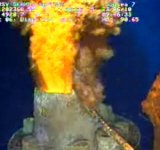
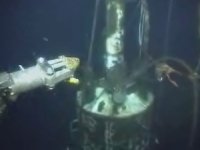
I think there's been a change of plans; it now appears to be capless and the Oil Drum people have posted that info, too.

oil 6-23 capless 4b.jpg

This appears to be the old cap

Oil 6-23 cap r.jpg
 
Re: Deepwater Horizon oil spill disaster- Update on BP's attempt to stop the oil leaks

Re: Deepwater Horizon oil spill disaster- Update on BP's attempt to stop the oil leaks

VIDEO: Cap removed from oil leak because of gas problem
<TABLE><TBODY><TR vAlign=top><TD>
Last Update: 11:29 am
</TD></TR></TBODY></TABLE>


2 mins ago Gas and oil continue to leak at the Deepwater Horizon oil spill site in the Gulf of Mexico, in this frame grab captured from a BP live video feed June 23, 2010. The White House was set on Wednesday to step up its legal battle to keep deepwater drilling on hold in the Gulf of Mexico following the worst oil spill in U.S. History. ( REUTERS/BP/Handout )

NEW ORLEANS (AP) - The Coast Guard says BP has been forced to
remove a cap that was containing some of the oil gushing into the
Gulf of Mexico.

Coast Guard Adm. Thad Allen says an underwater robot bumped into
the venting system. That sent gas rising through vent that carries
warm water down to prevent ice-like crystals from forming in the
cap.

Allen says the cap has been removed and crews are checking to
see if crystals have formed before putting it back on. In the
meantime, a different system is still burning oil on the surface.

Before the problem with the containment cap, it had collected
about 700,000 gallons of oil in the previous 24 hours. Another
438,000 gallons was burned.

The current worst-case estimate of what's spewing into the Gulf
is about 2.5 million gallons a day.

http://www.fox8live.com/news/local/story/gulf-oil-leak-video-cap-removed/xSDsbL6pmE6lPfZwBcQ-pA.cspx
 
Re: Deepwater Horizon oil spill disaster- Update on BP's attempt to stop the oil leaks

Re: Deepwater Horizon oil spill disaster- Update on BP's attempt to stop the oil leaks

DATE: June 23, 2010 11:54:35 CST

Suspension of Lower Marine Riser Package Containment Cap Operations

NEW ORLEANS -- This morning at approximately 8:45 a.m. CDT, a discharge of liquids was observed from a diverter valve on the drill ship Discoverer Enterprise,which is on station at the MC252 well-site. As a precautionary measure,the lower marine riser package (LMRP) containment cap system, attached to the Discover Enterprise, has been moved off the Deepwater Horizon's failed blow-out preventer to ensure the safety of operations and allow the unexpected release of liquids to be analyzed.

Capture of oil and gas through the LMRP cap is therefore temporarily suspended until such time that the cap can be re-installed. Capture of oil and gas through the BOP's choke line to the Q4000 vessel on the surface continues.

For information about the response effort, visit www.deepwaterhorizonresponse.com.

http://www.deepwaterhorizonresponse.com/go/doc/2931/691031/
 
Re: Deepwater Horizon oil spill disaster- Update on BP's attempt to stop the oil leaks

Re: Deepwater Horizon oil spill disaster- Update on BP's attempt to stop the oil leaks

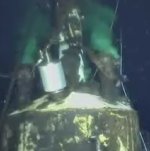
We have this now; but they are still showing the one with the oil pouring out, too.

oil 6-23 cap replaced b.jpg
 
Re: Deepwater Horizon oil spill disaster- Update on BP's attempt to stop the oil leaks

Re: Deepwater Horizon oil spill disaster- Update on BP's attempt to stop the oil leaks

Cap again collecting oil from Gulf leak

by The Associated Press
wwltv.com
Posted on June 23, 2010 at 9:33 PM

060710-containment.jpg


ATLANTA -- The logistics coordinator onboard the ship that's been siphoning oil from a gushing well in the Gulf of Mexico tells The Associated Press that a cap on top has been reattached and is again capturing some of the crude.

The crewmember on the bridge of the Discoverer Enterpriser says the cap was placed back on the gusher around 9 p.m. EDT. It had been off for more than 11 hours. The man, who asked not to be identified by name because he was not authorized to provide the information, says it will take awhile for the system to "get ramped back up."

Most recently, it was sucking up about 29,000 gallons an hour and directing it to the ship. An undersea robot bumped the cap and BP engineers removed because fluid seemed to be leaking, creating a possible safety hazard.

http://www.wwltv.com/news/local/Cap-again-collecting-oil-from-Gulf-leak-97032494.html
 
Re: Deepwater Horizon oil spill disaster- Update on BP's attempt to stop the oil leaks

Re: Deepwater Horizon oil spill disaster- Update on BP's attempt to stop the oil leaks

<TABLE height=522 cellSpacing=0 cellPadding=0 width=575 border=0 wi><TBODY><TR><TD vAlign=top align=left width=300 bgColor=#009900>
ROV_control_room-300x574.jpg
</TD><TD vAlign=top align=left width=9 bgColor=#009900>
clear.gif
clear.gif
clear.gif
</TD><TD vAlign=top align=left width=363 bgColor=#009900><TABLE cellSpacing=0 cellPadding=0 width=317 border=0><TBODY><TR><TD width=10> </TD><TD class=whiteLargeBold colSpan=3>
clear.gif
</TD><TD width=7 rowSpan=16> </TD></TR><TR><TD>
clear.gif
</TD><TD colSpan=3>Subsea operational update:</TD></TR><TR><TD colSpan=4>
clear.gif
</TD></TR><TR><TD vAlign=top>?</TD><TD class=whiteRegular colSpan=3>Following the removal of the LMRP cap system earlier today, operations have now begun to reinstall the cap on the BOP. Repositioning the LMRP Cap may take some time and collection of oil and gas should commence shortly thereafter, returning to full capacity as conditions permit.</TD></TR><TR><TD colSpan=4>
clear.gif
</TD></TR><TR><TD vAlign=top> </TD><TD class=whiteRegular colSpan=3>For the first 12 hours on June 23 (midnight to noon), approximately 5,500 barrels of oil were collected and approximately 4,625 barrels of oil and 19.7 million cubic feet of natural gas were flared.</TD></TR><TR><TD vAlign=top colSpan=4>
clear.gif
</TD></TR><TR><TD vAlign=top>?</TD><TD colSpan=3>On June 22, total oil recovered was approx. 27,090 barrels:</TD></TR><TR><TD vAlign=top colSpan=4>
clear.gif
</TD></TR><TR><TD vAlign=top></TD><TD vAlign=top align=right width=27>?</TD><TD class=whiteRegular width=4> </TD><TD class=whiteRegular width=269>approx. 16,665 barrels of oil were collected,</TD></TR><TR><TD vAlign=top></TD><TD vAlign=top align=right>?</TD><TD class=whiteRegular> </TD><TD class=whiteRegular>approx. 10,425 barrels of oil were flared,</TD></TR><TR><TD vAlign=top></TD><TD vAlign=top align=right>?</TD><TD class=whiteRegular> </TD><TD class=whiteRegular>and approx. 54.4 million cubic feet of natural gas were flared.</TD></TR><TR><TD colSpan=4>
clear.gif
</TD></TR><TR><TD vAlign=top>?</TD><TD class=whiteRegular colSpan=3>The next update will be provided at 9:00am CDT on June 24, 2010.</TD></TR><TR><TD vAlign=top colSpan=4>
clear.gif
</TD></TR><TR><TD vAlign=top colSpan=4>
clear.gif
</TD></TR><TR><TD vAlign=top> </TD><TD colSpan=3>Updated June 23 at 6:00pm CDT / 12:00am BST</TD></TR></TBODY></TABLE></TD></TR></TBODY></TABLE>

http://www.bp.com/extendedsectiongenericarticle.do?categoryId=40&contentId=7061813
 
Re: Deepwater Horizon oil spill disaster- Update on BP's attempt to stop the oil leaks

Re: Deepwater Horizon oil spill disaster- Update on BP's attempt to stop the oil leaks

Update on LMRP Cap Containment Operations

Release date: 23 June 2010

The lower marine riser package (LMRP) cap containment system was successfully reinstalled on the Deepwater Horizon's failed blow-out preventer (BOP) at approximately 1830 CDT on June 23. This containment system is connected to the drillship Discoverer Enterprise on the surface.

The system resumed collecting oil and gas at 1900 CDT on June 23.

The LMRP cap containment system was moved off the BOP at approximately 0845 CDT on June 23 as a precaution following observation of an unexpected discharge of seawater from a diverter valve on the Discoverer Enterprise.

Capture of oil and gas through the BOP's choke line via a manifold to the Q4000 vessel on the surface has continued uninterrupted throughout the day.

http://www.bp.com/genericarticle.do?categoryId=2012968&contentId=7063089
 
Back
Top