Pathfinder
Editor, Senior Moderator
Re: Deepwater Horizon oil spill disaster- Update on BP's attempt to stop the oil leaks
Re: Deepwater Horizon oil spill disaster- Update on BP's attempt to stop the oil leaks
Press Briefing by National Incident Commander June 17, 2010
Excerpt:
ADMIRAL ALLEN: Good morning folks. A lot of activity yesterday regarding the meeting with British Petroleum. A lot has been said about claims, the capabilities being stood up and the escrow amounts. I?m going to address more operational issues because I think that?s been thoroughly discussed and vetted in the last 24 hours.
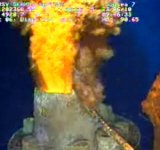
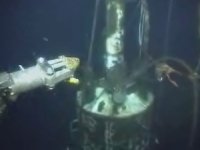
"While this has been going on, we?ve continued to produce oil out of the well head through the containment cap. As of yesterday though, we have the added capacity now what we call the Q4000 mobile drilling units on scene. It is actually drawing oil up through the kill pipe. That?s where we actually sent the mud down during the top kill operation. We?re actually using that as a way to evacuate more oil out in addition to what?s being produced by the Discover Enterprise.
We now, once we get these both operating, have the potential to bring our production capacity up to about 28,000 barrels a day. Probably by sometime early next week. They?ll bring the rates up slowly to make sure they can control it.
The Q4000, what we are doing is we?re bringing up both natural gas and oil and they?re both being flared off. There?s an EverGreen burning device on the Q4000 that looks much like the flaring device for natural gas but it?s capable of flaring the oil itself with natural gas in it, a fairly clean burn.
Not nearly what the amount of smoke that you see for an in situ burning.
We?ll look at, further down the line, the ability to actually transfer that oil ashore and actually offload it. But for now, it?s giving us several thousand more barrels a day capacity and that?s several thousand barrels a day that?s not going into the environment.
We?re also working very closely with British Petroleum. We have given them direction to increase their redundancy and capacity of their containment operations. There were two parts of the meeting with BP at the White House yesterday. One was on the claims as I mentioned earlier. The second was on the containment efforts so far.
BP laid out and we?ve approved where they are headed right now to bring in needed capacity. And under the current containment cap that sits on the well head by bringing additional vessels in and being able to draw oil off the choke and the kill lines and produce that on the surface, we expect to get to a capacity of around 53,000 barrels a day by the end of June.
At that point, sometime during the month of July, we want to convert over and put a new cap on the well bore that will allow us to have multiple hoses come up to a much larger processing vessel. And the goal is by the end of July if we, if it is required by the amount of oil that?s coming out to increase our capacity between 60 and 80,000 barrels a day. So we continue to make progress there.
It?s the same point Development Driller II, which is the, drilling the relief well is proceeding at pace and they are 9,000 feet below the sea floor right now and starting to close in on the well bore itself. We anticipate over the next three to four weeks they will close in and be able to tap into the well itself. At that point, they will pump mud down it and attempt to the, what we call, the bottom kill and actually cap the well. Development Driller III is the platform that is drilling the second well or the backup well, the risk mitigator well a mere currently 4,500 feet below the sea floor and continuing to drill ahead.
The areas we?re trying to concentrate on right now generally across the coast or to take advantage of the extraordinary response we?ve had to vessels of opportunity, these are local watermen from small boats up to shrimp boats that have signed up to do work in response to the spill. The good news is we have over 2,000 vessels of opportunity that have registered. The challenge we have is organizing all of them so they can be effectively employed.
This is in fact more vessels than there are in the actual Coast Guard itself so we are doing a number of things including putting tracking devices on some of these boats so we can have a better idea of where they?re at, connecting them with tactical radio communications and in many cases providing on scene Coast Guard units to actually coordinate them in small squadrons, if you will. Then to link them overhead with aerial surveillance. And the goal there is to take this increasing threat we have, which is anywhere from the shoreline out to about 15 to 20 miles now that the spill has proliferated from south central Louisiana over towards Fort Walton Beach, Florida. And be able to have increased capacity for skimming in shore.
We will continue to skim in and around the well head. But as I?ve said in previous operational briefs, we?re dealing with a pretty expansive area of patches of oil right now. It?s not a monolithic spill. It?s literally a collection of hundreds of thousands of patches of oil. Some are miles long or some are several hundred yards long."
Full text at:
http://www.deepwaterhorizonresponse.com/go/doc/2931/671291/
Re: Deepwater Horizon oil spill disaster- Update on BP's attempt to stop the oil leaks
Press Briefing by National Incident Commander June 17, 2010
Excerpt:
ADMIRAL ALLEN: Good morning folks. A lot of activity yesterday regarding the meeting with British Petroleum. A lot has been said about claims, the capabilities being stood up and the escrow amounts. I?m going to address more operational issues because I think that?s been thoroughly discussed and vetted in the last 24 hours.
"While this has been going on, we?ve continued to produce oil out of the well head through the containment cap. As of yesterday though, we have the added capacity now what we call the Q4000 mobile drilling units on scene. It is actually drawing oil up through the kill pipe. That?s where we actually sent the mud down during the top kill operation. We?re actually using that as a way to evacuate more oil out in addition to what?s being produced by the Discover Enterprise.
We now, once we get these both operating, have the potential to bring our production capacity up to about 28,000 barrels a day. Probably by sometime early next week. They?ll bring the rates up slowly to make sure they can control it.
The Q4000, what we are doing is we?re bringing up both natural gas and oil and they?re both being flared off. There?s an EverGreen burning device on the Q4000 that looks much like the flaring device for natural gas but it?s capable of flaring the oil itself with natural gas in it, a fairly clean burn.
Not nearly what the amount of smoke that you see for an in situ burning.
We?ll look at, further down the line, the ability to actually transfer that oil ashore and actually offload it. But for now, it?s giving us several thousand more barrels a day capacity and that?s several thousand barrels a day that?s not going into the environment.
We?re also working very closely with British Petroleum. We have given them direction to increase their redundancy and capacity of their containment operations. There were two parts of the meeting with BP at the White House yesterday. One was on the claims as I mentioned earlier. The second was on the containment efforts so far.
BP laid out and we?ve approved where they are headed right now to bring in needed capacity. And under the current containment cap that sits on the well head by bringing additional vessels in and being able to draw oil off the choke and the kill lines and produce that on the surface, we expect to get to a capacity of around 53,000 barrels a day by the end of June.
At that point, sometime during the month of July, we want to convert over and put a new cap on the well bore that will allow us to have multiple hoses come up to a much larger processing vessel. And the goal is by the end of July if we, if it is required by the amount of oil that?s coming out to increase our capacity between 60 and 80,000 barrels a day. So we continue to make progress there.
It?s the same point Development Driller II, which is the, drilling the relief well is proceeding at pace and they are 9,000 feet below the sea floor right now and starting to close in on the well bore itself. We anticipate over the next three to four weeks they will close in and be able to tap into the well itself. At that point, they will pump mud down it and attempt to the, what we call, the bottom kill and actually cap the well. Development Driller III is the platform that is drilling the second well or the backup well, the risk mitigator well a mere currently 4,500 feet below the sea floor and continuing to drill ahead.
The areas we?re trying to concentrate on right now generally across the coast or to take advantage of the extraordinary response we?ve had to vessels of opportunity, these are local watermen from small boats up to shrimp boats that have signed up to do work in response to the spill. The good news is we have over 2,000 vessels of opportunity that have registered. The challenge we have is organizing all of them so they can be effectively employed.
This is in fact more vessels than there are in the actual Coast Guard itself so we are doing a number of things including putting tracking devices on some of these boats so we can have a better idea of where they?re at, connecting them with tactical radio communications and in many cases providing on scene Coast Guard units to actually coordinate them in small squadrons, if you will. Then to link them overhead with aerial surveillance. And the goal there is to take this increasing threat we have, which is anywhere from the shoreline out to about 15 to 20 miles now that the spill has proliferated from south central Louisiana over towards Fort Walton Beach, Florida. And be able to have increased capacity for skimming in shore.
We will continue to skim in and around the well head. But as I?ve said in previous operational briefs, we?re dealing with a pretty expansive area of patches of oil right now. It?s not a monolithic spill. It?s literally a collection of hundreds of thousands of patches of oil. Some are miles long or some are several hundred yards long."
Full text at:
http://www.deepwaterhorizonresponse.com/go/doc/2931/671291/


 lain Text para-->