• FluTrackers.com Inc. does not provide medical advice. Information on this web site is collected from various internet resources, and the FluTrackers board of directors makes no warranty to the safety, efficacy, correctness or completeness of the information posted on this site by any author or poster. The information collated here is for instructional and/or discussion purposes only and is NOT intended to diagnose or treat any disease, illness, or other medical condition. Every individual reader or poster should seek advice from their personal physician/healthcare practitioner before considering or using any interventions that are discussed on this website. By continuing to access this website you agree to consult your personal physican before using any interventions posted on this website, and you agree to hold harmless FluTrackers.com Inc., the board of directors, the members, and all authors and posters for any effects from use of any medication, supplement, vitamin or other substance, device, intervention, etc. mentioned in posts on this website, or other internet venues referenced in posts on this website.
  • We are not asking for any donations. Do not donate to any entity who says they are raising funds for us.

Deepwater Horizon oil spill disaster- Update on BP's attempt to stop the oil leaks - The Macondo 252 well is now officially DEAD

Re: Deepwater Horizon oil spill disaster- Update on BP's attempt to stop the oil leaks

Re: Deepwater Horizon oil spill disaster- Update on BP's attempt to stop the oil leaks

DATE: August 27, 2010 1:05:14 PM CDT

Admiral Allen Directs BP to Terminate the Fishing Procedure and Begin Removal of the Capping Stack and BOP

WASHINGTON - National Incident Commander Admiral Thad Allen today authorized BP to terminate the fishing procedure and begin the removal of the capping stack followed by the BOP, including the specific conditions required for the removals to take place. The directive can be viewed here.

http://www.deepwaterhorizonresponse.com/go/doc/2931/886847/
 
Re: Deepwater Horizon oil spill disaster- Update on BP's attempt to stop the oil leaks

Re: Deepwater Horizon oil spill disaster- Update on BP's attempt to stop the oil leaks

DATE: August 27, 2010 5:20:40 PM CDT

Transcript ? Press Briefing by National Incident Commander Admiral Thad Allen


Below is a transcript from Friday?s teleconference press briefing by Admiral Thad Allen, National Incident Commander for the Deepwater Horizon/BP oil spill.

A downloadable audio file of the conference is available here.

<HR>
While responding to Trip Hannah's question "we couldn?t really make out whether that was hydrate build up that it was sitting on or if that was cement. I was wondering if you had ? excuse me if you had any ideas about what that material is and if that might present problems for you in opening up the rams of the Legacy BOP? Admiral Allen replied, "I don?t know if I can characterize it right now and I don?t know what was raised on the call that I was on this morning but I will go back and check and if there?s any issue related to that we will post it with the JIC." To clarify further, Captain Patrick Little expanded on the answer on behalf of Admiral Allen noting; "Hydrate formation is always a consideration at this depth and is addressed in the optimal procedures. The prep period includes flushing inside the BOP and at the connection points. Additionally, they will pause at points on the way to the surface to let any hydrates that build up thaw out."
Toward the end of today's Allen press conference transcript, there is a question from Reuters to Admiral Allen about a casing hanger. He said he would have a photo of it posted by the JIC. The name of the company is Dril-Quip and we are providing a link to the manufacturing company's website.

<HR>
Thad Allen: Thank you Anna. (Considerable amount) of information to pass today regarding our results in the last 24 hours and our intentions moving ahead. As you know we've been conducting what we've been calling fishing operations attempting to ascertain the condition of the capping stack blowout preventer and the pipe that is in the blowout preventer.

We knew we had several pieces of pipe there and as you know from previous briefings we had sent down fishing tools in an attempt to locate those pipes. Last night we attempted to retrieve the pipe that was the result of the clean cut.

That's a diamond wire cut that was done earlier. The one that had the smoothest top if you will be sending down an overshot device. That?s something that goes over top of the pipe to pull it back up.

What we have found is we have gone down there, the pipes have settled against the side of the BOP and we can't successfully put the overshot devices over them. We've come to the conclusion that any more attempts at fishing are probably not going to result in success.

And at a meeting this morning between our science team and the BP engineers it was decided to recommend to the principals, the cabinet secretaries we go ahead with the removal of the blowout preventer and the replacement of the blowout preventer with the one that's on Development Driller 2.

This is due to the one whose apparent fragility of the pipe that keeps breaking and falling off to the side and also the unknown condition of the BOP below that and I can talk about that in a little bit.

So the plans are right now to replace the BOP. The approximate timeline going ahead is as follows, starting today and through Saturday and Sunday we will make preparations to remove the BOP and replace it.
Those preparations will be done as follows. The Discoverer Enterprise will retrieve the current fishing assembly and then they will run a latch down that will be capable of removing the capping stack, that top device that was placed on the blowout preventer.

At the same time the Q4000 together with a number of ROV's will start disconnecting lines from the Macondo BOP. That includes the choke and kill lines, the goosenecks and some of those connections that go to that C4 manifold that we have used for various operations in the past.

And then the Q4000 will prepare in general the BOP for removal. We expect these actions will take place on Saturday and Sunday. In the meantime Development Driller 2 will unlatch, pick up the 2nd blowout preventer and move to the staging area.

Commencing on Monday and through Tuesday the Discoverer Enterprise will latch on and remove the capping stack. And the capping stack will be temporarily stored nearby on the ocean floor. Once that has been completed the Q4000 will move in and connect to the BOP and will unlatch it.

And then there'll be a series of two decision points will occur. We will attempt to pull it free and we are prepared to apply up to 80,000 of force in addition to the weight of the blowout preventer to lift it. We call this the gentle tug.

If the blowout preventer comes free we will then use the (Boa sub-C) and the ROV's to attach a line to it and cut it just above the well and at that point we can bring the BOP to the surface on the Q4000.

If for some reason the blowout preventer does not come free with a gentle pull, our intention then is to manually open the ram sequentially down through the blowout preventer and then raise the blowout preventer and cut the pipe at the well head.

The blowout preventer will then be brought to the surface. At that point Development Driller 2 will move in and latch up the BOP and test it. We expect that that would take place sometime beginning around Wednesday if all the conditions are met.

I will tell you, know there are two things that could cause the schedule to change. One is weather and the other one is the process that will be needed to open the RAMS if the gentle tug does not work to free the POB. At the same time the Helix Producer and the Loch Rannoch are there. And are there to provide containment capabilities should there be some, some hydro carbon release. We don?t anticipate that but we have them standing by in an abundance of caution.

After the development, after the Discoverer Enterprise stores the capping stack on the bottom they will be available to put a capping stack back on the well should that be needed. But our ambient pressure test and the performance of the well thus far lead us to believe that that should not be a problem. So in summary we are prepared to make preparations and remove the capping stack and preventer and put the new blowout preventer on for Development Driller 2. And proceed to place the new blowout preventer on sometime around next Tuesday to Wednesday.

That will be followed by testing and I don?t have an exact date and when we will be ready to move ahead with the intersect well, but for right now the target date has been established to begin that tomorrow or around the 7th or 8th of December. The time between the 1st and 2nd of September, the 7th and 8th of December will be used to put the BOP on, circulate mud and test it and make sure we are prepared not only to exercise the intersection of the well but any other conditions that may be imposed by the Bureau of Energy, Ocean Energy Management related to potential plugging and abandonment of the well. And with that I would take any questions you may have for me...

Read more:
http://www.deepwaterhorizonresponse.com/go/doc/2931/886987/
 
Re: Deepwater Horizon oil spill disaster- Update on BP's attempt to stop the oil leaks

Re: Deepwater Horizon oil spill disaster- Update on BP's attempt to stop the oil leaks

DATE: August 30, 2010 5:21:18 PM CDT

Transcript ? Press Briefing by National Incident Commander Admiral Thad Allen

Below is a transcript from Monday?s teleconference press briefing by Admiral Thad Allen, National Incident Commander for the Deepwater Horizon/BP oil spill.
A downloadable audio file of the conference is available here.
August 30, 2010
12:00 p.m. CDT

<HR SIZE=1 width="100%">The additions that are italicized below are being included at the request of Adm. Allen to further clarify and respond to questions raised during the teleconference.

Q. What were the organizations and contractors involved in the fishing operations?
A. BP, Schlumberger, Ltd., Transocean, Ltd., Cameron Corp., and Baker Hughes, Inc.

Q. What equipment failures or casualties have occurred in the last 72-96 hours that have held up ongoing operations at the well site?
A. There was a delay in operations when the middle ram of the capping stack was found to be frozen, as briefed on August 25. Currently all rams on the capping stack are open and functioning. No other casualties that would hold up current operations have been reported

Q. Have you identified the source of flow of any hydrocarbons from the capping stack?
A. There is no flow of hydrocarbons from the capping stack. Occasional releases of gas bubbles and hydrates, along with some traces of hydrocarbons, have been observed from the top of the capping stack. Although the stack was flushed, there are likely residual hydrocarbons in remote areas that are being released.

Q. Is the Criminal Investigation Team currently onboard the Q4000, or are they held up due to weather?
A. There are a total of eleven Criminal Investigation Team members on the Q4000 and Discoverer Enterprise.

<HR SIZE=1 width="100%">

Thad Allen: Thank you. Good afternoon. Today's press call is coming from Development Driller III out on the well site. And we're out here today assessing conditions related to the BOP change out, and also the ultimate intersection of the well will be developed ? visiting Development Driller II and Q4000 later on today.

I indicated in my last briefing that throughout the weekend we've been making preparations to remove the stacking cap and the blowout preventer. We are in a weather hold right now. The conditions out I am seeing here, the seas are six to eight feet. Normally that's not prohibited to do a lot of activities. But anticipation of raising the capping stack and the blowout preventer which will be suspended at some point 5,000 feet below these vessels.

There are two concerns that the BP engineers and the science team have. One is the lifting up and down of the wave action on the lifting pipes and mechanisms themselves, and what we would call dynamic loading. And there is a safety margin that has been built into that, and right now we're a little over that safety margin.

The second thing is, when these capping stacks and blowout preventers are suspended, they are suspended from a very long piece of pipe, and the period of the waves. In other words, the distance of the time between the swells actually creates a pendulum type action. So you have two forces acting on these lifting mechanisms, whether there is a riser pipe or a drill stream. And it is the dynamic loading as the rigs themselves move up and down. The second is the forces that are generated by having these things swing around like a pendulum underneath it.

Once they get up to a little less than 2,000 feet, that pendulum action is reduced, and they can actually operate in a heavier sea state. But for now we are in a hold pending further calming of the weather out here. The current weather looks like it's going to hold for at least the next two to three days. We're looking at data coming from the NOAA weather buoys offshore.

There was a conference call this morning chaired by Secretary Salazar with our science team and the BP engineers. We continue to watch what's going on there.

In the meantime, the sequence of events that will occur once we are ready to go is the Discoverer Enterprise. We'll remove the capping stack and then back off. But that point to Q4000 will come in and lift the blowout preventer which will also have the transition spool which was put into accommodate the capping stack. And a third step will be a Development Driller II, which is drilling a second relief well will move in with the new blowout preventer, and put the blowout preventer on.

Once that blowout preventer is in place, the well will be in a position to withstand the pressures expected on the intercepts of the analysts by Development Driller III and the drilling mud that will be forced in there when that happens. All is in readiness, and at this point we are just standing by for a weather window.

And I would be happy to take your questions.

.../

Full text:
http://www.deepwaterhorizonresponse.com/go/doc/2931/888467/
 
Re: Deepwater Horizon oil spill disaster- Update on BP's attempt to stop the oil leaks

Re: Deepwater Horizon oil spill disaster- Update on BP's attempt to stop the oil leaks

DATE: September 1, 2010 3:23:55 PM CDT
Transcript ? Press Briefing by National Incident Commander Admiral Thad Allen

Below is a transcript from Wednesday?s teleconference press briefing by Admiral Thad Allen, National Incident Commander for the Deepwater Horizon/BP oil spill.
A downloadable audio file of the conference is available here.
September 1, 2010
10:30 a.m. CDT

Thad Allen: Thank you, Jeff.

Good morning. As you know, I?m here in <?XML:NAMESPACE PREFIX = ST1 /><ST1:CITY w:st="on"><ST1:PLACE w:st="on">Houston</ST1:PLACE></ST1:CITY> today. This morning I met with the BP engineering team and their senior leadership. We had a conference call with Secretary Salazar and his science team going over the current conditions out on site and our current efforts at oil control.

I?d like to give you an update on that and then I?d like to talk a little bit about subsea oil, which has been a topic of concern to a lot of folks and

I?d be glad to take your questions after that.

We are currently in a holding pattern offshore waiting to proceed with the replacement of the blowout preventer, the legacy blowout preventer from the Deepwater Horizon in advance of putting a new blowout preventer on that will allow us to have pressure integrity in the well, allow us to proceed with the oil kill itself.

We?ve hit a weather window where it?s been difficult for us to move forward. I?d like to explain that briefly and then tell you how we think we?re going to move ahead.

We anticipate removing the blowout preventer with the latching mechanism that will be attached to a drill pipe string that will be suspended from the Q4000. There?s a picture of the Q4000 right to my left here.

The combined weight of the drill string, the latching mechanism and the blowout preventer itself is approximately a million pounds. When they released that blowout preventer from the well it will be suspended at about 5000 feet below the surface.

There are two things we?re concerned about when this occurs, number one is the wave height. You can imagine the Q4000 riding up and down on the waves. When they ride up it exerts more dynamic loading on that pipe system. So we?re concerned about the weight and the ability of the pipe system to handle that. So there is a limit as far as the wave height for being able to recover the BOP.

Secondarily, when you have something suspended 5000 feet below a drilling rig like this you have a pendulum motion. It kind of swings around and that?s related to the period of the swell ? of the swells in the waves when they come through. So the combination of the period of the waves and the height of the waves creates a set of conditions that dictates when you can safely do this. We are in a window now where we cannot do that because it exceeds the safety factors. We believe, in the next 24 to 36 hours, we will enter a weather window that will allow us to proceed.

So with that in mind, we are making preparations right now to take advantage of that weather window which we believe will last Thursday, Friday, Saturday, potentially into Sunday to remove the blowout preventer.

The first step that will be taken will be tomorrow around midday. We will bring in the Discoverer Enterprise. They already have a riser pipe that?s been dropped down to about 4000 feet with a latching device and they will remove the capping stack. That is the capping stack we put on on the 15 of July that basically shut the well in. So we will remove that and the Discoverer Enterprise will then move away.

At that point, the Q4000 will come in and latch up and will be ready to (lift) the blowout preventer when the reach the wave height and the period of wave that will allow them to be in the safety window.
We?re moving in advance, knowing that when we get the window we need to be able to move right then.

So the Q4000 will be hooked up, ready to release the blowout preventer and lift it, and we?ll be ready to do that when they achieve the weather window, which we think will come sometime in about 24 to 36 hours from now.

Once that happens, the blow out preventer will be lifted, brought to the surface and to give you an idea, if you look at the photograph just to my left here?it?s kind of hard to see because the darkness of the photograph?but that?s a very large object and there are two tugboats underneath the Q4000 managing that so you can see how large the Q4000 is. It will literally raise the blowout preventer up through the Q4000 and if you look to the picture on the left, there?s a very high derrick there in the set of cranes. One of the interesting things about the Q4000 is that it has the height to be able to lift that blowout preventer completely up out of the water and place it on deck on the Q4000.

Ultimately they will take apart the lower marine riser package from the blowout preventer, store those on the Q4000, get in closer to shore and then transfer those to other vessels or barges to be taken to a staging area. This will all be done under the supervision of the joint investigations team and under the conditions laid out by the Department of Justice regarding the evidentiary requirements for handling the blowout preventer, which is material to the number of investigations that are going on.

Once the blowout preventer is removed, development driller two which was drilling the second relief well, will move in with the new blowout preventer and will place it on top of the well. At that point, there will be a series of diagnostics conducted to make sure that the well is ? the blowout preventer is functioning properly, including testing the valves and ability to retain pressure and so forth.

Once the blowout preventer has been tested we will be then in position to proceed with the killing of the well, if you will. And we are looking that the timeline to move forward, but it is contingent on completing these steps and these steps I would pass on to you that are contingent themselves on weather. And the removal of the blowout preventer could be impacted by the fact of whether or not the pipe that is suspected of being suspended below the blowout preventer is in contact with any cement that might have adhered to it while we were doing the static kill, whether or not we have to pull to get that free. One of two things could happen, the blowout preventer comes free and it?s not a problem. We lift it up and at some point we will cut the pipe below the blowout preventer and that will be taken to the surface by another vessel.

If we cannot free the pipe from the blowout preventer by applying about 80,000 pounds of pull, we will manually open the rams, remove the blowout preventer and then cut the pipe off after we?ve removed the blowout preventer. So we will try to pull the whole thing up together. If we can?t, we will mechanically open the rams and remove the blowout preventer.

We believe then if we do that then we can go ahead and proceed with killing the well sometime after Labor Day weekend. But again, this is conditions based on weather and then the condition of the pipe as it relates to blowout preventer when we attempt to remove it.

That?s the current status. I was out at the well site on Monday. I was aboard the Q4000. I climbed down below on the catwalks to take a look at the area underneath there where they bring the blowout preventer up.
And it?s hard to see now, but in a six foot sea state you?d be amazed at how much up and down vertical movement there is that is hard to detect unless you?re sitting right on top of it. So this is a good safety call. We?ll have to wait for the right weather window to proceed.

I?d like to talk also today about subsea oil monitoring. As you know, there?s been a lot of conversation about the potential and the extent of any hydrocarbons that might be present in the <ST1:PLACE w:st="on">Gulf of Mexico</ST1:PLACE>. This relates also to the discussion of the oil budget that took place several weeks ago. There?ve been several academic institutions that have set research vessels out. There?s been extensive monitoring by NOAA and EPA since the start of this event. Several weeks ago, I sent a letter to Rear Admiral Paul Zukunft, the Unified Area Commander, and directed him to come up with a comprehensive hydrocarbon monitoring plan.

My goal was to take all the extensive efforts that are going on and see if we could unify them into a comprehensive knowledge management based picture of the <ST1:PLACE w:st="on">Gulf of Mexico</ST1:PLACE> as it relates to the presence of hydrocarbons in the water column. To date, there have been over 27,000 samples taken in over 182,000 miles in the <ST1:PLACE w:st="on">Gulf of Mexico</ST1:PLACE>, but my goal is to bring all this together and get it into one coherent picture that both the government and the academic community can look at, understand, discuss and draw conclusions from.

To that end, Admiral Zukunft is preparing an implementation plan for this unified testing program and this week we are socializing that plan with academic institutions around the Gulf. Yesterday, we had meetings at the <ST1:PLACETYPE w:st="on">University</ST1:PLACETYPE> of <ST1:PLACENAME w:st="on">South Florida</ST1:PLACENAME> in <ST1:CITY w:st="on"><ST1:PLACE w:st="on">St. Petersburg</ST1:PLACE></ST1:CITY>. Today, we are meeting with the Gulf of Mexico institute in <ST1:CITY w:st="on">Biloxi</ST1:CITY> <ST1:STATE w:st="on">Mississippi</ST1:STATE> and we will also be meeting at <ST1:PLACE w:st="on"><ST1:PLACENAME w:st="on">Tulane</ST1:PLACENAME> <ST1:PLACETYPE w:st="on">University</ST1:PLACETYPE></ST1:PLACE>.

The goal is to understand the work in progress, the aspirations, and any value added we can gain by talking to the academicians that are involved in trying to understand the presence of hydrocarbons.

Moving forward, this will allow us to better understand what kind of threat remains out there and this will also set the stage for long-term natural resource damage assessment and any long-term sampling requirements that might need to be carried out under the shift to the natural resources damage assessment.

I?ve got a couple of charts up here that just kind of indicate the density of some of the testing that?s been done and these relate to testing anywhere from using autonomous underwater vehicles to collect sample to putting down crab traps in and around the coastal areas of what we call snare boom. It?s the pom pom like booms, you?ve probably seen that where oil sticks to it and you pull them up occasionally to see if there?s been any oil in contact with it.

It also includes testing that has been done with the NOAA oceanographic vehicles and just an array of some of the different types of technology that?s been used out there. A lot of folks have been working on this very, very hard since the start of the spill with the wellhead under control and the shifting concerned to long-term impacts of hydrocarbons in the water column. This is a prudent thing to do at this point and we?re anxious to move forward and unify the technology effort in support of understanding better either the presence or the lack thereof or the disposition and the fate of the oil in the <ST1:PLACE w:st="on">Gulf of Mexico</ST1:PLACE>.

With that, I?d be glad to take any questions you have for me today. If you could identify yourself? You got a microphone? Please go ahead.

.../

Read more:
http://www.deepwaterhorizonresponse.com/go/doc/2931/890699/
 
Re: Deepwater Horizon oil spill disaster- Update on BP's attempt to stop the oil leaks

Re: Deepwater Horizon oil spill disaster- Update on BP's attempt to stop the oil leaks

DATE: September 2, 2010 4:42:02 PM CDT

Statement from Admiral Allen on the Successful Removal of the Capping Stack


"Under the direction of the federal science team and U.S. government engineers, BP has completed the capping stack removal procedure ? an important step in the process to remove and preserve the damaged BOP.

This procedure was undertaken in accordance with specific conditions I set forth in a directive authorizing the capping stack removal and BOP replacement last week. BP will continue to follow these required conditions for the BOP removal procedure, which is expected to commence this evening. I will continue to provide updates as necessary."

To view Admiral Allen?s Aug. 27 directive authorizing the commencement of the removal procedures, click here.

http://www.deepwaterhorizonresponse.com/go/doc/2931/891411/
 
Re: Deepwater Horizon oil spill disaster- Update on BP's attempt to stop the oil leaks

Re: Deepwater Horizon oil spill disaster- Update on BP's attempt to stop the oil leaks

DATE: September 3, 2010 2:12:16 PM CDT

Statement from National Incident Commander Admiral Thad Allen on the Successful Removal of the BOP

"Under the direction of the federal science team and U.S. government engineers, BP has lifted the damaged Blow Out Preventer (BOP) from its position atop the cemented Macondo 252 well. We will continue to closely monitor progress as the BOP, which along with the latching device weighs approximately one million pounds, is lifted to the surface in the next 24-36 hours. This procedure was undertaken in accordance with specific conditions I set forth last week in a directive authorizing the capping stack removal, which was completed yesterday, and BOP replacement. BP will continue to follow these required conditions during the lifting of the damaged BOP and as the device is replaced. I will continue to provide updates as necessary."

To view Admiral Allen?s Aug. 27 directive authorizing the commencement of the removal procedures, click here.

http://www.deepwaterhorizonresponse.com/go/doc/2931/892031/
 
Re: Deepwater Horizon oil spill disaster- Update on BP's attempt to stop the oil leaks

Re: Deepwater Horizon oil spill disaster- Update on BP's attempt to stop the oil leaks

DATE: September 4, 2010 6:11:45 PM CDT

Transcript ? Press Briefing by National Incident Commander Admiral Thad Allen


Below is a transcript from Saturday?s teleconference press briefing by Admiral Thad Allen, National Incident Commander for the Deepwater Horizon/BP oil spill.

A downloadable audio file of the conference is available here.
September 4, 2010
2:00 p.m. CDT

*The pressure limit of the replacement Blow Out Preventer (BOP) is 15,000 psi.

Thad Allen: Thank you, Jeff, and good afternoon. Well I'm pleased to announce as you know that we successfully changed out the Blow Out Preventers on the Macondo Well.

I'm about to give a status on each of the individual segments associated with and I'd be glad to take any questions you have for me after that. As you know we successfully removed the capping stack with the Discoverer Enterprise followed by the removal of the Blow Out Preventer and the spooling tool from the Macondo well yesterday.

Over the last 24 plus hours, as you know, the Blow Out Preventer has been slowly brought to the surface. To give you an idea of how that is working for those of you that have not been out to Q4000 or been able to see how this works.

The latching device that was used to recover the Blow Out Preventer is actually a drill string, and as the Blow Out Preventer is brought to the surface they have to disconnect the pieces of the drill string the pipe and store it as they bring it up.

So, on the Q4000, what happens on deck up there is rather complicated.

They?re raising the pipe up disconnecting it and storing the pipe as they slowly bring the Blow Out Preventer to the surface.

Currently, the Blow Out Preventer is about 500 feet below the surface.

They are flushing out the Blow Out Preventer right now to deal with any potential hydrates that might still be in Blow Out Preventer and also they are arranging to take the Blow Out Preventer on deck.

As you can imagine with the drill pipe and everything else, it is quite a complicated procedure for actually bringing the Blow Out Preventer up and staging it.

When they are ready to bring the Blow Out Preventer into the Q4000 it will be raised by a very high derrick on deck. Once it is secured on deck they will accentually at that point lift the Lower Marine Riser Package off with a crane on the Q4000 and hold it in the air while the Blow Out Preventer is moved laterally off to the side and secured. Once that is done the Lower Marine Riser Package will then be deployed and secured on deck.

Once secured on deck, the Blow Out Preventer Lower Marine Riser Package will then be transported by the Q4000 closer to shore where both Lower Marine Riser Package and Blow Out Preventer will be transferred to other vessels for transfer to the area where the Blow Out Preventer will be taken into custody and at that point will be part of the evidence material that?s been required by the joint investigative team, and this whole thing has been done under the supervision of the Department of Justice.

There are law enforcement personnel onboard the vessel supervising each step and has it documented as well as documented with ROV coverage.

At the well itself we have continued to monitor the well and there have been no anomalies associated with the well.

We have continued to conduct surveillance with ROVs and sensors that are actually on the well head. Development Driller II has placed a new Blow Out Preventer on the well head. They are flushing fluids through the Blow Out Preventer and they are replacing the riser pipe. When they deployed the new Blow Out Preventer on the well, they had what's called a perforated riser pipe.

That was to allow the escape of fluids should that be needed if there was a problem with pressure. It was not needed. So that is removed. And they will cycle a new riser pipe down which will create the complete functionality of the riser pipe connect to the BOP to this well as if it were a functioning well itself with the BOP on top.

At that point, in fact, where we are at now with the new BOP on the well is we basically have secured this well as we would any well that was under production and then being closed out with a kill.

There is cement in the well casing itself. There's a Blow Out Preventer that has been pressure tested on top. And we have essentially eliminated the threat of discharge from the well at this point.

There's a series of events that will be taking place throughout the next several days that actually create a transition from controlling the source of the spill to what they call plugging an abandonment which is a regulatory term used by the Bureau of Ocean Energy Management (BOEM) in supervising how a well is put into a reserve status.

So what you're going to see in the briefings and information provider over the next several days will constitute actions. We're taking not only the control of the source, but to also take the final steps to plug and abandon. At that point it will shift to the oversight of the Department of Interior and the Bureau of Ocean Energy Management.

And when there is no further threat of discharge in the well and it has been killed it will no longer be under the purview of my command as a National Incident Commander. It will shift to the Department of Energy at that point.

So we're in the process of moving through that right now. But I'm very pleased to announce that with the new Blow Out Preventer on this well, the cement that was previously put in through the static kill, that this well does not constitute a threat to the Gulf of Mexico at this point but we need to finish the work related to the relief well and the plug and abandonment which will need to move forward.

The Discover Enterprise had removed a capping stack and was standing by should that capping stack be needed again. That is not needed now, so later on today the capping stack will be recovered to the surface on the Discover Enterprise and move forward, and with that I'll be glad to take any questions you have for me.

.../
http://www.deepwaterhorizonresponse.com/go/doc/2931/892479/
 
Re: Deepwater Horizon oil spill disaster- Update on BP's attempt to stop the oil leaks

Re: Deepwater Horizon oil spill disaster- Update on BP's attempt to stop the oil leaks

Crews pull blowout preventer out from Gulf

Published: Saturday, September 04, 2010, 10:30 PM

gulfjpg-cbd4c9f76094cdfc_large.jpg

The Associated Press
Crews trying to raise the blowout preventer that failed to stop oil from spewing into the Gulf of Mexico after the Deepwater Horizon explosion have been delayed because of ice crystals. Government investigators are expected to take possession of the device once it has been raised to the surface. <!-- --><!-- -->


A crane hoisted a key piece of oil spill evidence to the surface of the Gulf of Mexico on Saturday, giving investigators their first chance to personally scrutinize the blowout preventer, the massive piece of equipment that failed to stop the gusher four months ago.

It took 29? hours to lift the 50-foot, 300-ton blowout preventer from a mile beneath the sea to the surface. The five-story high device breached the water's surface at 6:54 p.m. CDT, and looked largely intact with black stains on the yellow metal.
<!-- -->
<!-- -->
<!-- -->
<!-- -->
FBI agents were among the 137 people aboard the Helix Q4000 vessel, taking photos and video of the device. They will escort it back to a NASA facility in Louisiana for analysis.

.../
http://www.nola.com/news/gulf-oil-spill/index.ssf/2010/09/crews_delayed_in_raising_blowo.html
 
Re: Deepwater Horizon oil spill disaster- Update on BP's attempt to stop the oil leaks

Re: Deepwater Horizon oil spill disaster- Update on BP's attempt to stop the oil leaks

DATE: September 5, 2010 2:42:15 PM CDT

VIDEO/PHOTO RELEASE: Damaged Blow Out Preventer Removed


VIDEO:http://cgvi.uscg.mil/media/main.php?g2_itemId=990613

http://www.youtube.com/watch?v=hy8Zr46r7yA&feature=player_embedded


<TABLE border=0><TBODY><TR><TD>


100904-G-3885B-038-Deepwater Horizon BOP extraction


</TD><TD vAlign=top>
Date: 09/04/2010


</TD></TR></TBODY></TABLE>
<TABLE border=0><TBODY><TR><TD>


</TD><TD vAlign=top>
Date: 09/04/2010


</TD></TR></TBODY></TABLE><TABLE><TBODY><TR><TD>100904-G-3885B-049-Deepwater Horizon BOP extraction

<TABLE border=0><TBODY><TR><TD>


</TD><TD vAlign=top>
Date: 09/04/2010


</TD></TR></TBODY></TABLE><TABLE><TBODY><TR><TD>100904-G-3885B-094-Deepwater Horizon BOP extraction


</TD></TR></TBODY></TABLE>


</TD></TR></TBODY></TABLE>GULF OF MEXICO - "The damaged Blow Out Preventer (BOP), along with the Lower Marine Riser Package (LMRP) Cap, have been removed from the Gulf of Mexico and are currently on board the Q4000. The BOP is considered evidentiary material, and is now under the supervision of the Deepwater Horizon Criminal Investigation Team and FBI Evidence Recovery Team." - National Incident Commander Admiral Thad Allen, Sept. 4, 2010
(Photo & Video by Petty Officer 1st Class Thomas Blue, U.S. Coast Guard)


.../
http://www.deepwaterhorizonresponse.com/go/doc/2931/892755/
 
Re: Deepwater Horizon oil spill disaster- Update on BP's attempt to stop the oil leaks

Re: Deepwater Horizon oil spill disaster- Update on BP's attempt to stop the oil leaks

DATE: September 8, 2010 3:39:11 PM CDT

Transcript ? Press Briefing by National Incident Commander Admiral Thad Allen

Below is a transcript from Wednesday?s teleconference press briefing by Admiral Thad Allen, National Incident Commander for the Deepwater Horizon/BP oil spill.

A downloadable audio file of the conference is available here.
September 8, 2010
10:30 a.m. CDT

Admiral Thad Allen: Good morning. A couple of updates, and I'd be glad to take your questions.

As we speak this morning, as you know from operations over the weekend, the Q4000 has the Lower Marine Riser Package and Blow Out Preventer (BOP) on deck. What they have been doing over the last day is separating the Lower Marine Riser Package from the BOP and putting them onto shipping skids that will make them more suitable for transfer and make it safer.

There have been some delays out there due to weather and the heavy weights that are having to be handled on Q4000, but they will be ready sometime in the next 24 hours to start moving the Q4000. I would refer any other questions on the ultimate disposition of that to the Department of Justice and the Joint Investigation Team, because at that point, this will cease to be part of the national response that I'm coordinating as the National Incident Commander.

Development Driller II has landed the BOP, as you know, over the weekend. They changed out the riser that was used to install it. They have a new riser latched on, and they are displacing the seawater in that riser with drilling mud at this point.

The Discoverer Enterprise was the one that recovered the capping stack.

There's the maintenance teams on board there that are preserving the capping stack, and that will be ongoing, as well.

What we anticipate happening for the next few days is some diagnostics to be conducted on the well itself. As we prepare to do the final relief well and the final killing actions in the well, we have an opportunity at this point to learn more about the well.

If you remember, we were anticipating that a drill pipe would likely be suspended below the Blow Out Preventer and might even be adhered to the casing. As we know that ? I mean, the well casing. That did not happen, so there is some piece of pipe ? pieces of pipe that are down in the well right now, so we're in a little bit of a diagnostic phase right now, trying to understand more about what is the current status of the well before our final timeline is released on the intercept.

That could possibly include a two-part intercept of the well to finally kill it, where they would submit from the top and the bottom through the casing in the well right now. And if that happens, the two steps would be to actually perforate the casing above the cement that was put in during the static kill and put cement there at the top and then come in from the bottom with the relief well.

Exactly how that will happen and the options that will be discussed moving forward are actually being developed down in Houston right now. But in the meantime, they're going to look at the condition of the well and see if they can find out more about the condition of the pipe, location of the pipe, and so forth.

Regarding other response operations, we continue to remove boom where it's no longer needed. After today, there is no longer boom deployed in Florida, Alabama or Mississippi. We currently have about 1.3 million feet of boom deployed in Louisiana. That's being removed where it's not needed and being replaced where it is still needed, where we have sorbent boom dealing with oil back in the marshes.

This is being done in conjunction, in consultation with the parish presidents and the State of Louisiana. As we move towards our transition plans, it'll leave us a point where we agree on how clean is clean. That is an ongoing process. We're revising the plans based on our discussions with the parish presidents, and that will continue.

We are using vessels of opportunity to redeploy the boom and do boom maintenance where we can. And that is proceeding, as well.

The final large effort that's underway right now is an effort to consolidate all of the testing for hydrocarbons in the water column. As you know, there's been a significant effort by NOAA and EPA and others in the Federal Government to try and understand where the oil is at and the implications of that. There's also been a lot of work done by private research institutions and Academia.

In the last week, the Unified Area Command in New Orleans sponsored a series of meetings in Florida, Mississippi and Louisiana to brief the academic institutions that are involved with the research out there on how we intend to move forward and try and unify the federal effort with the local efforts to produce the best data architecture we can for trying to understand the presence of hydrocarbons in the Gulf and a way-forward. This will also position us, I believe, very, very well for the long-term natural resources damage assessment moving forward. With that, I'd be glad to take your questions.

.../
http://www.deepwaterhorizonresponse.com/go/doc/2931/894553/
 
Re: Deepwater Horizon oil spill disaster- Update on BP's attempt to stop the oil leaks

Re: Deepwater Horizon oil spill disaster- Update on BP's attempt to stop the oil leaks

DATE: September 10, 2010 11:22:34 AM CDT


Admiral Allen Authorizes BP to Move Forward with Specific Relief Well Procedures

National Incident Commander Admiral Thad Allen today directed BP to proceed with specific aspects of the relief well intercept procedure. To view the directive, click here.

http://www.deepwaterhorizonresponse.com/go/doc/2931/895719/
 
Re: Deepwater Horizon oil spill disaster- Update on BP's attempt to stop the oil leaks

Re: Deepwater Horizon oil spill disaster- Update on BP's attempt to stop the oil leaks

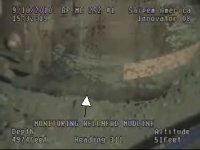
One of the ROV cams has been monitoring the wellhead mudline since yesterday.

There appears to be something escaping along a crack in the mud at the base of the wellhead; it's easier to see live than in a screen cap. You can see the small black bubbles above the arrow, towards the top if the pic.

http://www.bp.com/liveassets/bp_int...local_assets/html/Development_driller_2b.html

oil 9-10 ml 4 resized.jpg
 
Re: Deepwater Horizon oil spill disaster- Update on BP's attempt to stop the oil leaks

Re: Deepwater Horizon oil spill disaster- Update on BP's attempt to stop the oil leaks

Oil well blowout preventer reaches NASA facility

by Harry Weber / Associated Press
wwltv.com
Posted on September 11, 2010 at 5:29 PM
Updated yesterday at 5:36 PM

NEW ORLEANS -- A Coast Guard official says the 300-ton device that failed to stop the massive Gulf of Mexico oil spill after a rig exploded has arrived at a NASA facility in Louisiana for analysis.

Lt. Suzanne Kerver told The Associated Press that the barge carrying the blowout preventer reached the New Orleans facility around 3:30 p.m. CDT on Saturday.

.../

http://www.wwltv.com/news/Oil-well-blowout-preventer-reaches-NASA-facility-102701189.html


Aerial View of Michoud Assembly Facility


<!--Promo date and doctitle ends-->
167092main_maf_aerial4_516.jpg


An aerial view of the manufacturing plant which houses the National Center for Advanced Manufacturing at NASA's Michoud Assembly Facility in New Orleans, LA.

http://mynasa.nasa.gov/centers/marshall/michoud/maf_aerial_2.html
 
Last edited:
Re: Deepwater Horizon oil spill disaster- Update on BP's attempt to stop the oil leaks

Re: Deepwater Horizon oil spill disaster- Update on BP's attempt to stop the oil leaks

DATE: September 13, 2010 3:53:50 PM CDT

Statement from National Incident Commander Admiral Thad Allen on the Relief Well

"After extensive consultation between BP engineers and the federal science team, as well as reviewing data collected from measurements I authorized Friday, the Development Driller III today began the final steps towards the completion of the relief well that will intercept the Macondo 252 well and perform the bottom kill procedure.

This accelerated progress was possible after several discussions between BP and the federal scientists and engineers, leading to the installation of a lock-down device over the weekend, which resulted in the necessary conditions to commence the finalization of the relief well. I will continue to provide updates on the progress of the relief well, the final step that will ensure the well is fully and finally killed, as necessary."

http://www.deepwaterhorizonresponse.com/go/doc/2931/896251/
 
Re: Deepwater Horizon oil spill disaster- Update on BP's attempt to stop the oil leaks

Re: Deepwater Horizon oil spill disaster- Update on BP's attempt to stop the oil leaks

Inspection of blow out preventer begins amid tight security

...Forensic investigators have begun working on the preventer to determine what caused the device to fail.

In addition to the blowout preventer, two other pieces will be inspected.

Those pieces include the lower marine riser, and something called the spool piece that connects the two.
...

The blow out preventer is under tight, 24-hour security at the facility.

Full text and video:
http://www.wwltv.com/news/Inspection-of-blow-out-preventer-begins-amid-tight-security-102792444.html
 
Re: Deepwater Horizon oil spill disaster- Update on BP's attempt to stop the oil leaks

Re: Deepwater Horizon oil spill disaster- Update on BP's attempt to stop the oil leaks

DATE: September 15, 2010 5:53:07 PM CDT

Transcript ? Press Briefing and Teleconference by National Incident Commander Admiral Thad Allen and NOAA Administrator Dr. Jane Lubchenco


Below is a transcript from Wednesday's press briefing and teleconference by Admiral Thad Allen, National Incident Commander for the Deepwater Horizon/BP oil spill and Dr. Jane Lubchenco, NOAA Administrator


A downloadable audio file of the conference is available here.


Graphics used during the press briefing are available here and here.
Photos of subsurface equipment are available here, here, and here.


September 15, 2010


Admiral Allen: Thank you. Good morning from <?XML:NAMESPACE PREFIX = ST1 /><ST1:PLACE w:st="on"><ST1:CITY w:st="on">Kenner</ST1:CITY>, <ST1:STATE w:st="on">Louisiana</ST1:STATE></ST1:PLACE>. I'm delighted to be here today with representatives of the seafood industry and the restaurant industry together with the (inaudible) representative of academia and Dr. Jane Lubchenco the NOAA administrator.

I want to hit a couple of things this morning, give you an update and then Dr. Lubchenco is going to come up and we're going to talk about subsea oil monitoring and our intentions and (inaudible) on that.

But first of all I'd like to point out a few folks that are here with me behind me today that are joining us here at <ST1:CITY w:st="on"><ST1:PLACE w:st="on">Kenner</ST1:PLACE></ST1:CITY>. First one is Harlon Pearce
who is chair of the Louisiana Seafood Promotion Board. We also have the executive director of the Louisiana Seafood Promotion Board, Ewell Smith. Ewell, thank you for being here and Jim Funk the executive director of the Louisiana Restaurant Association.

As you know the issue of seafood safety has loomed large in the media and elsewhere. I'm here to tell you this is my third day in the Gulf and

I've had seafood every day I've been here. This is the most tested and safest seafood in the world right now. This seafood is ready for the rest of the world and the world needs to know that. And I'm here with the members of the community involved with preparing that seafood to get it out to you to let you know that the Gulf is ready and you should have no qualms about getting seafood that has been tested from the Gulf.

If I could real quick we started this morning the final drilling process to close in on the bottom of the Macondo Well. As you know we've had several segments of activity that have taken place. It started with the static kill to fill the well with cement. We've ended a number of tests.

We concluded (inaudible) to remove the blowout preventer.

That has been done. As you know that equipment has all been shipped to the Coast Guard base at the NASA (inaudible) in <ST1:PLACE w:st="on"><ST1:CITY w:st="on">New Orleans</ST1:CITY></ST1:PLACE> where it remains under supervision of the joint investigation team and the Department of Justice.

We are demobilizing what?s not needed at the well site right now. And as we speak, earlier this morning, Development Driller III began the last drilling (inaudible) into the annulus of the drill pipe and we would expect some time in the next 24 hours to actually intercept the well.

The steps after the well intercept will be to ascertain the condition of the annulus. As you know we do not know what the condition of the annulus is whether or not there are hydrocarbons in it, communication with the reservoir and so forth. Today will give us a lot of information especially when we get close and finally conduct the intercept looking at the changes in pressure of the drilling mud that's going in and out.

That will be something that we're monitoring very closely. And we will give you update throughout the day. I have been notifying and updating the senior leadership in <ST1:PLACE w:st="on"><ST1:STATE w:st="on">Washington</ST1:STATE></ST1:PLACE> as we move forward.

What I would like to do now is just shift to the next part of the opening statements and then we'll be glad to take some questions from you. From the start we have known that this has been the largest oil spill in <ST1:COUNTRY-REGION w:st="on"><ST1:PLACE w:st="on">U.S.</ST1:PLACE></ST1:COUNTRY-REGION> history. We know that the impacts of this spill have been far reaching.

We have been defending the coastline from <ST1:ADDRESS w:st="on"><ST1:STREET w:st="on">Port St.</ST1:STREET> <ST1:CITY w:st="on">Joe</ST1:CITY>, <ST1:STATE w:st="on">Florida</ST1:STATE></ST1:ADDRESS> over to tar balls that have come to shore in <ST1:STATE w:st="on"><ST1:PLACE w:st="on">Texas</ST1:PLACE></ST1:STATE>. And there are concerns about how much oil is in the water and the amount of hydrocarbons, how that's affecting the Gulf. We work very close with the Unified Area Command here in New Orleans under the leadership of Admiral Zukunft who will continue to direct our operations when the National Incident Command is redeployed here shortly.

And we have worked with NOAA, our federal counterparts and academia to take a look at the (inaudible) possible for subsea monitoring for hydrocarbons. A lot of unanswered questions, we've never had a spill of this magnitude. The public wants to know what?s going on and quite frankly we all do too.

There has been a massive effort to conduct sampling from the start of this event. We're going to give you a little bit more detail this morning about how we've been moving forward and how we intend to move forward in the future to try and get as much information as we can, to make that information transparent and talk about the implications of the data that's in relation to the future of the Gulf.

So with that I'd like to now introduce Jane Lubchenco, the administrator of NOAA who is going to make some opening remarks about a subsea oil sampling. And she has some distinguished members of the federal government and academia with her. Jane?

Jane Lubchenco: Thanks, Admiral Allen. Hello everyone thank you for joining us. I echo Admiral Allen's thanks for Harlan Pearce and his colleagues for hosting us here today. When NOAA first became involved at the very earliest hours in responding to the deep water horizon spill we pledged to stand shoulder-to-shoulder with fishermen of the region.

And our continued interactions and partnership with them are a signal of how committed we are jointly to restoring the health of the Gulf and bringing us back to a very healthy state so that everyone cal feel completely comfortable with the quality of the seafood and the safety of the seafood from this region.

I'd like to introduce a few folks to you today. Some of the senior scientists at NOAA who are working on monitoring efforts that we're going to b talking about today and some individuals from the academic communities and independent research institutions that we've been partnering closely with.

As I introduce each of you guys if you'll just raise your hands so folks will know who you are. Okay, Sam Walker, Steve Layman and Steve Murawski, all NOAA senior scientists who are individuals that bring deep knowledge about oil, oil response and the science in the Gulf to this task.

A number of individuals from our academic and private research institution partners, Dr. Michael Carron of the Northern Gulf Institute, Dr. V.J. John and Dr. Gary McPherson of Tulane University, Dr. Richard Shaw from

Louisiana State University, Dr. William Hogarth and Dr. Ernst Peebles from the University of South Florida, Dr. Chris Reddy of Woods Hole Oceanographic Institution, Dr. Richard Gregg of Florida A&M, and we're also joined by Jacqueline Patterson of the NAACP.

I welcome all of them and thank them for their efforts. They have been involved in the number of research missions out on the water to try to understand this event. And they have been very helpful in organizing meetings with academic and independent research institutions, folks from the Gulf and elsewhere to help us understand what's actually playing out, what's happening on the water, beneath the water, at the edges of the shore and to help us craft the kind of quality research studies that will enable us to better understand what's happening and what we might see in the future.

As an academic more than 35 years I can attest to the importance of what academic institutions and independent research institutions bring to an effort like this. We really do need the best scientists in the country focusing on understanding that has already happened, what the impact is and how to guide our actions bring the Gulf back to health.

Although I'm the administrator of NOAA here today I can also say that the entire federal family is deeply committed to understanding the impact of this spill on the health of the Gulf and the millions of people who depend on it for their lives and livelihood.

It's been 62 days now since oil has stopped flowing into the Gulf but our federal response remains vigilant in its effort to recover oil, to clean up beaches and marshes and to rehabilitate wildlife.

We continue to monitor the movements and the (inaudible) of oil especially beneath the surface. And we are doing so in collaboration with our academic and research institution partners. We are indeed seeing a number of encouraging signs, a reflection of this is that we have re-opened almost 40,000 square miles of the Gulf to fishing.

As you will recall at the heights about 37 percent of the Gulf was closed to fishing in federal waters. We have been nibbling around the edges opening up more and more area. The area that remains closed today is at 16.5 percent.

So we're making good progress and sampling very, very carefully making sure that areas that we are opening is, in fact, safe to reopen and that the seafood is free of contaminants. We're also releasing rehabilitated sea turtles back into the Gulf, individuals that were recovered some of which have been rehabilitated in the lab and are now able to released into a Gulf.

To date we have released 284 turtles back into the Gulf and that is, in fact, good news indeed. And yet we are mindful of the need to understand how much oil remains, where it is and in what concentrations and how rapidly it's being naturally degraded. Today we are gathered together with the folks behind me to take stock of what we have learned to date, tell you what yet needs to be done.

We are in the midst of a comprehensive collaborative effort to monitor the fate of the oil and the disbursement sub surface.

And it's in the subsurface that our efforts are focused squarely. Its subsea monitoring program conducted under the direction of the federal on scene coordinator includes extensive monitoring and sampling done to date, more than 30,000 samples so far.

And we'll continue where needed to allow us to answer the question what is the fate of the oil and the disbursements in the subsurface? So this monitoring effort is an aggressive one to be conducted as an integrated strategic plan working closely with states, academic, and private research institution partners.

We have and will continue to monitor, sample and study the oil and disbursements from the near shore to the open ocean, from the surface to the seafloor. This ongoing monitoring effort has three primary goals.
One is to monitor and assess the distribution, concentration, and degradation of any oils that remain in the water or on the seafloor. Two, to look for disbursements or break down products of disbursements remaining in the water, and three, to identify any additional response actions needed to address any recoverable oil.

We have already tested extensively. In the near shore and the offshore and will continue to do so. Near shore data continues to be generated on a daily basis building upon the approximately 5,000 near shore water and sediment samples that were collected as of September 11.

These samples are in addition to a number of observational techniques employed in the near shore to help responders find oil. Turning to the offshore the water column has been extensively sampled within 75 kilometers of the well head using fluorometry, particle analyzers, oxygen probes, and hydrocarbon analysis as well as standard connectivity, temperature, and depth for CTG sensor cap.

The federal government working with our academic partners is committed to doing everything it takes for as long as it takes to respond to this oil, to assess the damage, and to restore the habitat and sustain the quality of life in the Gulf.

What has all of this sampling revealed? We have a fair amount of information about what's happening along the coast. Much of that oil, some of which still remains, continues to be cleaned up. There continues to be a very small amount of residual oil in the near shore.

And that is both being degraded naturally as well as being recovered. In the water column there continues to be some amount of oil in the subsurface especially in this layer that is between about 3,000 and 4,300 feet, very, very (inaudible), very microscopic droplets of oil and the parts from millions to parts per billion, (inaudible) and disbursed does not necessarily mean benign.

We continue to actively sample and characterize where that is and the rate at which it is being degraded. The indications are that that degradation is proceeding and we intend to get more definitive information upon that in the not too distant future.

There is oil that is being observed on the sediment, in the sediments on the seafloor surface. Much of the ongoing monitoring is designed to understand better where that is, what impact it may be having and we look forward to reporting on that also in due time.

So ultimately people in the region and across the country really want to do is Gulf seafood safe to eat? Are the waters safe to swim in? Where can we fish with our families and friends? In short, folks want to know if it's OK to eat, swim and fish and that kind of information that we committed to identifying those questions, answers to those questions when we can reassure folks that in fact, when and if it is OK to eat, swim and fish.

This monitoring lays the foundation for additional research into the long-term impact of the spill on the health of the Gulf and it will go a long way toward restoring the Gulf and restoring public confidence in this unique and very valuable ecosystem. So with that we're happy to take questions and I'll invite Admiral Allen to join me in that.

Admiral Allen: Let me ? let me make one quick statement. I'm not sure I'll have an opportunity to do a public press event with Jane Lubchenco before we transition this organization. Jane and I met over a year ago we made a trip to the <ST1:PLACE w:st="on">Arctic</ST1:PLACE> together.

This has been a professional and a personal collaboration that?s been wonderful for me and I just want to thank her as a friend and colleague for the help she's given me, first as a (inaudible) on the Coast Guard and National Incident Commander, so thank you Jane.

Jane Lubchenco: Thanks Admiral, I appreciate that.

.../
http://www.deepwaterhorizonresponse.com/go/doc/2931/898775/

 
Re: Deepwater Horizon oil spill disaster- Update on BP's attempt to stop the oil leaks

Re: Deepwater Horizon oil spill disaster- Update on BP's attempt to stop the oil leaks

DATE: September 16, 2010 10:10:03 PM CDT

Statement from National Incident Commander Admiral Thad Allen on Relief Well Intercept

"I have received extensive briefings over the last 24 hours regarding the final effort to intercept the Macondo well. Through a combination of sensors embedded in the drilling equipment and sophisticated instrumentation that is capable of sensing distance to the well casing, BP engineers and the federal science team have concluded that the Development Driller III relief well has intersected the Macondo well. This determination was made based on a loss of drilling fluids that indicated communication had been established beyond the relief well, the pressure exerted against the drill bit as it came in contact with the well casing and, finally, an increase in pressure in the choke line of the Macondo well blow out preventer. While each of these indicators taken separately would not necessarily be conclusive, the aggregate data available supports the conclusion that the two wells are joined. It is also important to note that none of the measurements supported a scenario where the annulus of the well is in communication with the reservoir. Accordingly, we intend to proceed with preparation to cement the annulus and complete the bottom kill of the well. Further information will be provided as cementing procedures are completed."

http://www.deepwaterhorizonresponse.com/go/doc/2931/899695/
 
Re: Deepwater Horizon oil spill disaster- Update on BP's attempt to stop the oil leaks

Re: Deepwater Horizon oil spill disaster- Update on BP's attempt to stop the oil leaks

Update on Gulf of Mexico MC252 Operations

Release date: 17 September 2010

HOUSTON - BP today provided an update on developments in the response to the MC252 oil well incident in the Gulf of Mexico. BP continues to work with the guidance and approval of the National Incident Commander and in cooperation with the federal government.
<!--END:Plain Text para-->

<!-- Begin: Links. --><!-- End: Links -->
Subsea Source Control

<!--END: Addition of header tag for TB07 -->
Relief well drilling from the Development Driller III (DD3) re-started at 7:15 a.m. on Wednesday, and operations completed drilling the final 45 feet of hole. This drilling activity culminated with the intercept of the MC252 annulus and subsequent confirmation at 4:30 p.m. CDT Thursday. Total measured depth on the DD3 for the annulus intercept point was 17,977 feet.

Operations conducted bottoms up circulation, which returned the contents of the well?s annulus to the rig for evaluation. Testing of the drilling mud recovered from the well indicated that no hydrocarbons or cement were present at the intersect point. Therefore, no annulus kill is necessary, and the annulus cementing will proceed as planned. It is expected that the MC252 well will be completely sealed on Saturday.

Once cementing operations are complete, the DD3 will begin standard plugging and abandonment procedures for the relief well.

The Development Driller II continues its work to gather additional data from the MC252 well and try to determine the location of the drill pipe that was originally in the well at the time of the accident. Subsequently plug and abandonment activities will commence in accordance with the approved procedure.

Information on the subsea operational status is updated daily on BP's website, www.bp.com
<!--END:Plain Text para-->

<!-- Begin: Links. --><!-- End: Links -->
http://www.bp.com/genericarticle.do?categoryId=2012968&contentId=7065070
 
Re: Deepwater Horizon oil spill disaster- Update on BP's attempt to stop the oil leaks

Re: Deepwater Horizon oil spill disaster- Update on BP's attempt to stop the oil leaks

Subsea operational update:
  • The MC252 well has been shut-in since July 15; there is no oil flowing into the Gulf.
  • The DDII currently is on standby and awaiting conclusion of DDIII cementing operations.
  • The DDIII began MC252 well cement pumping operations at 1:30 p.m. CDT Friday and finished at 8:30 p.m. CDT.
  • The cement will be allowed to set and later tested in accordance with the approved operating plan.
Updated Sept 18 at 10:00 a.m. CDT

http://www.bp.com/extendedsectiongenericarticle.do?categoryId=9034427&contentId=7063885
 
Re: Deepwater Horizon oil spill disaster- Update on BP's attempt to stop the oil leaks

Re: Deepwater Horizon oil spill disaster- Update on BP's attempt to stop the oil leaks

Engineers: 1 more pressure test to declare BP well officially dead

Published: Saturday, September 18, 2010, 1:02 PM

Excerpt:

...Once the pressure test is finished and officials are confident the seal will hold permanently, the well will be declared dead, said Rich Robson, the offshore installation manager on the Development Driller III vessel. He said the 74 barrels of cement pumped in Friday has dried.
Although the declaration will be a significant milestone, Robson said it would be difficult to celebrate too much given the tragedy of the oil spill.

"It's kind of bittersweet because we lost 11 men out here," he said. "There isn't going to be any real celebration. To a lot of people, the water out here is a cemetery."
...

Robson said the pressure test will happen around 11 p.m. CDT and will take about half an hour. The test is the only way to ensure the well is dead. He said crews must wait until then because workers must first remove the drill pipe from the relief well, then lower the equipment needed to conduct the pressure test. There may not be an official announcement that the well has been killed until sometime Sunday, he said.

Engineers will exert 15,000 pounds of weight against the cement plug to make sure it won't budge and should know by midnight CDT if the seal will hold. They also will exert 1,150 pounds per square inch of pressure to test the seal.

Until then, men in red work suits and mud-splattered hardhats were operating heavy hydraulic machines being used to lift the drill pipe back to the deck of the DDIII vessel. Two men sitting in black leather chairs used joysticks to maneuver the massive machines thousands of feet below.
...

Tim Speirs, BP's wellsite leader aboard the DDIII, said he was pleased that the cement plug had dried.

"I was proud that what we had done had been effective," he said. Once the pressure test is finished, Speirs said everything will be business as usual on the ship -- no sirens, no lights flashing. In fact, most of the crew will already be asleep, he said.

Engineers initially had planned to pump in mud before the cement, but a BP spokesman said that wasn't necessary because there was no pressure building inside the well.

Once the well is declared dead, it will mark the first time in five months that Gulf Coast residents can be completely assured oil will never spew from the well again. The catastrophe began April 20, when an explosion killed 11 workers, sank a drilling rig and led to the worst offshore oil spill in U.S. history...

Full story:
http://www.nola.com/news/gulf-oil-spill/index.ssf/2010/09/engineers_1_more_pressure_test.html
 
Back
Top