• FluTrackers.com Inc. does not provide medical advice. Information on this web site is collected from various internet resources, and the FluTrackers board of directors makes no warranty to the safety, efficacy, correctness or completeness of the information posted on this site by any author or poster. The information collated here is for instructional and/or discussion purposes only and is NOT intended to diagnose or treat any disease, illness, or other medical condition. Every individual reader or poster should seek advice from their personal physician/healthcare practitioner before considering or using any interventions that are discussed on this website. By continuing to access this website you agree to consult your personal physican before using any interventions posted on this website, and you agree to hold harmless FluTrackers.com Inc., the board of directors, the members, and all authors and posters for any effects from use of any medication, supplement, vitamin or other substance, device, intervention, etc. mentioned in posts on this website, or other internet venues referenced in posts on this website.
  • We are not asking for any donations. Do not donate to any entity who says they are raising funds for us.

Congo - 2019 Chikungunya

Pathfinder

Editor, Senior Moderator
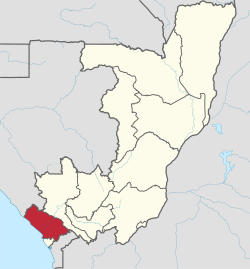
250px-Kouilou_in_Congo.svg.png

https://en.wikipedia.org/wiki/Kouilou_Department

Translation Google

Public Health: Chikungunya epidemic declared in Kouilou and Pool

Saturday 9 February 2019 - 11:45


The linear list of the first department lists one thousand and forty-three cases in eleven of its localities. Mindouli district, in the second department, is also affected and the government is already hard at work for the response.

The district of Diosso, in the Kouilou department, is the epicenter of the epidemic. The first cases were identified on January 7th. "The entomological surveys carried out on 29 and 30 January 2019 in Diosso, Matombi, Doumanga and Les Saras made it possible to collect mosquitoes including sixty-seven belonging to the genus Aedes and sixty-three of the species albopictus, responsible for the chikungunya disease" said the Minister of Social Affairs and Humanitarian Action, Antoinette Dinga-Dzondo, in the government statement made on February 9 in Brazzaville. In addition, several localities in the Kouilou department have favorable ecological conditions for the proliferation of observed mosquito species, she said.

The district of Mindouli, in the department of Pool, is also concerned according to the analysis reports carried out at the National Institute for Biological Research in the Democratic Republic of Congo. The laboratory is accredited by the World Health Organization.
...

http://www.adiac-congo.com/content/...nya-declaree-dans-le-kouilou-et-le-pool-95446
 
Source: https://www.africanews.com/2019/04/16/congo-4000-cases-of-chikungunya-reported-the-morning-call/

Congo: 4,000 cases of Chikungunya reported [The Morning Call]
15 hours ago
The Morning Call

At least 4,000 people in the Republic of Congo have been affected by the Chikungunya epidemic in the southern part of the country.

Health officials in the country are calling on the population to take preventive measures including the use of mosquito nets.

The first cases of this epidemic were detected in January in the coastal city of Pointe-Noire by the National Institute of Biomedical Research in Kinshasa. Since then, Congolese authorities have been monitoring the evolution of the disease...
 
Translation Google

Congo: 8,000 people affected by the Chikungunya epidemic

Posted on 19.04.2019 at 19h19 by journaldebrazza.com

After several analyzes on the evolution of Chikungunya at the National Public Health Laboratory, news from the South is not reassuring.

Chikungunya is caused by a mosquito and has the same symptoms as malaria. This disease continues to spread in Congo especially in the south of the country. Already eight thousand (8,000) people are suffering from this epidemic, which continues to progress. It should be noted that the first cases were detected last January in the southern part of Congo.

"We have discovered that outside the Department of Kouilou and the ocean city of Pointe-Noire (where the epidemic broke out in January, Ndrl), the departments further inside the Niari, Bouenza , Pool and Brazzaville receive cases that we confirmed positive. We have warning signals from other parts of the country, "says Dr. Jean-Vivien Mombouli, Director General of the National Public Health Laboratory.

Officials of the National Public Health Laboratory, revealed that the disease has already gained half of the country. They advise people to take measures, including the use of mosquito nets, to cope with this disease still called palu robot in the country.


https://www.journaldebrazza.com/congo-8-000-personnes-touchees-par-lepidemie-de-chikungunya/
 
Source: https://www.who.int/csr/don/01-may-2019-chikungunya-congo/en/
[h=1]Chikungunya ? Congo (The)[/h] Disease outbreak news
1 May 2019

On 9 February 2019, the government of Congo officially declared an outbreak of chikungunya virus disease.
The outbreak was detected following an increase in the number of patients presenting to several health facilities with signs and symptoms of sudden onset of fever, joint pain and muscle pain and a subsequent laboratory confirmation of 12 samples in the National Institute of Biomedical Research (INRB) in Kinshasa. The first suspected case was a symptomatic 49-year-old woman who presented on 7 January 2019 to a health facility in Diosso town, 25 kilometres north of Pointe-Noire. Samples taken during a joint investigation of the Ministry of Health (MoH) and WHO tested positive to chikungunya on polymerase chain reaction (PCR) at INRB in Kinsasha.
From 1 January to 14 April 2019, a total of 6,149 suspected cases of chikungunya have been reported in the country with approximately 54% of reported cases being female. One hundred and seventy-three blood samples have been collected with 61 (35.3%) testing positive by PCR at INRB. However, the scale of this outbreak has likely been underestimated given the limited detection capacity of the surveillance system in the country. Several mosquito breeding sites in affected areas and inadequate vector control mechanisms also represent major contributing factors for the outbreak.
The Ministry of Health has reported that the outbreak has spread to eight of twelve health departments in the country (Kouilou, Bouenza, Pointe Noire, Plateaux, Pool, Niari, L?koumou and Brazzaville). Since the report of the first case on 7 January 2019, 47% of all cases have been reported from Kouilou Department. No deaths have been reported. This is the second outbreak reported in Congo since 2011 and no seasonal pattern has previously been observed.
[h=3]Public health response[/h]
  • The Ministry of Health is coordinating the development and adoption of response and communication plans at the health department level.
  • WHO is supporting the Ministry of Health to adapt existing protocols for the management of chikungunya cases.
  • Epidemiological surveillance is being strengthened using the Early Warning, Alert and Response System (EWARS).
  • The Ministry of Health in collaboration with WHO is undertaking an entomological survey to provide a better understanding of the characteristics of vectors.
  • Vector control activities have commenced in many affected health districts including indoor residual spraying and eliminating mosquito breeding sites through source reduction.
  • Regular health promotion messages are being delivered on local television and radio channels.
[h=3]WHO risk assessment[/h] Based on available information, the risk of continued transmission and spread of chikungunya to unaffected areas cannot be ruled out. The overall risk is considered moderate at both the national and regional levels.
Geographic spread of the vector and human cases is likely due to the high number of cases reported in several health departments, the presence of Aedes vectors in many parts of the country, ubiquity of breeding sites in and around living areas and poor coordination of response activities including vector control complicated by the ongoing rainy season. Strengthened disease surveillance will help inform the implementation of appropriate public health actions to control the outbreak.
The WHO Regional Office is mobilizing financial and technical resources to support the ministry of health and WHO country office in controlling the ongoing outbreak and is prepared to support neighbouring countries if the outbreak spreads beyond Congo. The overall risk at global level is low.
[h=3]WHO advice[/h] Reducing the number of natural and artificial breeding sites for mosquitoes has a significant impact on the prevention and control of chikungunya outbreaks. This requires affected communities to be mobilized to institute control measures including covering of water collection containers, proper waste disposal and improved environmental sanitation. During outbreaks, insecticides may be used to kill adult mosquitoes and immature larvae.
Clothing which minimizes the exposure of skin during the day is advised during outbreaks as vectors are known to bite in daylight. Repellents can be applied to exposed skin or to clothing in strict accordance with product label instructions. Repellents should contain DEET (N, N-diethyl-3-methylbenzamide), IR3535 (3-[N-acetyl-N-butyl]-aminopropionic acid ethyl ester) or icaridin (1-piperidinecarboxylic acid, 2-(2-hydroxyethyl)-1-methylpropylester).
Basic precautions should be taken by people travelling to Congo including the use of mosquito repellents and wearing of long sleeved clothing. Also, the use of a mosquito bed net or window screens, air conditioning, mosquito coils or other insecticide vaporizers may also reduce indoor biting.
For more information, please see the link below:
 
Outbreaks and Emergencies Bulletin, Week 22: 27 May - 02 June 2019

Chikungunya Republic of Congo

7 811 Cases
0 Deaths
0% CFR

EVENT DESCRIPTION

The outbreak of chikungunya in the Republic of Congo continues, with
increasing incidence and wider geographical spread. Since our last
report on 21 April 2019 (Weekly Bulletin 16), an additional 2 539 cases
have been registered. In week 18 (week ending 5 May 2019), 685 new
suspected chikungunya cases were reported from eight health districts:
Bouenza (255), Nairi (213), Pointe-Noir (103), Leoumou (71), Kouilou
(16), Brazzaville (15), Plateau (10), and Pool (2). This is an increase
over the 459 suspected cases reported in the previous week (week 17).
Three health districts, namely Nkayi (Leoumou department), Talanga?
(Brazzaville department) and Zanaga (Lekoumou department) have
notified cases for the first time during the reporting week 18. Eight out of
the 12 departments in the Republic of Congo have so far been affected.
Since the onset of the outbreak on 9 January 2019, a total of 7 811
suspected cases have been reported, with no deaths, and the number
of health districts reporting suspected cases of chikungunya among the
eight affected departments is 27. The Department of Kouilou remains
the most affected, with 2 698 of the cases, followed by Niari, with 1
388 cases. The number of cases reported weekly has fluctuated since
January 2019, reaching a peak of 868 cases in week 15 (week ending 14
April 2019), and has remained high since then.

The outbreak of chikungunya started in Kouillou and Pool health districts
in early-February 2019 and was formally declared by the Ministry of
Health on 9 February 2019. The vector has been identified as the Aedes
albopictus mosquito.

PUBLIC HEALTH ACTIONS

The Ministry of Health continues to coordinate response activities
and is conducting supervisory missions to the affected departments
with the support of WHO.

Surveillance is being strengthened, including collecting information
at district level, while the Early Warning and Alert System is
strengthening data compilation from four departments.

Fumigation and insecticide spraying was carried out in Diosso,
Loango, Kakamoeka, Makola (Kouilou), Kimongo and Dolisie
(Niari).

Regular health promotion messages continue to be transmitted on
local radio and television channels.

SITUATION INTERPRETATION

The outbreak of chikungunya in the Republic of Congo continues, with high numbers
of cases reported in several health departments. Challenges remain around effective
coordination, with a lack of a single framework for planning and monitoring multisectoral
response activities, along with a lack of a comprehensive operational response
plan and inadequate funding. In the absence of a sensitive surveillance system to clearly
characterize the outbreak, it is a big challenge to identify effective public health actions to
control the epidemic. All these challenges need to be addressed to allow local authorities
and partners to mount a robust response to this outbreak and bring it to a close.
Reduction of the number of natural and artificial breeding sites for mosquitoes has a
significant impact on the prevention and control of chikungunya outbreaks. This requires
affected communities to be mobilized to institute control measures, including covering
water collection containers, proper waste disposal and improved environmental sanitation.

https://apps.who.int/iris/bitstream/handle/10665/325086/OEW22-270502062019.pdf

https://www.afro.who.int/publications/outbreaks-and-emergencies-bulletin-week-22-27-may-02-june-2019

 
Back
Top