• FluTrackers.com Inc. does not provide medical advice. Information on this web site is collected from various internet resources, and the FluTrackers board of directors makes no warranty to the safety, efficacy, correctness or completeness of the information posted on this site by any author or poster. The information collated here is for instructional and/or discussion purposes only and is NOT intended to diagnose or treat any disease, illness, or other medical condition. Every individual reader or poster should seek advice from their personal physician/healthcare practitioner before considering or using any interventions that are discussed on this website. By continuing to access this website you agree to consult your personal physican before using any interventions posted on this website, and you agree to hold harmless FluTrackers.com Inc., the board of directors, the members, and all authors and posters for any effects from use of any medication, supplement, vitamin or other substance, device, intervention, etc. mentioned in posts on this website, or other internet venues referenced in posts on this website.
  • We are not asking for any donations. Do not donate to any entity who says they are raising funds for us.

California - Avian flu in mammals and livestock 2025-2026

Detections of Highly Pathogenic Avian Influenza in Mammals

Last Modified: Junio 04, 2025
...
image.png - Click image for larger version  Name:	image.png Views:	1 Size:	22.8 KB ID:	1014303
​...
https://www.aphis.usda.gov/livestock-poultry-disease/avian/avian-influenza/hpai-detections/mammals
 
CDC - EID Journal - Isolation of Highly Pathogenic Avian Influenza A(H5N1) Virus from Cat Urine after Raw Milk Ingestion, United States

ISSN: 1080-6059
Disclaimer: Early release articles are not considered as final versions. Any changes will be reflected in the online version in the month the article is officially released. Volume 31, Number 8—August 2025

Dispatch

Isolation of Highly Pathogenic Avian Influenza A(H5N1) Virus from Cat Urine after Raw Milk Ingestion, United States

...
Elisha A. FryeComments to Author , Mohammed Nooruzzaman, Brittany Cronk, Melissa Laverack, Pablo Sebastian Britto de Oliveira, Leonardo C. Caserta, Manigandan Lejeune, and Diego G. DielComments to Author
Author affiliation: Cornell University College of Veterinary Medicine, Animal Health Diagnostic Center, Ithaca, New York, USA

Abstract


In 2024, 3 domestic cats in California, USA consumed raw milk contaminated with highly pathogenic avian influenza A(H5N1) virus. Fever and neurologic signs developed; 2 cats died. The surviving cat’s urine tested positive for H5N1 virus by reverse transcription PCR. Raw dairy products pose a risk to both animal and human health.

Highly pathogenic avian influenza (HPAI) H5N1 virus infects felids, causing neurologic signs and death (16). In March 2024, H5N1 clade 2.3.4.4b genotype B3.13 was first detected in milk from dairy cattle, and large numbers of farm cats were reported dead or disappearing from affected farms (1,2). Urine has been reported as a suitable sample for detecting H5N1 in live cats (7). Here, we describe infection of domestic cats with HPAI H5N1 virus after ingesting commercial raw milk, including clinical signs and outcome of infection in affected animals, and report isolation of H5N1 virus from the urine of a surviving cat.

The Cases


An owner of 4 indoor-only cats living in southern California, USA, purchased 3 individual gallons of raw milk from 2 health food stores on November 17, 20, and 23, 2024; he fed the milk to his cats. Three of the cats consumed the raw milk through November 25. The milk lot numbers were included in a recall by the California Department of Public Health after multiple products tested positive for HPAI H5N1 virus (8). All cats were current on rabies vaccination.

On November 25, two of the cats, a 14-year-old male neutered brown tabby domestic short hair cat (cat 1) and a 4-year-old male neutered black and white domestic short hair cat (cat 2), had lethargy, anorexia, and fever develop. Cat 1 died on November 28 while hospitalized at an emergency veterinary clinic, and cat 2 died on November 30. No testing for H5N1 virus was performed on either cat.

Cat 3, a 5-year-old male neutered 5.9-kg tabby cat, displayed similar clinical signs and was hospitalized on December 1. His fever was 40.1°C (104.2°F). He received supportive care, including intravenous fluids, antibiotics (doxycycline and ampicillin/sulbactam), antinausea medication (maropitant citrate), an appetite stimulant (mirtazapine), and a nonsteroidal anti-inflammatory drug (robenacoxib). He was discharged on December 2 but was then admitted to a second emergency veterinary clinic on December 3.

At admission to the second clinic, the cat was anorexic and dull and had hind limb ataxia and paresis. His temperature was 39.7°C (103.5°F) during the night of December 3. A complete blood count, chemistry panel, abdominal ultrasound, and 3 view thoracic radiographs were performed. The only abnormal finding was consolidation of the left ventral lung field. A urinalysis was not performed. The cat was administered similar supportive care with the addition of oseltamivir phosphate (12 mg/12 h for 8 d). The cat also received pradofloxacin and gabapentin orally, as well as nasogastric tube feeding.

While cat 3 was at the second clinic, the cat owner contacted the San Bernardino County Department of Public Health (SBCDPH) regarding concerns for HPAI virus infection and was advised to seek medical or veterinary care if he or his cats had clinical signs develop. The owner’s fourth cat, a 5-year-old female spayed domestic shorthair, did not drink raw milk and did not develop clinical signs. The emergency clinic gave the owner no recommendations regarding cat 4. SBCDPH was not aware of cat 4 and did not recommend further testing or monitoring based on lack of clinical signs in any human contacts.
25-0309-vid1-tn.jpg

Video. Physical signs in cat infected by highly pathogenic avian influenza A(H5N1) virus after consuming contaminated raw milk, United States. Video shows cat 3 displaying hind end paresis, 2 weeks after...

On December 4, cat 3 progressed to recumbency and lacked a menace response in the left eye. Passive range-of-motion exercises were initiated. Urine and nasal swab specimens in sterile containers and heparinized whole blood were collected and sent to the Cornell University College of Veterinary Medicine Animal Health Diagnostic Center (AHDC) (Ithaca, NY, USA). On December 5, the cat lacked a menace response in both eyes, but pupillary light and dazzle reflexes were intact bilaterally. He was more alert and was able to stand on the forelimbs but dragged the hind limbs (Video). On December 7, he was discharged to the owner. Over the next few weeks, he used a wheelchair to ambulate and regained the ability to walk and jump on the hind limbs normally. On December 23, he was examined by a veterinary ophthalmologist and had present but weak menace response, pupillary light reflex, and dazzle reflex in the right eye.

At the AHDC, we tested the nasal swab and urine samples for HPAI virus by reverse transcription PCR (RT-PCR) (9). Results for the nasal swab sample were negative, but the urine was positive for influenza A (cycle threshold [Ct] of 35.4405) and for avian influenza H5 (Ct 36.706) virus. We froze the urine sample at −80°C (−112°F) and had results confirmed at the National Veterinary Services Laboratory (Ames, Iowa, USA). On December 6, we informed the attending veterinarian, the California State Animal Health Official, and the California Department of Public Health of the RT-PCR results.
25-0309-F1-tn.jpg

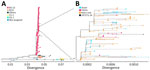
Figure 1. Phylogenetic analysis of complete genome sequences confirming highly pathogenic avian influenza A(H5N1) virus genotype B3.13 isolated from cat urine after raw milk ingestion, United States. A) Tree showing broader phylogeny...

On December 21, we performed virus isolation in 10-day old embryonated chicken eggs (ECEs) on the urine sample from cat 3. We inoculated a 1:10 dilution of the urine sample into 10 ECEs via the allantoic cavity route. Four embryos died at 24–48 hours after inoculation. Testing of the allantoic fluids from ECEs that died revealed hemagglutination on turkey red blood cells. The allantoic fluids tested positive for influenza A virus matrix protein by RT-PCR (9). In addition, targeted influenza A sequencing confirmed infection with HPAI H5N1 virus genotype B3.13 (Figure 1). We deposited the complete virus sequences into GenBank (accession nos. PV576479–86).

We further performed virus neutralization to detect H5N1 antibodies (F. Peña-Mosca et al., unpub. data, https://www.researchsquare.com/article/rs-6101018/v1External Link). We prepared the heparinized whole blood by centrifuging to isolate the plasma fraction and then tested the plasma. An endpoint neutralizing titer of 1:512 was determined, indicating seroconversion to H5N1 virus after exposure.
25-0309-F2-tn.jpg

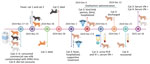
Figure 2. Timeline of events in domestic cats after exposure to highly pathogenic avian influenza A(H5N1) virus through consuming commercial raw milk contaminated with the virus, United States. Cats 1 and 2...

Seven weeks after cat 3 had symptoms develop, the original empty raw milk jugs and serum from cat 3 and cat 4 collected on January 18, 2025, were submitted to the AHDC. Milk residue from 1 of the jugs was positive for H5N1 virus by RT-PCR (Ct 35). However, attempts to isolate virus or sequence from the milk sample were unsuccessful. Cat 3 (clinically affected cat that recovered) had a virus neutralization titer of 1:1,024. Cat 4 was negative for H5N1 antibodies, confirming a lack of exposure (Figure 2).

Top

Conclusions


This report provides evidence of HPAI H5N1 virus infection in domestic cats after consuming raw milk contaminated with the virus. Two cats died after a disease course characteristic of H5N1 virus infection in felids; however, no diagnostic test confirmed H5N1 virus infection. A third cat had hind limb paresis and blindness develop but recovered after hospitalization and supportive care, which included administration of the antiviral drug oseltamivir. Cat 3 tested positive for H5N1 virus, and a robust H5N1-specific neutralizing antibody titer developed. The raw milk consumed by the cats that had clinical signs of H5N1 virus infection was confirmed positive for HPAI H5N1 virus RNA by RT-PCR. The cat in the household that did not consume raw milk remained seronegative.

Given the broad circulation of H5N1 virus in dairy cattle in the United States, our results highlight the risk posed by raw dairy products to both animal and human health. Veterinarians examining cats with a history of exposure to wild birds or ingestion of raw poultry or dairy products and acute neurologic signs should have H5N1 infection on their differential diagnosis list.

Top

Dr. Frye is an associate professor of practice in the Department of Population Medicine and Diagnostic Sciences, College of Veterinary Medicine, Cornell University, Ithaca, NY. She is a veterinarian at the Animal Health Diagnostic Center, housed at the Cornell University College of Veterinary Medicine campus.

...

https://wwwnc.cdc.gov/eid/article/31/8/25-0309_article
 
image.png


August 1, 2025: H5N1 Bird Flu in Livestock Updates


SACRAMENTO, CA — Following an investigation by the California Department of Food and Agriculture (CDFA) and rapid disease detection by California Animal Health and Food Safety Laboratory System (CAHFS), the U.S. Department of Agriculture's (USDA) National Veterinary Services Laboratories (NVSL) has confirmed 43 cases of H5N1 Influenza in California dairies that have been re-quarantined by CDFA after prior release. These are new detections on diaries that were infected previously but had their CDFA quarantine lifted after 3 negative whole herd tests via bulk milk tank samples, one week apart. These 43 farms have been shown to have sufficient virus present to be placed back under State Quarantine.

All dairies in the state continue to be under regular surveillance for continued monitoring of the virus in California.

Due to the increased number of re-infections in California dairies, the Ban on all California Poultry and Dairy Cattle Exhibitions at Shows and Fairs remains in place. Additional information can be found below this alert box.

...
https://www.cdfa.ca.gov/AHFSS/Animal_Health/HPAI.html
 
It would be interesting to get Dr. Annette Jone's interpretation on genetic relatedness of the "new" herd infections versus the initial virus infecting the herds. Are these re-emergences of virus buried in herds where bulk tanks went negative? i.e. did the virus never truly leave the premises, but rather stay underground in non-lactating cattle or in lactating cattle at levels low enough not to be detected in bulk tank sampling? The SAHO in Idaho was of the opinion that most "reinfections" there were a similar closely related virus reasserting itself in non-immune cattle. This drives another stake in the lactating cattle, milk, human, and biosecurity paradigm as being sufficient to stop spread in dairy and poultry dense areas. The infection does not always "die out" in isolated herds.

It's unfortunate that NVSL likely has this information in its phylogenetic datasets but has not chosen to share whatever it is finding with the wider public. It is likely sharing information with the SAHO's, who may in turn be sharing it with chosen "friends". The federal labs show great deference to both the SAHO's and to industry in order to keep samples flowing, so it is up to individual SAHO's to allow information release. Dr Jones showed a lot of courage in allowing Emory University and collaborators to publish the recent "air and water" positive sampling paper. It's no accident that the work didn't originate from ARS or a Land Grant Institution (Jason Lombard at Colorado State University excepted!).

Keep sharing, Dr. Jones! Your integrity is admirable and needed more than ever! You have the gravitas to lead by example.
 
Source: https://mynorthwest.com/lifestyle/c...rd-flu-infection-tied-to-raw-pet-food/4127524

Cat in San Francisco euthanized after latest bird flu infection tied to raw pet food
Sep 3, 2025, 5:47 PM
​ BY ASSOCIATED PRESS​

Federal health officials are warning that certain lots of raw cat food may be contaminated with H5N1 bird flu after a pet cat in San Francisco that ate the food became infected with the virus and had to be euthanized.
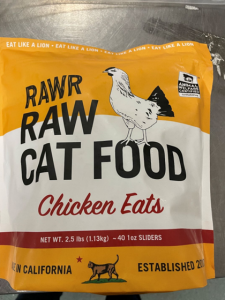
The U.S. Food and Drug Administration said Wednesday that two lots of RAWR Raw Cat Food Chicken Eats tested positive for the virus. Analysis by San Francisco health department officials showed that the same strain of the H5N1 virus was present in the pet food and in the cat that died.

The incident is the first reported case of an H5N1 infection from raw food in pet cats since March. Dozens of domestic cats, including nearly 70 this year, have been infected with H5N1, according to the U.S. Agriculture Department. Many of the animals became infected after consuming raw milk or raw pet food contaminated with the virus...

 
Hat tip to Shiloh and Michael Coston

FDA Notifies Pet Owners That Tests Show H5N1 Contamination in Certain Lots of RAWR Raw Cat Food Chicken Eats
  • Content current as of:


    09/03/2025
  • Regulated Product(s)
    • Animal & Veterinary

Following up on a case of H5N1 Highly Pathogenic Avian Influenza in a cat, testing performed by the U.S. Food and Drug Administration, state and local public health and agriculture partners, and federal partners suggests a link between the strain of H5N1 virus detected in the cat and in certain lots of RAWR Raw Cat Food Chicken Eats, a product the cat consumed before falling ill. FDA is sharing information about the testing for public awareness. The agency continues to investigate and will update this notice should new information become available.

Summary
  • FDA has found that certain lots of RAWR Raw Cat Food Chicken Eats sliders tested positive for H5N1. The affected lots are Lot CCS 25 077 (Sell By 09/18/26) and Lot CCS 25 093 (Sell By 10/03/26).
  • The San Francisco Department of Public Health (SFDPH) was notified a cat that ate product from Lot CCS 25 093 became ill with H5N1 and was euthanized. After initial polymerase chain reaction (PCR) testing of the open product sample from Lot CCS 25 093 collected from the pet owner by SFDPH detected H5N1, confirmatory PCR testing and subsequent whole genome sequencing (WGS) of a diagnostic sample from the cat and the open product sample from Lot CCS 25 093 were performed by USDA National Veterinary Services Laboratories (NVSL).
  • FDA collected and tested two retail samples of the same RAWR Chicken Eats product with a different lot number (CCS 25 077) and Sell By date (09/18/26). Both samples were positive for Influenza A Virus, and WGS was performed on one sample, which was also positive for H5N1.
  • FDA is concerned about the lots of RAWR Raw Cat Food Chicken Eats described above because whole genome sequencing suggests the H5N1 detected in the now-deceased cat and in Lots CCS 25 093 and CCS 25 077 of the Chicken Eats product originated from a common source of contamination.
  • WGS results also indicated that H5N1 from all three samples were within the same WGS cluster, indicating relatedness. The cluster involves a virus lineage that was detected from about November to December 2024 and is no longer circulating, supporting that the cat became ill from eating Lot CCS 25 093 of the Chicken Eats product.
  • NVSL testing of the cat, Lot CCS 25 093, and Lot CCS 25 077 identified the H5N1 as genotype B3.13. The B3.13 genotype virus has previously been found in other brands of raw poultry-based pet foods that were associated with the illness or death of cats.
  • FDA is not aware of any human cases of HPAI contracted through exposure to contaminated pet food.
About H5N1 Highly Pathogenic Avian Influenza in Cats and Dogs


H5N1 is a virus that can cause illness and death in birds/poultry and mammals such as domestic cats and large felids, like panthers, bobcats and mountain lions. Dogs can also contract HPAI, although they usually exhibit mild clinical signs and low mortality compared to cats. At present, HPAI has not been detected in dogs in the United States, but there have been fatal cases in other countries. The United States Department of Agriculture’s Animal and Plant Health Inspection Service maintains a list of animals that have tested positive for the virus.

Animals who are very young, very old, or have weak immune systems are especially at risk of contracting HPAI.

According to the American Veterinary Medical AssociationExternal Link Disclaimer, you should seek veterinary care if your cat or dog appears to have any of the following signs:
  • Fever
  • Lethargy
  • Low appetite
  • Reddened or inflamed eyes
  • Discharge from the eyes and nose
  • Difficulty breathing
  • Neurologic signs, like tremors, seizures, incoordination, or blindness
While no human H5N1 infections have been identified among people from handling raw pet food products, humans can become infected if active virus gets into their eyes, nose, or mouth. It is important for people to wash their hands after handling any pet food products and sanitize contact surfaces. Information about Products Tested


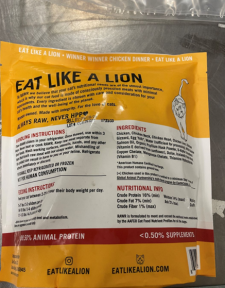
RAWR Raw Cat Food Chicken Eats, Sell By 09/18/26, is sold frozen in 2.5-pound resealable plastic bags containing 40 1-ounce sliders. The product is sold in retail stores nationwide and online. The bags are yellow and white with black lettering. This product is also marked with lot code CCS 25 077, printed in the center on the back of the bag.

RAWR Cat Food Chicken Eats, Sell By 10/03/26, is sold frozen in 2.5-pound resealable plastic bags containing 40 1-ounce sliders. The product is sold in retail stores nationwide and online. The bags are yellow and white with black lettering. This product may also be marked with lot code CCS 25 093.


RAWR1.png


RAWR2.png


Resources
https://www.fda.gov/animal-veterina...-eats?utm_medium=email&utm_source=govdelivery
 
[emphasis is mine]

County of Los Angeles Public Health

Animal Health Alert: H5 Bird Flu confirmed in Los Angeles County in another domestic cat that consumed commercially available raw pet food


Key Points:

• Highly Pathogenic Avian Influenza (HPAI) A(H5N1) aka H5 bird flu, has again been

confirmed in a local cat. This is the first reported case in a cat since the cluster (9

confirmed and 10 suspected cases) that were infected via raw milk, raw pet food,

and raw meat in December 2024–January 2025.

• Two indoor-only cats from a single household became acutely ill and died after

consuming commercially available raw pet food. One cat tested positive for H5N1

(clade 2.3.4.4b genotype B3.13). The second cat was not available for testing.


• Investigation into the raw food product consumed by these cats is ongoing with the

FDA.

• H5 bird flu continues to circulate in the U.S.

• Always take dietary and exposure histories. Specifically note any feeding of raw pet

food, raw milk, raw meat, or food or treats that are freeze dried without cooking

first. Ask pet owners about pet access to and predation of wild birds.

• Isolate suspected cases of influenza in pets, wear appropriate personal protective

equipment (PPE) and practice thorough cleaning and disinfection. There may be

risk of transmission to other pets through direct transmission or contaminated

fomites.

• REPORT suspected cases of H5 bird flu in cats and other animals in Los Angeles

County to Veterinary Public Health. Free testing for influenza in a pet may be

available. Criteria for free testing can be found below.

Dear Veterinary Colleagues:

Approximately 1-2 weeks after beginning to consume a batch of commercially available

raw pet food purchased in Los Angeles County, one cat in a household of two strictly

indoor-only cats became acutely ill. This cat had signs of inappetence followed by a rapid

decline characterized by neurologic symptoms. The cat died several days after the initial

signs of illness. About five days after the first cat became ill, the second cat showed signs

of illness including a loss of appetite and fever that progressed to severe neurologic signs

before this cat also died. This second cat was sampled for influenza A by PCR testing on

swabs of the nares, oropharynx and rectum after its death. The samples were tested by the

Los Angeles County Public Health Laboratory and all three were PCR-positive for influenza


A. The sample was then confirmed positive for H5N1 avian influenza clade 2.3.4.4b

genotype B3.13 on September 23, 2025, by the USDA’s National Veterinary Services

Laboratory (NVSL). This is the genotype currently circulating in dairy cows and poultry in

the U.S. The NVSL will also analyze the samples using whole genome sequencing (WGS)
.

The owner identified the raw food product that was fed to the cats and shared the

packaging and lot code information. Investigation into the food is ongoing with the U.S.

Food and Drug Administration (FDA).

LAC DPH is monitoring household members and veterinary clinic staff who had contact

with the sick cats for flu symptoms and offering testing and treatment for persons with

clinical signs. No human cases of H5 bird flu have been linked to this case to date, and the

risk of virus transmission to people remains low.


Veterinary Public Health extends sincere condolences to the family of these cats. We

sincerely appreciate the time and effort by the pet owners who provided information about

their household pets, exposures and about the raw products their cats consumed.

Reporting unusual occurrences of animal disease is critical to protecting the health of both

animals and people in Los Angeles County.

H5 Bird Flu Situation

The H5 bird flu virus continues to cause a severe panzootic. Traditionally it primarily infects

poultry and other birds, but it has also been detected in livestock (mainly dairy cattle) and

other wild and domestic mammals in the U.S., as well as in at least 74 species of

mammals worldwide. It continues to be detected in birds and mammals in multiple regions

around the world including in both polar regions. This large range of infected animal

species worldwide highlights the potential for the virus to mutate and become more

transmissible among animals, including humans. To date there have been 70 confirmed

human cases in the U.S. including one death from H5 bird flu. H5 bird flu is a One Health

issue that significantly affects human health, animal health and environmental

health. With this strong scientific evidence of the linkage between contaminated raw

products and cats developing severe or fatal H5 bird flu infection, veterinarians shouldstrongly advise pet owners to not consume nor feed raw dairy, raw meat, raw poultry,

and raw pet food diets to pets.

Cat-to-cat transmission of H5 bird flu has been demonstrated experimentally and may

occur in cats that are in close contact.
A recently published case of H5 Bird flu in an

immunocompromised cat may have been caused by fomites contaminated by another ill

cat in a veterinary practice. The risk of cat-to-human or human-to-human spread of H5 bird

flu, and the risk to the general public continues to be very low. However, people who come

into close contact with animals, especially wild birds and their feces, infected cats,

infected poultry, or infected dairy cattle or their milk, have a greater risk of exposure. It is

important to take proper precautions, as described below.

Actions requested of animal health staff in Los Angeles County:

• Advise pet owners that they should not consume or feed their pets raw dairy,

raw meat, raw poultry, or raw pet food diets. Share information about the risks to

both human and pet health when feeding raw diets.

• Stay aware of recalls and share them with pet owners. Both pet products and

human grade products that are fed to pets may be recalled for H5 bird flu

contamination or contamination with other pathogens such as Salmonella or E.

coli:

o FDA Recalls, Market Withdrawals and Safety Alerts

o FSIS Recalls and Public Health Alerts

o California Department of Public Health – Food and Drug Branch

• Identify potential cases of H5 bird flu in pets. Take a detailed diet and bird

exposure history for any sick pet. Determine whether exposure to H5 bird flu may

have occurred through contact with poultry, wild birds, or consumption of raw pet

food or raw products (especially if product has been recalled). This is especially

important if the pet has fever, severe lethargy, loss of appetite, icterus, hepatopathy,

respiratory symptoms, uveitis, or neurologic signs such as seizures, nystagmus, or

blindness.

• Information to collect if H5 bird flu exposure via raw pet food or other raw dairy

or meat product is suspected.

o Obtain the full commercial name of the food products, lot numbers, “best

before” dates.

http://publichealth.lacounty.gov/vet/docs/AHAN/AHAN_H5BirdFluConfirmedDomesticCat_LAC_09252025.pdf

 
The county is asking people to share "the full commercial name of the food products, lot numbers, “best before” dates" but is not sharing that information with the public on the current case. Is the product chicken, turkey, or beef?​ Who is the manufacturer? Is the product still in distribution or possibly in consumers hands? This information better be forthcoming from the county and FDA sooner rather than later...
 
Hat tip to Sharon:

bioRxiv - Unexpected Detection of Highly Pathogenic Avian Influenza (HPAI) H5N1 virus in bovine Semen

https://flutrackers.com/forum/forum...ian-influenza-hpai-h5n1-virus-in-bovine-semen

Excerpt:

...In October 2024, infection in a 4,500-head Holstein dairy was detected by reverse transcription polymerase
chain reaction (RT-PCR) for H5N1 RNA in bulk tank milk samples. Clinical signs in
lactating dairy cows included decreased milk production, mastitis, lethargy, dehydration,
anorexia, and pyrexia (>104.0°F). The herd experienced a 60% morbidity rate over three weeks.
About four weeks later, the herd veterinarian collected diagnostic samples from three three-year old
Holstein bulls, including deep nasal swabs, preputial scrapings, pre-ejaculate seminal fluid,
semen and serum samples.
These were sent to the Wisconsin Veterinary Diagnostic Laboratory
for testing.,,

...The IAV RNA was detected in the semen from Bull 1 (147816-25) by three different PCR assays,
but Bulls 2 and 3 were tested negative. No detection was reported in all other samples. The IAV RNA
detection in Bull 1 was confirmed with additional RNA extraction to rule out laboratory
\contamination. The IAV strain was further identified as HPAI using the H5N1 2.3.4.4b lineage
subtyping RT-PCR assay.

...
Because of the limited semen volume for analysis, further confirmation testing at the
national reference laboratory was not performed. Additional samples were requested several
months later for convalescent testing, but Bull 1 had been culled from the herd.

...
If these findings were to be repeated and confirmed, it would have significant
implications for natural breeding and biosecurity for AI collection centers. Further research and
risk assessments are needed to determine whether naturally infected HPAI H5N1 bulls shed virus
in semen, and, if so, evaluate the risk of disease spread on dairy farms and with AI programs.

...​
 
Back
Top