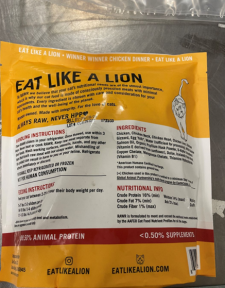
[emphasis is mine]
County of Los Angeles Public Health
Animal Health Alert: H5 Bird Flu confirmed in Los Angeles County in another domestic cat that consumed commercially available raw pet food
Key Points:
• Highly Pathogenic Avian Influenza (HPAI) A(H5N1) aka H5 bird flu, has again been
confirmed in a local cat. This is the first reported case in a cat since the cluster (9
confirmed and 10 suspected cases) that were infected via raw milk, raw pet food,
and raw meat in December 2024–January 2025.
• Two indoor-only cats from a single household became acutely ill and died after
consuming commercially available raw pet food.
One cat tested positive for H5N1
(clade 2.3.4.4b genotype B3.13). The second cat was not available for testing.
• Investigation into the raw food product consumed by these cats is ongoing with the
FDA.
• H5 bird flu continues to circulate in the U.S.
• Always take dietary and exposure histories. Specifically note any feeding of raw pet
food, raw milk, raw meat, or food or treats that are freeze dried without cooking
first. Ask pet owners about pet access to and predation of wild birds.
• Isolate suspected cases of influenza in pets, wear appropriate personal protective
equipment (PPE) and practice thorough cleaning and disinfection. There may be
risk of transmission to other pets through direct transmission or contaminated
fomites.
• REPORT suspected cases of H5 bird flu in cats and other animals in Los Angeles
County to Veterinary Public Health. Free testing for influenza in a pet may be
available. Criteria for free testing can be found below.
Dear Veterinary Colleagues:
Approximately 1-2 weeks after beginning to consume a batch of commercially available
raw pet food purchased in Los Angeles County,
one cat in a household of two strictly
indoor-only cats became acutely ill. This cat had signs of inappetence followed by a rapid
decline characterized by neurologic symptoms. The cat died several days after the initial
signs of illness. About five days after the first cat became ill, the second cat showed signs
of illness including a loss of appetite and fever that progressed to severe neurologic signs
before this cat also died. This second cat was sampled for influenza A by PCR testing on
swabs of the nares, oropharynx and rectum after its death. The samples were tested by the
Los Angeles County Public Health Laboratory and all three were PCR-positive for influenza
A. The sample was then confirmed positive for H5N1 avian influenza clade 2.3.4.4b
genotype B3.13 on September 23, 2025, by the USDA’s National Veterinary Services
Laboratory (NVSL). This is the genotype currently circulating in dairy cows and poultry in
the U.S. The NVSL will also analyze the samples using whole genome sequencing (WGS).
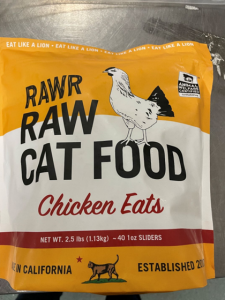
The owner identified the raw food product that was fed to the cats and shared the
packaging and lot code information. Investigation into the food is ongoing with the U.S.
Food and Drug Administration (FDA).
LAC DPH is monitoring household members and veterinary clinic staff who had contact
with the sick cats for flu symptoms and offering testing and treatment for persons with
clinical signs. No human cases of H5 bird flu have been linked to this case to date, and the
risk of virus transmission to people remains low.
Veterinary Public Health extends sincere condolences to the family of these cats. We
sincerely appreciate the time and effort by the pet owners who provided information about
their household pets, exposures and about the raw products their cats consumed.
Reporting unusual occurrences of animal disease is critical to protecting the health of both
animals and people in Los Angeles County.
H5 Bird Flu Situation
The H5 bird flu virus continues to cause a severe panzootic. Traditionally it primarily infects
poultry and other birds, but it has also been detected in livestock (mainly dairy cattle) and
other wild and domestic mammals in the U.S., as well as in at least 74 species of
mammals worldwide. It continues to be detected in birds and mammals in multiple regions
around the world including in both polar regions. This large range of infected animal
species worldwide highlights the potential for the virus to mutate and become more
transmissible among animals, including humans. To date there have been 70 confirmed
human cases in the U.S. including one death from H5 bird flu. H5 bird flu is a One Health
issue that significantly affects human health, animal health and environmental
health. With this strong scientific evidence of the linkage between contaminated raw
products and cats developing severe or fatal H5 bird flu infection, veterinarians shouldstrongly advise pet owners to not consume nor feed raw dairy, raw meat, raw poultry,
and raw pet food diets to pets.
Cat-to-cat transmission of H5 bird flu has been demonstrated experimentally and may
occur in cats that are in close contact. A recently published case of H5 Bird flu in an
immunocompromised cat may have been caused by fomites contaminated by another ill
cat in a veterinary practice. The risk of cat-to-human or human-to-human spread of H5 bird
flu, and the risk to the general public continues to be very low. However, people who come
into close contact with animals, especially wild birds and their feces, infected cats,
infected poultry, or infected dairy cattle or their milk, have a greater risk of exposure. It is
important to take proper precautions, as described below.
Actions requested of animal health staff in Los Angeles County:
• Advise pet owners that they should not consume or feed their pets raw dairy,
raw meat, raw poultry, or raw pet food diets. Share information about the risks to
both human and pet health when feeding raw diets.
• Stay aware of recalls and share them with pet owners. Both pet products and
human grade products that are fed to pets may be recalled for H5 bird flu
contamination or contamination with other pathogens such as Salmonella or E.
coli:
o FDA Recalls, Market Withdrawals and Safety Alerts
o FSIS Recalls and Public Health Alerts
o California Department of Public Health – Food and Drug Branch
• Identify potential cases of H5 bird flu in pets. Take a detailed diet and bird
exposure history for any sick pet. Determine whether exposure to H5 bird flu may
have occurred through contact with poultry, wild birds, or consumption of raw pet
food or raw products (especially if product has been recalled). This is especially
important if the pet has fever, severe lethargy, loss of appetite, icterus, hepatopathy,
respiratory symptoms, uveitis, or neurologic signs such as seizures, nystagmus, or
blindness.
• Information to collect if H5 bird flu exposure via raw pet food or other raw dairy
or meat product is suspected.
o Obtain the full commercial name of the food products, lot numbers, “best
before” dates.
http://publichealth.lacounty.gov/vet/docs/AHAN/AHAN_H5BirdFluConfirmedDomesticCat_LAC_09252025.pdf

 ...
...