• FluTrackers.com Inc. does not provide medical advice. Information on this web site is collected from various internet resources, and the FluTrackers board of directors makes no warranty to the safety, efficacy, correctness or completeness of the information posted on this site by any author or poster. The information collated here is for instructional and/or discussion purposes only and is NOT intended to diagnose or treat any disease, illness, or other medical condition. Every individual reader or poster should seek advice from their personal physician/healthcare practitioner before considering or using any interventions that are discussed on this website. By continuing to access this website you agree to consult your personal physican before using any interventions posted on this website, and you agree to hold harmless FluTrackers.com Inc., the board of directors, the members, and all authors and posters for any effects from use of any medication, supplement, vitamin or other substance, device, intervention, etc. mentioned in posts on this website, or other internet venues referenced in posts on this website.
  • We are not asking for any donations. Do not donate to any entity who says they are raising funds for us.

Australia (mainland) - Highly pathogenic avian influenza H5N1 in wild birds and mammals 2026

Australia: H5 Bird Flu Reported on Macquarie Island​


image.png

Macquarie Island - Credit Wikipedia

#19,375

Six weeks ago Australia announced they would soon be withdrawing their research team from remote Macquarie Island - located about halfway between Australia and Antarctica - over concerns that bird flu would arrive and decimate that island's wildlife much as it did on Heard Island last year.

Citing `psychosocial risks' to personnel who were stationed there, DCCEEW decided to temporarily extract all personnel from the research station.
Today, Guy Barnett, Tasmanian Minister for Environment and Climate Change, announced that the evacuated research team brought back with them samples from the island which have tested positive for H5 bird flu.


15 October 2026

Guy Barnett, Minister for Environment and Climate Change

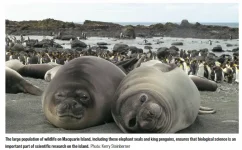
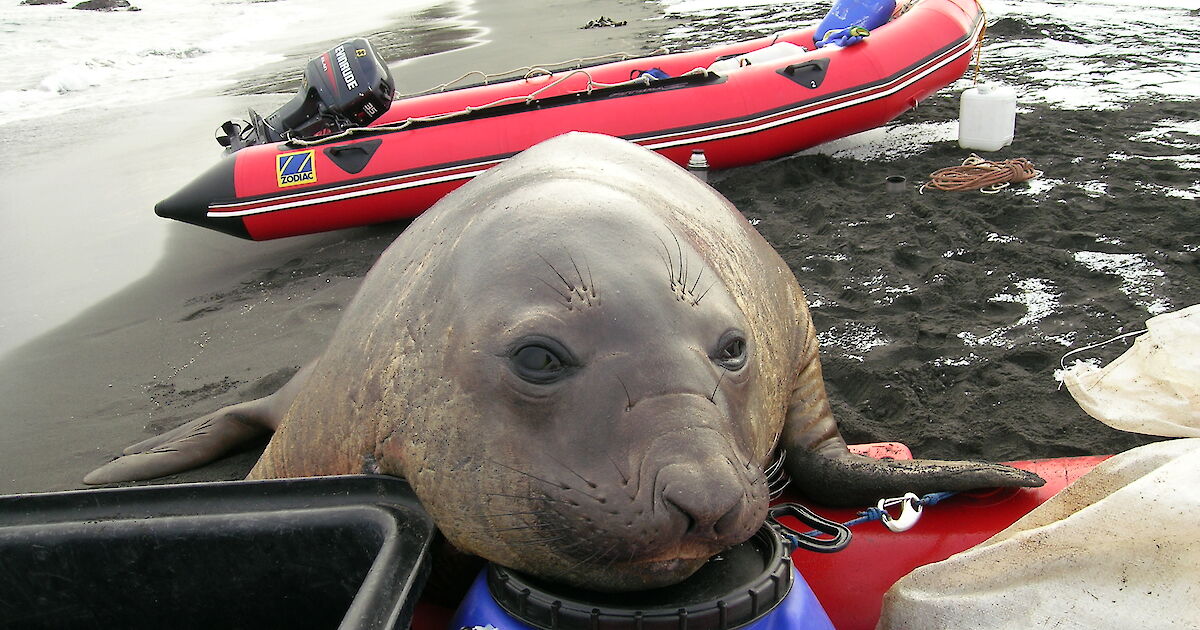
H5 bird flu has been detected in a Southern elephant seal and a kelp gull on Macquarie Island.

Samples collected from a Southern elephant seal and a kelp gull on Macquarie Island were returned with island personnel and subsequently tested returning a positive result for H5 bird flu.

This is the first recorded detection in a marine mammal in Tasmania.

As bird flu continues to be detected in Tasmania, members of the public are encouraged to continue reporting sick or dead birds. Reports play an important role in helping authorities detect and respond to potential cases.

Avoid contact with sick or dead birds and report sightings through https://nre.tas.gov.au/reportbirdflu or by calling the Emergency Animal Disease Hotline on 1800 675 888.

The Department of Natural Resources and Environment Tasmania provides regular public updates through media releases. The latest testing and surveillance figures are updated on the department's website.

More information is available at www.nre.tas.gov.au/BirdFlu.

While there are no reports of mass casualties on Macquarie Island, four months ago, in Preprint: Mass mortality of southern elephant seals during multi-species outbreak of HPAI H5N1 on sub-Antarctic Heard Island, we saw that the carnage from the Heard Island outbreak was worse than originally feared, with 76% mortality among Elephant Seal pups.

Meanwhile, Australia's bird flu count continues to rise, with the latest figure showing more than 700 confirmed events, and in excess of 63,000 hotline reports by the public.


https://afludiary.blogspot.com/2026/10/australia-h5-bird-flu-reported-on.html
 
Related to Michael Coston's post above (#141)
1792075078945.webp
-
------------------------------------------------------------------------------------------------------
Bird flu detected on Macquarie Island in southern elephant seal and gull samples

Posted about 4h ago
about 4 hours ago, updated about 2h ago
...
The subantarctic island, 1,500 kilometres south-east of Hobart, is a World Heritage-listed wildlife sanctuary with up to 4 million seabirds and 100,000 seals.
...
It is feared up to 90 per cent of baby elephant seals could perish, as happened on Heard Island over summer, where more than 13,000 pups are believed to have died from bird flu.
...
Mary-Anne Lea, an independent Southern Ocean marine mammal expert, said that incident and others showed southern elephant seals were "very vulnerable to this disease".

"That doesn't mean that there will necessarily be a large outbreak at the site, although given it's the breeding season and animals are aggregating at the moment, that would be a possibility," she said.
...
 
1792156066748.webp
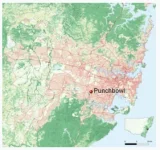
Punchbowl is a suburb in Western Sydney in the state of New South Wales, Australia. It is located 17 kilometres (11 mi) South-West of the Sydney central business district...
/https://en.wikipedia.org/wiki/Punchbowl,_New_South_Wales#Commercial_area

-------------------------------------------------------------------------------------------
1792156402903.webp

H5 bird flu in NSW​

Latest advice​

NSW has recorded 71 H5 bird flu events. The most recent event is confirmed in an ibis in Punchbowl, Sydney.

For details on event locations, go to Agriculture.gov.au

There have been no detections in commercial poultry, captive birds or livestock in NSW, and the risk to human health remains low.

If you find sick or dead birds or wildlife, including marine species:

  1. Avoid contact.
  2. Record the location and what you see.
  3. Report it via the online reporting form Report sick or dead wild birds or call the Emergency Animal Disease Hotline 1800 675 888
...
--------------------------------------------------------------------------

1792156593166.webp​

Bird flu update​

Council has been informed that an ibis has been detected with H5 bird flu in the Punchbowl area.

16 Oct 2026

Council has been informed that an ibis has been detected with Avian Influenza (H5N1) in the Punchbowl area.

The bird has since been removed, as part of testing undertaken by Department of Primary Industries and Regional Development (DPIRD). Council is monitoring the situation closely and will continue to liaise with the DPIRD.

While the risk to the general public remains low, residents are encouraged to avoid contact with sick, injured or dead birds and report any concerns.

If you see a sick or dead bird:

  • AVOID contact and keep pets and children well clear.
  • RECORD time, date and location and other evidence including photos and video
  • REPORT the sick wildlife to the Emergency Animal Disease Hotline by phone on 1800 675 888 or online
Early reporting helps authorities monitor and respond to detections and protect wildlife, agriculture and the community.

For more information, visit nsw.gov.au/regional-and-primary-industries/biosecurity/bird-flu

 
Back
Top Bottom