Related to:
South Korea - Outbreak of highly pathogenic avian influenza H5N1 in cats 2023
-
https://flutrackers.com/forum/forum...-pathogenic-avian-influenza-h5n1-in-cats-2023
Poland - Media Reports Of Unusual Cat Deaths - June 21, 2023 - reportedly "influenza", ECDC RIsk Assessment & OFFLU Statement - Food Chain Concerns - H5N1
-
https://flutrackers.com/forum/forum...ment-offlu-statement-food-chain-concerns-h5n1
Translation Google
Possibility of cat group infection in Korea...AI, mammalian transmission is 'mutating' easily
Jul 29, 2023 10:34 Reply
■ Moderator: Anchor Kim Dae-geun, Anchor Um Ji-min
■ Starring: Na Woon-seong, Chonnam National University Veterinary College Professor, Department of Virology, Choi Won-seok, Korea University Ansan Hospital Professor, Department of Infectious Diseases
* The text below may differ from the actual content of the broadcast, so please check the broadcast for more accurate information. Please indicate [YTN News Wide] when quoting.
[Anchor Lead]
Cats infected with highly pathogenic avian influenza have been found in Korea. Looking at the test results in other countries, it was confirmed that the virus has mutated so that it can easily spread to mammals. Woon-Sung Na, Professor of Virology, College of Veterinary Medicine, Chonnam National University. welcome.
Recently, it was confirmed that two cats in an animal shelter were infected with highly pathogenic avian influenza. However, 38 cats living in one space are said to have died. Do you think this is a possible group infection?
[Na Woon-seong]
First of all, it has been seven years since a highly pathogenic avian influenza virus occurred in a cat. It happened in Pocheon 7 years ago. This time, two cats at an animal shelter in Seoul were confirmed with the highly pathogenic avian influenza virus. After that, it came to the point where all 38 animals died. From the 24th of last month, the cat began to show clinical symptoms such as high fever and anorexia. Cats continued to die every day or two. A report has been made to the relevant authorities. Currently, we are starting disease diagnosis and surveillance for animal breeding facilities within 10km of Seoul.
[Anchor]
Are you confirming that only two have been confirmed now? So, can it be seen as a group infection?
[Na Woon-seong]
We suspect group infection. In fact, the area where the highly pathogenic avian influenza virus occurred 7 years ago is Pocheon. This area is also near the habitat of migratory birds where the avian influenza virus spreads, and there are many poultry farms nearby. However, since it occurred in the middle of downtown Seoul this time, we are currently checking the epidemiological link through which this highly pathogenic influenza virus can enter the city.
We are currently figuring out how the already infected cat spread in its breeding space and whether it led to mass infection.
[Anchor]
You still don't know the exact cause, right?
[Anchor]
What are the possibilities? When it comes to avian influenza, I think birds get it, but they say cats get it. Do you have any idea what the situation was like before entering the animal shelter?
[Na Un-seong]
It is not easy for mammals to be infected with the highly pathogenic avian influenza virus. Now that it has occurred in downtown Seoul, it has already entered the shelter after the cat was infected in another space. It is understood that it has spread within this shelter.
[Anchor]
Is there a possibility of contacting feces or eating a bird outside?
[Na Woon-seong]
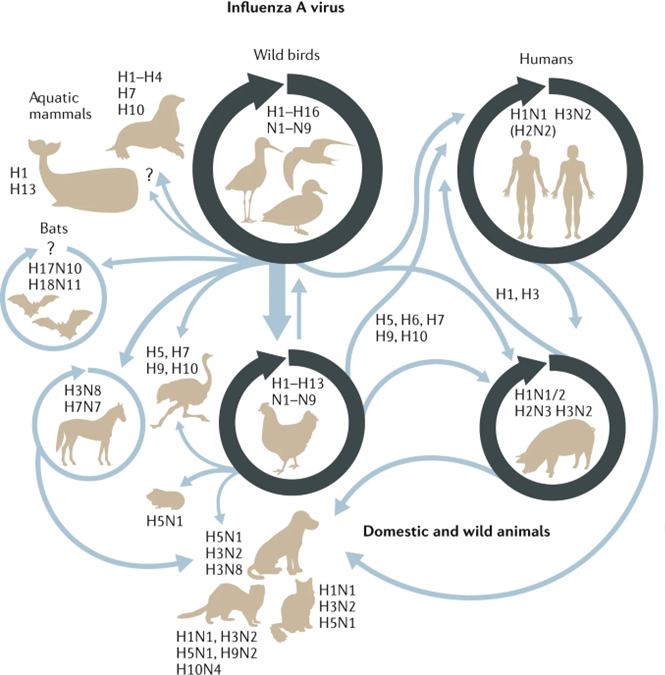
Originally, the avian influenza virus is not a respiratory disease in birds, but the virus multiplies in the intestines and digestive organs. That would be possible when the multiplied virus comes out in feces or eats the internal organs of birds.
[Anchor Lead]
A little earlier than in Korea, there was a case of avian influenza in a mammal in Poland, and the scale of infection was quite large at that time.
[Na Woon-seong]
I made my first report at the veterinary forum in early June. At that time, a lot of respiratory symptoms and neurological symptoms found in cats appeared. So, after testing in 11 samples at the Polish Veterinary Office, 9 cases were confirmed. Afterwards, WHO also conducted a joint investigation, and the H5N1 virus was detected in 27 out of 49 samples.
[Anchor Lead]
So, does WHO have any particular concerns about this situation?
[Na Unseong]
The reason why WHO paid attention to this issue is that the H5N1 isolated virus at this time is a very common H5N1 type virus that occurred in 67 countries around the world in 2022. However, the reason why this discovery in cats is attracting attention is that it was confirmed that the PB2 protein was mutated in this virus. The mutated protein at 627 has the property of being more proliferative in mammals.
In addition, in Poland, more attention is paid because it occurred not only in one place but throughout the country, and it was found not only in stray cats but also in domestic cats.
[Anchor]
Then, if avian flu doesn't only catch birds, it can transcend species, and it has occurred in all areas of Poland, is there any possibility that it will mutate into other mammals in the future?
[Na Un-seong]
If the current mutation continues and more mutations occur, it will be easier to infect mammals. The reason WHO pays more attention is that if the infection continues in these mammals, among them, a host called mixed strain exists among the mammalian hosts.
[Anchor]
What is a mixing barrel?
[Na Un-seong]
For example, the reason why the pandemic swine flu occurred in 2009 is that the mixed strain of a pig is a new influenza in a state where three influenzas have simultaneous infections: avian influenza, human influenza, and swine influenza because I put out That's swine flu. The reason why I keep getting the flu vaccine every year is because of the swine flu.
So, in this way, many infections occur in mammals, and at some point, when the H5N1 goes to the mixed barrel, recombination occurs within it, and a new virus that we have never experienced before can appear.
[anchor]
As I listened to the story, since humans are also mammals, I wonder if this means that humans also get highly pathogenic avian influenza. And I'm worried that there will be mutations there again. In this part, we must be connected by phone with Professor Choi Won-seok of the Department of Infectious Diseases at Korea University Ansan Hospital. Hello Professor. Professor, let me ask you this first. Can humans be infected with highly pathogenic avian influenza?
[Choi Won-seok]
Although rare, human infection is possible. H5N1 In the case of this avian influenza, which is now becoming a problem, it was first reported in 1997. The WHO has been counting since 2003. Even if only the cases that have been counted since 2003, about 878 cases are being reported now. In addition, after 2021, there are reports of more than 10 cases of patients.
The most recent case occurred in Cambodia in February of this year. There is one such case report, which was described by an 11-year-old girl and whose father was also infected. Therefore, it is correct to think that people can be infected, although it is rare.
[Anchor]
In the case you just mentioned, a Cambodian girl first got sick and died, and then her father also tested positive. Then, did you figure out whether the transmission was transmitted from the girl to the father or the father was also transmitted from the bird?
[Choi Won-seok]
Actually, it's not easy to tell them apart. I've been thinking before that there's no possibility of human-to-human transmission. However, there have been reports of suspected cases of human-to-human transmission in a very limited range, in the case of long-term close contact such as family members. However, in the case of this case, in the case of the father or the girl who died, do not they continue to live in the same environment?
If so, it seems a little difficult to conclude that this case is a case of human-to-human transmission even if the investigation was conducted among the contacts because there is a possibility of direct exposure to the same algae or contaminated environment.
[Anchor]
Then, I'm curious about how people can become infected with highly pathogenic avian influenza. Also, some say that it is not easy to spread AI from person to person yet. Please tell me how can I explain this.
[Choi Won-seok]
So far, most cases of human infection have been infected animals, especially birds. In the majority of cases, the infection has occurred in people who have had direct contact with birds or have been exposed directly to environments that have been contaminated with their secretions or carcasses. It is still thought that it is difficult to spread easily from person to person. Viruses do not just multiply by themselves, but must enter cells and multiply. It would have to invade human cells.
In order for human-to-human transmission to be easy, the virus must adhere well to cells in the upper airways and respiratory tract of humans so that they can enter and multiply. However, the ability to bind to receptors that allow viruses to attach to cells in the human upper respiratory tract is still not that good. So, it is possible for the virus to attach and multiply by entering the lower and lower respiratory tract, so there is no possibility of infection in humans, but it is currently difficult to spread easily from person to person. It is believed that such genetic changes are not shown in the H5N1 virus that has been discovered so far.
However, if this virus acquires a mutation through previous laboratory studies, the ability to easily bind to receptors in human upper respiratory tract cells can be acquired. This has been proven experimentally. So I think you need to be careful.
[Anchor]
From what has been confirmed so far, it can be summarized that person-to-person transmission is possible, but not easy. There are animals that have a lot of contact with people. Dogs, cats, pigs and such animals. Is it possible that these animals could be hosts?
[Choi Won-seok]
Since cases of occurrence in several animals have already been reported, it is not without possibility. However, rather than saying that domestic animals that are commonly raised at home will be a problem, pigs in particular can play such a role, as you briefly mentioned earlier. It has receptors for avian influenza, animal influenza, and human influenza, so these viruses can all infect. It does not show much toxicity by itself, but there is a possibility that several viruses may be mixed and genetically combined to create new viruses. For this reason, it is necessary to care for and manage animals.
[Anchor]
Looking at the external environment, it seems that humans are also in a situation where there is a high possibility of being infected with avian influenza. I wonder what the fatality rate is.
[Choi Won-seok]
It is true that the risk is higher than before and caution is needed, but it is not so much that ordinary people are concerned. However, if infected, it is actually difficult to distinguish whether it is avian influenza based on the symptoms. Most respiratory infections have similar symptoms. Respiratory symptoms such as fever or cough may occur. However, since there may be cases where it enters the lower respiratory tract and progresses severely, in such cases, symptoms such as shortness of breath and chest pain may be accompanied.
In cases reported so far, the cumulative fatality rate is known to exceed 53%, that is, over 50%, so it can be seen as a virus with a very high fatality rate in humans among many viruses we know.
[Anchor]
Professor, if the fatality rate is about 53%, how high is it compared to common colds?
[Choi Won-seok]
It's hard to compare it to the common cold. Influenza or Corona 19 viruses, which have recently become a problem, aren't the fatality rates of these viruses less than 1% or 0.1%? Compared to this, it is true that the fatality rate is very high.
[Anchor Lead]
Corona 19 was an asymptomatic infection. Is this avian influenza possible asymptomatic infection?
[Choi Won-seok]
It is possible. It is known that the influenza virus can cause infection in many forms, from very mild or asymptomatic to severe cases. Also, if you look at the reports of cases that have occurred since 2022, about 5 cases are asymptomatic, that is, there are reports of cases that were discovered while investigating contacts. Even looking at this, I think that mild or asymptomatic infections can also occur.
[anchor]
If you listen to the professors all the time today, they say that the avian influenza virus continues to mutate. And I am also curious about what treatments are available in case of current avian influenza infection, and whether there is a vaccine to prevent it.
[Choi Won-seok]
Of course, there is a possibility that the avian influenza virus will lead to a pandemic. In fact, it is difficult to predict exactly which virus or pathogen a pandemic will come from in the future. However, what many experts have in common is that it can be transmitted to the respiratory tract, it is an RNA virus, so it is easy to mutate, and it is a zoonotic disease, so it is a good environment for new viruses to pass from animals to humans. there is.
But the influenza virus fits this condition well. In fact, there is a history of causing pandemics at intervals of 10 to 40 years. That's why you need to pay attention to avian influenza and take a good look at it. However, we do not believe that the avian influenza virus that has caused infection in animals that is now prevalent will cause a pandemic in its form.
Since it does not yet have the ability to spread easily from person to person, it is called genetic feces because it is mixed with human influenza virus or another animal influenza virus through some mutation. When such a large mutation appears, such a new virus that has the ability to spread easily between people appears, and there is a possibility that this will lead to a pandemic, I think.
As for the treatment, I think that most of the antiviruses against the influenza virus that are currently being used will be available. In the case of avian influenza that has appeared so far, we are also analyzing whether there are genetic characteristics that are resistant to these antiviral agents, but such characteristics have not been confirmed yet.
Of course, some of them are reported sporadically when they are prevalent in animals, but we are currently seeing that the existing antiviral drugs can be used as a treatment. I don't know what will happen in the future. In the case of a vaccine, it is difficult to say that it has already been made because it is a new virus that will appear, but since the concern that H5N1 could lead to a pandemic has been around for a very long time, the development of a vaccine against this pathogen has already been in progress in Korea. .
However, when it leads to a pandemic, rather than using it as it is, I think it is highly likely that it will be slightly modified to match the characteristics of the new virus to complete research or lead to production.
[anchor]
All right. I will listen to what the professor has to say. Until now, Choi Won-seok was a professor at the Department of Infectious Diseases at Korea University Ansan Hospital. Thank you professor.
[Choi Won-seok]
Thank you.
[Anchor]
I'll talk to Professor Na Woon-seong again. If you listen to the word now, it seems that it will still be difficult for people to spread this message, and it will not be easy. I understand with these words. However, as mutations continue to occur, there are also concerns that it may someday be possible for this to spread from person to person. How do you see it?
[Na Woon-seong]
In fact, this 2343 clade from this cat has occurred in various countries over the past two years. In the UK, US, Ecuador, and Spain, WHO officially announced that 12 patients had occurred in each country. Four of them were severe, and the other eight were asymptomatic or recovered with mild symptoms. Only the Cambodian gun is a different strain of H5N1.
It is not a dominant species and is a very minor species that has not spread much. You were very concerned about the 50% mortality rate, but as reported by the CDC, it is Clade 2344, which is not a big threat to public health. This shows a pathogenicity that can go beyond mild or asymptomatic. So, there have been 12 cases of infection so far, and if the mutation continues to persist and spread, it is understood that the opportunity to pass on to humans will increase.
[anchor]
This is a worrying situation. First of all, it is a situation where mammalian transmission is occurring. It is said that cats can also be infected, so I think those who have dogs or cats will be worried. What should I be careful about?
[Na Woon-seong]
Once you have difficulty breathing, neurological symptoms, or a sudden drop in activity in your companion animal, wear a mask or gloves, handle the animal hygienically, and report it to the relevant agency or call 1339 if you have symptoms. there is. When the symptoms appear, the guardian must report it to 1339.
[Anchor]
And how should we take care of companion animals for prevention?
[Na Woon-seong]
First of all, since the virus is now at the stage where the virus is passing over to mammals, you need to hygienically manage the feces and contaminated items on your shoes after walking outside and outdoor activities. Pets have many opportunities to come into contact, so you must hygienically manage such contact areas.
[Anchor]
So, for example, shoes worn outside the house may have contaminants on them, so don't let dogs or cats touch them.
[Na Woon-seong]
In the past, we have been steadily monitoring epidemiology near migratory bird habitats and poultry breeding farms, but now it seems that this kind of surveillance epidemiology will become important even in the middle of the city.
[anchor]
Another important thing is what to do so that people don't get caught, isn't this also important? What should I pay attention to?
[Na Woon-seong]
First of all, people are highly likely to be infected with the influenza virus if they are active near livestock farming environments or habitats for migratory birds. That's why if you travel a lot in this area or an area where contamination is possible, you must wash your hands with a mask or gloves and hygienically. Basically, the way viruses are transmitted is often hand-to-hand.
The virus is electrostatically deposited on your hands. If the virus touches the oral mucosa or respiratory mucosa through your hands, you are easily infected, so you must be sure to wash your hands.
[Anchor]
Is there anything you would like to suggest to the quarantine authorities in a very simple way?
[Na Woon-seong]
The quarantine authorities are currently working hard. The WHO and the domestic quarantine authorities are the same. Since the outbreak of the swine flu in 2009, a lot of research has been done and surveillance epidemiology is in progress. WHO has a surveillance epidemiology program in place. All countries are participating. The World Health Organization, Animal Welfare Organization, and Food Organization are all involved in exploring and tracking the virus. You are also researching how far the mutation has progressed. In addition, if the current H5N1 spreads further, we are currently making H5 vaccine candidates in preparation for the pandemic.
Efficacy is in progress. If a pandemic situation occurs, this WHO recommends H5 vaccine to each country and has a system to distribute the virus.
[Anchor Lead]
We talked about the situation in which highly pathogenic avian influenza is spreading to mammals. Na Woon-seong, a professor of virology at the College of Veterinary Medicine at Chonnam National University, was with me. Thank you for your words.
YTN Kim Jeong-hoe (junghkim@ytn.co.kr)
...
https://www.ytn.co.kr/_ln/0103_202307291034544687