Check out the FAQ,Terms of Service & Disclaimers by clicking the
link. Please register
to be able to post. By viewing this site you are agreeing to our Terms of Service and Acknowledge our Disclaimers.
FluTrackers.com Inc. does not provide medical advice. Information on this web site is collected from various internet resources, and the FluTrackers board of directors makes no warranty to the safety, efficacy, correctness or completeness of the information posted on this site by any author or poster.
The information collated here is for instructional and/or discussion purposes only and is NOT intended to diagnose or treat any disease, illness, or other medical condition. Every individual reader or poster should seek advice from their personal physician/healthcare practitioner before considering or using any interventions that are discussed on this website.
By continuing to access this website you agree to consult your personal physican before using any interventions posted on this website, and you agree to hold harmless FluTrackers.com Inc., the board of directors, the members, and all authors and posters for any effects from use of any medication, supplement, vitamin or other substance, device, intervention, etc. mentioned in posts on this website, or other internet venues referenced in posts on this website.
We are not asking for any donations. Do not donate to any entity who says they are raising funds for us.
Announcement
Collapse
No announcement yet.
Wisconsin - Avian influenza in mammals and livestock 2025-2026
June 3, 2025 Department of Agriculture, Trade and Consumer Protection Reflecting on Wisconsin’s Dairy Industry This June
Excerpt:
June Dairy Month is about more than just being grateful. It's also a time to reflect on the Wisconsin dairy industry as a whole. DATCP has partnered with Wisconsin's dairy industry to strengthen surveillance of highly pathogenic avian influenza (HPAI/H5N1) and, since March 2024, has tested more than 7,000 samples of milk for H5N1. DATCP is also holding meetings with stakeholders, publishing biosecurity resources, and working with state and federal partners, as Wisconsin implements the mandatory U.S. Department of Agriculture (USDA) National Milk Testing Strategy. We are fortunate that pasteurization keeps our dairy products safe and nutritious in stores across the state so citizens can support the dairy farms that house Wisconsin's 1.28 million cows.
With help from industry partners, Wisconsin is sampling milk at the farm level for the mandatory USDA Animal and Plant Health Inspection Service (APHIS) National Milk Testing Strategy (NMTS) with the goal of testing each farm approximately every month. DATCP expects to continue to be able to utilize samples that are already collected for routine milk testing to streamline the testing process.
On September 12, DATCP shared that Wisconsin has achieved unaffected Gold Status under the USDA APHIS NMTS. As of October 1, Wisconsin will transition to 50% reduced testing frequency while maintaining the state's commitment to ongoing surveillance pursuant to the NMTS. DATCP expects to continue to be able to utilize milk samples through existing, routine sampling.
Access the updated September 21-27, 2025 milk testing numbers on DATCP's website. To date, more than 19,000 milk samples have been tested as part of the NMTS. H5N1 has not been detected in any of the PCR samples. These tests represent nearly all licensed dairies in Wisconsin, with remaining verifications underway to ensure complete statewide reach. The DATCP H5N1 in Dairy Cattle webpage will continue to be updated weekly as the testing continues.
Biosecurity and Monitoring
It is important to remain vigilant and utilize enhanced biosecurity measures.
Enhance biosecurity measures and monitor disease in your herds and flocks.
H5N1 Protocol: What to Do if H5N1 Is Confirmed on Your Dairy Farm
DATCP created a resource document in case of a detection of H5N1 on a dairy farm. The document is intended to serve as a general reference for industry, but individual needs and response actions may differ for H5N1 detections depending on the operation and specific circumstances. Access the H5N1 Protocol: What To Do if H5N1 Is Confirmed on Your Dairy Farm document.
Wisconsin Department of Health Services (DHS) advises those working with animals to take precautions and wear PPE per CDC guidance. According to the Centers for Disease Control and Prevention (CDC), the public health risk from H5N1 detections remains low.
With milk testing and new tools, UW scientists are helping prevent bird flu outbreaks in Wisconsin and beyond
October 15, 2025
By Jack Kelly
With the help of a robotic liquid handler, UW–Madison researchers at the Wisconsin Veterinary Diagnostic Laboratory (WVDL) are testing some 5,000 milk samples per month to monitor and prevent H5N1 bird flu outbreaks in the state’s dairy cattle. Photo: Taylor Wolfram / UW–Madison
On a recent Thursday morning, Becky was hard at work at the University of Wisconsin–Madison’s Wisconsin Veterinary Diagnostic Laboratory (WVDL). A few test tubes at a time, hundreds of milk samples were carefully poured, measured and prepared for testing.
Becky doesn’t wear a typical lab coat or safety glasses. Why? Because Becky is a Biomek i5 — that is, a robot.
The automated but closely supervised liquid handler helps streamline and enhance laboratory workflows. And its efficiency is among the reasons that WVDL has emerged as a national leader in the response to H5N1 avian influenza on dairy farms.
Each month, WVDL tests at least one milk sample from every dairy farm in Wisconsin. WVDL’s scientists receive, process, prepare, test and log about 5,000 milk samples per month — all to help prevent an H5N1 outbreak among Wisconsin dairy cattle. The spread of H5N1 would have a potentially significant consequence: the more the virus circulates, the greater the chance new, more dangerous strains could emerge — strains capable of causing severe illness and death across multiple species, including humans. UW–Madison experts say the risk of this is currently low.
The sizable effort is part of the U.S. Department of Agriculture’s National Milk Testing Strategy, which launched in December 2024 after the bird flu was detected in dairy cattle in some states. The program’s goal is “to go from unknown prevalence to disease freedom across the country,” says Keith Poulsen, director of WVDL and a faculty member at the UW School of Veterinary Medicine (SVM).
A federal order bolstering the testing strategy mandates that herd owners with H5N1-positive cattle must submit data to support contact tracing and disease surveillance. It also requires dairy farms and entities handling milk for pasteurization to provide raw milk samples for testing. WVDL, which is designated a Level 1 National Animal Health Laboratory Network lab, plays a primary role in that testing. Specimen receiving team lead Asia Johnson (left) and student technician Maddie Myrick load milk samples into a transport box. Each month, WVDL tests at least one milk sample from every dairy farm in Wisconsin. Photo: Taylor Wolfram / UW–Madison
The process is time- and labor-intensive. After Becky has prepared the milk samples — which takes 45 minutes to an hour for 96 samples — they are transported to the WVDL’s virology section for testing. Over the course of several hours, microbiologists prepare and perform two types of tests: a PCR test, which searches for active infections, and an ELISA antibody test, which looks for evidence of prior infection.
“Whether it’s on a single dairy farm or throughout an entire state, the most important part of managing any infectious disease — whether it’s COVID-19, brucellosis, foot-and-mouth disease, or H5N1 — is that you know where the virus is, and more importantly, where the virus is not,” says Poulsen, adding that surveillance allows for the preservation of public health resources.
“The milk testing strategy is working,” he adds. “Testing has already identified a new H5N1 strain in the Southwest and continues to catch emerging infections in other states.”
To date, avian flu has not been detected among Wisconsin dairy cattle. Marulasiddappa Suresh (above) and Yoshihiro Kawaoka, professors of pathobiological sciences, are working to develop a universal influenza vaccine to protect dairy cattle against H5N1. Photo: Seth Moffitt / School of Veterinary Medicine Tools to fight the virus
Researchers at the SVM are on the front lines of understanding H5N1 and developing tools to fight the virus.
H5N1 appears to spread among dairy cows not through the upper respiratory tract, the usual route for flu viruses, but through the udders after cows encounter contaminated milking equipment.
That presents two challenges to Professors Marulasiddappa Suresh and Yoshihiro Kawaoka, in the school’s Department of Pathobiological Sciences, who are working to develop a universal influenza vaccine to protect cattle against H5N1. Not only do the animals need to be protected against respiratory transmission, but they also need safeguards against infection via their mammary glands — something that’s never been done before, Suresh says. This is especially important because the animals have considerably worse symptoms when they are infected via their udders.
The scientists are conducting immunogenicity studies, which test to see whether a vaccine candidate stimulates an immune response. Early results have been remarkably promising, says Suresh, who also serves as the school’s associate dean for research and graduate training.
The researchers have been able to elicit antibodies in both the blood and milk of cows that have received the vaccine. Antibodies help neutralize the virus before it can infect cells. They have also detected a T-cell response in the cows’ blood. T-cells target and kill infected cells.
The early success leaves Suresh optimistic that a vaccine that provides “two-pronged immunity” is possible.
“This was an unbelievably successful experiment,” Suresh says. The scientists are currently preparing their work for publication. Although the risk is currently low, if H5N1 were to spread unmonitored in dairy cattle, more dangerous strains could emerge and affect other species. Photo: Taylor Wolfram / UW–Madison Beyond the dairy industry
According to Poulsen, the National Milk Testing Strategy also has broader implications beyond the important work of keeping animals and humans healthy — it also protects the economy and national security.
Agriculture, including Wisconsin’s dairy industry, is an important source of trade between the United States and other countries, “and our trading partners want to know what’s happening with a globally reportable disease,” Poulsen says.
Trade, economic, and food supply security are all important facets of national security, he adds.
“The testing strategy is a powerful reminder of why taking a holistic view is vital to understanding the importance of public health work,” Poulsen says. “This isn’t just for dairy farmers. This is about keeping our economy strong and the country safe.”
MADISON, Wis. — Avian flu—otherwise known as bird flu, or H5N1—has spread to dairy cattle in several states across the country. The first confirmed case of the virus in dairy cattle was recorded in March 2024. Luckily, there have been no cases among cattle in Wisconsin.
As a prime dairy state, Wisconsin has implemented mandatory testing of milk entering the supply chain, and researchers at the University of Wisconsin-Madison are actively helping to keep tabs on bird flu in dairy milk by testing samples.
The Wisconsin Veterinary Diagnostic Laboratory at UW-Madison turned a piece of equipment it used to prepare COVID-19 samples for testing during the pandemic into a tool to help with dairy milk testing. It’s called Biomek, and it’s a series of automated liquid-handling workstation robots. The robotic arms can perform liquid transfers with precision and speed, while software helps manage complex workflows.
Dan Christensen, manager of the Wisconsin Veterinary Diagnostic Laboratory, said it allows them to collect hundreds of samples of dairy milk every day, helping them analyze whether any of the samples are positive for avian flu.
This lab was the place where avian flu was first detected in dairy milk from Nebraska. It’s all part of the National Milk Testing Strategy, which monitors milk supply and dairy herds. The U.S. Department of Agriculture requires every state to participate.
“You can’t just say, ‘Our milk is free of avian flu, because we haven’t found it,’” said Christensen. “This testing allows you to have the data to back it up. Every state is doing the testing to be able to say, ‘OK, we know because we have been testing all the dairies, and we have the data that we are free from avian influenza in our cattle.’”
The Wisconsin Veterinary Diagnostic Laboratory at UW-Madison is part of a national network of labs that provide ongoing surveillance of animal diseases and can respond quickly to any potential disease outbreak.
“As these viruses change, they are constantly changing what we need to know,” said Keith Poulsen, director of the Wisconsin Veterinary Diagnostic Laboratory. “If they are changing to be more virulent where they infect more animals or people, or are they getting less virulent and burning out?”
This is the first detection of HPAI in Wisconsin cattle. The affected farm has been quarantined to limit disease spread.
DATCP and the Wisconsin Department of Health Services (DHS) continue to work together to provide information on personal protective equipment (PPE). DHS advises those working with animals to take precautions and wear PPE per the Centers for Disease Control's (CDC) guidance. According to the CDC, the public health risk from H5N1 detections remains low.
DATCP urges all livestock owners to implement strong biosecurity measures to protect their flocks and herds from the disease. This includes washing hands, disinfecting equipment, restricting access to animals, and separating new additions to the flock or herd for at least 30 days.
USDA Confirms Highly Pathogenic Avian Influenza in a Dairy Herd in Wisconsin
WASHINGTON, DC- December 14, 2025 – Today, the U.S. Department of Agriculture’s Animal and Plant Health Inspection Service (APHIS) National Veterinary Services Laboratories (NVSL) confirmed via PCR (polymerase chain reaction) and ELISA (Enzyme-Linked Immunosorbent Assay) assay a detection of highly pathogenic avian influenza (HPAI) H5 clade 2.3.4.4b in a dairy cattle herd in Wisconsin. APHIS will complete genetic sequencing and announce final results as soon as they are available. This confirmation was a result of routine National Milk Testing Strategy testing, not pre-movement surveillance.
This marks the first known case of HPAI in cattle in Wisconsin. While dairy cattle in a total of 18 states have been infected since the start of the outbreak in March 2024, APHIS has seen cases in only a small number of states this year. APHIS is working closely with the Wisconsin Department of Agriculture, Trade, and Consumer Protection to conduct additional on-farm investigations, diagnostic testing, and epidemiological data collection to better understand the detection and prevent further disease spread.
The detection does not change USDA’s HPAI eradication strategy. Biosecurity is still key to mitigating the risk of disease introduction or spread between premises. APHIS recommends enhanced biosecurity measures for all dairy farms. Producers should immediately report any livestock with clinical signs, or any unusual sick or dead wildlife, to their state veterinarian.
This detection does not pose a risk to consumer health or affect the safety of the commercial milk supply. The U.S. Food and Drug Administration is confident that pasteurization is effective at inactivating HPAI virus, and that the commercial, pasteurized milk supply is safe. Dairies are required to send only milk from healthy animals into processing for human consumption; milk from impacted animals is being diverted from the commercial milk tank or destroyed so that it does not enter the human food supply.
According to the U.S. Centers for Disease Control and Prevention (CDC), HPAI viruses circulating in birds and U.S. dairy cattle pose a low risk to the general public in the United States. However, people who have job-related or recreational exposures to infected birds or mammals are at higher risk of infection and should take appropriate precautions outlined in CDC guidance.
Highly Pathogenic Avian Influenza (HPAI) has been detected in a dairy herd in #Wisconsin. DHS is actively coordinating with DATCP and the Dodge County Human Services & Health Department to identify those who may have been exposed.
The current risk these viruses pose to the public remains low. However, people with exposures to infected birds, cattle, or other sick animals are at higher risk of infection and should take appropriate precautions.
Highly Pathogenic Avian Influenza (HPAI) has been detected in a #dairy herd in #Wisconsin. DHS is actively coordinating with DATCP and the Dodge County Human Services & Health Department to identify...
Highly Pathogenic Avian Influenza (H5N1) in Dairy Cattle
General Information
DATCP continues to work with state and federal partners on detections of highly pathogenic avian influenza (HPAI/H5N1) virus in dairy cattle. While not currently reported to be causing high mortality in dairy herds, as it does in poultry flocks, HPAI/H5N1 has been associated with many symptoms including decreased milk production and reduced appetite. The U.S. Department of Agriculture (USDA) National Veterinary Services Laboratories has now confirmed HPAI H5N1 in dairy herds in several states. Access the USDA list of detections in domestic livestock.
A case of HPAI in livestock in Wisconsin was announced on December 14, 2025.
-snip-
Excerpt of chart below Updated December 17, 2025, 1:15 p.m.
With help from industry partners, Wisconsin is sampling milk at the farm level for the mandatory USDA Animal and Plant Health Inspection Service (APHIS) National Milk Testing Strategy (NMTS). When Wisconsin began NMTS testing in May 2025, the goal was to test each farm approximately every month. Wisconsin achieved unaffected Gold Status under the NMTS in September 2025. In October, DATCP reduced its testing frequency to 50%.
DATCP continues to utilize milk samples that are already collected through existing, routine sampling to streamline the NMTS testing process. DATCP is consulting with the USDA to reevaluate the state's testing frequency and determine next steps to achieve gold status again under the NMTS after HPAI was detected in a Wisconsin dairy herd in December 2025.
Bird flu found in Wisconsin dairy herd for first time
PUBLISHED Dec 17, 2025
WPR Dodge County farm is first in state to have a positive test in cows for the highly contagious disease. Officials said they have found bird flu in a Wisconsin dairy herd for the first time.
Tests of cow’s milk from a Dodge County farm were positive for the highly contagious virus, officials with the Department of Agriculture, Trade and Consumer Protection announced Sunday.
The Wisconsin Veterinary Diagnostics Laboratory on Thursday found the first milk sample to test positive for the virus. That was followed by a second positive test on Friday in milk from the same farm. The National Veterinary Services Laboratory confirmed both results.
Fri, Dec 19
via Email Update on Highly Pathogenic Avian Influenza (HPAI)
Today, the U.S. Department of Agriculture (USDA) announced information on the genetic sequencing of the highly pathogenic avian influenza (HPAI) that was detected in Dodge County, Wisconsin last week. Access USDA's press release here.
On December 17, the National Veterinary Services Laboratories (NVSL) completed whole genome sequencing and confirmed that the virus is H5N1 clade 2.3.4.4b genotype D1.1. Analysis indicates that this detection is a new spillover event from wildlife into dairy cattle, separate from previous events.
Some key points from USDA's news release include:
Most detections in U.S. dairy herds have resulted from movements linked to the original spillover event that occurred in the Texas Panhandle in late 2023, involving the B3.13 strain.
In early 2025, through the National Milk Testing Strategy, USDA detected two spillover events in Arizona and Nevada dairy herds. Both were identified early, with limited spread to other farms. These events involved the D1.1 strain.
The Wisconsin herd, also detected through the National Milk Testing Strategy, represents a new, separate spillover event and involves the D1.1 strain. At this time, no additional dairy herds have been identified as infected in association with this event.
Wisconsin and the National Milk Testing Strategy (NMTS)
With help from industry partners, Wisconsin is sampling milk at the farm level for the mandatory USDA Animal and Plant Health Inspection Service (APHIS) NMTS. When Wisconsin began NMTS testing in May 2025, the goal was to test each farm approximately every month. Wisconsin achieved unaffected Gold Status under the NMTS in September 2025. In October, DATCP reduced its testing frequency to 50%.
Wisconsin will resume NMTS testing at a 100% frequency statewide. DATCP will continue to utilize milk samples that are already collected through existing, routine sampling to streamline the NMTS testing process. The DATCP HPAI in Dairy Cattle webpage will continue to be updated weekly as the testing continues.
Update on Highly Pathogenic Avian Influenza (HPAI)
Today, the U.S. Department of Agriculture (USDA) announced information on the genetic sequencing of the highly pathogenic avian influenza (HPAI) that was detected in Dodge County, Wisconsin last week. Access USDA's press release here. On December 17, the National Veterinary Services Laboratories (NVSL) completed whole genome sequencing and confirmed that the virus is H5N1 clade 2.3.4.4b genotype D1.1. Analysis indicates that this detection is a new spillover event from wildlife into dairy cattle, separate from previous events. Some key points from USDA's news release include:
Most detections in U.S. dairy herds have resulted from movements linked to the original spillover event that occurred in the Texas Panhandle in late 2023, involving the B3.13 strain.
In early 2025, through the National Milk Testing Strategy, USDA detected two spillover events in Arizona and Nevada dairy herds. Both were identified early, with limited spread to other farms. These events involved the D1.1 strain.
The Wisconsin herd, also detected through the National Milk Testing Strategy, represents a new, separate spillover event and involves the D1.1 strain. At this time, no additional dairy herds have been identified as infected in association with this event.
Wisconsin and the National Milk Testing Strategy (NMTS) With help from industry partners, Wisconsin is sampling milk at the farm level for the mandatory USDA Animal and Plant Health Inspection Service (APHIS) NMTS. When Wisconsin began NMTS testing in May 2025, the goal was to test each farm approximately every month. Wisconsin achieved unaffected Gold Status under the NMTS in September 2025. In October, DATCP reduced its testing frequency to 50%. Wisconsin will resume NMTS testing at a 100% frequency statewide. DATCP will continue to utilize milk samples that are already collected through existing, routine sampling to streamline the NMTS testing process. The DATCP HPAI in Dairy Cattle webpage will continue to be updated weekly as the testing continues. Biosecurity and Monitoring It is important to remain vigilant and utilize enhanced biosecurity measures.
Enhance biosecurity measures and monitor disease in your herds and flocks.
H5N1 Protocol: What to Do if H5N1 is Confirmed on Your Dairy Farm DATCP created a resource document in case of a detection of H5N1 on a dairy farm. The document is intended to serve as a general reference for industry, but individual needs and response actions may differ for H5N1 detections depending on the operation and specific circumstances. Access the H5N1 Protocol: What to Do if H5N1 is Confirmed on Your Dairy Farm document. Human Health Precautions Human cases of H5N1 have been reported following exposure to infected animals. Access the confirmed cases and exposure sources for human infections. The Wisconsin Department of Health Services (DHS) advises those working with animals to take precautions and wear PPE per CDC guidance. According to the Centers for Disease Control and Prevention (CDC), the public health risk from HPAI detections remains low. Additional Resources:

 Tweet
Tweet
 ...
...
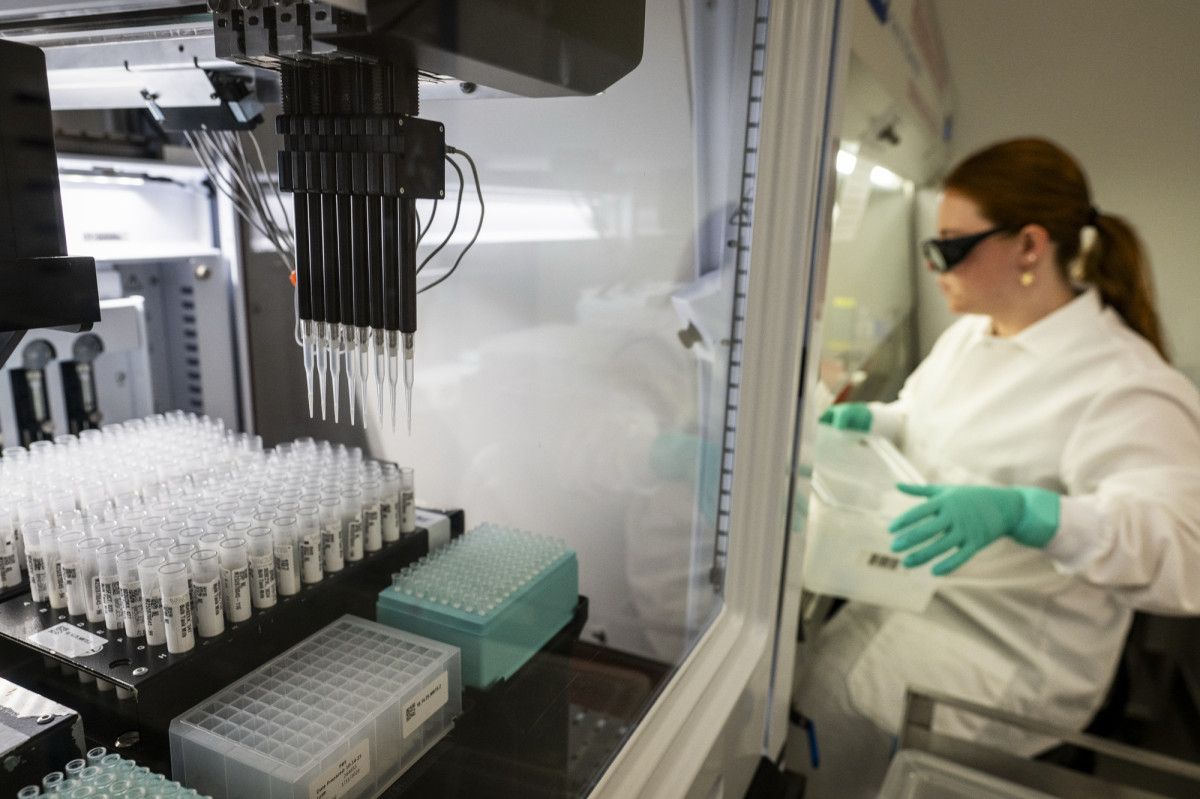 With the help of a robotic liquid handler, UW–Madison researchers at the Wisconsin Veterinary Diagnostic Laboratory (WVDL) are testing some 5,000 milk samples per month to monitor and prevent H5N1 bird flu outbreaks in the state’s dairy cattle. Photo: Taylor Wolfram / UW–Madison
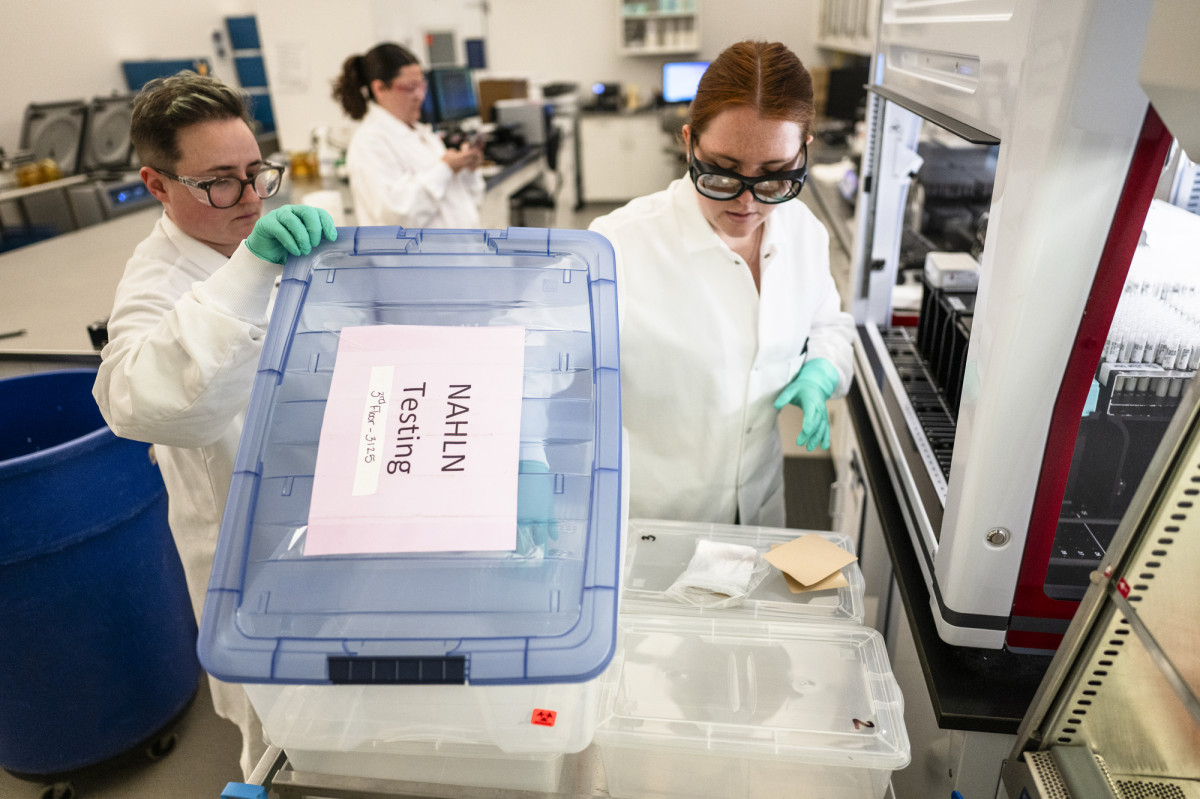 Specimen receiving team lead Asia Johnson (left) and student technician Maddie Myrick load milk samples into a transport box. Each month, WVDL tests at least one milk sample from every dairy farm in Wisconsin. Photo: Taylor Wolfram / UW–Madison
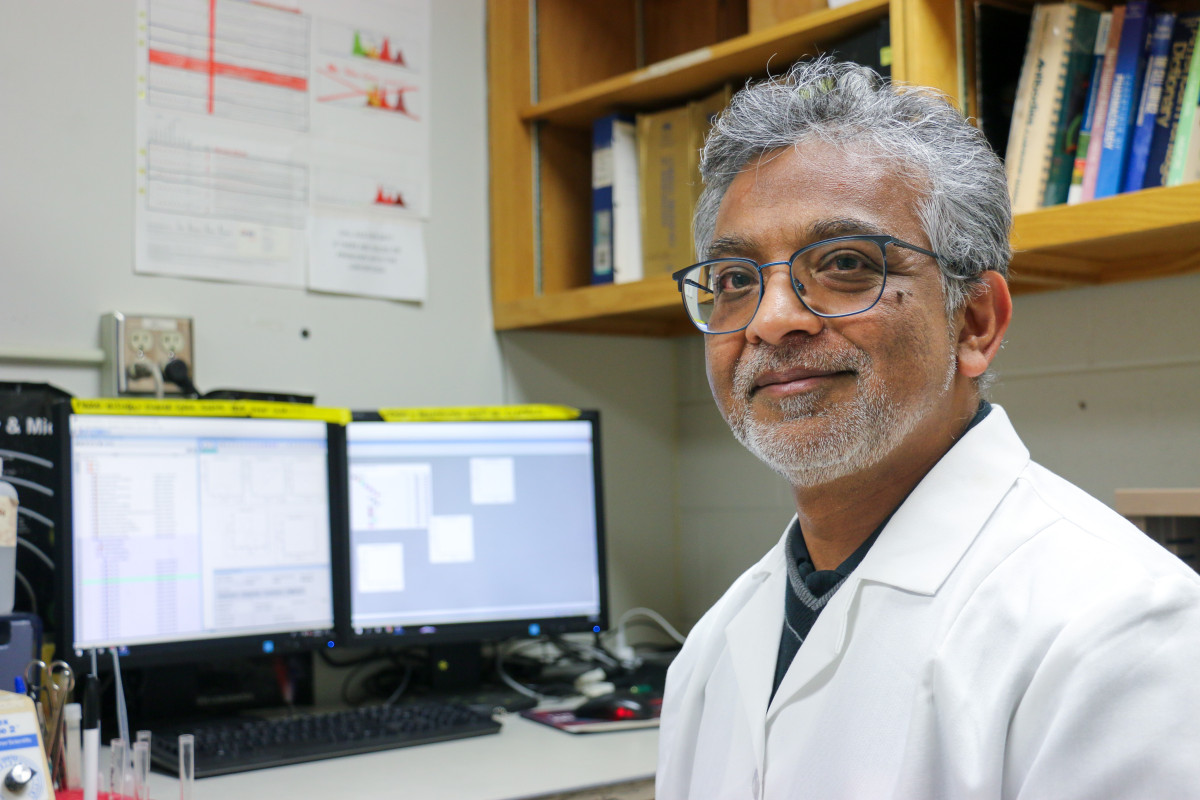 Marulasiddappa Suresh (above) and Yoshihiro Kawaoka, professors of pathobiological sciences, are working to develop a universal influenza vaccine to protect dairy cattle against H5N1. Photo: Seth Moffitt / School of Veterinary Medicine Tools to fight the virus
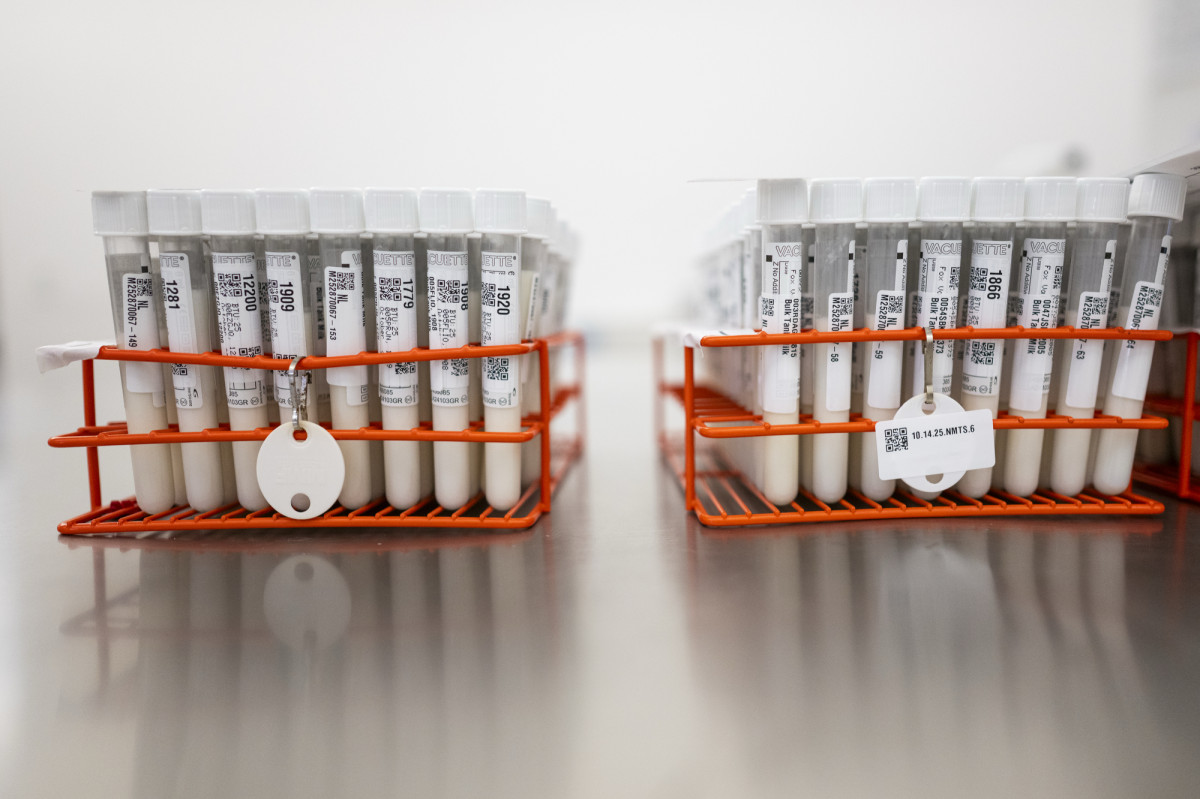 Although the risk is currently low, if H5N1 were to spread unmonitored in dairy cattle, more dangerous strains could emerge and affect other species. Photo: Taylor Wolfram / UW–Madison Beyond the dairy industry
 You can learn more about HPAI at:
Comment