Announcement

Collapse
No announcement yet.

California - Avian flu in mammals and livestock 2025-2026

Collapse
X
 
  • Filter
  • Time
  • Show
Clear All
new posts

  • #91
    For Immediate Release: Wednesday, February 25, 2026

    First Cases of Highly Pathogenic Avian Influenza in Northern Elephant Seals Confirmed in California

    Cases at Año Nuevo State Park Mark State’s First Detectionof the Disease in a Marine Mammal


    For six decades, researchers at UC Santa Cruz have been closely monitoring the colony, providing a unique opportunity to investigate the outbreak in individually identifiable seals and understand the potential near and long-term impacts to population health.

    UC Davis scientists have been testing samples from marine birds and mammals at the park and other regions along the coast since 2024. The NSF Center for Pandemic Insights at UC Davis and UC Santa Cruz have been working together to increase surveillance at this site over the past two months in anticipation of a possible outbreak in seals.

    The scientific team is now working closely with NOAA Fisheries, the California Department of Fish and Wildlife and the West Coast Marine Mammal Stranding Network to continue to monitor marine mammals along the coast.

    “We are cautiously optimistic, as most of the adult females had already departed the beach for their routine migrations before the outbreak began, and most seals on the colony seem healthy,” Beltran said.

    People and pets should keep distance
    While risk of infection to the general public is low, HPAI can spread between animals and people. Do not touch live or dead seals or allow pets to approach them. This helps protect people and pets and also gives sick animals space.

    If you encounter a sick, injured or dead marine mammal in California, Oregon or Washington, call the NOAA Fisheries West Coast Region Stranding Hotline: (866) 767-6114. Do not attempt to move sick wild animals, as this can spread disease and cause stress or harm to the animal.

    Looking back and ahead
    The H5N1 virus was discovered in 1996 in Southeast China on a domestic goose farm. It was transmitted within the poultry industry for several years, during which it spilled over into wild birds and humans and then spread to Europe, the Middle East, Africa and later to North America, South America and, in early 2024, to Antarctica.

    The current outbreak of HPAI in North America was first detected in early winter 2021 in Newfoundland and Labrador, Canada. It has now been confirmed in nearly all U.S. states and Canadian provinces, in commercial poultry, backyard flocks, many species of wild birds, and several species of mammals, including humans.

    Two previous HPAI outbreaks in U.S. marine mammals occurred in Maine in 2022 and Washington in 2023. These events were caused by direct spillover of virus from infected birds to seals.

    Sustained wildlife surveillance and monitoring is a critical but ongoing challenge for preventing and detecting outbreaks globally. The NSF Center for Pandemic Insights at UC Davis, with collaborators at 12 other institutions, including The Marine Mammal Center and UC Santa Cruz, has been working to develop innovative technologies and methodologies – from chemical sensors to drones – to be able to scale up HPAI surveillance, especially in populations that are less monitored and often harder to access.

    The team will generate weekly updates and continue to closely monitor and test samples collected from sick animals, conduct drone surveys, and ensure systematic observations.

    More information about this outbreak, including future updates, will be available at the Institute for Pandemic Insights website.

    https://www.parks.ca.gov/NewsRelease/1485
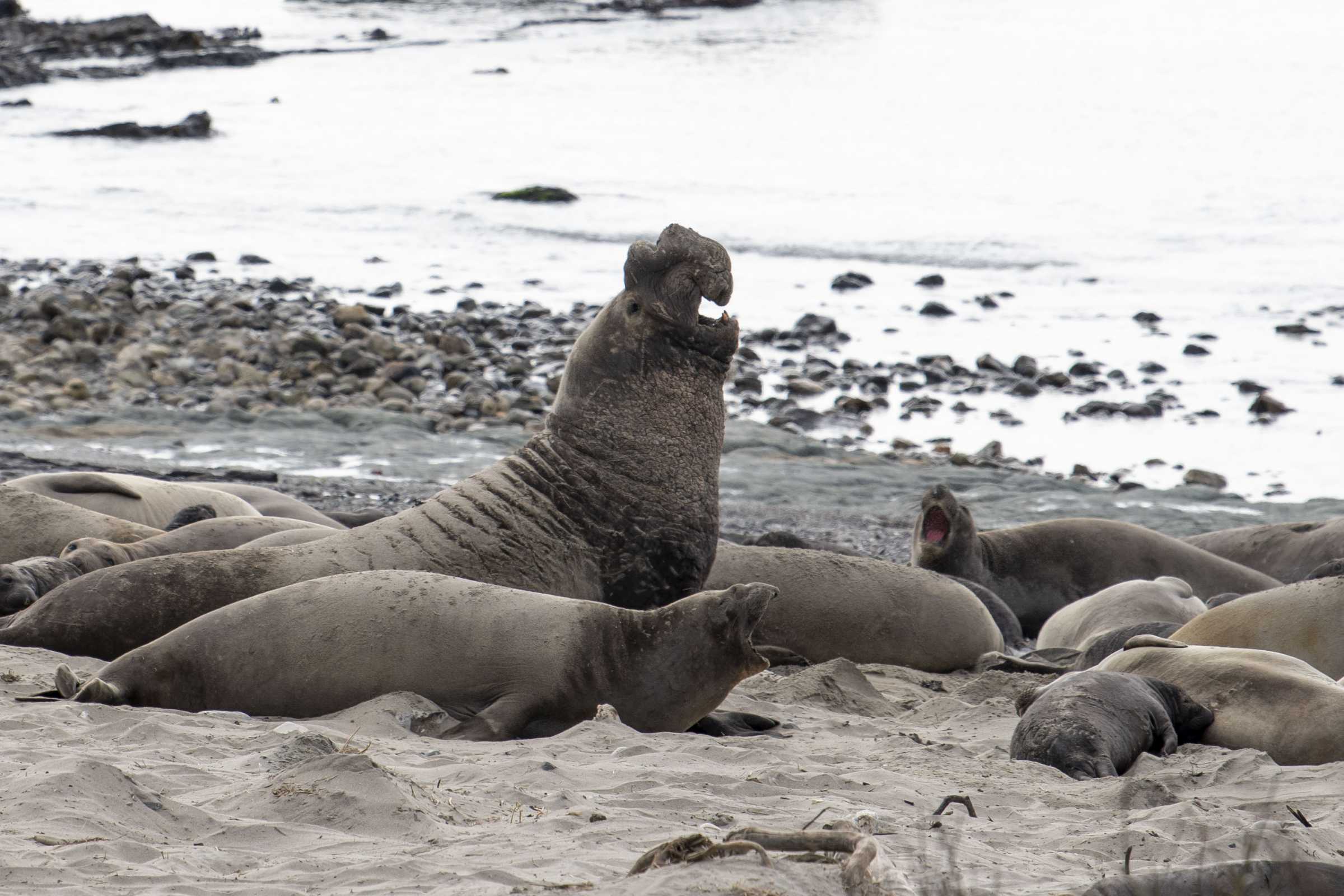
    Comment


    • #92
      First cases of highly pathogenic avian influenza in northern elephant seals confirmed in California

      ​The outbreak marks the first cases of HPAI H5N1 in marine mammals in California and the first detection in northern elephant seals.
      February 25, 2026

      Seven weaned elephant seal pups in California’s Año Nuevo State Park tested positive for highly pathogenic avian influenza (HPAI) H5N1, the U.S. Department of Agriculture’s National Veterinary Services Laboratory confirmed Tuesday evening.

      The outbreak marks the first cases of HPAI H5N1 in marine mammals in California and the first detection in northern elephant seals. The disease decimated populations of a related species, southern elephant seals, in Argentina in 2023.

      “This is exceptionally rapid detection of an outbreak in free-ranging marine mammals,” said Professor Christine Johnson, director of the Institute for Pandemic Insights at the University of California, Davis’ Weill School of Veterinary Medicine. “We have most likely identified the very first cases here because of coordinated teams that have been on high alert with active surveillance for this disease for some time.”

      Scientists at UC Santa Cruz and UC Davis increased disease surveillance of this population in recent years due to concerns about avian influenza’s spread throughout North and South America.

      “Given the catastrophic impacts observed in related species, we were concerned about the possibility of the virus infecting northern elephant seals for the first time, so we ramped up monitoring to detect any early signs of abnormalities,” said Roxanne Beltran, a professor in Ecology and Evolutionary Biology at UC Santa Cruz. Beltran’s lab leads UC Santa Cruz’s northern elephant seal research program at Año Nuevo.

      On Feb. 19 and 20, Beltran’s team noticed seals at Año Nuevo Reserve with abnormal respiratory and neurological signs, including weakness and tremors. They collected samples from sick and dead elephant seals and took them to UC Davis for testing at the California Animal Health and Food Safety Laboratory System. Initial screening revealed the samples were positive for avian influenza, which the USDA’s NVSL lab now confirms is HPAI H5N1.

      Monitoring the colony

      Año Nuevo State Park, just north of Santa Cruz, is home to an elephant seal colony with approximately 5,000 seals during the winter breeding season. About 1,350 seals were present on the beach when the outbreak began. California State Parks has temporarily closed public access to seal viewing areas and cancelled its popular guided elephant seal tours for the remainder of the season while officials investigate the wildlife health threat.

      For six decades, researchers at UC Santa Cruz have been closely monitoring the colony, providing a unique opportunity to investigate the outbreak in individually identifiable seals and understand the potential near and long-term impacts to population health.

      UC Davis scientists have been testing samples from marine birds and mammals at the park and other regions along the coast since 2024. The NSF Center for Pandemic Insights at UC Davis and UC Santa Cruz have been working together to increase surveillance at this site over the past two months in anticipation of a possible outbreak in seals.

      The scientific team is now working closely with NOAA Fisheries, the California Department of Fish and Wildlife and the West Coast Marine Mammal Stranding Network to continue to monitor marine mammals along the coast.

      “We are cautiously optimistic, as most of the adult females had already departed the beach for their routine migrations before the outbreak began, and most seals on the colony seem healthy,” Beltran said.

      ​Continued: https://news.ucsc.edu/2026/02/first-...in-california/

      Comment


      • #93
        Avian Influenza Confirmed in Northern Elephant Seals

        February 26, 2026

        Recently, scientists confirmed that a small number of young northern elephant seals at Año Nuevo State Park tested positive for highly pathogenic avian influenza (H5N1), also known as bird flu.

        This is the first time H5N1 has been detected in California’s marine mammal population, and the first time it has been detected in northern elephant seals.

        This development is especially concerning because the disease caused mass die-offs in a closely related species, southern elephant seals, during an outbreak in Argentina in 2023. That event showed how quickly this disease can spread through vulnerable marine mammal populations, underscoring the urgency of early detection, close monitoring and rapid response.

        While most of the northern elephant seal colony appears healthy, experts are closely monitoring the situation in California to understand potential impacts and how it may affect marine mammals along our coast.

        The Marine Mammal Center is working alongside leading partners including NOAA, UC Davis, UC Santa Cruz, California Department of Fish and Wildlife, and California Department of Public Health to monitor wildlife health and guide a coordinated, science-based response. As of February 26, 2026, we have not identified any confirmed cases in patients currently receiving care at our hospital.

        What this means for people and pets

        The risk of H5N1 to the public remains very low. The most important thing you can do is help protect yourself and marine mammals by:
        • Staying at least 150 yards away from seals and other marine mammals
        • Never touching live or dead wildlife
        • Keeping dogs leashed on or near beaches
        • Reporting sick or injured marine mammals to our hotline at 415-289-SEAL (7325)
        ​...

        A small number of northern elephant seals at Año Nuevo State Park recently tested positive for H5N1, also known as bird flu. We’re sharing guidance on how to protect yourself, your pets and marine mammals – and how you can help.

        Comment


        • #94
          Detections of Highly Pathogenic Avian Influenza in Mammals


          Last Modified: March 04, 2026​
          ...

          State County Date Collected Date Detected HPAI Strain Species​
          California San Mateo 2/20/2026 2/27/2026 EA H5N1 Northern elephant seal
          California San Mateo 2/20/2026 2/27/2026 EA H5N1 Northern elephant seal
          California San Mateo 2/21/2026 2/27/2026 EA H5N1 Northern elephant seal
          California San Mateo 2/21/2026 2/27/2026 EA H5N1 Northern elephant seal
          California San Mateo 2/21/2026 2/27/2026 EA H5N1 Northern elephant seal
          California San Mateo 2/21/2026 2/27/2026 EA H5N1 Northern elephant seal
          California San Mateo 2/21/2026 2/27/2026 EA H5N1 Northern elephant seal
          California San Mateo 2/21/2026 2/27/2026 EA H5N1 Northern elephant seal
          California San Mateo 2/21/2026 2/27/2026 EA H5N1 Northern elephant seal
          California San Mateo 2/21/2026 2/27/2026 EA H5N1 Northern elephant seal
          California San Mateo 2/21/2026 2/27/2026 EA H5N1 Northern elephant seal
          California San Mateo 2/21/2026 2/27/2026 EA H5N1 Northern elephant seal
          California San Mateo 2/21/2026 2/27/2026 EA H5N1 Northern elephant seal
          California San Mateo 2/21/2026 2/27/2026 EA H5N1 Northern elephant seal
          California San Mateo 2/21/2026 2/27/2026 EA H5N1 Northern elephant seal
          California San Mateo 2/21/2026 2/27/2026 EA H5N1 Northern elephant seal
          California San Mateo 2/21/2026 2/27/2026 EA H5N1 Northern elephant seal
          California San Mateo 2/21/2026 2/27/2026 EA H5N1 Northern elephant seal
          California San Mateo 2/21/2026 2/27/2026 EA H5N1 Northern elephant seal
          California San Mateo 2/21/2026 2/27/2026 EA H5N1 Northern elephant seal
          California San Mateo 2/21/2026 2/27/2026 EA H5N1 Northern elephant seal
          California San Mateo 2/21/2026 2/27/2026 EA H5N1 Northern elephant seal
          California San Mateo 2/21/2026 2/27/2026 EA H5N1 Northern elephant seal
          California San Mateo 2/21/2026 2/27/2026 EA H5N1 Northern elephant seal
          California San Mateo 2/21/2026 2/27/2026 EA H5N1 Northern elephant seal
          California San Mateo 2/21/2026 2/27/2026 EA H5N1 Northern elephant seal
          California Los Angeles 1/13/2026 2/24/2026 EA H5N1 Catalina Island fox
          California Los Angeles 1/14/2026 2/24/2026 EA H5N1 Catalina Island fox
          California Los Angeles 12/8/2026 2/24/2026 EA H5N1 Catalina Island fox
          ...

          Comment


          • #95
            Aphis made changes to their original report that was posted on March 4, 2026 (see post #95 above).

            The reported number of seals confirmed infected has changed: it is now listed as 7 with a 'date detected' of February 24, compared to the previous March 4 posting that showed 26 with a 'date detected' of February 27.


            Detections of Highly Pathogenic Avian Influenza in Mammals


            Last Modified: March 04, 2026
            ...
            State County Date Collected Date Detected HPAI Strain Species
            California Los Angeles 12/8/2025 2/24/2026 EA H5N1 Catalina Island fox
            California Los Angeles 1/13/2026 2/24/2026 EA H5N1 Catalina Island fox
            California Los Angeles 1/14/2026 2/24/2026 EA H5N1 Catalina Island fox
            California San Mateo 2/20/2026 2/24/2026 EA H5N1 Northern elephant seal
            California San Mateo 2/20/2026 2/24/2026 EA H5N1 Northern elephant seal
            California San Mateo 2/20/2026 2/24/2026 EA H5N1 Northern elephant seal
            California San Mateo 2/20/2026 2/24/2026 EA H5N1 Northern elephant seal
            California San Mateo 2/20/2026 2/24/2026 EA H5N1 Northern elephant seal
            California San Mateo 2/20/2026 2/24/2026 EA H5N1 Northern elephant seal
            California San Mateo 2/20/2026 2/24/2026 EA H5N1 Northern elephant seal
            ​...

            Comment


            • #96
              Detections of Highly Pathogenic Avian Influenza in Mammals


              Last Modified: March 11, 2026
              ...

              Click image for larger version  Name:	image.png Views:	1 Size:	19.4 KB ID:	1031367
              ...

              Comment


              • #97
                H5N1 bird flu spreads to sea otters and sea lions along San Mateo coast, wildlife experts say

                By Susanne Rust
                Staff Writer
                March 12, 2026 1:20 PM PT

                Researchers say the H5N1 bird flu outbreak in California elephant seals has spread to other marine mammals, including a sea otter and sea lion.
                ...
                Department of Fish and Wildlife and the Marine Mammal Center announced they had found the virus in seven dead elephant seal pups collected from the beach at Año Nuevo State Park. That number is now 16, but Johnson said likely more will be confirmed in the weeks to come.

                “This count reflects only the animals that have gone through sampling and confirmatory testing in multiple labs,” she said. “We know there are more animals with signs of infection that we have sampled that are being tested across the different laboratory systems.”

                She said no other otters have been found, but a “handful” of California sea lions are “in the queue.” This kind of spillover, she said, is not unusual.
                ...
                Patrick Robinson, the Año Nuevo reserve director, and a marine biologist at UC Santa Cruz, said 47 elephant seals on the mainland have died since the outbreak began, and the wildlife team is finding two new symptomatic and two dead animals every day.
                ...

                After H5N1 bird flu was detected in elephant seals gathered at Año Nuevo State Park, other marine mammals have also succumbed, including a sea otter and sea lion. So far, only animals in San Mateo County have been affected.

                Comment


                • #98
                  Excerpt from previous post (#98)

                  The strain the animals have contains a mutation allowing it to more easily transmit between mammals. It is also a different variation than the ones found in dairy cows and commercial poultry. This one is Eurasian in origin, first seen in 2022. It has been detected in birds that fly along the Pacific Flyway, and is responsible for a mass mortality event in 2023 in northern fur seals on an island in eastern Russia, said Christine Johnson, director of UC Davis’ Center for Pandemic Insights, during a press conference Thur​sday morning.

                  Johnson said researchers think this is the first detection of the A3 variation of the virus on the Pacific Coast and therefore likely a new introduction into North America, she said.

                  Comment


                  • SeniorLearner
                    SeniorLearner commented
                    Editing a comment
                    I found the following explanation yesterday afternoon on a recently updated Genoflu upadate by NVSL at the following site:


                    The current “D” genotypes represent reassortants of GenoFlu A3 that emerged in the late fall/winter of 2024 (Figure 1 and Table 1). Genotype D1.1, a four gene reassortant of A3 with North American genes, including N1, replaced previous B3 genotypes by late 2024 and is currently the most frequently detected genotype since the start of this event. Circulation of genotype A3 remained limited to the Pacific flyway until late fall and winter of 2024, when A3 and the “D” genotypes expanded eastward, affecting wild birds, poultry, and wild mammals across all four migratory flyways. The D1.1 genotype has affected poultry, spilled over into mammals, and affected a small number of dairy cattle herds in three different states (AZ, NV, WI), and continues to evolve with new genotypes (D1.5, D1.6 [AM N2], D1.11 [AM N5]) identified to date.

                    So A3 has been around since 2024; however, it is a progenitor to the now more prominent D-series.

                • #99
                  Deadly virus outbreak at Bay Area state park spreads to nearby beaches
                  March 12, 2026

                  Excerpt's

                  Though the outbreak is currently limited to San Mateo County, Johnson said experts have detected additional cases along the coastline just north and south of Año Nuevo State Park.

                  “We are starting to see some carcasses on public beaches,” she said. People are asked to contact the National Oceanic and Atmospheric Administration’s stranding hotline at 866-767-6114 to report any sightings. If you think you have been exposed to a sick animal on the beach and experience symptoms like a cough, runny nose, fever or shortness of breath, call your doctor and seek medical attention.​

                  Comment


                  • Año Nuevo State Park​
                    The Park is currently OPEN WITH RESTRICTIONS IN SERVICES AND/OR FACILITIES.

                    Please check the hours of operation.​

                    Current Restrictions
                    Last Checked: 3/13/2026 3:52 AM

                    Año Nuevo State Park has temporarily closed public access to the elephant seal viewing area and Año Nuevo Coast Natural Preserve while park staff and wildlife health partners evaluate a small number of recent seal illnesses. At this time, tours have been canceled through March 1st with full refunds available through Reserve California (ReserveCalifornia or 1-800-444-4445). Most seals on the beach appear healthy. Out of an abundance of caution, access is being paused to give wildlife space and allow for ongoing monitoring. We appreciate your patience and understanding as this is a popular time to visit the park to view these beloved animals in their natural habitat. Updates will be provided through social media channels (facebook instagram) and website as more information becomes available. Those interested in viewing the elephant seals can do so via the Año Nuevo Mainland Camera.​


                    Comment


                    • Institute for Pandemic Insights

                      H5 Influenza A Outbreak in Marine Mammals

                      Situation Update
                      (screenshot)
                      Click image for larger version

Name:	image.png
Views:	138
Size:	31.8 KB
ID:	1031394
                      Click image for larger version

Name:	image.png
Views:	130
Size:	33.9 KB
ID:	1031395

                      03/12/2026: A recording of the Press Briefing held today can be viewed here.

                      03/10/2026: Scientists have confirmed a case of HPAI H5N1 in a California sea lion in San Mateo County, California. The adult male sea lion was found dead on February 27 near Año Nuevo State Reserve by the California Academy of Sciences. Samples were sent to UC Davis and the USDA’s NVSL laboratory, where presence of the virus was confirmed on March 9. To date, all positive HPAI H5N1 cases have been detected in San Mateo County. A network of responders continue to investigate stranded or dead marine mammals in neighboring areas to assess influenza activity in seals, sea lions, and sea otters. People and their pets should avoid all contact with sick or dead wildlife and can report dead or distressed marine mammals on the west coast to the NOAA Fisheries West Coast Region Stranding Hotline: (866) 767-6114.

                      03/06/2026: Scientists have confirmed a case of HPAI H5N1 in a southern sea otter in San Mateo County, California. The southern sea otter was found dead by UC Santa Cruz researchers on February 26. A postmortem examination was conducted by trained wildlife disease experts at the California Department of Fish and Wildlife’s Marine Wildlife Veterinary Care & Research Center in Santa Cruz, and samples were sent to UC Davis and the USDA’s NVSL lab, where presence of the virus was confirmed on March 5. Researchers continue to monitor marine mammal populations to understand the full extent and impact of the disease outbreak.

                      03/05/2026: We are continuing to monitor progression of the outbreak and investigate the impact to animals. To date, approximately 60 marine mammals are currently being tested for suspected influenza virus infection at Año Nuevo State Park. In addition, we are evaluating stranded or dead marine mammals in neighboring areas to determine if influenza has spread to other species or other regions. If new cases are confirmed, updates will be posted to this site.

                      02/25/2026: On February 19th and 20th, multiple northern elephant seal weanling pups (recently weaned from nursing) were observed dead at Año Nuevo State Park in San Mateo County, California. Live elephant seal weanlings were also observed with tremors and seizure activity. In collaboration with University of California, Davis, researchers from University of California, Santa Cruz responded to collect samples from 7 sick and dead animals for testing at the California Animal Health & Food Safety Laboratory System (CAHFS) laboratory at UC Davis. Initial screening revealed that the samples were positive for influenza A, subtype H5. The USDA National Veterinary Services Laboratory (NVSL) later confirmed infection with influenza A subtype H5N1 (Highly Pathogenic Avian Influenza, HPAI).

                      https://pandemicinsights.ucdavis.edu/h5-marine-outbreak

                      Comment


                      • Originally posted by Commonground View Post
                        Excerpt from previous post (#98)
                        Click image for larger version

Name:	image.png
Views:	128
Size:	26.6 KB
ID:	1031398
                        Please see:

                        Genotype A3 influenza A(H5N1) isolated from fur seals shows high virulence in mammals, but not airborne transmission

                        https://flutrackers.com/forum/forum/...cember-24-2025

                        Comment


                        • Essay from a must read account -

                          hat tip Hogvet51

                          snip

                          "A post by Pathfinder last night in Flutrackers covered an article in the LA Times written by Susanne Rust regarding the outbreak in sea mammals:

                          H5N1 bird flu spreads to sea otters and sea lions along San Mateo coast, wildlife experts say.

                          A quote from the article was added in a nested FluTrackers post from Commonground:

                          The strain the animals have contains a mutation allowing it to more easily transmit between mammals. It is also a different variation than the ones found in dairy cows and commercial poultry. This one is Eurasian in origin, first seen in 2022. It has been detected in birds that fly along the Pacific Flyway and is responsible for a mass mortality event in 2023 in northern fur seals on an island in eastern Russia, said Christine Johnson, director of UC Davis’ Center for Pandemic Insights, during a press conference Thur​sday morning.

                          Johnson said researchers think this is the first detection of the A3 variation of the virus on the Pacific Coast and therefore likely a new introduction into North America, she said.


                          snip

                          In reviewing the GitHub genotype reference table, it appears that A3 produces long lists of “children” isolates - over 60 “minor” genotypes, some of which may become successful enough to gain “D-lettered” status. We’ll see if A3 itself or a D-descendent becomes a “King Kong” in marine mammals…like D1.1 has done in domestic poultry and wildlife currently.​"

                          more...https://hogvet51.substack.com/p/h5n1-in-us-marine-mammals-website?utm_source=post-email-title&publication_id=2578829&post_id=190850431&utm _campaign=email-post-title&isFreemail=true&r=4qjp7k&triedRedirect=true& _src_ref=webmail1.earthlink.net&utm_medium=email

                          Comment


                          • Institute for Pandemic Insights

                            ​H5 Influenza A Outbreak - Press
                            Briefing Video UC Davis


                            Press Briefing - H5N1 Outbreak
                            March 12, 2026

                            Panelists include:
                            • Christine Johnson, Director, Institute for Pandemic Insights, UC Davis
                            • Patrick Robinson, Patrick Robinson, Año Nuevo Reserve Director, UC Santa Cruz
                            • Moe Flannery, Sr. Collection Manager, California Academy of Sciences
                            • Dominic Travis, Chief Programs Officer, The Marine Mammal Center
                            • Catherine Sallenave, Infectious Diseases Staff Physician, San Mateo County
                            https://pandemicinsights.ucdavis.edu...outbreak-press

                            Comment


                            • Avian Flu Not Found in Area Elephant Seals

                              Written by Theresa-Marie Wilson
                              ...
                              March 13, 2026
                              ...
                              Currently, about 35 marine mammals are being tested for suspected influenza virus infection at Año Nuevo, but what about our rookery at Piedras Blancas in San Simeon? As of March 5, the elephant seals who breed in the area have not been affected, which is good news, but caution is still in play.

                              “As far as we have seen, it looks like the virus spilled over from birds to seals, but there is no evidence of seal-to-seal transmission at this point. That means it is unlikely that seals will bring the virus down from Año Nuevo” Heather E.M. Liwanag, Ph.D., a Cal Poly professor who runs the team that is monitoring the local population. told Estero Bay News. “It is possible that we could get spillover from birds to seals here, like what happened at Año Nuevo. We have been worried about that for a few years now, and the event at Año Nuevo is the first time we have seen it happen.”
                              ...
                              Signs of the bird flu include “abnormal respiratory and neurological signs, including weakness and tremors,” Halaska said. “All the animals that were seen with these symptoms were found dead 24 hours later. At this point only weaned elephant seal pups are those being affected at a small, contained section of Año Nuevo Reserve.

                              “This age-class, weaned pups, are learning how to swim, forage on their own and adjusting to life without mom present. They are not able to swim very long or far and spend most of their time on shore near where they were birthed. Additionally, the animals that are displaying the HPAI symptoms are dying withing 24hrs.”
                              ...

                              Comment

                              Working...
                              X